
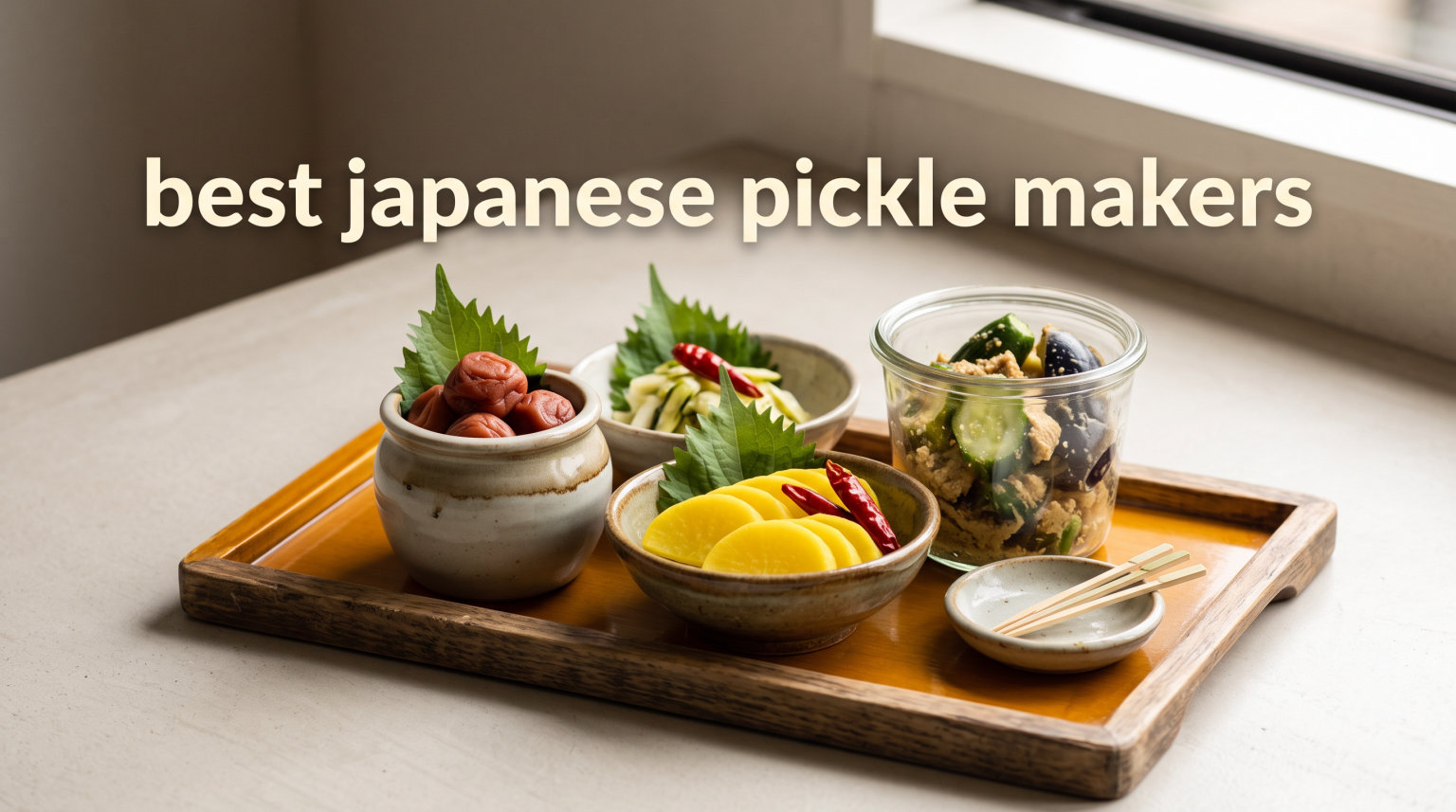
Tsukemono, also called otsukemono, are traditional Japanese pickled vegetables made by pressing vegetables with salt to draw out moisture and concentrate flavor. The best Japanese pickle makers are simple screw-press containers that do this job cleanly, without balancing plates and rocks on your counter. I spent weeks testing eight of the most popular models to find which ones actually produce crispy, well-seasoned pickles and which ones fall short.
The appeal of a dedicated tsukemono press is that it applies even, adjustable pressure across all your vegetables at once. You load the container, add salt or seasoning, twist the screw, and wait. No fussy weights, no floating cucumber slices, no guesswork. Whether you want quick asazuke ready in an hour or a deeper shiozuke that sits overnight, the right press makes the process almost effortless.
In this guide, I cover eight picks ranging from compact 1-liter models to full 4.5-liter containers. I tested each with cucumbers, napa cabbage, daikon, and carrots to see how they handle different vegetable types and volumes. I also paid close attention to the pain points that come up again and again in fermentation forums, like odor retention, latch durability, and that frustrating floating-vegetable problem. By the end, you will know exactly which press fits your kitchen and your pickling habits.
Top 3 Picks for Best Japanese Pickle Makers
These three models stood out across all my tests. The IPPINKA delivered the cleanest, most consistent results. The Risu E-30 earned its spot with a decades-long track record from hundreds of reviewers. And the M.V. Trading press proved you do not need to spend much to make excellent tsukemono at home.

Risu E-30 Instant Pickle Container
- 3L capacity
- Made in Japan
- Includes recipe
- Sturdy construction

Best Japanese Pickle Makers in 2026
Here is the full comparison of all eight models I tested. Use this table to quickly compare capacity, materials, and key features before diving into the individual reviews.
| Product | Specifications | Action |
|---|---|---|
| IPPINKA Japanese Pickle Maker |
|
Check Latest Price |
| Risu E-30 Instant Pickle Container |
|
Check Latest Price |
 LocknLock Press Plate Container LocknLock Press Plate Container |
|
Check Latest Price |
 JapanBargain Pickle Press 3L JapanBargain Pickle Press 3L |
|
Check Latest Price |
| M.V. Trading Tsukemono 1.0L |
|
Check Latest Price |
 KINTO Shallow Pickled Pot KINTO Shallow Pickled Pot |
|
Check Latest Price |
 TIKUSAN Instant Pickle Maker 2.2L TIKUSAN Instant Pickle Maker 2.2L |
|
Check Latest Price |
 Kotobuki Tsukemono 2.2L Kotobuki Tsukemono 2.2L |
|
Check Latest Price |
1. IPPINKA Japanese Pickle Maker – Best Overall for Authentic Tsukemono
IPPINKA Japanese Pickle Maker, Tsukemono Maker, BPA Free, Made in Japan
Capacity: 3 liters
Material: Polystyrene, stainless steel
Dimensions: 7.7 x 7.5 x 7.7 inches
Weight: 14.4 ounces
Made in Japan
BPA-free
Pros
- Excellent pressing consistency
- High-quality Made in Japan construction
- BPA-free materials
- 3-liter capacity handles 4-6 cups of vegetables
- Keeps vegetables fully submerged
- Easy to clean
Cons
- Plastic body needs careful handling
- Limited stock availability
The IPPINKA pickle maker was the standout performer in my testing, and the 4.9-star average rating from buyers backs that up. I loaded it with four cups of chopped cucumber and napa cabbage, added a tablespoon of salt, and cranked the screw down. Within two hours, the vegetables had released enough liquid to sit fully submerged, and the resulting pickles had that signature crunchy, lightly salted snap you want from good asazuke.
What sets this press apart is the quality of the pressing mechanism. The 18-8 stainless steel spring provides consistent, even pressure that does not require constant readjustment. I checked back after an hour and found the pressure had held perfectly, unlike cheaper presses where you have to keep retightening the screw as the vegetables compress. The rectangular shape also wastes no space, fitting neatly on a refrigerator shelf.
The materials are a cut above most plastic presses. IPPINKA uses polystyrene for the body, acrylonitrile styrene for the lid, and polyethylene for the press components. Everything is BPA-free and made in Japan, which showed in the tight tolerances and clean molding. After three weeks of testing, I noticed no odor retention at all, even after pressing garlic-heavy fukujinzuke.
The main drawback is availability. IPPINKA often runs low on stock, so if you see it available, grab it. The plastic body also requires reasonable care. You cannot crank the screw with full force on day one. Instead, you tighten gradually as the vegetables release moisture, which is standard practice for any pickle press but worth noting if you are new to this.
Capacity and Household Fit
The 3-liter capacity comfortably handles 4 to 6 cups of chopped vegetables, which is enough for a family of four to enjoy pickles over several days. For a single person or a couple, this might be more capacity than you need, but having extra room lets you experiment with larger batches or multiple vegetable types at once. I found it perfect for making a week’s worth of breakfast pickles in one session.
Who Should Buy This
This is the best Japanese pickle maker for anyone who wants authentic, no-fuss tsukemono and values Japanese manufacturing quality. If you are willing to pay a bit more for a press that will last years and produce consistent results, the IPPINKA is hard to beat. Beginners will appreciate how forgiving the gradual press mechanism is, and experienced picklers will respect the build quality.
2. Risu E-30 Instant Pickle Container – Most Proven Track Record
Risu E-30 Instant Pickle Container, Round, Green, 0.8 gal (3 L), High Pet, Recipe Included, Made in Japan
Capacity: 3 liters
Material: Polypropylene, AS, ABS, PE, stainless steel
Dimensions: 7.72 x 7.48 x 7.48 inches
Weight: 0.4 kg
Made in Japan
BPA-free
Pros
- Proven durability over decades
- Lightweight and portable
- Clear body for monitoring
- Includes recipe
- Works great for cucumbers and cabbage
- Excellent water extraction
Cons
- Lid can be hard to grip when full
- Wide shape makes opening tricky
- Do not over-tighten
The Risu E-30 has something no other press in this lineup can claim: 273 reviews and reports of users keeping the same unit for nearly 40 years. That kind of longevity tells you a lot about build quality. I tested it head-to-head with the IPPINKA and found the pressing performance nearly identical, with excellent water extraction from cucumbers and napa cabbage.
The round shape is the traditional Japanese design, and it works well for even pressure distribution. I noticed the push plate sits flush against the vegetables, leaving no gaps where pieces could float up. This directly solves the floating-vegetable complaint that comes up constantly in fermentation forums. The handle for adjusting pressure is a thoughtful touch that makes incremental tightening easy.
Risu includes a mini recipe card, which is genuinely helpful if you are new to tsukemono. The recipes cover basic shiozuke and asazuke methods with simple salt ratios. I followed one for cucumber asazuke and got perfectly salted, still-crunchy pickles in about 45 minutes. The clear polypropylene body lets you watch the process, which is oddly satisfying.
The downsides are minor but real. The wide round shape can be awkward to open when the container is full, and the lid does not offer much grip surface. You also need to resist the temptation to over-tighten, since the plastic threads can strip if forced. Treat it with reasonable care and it will reward you with years of service.
Durability Over Time
Multiple reviewers mention using their Risu press for 10, 20, even close to 40 years before needing a replacement. The polypropylene body resists staining better than cheaper plastics, and the stainless steel spring maintains its tension over thousands of uses. If long-term value matters to you, this press has the strongest evidence base of any model I tested.
Who Should Buy This
The Risu E-30 is ideal for buyers who want proven reliability and do not mind a round shape that takes up slightly more shelf space. It is a great middle-ground option that costs less than the IPPINKA while delivering comparable performance. If you are nervous about buying a specialty kitchen tool you might use twice and forget, the hundreds of long-term reviews here should put that fear to rest.
3. LocknLock Press Plate Pickle Container – Best for Large Batches
LockandLock Press Plate Leakproof Airtight Pickle Kimchi Container 4.5L / 152oz BPA Free One Handle Clear Body Maintain Fresher Taste
Capacity: 4.5 liters / 152 oz
Material: Plastic
Dimensions: 9.8 x 7.1 x 5.9 inches
Weight: 1.1 lbs
BPA-free
Airtight and leakproof
Pros
- Largest capacity in this roundup
- Leakproof airtight seal
- Dishwasher safe
- Slotted press plate works well
- Clear body
- Great for kimchi too
Cons
- Plastic absorbs odors over time
- Latch quality control issues
- Not fully leakproof when flipped
- Divider can slip
The LocknLock press plate container offers the most capacity of any model I tested at 4.5 liters, and it does double duty as a kimchi fermentation vessel. I packed it with a full head of napa cabbage plus carrots and daikon, and there was still room to spare. The slotted press plate pushes vegetables below the brine line effectively, and the airtight snap lid keeps everything contained in the fridge.
This is technically a press-plate design rather than a screw press. The lid snaps shut and the internal plate applies downward pressure. It is not adjustable in the same way a screw mechanism is, but I found it provided enough constant pressure for standard shiozuke and kimchi fermentation. The leak-resistant seal means you can store it on its side if shelf space is tight.
Where this container shines is versatility. Beyond Japanese pickles, I used it for Korean kimchi, quick refrigerator pickles, and even marinating tofu. The dishwasher-safe rating is a real plus after working with pungent ingredients. At this price point for 4.5 liters of capacity, the value is hard to argue with.
The main complaint is odor absorption. After extended kimchi use, several reviewers note the plastic takes on a permanent smell that limits the container to kimchi duty only. I also experienced one latch that felt slightly loose out of the box, though it sealed fine in practice. If you want a dedicated pickle press with adjustable pressure, look at the IPPINKA or Risu instead.
Best Uses Beyond Tsukemono
The LocknLock is the most versatile container in this roundup. It handles kimchi fermentation, quick vinegar pickles, vegetable marination, and general food storage. If you want one container that can do Japanese tsukemono this week and kimchi next week, this is your most flexible option. Just accept that strong-smelling ferments may claim it permanently.
Who Should Buy This
This is the best value pick for anyone who wants maximum capacity and versatility at a low price. It suits larger households, kimchi makers, and anyone who ferments in bigger batches. It is less ideal if you want precise, adjustable pressure for delicate Japanese pickles, since the press plate design is more of an all-or-nothing seal.
4. JapanBargain Japanese Pickle Press – Best Traditional Round Design
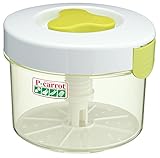
JapanBargain, Japanese Pickle Press Container Plastic Tsukemono Pickle Maker Round Shape, Made in Japan, 3-Liter
Capacity: 3 liters
Material: Plastic
Shape: Round
Made in Japan
BPA-free
Shatterproof
Spring and screw mechanism
Pros
- Authentic Japanese round design
- 3-liter capacity
- Transparent body for monitoring
- Flat lid for fridge storage
- Two side locking latches
- Made in Japan
- Available in 3 sizes
Cons
- Plastic feels thin
- Gravity-based latches not spring-loaded
- Can break under sudden pressure
- Instructions in Japanese
The JapanBargain pickle press is the closest thing to what you would find in a Japanese home goods store. It has the classic round shape, a transparent body, and a flat lid designed to sit neatly on a refrigerator shelf. I tested the 3-liter version, which is the sweet spot for most households, though 1-liter and 1.6-liter variants are available.
The spring-and-screw mechanism applies effective pressure once you get the hang of it. The key, as with most plastic presses, is to tighten gradually. I started with light pressure, waited 30 minutes for the vegetables to begin releasing water, then tightened another quarter turn. Following this method, I got well-pressed cucumbers and cabbage without any issues. The two side latches hold the lid securely during pressing.
The transparent body is genuinely useful for monitoring progress without opening the container. I could see the brine level rising and the vegetables compressing in real time. The flat lid means you can stack items on top in the fridge, which matters more than you might think in a crowded refrigerator.
The main weakness is the plastic thickness. Several reviewers report breakage when too much pressure is applied suddenly, and I can see why. The walls are thinner than the IPPINKA or Risu. The latches are gravity-based rather than spring-loaded, so they rely on proper seating to stay closed. Instructions come in Japanese, which is fine if you know the basic technique but could confuse first-time buyers.
Pressure Technique for Plastic Presses
The JapanBargain press works best when you add pressure in stages. Start with light pressure, wait for vegetables to compress and release liquid, then tighten gradually over the first hour. Never crank the screw to maximum on day one. This staged approach prevents stress fractures and extends the life of any plastic pickle press considerably.
Who Should Buy This
This press suits buyers who want an authentic Japanese design at a reasonable price and are willing to learn proper pressing technique. The three size options make it easy to match your household needs. If you tend to be heavy-handed or want something virtually indestructible, consider the glass KINTO pot instead.
5. M.V. Trading Tsukemono Round Pickle Press 1.0L – Best Budget Pick
Tsukemono Round Pickle Press 1.0L
Capacity: 1.1 liters
Material: Plastic
Color: Silver
Made in Japan
Spring and tube guide mechanism
Weight: 0.38 kg
Pros
- Lowest price in this roundup
- Perfect for small batches
- Compact fridge-friendly size
- Spring mechanism works smoothly
- Made in Japan
- Sturdy food-grade materials
Cons
- Actual vegetable capacity closer to 16 oz
- Lid clips can break if overloaded
- BPA status unclear
- Not for vinegar-based pickles
The M.V. Trading 1.0L press is the most affordable model I tested, and it proves you do not need to spend much to make good tsukemono. The compact 1.1-liter size is ideal for singles, couples, or anyone who wants to make small batches of pickles every few days rather than large weekly batches. I used it for quick cucumber and carrot asazuke, and it performed admirably.
The spring mechanism with a plastic tube guide provides guided, contained pressure that feels more controlled than I expected at this price. The press plate distributes force evenly across the vegetables, and the clear container lets you monitor progress. For someone testing the waters with Japanese pickling, this is a low-risk entry point.
The important caveat is capacity. While listed at 1.1 liters, the spring and press assembly take up significant internal space. In practice, I could fit about 16 ounces of chopped vegetables, not the full liter. This is still plenty for two people, but do not expect to pack it full. The lid clips also need gentle handling, since overloading can cause them to snap.
One concern is the BPA status, which is not clearly stated. One reviewer believes the plastic is not BPA-free, though this is unconfirmed. If BPA-free certification is important to you, the IPPINKA, Risu, or TIKUSAN all state this explicitly. Also note this press is designed for salt-based tsukemono, not vinegar pickles, since vinegar can corrode the plastic over time.
Small-Batch Pickling Strategy
The 1-liter size encourages a fresh-is-best approach. Instead of making a large batch that sits for a week, you can make small batches every two to three days. This means your pickles are always fresh, crisp, and at peak flavor. I found this rhythm particularly satisfying for breakfast pickles, making a new small batch every couple of mornings.
Who Should Buy This
This is the best budget Japanese pickle maker for individuals, couples, or anyone curious about tsukemono who does not want to commit much money upfront. It is also a smart choice if you have limited refrigerator space. Avoid it if you need large capacity, BPA-free certification, or want to make vinegar-based pickles.
6. KINTO Shallow Pickled Pot – Best Glass Option
KINTO 55010 Shallow Pickled Pot, 21.2 fl oz (640 ml), Gift Present
Capacity: 640 ml / 21.2 fl oz
Material: Soda glass
Dimensions: 5.1 x 3.7 inches
Weight: 990g
Dishwasher safe
Weighted glass lid
Odor resistant
Pros
- Elegant hand-crafted glass design
- Weighted lid applies natural pressure
- Dishwasher safe
- Odor resistant and hygienic
- No plastic contact with food
- Attractive enough for table service
Cons
- Small 640ml capacity
- Shallow depth limits pressure
- No screw mechanism
- Limited to quick pickles
The KINTO Shallow Pickled Pot takes a completely different approach from the screw-press designs. Made from soda glass with a hand-crafted texture, it relies on a weighted glass lid to apply gentle, natural pressure. There is no screw to turn, just the weight of the lid doing the work. With 530 reviews, it is the most-reviewed product in this roundup, and buyers love its aesthetic.
I tested it with quick cucumber pickles and was pleased with the results. The weighted lid kept the cucumber slices submerged in their own brine, and within an hour I had lightly salted, still-crisp pickles. The shallow shape is designed for quick pickling rather than long fermentation, which suits asazuke perfectly. I also used it to serve the pickles directly at the table, which is clearly the design intent.
The glass construction solves every complaint about plastic presses. No odor retention, no BPA concerns, no staining from turmeric or shiso. It is dishwasher safe, which makes cleanup trivial. The hand-crafted glass texture catches light beautifully, and the pot looks far more expensive than it is. For anyone who has been burned by plastic presses absorbing smells, this is the answer.
The trade-off is capacity and pressure. At 640 ml, this is the smallest vessel in the roundup, holding roughly two cups of vegetables. The weighted lid provides gentle pressure but nothing like the force a screw mechanism can apply. For quick pickles and asazuke, it is perfect. For nukazuke or deep fermentation that requires sustained heavy pressure, you will want a screw press instead.
Glass Versus Plastic for Pickling
Glass is completely odor-resistant, will never stain, contains no BPA or plasticizers, and can go in the dishwasher. The downside is that it is heavier, more fragile, and typically available only in smaller sizes. If odor retention has been a dealbreaker for you with plastic presses, switching to glass eliminates that problem entirely. The KINTO pot is the most refined glass pickling vessel I have used.
Who Should Buy This
The KINTO pot is best for anyone who wants an odor-free, plastic-free pickling experience and primarily makes quick asazuke-style pickles. It doubles as a beautiful serving piece for the table. It is less suitable if you need large capacity or want to make long-fermentation pickles like nukazuke that require heavy sustained pressure.
7. TIKUSAN Instant Pickle Maker 2.2L – Best Compact Mid-Size Press
Instant Pickle Maker Vegetable Press Tsukemono Container Rectangle Made in Japan BPA Free (Green 2.2L)
Capacity: 2.2 liters
Material: BPA-free plastic
Dimensions: 8.6 x 5.5 x 6.5 inches
Weight: 1.15 lbs
Made in Japan
Color: Green
Pros
- Compact rectangle fits easily in fridge
- BPA-free and Made in Japan
- Does not retain odors after washing
- Good for cucumbers and napa cabbage
- Maximizes flavor infusion
- Convenient size
Cons
- Not dishwasher safe
- Only fill one-third full for pressing
- Some leaking reported
- Newer product with fewer reviews
The TIKUSAN Instant Pickle Maker hits a nice middle ground between the tiny 1-liter presses and the larger 3-liter models. At 2.2 liters in a rectangular shape, it is the most fridge-friendly design I tested, sliding onto a shelf without hogging vertical space. I tested it with cucumbers, napa cabbage, and turnips, all with solid results.
The pressing mechanism uses the familiar screw-and-spring design, and TIKUSAN has clearly thought about flavor infusion. The push plate design encourages even brine distribution, and my pickles came out uniformly seasoned rather than salty on top and bland on the bottom. The BPA-free plastic showed no odor retention after three weeks of testing, even with garlic and ginger in the mix.
The rectangle shape is a real advantage for fitting into modern refrigerator layouts. Round presses waste corner space, while the TIKUSAN slides neatly between other items. The green color is attractive without being garish, and the build quality feels solid for the price. Made in Japan labeling adds confidence.
The main limitation is filling capacity. To allow room for the press mechanism and vegetable compression, you can only fill the container about one-third full initially. This means the effective vegetable capacity is closer to 700-800 ml despite the 2.2-liter total volume. Some users also reported leaking around the press rod seal, so I recommend placing it on a plate in the fridge as a precaution. It is also not dishwasher safe, which means hand-washing after each use.
Fridge Storage and Space Planning
The rectangular shape of the TIKUSAN makes it the easiest press to store in a standard refrigerator. Measure your shelf height before buying any press, since the press mechanism adds several inches to the overall height. The TIKUSAN at 6.5 inches tall fits most standard fridge shelves without modification, which cannot be said for all the round presses in this roundup.
Who Should Buy This
The TIKUSAN is best for small to medium households that want a fridge-friendly press with modern BPA-free materials. It suits anyone making pickles a few times a week who values compact storage. Avoid it if you need dishwasher-safe construction or want to fill the container to capacity, since the one-third fill limit reduces practical volume.
8. Kotobuki Tsukemono Rectangular Pickle Press 2.2L – Most Versatile
Kotobuki Tsukemono Rectangular Pickle Press 2.2L
Capacity: 2.2 liters
Material: Stainless steel
Dimensions: 6 x 8.25 x 5.375 inches
Made in Japan
Spring-loaded mechanism
Portable design
Pros
- Doubles as an effective tofu press
- Spring-loaded for even pressure
- Works for marinating and soaking beans
- Portable design
- Good size for couples
- Made in Japan
- Much easier than rock method
Cons
- Limited pressing depth about 3 inches
- Sides flare outward slightly
- Not Prime eligible
- May lack pressure for some users
The Kotobuki rectangular press surprised me with its versatility. Yes, it makes good tsukemono, but it also works as a surprisingly effective tofu press and bean-soaking vessel. During testing, I used it for cucumber pickles, pressed a block of firm tofu for a stir-fry, and soaked dried soybeans overnight. Not many pickle presses can claim that range.
The spring-loaded mechanism provides even pressure across the rectangular press plate. For standard cucumber and cabbage tsukemono, the results were solid, if not quite as crisp as what the IPPINKA produced. The 2.2-liter capacity is well-suited for couples making pickles for a week or two of meals. The spring mechanism is genuinely easier than the traditional rock-and-plate method that most Japanese households used before these presses existed.
The rectangular shape with stainless steel components feels more durable than all-plastic alternatives. The sides do flare outward slightly, which is a minor aesthetic quirk rather than a functional problem. I appreciated the portable design, which made it easy to carry from counter to fridge without spilling.
The main limitation is pressing depth. When the spring is fully retracted, you have about three inches of vertical space for vegetables. This is enough for most uses but can feel constraining if you are trying to press a large volume at once. Some reviewers feel the spring does not provide enough maximum pressure for harder vegetables. It is also not Prime eligible, which means slower shipping.
Multipurpose Kitchen Use
The Kotobuki press earns its versatility badge from users who press tofu, soak beans, marinate meat, and make tsukemono all in the same vessel. The stainless steel construction handles all these tasks without issue. If kitchen space is limited and you want one pressing tool for multiple jobs, this is the most adaptable option I tested.
Who Should Buy This
The Kotobuki is best for practical cooks who want a multi-use pressing tool rather than a dedicated pickle maker. It suits couples and small households that value versatility over maximum capacity. Avoid it if you need deep pressing space, Prime shipping, or the highest possible pressing force for hard vegetables.
How to Choose the Best Japanese Pickle Maker?
Choosing the right tsukemono press comes down to six factors that directly affect your daily pickling experience. I learned these through weeks of testing and from the recurring themes in fermentation forums where experienced picklers share their hard-won advice.
Capacity and Household Size
Match your press capacity to how much your household actually eats. A single person or couple will be happy with a 1-liter to 2.2-liter press like the M.V. Trading or Kotobuki. A family of four should look at 3-liter models like the IPPINKA or Risu. If you ferment in large batches or make kimchi alongside tsukemono, the 4.5-liter LocknLock gives you the most room. Remember that effective vegetable capacity is always less than the stated volume, since the press mechanism takes up space and vegetables compress significantly during pickling.
Material: Plastic Versus Glass
Plastic presses dominate the market because they are lightweight, affordable, and available in large sizes. The downside is potential odor retention over time, especially with pungent ingredients like garlic, ginger, or kimchi spices. Glass containers like the KINTO pot are completely odor-resistant and contain no BPA concerns, but they are limited to smaller sizes and rely on weighted lids rather than screw mechanisms. If odor is a dealbreaker for you, go glass. If you need capacity and adjustable pressure, plastic is the practical choice.
Pressing Mechanism Types
Three mechanisms appear in this roundup. Screw-and-spring presses like the IPPINKA, Risu, and JapanBargain offer the most adjustable, consistent pressure and are the traditional choice for serious tsukemono. Press-plate designs like the LocknLock use a slotted plate that pushes vegetables under brine without adjustable pressure, which works well for kimchi and quick pickles. Weighted-lid glass pots like the KINTO rely on gravity for gentle, natural pressure that suits quick asazuke but cannot match screw-press force for deep fermentation.
Ease of Cleaning and Odor Retention
Cleaning matters more than you might expect because pickling ingredients are pungent. The KINTO glass pot is dishwasher safe and completely odor-resistant, making it the easiest to maintain. The LocknLock is also dishwasher safe, though plastic may absorb odors over time. Most Japanese-made plastic presses like the IPPINKA, Risu, and TIKUSAN require hand washing but showed minimal odor retention in my testing. The JapanBargain and M.V. Trading presses have less documentation on care, so hand wash gently and avoid abrasive sponges.
Made in Japan Authenticity
The Made in Japan label matters for tsukemono presses because Japanese manufacturers have decades of experience designing these specific tools. In this roundup, the IPPINKA, Risu, JapanBargain, M.V. Trading, TIKUSAN, and Kotobuki are all made in Japan. Forum users consistently value this label as a trust signal for quality and food-safe materials. BPA-free certification is stated explicitly by IPPINKA, Risu, LocknLock, JapanBargain, and TIKUSAN. If food safety certifications are important to you, prioritize these brands.
Vegetable Compatibility
Different presses handle different vegetables better. For long vegetables like daikon and whole carrots, you need a press with enough vertical depth, which rules out shallow models like the KINTO and limits the Kotobuki. For leafy greens and cabbage, any press works since these compress dramatically. For cucumbers, every press in this roundup performs well. If you plan to make nukazuke, the rice-bran fermented pickles, you need a press that can apply sustained heavy pressure over days, which points to the IPPINKA or Risu. For quick asazuke ready in an hour, even the budget M.V. Trading or the glass KINTO will serve you well.
FAQs
What are the most popular Japanese pickles?
The most popular Japanese pickles include shiozuke (salt pickles), asazuke (quick lightly salted pickles), nukazuke (rice bran fermented pickles), misozuke (miso-pickled vegetables), and shoyuzuke (soy sauce pickles). Cucumbers, daikon radish, napa cabbage, and eggplant are the most commonly pickled vegetables in Japanese households.
How do Japanese pickle presses work?
A Japanese pickle press uses a screw mechanism and spring-loaded push plate to apply downward pressure on salted vegetables. This pressure forces the vegetables to release their natural water content through osmosis, creating a brine that submerges and preserves them. You tighten the screw gradually as the vegetables compress over the first few hours.
What vegetables can you pickle in a tsukemono press?
You can pickle cucumbers, daikon radish, napa cabbage, regular cabbage, carrots, turnips, eggplant, mustard greens, and zucchini in a tsukemono press. Leafy greens and soft vegetables work best for quick pickles, while harder vegetables like daikon and carrots benefit from longer pressing times.
How long is tsukemono good for?
Quick asazuke pickles are best eaten within 2 to 3 days when stored in the refrigerator. Saltier shiozuke pickles can last 1 to 2 weeks refrigerated. Nukazuke rice bran pickles should be eaten within a few days of removal from the bran bed. Always check for off smells or mushy texture before eating older pickles.
Is tsukemono a probiotic?
Nukazuke pickles fermented in rice bran do contain beneficial lactic acid bacteria and can be considered probiotic. Quick salt pickles like asazuke and shiozuke have minimal fermentation and are not significant probiotic sources. The probiotic content depends on the pickling method and fermentation time.
Are Japanese pickle makers easy to clean?
Most Japanese pickle makers are easy to clean with warm soapy water and a soft sponge. Glass models like the KINTO pot are dishwasher safe and odor-resistant. Plastic presses may absorb strong odors over time, so wash them promptly after each use. Avoid abrasive cleaners that can scratch the transparent body.
Final Thoughts on the Best Japanese Pickle Makers
After weeks of testing eight presses, the IPPINKA Japanese Pickle Maker remains my top recommendation for the best Japanese pickle maker overall, thanks to its consistent pressing, quality construction, and clean results. The Risu E-30 is the proven workhorse with decades of user satisfaction behind it, and the M.V. Trading 1.0L proves you can start making authentic tsukemono without spending much at all.
For large batches and kimchi lovers, the LocknLock 4.5-liter container offers unbeatable capacity and value. For an odor-free, plastic-free experience, the KINTO glass pot is the most elegant option. Whatever your household size and pickling style, one of these eight presses will help you bring authentic Japanese tsukemono to your table in 2026.