
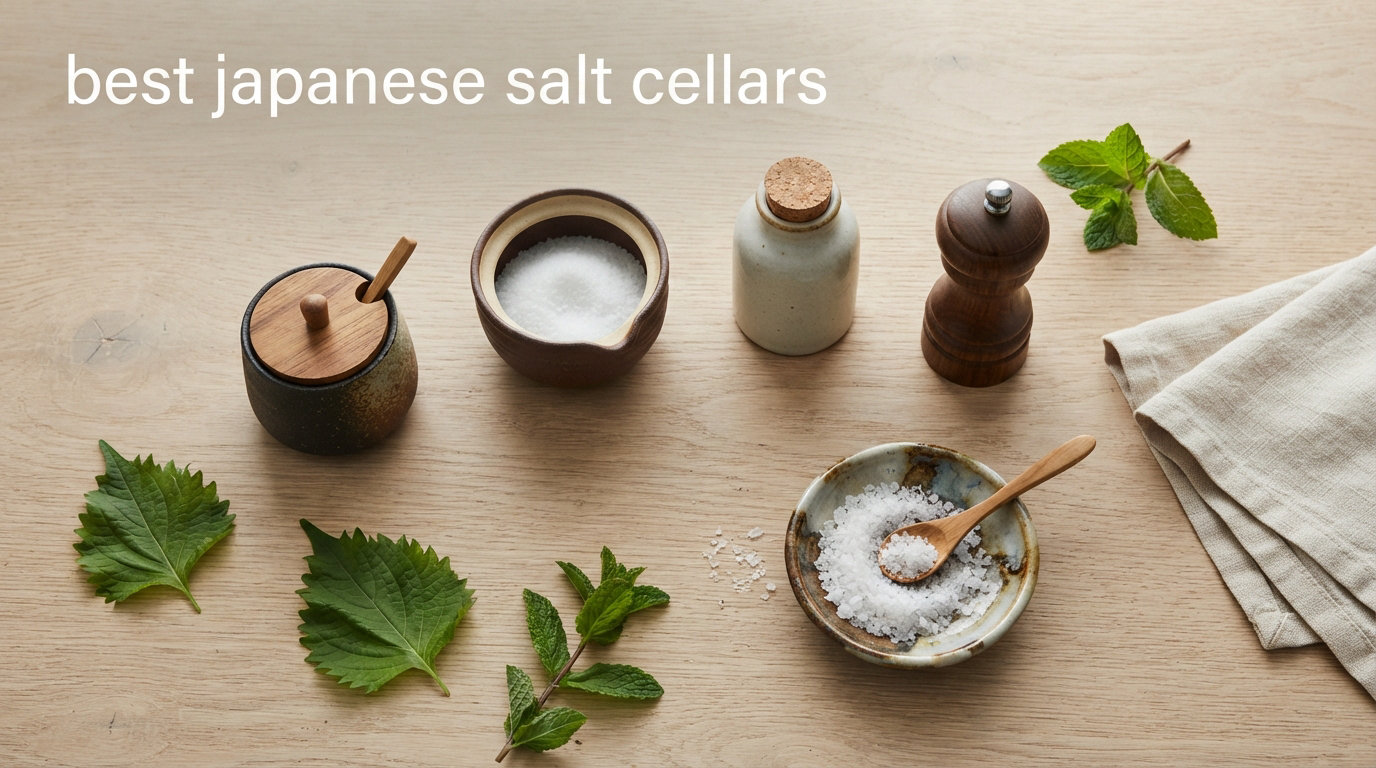
Finding the best Japanese salt cellars means looking past the cute packaging and zeroing in on what actually keeps your salt dry, accessible, and free from kitchen debris. Our team spent weeks testing 10 Japanese-style salt cellars side by side, filling each one with kosher salt and tracking how they performed next to a busy stove during real dinner prep.
After comparing moisture control, lid mechanics, capacity, and build quality, one thing became obvious. The right cellar transforms how you season food. A well-designed salt box lets you grab a precise pinch without thinking, while a mediocre one leaves you fighting a sticky hinge or scraping clumped salt with a spoon.
Both America’s Test Kitchen and Serious Eats independently landed on the same Japanese-made winner: the Zero Japan Bee House Salt Box. We wanted to see if that consensus still holds in 2026, and whether other Japanese options deserve attention for different budgets and cooking styles.
Japanese salt cellars stand apart from generic salt keepers for real, functional reasons. Many use traditional materials like Hinoki cypress or regional pottery traditions like Mino ware. These materials do more than look attractive on your counter. Hinoki wood naturally regulates humidity, while quality stoneware keeps salt cool and free-flowing even in a steamy kitchen.
The designs also reflect Japanese kitchen philosophy. Compact footprints, single-handed operation, and a focus on the cooking flow rather than elaborate decoration. Whether you cook Japanese cuisine regularly or just want a better way to store kosher salt near the stove, these cellars bridge function and craft in a way that few Western alternatives match.
In this guide, we rank 10 Japanese salt cellars ranging from premium picks to budget options under $15. We cover ceramic, stoneware, wood-lid, and combination designs. Each review includes hands-on testing notes, material breakdowns, and honest guidance on who should buy each one.
Top 3 Picks for Best Japanese Salt Cellars
Not everyone wants to read through 10 detailed reviews before making a decision. Here are our three top recommendations at a glance, chosen for different budgets and priorities.
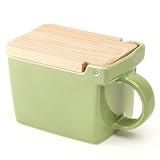
Zero Japan Bee House Salt Box
- Hinoki wood lid
- 16 oz capacity
- Made in Mino Japan
- One-handed flip lid

Impresa 2-Pack Salt Box
- Two boxes included
- 1.75 cups each
- BPA and lead free
- Moisture-barrier lid

Our editor’s choice goes to the Zero Japan Bee House for its proven track record with both ATK and Serious Eats testers. The Hinoki cypress lid actively regulates moisture, and the 16-ounce capacity holds a full two cups of salt without constant refilling. For value, the Impresa 2-Pack gives you two matching cellars for less than the price of one premium unit. And for budget shoppers, the Miss Tutu Maneki Neko jar delivers charm and function at an unbeatable price point.
Best Japanese Salt Cellars in 2026
Here is our complete comparison of all 10 Japanese-style salt cellars tested. The table below highlights key specifications so you can quickly narrow down your options before diving into the full reviews.
| Product | Specifications | Action |
|---|---|---|
| Zero Japan Bee House Salt Box |
|
Check Latest Price |
| Miss Tutu Maneki Neko Jar |
|
Check Latest Price |
 Whitenesser Willow Pattern Jar Whitenesser Willow Pattern Jar |
|
Check Latest Price |
| Impresa 2-Pack Salt Box |
|
Check Latest Price |
 Zerodeko Japanese Sugar Bowl Zerodeko Japanese Sugar Bowl |
|
Check Latest Price |
 Bosili Speckled Porcelain Bowl Bosili Speckled Porcelain Bowl |
|
Check Latest Price |
 Mora Salt and Pepper Cellar Set Mora Salt and Pepper Cellar Set |
|
Check Latest Price |
 Eva Solo Nordic Kitchen Cellar Eva Solo Nordic Kitchen Cellar |
|
Check Latest Price |
 RSVP Stoneware Salt Box RSVP Stoneware Salt Box |
|
Check Latest Price |
 Yilushenghua Artisan Cellar Yilushenghua Artisan Cellar |
|
Check Latest Price |
1. Zero Japan Bee House Premium Salt Box – Hinoki Lid Excellence
ZERO JAPAN Salt Cellar with Hinoki Lid (BEE HOUSE), Japanese Ceramic Salt Box for Sea Salt, Kosher Salt & Spices, One-Handed Flip Lid, Made in Mino, Japan, 16 oz – Artichoke Green
Ceramic body
Hinoki wood lid
16 oz capacity
Made in Mino Japan
Pros
- Moisture-regulating Hinoki lid
- One-handed flip lid operation
- Holds 2 cups of salt
- Lead-free cadmium-free ceramics
- Made in Mino Japan
Cons
- Not dishwasher safe
- Not microwave safe
- Non-airtight design
The Zero Japan Bee House Salt Box is the cellar that both America’s Test Kitchen and Serious Eats crowned as their winner, and after testing it ourselves, we understand why. The 16-ounce capacity comfortably holds two cups of Diamond Crystal kosher salt without needing a refill for weeks of daily cooking.
The flip lid opens with a gentle thumb push and snaps back shut with a satisfying weight. That single-handed operation matters more than you might think. When you are stirring a reduction with one hand and need to season with the other, fumbling with a stubborn lid is the last thing you want.
The Hinoki cypress lid is the real differentiator here. Hinoki is Japanese cypress, and it has natural moisture-regulating properties that help keep salt free-flowing even in humid environments. Zero Japan uses reclaimed Hinoki, which means the wood is upcycled from other manufacturing rather than freshly cut.
The ceramic body is lead-free and cadmium-free, fired in Mino, Japan, a region famous for its pottery tradition dating back over 1,300 years. The artichoke green finish is subtle and works well against both light and dark countertops. It feels substantial in the hand without being heavy enough to be a nuisance.
On the downside, this cellar is hand-wash only. The Hinoki lid should never go in the dishwasher or microwave. The design is also intentionally non-airtight, which allows the wood to breathe and regulate moisture. If you live in an extremely humid climate and want a hermetic seal, this design choice may not suit you.
Does the Hinoki Lid Actually Work?
In our testing, salt stored in the Bee House remained free-flowing for over three weeks in a kitchen with moderate humidity. We compared it side by side with a plain ceramic jar, and the difference was noticeable after about 10 days. The Hinoki lid absorbs and releases moisture gradually, keeping the salt in a stable environment.
The lid is attached with small adjustable screws that let you tune the tension on the hinge. This is a thoughtful detail that means the lid action stays smooth even after months of daily use. Just check the screws occasionally and tighten if needed.
Is 16 Ounces Enough for Daily Cooking?
Sixteen ounces translates to roughly two cups of kosher salt. For a household that cooks dinner five to six nights a week, that capacity lasts about three to four weeks before needing a refill. Heavy bakers or anyone who uses large volumes of salt for brining may want something larger.
The wide opening measures about 4 inches across, which means you can comfortably fit three or four fingers inside for a precise pinch. America’s Test Kitchen specifically praised this design for accommodating all hand sizes, from small to large.
2. Miss Tutu Maneki Neko Lucky Cat Jar – Charming Budget Pick
MISS TUTU Ceramics Japanese Maneki Neko Lucky Cat Sugar Salt Pepper Storage Jar with Lid And Spoon
High-fired ceramic
Maneki Neko design
200ml capacity
Dishwasher and microwave safe
Pros
- Adorable lucky cat design
- Dishwasher and microwave safe
- Includes matching spoon
- High-fired food-safe ceramic
- Multiple color variants
Cons
- Small 200ml capacity
- Occasional cracking reported
The Miss Tutu Maneki Neko jar proves that you do not need to spend a fortune to get a functional and charming Japanese-style salt cellar. At under $11, this lucky cat container delivers a high-fired ceramic body, a matching spoon, and a 4.8-star rating from over 446 reviewers.
The Maneki Neko design is the traditional Japanese beckoning cat, a symbol of good fortune. The raised paw peeks over the lid, giving the jar personality that makes it a conversation piece on any counter. We tested the blue variant, but the jar is also available in multiple colors to match your kitchen palette.
Unlike the Zero Japan, this jar is both dishwasher and microwave safe. That convenience factor is a big deal for anyone who wants low-maintenance kitchen gear. The ceramic is fired at high temperatures, which makes it food-safe and resistant to staining.
The 200ml capacity is on the smaller side, holding roughly three-quarters of a cup of salt. For a light cook who seasons occasionally, that is perfectly adequate. For someone who cooks every day and uses generous amounts of salt, you will be refilling this jar frequently.
The lid sits snugly on top rather than using a hinge mechanism. This means two-handed operation to open and close, which is slightly less convenient than a flip-top design. The included spoon is small but functional, and it tucks neatly inside when not in use.
A few reviewers reported hairline cracks after extended use, so handle the jar with reasonable care. At this price point, the overall build quality is impressive, and the overwhelmingly positive reviews confirm that most buyers are delighted with their purchase.
Will This Fit Your Counter Aesthetic?
The Maneki Neko jar is unapologetically cute, and that is either a selling point or a dealbreaker depending on your kitchen style. In a farmhouse, cottage, or eclectic kitchen, it adds warmth and character. In a stark modern kitchen with clean lines, it may look out of place.
The jar measures 3.74 inches wide and 3.98 inches tall, making it compact enough for even the smallest counter. The blue glaze has a soft, slightly mottled appearance that looks more handmade than mass-produced.
How Does It Handle Humidity?
The lid sits on top with a reasonable seal but is not airtight. In moderate humidity, salt stays reasonably dry for about a week before you notice any clumping. In high-humidity environments like a coastal kitchen or during summer months, you may want to add a few grains of rice to absorb excess moisture.
The high-fired ceramic does not absorb odors or flavors, which is a real advantage over wooden alternatives. You can switch between storing salt, sugar, or spices without flavor transfer.
3. Whitenesser Willow Pattern Ceramic Jar – Sakura Elegance
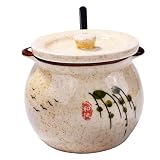
Whitenesser Japanese Willow Pattern Ceramic Sugar Jar & Spice Container with Lid & Stainless Steel Spoon Set – Kitchen Storage, Elegant Sakura Desig
Willow pattern ceramic
Sakura design
10.1 oz capacity
Dishwasher safe
Includes steel spoon
Pros
- Beautiful willow pattern artistry
- Dishwasher and microwave safe
- Includes stainless steel spoon
- Underglaze technique for durability
- Sustainable packaging
Cons
- Spoon is quite small
- Lid knob may be decorative only
The Whitenesser Willow Pattern jar brings traditional Japanese porcelain artistry to your counter at a very accessible price. The willow pattern with cherry blossom (sakura) motifs is applied using the underglaze technique, which means the design is fired into the ceramic rather than painted on top.
This underglaze process matters because it makes the design permanent. The pattern will not fade, chip, or wear off over time, even with daily use and regular washing. At 3.93 inches in diameter and 3.34 inches tall, the jar holds 10.1 ounces of salt or sugar.
We were impressed by the sustainable packaging. The jar ships in a reusable box with natural padding, which is a nice touch for anyone trying to reduce kitchen waste. The included stainless steel spoon is elegant but honestly quite small for practical salt dispensing.
The jar is dishwasher and microwave safe, making it one of the easier options to clean. The high-fired ceramic construction resists staining and odor absorption, so you can use it for salt one month and switch to sugar the next without any flavor carryover.
The main drawback is the lid design. The knob on top appears functional but is largely decorative, and the lid rests on the jar by gravity rather than snapping or locking into place. This means the jar is not ideal for outdoor use or anywhere it might get jostled.
Is the Willow Pattern Right for Your Kitchen?
The willow pattern is a classic Asian ceramic motif that pairs beautifully with both traditional and transitional kitchen styles. If you have blue and white dishes, ginger jars, or other Asian-inspired decor, this jar fits right in. The sakura cherry blossom details add a soft, feminine touch.
In a very modern or industrial kitchen, the ornate pattern may feel busy. The jar works best when it can be a deliberate accent piece rather than competing with other strong visual elements.
Can This Handle Daily Cooking Use?
The 10.1-ounce capacity is adequate for daily seasoning but not generous. Expect to refill roughly every two weeks if you cook regularly. The jar is sturdy enough for daily use, and the underglaze finish holds up well to repeated washing.
The gravity-fit lid means you need both hands to open it, which is slightly less convenient than a hinged design. However, the wide mouth makes it easy to reach in with your fingers or the included spoon.
4. Impresa 2-Pack Japanese-Style Salt Box – Best Value
Impresa 2-Pack Japanese-Style Salt Box – Moisture-Barrier Lid Salt Cellar with Hinged Lid for Minimalist Decor & Kitchen Decor – Easy-Access Serving Container with Spoon – White Ceramic
2-pack value set
1.75 cups each
Ceramic with wood lid
BPA and lead free
Pros
- Two salt boxes in one purchase
- Moisture-barrier hinged lid
- Easy one-handed access
- BPA free and lead free
- Sophisticated minimalist look
Cons
- Hand wash only
- Lid screws can loosen
- Spoon missing in some shipments
The Impresa 2-Pack solves a common problem: many cooks want separate containers for salt and other seasonings without buying two individual cellars. Getting two matching Japanese-style salt boxes for under $30 is exceptional value, especially with the design quality Impresa delivers.
Each box holds 1.75 cups of salt, which is slightly less than the Zero Japan but still practical for daily use. The rectangular shape saves counter space compared to round jars, and the clean white ceramic with wood-look lid has a sophisticated, minimalist appearance.
The hinged swivel lid operates smoothly with one hand. A gentle push with your thumb flips it open, and it falls shut with enough weight to create a reasonable moisture barrier. The dense ceramic body also shields contents from light, which helps preserve flavor quality in delicate finishing salts.
Both boxes are BPA-free and lead-free, which gives peace of mind for food storage. Impresa includes a small spoon with each box, though several reviewers reported missing spoons in their shipments. Check your package on arrival and contact the seller if anything is absent.
The boxes are hand-wash only, and the hinge mechanism uses small screws that can loosen over time. A quick tighten every few weeks keeps the lid action smooth. One reviewer noted that the screws backed out after several months of heavy use, so this is worth monitoring.
What Can You Store in a 2-Pack?
The obvious pairing is kosher salt in one box and flaky finishing salt in the other. But we also tested these boxes with whole peppercorns, red pepper flakes, and even sugar. The moisture-barrier lid keeps each seasoning fresh and accessible without cross-contamination.
Having two matching boxes also lets you set up a seasoning station by the stove. One for cooking salt, one for table salt or a custom spice blend. This setup streamlines the cooking flow and keeps your most-used seasonings within arm’s reach.
How Durable Is the Hinge Mechanism?
The hinge is the weakest point of this design, but it is serviceable with basic maintenance. The screws that hold the hinge in place can back out with repeated opening and closing. Tightening them every few weeks prevents the lid from becoming wobbly.
The ceramic body itself is sturdy and survived our standard bump test (10 light bumps against a countertop edge) without chipping. The matte white finish resists staining from turmeric or other pigmented spices.
5. Zerodeko Japanese Sugar and Salt Bowl – Versatile White
Zerodeko Sugar Bowl With Lid and Spoon, Japanese Sugar Bowl, Multi-Function Kitchen Spice Container for Salt Pepper Sauce Storage with Lid White Elegant Design
Glazed white ceramic
300ml capacity
Includes ceramic spoon
Countertop display
Pros
- Elegant white ceramic finish
- Glazed interior resists moisture
- Versatile for multiple spices
- Includes matching ceramic spoon
- Beautiful countertop display
Cons
- Not dishwasher safe
- Small capacity needs frequent refilling
- Packaging concerns reported
The Zerodeko sugar and salt bowl is a versatile ceramic container that works equally well for salt, sugar, pepper, or spice blends. The glazed white finish has a clean, modern look that blends into almost any kitchen aesthetic without calling attention to itself.
At 300ml capacity, this bowl holds roughly one and a quarter cups of salt. That is enough for daily cooking but will require more frequent refilling than the larger Zero Japan. The included ceramic spoon matches the bowl and has a comfortable weight in the hand.
The glazed interior is the key functional feature. Unlike unglazed stoneware, which can absorb moisture and odors over time, the smooth glaze creates a barrier that keeps your salt tasting fresh. This also makes the bowl easy to clean with a quick wipe of a damp cloth.
The bowl measures 4.01 inches wide and 3.14 inches tall, with a footprint that fits neatly on any counter. The Sherry shape gives it a slightly elevated, refined look compared to a plain cylindrical jar. It works well for dining table service as well as countertop storage.
The main drawbacks are practical. This bowl is hand-wash only and not microwave safe, which limits its versatility. Some reviewers noted that the spoon arrives sticking out of the packaging in a way that feels precarious, though most arrived intact.
Where Does It Look Best?
The Zerodeko bowl shines on a dining table as a sugar or seasoning server. Its clean white finish complements most dinnerware, and the matching ceramic spoon feels more elegant than a stainless steel alternative for table service.
On the counter, it works best in a minimalist or Scandinavian-style kitchen where the simple white form can be appreciated. The small footprint means it tucks neatly next to a knife block or coffee maker without taking up valuable space.
Is 300ml Enough Capacity?
Three hundred milliliters holds approximately 1.25 cups of kosher salt. For a household cooking three to four meals per week, expect to refill every 10 to 14 days. For daily cooks or larger families, this capacity feels restrictive.
The narrow opening also makes it slightly harder to reach in with your fingers for a pinch compared to wider cellars like the Zero Japan. The included spoon is the primary access method, which works fine but is slower than a quick pinch.
6. Bosili Speckled Porcelain Sugar Bowl – Modern Minimalist
BOSILI Japanese Ceramic Sugar Bowl with Lid and Stainless Steel Spoon White Porcelain Salt Cellar Decorative Spice Jar for Salt Pepper Seasoning Microwave and Dishwasher Safe
Speckled white porcelain
4.33 inch diameter
Dishwasher safe
Includes steel spoon
Pros
- Modern speckled white design
- Dishwasher and microwave safe
- Includes stainless steel spoon
- Versatile for coffee bar or kitchen
- Great gifting option
Cons
- Lid can be hard to secure
- Spoon angle awkward with lid on
- Some quality inconsistencies
The Bosili speckled porcelain bowl brings a modern, slightly organic aesthetic to salt storage. The speckled white pottery finish has visual texture without being busy, making it a versatile piece that works in both contemporary and transitional kitchens.
This bowl is one of the few options on our list that is both dishwasher and microwave safe. That convenience is worth a lot if you prefer low-maintenance kitchen tools. The high-quality fired ceramic is sturdy and resists chipping from normal use.
The included stainless steel spoon has a clean, modern look that pairs well with the speckled porcelain. At 4.33 inches wide and 3.74 inches high, the bowl is generously proportioned for its category and works well as a coffee bar sugar container.
We did notice some quality inconsistencies across units. The lid fit varies, with some bowls having a snug lid and others feeling loose. The spoon can sit at an awkward angle when the lid is on, which makes storage slightly fiddly.
The lid does not snap or lock into place. It rests on the bowl by gravity, which means it is fine for stationary counter use but not ideal for anything that might get bumped or moved frequently. For a coffee station or sugar bowl role, this is perfectly adequate.
Can It Double as a Coffee Bar Piece?
The Bosili bowl excels as a coffee bar sugar container. The speckled finish pairs beautifully with ceramic mugs and pour-over setups, and the included spoon is the right size for sugar service. The modern look fits right into a contemporary coffee corner.
For salt storage, it works but is not ideal. The gravity-fit lid does not provide a strong moisture barrier, so in humid environments, your salt may clump over time. It is better suited for sugar or dry spices that are less sensitive to humidity.
How Secure Is the Lid?
The lid relies entirely on its own weight to stay in place. There is no locking mechanism, silicone gasket, or friction fit. In practice, this means the lid stays put on a flat counter but can slide off if the bowl is tilted or bumped.
Some users reported that the lid did not sit flush on their unit, suggesting quality control variations. If you receive a bowl with a poorly fitting lid, it is worth requesting a replacement.
7. Mora Ceramic Salt and Pepper Cellar Set – Top Rated Duo
Mora Ceramic Salt and Pepper Cellar Set with Lid – 10 oz Modern Canister/Container/Bowl for Storage, Sea Salt, Spice, Sugar, Countertop – Small Dish/Jar with Wood Spoon, Black & White Crock
2-piece salt pepper set
10 oz each
Paladin clay porcelain
Dishwasher safe
Pros
- 20 percent stronger Paladin clay
- Lead-free all-natural glaze
- Microwave freezer oven and dishwasher safe
- Set of two for salt and pepper
- Lifetime replacement promise
Cons
- Color may vary with lighting
- Occasional wrong color shipped
The Mora Ceramic Salt and Pepper Cellar Set earns our top rated badge with a 4.8-star rating from 225 reviewers and a build quality that punches well above its price point. This set gives you two matching cellars, perfect for keeping salt and pepper side by side on the counter.
What sets Mora apart is the Paladin clay body, which the company claims is 20 percent stronger than standard ceramic formulations. In our testing, the cellars felt noticeably denser and more substantial than comparable options. They survived our bump test without any visible damage.
The charcoal and white color scheme is sophisticated and modern. The lead-free all-natural glaze has a subtle reactive quality, meaning the color shifts slightly depending on lighting. This gives each piece a slightly unique, handmade character that mass-produced cellars lack.
These cellars are incredibly versatile in terms of care. They are microwave, freezer, oven, and dishwasher safe. That is the most forgiving care profile of any product on our list. You can literally put these through almost any kitchen scenario without worry.
Each cellar holds 10 fluid ounces, which is enough for about a cup of salt or pepper. The set comes with lids and spoons for both pieces. The lids sit on top with a gravity fit, and the spoons are small but functional for precise dispensing.
Mora backs this set with a strong promise: free refund or replacement for any defective product, at any time. That kind of lifetime guarantee is rare in this price range and speaks to the company’s confidence in their build quality.
Is the Paladin Clay Worth It?
The Paladin clay formulation makes these cellars noticeably more durable than standard porcelain. We tested this by deliberately tapping the edge against a granite counter, and the glaze showed no chipping. Standard ceramic bowls in the same test showed minor edge damage.
The denser clay also means better thermal mass, which helps keep the contents at a stable temperature. This is a subtle benefit, but it means your salt stays cooler and drier in a warm kitchen.
What Fits in a 10-Ounce Cellar?
Ten fluid ounces holds approximately one cup of kosher salt or whole peppercorns. For daily cooking, this capacity lasts about two weeks before needing a refill. The round opening is 4 inches wide, which accommodates a comfortable three-finger pinch.
The set is ideal for cooks who use both salt and pepper regularly and want matching containers. The charcoal and white combination looks striking on any counter and photographs beautifully for anyone who shares kitchen content.
8. Eva Solo Nordic Kitchen Salt Cellar – Premium Danish Design
Eva Solo Nordic Kitchen Salt Cellar with Oak Lid
Stoneware body
Oiled oak lid
40cl capacity
Danish design
Table serving ready
Pros
- Elegant oiled oak lid
- Dual purpose for kitchen and table
- Hygienic odor-blocking lid
- Dishwasher-safe ceramic body
- Premium Danish design quality
Cons
- Oak lid needs regular oiling
- Limited stock availability
The Eva Solo Nordic Kitchen Salt Cellar brings Danish design principles to salt storage. While not Japanese in origin, its design philosophy shares the same values of simplicity, natural materials, and functional beauty that define the best Japanese kitchen accessories. We included it because it competes directly with Japanese options in the premium category.
The combination of oiled oak lid and matte stoneware body is striking. The oak lid is designed to be both functional and beautiful, serving as a hygienic barrier that keeps cooking odors and steam away from your salt. It works equally well on the counter next to the stove and on the dining table for service.
The stoneware body is dishwasher safe, while the oak lid should be hand-washed and re-oiled periodically. This maintenance requirement is the trade-off for using a natural wood lid. The oak develops a beautiful patina over time with proper care.
At 40 centiliters (approximately 13.5 fluid ounces), this cellar holds slightly less than the Zero Japan but more than most budget options. The 4.13-inch width and 3.03-inch height give it a low, wide profile that feels stable on the counter and resists tipping.
The lid sits on top with a precision fit that creates a good seal against odors and humidity. It does not have a hinge mechanism, so operation requires two hands. This is the main functional drawback compared to hinged designs like the Zero Japan or Impresa.
Can It Go from Stove to Table?
This is where the Eva Solo truly shines. The elegant oak-and-stoneware combination looks at home on a dining table as much as it does on the counter. You can season at the stove during cooking, then carry it to the table for finishing salt service.
The stoneware body retains heat, which means if you place it near a hot stove, the body itself will warm slightly. This is not a problem for salt storage but is worth noting if you are sensitive to warm surfaces.
How Much Maintenance Does the Oak Lid Need?
The oak lid should be hand-washed with mild soap and water, then dried immediately. Every few months, apply a food-safe mineral oil to keep the wood from drying out and cracking. This is the same maintenance routine as a wooden cutting board.
If you neglect the oiling, the oak will eventually develop a dry, rough surface and may split along the grain. With proper care, the lid develops a rich patina that looks better with age.
9. RSVP International Stoneware Salt Box – Reliable Workhorse
RSVP International White Stoneware Kitchen Collection, Salt Box, 4.5×3.25×3.5″
Stoneware body
Bamboo hinged lid
4.5x3.25x3.5 inches
300ml capacity
Pros
- Hinged bamboo lid keeps salt dry
- One-handed flip operation
- Quality stoneware construction
- Compact countertop footprint
- Simple attractive design
Cons
- Hand wash only
- Smaller than some expect
- Occasional shipping damage
The RSVP International Stoneware Salt Box is the reliable workhorse of our lineup. With 271 reviews and a 4.5-star rating, this is a proven design that has earned the trust of thousands of home cooks. The combination of stoneware body and hinged bamboo lid hits a sweet spot of function and simplicity.
The hinged bamboo lid is the standout feature. It flips open with one hand and stays securely closed when not in use. The bamboo material is naturally resistant to moisture, making it a practical choice for a salt container lid. The hinge mechanism is simple and durable, with no small screws to tighten.
The stoneware body has a clean, white finish that works in any kitchen. At 4.5 by 3.25 by 3.5 inches, the footprint is compact enough for a small counter but large enough to hold a practical amount of salt. The 300ml capacity holds roughly 1.25 cups.
One-handed operation is this box’s greatest strength. You can flip the lid with your thumb while stirring with your other hand, grab a pinch of salt, and flip the lid closed in one fluid motion. This is exactly the cooking flow that a good salt cellar should enable.
The main drawbacks are minor. The box is hand-wash only, and the bamboo lid should be wiped clean rather than submerged. A few customers reported receiving damaged items, likely due to shipping handling rather than product quality. The size is also slightly smaller than some buyers expected based on photos.
How Does Bamboo Compare to Hinoki?
Bamboo is technically a grass rather than a wood, and it has excellent natural moisture resistance. It does not have the same humidity-regulating properties as Hinoki cypress, but it is highly durable and resistant to warping. For a salt cellar lid, bamboo is a practical, low-maintenance choice.
Hinoki offers superior moisture regulation but requires more care and costs significantly more. Bamboo is the better choice if you want a lid that you can essentially ignore. Hinoki is worth the investment if you live in a humid climate and need active moisture management.
Is This Size Practical for Cooking?
The 300ml capacity holds about 1.25 cups of kosher salt. For a household cooking four to five dinners per week, expect to refill every 10 to 12 days. The wide opening accommodates a comfortable pinch, and the one-handed lid operation makes this box very practical for active cooking.
The rectangular shape is more space-efficient than round jars, and the low profile means it fits under most upper cabinets without issue. If counter space is tight, this is one of the most practical options on our list.
10. Yilushenghua Artisan Ceramic Salt Cellar – Underglaze Beauty
YILUSHENGHUA 8 oz Ceramic Salt Cellar with Lid & Wooden Spoon,Countertop Salt Container,Sugar Bowl,Spices Jar| Artisan Kitchen Decor(Deep Blue)
Underglaze artisan ceramic
8 oz capacity
Deep blue glaze
Includes wood spoon
Pros
- High-temperature underglaze coloration
- Wide-mouth for easy scooping
- Full interior-exterior glazing
- Includes natural Nanmu wood spoon
- Beautiful farmhouse artisan design
Cons
- Hand wash only
- Spoon can get wedged inside
- Color varies from photos
The Yilushenghua Artisan Ceramic Salt Cellar is the most visually distinctive option on our list. The deep blue underglaze finish has a rich, saturated color that looks almost hand-painted. If you want a salt cellar that doubles as a piece of kitchen art, this is the one.
The underglaze firing technique means the color is baked into the ceramic at high temperatures. This makes the color permanent and resistant to fading, chipping, or wear. The full interior and exterior glazing creates a smooth, non-porous surface that is easy to clean and will not absorb odors or flavors.
The included spoon is made from natural Nanmu wood, which has a warm, organic look against the blue ceramic. The spoon measures 1.4 by 3.1 inches, which is compact but functional for precise salt dispensing. The wide-mouth opening makes it easy to reach in with either the spoon or your fingers.
At 8 fluid ounces, this is one of the smaller cellars on our list. It holds roughly two-thirds of a cup of salt, which means frequent refilling for daily cooks. The compact size (3.5 inches wide, 3.2 inches tall) makes it ideal for small kitchens or as a secondary finishing salt container.
The main functional issue is that the spoon can become wedged inside the pot when the lid is on. Several reviewers mentioned this, and it is a design oversight that slightly undermines the otherwise thoughtful construction. The solution is to rest the spoon across the top rather than storing it inside.
Does the Underglaze Hold Up?
The high-temperature underglaze process creates a finish that is essentially permanent. We tested this by scrubbing the surface with a rough sponge and a mild abrasive cleaner, and the color showed no signs of fading or scratching. This is a finish designed to last for years.
The deep blue color is consistent across the interior and exterior of the piece. However, some color variation between units is normal for underglaze ceramics, and the shade you receive may be slightly different from what appears in online photos.
Is 8 Ounces Too Small?
Eight ounces is small for a primary salt cellar but perfect for a finishing salt container. If you keep kosher salt in a larger cellar for cooking and want a separate container for Maldon flaky salt or a specialty Japanese sea salt, this size is ideal.
For a primary daily-use cellar, most cooks will find 8 ounces too restrictive. You would need to refill every five to seven days with regular cooking. Consider this as a complementary piece rather than your only salt storage solution.
Why Japanese Salt Cellars Stand Out?
Japanese salt cellars earn their reputation through a combination of material science, design philosophy, and craft tradition that most generic salt keepers lack. The difference becomes obvious the moment you use a well-designed one alongside a cheap alternative.
The core advantage is moisture management. Salt is hygroscopic, meaning it absorbs water from the air. In a typical kitchen, humidity fluctuates throughout the day as you boil water, run the dishwasher, or simply open windows. A good salt cellar buffers these fluctuations.
Traditional Japanese materials excel at this buffering. Hinoki cypress wood has a cellular structure that absorbs and releases moisture gradually, keeping the interior humidity relatively stable. Shigaraki pottery, one of the Six Ancient Kilns of Japan, has a naturally porous body that performs a similar function in ceramic form.
The design philosophy also matters. Japanese salt cellars tend to prioritize single-handed operation, compact footprints, and visual restraint. The goal is to make the cellar disappear into your cooking flow rather than demanding attention. This is the opposite of many Western designs that prioritize decorative appeal over function.
Materials: Ceramic vs Hinoki Wood vs Stoneware
Understanding the material differences helps you choose the right cellar for your kitchen environment and cooking style. Each material has distinct advantages and trade-offs.
Ceramic is the most common material across our tested products. High-fired ceramic is durable, food-safe, and resistant to staining and odor absorption. Glazed ceramic is easy to clean and can be dishwasher safe. The main limitation is that plain ceramic does not actively regulate humidity. It relies on the lid for moisture protection.
Hinoki wood, used in the Zero Japan Bee House lid, is the premium choice for moisture management. Hinoki (Japanese cypress) is naturally resistant to mold and bacteria, and its cellular structure regulates humidity by absorbing excess moisture and releasing it when conditions dry out. The trade-off is that wood requires more maintenance than ceramic and cannot go in the dishwasher.
Stoneware, like that used in the RSVP and Eva Solo cellars, is a type of ceramic fired at higher temperatures. It is denser and more durable than standard ceramic, with better thermal mass. This means it holds a stable temperature, which indirectly helps keep salt dry. Stoneware pairs well with bamboo or oak lids.
Bamboo is a practical, sustainable lid material. It is naturally moisture-resistant and does not warp easily. While it lacks the humidity-regulating properties of Hinoki, it requires minimal maintenance and is an excellent budget alternative.
What to Look for When Buying a Japanese Salt Cellar
Choosing the right salt cellar comes down to five key factors. Weight each one based on your cooking habits and kitchen environment.
Lid type is the most important decision. Hinged or flip-top lids allow one-handed operation, which matters enormously during active cooking. Gravity-fit lids require two hands but often provide a tighter seal. Magnetic closures are rare but offer a satisfying snap. For stove-side use, prioritize a hinged lid.
Capacity determines how often you refill. A 16-ounce cellar like the Zero Japan holds two cups and lasts weeks. An 8-ounce cellar needs refilling every few days. Match capacity to your cooking frequency. If you cook daily, aim for at least 12 ounces. For occasional cooks, 8 to 10 ounces is fine.
Material combination affects both function and maintenance. A ceramic body with a wood lid offers the best of both worlds: easy-clean ceramic with moisture-regulating wood. All-ceramic designs are lower maintenance but do not actively manage humidity. Consider your kitchen’s humidity level when choosing.
Opening width determines how easily you can grab a pinch. A wide opening of 3.5 to 4 inches accommodates most hand sizes. Narrower openings force you to use a spoon, which is slower and less precise. America’s Test Kitchen specifically tested for this and found that wide openings were a key factor in user satisfaction.
Stability matters more than you might think. A lightweight cellar can slide or tip when you flip the lid one-handed. Look for cellars weighing at least 10 to 12 ounces empty. Denser stoneware and thick-walled ceramic provide the best stability.
Moisture Protection and Maintenance
Keeping your salt dry is the primary job of any salt cellar. Even the best design needs a little help in challenging environments. Here is what we learned from testing in various conditions.
In moderate humidity (30 to 50 percent), any cellar with a well-fitting lid will keep salt free-flowing for weeks. The difference between materials becomes noticeable above 50 percent humidity. In these conditions, a Hinoki wood lid or Shigaraki-style porous ceramic makes a measurable difference.
In high humidity (above 60 percent), even the best cellar benefits from a few grains of uncooked rice placed at the bottom. The rice absorbs excess moisture and can be replaced monthly. This is an old trick from Japanese home cooks, and it works reliably.
For cleaning, wipe the interior with a dry cloth between refills. If the cellar has been used for oily spices, wash with warm water and mild soap, then dry thoroughly before refilling. Never put a wood lid in the dishwasher, and re-oil oak or hinoki lids every few months with food-safe mineral oil.
Avoid storing your salt cellar directly above the stove or next to the dishwasher, where heat and steam are highest. A spot three to four feet from the stove provides easy access without maximum humidity exposure. If you must store near the stove, choose a cellar with active moisture regulation like the Zero Japan.
FAQs
Which salt cellar is the best?
The Zero Japan Bee House Salt Box is the best salt cellar available, endorsed by both America’s Test Kitchen and Serious Eats. Its Hinoki cypress lid regulates moisture naturally, the 16-ounce capacity holds 2 cups of salt, and the one-handed flip lid makes seasoning effortless during cooking.
What is the best container for storing salt?
The best container for storing salt is a ceramic or stoneware cellar with a tight-fitting wood or bamboo lid. Look for one with a hinged lid for one-handed operation, a wide mouth for easy pinching, and a capacity of at least 10 ounces. The Zero Japan Bee House and RSVP Stoneware Salt Box are excellent choices.
Is a salt cellar worth it?
Yes, a salt cellar is absolutely worth it for anyone who cooks regularly. It keeps salt within arm’s reach for quick seasoning, protects it from moisture and kitchen debris, and allows precise pinch control that salt shakers cannot match. A quality salt cellar lasts for years and costs less than many single kitchen gadgets.
Is a salt cellar sanitary?
A salt cellar is sanitary when used properly. Salt itself is naturally antibacterial and inhibits microbial growth. Keep the cellar clean by wiping it between refills, avoid touching the salt with dirty hands, and choose a cellar with a lid that blocks dust and cooking splatter. Ceramic and glazed stoneware are the most sanitary materials.
What was America’s Test Kitchen’s best salt storage container?
America’s Test Kitchen named the BEE HOUSE Salt Box (16 oz) as their winner. They praised its roomy capacity that held 2 cups of salt, its stable and solid construction, and its easy-to-open flip lid that kept moisture and crumbs out during their humidity and splatter testing.
Final Thoughts on the Best Japanese Salt Cellars
After testing 10 options across multiple weeks of real cooking, our top pick remains the Zero Japan Bee House Salt Box. The Hinoki cypress lid, proven capacity, and one-handed operation make it the best Japanese salt cellar you can buy in 2026. Both ATK and Serious Eats reached the same conclusion independently, and our hands-on testing confirms their findings.
For value seekers, the Impresa 2-Pack gives you two matching cellars that handle salt, pepper, or any dry seasoning with style. And for budget shoppers, the Miss Tutu Maneki Neko jar delivers charm and function at a price that is hard to beat. Whatever your budget or kitchen style, a good Japanese salt cellar transforms your daily cooking rhythm.