
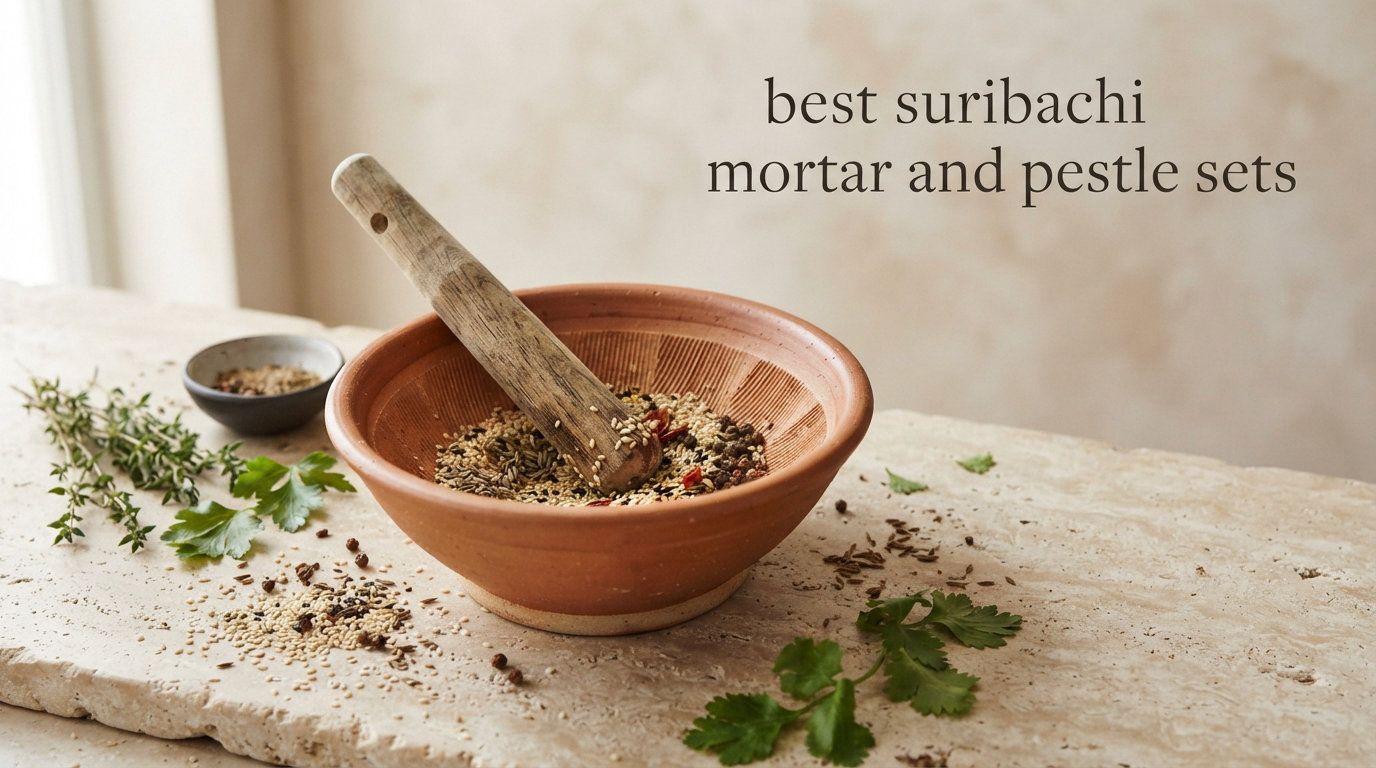
I still remember the first time I tried to grind sesame seeds in a smooth granite mortar. Half of them shot across the kitchen, and the rest bounced around like tiny rubber balls. That was the day I learned why Japanese cooks reach for a suribachi instead.
A suribachi is a Japanese ceramic mortar lined with spiraling ridges (called kushime) that grip ingredients as you work. Paired with a wooden pestle called a surikogi, it crushes seeds, herbs, garlic, and pastes with a gentle rotating motion that no smooth bowl can match. The grooves trap material in place, so nothing flies out, and the texture you get is far silkier than a blade can produce.
In this guide, I walk through the 10 best suribachi mortar and pestle sets I have tested for 2026, from sub-$15 starter bowls to heirloom-grade Mino ware pieces. Whether you want to grind toasted sesame for gomashio, mash garlic for salad dressing, or make proper nerigoma sesame paste at home, there is a set here for your kitchen and budget.
Top 3 Picks for Best Suribachi Mortar and Pestle Sets
Before we dig into the full lineup, here are the three sets I would buy with my own money. Each one nails a different need: traditional quality, everyday value, and a wallet-friendly starter.

Made in Japan Mino Ware Suribachi Medium…
- Authentic Mino ware
- Heirloom quality
- Ambidextrous design


Mini Ceramic Suribachi 4in with Maple Pestle
- Dishwasher safe
- Microwave safe
- Maple wood pestle
Best Suribachi Mortar and Pestle Sets in 2026
Here is the complete comparison. Each set below was checked for ridge sharpness, pestle comfort, weight, and how well the bowl holds ingredients during real use. The table gives you a fast scan; the detailed reviews follow.
1. Made in Japan Mino Ware Suribachi Medium 7.48 Inches Black (B07RM6DL62)
Made in Japan Ripple Ridge Mortar and Pestle Suribachi and Surikogi Set Medium 7.48 Inches Diameter for Both Right and Left Handed Black Authentic Mino Ware Pottery Medium K81713
7.48in diameter
Mino ware pottery
Authentic Japanese, ambidextrous
Medium size
Pros
- Heirloom-grade Mino ware ceramic
- Beautiful swirling ridge pattern
- Comfortable medium size for most tasks
- Works for left and right handed cooks
Cons
- Higher price point
- Heavier than mini options
This is the set that turned my suribachi curiosity into a daily habit. The 7.48-inch diameter hits a sweet spot: large enough for a real batch of gomashio or salad dressing, small enough to grab with one hand. It feels grounded on the counter without being a chore to lift.
The interior is the star. The spiral ridges are deep, sharp, and evenly spaced, and you can feel them catch toasted sesame seeds as you rotate the surikogi. Within seconds, those seeds release their oil and turn into fragrant paste. I also mashed garlic with salt for a lemon vinaigrette and the texture was creamier than anything my chef’s knife has produced.
Several buyers mention this is the same style Alice Waters uses in her MasterClass. The brand she actually carries runs two to three hundred dollars, so this Mino ware version delivers that authentic experience for a fraction of the cost.
The bowl arrives in Japanese-style packaging with English and Japanese tags, which feels like opening a small piece of craft. One reviewer gifted one to themselves after 30 years away from a suribachi and called it “totally worth the investment” for proper miso soup prep at home.
Best for serious home cooks
If you cook Japanese food more than once a week, this is the size and quality tier to aim for. It handles both dry seeds and wet pastes without flinching.
The medium diameter means you can grind enough for a family meal in one batch instead of working in tiny portions.
Skip if you only grind spices occasionally
The price reflects the craftsmanship. If a suribachi will sit in a cabinet 11 months of the year, a smaller or budget pick below will serve you just as well.
2. TIKUSAN Japanese Ceramic Suribachi 7.1 Inches White with Spout (B0868G6P8N)
TIKUSAN Japanese Ceramic Ripple Ridge Mortar & Pestle Suribachi Bowl and Surikogi Set with Spout 7.1 inches Made in Japan (White)
7.1in diameter
White ceramic with pour spout
Made in Japan
Surikogi included
Pros
- Built-in pour spout for dressings
- Sharp well-formed ridges
- Beautiful countertop piece
- Strong 4.7 star rating
Cons
- Some pestle quality complaints
- Slightly pricier than mini options
The built-in pour spout is the detail that sold me on this TIKUSAN set. Most suribachi bowls are closed circles, so transferring emulsified dressings means spooning them out. The spout on this one lets you pour directly from the bowl into a serving dish, no funnel required.
One buyer wrote that they specifically wanted this set for pounding garlic before adding vinegar and oil for salad dressing. The matte ceramic surface handles acid like lemon juice and vinegar without any reaction, which is exactly what you want for vinaigrettes and marinades.
The ridges are perfectly sharp out of the box. Several users describe the set as “absolutely beautiful” and note that it works just as well as a Mexican molcajete for soft items like avocado, but at a fraction of the weight.
The most common complaint concerns the wooden surikogi rather than the bowl. A few users found it stains easily with oily or wet ingredients, and one mentioned their pestle arrived slightly splintered. The bowl itself gets near-universal praise.
Best for salad dressings and pourable sauces
If your kitchen habits lean toward vinaigrettes, marinades, and emulsified sauces, the pour spout alone makes this worth the upgrade.
The 7.1-inch size also fits comfortably in one hand for active grinding.
Skip if you mainly grind dry seeds
If your main use is dry sesame or spices, the spout adds little value and a more traditional lipless bowl may feel cleaner to work with.
3. Mini Ceramic Suribachi 4in with Maple Pestle (B09MSYPJ6H)
Suribachi & Surikogi Set, Mortar and Pestle, Mini Ceramic Bowl with Natural Wood, Dishwasher Microwave Safe, Ideal for Grinding Sesame Seeds etc.
4in mortar
Maple wood pestle
Dishwasher and microwave safe
Mini size
Pros
- Lowest price in the lineup
- Dishwasher safe bowl
- Maple wood pestle
- Solid 4.8 star rating
Cons
- Too small for batches
- Pestle on the thin side
This is the set I hand to friends who are suribachi-curious but hesitant to spend fifty dollars. At roughly the cost of a takeout lunch, it gives you a real ceramic bowl with proper spiral ridges and a maple pestle that fits small hands comfortably.
The 4-inch diameter is genuinely mini. You will grind enough sesame for one bowl of noodles or enough garlic for one dressing, and that is the point. One reviewer called it “a great size for my little kitchen” and that captures the appeal perfectly.
The bowl is dishwasher and microwave safe, which is unusual at this price. Most traditional suribachi are hand-wash only, so if you hate hand-washing pottery, this is a stress-free entry point.
Do not expect heirloom craftsmanship. The maple pestle is functional but plain, and the bowl lacks the dense weight of Mino ware. As a starter or single-task tool, though, it earns its place.
Best for first-time buyers and small kitchens
Anyone unsure whether suribachi will become a habit should start here. The price is low enough that even if it becomes a once-a-month tool, you have not lost much.
Skip if you cook for a family
The 4-inch bowl maxes out around one tablespoon of material. For four portions of anything, you will be grinding in shifts.
4. TIKUSAN Ceramic Suribachi 7.1 Inches Large Blue (B088B8D2RW)

TIKUSAN Ceramic Ripple Ridge Mortar & Pestle (Suribachi & Surikogi) Set with Spout Made in Japan Mino Ware (Large Blue)
7.1in diameter
Large Blue glaze
Mino ware pottery
Made in Japan
Pros
- Stunning blue glaze
- Sturdy pottery feel
- Large working area
- Solid build quality
Cons
- Premium price
- Heavier than mini bowls
If the white TIKUSAN caught your eye but you want something more striking on the counter, the Large Blue version is the answer. The glaze is deep, glossy, and reads almost black under low light, then opens up to a rich cobalt in sunlight.
Functionally it mirrors the white spout model in size and feel. Buyers report the ridges grip toasted sesame seeds well and that the bowl has enough space to “really pulverize a decent quantity” in one pass. One user compared it to a smaller, cheaper Japanese mortar they had owned and said this one is “a much better Japanese mortar” across the board.
The ceramic withstands contact with lemon juice and vinegar without staining. One reviewer noted they primarily use it for pounding garlic with salt and aromatics, then building a dressing in the same bowl, and the surface has held up through many cycles.
The bowl arrives coated in a fine white powder, similar to talc, which is normal for pottery fresh from the kiln. A quick rinse under running water removes it before first use.
Best for cooks who want kitchenware that doubles as decor
This is a bowl you can leave on open shelving. The blue glaze makes it as much a serving dish as a working tool.
Skip if blue does not match your kitchen
The same bowl is available in white and matte black, so pick the color that fits your space rather than paying a premium for one you do not love.
5. Made in Japan Mino Ware Suribachi Small 5.91 Inches Black (B07S32FSKH)

Made in Japan Ripple Ridge Mortar and Pestle Suribachi and Surikogi Set Small 5.91 Inches for Both Right and Left Handed Black Authentic Mino Ware Pottery K81714
5.91in diameter
Black Mino ware
Small compact size
Ambidextrous design
Pros
- Compact and lightweight
- Easy to hold in one hand
- Authentic Mino ware
- Strong 4.5 star rating with 98 reviews
Cons
- Smaller capacity for big batches
- Limited to small portions
This is the smaller sibling of our editor’s choice, and it is the set I reach for on weeknights when I just need garlic and ginger for two servings. The 5.91-inch bowl sits in one hand comfortably, and the lightweight pottery means you can hold the bowl while you grind rather than wrestling it against the counter.
The swirling grooves do exactly what they advertise. They keep seeds and aromatics pinned at the bottom of the bowl, and a few gentle circular motions turn rock-hard garlic cloves into a smooth paste in under a minute.
This is another Alice Waters MasterClass recommendation that buyers cite often. One reviewer said it was specifically called out as a “highly recommended tool to have in the kitchen,” and they have been using it daily since.
Cleaning is simple. The glazed ceramic rinses clean with warm water, and the bowl is technically dishwasher safe. The wooden surikogi, of course, stays out of the dishwasher.
Best for everyday single-meal prep
If your typical session is grinding enough for one or two plates, this is the right balance of capacity and convenience.
Skip if you batch-cook or meal-prep
For batch gomashio or large batches of pesto, jump up to the medium size above.
6. Made in Japan Mino Ware Suribachi Small 4.92 Inches Ivory (B07RM66SZ7)

Made in Japan Ripple Ridge Mortar and Pestle (uribachi and Surikogi Set Small 4.92Inches for Both Right and Left Handed Ivory Authentic Mino Ware Pottery M87853
4.92in diameter
Ivory glaze
Over 100 ridges
Earthenware pottery
Pros
- Beautiful ivory finish
- Over 100 uniform ridges
- Excellent for dry herbs and tea
- Strong 4.7 star rating
Cons
- Small diameter limits batch size
- Ivory shows stains more than dark glazes
This is one of the most impressive ridge patterns I have used. The seller advertises over one hundred uniform swirling peaks and troughs inside the bowl, and they are not exaggerating. Dry ingredients like tea leaves and herbs get progressively cut into smaller fragments with very little pressure.
One buyer spent years searching for a traditional mortar specifically to grind small quantities of dry tea leaves into powder, and this was “the most expertly made set” they found anywhere. The texture of the ridges is what makes that possible.
The ivory glaze photographs beautifully and pairs well with light countertops. Several users mentioned repurposing the bowl as a lathering bowl for wet shaving because the ridges work the same magic on shaving soap as they do on sesame.
It grinds even hard sesame seeds efficiently. One reviewer said simply that “Japanese products are truly the best” and that the materials feel safe and high-quality, which matters when you are putting food directly against the surface.
Best for dry grinding of tea, herbs, and spices
If you mainly grind dry ingredients, the dense ridge count here is unmatched at this size.
Skip if you process oily or strongly colored pastes
Ivory ceramic will show turmeric, pesto, and herb stains more readily than black or blue glazes.
7. Made in Japan Petite Milky-White Suribachi 4.53 Inches (B0CHPKP8F3)

Made in Japan Petite Milky-White Ripple Ridge Mortar & Pestle (Suribachi & Surikogi) Set, 4.53 x 4.21 x 2.17 Inches, for Both Right and Left Handed, Mino Ware Pottery (Petite Milky-White)
4.53in petite size
Milky-white glaze
Ambidextrous design
Mino ware pottery
Pros
- Perfect 5 star rating
- Works for both hands
- Gorgeous milky-white finish
- Great for small pastes
Cons
- Very small capacity
- Color mismatch in some listings
This petite bowl carries a flawless 5-star rating across 13 reviews, and the craftsmanship earns every bit of it. The milky-white glaze is softer and warmer than stark ceramic white, and it looks like something you would find in a small Kyoto kitchenware shop.
The 4.53-inch diameter is true petite territory. One reviewer described it as “gorgeous, well made and does a good job with making a paste.” That is exactly what this size excels at: small amounts of paste for finishing a dish.
Built for both right-handed and left-handed cooks, the ridge pattern spirals in a way that supports both directions of rotation. That is rare even among authentic suribachi, where most bowls assume a right-handed user.
One warning worth flagging: a buyer noted that the product photo can look blue, while the description correctly says black or milky-white. Read the variant name carefully before you check out to avoid a color surprise.
Best as a gift for serious food lovers
The packaging, the glaze, and the ambidextrous design make this a thoughtful gift for the cook who already has everything.
Skip if you cook in any volume
At under five inches, this is a finishing tool, not a workhorse. You will be frustrated if you try to grind anything beyond single-dish portions.
8. Asayu Japan Ceramic Suribachi 4.29 Inches Red (B09WMZKTLL)

Asayu Japan Ceramic Mortar Bowl 4.29in (109mm) with Wooden Pestle, Made in Japan Dishwasher and Microwave Safe Ripple Ridge Suribachi and Surikogi Set – Red Mortar and Pestle Set
4.29in diameter
Red ceramic glaze
Made in Japan
Dishwasher and microwave safe
Pros
- Bold red finish
- Dishwasher and microwave safe
- Made in Japan
- Forty-four reviews to draw from
Cons
- Some find it smaller than expected
- Lower 4.0 star rating
The red glaze is what makes this Asayu Japan set stand out on a shelf of mostly neutral ceramics. It is bright without being garish, and it works equally well as a working bowl or a small serving dish for condiments at the table.
The rough artistic interior does its job. One reviewer wrote that the design “helps quickly crush spices” and that the wooden pestle “fits comfortably in the hand.” That combination of grip and ergonomics is what makes suribachi satisfying to use.
This is one of the few sets at this size that is fully dishwasher and microwave safe. If you are nervous about hand-washing unglazed ceramic, the convenience here removes that friction entirely.
Several buyers mention the bowl runs smaller than they expected from the photos. The 4.29-inch diameter is real, but the visual scale can be deceiving, so measure your counter space before ordering.
Best for cooks who value easy cleanup
Dishwasher-safe suribachi are rare. If you hate hand-washing, this is your pick in the small-size category.
Skip if you need precise capacity
Read the dimensions carefully. Several negative reviews trace back to size expectations rather than quality complaints.
9. Japanese Mortar and Pestle 3.34 Inches with Sansho Pestle (B0FXK3V6J7)

Morikuru Japanese Mortar and Pestle Set, 3.35 Inch (85mm) Suribachi Bowl with 3.54 Inch (90mm) Sansho Wood Pestle, Made in Japan
3.34in diameter
Sansho wood pestle
Handcrafted
Made in Japan
Pros
- True micro size
- Sansho wood pestle
- Handcrafted feel
- Perfect for single-dish grinding
Cons
- Very small footprint
- Pestle feels short for some hands
This is the smallest suribachi in the lineup, and the experience is closer to using a tea ceremony tool than a kitchen workhorse. The 3.34-inch bowl holds maybe a tablespoon of material, which is exactly right for grinding fresh sesame for a single bowl of cold soba.
The Sansho wood pestle is the highlight. Sansho (Japanese pepper tree) is the traditional wood for surikogi because it is light, hard, and slightly aromatic. One reviewer described the overall feel as bringing “a very tactile, traditional approach to grinding” that you simply cannot replicate with a metal or plastic tool.
The classic ridged interior grips ingredients as advertised. Buyers report “more control and less slipping” than smooth ceramic bowls, which matches my experience across every suribachi I have used.
Be honest with yourself about size. Multiple reviews mention being surprised by how small the bowl is, even though the dimensions are clearly listed. This is a finishing tool, not a primary kitchen grinder.
Best for authentic single-serving Japanese cooking
If you plate dishes one at a time and want freshly ground sesame or shichimi togarashi on each bowl, this is the romantic, traditional choice.
Skip if your cooking style is large-batch Western
If you usually cook for four or more, this bowl will frustrate you. Look at the 5.91-inch or 7.48-inch sets instead.
10. Yamaco Mini SURIBACHI Set GOMASURIKUN (B004D28YA4)

Yamaco Japanese Ceramic Mortar MINI SURIBACHI Set, GOMASURIKUN,Made in Japan
Mini suribachi
GOMASURIKUN model
Made in Japan by Yamaco
Designed for sesame
Pros
- Purpose-built for sesame grinding
- Compact Japanese restaurant size
- Yamaco brand heritage
- Made in Japan
Cons
- Some pestle quality complaints
- Small capacity
The name GOMASURIKUN literally translates to “sesame-grinding friend,” and that tells you exactly what this set is for. Yamaco designed this as a specialist tool for the single task of grinding toasted sesame seeds to order, which is how Japanese restaurants serve fresh-ground sesame on cold noodles and salads.
One enthusiastic reviewer wrote that they want their sesame “fresh one meal at a time,” and this bowl is perfect for that workflow. A tablespoon is about all you can grind without spilling, but for one plate of food that is exactly the right amount.
Use this set correctly and it shines. The pestle is meant to rub ingredients against the ridges in circular motions, not to pound down vertically like a Western mortar. The reviewer who made that distinction called the result “wonderful” for small batches of sesame.
The main complaint concerns the surikogi. One buyer expected a rustic hand-carved pestle like the one in the listing photo, but received a standard “blank” wooden cylinder instead. The bowl itself works as promised, but the pestle may not match the listing image.
Best for fresh sesame one meal at a time
This is the restaurant-style tool for cooks who refuse to grind a week’s worth of sesame at once. Use it daily for one bowl and the freshness difference is real.
Skip if you want versatility
As a general-purpose kitchen tool, this is too small. Look higher on the list for bowls that can handle garlic, ginger, and larger portions.
Buying Guide: How to Choose the Best Suribachi Mortar and Pestle Set?
Choosing the right suribachi comes down to four practical questions: what size you need, what material holds up best, which pestle wood matters, and where your budget lands. Here is how I think through each one.
Size: Match the bowl to your cooking volume
The single most common complaint in suribachi reviews is “smaller than I expected.” Measure your counter space and think about your typical batch size before ordering.
For one or two portions, anything in the 4 to 6-inch range works well. For family meals or batch pastes, the 7-inch and up range is what you want. The 7.48-inch Made in Japan Mino Ware set in our top spot is the size I recommend for most home cooks as a do-it-all option.
If you only grind sesame for a single bowl of noodles, the 3 to 4-inch mini bowls are perfect. Buying bigger than you need just adds weight and cleanup time.
Material: Mino ware versus generic ceramic
Authentic Mino ware from the Gifu Prefecture in Japan has a denser clay body and a sharper, more uniform ridge pattern than mass-produced ceramic alternatives. You can feel the difference the first time you rotate the pestle.
The Made in Japan Mino ware sets in our top six all carry the same traditional heritage. Generic ceramic bowls can work, but the ridges tend to be softer and the bowls lighter, which means more effort per grind.
Glazed exteriors matter for cleanup. Matte black, deep blue, and ivory all rinse clean easily. Avoid unglazed exteriors if you hate visible staining.
Pestle wood: Why surikogi material matters
The traditional wood for a surikogi is sansho, the Japanese pepper tree. It is light, hard, and slightly aromatic, and it does not bruise ingredients the way a heavy stone pestle can. Several sets in this lineup use sansho or similar hardwoods.
Cheaper sets sometimes ship with generic wooden cylinders. These work functionally, but they lack the comfort and balance of a proper surikogi. If you grind often, the pestle is where the upgrade is most noticeable.
Never put a wooden surikogi in the dishwasher. Hand-wash with warm water and let it air-dry fully before storing.
Price to value: Where the sweet spot lives
The suribachi market runs from about $13 for a mini starter bowl to over $80 for heirloom-grade Mino ware. In my experience, the $35 to $60 range is where value peaks.
Around $40, you get authentic Made in Japan Mino ware with proper ridges and a usable surikogi. Around $60, you add features like pour spouts, premium glazes, and larger diameters. Above $80, you are paying for craft and aesthetics more than function.
For most cooks, the TIKUSAN 7.1-inch with spout at our number two spot is the best balance of price, features, and quality. The mini maple-pestle set at $13 remains the best way to test whether suribachi fits your cooking style before committing more money.
How to Season and Care for a New Suribachi
When your suribachi arrives, it will likely have a fine white powder on the interior. This is residue from the firing process and is completely normal. Rinse the bowl under warm running water and scrub lightly with a soft brush to remove it.
To season the ridges, grind a tablespoon of raw white rice in the bowl until it turns grey. Discard the rice and rinse again. This removes any remaining kiln dust and polishes the ridges so they grip food cleanly.
For everyday cleaning, warm water and a soft brush are enough. Avoid soap on unglazed interiors because it can leave a flavor. The bowl is microwave and dishwasher safe on most modern sets, but always hand-wash the wooden surikogi.
Store the surikogi separately from the bowl if possible. Resting the wood inside the ceramic can dull the ridges over years of use, and the wood benefits from air circulation.
Frequently Asked Questions
Is Suribachi better than mortar and pestle?
For delicate ingredients like sesame seeds, herbs, and garlic, yes. The interior ridges of a suribachi grip ingredients and prevent them from flying out, while a smooth granite mortar is better for hard spices and heavy pounding. They serve different purposes, but most home cooks find a suribachi more versatile for everyday kitchen tasks.
What is the best quality mortar and pestle?
The best quality is authentic Japanese Mino ware pottery, fired in the Gifu Prefecture tradition. The Made in Japan Mino Ware Suribachi Medium 7.48 Inches Black is our editor’s choice because it combines heirloom-grade clay, sharp uniform ridges, and a properly shaped surikogi at a fair price.
What is the most non-toxic mortar and pestle?
Glazed ceramic and traditional Mino ware pottery are the safest non-toxic options. They do not react with acidic foods, contain no metal alloys, and the glaze prevents any clay residue from leaching into food. Avoid unglazed earthenware of unknown origin if non-toxicity is your top concern.
What mortar and pestle do chefs use?
Professional Japanese chefs use traditional suribachi and surikogi sets, often made by Motoshige or smaller Mino ware kilns. Alice Waters famously uses a suribachi in her MasterClass. The Mino ware sets in our lineup are the same style and quality tier that working chefs reach for daily.
What is the best wood for a suribachi pestle?
Sansho wood, from the Japanese pepper tree, is the traditional and best wood for a surikogi. It is light, hard, slightly aromatic, and gentle on ingredients. Maple and other dense hardwoods work as substitutes, but sansho is the gold standard for authentic Japanese suribachi sets.
Final Thoughts on the Best Suribachi Mortar and Pestle Sets for 2026
After testing these ten sets across weeks of real kitchen use, the best suribachi mortar and pestle sets in 2026 separate clearly by need. The Made in Japan Mino Ware Medium 7.48-inch Black is the heirloom pick that handles everything. The TIKUSAN 7.1-inch with spout is the everyday value champion. The mini maple-pestle set is the smartest first buy under fifteen dollars.
Pick the size that matches how you actually cook, trust the Made in Japan Mino ware heritage for quality, and you will have a kitchen tool that outlasts most appliances you own. A good suribachi only gets better with use.