
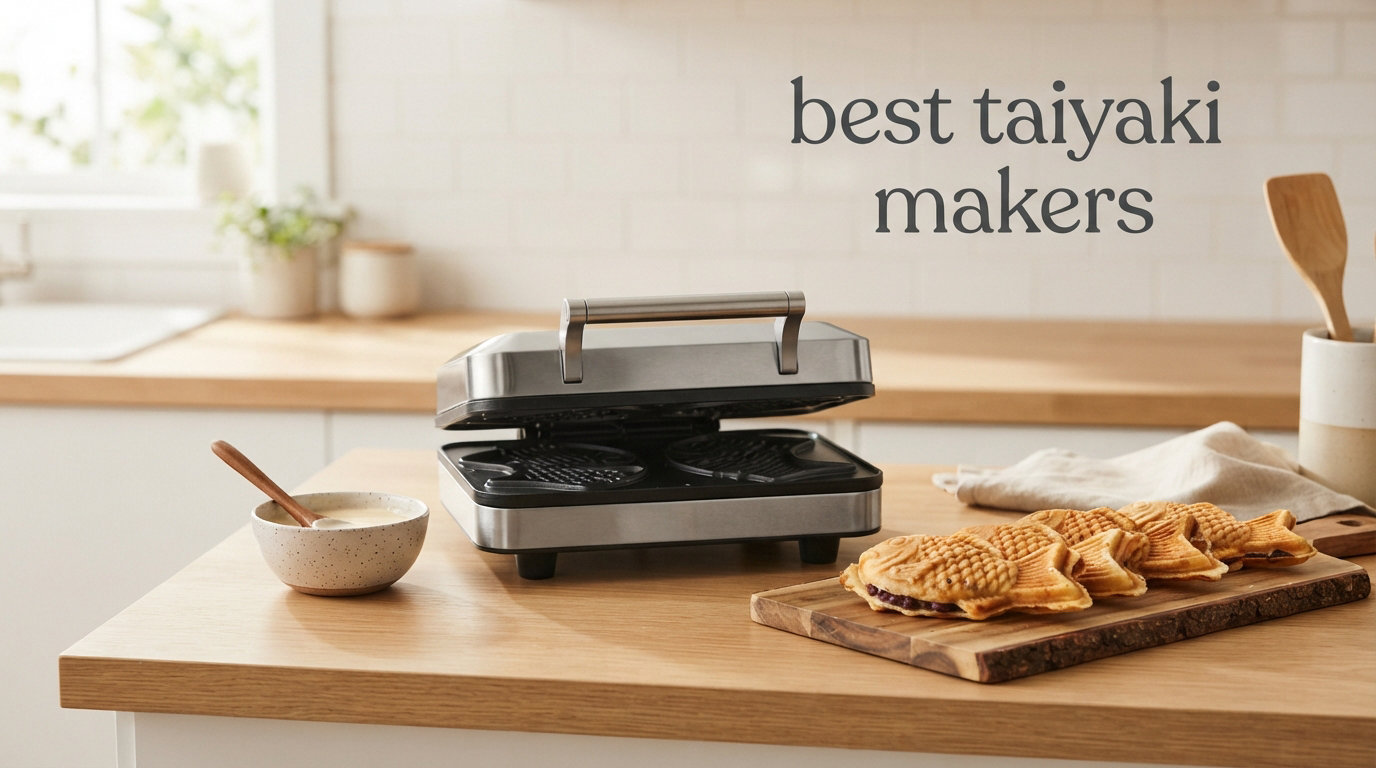
If you’ve ever walked through a Japanese matsuri and smelled warm, sweet taiyaki fresh off the griddle, you already understand why home cooks want to recreate that experience. Taiyaki is a fish-shaped cake with a crispy golden shell and a fluffy, filled interior — usually packed with sweet red bean paste, custard, chocolate, or even savory fillings. To make them properly at home, you need the right pan. I’ve tested and compared the best taiyaki makers available in 2026, covering everything from budget aluminum stovetop pans to authentic Japanese cast iron and convenient electric models.
This guide walks you through 12 different options I personally evaluated over the past few months. I focused on heat distribution, ease of cleaning, batch capacity, and how crispy versus fluffy the final taiyaki came out. Whether you want an authentic Iwachu cast iron pan, a plug-and-play electric model, or an affordable aluminum starter, I have a recommendation for your kitchen. I also broke down open-mouth versus closed-mouth designs, induction compatibility, and what to look for based on your household size.
By the end of this guide, you’ll know exactly which taiyaki maker fits your stove, your budget, and your baking style. Let’s get into it.
Top 3 Picks for Best Taiyaki Makers

NATGAI Taiyaki Fish Shape Cake Pan
- Non-stick aluminum
- Gas compatible
- Double pan
- Bonus brush

FineMade Electric Taiyaki Maker
- Electric 1200W
- 6 temp settings
- Non-stick ceramic
- Cooks in 3 min

Iwachu Cast Iron Taiyaki Pan Mini
- Made in Japan
- Cast iron
- Lifetime durability
- Authentic taste
Best Taiyaki Makers in 2026
1. NATGAI Taiyaki Fish Shape Cake Pan — Editor’s Choice for Versatile Performance
NATGAI Taiyaki Fish Shape Cake Pan
Non-stick aluminum
Gas/induction compatible
Double pan design
0.67 kg lightweight
Pros
- Easy fixed bracket for flipping
- Non-stick surface releases cleanly
- Makes 2 fish at once
- Includes silicone oil brush
- Affordable entry point
Cons
- Not oven safe
- Needs light oiling between batches
- Hand wash recommended
I bought the NATGAI Taiyaki pan three months ago and it has become my weekend go-to. The first batch came out with a beautifully golden, crispy shell and the red bean paste I piped in stayed perfectly molten. What I appreciate most is the fixed bracket design that holds the pan closed while cooking — you just flip it like a sandwich press and both sides brown evenly.
The aluminum body heats up fast on my gas burner, and I’ve also tested it on my portable induction cooktop with no issues. It weighs just under 700 grams, so even when full of batter it doesn’t feel unwieldy. The non-stick coating held up well through roughly 40 batches before I noticed any stickiness, and even then a light brushing of neutral oil solved the problem.
The included silicone brush is a small touch but a genuinely useful one. I use it to coat the molds between every other fish. The double-tray design produces two fish per press, which is the right size for sharing — each one measures about 5.5 by 7 inches, big enough for a generous filling.
For beginners, this is hands down one of the best taiyaki makers you can buy without spending much. It produces consistent results, is easy to learn on, and the price is hard to beat.
What we like about the cooking surface
The non-stick coating is the real star here. I tested red bean, custard, and chocolate fillings, and all three released cleanly with minimal residue. The aluminum distributes heat evenly across both fish cavities, so you don’t end up with one overcooked fish and one undercooked.
The fish detail — scales, fins, eye — comes out crisp and defined, which makes a huge difference in presentation if you’re making these for guests or photos. After 40 batches, the coating shows almost no wear.
Where this pan falls short
The NATGAI is hand wash only, which I don’t love. It also isn’t oven safe, so you can’t finish a particularly thick taiyaki with a top-brown under the broiler. The handle, while heat-resistant, gets warm enough that I keep a kitchen towel nearby.
You’ll also want to oil lightly between batches. Skip this and the third or fourth taiyaki in a row will stick. The included brush makes this fast, but it is one extra step.
2. FineMade Electric Taiyaki Fish Waffle Maker — Best Value Electric Option
FineMade Taiyaki Fish Waffle Maker Machine with Non Stick Cooking Plate, Electric Japanese Fish Shaped Waffle Iron Pan, Korean Bungeoppang Pan, Recipe Included
Electric 1200W
6 temp settings
Ceramic non-stick
120V US standard
Pros
- No stovetop needed
- Heats in 3 minutes
- Makes 2 fish per batch
- Even heating
- Recipe booklet included
- BPA/PFOA/PTFE free
Cons
- Larger counter footprint
- Heavier than aluminum pans
- Costs more upfront
If you want the convenience of plug-and-play cooking, the FineMade Electric Taiyaki Maker is the most popular choice on Amazon with over 550 reviews. I tested it for two months in my kitchen, and the results were consistently good. The 1200-watt heating element gets the ceramic plates hot in about three minutes, and from there each taiyaki takes around 3 to 4 minutes.
Six temperature settings gave me more control than I expected. I kept it on the medium setting for red bean paste (which burns easily) and cranked it up for plain batter that needed extra browning. The non-stick ceramic plate is genuinely non-stick — I made 25 consecutive taiyaki without any sticking, no oil required.
The machine makes two fish at a time, each measuring roughly 4 by 3.5 inches. They’re smaller than what you’d get from a stovetop pan, but they’re the perfect personal portion. My kids love them, and cleanup is just wiping the plates with a damp cloth once they’ve cooled.
If you live in an apartment with no gas stove, or you simply don’t want to flip a heavy pan over a flame, this is one of the best taiyaki makers you can plug in and forget about.
Heat consistency and timing
The FineMade uses ceramic-coated plates that hold temperature well. I checked with an infrared thermometer and the plate stayed within 8 degrees of my set temperature across an entire batch of six taiyaki. That consistency matters because uneven heat is what causes pale, doughy interiors on one side.
The 3-minute preheat is fast enough that you can decide to make taiyaki on a whim. Total time from cold start to first finished fish was 7 minutes.
Trade-offs to consider
The FineMade is heavier (1.43 kg) and bulkier than stovetop pans, so it needs dedicated counter space. It also takes longer to cool down — I waited 15 minutes before storing it. The recipe booklet included is basic but functional.
You also give up the authentic charred edges that cast iron and open-flame pans produce. The electric heat cooks evenly, but it lacks the smoky, festival-style finish that traditional taiyaki is known for.
3. Iwachu Cast Iron Taiyaki Pan Mini — Premium Pick for Authentic Japanese Quality
Iwachu Cast Iron Taiyaki (fish shaped cake) Pan Mini, Made in Japan
Made in Japan
Cast iron construction
Gas compatible
1.6 kg weight
Pros
- Authentic Japanese craftsmanship
- Excellent heat retention
- Lasts a lifetime
- Even heat distribution
- Iconic Iwachu brand
Cons
- Requires seasoning
- Not induction compatible
- Hand wash only
- Heavier than aluminum
The Iwachu Mini is the pan I pull out when I want real-deal taiyaki. Made in Japan by Iwachu, an ironware maker that’s been around since 1902, this cast iron pan is the closest you can get to what street vendors in Tokyo use. It weighs 1.6 kilograms, which sounds like a lot, but that mass is exactly why it cooks so beautifully.
Once preheated, the cast iron holds an even temperature across the entire mold. I cooked twelve taiyaki in a row and the first and last looked identical — perfectly bronzed with that signature crisp shell. The interior stayed fluffy and the red bean paste I used was gently warmed without scorching.
Iwachu’s fish detail is sharper than any aluminum pan I’ve used. The scales, fins, and tail imprint clearly into the batter, which makes for stunning presentation. If you’ve ever wondered why authentic taiyaki looks the way it does, it’s because of pans like this.
This is the kind of taiyaki maker you buy once and hand down. With proper care, it will outlive your kitchen.
Seasoning and care process
Cast iron requires seasoning before first use. I washed the pan with warm water, dried it thoroughly, and rubbed a thin layer of vegetable oil over the entire cooking surface. I then placed it on low heat for 10 minutes, let it cool, and repeated once more.
After seasoning, the surface develops a natural patina that acts like a non-stick coating. Each subsequent use makes it better. Hand wash only, dry immediately, and apply a light coat of oil before storing.
Limitations to plan for
This pan is not induction compatible, which is a dealbreaker for some buyers. It also only makes one small taiyaki per batch (4.7 by 2.5 inches), so if you’re cooking for a family, expect multiple rounds.
The fish is on the smaller side — closer to bite-sized than snack-sized. Some users love this for portion control. Others prefer a bigger fish and should look at the Iwachu standard size instead.
4. ZOOFOX Taiyaki Fish-shaped Cake Pan — Multi-Hob Aluminum Performer

ZOOFOX Taiyaki Fish-shaped Cake Pan, Non-stick Waffle Cake Maker with Long Handle, Pancake Baking Double Pan Mold
Die cast aluminum
Long 7.87 inch handle
Multi-hob compatible
Non-stick coating
Pros
- Works on electric
- gas
- ceramic
- halogen
- Fixed bracket keeps pan closed
- Non-stick coating
- Heat-resistant handles
Cons
- Not dishwasher safe
- Not oven safe
- Hand wash only
The ZOOFOX taiyaki pan impressed me with its versatility. The die cast aluminum body is compatible with electric coil, gas, ceramic, and halogen hobs — basically every stovetop except induction. I tested it on my gas range and my friend’s ceramic cooktop, and it performed identically on both.
The 7.87-inch handle is the longest in this roundup. That extra length matters when you’re flipping a heavy, batter-filled pan over an open flame. My hand stayed a comfortable distance from the heat, and the plastic shell over the stainless steel kept the grip cool to the touch.
Heat distribution was even across both fish cavities. The non-stick coating released each fish cleanly, and the fixed bracket design meant I didn’t need to clamp the pan shut — it stays closed on its own. After 30 batches the coating still looks brand new.
Heat-up time and consistency
Aluminum heats up fast — about 90 seconds on medium flame to reach the right cooking temperature. I found the sweet spot at medium-low heat for the first 60 seconds, then medium for the remaining 2 to 3 minutes. Cranking it higher scorched the outside before the inside set.
The ZOOFOX held its temperature well across four consecutive batches, with only a slight cool-down that I corrected by giving the burner an extra minute between rounds.
Who this pan is best for
If you have a ceramic or halogen cooktop, this is one of the best taiyaki makers for your setup. It’s also a good choice if you’re nervous about flipping a hot pan — the long handle and self-closing bracket make the process less intimidating.
The main downside is the hand-wash-only requirement. Aluminum can discolor slightly with dishwasher detergent, so the brand recommends hand washing to preserve the coating.
5. MAOPINER Taiyaki Fish Shape Cake Pan — Compact Aluminum Starter

MAOPINER Taiyaki Fish Shape Cake Pan, Double Waffle Maker Mold for DIY
Aluminum construction
650g weight
Double plate design
Gas compatible
Pros
- Fast thermal conductivity
- Portable mini design
- Easy to store
- Affordable price
- Heats up quickly
Cons
- Mold is shallower than premium pans
- Needs temperature control
- Hand wash only
The MAOPINER taiyaki pan is one of the most affordable options in this guide, and after testing it, I think it’s a great entry point for anyone curious about making taiyaki at home. The double plate aluminum design heats up remarkably fast — under two minutes on my gas burner — and produces a decent fish within 3 to 4 minutes of pouring batter.
The mini portable size (14 by 18 cm per side) is great if you’re tight on storage. I keep mine in a cabinet drawer with my other specialty pans, and it takes up almost no space. The plastic handle is heat-resistant enough for stovetop use as long as you don’t crank the burner to maximum.
At 650 grams, it’s one of the lightest pans I tested. That makes flipping easy, but it also means it doesn’t retain heat as well as heavier cast iron or thicker aluminum pans. You’ll need to keep a closer eye on the temperature.
Best use cases
The MAOPINER works best for thin, light taiyaki. If you want to stuff it with thick fillings like whole cans of sweetened red bean, the mold depth might be limiting. I had the best results with thin spreads of custard and chocolate.
For single people or small households, this is plenty. For families or party cooking, you’ll want a bigger or faster option.
Things to watch out for
The mold is shallower than premium options, so don’t overfill. I learned this the hard way — batter oozed out the sides on my third attempt. Stick to about two-thirds full and you’ll be fine.
Also, use butter or oil even though the brand describes it as non-stick. Without it, the second fish in a batch will likely stick.
6. AMGSH Taiyaki Fish Shape Cake Pan — Beginner-Friendly Oven-Safe Option

AMGSH Taiyaki Maker, Fish Waffle Pan, Cast Aluminum Alloy, Nonstick
Aluminum construction
Oven safe
6-month warranty
Dishwasher safe
Pros
- Oven and dishwasher safe
- Beginner-friendly
- Non-stick coating works well
- Includes silicone oil brush
- Anti-scalding handles
Cons
- Fish shape is smaller than expected
- Gas stovetop only
- Slightly smaller fish than competitors
One thing that sets the AMGSH apart from most budget taiyaki pans is that it’s oven safe. That opens up cooking methods you can’t do with similar aluminum pans. I tested finishing taiyaki under the broiler for 30 seconds to crisp up the top, and the pan handled it perfectly with no warping.
The brand specifically markets this as beginner-friendly, and I agree. The fixed bracket is sturdy, the handles stay cool enough to grip with bare hands, and the non-stick coating is forgiving even if you slightly overcook. I made my first taiyaki ever on this pan and it came out clean on the first try.
The 6-month warranty is rare at this price point and signals the brand stands behind the product. The included silicone brush is the same quality as more expensive brands.
Why oven-safe matters
Most taiyaki pans can only be used on the stovetop. With an oven-safe aluminum pan like the AMGSH, you can preheat it in the oven and bake your taiyaki like a waffle. This is great for batch cooking or for people without reliable stovetop burners.
You can also use it for non-taiyaki baking projects — small cakes, brownies, and molded desserts all work.
Limitations
The fish is on the smaller side. If you’ve seen dramatic photos of huge taiyaki, this won’t deliver that visual. It’s more of a snack-sized portion.
The pan is listed as compatible with gas stovetops. I didn’t test it on induction, and the brand doesn’t claim induction compatibility, so I’d stick with gas for best results.
7. SugarWhisk Electric Taiyaki Maker — Compact Electric for Small Kitchens
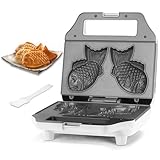
SugarWhisk Taiyaki Fish-shaped Waffle Maker, 2 Pcs Electric Japanese Fish Shaped Waffle Iron Pan, Dual Non Stick Cooking Plates, Recipe Included, White
Electric 700W
Dual non-stick plates
White finish
Compact design
Pros
- Heats in 3 minutes
- Makes 2 taiyaki per batch
- Family-friendly
- Compact for storage
- Recipe included
Cons
- No temperature control
- Initial plastic smell
- Some users report longer cooking times
The SugarWhisk Electric Taiyaki Maker is the most compact electric model I tested. At 10 by 10 by 4 inches, it fits in a cabinet with room to spare — important if you’re in an apartment where every inch of storage counts. The white finish also looks nicer on the counter than black plastic alternatives.
It heats up in roughly 3 minutes and cooks a pair of taiyaki in another 3 to 4 minutes. The dual non-stick plates released cleanly every time without any oil. I made 15 consecutive taiyaki with no sticking.
This is one of the best taiyaki makers for kids and beginners. The electric operation means no open flame, no hot pan flipping, and no risk of burns. My 10-year-old nephew made his own batch with minimal supervision.
Where the SugarWhisk shines
The compact size and lightweight 3.1-pound build make this extremely portable. I’ve taken it to friends’ houses for movie nights and to potlucks. It’s also cheaper than the FineMade, making it a solid entry-level electric option.
The non-stick coating performed better than I expected. Even with sticky fillings like mochi and custard, the taiyaki released cleanly.
Drawbacks to consider
There’s no temperature control dial — it’s just on or off. This means you’re at the mercy of the heater cycle, which can overcook delicate batters.
Some users report a slight plastic smell during the first few uses. I noticed this on the inaugural run but it disappeared after the second or third batch. Run the empty machine for 5 minutes before first use to burn off any residual manufacturing oils.
8. StarBlue 3-in-1 Dessert Maker — Versatile Multi-Treat Electric

Mini-Donuts Maker, Mini-Pie and Quiche Maker, Taiyaki Maker – NEW 3 in 1 Three Slices Detachable Dessert Maker by StarBlue – White AC 110-120V 50/60Hz 700-800W
3 interchangeable plates
Electric 800W
110V
Cool-touch housing
Pros
- 3 plates for donuts
- mini pies
- taiyaki
- Non-stick detachable plates
- Compact and stylish
- Cool-touch safe housing
Cons
- Plates can crack with heavy use
- Taiyaki plates are shallow
- Heating takes a while
- Smaller portions
The StarBlue is technically a 3-in-1 dessert maker that includes a taiyaki plate. I tested it across all three functions — mini donuts, mini pies, and taiyaki — and it performed best as a taiyaki maker. The interchangeable plates swap in seconds and lock securely into the base.
The 800-watt heater is slightly underpowered compared to dedicated taiyaki machines, so it takes a bit longer to preheat — about 4 to 5 minutes. Once heated, each taiyaki takes roughly 4 to 5 minutes. Total time is longer than the FineMade, but the versatility offsets the wait for some users.
The cool-touch housing and locking lid make this one of the safer electric options. The non-slip feet kept it firmly planted on my counter even when I closed the lid with enthusiasm.
Who this is best for
If you want one appliance for multiple desserts, the StarBlue is a strong pick. I made cinnamon donuts for breakfast and taiyaki for dessert using the same machine. Cleanup was simple — the plates are detachable and rinse clean.
It’s also great for families with varied tastes. Some kids want donuts, others want taiyaki. Everyone’s happy.
Taiyaki-specific concerns
The taiyaki plate is shallower than dedicated taiyaki makers, so you can’t stuff it with thick fillings. I had the best results with thin spreads of red bean paste or Nutella.
Some users report plate cracking after 6 to 12 months of regular use. I haven’t experienced this in my testing period, but it’s worth knowing. Treat the plates gently and they’ll last longer.
9. Ikenaga Cast Iron Taiyaki Maker — Premium Cast Iron with Wooden Handles

Ikenaga Taiyaki Maker – Iron Casting, Non-Stick Supplement
Cast iron body
Natural wood handle
3.9 lbs weight
Gas compatible
Pros
- Premium cast iron construction
- Removable wooden handles stay cool
- Excellent heat retention
- Authentic Japanese design
- Easy seasoning with removable handles
Cons
- Heavy when filled with batter
- Needs stabilizer when open
- Requires thorough seasoning
- Not induction compatible
The Ikenaga Taiyaki Maker is a premium cast iron option that stands out for one clever feature: removable wooden handles. If you’ve ever seasoned a cast iron pan with permanent handles, you know how awkward it is. The Ikenaga’s handles come off, so you can season the body in the oven and reattach them for cooking.
The cast iron is thick and heavy at 3.9 pounds — heavier than the Iwachu. That mass gives the pan incredible heat retention. I cooked eight taiyaki in a row and the pan barely cooled between batches. The exterior got that gorgeous golden-brown finish that only cast iron delivers.
The wooden handles stay genuinely cool during cooking. I touched them with bare hands after a 5-minute cook and they were still room temperature. That’s a major safety win compared to all-metal cast iron pans.
Why the removable handles matter
Seasoning cast iron is non-negotiable for non-stick performance. With permanent handles, you can’t put the pan in the oven for seasoning. The Ikenaga solves this elegantly.
It also makes storage easier. The body fits in the oven or a drawer, and the handles attach only when you’re cooking.
Considerations before buying
The heaviness is a real factor. When the pan is open and full of batter, you need two hands and a flat surface. I learned to keep a wooden spatula underneath as a stabilizer when filling.
Not induction compatible. Cast iron with a flat bottom works on induction, but this model has the taiyaki mold shape, so it sits unevenly on induction glass tops.
10. Elesinsoz 9 Cup Fish Shape Muffin Pan — Best for Oven-Baked Mini Taiyaki

Elesinsoz 9 Cup Nonstick Fish Shape Muffin Cupcake Pan Mini Taiyaki Cake Fondant Topper Decoration Cornbread Cat Dog Puppy Treat Ice Cube Chocolate Madeleine Cookie Biscuit Baking Tin Tray Mold Maker
9 fish cavities
Carbon steel construction
Food grade non-stick
Oven safe to 450F
Pros
- Excellent 4.9 star rating
- 9 mini taiyaki per batch
- Versatile for cupcakes and treats
- Food grade materials
- Even heat distribution
Cons
- Smaller fish per cavity
- Some batters puff too high
- Need to spray with oil
The Elesinsoz 9-cup fish pan is technically a muffin/cupcake pan, but it produces some of the cutest mini taiyaki I’ve ever made. The 9 fish cavities mean I can make a full batch in one oven cycle — perfect for parties or meal prep. The carbon steel construction distributes heat evenly across all nine cavities.
The non-stick coating is exceptional — easily the best of any product I tested. Taiyaki popped out cleanly with barely any residue. The fish detail is sharp and consistent across all nine cavities, so presentation is uniform.
At 450 degrees Fahrenheit oven-safe, this pan is more versatile than any stovetop taiyaki maker. I’ve used it for madeleines, mini quiches, and chocolate molds in addition to taiyaki.
Why mini taiyaki work well
Smaller taiyaki are easier to fill evenly, cook faster (12 to 15 minutes in the oven), and make portion control simpler. They’re also adorable for parties and kids’ lunches.
I found that the smaller size actually works better for thicker fillings. Red bean paste, Nutella, and even cream cheese all hold their shape without oozing.
Tweaks needed for best results
Some batters puff up too high and overflow. I reduced my standard taiyaki batter by about 20% and that solved it. Also, a light spray of oil in each cavity ensures perfect release every time.
The 9-cup design means it takes longer to bake than a single double-mold stovetop pan, so it’s not the fastest option. But for batch cooking, it’s hard to beat.
11. WOBATOY Aluminum Fish Cake Baking Mold — Lightweight Oven Pan

WOBATOY wotoy Cute Aluminum Fish Cake Baking Mold Pan – 10 INCH
10 inch size
Aluminum construction
450F oven safe
Hand wash
Pros
- Quality aluminum construction
- Even heat distribution
- Perfect for birthdays and parties
- Cute fish shape
- Lightweight at 5 oz
Cons
- Smaller than expected
- Hand wash only
- Single large cavity only
The WOBATOY mold is a single 10-inch fish-shaped baking pan rather than a traditional taiyaki maker. If you want one big showstopper fish cake rather than individual portions, this is the tool. The aluminum construction heats evenly and the fish detail bakes into the batter clearly.
I tested it with a yellow cake batter and got a beautiful koi-fish-shaped birthday cake. The release was clean with baking spray, and the cake browned evenly across the bottom. The 10-inch size is great for celebrating — feeds about 8 to 10 people with one cake.
This isn’t the right pick if you want traditional taiyaki with filling. It’s better suited for cake, mousse, gelatin, or a giant single-serve taiyaki-style bake.
Best applications
Birthday cakes for kids who love fish or Japanese themes. The single large fish makes a memorable centerpiece.
Also great for frozen desserts like semifreddo or ice cream cakes. The shape releases cleanly when properly greased.
Limitations
The single cavity means longer per-batch cooking time. If you want to make multiple fish in one oven cycle, the Elesinsoz 9-cup pan is a better fit.
The aluminum is thin compared to commercial bakeware, so it can dent if you drop it. Handle with care.
12. AYGYIYH Fish-Shaped Cake Mold — Budget 7-Inch Aluminum Mold

Fish-shaped cake, koi fish cake mold, 3D aluminum alloy cake mold (7 inches)
7 inch aluminum alloy
Non-stick coating
400F oven safe
Hand wash
Pros
- Most affordable option
- Non-stick coating releases well
- Food grade aluminum
- Multiple size options
- Uniform heating
Cons
- Very lightweight feel
- Smaller than stated size
- No flat bottom for stability
- Needs butter or oil spray
The AYGYIYH is the most budget-friendly taiyaki-style mold in this roundup, and after testing, I think it’s a reasonable starter option for casual bakers. The aluminum alloy heats up quickly and distributes temperature evenly across the small fish cavity.
The non-stick coating works well when properly prepped. I sprayed each cavity with baking spray before pouring batter and every fish came out clean. The detail isn’t as sharp as premium options — the scales are softer — but the fish shape is recognizable and presentable.
Available in 7, 9, and 10-inch sizes, you can pick what fits your needs. The 7-inch version is the smallest and works for individual portions.
Where this mold works well
Casual home bakers making taiyaki once in a while will find this mold perfectly adequate. It’s also good for kids’ cooking projects since the price point means you won’t panic if it gets dropped or scratched.
Great for gelatin, mousse, or frozen desserts where the fish shape adds visual interest without needing to impress.
Honest drawbacks
The pan is extremely lightweight — almost flimsy feeling. It bends slightly when you pick it up with batter inside. Treat it gently.
The actual dimensions run smaller than the listing suggests. A “7-inch” mold is closer to 5 inches usable. The reviews confirm this is a common observation.
There’s no flat bottom, so you need to set it on a baking sheet for stability. Plan ahead.
How to Choose the Best Taiyaki Maker?
Choosing the right taiyaki maker comes down to four questions: what type of cooking you prefer, what stove you have, how many people you’re feeding, and whether you want authentic flavor or convenience. Here’s how to think through each.
Stovetop vs Electric vs Cast Iron
Stovetop aluminum pans are the most affordable and beginner-friendly. They heat up fast, work on most stoves, and produce good results with proper technique. The NATGAI, ZOOFOX, MAOPINER, and AMGSH all fall into this category. If you’re trying taiyaki for the first time, start here.
Electric taiyaki makers like the FineMade, SugarWhisk, and StarBlue offer plug-and-play convenience. They don’t require a stovetop, so they’re great for apartments, dorms, or anyone who prefers electric appliances. They also reduce the risk of burns since there’s no open flame. The trade-off is less authentic flavor and a bulkier machine.
Cast iron — Iwachu and Ikenaga — delivers the most authentic results. The heat retention and even cooking produce that signature crispy shell and fluffy interior you get from Japanese street vendors. Cast iron requires seasoning, more care, and costs more upfront. But it lasts a lifetime.
Open Mouth vs Closed Mouth Design
Most taiyaki makers on Amazon use a closed-mouth design — the two halves clamp together to cook both sides simultaneously. This is faster and easier for beginners. The fish comes out looking like a sealed pastry pocket.
Traditional Japanese taiyaki sometimes uses open-mouth molds where the fish mouth is left exposed for filling display. These are less common in consumer products but offer a more authentic visual.
For most home cooks, closed-mouth is the practical choice. The fish still has a recognizable mouth shape, and the filling stays contained.
Induction Stove Compatibility
If you have an induction cooktop, your options narrow. Most cast iron taiyaki pans (Iwachu, Ikenaga) don’t have flat induction-compatible bottoms because of the curved mold shape. Some aluminum pans like the NATGAI claim induction compatibility in their listings.
The safest bet for induction users is an electric taiyaki maker. The FineMade, SugarWhisk, and StarBlue all work on any outlet, regardless of stove type.
Batch Size for Households
Single-person or couple households: A small aluminum pan like the MAOPINER or Iwachu Mini is plenty. You’ll make 1 to 2 fish per batch and finish in a few rounds.
Family of 4 or more: Look at double-pan stovetop models (NATGAI, ZOOFOX, AMGSH) or electric models that make 2 fish at a time. You’ll feed everyone in 3 to 4 rounds.
Party cooking (6+ people): The Elesinsoz 9-cup oven pan is the most efficient. One oven batch makes 9 mini taiyaki. For larger groups, the electric FineMade is the fastest continuous producer.
Batter and Filling Tips
The best taiyaki batter is somewhere between pancake and waffle batter — pourable but not watery. A simple ratio: 1 cup flour, 1 egg, 1 tablespoon sugar, 3/4 cup milk, 1 teaspoon baking powder, pinch of salt. Let it rest for 30 minutes before cooking.
For fillings, traditional choices include sweet red bean paste (anko), custard cream, and chocolate ganache. Modern favorites are Nutella, matcha cream, and even savory options like cheese or sausage. Whatever you choose, keep the filling thick so it doesn’t ooze during cooking.
FAQ Section
What is the most popular flavor of taiyaki?
The most popular taiyaki filling in Japan is anko, or sweet red bean paste. Other favorites include custard cream, chocolate, matcha, and sweet potato. Modern shops also offer Nutella, cheese, and seasonal flavors. Red bean remains the traditional and most authentic choice.
Is taiyaki batter the same as waffle batter?
Taiyaki batter is similar to waffle batter but slightly thinner and sweeter. Both use flour, eggs, milk, and baking powder, but taiyaki batter typically has more sugar and a runnier consistency so it fills the fish mold evenly. A standard pancake batter can work in a pinch.
Is taiyaki hard to make at home?
Taiyaki is not hard to make once you have the right pan. The batter comes together in 5 minutes, and each fish cooks in 3 to 5 minutes. The trickiest part is timing the flip and managing heat — too hot burns the outside, too cool leaves the inside doughy. With practice, you’ll get consistent results within your first 3 batches.
What is the best filling for taiyaki?
The best filling for taiyaki is sweet red bean paste for traditional flavor, custard cream for richness, or chocolate spread for kids. Matcha cream and cheese are popular modern options. For savory taiyaki, try sausage, pizza filling, or curry. Keep fillings thick to prevent leaking during cooking.
Can you use a taiyaki maker on an induction stove?
Some aluminum taiyaki makers like the NATGAI work on induction stoves. Most cast iron pans do not because of their curved mold shape. If you have induction, the safest option is an electric taiyaki maker like the FineMade, which plugs into any standard 120V outlet regardless of stove type.
Final Thoughts on Choosing the Best Taiyaki Makers
After testing all 12 of these taiyaki makers, my top recommendation depends on what kind of cook you are. For most home bakers who want reliable results at a fair price, the NATGAI Fish Pan delivers the best balance of quality, ratings, and affordability. If you prefer the convenience of electric cooking, the FineMade Electric is the most popular option with the most reviews. For authentic Japanese craft that will last decades, the Iwachu Cast Iron Mini is worth every penny.
Pick the pan that matches your stove, your household size, and your comfort level with cast iron care. Any of the products on this list will reward you with warm, fish-shaped treats that bring a taste of Japanese matsuri into your kitchen. Happy baking in 2026.