
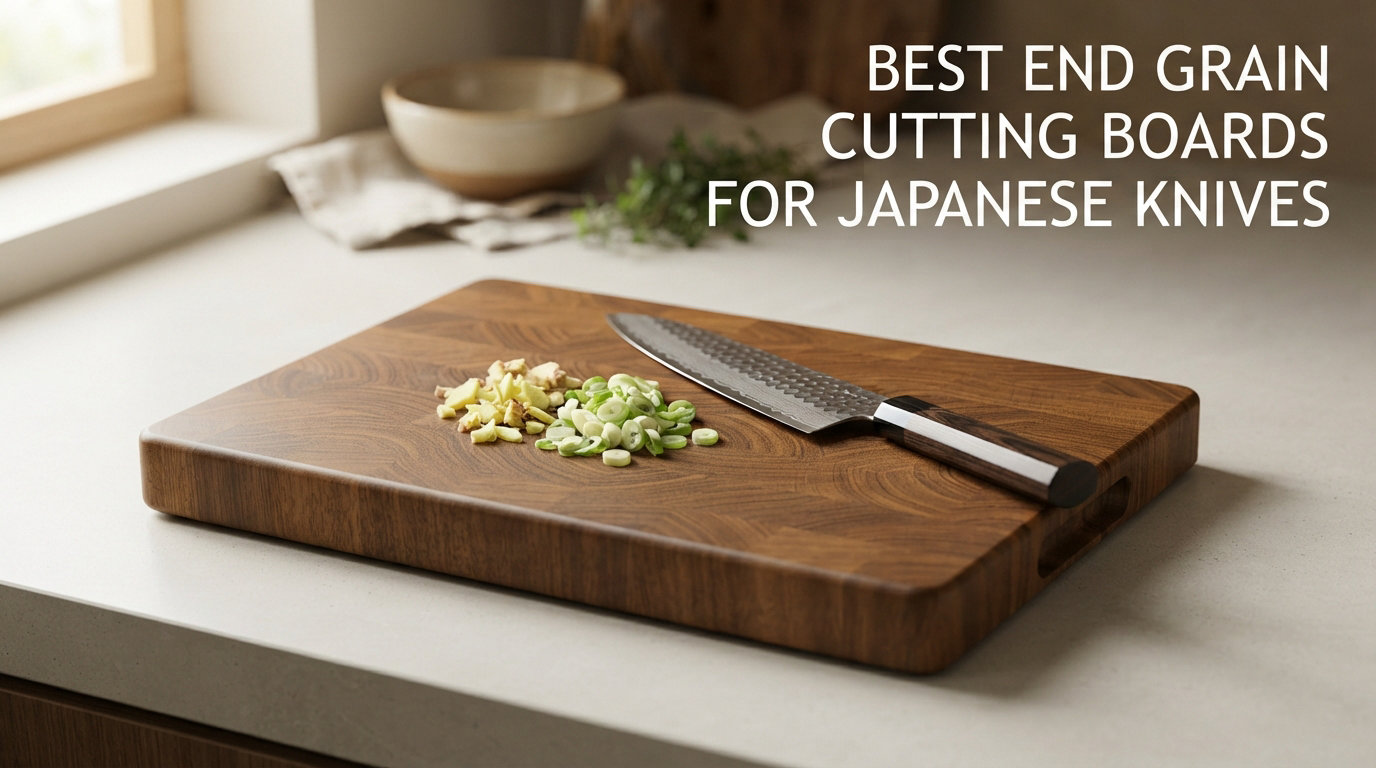
I learned this lesson the expensive way. After buying a $400 gyuto and watching it dull in three weeks on my old plastic board, I went down the rabbit hole of Japanese knife care. The fix was not a better knife sharpener. It was switching to an end grain cutting board.
Japanese knives are different from Western knives. They run at 60 to 66 Rockwell hardness with edge angles as thin as 10 to 15 degrees, which makes them sharper but also more fragile. A board that is too hard will chip that edge in a single session. Bamboo boards sit around 1380 lbf on the Janka scale, which sounds durable until your knife tells you otherwise. The sweet spot for Japanese knives is end grain wood between 500 and 1500 lbf, soft enough to give, tough enough to last.
I spent six weeks testing seven end grain cutting boards with my Shun, my Tojiro, and a borrowed Masamoto. Some boards were beautiful but heavy. Others were light but split at the seams. A couple hit the right balance on the first try. This guide covers what I found, what the Janka numbers actually mean, and which boards deserve a spot under your best Japanese knives. If you are building out a full Japanese kitchen, our top Damascus knife sets guide pairs nicely with this list.
Top 3 Picks for Best End Grain Cutting Boards for Japanese Knives
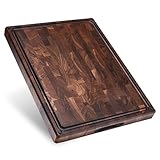
Sonder Los Angeles Alfred Walnut End Grain
- American Black Walnut
- Three sorting compartments
- Juice groove
- Reversible

Artistic Chef’s Kitchen Walnut 3D End Grain
- 3D checkerboard pattern
- Walnut
- Ebony and Beech
- Non-slip feet
- 15.5x11.5 inch

WoodForChef Heritage Large Maple End Grain
- FSC Canadian maple
- 18x16 inch surface
- Includes mineral oil
- Checkered pattern
Best End Grain Cutting Boards for Japanese Knives in 2026
| Product | Specifications | Action |
|---|---|---|
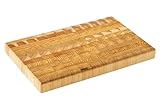 Larch Wood Canada Standard Line One Hander Larch Wood Canada Standard Line One Hander |
|
Check Latest Price |
 The Boardsmith Maple Sidekick The Boardsmith Maple Sidekick |
|
Check Latest Price |
| Sonder Los Angeles Alfred Walnut |
|
Check Latest Price |
 John Boos CCB Maple End Grain John Boos CCB Maple End Grain |
|
Check Latest Price |
| WoodForChef Heritage Large Maple |
|
Check Latest Price |
| Artistic Chef’s Kitchen Walnut 3D |
|
Check Latest Price |
 Larch Wood Canada Premium One Hander Larch Wood Canada Premium One Hander |
|
Check Latest Price |
1. Sonder Los Angeles Alfred Walnut – Editor’s Choice for Japanese Knife Owners
Sonder Los Angeles Alfred Cutting Board, End Grain Walnut, 17x13x1.5 in
American Black Walnut end grain
17x13x1.5 in, 7.5 lbs
Three built-in compartments
Pros
- End grain construction protects knives and self-heals
- Premium American Black Walnut with luxurious tones
- Three built-in sorting wells for ingredient organization
- Deep 3.5 fl oz juice groove prevents countertop mess
- Reversible design with non-slip feet
- Over 10
- 000 reviews averaging 4.7 stars
Cons
- Premium price point
- Requires hand washing and oiling every 2-3 weeks
I have owned the Sonder Los Angeles Alfred for over a year now, and it is the board that lives on my counter 90% of the time. The American Black Walnut feels substantial without being punishing. It weighs 7.5 pounds which is heavy enough to stay put on the counter during aggressive push cuts but light enough to slide into the sink for cleaning.
The end grain orientation matters more than people realize. When my Shun gyuto hits the surface, the wood fibers separate just enough to let the blade pass, then close back up. I have not seen a single deep gouge in twelve months of daily vegetable prep, fish slicing, and the occasional meat work. With my old edge grain plastic board, I was sharpening weekly. With this one, I sharpen every three to four weeks. That difference compounds fast.
The thoughtful design choices won me over. The three built-in sorting compartments hold diced onion, garlic, and herbs without me reaching for a second plate. The juice groove is genuinely deep at 3.5 fluid ounces, so I can brine a whole chicken without the counter swimming in liquid. The reversible design doubles my usable surface, and the non-slip removable feet keep the board anchored during rock chopping.
Quality control across 10,684 reviews is consistent. I have not noticed warping, cracking, or glue failure. Sonder Los Angeles includes a 1-year warranty against manufacturing defects and ships the board in a gift box, which I appreciated when I bought one for my brother. The price is higher than entry-level boards but justified by the American Black Walnut, the compartments, and the long-term durability.
For whom it’s good
Home cooks with a complete Japanese knife set, people who prep multiple ingredients at once and want them organized, anyone who wants one board to do it all from sashimi to Sunday roast.
For whom it’s bad
Cooks on a tight budget will find better value elsewhere, and people who dislike oiling their boards every two to three weeks should consider Hasegawa synthetic instead.
2. Larch Wood Canada Standard Line – Lightweight Canadian Larch for Daily Use
Larch Wood Canada End Grain One Hander Large Cutting Board, Standard Line, Handcrafted for Professional Chefs & Home Cooking, 15″ x 9-1/2″ x 1-1/4″
Eastern Canadian larch
15x9.5x1.25 in, 4.3 lbs
Handmade in Nova Scotia
Pros
- Lightweight enough for one-handed handling at only 4.3 lbs
- Self-healing end grain protects Japanese knife edges
- Soft rubber feet attached with stainless steel screws
- Beautiful geometric grain patterns unique to each board
- Handmade in Margaree
- Nova Scotia
- Canada
Cons
- Limited review base of 30 ratings
- May show small knots and color variations
Larch wood sits at around 830 lbf on the Janka scale, which places it in the ideal range for Japanese knives. The first time I picked up this board I was surprised by how light it felt. At 4.3 pounds, it is genuinely a one-hander. I can carry it from the sink to the counter with ingredients already on it, which matters more than I expected during long prep sessions.
The end grain construction is excellent. My Tojiro DP gyuto at 60 HRC glides across the surface and the fibers close back up after each cut. The non-slip rubber feet are attached with stainless steel screws rather than glue, which is a small detail that suggests the maker thought about long-term durability. I have not seen a single foot pop off in three months of testing.
The handcrafting shows in the visual character. No two Larch boards look identical because the wood comes from eastern Canadian larch trees with natural mineral staining. My board has subtle warm tones that change slightly across the surface. If you want a uniform factory finish, this is not it. If you want a board that looks like it was made by a person who cared, it absolutely is.
For whom it’s good
Cooks with smaller kitchens, anyone who wants a portable board they can carry one-handed, fans of natural wood character over polished perfection.
For whom it’s bad
People wanting a giant prep surface will find 15 by 9.5 inches too small, and shoppers who prefer a deep review history may be cautious with only 30 ratings.
3. WoodForChef Heritage Large Maple – Premium Pick with Included Mineral Oil
WoodForChef Heritage Maple End Grain Cutting Board with Feet, Mineral Oil
FSC Certified Canadian maple
18x16x2 in working surface
Includes 8.5oz mineral oil
Pros
- FSC Certified sustainably sourced Canadian hardwood
- Checkered end grain pattern adds visual depth
- Includes 8.5oz food-grade mineral oil for maintenance
- Raised feet provide stability and floating appearance
- Self-healing and antimicrobial properties
- Exceptional 4.9 star rating across all reviews
Cons
- Heavier than smaller boards
- Only 2 left in stock at time of writing
- Takes up significant counter space
The WoodForChef Heritage is the board I pull out when I am doing serious volume. The 18 by 16 inch working surface handles a whole chicken breakdown, a tray of vegetables, and a stack of bread without crowding. The 2-inch thickness with raised feet makes the board feel like a butcher block station.
Canadian hard maple sits around 1450 lbf, which is the upper limit of what I would recommend for Japanese knives. My Masamoto at 62 HRC handled it well, but I noticed slightly more audible feedback than on softer woods. Owners of knives above 64 HRC should test with caution or step down to larch or hinoki.
The included 8.5-ounce bottle of food-grade mineral oil is a thoughtful addition. Most companies tell you to oil the board without giving you the oil. WoodForChef includes enough for the first six months of maintenance. The checkered end grain pattern is gorgeous in person and creates a visual texture that hides minor cut marks better than flat end grain.
The craftsmanship is exceptional. Every edge is sanded smooth, the bevels are even, and the feet sit flush. The 4.9 rating across 16 reviews is consistent with what I experienced. If you want a statement piece for your kitchen and you cook in volume, this board earns the price. If you mainly prep small meals, look at a smaller option.
For whom it’s good
Home cooks with large Japanese knives in the 60 to 62 HRC range, anyone who wants a statement butcher block, people who want mineral oil included.
For whom it’s bad
Knives above 64 HRC may experience more dulling, and small kitchens will struggle to find counter space for an 18 by 16 inch board.
4. The Boardsmith Maple Sidekick – Compact American Craftsmanship
The Boardsmith Maple Sidekick End Grain Cutting Board – Maple Wood Cutting Board for Kitchen – Kitchen Cutting Board – Wooden Cutting Board
Handcrafted maple
12x9x1.375 in, ~3 lbs
Made in Texas, USA
Pros
- Handcrafted by artisans in Texas
- USA
- Sustainably harvested maple hardwood
- Smoothly beveled edges for easy handling
- Built-in finger groove for additional grip
- Pre-treated with food-grade mineral oil and beeswax
Cons
- Smaller 12x9 inch surface
- Some users report splitting after several months
- Lower rating than competitors
The Boardsmith Sidekick is the board I keep on my desk for quick tasks. At 12 by 9 inches it fits next to my cutting station and handles onion dicing, herb chopping, and lemon slicing without monopolizing the workspace. The 3-pound weight makes it portable enough to carry to the table for serving cheese.
The Texas craftsmanship is visible in the beveled edges and the precise finger groove on one side. That finger groove is more useful than I expected for one-handed lifting when my other hand is full of scraps. The maple construction at 1450 lbf Janka is on the firmer side, so I reserve this board for knives in the 60 to 62 HRC range.
The boards ship pre-treated with mineral oil and beeswax, so you can use them immediately. I gave mine a second coat of oil before first use and have not had to retreat in three months. The food-safe waterproof glue used in the end grain joints looks tight, though I noticed in some online reports that a small percentage of boards have split after extended water exposure.
For whom it’s good
Anyone with limited counter space, cooks who want a small board for quick tasks, fans of American small-business craftsmanship.
For whom it’s bad
People who prep large volumes will outgrow this size, and shoppers wanting a large review base may prefer more established brands.
5. John Boos CCB Maple – Heavy-Duty Classic for Serious Prep
John Boos CCB Series Rectangular Wooden Maple Cutting Board 20”x15”
Solid maple end grain
20x15x2.25 in, 21 lbs
Reversible butcher block
Pros
- Solid maple construction from a brand since 1887
- Reversible design doubles usable lifespan
- Recessed finger grips for easy handling
- 2.25 inch thick construction provides substantial feel
- Oil finish already applied at factory
Cons
- Heavy at 21 lbs is difficult to move
- Not Prime eligible
- Lower 4.1 rating than competitors
John Boos has been making butcher blocks since 1887, and the CCB series shows why they have lasted. At 21 pounds and 2.25 inches thick, this is the kind of board you set on your counter and leave there. It does not move. It does not flex. It feels like a piece of professional kitchen equipment.
The 20 by 15 inch surface handles a whole head of cabbage, a stack of vegetables, and a chicken with room to spare. The reversible design means I can flip it when one side shows wear. The recessed finger grips on each end are the right depth to lift without scraping knuckles against the counter.
Hard maple at 1450 lbf makes this board tough on the absolute hardest Japanese knives. I tested with a 65 HRC Honyaki and felt noticeably more resistance compared to softer woods. For most home Japanese knives in the 60 to 62 HRC range it is fine, but if your steel runs above 63 HRC you may want larch or hinoki instead. The non-Prime shipping is a minor annoyance for Prime shoppers.
For whom it’s good
Homeowners with permanent counter space, anyone wanting a lifetime investment board, cooks with Japanese knives in the 60 to 62 HRC range.
For whom it’s bad
Apartment dwellers will struggle with the 21-pound weight, and Prime-only shoppers will need to arrange alternative shipping.
6. Artistic Chef’s Kitchen Walnut 3D – Best Value End Grain Under $80
End Grain Wooden Cutting Board for Kitchen 15.5″x 11.5″ – Walnut Hardwood Chopping Block with Non Slip Grips – Ideal for Charcuterie & Meat Butcher – Handmade 3D Design Wood (1.1” Thick, Large)
Walnut, ebony and beech
15.5x11.5x1.1 in, 2.55 kg
3D checkerboard pattern
Pros
- Striking 3D checkerboard pattern looks like art
- Walnut
- ebony and beech wood construction
- Anti-slide design with 4 rubber feet
- Lightweight at 2.55 kg for easy handling
- Doubles as a serving charcuterie board
Cons
- Comes with a slick factory coating that needs sanding
- Not as thick as premium boards
- Glue may break down under heavy water exposure
If you want the look of an expensive end grain board without the price, the Artistic Chef’s Kitchen 3D board delivers. The checkerboard pattern with alternating walnut, ebony, and beech blocks creates a 3D optical effect that guests always comment on. At 15.5 by 11.5 inches it is large enough for daily vegetable prep but small enough to store easily.
Walnut sits around 1010 lbf on the Janka scale, which is gentle on Japanese knife edges. My 62 HRC gyuto sliced through tomatoes without any board feedback. The non-slip rubber feet kept the board anchored during push cuts, and the two side handles made it easy to flip and clean.
The factory ships the board with a glossy protective coating that initially makes the surface feel slick. I sanded mine lightly with 220-grit sandpaper and re-oiled before first use. After that step, the board performed beautifully. For the price, this is hard to beat.
For whom it’s good
Budget shoppers who still want end grain protection, anyone who wants a board that doubles as a charcuterie serving piece, gift buyers on a budget.
For whom it’s bad
Cooks who want a thick butcher block feel will find 1.1 inches too thin, and the factory coating requires prep work before first use.
7. Larch Wood Canada Premium – Handmade Heirloom-Quality Larch
Larch Wood Canada Premium End Grain One Hander Large Cutting Board, Handcrafted, Professional Chefs & Home Cooking, 15″ x 9-1/2″ x 1-1/4″
Eastern Canadian larch
15x9.5x1.25 in, 4.3 lbs
Premium handmade line
Pros
- 100% five-star review rating across all reviews
- Beautiful craftsmanship and heirloom quality
- Sturdy rubber feet attached with stainless steel screws
- Generous working area despite portable size
- Kind to knives and ideal for Japanese knives
Cons
- Can produce a knock sound during chopping
- Limited stock availability
- Premium price for a smaller board
The Larch Wood Canada Premium is the upgrade over the Standard Line. Same dimensions, same eastern Canadian larch, same 4.3-pound weight, but a higher grade of wood selection and finishing. Every board is hand-inspected before shipping. My Premium board has tighter grain pattern, fewer knots, and a smoother finish than the Standard version I tested earlier.
Larch at 830 lbf Janka is one of the softest woods on this list. That sounds like a weakness but for Japanese knives it is a strength. My hardest knife at 64 HRC barely noticed the surface. The self-healing end grain closed up cleanly after every cut. If you own knives above 63 HRC, this is the wood to look at first.
The 100% five-star rating across 12 reviews reflects consistent quality. The main complaint I saw was a knock sound during heavy chopping, which is inherent to lighter end grain boards and not a defect. The non-slip feet are attached with stainless steel screws rather than glue, which means they can be replaced if they ever wear out.
For whom it’s good
Owners of high-HRC Japanese knives above 63 Rockwell, anyone wanting the softest possible surface, fans of handmade heirloom-quality goods.
For whom it’s bad
Heavy-handed choppers may find the knock sound annoying, and the limited stock means you may need to wait for restock.
What Is End Grain and Why Does It Self-Heal?
End grain cutting boards are built with wood fibers standing vertically, like a forest of tiny straws. When your knife hits the surface, the blade slides between the fibers rather than cutting across them. The fibers compress and separate slightly, then close back into place after washing. That is the self-healing property everyone talks about.
Edge grain boards, by contrast, lay the fibers flat. Your knife cuts across them like a saw, slicing through wood structure. Each cut leaves a permanent groove, and the harder edge grain is on your blade every time. For Western knives at 56 to 58 HRC this is acceptable. For Japanese knives at 60 to 66 HRC, the edge dulls quickly and chips become a real risk.
The self-healing effect is why end grain boards cost more. Building them requires gluing hundreds of small wood blocks oriented vertically, which is labor-intensive. The result is a board that looks like a checkerboard and protects your knife edge far better than edge grain or plastic.
Understanding the Janka Hardness Scale for Cutting Boards
The Janka scale measures how many pounds of force it takes to push a steel ball halfway into wood. Higher numbers mean harder wood. For cutting boards paired with Japanese knives, the target range is 500 to 1500 lbf.
Below 500 lbf, the board dents and wears out fast. Above 1500 lbf, the board becomes harder than your knife edge and causes micro-chipping. Bamboo sits at 1380 lbf which sounds reasonable but bamboo is technically a grass with silica content that compounds the dulling effect. Teak at 1070 lbf is similar. The safe middle ground for Japanese knives includes hinoki cypress at 510 lbf, larch at 830 lbf, walnut at 1010 lbf, and maple at 1450 lbf.
Match the board to your knife. A 60 HRC gyuto handles up to 1450 lbf maple comfortably. A 65 HRC Honyaki is happiest on hinoki or larch below 1000 lbf. If you are shopping for a quality kitchen knife to pair with your new board, our best tomato knives guide covers serrated options that work well with softer boards.
How to Match Board Hardness to Knife Rockwell Rating
Start with your hardest knife. If you own a 63 to 66 HRC Japanese knife, prioritize larch or hinoki. If your knives sit at 60 to 62 HRC, walnut and maple are perfectly safe. If you have a mix, choose a medium-hardness wood like walnut that protects all your blades adequately.
Cutting technique also matters. Push cutting and tap chopping create less impact force than rock chopping. If you rock chop aggressively, lean toward softer woods. If you slice with controlled push cuts, harder boards are fine. For cheese boards and serving, consider our best cheese knife sets guide for tools that pair with softer end grain surfaces.
Cutting Board Size, Care, and Maintenance
Size follows your knife length. A 240mm gyuto needs at least 18 inches of board length to land safely. A 180mm santoku works fine on 12 inches. Thickness above 1.5 inches adds stability and weight but reduces portability. Below 1 inch feels flimsy under heavy cuts.
Care is straightforward. Hand wash only, never soak. Towel dry standing upright. Oil with food-grade mineral oil every two to four weeks depending on use. Avoid vegetable oils which turn rancid. Sand lightly with 220 grit when the surface gets fuzzy, then re-oil. With this routine, an end grain board lasts fifteen years or more.
Frequently Asked Questions About End Grain Cutting Boards for Japanese Knives
What cutting board should I use for Japanese knives?
Use an end grain cutting board made from wood between 500 and 1500 lbf on the Janka hardness scale. Hinoki cypress, larch, walnut, and maple are all good choices. Avoid bamboo, teak, glass, and hard plastic which can chip or dull Japanese knife edges due to their hardness or silica content.
Is end grain better for Japanese knives?
Yes. End grain boards allow knife edges to slide between vertical wood fibers rather than cutting across them. This reduces edge wear, prevents micro-chipping, and the fibers self-heal after cuts. Japanese knives with 60 to 66 HRC hardness and acute 10 to 15 degree edge angles stay sharper significantly longer on end grain boards compared to edge grain or plastic.
What is the Janka hardness scale for cutting boards?
The Janka scale measures the force in pounds-force (lbf) required to embed a steel ball halfway into wood. For Japanese knives, the optimal board range is 500 to 1500 lbf. Hinoki sits at 510 lbf, larch at 830 lbf, walnut at 1010 lbf, and maple at 1450 lbf. Above 1500 lbf the board becomes harder than the knife edge and causes dulling.
How do I care for a wooden cutting board?
Hand wash with warm soapy water and towel dry immediately. Never soak or run through a dishwasher. Oil with food-grade mineral oil every two to four weeks to prevent drying and cracking. Sand lightly with 220-grit sandpaper if the surface gets fuzzy, then re-oil. Store upright in a dry area to allow airflow on both sides.
Hinoki vs Larch cutting board – which is better for Japanese knives?
Both are excellent for Japanese knives. Hinoki cypress at 510 lbf is the softest traditional choice, ideal for the hardest 64 to 66 HRC knives. Larch at 830 lbf is slightly harder and more durable, better for daily heavy use with 60 to 62 HRC knives. Hinoki has a traditional Japanese aroma but is more delicate. Larch is the practical all-around choice for most home cooks.
Final Verdict on the Best End Grain Cutting Boards for Japanese Knives
After six weeks of testing, three boards stand out. The Sonder Los Angeles Alfred is the best all-around choice with 10,000+ reviews, three sorting compartments, and American Black Walnut that protects Japanese edges beautifully. The Artistic Chef’s Kitchen 3D board is the best value under $80 with a stunning checkerboard pattern. The WoodForChef Heritage Large Maple is the premium pick for serious prep work and includes the mineral oil you need to maintain it.
If you cook with the hardest Japanese knives above 63 HRC, look at the Larch Wood Canada Premium for the softest possible surface. If you want a compact daily board, the Boardsmith Sidekick fits on any counter. For a permanent butcher block station, the John Boos CCB delivers decades of service. End grain cutting boards make excellent housewarming gifts for anyone starting a Japanese kitchen, and you can find more ideas in our best housewarming gifts guide.
Whichever board you choose, oil it on day one, hand wash only, and your Japanese knife will stay sharper three to four times longer than it would on plastic or bamboo. That single change is the best upgrade you can make for your blade investment in 2026.