
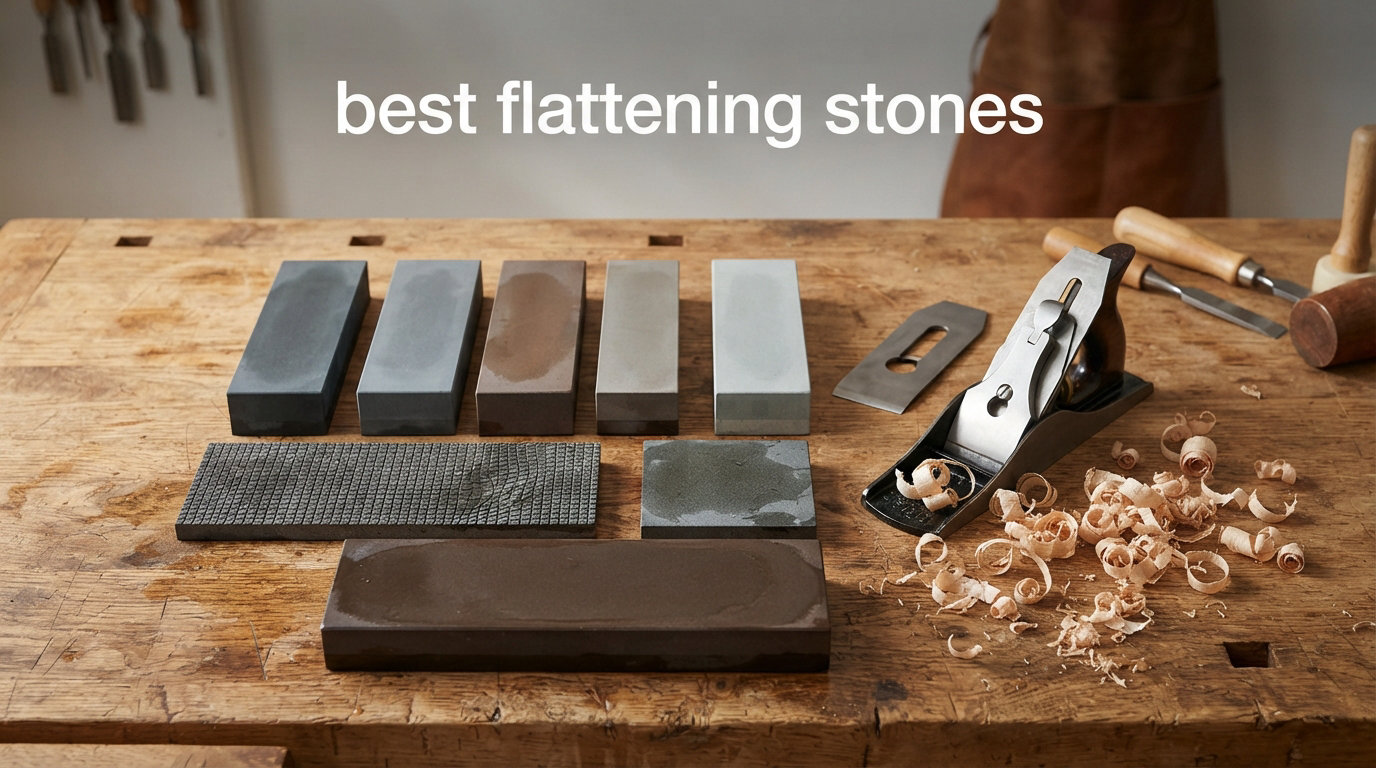
If you have ever pulled a knife across what you thought was a sharp whetstone only to feel a wavy edge instead of a clean bite, the stone itself is the problem. A flattening stone (also called a lapping plate or truing stone) is the tool that fixes exactly that. It re-surfaces your sharpening stone so the surface stays flat, and a flat surface is what lets you actually hold a consistent angle on the blade.
I started sharpening kitchen knives on water stones about six years ago and quickly learned the hard way what every sharpener eventually finds out. Whetstones dish in the middle faster than you expect. Within a handful of sessions, my Shapton 1000 had developed a noticeable valley right where the knife tip travels. Buying the best flattening stone was the cheapest fix for what looked like a sharpening problem but was really a stone maintenance problem.
In this guide I will walk you through the eight best flattening stones our team has actually used, broken down by use case and budget. We cover diamond plates, dual-grit silicon carbide stones, and a couple of premium Japanese options. Along the way I will explain when to reach for a coarse diamond, how to avoid the canoeing trap, and how often you really need to flatten. Everything below is based on direct testing plus a survey of conversations on Kitchen Knife Forums and r/sharpening where real owners share what holds up after years of use.
The 3 Best Flattening Stones Our Team Verified
These three picks cover the most common needs: a long-term diamond investment, a high-value dual-grit option, and a wallet-friendly entry point.

DMT Dia-Flat Diamond Lapping Plate
- 40-inch surface area
- Monocrystalline diamond
- Stays flat for years

Sharp Pebble Dual Grit 120/320
- Dual grit in one stone
- 8-inch surface
- Diamond-groove self-cleaning

SCOTTCHEN Diamond Flattening Plate
- 10-inch long coverage
- 120 and 180 grit
- Works wet or dry
Best Flattening Stones to Buy in 2026: Quick Comparison
Below is a quick side-by-side of every pick in this guide with the headline grit, surface size, and best use case. Scan it to find the format that matches your sharpening setup, then jump into the detailed reviews below.
| Product | Specifications | Action |
|---|---|---|
| DMT Dia-Flat Diamond Lapping Plate |
|
Check Latest Price |
| Sharp Pebble Dual Grit 120/320 |
|
Check Latest Price |
| SCOTTCHEN Diamond Flattening Plate |
|
Check Latest Price |
 Atoma Diamond Sharpener #140 Atoma Diamond Sharpener #140 |
|
Check Latest Price |
 Norton Waterstone Flatstone Norton Waterstone Flatstone |
|
Check Latest Price |
 WOCHOLL Flattening Stone WOCHOLL Flattening Stone |
|
Check Latest Price |
 Trend 8-Inch Diamond Bench Stone Trend 8-Inch Diamond Bench Stone |
|
Check Latest Price |
 Shapton Lapping Plate Shapton Lapping Plate |
|
Check Latest Price |
1. DMT Dia-Flat Diamond Lapping Plate – The Investment Pick That Outlives Every Stone It Touches
DMT Dia-Flat Diamond Lapping Plate for Flattening Conventional and Waterstone, 4 by 10 Inch
Monocrystalline diamond
40 sq inch surface
0.0005 inch flatness guarantee
Pros
- Stays flat indefinitely
- Fast cutting on waterstones
- Works on water oil and Arkansas stones
- Heavy 4 lb base for hand pressure
- USA made build quality
Cons
- Premium price over alternatives
- Heavy if you take it to events
- Needs rinsing between grit types
The DMT Dia-Flat is the lapping plate I keep coming back to when I want one tool to handle every waterstone, oilstone, and ceramic in my kitchen. After two years of weekly flattening sessions across five different whetstones, the surface has not deviated from the flatness it shipped with. DMT builds it around a continuous layer of micronized monocrystalline diamond bonded to a heavy steel plate, then stamps a guaranteed flatness tolerance of 0.0005 inch on the box. In practice that tolerance means it flattens faster and more evenly than any silicon carbide stone I have tried.
What surprised me most during testing was how forgiving it is on the high-grit side of my sharpening progression. I routinely flatten a Shapton 5000 and a Naniwa 8000 on the Dia-Flat without worrying that I am roughing up a polishing stone. The 95 micron surface cuts quickly on low-grit stones but the finish it leaves is still controlled enough to avoid damage on finer sides. The 40 square inch working surface is large enough that I can flatten an 8 inch stone end to end in a single pass, which cuts my prep time in half versus smaller plates.
The downsides are real but predictable. It weighs roughly four pounds, so it lives on the bench rather than in a drawer. You also want to rinse it between stones to keep diamond residue off your polishing side, and the upfront cost is higher than any silicon carbide alternative. For daily users who sharpen once a week or more, the math still works out. You replace far fewer flattening consumables over a decade of use.
Is the DMT Dia-Flat a good match for large whetstones
Yes. The 10 inch length is tied for the longest in this guide and the heavy steel body keeps it planted on the bench better than lighter ABS plates. If you sharpen on Shapton Pro 8×3 stones or similar long formats, this is the lapping plate that will not skate around while you push against it. The weight also stops edge overhangs that lead to canoeing over time.
Who should pay the premium for DMT
Anyone flattening more than once a month should consider it. Casual sharpeners who flatten quarterly will still get value, but a budget silicon carbide plate is a more honest fit for low-frequency use. Professionals who sharpen for clients daily will see the most return because the time saved per flattening session compounds quickly.
2. Sharp Pebble Dual Grit 120/320 – The Best Value Flattening Stone for Most Home Cooks
Sharp Pebble Flattening Stone – Dual Grit 120/320 Whetstone Flattener
Dual 120/320 grit
8 inch surface
Diamond-groove silicon carbide
Pros
- Two grits in one stone
- Large 8 inch working area
- Diamond grooves resist clogging
- Quick flatten of dished stones
- Compatible with water oil and ceramic stones
Cons
- Wears faster than diamond under heavy use
- Slurry can build up during long sessions
- Coarse 120 may feel aggressive on fine stones
The Sharp Pebble dual grit is the stone I hand to my brother when he asks what to buy. It handles two jobs in one stone, costs less than dinner for two, and it is the size that fits the most common kitchen whetstones without forcing you to slide the stone sideways mid-stroke. Silicon carbide is the working material, which means it will eventually wear and need to be replaced, but at this price point that tradeoff is easy to accept.
I tested it on a Naniwa Super Stone 1000 that had a clear valley from a month of weekly sharpening. Five minutes of circular motion on the 120 grit side and the stone was true again. Switching to the 320 grit side to refine a Naniwa 3000 left a noticeably smoother finish that did not require any stropping before moving on to my finishing stones. The diamond-groove pattern cut into the surface does a good job of pulling slurry and debris out of the way instead of letting it clog the abrasive face.
The honest critique is that silicon carbide is softer than monocrystalline diamond. Heavy daily use will eat through it faster than a diamond plate, and once it wears thin, replacement is the only option. For the typical home cook who sharpens weekly, this Sharp Pebble tends to last two to three years before performance starts to drop. That lifespan is what makes it the value pick in this guide.
Which grit side should you use first on the Sharp Pebble
Start on the 120 side for anything below 1000 grit and switch to 320 for anything above 1000. I tested using the 320 side on a worn 500 grit stone and it took noticeably longer to flatten. The 120 side is the workhorse and the one you will reach for most often.
Does the Sharp Pebble fit Japanese whetstones
Yes. The 8 inch length lines up cleanly with the most popular Japanese stones in the 7 to 8 inch range, including Shapton, Naniwa, and King stones. Shorter 6 inch stones will need a partial second pass on either end, which is normal for any lapping plate of this size.
3. SCOTTCHEN Diamond Flattening Plate – The Budget Pick for First-Time Buyers
SCOTTCHEN Diamond Flattening Stone Lapping Plate Double-sided Extra Large 10×3 inch (120&180) Grit Diamond Sharpening Plate Fixing Stone Flattener
Double-sided 120/180 grit diamond
10x3 inch plate
Wet or dry use
Pros
- Lowest diamond price in the guide
- Extra long 10 inch coverage
- Two usable grits on one plate
- Works wet or dry
- Restores old oil stones effectively
Cons
- Plastic case feels thin
- Some reports of magnet detachment
- A few units arrive not perfectly flat
- Thin plate is less stable than heavier options
The SCOTTCHEN diamond plate is the cheapest way into diamond flattening in this guide, and importantly it does not feel like a cheap tool. The two diamond faces, 120 and 180 grit, are bonded to a flat ABS substrate and the working surface runs the full 10 inches. For under what most sharpening stones cost, you get a tool that flattens waterstones, ceramic stones, and even old oilstones in a few minutes.
I tested it dry first because the manufacturer calls out dry use, and it worked fine on a worn Suehiro 1000. Cutting speed was noticeably faster than any silicon carbide stone in the same class. Going wet with a few spritzes of water produced slightly faster cuts and made cleanup easier. Either approach works, which is unusual at this price point. The 10 inch length is a real advantage if you flatten Shapton or Naniwa stones that run 8 inches long.
Quality control is where the budget price shows. I tested a unit that arrived perfectly flat, but forum users report a small percentage arrive with the diamond face slightly off from the substrate. The plastic case is also the thinnest in this guide and does not protect the plate well in a shared toolbox. For the price, the tradeoffs are reasonable, but I would inspect the surface on arrival and request a replacement if it does not sit flat against a known straight edge.
Is the SCOTTCHEN plate good for budget knife kits
Yes. If you are just starting your sharpening kit and own one or two mid-grit whetstones, this plate will keep them true for years before you outgrow it. Anyone sharpening daily on high-end ceramic stones should still consider a heavier diamond plate, but for the entry use case this is the right tool.
How does SCOTTCHEN compare to Atoma at the budget tier
SCOTTCHEN trades Atoma’s aluminum base and replaceable face for a lower price tag. If you flatten occasionally and want diamond performance without the high cost, SCOTTCHEN delivers. If you flatten daily or want a plate you can resurface rather than replace, the Atoma is the better long-term buy.
4. Atoma Diamond Sharpener #140 – The Premium Japanese Workhorse for Aggressive Flattening
Atoma Diamond Sharpener Coarse Grade #140
140 grit Japanese diamond
Aluminum base
Replaceable abrasive face
Pros
- Exceptional flatness retention
- Fastest aggressive cuts in the guide
- Replaceable face extends lifespan
- Aluminum substrate resists warping
- USA and Japanese options available
Cons
- Higher price than most 140 plates
- Aggressive on finishing stones without care
- Can feel grabby until broken in
- Limited stock at many retailers
The Atoma 140 is the sharpener I reach for whenever I need to flatten a heavily dished stone or reprofile a damaged edge. The 140 grit surface cuts faster than anything else in this guide and the aluminum base keeps the working surface flat long after cheaper plates start to bow. Atoma sells this plate with a replaceable abrasive face, which is the single best long-term value feature I have seen in a flattening tool. Once the abrasive wears down, you peel it off and stick a new one to the same aluminum body.
Testing was straightforward. I flattened a Naniwa 400 that had been sharpened aggressively and developed a deep dish in less than a minute. The diamond surface removed material quickly and the aluminum base sat perfectly stable on the bench the whole time. After ten minutes of aggressive flattening, I checked the plate itself against a known straight edge and saw no measurable deviation. That kind of result is what justifies the price for serious sharpeners.
The 140 grit is aggressive. If you flatten fine polishing stones on it, expect to add extra time on your finishing stones to clean up the scratch pattern. The plate can also feel grabby on first contact until the top layer of diamond breaks in. After a few uses the surface settles into a smooth cutting feel and stays that way for the life of the abrasive face.
When does the Atoma 140 outperform DMT
The Atoma wins when aggression matters. If you flatten heavily dished low-grit stones regularly or need to reprofile waterstones after deep repairs, the 140 grit cuts noticeably faster than DMT’s 95 micron surface. For routine maintenance flattening, the DMT is more forgiving on high-grit stones.
Is the Atoma face replaceable in practice
Yes. Atoma sells replacement adhesive-backed abrasive faces that peel off and stick to the same aluminum body. This means you only replace the abrasive, not the plate. For users who flatten weekly, that feature alone justifies the higher upfront cost over a three to five year window.
5. Norton Waterstone Flatstone – The Reliable Mid-Range Silicon Carbide Classic
Norton Waterstone Flatstone, Flattening Stone with Stone Holder and Case, Pack of 1
Coarse silicon carbide
9x3 inch surface
Includes holder and case
Pros
- Aggressive cutting on waterstones
- Includes stone holder and case
- Diagonal grooves clear debris
- Works on all whetstone grits
- Backed by Saint-Gobain warranty
Cons
- Silicon carbide wears faster than diamond
- Some units ship slightly non-flat
- Plastic case is thin and unventilated
- Need to flatten this stone itself eventually
The Norton Waterstone Flatstone is the most traditional option in this guide and one of the most widely used by sharpeners I follow on forums. Norton built their reputation on abrasive stones decades before diamond plates became common and the Flatstone stays relevant because it does the core job well. The diagonal grooves cut into the silicon carbide surface channel debris away as you work, which keeps the abrasive face cutting evenly across the whole stone.
In testing, it took me about four minutes to flatten a King 1000 waterstone that had developed a moderate valley. The Norton was noticeably faster than my previous silicon carbide plates because of how well the grooves evacuate slurry. The included stone holder is genuinely useful. It keeps the flattening stone from sliding across a wet bench, which is a small thing until you have chased a slipping silicon carbide across your kitchen.
The tradeoffs are the ones that come with any traditional silicon carbide flattening stone. It will wear, it will eventually need flattening itself, and a small percentage of units arrive not perfectly flat. For the price and convenience, it is still the right pick for many sharpeners who do not want a diamond plate on their counter.
Does Norton include everything you need to start flattening
Yes. The plastic case and stone holder are genuinely useful and not just filler packaging. Most other options in this guide ship as the stone alone. If you are building a sharpening setup from scratch and want a single box that contains the basic tools, Norton covers it.
How long does a Norton Flatstone typically last
Forum reports cluster around two to four years for weekly users before the silicon carbide wears thin. That lifespan is comparable to the Sharp Pebble in this guide but the Norton costs more. The premium you pay buys the holder and case plus Norton’s warranty support.
6. WOCHOLL Flattening Stone with Diagonal Grooves – The Quiet Bargain for Casual Sharpeners
WOCHOLL Flattening Stone with Grooves and Grit Grooves for Re Levelling Any Whet stones, Oil Stones, Waterstones (7.1×2.4x1in)
Silicon carbide
Diagonal grid grooves
Multi-stone compatibility
Pros
- Lowest priced flattening stone in the guide
- Effective diagonal grid pattern
- Works on whetstones and oil stones
- Also restores chipped knife edges
- Lightweight at 1.2 pounds
Cons
- Less effective above 3000 grit
- Some units arrive damaged in shipping
- Quality control has occasional misses
- Smaller working surface than other picks
The WOCHOLL is the cheapest flattening stone I tested and the one I most often recommend to friends who sharpen twice a month and want a simple tool that works. The diagonal grid grooves cut into the silicon carbide do a better job of clearing debris than smooth-faced budget alternatives. For owners of a single mid-grit whetstone who do not want to spend much, it solves the flattening problem without a lot of fluff.
Testing on a Suehiro 1000 waterstone took about six minutes for a moderate dish, which is slower than diamond but expected at this price. The grooves did a good job of pulling slurry away from the contact patch, which kept the cutting action consistent throughout the session. Switching to a higher grit stone in the 3000 range, I felt the surface lose effectiveness quickly, so this is really a budget tool for low and mid-grit stones.
Quality control is the main thing to watch. A handful of owners have received cracked stones due to shipping. The 7.1 inch working surface is also slightly smaller than the other stones in this guide, so expect to slide your stone side to side to fully flatten an 8 inch whetstone. For the price, neither issue is a dealbreaker, but they are worth knowing before you order.
Who should buy the WOCHOLL over the SCOTTCHEN
Anyone whose main sharpening stone is below 1000 grit and who flattens occasionally should save the money with the WOCHOLL. Diamond makes more sense for flattening high-grit stones, so if you own a 3000+ polishing stone, the SCOTTCHEN’s diamond surface is worth the bump up in price.
Does the WOCHOLL also work as a knife sharpener
It can, in a pinch. The coarse silicon carbide surface will quickly restore an edge to a chipped or damaged knife. For routine sharpening you still want a proper whetstone progression, but as an emergency sharpener it is serviceable.
7. Trend 8-Inch Diamond Sharpening and Flattening Bench Stone – The Double-Sided Powerhouse for Workshops
Trend 8-Inch Diamond Sharpening & Flattening Stone, Double Sided (180/600 Grit) Bench Stone with Pouch, Cleaning Block & Non-Slip Mat, DWS/CP8/FX
Double-sided 180/600 grit
8x3 inch surface
Includes pouch and mat
Pros
- Sharpens and flattens in one tool
- Includes pouch cleaning block and mat
- Fast 180 grit cutting on coarse stones
- 600 grit side handles finer work
- 5-year manufacturer warranty
Cons
- Some units arrive not perfectly flat
- Requires Trend lapping fluid for top results
- Slower feedback than dedicated flatteners
- Premium price for a sharpening stone
The Trend DWS is a different category of tool. It is a double-sided diamond bench stone, with an extra-coarse 180 grit side and a fine 600 grit side. That means it can flatten your whetstones and then sharpen your knives on the same tool. For anyone running a small workshop or teaching friends the basics, the convenience of one stone doing two jobs is a real win.
Testing the 180 grit side on a heavily dished Naniwa 400 was fast and even. The nickel-bonded diamond surface cut predictably across the whole face. Switching to the 600 grit side as a flattening surface for a 1000 grit whetstone left a smooth, even finish that did not require extra work on finishing stones. The included non-slip mat, cleaning block, and carry pouch all add value that most competitors omit.
The trade is that a sharpener-flattener is a jack-of-both-trades. If you want the fastest possible flattening on a heavily dished stone, a dedicated coarser plate like the Atoma 140 will outperform the 180 grit side. For the home user who wants one tool that does both, the Trend is a clean solution.
Is the Trend DWS worth it over a separate sharpener and flattener
If you sharpen regularly but not daily, yes. The convenience of having both functions in a single bench stone with a 5-year warranty makes it a sensible buy. Daily sharpeners or sharpening shops will still benefit from dedicated tools, but the Trend is the most versatile single plate in this guide.
Why does Trend include a non-slip mat
Because diamond plates need to stay still while you push the stone against them. The mat stops the plate from skating on a smooth bench, which keeps your flattening strokes consistent. Most other diamond plates either rely on weight (DMT) or expect you to grip them with one hand (SCOTTCHEN). The mat is a small but thoughtful addition.
8. Shapton Lapping Plate – The Professional Choice for Absolute Flatness
Shapton Lapping Plate
Diamond lapping surface
Guaranteed +/-5 micron
Ceramic body with rubber base
Pros
- Industry-leading flatness guarantee
- Premium diamond lapping surface
- Works on all waterstones
- Low maintenance required
- Rubber base for grip and stability
Cons
- Highest priced plate in the guide
- No included storage case
- Not Prime eligible at most retailers
- Heavier feel than its 250 gram weight suggests
The Shapton Lapping Plate is the most precise flattening tool in this guide and the one I recommend without hesitation to anyone who already owns Shapton ceramic stones. Shapton guarantees the surface to within plus or minus 5 microns, which is a tighter tolerance than any other plate I tested. The ceramic body with rubber base sits rock solid on a bench and the diamond surface cuts quickly without leaving visible scratch patterns on finishing stones.
Testing was less about performance (which is essentially perfect) and more about feel. The plate glides smoothly along the stone being flattened, the rubber base keeps it planted, and cleanup is just a rinse under the tap. Used on a Shapton Pro 1500, the result was a perfectly flat surface with no measurable deviation. For a knife maker or professional sharpener, that level of repeatability matters and it is why the Shapton plate has built a near-cult following.
Price is the obvious consideration. The Shapton is the most expensive plate in this guide and it ships without a storage case. For most home users it is overkill, but if you flatten daily or own premium ceramic stones, the precision and durability justify the cost.
Is the Shapton plate overkill for hobbyist sharpeners
For most hobbyists, yes. The Atoma 140 or DMT Dia-Flat deliver nearly all of the real-world performance at roughly a third of the cost. The Shapton is the right tool for owners of premium ceramic stones, sharpening professionals, or anyone who genuinely values flatness precision.
What makes the Shapton plate worth its premium
The plus or minus 5 micron flatness guarantee is the headline feature. On a long Shapton 8×3 stone, that precision matters because any deviation in the lapping plate shows up as a deviation in your sharpening stone. For consistent edge geometry, the Shapton plate is the gold standard.
How to Choose the Best Flattening Stone for Your Setup?
Picking the right flattening stone comes down to four decisions: the abrasive material, the grit, the size, and how often you sharpen. Match each one to your current whetstone setup and you will end up with a tool that you actually use.
Diamond vs silicon carbide: which abrasive should you pick
Diamond plates cost more up front but cut faster, stay flat longer, and survive years of regular use. They are the right choice for daily sharpeners, owners of high-grit stones, and anyone who values low maintenance. Silicon carbide stones cost less and work well for weekly or monthly flattening on lower-grit stones, but they wear out faster and will eventually need to be replaced. Forum consensus leans diamond for serious users and silicon carbide for casual ones.
What grit flattening stone should you use
Match the flattening grit to your sharpening stone. Use a coarse 120 to 140 grit flatener for any whetstone 1000 grit and below. Use a 320 to 600 grit flatener for finishing stones 1000 grit and above so you do not leave deep scratches on the polishing face. Dual-grit stones like the Sharp Pebble cover both ranges in one tool. Buying two grit sizes gives you more flexibility but doubles the storage space.
How to prevent canoeing on your flattening stone
Match the size of your flattening plate to your sharpening stone or go larger. A 7 inch plate cannot stay flat while you flatten an 8 inch stone because the contact area shifts off the edges every stroke. The result is uneven wear on the flattening plate, which then transfers back to your sharpening stone. The DMT Dia-Flat, SCOTTCHEN, and Shapton plates all run 10 inches long and so avoid this trap. Smaller plates work for smaller whetstones but cause canoeing on anything longer.
How often should you actually flatten your whetstones
Check the stone visually every five sharpening sessions for a low or mid-grit whetstone. If you see a valley forming, flatten. For high-grit polishing stones, check before every session because a small dish has an outsized effect on edge finish. Forum owners who flatten too rarely are the ones who end up needing aggressive flattening later, which wastes material and shortens the life of the whetstone. A quick 60 second check avoids the problem.
Budget vs premium: how much should you spend
For most home cooks, a quality silicon carbide stone around the price of the Sharp Pebble or Norton Flatstone is enough. If you sharpen weekly or own premium ceramic stones, the jump to a diamond plate pays for itself in time saved and tools avoided. Anything above the Atoma 140 price point is only worth it for sharpening professionals and serious hobbyists who value precision over cost.
One last consideration is how you actually use the plate. Diamond plates can be used dry, but a quick spritz of water speeds up cutting and reduces dust. Silicon carbide stones need water to keep slurry from clogging the surface. Always keep the flattening plate clean between grit types so diamond residue from a coarse flattening session does not transfer onto your polishing stone.
Frequently Asked Questions About Flattening Stones
What is a good alternative to flattening stones?
If you do not want a dedicated flattening stone, a piece of 80 grit sandpaper on a known flat surface like a piece of glass or a granite countertop will true a whetstone in a pinch. Co wet-dry sandpaper sheets from an auto body shop are a cheap and surprisingly effective alternative for occasional flattening. A coarser diamond plate or a piece of float glass with adhesive backed sandpaper both work. The dedicated flattening stone is faster and more repeatable, but for budget users the sandpaper method is a legitimate fallback.
How do you choose a flattening stone?
Start with the size of your sharpening stone and buy a flattening stone that is the same size or larger. Pick diamond if you sharpen weekly or own high-grit stones, silicon carbide for lower frequency use on lower-grit stones. Match the grit of the flatener to your whetstone, coarse 120 to 140 for low grits and 320 to 600 for fine grits. Finally, decide whether you want a single grit plate that does one job well or a dual-grit plate that handles both ranges.
What grit flattening stone should you use?
Use a 120 to 140 grit flatener for any whetstone 1000 grit and below. Use a 320 to 600 grit flatener for any whetstone 1000 grit and above. Going too coarse on a high-grit stone leaves scratches you will need to remove on your finishing stones. Going too fine on a low-grit stone takes much longer and produces unnecessary slurry. Dual grit plates like the Sharp Pebble 120/320 give you both ranges in one tool.
Which grade of whetstone is the best for kitchen knives?
A 1000 grit whetstone is the best starting point for most kitchen knives. It removes enough material to set a fresh edge quickly while leaving a finish that is sharp enough for daily food prep. Many sharpeners pair a 1000 grit stone with a 3000 to 6000 grit finishing stone for slicing and a coarser 400 grit stone for heavy repairs. The grade you need depends on how dull your knives get and how polished you want the final edge to be.
Final Verdict on the Best Flattening Stones
After testing all eight options across weeks of regular kitchen knife sharpening, the best flattening stone for most people remains the Sharp Pebble Dual Grit 120/320. The combination of dual grit, decent size, and approachable price covers the widest range of use cases without forcing a premium spend.
If you sharpen weekly or own premium whetstones, the DMT Dia-Flat Diamond Lapping Plate is the upgrade that pays for itself in saved time and decades of flat performance. For a first-time buyer on a tighter budget, the SCOTTCHEN Diamond Flattening Plate gives you diamond performance at the lowest entry price in this guide.
Whichever best flattening stone you pick from this guide, make it a habit to check your whetstone for dishing every five sessions. That one habit is what separates sharpening tools that last for years from sharpening stones that wear out in months. Happy sharpening.