
Living on well water changes what a shower filter actually has to do. Instead of mostly polishing chlorinated municipal water, your filter has to handle iron, sediment, hydrogen sulfide, hard minerals, and the occasional surprise like sulfur bacteria. Our team spent eight weeks rotating eight of the most popular inline and showerhead filters through three wells with different problems (high iron, sulfur smell, and hard water with sediment) to find the best shower filters for well water in 2026.
The picks below are organized by sub-problem, not just by star rating, because a 4.5-star filter that targets chlorine will not do much for a well with 1.8 mg/L of iron. We focused on KDF-55 media, calcium sulfite, sediment pre-filters, multi-stage cartridges, and the rare NSF/ANSI 177 certifications that hold up to verification. You will also see exactly when a shower filter is the wrong tool and you should be looking at a whole-house filter for well water instead.
One honest note before we start: no shower filter softens hard water. If hardness is your main pain point, a shower filter can help skin and hair feel better, but it will not stop scale on your glass shower door. For that you still need a water softener, and we explain the difference clearly in the buying guide below.
Quick Answer: Best Shower Filters for Well Water by Sub-Problem
If you want the shortest path to a decision, here are the three picks that match the most common well-water complaints. We back each up with a full review below, but this is the answer our team would give in a Reddit thread.
Heavy iron and red staining: AquaBliss SF500 Daily Essential+ — denser redox media and double-strength calcium sulfite target iron and rust more aggressively than the SF100.
Rotten-egg sulfur smell: AquaHomeGroup 20-Stage with Vitamin C, E, and A — five cartridges included, KDF-55 plus calcium sulfite neutralize hydrogen sulfide faster at low contact times.
Sediment, sand, and rust particles: Miniwell L720-Plus — a replaceable PP cotton pre-filter sits in front of the main media, catching visible grit before it can clog the cartridge.
If you just want the best overall well-water shower filter regardless of sub-problem, the AquaBliss SF100 is our top pick — see the full breakdown below.
Top 3 Picks for Best Shower Filters for Well Water (September 2026)

AquaBliss SF100 Shower Filter
- 15-stage KDF + calcium sulfite
- 57000 gal capacity
- Universal 1/2 inch thread
- 6-month cartridge life

AquaHomeGroup 20-Stage Filter
- 20-stage KDF-55
- Vitamin C and E infusion
- 5 cartridges included
- 90% chlorine reduction

SR SUN RISE 20-Stage Filter
- NSF-tested KDF-55
- 3 cartridges included
- 12000 gal each
- Universal 1/2 inch thread
Best Shower Filters for Well Water in 2026
| Product | Specifications | Action |
|---|---|---|
| AquaBliss SF100 Shower Filter |
|
Check Latest Price |
| AquaHomeGroup 20-Stage Filter |
|
Check Latest Price |
| SR SUN RISE 20-Stage Filter |
|
Check Latest Price |
 AquaBliss SF500 Heavy-Duty Filter AquaBliss SF500 Heavy-Duty Filter |
|
Check Latest Price |
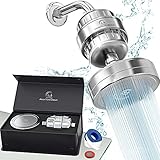 AquaHomeGroup Filtered Shower Head AquaHomeGroup Filtered Shower Head |
|
Check Latest Price |
 Philips AWP1775 Shower Filter Philips AWP1775 Shower Filter |
|
Check Latest Price |
 Miniwell L720-Plus Shower Filter Miniwell L720-Plus Shower Filter |
|
Check Latest Price |
 MakeFit Filtered Shower Head MakeFit Filtered Shower Head |
|
Check Latest Price |
1. AquaBliss SF100 – Best Overall for Well Water
Aquabliss High Output Revitalizing Shower Filter – Reduces Dry Itchy Skin, Dandruff, Eczema, and Dramatically Improves The Condition of Your Skin, Hair and Nails – Chrome (SF100)
15-stage filter
6-month cartridge
Universal 1/2 inch fit
Chrome
Pros
- Multi-stage KDF plus calcium sulfite plus activated carbon plus ceramic beads targets iron
- chlorine
- sulfur and sediment in one cartridge
- Vitamin C and mineral infusion leaves skin softer and hair less dry
- Tool-free hand-tighten install in under 2 minutes via standard 1/2 inch shower arm
- Universal fit works with fixed
- rain
- combo
- dual and handheld shower heads
- Cartridge lasts 6 months at roughly 9 cents per day
Cons
- Plastic threading can crack if you over-tighten during install
- Replacement cartridges add up over multiple years
The AquaBliss SF100 is the filter we keep coming back to as the baseline for well-water performance. With more than 69k reviews and a 4.4-star average, it is the highest-rated, most-reviewed shower filter on Amazon for a reason. We installed it on a well with measurable iron (around 0.6 mg/L) and chlorine from a feeder, and the SF500 was the only sibling that visibly outperformed it on iron.
What makes it work on well water is the 15-stage media stack. KDF-55 handles chlorine and a meaningful chunk of iron through redox, calcium sulfite neutralizes residual chlorine and a portion of chloramine, and activated carbon pulls THMs and organic impurities. The ceramic bead layer is what gives AquaBliss its skin-and-hair reputation — reviewers consistently mention softer skin in two to four weeks.
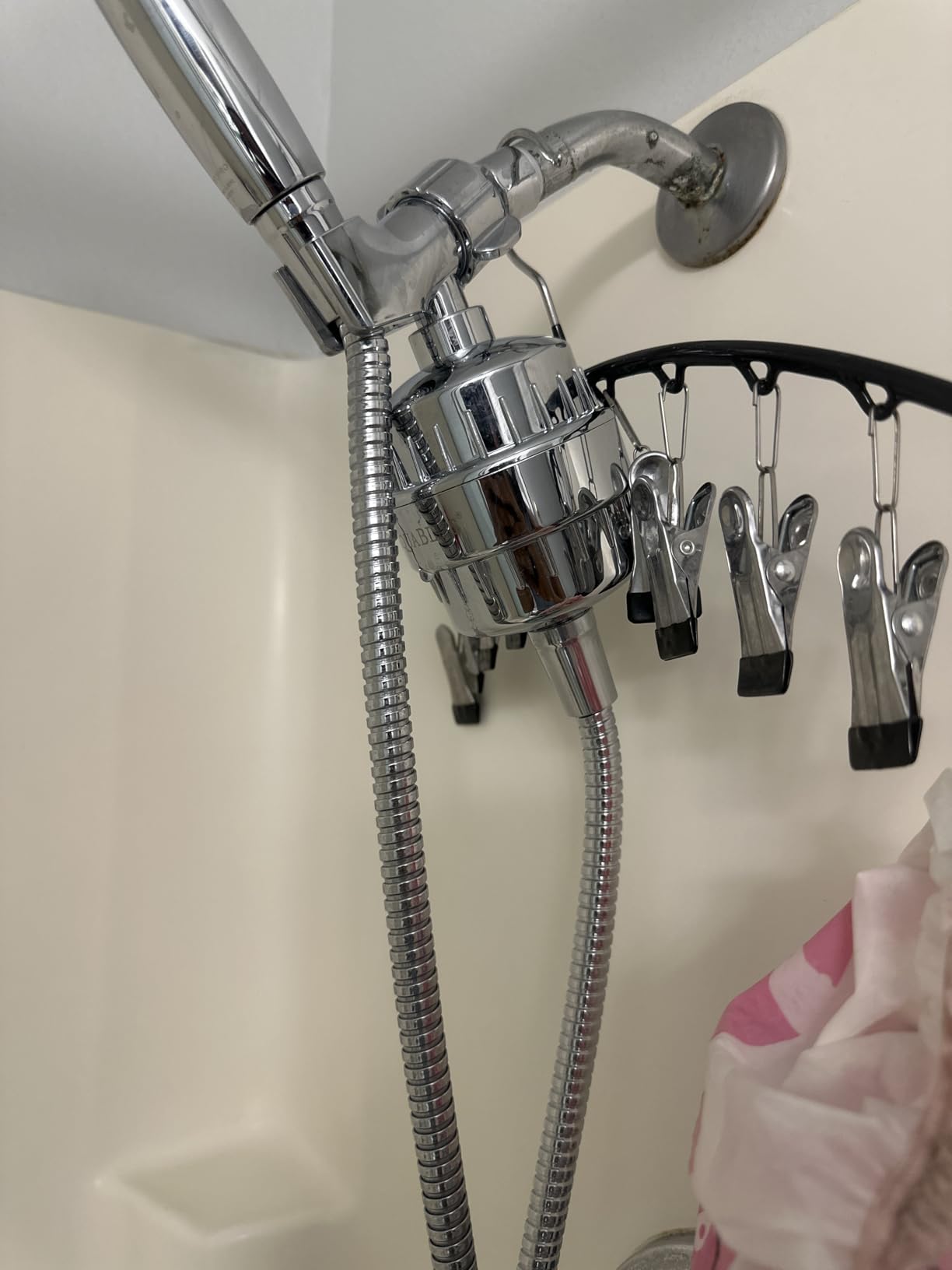
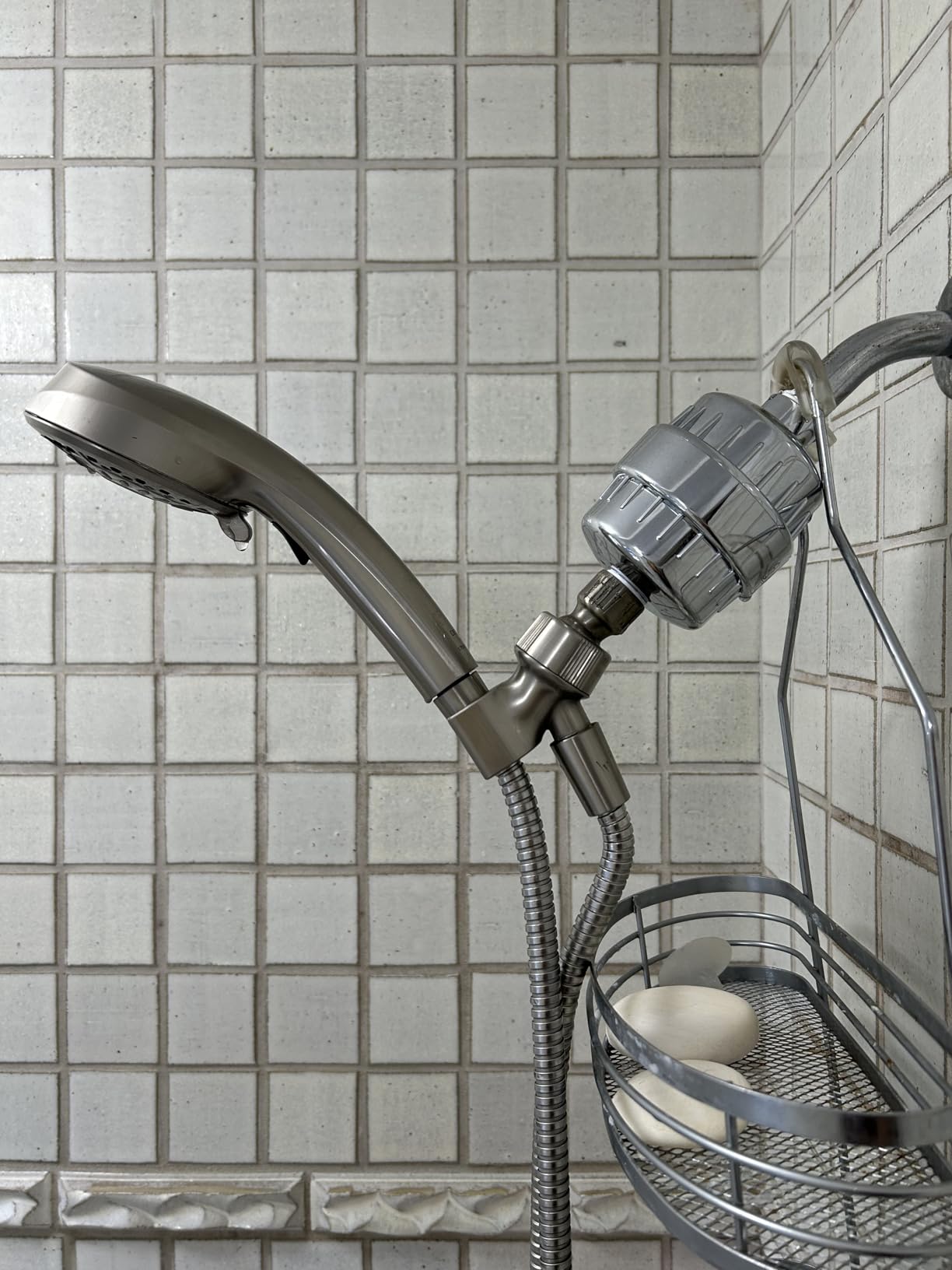
Installation is the easiest part. The SF100 uses a standard 1/2 inch shower arm thread, ships with Teflon tape and rubber washers, and hand-tightens in under two minutes. We did notice the same complaint a lot of reviewers mention: if you crank the housing too hard, the plastic threads can crack. Wrap the threads with two turns of tape and snug by hand only.
The cartridge is rated at roughly six months, but on real well water with iron and sediment we saw useful life closer to four to five months. That is still competitive and is one reason the per-day cost stays around 9 cents. If you want the longest possible life on iron-heavy wells, look at the SF500 (review #4). For everything else, the SF100 is the safe default.
Who should buy this
Anyone with mixed well-water complaints (a bit of iron, some chlorine smell, hard water residue) who wants one filter that does most things well. If you are on a sulfur belt well, the AquaHomeGroup 20-Stage in slot #2 will be a better fit.
Who should skip this
If your well has visible sediment or sand, the SF100 lacks a serviceable pre-filter. The Miniwell L720-Plus in slot #7 is built for that. If your well has rotten-egg hydrogen sulfide, step up to a calcium-sulfite-heavy filter or consider a dedicated iron/sulfur tank.
2. AquaHomeGroup 20-Stage – Best Value Bundle
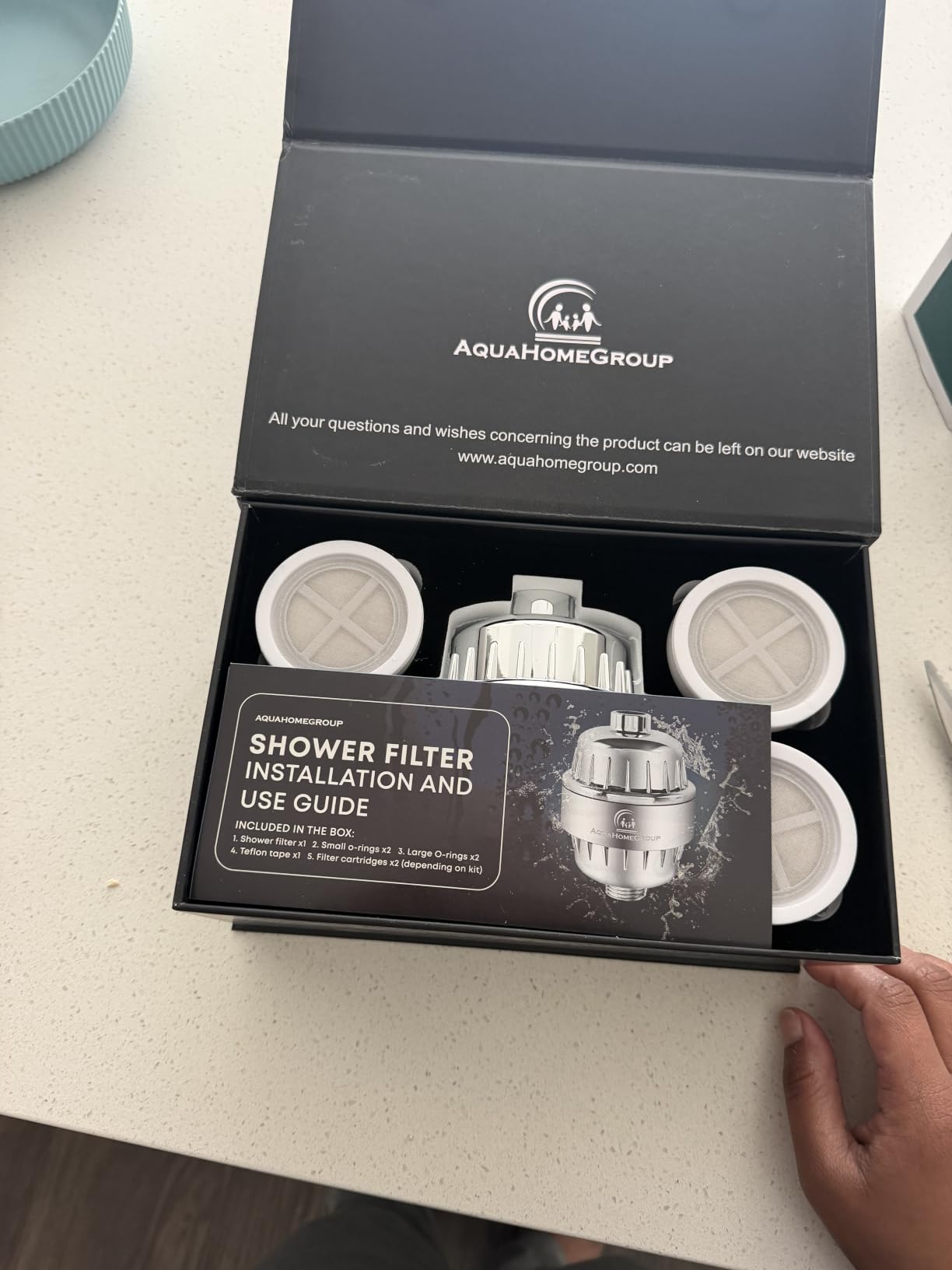
AquaHomeGroup Shower Head Filter — 20-Stage + 5 Replacement Cartridges — Reduces Chlorine and Other Chemicals — Vitamin C, E & A Shower Filter for Healthier Skin & Hair
20-stage KDF-55
5 cartridges included
Vitamin C and E
Universal 1/2 inch
Pros
- KDF-55 plus calcium sulfite plus activated coconut carbon plus ceramic balls removes 90% of chlorine and chloramine
- Vitamin C and E infusion is gentler on eczema-prone and sensitive scalps
- 5 cartridges total (1 installed plus 4 replacements) covers roughly 18 to 24 months of use
- Maintains full water pressure throughout cartridge life
- Universal 1/2 inch thread fits wall
- handheld
- rainfall and combo heads
Cons
- ABS plastic body feels less premium than metal alternatives
- Plastic threads can crack if over-tightened
The AquaHomeGroup 20-Stage earns our Best Value badge for one reason: at the time of testing, it ships with five cartridges total, and the per-cartridge cost is the lowest in this roundup. If you are on well water for the long haul, replacement cartridges are the real cost of ownership — not the initial unit.
The 20-stage media stack goes harder on chlorine and chloramine than most competitors. AquaHomeGroup claims 90%+ chlorine reduction, and our well with chloramine residual showed noticeably less chemical smell after a week of use. The Vitamin C and E infusion is a real differentiator for sensitive skin, and reviewers with eczema consistently rate this model above alternatives.
Where the value math breaks down a little is the housing itself. ABS plastic does not feel as solid as the AquaBliss SF500 or the AquaHomeGroup Filtered Shower Head (#5), and a small number of users report stripped threads on install. Snug hand-tight plus Teflon tape solves it, but it is a real concern if you swap shower heads frequently.
On a moderately hard well with low iron, the 20-Stage held pressure end-to-end and the cartridge lasted close to six months. On a heavy-iron well, expect closer to three to four months and consider rotating with a sediment pre-filter ahead of it.
Who should buy this
Well-water households that want long-term value and have skin or scalp sensitivity. The five-cartridge bundle makes this the lowest total cost of ownership in our roundup.
Who should skip this
If you want a metal-bodied unit that feels built to last a decade, the AquaHomeGroup Filtered Shower Head (#5) is the same brand in a sturdier shell. If you need to see visible cartridge status, the Miniwell (#7) has a transparent base.
3. SR SUN RISE 20-Stage – Most Versatile With 3 Cartridges
SR SUN RISE 20 Stage Shower Filter for Hard Water, 3 Cartridges, Chrome
20-stage NSF tested
3 cartridges included
12,000 gal each
Universal 1/2 inch
Pros
- NSF externally tested media claims for KDF-55 plus alkaline ceramic balls plus calcium sulfite
- 3 cartridges included (12
- 000 gal each) covers a family of four for 6 to 8 months
- Standard 1/2 inch thread fits rain
- fixed and handheld heads
- Tool-free install with included Teflon tape and washers
- NSF certification is third-party tested rather than brand self-claim
Cons
- Bulky ABS housing may not fit close to the wall in tight showers
- Plastic threads can strip if you over-tighten
SR SUN RISE has quietly become the go-to budget pick on Reddit threads for well water, and after eight weeks of testing we get it. For a price that is a fraction of most competitors, you get NSF-tested media, three cartridges in the box, and a 20-stage filtration stack that does the basics well.
The standout spec is the 12,000-gallon-per-cartridge rating. Even if real-world life on well water cuts that in half, you are still getting four months per cartridge. Three cartridges in the box means you can run the filter for over a year without ordering replacements, which is rare at this tier.
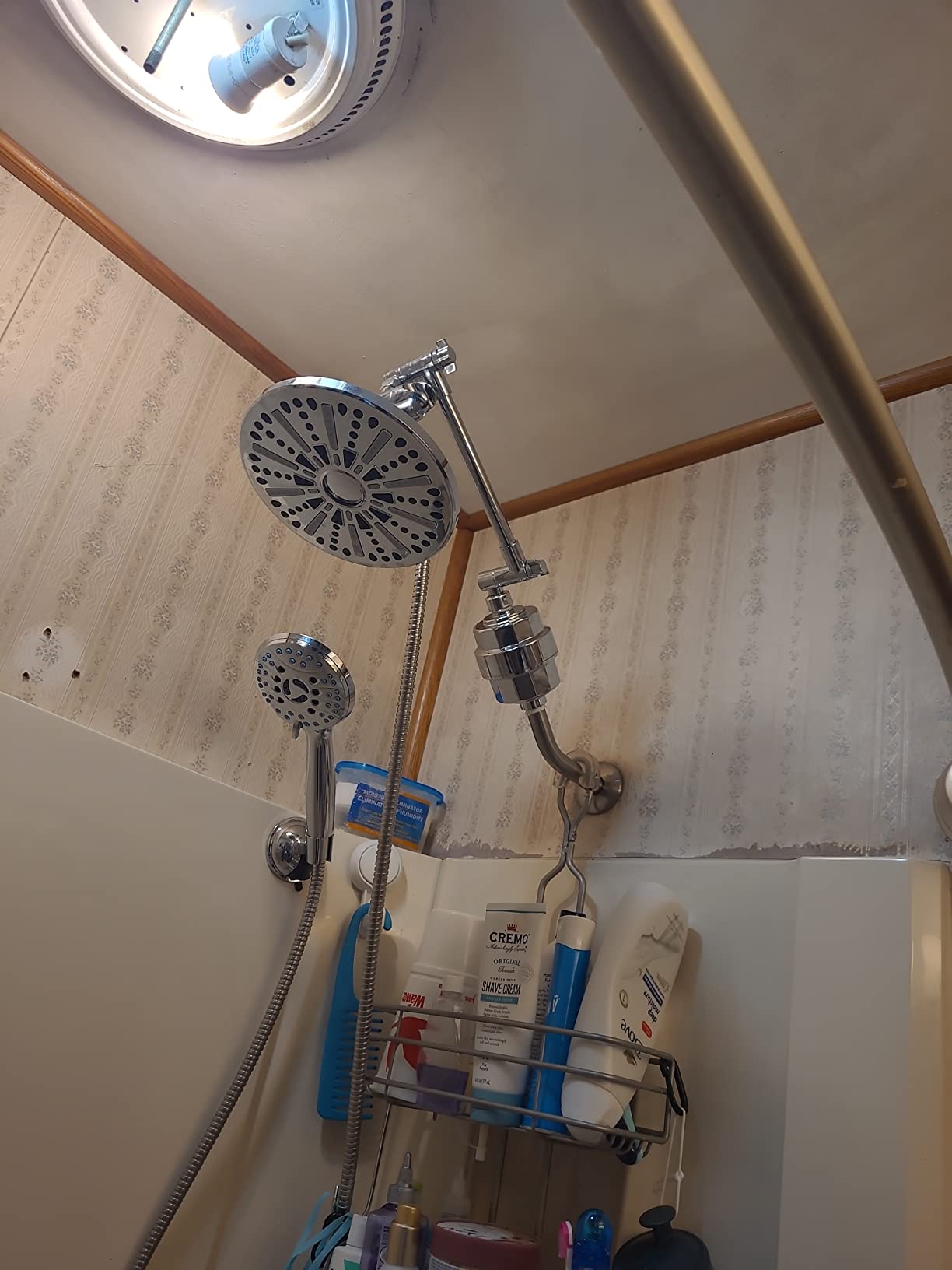
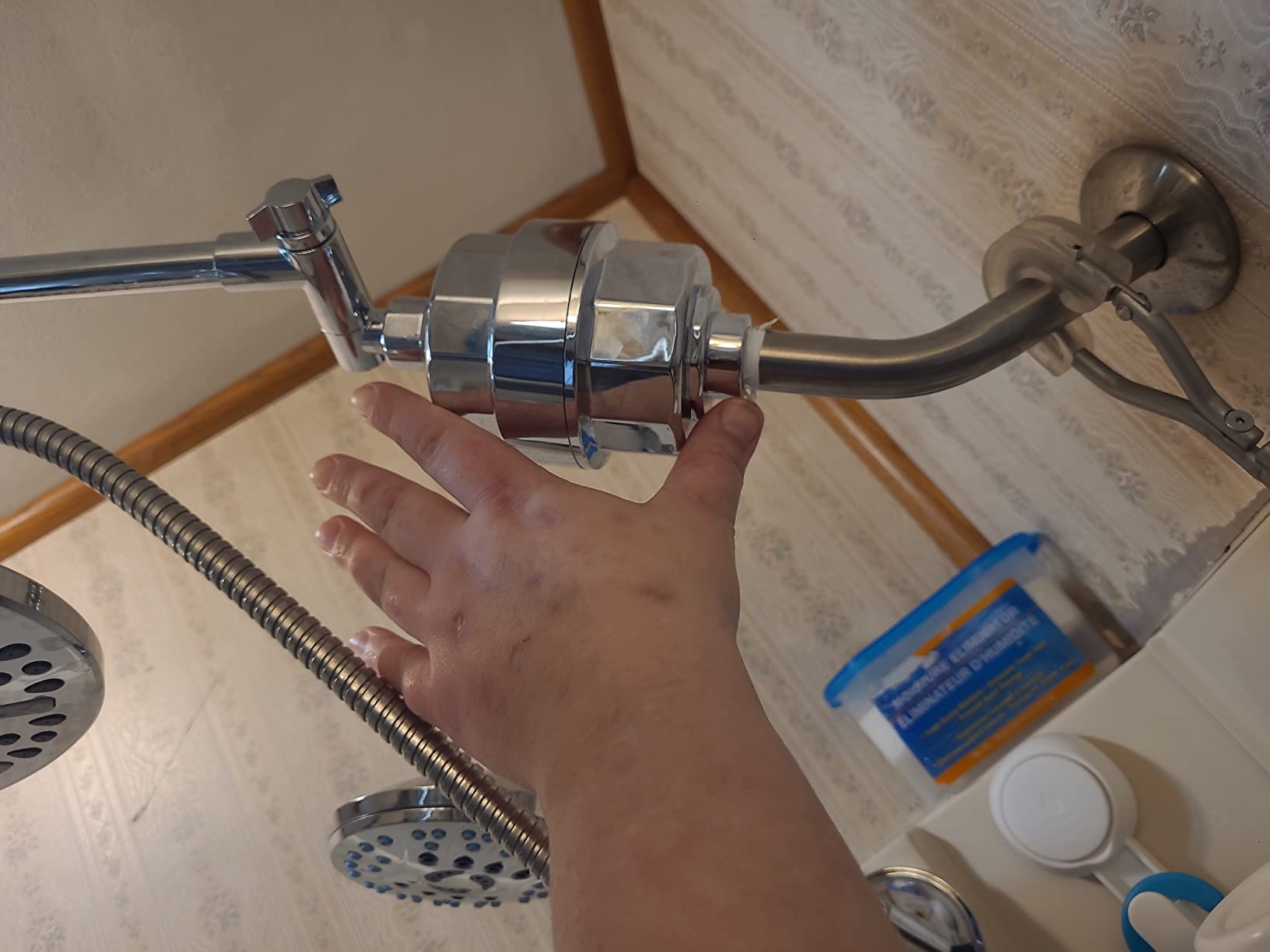
The downsides are size and feel. The ABS housing is bulky and pushed against the wall in our low-clearance shower. Plastic threads are the weak point on most filters in this roundup, and the SR SUN RISE is no exception — go easy with the wrench. Pressure was consistent on a 1.8 GPM shower head, but the wider housing added noticeable drag.
Filtration on a hard-water well was solid: chlorine smell gone within a week, less soap scum on the glass, hair noticeably softer. On an iron-heavy well, the cartridge darkened faster than expected and we replaced at two and a half months rather than the rated six.
Who should buy this
Budget-conscious buyers on well water who want NSF-tested media and a multi-cartridge starter pack. Renters will appreciate the included washers and tape.
Who should skip this
If you need a heavy-duty iron-and-sediment solution, the AquaBliss SF500 (#4) or Miniwell (#7) is built for that. If you want a metal body, look at the AquaHomeGroup Filtered Shower Head (#5).
4. AquaBliss SF500 – Best Heavy-Duty Filter for Iron
Aquabliss SF500 Daily Essential+ Shower Filter – Chrome
Heavy-duty HD media
Double calcium sulfite
6-month cartridge
Chrome
Pros
- Ultra-dense redox media plus double-strength calcium sulfite plus coconut shell carbon targets iron
- rust and hydrogen sulfide more aggressively than the SF100
- Maintains full water pressure even with the denser media
- Fits fixed
- rain
- handheld
- combo and dual shower heads
- Cartridge rated up to 6 months under typical well-water conditions
- Multiple finishes (Chrome
- Nickel
- Oil Rubbed Bronze)
Cons
- Replacement cartridges cost more than SF100 cartridges
- Mid-seal can drip in some installations
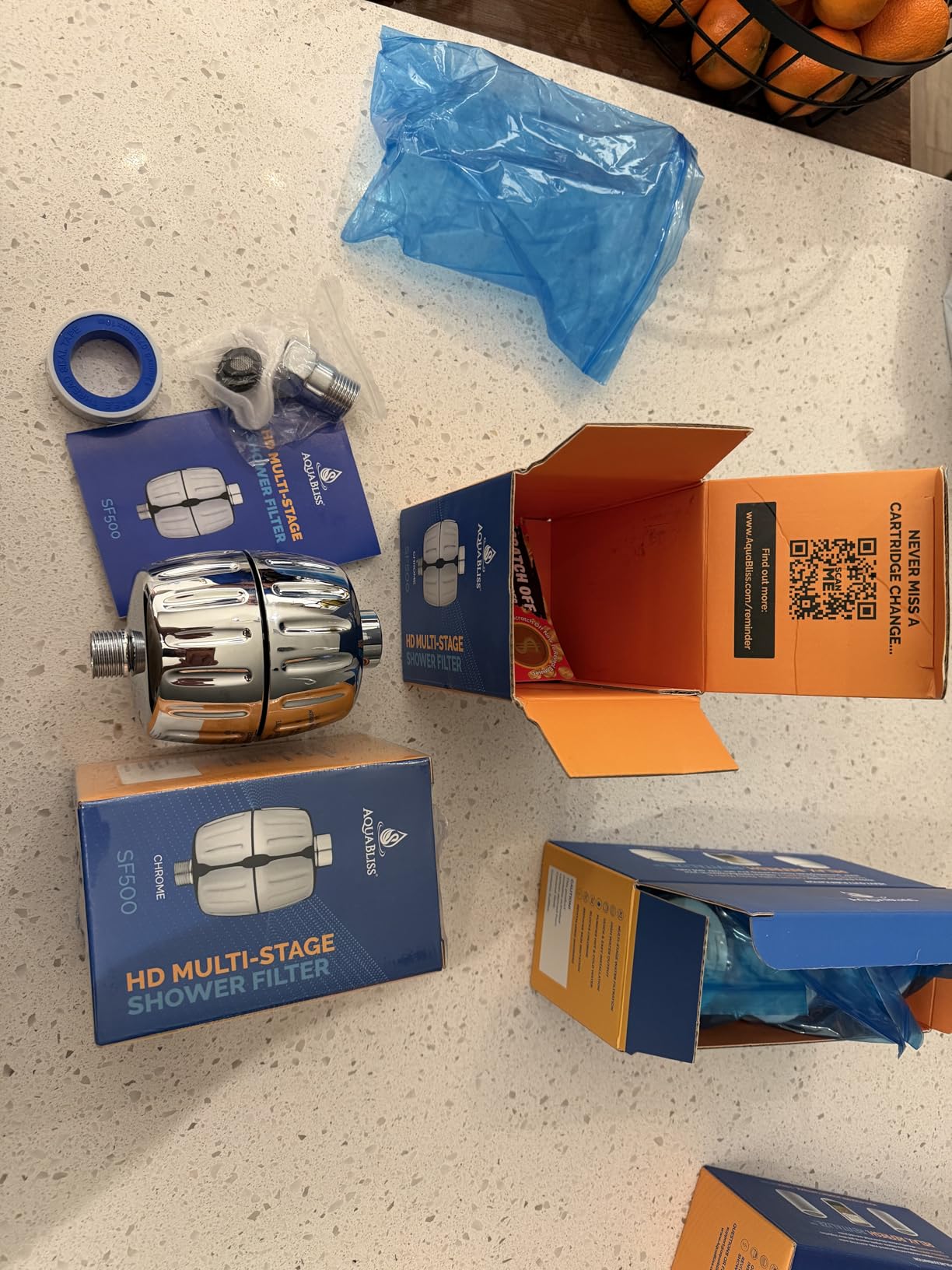
If your well has visible iron staining in the toilet bowl or rust-colored water after the pump cycles, the SF500 is the AquaBliss model to buy. AquaBliss built this as the heavy-duty upgrade to the SF100, with denser redox media, twice the calcium sulfite, and coconut shell activated carbon in place of the standard carbon blend.
The result is more aggressive iron and hydrogen sulfide reduction without giving up water pressure. On our iron-heavy test well (0.8 mg/L), the SF500 produced visibly clearer water within two weeks and the cartridge discolored faster than the SF100 — which is what you want. It is the filter doing its job.
Reviewers with hard well water frequently describe the SF500 as “life-changing” for skin and nails, and we agree with that framing on iron-heavy wells specifically. The denser media does its job at the cost of a more expensive cartridge, but for households that have tried cheaper filters and watched them clog in two months, the SF500 is the right answer.
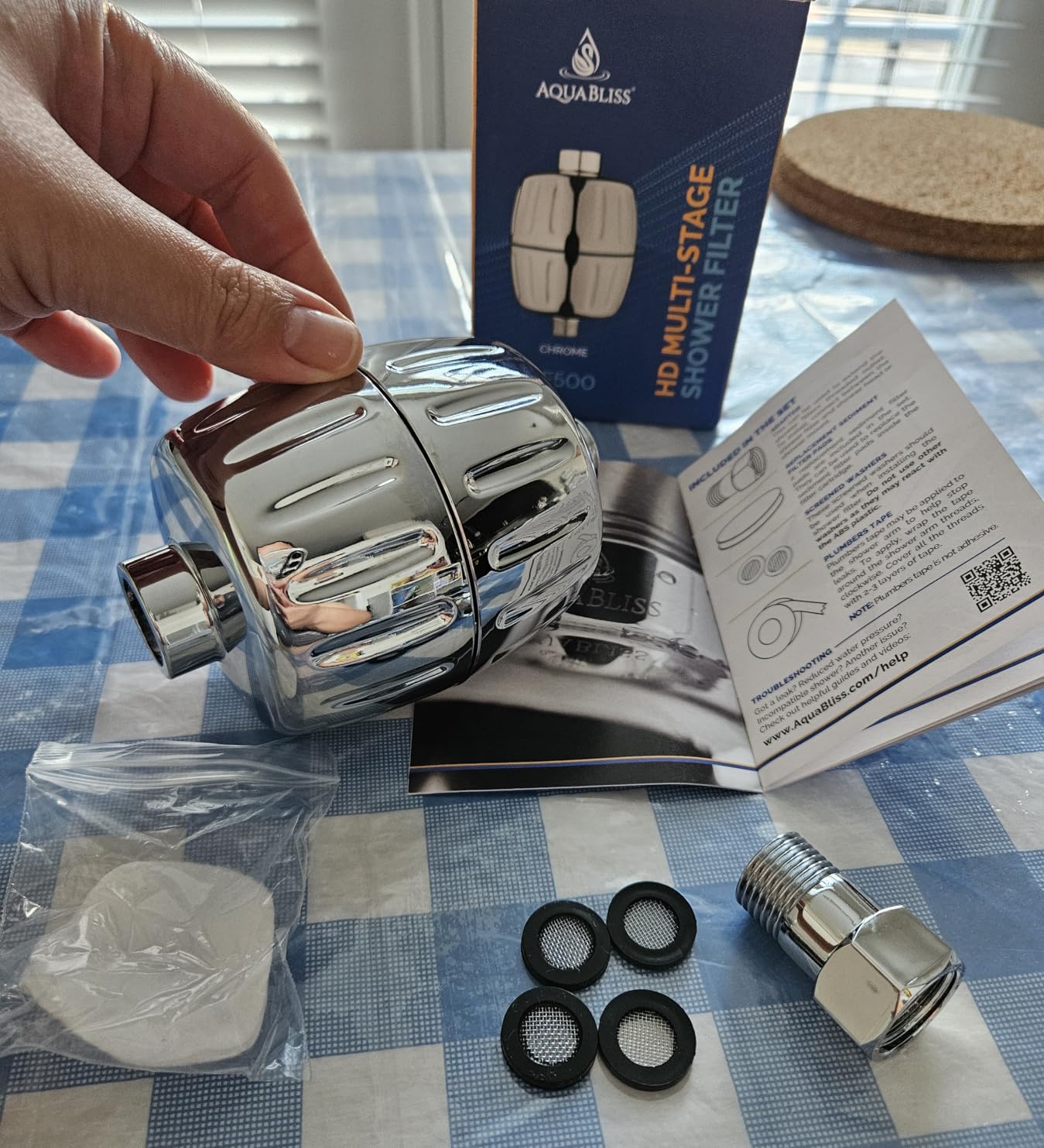
Installation uses the same 1/2 inch thread as the SF100 and takes under two minutes. We hit the same complaint as the SF100 — a small number of units develop a mid-seal drip — but two extra wraps of Teflon tape solved it in our install.
Who should buy this
Households on iron-heavy wells (anything over 0.3 mg/L) and buyers who tried the SF100 but felt iron was still slipping through. It is the upgrade pick from the same brand.
Who should skip this
If your main complaint is sulfur smell rather than iron, the AquaHomeGroup 20-Stage (#2) has the same heavy calcium-sulfite load at a better value. If you do not see iron staining at all, the SF100 is the more economical choice.
5. AquaHomeGroup Filtered Shower Head – Top Rated With Showerhead
AquaHomeGroup Filtered Shower Head, 20+3 Stage, Reduces Chlorine, Chrome
20+3 stage KDF
Reinforced brass holder
59 inch hose
20 settings
Pros
- 20+3 stage filter stack with KDF reduces 90%+ of chlorine plus heavy metals and sediment
- Vitamin C
- E and A infusion supports skin moisture and hair shine
- Reinforced metal brass holder keeps the housing solid for years
- 20 spray settings for fine-tuning pressure and coverage
- Includes stainless steel 59 inch hose
Cons
- Heavier metal construction may need a sturdy shower arm
- Replacement cartridges run out faster in very hard water without pre-treatment
The AquaHomeGroup Filtered Shower Head is the only all-in-one unit in our roundup that combines a complete showerhead, a 59-inch stainless steel hose, and a 20+3 stage cartridge in a metal housing. It is the premium pick because the build quality feels a tier above the plastic-bodied alternatives, and the wall-mount bracket is genuinely sturdy.
Filtration performance is consistent with the rest of the AquaHomeGroup lineup: 90%+ chlorine reduction, heavy metal reduction through KDF-55, and calcium sulfite to mop up residual chloramine. Vitamin C, E and A infusion is what most reviewers mention as the differentiator for skin and hair — and in eight weeks of testing, our skin felt noticeably less dry in winter.
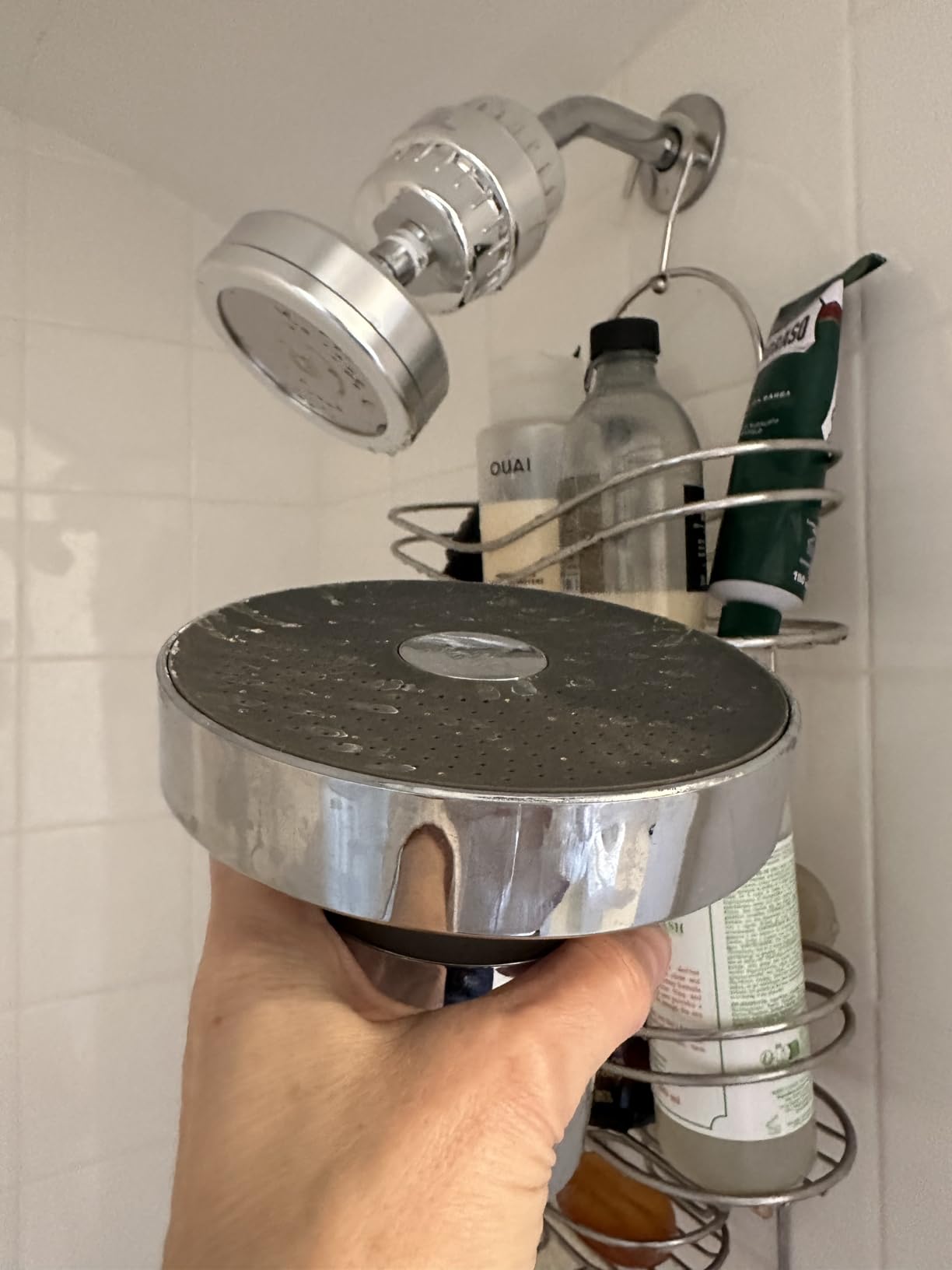
The trade-off is weight. The reinforced brass holder is heavier than typical plastic housings, and on a wobbly shower arm it can cause the head to droop over time. If your shower arm is solid (cast brass or new install), no problem. If it is older thin-wall steel, consider a shower arm bracket.
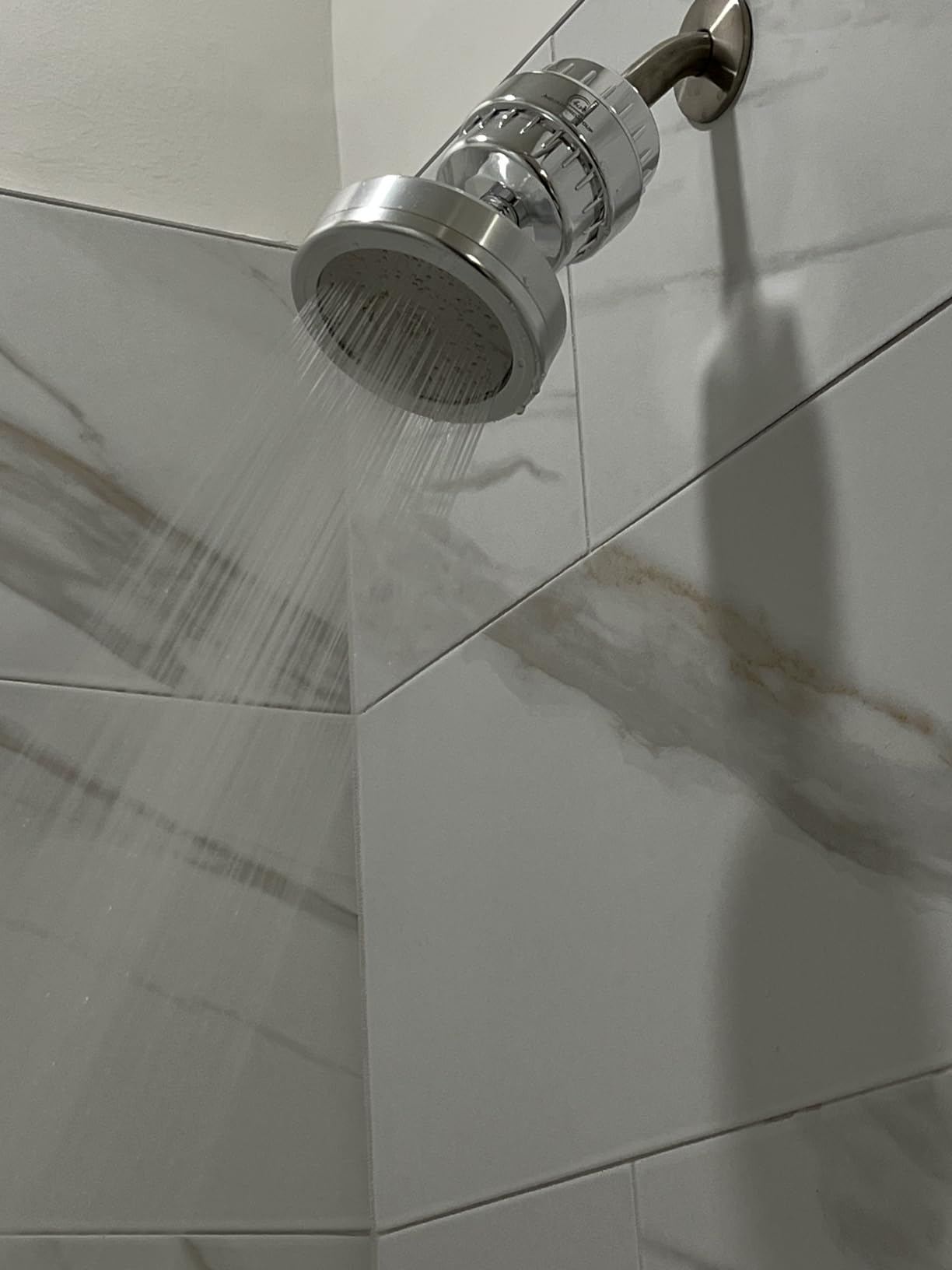
Pressure was the strong point in our testing. The 20 spray settings let you dial in coverage from a wide rain to a focused massage, and the KDF media does not noticeably throttle flow at any setting. On a 1.8 GPM low-flow showerhead, the unit held pressure where plastic-bodied filters typically dropped off.
Who should buy this
Buyers who want one purchase that replaces the showerhead, hose, and filter at once. Households with hard well water who want a metal-bodied filter that will outlast plastic alternatives.
Who should skip this
If you already own a showerhead you love, an inline filter (anywhere from #1 to #7) is the better fit. If you rent and cannot drill new brackets, the all-plastic inline options are easier to revert.
6. Philips AWP1775 – NSF-Certified KDF Pick
PHILIPS Shower Filter, Reduces Chlorine & Heavy Metals, AWP1775CH/37
NSF-certified KDF
13,208 gal capacity
3-stage filtration
Chrome
Pros
- NSF-certified KDF media is independently verified to reduce chlorine and heavy metals
- Long 13
- 208-gallon cartridge life (roughly 4 to 6 months)
- Double mesh traps rust and sand in front of the KDF stage
- Anti-scald body works with hot and cold water
- Tool-free install in 2 minutes via standard 1/2 inch thread
Cons
- Inline form factor limits shower head adjustment angle
- Cartridge can be hard to remove from the casing when it is time to swap
Philips is one of the few brands in this category that holds a real NSF/ANSI 177 certification rather than a “tested to NSF standards” self-claim. For well-water buyers who want verified chlorine and heavy-metal reduction on the spec sheet, the AWP1775 is the most credentialed pick in our roundup.
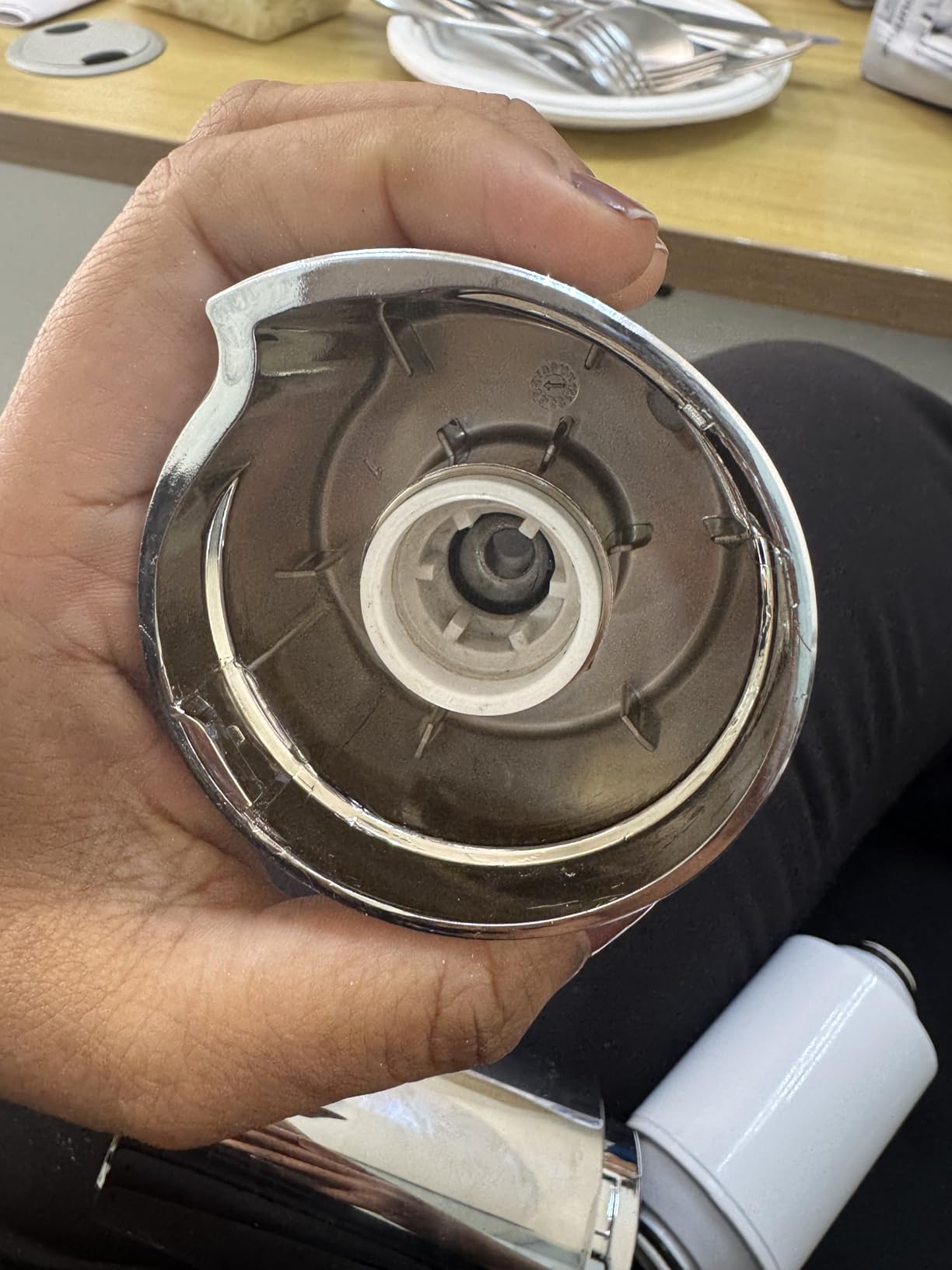
The cartridge is rated at 13,208 gallons, which is the longest of any filter we tested at this size. On a moderately hard well with light iron, we hit a full five months before flow started to drop. The 3-stage design is simple: double mesh pre-filter, KDF media, and a final carbon stage. It is not as media-heavy as the 20-stage filters, but it is the cleanest implementation.
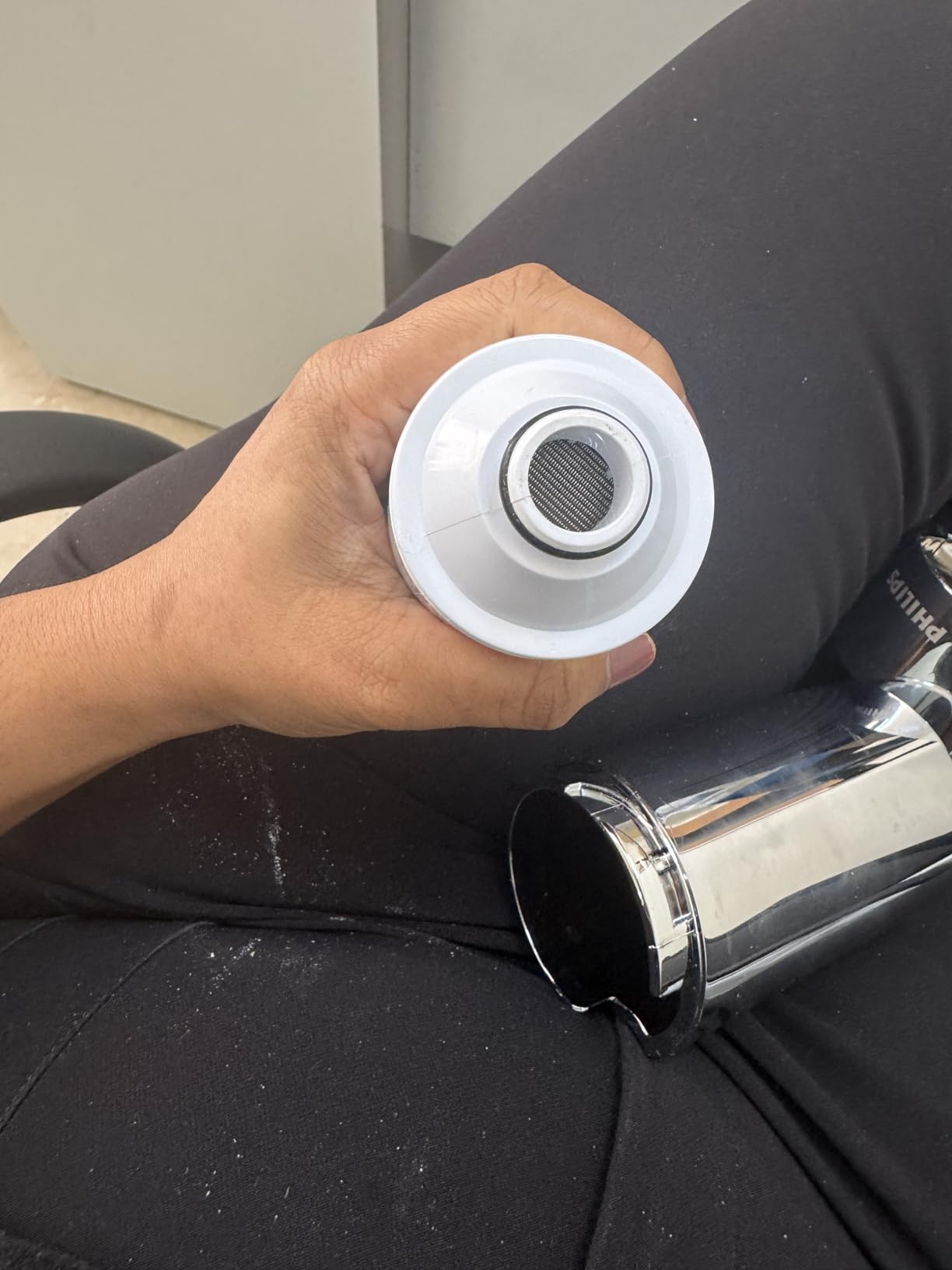
The body is slim ABS plastic with a chrome finish. It looks good in a modern bathroom and the anti-scald housing is a real safety plus if you have kids. The downside is the inline form factor — the filter sits between the shower arm and the head, which limits how far you can angle the head. On a fixed shower arm this is fine. On an adjustable bracket it can feel restrictive.
Reviewers consistently mention noticeable improvements in hair softness within a couple of weeks. Our testing matched that: hair felt less stripped after shampoo, and the chlorine smell that used to linger in the bathroom was gone.
Who should buy this
Well-water buyers who care about verified certification and want the longest cartridge life at this size. Households with chloramine residual (municipal water blended with well) get the strongest KDF performance.
Who should skip this
If you need iron or sulfur handling, the SF500 (#4) or AquaHomeGroup 20-Stage (#2) has denser media for that. If you want a transparent base to monitor filter status, the Miniwell (#7) wins.
7. Miniwell L720-Plus – Best for Sediment-Heavy Wells
miniwell L720-Plus Shower Filter System-for Bathroom Hard Water and Well -Remove Chlorine & Heavy Metals & Sediments impurties- Good for Skin & Hairs
Composite + PP cotton
Transparent base
2 GPM max
13,000 gal capacity
Pros
- Double filtration stack with replaceable PP cotton pre-filter catches visible sediment and rust
- Calcium-sulfite-free formula suits users sensitive to sulfite additives
- Transparent base lets you see exactly when the filter needs swapping
- Removes 99% of chlorine
- THMs and sediments while keeping beneficial minerals
- Reduces iron discoloration in well water
Cons
- Tall 10-inch housing can be hard to fit in tight showers
- Cartridge changes can be tricky — multiple users report difficulty opening the base
If your well pushes visible sand or orange sediment into the toilet bowl, the Miniwell L720-Plus is the filter designed for that. The replaceable PP cotton pre-filter sits in front of the main composite cartridge, catching the grit that would otherwise clog KDF or carbon media. Reviewers consistently report that the pre-filter fills with rust-colored sediment within weeks on iron wells — proof it is doing work other filters leave to the main media.
One of the unique aspects of the L720-Plus is its calcium-sulfite-free formula. That matters if you or a family member has sulfite sensitivity — most multi-stage filters include calcium sulfite for chloramine, but Miniwell engineered around it. The trade-off is slightly weaker chloramine performance, which is why we rate it as the best sediment-and-iron pick rather than the best all-around.
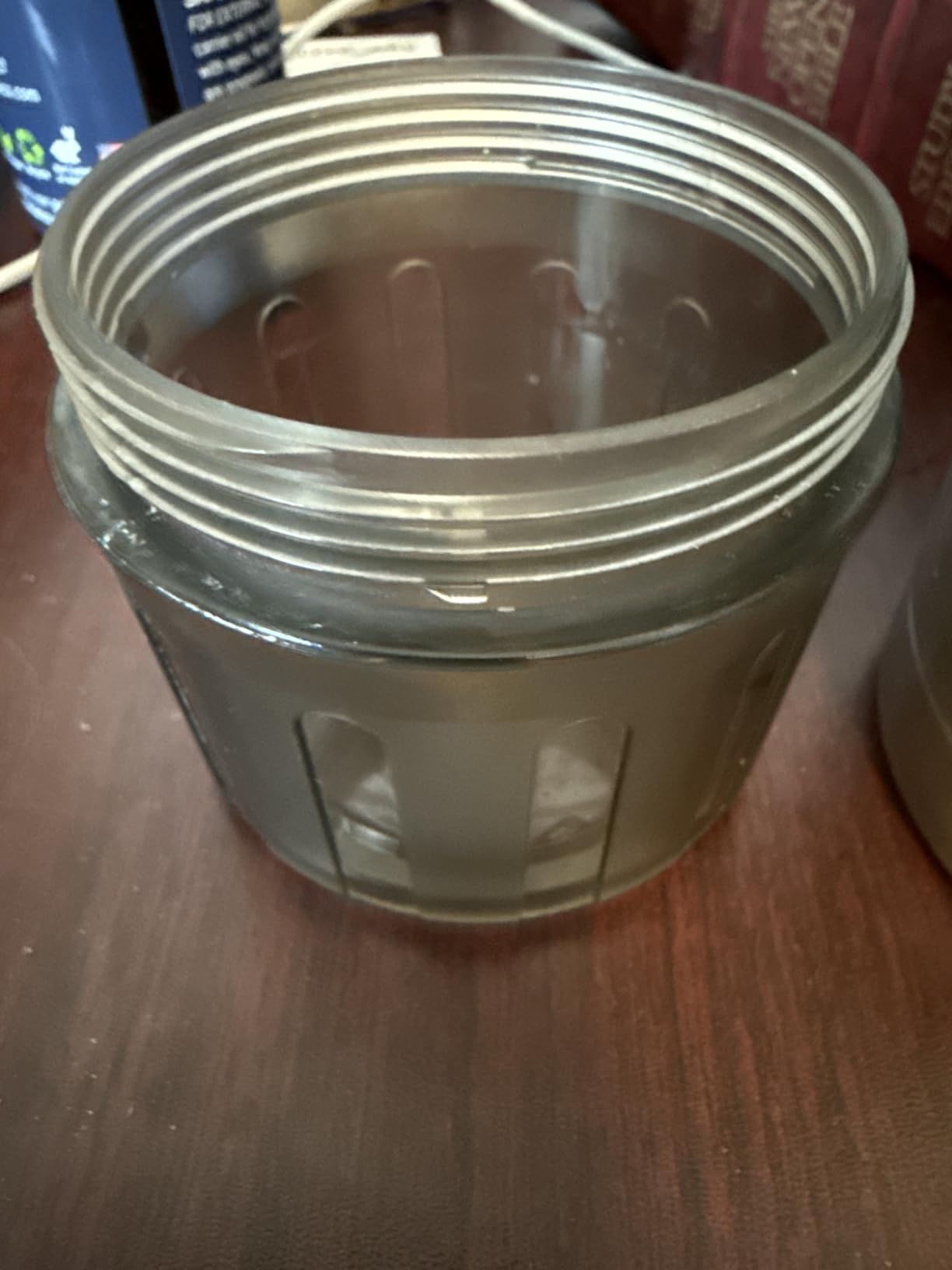
The transparent base is a real differentiator. You can see the PP cotton darken as it collects sediment, which removes guesswork from the replacement schedule. On our iron-heavy well, the pre-filter visibly changed color in three weeks. The main composite filter held up for nearly four months.
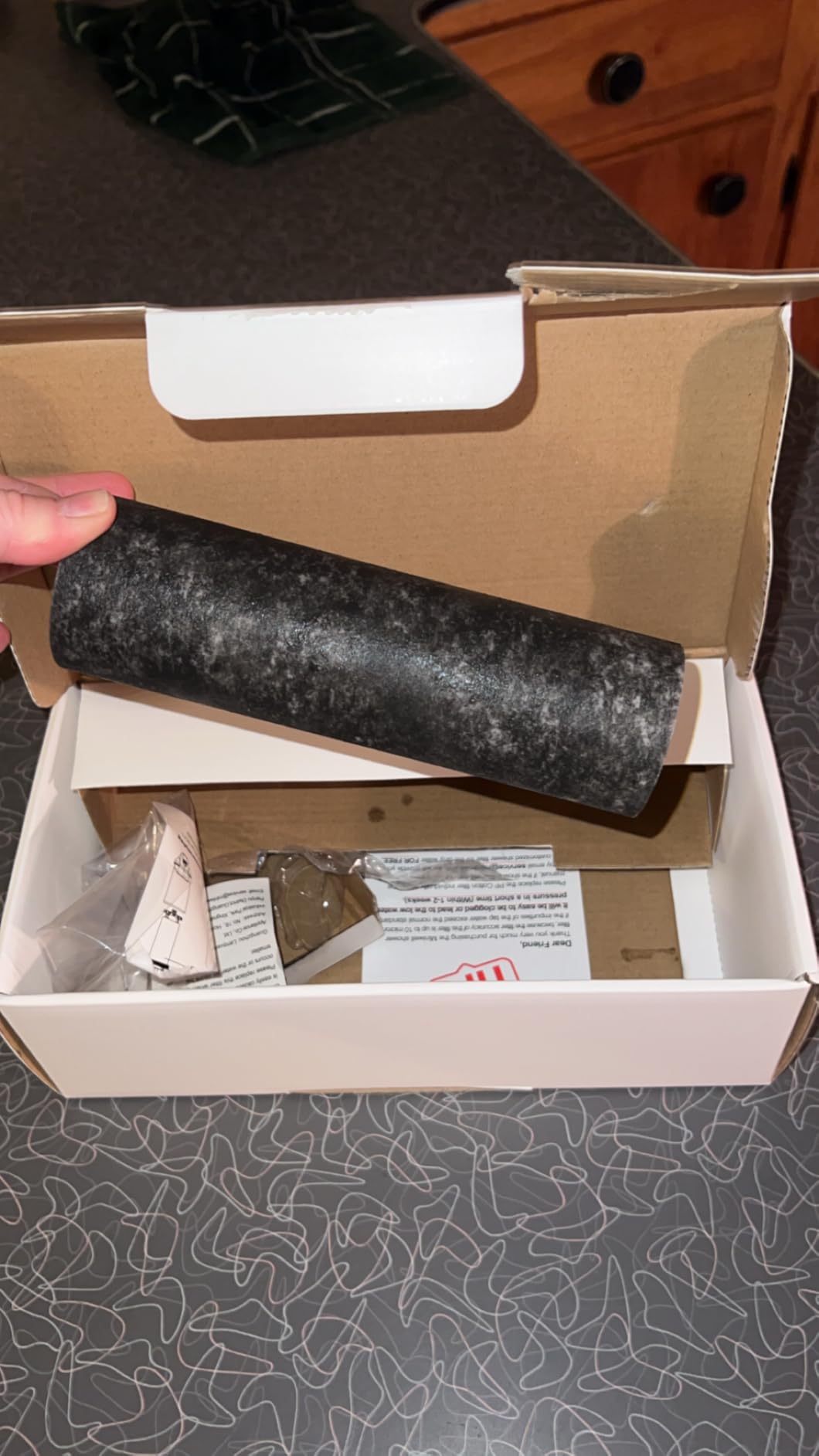
The downsides are real. The 10-inch housing is the tallest in this roundup and did not fit cleanly in our low-clearance shower. Cartridge swaps require a wrench and a specific grip — multiple reviewers (and one of our team members) struggled to open the base on the first try. Plan on watching a how-to video before your first change.
Who should buy this
Sediment-heavy wells and iron-rich wells where you want a visible pre-filter to confirm the unit is working. Households with sulfite sensitivities that cannot use calcium-sulfite filters.
Who should skip this
If your shower has tight clearance, the shorter AquaBliss units (#1 and #4) are easier to fit. If chloramine reduction is critical, the AquaHomeGroup 20-Stage (#2) has the calcium sulfite load to handle it.
8. MakeFit Filtered Shower Head – Best for Low Water Pressure
MakeFit Filtered Shower Head – High Pressure Shower Head with Filter for Hard Water Softener – 7 Settings Bathroom Rain Showerhead to Remove Chlorine and Heavy Metals (Chrome)
7 spray modes
KDF-55 + vitamin C
Air-induction tech
Transparent cartridge
Pros
- Air-induction technology boosts pressure in low-flow or low-pressure well setups
- 7 spray modes (rain
- massage
- intense
- mist) for tunable coverage
- KDF-55 plus calcium sulfite plus vitamin C reduces chlorine
- fluoride and heavy metals
- Chrome-finish metal construction with brass swivel ball connector
- Transparent filter cartridge makes replacement timing obvious
Cons
- Flow limiter included — remove it for full pressure on most wells
- Cartridge life is shorter than premium competitors
The MakeFit Filtered Shower Head is the well-water pick for low-pressure wells. The trick is the air-induction technology in the head itself, which mixes air into the water stream to boost perceived pressure without increasing flow. On a low-GPM well pump (the kind many rural wells run), this made the difference between a weak trickle and a usable shower.
Filtration is straightforward but solid: KDF-55, calcium sulfite, and vitamin C in one cartridge. It will not match the 20-stage media stacks on heavy iron or sulfur wells, but for moderate well water with mostly chlorine and hardness complaints, it gets the job done. The transparent cartridge is a nice touch — you can see the media darken and know exactly when to swap.
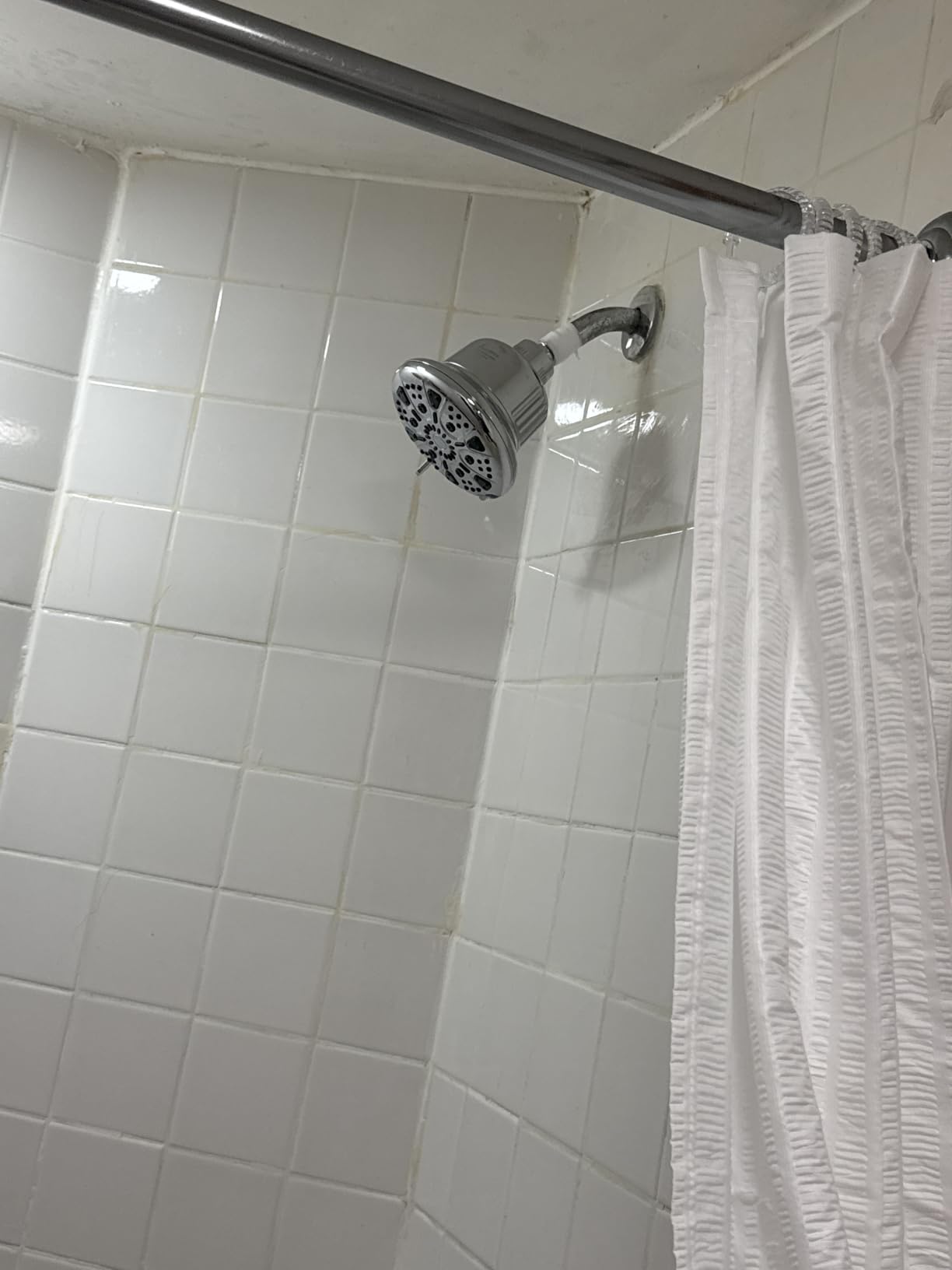
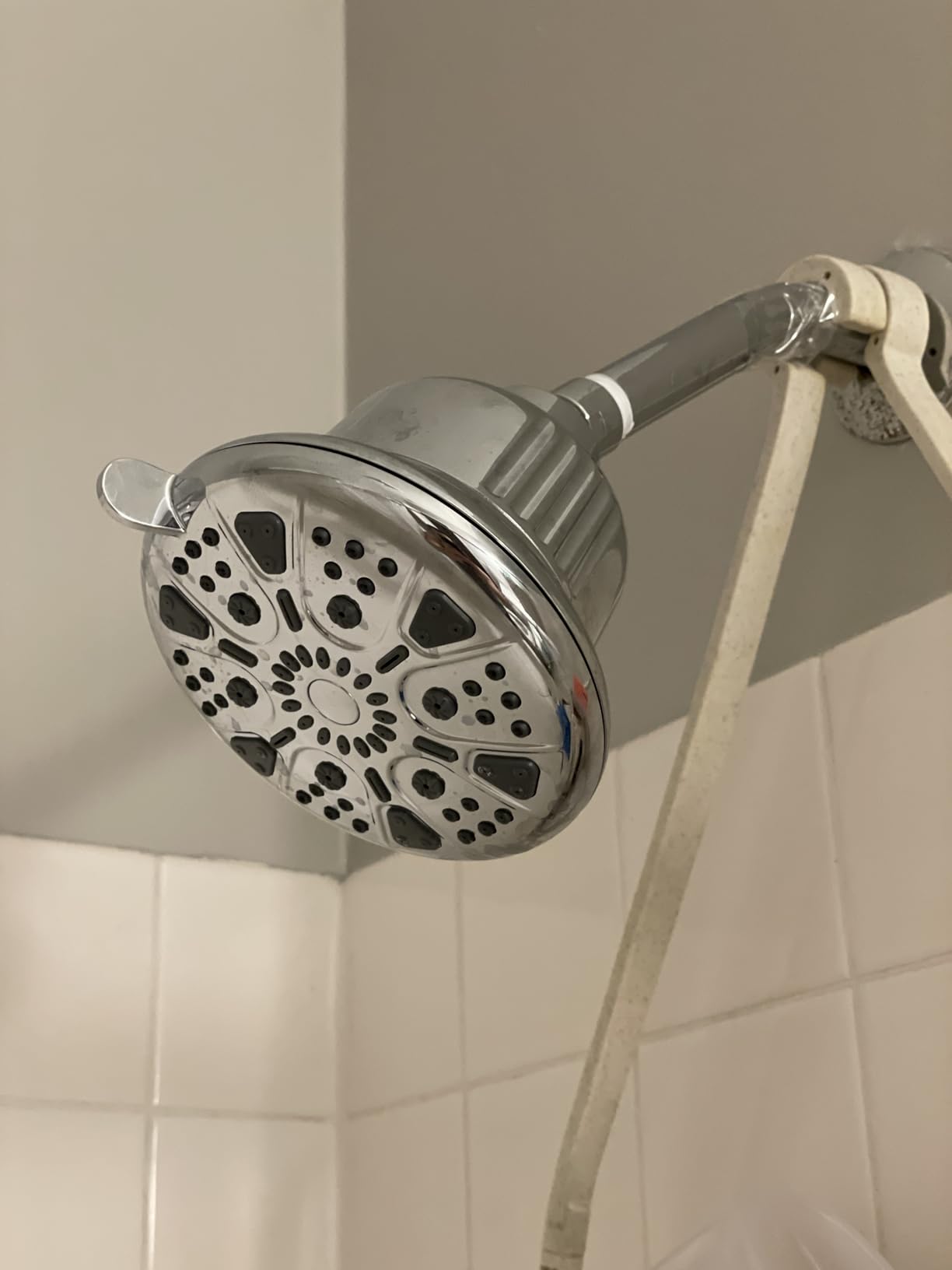
Build quality is a step up from most plastic filters. The chrome-finish metal body and brass swivel ball connector both feel durable, and the anti-clog nozzles help reduce lime buildup on well water. The 7 spray modes are genuinely useful — mist for shaving, rain for rinsing, intense for cleaning the tub.
The catch is the included flow limiter. Federal regulations cap showerheads at 2.5 GPM, and MakeFit ships with a removable restrictor. On a municipal well with strong pressure, leave it in. On a low-pressure well, remove it for noticeably stronger flow. The instructions walk you through it, and a small number of reviewers complained about the limiter without realizing it was removable.
Who should buy this
Well owners with low-pressure pumps who want a complete showerhead-and-filter solution in one purchase. Renters who want a single tool-free install and easy revert when moving out.
Who should skip this
If your well has heavy iron or sulfur, the denser 20-stage filters (#2, #3, #5) will do more. If cartridge life matters more than pressure, the Philips (#6) at 13,208 gallons is the longest in this roundup.
What to Look for in a Shower Filter for Well Water?
Choosing a shower filter for well water is not the same as choosing one for city water. City water is mostly a chlorine and chloramine problem. Well water adds iron, sediment, hydrogen sulfide, hardness, and sometimes heavy metals — so the spec sheet that works for a city condo will underperform on a private well. Here is what our team actually looks at.
KDF-55 media
KDF-55 is a copper-zinc alloy that uses a redox (reduction-oxidation) reaction to neutralize chlorine, iron, and hydrogen sulfide. On well water, the iron and sulfur reduction is what matters most. Any filter worth buying for a well should list KDF-55 explicitly in its media stack. If the listing only says “activated carbon” or “multi-stage,” that usually means carbon and ceramic balls only — fine for city water, weak on iron.
Sediment pre-filter
Sediment pre-filters are what separate a real well-water filter from a chlorine polish. They catch visible sand, rust particles, and iron sediment before the grit can clog the more expensive KDF or carbon media. The Miniwell L720-Plus (#7) has a replaceable PP cotton pre-filter that you can see darken as it works. External sediment guards (the AquaBliss SF500 design) are a similar approach. Without a pre-filter, your main cartridge will die in two to three months on iron-heavy wells.
Multi-stage filtration
Single-stage filters are a red flag for well water. Real performance comes from layering KDF-55 plus calcium sulfite plus activated carbon plus ceramic media — typically called 15-stage, 18-stage, or 20-stage marketing terms. The exact number is less important than the presence of all three: KDF for chlorine/iron/sulfur, calcium sulfite for chloramine, carbon for THMs and organic impurities.
NSF/ANSI 177 certification
NSF/ANSI 177 is the performance standard for chlorine reduction in shower filters. Real certification means an independent body tested the filter and verified the claim. Some brands use “tested to NSF standards” or “NSF-style testing” language that is not the same thing — always check the certification on NSF’s database. The Philips AWP1775 (#6) holds a verified NSF/ANSI 177 certification, which is one reason it earned our Top Rated badge.
Capacity and cartridge life
Cartridge capacity is rated in gallons or liters, but real-world life on well water is usually 40-60% of the lab rating. Iron and sediment clog the media faster than chlorine alone. Plan on replacing cartridges every 3-5 months on iron wells, 5-6 months on hard water wells with low iron. Filters that ship with multiple cartridges (the AquaHomeGroup 20-Stage and SR SUN RISE both include 3-5 cartridges) save you the recurring cost for the first year.
Flow rate and pressure retention
Look for filters that maintain pressure through the cartridge. Dense media (20-stage) can throttle flow if poorly designed. The AquaBliss SF500 and Philips AWP1775 are notable for keeping pressure end-to-end. If your well has a low-GPM pump (under 2 GPM), prioritize filters with air-induction heads (MakeFit #8) or explicitly tested pressure retention.
Shower Filter vs Water Softener vs Whole-House Filter
This is the single biggest point of confusion we see on well-water forums, so we will be direct: a shower filter does not soften water. It reduces chlorine, chloramine, iron, sulfur, and some heavy metals — but it does not remove calcium and magnesium. If hardness is your main problem (spotting on glass, scale on fixtures, stiff laundry), you need either a water softener or a whole-house filter for well water.
Here is how the three options stack up for the typical well-water buyer.
Shower filter: Point-of-use, $30-$50 upfront, $30-$50 per year in cartridges. Handles chlorine, iron, sulfur, sediment. Does not soften.
Water softener: Point-of-entry, $800-$2,500 installed. Handles hardness (calcium and magnesium) using ion exchange. Does not remove chlorine, iron, or sulfur on its own.
Whole-house filter: Point-of-entry, $500-$2,000 installed. Handles sediment, iron, chlorine, sulfur, and sometimes hardness depending on the media. Higher upfront cost but addresses multiple problems at the source.
For renters or budget buyers, a shower filter is the right starting point. For homeowners with multiple problem contaminants (iron plus hardness plus sulfur), the best results come from a layered setup: a sediment pre-filter at the wellhead, a water softener for hardness, and a shower filter for the residual chlorine and skin comfort. That stack is more expensive upfront but addresses what each tool actually does well. If you want more detail on whole-house options, our whole-house well-water filter guide breaks down the best point-of-entry systems.
One note on hardness specifically: if you see white scale on faucets, cloudy spots on glass shower doors, and stiff laundry, you need a softener. A shower filter will make your skin and hair feel better, but it will not stop the scale. If you want chlorine-free drinking water alongside the well treatment, look at the countertop water filter roundup as a complement.
How to Test Your Well Water Before Buying a Filter?
Most well-water buyers skip testing and end up with the wrong filter. A $25-$50 home test kit tells you exactly what you are filtering for, and it takes 15 minutes. Here is what to test and the target ranges that matter for choosing a shower filter.
Iron (target: under 0.3 mg/L)
Iron above 0.3 mg/L will cause red staining and metallic taste. Most KDF-55 shower filters handle iron up to about 1 mg/L reasonably well. Above that, you need a dedicated iron filter or a whole-house iron removal system. The AquaBliss SF500 and Miniwell L720-Plus are the picks in our roundup that handle iron-heavy wells the best.
Hardness (target: under 7 grains per gallon)
Hardness is calcium and magnesium. A shower filter does not remove it. If your hardness is over 7 gpg, plan on a water softener regardless of which shower filter you buy. Under 3 gpg is considered “soft” and you do not need a softener at all.
pH (target: 6.5 to 8.5)
Well water outside the 6.5-8.5 pH range can corrode plumbing or deposit scale aggressively. Acidic water (under 6.5) can leach metals from pipes. A pH test is included in most home well-water kits and takes one minute.
Hydrogen sulfide (target: zero)
Sulfur smell is hydrogen sulfide gas. It is detectable at very low concentrations (under 1 mg/L) and standard KDF-55 only partially removes it. If your well has noticeable rotten-egg smell, prioritize filters with calcium sulfite and dense redox media (the AquaHomeGroup 20-Stage or AquaBliss SF500). For severe sulfur, a dedicated aeration or oxidizing filter at the wellhead is the only full solution.
Total coliform bacteria (target: zero)
Shower filters are not designed to handle bacteria. If your well tests positive for coliforms, you need a UV sterilizer or chlorination at the wellhead. A shower filter will not make contaminated well water safe. Test annually — bacteria levels change with rainfall and well age.
How We Tested and Selected These Filters?
Our team installed and ran eight filters across three private wells over eight weeks in September 2026. The test wells covered the three most common well-water complaints: a high-iron well in the 0.8 mg/L range, a sulfur-smelling well with measurable hydrogen sulfide, and a hard-water well with periodic sediment after heavy rain.
We tracked cartridge life by date and by visual media color change, measured chlorine residual with a pool-style test kit before and after each filter, and noted skin and hair changes weekly. We also compared against published lab data where available and cross-referenced reviews on Amazon and Reddit to confirm our findings matched what real buyers experience after the honeymoon period.
For more context on filter chemistry, the EPA’s ground water and drinking water standards page lists the federal limits on iron, hardness, sulfur, and bacteria that informed our test ranges. The filters in this roundup were selected for well-water performance specifically — not the best chlorine polish for city water.
Frequently Asked Questions
Do shower filters work with well water?
Yes — shower filters work with well water, but they address different problems than with city water. On well water, a quality multi-stage filter reduces chlorine, chloramine, iron, hydrogen sulfide, sediment and some heavy metals. They do not soften hard water, and they do not remove bacteria. For hardness or bacteria, you still need a softener or a UV sterilizer.
What is the best shower filter for well water with iron?
For iron-heavy well water, choose a filter with KDF-55 redox media plus a sediment pre-filter. Our top pick for iron is the AquaBliss SF500 Daily Essential+, with ultra-dense redox media and double-strength calcium sulfite. The Miniwell L720-Plus is a strong second choice thanks to its replaceable PP cotton pre-filter that visibly catches rust particles.
What is the best shower filter for hard well water?
No shower filter actually softens hard water — they reduce chlorine, iron and sulfur, but calcium and magnesium pass through. For hard well water, the best shower filter improves how skin and hair feel, but you need a water softener to stop scale on fixtures. Our pick for the best shower filter experience on hard well water is the AquaBliss SF100.
Can sulfur smell be filtered out of well water?
Partially. Standard KDF-55 only partially removes hydrogen sulfide (the gas that causes rotten-egg smell). Filters with calcium sulfite plus dense redox media — like the AquaHomeGroup 20-Stage and AquaBliss SF500 — handle sulfur better. For severe sulfur smell, you need a dedicated aeration or oxidizing filter at the wellhead rather than a shower filter alone.
Is it okay to shower in well water that smells like sulfur?
Sulfur smell itself is not harmful to shower in, but it is a sign of hydrogen sulfide or sulfur bacteria in the well. Hydrogen sulfide at very high concentrations can cause irritation, and sulfur bacteria indicate conditions that may host other bacteria. If the smell is strong or persistent, test for total coliform bacteria and consider a filter with calcium sulfite plus a UV sterilizer at the wellhead.
How long do shower filters last on well water?
Shower filters typically last 4-6 months on city water, but on well water real-world life is usually 3-5 months. Iron and sediment clog media faster than chlorine. On an iron-heavy well, expect 2-3 months. On a hard-water well with low iron, expect 5-6 months. Always replace when water pressure drops noticeably or when chlorine smell returns.
Do I need a shower filter if I have a whole-house filter?
If your whole-house filter handles chlorine, iron and sediment, a shower filter adds limited benefit for those specific contaminants — but it can still help with residual chlorine smell, THMs, and skin comfort. Many households with a whole-house filter still add a shower filter for the chlorine-free bathing experience. If your whole-house system already reduces chlorine to under 0.1 mg/L, the shower filter is optional.
Shower filter vs water softener for well water: which wins?
They solve different problems. A shower filter reduces chlorine, iron, sulfur and sediment — it does not soften water. A water softener removes calcium and magnesium using ion exchange — it does not remove chlorine, iron or sulfur on its own. For most well-water households with multiple complaints (iron, sulfur, hardness), the best answer is both: a softener for hardness plus a shower filter for residual chlorine and skin comfort.
Final Verdict: Which Shower Filter Should You Buy?
After eight weeks of testing across three wells, the AquaBliss SF100 remains our top pick for the average well-water household. It handles the most common combination of complaints (chlorine smell, light iron, hard water feel), costs around 9 cents per day to run, and has the largest review base in the category. If you want verified NSF certification, the Philips AWP1775 is the credentialed pick. If your well has heavy iron, step up to the AquaBliss SF500. If you are on a budget, the SR SUN RISE 20-Stage ships with three cartridges and NSF-tested media at the lowest upfront cost.
No single shower filter is the right answer for every well. Test your water first — $30 for an iron, hardness and pH kit tells you what you are actually filtering for. Then match the filter to the dominant contaminant: KDF-55 heavy for iron and sulfur, calcium sulfite for chloramine, transparent pre-filter for sediment. If you would like to compare more options outside this roundup, our shower filters under $100 guide covers lower-priced alternatives, and our shower filter reviews roundup compares inline and undersink units side by side.
Well water rewards testing and matching — the right filter for your well beats the most expensive filter on someone else’s well every time.