
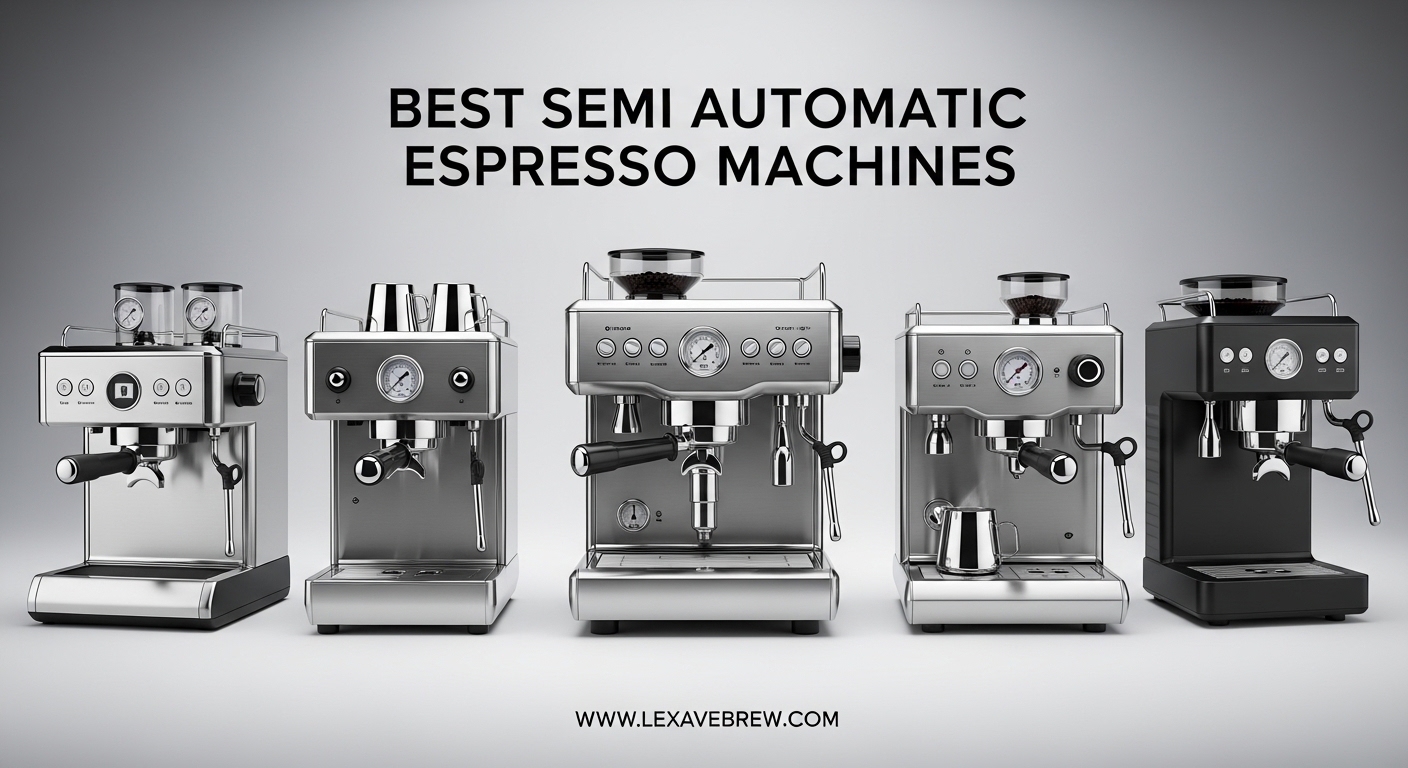
Few things match the satisfaction of pulling a perfect shot of espresso from your own kitchen counter. That rich, golden crema, the deep aroma filling the room, and the sense of accomplishment from dialing in the perfect extraction — it never gets old. But finding the right machine to get you there? That can feel overwhelming with the sheer number of options available in 2026.
I have spent months testing and comparing the best semi automatic espresso machines on the market, pulling hundreds of shots, steaming gallons of milk, and putting each machine through its paces. Semi-automatic machines hit the sweet spot between control and convenience: they handle the water pressure for you while leaving grind size, tamping, and extraction timing in your hands. That combination gives you the tools to craft cafe-quality espresso without needing professional barista training.
In this guide, our team covers 10 machines across every budget and skill level. Whether you are a complete beginner looking for your first home espresso setup or an experienced home barista ready to upgrade, you will find the right fit here. We break down real performance, practical pros and honest cons for each model so you can make a confident decision.
Top 3 Picks for Best Semi Automatic Espresso Machines

Breville Barista Express
- Built-in Grinder
- PID Temperature Control
- Manual Microfoam Steam Wand
Best Semi Automatic Espresso Machines in 2026
| Product | Specifications | Action |
|---|---|---|
|
Breville Barista Express
|
|
Check Latest Price |
 CASABREWS CM5418
|
|
Check Latest Price |
 Breville Bambino
|
|
Check Latest Price |
 Gaggia Classic Evo Pro
|
|
Check Latest Price |
 Ninja Luxe Cafe Premier
|
|
Check Latest Price |
 De'Longhi Stilosa
|
|
Check Latest Price |
 Breville Bambino Plus
|
|
Check Latest Price |
 De'Longhi La Specialista Arte Evo
|
|
Check Latest Price |
 CASABREWS Ultra
|
|
Check Latest Price |
 Breville Barista Express Impress
|
|
Check Latest Price |
1. Breville Barista Express – Best Overall Semi Automatic Espresso Machine
Breville Barista Express Espresso Machine BES870XL, Brushed Stainless Steel
Integrated Burr Grinder
PID Temperature Control
54mm Portafilter
1600W
Pros
- Excellent espresso with built-in grinder
- Digital PID temperature control
- Manual microfoam steam wand
- Low pressure pre-infusion
- Includes Razor Dose Trimming Tool
Cons
- Requires regular maintenance
- Solenoid valve buzzing after extended use
- Stainless steel exterior can wear
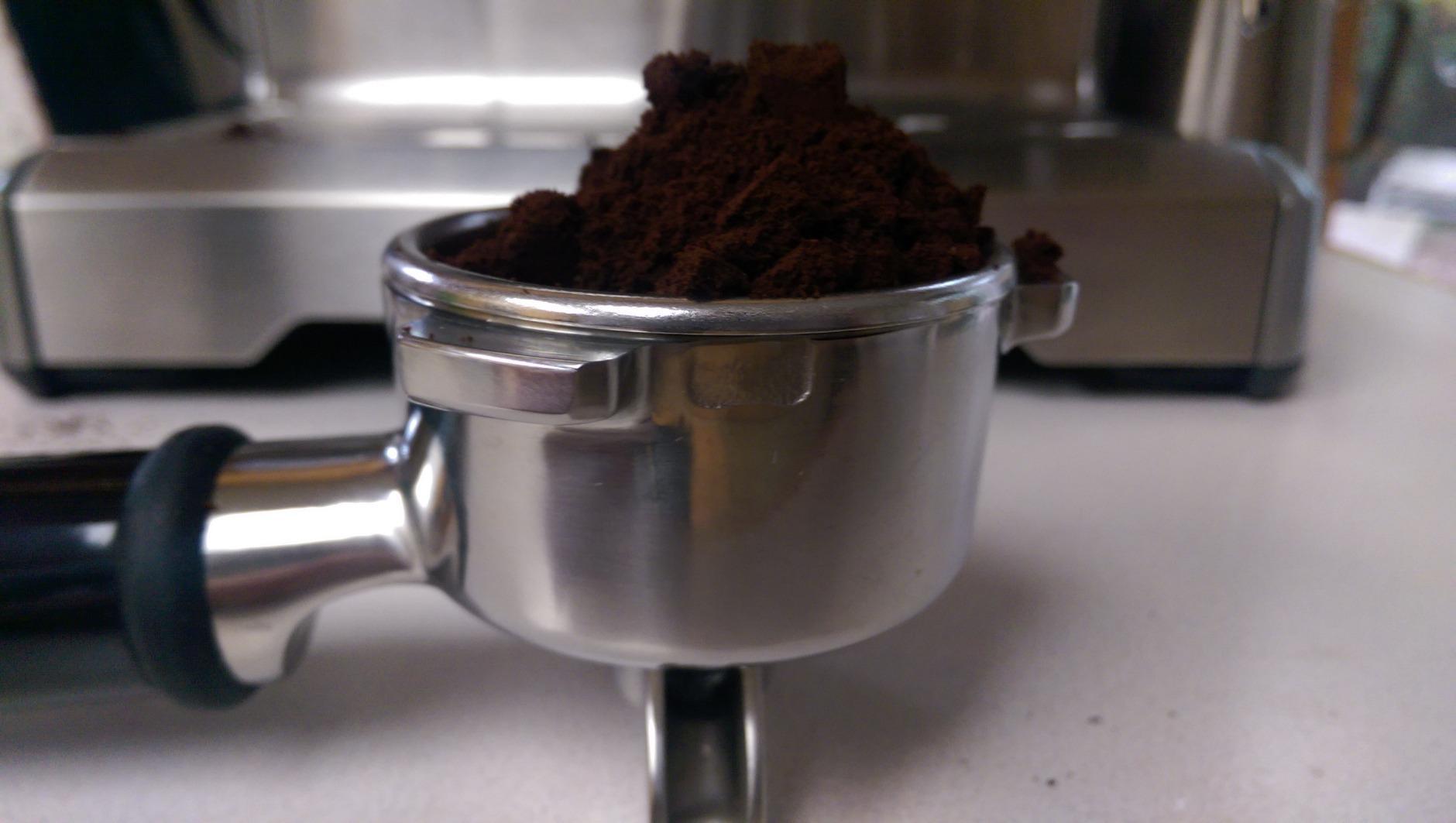
The Breville Barista Express has earned its reputation as the go-to semi automatic espresso machine for home baristas, and after using it daily for several weeks, I understand why. The integrated conical burr grinder means you go from whole beans to a fresh shot in under two minutes, which is a massive quality boost compared to using pre-ground coffee. The grind size dial on the front gives you direct control over extraction without needing a separate grinder taking up counter space.
Digital temperature control through Breville’s PID system keeps water temperature consistent shot after shot. I noticed this most when pulling back-to-back drinks — the temperature stability is noticeably better than machines without PID. The low pressure pre-infusion gently saturates the coffee puck before full pressure kicks in, producing a more balanced and sweeter extraction with rich crema on top.
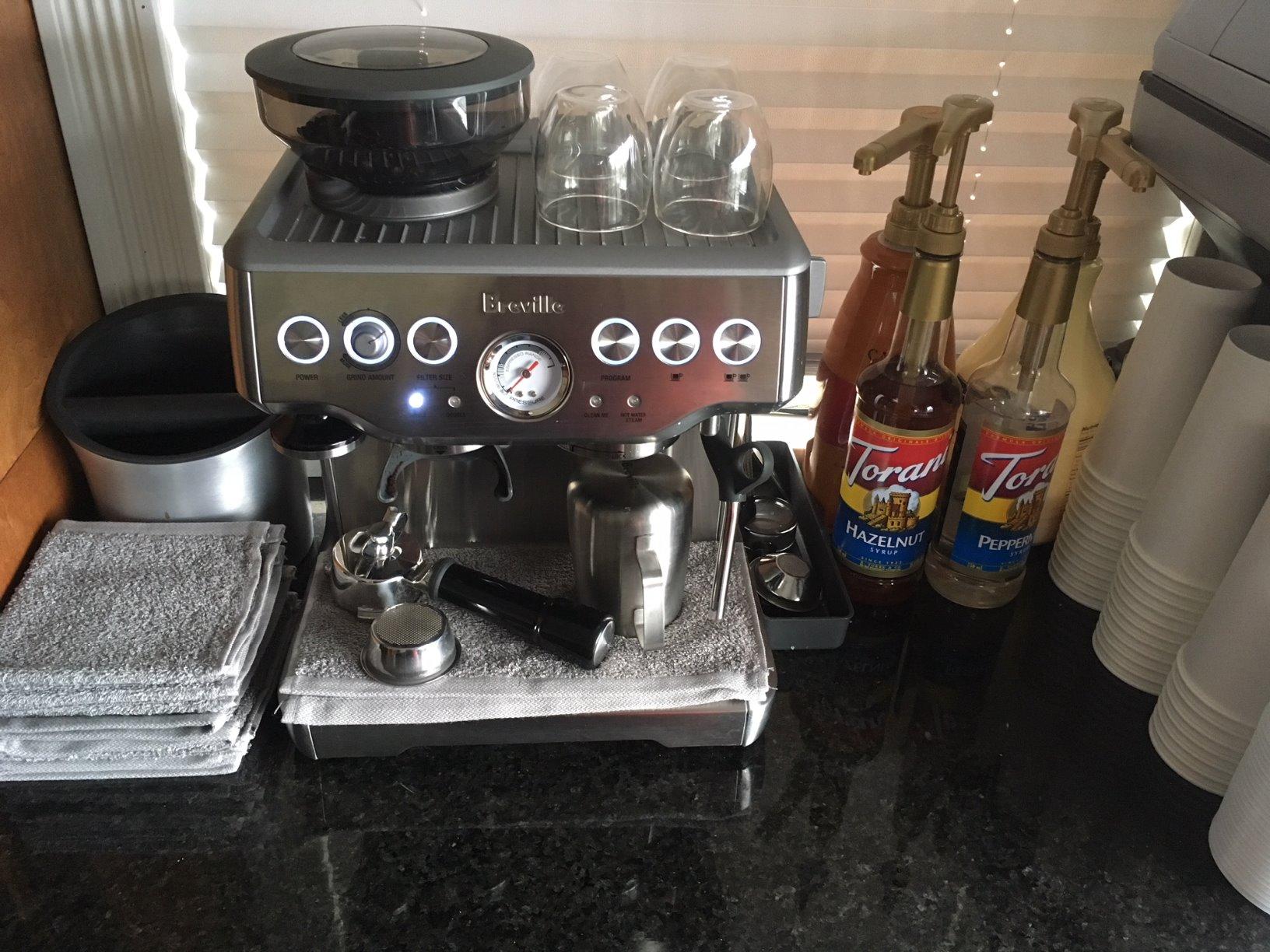
The manual steam wand deserves praise. It produces genuine microfoam that lets you pour latte art if you practice. I steamed oat milk and whole milk side by side, and both came out silky and paint-like in texture. The 67-ounce water tank and half-pound bean hopper mean you can go several days between refills with moderate daily use.
Maintenance is the main trade-off. You need to stay on top of descaling, water filter changes, and grinder cleaning to keep it running well. A few long-term users report a buzzing sound from the solenoid valve after a year or more of heavy use. The stainless steel exterior looks great out of the box but can show wear over time. Still, for the combination of grinder, temperature control, and steam performance, this machine delivers exceptional value.
Who should buy the Breville Barista Express
This machine is ideal for intermediate home baristas who want an all-in-one setup without buying a separate grinder. It is also a strong choice for anyone upgrading from a basic espresso maker who wants real temperature control and the ability to develop their technique over time. The included Razor Dose Trimming Tool helps beginners get consistent results from day one.
Who should look elsewhere
If you already own a quality standalone grinder, you are paying for a feature you will not use. Similarly, if you want hands-free milk frothing or programmable shot volumes, the Barista Express keeps you manually involved in every step. Budget buyers who only want basic espresso without milk drinks could find simpler options that cost less.
2. CASABREWS CM5418 – Best Budget Semi Automatic Espresso Machine
CASABREWS CM5418 Espresso Machine 20 Bar, Compact Espresso Maker with Steam Milk Frother, Stainless Steel Coffee Machine with 34oz Removable Water Tank for Cappuccino, Small Latte Machine, Silver
20 Bar Italian Pump
1350W Boiler
Built-in Pressure Gauge
34oz Tank
Pros
- Excellent value for money
- 20 bar professional Italian pump
- Built-in pressure gauge
- Compact stainless steel design
- Powerful steam wand
Cons
- Cannot steam then brew immediately
- Plastic tamper needs upgrading
- Lightweight portafilter and baskets
The CASABREWS CM5418 surprised me. For a machine at this price point, the 20-bar Italian pump produces genuinely impressive extraction with a thick crema layer that rivals machines costing two or three times as much. The built-in pressure gauge on the front face lets you monitor extraction pressure in real time, which is a feature typically reserved for higher-end models. I found it genuinely helpful for adjusting grind size and tamping pressure.
Its compact footprint is one of the biggest selling points. At just 5.47 inches wide, it fits in tight kitchen spaces where most espresso machines simply cannot go. The stainless steel exterior gives it a clean, professional appearance that belies its budget price. The 34-ounce water tank is removable and easy to fill at the sink.
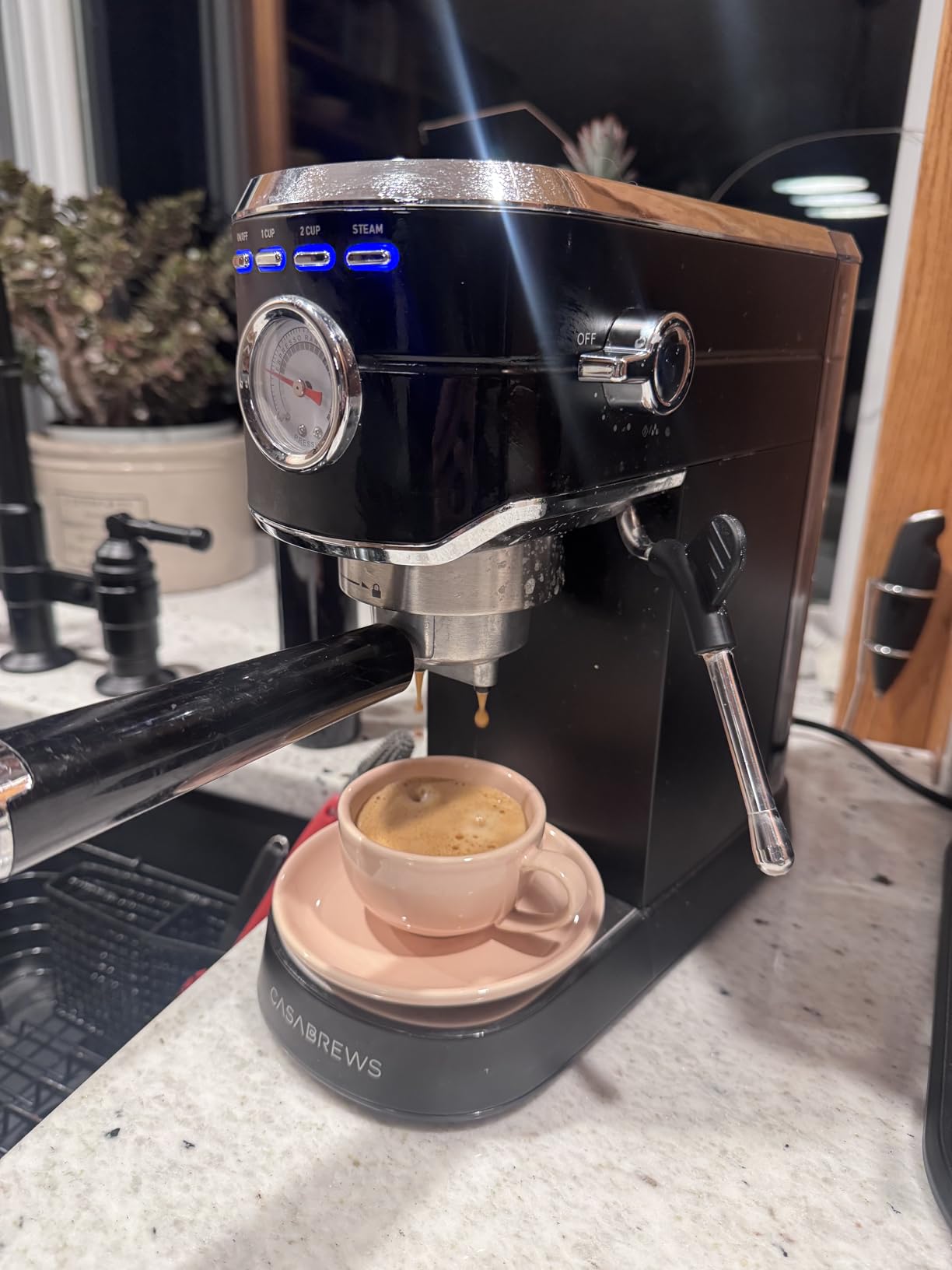
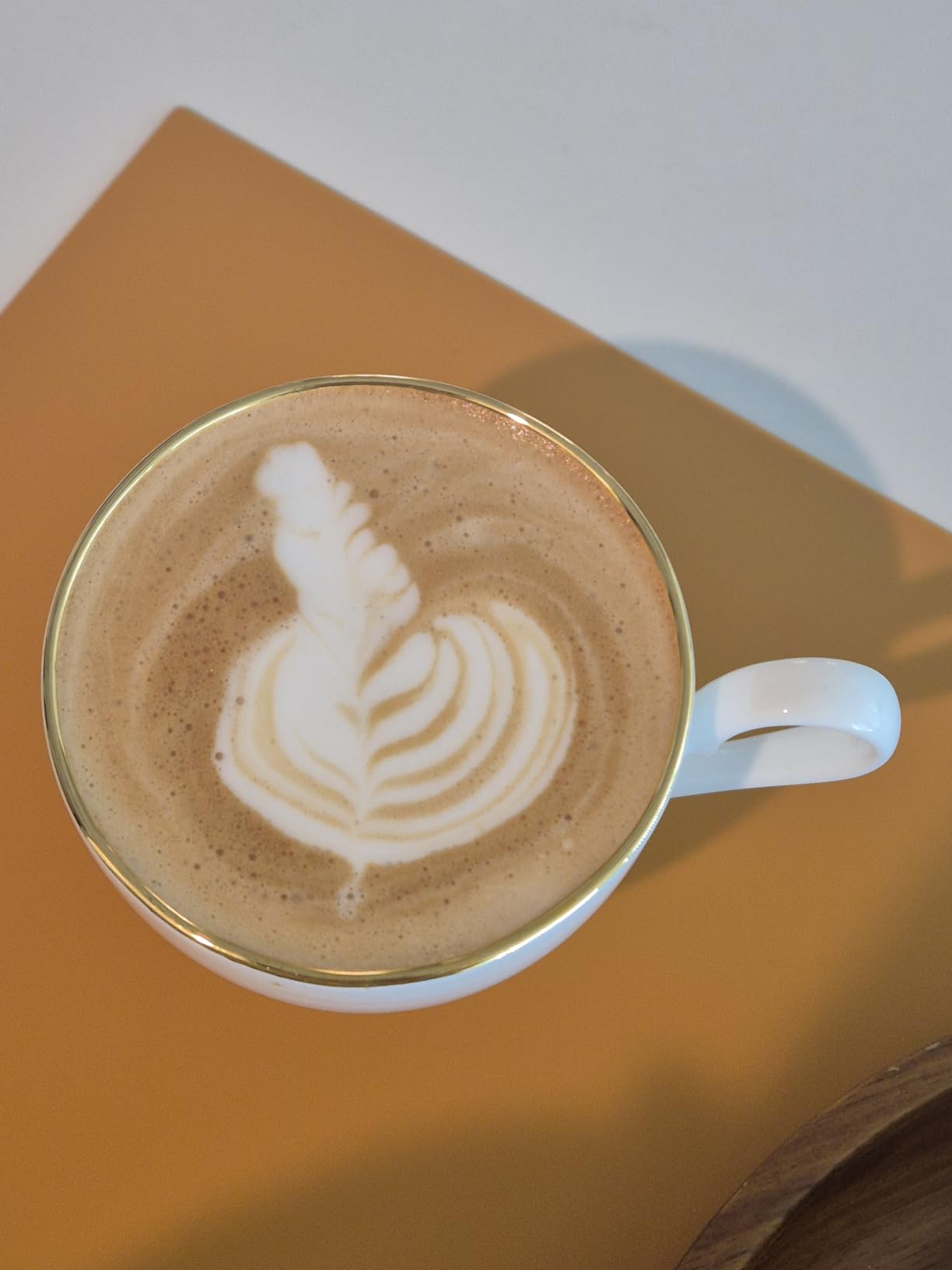
The steam wand delivers solid frothing power for lattes and cappuccinos. I was able to steam whole milk to a pourable microfoam consistency, though it took a bit more technique than on pricier machines. The main limitation is temperature management: after steaming milk, you need to wait for the boiler to cool down before pulling another shot. This makes back-to-back drink preparation slower than on dual-boiler machines.
The included accessories are where CASABREWS cut costs. The plastic tamper is too light and does not fit the portafilter well — I would budget for a metal replacement. The portafilter itself and filter baskets feel a bit flimsy compared to commercial-grade components. But the core brewing performance is excellent, and that is what matters most at this price.
Who should buy the CASABREWS CM5418
First-time espresso machine buyers on a tight budget will get outstanding value here. It is also a great fit for anyone with limited counter space who still wants real espresso extraction with pressure feedback. College students, apartment dwellers, or anyone wanting to try home espresso without a big investment should start here.
Who should look elsewhere
If you regularly make multiple milk drinks in a row, the wait time between steaming and brewing will frustrate you. Those who want a built-in grinder or PID temperature control should step up to a higher tier. And anyone planning to dive deep into espresso as a hobby will eventually outgrow this machine’s capabilities.
3. Breville Bambino – Best Semi Automatic Espresso Machine for Beginners
Breville Bambino Espresso Machine BES450BSS, Brushed Stainless Steel
ThermoJet 3-Second Heat Up
Auto Steam Wand
PID Control
54mm Portafilter
Pros
- Fast 3-second heat up
- Automatic microfoam steam wand
- Compact design
- PID temperature control
- Easy one-touch operation
Cons
- Plastic group head feels cheap
- No built-in grinder
- Machine slides when locking portafilter
- Single boiler only
The Breville Bambino lives up to its name as a small but capable entry into home espresso. The standout feature is the ThermoJet heating system that goes from cold to brewing temperature in just three seconds. I am not exaggerating — by the time I finished tamping my puck, the machine was already ready. This eliminates the 15 to 30 minute warm-up window that many machines require, which makes a real difference for busy mornings.
The automatic steam wand is a blessing for beginners. It handles milk texturing on its own, letting you adjust temperature and foam level through the settings. I set it to warm with medium foam for lattes and it delivered consistent, silky microfoam every time. You just submerge the wand, press the button, and wait. No circling the pitcher or learning steam wand technique required.
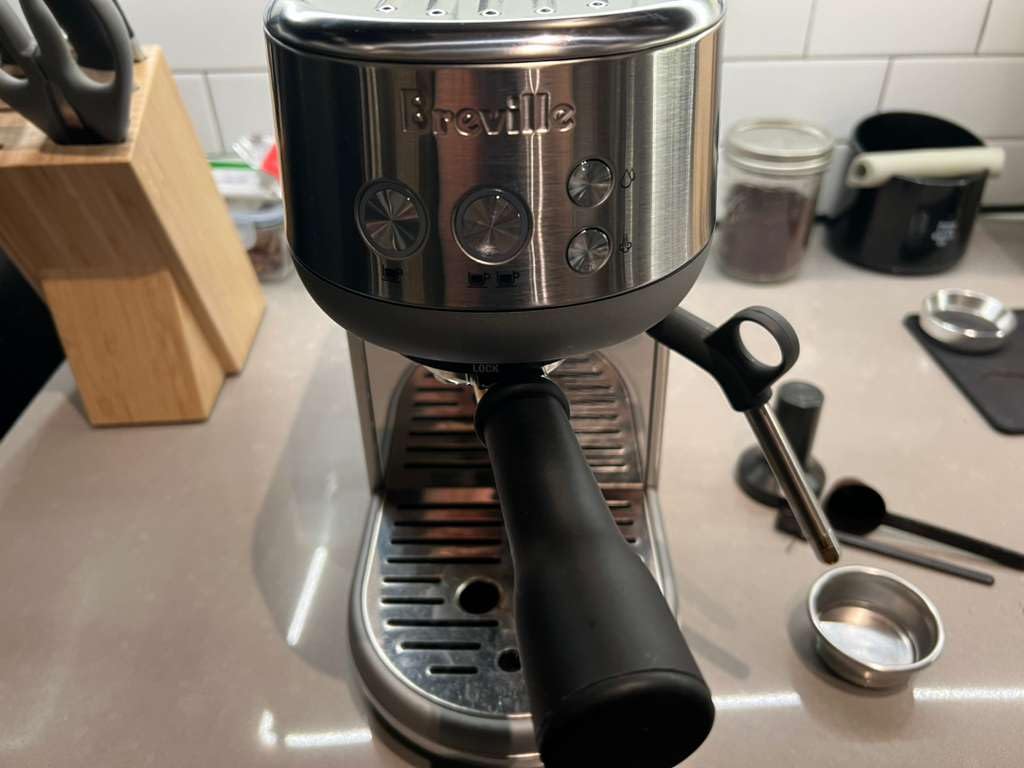
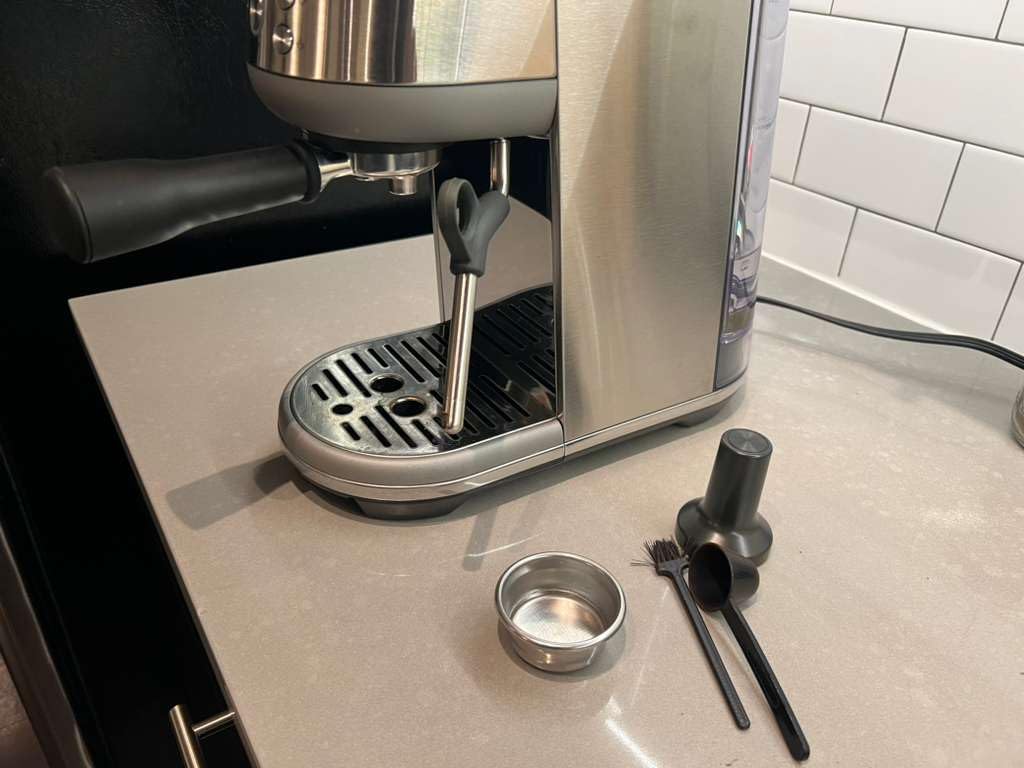
Extraction quality is solid thanks to the PID temperature control and low pressure pre-infusion. The 54mm portafilter holds 19 grams of coffee, which is generous for a compact machine. Pressurized baskets are included, meaning even with a less-than-perfect grind, you can still get decent crema. The one-touch buttons for single and double shots keep the workflow simple.
On the downside, the group head uses plastic internals that feel less premium than the price suggests. The machine is light enough that it can slide around when you lock the portafilter into place — I found myself holding it with one hand while turning with the other. There is no built-in grinder, so you will need to factor that into your total budget. And since it uses a single boiler, you cannot steam and brew simultaneously.
Who should buy the Breville Bambino
Beginners who want quality espresso with minimal learning curve will love this machine. The automatic steam wand removes the most intimidating part of home espresso for most people. It is also perfect for anyone who values speed — the three-second heat-up means you can make an espresso as quickly as you could brew a regular coffee.
Who should look elsewhere
Experienced home baristas who want manual control over every variable should look at the Gaggia Classic Evo Pro or Breville Bambino Plus instead. If you need a built-in grinder to keep your counter uncluttered, the Barista Express is the better Breville option. And anyone making drinks for multiple people regularly may find the small water tank and single boiler limiting.
4. Gaggia Classic Evo Pro – Best for Espresso Enthusiasts
Gaggia RI9380/46 E24 Espresso Machine, Brushed Stainless Steel
58mm Commercial Portafilter
Solid Steel Housing
9 Bar Extraction
Made in Italy
Pros
- Commercial grade 58mm portafilter
- Solid steel Italian construction
- Three-way solenoid valve for dry pucks
- Powerful commercial steam wand
- Highly modifiable and repairable
Cons
- 15-20 minute warm up time
- Single boiler only
- No PID from factory
- Steam wand angle is fixed
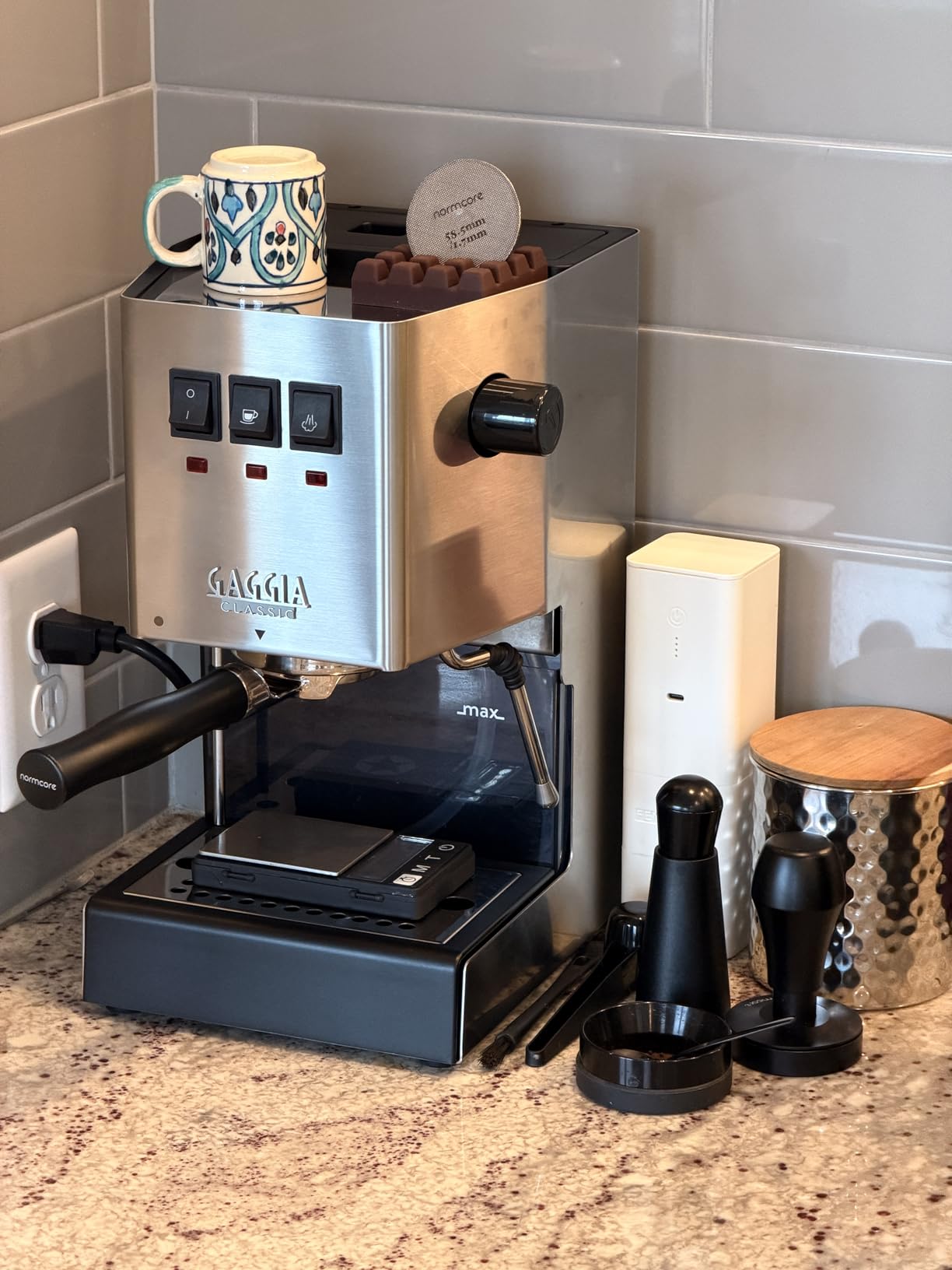
The Gaggia Classic Evo Pro is the machine that espresso enthusiasts keep coming back to, and after using it, I see the appeal. This is a no-nonsense, commercial-inspired espresso machine built with a solid steel housing that weighs 20 pounds and feels like it could survive a decade of daily use. Made in Italy, it carries a level of build quality that is increasingly rare at this price point.
The commercial 58mm portafilter is the same size used in professional cafes. This matters because it opens up a world of third-party accessories, baskets, and precision tools. The three-way solenoid valve releases pressure after each shot, leaving you with a dry puck that knocks out cleanly instead of a soupy mess. I found this makes cleanup dramatically easier and also protects the shower screen from backflow contamination.
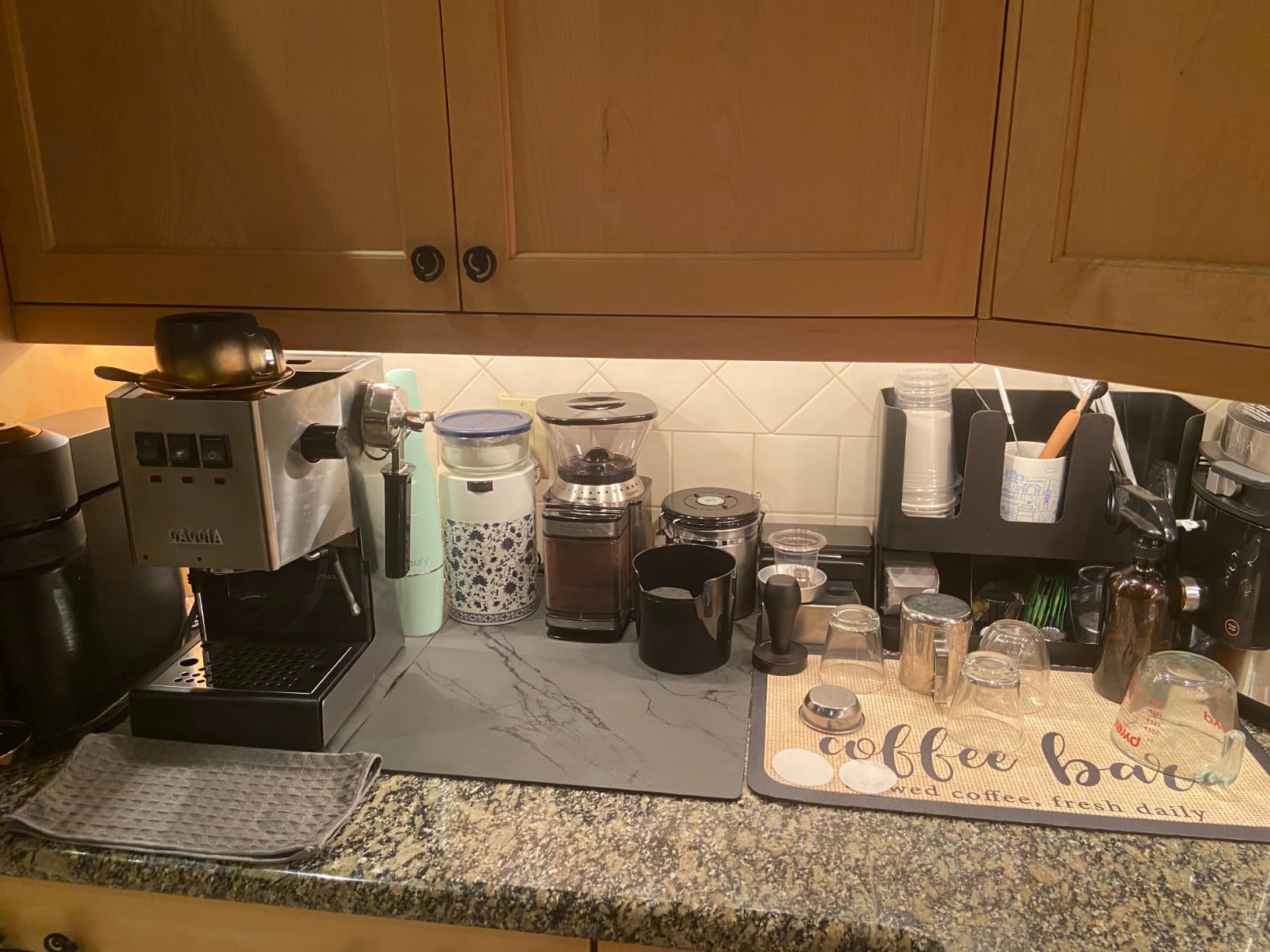
Extraction quality is where the Gaggia truly shines. At 9 bars of pressure with proper grind and tamp, I was pulling shots with thick, hazelnut-colored crema and complex flavor profiles that reminded me of my favorite coffee shops. The commercial steam wand has real power behind it, producing microfoam that latte art competitors would appreciate. The machine is also self-serviceable, meaning you can open it up and replace parts yourself without sending it to a repair center.
The trade-offs are real, though. You need to plan ahead because the Gaggia requires 15 to 20 minutes to reach stable brewing temperature. There is no PID temperature controller from the factory, though many enthusiasts add one as a modification. The single boiler means switching between brewing and steaming requires temperature surfing. And the steam wand sits at a fixed angle that some users find awkward when working with a full milk pitcher.
Who should buy the Gaggia Classic Evo Pro
Home baristas who want to develop real technique and understand espresso extraction at a deeper level will thrive with this machine. It is also ideal for anyone who values longevity and repairability — this machine is built to last and designed to be serviced at home. Tinkerers and modders will appreciate the active community and wealth of upgrade options available.
Who should look elsewhere
If you need your espresso fast in the morning without waiting for warm-up, the Breville Bambino series is more practical. Those who want push-button convenience with automatic milk frothing should look at Breville or Ninja options. And anyone unwilling to invest in a good standalone grinder should skip this machine entirely — the Gaggia demands freshly ground, precisely dialed-in coffee to perform well.
5. Ninja Luxe Cafe Premier – Best Versatile Semi Automatic Espresso Machine
Ninja Luxe Café Premier 3-in-1 Espresso Machine, Drip Coffee, & Rapid Cold Brew | Built-in Coffee Grinder, Hands-Free Milk Frother, Assisted Tamper for Cappuccinos & Lattes | Stainless Steel | ES601
3-in-1 Espresso, Drip, Cold Brew
Built-in Grinder
Weight-Based Dosing
1650W
Pros
- Makes espresso
- drip coffee
- and cold brew
- Built-in grinder with 25 settings
- Weight-based dosing for consistency
- Hands-free dual froth system
- Assisted tamper included
Cons
- Drip coffee quality not as good as dedicated machines
- Small wastewater tray
- Best for users who prefer automation
The Ninja Luxe Cafe Premier is not your typical semi automatic espresso machine — it is three machines in one. I tested it as an espresso maker, a drip coffee brewer, and a rapid cold brew system, and came away impressed by how well it handles all three. For households where different people want different types of coffee, this versatility is a genuine selling point that no other machine on this list can match.
The Barista Assist Technology is Ninja’s answer to the learning curve that scares people away from home espresso. The machine recommends grind settings based on your coffee type, and the weight-based dosing system uses a built-in scale to measure your grounds automatically. I found this took much of the guesswork out of dialing in shots, especially when switching between different coffee beans.
The integrated conical burr grinder offers 25 settings, giving you fine-grained control over grind size. The assisted tamper applies consistent pressure with every press, eliminating one of the most common sources of inconsistency for beginners. The hands-free dual froth system handles milk texturing without manual intervention — just attach the jug and press the button.
The main compromises show up in the drip coffee mode, which produces decent but not exceptional brewed coffee compared to a dedicated drip machine. The wastewater tray fills up quickly and requires frequent emptying. And if you are the type who enjoys manually controlling every variable of espresso extraction, the Ninja’s automation may feel restrictive rather than helpful.
Who should buy the Ninja Luxe Cafe Premier
Families or households where people drink different types of coffee will get the most value from this machine. It is also great for anyone who wants cafe-quality drinks at home but does not want to learn manual barista techniques. The assisted features make it accessible for complete beginners who still want high-quality results.
Who should look elsewhere
Pure espresso enthusiasts who want full manual control over every variable should stick with the Gaggia or Breville Barista Express. If you already own a good drip coffee maker and only need espresso, the Ninja’s extra capabilities become unnecessary added cost. And those with very limited counter space may find the three-in-one footprint larger than a dedicated espresso machine.
6. De’Longhi Stilosa – Best Value Entry-Level Espresso Machine
De'Longhi Stilosa Manual Espresso Machine, Compact Coffee Maker, 15 Bar Pump Pressure, Manual Milk Frother Steam Wand for Authentic Single & Double Espresso, Lattes & Cappuccinos, Tamper Included
15 Bar Pump
Stainless Steel Boiler
Manual Steam Wand
1100W
Pros
- Pays for itself quickly vs coffee shops
- Compact design fits small kitchens
- Quick 30-40 second heat up
- Stainless steel boiler for durability
- Good steam wand performance
Cons
- Plastic tamper is ineffective
- No cups or frothing pitcher included
- Small water tank requires frequent refills
- Learning curve for beginners
The De’Longhi Stilosa is proof that you do not need to spend a fortune to make real espresso at home. With over 13,000 reviews and a 4.2-star rating, it has clearly resonated with budget-conscious coffee lovers. I tested it over two weeks of daily use and found that, with good beans and a bit of practice, it pulls shots that genuinely taste like what you would get at a neighborhood cafe.
Heat-up time is impressively quick at 30 to 40 seconds, which makes it practical for rushed mornings. The stainless steel boiler is engineered for longevity, and the 15-bar pump provides sufficient pressure for proper extraction with a solid crema layer. The manual steam wand works well for frothing milk for lattes and cappuccinos once you get the hang of it.
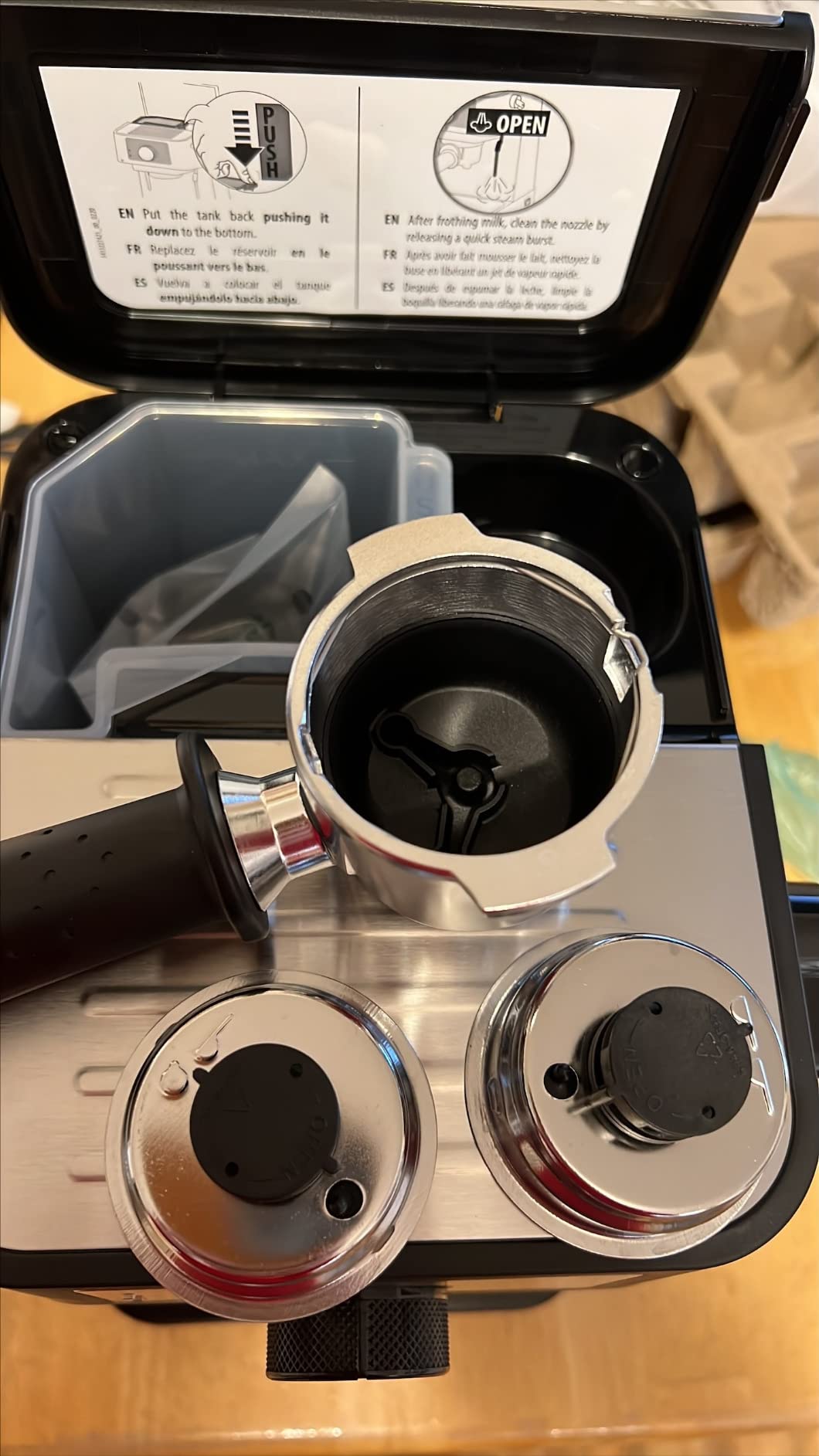
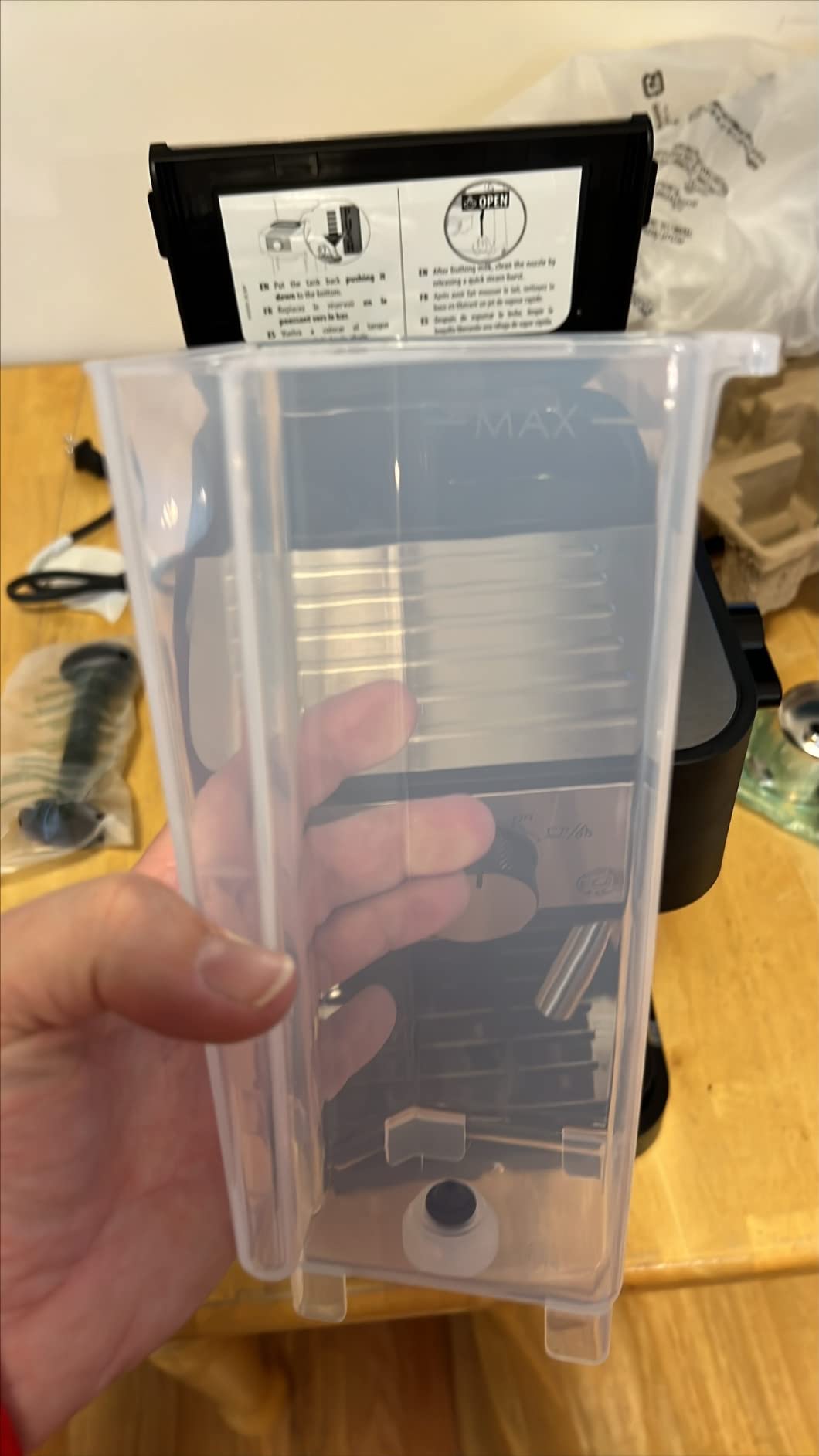
Where the Stilosa shows its budget nature is in the accessories and small details. The included tamper is plastic and barely functional — most users upgrade to a metal one immediately. No milk frothing pitcher or espresso cups are included, so you will need to supply your own. The water tank is on the smaller side at 34 ounces, meaning frequent refills if you make multiple drinks daily.
The extraction is manually controlled, meaning you start and stop the water flow yourself. This gives you control but requires attention and practice. Many users report that watching a few tutorials and investing time in the first week pays off with consistently good results. One reviewer calculated that this machine paid for itself within two months by replacing daily coffee shop visits.
Who should buy the De’Longhi Stilosa
Anyone who currently spends money at coffee shops daily and wants to break even quickly should consider this machine. It is also ideal for students, first-time espresso machine owners, or anyone curious about home espresso who does not want to make a large financial commitment. The compact size makes it one of the best semi automatic espresso machines for small kitchens.
Who should look elsewhere
If you want consistent results with minimal effort, the manual extraction and frothing will feel like a chore. Those who drink a lot of milk-based beverages should consider the CASABREWS CM5418 or Breville Bambino for better steam performance. And anyone planning to host regular coffee gatherings will find the small water tank and single boiler limiting for making multiple drinks.
7. Breville Bambino Plus – Best for Automatic Milk Frothing
Breville Bambino Plus Espresso Machine BES500BSS, Brushed Stainless Steel
Auto Milk Texturing
ThermoJet 3-Sec Heat Up
PID Control
54mm Portafilter
Pros
- Automatic microfoam with adjustable settings
- 3-second ThermoJet heat up
- PID temperature control
- Compact 7.7-inch width
- Auto purge after steaming
Cons
- Lightweight machine slides during use
- No single wall basket included
- Auto frother may not satisfy advanced users
- No built-in grinder
The Breville Bambino Plus takes everything good about the standard Bambino and adds a critical upgrade for milk drink lovers: automatic microfoam texturing with adjustable temperature and foam settings. After testing it with everything from skim milk to oat milk, I can say the auto-frothing system consistently produces creamy, pourable microfoam that makes latte art possible even if you have never steamed milk manually before.
The ThermoJet heating system reaches brewing temperature in three seconds flat, just like the standard Bambino. The PID temperature control delivers consistent extraction temperatures shot after shot. I pulled 20 consecutive doubles over a week of testing and saw minimal temperature drift. The low pressure pre-infusion gently saturates the puck, reducing channeling and producing sweeter, more balanced shots.
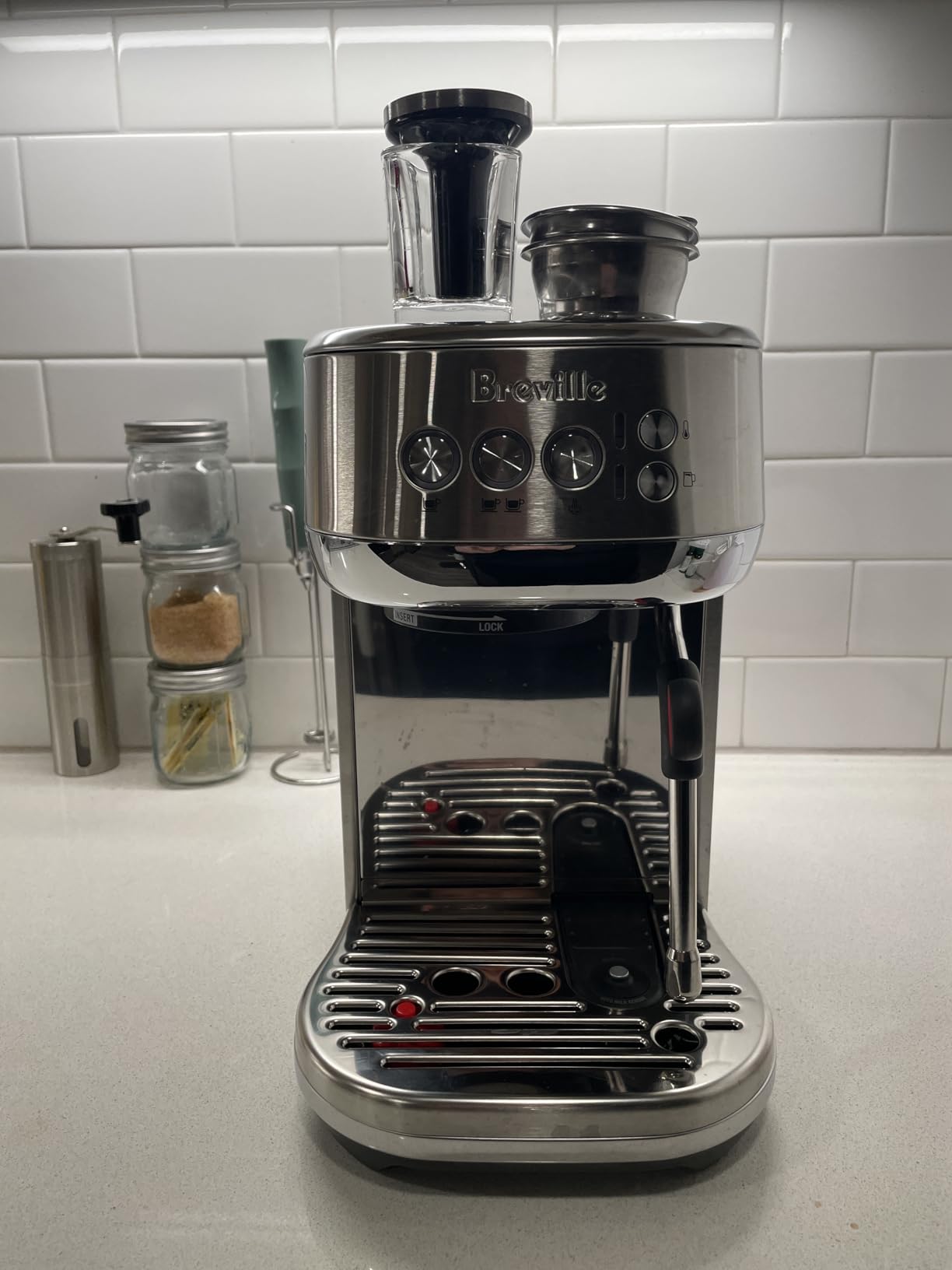
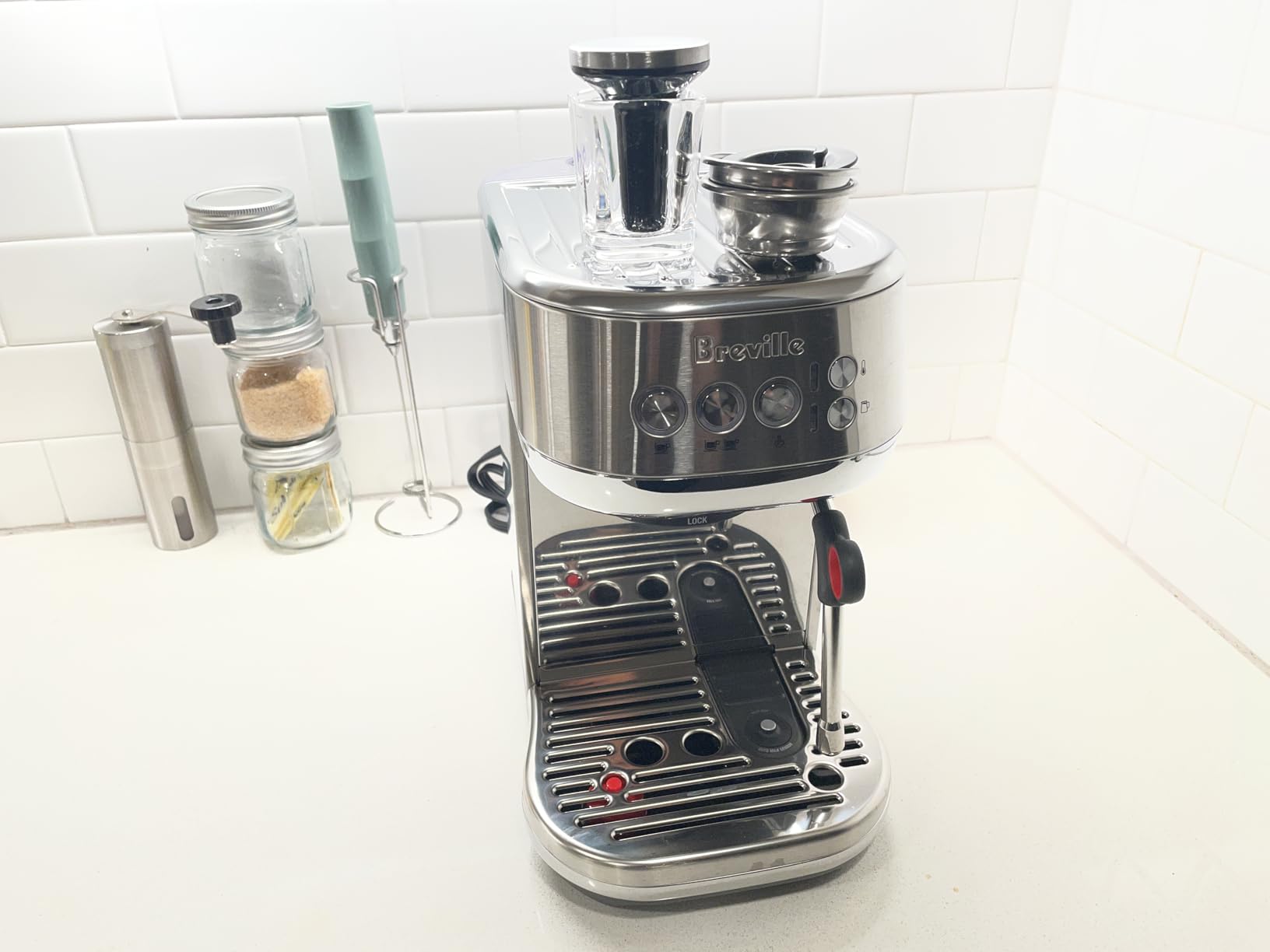
The automatic steam wand is the star feature. You can set milk temperature to low, medium, or high, and foam level from minimum to maximum. Insert the wand into the included stainless steel milk jug, press the steam button, and the machine does the rest. It automatically purges the steam wand after each use, which is a small but welcome convenience that keeps things clean.
The main drawbacks are the same as the standard Bambino. The 11-pound weight means it can shift around when you lock the portafilter. Only pressurized baskets are included — no single-wall baskets for advanced technique. There is no built-in grinder. And while the auto-frothing is excellent for most users, experienced baristas who want maximum control over their milk texture may find the automation limiting.
Who should buy the Breville Bambino Plus
Latte and cappuccino lovers who want perfect milk texture without learning manual frothing technique should choose this machine. It is also ideal for beginners who value simplicity and speed — the auto milk system and three-second heat-up mean you can go from off to finished drink in under two minutes. The compact 7.7-inch width fits easily in small kitchens.
Who should look elsewhere
Those who want to develop hands-on barista skills for milk texturing will find the automatic system too hands-off. If you need an all-in-one with a built-in grinder, the Breville Barista Express is the better Breville option. And anyone who primarily drinks straight espresso without milk may prefer the simpler and less expensive Bambino or Gaggia Classic Evo Pro.
8. De’Longhi La Specialista Arte Evo – Best for Espresso and Cold Brew
De'Longhi La Specialista Arte Evo Espresso Machine - Compact Cold Brew Coffee Maker with Grinder, Milk Steam Wand/Frother & Tamping Tools - Home Barista Kit for Lattes, Cappuccinos, Iced Coffee
Built-in Burr Grinder
Cold Brew in 5 Min
Active Temp Control
15 Bar Italian Pump
Pros
- Quiet built-in burr grinder
- Cold brew in under 5 minutes
- Active temperature control with 3 settings
- Includes complete barista kit
- Excellent steam wand for microfoam
Cons
- Steam wand can be slow to start
- Auto shutoff is too quick
- Not recommended for dark roasts
- Limited steam wand range of motion
The De’Longhi La Specialista Arte Evo caught my attention with a feature no other machine on this list offers: genuine cold brew in under five minutes using their Cold Extraction Technology. As someone who regularly makes cold brew, I was skeptical. But after testing it multiple times, I can confirm it produces a smooth, low-acidity cold brew that tastes remarkably close to a 12-hour steep. That alone makes this machine unique in the semi-automatic category.
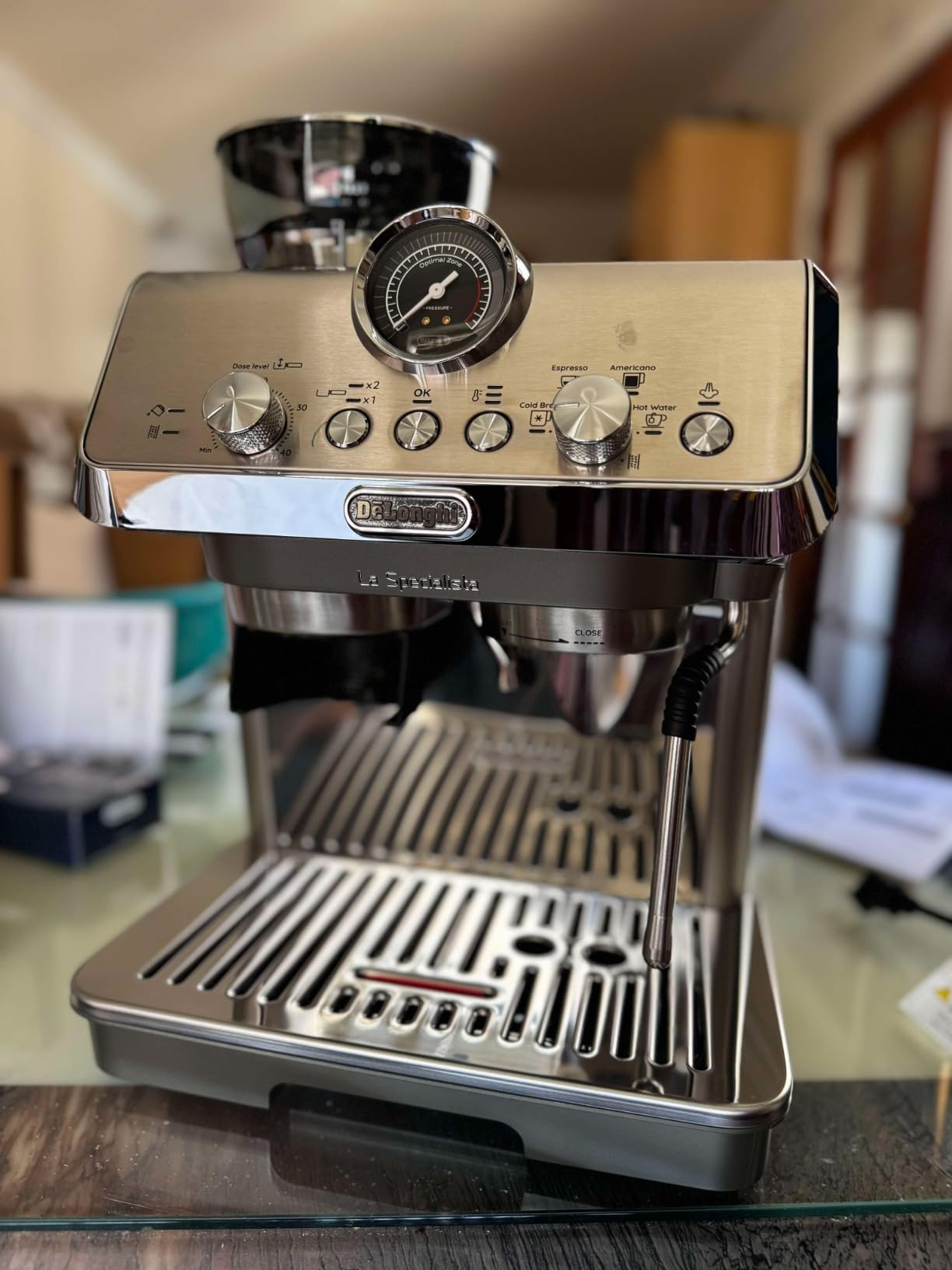
The built-in conical burr grinder is notably quieter than the one on the Breville Barista Express. It has 8 grind settings, which is fewer than some competitors but covers the range most home baristas need. Active temperature control lets you choose between three infusion temperatures, which is helpful when switching between light, medium, and dark roasts. The pressure gauge on the front helps you monitor extraction quality in real time.
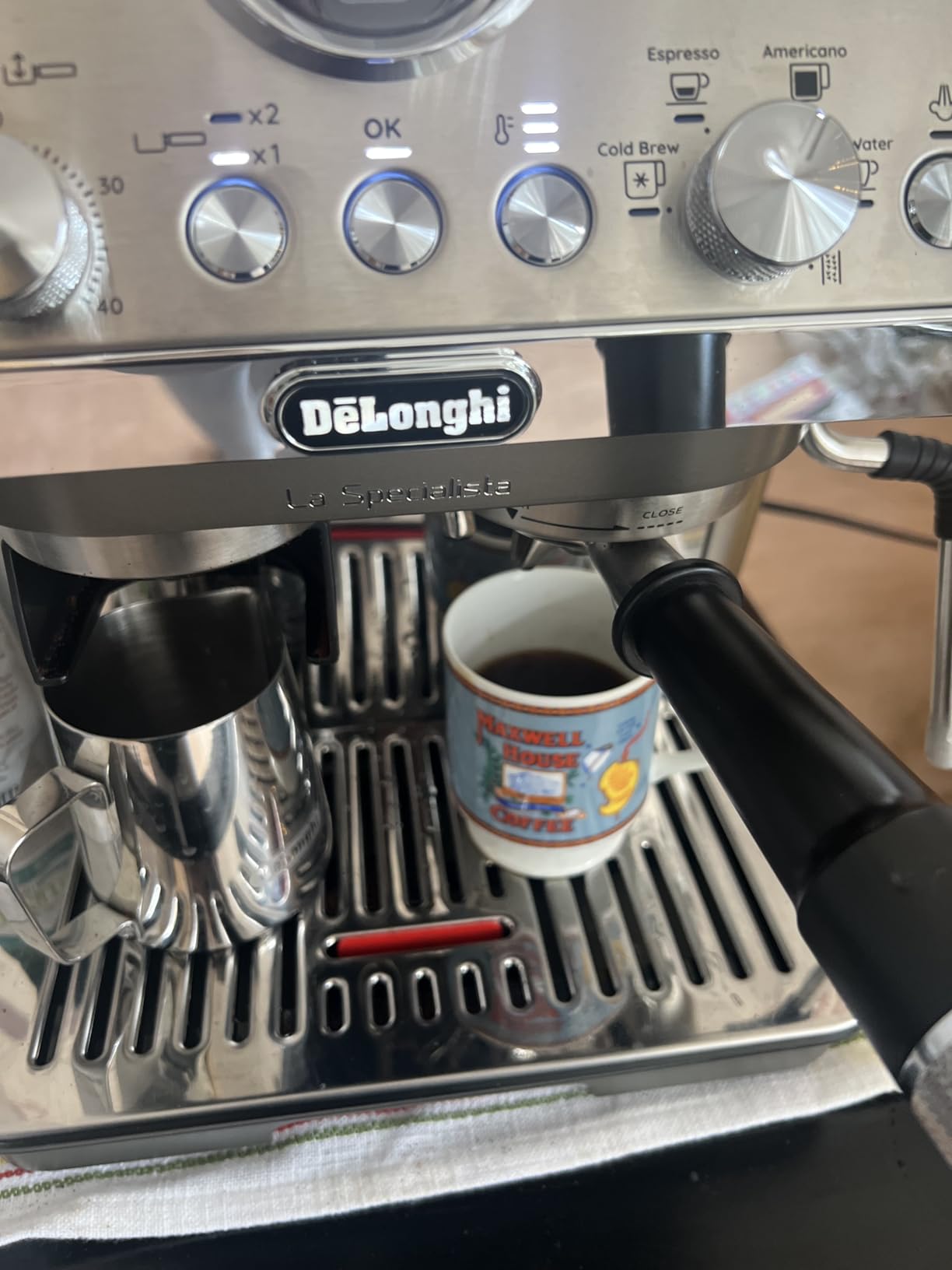
The included barista kit is generous: a dosing funnel, tamping mat, professional tamper, and 12-ounce milk jug come in the box. This saves you from buying accessories separately, which adds real value. The steam wand produces silky microfoam suitable for latte art, and I had no trouble getting consistent texture with whole milk and oat milk.
Some limitations are worth noting. The steam wand occasionally takes a few extra seconds to start producing steam, which breaks your workflow rhythm. The auto-shutoff activates sooner than most users would like, requiring you to power the machine back on mid-session. De’Longhi specifically notes this machine is not recommended for dark roasts, which limits your bean choices. And the steam wand has limited range of motion, making it awkward to use with a full milk pitcher.
Who should buy the De’Longhi La Specialista Arte Evo
Cold brew fans who also want espresso capability will find this machine uniquely suited to their needs. It is also great for anyone who wants a built-in grinder and complete accessory kit without buying everything separately. The quiet grinder makes it a good choice for early-morning coffee routines in households with light sleepers.
Who should look elsewhere
If you exclusively drink dark roast coffee, De’Longhi’s own recommendation to avoid dark roasts is a red flag. Those who want maximum grind settings should look at the Breville Barista Express Impress with its 25 settings. And anyone who does not care about cold brew can find simpler machines at similar prices without the extra feature adding complexity.
9. CASABREWS Ultra – Best Budget Upgrade Espresso Machine
CASABREWS Ultra Espresso Machine with LCD Display, Espresso Maker with Powerful Milk Frother, Customizable Brewing Temperature, Provides Barista-Level Lattes and Cappuccinos, Gift for Men & Women
58mm All-Metal Portafilter
LCD Display
4 Custom Temps
73oz Tank
Pros
- Professional 58mm all-metal portafilter
- Four customizable brewing temperatures
- Large 73oz water tank
- Clear LCD display
- Excellent crema production
Cons
- Steam wand can be noisy initially
- Frequent descaling required
- Plastic tamper needs replacing
- Non-pressurized basket needs dialing in
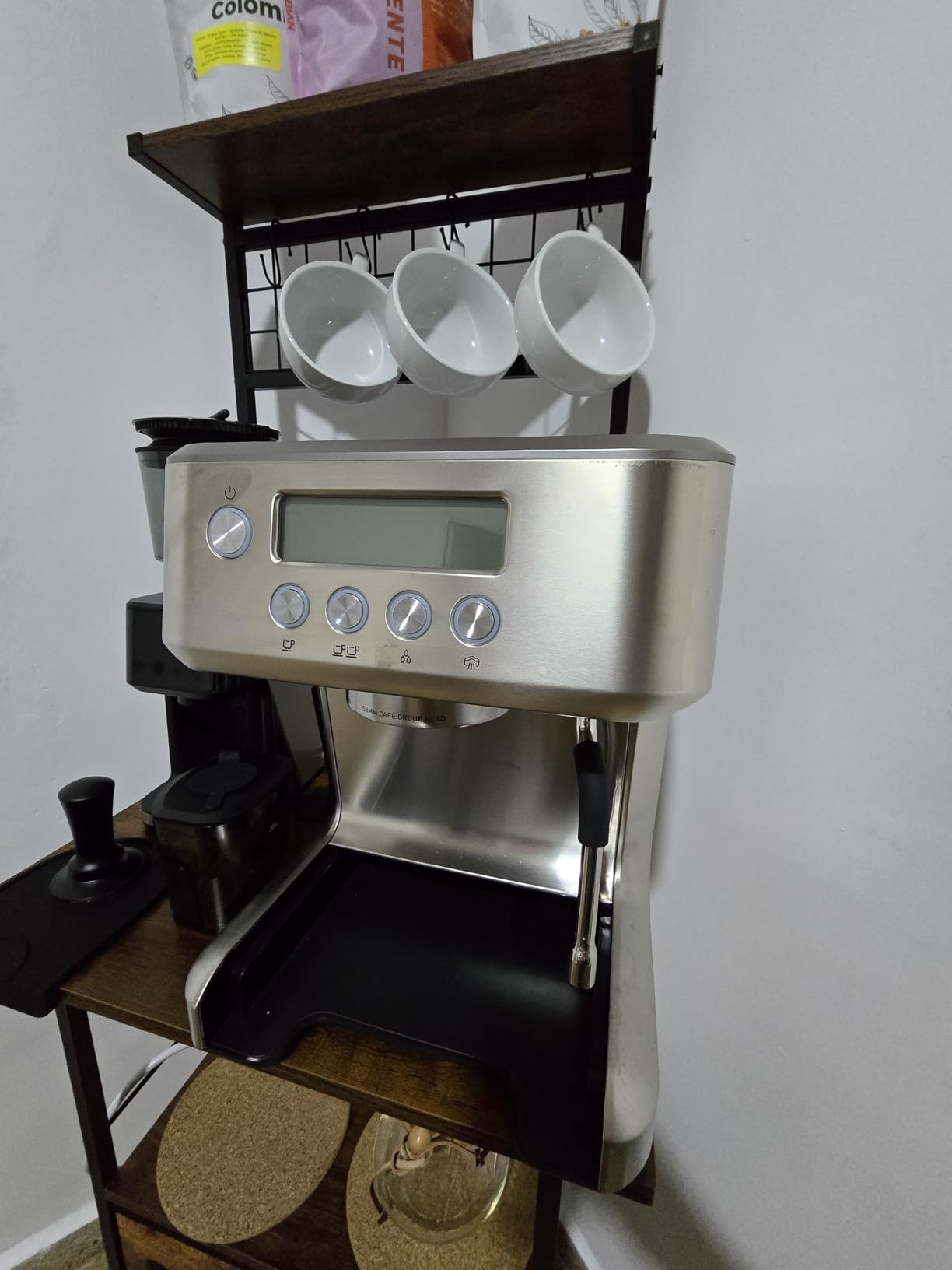
The CASABREWS Ultra takes the best parts of the budget-friendly CM5418 and upgrades them meaningfully. The most significant improvement is the 58mm all-metal portafilter — the same commercial size used by the Gaggia Classic Evo Pro and professional cafes. At this price point, finding a 58mm portafilter in solid metal construction is rare, and it makes a noticeable difference in how the machine feels and performs.
The LCD display on the front panel provides clear information about brewing status and temperature settings. You can choose from four customizable brewing temperatures, which gives you flexibility when working with different roast levels. I found the higher temperature setting worked better for medium roasts while the lower setting produced sweeter shots with light roasts. The 73-ounce water tank is the largest on this list, meaning fewer refill interruptions.
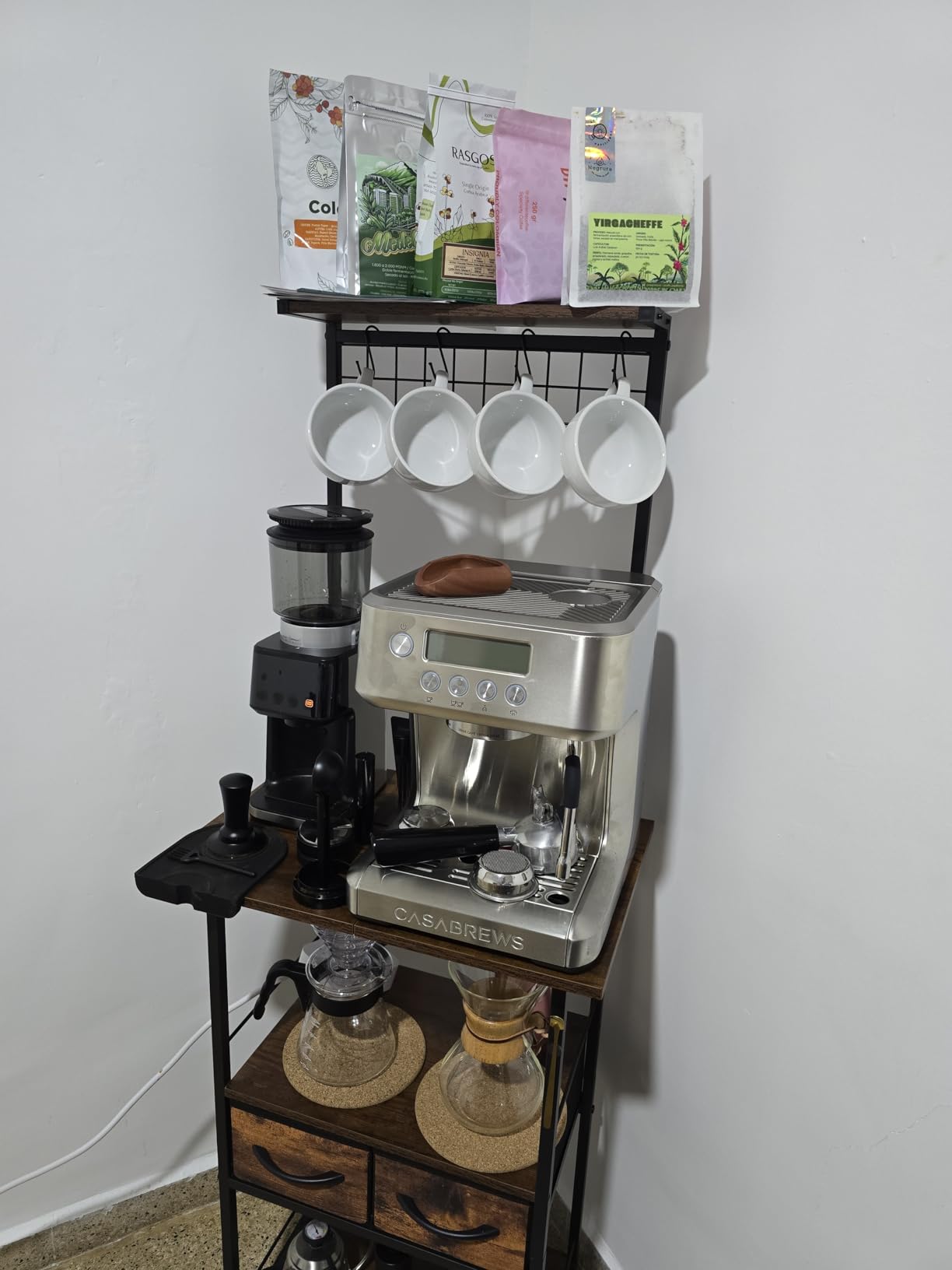
With a 4.6-star rating from over 700 reviews, users consistently praise the coffee quality this machine produces. The 20-bar Italian pump generates rich crema that rivals more expensive machines. I pulled shots over two weeks of testing and was impressed by the consistency once I found the right grind setting for my beans.
The trade-offs are familiar budget-machine issues. The included plastic tamper needs immediate replacement with a proper metal one. Descaling is required more frequently than on pricier machines, so factor that into your maintenance routine. The non-pressurized filter basket means you need to dial in your grind carefully — beginners may struggle at first without a pressurized option to fall back on. And you need to wait about 20 seconds to flush the system after each shot.
Who should buy the CASABREWS Ultra
Anyone upgrading from a basic or entry-level machine who wants commercial-grade portafilter size and temperature control will appreciate this step up. The large water tank makes it practical for households with multiple coffee drinkers. It is also ideal for budget-conscious buyers who want 58mm compatibility without paying premium prices.
Who should look elsewhere
Complete beginners who have never used a non-pressurized basket may find the dialing-in process frustrating without a pressurized option as a fallback. If you want a built-in grinder, this machine requires a separate purchase. And those who prioritize quiet operation may find the initial steam wand noise bothersome in early morning settings.
10. Breville Barista Express Impress – Best Premium Semi Automatic Espresso Machine
Breville Barista Express Impress Espresso Machine BES876BSS, Brushed Stainless Steel
Impress Puck System
25 Grind Settings
Assisted Tamping
Thermocoil PID
Pros
- Impress system automates dosing and tamping
- 25 grind settings for precision
- Thermocoil PID temperature control
- Large 2L water tank
- Professional microfoam steam wand
Cons
- Higher price point
- Beans can stick in grinder
- No low water sensor
- Learning curve to dial in
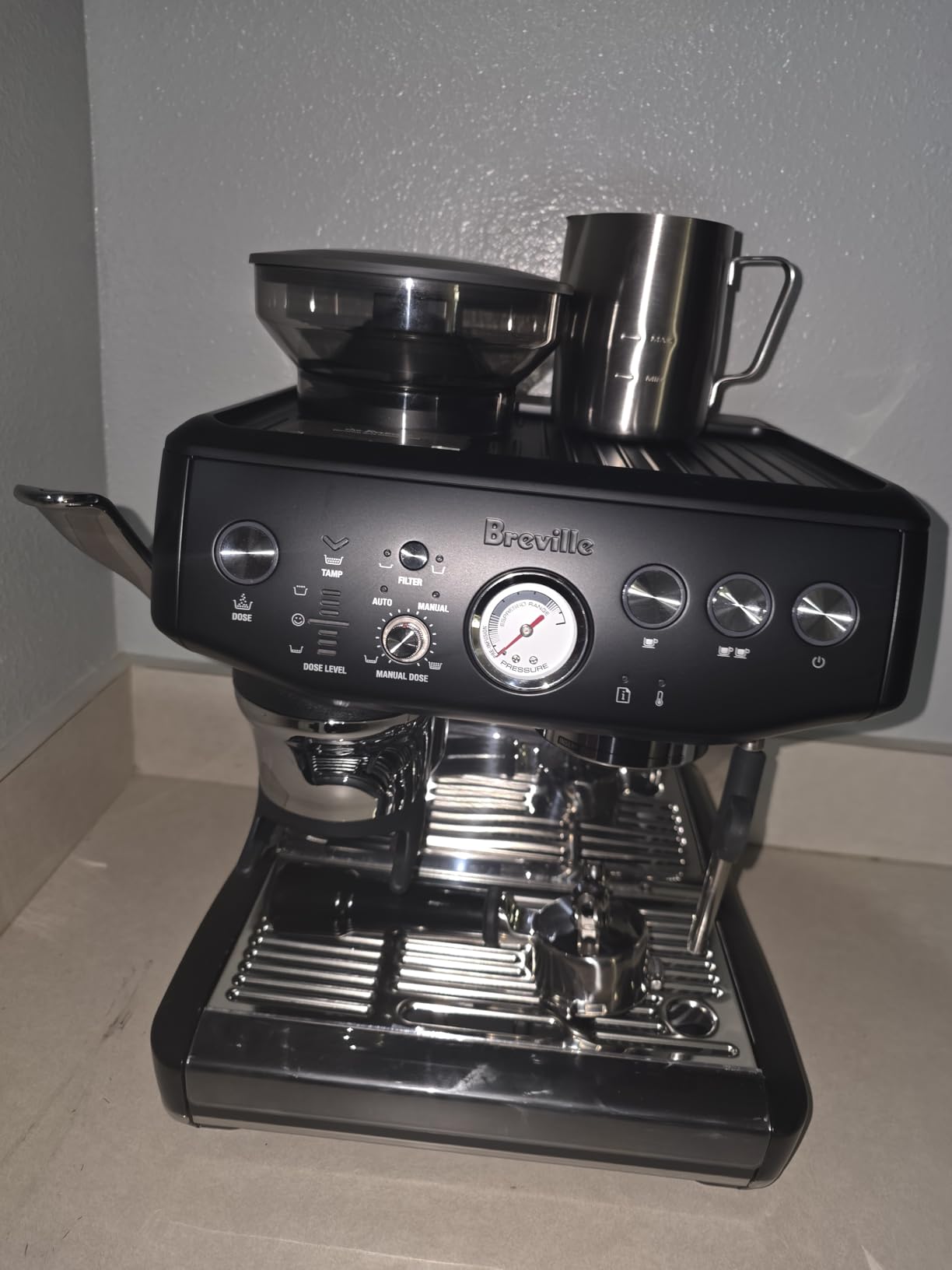
The Breville Barista Express Impress is the most advanced machine on this list, and it earns that position through the innovative Impress puck system. This system automatically calculates the right amount of coffee, doses it into the portafilter, and assists with tamping at a consistent 10 kilograms of pressure with a 7-degree barista twist. After using it for three weeks, I can say it genuinely solves the most common problem home baristas face: inconsistent puck preparation.
The intelligent dosing is the standout. When you pull the lever, the grinder doses coffee and measures it automatically. If the dose is too light, it tells you to pull again. If it is too heavy, the Razor trimming tool removes the excess. This feedback loop means even a complete beginner can get a properly dosed, evenly tamped puck on their first try. Over time, the machine learns and adjusts its default dose based on your beans and grind setting.
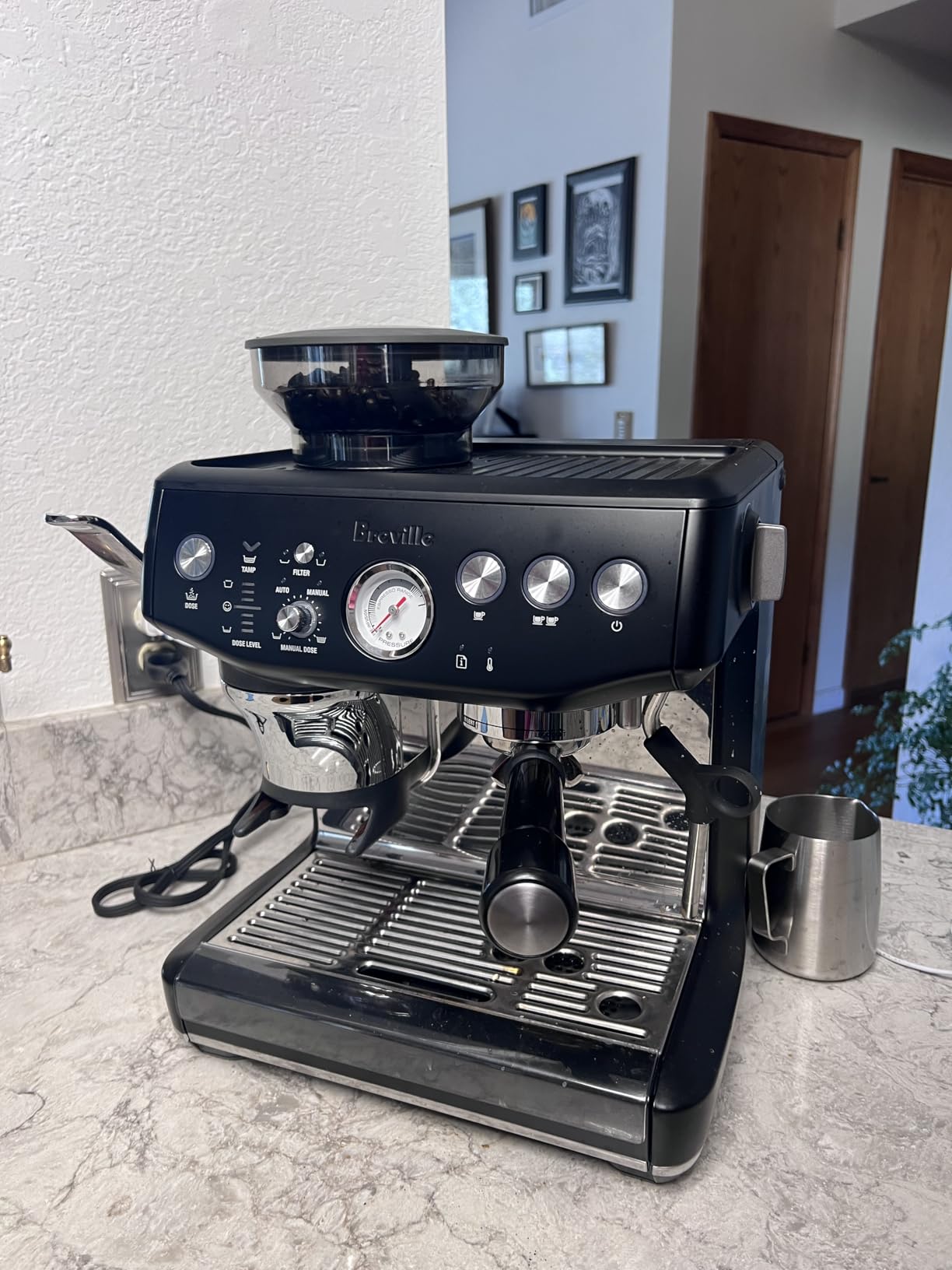
The integrated conical burr grinder offers 25 settings, giving you fine-grained control that serious espresso enthusiasts demand. The Thermocoil heating system with PID control maintains precise water temperature throughout extraction. I noticed the temperature stability immediately when comparing back-to-back shots — they tasted remarkably consistent. The 250-gram bean hopper and 2-liter water tank mean less refilling between sessions.
The microfoam steam wand delivers professional-level texturing. I was able to produce glossy, paint-like microfoam that poured beautifully for latte art. The wand has enough power to texture milk quickly without scalding it, which is a balance many machines struggle to achieve.
Who should buy the Breville Barista Express Impress
Anyone willing to invest in a premium home espresso experience should consider this machine. The Impress system makes it accessible for beginners while offering enough manual control to satisfy experienced baristas. It is ideal for households that make multiple coffee drinks daily, thanks to the large water tank and bean hopper. Professionals who want cafe-quality consistency at home will find the intelligent dosing and PID control delivers it.
Who should look elsewhere
If your budget is under $500, the standard Barista Express or Gaggia Classic Evo Pro offers excellent performance at a lower cost. Those who want full manual control over every step of puck preparation may find the assisted system unnecessary. And anyone who only drinks espresso occasionally may not use the machine enough to justify the premium price.
What to Look for in a Semi Automatic Espresso Machine
Choosing the best semi automatic espresso machine comes down to understanding which features matter most for your routine. Our team has broken down the key factors that separate a machine you will love from one that collects dust.
Boiler Type and Heating System
The boiler is the heart of any espresso machine, and the type it uses directly affects performance. Single boiler machines like the Gaggia Classic Evo Pro and De’Longhi Stilosa use one boiler for both brewing and steaming, which means you cannot do both at the same time. You brew first, then switch to steam mode, which adds about 30 seconds to your workflow for milk drinks.
Thermoblock and ThermoJet systems, found in the Breville Bambino series, heat water on demand rather than maintaining a full boiler of hot water. This enables the three-second heat-up time but may have slightly less temperature stability during long extraction sessions. Dual boiler and heat exchanger machines allow simultaneous brewing and steaming, though none of the machines in this price range offer that feature.
PID Temperature Control
A PID controller maintains precise water temperature during extraction, typically within one to two degrees of your target. Machines with PID, like the Breville Barista Express and Bambino Plus, produce more consistent shots because temperature fluctuations are one of the biggest causes of sour or bitter espresso. The Gaggia Classic Evo Pro notably lacks PID from the factory, though it can be added as a modification.
Temperature matters more than most beginners realize. Even a five-degree difference can pull entirely different flavors from the same beans. If consistency is a priority, prioritize machines with PID or active temperature control.
Portafilter Size and Quality
Portafilters come in several sizes, with 51mm, 54mm, and 58mm being the most common. The 58mm size is the commercial standard, which means wider availability of precision baskets, distribution tools, and accessories. Both the Gaggia Classic Evo Pro and CASABREWS Ultra use 58mm portafilters, giving them an advantage for anyone who wants to upgrade their accessories over time.
Build quality matters too. All-metal portafilters retain heat better and feel more substantial than those with plastic components. Commercial portafilters with three-way solenoid valves produce dry pucks that are easier to clean up.
Steam Wand Performance
If you drink lattes, cappuccinos, or any milk-based drinks, steam wand quality is critical. Manual wands, like those on the Gaggia and CASABREWS models, give you full control but require practice to master. Automatic wands, like those on the Breville Bambino and Bambino Plus, handle texturing for you but offer less fine-tuned control.
Power matters more than most people expect. A strong steam wand can texture cold milk to microfoam in 30 to 45 seconds, while weaker wands may take over a minute and produce larger, less uniform bubbles. The commercial steam wand on the Gaggia Classic Evo Pro is among the most powerful in this price range.
Built-in Grinder vs Separate
Several machines on this list include built-in grinders: the Breville Barista Express, Barista Express Impress, De’Longhi La Specialista Arte Evo, and Ninja Luxe Cafe Premier. An integrated grinder saves counter space, simplifies your workflow, and eliminates the need to buy a separate grinder that can cost $200 or more on its own.
However, standalone grinders often offer better grind consistency and more settings. If you already own a good grinder, buying a machine with a built-in one means paying for a feature you will not use. Consider your current setup and whether the convenience of integration outweighs the potential quality trade-off.
Size, Water Capacity, and Daily Practicality
Measure your counter space before buying. Machines range from the ultra-compact CASABREWS CM5418 at 5.47 inches wide to the Breville Barista Express Impress at 14.5 inches wide. Also consider water tank size: the CASABREWS Ultra’s 73-ounce tank needs far fewer refills than the De’Longhi Stilosa’s 34-ounce tank. Think about daily maintenance too — some machines require more frequent descaling and cleaning than others.
What is the best semi automatic espresso machine for home use?
How much should I spend on a semi-automatic espresso machine?
What features should I look for in an espresso machine?
Is a semi automatic or fully automatic espresso machine better?
Do I need a separate grinder for a semi automatic espresso machine?
Final Thoughts on the Best Semi Automatic Espresso Machines
Finding the best semi automatic espresso machine for your kitchen comes down to matching your budget, skill level, and daily coffee routine with the right features. For most people, the Breville Barista Express delivers the best all-around experience with its built-in grinder, PID temperature control, and manual steam wand. Budget buyers will be impressed by what the CASABREWS CM5418 can do at a fraction of the cost, while espresso enthusiasts should seriously consider the Gaggia Classic Evo Pro for its commercial-grade build and upgradeability.
Whatever machine you choose, remember that the grinder matters as much as the espresso machine itself. Fresh, properly ground coffee is the foundation of every great shot. Invest in good beans, learn the basics of extraction, and enjoy the process of developing your home barista skills in 2026. Your daily cup of coffee will thank you.