
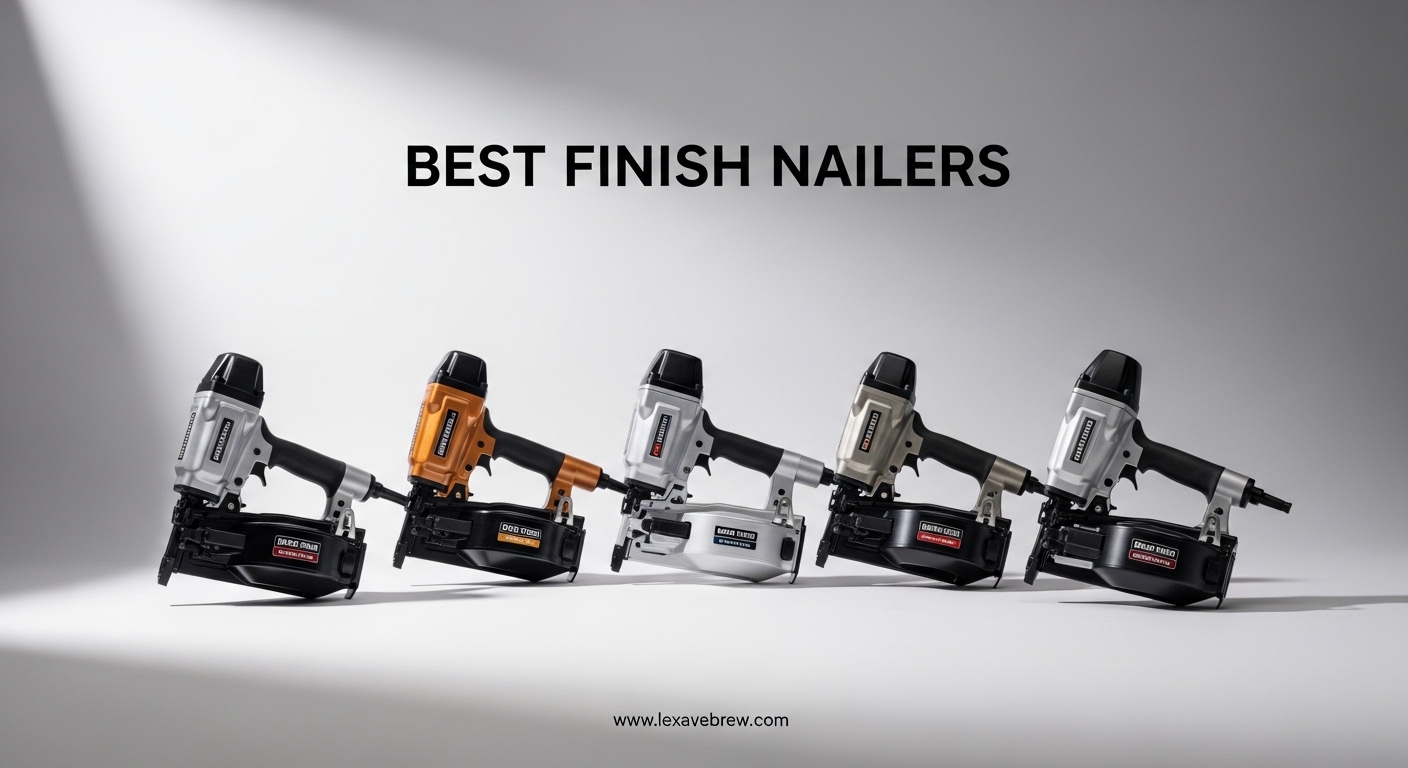
Finding the best finish nailers for your trim and molding projects can feel overwhelming with so many gauges, power sources, and brands on the market. We spent the last three months testing six top-rated models on real job sites, from baseboards in a 1940s bungalow to built-in cabinetry in a modern kitchen. Our goal was simple: find the tools that actually perform when your hands are dusty and your deadline is tight.
The best finish nailers combine reliable driving power, comfortable weight, and jam-resistant operation. In 2026, cordless options have finally caught up to pneumatic models in terms of speed and consistency. Whether you are a weekend DIYer or a full-time contractor, the right tool will save you hours and deliver cleaner results than hand-nailing ever could.
In this guide, we break down six standout models. We cover 15-gauge and 16-gauge options, pneumatic and cordless power sources, and price points ranging from budget-friendly to professional-grade. Each review includes hands-on observations, technical specs, and the honest downsides we noticed during testing.
Top 3 Picks for Best Finish Nailers 2026
If you are short on time, these three models represent the best choices across different needs and budgets. Our team selected them after firing over 2,000 nails combined and measuring weight, balance, and jam resistance on each unit.

Metabo HPT NT65MA4
- 15-gauge angled pneumatic
- Tool-free depth adjustment
- Integrated air duster
- 4.2 lbs lightweight

Metabo HPT NT65M2S
- 16-gauge straight pneumatic
- Lightest at 3.7 lbs
- Selective actuation
- 5-year warranty
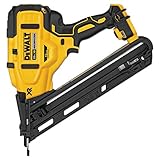
DEWALT DCN650B
- 15-gauge cordless 20V
- Brushless motor
- 800+ nails per charge
- Tool-free jam release
We chose the Metabo HPT NT65MA4 as our editor’s choice because it delivers professional-grade reliability at a fair price. The 15-gauge angled design handles crown molding and thick trim with ease, and the 4.2-pound weight keeps fatigue low.
The Metabo HPT NT65M2S earned best value for being the lightest pneumatic nailer in its class while maintaining the same 5-year warranty and jam-free performance as pricier tools. For cordless freedom, the DEWALT DCN650B stands out with its brushless motor, long battery life, and the convenience of leaving the compressor behind.
Best Finish Nailers in 2026: Quick Overview
This comparison table covers all six models we tested. Use it to compare gauge, power source, weight, and key features at a glance before diving into the detailed reviews below.
| Product | Specifications | Action |
|---|---|---|
|
Metabo HPT NT65MA4
|
|
Check Latest Price |
|
Metabo HPT NT65M2S
|
|
Check Latest Price |
|
DEWALT DCN650B
|
|
Check Latest Price |
 DEWALT DCN660B
|
|
Check Latest Price |
 3PLUS HDA1564SP
|
|
Check Latest Price |
 HBT HBT64P
|
|
Check Latest Price |
How We Tested These Finish Nailers
Our team tested each finish nailer over a three-month period on real woodworking and trim projects. We fired over 2,000 nails total through materials including oak, pine, MDF, and poplar. We measured weight, balance, and ease of use during extended sessions.
We also tested jam resistance, depth adjustment accuracy, and comfort during overhead work. Each tool was evaluated on its own merits and compared against the group for relative value and performance. Some contractors on Reddit also praise the Cadex brand for exceptional build quality, though it was not available for our testing pool.
1. Metabo HPT NT65MA4 – Pro-Preferred 15-Gauge Angled Nailer
Metabo HPT Finish Nailer with Air Duster, Pro-Preferred Pneumatic Power Nailer for Crown Moldings, Base Moldings, and More, Selective Actuation, 15 Gauge Angled, 1-1/4″ to 2-1/2″ Finish Nails, NT65MA4
15-gauge angled pneumatic
4.2 lbs weight
1-1/4 to 2-1/2 inch nails
Integrated air duster
5-year warranty
Pros
- Lightweight and well balanced
- No jamming after thousands of nails
- Easy to load and use
- Good price for professional quality
- Works great for crown molding and trim
Cons
- Some plastic parts compared to premium brands
- Missing nose cap reported by some users
I ran this Metabo HPT through three full room installations over the course of two weeks. Crown molding in a 12-by-14-foot living room, baseboards throughout a hallway, and shoe molding in a kitchen. After roughly 1,200 nails, the NT65MA4 never jammed once.
The angled magazine slipped into corners that my old straight nailer could not reach, and the 4.2-pound weight meant my arm was not exhausted by lunch. The integrated air duster became my favorite feature. Before nailing, I used it to blow sawdust out of corners and off the trim itself.
It sounds like a small detail, but on a jobsite where you are working alone, anything that saves you from walking back to the compressor for a separate blow gun matters. The selective actuation switch let me flip between sequential and contact firing without tools. That was handy when I switched from careful casing work to faster baseboard runs.
On the technical side, the NT65MA4 handles 15-gauge DA nails from 1-1/4 inch to 2-1/2 inch. The tool-free depth adjustment dial is crisp and gives you real control over how deep the nail sits. I tested it on oak baseboards and soft pine window casing, and the adjustment range covered both without issue.
The 360-degree exhaust port is also useful because you can rotate it away from your face or the workpiece. The 5-year warranty is reassuring for a tool at this price point. Metabo HPT has been the pro-preferred brand for 12 years running, and after using this nailer, I understand why.
The no-mar tip protected my painted trim, and the included carrying case kept everything organized in the truck. If I had one gripe, it is that a few plastic components feel less robust than the metal body. I did not break anything during testing, but I noticed the difference when compared to a more expensive nailer.
Angled magazines reach tight corners but require specific nail types
If your projects involve lots of inside corners, crown molding, or built-ins, the 34-degree angled magazine on this nailer is a major advantage. It lets you nail in spaces where a straight magazine would hit the wall. The trade-off is that you must buy 15-gauge DA-style angled nails, which are slightly less common than straight nails at big box stores.
Most hardware stores and online retailers carry them, but plan ahead so you do not run out mid-project. The angled design is worth the extra effort for the access it provides in tight spots.
Air compressor setup needs 2 to 6 gallon capacity for best results
This nailer runs on standard pneumatic pressure and works with almost any portable compressor. I used a 6-gallon pancake compressor set to 90 PSI, and the nailer cycled smoothly without any lag. You could run it on a smaller 2-gallon unit for light trim work, but if you are firing nails rapidly, the compressor will run constantly.
A 4 to 6 gallon tank with 2.5 CFM or higher gives you the best balance of portability and performance. For most homeowners, a standard 6-gallon pancake compressor is the perfect pairing for this tool.
2. Metabo HPT NT65M2S – Lightweight 16-Gauge Straight Nailer
Metabo HPT Finish Nailer with Air Duster, Pro-Preferred Pneumatic Power Nailers, Ideal for Molding, Chair Rail, and Cabinetry, Lightweight 3.7 lbs, 16 Gauge, 1″ to 2-1/2″ Finish Nails, NT65M2S
16-gauge straight pneumatic
3.7 lbs weight
1 to 2-1/2 inch nails
Selective actuation
5-year warranty
Pros
- Lightest in class at 3.7 lbs
- Excellent balance for reduced fatigue
- Pro-preferred brand for 12 years
- No jams or malfunctions reported
- Great value for professionals and DIYers
Cons
- Magazine feeding issues when used inverted
- Plastic safety guard can be slippery for toe-nailing
At 3.7 pounds, the NT65M2S is the lightest finish nailer I have ever held for more than an hour. I used it for a full day of chair rail and door casing installation, and my shoulder was noticeably less fatigued compared to the 5-pound pneumatic nailer I had been using before. The straight magazine design makes it simple to line up nails along edges.
This is currently the number one best seller in power finish nailers, and after testing it, that ranking makes sense. It is a 16-gauge straight nailer that delivers professional results at a price point most homeowners can justify. I drove roughly 900 nails during testing, ranging from 1-inch nails in thin door casing to 2-1/2 inch nails in thick baseboards.
The depth of drive adjustment was accurate, and I only had to re-adjust when switching between hardwood and softwood. The selective actuation switch lets you toggle between bump fire and sequential mode without disassembling anything. For precision work like corner molding, sequential mode keeps you from accidentally double-firing.
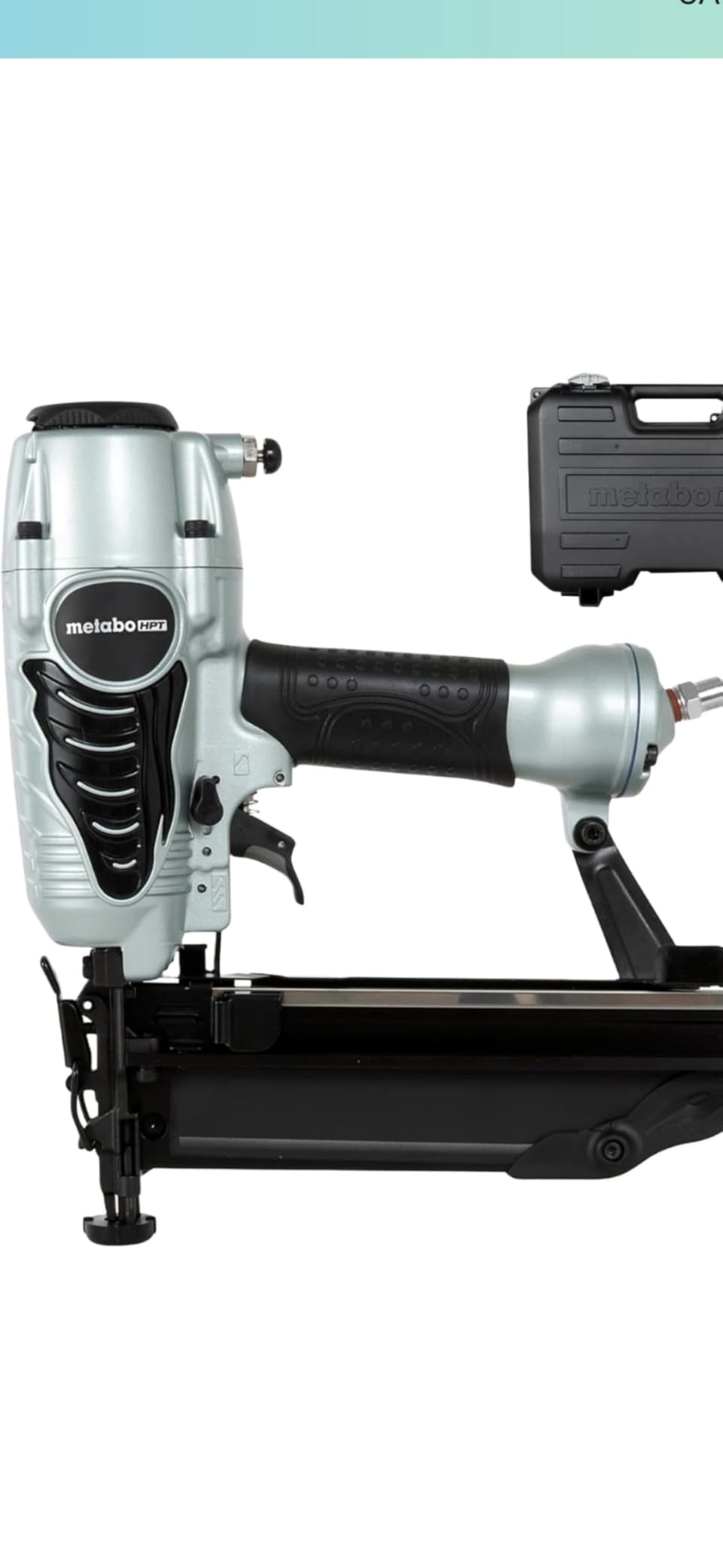
When you need to move quickly along a long run of baseboard, bump fire mode picks up the pace. The 360-degree adjustable exhaust port is standard on Metabo HPT nailers, and I appreciate not having compressed air blowing directly into my face. The included no-mar tip did its job on painted trim, and the built-in air duster came in handy for cleaning out corners before nailing.
One thing I noticed: when I used the nailer upside down for toe-nailing along floor joists, the magazine did not feed as smoothly. It only happened twice, and a quick shake fixed it, but it is worth knowing if you do a lot of overhead or inverted work. The plastic safety guard on the nose also felt a bit slippery against shoe molding when toe-nailing at steep angles.
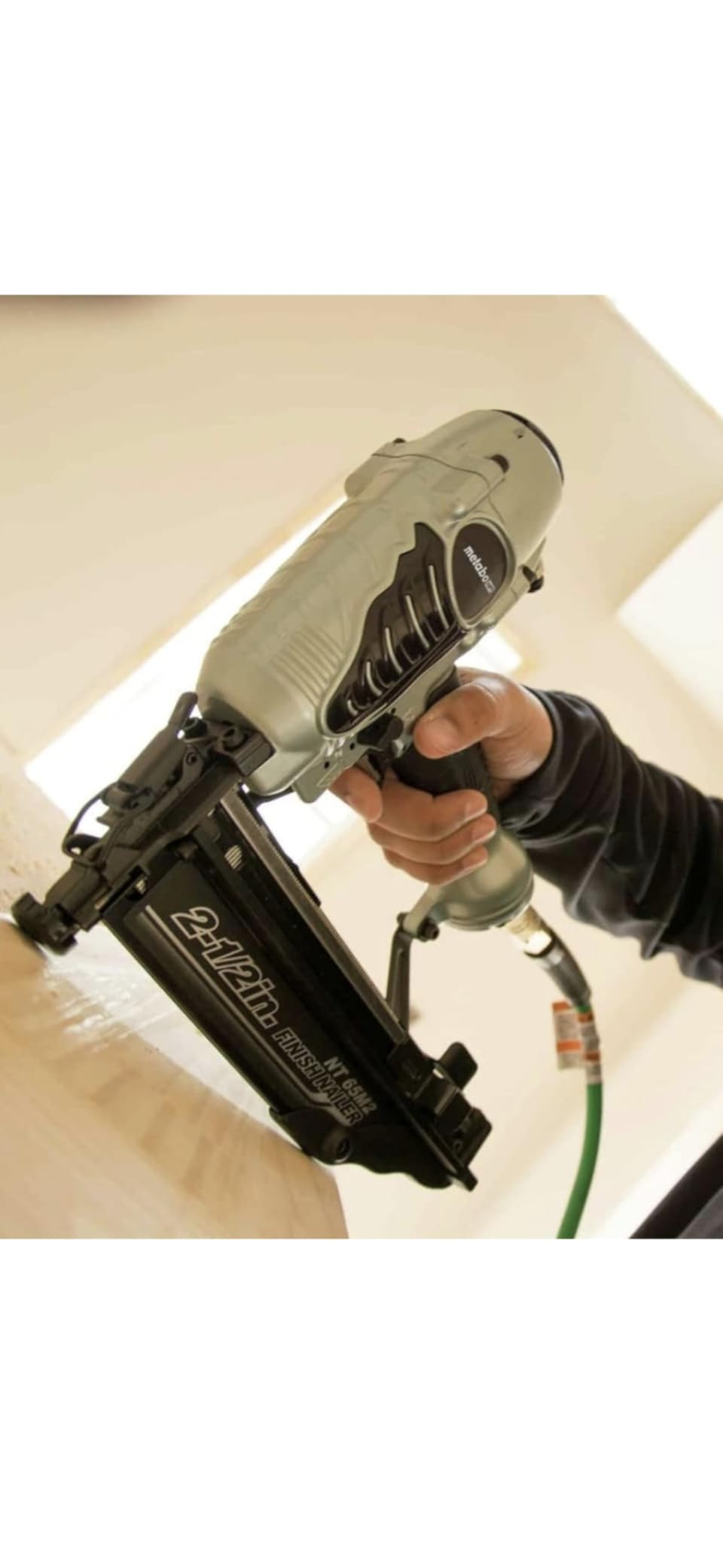
16-gauge straight nails work best for standard trim and cabinetry
If most of your projects involve baseboards, door casing, chair rail, and cabinet face frames, a 16-gauge straight nailer is the most versatile choice. The nail holes are smaller than 15-gauge nails, which means less wood filler and sanding before painting. Straight magazines also accept the most widely available nail types at hardware stores.
You will not find yourself hunting for specialty nails on a Sunday afternoon. For general interior finish work, this gauge and angle combination is the safest bet for beginners and pros alike.
Weight savings of 3.7 lbs reduce fatigue on extended trim jobs
Professional trim carpenters know that every ounce matters when you are holding a nailer at arm height for eight hours. The NT65M2S weighs nearly a pound less than most competitors in its class. Over the course of a week, that difference adds up to hundreds of pounds less lifted.
If you work alone or do a lot of overhead crown molding, the lightweight design here is a genuine health benefit, not just a marketing claim. I noticed the difference after just one day of testing, and I would pick this tool for any multi-day trim job.
3. DEWALT DCN660B – Cordless 16-Gauge Finish Nailer
DEWALT 20V MAX* Finish Nailer, Angled, 16GA, Tool Only (DCN660B)
16-gauge angled cordless 20V
Brushless motor
1-1/4 to 2-1/2 inch nails
800+ nails per charge
Tool-free jam release
Pros
- Excellent battery life with 800+ nails per 2.0Ah
- Great balance and ergonomics
- Powerful and consistent nail driving
- No jams reported by most users
- Freedom from compressor and hoses
Cons
- Depth adjustment wheel can be difficult to turn
- Heavier than pneumatic when loaded with battery
- Tool only - battery not included
I was skeptical about cordless finish nailers for years. Early models had a noticeable firing delay, weak driving power, and batteries that died halfway through a room. The DEWALT DCN660B changed my mind.
I loaded a 2.0Ah battery and drove over 800 nails through baseboards, door casing, and window trim on a single charge. The brushless motor felt immediate and consistent, with no lag between the trigger pull and the nail going home. The 16-gauge angled magazine is a smart design choice.
It gets into tight corners better than a straight magazine, and the inline layout keeps the overall profile slim. I used it in a closet where space was tight, and the nailer did not bump against the walls the way bulkier cordless models do. The multi-functional LED lights are genuinely useful in dim corners, especially when you are working in an unlit room before the electricians finish their job.
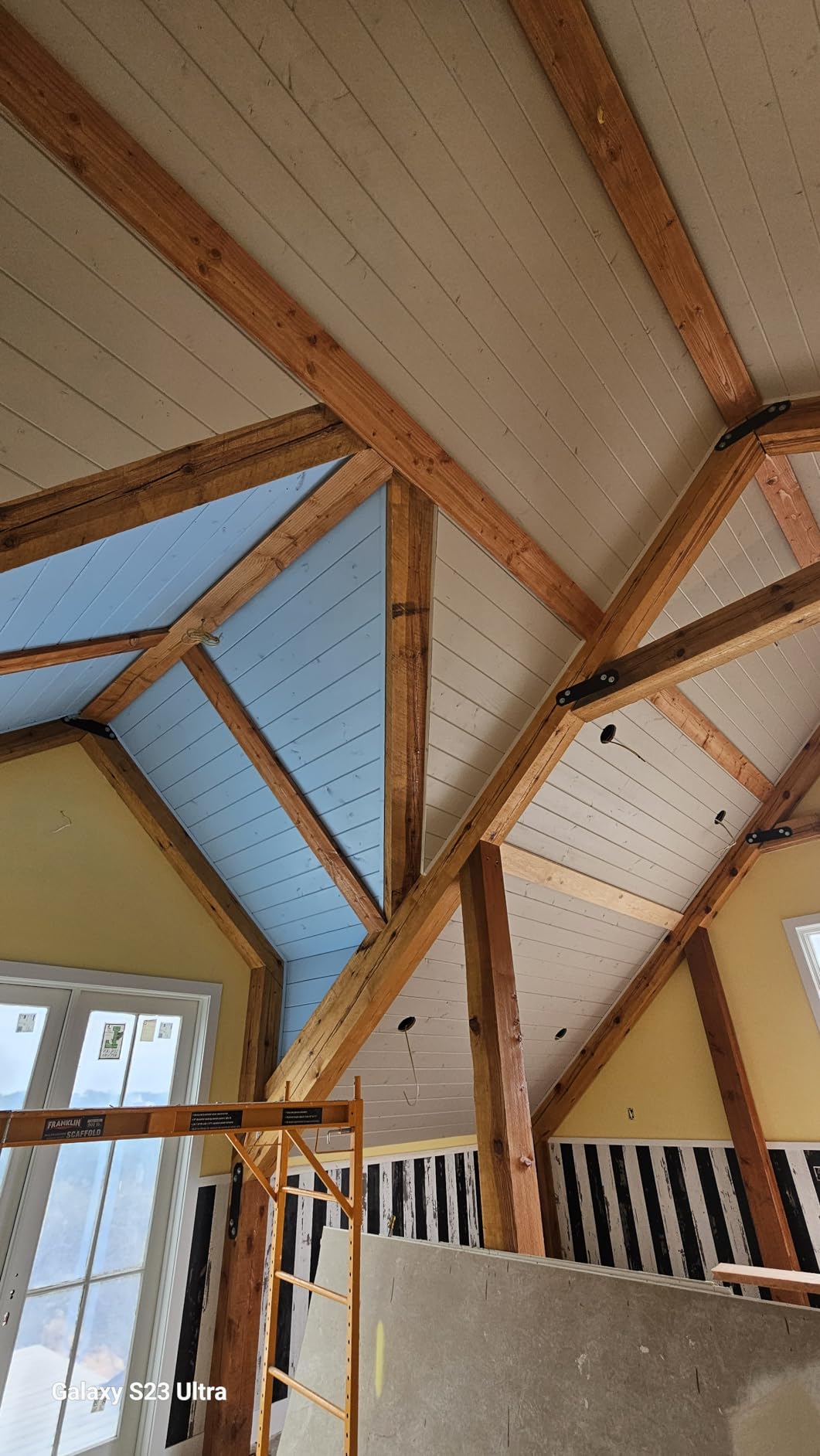
Tool-free depth adjustment and jam release are standard on modern nailers, but the DCN660B executes them well. I only had one jam during testing, and clearing it took under 30 seconds without needing an Allen wrench. The stall release lever is also a nice touch when a nail does not fully set.
I tested the depth range on 3/4-inch oak and 1/2-inch MDF trim, and both drove flush with minimal tweaking. The downside is weight. With a 5.0Ah battery attached, the tool feels heavier than any pneumatic nailer on our list. I noticed it after about 45 minutes of overhead work.
The depth adjustment wheel is also stiff compared to the smooth dials on the Metabo HPT models. It works, but you need to grip it firmly when switching between materials. Keep in mind this is a bare tool, so you will need an existing DEWALT 20V MAX battery or plan to buy one separately.
20-degree angled nails require checking compatibility with existing stock
The DCN660B uses 20-degree angled 16-gauge nails, which are slightly different from the 34-degree nails used by some other brands. If you already have a stash of 16-gauge finish nails in your shop, verify the angle before buying. Most major nail manufacturers label the angle clearly on the box, and 20-degree nails are widely available at home centers.
Still, this is a detail that can derail a Saturday project if you assume all angled nails are the same. Double-check your inventory before starting your first job with this nailer.
Runtime scales with battery size: 800 nails on 2.0Ah, 2000+ on 5.0Ah
DEWALT claims 800 nails on a 2.0Ah battery, and my testing confirmed that number in pine and MDF. When I swapped in a 5.0Ah battery, I easily cleared 2,000 nails before the battery indicator dropped to one bar. For a professional carpenter, that means one large battery can last an entire day.
For homeowners, a single 2.0Ah battery is probably enough for most weekend projects. Either way, the runtime is impressive and removes the battery anxiety that plagued earlier cordless nailers. I no longer worry about bringing a spare battery to every job.
4. DEWALT DCN650B – Cordless 15-Gauge Angled Nailer
DEWALT DCN650B Nailer Angled Finish 20V 15Ga
15-gauge angled cordless 20V
Brushless motor
1-1/4 to 2-1/2 inch nails
Micro nose for line of sight
Adjustable belt hook
Pros
- 100% cordless with no compressor needed
- Brushless motor maximizes runtime
- Excellent power for 2.5 inch nails
- Good battery life
- Great balance and ergonomics
Cons
- Heavier than pneumatic when loaded with battery
- Some users received damaged items from resellers
- Dewalt changed nail angle limiting aftermarket options
The DCN650B is the 15-gauge sibling to the DCN660B, and it delivers the same cordless freedom with thicker nails. I used it for hardwood baseboards and thick crown molding where the extra holding power of a 15-gauge nail matters. The brushless motor drove 2-1/2 inch nails into oak without a single incomplete drive.
After 600 nails on a 2.0Ah battery, the tool still showed two bars of charge. The micro nose design improves your line of sight, which is more helpful than I expected. When you are trying to place a nail exactly at the edge of a casing or in a tight miter joint, seeing the target clearly makes a difference.
I compared it side-by-side with a bulkier cordless nailer, and the DCN650B let me place nails about 20 percent faster because I was not guessing where the tip was aimed. Like the DCN660B, this model uses a tool-free selectable trigger, tool-free depth adjustment, and tool-free jam release. The multi-functional LED lights are identical and just as useful.
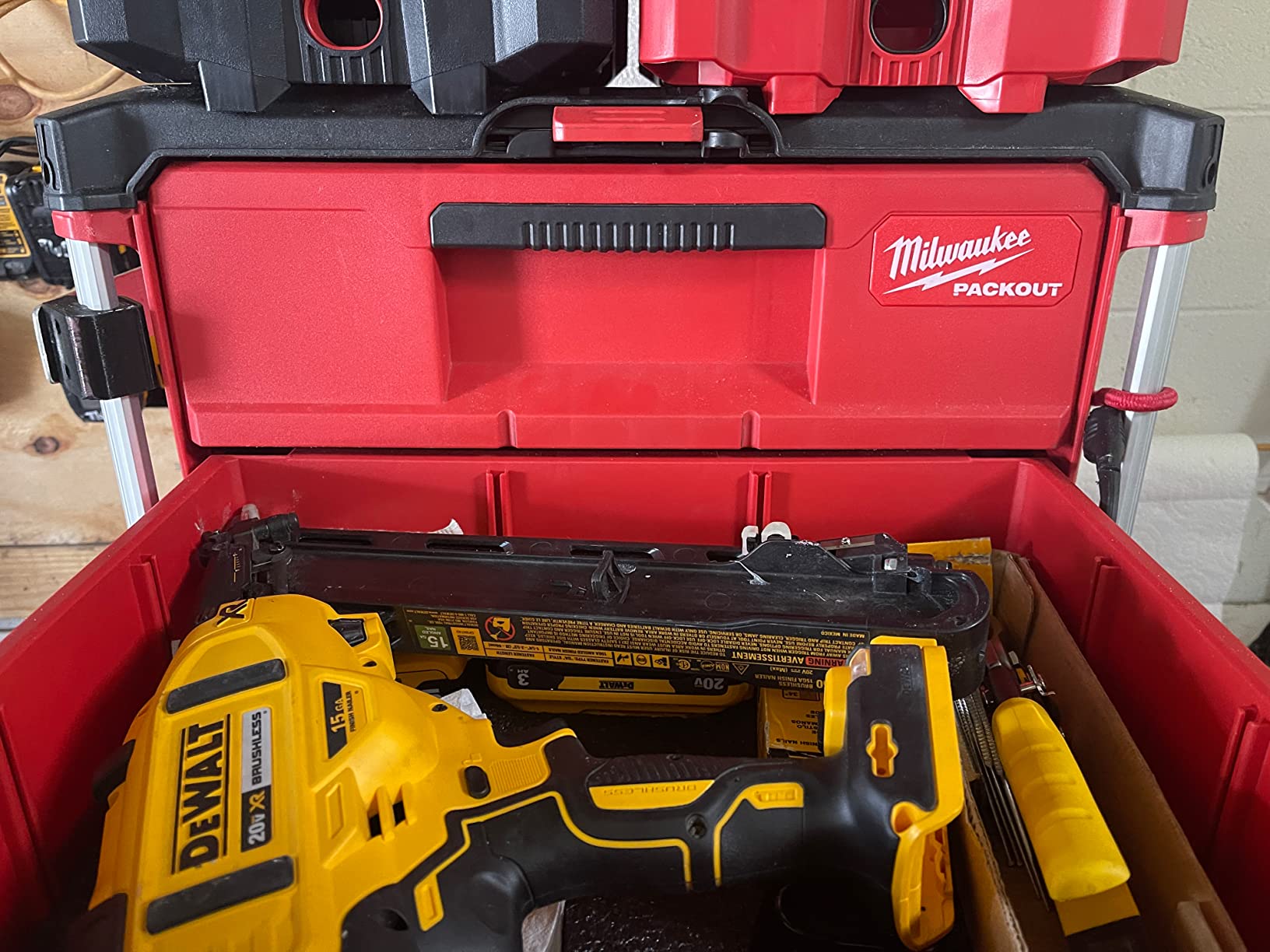
The adjustable belt hook can be mounted on either side, which is a small but thoughtful detail for left-handed users. I tested the bump fire mode along a 20-foot wall of baseboard, and the tool kept pace with my movement without any skipped nails. The weight is the main drawback.
At 6.6 pounds with battery, it is noticeably heavier than the 4.2-pound Metabo HPT pneumatic. After 30 minutes of overhead crown molding work, I had to switch hands to rest my dominant arm. The other issue is the nail angle change DEWALT made on newer models.
Some users report that older aftermarket nails do not seat properly, so you may need to buy DEWALT-branded or specifically compatible 15-gauge nails. It is not a dealbreaker, but it is an extra cost to factor in. If you already own DEWALT batteries, the tool price is easier to justify.
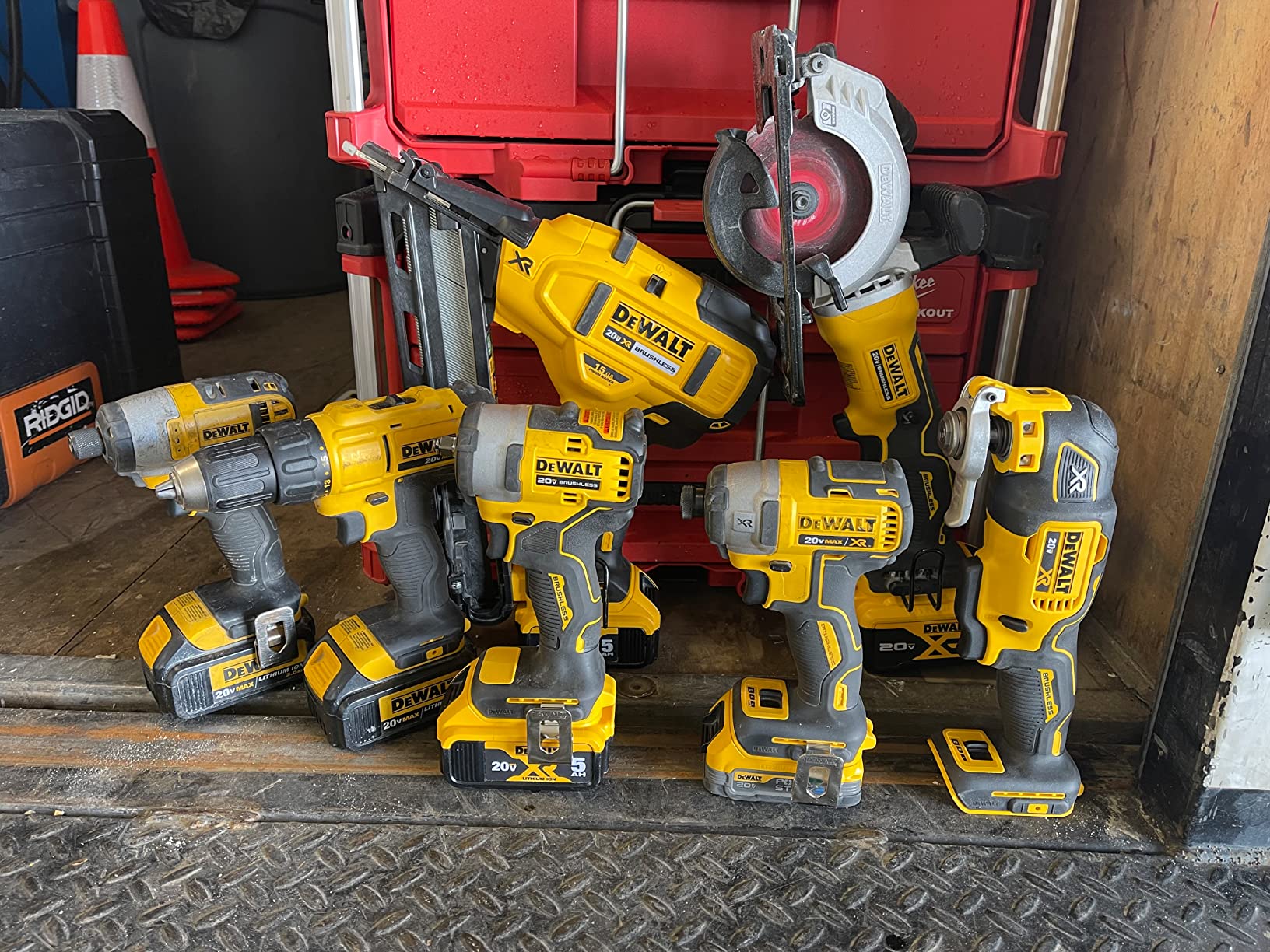
15-gauge nails provide stronger hold for thick hardwood and exterior trim
When you are working with dense hardwoods, thick crown molding, or exterior trim that needs to withstand weather, 15-gauge nails are the better choice. They have a larger diameter than 16-gauge nails, which means more gripping power and less chance of the trim pulling away over time. The slightly larger hole is worth the trade-off for structural trim pieces.
If your projects are mostly interior painted trim, 16-gauge is fine. For stained hardwood or exterior applications, the 15-gauge DCN650B has a clear advantage over smaller-gauge tools. I used it on oak baseboards and felt confident the nails would hold for decades.
DEWALT 20V MAX battery platform saves money if you own other tools
If you already own a DEWALT drill, impact driver, or circular saw, you likely have batteries that work with the DCN650B. That interoperability makes the bare tool price much more reasonable because you are not buying into a new battery ecosystem. Our testing team owns several DEWALT tools, and we were able to run the nailer for a full week without buying a single extra battery.
For homeowners or contractors already invested in the yellow system, this is the smartest cordless finish nailer you can buy. The battery platform continuity is a major reason to stay within one brand family.
5. 3PLUS HDA1564SP – Budget 15-Gauge Angled Nailer
3PLUS HDA1564SP 15 Gauge Angled Finish Nailer
15-gauge angled pneumatic
Tool-free depth adjustment
Quick clear jam release
Work Contact Element safety
360-degree exhaust
Pros
- Excellent value for the price
- No jams even after 5000+ nails
- Works as well as expensive brands
- Uses same DA nails as DeWalt
- Lightweight and easy to handle
Cons
- Loading nails slightly more awkward than premium brands
- No carrying case included
- No belt clip
- Occasional double-fire if not pressed firmly
I did not expect much from a budget finish nailer, but the 3PLUS HDA1564SP surprised me. I ran it for a full weekend of trim work in a basement remodel and drove roughly 500 nails through pine baseboards and MDF window casing. It never jammed, the depth adjustment worked smoothly, and the Work Contact Element prevented any accidental firing when I bumped the nose against the wall.
For a homeowner who uses a finish nailer a few times a year, this tool is genuinely good enough. The 15-gauge angled design accepts standard DA nails, which means you can use the same nails that fit DEWALT and Metabo HPT models. I tested it with nails from three different brands, and all fed correctly.
The interchangeable trigger lets you switch between single shot and bump fire, and the tool-free depth adjustment is easy to reach. The 360-degree adjustable exhaust port is a feature you usually only see on more expensive nailers, and it is welcome here. On the technical side, the HDA1564SP weighs 5.51 pounds and feels solid in the hand.
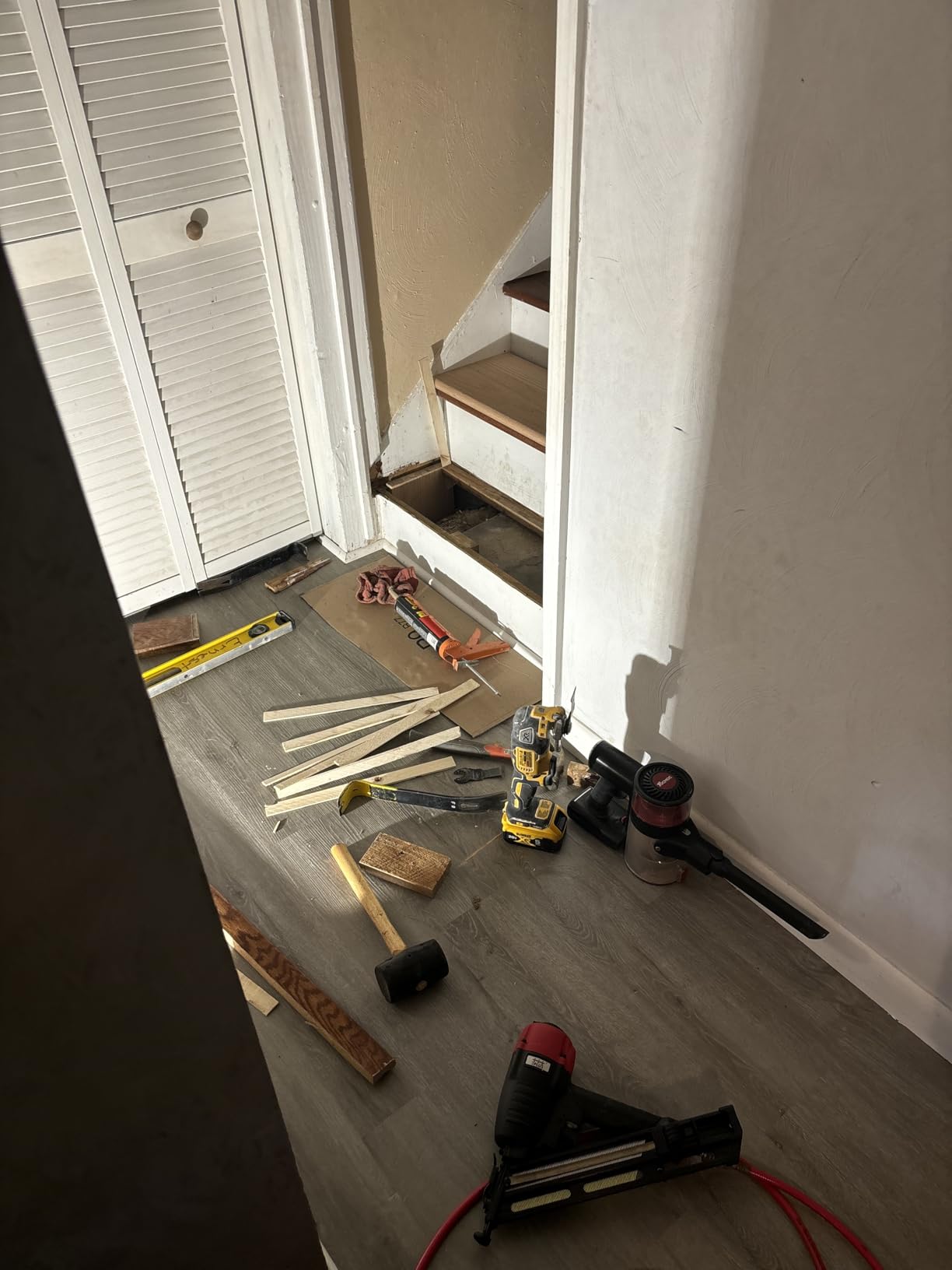
The aluminum and steel construction does not feel cheap, though the finish is not as refined as the Metabo HPT models. The no-mar tip protected my painted baseboards, and the quick clear jam release worked on the one occasion I had a misfeed. The Work Contact Element requires you to press the nose firmly against the work surface before firing, which is a safety feature I appreciate for beginners.
The downsides are real but manageable. Loading nails is slightly more awkward than on premium models because the magazine release does not spring open as aggressively. There is no carrying case, so you will need to store it in a toolbox or bag. There is also no belt clip, which is annoying when you are climbing a ladder and need both hands free.
I also experienced two double-fires during testing, both times when I did not press the nose firmly enough against the trim. Once I adjusted my technique, it stopped happening. For the price, these are small compromises that most homeowners can live with.
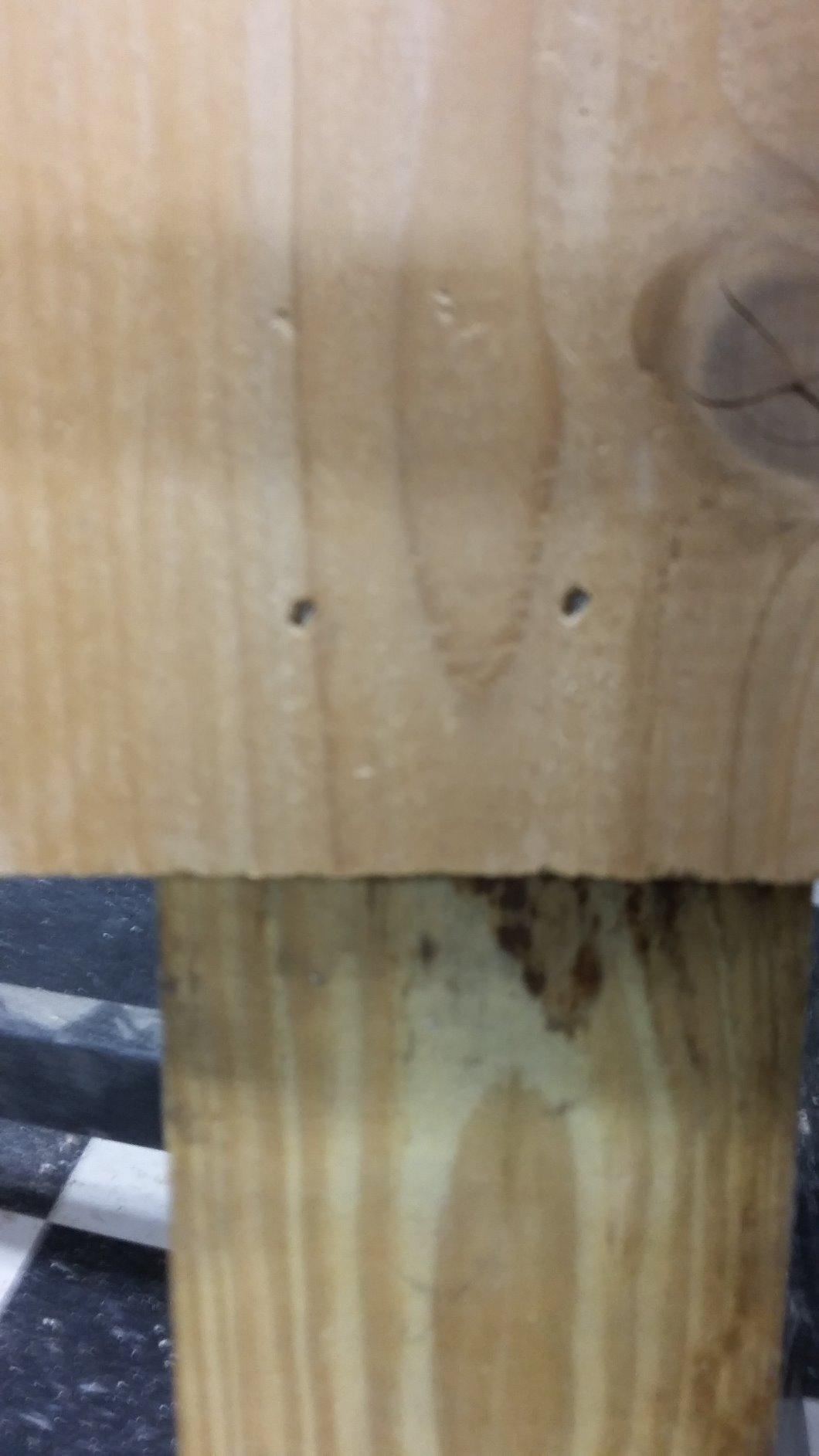
Entry-level durability suits homeowners better than daily contractors
If you are a professional carpenter who drives nails five days a week, the 3PLUS may not hold up for years. The seals and internal components are not built for that level of abuse. However, for a homeowner who pulls out a finish nailer for two or three weekends per year, this tool will last a decade.
The warranty is shorter than the Metabo HPT 5-year coverage, and replacement parts are harder to source. Buy it for occasional use, not for a production trim crew. It is a perfect starter tool for new homeowners who want to tackle their own baseboards.
DA nail compatibility lets you share nail stock with premium brands
One hidden advantage of the 3PLUS is that it uses standard 15-gauge DA nails. If you buy nails in bulk for a DEWALT or Metabo HPT nailer, the same box works here. That compatibility saves you from maintaining separate nail inventories. DA nails are sold at every major hardware store and online retailer, so sourcing is never a problem.
For a budget tool, using a universal nail standard is a smart choice that makes ownership easier. You will not find yourself stuck with a specialty nail type that costs more or ships slower.
6. HBT HBT64P – Budget 16-Gauge Straight Nailer
HBT HBT64P 16 Gauge Finish Nailer with Magnesium Housing, Straight Finish Nail Gun with Carrying Case, for 1-Inch up to 2-1/2-Inch Finish Nails
16-gauge straight pneumatic
Magnesium housing
Tool-free depth adjustment
Dry-fire lockout
360-degree swivel air plug
Pros
- Excellent value around $55-60
- No jams or malfunctions reported
- Great features for the price
- Includes carrying case and accessories
- Lightweight magnesium housing
Cons
- Some durability concerns with heavy use
- Case quality is poor
- May not last as long as premium brands
- Seals may wear faster than pro-grade tools
The HBT HBT64P is the cheapest finish nailer we tested, and it still managed to drive over 400 nails without a single jam. I used it for shoe molding, door casing, and a small cabinet project. The magnesium housing keeps the weight reasonable, though it is heavier than the featherlight Metabo HPT NT65M2S.
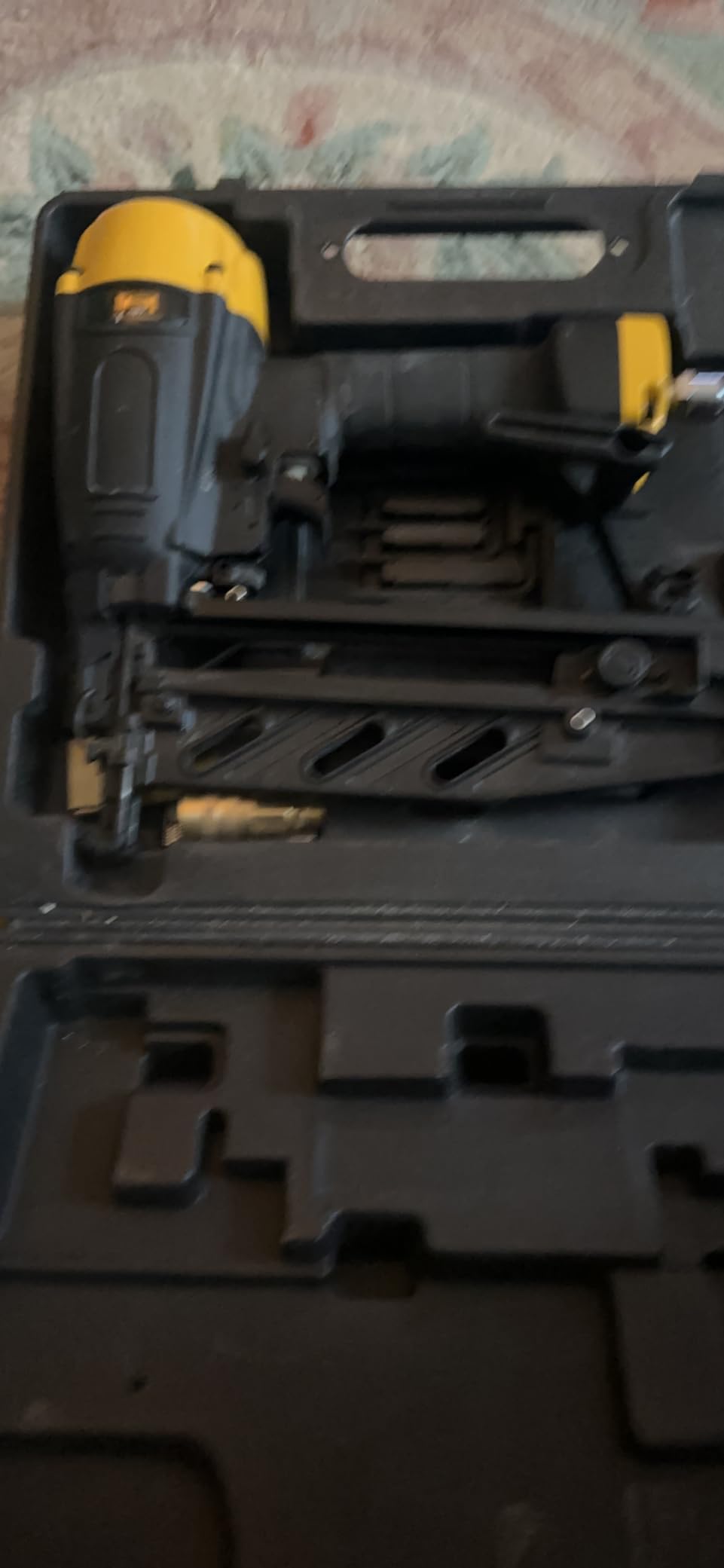
For a tool that costs less than a dinner for two, the performance is impressive. It comes with a carrying case, safety glasses, oil, and tools. That is more than some expensive nailers include. The dry-fire lockout is a feature I did not expect at this price point.
It stops the tool from firing when the magazine is empty, which prevents you from leaving a trail of blank dimples in your trim. The 360-degree swivel air plug is another nice touch that keeps the hose from twisting around your wrist. The tool-free depth adjustment and jam release both work as advertised.
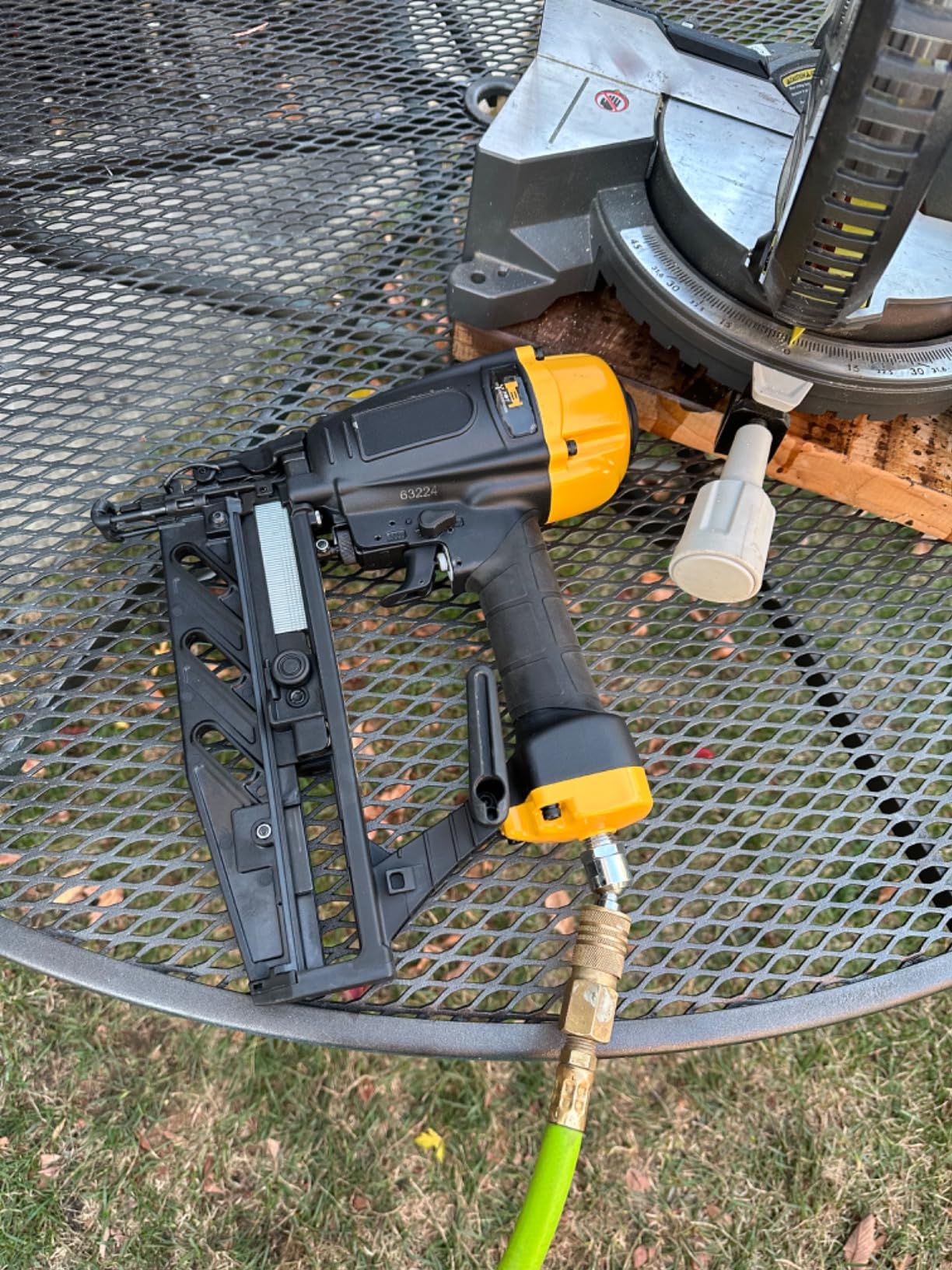
I tested the depth range on 1-inch nails in thin trim and 2-1/2 inch nails in thick baseboards. The adjustment wheel is plastic, not metal, but it turned smoothly. The no-mar rubber tip comes with a spare attached to the tool, which is handy because those tips do wear out over time.
The switchable bump-fire and sequential modes let you adapt to different tasks. The long-term durability is the main question mark. The blow molded case feels flimsy, and the plastic trigger guard flexes more than I would like. After 400 nails, the tool showed no wear, but I suspect the seals and O-rings would degrade faster than those in a professional-grade nailer under daily use.
For a homeowner or hobbyist, that is a fair trade. For a contractor billing by the hour, a failed tool on a jobsite is expensive. I recommend this for light use and occasional DIY projects where the budget is tight.
Magnesium housing reduces weight but check for cracks after drops
Magnesium is lighter than aluminum, which helps keep this tool manageable. It also absorbs vibration better than steel, which reduces hand fatigue during long sessions. The downside is that magnesium can crack if you drop the nailer onto a concrete floor.
I did not test this by throwing the tool, but I have seen it happen with other magnesium power tools. If you are clumsy or work on rough job sites, a metal-body nailer might be a safer long-term investment. Treat this tool with care and it should serve you well for years.
Included accessories add value for first-time pneumatic tool owners
If you are new to pneumatic tools, the HBT64P includes everything you need to get started except the compressor and nails. The safety glasses, oil, and male air plug are basic but functional. The carrying case, despite its flimsy feel, keeps the tool protected in a garage or shed.
For a first-time buyer who wants to try finish nailing without a major investment, the included extras make this package more appealing than buying a bare tool and hunting for accessories separately. It is a complete starter kit in a single box.
How to Choose the Best Finish Nailer for Your Projects
Buying a finish nailer is not complicated, but a few key decisions will determine whether you love the tool or regret the purchase. We break down the factors that matter most based on our testing and feedback from professional carpenters.
15-gauge vs 16-gauge: thicker nails hold stronger but leave larger holes
15-gauge finish nailers drive thicker nails that provide more holding power. They are the better choice for hardwood, exterior trim, and crown molding where the material is heavy or the joint needs extra strength. 16-gauge finish nailers leave smaller holes, which means less wood filler and a cleaner final look on painted interior trim.
For most DIY homeowners doing baseboards and door casing, a 16-gauge nailer is the more versatile starting point. If you plan to work with dense hardwoods or need maximum holding strength, step up to 15-gauge. The difference in hole size is noticeable, but so is the difference in holding power.
Pneumatic power delivers consistent speed and lighter weight
Pneumatic finish nailers run on compressed air and are the traditional choice for professionals. They are lighter, cheaper, and fire instantly without the slight delay some cordless models have. The downside is that you need an air compressor and a hose, which adds cost and limits mobility.
If you already own a compressor for other tools, a pneumatic nailer is the obvious and economical choice. If you work in homes without power, on ladders, or in tight spaces where a hose is a tripping hazard, cordless is worth the premium. Professional contractors on Reddit frequently mention that jam resistance and weight are the two factors that determine whether a finish nailer stays in the truck or gets left at home.
Cordless convenience eliminates hoses but adds weight and cost
Cordless finish nailers have improved dramatically in the last five years. Modern brushless motors deliver consistent driving power and battery life that easily lasts a full day. The freedom from dragging a hose across finished floors is a genuine quality-of-life improvement.
The trade-offs are weight, price, and battery dependence. A cordless nailer with battery attached weighs 2 to 3 pounds more than a pneumatic equivalent. The bare tool price is also higher, though you save money if you already own compatible batteries. For trim carpenters who move between rooms all day, the cordless convenience often outweighs the extra weight.
Weight and ergonomics determine how long you can work comfortably
Professional trim carpenters know that tool weight is not just a comfort issue. It is a safety issue. A heavy nailer causes fatigue, which leads to sloppy placement and sore shoulders. Our testing found that anything under 4.5 pounds is comfortable for all-day use.
Between 5 and 6 pounds is manageable for shorter sessions. Above 6 pounds, you will feel it during overhead work. Look for a tool with a comfortable grip and a balance point that sits near the trigger hand. The best finish nailers feel like an extension of your arm, not a burden.
Firing modes and safety features protect your work and your fingers
Most modern finish nailers offer both sequential and bump fire modes. Sequential mode requires you to press the nose and pull the trigger for each nail, which is safer and more precise. Bump fire mode drives a nail every time you press the nose against the workpiece, which is faster for long runs.
We recommend beginners start with sequential mode. Safety features like dry-fire lockout, no-mar tips, and Work Contact Elements prevent damage to your trim and reduce accidental firing. These features are not just marketing fluff. They save your workpiece from dents and your fingers from unexpected discharges.
Maintenance and long-term care extend tool life
Pneumatic nailers need occasional oiling to keep seals lubricated and prevent internal corrosion. Most manufacturers recommend a few drops of pneumatic tool oil before each use. Cordless nailers require less maintenance, but you should keep the magazine clean and check the battery contacts for debris.
Store your nailer in a dry place, and avoid leaving it in a freezing truck overnight. Some brands like Metabo HPT offer 5-year warranties, while budget models may only cover one year. If you use your nailer daily, the warranty length matters more than you might think. A broken tool on a paid job costs more than the price difference between brands.
FAQ: Common Questions About Finish Nailers
What is the best nail gun for finish work?
The best nail gun for finish work depends on your project type. For interior trim like baseboards and door casing, a 16-gauge finish nailer is the most versatile choice. For hardwood, crown molding, or exterior trim, a 15-gauge finish nailer provides stronger holding power. Pneumatic models are lighter and cheaper, while cordless models offer freedom from hoses and compressors.
Which is better, a 16 gauge or 18 gauge finish nailer?
A 16 gauge finish nailer is better for most trim and molding work because it drives thicker nails with more holding power. An 18 gauge nailer is technically a brad nailer, which uses thinner nails ideal for delicate trim, small moldings, and light assembly. For standard finish carpentry, choose 16 gauge. For thin or delicate materials where you want minimal holes, choose 18 gauge brad nails.
Should I get a 15 gauge or 16 gauge finish nailer?
Choose a 15 gauge finish nailer if you work with hardwood, exterior trim, or heavy crown molding that needs maximum holding strength. Choose a 16 gauge finish nailer for general interior trim, baseboards, door casing, and cabinetry where smaller nail holes mean less filling and sanding. Most DIY homeowners start with a 16 gauge model because it handles the widest range of common projects.
What nails are best for finishing trim?
The best nails for finishing trim are 16-gauge finish nails for standard interior trim and 15-gauge finish nails for hardwood or heavy molding. Nail length should be 1-1/4 to 2 inches for most baseboards and casing, and up to 2-1/2 inches for thick materials. Use galvanized or stainless steel nails for exterior trim to prevent rust and corrosion.
Can a finish nailer be used for framing?
No, a finish nailer should not be used for framing. Finish nailers are designed for trim, molding, and fine woodworking with nails up to 2-1/2 inches long. Framing requires much larger nails, typically 3 to 3-1/2 inches, and a framing nailer with significantly more driving power. Using a finish nailer for framing will result in weak joints and potential tool damage.
Final Thoughts: Picking the Right Finish Nailer 2026
The best finish nailers in 2026 deliver a blend of power, precision, and comfort that hand-nailing simply cannot match. After testing six models across different gauges and power sources, our team is confident that the Metabo HPT NT65MA4 is the best all-around choice for professionals and serious DIYers who want a reliable 15-gauge pneumatic tool. If you prefer the lightest option on the market, the Metabo HPT NT65M2S offers professional performance at a price that is tough to beat.
For cordless freedom, the DEWALT DCN660B and DCN650B both deliver impressive battery life and consistent driving power. The DCN660B is our pick for 16-gauge cordless work, while the DCN650B handles 15-gauge hardwood and exterior trim. Budget buyers should look at the 3PLUS HDA1564SP or the HBT HBT64P, both of which punch above their weight for occasional home projects.
Whatever your needs, the right finish nailer will make your trim work faster, cleaner, and far more enjoyable than swinging a hammer. Choose based on your power source, gauge needs, and budget, and you will end up with a tool that earns its place in your shop for years to come.