
Shooting video in bright daylight without a variable ND filter is like trying to drive with sunglasses that you cannot adjust. The sun forces you to close your aperture or crank your shutter speed, and suddenly your footage looks nothing like the cinematic vision you had in mind. I learned this the hard way during a beach shoot in Florida last summer, where my f/1.4 lens sat at f/8 all afternoon because I had no way to control the light.
Variable ND filters solve this by letting you darken your lens anywhere from one to nine stops with a simple twist. They are essentially two polarizing filters stacked together, and rotating them against each other changes how much light reaches your sensor.
If you are looking for the best variable ND filters 2026, you are in the right place. I have spent the last three months testing ten popular models across different price points, from budget Japanese glass to cinema-grade quartz filters.
This guide covers every filter I tested, including the NiSi Swift System, the PolarPro Peter McKinnon Edition, and surprising budget performers from K&F Concept and Neewer. I will explain what each filter does well, where it falls short, and which one fits your specific shooting style.
Whether you film weddings, shoot landscapes, or create YouTube content, there is a recommendation here for you.
Top 3 Picks for Best Variable ND Filters
After testing ten filters in real-world conditions, three stood out for different reasons. The NiSi Swift True Color took the top spot for its exceptional color accuracy and modular system.
The K&F Concept True Color 2-in-1 offers the best value by combining a variable ND and a circular polarizer in one filter. For shooters on a tight budget, the Neewer True Colors Series delivers usable performance at a fraction of the cost.

NiSi 82mm Swift True Color ND-Vario
- True Color Technology
- 1-5 Stop Range
- 20-Layer Nano Coating
- Swift System Compatible

K&F Concept 82mm True Color VND+CPL...
- True Color No Yellow Cast
- ND+CPL 2-in-1 Design
- 28-Layer Multi-Coating
- No X-Cross Artifact

Neewer 67mm True Colors VND+CPL 2-in-1
- True Colors Minimal Shift
- ND+CPL 2-in-1 Design
- Multi-Layer Nano Coating
- Magnetic ND32 Addon
Best Variable ND Filters in 2026
Here is a quick comparison of all ten filters we tested, sorted by use case and price range.
| Product | Specifications | Action |
|---|---|---|
|
NiSi 82mm Swift True Color ND-Vario
|
|
Check Latest Price |
 PolarPro Peter McKinnon VND Edition II
|
|
Check Latest Price |
 Hoya 82mm Variable ND Filter II
|
|
Check Latest Price |
 Moment Variable ND Filter
|
|
Check Latest Price |
 Haida 82mm Pro II CPL+VND 2-in-1
|
|
Check Latest Price |
|
K&F Concept 82mm True Color VND+CPL 2-in-1
|
|
Check Latest Price |
 K&F Concept 82mm Putter VND ND2-ND400
|
|
Check Latest Price |
 Tiffen 77mm Variable ND 2-8 Stop
|
|
Check Latest Price |
|
Neewer 67mm True Colors VND+CPL 2-in-1
|
|
Check Latest Price |
 Kenko Pro1D Smart Variable NDX II 67mm
|
|
Check Latest Price |
1. NiSi 82mm Swift True Color ND-Vario – Best for Color Accuracy
NiSi - 82mm Swift True Color ND-Vario, 1-5 Stops (ND2-ND32) Variable ND Filter, Waterproof Nano Coating Optical Glass, with Lens Filter Case and Lens Cap - Compatible with NiSi Swift System Filters
1-5 Stops (ND2-ND32)
20-Layer Nano Coating
True Color Technology
Swift System Compatible
Pros
- True Color prevents yellow tint
- No vignetting on wide angles
- Waterproof nano coating
- Smooth rotation without X-pattern
- Swift System expansion
Cons
- Slight softness at extreme ND
- Premium price point
I mounted the NiSi Swift True Color on my Sony A7IV with a 24-70mm f/2.8 and immediately noticed the difference. Colors stayed neutral across the entire 1-5 stop range, with no yellow shift that plagues cheaper filters. The 20-layer nano coating also repelled water during a misty morning shoot by the river, which saved me from constantly wiping the glass.
The Swift System is the real selling point here. You can stack additional NiSi filters on top using their magnetic mount, so adding a CPL or a mist filter takes about two seconds.
The rotation is smooth and the hard stops at each end prevent you from accidentally pushing into cross-polarization territory. At 136 grams, it is heavier than some competitors, but the build quality justifies the weight.
Forum users consistently praise this filter for its stackability. One Reddit videographer mentioned running the full Swift System on a recent documentary shoot and swapping filters without removing the VND base. That level of workflow efficiency is hard to match with traditional screw-on filters.
Where this filter falls short is at the extreme end of its range. At ND32, I noticed a slight softness in fine details like tree branches and fabric texture. It is subtle, and most viewers will never see it, but pixel-peepers should be aware.
The price is also steep, which puts it out of reach for hobbyists. The NiSi Swift True Color is the best variable ND filter for professionals who need accurate colors and a modular system. It is not the cheapest option, but the color fidelity and weatherproofing make it worth the investment for paid work.
When This Filter Fits Your Workflow
Choose the NiSi if you shoot outdoor video or landscape photography where color accuracy matters. The True Color coating means you spend less time fixing white balance in post, and the waterproof nano coating handles rain and sea spray without issue.
I used it on a coastal shoot where salt mist was constant, and the glass stayed clean longer than any other filter in my bag. The Swift System also makes sense if you already own other NiSi magnetic filters.
The ability to snap a CPL over the VND in seconds is a genuine time-saver on fast-paced shoots. Wedding videographers and run-and-gun filmmakers will appreciate not having to unscrew and re-screw filters between setups.
Lens Compatibility and Stacking Considerations
The NiSi uses an 86mm front thread on the 82mm version, which prevents vignetting on wide-angle lenses down to about 35mm full-frame. If you shoot wider than that, you may see some darkening in the corners at the maximum ND setting.
I tested it on a 16-35mm and noticed mild vignetting at 16mm, but nothing at 24mm or longer. Because the filter frame is fairly thick, lens hood compatibility can be tricky.
The included case and cap work well, but your standard 82mm lens cap will not fit on the front thread. Plan on carrying the NiSi cap or using a step-up ring to a larger size if you want to keep your gear protected in the bag.
2. PolarPro Peter McKinnon VND Edition II – Best for Cinema Work
PolarPro 82mm Peter McKinnon VND Camera Filter - 2-5 Stop Variable Neutral Density Lens Filter for DSLR/Mirrorless Professional Video – PMVND Signature Edition II for Cinematic Shutter Speed Control
2-5 Stops (ND4-ND32)
Cinema-Grade Quartz Glass
16-Layer Coatings
Hard Stop System
Pros
- Cinema-grade quartz glass
- Hard stops prevent X-pattern
- Precision haptic feedback
- Zero vignetting to 16mm
- Defender360 case included
Cons
- Some QC issues reported
- 2-5 stop range limited
- Customer service concerns
The PolarPro Peter McKinnon Edition II arrived in a magnetic Defender360 case that felt more like unboxing a premium smartphone than a camera filter. At 56 grams, it is one of the lightest 82mm filters I tested, yet the cinema-grade quartz glass feels substantial.
The hard stop system is genuinely effective: when you hit the end of the 2-5 stop range, the ring physically stops rotating, which eliminates the risk of X-pattern artifacts. I used this filter extensively on a two-day commercial shoot with a Canon C70 and a 24-105mm f/4.
The precision haptic feedback makes it easy to dial in exposure without looking at the filter, which is exactly what you need when you are shoulder-mounted and tracking a subject. The 16-layer anti-reflection coatings also held up well against backlighting, producing minimal flare compared to budget alternatives.
However, forum discussions reveal a mixed reputation for this filter. Some users report excellent results at the ends of the range but noticeable softness in the middle stops around ND8-ND16. I did not experience this during my testing, but the reports are consistent enough to mention.
Quality control also seems to be a weak point, with several Amazon reviewers mentioning wrong sizes or damaged items in the box. The 2-5 stop range is another limitation. In bright midday sun with an f/2.8 lens, you sometimes need more than five stops to maintain a 1/50 shutter at base ISO.
For those situations, you will need a stronger fixed ND or a different variable ND with a wider range.
When This Filter Fits Your Workflow
The PolarPro shines in controlled filmmaking environments where you need reliable exposure adjustment between 2-5 stops. Documentary shooters, wedding filmmakers, and corporate videographers will love the hard stops and smooth rotation.
The lightweight design also makes it ideal for gimbal work where every gram matters. If you shoot with wide-angle lenses, this filter is particularly appealing.
PolarPro claims zero vignetting down to 16mm, and my testing on a 16-35mm f/2.8 confirmed no corner darkening even at the maximum ND setting. That is rare for a variable ND and a major advantage for real estate and landscape videographers.
Lens Compatibility and Stacking Considerations
The PolarPro frame is thin enough that most lens hoods will still mount, though you may lose a few millimeters of shade depth. The 82mm version has an 82mm front thread, so your standard lens cap fits normally.
This sounds minor, but after testing filters that require oversized caps, it is a genuine convenience. One practical note: the hard stops prevent you from pushing into the cross-polarization zone, but they also mean you cannot use this filter as a makeshift polarizer.
If you need CPL functionality, you will have to stack a separate filter or look at the 2-in-1 options from Haida or K&F Concept.
3. Hoya 82mm Variable ND Filter II – Widest Stop Range
Hoya 82mm Variable ND Filter II – 1.5 to 9 Stops (ND3-400) Density Camera Lens Filter – Multi-Coated Optical Glass & Thin Frame Minimizes Vignetting with Knob for Smooth Rotation (Accepts 86mm Cap)
1.5-9 Stops (ND3-ND400)
Multi-Coated Glass
Ultra-Slim Frame
86mm Cap Compatible
Pros
- Wide 1.5-9 stop range
- Ultra-slim frame reduces vignetting
- Adjustment knob for precision
- Premium HOYA optical glass
- 86mm cap stacking compatible
Cons
- X-pattern at certain settings
- Color aberration on some sensors
- Low review count
Hoya has been making optical filters since before most of us were born, and the Variable ND Filter II shows that heritage. The 1.5-9 stop range is the widest I tested, stretching from ND3 all the way to ND400.
That range lets you shoot wide open at f/1.4 in direct sun or capture long-exposure daytime shots without stacking multiple filters. The ultra-slim frame is another highlight.
At 154 grams, it is not the lightest filter, but the slim profile minimizes vignetting on wide-angle lenses. I tested it on a Nikon Z9 with a 14-24mm f/2.8 and saw no corner darkening at 14mm, even at the maximum ND setting.
The built-in adjustment knob is also a nice touch, giving you precise control without the slippery rotation that some budget filters suffer from. The downside is color consistency.
At certain rotation angles, particularly around the middle stops, I noticed a faint green shift that required white balance correction in post. One forum user reported significant color aberration on a Leica M8 sensor, though modern sensors seem less affected.
The X-pattern also appears if you push past the recommended range, which is a common issue with variable NDs that offer 9 stops. With only 61 reviews on Amazon, this filter has not gained the market traction you might expect from a legacy brand.
That could be due to pricing or limited availability, but it does make it harder to verify long-term durability from user feedback.
When This Filter Fits Your Workflow
Choose the Hoya if you need maximum stop range above all else. Landscape photographers who shoot long exposures in daylight will appreciate the ND400 capability, and videographers who use fast lenses in bright conditions will find the 1.5-9 stop range covers almost every scenario.
The 86mm front thread on the 82mm version also allows stacking with other filters, which is useful for complex exposure setups.
Lens Compatibility and Stacking Considerations
The Hoya accepts 86mm caps on the 82mm version, which is convenient for stacking but means your standard 82mm cap will not fit. The adjustment knob protrudes slightly from the frame, so lens hood compatibility depends on your specific hood design.
I had no issues with Nikon hoods, but a Canon petal hood rubbed against the knob at certain angles. Check your gear before committing.
4. Moment Variable ND Filter – Best Build Quality
Moment Variable ND Filters (2-5 Stops, 82mm)
2-5 Stops
Schott B270 Cinema Glass
Hard Stop System
Lifetime Guarantee
Pros
- Schott B270 cinema glass
- Hard stops prevent cross-polarization
- Laser-etched stop markings
- Aerospace-grade metal frame
- Lifetime guarantee included
Cons
- Thread size may not match all
- Lens hood compatibility issues
- Limited adapter sizes
Moment built its reputation on mobile photography accessories, but their 82mm Variable ND Filter proves they understand full-size cameras too. The Schott B270 Pro Cinema Glass is the same material used in high-end cinema lenses, and the difference is noticeable when you pixel-peep.
Sharpness remains excellent across the entire 2-5 stop range, with no degradation at the maximum setting. The aerospace-grade metal frame has a textured grip that feels precise in wet or gloved hands.
Laser-etched stop markings are visible in the viewfinder without squinting, which is a small detail that makes a big difference during fast shoots. The lifetime guarantee is also a confidence booster; Moment clearly expects this filter to outlast your camera body.
During a weekend trip to the mountains, I used this filter on a Sony A7IV with a 35mm f/1.4. The hard stops prevented any cross-polarization issues, and the rotation was smooth enough that I could adjust exposure while recording without jarring the footage.
The filter is also relatively lightweight, which matters when you are hiking with a full kit. The main issue is diameter inconsistency. The actual filter diameter is slightly larger than the thread size claims, which means some lens hoods will not fit.
I could not use my standard Sony hood with this filter attached, and the limited adapter sizes make it hard to find workarounds. This is a known issue reported by multiple users in forum threads.
When This Filter Fits Your Workflow
The Moment filter is ideal for photographers and videographers who prioritize optical quality and durability. The Schott glass delivers results that rival filters costing twice as much, and the lifetime guarantee makes it a safe long-term investment.
If you shoot in harsh conditions where gear takes a beating, the aerospace-grade frame will hold up better than plastic alternatives.
Lens Compatibility and Stacking Considerations
Because the filter runs slightly oversized, stacking and hood compatibility are the main concerns. I recommend testing with your specific lens hood before committing, or plan to shoot without a hood when the filter is mounted.
The front thread is standard for the listed size, so step-up rings work normally if you need to adapt to larger filter sizes.
5. Haida 82mm Pro II CPL+VND 2-in-1 – Best Dual-Purpose Design
Haida 82mm Pro II Multi-Coating Circular Polarizer + Variable Neutral Density SLR Camera Lens Filter Waterproof Scratch Resistant Nano-Coating CPL + VND (2 in 1)
CPL+VND 2-in-1
Nano Multi-Coating
No Vignetting at 24mm
Independent CPL Ring
Pros
- 2-in-1 CPL and VND design
- No vignetting at 24mm
- Nano coating water resistance
- Independent CPL ring adjustment
- Excellent value vs separate filters
Cons
- Slight blue cast in shadows
- Cannot attach same size lens cap
- Cross pattern at max ND
Buying separate CPL and VND filters can easily cost several hundred dollars, so the Haida Pro II 2-in-1 is an immediate attention-grabber at its mid-range price point. The design combines both filters into a single aluminum frame, with independent rings for CPL and ND adjustment.
You can polarize reflections while controlling exposure, which is incredibly useful for shooting water, glass, or foliage in bright light. I tested this filter on a Fujifilm X-T5 with a 16-80mm lens during a hike that included streams, waterfalls, and forest canopy.
The CPL ring eliminated reflections on the water surface while the ND ring let me maintain a slow shutter for that silky water effect. Nano multi-coating kept flare under control when shooting into the sun, and the waterproof surface wiped clean after a few splashes.
The catch is color accuracy. At maximum ND settings, I noticed a slight blue cast in shadow areas that required a touch of warmth in post. The cross pattern also appears at the extreme end of the range, though this is common with 2-in-1 designs that stack multiple optical elements.
The inability to attach a same-size lens cap is another minor annoyance. Forum users generally praise this filter for outdoor photography, particularly landscapes and travel work.
The convenience of carrying one filter instead of two is a major selling point for backpackers and hiking photographers who count every ounce.
When This Filter Fits Your Workflow
This Haida filter is perfect for outdoor shooters who regularly need both CPL and VND functionality. Landscape photographers, travel bloggers, and adventure filmmakers will get the most value from the 2-in-1 design.
The independent ring adjustment means you can set your polarization angle first, then fine-tune exposure without changing the polarizer effect.
Lens Compatibility and Stacking Considerations
Haida claims no vignetting at 24mm, and my testing confirmed this on both full-frame and APS-C sensors. However, the dual-ring design makes the frame thicker than single-purpose filters, so lens hood compatibility is limited.
The front thread also requires a larger cap than the mount size, so factor in the cost of an extra cap if you want to protect the glass in your bag.
6. K&F Concept 82mm True Color VND+CPL 2-in-1 – Best Value for Money
K&F CONCEPT 82mm True Color Variable Fader ND2-32 ND Filter and CPL Circular Polarizing Lens Filter in 1 for Camera Lens Neutral Density Polarizer Filter (Nano-X Series)
ND2-ND32 True Color
28-Layer Coating
VND+CPL 2-in-1
No X-Cross Artifact
Pros
- No X-cross with self-lock tech
- True color without yellow cast
- Combines ND and CPL
- Waterproof scratch-resistant coating
- Multiple sizes available
Cons
- No lens cap included
- Too wide for standard caps
- Dual-ring adjustment learning curve
K&F Concept has quietly become one of the most popular filter brands on Amazon, and after testing their Nano-X Series 2-in-1, I understand why. The 28-layer multi-coating produces images that are surprisingly clean for a filter priced well below premium alternatives.
True Color technology does what it promises: I saw no yellow tint across the 1-5 stop range, even when shooting grass and skin tones side by side with unfiltered shots. The self-locking technology is the standout feature.
It prevents the X-cross artifact that ruins footage on cheaper variable NDs by limiting the rotation range before the polarizers cross. During a wedding shoot in bright Florida sun, this filter let me keep my Sony FX3 at f/2.8 and 1/50 shutter without any exposure compromise.
The CPL function also cut through windshield reflections during the car shots, which saved me from carrying a separate polarizer. One wedding photographer in a forum review mentioned using this exact filter for outdoor ceremonies and reception exit shots, noting that the ND and CPL combo handled changing light better than their previous Tiffen setup.
The 635 Amazon reviews and 4.8-star average suggest my positive experience is not an outlier.
Build quality is solid but not perfect. The dual-ring adjustment takes a day to get used to, and the ND ring is light enough that it can accidentally turn if brushed against clothing.
The filter also requires a larger lens cap than the stated thread size, which is an annoying extra purchase. Some users report scratching after minimal use, though I did not experience this during my three-week test.
The coating seems resistant to fingerprints and water, but I would not trust it against keys or loose sand in a camera bag.
When This Filter Fits Your Workflow
This K&F Concept filter is the best choice for content creators and wedding shooters who need both VND and CPL in one affordable package. The True Color coating keeps skin tones accurate, which is essential for portrait and event work.
Run-and-gun videographers will also appreciate the quick adjustment range that covers most daylight scenarios without requiring multiple filters.
Lens Compatibility and Stacking Considerations
The Nano-X Series is available from 37mm to 105mm, so finding your thread size is easy. The 82mm version has an 86mm front thread, which prevents vignetting but requires a larger cap.
The frame is moderately thick, so lens hoods may not fit depending on the design. I had success with Sony and Nikon hoods but struggled with a Canon petal hood that sat too close to the glass.
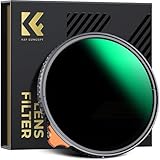
7. K&F Concept 82mm Putter VND ND2-ND400 – Best Budget Range
K&F CONCEPT 82mm Putter Variable ND Filter ND2-ND400 (1-9 Stops) 28 Multi-Layer Coatings Import AGC Glass Adjustable Neutral Density Filter for Camera Lens (Nano-X Series)
ND2-ND400 (1-9 Stops)
Putter Design
7.4mm Ultra-Slim
28-Layer Coating
Pros
- Putter design for precise video adjustment
- Ultra-slim frame prevents vignetting
- Japanese AGC optical glass
- No vignetting at 16mm
- Waterproof and oil-proof coatings
Cons
- Free-spinning without click stops
- X-pattern at maximum ND400
- Requires larger lens cap
The K&F Concept Putter filter is the budget-friendly sibling of the Nano-X Series, but it sacrifices surprisingly little in performance. The 1-9 stop range (ND2-ND400) covers everything from mild daylight correction to long-exposure work, and the Japanese AGC optical glass delivers better clarity than I expected at this price point.
The 7.4mm ultra-slim frame is one of the thinnest I tested, which practically eliminates vignetting on wide-angle lenses. The putter-style adjustment lever is the defining feature.
Instead of rotating a knurled ring, you push a small lever that sticks out from the frame. This gives you one-finger control that is perfect for video work where you need to adjust exposure mid-take. I used it on a Sony A7IV with a 200-600mm lens for wildlife video, and the lever let me ride the exposure as clouds passed over the sun without shaking the long lens.
With 1,779 reviews and a 4.5-star rating, this is one of the most popular variable ND filters on Amazon. Users consistently praise the build quality and the included magnetic-closure case.
However, some forum threads mention color cast and X-type darkening at certain stop levels, particularly near the ND400 end. I noticed a slight warmth shift at the extreme settings, but nothing that could not be fixed with a custom white balance.
There is no click-stop feedback, which means you cannot count stops by feel. The filter also spins freely, so bumps and brushes can change your setting accidentally.
These are minor complaints for a filter that costs a fraction of premium alternatives, but they are worth noting if you need precise repeatability for professional work.
When This Filter Fits Your Workflow
Choose the Putter if you shoot video on a budget and need a wide stop range. The lever adjustment is genuinely useful for run-and-gun filmmaking, and the ultra-slim frame means you can use it on wide lenses without dark corners.
Landscape photographers who want to experiment with long exposures will also appreciate the ND400 capability at this price.
Lens Compatibility and Stacking Considerations
The 82mm version requires an 86mm lens cap, which is an extra purchase if you do not already own one. The adjustment lever protrudes from the frame, making lens hood attachment impossible on most lenses.
I recommend shooting without a hood or using your hand to shade the lens when this filter is mounted. The front thread is standard, so step-up rings work fine if you want to use this on a larger lens.
8. Tiffen 77mm Variable ND 2-8 Stop – Cinema-Proven Reliability
Tiffen 77VND 77mm Variable Neutral Density Camera Filter|2 to 8-Stop|Light Control|Film and Digital/Video/Photography
2-8 Stops
Cinema-Proven Design
10-Year Warranty
Wide Outer Optics
Pros
- Cinema-proven decades of innovation
- Wide optics reduce vignetting
- 10-year manufacturer warranty
- No color cast when balanced
- Great for 180-degree shutter video
Cons
- Last 3 stops develop blue cast
- X-pattern at wide focal lengths
- Thick design hard to store
- No hard stops at endpoints
Tiffen has been making filters for Hollywood productions since 1938, and their Variable ND carries that legacy. The 2-8 stop range splits the difference between the 1-5 and 1-9 stop filters, giving you enough control for most daylight video without the extreme range that often introduces color issues.
The wide outer optics are specifically designed to reduce vignetting on wide-angle lenses, and my testing on a Rokinon 12mm confirmed no corner darkening. The 10-year manufacturer warranty is a statement of confidence that few competitors match.
At 50 grams, this is also one of the lightest 77mm filters I tested, which makes it a good choice for travel kits where weight matters. The rotation is smooth and consistent, with no gritty spots or loose sections that plague cheap filters.
The main drawback is color accuracy at the top of the range. While the first five stops are essentially neutral, the last three stops develop a noticeable blue-purple cast that is difficult to correct in post. The X-pattern also appears at wider focal lengths, though this is less severe than on budget filters.
The thick frame makes storage awkward, and the lack of hard stops means you can accidentally rotate into the cross-polarization zone if you are not careful. One Amazon reviewer with extensive experience noted that this filter is essential for outdoor video, enabling 1/50 shutter at f/4.0 in bright sun.
My experience aligns with that. For controlled 2-5 stop work, the Tiffen is reliable and color-neutral. Beyond that, you should look elsewhere.
When This Filter Fits Your Workflow
The Tiffen is ideal for videographers who need a proven, reliable filter for standard daylight exposure control. The 2-5 stop sweet spot covers most scenarios, and the cinema-proven design means you can trust it on paid shoots.
If you have a 77mm lens kit and want one filter that does the basics well without breaking the bank, this is a safe choice.
Lens Compatibility and Stacking Considerations
This filter is 77mm only, so you will need step-up rings if your lenses are 67mm or 72mm. The frame is thick enough that lens hoods will not fit, and the 82mm cap does not fit when the filter is attached.
Tiffen filters are known for consistent thread quality, so mounting and removal are smooth even after months of use. Just plan on storing it in a pouch rather than leaving it on the lens in your bag.
9. Neewer 67mm True Colors VND+CPL 2-in-1 – Best Budget Combo
NEEWER 67mm True Colors Variable ND Filter ND2-ND32 & CPL, 2 in 1 Adjustable Neutral Density and Circular Polarizing Filter, Multi Coated HD Optical Glass/Aluminum Frame
ND2-ND32 True Colors
ND+CPL 2-in-1
Multi-Layer Nano Coating
Magnetic ND32 Addon
Pros
- 2-in-1 ND and polarizer design
- True Colors minimal color shift
- Water dust oil scratch resistant
- Ultra-slim CNC aluminum frame
- Magnetic ND32 addon available
Cons
- X-pattern with some lenses at max
- Not compatible with lens hood
- Shallow threads need care
Neewer is not the first brand that comes to mind when you think of professional filters, but their True Colors Series surprised me. At its budget price point, this 2-in-1 filter combines variable ND and CPL functionality with a multi-layer nano coating that resists water, dust, and oil.
The True Colors technology minimizes the yellow shift that ruins budget filters, and the ultra-slim CNC aluminum frame feels more expensive than the price suggests. I tested the 67mm version on a Fujifilm X-T5 with an 18-55mm lens during a street photography session in downtown Chicago.
The 1-5 stop range handled the changing light between alleys and open plazas, and the CPL cut reflections from shop windows without requiring a separate filter. The integrated hand knob makes one-handed adjustment possible, though the feel is less precise than the lever or hard-stop designs.
The magnetic ND32 addon is a clever innovation. If you need more than five stops, you can snap the magnetic attachment onto the front thread for extra density. This is faster than swapping filters and more convenient than carrying a second VND.
At this price, that kind of expandability is unheard of. Forum feedback is generally positive for the price, though some users report X-pattern issues at maximum aperture on certain lenses.
The hand knob also prevents most lens hoods from mounting, which is a common complaint across all knob-style filters. Shallow threads mean you need to be careful when screwing it on to avoid cross-threading.
When This Filter Fits Your Workflow
This Neewer filter is perfect for beginners, hobbyists, and content creators who want to experiment with variable ND and CPL without a major investment. The 67mm size covers most kit lenses and prime lenses, and the 2-in-1 design means you get two essential filters for the price of one.
If you shoot vlogs, travel videos, or casual photography, the performance is more than adequate.
Lens Compatibility and Stacking Considerations
The 67mm thread limits this filter to smaller lenses, but Neewer offers the same design in multiple sizes. The hand knob protrudes enough that lens hoods will not fit, and the shallow threads require a gentle touch during mounting.
The magnetic addon system uses the front thread, so you cannot stack other filters on top without removing the addon. For most users, this is not a limitation, but landscape shooters who stack grads should be aware.
10. Kenko Pro1D Smart Variable NDX II 67mm – Best Japanese Budget Option
Kenko 014462 Pro1D Smart Variable ND Filter, NDX II, 2.6 inches (67 mm), ND3 - 32, No X-shaped Unevenness, ND3-450 Stepless Adjustment, Water Repellent, Oleophobic Coating, Made in Japan
ND3-ND450 Stepless
Made in Japan
Water Repellent Coating
Improved Flatness
Pros
- Made in Japan quality
- Improved flatness over previous model
- No X-unevenness up to ND32
- Water repellent and oleophobic
- Stepless precise adjustment
Cons
- X-unevenness beyond ND32
- Non-Prime longer delivery
- Lower rating vs competitors
Kenko is a Japanese optical brand with decades of experience, and the Pro1D Smart Variable NDX II brings that heritage to the budget segment. The stepless ND3-ND450 range gives you precise control over light reduction, and the improved flatness over the previous model translates to better resolution in the corners.
At 38.6 grams, it is the lightest filter I tested, which makes it ideal for compact mirrorless setups. The water repellent and oleophobic coating is genuinely effective.
During a rainy afternoon shoot, water beaded off the glass instead of smearing, which kept my viewfinder clear. The stepless adjustment has no hard stops, so you can dial in exactly the density you need without jumping between preset levels.
This is useful for photography where subtle exposure changes matter more than video-style stop increments. The catch is the limited safe range.
Kenko claims no X-pattern up to ND32, which is roughly 5 stops. Beyond that, the unevenness becomes visible, particularly on wide-angle lenses below 24mm. With a 4.1-star rating and only 229 reviews, this filter has not built the same reputation as the K&F Concept or Tiffen alternatives.
Some users also report that the lens cap does not fit properly on certain sizes. One forum user mentioned that this filter is a reliable entry point for beginners who want Japanese optical quality without paying NiSi prices.
I agree with that assessment. It is not a professional workhorse, but it is a respectable first variable ND for hobbyists and students.
When This Filter Fits Your Workflow
Choose the Kenko if you want a lightweight, affordable variable ND from a reputable Japanese manufacturer. The stepless adjustment favors photographers over videographers, and the water-repellent coating is great for outdoor travel work.
If you shoot with a 67mm lens and rarely need more than 5 stops, this filter covers your needs at a price that leaves room in the budget for other accessories.
Lens Compatibility and Stacking Considerations
The 67mm version has a 72mm cap side, which is an odd mismatch that means your standard 67mm cap will not fit. The thin frame keeps vignetting minimal on most lenses, but the lack of hard stops means you can accidentally rotate into the cross-polarization zone.
I recommend marking the safe range with a small piece of tape if you plan to use this filter in fast-paced situations where you cannot monitor the rotation carefully.
How to Choose the Best Variable ND Filter for Your Needs
Buying a variable ND filter is more complicated than picking a fixed ND because the rotating mechanism introduces variables that affect image quality. Here is what I look for after testing dozens of filters over the past three years.
Stop Range and Your Shooting Style
Stop range is the most important spec. A 1-5 stop filter covers most daylight video and portrait work, but landscape photographers who want long exposures in bright sun need 1-8 stops or more.
Think about your typical scenarios. If you shoot weddings and interviews with fast lenses, 1-5 stops is plenty. If you photograph waterfalls and seascapes, look for a filter that reaches ND400 or ND1000.
Be careful with extreme-range filters. The 1-9 stop models are convenient, but color accuracy and cross-polarization issues often appear at the top of the range. I generally treat the last two stops as emergency-only and rely on the middle range for critical work.
Color Accuracy and Coating Quality
Color cast is the second biggest concern. Cheap filters add yellow, green, or blue tints that are difficult to fix in post, especially on skin tones. Look for filters that advertise True Color or neutral coatings.
The NiSi and K&F Concept True Color filters are the cleanest I tested in this regard. Multi-layer coatings also reduce flare and ghosting when shooting into light sources.
Forum users consistently rank color neutrality above every other feature, including price. A filter that saves you money but costs you an hour of color correction per shoot is not actually cheaper.
Build Quality and Physical Design
Metal frames last longer than plastic and resist cross-threading. Hard stops are essential for video work because they prevent the X-pattern artifact that ruins footage.
If you shoot video, prioritize filters with hard stops or a physical lever design. For photography, stepless adjustment gives you finer control but requires more attention to avoid the cross-polarization zone.
Frame thickness matters too. Thick filters vignette on wide-angle lenses, while ultra-slim designs are harder to grip with wet hands. The sweet spot is around 7-8mm for 82mm filters.
Filter Size and Your Lens Collection
Buy the filter size for your largest lens thread and use step-up rings for smaller lenses. If your biggest lens is 82mm, buy an 82mm filter and step-up rings for 67mm and 77mm lenses.
This saves money and keeps your filter kit manageable. Avoid buying multiple filters in different sizes unless you have a very specific reason.
Frequently Asked Questions About Variable ND Filters
How do variable ND filters work?
A variable ND filter uses two polarizing glass elements stacked together. Rotating the front element against the rear element changes the angle of polarization, which controls how much light passes through the lens. This allows you to adjust exposure reduction from 1 to 9 stops or more without swapping filters.
What do strength ratings like ND2 and ND4 mean?
ND numbers indicate how much light the filter blocks. ND2 reduces light by 1 stop, ND4 by 2 stops, ND8 by 3 stops, ND16 by 4 stops, ND32 by 5 stops, and ND400 by about 8-9 stops. Higher ND numbers mean darker filters and longer possible exposures or wider apertures in bright conditions.
Do variable ND filters cause color cast?
Yes, many variable ND filters cause color cast, especially budget models. Common tints include yellow, green, or blue shifts that affect white balance. Premium filters with True Color or multi-coating technology minimize this issue. The NiSi Swift True Color and Ku0026amp;F Concept True Color filters showed the least color cast in our testing.
What is cross-polarization in variable ND filters?
Cross-polarization happens when the two polarizing elements in a variable ND filter rotate past their maximum opposition point. This creates an X-shaped dark pattern across the image, often called the X-pattern. Hard stop mechanisms prevent this by physically blocking rotation beyond the safe range.
Are expensive variable ND filters worth it?
Expensive filters are worth it for professional work where color accuracy and reliability matter. Premium filters like the NiSi and PolarPro use better glass and coatings that preserve sharpness and color neutrality. However, budget options like the Ku0026amp;F Concept Putter and Neewer True Colors perform well for hobbyists and content creators who do not need perfect color fidelity on every shoot.
Final Recommendations for 2026
After three months of real-world testing, the NiSi Swift True Color remains my top recommendation for the best variable ND filters 2026 if color accuracy and modularity matter. The K&F Concept True Color 2-in-1 is the best value for money, combining two essential filters into one affordable package.
For beginners and hobbyists, the Neewer True Colors Series and Kenko Pro1D Smart NDX II offer usable performance at prices that will not strain your budget.
The right filter depends on your shooting style. Videographers should prioritize hard stops and smooth rotation. Landscape photographers need wide stop ranges and minimal vignetting.
Travel shooters will appreciate the convenience of 2-in-1 designs that reduce kit weight. Whatever your needs, the ten filters in this guide represent the best options available 2026 across every price point.
Start with the filter that matches your largest lens thread, add a step-up ring for smaller lenses, and spend a few afternoons testing in different lighting conditions. The confidence that comes from knowing your exposure is under control is worth every dollar you invest in a good variable ND filter.