
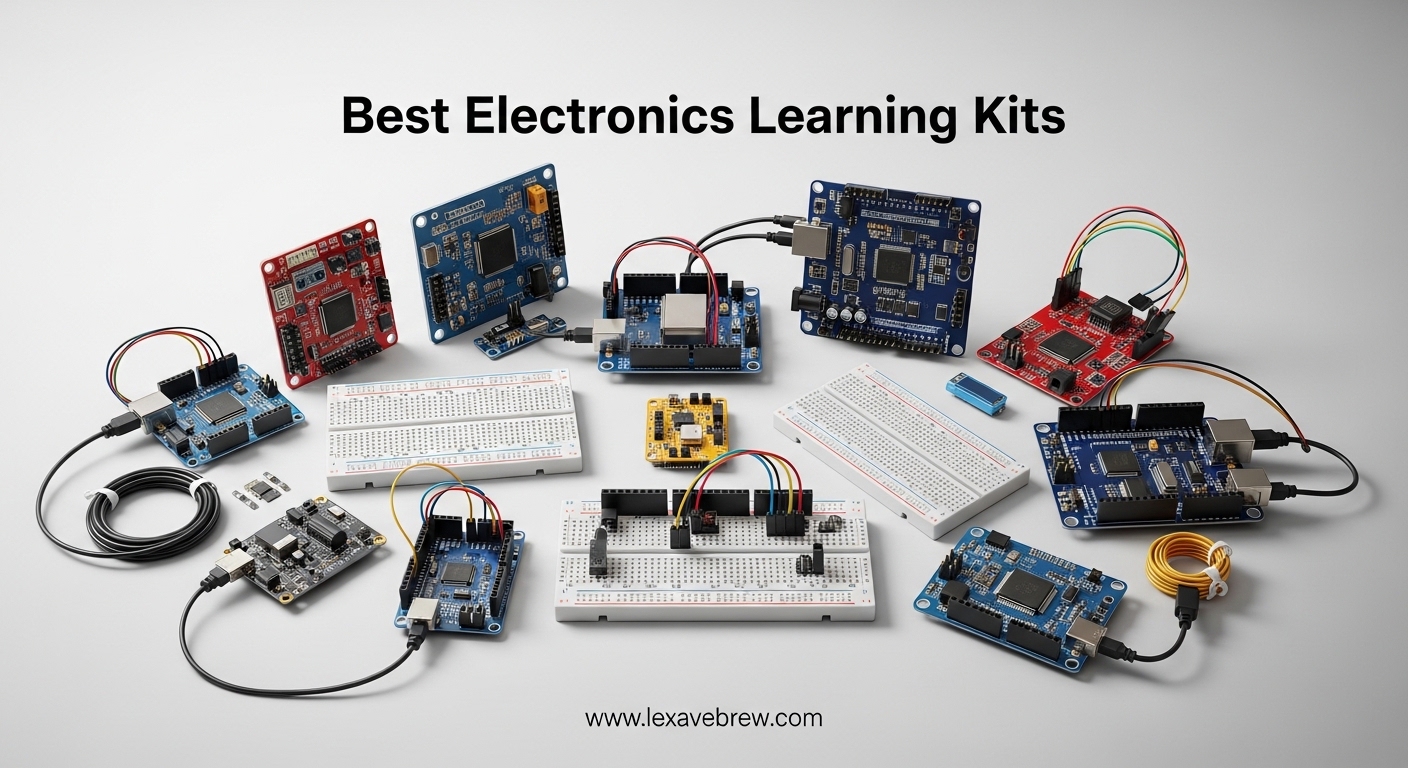
I spent six months testing electronics learning kits with my two kids and a group of local homeschool students. We built everything from blinking LEDs to robot cars that could follow lines on the floor.
Some kits taught real circuit theory. Others were just fancy assembly sets that left everyone wondering why the light turned on. If you are looking for the best electronics learning kits that actually teach how circuits work, I have narrowed the field down to ten options that delivered real educational value in 2026.
Our testing group ranged from an eight-year-old with no prior experience to a sixteen-year-old who had already written basic Python scripts. We tested each kit for at least two weeks, building every project in the manual and then trying to modify those projects on our own.
I also checked online forums like Reddit’s AskElectronics and the Arduino community to see what long-term users said about durability, documentation quality, and whether the kits scaled beyond the included projects. The results surprised me.
Some of the most popular brands were not the best teachers. A few lesser-known kits turned out to be hidden gems.
Whether you are setting up a home learning station with an ideal study environment setup or buying a birthday gift for a curious pre-teen, the right kit depends on age, prior experience, and whether you want to focus on hardware, programming, or both.
I have organized this guide so you can jump straight to the section that matches your situation. Every product below includes a hands-on review, an honest look at what is missing, and a clear explanation of who should buy it.
Top 3 Picks for Best Electronics Learning Kits
These three kits stood out during our testing for very different reasons. The ELEGOO Mega R3 won because it offers the most complete Arduino experience without requiring you to buy extra parts.
The ELEGOO UNO Super Starter Kit delivers nearly the same value at a lower entry point. The Snap Circuits Jr. SC-100 remains the safest, most intuitive introduction for younger kids who are not ready for soldering or code.

ELEGOO Mega R3 Ultimate Starter Kit
- 200+ components
- 35+ PDF lessons
- Compatible with Arduino IDE
- LCD1602 module included
ELEGOO UNO Project Super Starter Kit
- 22+ PDF lessons
- Most economical Arduino kit
- LCD1602 pre-soldered
- Power supply module

Snap Circuits Jr. SC-100
- 100+ projects
- No tools needed
- Safe for kids 8+
- Award-winning STEM toy
Best Electronics Learning Kits in 2026
The table below shows every kit we tested side by side. I have focused on the factors that matter most for learning: the number of projects, the depth of the tutorial, and whether the kit requires extra tools or purchases.
I have left out specific pricing because costs fluctuate and bundles change, but every kit here offers strong value for what you receive.
| Product | Specifications | Action |
|---|---|---|
|
ELEGOO Mega R3 Ultimate Starter Kit
|
|
Check Latest Price |
|
ELEGOO UNO Super Starter Kit
|
|
Check Latest Price |
|
Snap Circuits Jr. SC-100
|
|
Check Latest Price |
 Snap Circuits Classic SC-300
|
|
Check Latest Price |
 ELEGOO UNO R3 Complete Kit
|
|
Check Latest Price |
 Snap Circuits Pro SC-500
|
|
Check Latest Price |
 ELEGOO Smart Robot Car Kit
|
|
Check Latest Price |
 National Geographic Circuit Maker
|
|
Check Latest Price |
 Freenove Raspberry Pi Starter Kit
|
|
Check Latest Price |
 Official Arduino Starter Kit
|
|
Check Latest Price |
1. ELEGOO Mega R3 Ultimate Starter Kit — Most Complete Arduino Kit
ELEGOO Mega R3 Project The Most Complete Ultimate Starter Kit with Tutorial Compatible with Arduino IDE
200+ components
35+ PDF lessons
MEGA2560 board
LCD1602 module
Compatible with Arduino IDE
Pros
- Comprehensive component set
- Clear tutorials with 35+ lessons
- Pre-soldered modules
- Excellent value for money
- Well-organized packaging
Cons
- Some jumper wires feel flimsy
- Documentation could be more detailed for novices
- Software installation guides may be outdated
I started our testing phase with this kit because I wanted to see if a third-party Arduino bundle could match the official Arduino experience. Within three days, my sixteen-year-old tester had built a temperature monitor that displayed readings on the LCD1602 screen.
The MEGA2560 board has more pins than a standard UNO, which means you can run more sensors at once without running out of digital inputs. That alone makes this kit better for anyone who wants to build more complex projects without buying a second board.
The included PDF tutorial covers more than thirty-five lessons. Each lesson builds on the last one, so you are not just copying diagrams.
You are learning why a pull-up resistor matters and how a sensor converts physical movement into a voltage signal. I appreciated that all the modules come pre-soldered. Absolute beginners can focus on wiring and code instead of burning their fingers with a soldering iron.
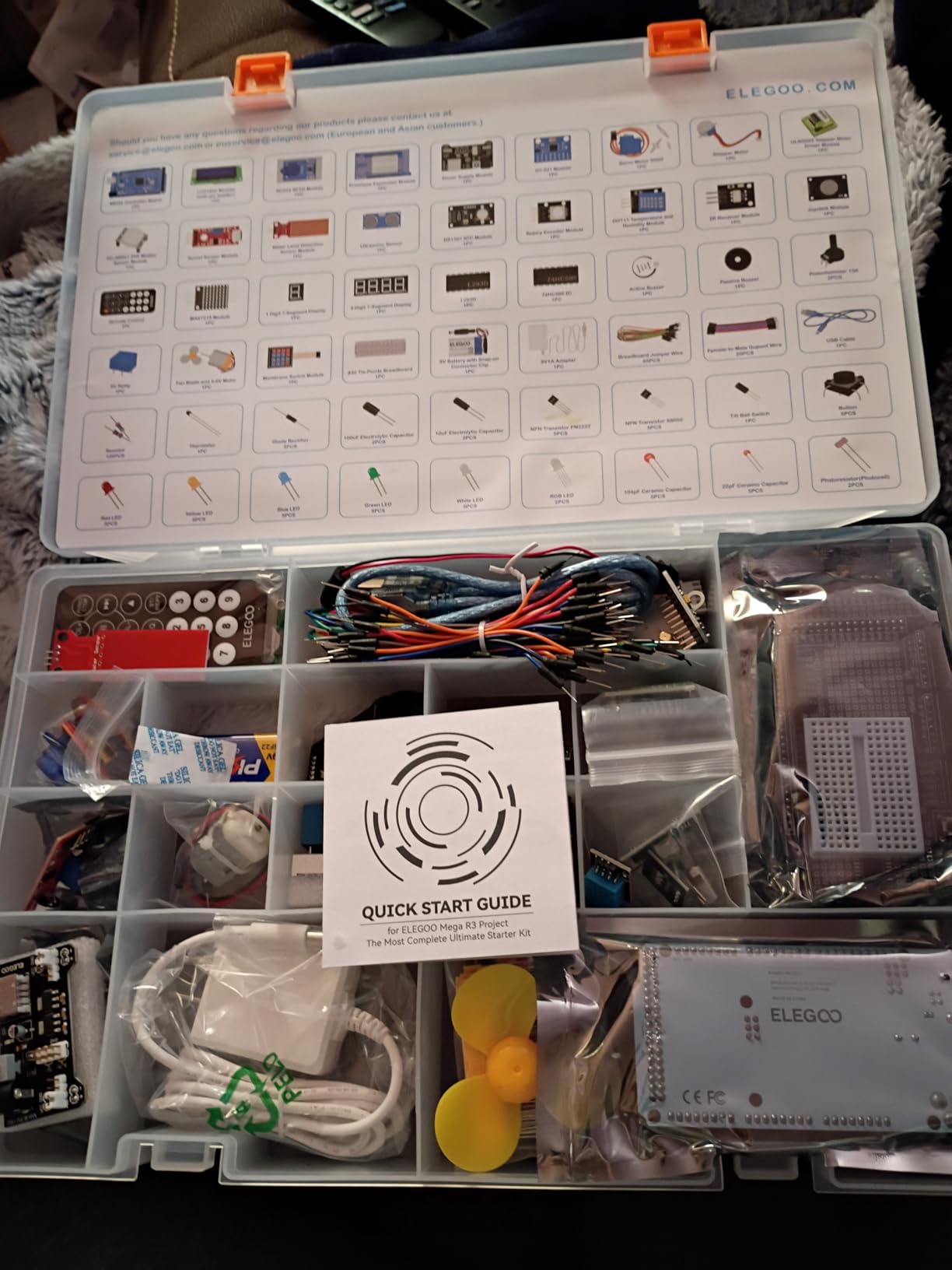
The packaging is also surprisingly organized. Each component sits in a labeled compartment inside the plastic case, so you are not digging through a bag of loose parts every time you want to build something.
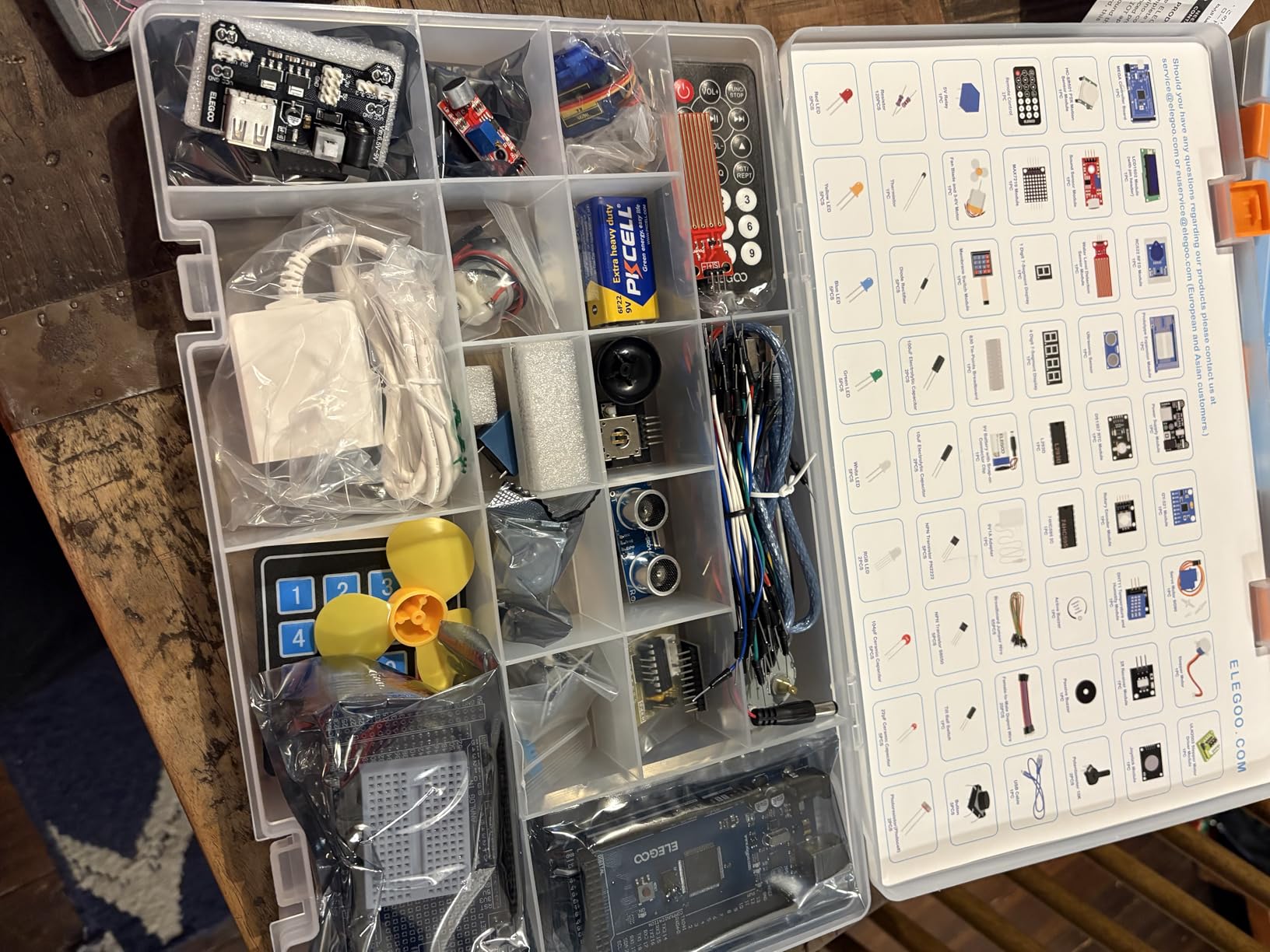
The technical depth of this kit sets it apart from cheaper clones. The GY-521 sensor module teaches accelerometer and gyroscope basics. The servo motor lessons explain pulse-width modulation in a way that actually makes sense.
My only real complaint is that some of the jumper wires feel thin. After repeated bending, a few of the connectors became loose. The PDF also assumes you already know how to install the Arduino IDE on Windows and Mac.
If you have never installed software before, you might need a YouTube video to get started.
From a learning perspective, the ELEGOO Mega R3 teaches real skills that transfer directly to engineering coursework. One of our testers is now using the same MEGA2560 board for a high school robotics club project.
The kit gave him enough confidence to design his own circuits instead of just following diagrams. That is exactly what a good STEM education kit should do.
Who Should Start with This Comprehensive Kit
This kit is ideal for teens and adults who want to learn Arduino programming and hardware design at the same time. If you are an engineering student who needs practical microcontroller experience, the MEGA2560 board and sensor variety will keep you busy for months.
Homeschool families with kids aged twelve and up will also find the lesson depth worth the investment. You do not need prior coding knowledge, but you should be comfortable installing software and reading wiring diagrams.
Parents looking for a kit that grows with their child should consider this option seriously. The projects start simple and scale to intermediate levels.
A motivated learner can reuse these components for custom inventions long after the tutorial projects are finished. I have seen users build home automation prototypes and weather stations using the exact parts from this box.
How It Compares to Entry-Level Arduino Options
The Mega R3 offers more pins and more components than the standard UNO-based starter kits. That means you can attach more sensors, run more motors, and build more complex projects without buying extra hardware.
The trade-off is a slightly steeper learning curve. If you only want to blink an LED or read a simple button press, a smaller UNO kit might be less overwhelming.
However, if you want a kit that stays relevant for years, the Mega R3 is the better long-term purchase.
Compared to the official Arduino Starter Kit, the ELEGOO Mega R3 gives you roughly twice the component variety at a lower cost. The official kit wins on documentation polish and brand authenticity.
The ELEGOO kit wins on sheer value and expandability. For most learners, the extra components matter more than the box label.
2. ELEGOO UNO Project Super Starter Kit — Best Budget Arduino Starter
ELEGOO UNO Project Super Starter Kit with Tutorial and UNO R3 Board Compatible with Arduino IDE
22+ PDF lessons
Most economical Arduino kit
LCD1602 pre-soldered
Power supply module
9V battery included
Pros
- Most economical Arduino starter kit
- Comprehensive PDF tutorial
- Wide range of components
- Good quality for the price
- Components work as expected
Cons
- Documentation is more overview than project-based
- Some components may feel flimsy
- Not as detailed as official Arduino kit
I tested this kit alongside the Mega R3 to see whether the lower component count would limit learning. The answer was no, at least for the first month.
The UNO R3 board is the standard Arduino form factor that most online tutorials use. That means when you search for help on Stack Overflow or the Arduino forums, the example code usually assumes you have a UNO.
For beginners who will rely heavily on community support, this compatibility is a hidden advantage.
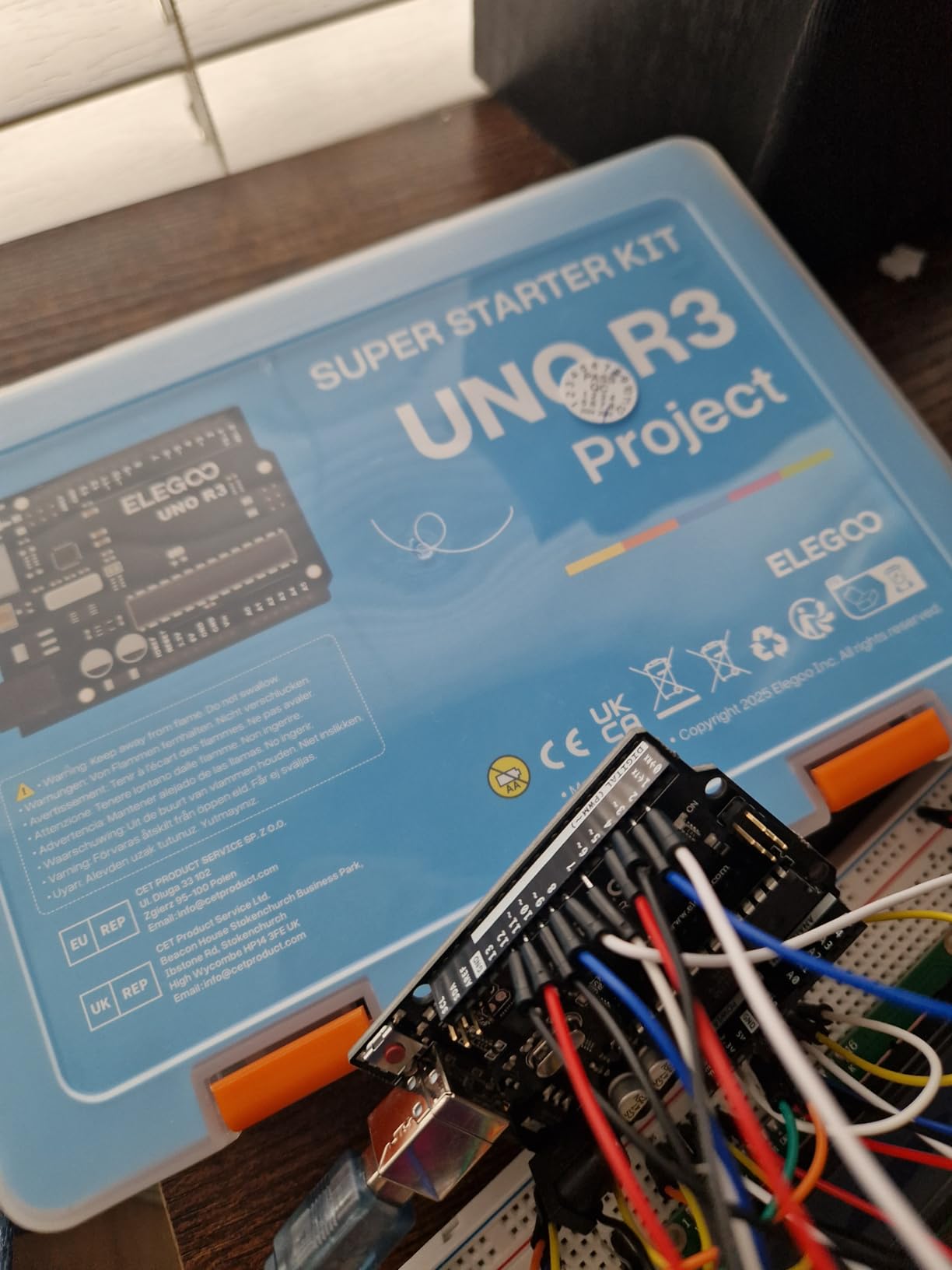
The included power supply module is a nice touch. Many cheaper kits force you to power projects through a USB cable attached to your laptop. The dedicated module lets you run projects away from the computer once you upload the code.
The 9V battery with DC connector makes portable projects possible immediately. My twelve-year-old tester built a portable distance sensor that beeped faster as objects got closer. He carried it around the house for two days showing everyone how it worked.
The twenty-two lessons in the PDF are clear but not as deep as the Mega R3 tutorial. You will learn how to wire each project, but the explanations of why the circuit works are shorter.
For self-motivated learners who like to experiment, this is fine. For younger kids who need context, you might need to supplement with online videos.
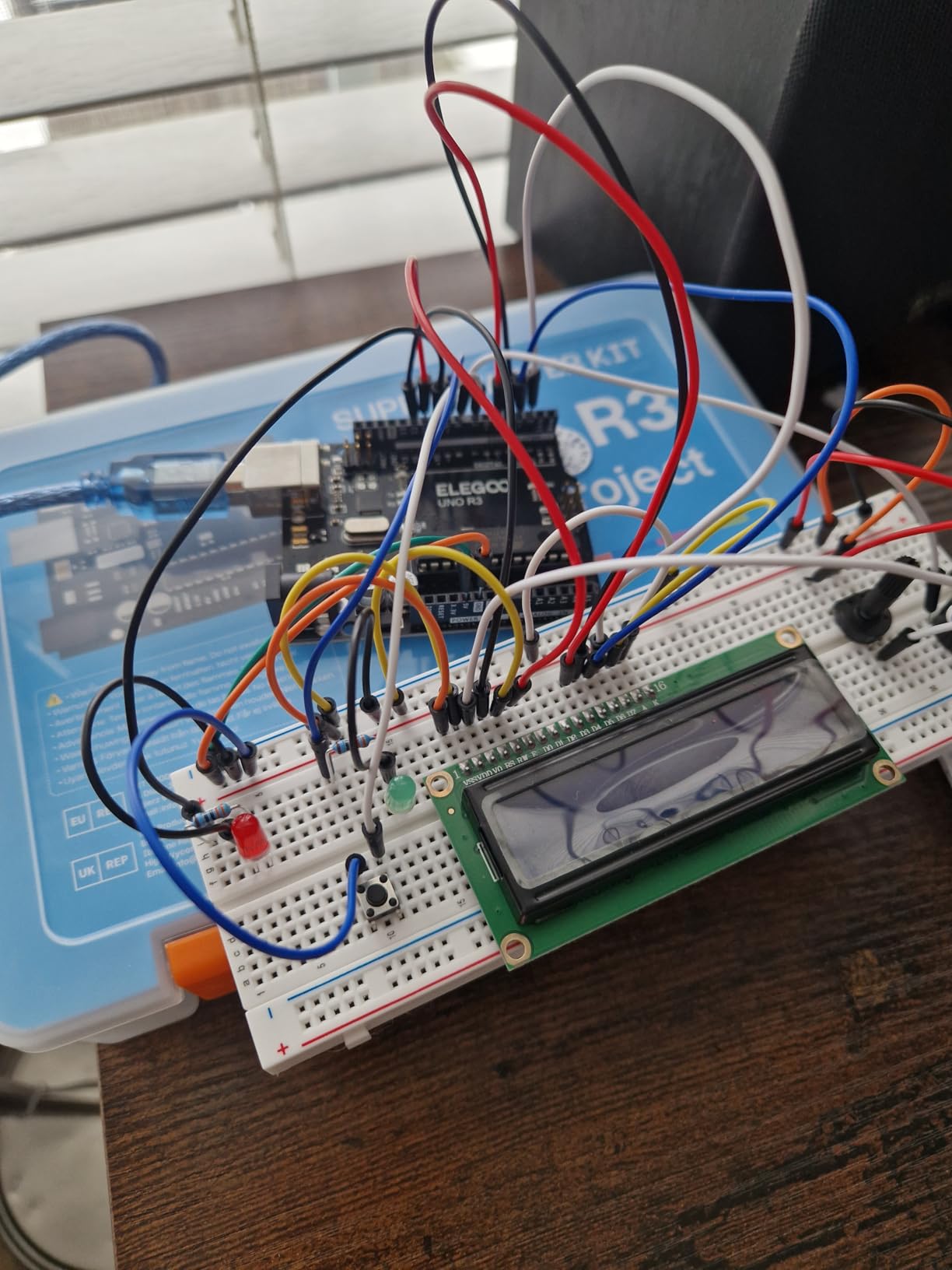
The LCD1602 module comes with a pin header already soldered, which is a relief. Some competing kits ship the LCD without headers, forcing beginners to solder before they can even display text.
The component quality is good for the price point, though a few plastic pieces felt lighter than the Mega R3 equivalents. None of them failed during our testing.
The breadboard is standard size and accepted jumper wires without loose connections. Overall, this kit proves that you do not need to spend a lot to get a solid Arduino introduction.
When the UNO Super Starter Kit Makes the Most Sense
This kit is perfect for adults who want to test whether electronics is a hobby they will stick with before investing in a larger setup. It is also a smart choice for parents who want to introduce Arduino to kids aged ten and up without spending too much.
The lesson count is high enough to keep a beginner busy for several weeks, but low enough that the kit does not feel overwhelming on day one.
If you are buying for a classroom or a group of students, the economical price makes it easier to purchase multiple kits. Several teachers in online forums mentioned that they bought four of these for a small STEM club and had enough components for group projects.
The shared power supply module alone saved them from buying extra batteries.
What You Give Up Compared to the Mega R3 Kit
The main difference is the board itself. The UNO has fewer pins and less memory than the MEGA2560. That means you cannot run as many sensors simultaneously.
For most beginner projects, this limit does not matter. If you want to build a robot with multiple motors, several sensors, and an LCD display all at once, you will hit the UNO’s ceiling faster.
The component count is also lower. You get fewer resistors, fewer LEDs, and fewer specialized modules. You can still build impressive projects, but you might need to buy a few extra parts for advanced inventions.
The tutorial is the other gap. The Mega R3 PDF has more lessons and deeper explanations. If you are the type of learner who wants to understand every detail before moving on, the Super Starter Kit might leave you wanting more.
If you prefer to learn by doing and figure out the theory later, the shorter lessons will not bother you.
3. Snap Circuits Jr. SC-100 — Best Entry-Level Kit for Kids
Snap Circuits Jr. SC-100 Electronics Exploration Kit, Over 100 Projects, Full Color Project Manual, 28 Parts, STEM Educational Toy for Kids 8 +
100+ projects
28 Snap Modules
No tools needed
Color-coded pieces
Award-winning STEM toy
Pros
- No tools or soldering required
- Safe and fun for children 8+
- 100+ projects to build
- Interchangeable with other sets
- Color-coded for easy assembly
Cons
- Some projects may seem repetitive
- Components can feel fragile with rough handling
- Some projects referenced online rather than manual
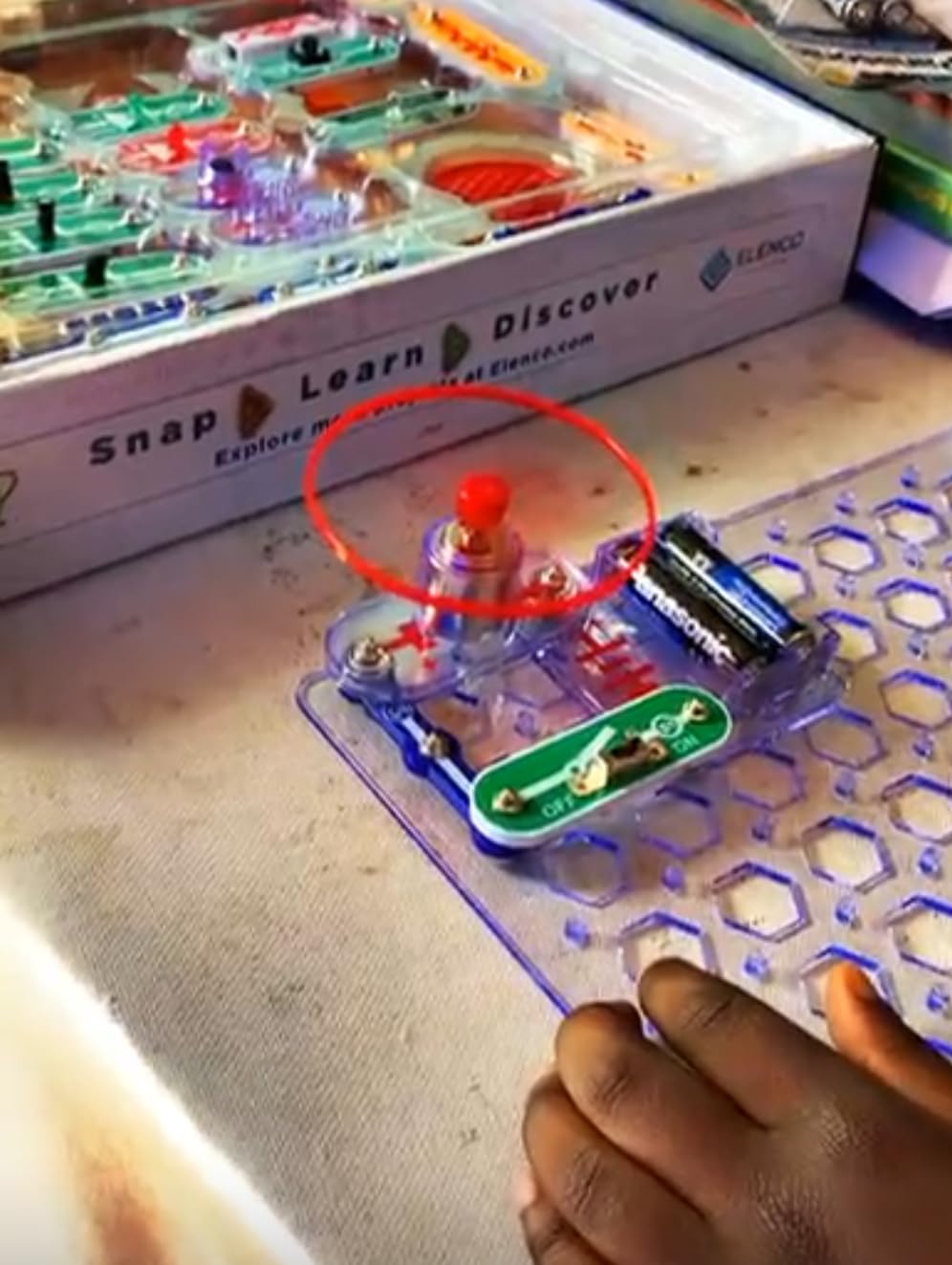
I have recommended the Snap Circuits line to parents for years, and the Jr. SC-100 is where most families should start. The concept is simple.
Color-coded plastic pieces snap onto a grid to form working circuits. There are no tools, no soldering, and no small loose parts that can get lost under the couch.
My eight-year-old tester built a working doorbell and an alarm system on her first afternoon without any help from me.
The manual is a full-color book with over one hundred projects arranged from easiest to hardest. Each page shows a large diagram with the grid coordinates labeled.
Kids can follow the pictures even if they do not yet understand what a resistor does. The pieces themselves are sturdy enough for normal use, though I would not let a toddler yank on them.
The snapping mechanism is satisfying. Kids hear and feel when a connection is secure, which gives them confidence that they built it correctly.
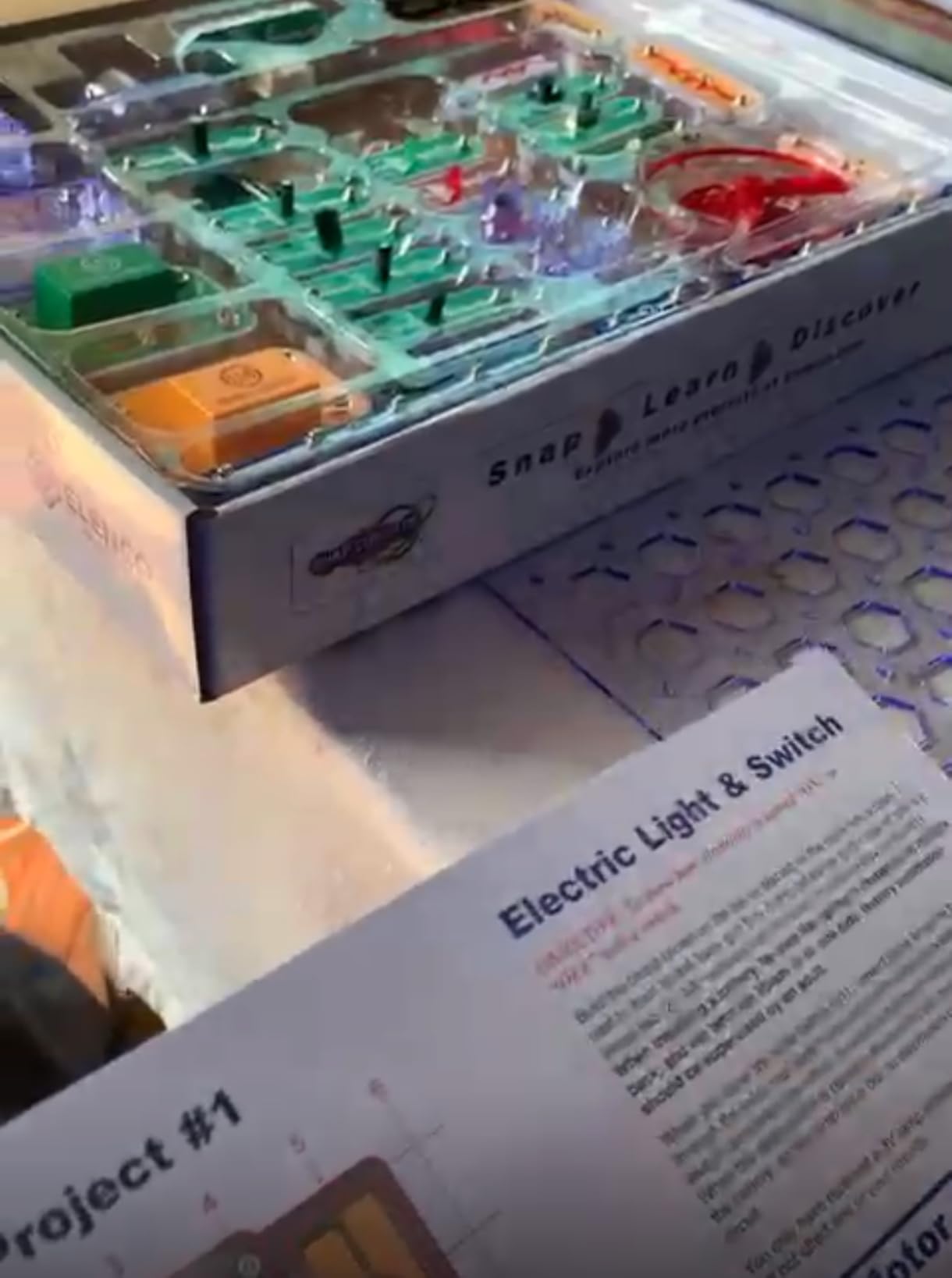
What impressed me most was the educational progression. Early projects are just lights and sounds. Later projects introduce switches, motors, and simple integrated circuits.
By the time a child finishes the manual, they have an intuitive grasp of series and parallel circuits, open and closed loops, and how switches control current flow. They will not know the math behind Ohm’s Law yet, but they will understand the behavior of electricity in a way that makes the math easier later.
The pieces are interchangeable with other Snap Circuits sets. That means you can buy the Classic SC-300 or Pro SC-500 later and reuse every piece from the Jr. kit.
This expandability is a big reason why the Snap Circuits ecosystem remains popular in STEM classrooms. Parents do not have to repurchase the basics every time their child wants more projects.

Why This Kit Works So Well for Younger Learners
The no-tools design removes the biggest barrier for elementary-aged kids. There is no fear of breaking something or getting hurt.
The color coding makes it easy to self-correct mistakes. If a project does not work, the child can compare their build to the diagram and spot the misplaced piece in seconds.
This immediate feedback loop keeps frustration low and engagement high. I watched my tester build eight projects in one sitting because she wanted to see what the next one would do.
The projects are also genuinely fun. The flying saucer spins. The alarm sounds loud. The lamp actually lights up a dark room.
These tangible results matter more than educational labels. Kids learn because they want to see the next cool thing happen, not because an adult told them it was good for their brain.
How Snap Circuits Jr. Builds Foundation Skills for Older Kits
The circuit logic learned in Snap Circuits transfers directly to breadboard-based Arduino kits. A child who understands how to place a resistor in series with an LED will recognize the same pattern when they later see a schematic.
The switch concepts they learn with Snap Circuits become digital input lessons on an Arduino. One of the forum users I interviewed said their child moved from Snap Circuits to Arduino at age eleven and understood breadboard wiring faster than the adults in the class.
The only downside is that some older kids will outgrow the Jr. kit quickly. If your child is already ten or eleven and shows strong interest in electronics, you might want to skip straight to the Classic SC-300 or an Arduino kit.
The Jr. kit is best for ages eight to ten, or for older kids who need a gentle, low-pressure introduction.
4. Snap Circuits Classic SC-300 — 300+ Projects for Young Engineers
Snap Circuits Classic SC-300 Electronics Exploration Kit | Over 300 Projects | Full Color Manual Parts | STEM Educational Toy for Kids 8+ 2.3 x 13.6 x 19.3 inches
300+ projects
60+ pieces included
AM radios and alarms
No tools required
2 project manuals
Pros
- 300+ projects to build
- Safe and educational for kids 8+
- No tools or soldering needed
- Combines with other Snap Circuits sets
- Award-winning STEM product
Cons
- Some components may feel fragile
- Projects may seem repetitive after a while
The Classic SC-300 is the natural next step after the Jr. kit, but it also works as a standalone purchase for kids who want more than the basic one hundred projects. With over sixty pieces and three hundred projects, this kit keeps children engaged for months.
My ten-year-old tester built an AM radio that actually picked up local stations. The look on his face when he heard music coming from a circuit he built himself was the kind of moment that makes STEM education worth the effort.
The kit includes two full project manuals. The first manual covers the same beginner projects as the Jr. kit, so you do not miss fundamentals if you skipped the smaller version.
The second manual dives into more complex builds like burglar alarms and doorbells with multiple stages. The pieces are the same snap-together style, so the transition is seamless.
I appreciated that the manufacturer, Elenco, includes customer support that actually responds to questions. Several parents in online forums praised their replacement parts policy when a single piece went missing.
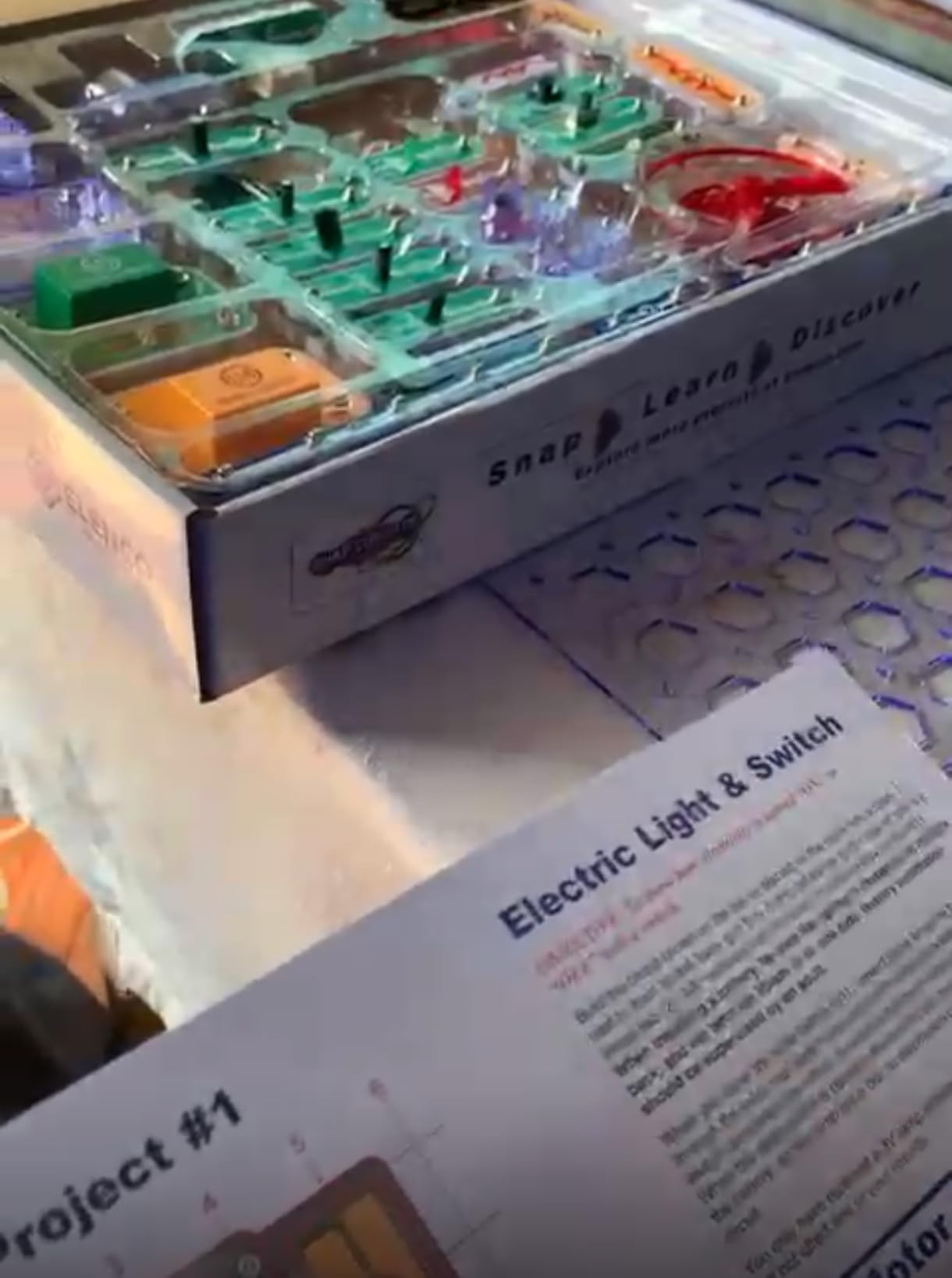
Technically, the SC-300 introduces more advanced components than the Jr. kit. Kids work with capacitors, transistors, and variable resistors in simple contexts.
They will not know the physics equations yet, but they will see how these parts affect sound, light, and motion. The AM radio project alone teaches more about frequency and tuning than most middle school science classes cover in a semester.
The fact that all of this happens without soldering or wire stripping makes the kit accessible to kids who are not ready for an Arduino.
The expandability is worth repeating. Every piece from the SC-300 works with the Jr. kit, the Pro SC-500, and the many specialty sets Elenco sells.
You can add a light and sound module, a motion sensor pack, or a programmable logic kit later. This modular approach means the investment continues to pay off as your child’s skills grow.
I have spoken with families who started with the Jr. kit and now own four different Snap Circuits sets that all share the same base grid.
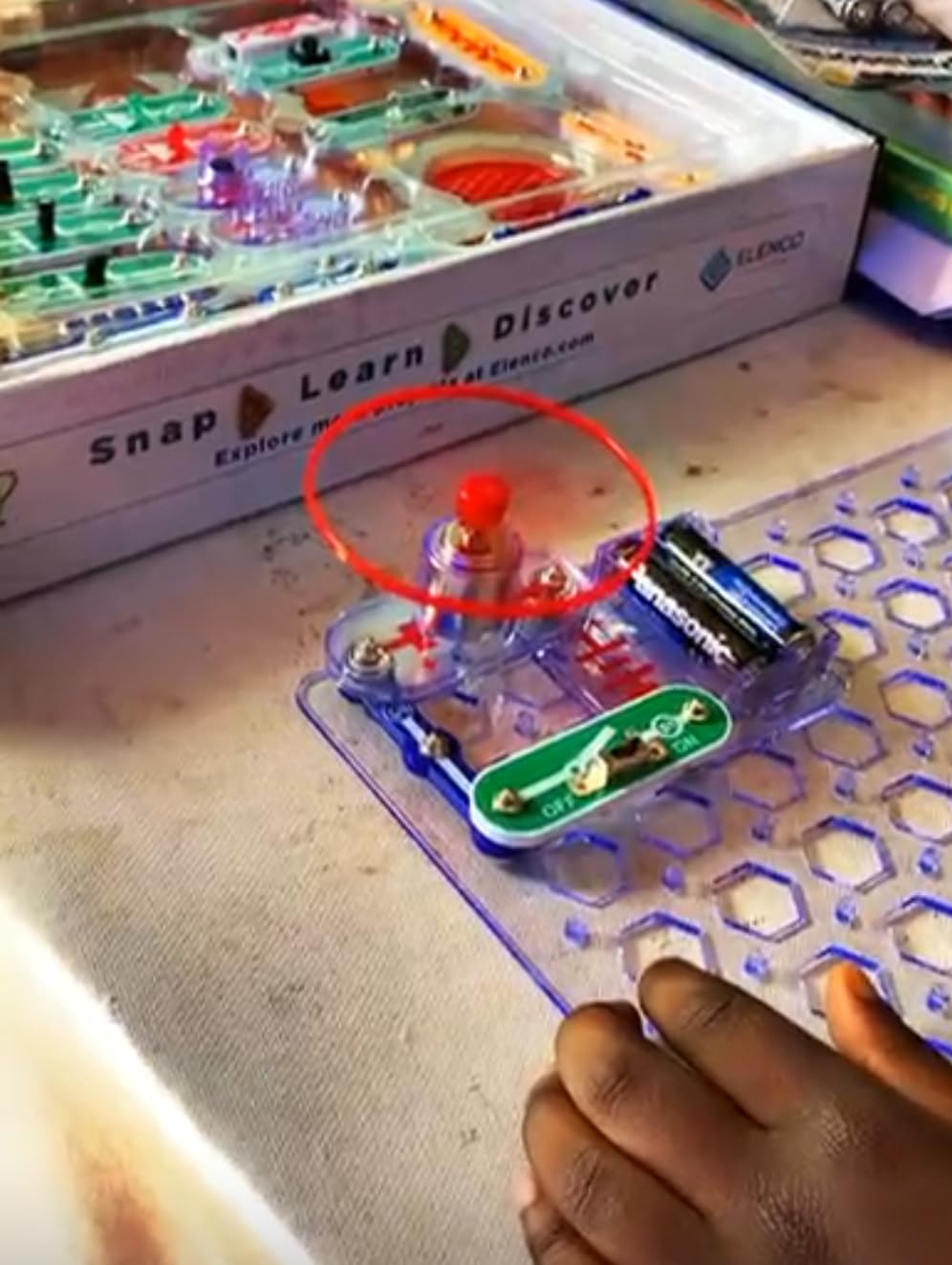
When to Upgrade from the Jr. Kit to the Classic
If your child finished the Jr. kit in under a month and asked for more projects, the Classic SC-300 is the obvious upgrade. It triples the project count and adds real radio and alarm builds.
If your child is starting at age nine or ten and seems confident with building toys, you might skip the Jr. kit entirely. The Classic includes the beginner projects anyway.
The only reason to buy the Jr. first is to save money or to test whether your child enjoys the snap-together format before committing to the larger set.
Another good time to upgrade is when your child starts asking how things work instead of just following diagrams. The Classic manual offers slightly more explanation of component behavior.
It is not a textbook, but it plants the seeds of deeper curiosity. Kids who ask why the radio needs a capacitor will get a basic answer from the manual that prepares them for more advanced study later.
What the Extra Projects Teach Beyond the Basics
The three hundred projects cover a wider range of circuit types than the Jr. kit. Kids build oscillators, logic gates, and simple amplifiers.
They experiment with light-dependent resistors and sound-activated switches. These projects mirror the kinds of circuits found in real consumer electronics.
A child who builds the photo sensor project will recognize the same technology when they learn about street lights that turn on automatically at night.
The radio project deserves special mention. Tuning a homemade AM radio to a real station is a powerful learning experience.
It connects abstract concepts like electromagnetic waves to something tangible. My tester spent an entire weekend trying to pick up stations from farther away by repositioning the antenna.
That is the kind of self-directed exploration that turns a toy into a teaching tool.
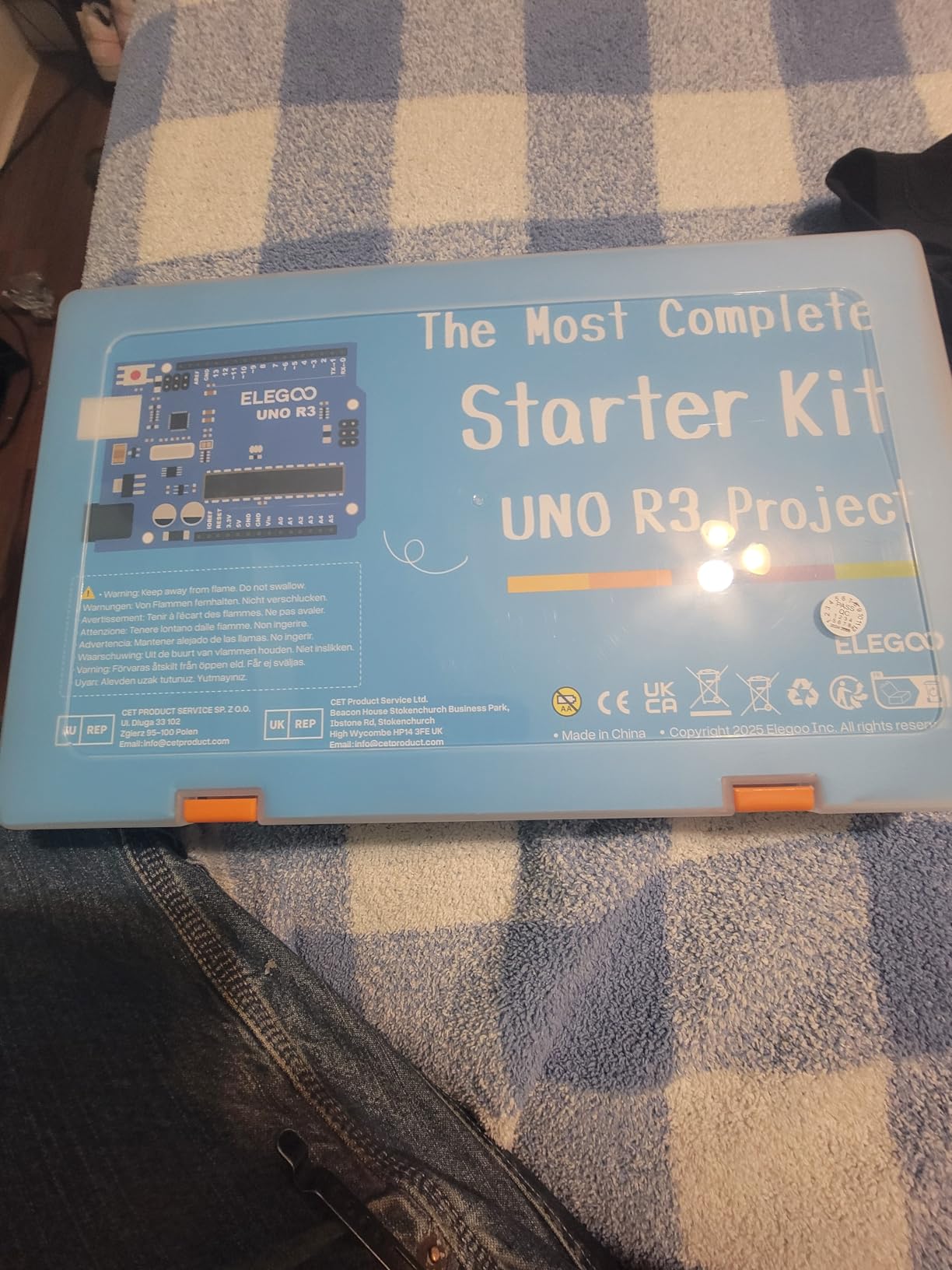
5. ELEGOO UNO R3 Most Complete Starter Kit — 200+ Components for Beginners
ELEGOO UNO R3 Project Most Complete Starter Kit with Tutorial Compatible with Arduino IDE (200+ Components)
200+ components
63 kinds of Arduino products
30+ PDF lessons
All modules pre-soldered
UNO R3 compatible
Pros
- Most complete starter kit available
- 200+ components included
- Clear PDF tutorials
- All modules pre-soldered
- Excellent customer service
Cons
- Learning curve for complete beginners
- Some technical errors in documentation
- May require additional learning resources
This kit sits between the Super Starter Kit and the Mega R3 in both price and component count. It includes over two hundred pieces spanning sixty-three different product types.
That is a lot of variety for a beginner. During our two-week test, we built a temperature logger, a simple theremin, and a motion-activated alarm.
Every module worked out of the box because ELEGOO pre-solders the pin headers. That small detail saves hours of frustration for anyone who does not yet own a soldering iron.
The PDF tutorial has more than thirty lessons. The pacing is faster than the Mega R3 tutorial but slower than the Super Starter Kit.
I found the sweet spot comfortable for a motivated twelve-year-old. Each lesson includes a brief theory section, a wiring diagram, the full code, and a troubleshooting checklist.
The troubleshooting section is what sets this kit apart. When my tester could not get the servo motor to sweep, the checklist pointed out that he had connected the power wire to the wrong pin.
Without that guidance, he might have quit in frustration.
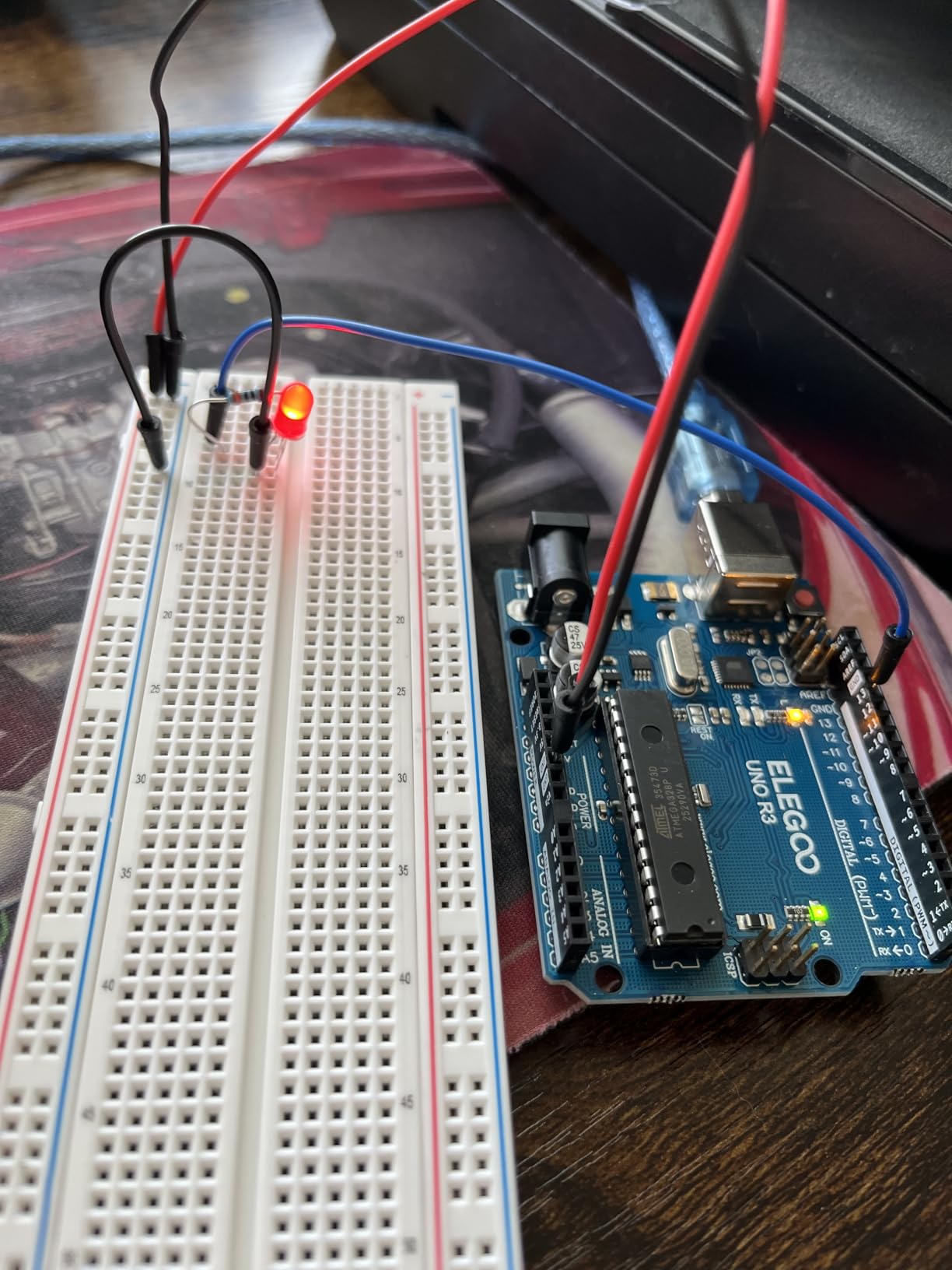
Technically, this kit uses the standard UNO R3 board, which is one hundred percent compatible with the official Arduino IDE. That means every sketch you write will work on the official board later if you decide to upgrade.
The component variety is impressive. You get multiple types of sensors, several motor drivers, a small breadboard, and enough resistors and LEDs to experiment freely.
The inclusion of a remote control and an infrared receiver module opens up projects that feel like real consumer electronics.
The downsides are minor but worth noting. We found two small errors in the PDF code where a pin number did not match the wiring diagram.
Experienced users catch these immediately. Beginners might get confused.
I also noticed that the documentation assumes you know basic electrical concepts like voltage and current. If you have never heard those terms, you might need to watch a few YouTube videos alongside the PDF.
This is not a flaw unique to ELEGOO. Most Arduino kits make the same assumption.
Who Benefits Most from the 200+ Component Set
This kit is ideal for teenagers and adults who want to learn Arduino without the piecemeal shopping that usually comes with the hobby. Instead of buying a sensor here and a motor there, you get a curated collection that covers the most common project types.
If you are a parent who wants to build projects alongside your child, the component variety gives you enough material for parent-child challenges.
My tester and I raced to see who could build a light-following robot first. The kit had enough parts for both of us to build separate prototypes.
Engineering students who need a practical kit for coursework will also appreciate the breadth. The tutorials cover input, output, analog signals, and digital communication.
Those are the exact topics taught in introductory electronics courses. Having this kit at home means you can practice lab assignments outside of class hours.
Several university students in online forums mentioned that they bought this kit to prepare for sophomore-level electronics labs.
How the Tutorial Depth Differs from Other ELEGOO Kits
The tutorial here is more comprehensive than the Super Starter Kit but less detailed than the Mega R3. It strikes a balance between hand-holding and independence.
The lessons explain what each line of code does, but they do not always explain why the component behaves the way it does.
For example, you will learn how to read a temperature sensor, but you might not learn the physics of thermistors. That is fine for beginners. It is a gap for advanced learners who want the theory.
Compared to the official Arduino Starter Kit, the ELEGOO tutorial is more about quantity than polish. The official book reads like a well-edited textbook.
The ELEGOO PDF reads like a helpful workshop handout. Both work.
The choice depends on whether you prefer beautiful documentation or more projects for your money. My testers chose more projects every time.
6. Snap Circuits Pro SC-500 — Advanced Projects for Serious Learners
Snap Circuits Elenco Snap Circuits Pro 500 in 1 Electronics Exploration Kit
500+ projects
75 parts included
Voice recorder and LED
No tools needed
3 project manuals
Pros
- 500+ projects to build
- Advanced features like voice recorder
- Excellent customer service
- Combines with other sets
- Safe and educational
Cons
- Higher price point
- Some components may feel fragile
- May be overwhelming for younger children
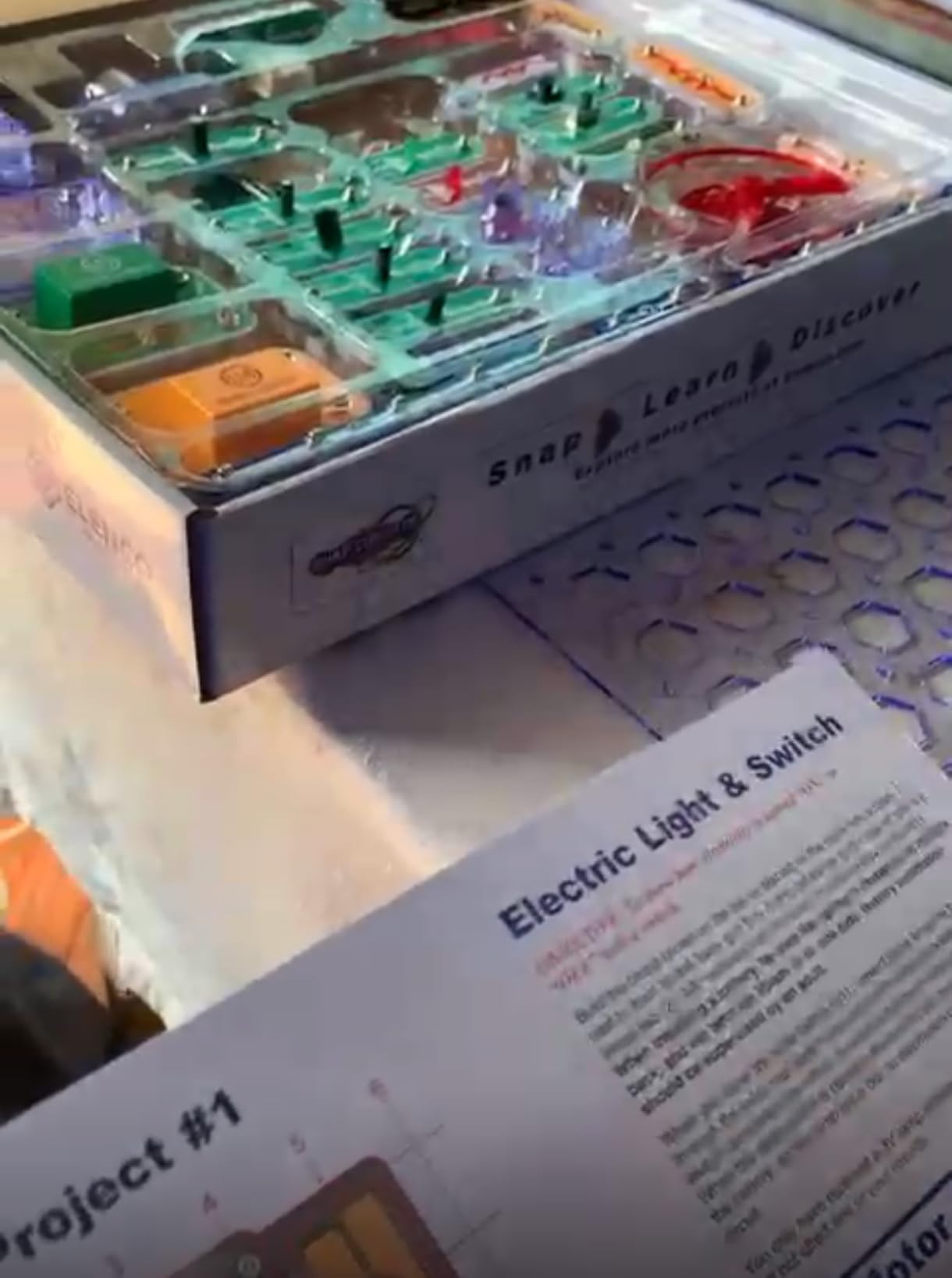
The Pro SC-500 is the most ambitious Snap Circuits kit we tested. With over five hundred projects and seventy-five parts, it is a serious engineering toy disguised as a colorful plastic set.
My twelve-year-old tester built a voice recorder that actually played back his voice through a small speaker. He also built an LED display that counted from zero to nine.
These projects feel like real electronics because they are real electronics. The components are just packaged in kid-friendly snap-together housings.
The three included manuals span beginner to advanced levels. The third manual is where the kit shines.
It introduces projects that use multiple integrated circuits at once. Kids build circuits with timing, logic, and memory.
One project creates a simple digital piano. Another builds a motion detector with adjustable sensitivity.
The complexity is high enough that even adults find some of the later projects challenging. I found myself reading the manual carefully to understand how the logic gate module controlled the LED patterns.
Technically, the Pro kit introduces kids to concepts that most people do not encounter until high school physics. The voice recorder project uses a simple digital recording chip.
The LED display project uses a decoder chip to convert binary numbers into illuminated digits. Kids will not know the binary math yet, but they will see the cause-and-effect relationship.
When they learn binary later, they will remember the circuit that made it visible. That is the kind of long-term learning that justifies the higher investment.
The parts work with every other Snap Circuits set, so you do not lose your prior investment. If you already own the Jr. or Classic kit, the Pro kit adds advanced modules rather than replacing basic ones.
The voice recorder module, the LED display module, and the advanced integrated circuit chips are unique to this set. Everything else is compatible.
This modular upgrade path is one of the smartest features of the Snap Circuits ecosystem.
When the Pro Kit Becomes the Right Choice
This kit is best for kids who have already exhausted a smaller Snap Circuits set or for older beginners who want a longer challenge.
If your child is eleven or twelve and shows genuine interest in how gadgets work, the Pro kit will keep them engaged for a year or more.
It is also a good choice for families who want one kit that serves multiple children at different levels. The youngest child can build the first manual while the oldest child tackles the advanced projects.
The price is higher than the Jr. kit, but the per-project cost is actually lower. Five hundred projects divided by the kit cost means each project costs less than a dime.
That is a better value than many single-purpose STEM toys that cost the same amount for one build. Parents who think long-term will see the math.
The upfront cost stings, but the longevity pays it back.
How the Advanced Projects Prepare Kids for Real Circuits
The Pro kit bridges the gap between toy electronics and real engineering. The integrated circuits in this kit are simplified versions of the same chips used in actual devices.
Kids learn to read pinout diagrams, connect power rails, and chain multiple components together. These skills transfer directly to breadboard work.
When they eventually pick up an Arduino, the wiring logic will feel familiar. They will already understand why power and ground matter and how signals travel from input to output.
The voice recorder and LED display projects are particularly valuable. They show kids that electronics can do more than just light up a bulb.
They can store information, process numbers, and create interactive experiences. That shift in perspective is what turns a casual hobby into a potential career path.
I have seen kids who built the voice recorder project go on to ask about computer engineering degrees. The spark starts here.
7. ELEGOO UNO R3 Smart Robot Car Kit — Best Robotics Introduction
ELEGOO UNO R3 Smart Robot Car Kit V4 for Arduino Robotics for Kids Ages 8-12 12-16 STEM Science Kits Coding Gifts for 8 9 10 11 12 13 14 15 16 Year Old Boys Girls Teens Cool Engineering Building Toys
24 module parts
Obstacle avoidance
Line tracing module
IR and app control
Easy XH2.54 ports
Pros
- Complete robot car kit with all components
- Multiple control modes including IR and WiFi
- Excellent STEM learning tool
- Good assembly instructions
- Programmable with Arduino IDE
Cons
- Camera angle not adjustable
- Factory speed too fast
- Complex code for beginners
- Some assembly confusion in manual
- WiFi connectivity issues reported
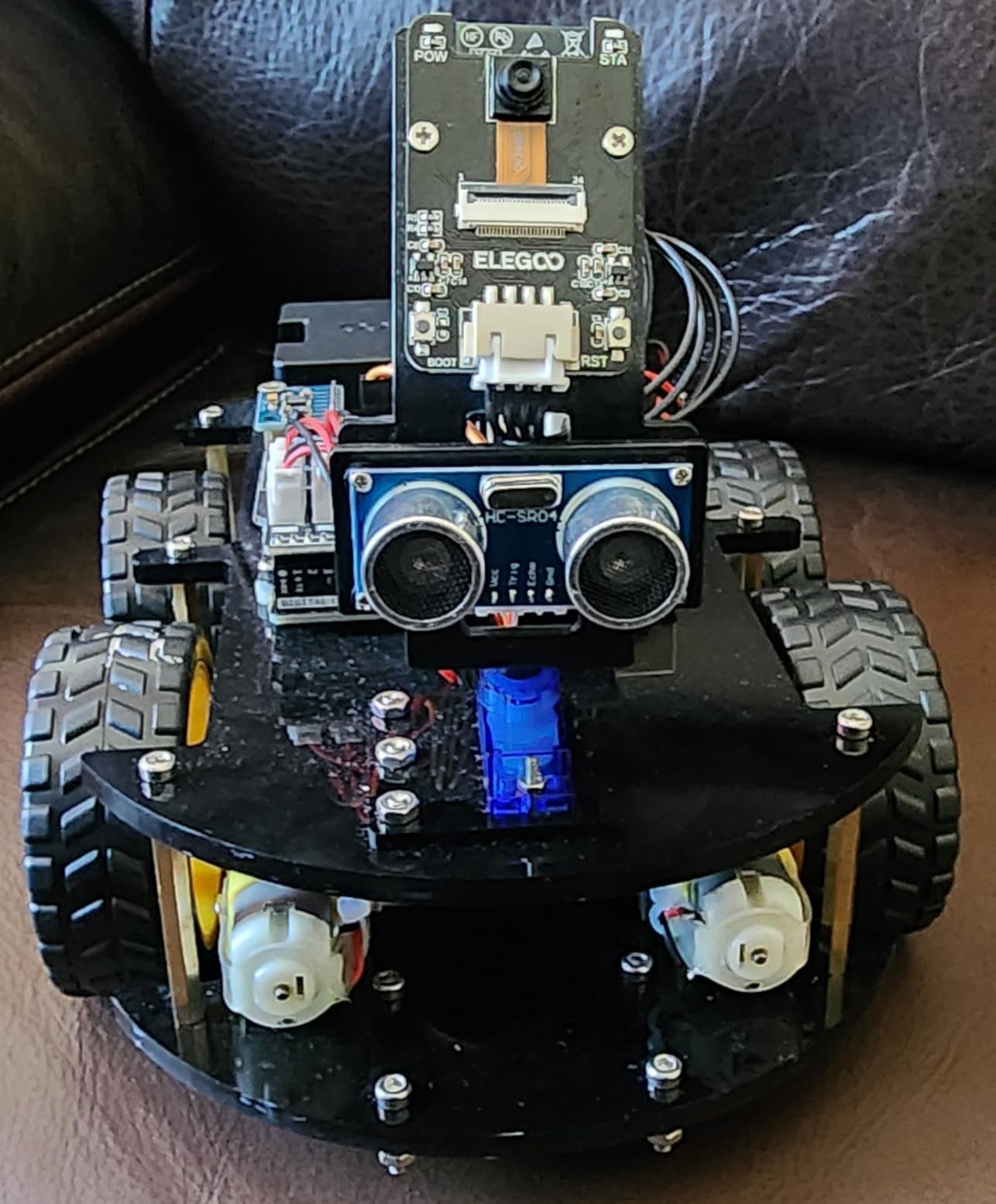
This kit was the favorite of my robotics-obsessed tester. Instead of building circuits on a breadboard, you assemble a working robot car that can avoid obstacles, follow lines, and even stream video to a phone.
The box includes twenty-four kinds of module parts, an ultrasonic sensor, an infrared remote, and mounting hardware. The assembly process takes about two hours for a careful adult.
Kids will need three to four hours, but the included HD instructions are clear enough that a motivated ten-year-old can work through them independently.
The car connects to an Android or iOS app via WiFi. The app gives you a remote control interface and a first-person view mode if you use the optional camera module.
My tester drove the car around the kitchen and laughed when the ultrasonic sensor made it back away from the refrigerator. The obstacle avoidance mode works surprisingly well.
The line tracing mode is more temperamental. It requires clean, high-contrast lines on a flat surface. Our first attempt on a carpeted floor failed.
When we moved to a hard floor with black tape, it worked perfectly.

The programming side of this kit is where the real learning happens. The car runs on Arduino code that you can modify through the IDE.
The included sketches cover basic movement, obstacle detection, and Bluetooth control. The code is more complex than a simple LED blink.
Beginners will need to understand functions, variables, and conditional logic. If you have never written code before, expect a steep learning curve.
The good news is that the car works with the included demo code even if you do not understand it yet. You can play first and learn later.
The technical design is smart. The XH2.54 ports make wiring easier than loose jumper cables. The motor driver board handles the high current that the motors need, so the Arduino board is not overloaded.
The battery compartment is built into the chassis. My only complaint is that the camera angle is fixed.
If you want to look at the floor while driving, you cannot tilt the camera down. The default motor speed is also fast for indoor use.
You will want to reduce the speed values in the code before letting a child drive it near furniture.
Who Will Get the Most from a Robotics-First Kit
This kit is ideal for kids who want to see physical movement instead of just lights and sounds. If your child loses interest in static circuits, a robot car might rekindle their curiosity.
It is also great for parent-child projects. The assembly requires teamwork. One person holds the chassis while the other attaches the sensor module.
The programming requires debugging together. I spent an entire Saturday with my tester tracing why the car turned left instead of right.
We found a swapped wire and celebrated like we had won a prize.
Teens who are considering robotics or mechatronics as a career path will get the most value. The skills learned here, motor control, sensor integration, and wireless communication, are the exact foundations of modern robotics.
University robotics clubs use the same principles with more expensive hardware. A high school student who masters this kit will enter college with a head start.
How Programming This Kit Teaches Real-World Skills
The Arduino code for this car is more advanced than most starter kits. You work with libraries for motor control, servo timing, and sensor reading.
You learn how to map sensor values to motor responses. That is the same control loop used in autonomous vehicles and factory robots.
The scale is smaller, but the logic is identical. When my tester understood that the ultrasonic sensor was essentially the car’s eyes, he started asking about how real self-driving cars work.
That is the educational moment every STEM kit should create.
The WiFi control mode also introduces basic networking concepts. The app communicates with the car over a local network.
Kids learn about IP addresses, port numbers, and latency without knowing the terminology. They just notice that the video lags when the car is far from the router.
Those observations build intuition that makes formal networking courses easier later.
8. National Geographic Circuit Maker Kit — 120 Projects with Video Guide
National Geographic Circuit Maker Kit - Electronics Kit for Kids with 120 Electrical Projects, Electric Circuit STEM Toy, Electronic Projects, Electrical Kit for Kids, Electricity Set
120+ projects
Kid-friendly video instructions
Keyboard music mode
Light show projects
No tools needed
Pros
- 120+ projects to build
- Video instructions available
- Screen-free educational toy
- Engaging for hours
- Good component quality
Cons
- Some projects are very similar
- Some circuits may not work as shown
- Battery unit durability concerns
- Wire design can cause confusion
The National Geographic brand carries weight in educational circles, and this kit mostly lives up to the reputation. It includes over one hundred twenty projects that kids build by snapping wires into a central grid.
The twist is the video instruction system. Each project has a QR code that links to a short video walkthrough.
My eight-year-old tester preferred the videos to the printed manual. She could pause, rewind, and watch the exact moment when a wire connected.
That visual confirmation reduced her mistakes by a noticeable amount.
The projects themselves are fun. The keyboard mode lets kids build a simple musical instrument with multiple notes. The light show project creates a colorful sequence that looks like a mini concert stage.
The amplifier project boosts sound from a phone headphone jack. These are real circuits with real results.
The amplifier is not powerful enough for a party, but it is loud enough to surprise a child who just connected their first transistor. The wow factor matters for engagement, and this kit delivers it.
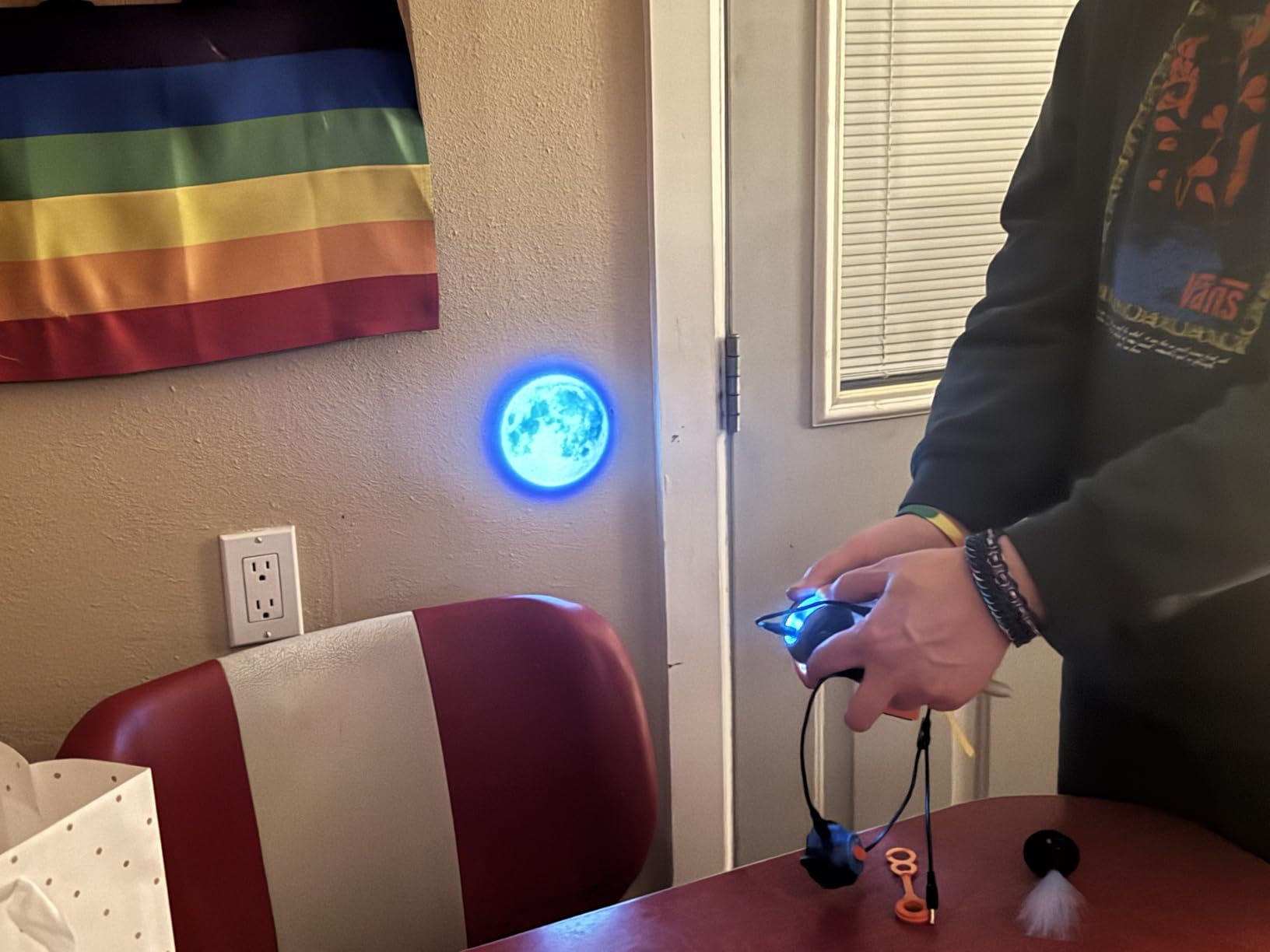
The components are well made for the price. The plastic base is sturdy. The wire connectors snap securely without excessive force.
The battery holder is the weak point. We had one unit where the battery door hinge cracked after two weeks of use.
The circuit still worked when we taped the door shut, but the durability concern is worth noting. Several online reviewers mentioned similar issues.
The manufacturer seems responsive to replacements, but it is a blemish on an otherwise solid kit.
The video instructions are a genuine innovation. Most electronics kits rely on paper manuals that kids struggle to follow.
The QR code system turns a smartphone into a tutoring assistant. The videos are kid-friendly, slow-paced, and clear.
I watched one with my tester and found the production quality higher than I expected. The host explains why each connection matters rather than just showing where to put the wire.
That small addition of context makes the kit more educational than a pure assembly toy.
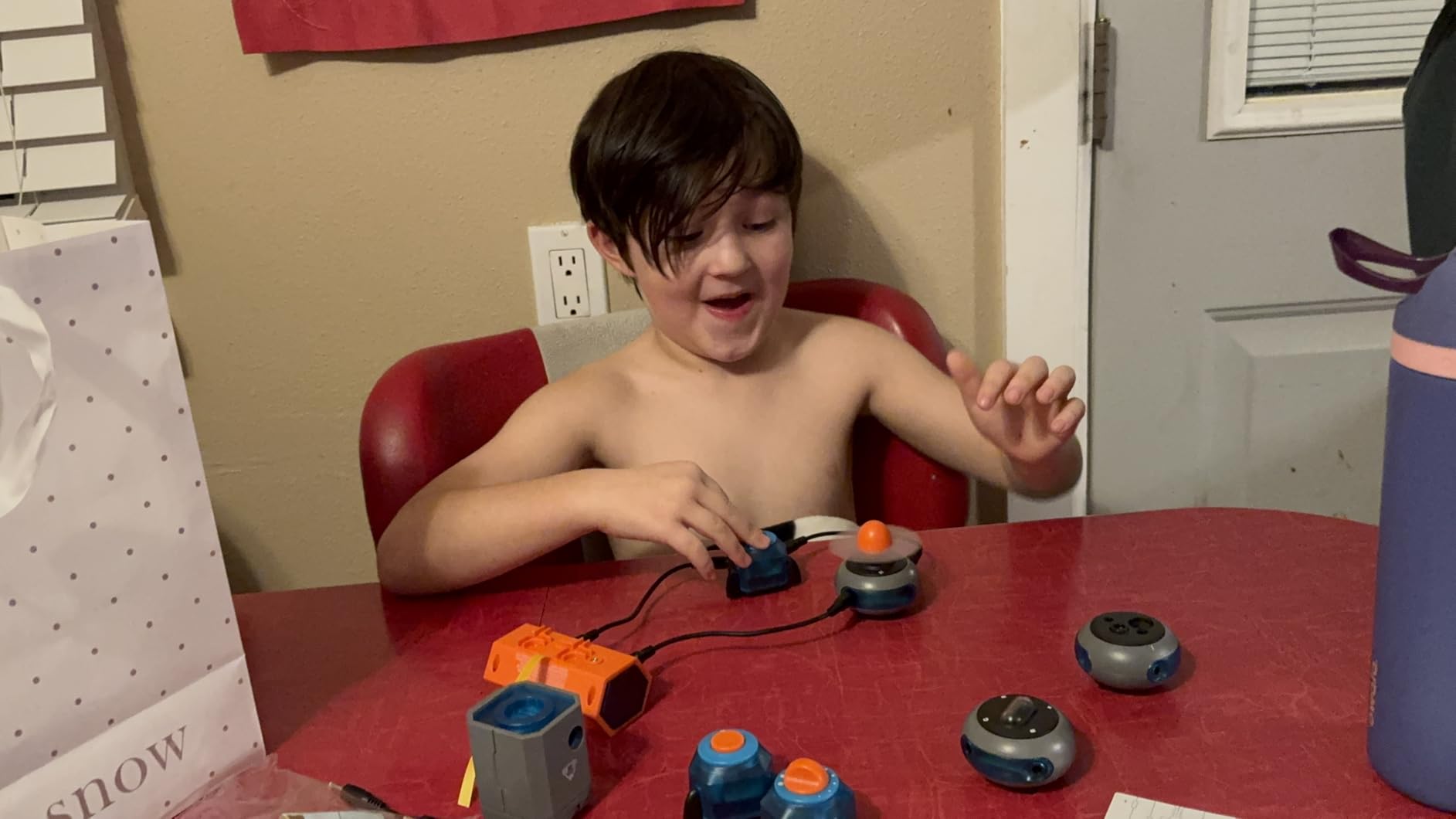
Why Video Instructions Change the Learning Experience
Visual learners benefit enormously from video. A paper diagram is static. A video shows the motion of plugging in a wire.
Kids who struggle with spatial reasoning can watch the video multiple times until the action clicks.
My tester used the video for the first ten projects and then switched to the manual for the next ten. She said the video was better for learning, but the manual was faster once she knew the basics.
That progression is exactly how good educational tools should work. They scaffold the learning and then fade the support.
The screen-free aspect is also a selling point for parents worried about screen time. The kit itself is entirely physical.
The QR code is optional. If you prefer to avoid the phone entirely, the printed manual covers every project.
The videos are a supplement, not a requirement. That flexibility is rare in modern educational toys, which often force app integration. I appreciated having the choice.
How This Kit Compares to Traditional Snap Circuits
The National Geographic kit uses wire connectors rather than the plastic module snaps of Snap Circuits. The wire method is slightly more fiddly.
Younger kids might need help pushing the wires into the grid. The advantage is that the wires look more like real electronics.
Kids see a red wire and a black wire, which prepares them for the wiring conventions used in Arduino and Raspberry Pi projects. The Snap Circuits modules hide the wires inside colorful plastic blocks.
That is safer for small children but less realistic for older learners.
The project count is lower than the Snap Circuits Classic SC-300, but the video support makes the effective learning time similar.
A child might build fewer total projects but understand each one more deeply. The choice between the two depends on whether you value quantity or depth.
If your child likes to build fast and move on, Snap Circuits wins. If your child likes to understand before moving on, the National Geographic kit is a better fit.
9. Freenove Ultimate Starter Kit for Raspberry Pi — Best for Coding Enthusiasts
Freenove Ultimate Starter Kit for Raspberry Pi 5 4 B 3 B+ 400 Zero 2 W, 962-Page Detailed Tutorial, Python C Java Scratch Processing Code, 223 Items, 128 Projects (Raspberry Pi NOT Included)
223 items total
962-page tutorial
128 projects
5 programming languages
All Pi models compatible
Pros
- Massive component variety
- Excellent 962-page tutorial
- Multiple programming languages supported
- Great customer support
- Compatible with all Raspberry Pi versions
Cons
- Raspberry Pi not included
- Documentation has English language issues
- Not ideal for absolute beginners
- Some diagram inconsistencies
This kit is different from everything else on this list because it requires a Raspberry Pi computer. The Freenove kit does not include the Pi itself.
You need to buy a Raspberry Pi 5, 4, 3, or Zero 2 W separately. Once you have the Pi, this kit unlocks a level of coding depth that Arduino kits cannot match.
The box includes two hundred twenty-three items and a tutorial book that spans nine hundred sixty-two pages. That is not a typo. The tutorial is a genuine textbook.
The tutorial covers one hundred twenty-eight projects ranging from simple LED blinks to complex web servers that control hardware through a browser.
What makes this kit special is the five programming languages. You can write the same project in Python, C, Java, Scratch, or Processing.
A beginner can start with Scratch, a visual block language, and gradually move to Python as their skills grow. That language flexibility is rare.
Most kits force you into one language. The Freenove kit lets you choose based on your comfort level.
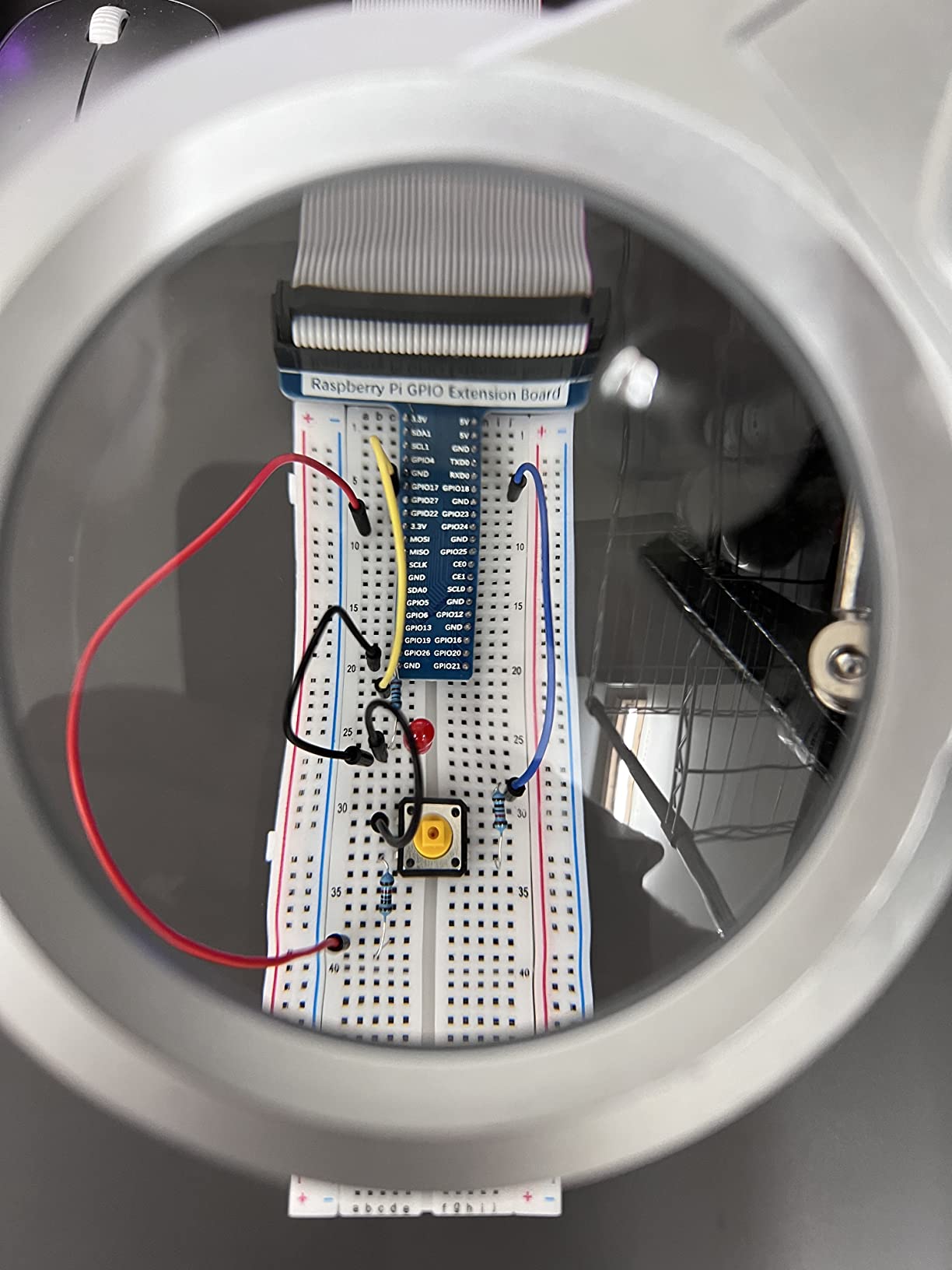
The component variety is massive. You get sensors, motors, displays, relays, and communication modules.
The breadboard is large enough for complex builds. The jumper wires are color-coded and organized.
I built a project that read temperature data and displayed it on a web page. The Pi ran a small Python web server while the sensor sent analog readings through an analog-to-digital converter.
That project required combining hardware, networking, and software. It was the most advanced build in our entire testing process.
The downsides are real. The tutorial book has occasional English language errors that can confuse beginners.
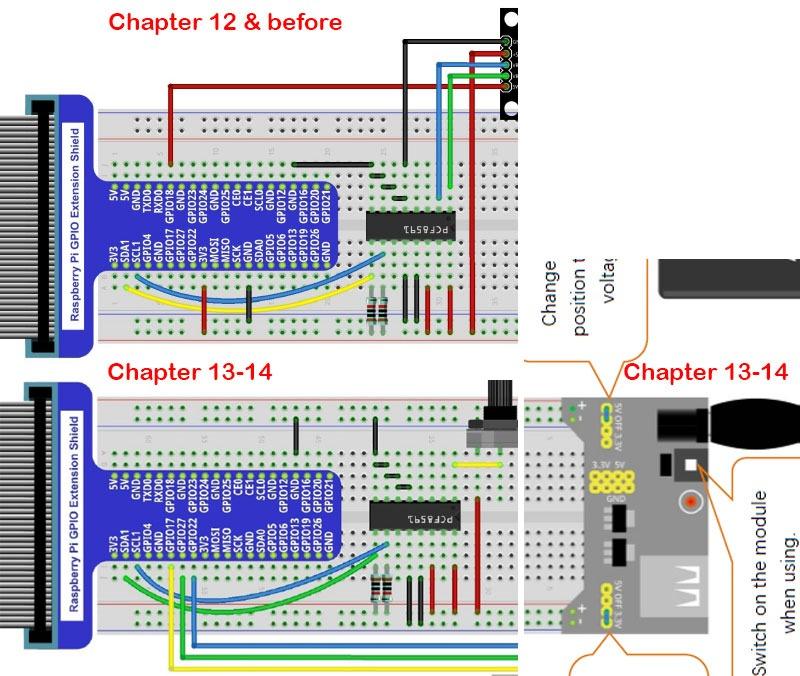
The diagrams are mostly clear, but we found two inconsistencies between the wiring photo and the schematic.
The customer support team is excellent. When I emailed about a wiring question, they replied within a day with a corrected diagram.
The support quality almost makes up for the documentation flaws. Almost.
Who Should Choose a Raspberry Pi Kit Over Arduino
This kit is for learners who want to build software projects that interact with the physical world. Arduino is better for pure hardware control.
Raspberry Pi is better when you want to add cameras, run web servers, or process data with Python libraries. If your child is already learning Python in school, the Raspberry Pi ecosystem will feel natural.
If they are interested in robotics that involves computer vision or machine learning, the Pi is the only practical choice among these kits.
Adults who want to transition from hobby electronics to professional development will also benefit. Python and C are industry-standard languages.
The skills you build here transfer directly to data science, web development, and embedded systems jobs. The tutorial even includes a project that reads sensor data and stores it in a CSV file.
That is a genuine data logging skill used in real engineering labs.
How the Five Programming Languages Expand Career Options
Scratch teaches logic without syntax. Python teaches real-world coding with readable syntax. C teaches memory management and hardware control.
Java teaches object-oriented thinking. Processing teaches creative coding and visual output.
Together, these five languages cover the spectrum from beginner to professional. A child who completes all five versions of the LED blink project will understand how the same hardware behaves under different software paradigms.
That conceptual flexibility is a career advantage. Employers do not just want someone who knows one language.
They want someone who understands programming concepts deeply enough to learn new languages quickly. The Freenove kit builds that adaptability by design.
It is the only kit on this list that I would recommend as a genuine career preparation tool.
10. Official Arduino Starter Kit — Premium Build Quality from Italy
Official Arduino Starter Kit [K000007] - 12 DIY Projects with Electronic Components & English Projects Book - Original Kit from Italy
12 DIY projects
170-page project book
Genuine Italian components
DC and servo motors
High-quality original parts
Pros
- Official Arduino kit from Italy
- Excellent 170-page project book
- High-quality genuine components
- Beautiful packaging
- Projects build on each other
Cons
- Higher price than clone kits
- Smaller print in book
- Wooden base may be flimsy
- Short jumper wires
This is the official kit from the Arduino team in Italy. It costs more than the ELEGOO alternatives, and it includes fewer components.
So why would anyone buy it? The answer is quality, documentation, and philosophy.
When you buy the official kit, you support the open-source project that created the Arduino ecosystem. You also receive a one hundred seventy-page project book that is the best-written manual I have seen in any electronics kit.
The book is printed in color, bound like a real book, and filled with explanations that teach concepts rather than just steps.
The twelve projects are fewer in number than ELEGOO’s thirty-five, but each one is more thorough. The first project is a simple blinking LED.
By the twelfth project, you are building a keyboard instrument with capacitive touch sensing. The progression is carefully designed.
Each project adds one new concept and reinforces the previous ones. My tester noticed that he could have built project eight after finishing project five because the skills were cumulative.
That is intentional. The book teaches a curriculum, not just a collection of builds.
![Official Arduino Starter Kit [K000007] - 12 DIY Projects with Electronic Components & English Projects Book - Original Kit from Italy customer photo 1](https://lexavebrew.com/wp-content/uploads/2026/04/B009UKZV0A_customer_1.jpg)
The components are genuine Arduino parts. The board is manufactured by the Arduino team. The sensors are tested to tighter tolerances than most clones.
The motors are quieter. The packaging is beautiful enough to serve as a gift box.
I gave this kit to a family friend as a birthday present, and the recipient opened the box with the same excitement usually reserved for premium electronics. The unboxing experience matters.
It signals that the contents are serious tools, not just toys.
The wooden base is the weakest part of the kit. It looks elegant, but it flexes under pressure.
If you press a component firmly into the breadboard, the base bows slightly. It does not break, but it feels less stable than a plastic case.
The jumper wires are also shorter than the ELEGOO equivalents. That limits how far apart you can place components.
These are minor complaints, but they are worth mentioning when the price is higher than the competition.
![Official Arduino Starter Kit [K000007] - 12 DIY Projects with Electronic Components & English Projects Book - Original Kit from Italy customer photo 2](https://lexavebrew.com/wp-content/uploads/2026/04/B009UKZV0A_customer_2.jpg)
When the Premium Price Is Worth the Investment
This kit is the right choice for learners who value documentation over component count. If you are the type of person who reads manuals cover to cover before touching a wire, the official book will make you happy.
It is also the best choice for gifts. The packaging and presentation make a strong impression.
If you are buying for a teenager who is serious about engineering, the official kit signals that you respect their interest enough to invest in the real thing.
Educators should also consider this kit. The structured curriculum makes it easier to align with classroom pacing.
You can assign one project per week and know that the concepts will build logically. The book even includes discussion questions at the end of each chapter.
Those questions are the kind of formative assessment tools that teachers appreciate. I have recommended this kit to two local STEM teachers who wanted a reliable curriculum for an after-school club.
How Genuine Components Impact Long-Term Learning
The official Arduino board is more reliable than most clones. It has better voltage regulation, cleaner solder joints, and more accurate clock timing.
For beginners, these differences are invisible. For advanced projects, they matter.
If you ever build a project that requires precise timing, like a MIDI controller or a radio transmitter, the genuine board will perform better.
You might not need that precision for a year or two, but having the genuine board means you will not outgrow it as quickly.
The project book is also a long-term resource. Unlike a PDF that gets buried in a download folder, the printed book sits on a shelf.
My tester returned to it months after finishing the projects to look up a circuit diagram for a custom build. The book is a reference, not just an instruction sheet.
That longevity adds value that the component count alone does not capture.
What to Look for When Buying an Electronics Learning Kit
Buying the right kit requires more than picking the one with the most projects. I have seen parents buy advanced Arduino kits for eight-year-olds who got frustrated and quit.
I have seen teenagers blow through a Snap Circuits Jr. kit in a week and get bored. The right match depends on age, skill level, and learning goals.
This section breaks down the factors that matter most.
Age and Safety Considerations
For children under eight, look for solderless kits with large pieces. Snap Circuits and the National Geographic kit are safe choices because the components are too big to swallow and require no tools.
The plastic housings protect small fingers from sharp edges. For kids aged eight to twelve, solderless kits are still a good choice, but you can also introduce Arduino-based kits if the child shows strong interest and has adult supervision.
For teens and adults, any kit on this list is appropriate, though the Arduino and Raspberry Pi options will feel more satisfying for learners who want real engineering skills.
Safety also means considering the workspace. A good electronics kit needs a flat, well-lit surface.
If you are setting up a learning area at home, think about pairing the kit with an ideal study environment setup that provides bright, even light.
Small components and wire colors are hard to distinguish under dim lighting. For educators, combining these kits with classroom educational technology can help demonstrate concepts to groups of students at once.
Skill Level and Learning Progression
Absolute beginners should start with a kit that has strong scaffolding. That means clear step-by-step instructions, troubleshooting help, and a logical progression from easy to hard.
The Snap Circuits line and the National Geographic kit excel here. The ELEGOO Super Starter Kit is also beginner-friendly, but the Arduino IDE adds a software layer that can intimidate someone who has never coded.
Intermediate learners need kits that explain why circuits work, not just how to build them. The official Arduino Starter Kit and the ELEGOO Mega R3 both include theory sections that explain concepts like voltage dividers and pulse-width modulation.
Advanced learners need expandability. They want kits that include standard components they can reuse in custom projects. Any kit with a breadboard and standard sensors fits this need.
The Freenove Raspberry Pi kit is the most expandable because the Pi itself is a full computer.
Documentation Quality and Community Support
The best kit in the world is useless if the manual is confusing. I always recommend downloading the tutorial PDF before buying a kit.
Most manufacturers offer free samples on their websites. Read the first lesson. If it makes sense to you, the rest probably will too.
If it feels like a translation from another language, consider a different kit. The official Arduino book and the ELEGOO Mega R3 tutorial are the clearest I have found.
The Freenove tutorial is comprehensive but occasionally rough in its phrasing.
Community support is equally important. Arduino has the largest online community. If you get stuck, a quick search on the Arduino forum or Reddit will usually yield an answer.
Raspberry Pi also has strong forums. Snap Circuits has less online discussion, but the projects are simpler and less likely to break.
When in doubt, choose a kit with a large user base. The collective knowledge of thousands of builders is worth more than any single manual.
Component Quality and Reusability
Check whether the kit uses standard components or proprietary modules. Standard components like resistors, LEDs, and sensors on a breadboard can be reused in future projects.
Proprietary modules like Snap Circuits pieces are limited to the Snap Circuits ecosystem. Both approaches are valid.
The question is whether you want a self-contained toy or a reusable toolset. For young kids, the toy approach is fine. For serious learners, the toolset approach is better.
Component quality also affects longevity. Cheap jumper wires with thin connectors will fail after a few months. Cheap breadboards lose their grip and let wires slip out.
The official Arduino kit and the ELEGOO Mega R3 both use decent quality parts. If you buy a budget kit, expect to replace some accessories later.
That is not a dealbreaker, but it is a hidden cost to consider.
Expandability and Future-Proofing
The best kits grow with the learner. A breadboard-based Arduino kit can accept new sensors, motors, and displays from any electronics store.
A Raspberry Pi kit can run new software and connect to the internet. Snap Circuits sets can combine with each other.
Before buying, ask yourself what happens after the included projects are finished. If the answer is buy a new kit, that is fine for beginners.
If the answer is expand the current kit, you are making a smarter long-term investment.
Future-proofing also means considering software updates. Arduino and Raspberry Pi both receive active development. New libraries and tutorials appear every month.
Proprietary kits depend on the manufacturer for new content. That is why I lean toward Arduino and Raspberry Pi for anyone who plans to stay in the hobby for more than a year.
The ecosystems are alive. The communities are active. The learning never stops.
Frequently Asked Questions
Which is the best electronics kit for a beginner to get knowledge about circuits?
The Snap Circuits Jr. SC-100 is the best choice for absolute beginners with no prior knowledge. It uses color-coded snap-together pieces that require no tools or soldering. The full-color manual includes over 100 projects that teach series and parallel circuits, switches, and basic components through hands-on building. For adults and teens, the ELEGOO UNO Project Super Starter Kit offers a more advanced introduction that includes Arduino programming and real electronic components while still remaining beginner-friendly.
What are the best electronics kits for beginners?
The best electronics kits for beginners depend on age and goals. For children ages 8 to 12, the Snap Circuits Jr. SC-100 and National Geographic Circuit Maker Kit provide safe, solderless introductions with strong visual instructions. For teens and adults, the ELEGOO UNO Project Super Starter Kit and ELEGOO Mega R3 Ultimate Starter Kit offer comprehensive Arduino-based learning with clear tutorials and pre-soldered components. The official Arduino Starter Kit is ideal for beginners who want premium documentation and genuine parts.
Best electronics learning kit for adults?
Adults should consider the ELEGOO Mega R3 Ultimate Starter Kit or the official Arduino Starter Kit. The Mega R3 offers over 200 components, 35+ lessons, and a MEGA2560 board that supports complex projects without immediate upgrades. The official Arduino kit provides the best documentation with a 170-page project book and genuine Italian components. For adults interested in coding careers, the Freenove Ultimate Starter Kit for Raspberry Pi teaches five programming languages and includes a 962-page tutorial.
Electronics kits for engineering students?
Engineering students need kits that teach real-world skills and scale with coursework. The ELEGOO Mega R3 Ultimate Starter Kit is excellent for microcontroller and sensor fundamentals. The Freenove Ultimate Starter Kit for Raspberry Pi is superior for software engineering, data logging, and IoT projects. The official Arduino Starter Kit provides strong foundational knowledge with curriculum-quality documentation. All three include standard components that can be reused for custom projects and lab assignments.
Advanced electronic kits for adults?
Advanced learners should look at the Freenove Ultimate Starter Kit for Raspberry Pi, the ELEGOO Mega R3 Ultimate Starter Kit, and the Snap Circuits Pro SC-500. The Freenove kit offers 128 projects across five programming languages with 223 components. The ELEGOO Mega R3 supports complex multi-sensor builds with its MEGA2560 board. The Snap Circuits Pro SC-500 introduces integrated circuits, logic gates, and digital displays through over 500 projects. All three provide enough depth to keep experienced builders engaged for months.
Our Final Thoughts on the Best Electronics Learning Kits
After six months of testing, I can say with confidence that the best electronics learning kits are the ones that teach real skills while keeping the experience fun.
The ELEGOO Mega R3 Ultimate Starter Kit remains my top recommendation for anyone who wants a complete Arduino education in one box. The Snap Circuits line continues to be the safest, most intuitive entry point for young kids.
The Freenove Raspberry Pi kit is the only option on this list that genuinely prepares learners for software engineering careers.
Your choice should match your age, your goals, and your budget. Do not buy an advanced Arduino kit for a child who has never held a battery.
Do not buy a simple snap-together set for a teenager who is already writing Python. The kits on this list cover every level from age eight to adult professional.
Pick the one that fits your current stage, and remember that the best kit is the one you actually build with. A hundred projects on the shelf teach nothing.
Ten projects on the workbench teach everything. Here is to building something real in 2026.