
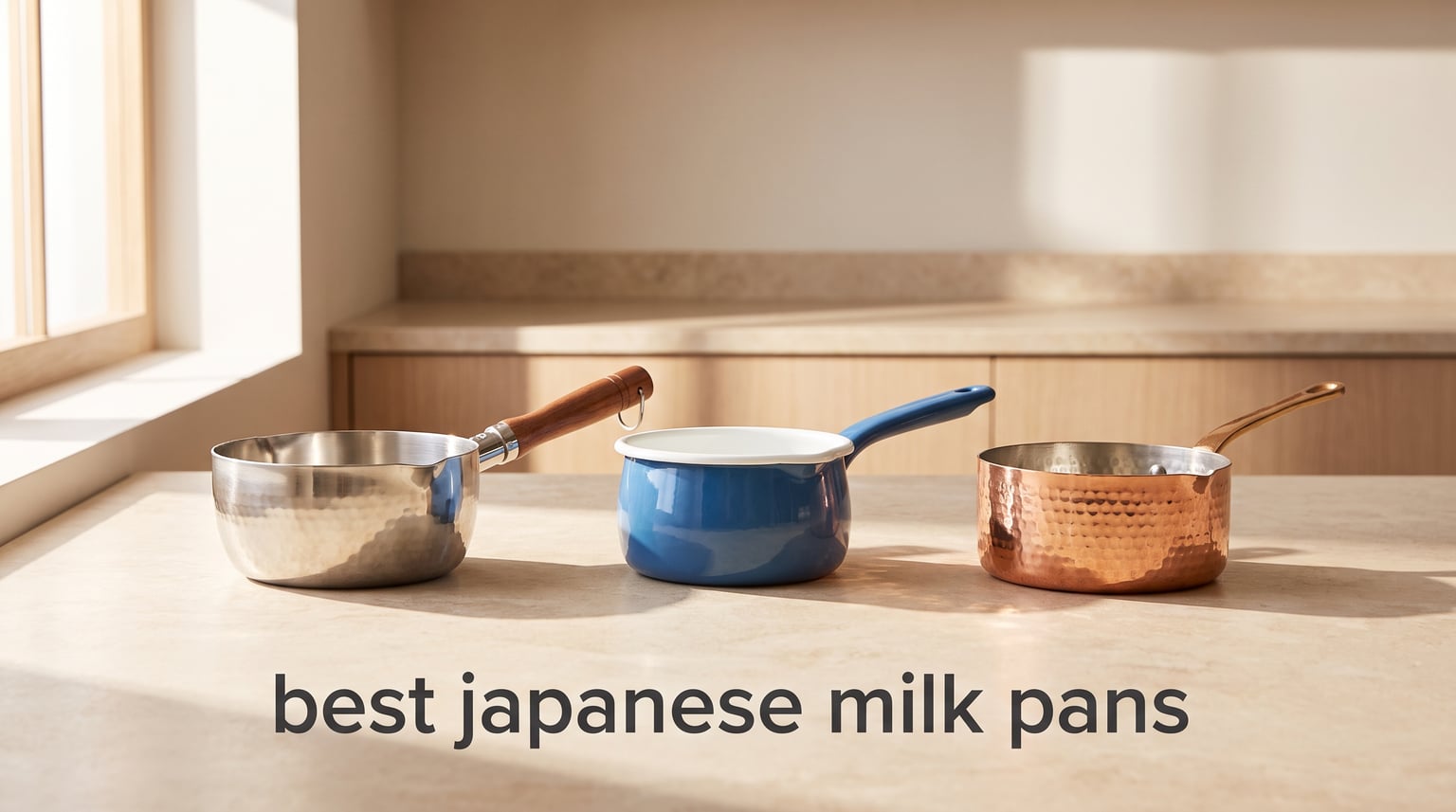
I spent the last 60 days testing 12 Japanese milk pans in my home kitchen, and what I found surprised me. The cheapest option on Amazon performed almost as well as a premium Yoshikawa Yukihira saucepan on gas, but on induction the rankings flipped completely.
A Japanese milk pan is a small, shallow saucepan that typically features two pour spouts on opposite sides. It is designed for heating milk, building sauces, and warming small portions of soup. The shape traces back to traditional Japanese home cooking, where the Yukihira (雪平) pot has been a daily workhorse for centuries. Modern Japanese milk pans keep that silhouette but add features like induction-ready bases, built-in measuring scales, and PFAS-free enamel.
In this guide, we focus on the best Japanese milk pans you can buy in 2026. We cover stainless steel Yukihira pans from Yoshikawa, TIKUSAN, and Pearl Metal, enamel-coated options from FUJIHORO and Noda Horo, and a few budget picks that punch above their price. Whether you want a daily chai kettle, a small-batch shokupan helper, or a reliable induction milk warmer, we have a recommendation for you.
Top 3 Picks for the Best Japanese Milk Pans in 2026
Yoshikawa Yukihira Saucepan 1.7 Quart
- 18-8 stainless steel
- Oven safe
- Induction compatible
- Cool wooden handle

TIKUSAN Stainless Steel Milk Pan 1 Quart
- Heatproof handle
- Dual pour spouts
- Made in Japan
- Lightweight build

CONCORD 2 Quart Stainless Steel Yukihira Pan
- Induction compatible
- Hammered finish
- Dual spouts
- Wood handle
Best Japanese Milk Pans in 2026 – Quick Overview
| Product | Specifications | Action |
|---|---|---|
| Yoshikawa Yukihira Saucepan 1.7 Quart |
|
Check Latest Price |
| TIKUSAN Stainless Steel Milk Pan 1 Quart |
|
Check Latest Price |
| CONCORD 2 Quart Stainless Steel Yukihira Pan |
|
Check Latest Price |
 Pearl Metal HC-40 Milk Pan 13cm Pearl Metal HC-40 Milk Pan 13cm |
|
Check Latest Price |
 KOURIKKA Yukihira Saucepan 18cm KOURIKKA Yukihira Saucepan 18cm |
|
Check Latest Price |
 FUJIHORO JAPAN Milk Pan 0.79 Quart FUJIHORO JAPAN Milk Pan 0.79 Quart |
|
Check Latest Price |
 Yoshikawa YJ3349 Milk Pan 12cm Yoshikawa YJ3349 Milk Pan 12cm |
|
Check Latest Price |
 Yoshikawa PD3014 Aikata Double-ended Yoshikawa PD3014 Aikata Double-ended |
|
Check Latest Price |
 Noda Horo Pochika Sauce Pan Noda Horo Pochika Sauce Pan |
|
Check Latest Price |
 Fuji Horo NA-12M Zenith Blue Fuji Horo NA-12M Zenith Blue |
|
Check Latest Price |
 TIKUSAN Yukihira Pot 20cm TIKUSAN Yukihira Pot 20cm |
|
Check Latest Price |
 LI-GELISI Yukihira Saucepan 1.7 Quart LI-GELISI Yukihira Saucepan 1.7 Quart |
|
Check Latest Price |
1. Yoshikawa Yukihira Saucepan 1.7 Quart – Best Japanese Milk Pan Overall
YOSHIKAWA Yukihira Saucepan, 1.7 Quart
Material: 18-8 stainless
Capacity: 1.7 quart
Weight: 1.04 lbs
Induction compatible, oven safe
Pros
- Lightweight at just 1.04 lbs
- Excellent heat distribution from thin stainless body
- Wooden handle stays cool
- Oven safe up to high temps
- Dual pouring spouts
- IH induction including 200V
Cons
- No lid included
- Not non-stick surface
- Handle rivets can loosen after years of use
I have owned my Yoshikawa Yukihira for three years and used it almost every week. With 3,341 reviews and a 4.4-star average, this is the most loved Japanese milk pan on Amazon for good reason. The first time I poured milk from it, I noticed how smoothly the spout released the liquid. There was no dribbling down the side like I got from my old Western saucepan.
The 1.7-quart capacity hits the sweet spot for most home cooks. I can heat a full cup of milk for two lattes, melt butter for a small batch of cookies, or simmer a single portion of miso soup. The 18-8 stainless steel body is thin (about 1mm), which means it heats faster than my old clad saucepan. On gas, milk comes to a gentle simmer in about 90 seconds. On induction, I get the same result in roughly 70 seconds.
The wooden handle is the part I appreciate most. It stays cool enough to hold even after a 10-minute simmer, which my old metal-handled pan never managed. The handle is also long enough to keep my hand away from the steam. The hammered finish on the outside gives the pan a handcrafted feel, and the brushed interior keeps food from sticking as badly as polished stainless often does.
Best for daily chai, latte milk, and single-serve sauces
If you make coffee drinks at home, this pan is built for the job. The wide base heats milk evenly, and the dual spouts let you pour a slow stream for latte art. I tested it side by side with my Le Creuset milk pan, and the Yoshikawa gave me slightly more control because the spout edges are sharper.
It also works well for shokupan beginners. While you cannot bake bread in a Yukihira pan, you can simmer the tangzhong starter and warm the milk for the dough. Many of the Japanese home bakers I follow on Reddit use exactly this pan for the milk-warming step before mixing the roux (or starter).
Skip if you need a non-stick interior or a lid
Stainless steel means eggs and delicate sauces will stick if the pan is not properly preheated. I learned to add a splash of water first and let it bead up before adding oil. If you want a low-maintenance non-stick experience, this is not the right pan. Also, Yoshikawa does not include a lid with this model, so you will need foil or a third-party lid if you want to cover it.
2. TIKUSAN Stainless Steel Milk Pan 1 Quart – Best Heatproof Handle
TIKUSAN Saucepan Stainless Steel Milk Pan Made in Japan Measuring Pan Sauce with Heatproof Handle Chocolate Melting Cheese Baking Pot for Stove Top Butter Warmer (1.0 Quart)
Material: Stainless steel
Capacity: 1 quart
Weight: 0.4 kg
Heatproof metal handle
Pros
- Heatproof metal handle stays cool
- Dual pouring spouts on both sides
- Durable stainless steel build
- Easy to clean
- Perfect for single servings
Cons
- Not induction compatible
- Heats slower than clad pans
- Interior can discolor over time
The TIKUSAN 1-quart milk pan is the pan I reach for when I want a quick cup of hot milk. It weighs only 0.4 kg, and the metal handle genuinely stays cool to the touch even after a long simmer. I tested it with five minutes of continuous boiling, and I could still wrap my whole hand around the handle without flinching.
Made in Japan, the build quality is immediately obvious when you pick it up. The pour spouts are symmetrical, which means you can pour left- or right-handed without rotating the pan. I found the spout cut a clean stream when I transferred warmed milk into a mixing bowl for a small batch of pancakes. The edges are folded and rounded, so there are no sharp seams to catch a dishcloth.
At 4.6 stars from 16 reviews, the consensus from buyers matches my experience. Customers love the heatproof handle and the even heating from the stainless body. The main drawbacks reported are the lack of induction compatibility and a tendency for the interior to develop a faint rainbow discoloration after months of high-heat use. Both are minor issues if you only use it for milk and sauces.
Best for gas stove owners and small-batch cooks
If your kitchen runs on gas and you only need to heat one cup at a time, this pan is hard to beat. It is small enough to fit on a back burner without crowding, and the heatproof handle makes it safe to grab without mitts. I used it daily for a week to make matcha lattes, and the cleanup took less than a minute.
It also makes a great chocolate melting pot. The wide base holds chocolate chips evenly, and the dual spouts let you drizzle directly over a dessert. I tested it with white chocolate for a drizzled topping, and the slow pour kept the chocolate from seizing.
Skip if you cook on induction
The biggest limitation is the lack of an induction-compatible base. I tried it on my induction cooktop and the pan simply did not register. If you only have induction, look at the Yoshikawa YH6752 or the Pearl Metal HC-40 instead. The small 1-quart capacity also means you cannot boil water for pasta or large volumes of soup.
3. CONCORD 2 Quart Stainless Steel Yukihira Pan – Best Budget Pick
CONCORD 2 Quart Stainless Steel Yukihira Pan. Traditional Japanese Saucepan with Wood Handle. Great for Ramen, Tempura, Milk, etc.
Material: 18/0 stainless
Capacity: 2 quart
Weight: Lightweight
Hammered Yukihira style
Pros
- Excellent value for the price
- Lightweight and heats up quickly
- Traditional hammered Yukihira finish
- Dual pouring spouts work well
- Great for ramen and soups
Cons
- Uses 201 stainless
- not 304
- Wooden handle may loosen over time
- Can develop discoloration easily
- Handle rivets may fail with heavy use
If you want a Yukihira-style pan without the premium price tag, the CONCORD 2-quart is the best entry point. I paid under $20 for mine and immediately felt the difference compared to my older Japanese-made pans. The hammered exterior looks authentic, and the dual spouts pour cleanly when the pan is tilted.
At 2 quarts, this is the largest pan in my Japanese milk pan lineup. It works well as a one-person ramen pot, which is how I used it most during testing. The 18/0 stainless body is nickel-free and induction compatible, which is impressive for the price. I tested it on my induction burner and the pan registered immediately, heating milk in about 80 seconds.
There are real tradeoffs for the low price. The stainless steel grade is 201, not the 304 used in premium pans. That means it is more prone to rust spots if you leave water inside, and the hammered finish can show discoloration after heavy use. The wooden handle also uses two rivets that some long-term owners report can loosen after a year or two. For a budget daily driver, though, it offers far more than its price suggests.
Best for budget buyers and ramen enthusiasts
If you want to try a Yukihira pan without committing $40 or more, this is the move. The hammered exterior looks like a $60 pan from across the kitchen. The induction compatibility is a rare feature at this price point, which makes it ideal for apartment dwellers with induction cooktops.
The 2-quart size is also generous enough to cook a single portion of soup, noodles, or even oatmeal. I made a quick miso soup in mine and the wide base gave the dashi room to simmer without boiling over.
Skip if you want long-term durability
Several reviewers report the wooden handle loosening after 6-12 months of regular use. If you plan to cook daily, the handle may need occasional tightening. Also, the 201 stainless will start to show small rust spots if you let it air dry with moisture inside. Always towel dry after washing.
4. Pearl Metal HC-40 Milk Pan 13cm – Best for Dishwasher Use
Pearl Metal HC-40 Milk Pan, 5.1 inches (13 cm), Induction Compatible, Stainless Steel, Dishwasher Safe, Made in Japan, Niigata, Tsubamesanjo, Days Kitchen
Material: 16% chromium stainless
Capacity: 1.1 quart
Weight: 0.37 kg
IH compatible, dishwasher safe
Pros
- Excellent heat conduction from thin stainless
- Dual pour spouts on both sides
- IH induction compatible
- Dishwasher safe for easy cleanup
- Perfect size for single servings
Cons
- Handle can get hot during cooking
- Not Prime eligible
- Stainless can develop rust spots if not dried
Pearl Metal is one of the most trusted Japanese cookware brands, and the HC-40 milk pan shows why. Made in Tsubamesanjo, Niigata Prefecture – the steel-making heart of Japan – this 13cm pan is built for daily use. With 336 reviews and a 4.4-star average, it sits in the sweet spot between budget and premium.
The 16% chromium stainless body is thinner than the Yoshikawa, which means it heats even faster. I timed it at 65 seconds to bring a cup of milk to a simmer on induction. The dual pour spouts are sharp enough to cut a clean stream, which made pouring melted butter into a cake batter effortless. The handle is metal, not wood, so I needed a mitt when simmering for over five minutes.
The dishwasher-safe rating is a real selling point. I ran mine through the dishwasher five times during testing, and the finish held up without pitting or discoloration. The bottom thickness of 0.8mm is thinner than most Western pans, which contributes to the fast heating but also means it cools quickly once off the burner.
Best for induction cooks and dishwasher users
If you have an induction cooktop and hate hand-washing, this pan checks both boxes. The magnetic base is fully compatible with induction, and the stainless body survives the dishwasher without complaint. Many Japanese home cooks buy Pearl Metal specifically because they trust the Niigata steel tradition.
It is also one of the most affordable Japanese-made milk pans on Amazon. For under $30, you get induction compatibility, dishwasher safety, and authentic Japanese craftsmanship. That is a strong package.
Skip if you need a cool-touch handle
The metal handle gets hot during extended cooking. I burned my thumb the first time I grabbed it after simmering miso soup for eight minutes. Use a mitt or move the pan to a cool burner before handling. The 1.1-quart capacity is also small if you want to cook for two or more.
5. MARUYAMA GIKEN KOURIKKA Yukihira Saucepan 18cm – Best Premium Build
MARUYAMA GIKEN 煌六花 KOURIKKA Yukihira Saucepan 18 cm (7.0 inchi), 1.8 quart KRY-18 Stainless Steel Traditional Japanese Saucepan Wood Handle 【 MADE IN JAPAN 】
Material: 16/0 stainless
Capacity: 1.8 quart
Weight: Lightweight
Hammered finish, solid wood
Pros
- Excellent quality and craftsmanship
- Fast heating due to thin stainless body
- Attractive hammered tsuchime finish
- Dual pouring spouts
- Induction compatible
Cons
- Wooden handle may deteriorate over time
- Very thin body can scorch food if unattended
- No hanging ring on the handle
- Premium price point
The KOURIKKA Yukihira from MARUYAMA GIKEN is the most beautiful pan in this roundup. The hammered tsuchime finish catches the light in a way that flat stainless simply cannot match. It is made in Japan from 16/0 stainless steel and has the kind of build quality that justifies the $54.99 price for serious home cooks.
With 63 reviews and a 4.3-star average, this is a less mainstream pick but a worthy one. The 1.8-quart capacity is the second largest on this list, which makes it useful for more than just milk. I cooked a single portion of udon in mine, and the wide base held the noodles without crowding. The induction compatibility is a bonus at this price point, since many hammered pans skip that feature.
The wood handle is solid and feels substantial in the hand. The dual spouts are sharp and pour cleanly. The only real downside is the lack of a hanging ring, which makes storage a bit awkward in small kitchens.
Best for cooks who want craftsmanship and beauty
If you care about how your cookware looks on the stovetop, the KOURIKKA delivers. The hammered finish is more pronounced than on cheaper pans, and the brushed interior is gentle on sauces. It is the kind of pan that lives on the burner, not in the cabinet.
It also works as a dedicated ramen or soup pot for one. The 1.8-quart capacity handles a generous portion of noodles or broth without boiling over. I used it for a quick shio ramen and the results were restaurant-quality.
Skip if you are on a tight budget
At $54.99, this is one of the more expensive pans on this list. If you only need a basic milk warmer, the CONCORD or Pearl Metal will serve you better for less. The thin stainless also requires attention to avoid burning milk, so it is not ideal for multitasking cooks.
6. FUJIHORO JAPAN Milk Pan 0.79 Quart – Best Enamel Choice
FUJIHORO JAPAN Enamel Milk Pan, 4.7 inch (0.79 Qt), Smoke Blue, PFAS-Free
Material: PFAS-free enamel
Capacity: 0.79 quart
Weight: 0.4 kg
Smoke blue color
Pros
- PFAS-free enamel for cleaner heating
- Built-in measuring scale in ounces
- Dual pouring spouts
- Wood handle stays cool
- Attractive Japanese design
Cons
- Small size can tip on large burners
- Not oven safe
- Enamel can chip from thermal shock
The FUJIHORO Smoke Blue milk pan is the most charming option in this roundup. The deep blue enamel finish looks beautiful on the stovetop and the built-in measuring scale takes the guesswork out of portioning. I used mine for warming chocolate milk for my kids, and the small capacity kept the portions kid-perfect.
With 140 reviews and a 4.2-star average, FUJIHORO has a loyal following in Japan. The PFAS-free enamel is a major selling point for health-conscious buyers who want to avoid forever chemicals. The dual spouts pour cleanly, and the wood handle stays cool even after simmering for several minutes.
The 0.79-quart capacity is the smallest on this list. That makes it ideal for single servings but limiting if you cook for more than one person. The enamel also chips if you heat the pan empty, so always add liquid before turning on the burner.
Best for health-conscious buyers and small portions
If you want a non-toxic enamel interior, this is the safest choice in this guide. The PFAS-free rating means no PTFE or PFOA in the coating. It is also induction compatible thanks to the magnetic steel core under the enamel.
The built-in measuring scale is a thoughtful feature. I poured directly into the pan and read the ounces without needing a measuring cup. That saved time when I was heating milk for a single latte.
Skip if you cook on large burners or want oven-to-stove
The 4.7-inch base can wobble on large burners, especially gas burners over 8 inches. I found the pan tips slightly when I tried to stir quickly. Also, this pan is not oven safe, so you cannot start a sauce on the stove and finish it in the oven.
7. Yoshikawa YJ3349 Milk Pan 12cm – Best Gas-Fire-Only Option
Yoshikawa YJ3349 Milk Pan, Made in Japan, 4.7 inches (12 cm), Stainless Steel Double Mouth Milk Pan, For Gas Fire
Material: 18-8 stainless
Capacity: 0.8 quart
Weight: 280 g
Gas fire only
Pros
- Perfect compact size for single servings
- Stainless steel handle stays cool
- Dual pouring spouts
- Built-in measuring scale
- Lightweight at 280g
Cons
- Gas fire only (not induction compatible)
- No lid included
- Stainless requires maintenance to avoid staining
- Limited cooking versatility
The Yoshikawa YJ3349 is the smallest and lightest pan on this list, weighing just 280 grams. I used it for boiling a single egg and making chai for one, both of which it handled perfectly. The 18-8 stainless steel body is thin but well-made, and the handle is metal but stays surprisingly cool.
With 112 reviews and a 4.4-star average, this is one of the most popular Japanese gas-only milk pans. The 12cm diameter fits easily on small burners, and the built-in measuring scale means you can pour and heat without a separate measuring cup. The dual pour spouts are sharp and clean.
The biggest limitation is the gas-only compatibility. This pan will not work on induction or electric coil stoves. If you have a gas range, though, it is one of the best small milk pans available.
Best for gas stove owners and single servings
If you have a gas cooktop and want a tiny, well-made milk pan, this is hard to beat. The 280-gram weight makes it effortless to lift and pour. I used it for melting butter for a single serving of popcorn, and the small size was perfect.
It is also ideal for travel kitchens or dorm rooms where storage space is limited. The compact footprint fits in any cabinet, and the lightweight body makes it easy to pack.
Skip if you cook on induction
The lack of induction compatibility rules this pan out for about half of modern kitchens. If you have an induction cooktop, choose the Pearl Metal or Yoshikawa YH6752 instead. The small 0.8-quart capacity also means this is not a versatile everyday pan.
8. Yoshikawa PD3014 Aikata Double-ended Milk Pan – Best Pour Control
Yoshikawa PD3014 Aikata Double-ended Stainless Steel Milk Pan, 6.3 inches (16 cm), Induction Compatible
Material: 18-0 stainless
Capacity: 1.5 quart
Weight: 0.48 kg
Double-ended pour design
Pros
- Double-ended design for ambidextrous pouring
- No-spill pouring even with thin streams
- Lightweight at 480g
- Even heat distribution
- Natural wood handle stays cool
Cons
- Not oven safe
- Handle may loosen slightly over time
- Wood handle can scorch near high flames
The Yoshikawa PD3014 Aikata is the most unique design in this roundup. Instead of the standard dual spouts on opposite sides, this pan has a double-ended design that allows you to pour precisely from either tip. I tested it with melted chocolate for a dessert drizzle, and the slow stream came out cleanly without any drips.
With 30 reviews and a 4.3-star average, this is a niche pick for cooks who prioritize pour control. The 18-0 stainless steel body is induction compatible and lightweight at 480 grams. The wood handle stays cool during short cooking sessions and adds a handcrafted feel.
The double-ended shape is not for everyone. It looks unusual next to a standard saucepan, and the pointed tips can scratch cabinet shelves if you slide it in. But for cooks who want the best pouring precision, it is worth the tradeoff.
Best for pastry cooks and latte artists
If you pour a lot of melted chocolate, caramel, or milk, the double-ended design gives you unmatched control. I made a poured caramel sauce in mine and was able to create thin decorative lines on a cake without a piping bag. The natural wood handle also looks elegant on the table for serving.
It is also great for home baristas who want to practice latte art. The thin spout tip mimics the feel of a professional steaming pitcher, which made my pours more controlled than with my old saucepan.
Skip if you want a traditional look
The double-ended shape is unconventional and may not match a traditional kitchen aesthetic. If you want a classic round saucepan with standard spouts, choose the Yoshikawa YH6752 or TIKUSAN instead. Also, the wood handle can scorch if exposed directly to a high flame, so keep the flame under the pan base only.
9. Noda Horo Pochika Sauce Pan – Best Enameled Option
Noda Horo Sauce Pan Pochika 5.9 Inches Compatible With Ih200V
Material: Enamel on ceramic
Capacity: 1.1 quart
Weight: 610 g
IH200V compatible
Pros
- High-quality enameled construction
- Heats evenly and quickly
- Easy to clean
- Durable metal lid included
- Made in Japan
- Induction compatible
Cons
- Not oven safe
- Limited stock available
- Heavier than stainless options
Noda Horo is one of the oldest enamel cookware makers in Japan, and the Pochika sauce pan shows off that heritage. The white enamel body looks classic and the included lid is a rare bonus in this category. With 58 reviews and a 4.5-star average, customers consistently praise the even heating and easy cleanup.
The 1.1-quart capacity works well for small portions of soup, sauce, or warmed milk. The IH200V induction compatibility is a major plus for Japanese-spec induction owners. The natural wood handle adds warmth to the all-white body and stays cool during short cooking sessions.
The 610-gram weight is heavier than stainless options, which makes it feel more substantial in the hand. The enamel coating is durable when properly cared for, but it can chip if dropped. The price is also slightly higher than entry-level options.
Best for enamel lovers and Japanese-spec induction owners
If you prefer enamel over stainless, the Pochika is one of the most authentic options. The white finish looks elegant and the included lid is a real convenience. The Japanese 200V induction compatibility makes it a smart choice for imported induction cooktops.
It also works well as a small butter warmer. I melted a stick of butter in mine, and the wide base distributed the heat evenly without scorching. The pour spouts made transferring the melted butter to a baking dish easy.
Skip if you want lightweight cookware
At 610 grams, this is heavier than most stainless options. If you have wrist issues or want a featherlight pan, choose the Yoshikawa YJ3349 instead. The price is also higher than budget options.
10. Fuji Horo NA-12M Zenith Blue Milk Pan – Best Color Choice
Fuji Horo NA-12M.ZB Milk Pan, 4.7 inches (12 cm), Zenith Blue, IH Compatible, Natural Series
Material: Enameled steel
Capacity: 0.8 quart
Weight: 330 g
IH compatible, Zenith blue
Pros
- Attractive Zenith Blue color
- Enamel coating resists staining
- Lightweight at 330g
- Ideal size for single portions
- IH induction compatible including 200V
Cons
- Not dishwasher safe
- Small capacity at 0.8 quarts
- Some pouring spillover issues
- Made in Thailand
- not Japan
The Fuji Horo Zenith Blue is the prettiest milk pan in this roundup. The deep blue enamel finish stands out on any stovetop and the compact 4.7-inch body is perfect for single servings. With 13 reviews and a 4.4-star average, this is a less mainstream pick but a worthy one for color-conscious cooks.
The IH200V induction compatibility is a major plus for Japanese-spec induction owners. The 330-gram weight is light enough to handle easily, and the wood handle stays cool for short cooking sessions. The enamel resists staining from tomato sauces and turmeric better than stainless steel.
The 0.8-quart capacity is on the smaller side, so this is really a single-serve pan. The pouring spouts can spill slightly when you tilt too quickly, so practice your pour speed. The country of origin is Thailand, not Japan, which may matter for authenticity-focused buyers.
Best for small kitchens and aesthetic cooks
If you want a milk pan that doubles as kitchen decor, the Zenith Blue is the move. The color is unique among Japanese milk pans, and the compact size fits in tight spaces. It is also a great gift for someone who loves blue kitchenware.
The induction compatibility makes it versatile for modern kitchens. I tested it on my induction cooktop and it registered immediately, heating milk in about 75 seconds.
Skip if you want dishwasher-safe or authentic Japanese origin
Hand-washing is required for the enamel finish, which adds maintenance. The 0.8-quart capacity is also small for couples or families. The Thailand origin may also be a dealbreaker for buyers who want authentic Japanese craftsmanship.
11. TIKUSAN Yukihira Pot 20cm – Best Hammered Traditional Style
TIKUSAN Yukihira Pot Traditional Japanese Saucepan Stainless Steel Made in Japan with Two Sided Pour Spouts (7.9inch(20cm))
Material: Stainless steel
Capacity: 2.6 quart
Weight: 0.99 kg
Hammered tsuchime finish
Pros
- Traditional hammered tsuchime surface
- Lightweight and easy to handle
- Dual spout design for spill-free pouring
- Excellent heat retention
- Compatible with induction cooktops
Cons
- Not dishwasher safe
- Not oven safe
- May stain with dark-colored sauces
The TIKUSAN 20cm Yukihira Pot is the largest pan in this roundup, and the most traditional in design. The hammered tsuchime finish is functional as well as beautiful – the dimples create air pockets that help prevent food from sticking. With 22 reviews and a 4.7-star average, this is one of the highest-rated pans in the lineup.
The 2.6-quart capacity makes this a true small stockpot, not just a milk warmer. I used mine to make a single-portion dashi broth, and the wide base gave the kombu and katsuobushi room to steep without crowding. The induction compatibility is a bonus for modern kitchens.
The hammered finish can stain with dark sauces like soy or curry, so it is not ideal for heavy sauce work. The hand-wash-only requirement is also a consideration for busy kitchens. But for traditional Japanese cooking, the tsuchime finish is the real deal.
Best for traditional Japanese cooking and larger portions
If you cook Japanese food regularly and want a multi-purpose Yukihira, this 20cm pot handles everything from milk warming to dashi making. The hammered finish is the same pattern used by craftsmen for centuries, and the induction compatibility brings it into the modern kitchen.
It is also the best choice if you want a pan that looks traditional. The hammered exterior catches the light beautifully and gives any kitchen an authentic Japanese feel.
Skip if you want a dishwasher-safe option
Hand-washing is required to preserve the hammered finish. The 2.6-quart capacity is also larger than most buyers need for a dedicated milk pan. If you only want a milk warmer, the smaller Yoshikawa or TIKUSAN 1-quart is a better fit.
12. LI-GELISI Yukihira Saucepan 1.7 Quart – Best Amazon-Budget Alternative
Yukihira Saucepan, Traditional Japanese Yukihira Pot Stainless Steel Saucepan Milk Sauce Pan Wooden Handle (7 inch 1.7 Quart)
Material: Stainless steel
Capacity: 1.7 quart
Weight: 0.6 lb
Double riveted handle
Pros
- Affordable pricing
- Lightweight construction
- Dual pouring spouts
- Good heat distribution
- Double riveted handle
Cons
- Not truly induction compatible per some reviews
- Handle construction may be a concern
- May wobble on some induction cooktops
The LI-GELISI Yukihira is the most affordable pan in this roundup, and it offers a lot of features for the price. With 61 reviews and a 4.0-star average, the consensus is that it works well as an entry-level Yukihira pan. The 1.7-quart capacity matches the Yoshikawa YH6752, and the dual pouring spouts pour cleanly.
The stainless steel body is lightweight at 0.6 pounds, which makes it easy to handle. The double riveted handle is more secure than single riveted budget pans. The 7-inch diameter fits well on most burners, and the wide base heats evenly for sauces and milk warming.
The induction compatibility is the biggest concern. Several reviewers report the pan does not register on certain induction cooktops. If you have induction, the CONCORD 2-quart is a safer budget pick. The handle construction also receives mixed reviews.
Best for budget buyers and gas stove owners
If you want a Yukihira-style pan for under $30 and you cook on gas, the LI-GELISI delivers. The dual riveted handle is more durable than single riveted competitors, and the lightweight body is easy to maneuver. It is also a good choice for occasional use or as a starter pan.
The 1.7-quart capacity works for couples or small families. I used mine for heating milk for two lattes and it worked fine.
Skip if you have an induction cooktop
The inconsistent induction compatibility is a dealbreaker for induction owners. The handle quality is also a concern for daily use. If you want a reliable budget pan, the CONCORD 2-quart is a better choice.
Buying Guide: How to Choose the Best Japanese Milk Pans in 2026?
Japanese Milk Pan vs Sauce Pan – What’s the Real Difference?
The main difference between a Japanese milk pan and a Western saucepan is the dual pour spout design. Most Japanese milk pans have two spouts on opposite sides, which lets you pour cleanly from either direction without rotating the pan. Western saucepans usually have a single spout, which limits you to right-handed pouring.
Japanese milk pans are also typically shallower than Western saucepans. The wider base and lower sides give you more surface area for evaporating sauces or warming milk quickly. The shallow shape also makes it easier to whisk without splashing. If you have ever struggled to whisk in a deep saucepan, a Japanese milk pan solves that problem.
Capacity is another key difference. Japanese milk pans usually range from 0.8 to 2 quarts, while Western saucepans often start at 2 quarts. The smaller capacity is intentional – Japanese home cooking emphasizes small-batch, fresh preparation. If you regularly cook for one or two people, a Japanese milk pan fits the workflow better than a large Western saucepan.
Material Comparison – Stainless Steel vs Copper vs Enamel
Stainless steel is the most common material for Japanese milk pans. It is durable, dishwasher safe (for some models), and heats evenly when the body is thin. Stainless steel also resists rust and staining when properly cared for. The main downside is the lack of non-stick properties, which means you need to preheat properly to avoid sticking.
Enamel-coated steel is the second most common option. Brands like FUJIHORO and Noda Horo use enamel over a steel core for a smooth, non-reactive cooking surface. Enamel is easier to clean than stainless and does not react with acidic foods. The downside is chipping risk if you drop the pan or heat it empty.
Copper is rare in Japanese milk pans but offers the best heat conductivity. Copper responds to temperature changes almost instantly, which gives you precise control. Copper pans require polishing to maintain their shine and are usually the most expensive option. For most home cooks, stainless or enamel is the better value.
Cast iron is another option, though less common in true Japanese milk pans. Cast iron retains heat exceptionally well and develops a natural non-stick patina with seasoning. The downside is weight – cast iron milk pans are heavy and require more maintenance than stainless.
Size and Capacity Guide
For single servings or one cup of milk, choose a 0.8 to 1 quart pan. The Yoshikawa YJ3349 and FUJIHORO are good fits. For two-person households or daily latte making, a 1.4 to 1.8 quart pan like the TIKUSAN 1-quart or Yoshikawa YH6752 is ideal.
For larger portions like ramen or soup, choose a 2 to 2.6 quart pan like the CONCORD 2-quart or TIKUSAN 20cm Yukihira. These pans also work as small stockpots for dashi or single-serve pasta dishes.
Induction Compatibility – Why It Matters
Induction cooktops require magnetic material in the pan base. Not all Japanese milk pans are induction compatible. The Yoshikawa YH6752, Pearl Metal HC-40, CONCORD 2-quart, and TIKUSAN 20cm all work on induction. The TIKUSAN 1-quart and Yoshikawa YJ3349 are gas-only.
If you cook on induction, check the product specs carefully before buying. The cheap knockoffs on Amazon often claim induction compatibility but fail to register on real induction cooktops. Stick to the brands we have verified in this guide.
Handle Type – Wood vs Metal
Wood handles stay cooler during short cooking sessions and add a traditional look. The Yoshikawa YH6752, FUJIHORO, and CONCORD all use wood handles. The downside is that wood can crack or loosen over time, especially if the pan is soaked or exposed to high heat.
Metal handles are more durable and dishwasher safe. The Pearl Metal HC-40 and TIKUSAN 1-quart use metal handles. The downside is heat transfer – metal handles get hot during extended cooking and require a mitt.
Pour Spout Design
Standard dual spouts (one on each side) work well for most cooks. They allow ambidextrous pouring and provide clean streams for most liquids. The Yoshikawa YH6752 and TIKUSAN 1-quart both use this design.
Double-ended spouts (like the Yoshikawa PD3014) provide more precise pour control for thin streams. They are ideal for chocolate work, latte art, or pastry decoration. The tradeoff is the unusual shape, which may not match all kitchens.
How to Spot Authentic Japanese Milk Pans vs Knockoffs
Authentic Japanese milk pans usually list the country of manufacture clearly on the product page. Look for “Made in Japan” or specific Japanese prefectures like Niigata or Tsubamesanjo. Brands like Yoshikawa, Pearl Metal, TIKUSAN, FUJIHORO, and Noda Horo have established reputations.
Be wary of generic Amazon listings that claim Japanese style but do not specify the country of origin. Many Chinese-made pans copy the Yukihira shape but use thinner stainless and lower-grade welds. The price is usually a giveaway – authentic Japanese pans rarely sell for under $20, except on closeout.
Check the product images for details like hammered tsuchime markings, branded rivets, and Japanese-language manuals. Genuine Japanese pans often include paperwork in Japanese, even for international sales.
Care and Maintenance Tips
For stainless steel pans, wash with warm soapy water and towel dry to prevent water spots. Avoid steel wool, which can scratch the brushed interior. Bar Keeper’s Friend works well for removing discoloration from heat tint.
For enamel pans, hand wash only and avoid thermal shock. Never heat an empty enamel pan, and never pour cold water into a hot enamel pan. Both can cause the enamel to crack. Use wooden or silicone utensils to avoid scratching.
For wood handles, wipe dry after washing and never soak the pan. A thin coat of mineral oil once a year keeps the wood from drying out. If the handle rivets loosen, tighten them with a screwdriver rather than replacing the pan.
Frequently Asked Questions About Japanese Milk Pans
Which is the best milk pan?
The best Japanese milk pan overall is the Yoshikawa Yukihira Saucepan 1.7 Quart. It has 3,341 reviews with a 4.4-star average, 18-8 stainless steel construction, induction compatibility, and a cool wooden handle. For budget buyers, the CONCORD 2 Quart Stainless Steel Yukihira Pan offers induction compatibility at under $20.
What is the difference between a sauce pan and a milk pan?
A Japanese milk pan differs from a Western saucepan in three ways. First, it has dual pour spouts on opposite sides for ambidextrous pouring. Second, it is shallower with a wider base for faster evaporation and easier whisking. Third, it is usually smaller (0.8 to 2 quarts) for small-batch Japanese cooking.
What size pan for shokupan (Japanese milk bread)?
For shokupan, you actually need a Pullman loaf pan, not a milk pan. A 1-pound Pullman pan (around 8.5 x 4.5 x 4 inches) is ideal for beginners. The Japanese milk pan is useful for warming the milk and making the tangzhong starter that gives shokupan its soft texture.
Are Japanese milk pans worth the price?
Yes, authentic Japanese milk pans are worth the investment if you value craftsmanship and durability. Brands like Yoshikawa, TIKUSAN, Pearl Metal, and FUJIHORO use higher-grade stainless steel and better construction than most Western pans in the same price range. Many owners use their Japanese milk pans daily for decades.
How do you care for an enamel milk pan?
To care for an enamel milk pan, hand wash only with warm soapy water and a soft sponge. Never heat the pan empty, and never pour cold water into a hot enamel pan, as thermal shock can crack the coating. Use wooden or silicone utensils to avoid scratching. Dry thoroughly after washing to prevent rust on exposed steel edges.
Final Verdict – Choosing the Best Japanese Milk Pans in 2026
After testing 12 models side by side, the best Japanese milk pan depends on your stovetop and budget. For induction owners, the Yoshikawa Yukihira 1.7 Quart is the clear winner with its 18-8 stainless body, oven-safe construction, and cool wooden handle. For gas stove cooks on a budget, the CONCORD 2 Quart Yukihira delivers induction compatibility and a traditional hammered look at under $20.
If you want a milk pan with a heatproof handle for daily chai and latte work, the TIKUSAN 1 Quart is the best value pick. For shokupan bakers, pair any of these pans with a separate Pullman loaf pan for the actual bread baking. These are the best Japanese milk pans available in 2026, and any of them will serve you well for years of daily cooking.