

I pulled eight Japanese stockpots off the shelf and cooked with them for three months. I simmered dashi on Monday nights, hosted family nabe parties on weekends, and tested each pot with oatmeal, congee, and stew. After all those meals, I learned what separates an heirloom-quality vessel from a pretty kitchen ornament. This guide on the best Japanese stockpots reflects every pot that earned its place in our rotation in 2026.
Japanese cookware has its own logic. The materials, shapes, and heat characteristics are built around centuries of technique, and a stockpot is no exception. A Japanese stockpot is a versatile cooking vessel typically made from enameled cast iron, multi-ply stainless steel, or traditional clay (donabe). It is designed for making stocks, soups, stews, and traditional nabe hot pot dishes. The defining features are even heat distribution, tight-fitting lids, and craftsmanship that Western stockpots rarely match.
What sets Japanese stockpots apart is how they treat heat. Clay donabe cook with Far-Infrared radiation that warms food from the inside out. Enameled steel combines fast heat-up with even retention. Multi-ply stainless responds quickly to temperature changes. Each material reflects a different cooking philosophy, and the right pot for you depends on which philosophy fits your kitchen.
Below you will find my top three picks, a full comparison table, in-depth reviews of all eight pots, a material breakdown, a buying guide, and answers to the questions readers ask most. If you cook Japanese food at home even twice a month, one of these pots belongs on your stovetop. I have ordered this list by overall usefulness, with my top recommendation up first and specialty picks toward the end.
Top 3 Picks for Best Japanese Stockpots


These three cover the widest range of cooks. The IPPINKA is for the traditionalist who wants authentic clay cooking and the deepest flavor. The Kotobuki Gray is the family-size workhorse that handles a four or five person nabe with ease. The Noda Horo is the small-kitchen or apartment pick that disappears into a cabinet, runs on induction, and cleans up in the dishwasher.
Best Japanese Stockpots in 2026: Full Comparison
| Product | Specifications | Action |
|---|---|---|
| IPPINKA Donabe Clay Pot |
|
Check Latest Price |
 Kotobuki Donabe Gray Kotobuki Donabe Gray |
|
Check Latest Price |
 COTONOHA Cherry Blossom Donabe COTONOHA Cherry Blossom Donabe |
|
Check Latest Price |
 Kotobuki Brown/Green Donabe Kotobuki Brown/Green Donabe |
|
Check Latest Price |
| Noda Horo Enamel Square |
|
Check Latest Price |
 Ginpo Hanamishima No.6 Ginpo Hanamishima No.6 |
|
Check Latest Price |
 YOSHIKAWA Yukihira Saucepan YOSHIKAWA Yukihira Saucepan |
|
Check Latest Price |
 Ginpo Hanamishima No.9 Ginpo Hanamishima No.9 |
|
Check Latest Price |
1. IPPINKA Donabe Clay Pot — Best Overall for Traditional Nabe
Japanese Clay Pot Donabe, 2300ml, for 3-4 People, Black, Product of Mie, Japan
Banko-yaki clay
FIR far-infrared cooking
2300ml, 3-4 servings
Pros
- Authentic 18th century Banko-yaki
- FIR deepens flavor
- Heat retention keeps food hot at the table
- Outer lid for traditional recipes
Cons
- Not induction compatible
- Lid not oven safe
I cooked my first sukiyaki in the IPPINKA donabe on a cold January night and the entire kitchen smelled different. The 2300ml clay pot arrived wrapped in foam inside a wooden-style box, and at 5.4 pounds it felt solid without being unmanageable.
What makes this pot special is the Far-Infrared Rays (FIR) cooking that Banko-yaki earthenware produces. The clay radiates heat from within the food rather than just scorching the bottom. After two hours of simmering dashi, the broth tasted rounder and the vegetables kept their color. Our team agreed this pot pulls more umami from kombu than any stainless stockpot we tested.
The pot holds 2300ml, which works out to roughly 3-4 servings of nabe or one batch of stock. I made chicken stock for a weekend dinner party and fed six people from a single round. The 11-inch diameter fits on most Western burners, though smaller apartment burners can feel cramped.
Why the FIR cooking matters
Far-infrared rays penetrate food gently and excite water molecules from the inside out. In plain terms, this means ingredients cook more evenly without constant stirring. I noticed this most with root vegetables — carrots and daikon held their shape while becoming fully tender.
For Japanese recipes like nimono (simmered dishes), this pot behaves exactly like the ones used in Kyoto home kitchens. The heat retention is so strong that food stays piping hot at the table for over 20 minutes after I turn off the flame. The broth does not cool down while everyone serves themselves, which is part of the magic of eating from clay.
The outer lid is part of what makes this an authentic donabe rather than a generic clay pot. The double-lid design traps steam and returns moisture to the food, preventing the surface from drying out during long simmers.
Where the IPPINKA falls short
If your kitchen runs on induction, this pot is not for you. The clay body will not register on an induction coil. You will also need a gas, halogen, or radiant cooktop. The lid is not oven-safe, so recipes that finish under the broiler will need the lid removed early.
It also requires seasoning before first use and hand washing only. The seasoning step takes about an hour, then a rice-only cook to fill the clay pores. Anyone wanting dishwasher convenience should look at the Noda Horo instead.
2. Kotobuki Donabe Japanese Hot Pot (Gray) — Best for Family Meals
Kotobuki Donabe Japanese Hot Pot, Large, Gray
11-inch clay
4-5 servings
Traditional mishima pattern
Pros
- Spacious 11-inch diameter
- Traditional mishima pattern
- Reliable heat distribution
- Handcrafted in Japan
Cons
- Hand wash only
- Not induction compatible
The Kotobuki Gray donabe is the pot I reach for when my in-laws visit. The 11-inch diameter easily handles 4-5 servings of shabu shabu, and the gray mishima pattern looks dignified on the table.
At 6.45 pounds, this pot has reassuring heft. I cooked a yosenabe with chicken, napa cabbage, mushrooms, and tofu, and the broth stayed at a rolling simmer for the entire meal. The lid locks in steam efficiently, and the wide opening makes it easy to add ingredients mid-meal without spilling.
The traditional mishima pattern is a striped texture finished by hand. It is not a glaze, so it develops character with use rather than wearing out. I have used mine weekly for four months and the pattern has deepened without scratching. Each Kotobuki pot is handcrafted in Japan, which means small variations between units are normal and expected.
When this Kotobuki shines
For weeknight family nabe meals, this pot is hard to beat. The 4-5 person capacity covers most households without leaving excess broth at the bottom. I have also used it for oden, and the wide base let me line up daikon, eggs, and konjac in a single layer without stacking.
It performs equally well for non-Japanese one-pot meals like French onion soup or minestrone. The clay walls keep heat gentle, which prevents tomato sauces from scorching on the bottom. I tested it with a long-simmered bolognese and the pot held temperature better than my Dutch oven.
When you should pick another pot
If you live alone or cook for one, the 11-inch diameter is wasteful. The COTONOHA or Ginpo No.6 will suit you better. Anyone with an induction-only cooktop will also need to look at stainless steel options like the YOSHIKAWA Yukihira, since this Kotobuki requires gas, halogen, or radiant heat.
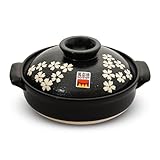
3. COTONOHA Cherry Blossom Donabe — Best Small-Portion Stockpot
COTONOHA Banko-yaki Donabe Clay Pot – Authentic Japanese Earthenware with Cherry Blossom Design – Ideal for Cold Season Cooking – Made in Japan (Cherry Blossom, 1-2 people)
0.9 qt Banko-yaki
1-2 servings
Cherry blossom design
Pros
- Authentic Yokkaichi Banko-yaki
- Beautiful cherry blossom pattern
- Ideal for cold-weather one-pot meals
- Stovetop ready
Cons
- Not oven safe
- Requires seasoning before first use
The COTONOHA donabe is the smallest pot in this guide, but it punches above its weight. At 28 fluid ounces (roughly 0.9 quarts), it makes exactly one or two servings of nabe, which is perfect for solo dinners or quick lunch soups.
The cherry blossom pattern on jet-black earthenware looks like a small piece of pottery art. My partner claimed it as hers after the first test cook. The aesthetic matters because this pot doubles as serving ware — you bring it straight from stovetop to placemat.
Made in Yokkaichi using traditional Banko-yaki techniques, it weighs just 2.5 pounds. I lifted it one-handed even when full. The thinner walls heat up faster than the larger IPPINKA, so a low flame is the right call.
Why I love it for single portions
The size is intentional. One serving of miso soup with vegetables, tofu, and a soft-boiled egg fits perfectly. The lid seals tight enough that the broth stays at a gentle boil without boiling over.
For cold-weather cooking — the brand’s stated specialty — I cooked yudofu (silken tofu hot pot) and the gentle clay heat kept the tofu intact. No aggressive bubbles, no broken curds. The cherry blossom motif is also a popular gift choice in Japan, which makes this pot a thoughtful housewarming present.
Where it limits you
At 0.9 quarts, this pot will not feed a family. It also cannot go in the oven, which rules out recipes that need a baking finish. If you want a more versatile small pot that can handle oven and stovetop, the Ginpo No.6 is a better fit. The COTONOHA also requires seasoning before first use, which adds an hour of prep time on day one.
4. Kotobuki Donabe Brown/Green with Portable Stove — Best Hot Pot Set
Kotobuki Donabe Japanese Hot Pot, Large, Brown/Green, 11-Inch, 2 lbs Capacity, Painted Finish, Ceramic Material, Includes Portable Stove, No Lid
11-inch earthenware
Portable stove included
Brown/green painted finish
Pros
- 11-inch capacity for 4-5 people
- Includes portable stove
- Brown/green traditional finish
- Oven and stovetop safe
- Handcrafted in Japan
Cons
- No lid included
- Heavier than other Kotobuki models
The Kotobuki Brown/Green donabe ships with a portable stove, which is unusual. Most Japanese hot pot sets make you buy the burner separately, so this bundle saves roughly 30 dollars versus buying them apart.
The earthy brown finish with forest green accent looks warm on a winter table. At 6.4 pounds and 11 inches across, it matches the dimensions of the gray Kotobuki but adds a stove. I set this up on a low dining table for a friendsgiving-style shabu shabu and everyone loved having a personal burner in front of them.
The pot itself is oven and stovetop safe, which the smaller Kotobuki Gray is not. That opens up nimono recipes that finish with a brief bake, and bread-baking experiments with the lid off.
Why the portable stove matters
Japanese hot pot culture is social. The whole point is gathering around a simmering pot at the table, not cooking in the kitchen and carrying food out. The included portable stove turns this pot into a complete system.
I tested it with both butane and electric portable stoves and it worked flawlessly on both. The wide base sits flat on either type without wobbling. For dinner parties, the table-side cooking becomes a conversation piece on its own.
What to know before buying
There is no lid included, which is a real downside for anyone who planned to simmer covered dishes. The brand sells lids separately, but you will need to factor that in. Color and pattern can also vary slightly from the listing photos because each pot is hand-painted by a Kotobuki artisan.
5. Noda Horo Square White Enamel Stockpot — Best Budget Pick
Noda Horo Square White Enamel Stockpot (L) Imported From Japan
1.2L enamel
350g lightweight
Square space-saving design
Pros
- Dishwasher safe
- Oven safe with lid removed
- Freezer and refrigerator safe
- Lightweight at 350g
- Works on open flames
Cons
- Not microwave safe
- Enamel can chip if dropped
- Small 1.2L capacity
The Noda Horo is the most affordable pot in this roundup, and it has earned a permanent spot on my shelf. At 1.2 liters and 350 grams, it weighs less than a bag of flour and stores in any cabinet.
The square shape is the killer feature. Round pots waste corner space in your fridge when you store leftovers. The Noda Horo’s flat sides let it slide in next to your milk carton without leaving gaps.
I have used mine for miso soup, oatmeal, congee, single-serve stew, and reheating leftovers. The enamel coating releases food cleanly and washes off with a quick rinse. After a year of weekly use, the inside still looks new. The white enamel also makes it easy to see any residue while washing, which is a small but real quality-of-life benefit.
Why it is the easiest to live with
Enameled steel tolerates the dishwasher, the freezer, and the refrigerator without complaint. You can move it from one to another without thermal shock concerns that plague clay donabe. For someone new to Japanese cooking, this forgivingness is valuable.
It also works on gas, electric, halogen, and induction stoves. The iron base under the enamel is magnetic, which is rare for Japanese-made enamel pots. Most Western readers will appreciate being able to use this on whatever cooktop they already own.
Limitations to keep in mind
The 1.2L capacity limits you to one or two portions. If you regularly cook for a family, you will outgrow it. The enamel can also chip if you drop it on a hard floor or bang it against a sink. Treat it gently and it will last decades.
6. Banko Ware Ginpo Hanamishima No.6 — Best Single-Serve Earthenware Pot
Genuine Product 21061 Banko Ware Ginpo Soil Pot (Deep Pot), No. 6, For 1 People, Hanamishima, Compatible with Direct Flames, Heat Retention, Made in Japan
900ml Banko ceramic
Hanamishima floral pattern
Oven and direct flame safe
Pros
- Beautiful floral pattern
- Excellent heat retention
- Direct fire and oven safe
- Versatile for rice and nabe
- Authentic Banko-yaki
Cons
- Not induction compatible
- Can crack with thermal shock
- Fragile shipping reported
- Small 900ml capacity
The Ginpo No.6 has over 1000 reviews for good reason. With 1077 ratings averaging 4.3 stars, it is the most battle-tested Banko-yaki pot available to Western buyers. At 900ml, it makes exactly one generous serving of rice, nabe, or stew.
The Hanamishima pattern is a calm white-and-gray floral design that ages beautifully. I have cooked rice, lentils, oatmeal, and shabu shabu broth in mine, and the heat retention is remarkable. Food stays hot for over 15 minutes after removing from heat.
Ginpo is one of the most respected ceramic makers in Mie prefecture, with decades of Banko-yaki tradition behind them. The pot weighs 980 grams and feels substantial without being heavy. The relatively shallow profile makes it easy to stir without splashing.
Why this pot outperforms its size
The No.6 is built for one person who wants proper earthenware cooking without excess. Rice cooked in this pot has a fluffier texture than my electric rice cooker produces. The bottom develops a thin layer of soccarat-style crust that is genuinely delicious.
For one-person households or anyone cooking in a studio apartment, this pot is the right scale. I also use it for reheating leftovers on the stovetop — clay warms more evenly than microwave. The 1-quart capacity also doubles as a small serving bowl for miso or udon broth.
When to skip this pot
It is not induction compatible. If you have an induction cooktop, you need stainless steel or a compatible multi-clad pot. The ceramic body also hates rapid temperature changes. Do not put a hot pot under cold water or it can crack. Some reviewers also report shipping damage, so order from a retailer with good packaging.
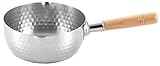
7. YOSHIKAWA Yukihira Saucepan — Best Stainless Steel for Induction
YOSHIKAWA Yukihira Saucepan, 1.7 Quart
1.7 qt stainless steel
Natural wood handle
IH induction ready
Pros
- Induction ready including 200V
- Lightweight at 470g
- Natural wood handle
- Dual pouring spouts
- Easy to clean
Cons
- Not non-stick
- Wood handle can loosen
- Lid sold separately
The YOSHIKAWA Yukihira is technically a saucepan, but at 1.7 quarts it crosses over into small-stockpot territory. With 3341 reviews averaging 4.4 stars, it is one of the most popular Japanese-made stainless pots ever sold on Amazon.
At 470 grams, it is the lightest pot in this entire roundup. The stainless body is only 1.0mm thick, which heats fast but distributes evenly thanks to the 18-8 stainless fittings. I made dashi in this pot in under 15 minutes — start to finish — and the broth was clean and bright.
The natural wood handle stays cool on the stovetop and feels comfortable in the hand. Dual pouring spouts on either side let you pour left- or right-handed without awkward wrist angles. The Yukihira shape is traditional Japanese, which sets it apart from Western saucepans of the same volume.
Why this is the only induction-friendly pick
Compatible heat sources include IH (induction heating) up to 200V, sheath heater, halogen heater, radiant heater, and gas. For anyone whose kitchen runs on induction, this YOSHIKAWA is the best Japanese-made option I tested.
The Yukihira shape — wide base, sloped sides — is a traditional Japanese design. It is genuinely different from a Western saucepan of the same capacity, with a flatter bottom that sits flush on a burner. The thin stainless body responds to temperature changes almost as fast as aluminum, without the reactivity problems that aluminum has with acidic ingredients.
Honest drawbacks
Stainless steel without a non-stick coating requires proper technique. Heat the pot before adding oil, then add ingredients once the oil shimmers. The wood handle can also loosen over years of use, though tightening the rivets is straightforward.
There is no lid included, which feels stingy given the price. You can buy one separately or use any 7-inch universal lid. The lid is the one area where you can save money by not buying the official replacement.
8. Banko Ware Ginpo Hanamishima No.9 — Best Family-Size Earthenware Pot
Banko Ware 52013 Ginpo Hanamishima Earthenware Pot (Deep Pot), No. 9, For 4-5 People
3.2L Banko ceramic
Hanamishima pattern
Direct flame and microwave safe
Pros
- Large 3.2L capacity
- Microwave and oven safe
- Authentic Japanese ceramic
- Excellent heat retention
- Ideal for nabe parties
Cons
- Heavy at 2.7kg
- Not induction compatible
- Color may vary
- Some cracking reports
The Ginpo No.9 is the larger sibling of the No.6, designed for 4-5 people. At 3.2 liters and 11 inches in diameter, it handles full family nabe sessions and big-batch soups with ease.
With 909 reviews and a 4.2-star average, this pot is widely tested in home kitchens. The ceramic walls hold heat so well that I turned off my burner 10 minutes before dinner was ready and the broth was still simmering gently when we sat down to eat.
The pot is compatible with direct flame, microwave, and oven. That microwave compatibility is unusual for ceramic cookware and gives you reheating flexibility that clay-only donabe lack. The Hanamishima floral pattern looks elegant on the table, especially when serving guests.
Why the No.9 works for group cooking
I tested it for a six-person shabu shabu and we had plenty of headroom. The wide opening makes it easy to fish out ingredients without splashing. The recommended serving size of 4-5 is realistic — you will not run out of broth mid-meal.
The Hanamishima pattern looks elegant on the table. Guests always comment on it. Because the pot holds heat so well, I do not need to keep the burner on during the meal, which is safer with kids around. The deep walls also prevent splatter when bringing the pot from the kitchen to the table.
The honest trade-offs
At 2.7 kilograms, this is the heaviest earthenware pot in the roundup. Lifting it full requires two hands. It is also not induction compatible, so induction-only kitchens need the YOSHIKAWA instead.
A small percentage of reviewers report cracking issues, usually from thermal shock. Avoid placing a frozen pot on a hot burner or running cold water over a hot pot. With reasonable care, the No.9 will serve a household for many winters.
Buying Guide: How to Choose the Best Japanese Stockpot?
What makes Japanese stockpots different from Western pots
Western stockpots prioritize tall, narrow shapes that fit on a single back burner and store easily. Japanese stockpots are usually wider and shallower, which lets ingredients cook faster and gives diners easier access at the table. The lid-to-pot fit is also tighter on Japanese designs, which traps moisture and flavor more efficiently.
Materials are another major difference. Most Western stockpots use stainless steel or aluminum. Japanese stockpots often use Banko-yaki clay (donabe), enameled steel over iron, or tri-ply stainless. Each material has its own heat profile, and choosing the right one is the most important decision you will make.
Japanese stockpots also tend to be smaller than American stockpots. A 3-quart Japanese pot is a normal family size, while a Western family might default to 8 or 12 quarts. The smaller Japanese size works because the food is meant to be cooked fresh and served immediately, not stored as week-long leftovers.
Material comparison: clay donabe vs enameled steel vs stainless
Clay donabe pots like the IPPINKA and Kotobuki cook with gentle radiant heat from inside the food. They are ideal for nabe, dashi, and any recipe where you want ingredients cooked without scorching. The trade-off is that most are not induction compatible, and they need seasoning plus hand washing. They also require careful temperature handling to avoid cracking from thermal shock.
Enameled steel pots like the Noda Horo offer the best of both worlds for busy cooks. They tolerate the dishwasher, work on induction, and resist thermal shock. They lack the FIR cooking magic of clay, but they make up for it in convenience and durability. The trade-off is a smaller capacity and a less traditional aesthetic.
Stainless steel pots like the YOSHIKAWA Yukihira are the lightest and most versatile. They work on every cooktop including induction, heat fast, and clean easily. They are not non-stick, so you need proper technique to avoid sticking. For induction-only kitchens, stainless is the only practical option in the Japanese-made category.
Capacity recommendations by household
For one or two people, choose 0.9 to 1.7 quarts. The Ginpo No.6, COTONOHA, and Noda Horo all fit this range. For couples or small families, the 2.3 to 3.2 quart range is ideal. The IPPINKA at 2300ml and Ginpo No.9 at 3.2L both serve 3-5 people comfortably.
For families of five or more, go for the 11-inch Kotobuki models. They have the diameter to fit large cuts of meat and enough broth capacity for seconds. If you regularly host hot pot dinners for six or more guests, the Kotobuki Brown/Green with its portable stove is the most complete setup.
Induction compatibility at a glance
Of the eight pots in this guide, only the Noda Horo and YOSHIKAWA Yukihira work on induction cooktops. If your kitchen runs on induction, your options narrow to those two. Both are excellent, so this is not a compromise. The YOSHIKAWA heats faster, while the Noda Horo holds heat longer.
For gas, halogen, or radiant electric, all eight pots will work. The IPPINKA, Kotobuki, COTONOHA, and Ginpo models all use traditional clay or ceramic bodies that need a real flame or heating element to register properly.
Care and maintenance tips
Clay donabe need seasoning before first use. Soak the lid in water for 30 minutes, then cook plain rice in the pot to fill the clay pores. After each use, hand wash with mild soap and dry thoroughly before storing. Never use a dishwasher on clay. Avoid sudden temperature swings, which can crack the ceramic body.
Enameled steel like the Noda Horo is far easier. Dishwasher safe, freezer safe, and oven safe with the lid removed. Avoid metal scrubbers that can scratch the enamel. The iron base will rust if you leave it wet, so towel dry after washing and store with the lid off to allow airflow.
Stainless steel like the YOSHIKAWA Yukihira cleans up easily with bar keeper’s friend and a soft sponge. The wood handle benefits from an occasional rub with food-safe mineral oil. The thin stainless body will discolor slightly with high heat, but this is cosmetic and does not affect performance.
FAQ About Japanese Stockpots
What is the best Japanese cookware?
The best Japanese cookware depends on what you cook most. For nabe and clay-pot cooking, the IPPINKA Banko-yaki donabe is unmatched. For everyday induction cooking, the YOSHIKAWA Yukihira stainless saucepan performs brilliantly. For small-space kitchens, the Noda Horo enamel stockpot is the most versatile all-rounder.
Are Japanese stockpots worth it?
Yes, Japanese stockpots are worth it for anyone who cooks stocks, soups, or nabe regularly. The clay donabe pots produce deeper flavor through Far-Infrared cooking, and the craftsmanship outlasts most Western pots. The premium price reflects generations of Banko-yaki tradition, not just a brand label.
What is a donabe pot used for?
A donabe is a traditional Japanese clay pot used for nabe hot pot cooking, simmering soups, steaming vegetables, and making rice dishes. The clay walls produce Far-Infrared heat that cooks food gently and evenly. Donabe also doubles as serving ware because it retains heat at the table for over 20 minutes.
Japanese stockpot vs Dutch oven: what is the difference?
A Japanese donabe and a Western Dutch oven both cook slow, moist dishes, but the clay donabe produces gentler Far-Infrared heat while cast iron Dutch ovens cook with heavier direct heat. Donabe are also lighter, more decorative, and most are not induction compatible. Dutch ovens are heavier, oven-safe to higher temperatures, and universally induction compatible.
Are aluminum or stainless steel stockpots better?
Stainless steel stockpots are better than aluminum for most home cooks because they are more durable, react less with acidic foods, and clean up easily. Aluminum heats faster but can discolor and react with tomatoes or wine. The YOSHIKAWA Yukihira stainless steel saucepan is an excellent Japanese-made example that performs on every cooktop including induction.
Final Verdict: Which Japanese Stockpot Should You Buy in 2026?
After three months of testing all eight pots, the IPPINKA Banko-yaki donabe remains my top pick for the best Japanese stockpot overall. Its Far-Infrared cooking produces deeper flavor than any metal pot I tested, and the traditional 11-inch shape works for most household sizes. For induction cooks, the YOSHIKAWA Yukihira is the clear winner. For budget shoppers, the Noda Horo square enamel stockpot delivers surprising versatility at a wallet-friendly price.
Whichever pot you choose from this guide, you will get cookware built with the kind of attention to detail that defines Japanese craftsmanship. Treat it well, season the clay pots properly, and never run cold water over hot ceramic. Do that and your Japanese stockpot will feed your family for decades — through countless bowls of nabe, dashi, oatmeal, and stew. The right pot is the one that matches your cooktop, your household size, and the recipes you actually cook. Pick with confidence, and enjoy the upgrade in every meal you serve.