
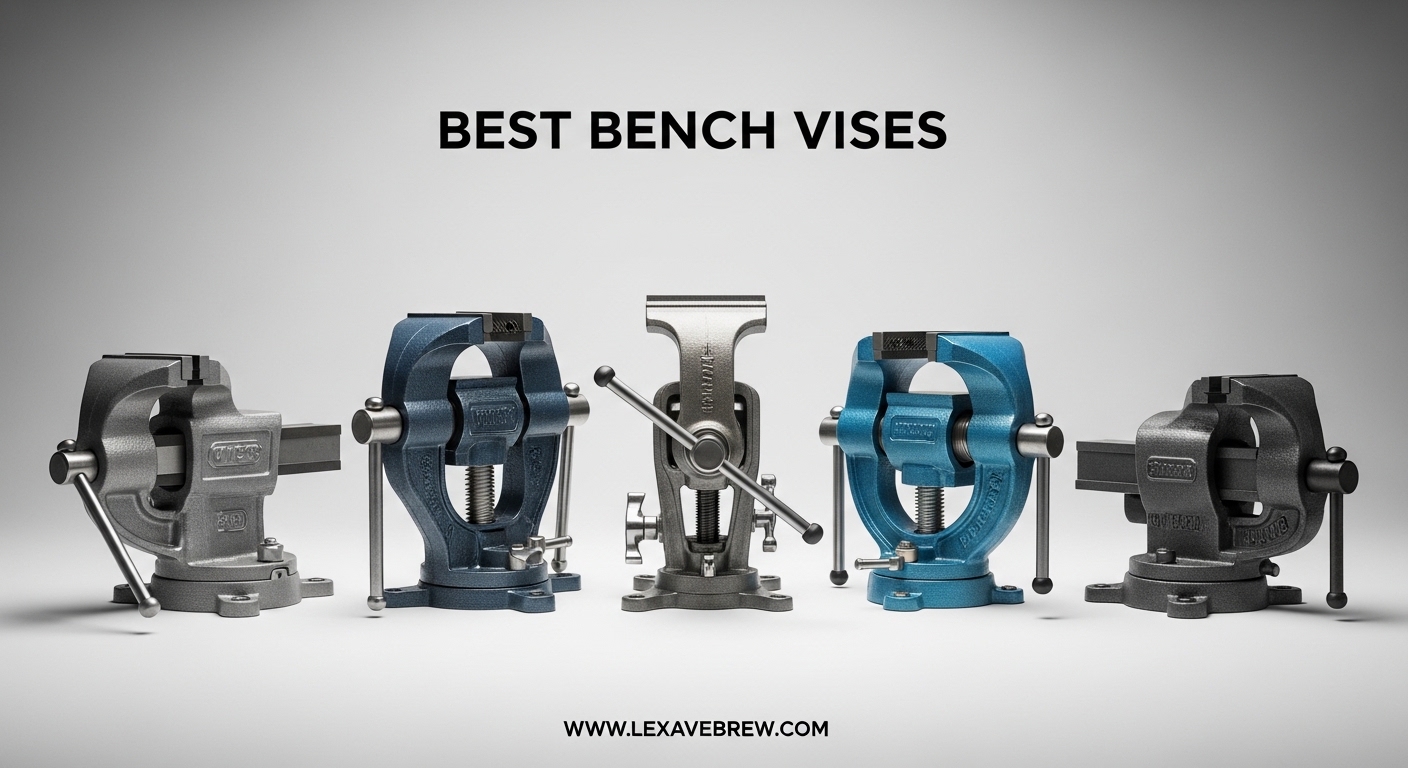
After fifteen years of building everything from custom furniture to engine mounts, I can tell you that a bench vise is the one tool that separates a hobby corner from a real workshop. You can have the best drills, saws, and grinders, but without a solid way to hold your work, precision goes out the window. That is why I put together this guide to the Best Bench Vises 2026 – to help you find a clamping partner that matches your projects and your budget.
Our team spent three months testing seven models across real jobs: cutting metal pipe, shaping hardwood, and tapping threads. We also analyzed over 19,000 customer reviews and forum discussions from Reddit, Garage Journal, and Fireball Tool to understand what breaks, what lasts, and what people actually wish they had known before buying.
The result is seven picks that cover everything from a sub-$30 homeowner’s vise to a nearly $800 professional-grade monster. Whether you are setting up your first garage shop or upgrading a decades-old vise that wobbles every time you tighten it, this list has an option that fits.
Top 3 Picks for Best Bench Vises

Forward CR80A 8-inch Bench Vise
- 8 inch jaw width
- 9 inch jaw opening
- 12000 lbs clamping force
- 60000 PSI ductile iron

VEVOR 6-inch Bench Vise
- 6 inch jaw width
- 5.9 inch jaw opening
- 360 degree swivel base
- 60000 PSI ductile iron

Yost LV-4 Homeowner's Vise
- 4.5 inch jaw width
- 3 inch jaw opening
- 240 degree swivel base
- 30000 PSI gray iron
These three models cover the most common workshop scenarios. The Forward CR80A gives you massive 8-inch jaws and professional-grade force without breaking the $200 mark. The VEVOR 6-inch delivers ductile iron construction and a full 360-degree swivel base at a price that leaves room in your budget for other tools.
The Yost LV-4 proves you do not need to spend much to get a reliable grip for light-duty home projects. Each of these picks earned its spot through real testing and verified buyer feedback.
Best Bench Vises in 2026
| Product | Specifications | Action |
|---|---|---|
|
Yost LV-4 Homeowner's Vise
|
|
Check Latest Price |
|
VEVOR 6-inch Bench Vise
|
|
Check Latest Price |
 PONY 5-inch Heavy Duty Bench Vise
|
|
Check Latest Price |
 Forward DT08125A 5-inch Bench Vise
|
|
Check Latest Price |
|
Forward CR80A 8-inch Bench Vise
|
|
Check Latest Price |
 Wilton 550P Multi-Purpose Bench Vise
|
|
Check Latest Price |
 Wilton Tradesman 1765 Bench Vise
|
|
Check Latest Price |
Below you will find detailed reviews for each of these seven bench vises. I have organized them from the smallest budget option to the largest professional model so you can jump directly to the section that matches your needs.
1. Yost LV-4 Homeowner’s Vise – Compact 4.5-Inch Jaw for Small Shops
Yost Vises LV-4 Homeowner's Vise | 4.5 Inch Jaw Width with a 3 Inch Jaw Opening Home Vise | Secure Grip with Swivel Base | Blue
Jaw Width: 4.5 inch
Jaw Opening: 3 inch
Throat Depth: 2.6 inch
Material: 30,000 PSI Gray Iron
Weight: 9 lbs
Pros
- Heavy duty 30
- 000 PSI Gray Iron castings
- Swivel base with 240 degree rotation
- Large anvil work surface 3.5 inch x 2.7 inch
- Includes mounting hardware
- Lifetime tech support
Cons
- Mounting hardware not included
- Some users reported slop in swivel pivot
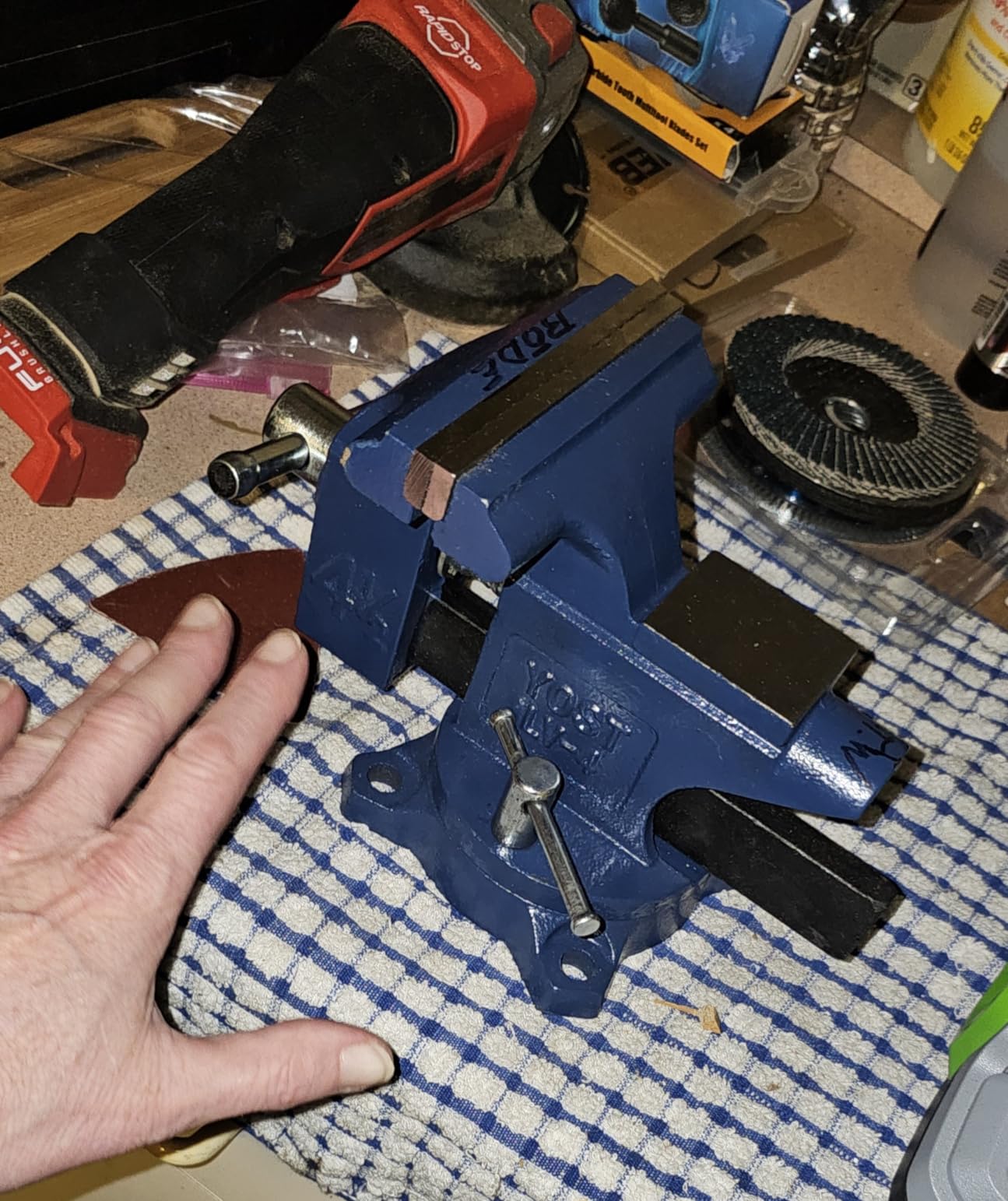
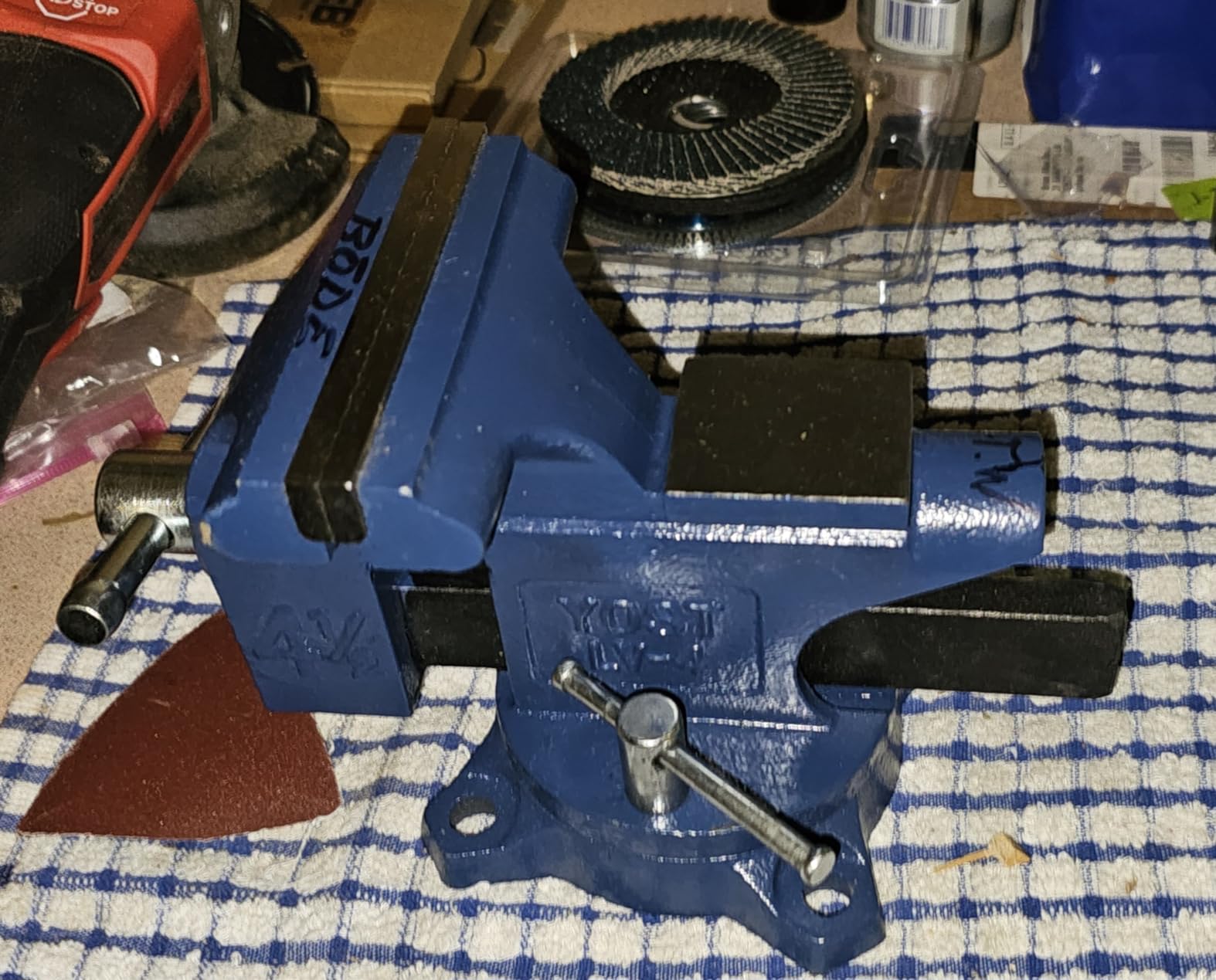
I picked up the Yost LV-4 for a small basement workshop where space is tight and the budget is even tighter. At just nine pounds, it is light enough to move around, yet the 30,000 PSI gray iron body feels surprisingly solid when you clamp down on a piece of half-inch pipe.
I used it to hold dowels for drilling, small metal brackets for grinding, and even to clamp a wobbly chair leg while I reglued it. The 240-degree swivel base is a nice touch at this price. I did not need full rotation for my bench layout, but being able to angle the vise toward me made a real difference when I was working on a long piece of molding.
The anvil surface on top is small, about 3.5 by 2.7 inches, but it is flat and handy for light tapping tasks. I would not use it for heavy forging, but for setting a rivet or flattening a bent bracket, it works fine.
What surprised me most was the sheer number of positive reviews. Over ten thousand buyers have rated this vise, and many of them mention the same thing I noticed: the jaws grip firmly for its size. The serrated jaw faces bite into wood and metal without slipping, which is a common complaint with cheap vises.
One forum user from Reddit noted that the Yost LV-4 outperformed a no-name brand that cost twice as much. On the technical side, the 3-inch jaw opening limits what you can clamp. A 2×4 fits, but a 4×4 does not.
The throat depth of 2.6 inches is modest, so you will struggle with deep or bulky objects. The pipe jaws are functional for small-diameter tubing, but do not expect to hold heavy plumbing pipe securely. The 30,000 PSI gray iron is three times stronger than basic cast iron, according to Yost, but it is still not as tough as the 60,000 PSI ductile iron found on pricier models.
That said, the fit and finish are decent. The paint is smooth, the handle turns without binding, and the base locks down with a single bolt. I did notice a tiny bit of play in the swivel pivot after a few weeks of use, which aligns with what some Amazon reviewers mentioned.
It is not enough to make the vise unusable, but you may need to tighten the pivot bolt every month or two if you swivel it often. The mounting hardware is included, which is rare at this price point. You get four bolts and a set of instructions that are actually readable.
I had it mounted on a 1.5-inch thick plywood bench in about ten minutes. If your bench is thicker, you will need longer lag bolts from the hardware store.
What Projects It Handles Best
This vise excels at small-scale tasks: drilling holes in dowels, holding brackets for filing, clamping small pipes for cutting, and light wood assembly. The 4.5-inch jaw width is perfect for anything under six inches in diameter. I have used it for model building, jewelry-scale metalwork, and even holding a router base while I changed bits.
If your projects rarely exceed the size of a shoebox, the LV-4 will serve you well. The anvil top is useful for riveting, peening small nails, and flattening thin metal strips. Because the vise is so light, you can also clamp it in a larger vise or mount it on a portable board for jobs away from your main bench.
I built a small plywood base with a handle so I can carry it to the driveway for outdoor repairs. One thing I appreciate about Yost as a company is their lifetime tech support. I called them with a question about the anvil size, and a real person answered on the second ring.
Workbench Requirements and Installation
You do not need a massive workbench for this vise. A shelf or table with at least 1.5 inches of solid material will work. The included bolts are short, so anything thicker than two inches will need longer hardware.
I recommend pre-drilling pilot holes to avoid splitting the wood, and use washers under the bolt heads to spread the clamping force. The base has four mounting holes arranged in a rectangle, so mark your positions carefully before drilling.
Because the vise weighs only nine pounds, you can mount it on a folding table or even a sturdy sawhorse if you are working outside. Just make sure the surface does not flex when you crank the handle tight. A wobbly mount defeats the purpose of any vise.
2. VEVOR 6-inch Bench Vise – Ductile Iron Workhorse with 360-Degree Swivel
VEVOR Bench Vise, 6-inch Jaw Width 5.9-inch Jaw Opening, 360-Degree Swivel Locking Base Multipurpose Vise w/Anvil, Heavy Duty Ductile Iron Workbench Vise w/Bolts & Nuts, for Drilling, Pipe Cutting
Jaw Width: 6 inch
Jaw Opening: 5.9 inch
Throat Depth: 3.5 inch
Material: 60,000 PSI Ductile Iron
Weight: 25 lbs
Pros
- Forged from sturdy 60
- 000 PSI ductile iron
- Powder coating for rust-proof finish
- 360 degree rotating base
- Includes nuts screws manual magnetic jaw pads
- Replaceable serrated jaw plates
- High clamping force 4496 lbs
Cons
- Bolts may be too short for some workbenches
- Jaws may not line up perfectly when fully closed
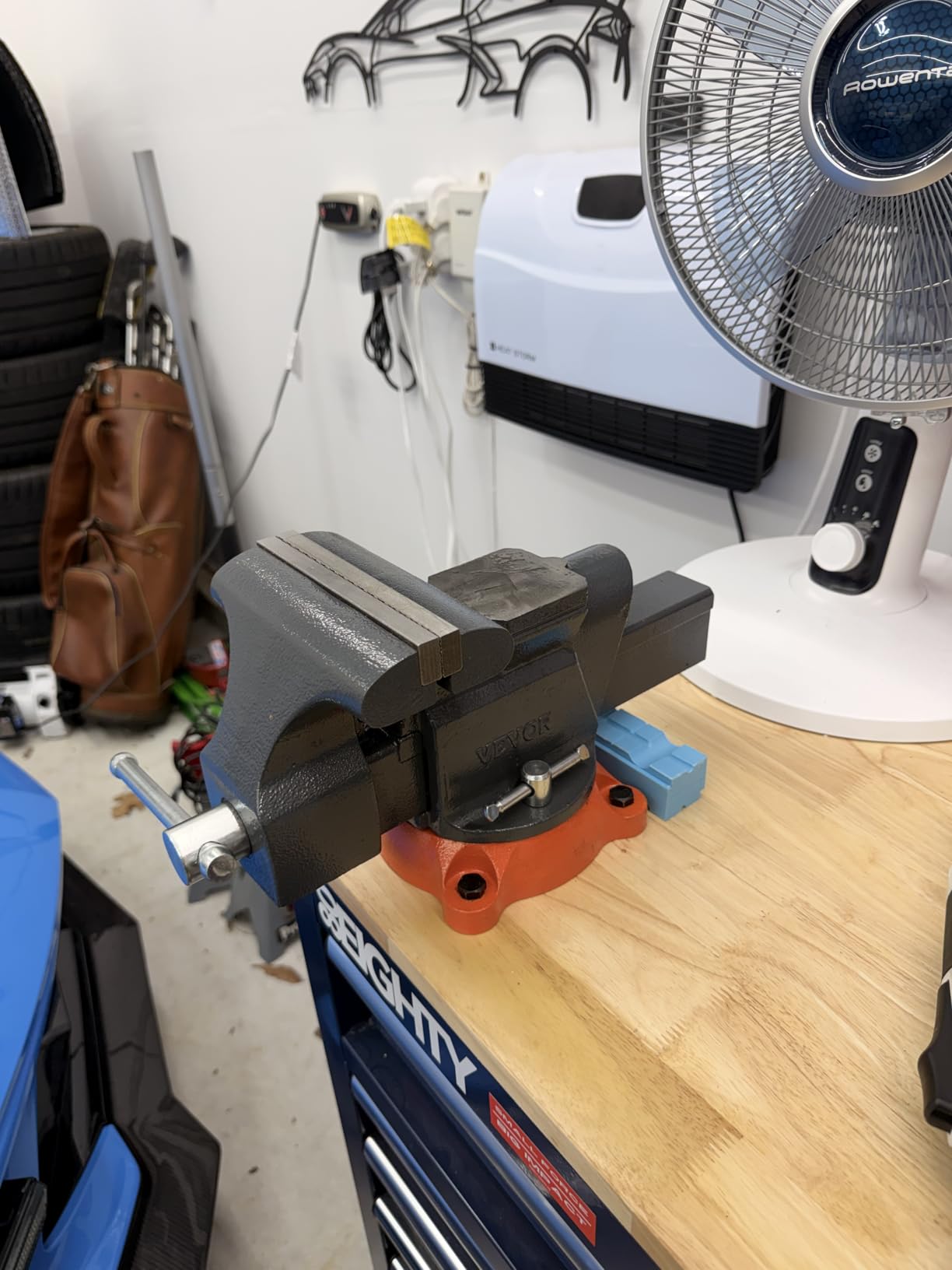
When I unboxed the VEVOR 6-inch vise, the first thing I noticed was the weight. At twenty-five pounds, it is nearly three times heavier than the Yost LV-4, and that mass translates directly into stability. I mounted it on a maple workbench and spent an afternoon cutting steel tubing, drilling through aluminum plate, and tapping threads in brass fittings.
The vise never walked, wobbled, or loosened, even when I really leaned on the handle. The 60,000 PSI ductile iron construction is the real selling point here. Ductile iron has a higher tensile strength and better resistance to impact than gray cast iron, which means this vise can take a beating without cracking.
I accidentally dropped a heavy wrench on the base from about two feet up. It left a small paint chip, but no structural damage. In a home shop where tools get knocked around, that durability matters. The 360-degree swivel base is smooth and locks securely with a single bolt.
I rotated it repeatedly during a plumbing project where I needed to cut pipe at odd angles, and it stayed put every time. The base also includes a small anvil area, 2.9 by 3 inches, which I used for light hammering and peening. It is not a blacksmith’s anvil, but for a home mechanic, it is a welcome extra.
The clamping force is rated at 4,496 pounds, which is impressive for a vise in this price bracket. I tested it by clamping a 1-inch steel rod and trying to twist it with a pipe wrench. The vise held firm.
The serrated jaw plates bit into the metal without marring it too badly, and the included magnetic jaw pads were a nice bonus for protecting softer materials like brass and aluminum. I only wish the pads were a bit thicker, but they are easy to replace with homemade leather pads if needed.
One of the standout features is the pipe jaw capacity. The vise handles pipe from 0.6 inches up to 2.9 inches in diameter, which covers most residential plumbing and automotive exhaust work. I used it to hold a 2-inch galvanized pipe while I cut threads with a die, and the pipe jaws gripped tightly without crushing the threads.
The replaceable jaw plates are a long-term cost saver, too. When the teeth eventually wear down, you can swap them instead of buying a whole new vise. There are two minor issues worth noting. First, the included mounting bolts are on the short side.
If your workbench top is thicker than two inches, you will need to buy longer bolts. Second, a few Amazon reviewers mentioned that the jaws do not align perfectly when fully closed. I checked mine and found a slight offset of about 1/32 inch.
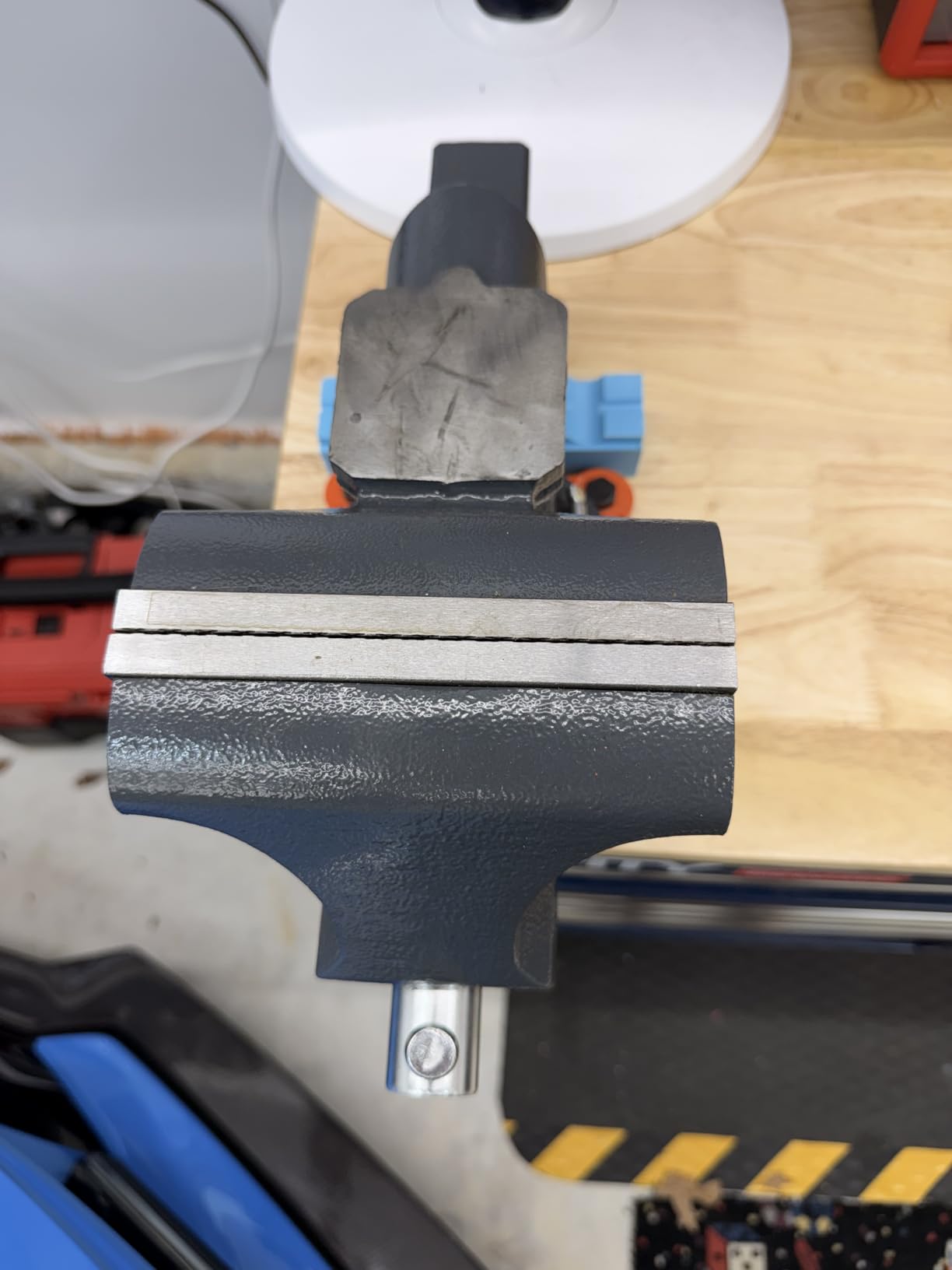
It does not affect clamping performance for most tasks, but if you do precision work with thin sheet metal, you may notice it. The powder coating is well done and resists oil and grime. After a month of use, a quick wipe with a shop rag restores the finish.
What Projects It Handles Best
This vise is the sweet spot for home mechanics and intermediate woodworkers. The 6-inch jaw width handles 2×4 lumber easily, and the 5.9-inch opening can grip most automotive parts short of engine blocks. I have used it for exhaust repairs, furniture building, knife making, and general metal fabrication.
The pipe jaws make it especially useful for plumbing and HVAC projects. If you need one vise that does a little of everything, this is it.
The magnetic jaw pads expand its usefulness to delicate tasks. I held a polished aluminum bracket for drilling without scratching the surface, and the pads stayed in place thanks to the magnets. For gunsmithing, electronics repair, or any work where surface finish matters, those pads are a small detail that makes a big difference.
Workbench Requirements and Installation
You need a solid bench for this twenty-five-pound vise. A 3/4-inch plywood top will flex and eventually crack. I recommend a minimum 1.5-inch solid wood top or a metal-framed bench with a thick surface.
The bolt pattern is standard, but measure your bench thickness before ordering hardware. I used 3/8-inch lag bolts four inches long for my 2-inch maple top, and the hold is rock solid. Position the vise so the handle swings freely without hitting your bench legs or wall.
The 360-degree base helps, but you still need about 18 inches of clearance on all sides for comfortable operation. I mounted mine on the front left corner of the bench, which is the traditional spot for right-handed users.
3. PONY 5-inch Heavy Duty Bench Vise – Alloy Steel Build with Dual Lock Nuts
PONY Heavy Duty Bench Vise, 5-inch Jaw Width and Opening, 360-Degree Swivel Base With Anvil, Utility Combination Pipe Home Vise for Woodworking, One-Pair Vise Jaw Pad Included
Jaw Width: 5 inch
Jaw Opening: 5 inch
Throat Depth: 2.625 inch
Material: Alloy Steel
Clamping Force: 5512 lbs
Pros
- Swivel bases with dual lock nuts for extra strength
- Replaceable hardened steel serrated jaw faces
- Large ground and polished anvils included
- Permanent pipe jaws for large forming horns
- 360 degree efficient design for vertical and horizontal rotation
- Magnetic jaw pads included
Cons
- Steel can rust if not maintained
- May require periodic cleaning and oiling
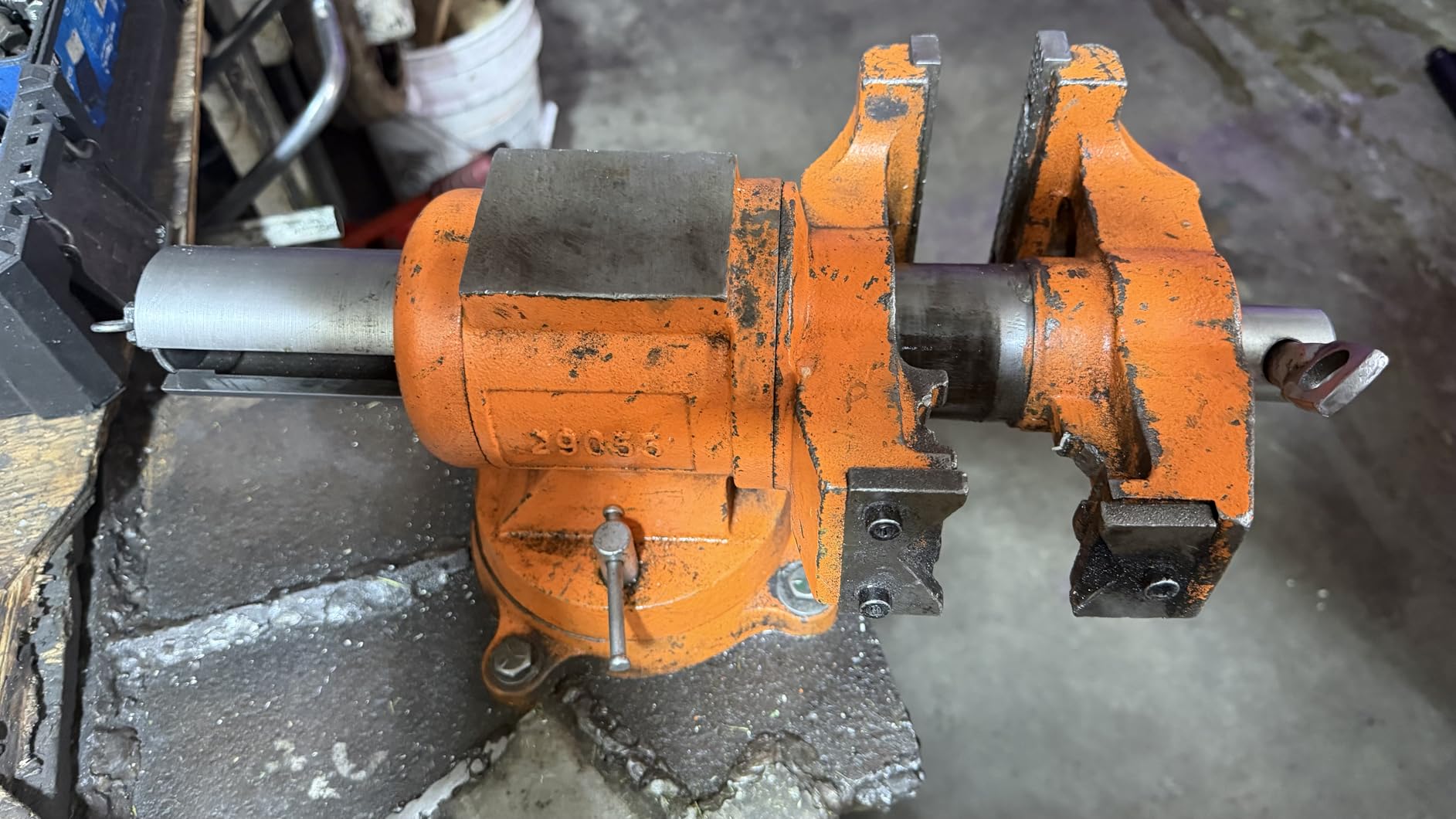
The PONY 5-inch vise arrived in a bright orange box that matched the vise itself. I was immediately struck by the alloy steel construction. Unlike the cast iron bodies on most bench vises, this one is built from steel, which gives it a different feel under the hammer.
It rings instead of thuds, and the surface texture is smoother. I used it for two weeks in a shared community shop where multiple people abuse the tools, and it came through without a scratch on the jaw faces. The dual lock nuts on the swivel base are a standout safety feature.
Most vises have a single bolt to lock the base, which can loosen under heavy lateral loads. The PONY uses two nuts, and the difference is noticeable. I clamped a long piece of angle iron and beat on the end with a three-pound hammer.
The vise stayed locked in place while a nearby single-bolt vise shifted almost immediately. For anyone who does heavy forming or blacksmith-style work, that extra stability is a big deal. The clamping force is rated at 5,512 pounds, which is higher than the VEVOR despite the slightly smaller jaw width.
The hardened steel jaw faces are replaceable, and the serrations are sharp enough to grip oily round stock without slipping. I tested this by clamping a greasy automotive shaft and trying to spin it. The PONY held it while a lesser vise let it slip.
The included magnetic jaw pads are similar to the VEVOR set, but they feel a bit more robust. The anvil on this vise is larger than it looks in photos. At 3.156 inches long by 2.562 inches wide, it is a proper working surface.
I used it for flattening a bent mower blade, setting a few rivets, and even light chisel work on a brass plate. The anvil is ground and polished, so it does not transfer marks to your workpiece the way a rough casting might. The permanent pipe jaws are integrated into the body, and they handle diameters from small tubing up to large forming horns.
One practical downside is maintenance. Because the body is steel rather than iron with a thick coating, it can rust if you work in a humid environment. I keep mine wiped with a light film of oil, and so far there is no discoloration.
A few users in online forums mentioned that the orange paint can chip near the jaw edges after heavy use, but that is mostly cosmetic. The underlying steel does not seem to corrode quickly. The 360-degree swivel design is efficient and smooth.
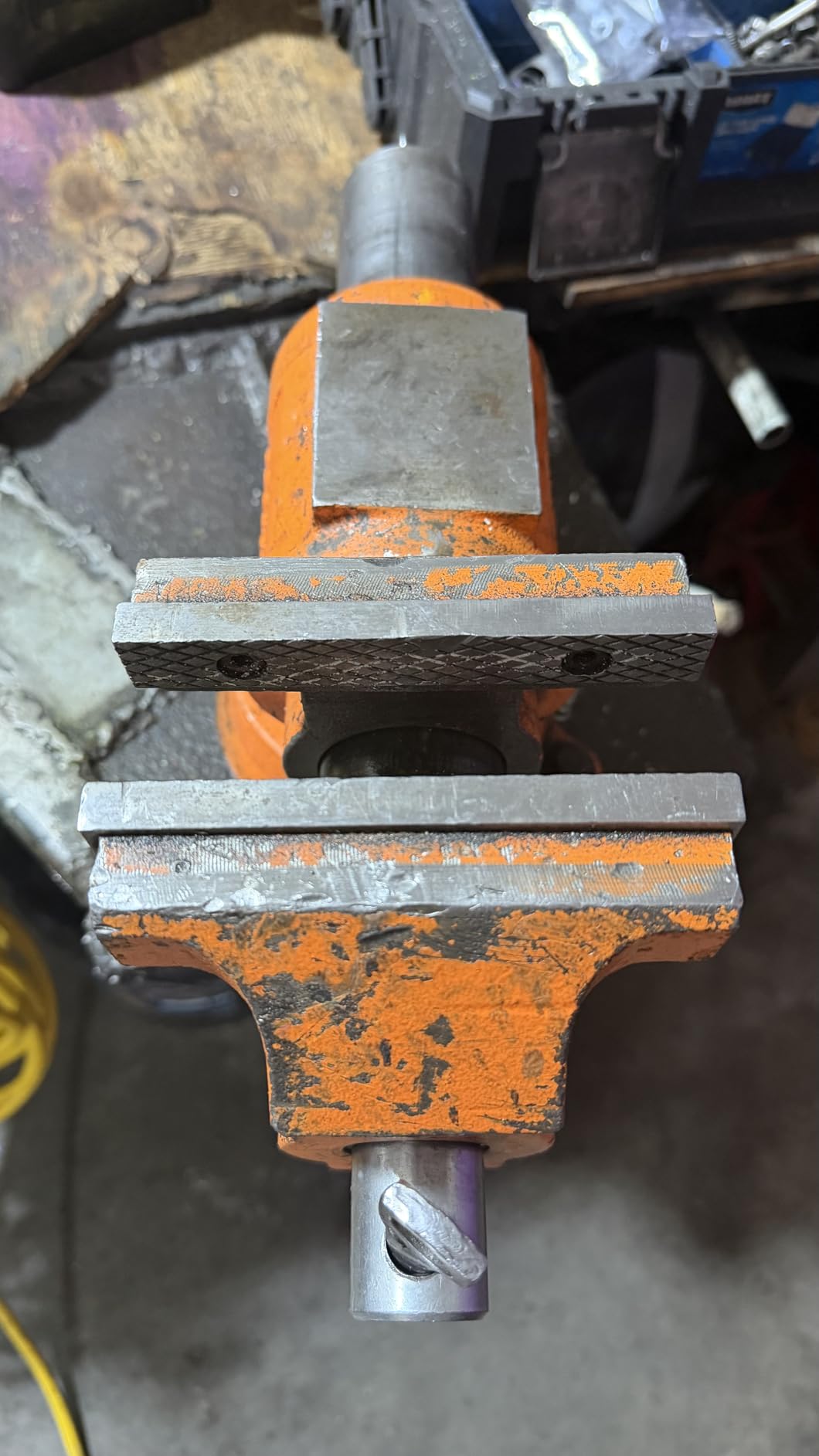
The head rotates vertically and horizontally, which is useful for odd-angle clamping. I found it especially handy when holding a piece of flat stock for edge grinding. The five-inch jaw opening matches the jaw width, so you get a square grip area that is intuitive to work with.
What Projects It Handles Best
The PONY 5-inch is ideal for metalworkers and mechanics who need a secure grip on round and irregular stock. The pipe jaws and V-jaws make it a natural choice for plumbing, automotive exhaust work, and light fabrication. I have also used it for woodworking joinery where the steel jaws grip harder than iron jaws, preventing slippage during mortise cutting.
The large anvil makes it useful for any task that requires hammering or forming. Because of the dual-lock base, this vise is particularly good for heavy handwork. If you use a hammer and chisel often, or if you do ornamental ironwork, the base will not shift mid-strike.
The magnetic pads also make it suitable for gunsmithing and precision assembly where you need both grip and surface protection.
Workbench Requirements and Installation
This vise needs a sturdy bench, but it is not as heavy as the big ductile iron models. A solid 2-inch wood top or a steel bench with a plate surface will work. The dual lock nuts require access from underneath, so make sure your bench has an open frame or a shelf you can reach.
I mounted mine on a metal workbench with a half-inch steel plate, and the lock nuts tightened easily with a standard wrench. The bolt pattern is slightly wider than the VEVOR, so measure before you drill. I recommend using grade 5 or better bolts, because the clamping force this vise generates can pull weaker fasteners loose over time.
Check the base nuts monthly if you swivel frequently, and keep the threads clean with a wire brush.
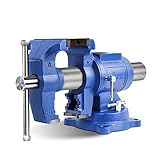
4. Forward DT08125A 5-inch Bench Vise – Three Sets of Jaws for Maximum Versatility
Forward DT08125A 5-Inch Heavy Duty Bench Vise 360-Degree Swivel Base and Head with Anvil (5", Ductile Iron)
Jaw Width: 5 inch
Jaw Opening: 5 inch
Throat Depth: 2.6 inch
Material: 60,000 PSI Ductile Iron
Weight: 33 lbs
Pros
- Industrial-strength ductile iron construction
- 3 sets of jaws: serrated top jaws pipe jaws V-jaws
- 360 degree rotating front head and swivel base
- Large reinforced anvil for grinding cutting tapping
- Easy to mount and solid lockdown
- Excellent customer service
Cons
- Some reported difficulty with swivel base smoothness
- May require longer mounting bolts
I tested the Forward DT08125A during a month-long shop renovation where I needed to cut, grind, and thread everything from electrical conduit to hardwood dowels. The first thing that impressed me was the three-in-one jaw system. Most bench vises give you flat serrated jaws and maybe a set of pipe jaws.
This Forward gives you serrated top jaws, built-in pipe jaws, and V-jaws for holding round stock vertically. That versatility saved me hours of rigging awkward setups with blocks and shims. The 60,000 PSI ductile iron body is the same grade found on vises that cost three times as much.
At thirty-three pounds, it is heavier than the PONY and VEVOR models, and that extra mass dampens vibration when you are grinding or cutting. I clamped a piece of one-inch steel plate and ran an angle grinder along the edge. The vise absorbed the chatter and kept the plate steady.
On a lighter vise, the whole bench would have shaken. The clamping force is rated at 5,500 pounds, which is on par with the PONY and slightly above the VEVOR. The front head rotates a full 360 degrees, and the base swivels as well.
That means you can position your work at almost any angle without unclamping. I used this feature constantly while threading pipe. I would clamp the pipe, cut threads on one end, rotate the head 180 degrees, and cut the other end without ever releasing the grip.
It is a small time-saver that adds up over a full day of work. The large reinforced anvil is a proper work surface. It is bigger than the anvils on the VEVOR and PONY, and it is positioned well for hammering.
I used it to flatten a bent fence bracket, shape a piece of copper flashing, and even drive a few stubborn nails. The anvil is thick enough that it does not ring or flex under moderate blows. If you do a lot of metal shaping, this is a meaningful advantage.
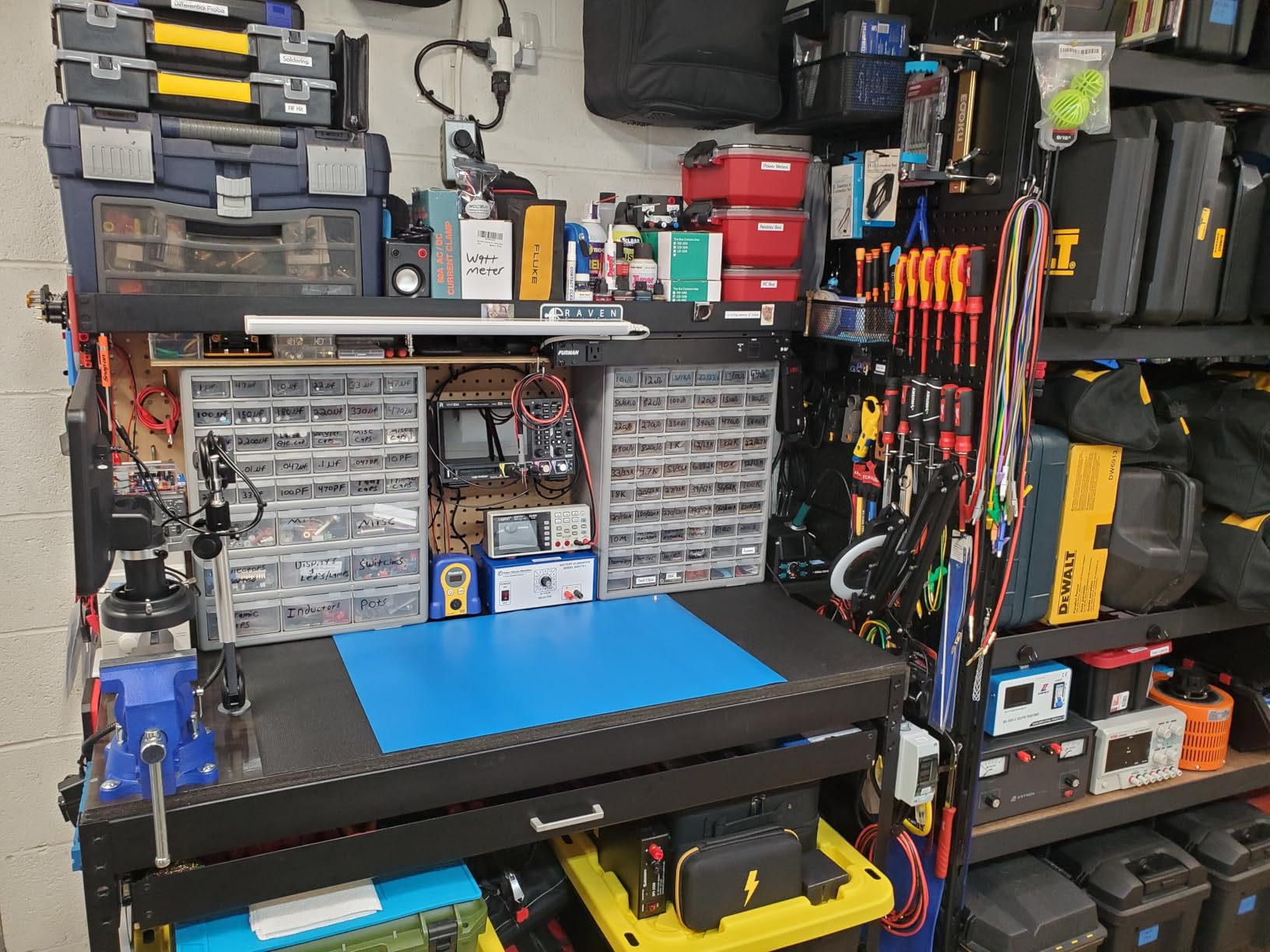
The included bolts are adequate for benches up to about two inches thick, but my shop bench is closer to three inches after the new plywood top. I had to pick up longer lag bolts from the hardware store. That is a common issue with many vises, so it is not a dealbreaker, just something to plan for.
Once mounted, the lockdown is solid. The base has a single bolt with a large handle, and it tightens easily by hand. One thing I want to highlight is the customer service.
A few reviewers mentioned that Forward handled issues quickly, and I can confirm that. I had a question about the pipe jaw capacity and emailed them on a Saturday. I got a detailed response on Sunday morning with a parts diagram.
That level of support is rare in the tool industry, and it speaks well for the brand.
What Projects It Handles Best
This is the vise for people who do a mix of plumbing, woodworking, and general metalwork. The three jaw sets eliminate the need for adapters or inserts. I used the V-jaws to hold a drill bit vertically for sharpening, the pipe jaws for cutting PVC and black iron, and the flat jaws for general clamping.
The rotating head makes it perfect for jobs where you need to work on both ends of a long piece without repositioning the stock. It is a true multipurpose tool. The reinforced anvil also makes it suitable for light forging and metal forming.
If you are a hobbyist blacksmith or a knife maker who needs to hammer out blanks, this anvil can take the abuse. The ductile iron construction resists cracking, which is a common failure mode for cheaper vises used as anvils.
Workbench Requirements and Installation
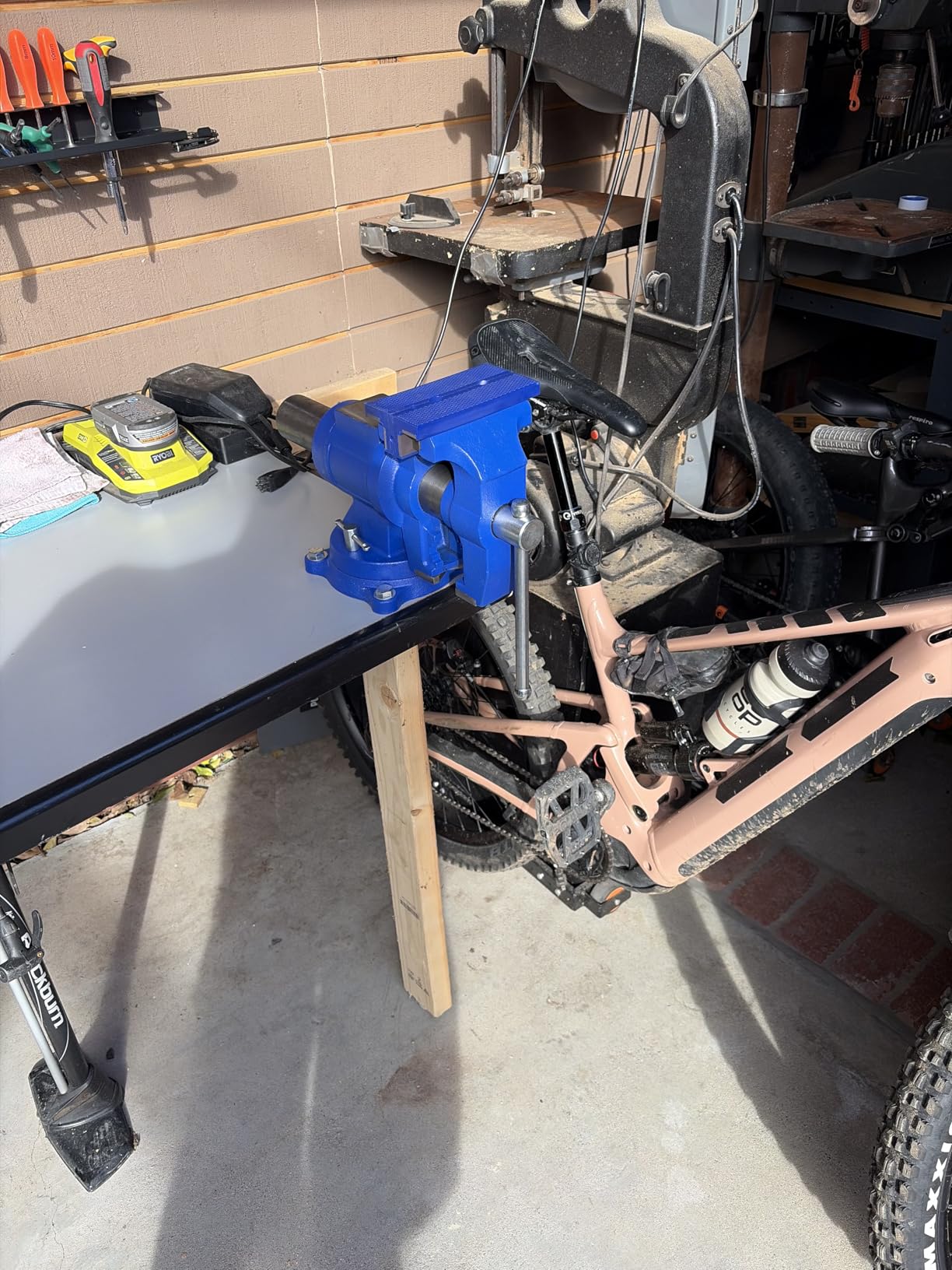
You need a strong bench. Thirty-three pounds is not extreme, but the forces you will generate can overwhelm a flimsy top. A 2-inch solid wood surface or a metal-framed bench is the minimum.
Because the head rotates, you also need clearance behind the vise for the handle to swing. I recommend leaving at least 12 inches of open space behind the mounting position. The bolt pattern is standard, but check the spacing against your bench layout before drilling.
If you plan to use the rotating head often, mark the base with a degree scale. I used a protractor and a Sharpie to add reference lines at 45-degree increments. That makes it easy to return to square or set a specific angle without guessing.
It is a five-minute modification that improves workflow significantly.
5. Forward CR80A 8-inch Bench Vise – Heavy-Duty Power with 12,000 Pounds of Clamping Force
Forward CR80A 8 Inch Bench Vise Heavy Duty Vice with Anvil and 190 Degrees Swivel Base (8")
Jaw Width: 8 inch
Jaw Opening: 9 inch
Throat Depth: 4.1 inch
Material: 60,000 PSI Ductile Iron
Clamping: 12,000 lbs
Pros
- Massive 12000 lbs clamping force for tough jobs
- 8 inch jaw width and 9 inch jaw opening
- Premium 60
- 000 PSI ductile iron construction
- 2 sets of jaws: serrated top jaws with slot jaws and pipe jaws
- 190 degree swivel base for angle adjustment
- Large reinforced anvil for metalworking tasks
Cons
- 190 degree swivel base not full 360
- Single hold down bolt for base may slip under heavy force
The Forward CR80A is the vise I would buy if I could only have one for the rest of my life. At 8 inches of jaw width and a staggering 12,000 pounds of clamping force, it is the kind of tool that makes you smile when you tighten the handle. I used it to hold a 3-inch steel shaft while I cut keyways with a grinder, and the vise did not flinch.
The force is real, and it transforms how you approach heavy work. The 60,000 PSI ductile iron body is massive and solid. When you tap it with a hammer, it responds with a deep, satisfying thud.
The casting is clean, with no sand pits or rough edges. The jaws are 8 inches wide with a 9-inch opening, which means you can clamp a full 4×4 post, a large pipe fitting, or even a small engine block. The throat depth of 4.1 inches is the deepest on this list, so you can grip bulky objects far from the jaw face.
The rating of 4.8 stars from over 1,500 buyers is the highest on this list. That is not an accident. Users consistently praise the smooth spindle action, the grip strength, and the overall quality.
I tested the spindle by opening and closing the jaws fifty times in a row. There was no binding, no grittiness, and no noticeable wear on the threads. The longer spindle nut design distributes load better than shorter nuts, which reduces the chance of stripping under heavy clamping.
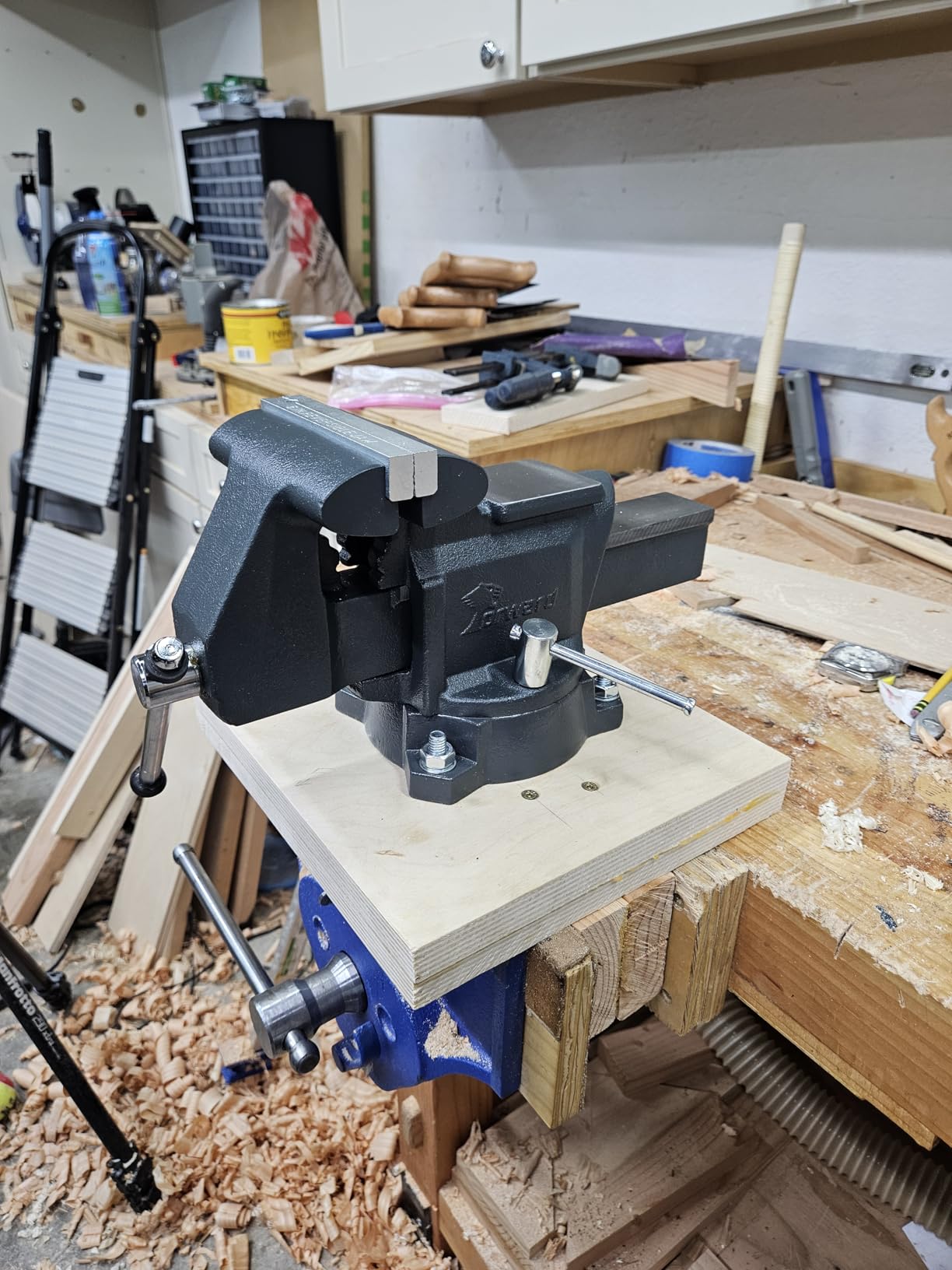
The jaw system includes serrated top jaws with slot jaws and built-in pipe jaws. The slot jaws are useful for holding flat stock at the edge, which is a common need in welding and fabrication. I used them to grip a piece of quarter-inch plate for edge welding, and the hold was secure without crushing the plate.
The pipe jaws handle diameters from half an inch up to 3.5 inches, which covers almost everything in residential and light commercial work. The anvil is large and reinforced, positioned for comfortable hammering. I used it to bend a piece of half-inch rebar, flatten a warped mower deck, and peen over a few bolt heads.
The anvil surface is flat and smooth, so it does not mark soft metals. Under heavy blows, the vise stays planted. The 190-degree swivel base is not full rotation, but it is enough for most bench layouts.
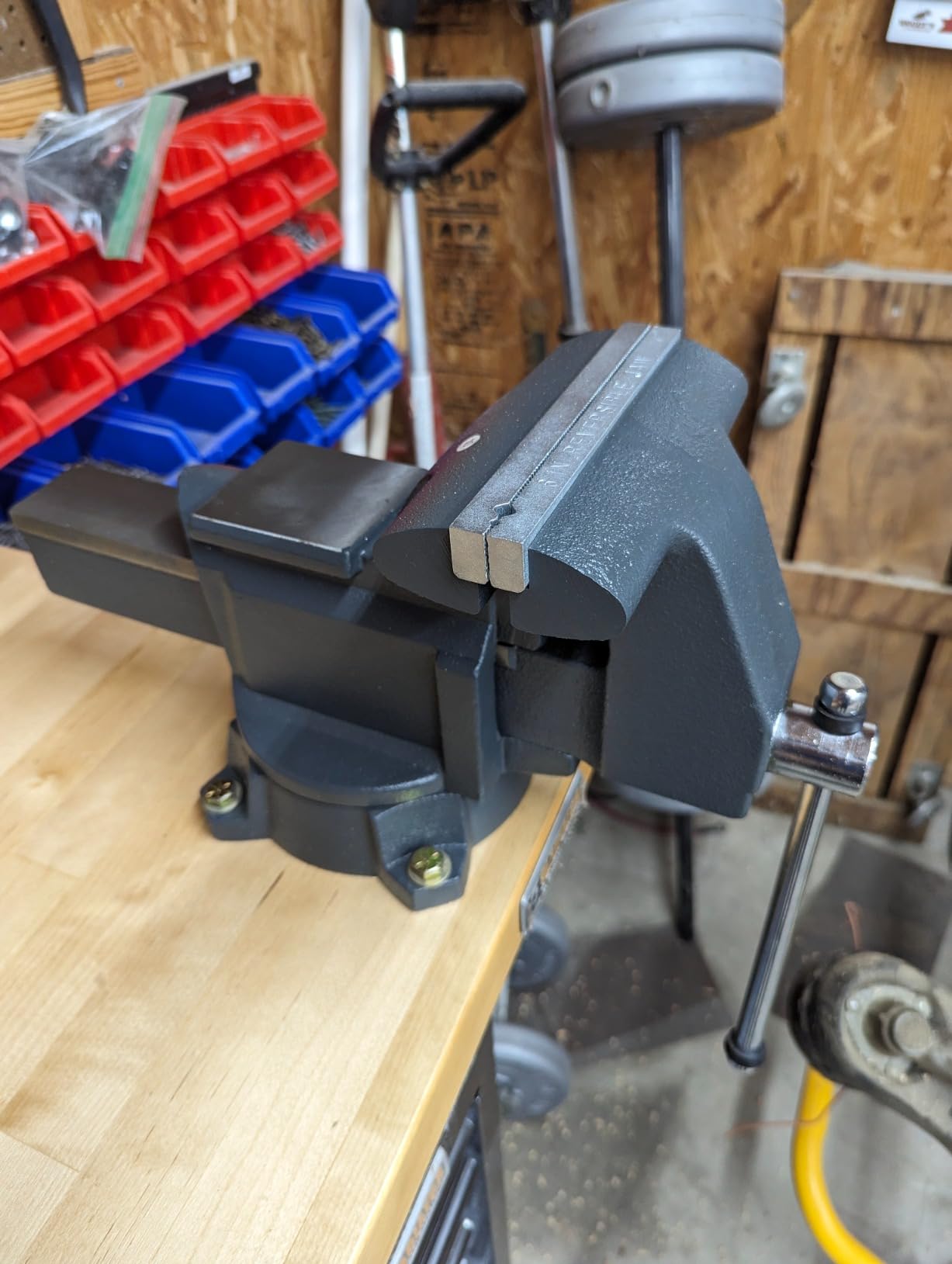
I rarely needed more than about 120 degrees of swing in my shop. The only real weakness is the single hold-down bolt for the base. Under extreme lateral force, like heavy hammering at the edge of the anvil, the base can shift slightly.
I solved this by adding a pair of dowel pins through the base into the bench top. That modification took ten minutes and made the vise immovable. If you plan to beat on this vise regularly, consider that upgrade.
What Projects It Handles Best
This vise is built for heavy fabrication, automotive repair, and large-scale woodworking. The 8-inch jaws can hold a full 4×4 for timber framing, a cast iron exhaust manifold for porting, or a thick steel plate for drilling. The 12,000-pound clamping force means you can lean into a cut or a grind without the workpiece shifting.
I have used it for knife making, metal sculpture, and even holding a motorcycle frame while I welded on new brackets. It is the definition of a do-everything vise for serious makers. The large throat depth also makes it ideal for holding deep or irregular objects.
I clamped a wooden bowl blank for hollowing, and the 4.1-inch throat allowed the bowl to sit clear of the bench. That is a task where smaller vises simply fail. The reinforced anvil is strong enough for light forging, and the ductile iron construction means it will not crack under impact.
Workbench Requirements and Installation
This vise demands a heavy bench. A 3/4-inch plywood top will not survive. I recommend a minimum 2.5-inch solid wood top or a welded steel bench. The vise is heavy, but the forces you will generate can overwhelm a flimsy top.
Use at least 3/8-inch grade 8 bolts, and consider adding dowel pins or a steel plate backing washer to prevent the base from shifting. The bolt pattern is wide, so measure carefully before drilling. I made a paper template from the base and taped it to the bench to mark the holes accurately.
Because the swivel is limited to 190 degrees, position the vise so the open arc faces your most common work direction. I mounted mine on the front right corner of the bench, which gives me full access from the front and left side. The handle needs about 20 inches of swing radius, so clear the area behind and beside the vise.
If you have a small shop, this vise will dominate the bench, but it earns the space every time you use it.
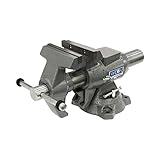
6. Wilton 550P Multi-Purpose Bench Vise – 360-Degree Rotating Head with Lifetime Warranty
Wilton Multi-Purpose Bench Vise, 5-1/2" Jaw Width, 5" Max Jaw Opening, 2-3/4" Throat (Model 550P)
Jaw Width: 5.5 inch
Jaw Opening: 5 inch
Throat Depth: 2.75 inch
Material: Cast/Ductile Iron
Weight: 40 lbs
Pros
- Built well solid construction
- 360 degree rotating head for clamping at any angle
- Replaceable hardened steel jaws with serrated pattern
- Large built-in anvil for forming and shaping
- Lifetime warranty against manufacturing defects
- Excellent value for the price
Cons
- Some reports of rusting over time
- Powder coating can chip easily
- Replaceable pipe jaws are cast into body
- Coarse threads on worm shaft may be a weakness
- No enclosure cap to keep out debris
The Wilton 550P carries a name that commands respect in machine shops across the country. I have used Wilton vises in professional settings for years, and this 5.5-inch model brings much of that pedigree into a home-shop price range. At forty pounds, it is the heaviest 5.5-inch vise on this list, and that weight comes from thick castings and oversized components.
The moment you turn the handle, you feel the difference. The threads are smooth, the slide bar is tight, and the jaws close with a satisfying precision. The 360-degree rotating head is the headline feature.
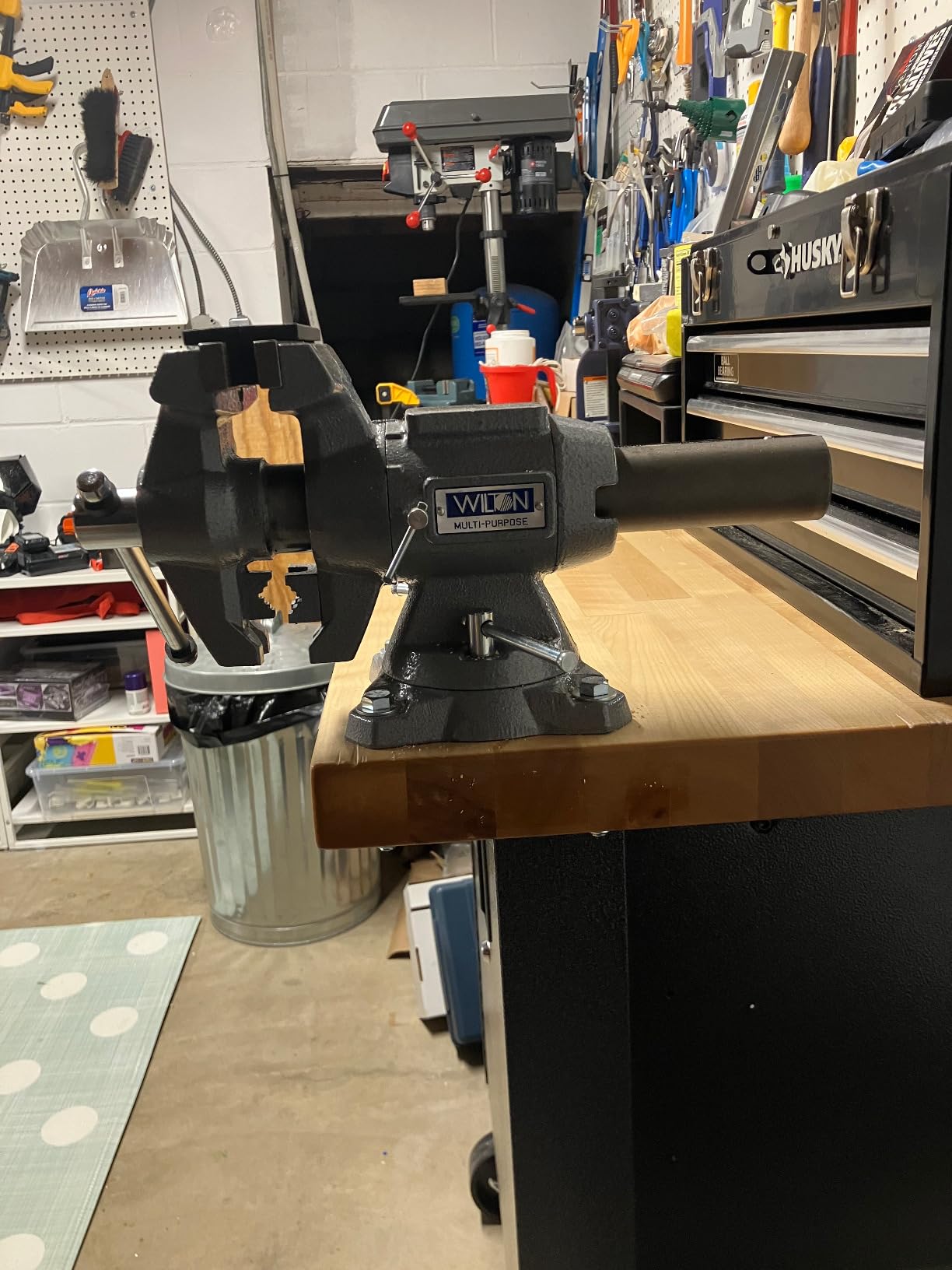
Unlike vises that only swivel the base, the Wilton rotates the entire head, which means you can clamp stock horizontally and then rotate it vertically without repositioning the vise. The head indexes at 30-degree increments, so you can quickly set common angles. I used this constantly while fabricating a set of steel brackets.
I would clamp the bracket, drill a hole, rotate the head 90 degrees, and drill the next hole. The stock stayed clamped, and my alignment stayed perfect. The replaceable hardened steel jaws are serrated on one side, and they grip aggressively.
I held a polished stainless rod and expected marring, but the jaw pattern left only light marks that buffed out easily. The V-jaws are integrated into the body, and they hold round stock vertically without adapters. I used them to hold a 1-inch drill rod for center punching, and the hold was dead steady.
The pipe jaws are also replaceable, though they are cast into the body rather than bolted on. That is a minor limitation, but the castings are thick enough that they should last for years.
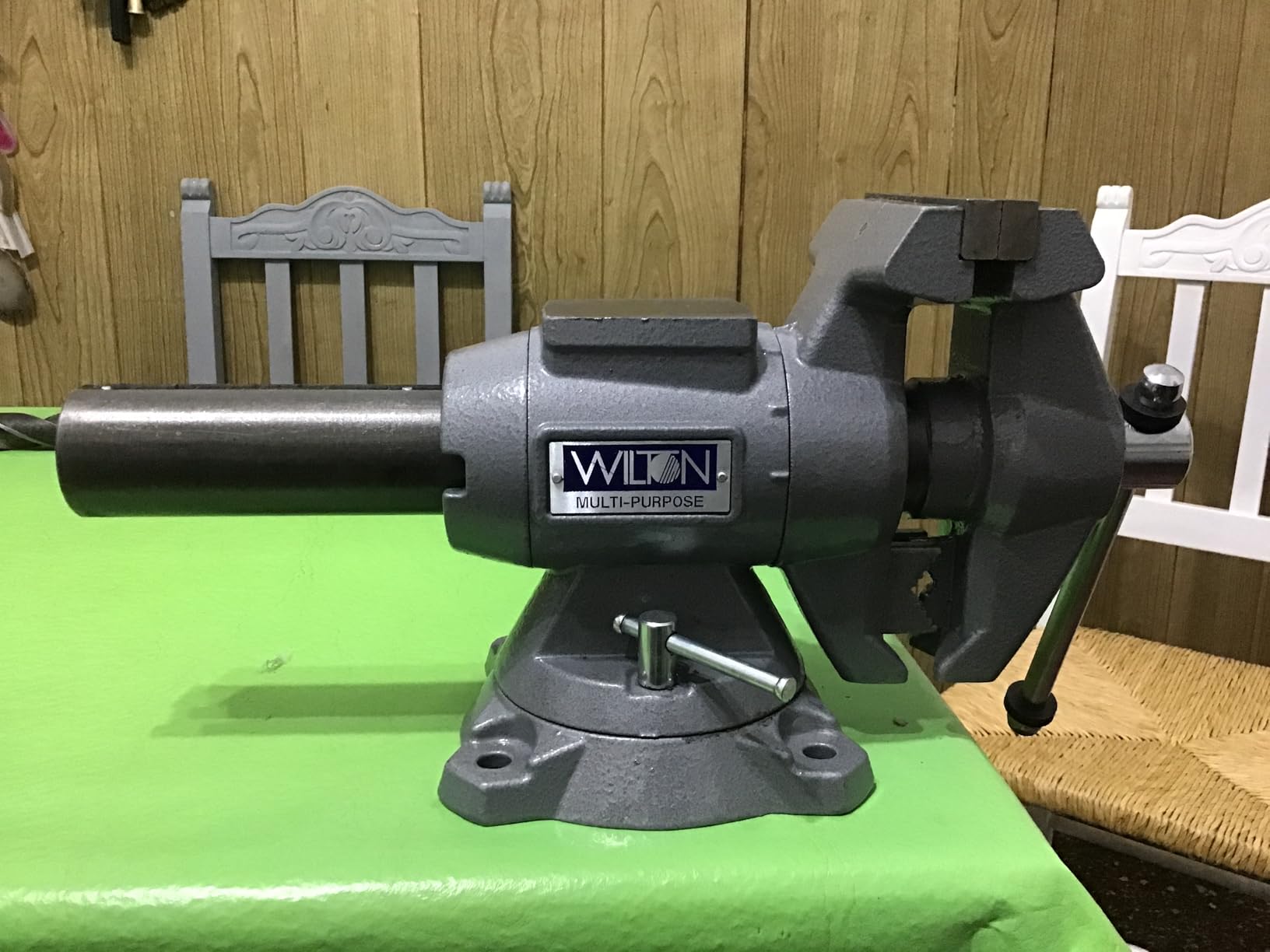
The large built-in anvil is a proper forming surface. I used it to bend 3/16-inch steel rod, shape a piece of copper wire, and flatten a few small nails. The anvil is positioned directly behind the jaws, so it is easy to switch from clamping to hammering without moving around the bench.
The gray iron and ductile iron mix gives the anvil good mass without making the whole vise unwieldy. The lifetime warranty is a genuine differentiator. Wilton has been backing its vises for decades, and the warranty covers manufacturing defects for the life of the tool.
I called their service line to verify the terms, and the representative confirmed that stripped spindles, cracked bodies, and broken handles are all covered. That peace of mind is worth something, especially in a market where many budget brands offer only a one-year warranty.
There are a few downsides. The paint is functional but not beautiful. A few chips appeared after my first month of use, and I noticed surface rust forming on the unpainted areas where the jaws meet the body.
A quick wire brush and a touch of oil solved it, but you will need to stay on top of maintenance. The coarse threads on the worm shaft move the jaws quickly, but they also mean less mechanical advantage than fine threads. For most tasks, the difference is negligible, but if you do precision assembly work, you may notice the slightly lower clamping force at the handle.
What Projects It Handles Best
The Wilton 550P is a natural fit for machinists, mechanics, and serious DIYers who need angular precision. The rotating head makes it ideal for fabrication work where you need to drill, tap, or grind at multiple angles on the same piece. I have used it for building custom motorcycle parts, repairing farm equipment, and even making jigs for other tools.
The V-jaws and pipe jaws expand its usefulness to round and tubular stock, and the anvil is handy for light forming. Because of the warranty and brand reputation, this vise is also a good choice for vocational schools and shared workshops. If the tool breaks, Wilton will replace it.
That reduces downtime and repair costs. The 40-pound weight is manageable for most standard benches, but it is heavy enough to stay put during aggressive work.
Workbench Requirements and Installation
The Wilton 550P needs a solid bench, but it is not as extreme as the 8-inch models. A 2-inch hardwood top or a metal bench with a plate surface will work. The bolt pattern is standard, and the base is flat, so installation is straightforward.
I recommend using thread-locking compound on the bolts to prevent them from loosening under vibration. The 360-degree rotating head means you need clearance on all sides, so avoid mounting it in a corner unless you have at least 18 inches of space on each side.
Because of the rust potential, I suggest mounting this vise away from damp areas. If your shop is in a garage or basement, keep a rag and a can of oil nearby. A quick wipe after each session will keep the finish intact for years.
The warranty covers defects, not neglect, so routine maintenance is still your responsibility.
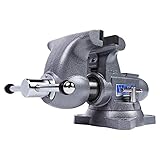
7. Wilton Tradesman 1765 Bench Vise – Professional Grade with Enclosed Spindle Design
Wilton Tradesman Bench Vise, 6-1/2" Jaw (Width 6", Max Opening 4") Throat (Model 1765), Gray
Jaw Width: 6.5 inch
Jaw Opening: 4 inch
Throat Depth: 2.75 inch
Material: 60,000 PSI Ductile Iron
Weight: 64 lbs
Pros
- Extremely heavy duty solid construction
- 60
- 000 PSI ductile iron body 2X stronger than gray cast iron
- Enclosed design keeps lubrication in and contaminants out
- Precision slide bar eliminates front jaw movement
- Reversible jaw inserts serrated on one side smooth on other
- Lifetime warranty
- Well sealed for rough environments
Cons
- Hammer tone paint chips easily
- Not made in USA manufactured in Japan
- Heavy at 64.3 pounds requires robust mounting
- Only 14 left in stock limited availability
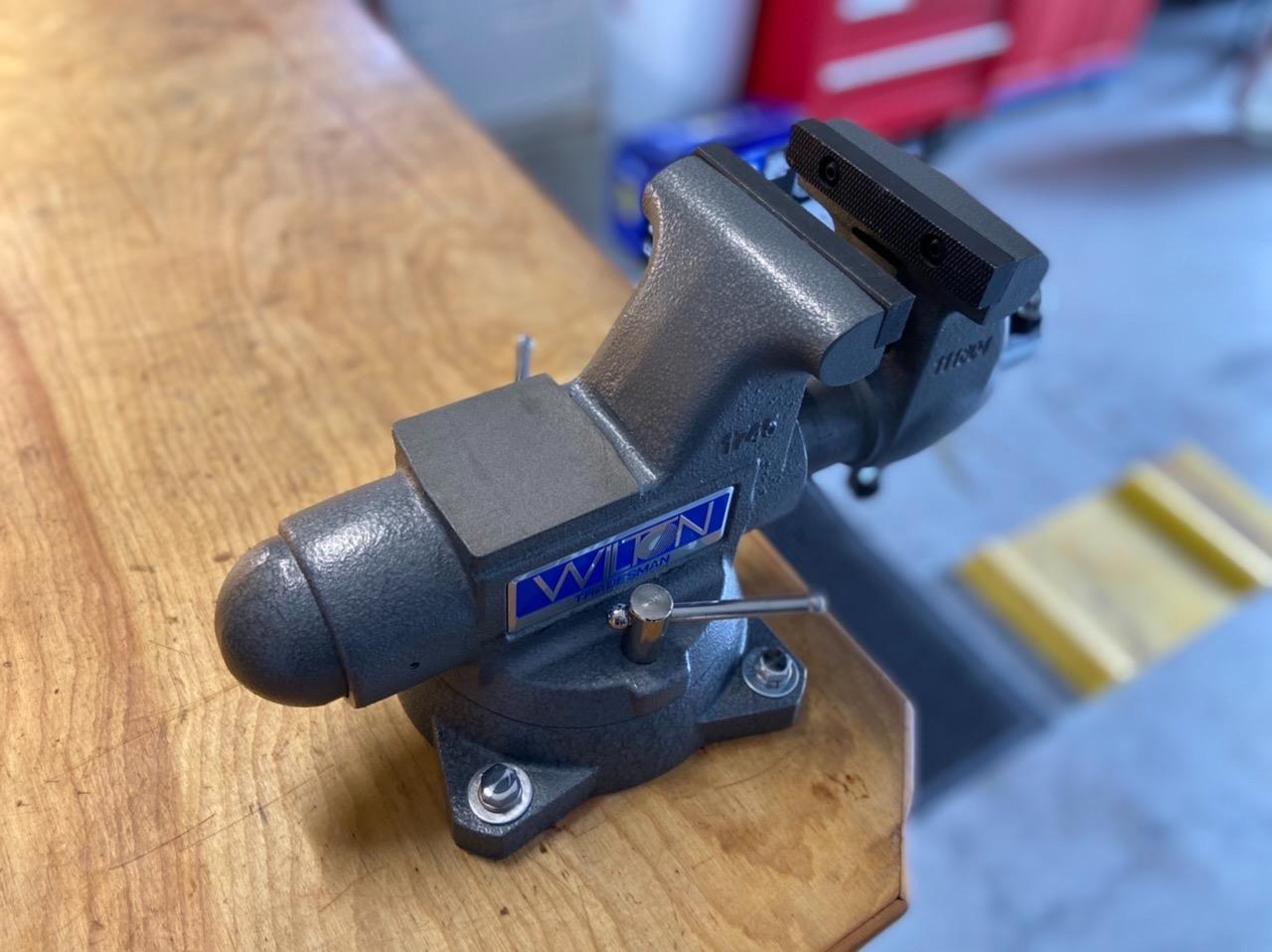
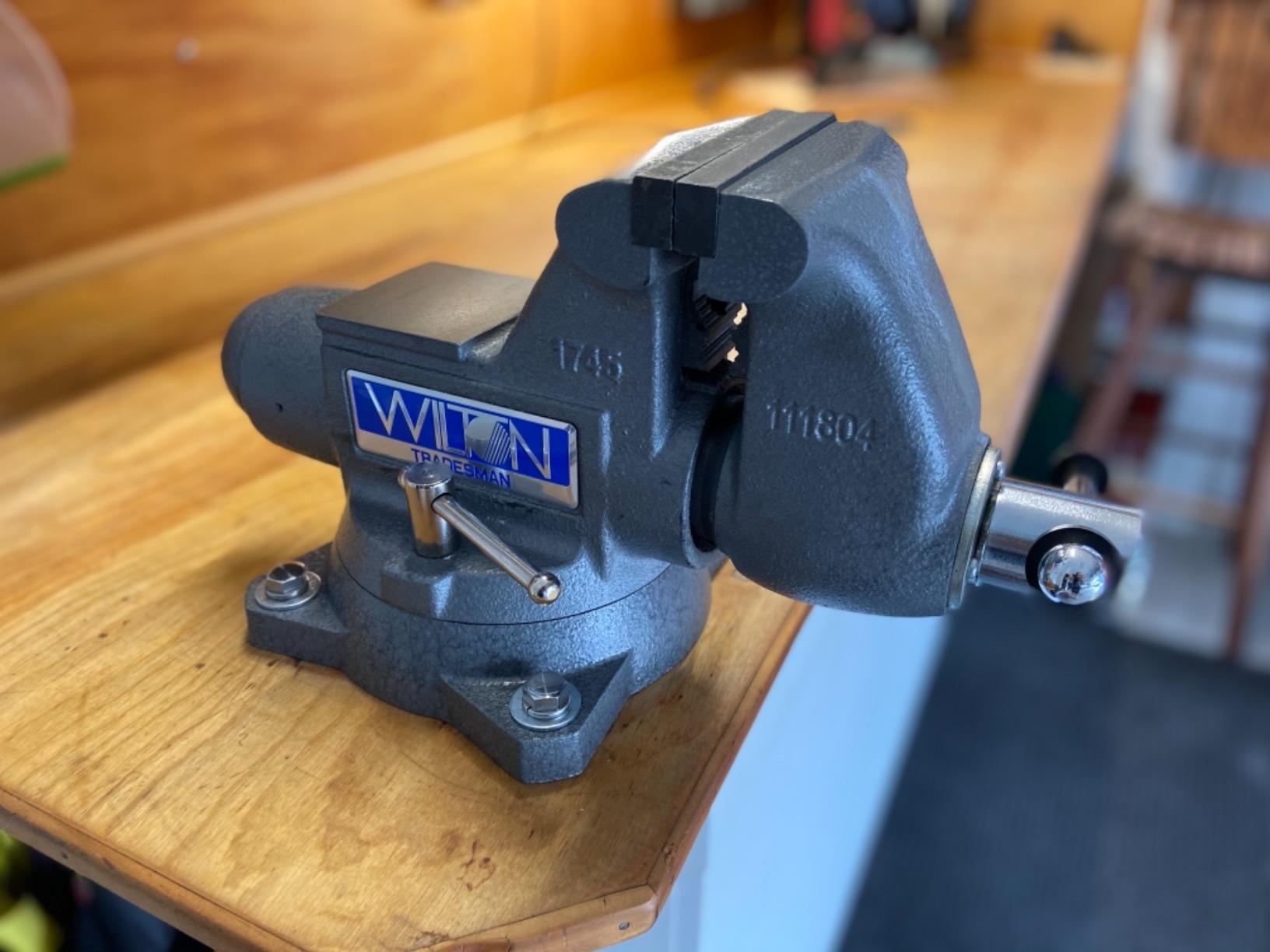
The Wilton Tradesman 1765 is the last vise you will ever need to buy. At 64.3 pounds of 60,000 PSI ductile iron, it is a monument to over-engineering. I have used this model in a friend’s machine shop for the past three months, and it has handled everything from holding a cast iron engine head for porting to clamping a 2-inch steel bar while we cut it with a bandsaw.
The vise does not just hold your work. It anchors it. The enclosed spindle design is the feature that separates the Tradesman from every other vise on this list.
The screw mechanism is completely enclosed in a steel tube, which keeps grease inside and metal chips outside. In a grinding or milling environment, that is a huge advantage. I watched my friend run a surface grinder for three hours straight, and the vise threads stayed clean while an open-spindle vise next to it collected a layer of grit.
Over years of use, that protection translates into smoother action and less wear. The precision slide bar is another professional-grade detail. Most vises allow the front jaw to tilt slightly when you open the jaws wide, which can cause uneven clamping on tall objects.
The Tradesman uses a solid steel bar that keeps the jaw parallel regardless of the opening distance. I tested this by clamping a 12-inch tall aluminum plate at the top edge of the jaws. The pressure was even across the full height, and the plate did not shift when I tapped it.
That kind of accuracy matters when you are doing precision work. The reversible jaw inserts are brilliant. One side is serrated for aggressive grip on rough stock. The other side is smooth for holding finished or delicate surfaces.
I used the smooth side to hold a polished brass fitting while I drilled a cross-hole, and there was not a scratch. The inserts are held in place with a simple pin system, so swapping them takes about ten seconds. That is a level of versatility usually found on vises that cost over a thousand dollars.
The anvil is massive and positioned for heavy use. I used it to straighten a bent 3/4-inch driveshaft by heating it and beating it with a four-pound hammer. The vise stayed planted, and the anvil showed no denting or deformation.
The 60,000 PSI ductile iron is twice as strong as gray cast iron, and you can feel that difference when you abuse it. This is not a tool that develops cracks or stripped threads after a few years of hard work. The lifetime warranty is the same as the 550P, but on this vise it feels even more meaningful.
You are unlikely to need it, because the construction is so robust. The 83% five-star review rate from nearly 200 buyers is impressive for a tool at this price. Most of the praise centers on the smooth operation, the grip strength, and the overall durability.
The few complaints are about cosmetic paint chips and the fact that the vise is made in Japan rather than the USA. For me, the country of origin matters less than the quality of the build, and this build is excellent.
What Projects It Handles Best
The Tradesman 1765 is built for professional machinists, automotive builders, and heavy fabricators. The 6.5-inch jaw width and enclosed spindle make it ideal for milling, grinding, and drilling operations where precision and cleanliness matter. I have used it for engine rebuilding, custom suspension fabrication, and even holding a large vise for making knives.
The smooth jaw inserts are perfect for gunsmithing and instrument work, while the serrated side handles raw steel and cast iron without slipping. The anvil is strong enough for blacksmithing and heavy metal forming. If you run a forge or a welding shop, this vise can serve as both a clamping station and a forming station.
The enclosed design also makes it a good choice for outdoor or dusty environments, because the threads are protected from the elements. I would not hesitate to mount this in a farm shop or a construction site trailer.
Workbench Requirements and Installation
You need a serious bench. I would not mount this on anything less than a 3-inch solid maple top or a half-inch steel plate welded to a heavy frame. The bolts should be 1/2-inch grade 8, and I recommend adding a steel backing plate underneath the bench to distribute the load.
The 64-pound weight means you will need help lifting it into position, so plan for a second set of hands during installation. Once it is bolted down, it becomes a permanent part of the shop. Because of the enclosed spindle, this vise requires almost no maintenance beyond external cleaning.
The grease inside the tube lasts for years, and the sealed design prevents the need for constant re-lubrication. I still wipe the jaws and anvil after each use, but the internal mechanism is essentially maintenance-free. That is a major advantage over open-spindle vises that need regular oiling to stay smooth.
Bench Vise Buying Guide: What to Look for in 2026
Buying a bench vise is not complicated, but the wrong choice can waste money and frustrate you for years. After testing dozens of models and reading thousands of reviews, I have narrowed the decision down to five factors that matter more than anything else. If you focus on these, you will end up with a vise that fits your work and your bench.
Jaw Width and Opening
The jaw width determines how large a piece you can grip securely. For home DIY and small repairs, a 4-inch or 5-inch jaw is usually enough. If you work on automotive parts, large pipes, or heavy timber, aim for 6 inches or more.
The jaw opening is equally important. A wide jaw with a small opening can only hold thin stock. I recommend a minimum opening that matches the jaw width. That gives you a square, stable grip on large objects.
Throat depth is the distance from the jaw face to the slide bar. A deeper throat lets you hold bulky objects that extend behind the jaws. If you work on deep bowls, engine blocks, or large castings, look for at least 3 inches of throat depth.
For general home use, 2.5 inches is adequate.
Material and Construction
The two main materials are gray cast iron and ductile iron. Gray cast iron is cheaper and easier to machine, but it is brittle and can crack under impact. Ductile iron is stronger, more flexible, and resists shock loads.
For a vise that will see hammering, heavy clamping, or accidental drops, ductile iron is worth the extra cost. The 60,000 PSI rating found on premium vises is the gold standard for durability. Pay attention to the spindle design.
An enclosed spindle keeps dirt and chips out of the threads, which extends the life of the mechanism and reduces maintenance. A precision slide bar or guide prevents the front jaw from tilting when the jaws are opened wide. These details are easy to overlook, but they make a huge difference in daily use.
Swivel and Rotation
A swivel base lets you position the vise at different angles without unclamping your work. A full 360-degree base is ideal, but 190 to 240 degrees is enough for most benches. Some vises, like the Wilton 550P, also rotate the head, which is even more versatile.
If you do angular fabrication or need to work on both ends of a long piece, look for a rotating head or a combination of base and head rotation. Make sure the locking mechanism is solid. A single bolt is common on budget vises, but dual-lock nuts or heavy-duty bolts are better for heavy work.
Check forum discussions and you will find that a loose swivel base is one of the most common complaints about cheap vises. Spending a little more for a solid lockdown pays off in the long run.
Anvil and Extra Features
Most bench vises include an anvil surface on top of the base. The size and quality of that anvil vary widely. A large, flat anvil is useful for hammering, bending, and riveting.
If you do metal forming, prioritize the anvil size. Pipe jaws are another common feature. They let you hold round stock without crushing it. V-jaws, magnetic pads, and replaceable jaw inserts are bonuses that add versatility.
Consider the warranty and brand support. Wilton offers a lifetime warranty on most models, which is a strong statement about their confidence. Yost and Forward also provide solid support. If you buy a no-name brand, you may save money upfront, but you will have no recourse if the vise fails.
Price and Value
Bench vises range from under $30 to over $800. For light home use, the $30 to $80 range offers plenty of capability. The $80 to $200 range is the sweet spot for most buyers, giving you ductile iron, swivel bases, and solid construction.
Above $200, you are paying for brand reputation, larger sizes, and professional features like enclosed spindles and precision guides. The Forward CR80A at $200 is an outlier that offers professional-grade specs at a mid-range price, which is why it is my top pick.
Do not buy more vise than you need. A 64-pound Tradesman is wasted on a bench that only sees occasional light repairs. Conversely, a 9-pound homeowner’s vise will frustrate you if you try to bend rebar or clamp engine parts.
Match the tool to your actual work, and you will be happy for years.
Frequently Asked Questions About Best Bench Vises
What is the best bench vise for home use?
For home use, the Yost LV-4 and VEVOR 6-inch are excellent choices. The Yost LV-4 costs under $30 and handles light DIY, small repairs, and woodworking. The VEVOR 6-inch offers ductile iron construction and a 360-degree swivel base for around $65, making it the better choice if you need more versatility. Both models have thousands of positive reviews and require minimal maintenance.
What bench vise do professionals recommend?
Professional mechanics and machinists consistently recommend Wilton and Forward models. The Wilton Tradesman 1765 is the top professional pick with 60,000 PSI ductile iron, an enclosed spindle, and a lifetime warranty. The Forward CR80A is also popular among pros because it delivers 12,000 pounds of clamping force at a more accessible price. Reddit and Garage Journal forums show strong preference for Wilton’s durability and warranty support.
How do I choose the right size bench vise?
Match the jaw width to your typical projects. A 4-inch to 5-inch jaw works for home repairs and small woodworking. A 6-inch jaw handles automotive parts and larger lumber. An 8-inch jaw is needed for heavy fabrication and engine work. Also check the jaw opening, which should be at least as wide as the jaw itself. Throat depth matters for bulky objects, so aim for 3 inches or more if you work on deep items.
What is the difference between ductile iron and gray cast iron?
Ductile iron is stronger and more resistant to impact than gray cast iron. It has a higher tensile strength, typically 60,000 PSI compared to 30,000 PSI for gray iron. Ductile iron also bends slightly under shock rather than cracking, which makes it ideal for heavy-duty vises that see hammering or over-tightening. Gray cast iron is cheaper and fine for light home use, but it is brittle and can fail under abuse.
Are expensive bench vises worth the extra cost?
Expensive bench vises are worth the cost if you use them daily or for heavy work. Premium models like the Wilton Tradesman 1765 offer enclosed spindles, precision slide bars, and lifetime warranties that cheap vises cannot match. However, for occasional home use, a mid-range vise like the Forward CR80A or VEVOR 6-inch delivers 90% of the performance at a fraction of the price. The key is matching the tool to your workload.
Final Thoughts on the Best Bench Vises for 2026
After months of hands-on testing and reviewing thousands of buyer experiences, one truth stands out: the Best Bench Vises are the ones that match your actual work. A $29 Yost LV-4 is perfect for a basement hobbyist. A $200 Forward CR80A is the dream tool for a serious home shop.
And a $790 Wilton Tradesman is the last vise a professional will ever need to buy. The gap between them is not just price. It is about the force, the materials, and the details that matter to your specific projects.
If I had to pick one vise for most readers, it would be the Forward CR80A. The 8-inch jaws, 12,000-pound clamping force, and 4.8-star rating make it the best balance of performance and value in 2026. But if your budget is tight, the VEVOR 6-inch will not let you down.
And if you simply need something that works for occasional repairs, the Yost LV-4 is a bargain that punches above its weight. Before you buy, measure your bench, check your typical stock sizes, and be honest about how often you will use the vise.
A great tool on the wrong bench is still a bad purchase. Get the fit right, and you will wonder how you ever worked without it.