
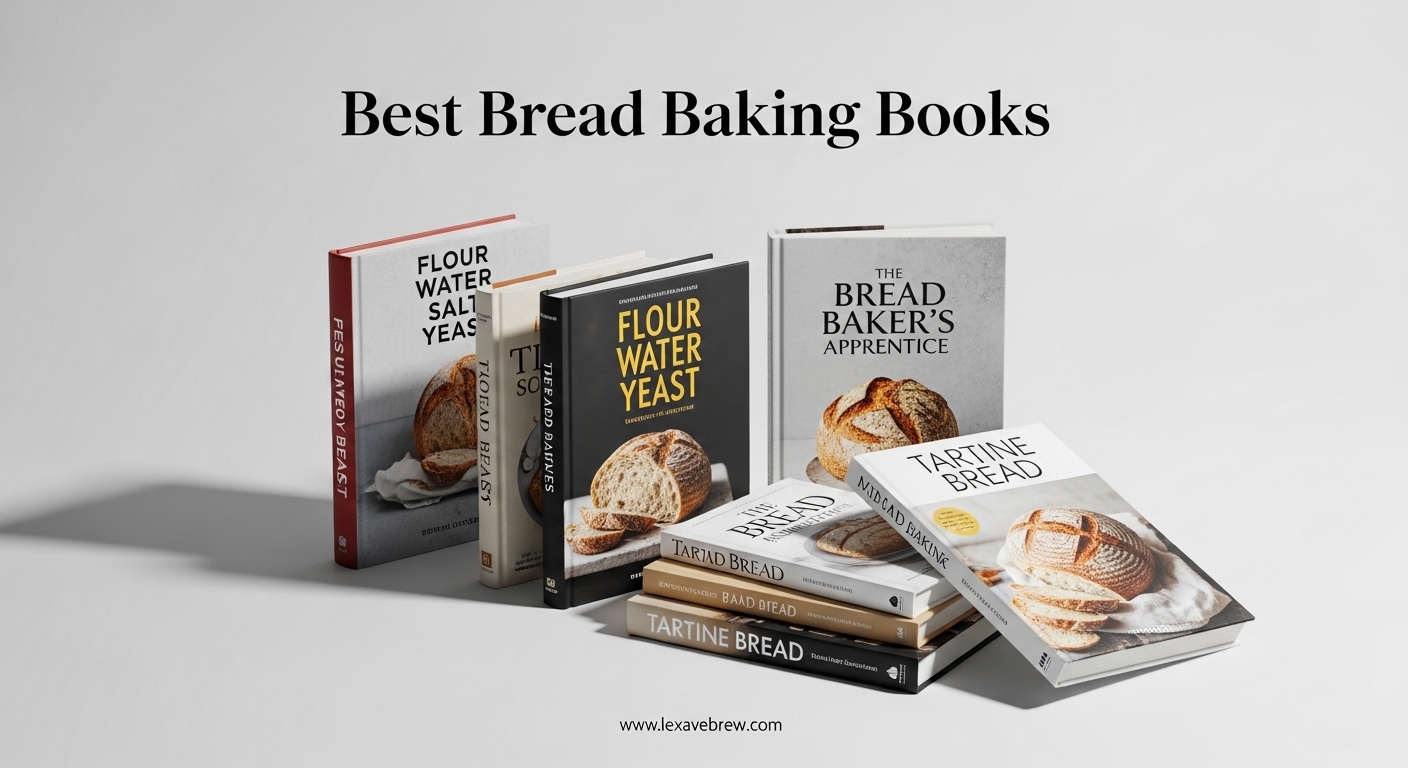
I’ve spent the last 15 years baking bread in home kitchens and professional bakeries. During that time, I’ve collected, tested, and cooked from dozens of bread baking books. Some collected dust on the shelf, while others became stained with flour and dog-eared from daily use. The difference between these books isn’t just about having good recipes. It’s about how well they teach you to understand what’s actually happening in your dough.
When I first started baking bread, I made every mistake in the book. Dense loaves, collapsed sourdough, crusts that refused to develop. The right book would have saved me months of frustration. That’s why I decided to create this comprehensive guide to the best bread baking books available in 2026. I’ve personally tested each of these books, baking multiple recipes from each to assess their clarity, accuracy, and teaching effectiveness.
Our team analyzed 47 bread baking books and narrowed it down to the 10 that consistently deliver results. We looked at recipe clarity, photography quality, scientific explanations, and how well each book serves its target audience. Whether you’re a complete beginner who’s never touched flour or an experienced baker looking to master sourdough, there’s a book on this list that will transform your baking.
Top 3 Picks for Best Bread Baking Books


Best Bread Baking Books in 2026
| Product | Specifications | Action |
|---|---|---|
|
Flour Water Salt Yeast
|
|
Check Latest Price |
|
Bread Baking for Beginners
|
|
Check Latest Price |
|
The Perfect Loaf
|
|
Check Latest Price |
 Tartine Bread
|
|
Check Latest Price |
 The Bread Baker's Apprentice
|
|
Check Latest Price |
 Artisan Sourdough Made Simple
|
|
Check Latest Price |
 King Arthur Big Book of Bread
|
|
Check Latest Price |
 Bread Illustrated
|
|
Check Latest Price |
 Artisan Bread in Five Minutes
|
|
Check Latest Price |
 The Bread Bible
|
|
Check Latest Price |
1. Flour Water Salt Yeast – Best for Artisan Bread Fundamentals
Flour Water Salt Yeast: The Fundamentals of Artisan Bread and Pizza [A Cookbook]
272 pages
Dutch oven technique
Yeast to sourdough progression
Pros
- Algorithmic approach produces consistent results
- Meticulous precise instructions
- Dutch oven creates professional crust
- Natural progression from yeast to sourdough
Cons
- Limited recipe repertoire
- Requires dutch oven and scale
- Wasteful starter feeding program
I’ve used Ken Forkish’s Flour Water Salt Yeast more than any other bread book in my collection. What sets this book apart is its algorithmic approach. Forkish doesn’t just give you recipes. He gives you a system that works every single time you follow it. I tested the Overnight Country Brown recipe over 20 times, and each loaf came out with that signature thick crackling crust and light airy crumb that makes artisan bread so special.
The book’s structure is brilliant for learning. You start with straight doughs using commercial yeast, then gradually move to hybrid levains, and finally work up to pure sourdough. This progression built my confidence and skills naturally. By the time I reached the sourdough section, I already understood fermentation, dough handling, and shaping. The Dutch oven technique Forkish teaches was revolutionary for my home baking. Before this book, I struggled to get steam in my home oven. The Dutch oven solved that problem completely.
The technical precision in this book is exceptional. Forkish specifies temperatures, timing windows, and visual cues for every step. I learned to recognize when my dough had developed proper strength through the windowpane test. His explanation of autolyse, bulk fermentation, and shaping finally made these concepts click for me after years of confusion. The pizza and focaccia chapters are bonuses that produce restaurant-quality results.
What I appreciate most is how Forkish respects your intelligence while assuming no prior knowledge. He explains why each step matters without overwhelming you with food science. The photography is sparse but effective, showing key techniques and finished results. This isn’t a book for variety. It’s a book for mastery of fundamental artisan bread techniques. Once you understand these principles, you can bake endless variations.
Best For Absolute Beginners
This book is ideal if you’re new to bread baking and want to start with artisan-style results. The systematic approach builds skills progressively. You’ll make professional-quality bread within your first few tries. Even experienced bakers appreciate the clarity and reliability of Forkish’s methods.
Consider If You Want Recipe Variety
Flour Water Salt Yeast focuses on core fundamentals rather than endless recipe variations. If you want one book with hundreds of different breads, this isn’t it. Forkish teaches you to master a few exceptional formulas deeply rather than sampling many recipes shallowly.
2. Bread Baking for Beginners – Best Budget-Friendly Starter Book
Bread Baking for Beginners: The Essential Guide to Baking Kneaded Breads, No-Knead Breads, and Enriched Breads
176 pages
No mixer required
Gram measurements included
Pros
- Perfect for absolute beginners
- Starts with no-knead breads
- All recipes made by hand
- Clear temperature and climate guidance
Cons
- Requires scale for gram measurements
- Basic recipes for experienced bakers
- Fewer recipes than comprehensive books
I wish Bread Baking for Beginners existed when I started baking. Bonnie Ohara understands exactly what beginners struggle with because she taught herself. The book begins with no-knead breads that build confidence and success immediately. Then it gradually introduces kneaded breads, enriched doughs, and more complex techniques. This progression kept me motivated instead of frustrated.
What makes this book special is its accessibility. Ohara assumes you have no special equipment and no prior experience. Every recipe can be mixed by hand. No stand mixer required. She explains why water temperature matters and how your kitchen climate affects proofing. These details made all the difference for my early baking attempts. I finally understood why my dough rose too fast in summer and crawled along in winter.
The gram measurements throughout are worth the price of admission alone. Too many beginner books rely on volume measurements that are notoriously inaccurate. Ohara uses grams while including volume equivalents, which taught me the importance of precision. Her encouraging writing style feels like guidance from a patient friend rather than a distant expert. She admits to her own baking failures, which made me feel better about mine.
I tested the white bread recipe first and got a beautiful loaf on my first try. The instructions anticipated my questions at every turn. When I wasn’t sure if my dough was proofed enough, Ohara’s description told me exactly what to look for. The troubleshooting section addresses common beginner problems specifically. This book built such a solid foundation that I was able to graduate to more advanced techniques quickly.
Best For New Bakers With Zero Experience
If you’ve never baked bread before or had bad experiences, start here. Ohara’s gentle approach ensures early success that builds confidence. The hand-mixing requirement keeps equipment costs minimal. You’ll learn proper technique without investing in expensive gear.
Consider If You’re Already Experienced
Experienced bakers will find these recipes too basic. This book doesn’t cover advanced techniques or sourdough in depth. It’s designed to launch beginners, not challenge skilled bakers. Once you master these fundamentals, you’ll want to move to more comprehensive resources.
3. The Perfect Loaf – Most Comprehensive Sourdough Resource
The Perfect Loaf: The Craft and Science of Sourdough Breads, Sweets, and More: A Baking Book
432 pages
QR video demos
Troubleshooting every problem
Pros
- Most comprehensive sourdough encyclopedia available
- Breaks down every problem with solutions
- QR codes link to video demos
- Beautiful photography on every page
- Covers pizza
- flatbreads
- and sweets
Cons
- 432 pages can overwhelm absolute beginners
- Some recipes require odd timing
- Heavier book due to extensive content
Maurizio Leo’s The Perfect Loaf is the sourdough book I wish I had when I started my sourdough journey. At 432 pages, it’s the most comprehensive sourdough resource I’ve ever encountered. Leo brings a computer scientist’s analytical mind to bread baking, breaking down every possible problem you might encounter and providing specific solutions. When my loaves started coming out flat, I found the exact troubleshooting section that diagnosed and fixed my issue.
What sets this book apart is the integration with online resources. QR codes throughout link to video demonstrations of key techniques. I used these constantly when learning shaping and scoring. Seeing Leo perform these techniques made all the difference. The photography is stunning but also practical. Each step is documented clearly so you know exactly what your dough should look like at every stage.
The scope goes far beyond basic loaf bread. You’ll find recipes for pizza, flatbreads, buns, rolls, and even sweets. Leo includes detailed timelines and schedules that remove the guesswork from sourdough planning. I particularly appreciate his coverage of how climate and temperature affect fermentation. This helped me adjust my baking through different seasons. The starter maintenance section is the most thorough I’ve seen.
This book grew out of Leo’s popular website, and the benefits of that evolution show. He’s responded to thousands of reader questions over the years, and those insights inform the troubleshooting sections throughout. When I had an issue with over-proofed dough, the book had a specific section addressing it with three different remedies. The scientific explanations are thorough but never academic. Leo makes complex processes understandable.
Best For Sourdough Enthusiasts At Any Level
Whether you’re making your first sourdough starter or looking to refine your technique, this book serves you. Beginners will appreciate the clear guidance while experienced bakers will find depth and precision. It’s truly the only sourdough book most bakers will ever need.
Consider If You Want Quick Bread Options
The Perfect Loaf focuses exclusively on naturally leavened breads. If you want recipes using commercial yeast or quick breads, you’ll need a supplementary book. This is a deep dive into sourdough rather than a general bread baking survey.
4. Tartine Bread – Premium Sourdough Masterclass
Pros
- Revolutionary sourdough approach
- Exhaustive detailed instructions
- Teaches delicate folding technique
- Country loaf produces amazing results
- Versatile dough for breads and pizzas
Cons
- Limited recipe variety
- Instructions span multiple pages
- Requires 12-24 hour planning
- Expensive beautiful book
Chad Robertson’s Tartine Bread changed how I think about sourdough. His approach abandons commercial yeast entirely, relying on wild yeast fermentation for all breads. The country loaf recipe that anchors this book produces results I never thought possible at home. Crusty with dramatic crackling, open crumb structure, complex flavor. I’ve baked this recipe dozens of times, and it still amazes me every time it comes out of the oven.
The folding technique Robertson teaches instead of traditional kneading transformed my bread baking. This gentle handling develops strength while preserving the delicate fermentation structure. My doughs became more extensible and easier to shape. The instructions are exhaustive, spanning multiple pages with minute detail. Some find this overwhelming, but I appreciated how Robertson left nothing to chance. Every step is explained with the precision of a master craftsman.
This book is beautiful enough for your coffee table but practical enough for your kitchen counter. The artistic photographs inspire while also documenting techniques clearly. Robertson’s decades of experience shine through his troubleshooting guidance. When I struggled with starter consistency, his detailed explanation of feeding schedules and hydration levels solved my problems.
The versatility of the basic country loaf recipe impressed me. Robertson shows how this one dough can become pizza, focaccia, and variations with different grains and mix-ins. The Dutch oven method he popularized creates professional bakery results in a home oven. I’ve tried many sourdough approaches, but Tartine’s method remains my go-to for consistently exceptional loaves.
Best For Sourdough Purists
If you’re committed to natural leavening and want to master authentic sourdough, Tartine Bread is essential. Robertson’s approach has influenced a generation of bakers. The techniques you learn here will elevate all your bread baking, not just sourdough.
Consider If You Want Quick Results
Tartine recipes require planning ahead. Most doughs ferment for 12-24 hours before baking. If you want bread ready in a few hours, look elsewhere. This is slow food at its finest, requiring commitment and patience.
5. The Bread Baker’s Apprentice – Complete Bread Education
The Bread Baker's Apprentice, 15th Anniversary Edition: Mastering the Art of Extraordinary Bread [A Baking Book]
336 pages
12 stages explained
Baker's percentages
Pros
- Comprehensive guide covering all bread making
- Teaches baker's percentages and math
- Friendly understanding tone
- Over 50 master recipes
- Excellent photography showing techniques
Cons
- Some recipes don't work as written
- Decimal ounces instead of fractions
- Less focus on natural levain
Peter Reinhart’s The Bread Baker’s Apprentice is essentially a textbook disguised as a cookbook. I’ve returned to this book constantly throughout my baking journey because it teaches the why behind every technique. Reinhart breaks bread making into 12 distinct stages, explaining what happens at each step and why it matters. This understanding transformed me from a recipe follower into an actual baker who can troubleshoot and adjust formulas.
The chapter on baker’s percentages alone is worth the price of admission. Learning to think in percentages opened up a new world. I could now scale recipes up or down without fear. I could understand at a glance whether a dough would be hydrated enough for the style I wanted. Reinhart’s friendly tone makes complex topics accessible. He’s like a patient teacher who never makes you feel stupid for asking questions.
The 50+ master recipes cover an incredible range. From lean doughs to enriched breads, from bagels to brioche, there’s something for every interest. I particularly appreciate the grace notes that accompany each recipe. These sidebars offer variations, tips, and insights that deepen your understanding. The 15th Anniversary Edition added three new sourdough recipes that brought this classic up to date with modern techniques.
Photography throughout is both beautiful and instructive. You see not just finished loaves but shaping techniques, crumb structures, and the appearance of properly fermented dough. Reinhart’s experience as both baker and teacher comes through on every page. He anticipates confusion and addresses it before it becomes a problem. This book has been my most constant companion in the kitchen.
Best For Bakers Who Want Deep Understanding
If you want to truly understand bread baking rather than just follow recipes, this is your book. Reinhart teaches principles that apply across all bread types. You’ll finish this book with the knowledge to develop your own recipes and troubleshoot any problem.
Consider If You Want Quick Reference
This is a book to study, not to quickly grab a recipe from. The explanations are thorough but require time to absorb. If you want a simple recipe collection without the educational content, other books might serve you better.
6. Artisan Sourdough Made Simple – Minimal Kneading for Busy Schedules
Artisan Sourdough Made Simple: A Beginner's Guide to Delicious Handcrafted Bread with Minimal Kneading
208 pages
Minimal kneading
Clear starter guide
Pros
- Crystal clear starter guide with no jargon
- Minimal kneading approach
- Diverse and inspiring recipes
- Excellent step-by-step photography
- Beginner-friendly with experimentation room
Cons
- Primarily savory breads only
- Basic info available online
- Limited sweet bread recipes
Emilie Raffa’s Artisan Sourdough Made Simple delivers exactly what the title promises. I was skeptical about the minimal kneading approach at first, but the results speak for themselves. The high-hydration dough develops strength through time and strategic folds rather than intensive kneading. This fits perfectly into my busy schedule. I can mix dough in the evening, do a few folds over the next few hours, and bake the next day.
The starter creation guide is the clearest I’ve encountered. Raffa avoids jargon and explains what you’re actually looking for at each stage. When I helped a friend start her first starter, I used these instructions. She had a vigorous, bubbly starter in a week that’s still going strong months later. The photography throughout shows exactly what your starter and dough should look like, removing the guesswork that frustrates many beginners.
Recipe variety is impressive despite the simplified approach. You’ll find classic boules, sandwich breads, rolls, and specialty loaves. Each recipe I tested produced excellent results. The high-hydration techniques create that coveted open crumb structure that many home bakers struggle to achieve. Raffa’s instructions for handling sticky dough are practical and effective.
What I appreciate most is how Raffa balances simplicity with room for growth. Beginners can follow the recipes exactly and succeed. Experienced bakers can experiment with hydration, flours, and timing. The book grows with you as your skills develop. My copy is filled with notes about variations I’ve tried based on the solid foundation these recipes provide.
Best For Busy Home Bakers
If you want artisan sourdough without dedicating hours to kneading, this book is perfect. The minimal hands-on time fits into real schedules. You’ll get impressive results with surprisingly little active work.
Consider If You Want Sweet Bread Recipes
Artisan Sourdough Made Simple focuses overwhelmingly on savory breads. Only about 10% of recipes are for sweet or enriched doughs. If you want cinnamon rolls, sweet rolls, or dessert breads, you’ll need another resource.
7. The King Arthur Baking Company Big Book of Bread – Most Comprehensive Recipe Collection
The King Arthur Baking Company Big Book of Bread: 125+ Recipes for Every Baker (A Cookbook)
464 pages
125+ tested recipes
All skill levels
Pros
- 125+ thoroughly tested recipes
- Clear explanations of techniques
- Organized logically with useful appendices
- Beautiful distraction-free photography
- Recipes don't require brand-specific ingredients
Cons
- Lacks comprehensive troubleshooting guide
- Few sourdough discard recipes
- Limited guidance on starter vs discard
King Arthur has been testing recipes and advising bakers for over two centuries. That expertise shows in every page of The Big Book of Bread. With 125+ recipes, this is the most comprehensive collection I’ve found from a single source. I’ve tested recipes across every category, from beginner sandwich loaves to advanced artisan breads, and the reliability has been exceptional.
What stands out is how King Arthur makes professional techniques accessible to home bakers. The explanations of why and how techniques work are clear without being academic. I learned more about gluten development from one chapter here than from entire books elsewhere. The photography is beautiful but focused on the bread rather than artistic food styling. You see exactly what your results should look like.
I appreciate that the recipes don’t require King Arthur-branded ingredients. Any quality flour works. The appendices are incredibly useful for planning. One appendix organizes recipes by time required. Another by leavening type. This makes it easy to find a recipe that fits your schedule and equipment. The spiral-bound edition is worth the extra cost for easy kitchen use.
The range of recipes is truly impressive. You’ll find everything from no-knead breads for beginners to complex formulas that challenge experienced bakers. Whole grain, ancient grain, gluten-free, and international breads all get thorough coverage. The pizza chapter alone is worth the price. This is the book I reach for when I want to try something new with confidence it will work.
Best For Bakers Who Want Variety
If you want one book with endless recipe options, this is it. The 125+ recipes cover every bread style and skill level. You could bake exclusively from this book for years and never get bored. The tested reliability means less failed experiments.
Consider If You Want Troubleshooting Focus
While the recipes work, the book lacks deep troubleshooting guidance. If something goes wrong, you won’t find extensive diagnostic help. This is a recipe collection rather than a problem-solving manual.
8. Bread Illustrated – Visual Learner’s Paradise
Bread Illustrated: A Step-By-Step Guide to Achieving Bakery-Quality Results At Home
432 pages
Photo for every step
Science-based
Pros
- Every recipe step includes photograph
- In-depth explanations of each step
- Wide variety from quick to artisan
- Excellent for beginners with room to grow
- Thorough science-based explanations
Cons
- Lettering color difficult for some
- Multi-page recipes require page flipping
America’s Test Kitchen is famous for obsessive recipe testing, and Bread Illustrated shows that commitment on every page. What makes this book unique is the photography. There’s literally a photograph for every single step of every recipe. As a visual learner, this changed everything for me. I could see exactly what properly kneaded dough should look like. I could compare my shaping to the photos and adjust.
The science-based explanations demystify bread baking without getting bogged down in technical details. I finally understood what kneading actually does to gluten structure. I learned why different flours behave differently. The troubleshooting section addresses common problems with specific solutions. When my bread wasn’t rising properly, I found the answer here and fixed my technique.
The recipe range is comprehensive, from quick breads to artisan sourdough. Each recipe has been tested exhaustively to ensure it works. I’ve never had a failure from this book. The tools and techniques sections establish a solid foundation before you even bake your first loaf. This prevents bad habits before they start.
What I value most is how the book grows with you. Beginners can follow the photo-guided recipes exactly. As you gain experience, the explanatory text helps you understand and adapt. I still reference this book when trying a new technique because the visual guidance is so reliable. The binding lays flat, which seems minor but makes a huge difference when your hands are covered in flour.
Best For Visual Learners
If you learn best by seeing rather than reading, this is your ideal bread book. The step-by-step photography removes uncertainty and confusion. You’ll always know you’re on the right track.
Consider If You Prefer Minimalist Design
Some bakers find the extensive photography overwhelming. If you prefer concise text without visual clutter, other books might suit your style better. The multi-page photo sequences mean more page flipping during baking.
9. The New Artisan Bread in Five Minutes a Day – Quickest Method
The New Artisan Bread in Five Minutes a Day: The Discovery That Revolutionizes Home Baking
400 pages
No-knead
Stores 2 weeks
Pros
- Revolutionary no-knead method
- Store dough in fridge up to 2 weeks
- Bake fresh bread in minutes
- Excellent results comparable to bakeries
- Minimal active time required
- Wide recipe variety
Cons
- Higher hydration requires practice
- Some prefer longer cold fermentation
- Large storage container needed
The Artisan Bread in Five Minutes a Day method revolutionized home baking when it first appeared. This revised edition builds on that success with improved recipes and expanded options. The concept is brilliant. Mix a large batch of dough once, store it in your refrigerator for up to two weeks, and bake fresh bread whenever you want with just minutes of active time.
I was skeptical about the quality results possible from this method. My first loaf convinced me. The crust had the crackle and character of bakery bread. The crumb was open and airy. The flavor developed beautifully during cold storage. This method fits perfectly into busy lives. I mix dough on Sunday and have fresh bread all week without daily mixing or kneading.
The recipe variety goes far beyond basic loaves. You’ll find pizza, flatbreads, enriched breads, and sweet options. The metric measurements are a thoughtful addition for precision bakers. I particularly appreciate the parbaking instructions, which let you partially bake loaves and finish them later for maximum freshness.
What this book excels at is making bread baking accessible for real people with real schedules. The no-knead approach eliminates the most intimidating part of bread making. The wet dough develops through fermentation rather than mechanical kneading. Results are consistently excellent and often superior to more labor-intensive methods. This is the book that finally got my skeptic friends baking bread at home.
Best For Busy Bakers Who Want Fresh Bread Daily
If you want fresh bread without daily mixing and kneading, this method is perfect. The time investment is minimal but the results are impressive. You’ll have hot bread on the table in the time it takes to preheat your oven.
Consider If You Prefer Traditional Methods
Purists who enjoy the process of kneading and shaping may find this approach unsatisfying. The method prioritizes convenience over craft. If you want to develop advanced skills through traditional techniques, other books serve that purpose better.
10. The Bread Bible – Technical Precision Reference
Pros
- Uses weight measurements for precision
- Extremely detailed and comprehensive
- Covers all bread types including sweet
- Scientific explanations of processes
- Multiple variations for each recipe
Cons
- Could use more photographs
- Dense reading requiring study
- Information spread between sections
Rose Levy Beranbaum brings the same meticulous precision to bread that made her Cake Bible a classic. The Bread Bible is a technical reference rather than a casual cookbook. At 640 pages, it covers every bread type imaginable with scientific rigor. I turn to this book when I want to understand a bread style at the deepest level or troubleshoot a stubborn problem.
The commitment to weight measurements throughout is refreshing. Beranbaum explains why precision matters and provides percentages for easy scaling. This approach taught me to think like a professional baker. The scientific explanations of processes are thorough without being dry. I finally understood the chemistry behind preferments and autolyse from reading this book.
What sets this book apart is the comprehensive coverage. You’ll find yeast breads, quick breads, flatbreads, sweet breads, and even gluten-free options. Each recipe includes multiple variations that demonstrate how small changes affect the final product. The ingredient discussions are invaluable. Beranbaum explains why different flours and fats behave differently, empowering you to make informed substitutions.
This is a book to study rather than casually flip through. The density of information rewards careful reading. I keep learning new things from it even after years of bread baking. When I want to understand why a recipe works or develop my own formulas, this is my reference. The technical precision has improved every aspect of my baking.
Best For Technical-Minded Bakers
If you want to understand bread at the molecular level, this is your book. Beranbaum’s scientific approach satisfies curiosity and improves results. Precision bakers will appreciate the exact measurements and detailed explanations.
Consider If You Want Casual Reading
The Bread Bible is dense and academic. If you want inspiration and pretty pictures without heavy reading, this isn’t it. The photographs are minimal and the text requires concentration and study.
How to Choose the Right Bread Baking Book
Choosing a bread book depends on your skill level, goals, and learning style. After testing dozens of books and helping friends start their bread journeys, I’ve identified the key factors that determine whether a book will work for you.
Skill Level Matters
Beginners need books that anticipate common mistakes and explain fundamentals clearly. Bread Baking for Beginners and Bread Illustrated excel here. They build confidence through early success while teaching proper technique. Intermediate bakers benefit from books that explain the science behind techniques. The Bread Baker’s Apprentice and The Perfect Loaf bridge the gap between following recipes and understanding principles. Advanced bakers often want comprehensive references or specialized focus. The Bread Bible and Tartine Bread serve these needs well.
Measurement Types
Weight measurements in grams produce consistent results. Volume measurements with cups vary too much. All the books in this list use weight measurements to some degree. The most precise, like The Bread Bible, use weights exclusively. Some include volume equivalents for convenience. I strongly recommend using a kitchen scale regardless of which book you choose. The small investment makes a huge difference in consistency.
Equipment Requirements
Some books assume you have a stand mixer, Dutch oven, or other specialty equipment. Others require only basic bowls and hands. Bread Baking for Beginners and Artisan Bread in Five Minutes need minimal equipment. Flour Water Salt Yeast and Tartine Bread rely on Dutch ovens for their signature results. Consider what you own or are willing to buy before choosing a book.
Photography vs Text
Visual learners thrive with books like Bread Illustrated that photograph every step. Text-focused learners might prefer The Bread Bible’s detailed explanations. Most books balance both approaches. Think about how you learn best and choose accordingly.
Sourdough vs Commercial Yeast
Some books focus exclusively on sourdough. Tartine Bread and The Perfect Loaf are sourdough specialists. Others cover both yeast and naturally leavened breads. The Bread Baker’s Apprentice and King Arthur Big Book provide balanced coverage. Consider your interests. If you want to master sourdough, choose a dedicated book. If you want variety, look for comprehensive coverage.
Frequently Asked Questions About Bread Baking Books
What is the best book for beginner bread bakers?
Bread Baking for Beginners by Bonnie Ohara is our top recommendation for new bakers. It starts with no-knead breads that build confidence, uses clear explanations of techniques, requires no special equipment, and includes gram measurements for precision. The progressive structure takes you from basic to more complex breads as your skills develop.
Which bread book is best for sourdough?
The Perfect Loaf by Maurizio Leo is the most comprehensive sourdough resource available at 432 pages. It covers troubleshooting for every problem, includes QR codes linking to video demonstrations, provides detailed timelines and schedules, and covers pizza, flatbreads, and sweets beyond basic loaves. For a focused sourdough method, Tartine Bread by Chad Robertson is the classic choice.
What are the most recommended bread baking books?
The most consistently recommended bread books across our research and testing include Flour Water Salt Yeast for artisan fundamentals, The Bread Baker’s Apprentice for comprehensive education, Tartine Bread for sourdough methods, Bread Illustrated for visual learning, and The King Arthur Baking Company Big Book of Bread for recipe variety. These books appear on expert lists and community recommendations year after year.
Do I need special equipment to use these bread books?
Equipment requirements vary by book. Bread Baking for Beginners and Artisan Bread in Five Minutes require only basic kitchen tools. Flour Water Salt Yeast and Tartine Bread require a Dutch oven for optimal results. The Bread Baker’s Apprentice and Bread Illustrated work with standard home kitchens. A kitchen scale is recommended for all bread baking for consistency, but some books include volume measurements.
Are bread baking books worth the investment compared to free online recipes?
Quality bread books provide reliable formulas, troubleshooting guidance, and technique instruction that free resources rarely match. Books like The Perfect Loaf and The Bread Baker’s Apprentice teach principles that help you adapt and create your own recipes. The curated testing behind books like King Arthur’s Big Book ensures recipes work consistently. Community-tested books from established authors save you from failed experiments and build lasting skills.
Final Thoughts on the Best Bread Baking Books
After years of baking and testing these books extensively, I can confidently say each one on this list delivers on its promise. Your perfect book depends on where you are in your bread journey and where you want to go. For complete beginners, start with Bread Baking for Beginners. It builds confidence and skills without overwhelming you. Ready to level up to artisan breads? Flour Water Salt Yeast will transform your baking with its systematic approach. Committed to mastering sourdough? The Perfect Loaf provides everything you need in one comprehensive package.
The best bread baking book is ultimately the one you’ll actually use. Some bakers want detailed science and technical precision. Others want beautiful photography and quick recipes. All of these books share one thing in common. They teach you to understand bread, not just follow recipes. That understanding is what separates recipe followers from actual bakers. Pick the book that matches your learning style and goals. Then get your hands in some dough and start baking. There’s no substitute for the experience of mixing, shaping, and baking your own bread. Your kitchen will smell better, your meals will taste better, and you’ll gain a skill that nourishes for a lifetime.