
Every home barista reaches a point where YouTube tutorials and scattered blog posts just are not enough anymore. You want deeper knowledge, structured learning, and expert guidance you can reference anytime. That is exactly what the best coffee books provide: comprehensive education from world-class experts who have spent decades mastering their craft.
Our team has spent years building a home coffee library, testing brewing techniques from countless books, and learning what separates genuinely helpful guides from coffee table decoration. Some books transformed our morning routine completely. Others gathered dust after one read. This guide shares only the ones worth your time and money.
In this comprehensive guide, we review the 10 best coffee books for home baristas in 2026, covering everything from beginner-friendly brewing manuals to advanced espresso science. Whether you just bought your first espresso machine or you are dialing in your hundredth shot, you will find the perfect book for your journey here.
Top 3 Picks for Home Baristas in 2026

The World Atlas of Coffee 3rd Edition
- Comprehensive coffee origins guide
- Beautiful photography
- 288 pages
- Expert author James Hoffmann

How to Make the Best Coffee at Home
- All brewing methods covered
- Practical tips
- Great for beginners
- Beautiful presentation

Craft Coffee: A Manual
- Budget-friendly price
- Multiple brewing methods
- Troubleshooting guides
- No expensive equipment needed
Best Coffee Books for Home Baristas in 2026
| Product | Specifications | Action |
|---|---|---|
|
The World Atlas of Coffee 3rd Edition
|
|
Check Latest Price |
|
How to Make the Best Coffee at Home
|
|
Check Latest Price |
|
Craft Coffee: A Manual
|
|
Check Latest Price |
 The Coffee Recipe Book
|
|
Check Latest Price |
 The Barista Book
|
|
Check Latest Price |
 The Home Café
|
|
Check Latest Price |
 The Curious Barista's Guide
|
|
Check Latest Price |
 Home Barista Handbook
|
|
Check Latest Price |
 Coffee Obsession
|
|
Check Latest Price |
 Coffee Roaster's Handbook
|
|
Check Latest Price |
1. The World Atlas of Coffee 3rd Edition – Comprehensive Coffee Education
The World Atlas of Coffee 3rd edition: From beans to brewing – coffees explored, explained and enjoyed
Author: James Hoffmann
Pages: 288
Publisher: Mitchell Beazley
Format: Hardcover
Pros
- Beautiful textured cover and photography
- Comprehensive origins and processing coverage
- Suitable for all skill levels
- Updated 3rd edition with new content
- Works as coffee table book
Cons
- Higher price point
- May be too detailed for casual drinkers
- Large size may not fit all bookshelves
James Hoffmann needs no introduction in the coffee world. The 2007 World Barista Champion has become the voice of accessible coffee education through his YouTube channel and books. The World Atlas of Coffee represents his most ambitious project: a comprehensive guide to where coffee comes from, how it is processed, and what makes each origin unique.
I have used this book as my primary reference for understanding coffee origins for over two years now. Every time I encounter a new single-origin bean, I flip to the corresponding country chapter. Hoffmann explains how elevation, processing methods, and local traditions shape the flavors in your cup. The photography alone justifies the price: stunning images of coffee farms, processing stations, and brewing equipment fill every spread.
The third edition, released in late 2025, adds valuable updates reflecting changes in the specialty coffee industry. New producing regions get coverage, and Hoffmann addresses sustainability concerns more directly. At 288 pages, this book strikes the right balance between depth and accessibility. Beginners will not feel overwhelmed, while experienced baristas will still learn something new about obscure origins.
Who Should Buy This Book
This book is perfect for home baristas who want to understand coffee beyond just brewing technique. If you find yourself curious about why Ethiopian coffee tastes different from Colombian, or what washed processing actually means, this book answers those questions beautifully. Coffee professionals also use it as a reference guide for origin education.
Who Should Skip This Book
Casual coffee drinkers who just want a quick guide to making better morning coffee may find this overwhelming. If you are looking for step-by-step brewing recipes, this book covers that but other options focus more on technique. Also, anyone on a tight budget might want to start with a more affordable option first.
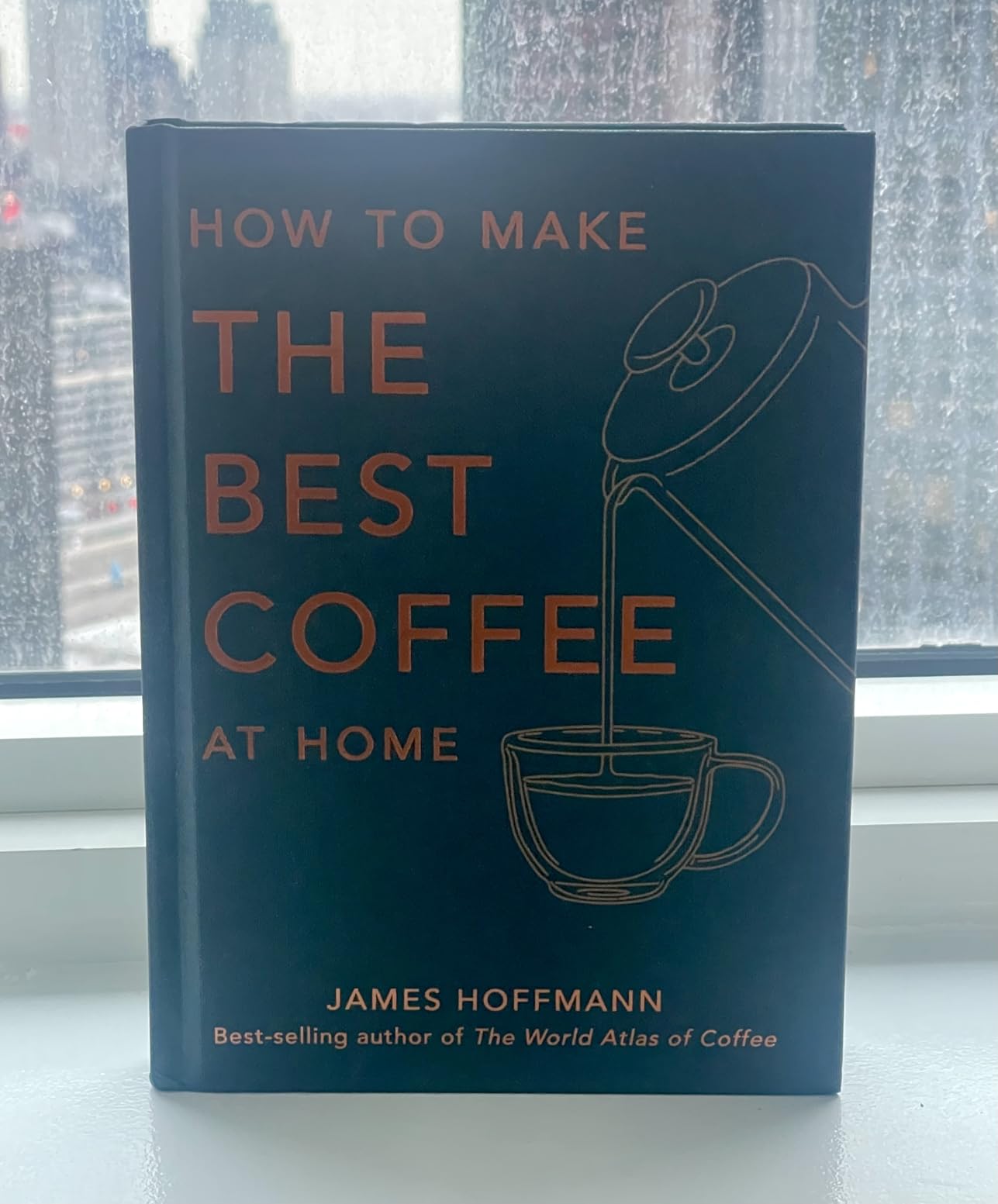
2. How to Make the Best Coffee at Home – Practical Brewing Guide
How to make the best coffee at home: Sunday Times bestseller from world-class barista
Author: James Hoffmann
Pages: Hardcover
Publisher: Mitchell Beazley
Format: Hardcover/Kindle
Pros
- Covers all brewing methods
- 2.6k+ positive reviews
- Practical approachable tips
- Great gift presentation
- Equipment buying advice included
Cons
- Some sections can feel pretentious
- Occasional contradictions noted
- Kindle formatting issues reported
- No references provided
While The World Atlas focuses on coffee origins, this book focuses entirely on making better coffee at home. Hoffmann wrote this specifically for home baristas who want practical, actionable advice without wading through academic theory. With over 2,600 reviews and a 4.8-star rating, this has become the go-to recommendation for anyone starting their coffee journey.
What impressed me most was how Hoffmann makes complex topics feel simple. He explains extraction science in plain English, then shows you exactly how to apply that knowledge. The brewing section covers everything from pour-over devices to automatic coffee makers, French press to cold brew. Each method gets clear step-by-step instructions plus troubleshooting guidance for common problems.
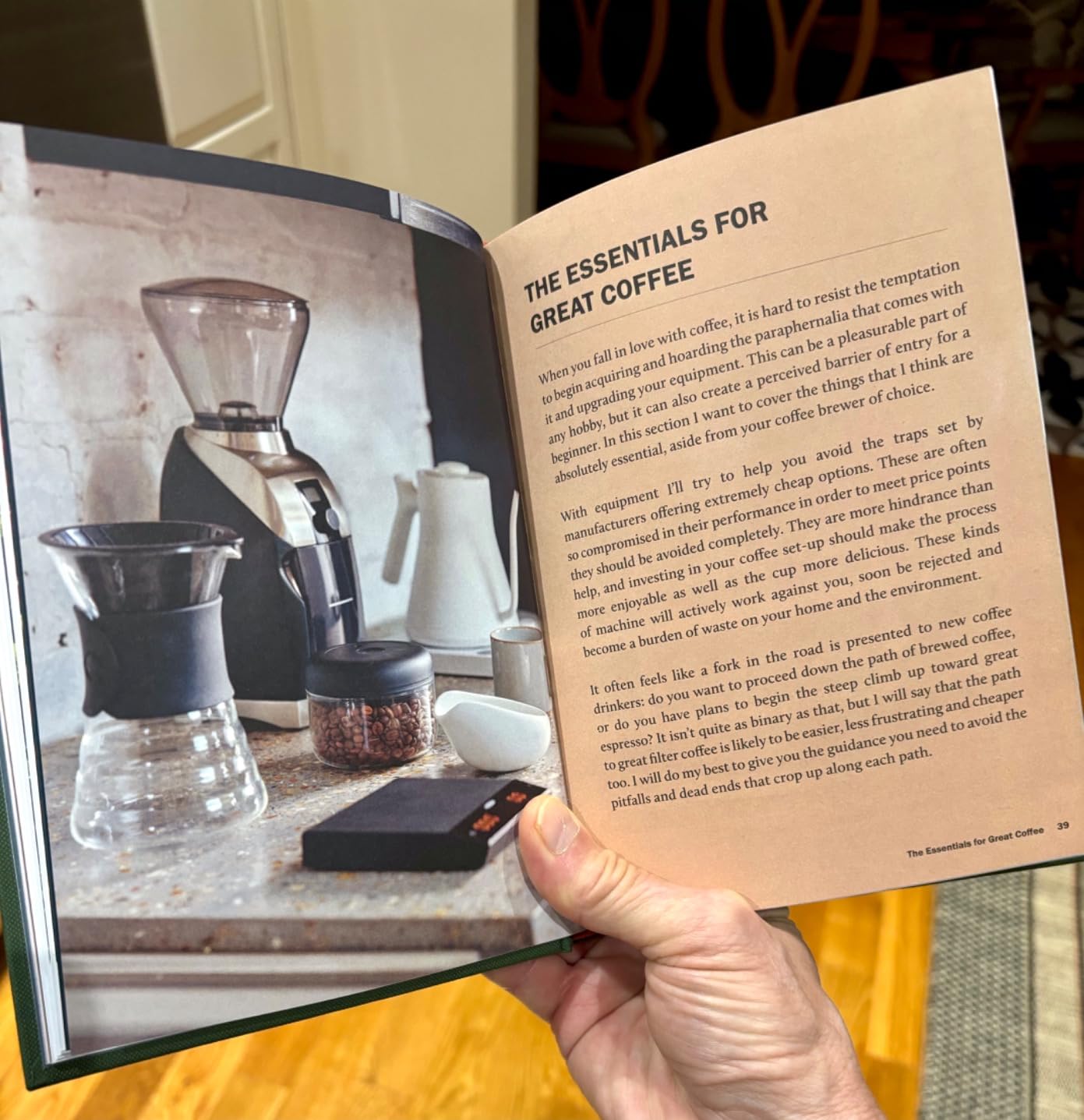
The equipment section alone saved me money. Hoffmann explains what actually matters when buying grinders, kettles, and brewing devices versus what is just marketing fluff. I wish I had read this before my first expensive equipment purchase. His section on tasting coffee transformed how I evaluate brews, moving me beyond just “good” or “bad” to actually identifying flavors and adjusting accordingly.
Who Should Buy This Book
Beginners and intermediate home baristas will get the most value from this book. If you have basic brewing equipment and want to improve your results without spending a fortune on new gear, Hoffmann shows you how. The book also makes an excellent gift for anyone who just received an espresso machine or pour-over setup.
Who Should Skip This Book
Advanced baristas who already understand extraction science may find portions too basic. If you primarily want espresso-specific guidance, this book covers espresso but not as deeply as dedicated espresso handbooks. Some readers also find Hoffmann’s writing style occasionally pretentious, though most find his expertise outweighs any tone concerns.
3. Craft Coffee: A Manual – Budget-Friendly Brewing Education
Craft Coffee: A Manual: Brewing a Better Cup at Home
Authors: Jessica Easto and Andreas Willhoff
Pages: 272
Publisher: Agate Surrey
Format: Hardcover
Pros
- Excellent balance of technical and accessible
- Covers key brewing factors
- Troubleshooting guidance
- No expensive equipment required
- Compact practical format
Cons
- Limited espresso coverage
- May not satisfy advanced baristas
- Some subjective content scattered throughout
Craft Coffee takes a different approach than Hoffmann’s books. Authors Jessica Easto and Andreas Willhoff focus on understanding why coffee tastes the way it does, then using that knowledge to improve your brewing. This emphasis on understanding over memorizing recipes makes the lessons stick better long-term.
The book excels at explaining how origin, elevation, processing methods, and bean types affect flavor. I particularly appreciated the detailed brewing techniques for multiple devices: Melitta, Chemex, Hario V60, Kalita Wave, and French press all get thorough coverage. The authors explain the reasoning behind each step, not just what to do. This approach helped me troubleshoot problems I had struggled with for months.
What sets Craft Coffee apart is its philosophy that you do not need expensive equipment to make excellent coffee. The authors focus on fundamentals that matter: grind consistency, water quality, ratios, and technique. Their unique French press eight-minute method produces some of the cleanest immersion brews I have ever made. At this price point, this book delivers exceptional value.
Who Should Buy This Book
Budget-conscious beginners who want solid coffee education without premium pricing will love this book. The focus on fundamentals over equipment makes it perfect for anyone brewing with basic gear. Intermediate baristas who want to understand the science behind their techniques will also benefit greatly from the clear explanations.
Who Should Skip This Book
Espresso enthusiasts should look elsewhere, as this book focuses primarily on immersion and pour-over methods. Advanced baristas seeking deep technical content may find the explanations too basic. If you already own Hoffmann’s home brewing book, there is significant overlap in content, though the different perspectives can be complementary.
4. The Coffee Recipe Book – 50 Drink Recipes for Home Baristas
The Coffee Recipe Book: 50 Coffee and Espresso Drinks to Make at Home
Author: Daniel Lancaster
Pages: 184
Publisher: Callisto
Format: Paperback Spiral-bound
Pros
- 50 coffee and espresso recipes
- Spiral-bound for easy use
- Easy to follow recipes
- Great value for money
- Excellent gift with espresso machine
Cons
- Imperial units only no metric
- Limited depth beyond recipes
- Some recipes lack photos
Not everyone wants to understand coffee science. Some home baristas just want to make delicious drinks without becoming coffee scholars. The Coffee Recipe Book delivers exactly that: 50 straightforward recipes for coffee and espresso drinks you can make at home with basic equipment.
The spiral-bound format makes this book incredibly practical for kitchen use. It lays flat on the counter while you work, unlike hardcover books that keep flipping pages. Each recipe includes clear ingredient lists and step-by-step instructions. The book covers classic drinks like lattes and cappuccinos alongside creative variations like flavored mochas and seasonal specialties.
I found the background information on different coffee drink types helpful for understanding what makes each unique. The book explains when to use different bean types and covers basic brewing methods. While not comprehensive, it provides enough foundation for beginners to feel confident experimenting with new drinks.
Who Should Buy This Book
Home baristas who want recipe variety without coffee science lectures will appreciate this book. It is perfect for anyone who just received an espresso machine and wants to explore drink possibilities. The affordable price and gift-ready format make it an excellent stocking stuffer or housewarming present for coffee lovers.
Who Should Skip This Book
Anyone seeking deep coffee education or brewing science should look elsewhere. International readers may find the imperial-only measurements frustrating to convert. If you already have a collection of coffee recipes from other sources, this book may feel redundant.
5. The Barista Book – Espresso-Focused Recipe Collection
The Barista Book: A Coffee Lover's Companion with Brewing Tips and Over 50 Recipes
Author: Hiroshi Sawada
Pages: 128
Publisher: Skyhorse
Format: Paperback
Pros
- Step-by-step espresso instructions
- Excellent diagrams
- Over 50 recipes
- Latte art section included
- Monthly special recipes
Cons
- Limited information for price
- More recipes than science
- Some translation issues noted
Hiroshi Sawada brings a Japanese precision to espresso education in The Barista Book. Unlike broader coffee guides, this book focuses specifically on espresso-based drinks, making it ideal for home baristas who invested in an espresso machine and want to master it fully.
The diagrams in this book deserve special mention. Sawada uses clear illustrations to show the differences between proper and improper espresso shots, milk texturing stages, and latte art techniques. Visual learners will appreciate being able to see exactly what right looks like compared to wrong. The step-by-step espresso instructions walk you through every variable: dose, tamp, extraction time, and yield.
Beyond basic espresso, the book includes over 50 recipes for espresso-based drinks. The latte art section provides enough guidance to start practicing basic patterns. Monthly special recipes add variety for those who work through the standard drinks quickly. At 128 pages, the book stays focused without unnecessary filler.
Who Should Buy This Book
Espresso machine owners who want to improve their shot-pulling and milk-steaming skills will benefit most from this book. Visual learners appreciate the excellent diagrams and illustrations. Beginners with new espresso equipment will find the step-by-step approach accessible and confidence-building.
Who Should Skip This Book
Home baristas without espresso equipment should choose a broader brewing guide instead. Those seeking deep scientific understanding of espresso extraction may find the content too surface-level. Some reviewers note the book could offer more information given its price point.
6. The Home Café – Creative Recipes Beyond Coffee
The Home Café: Creative Recipes for Espresso, Matcha, Tea and Coffee Drinks
Publisher: Page Street Publishing
Pages: 168
Format: Hardcover
Pros
- Creative unique recipes
- Beautiful photography
- Easy to follow instructions
- Includes matcha and tea
- Great coffee table book
Cons
- Smaller than some expected
- Limited to 168 pages
- Higher price for page count
The Home Café expands beyond traditional coffee books by including matcha and tea drink recipes alongside espresso creations. This broader approach makes it perfect for home baristas who want variety in their beverage repertoire or serve guests with different preferences.
The photography in this book is stunning. Every recipe features a beautiful photo that makes you want to try it immediately. The creative recipes use both common and unique ingredients, pushing you to experiment with flavors beyond your usual routine. I found several drinks that became regular parts of my rotation, especially the seasonal variations.
Beyond recipes, the book serves as attractive coffee table decor. The hardcover format and aesthetic design make it something you actually want displayed in your kitchen or coffee corner. Guests frequently flip through it when visiting, often asking about the beautiful drinks inside.
Who Should Buy This Book
Home baristas who want creative drink inspiration beyond standard coffee recipes will love this book. Those who enjoy matcha and tea alongside coffee will appreciate the variety. Anyone looking for a beautiful gift book that is also functional will find this hits both marks perfectly.
Who Should Skip This Book
If you want comprehensive coffee education rather than recipes, choose a different book. Those seeking detailed brewing science or equipment guides should look elsewhere. The shorter page count may disappoint readers expecting encyclopedic coverage.
7. The Curious Barista’s Guide to Coffee – Comprehensive Coffee Knowledge
The Curious Barista's Guide to Coffee
Publisher: Ryland Peters and Small
Pages: 192
Format: Hardcover Illustrated
Pros
- Comprehensive coffee education
- Beautiful thick pages
- Detailed coffee history
- Recipes included
- Excellent production quality
Cons
- Some recipes use unfamiliar ingredients
- More serious than casual readers may want
- Emphasis on expensive equipment
The Curious Barista’s Guide to Coffee lives up to its name by satisfying curiosity about every aspect of coffee. This comprehensive guide covers the entire journey from growing to brewing, making it ideal for home baristas who want complete coffee literacy.
The production quality sets this book apart from competitors. Thick, sepia-colored pages give it a premium feel and make the photographs pop beautifully. The detailed history section taught me more about coffee’s cultural impact than any other book I have read. Understanding how coffee shaped global trade and culture adds depth to every cup you brew.
Beyond history, the book covers brewing methods, bean selection, and drink recipes in the final quarter. While not as recipe-heavy as dedicated recipe books, the recipes included are well-curated and interesting. Serious coffee enthusiasts will appreciate the depth of information packed into 192 pages.
Who Should Buy This Book
Coffee enthusiasts who want comprehensive knowledge from bean to cup will find this book invaluable. Those who appreciate high production quality and beautiful book design will enjoy displaying and reading this guide. Readers interested in coffee history and culture get exceptional coverage here.
Who Should Skip This Book
Casual coffee drinkers who just want practical brewing tips may find this too serious and detailed. Budget-conscious buyers can find similar content in more affordable formats. Those uninterested in coffee history should choose a technique-focused book instead.
8. Home Barista Handbook – Modern Coffee Recipe Collection
Home Barista Handbook: Coffee Recipe Book for Every Kitchen With Expert Tips, Techniques & 70 Delicious Brews
Publisher: Independently Published
Pages: 132
Format: Paperback
Pros
- Full color photos for every recipe
- 70 delicious recipes
- Covers alternative milks
- Homemade syrup recipes
- Compact practical size
Cons
- Small number of reviews
- Recently published in 2024
- Limited track record
The Home Barista Handbook represents the newer generation of coffee books, published in 2024 with modern tastes and dietary preferences in mind. With 70 recipes and full-color photos for each one, this book focuses on visual appeal and practical variety.
What makes this book stand out is its coverage of alternative milks and homemade syrups. As someone who frequently makes drinks for guests with dietary restrictions, I found these sections genuinely useful. The recipes for oat milk lattes and homemade vanilla syrup have become regular additions to my hosting repertoire.
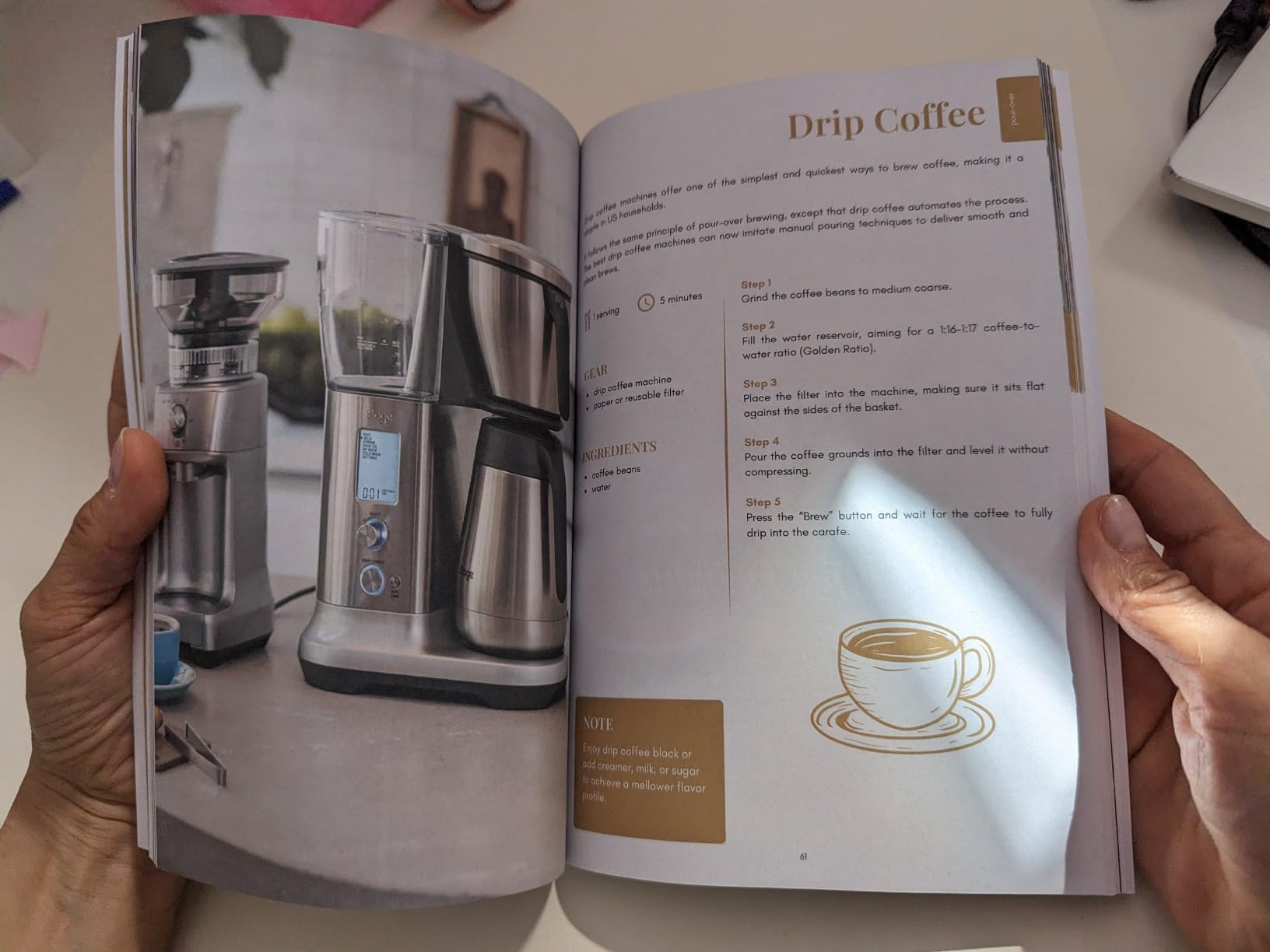
The compact size works well for small kitchen spaces. At 132 pages, it covers the essentials without overwhelming beginners. The expert tips scattered throughout provide little insights that improve your technique incrementally. For the price, this independently published book offers solid value.
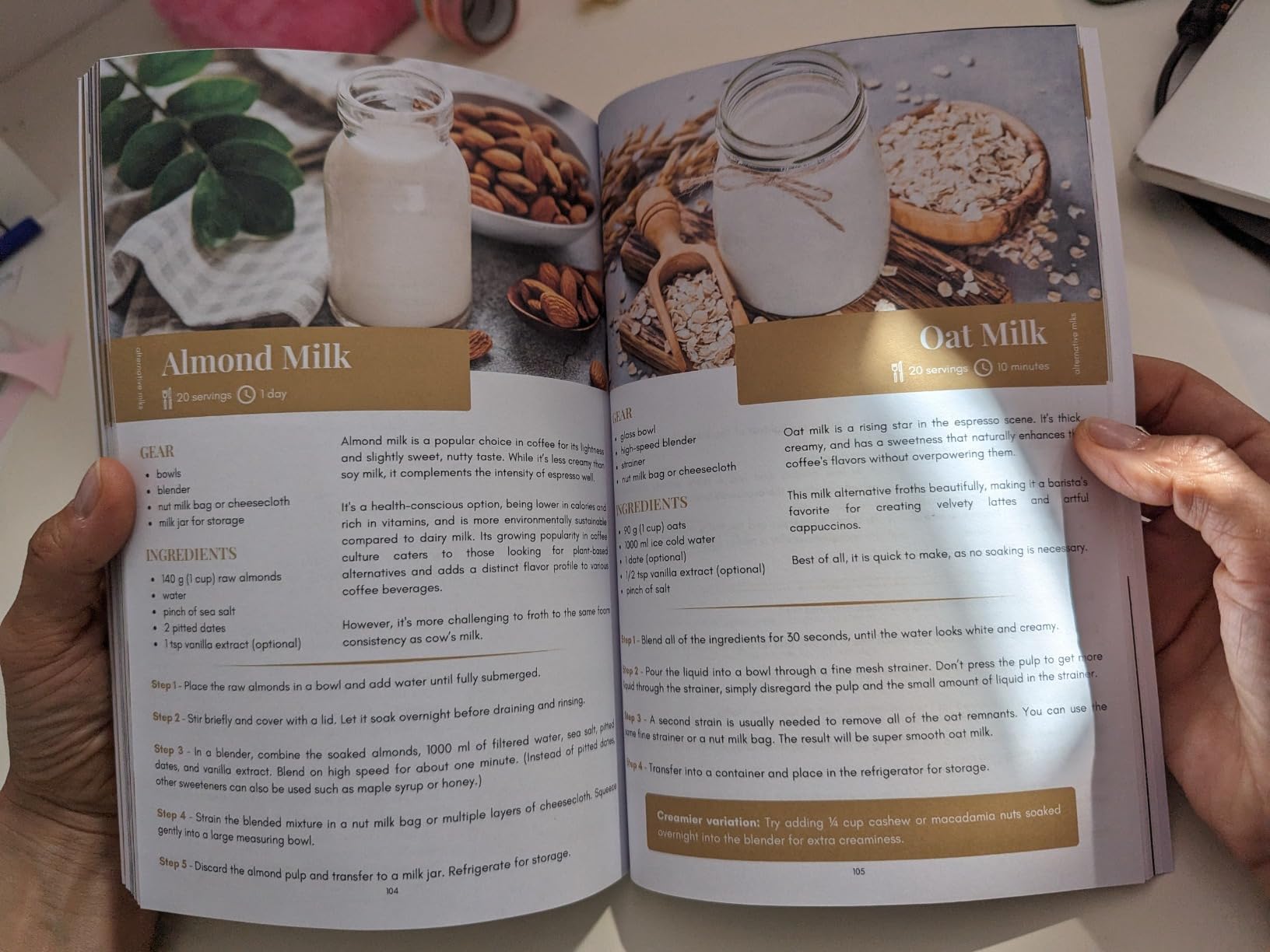
Who Should Buy This Book
Home baristas who want modern recipes with dietary accommodations will find this book practical. Those who appreciate full-color photography for every recipe will enjoy the visual guidance. Beginners who feel overwhelmed by thicker books will appreciate the focused, accessible format.
Who Should Skip This Book
Readers who prefer books with established track records may want to wait for more reviews to accumulate. Those seeking comprehensive coffee education beyond recipes should choose Hoffmann’s or Easto’s books instead. Advanced baristas may find the content too basic for their needs.
9. Coffee Obsession – Comprehensive Tools and Techniques Guide
Coffee Obsession: More Than 100 Tools and Techniques with Inspirational Projects to Make
Publisher: DK
Pages: 224
Format: Hardcover First Edition
Pros
- Over 100 tools and techniques
- Beautiful photos and illustrations
- Covers worldwide origins
- Hot cold and alcoholic recipes
- DK quality publication
Cons
- Higher price point
- Limited stock availability
- Older publication from 2014
Coffee Obsession comes from DK, known for their visually stunning reference books. This comprehensive guide covers over 100 tools and techniques, making it one of the most thorough coffee books available. Despite being published in 2014, the fundamental techniques remain relevant and valuable.
The book excels at explaining coffee equipment. Detailed sections cover grinders, brewing devices, espresso machines, and accessories with the visual clarity DK is famous for. I learned more about different brewing methods from this book than from any other single source. The illustrations show exactly how each device works and what results to expect.
Beyond techniques, the book covers coffee origins worldwide, bean characteristics, and includes recipes for hot, cold, and even alcoholic coffee drinks. The organization makes it easy to find specific information quickly. For serious coffee enthusiasts, this book serves as an excellent reference to return to repeatedly.
Who Should Buy This Book
Serious coffee enthusiasts who want comprehensive equipment knowledge will find this book invaluable. Visual learners who appreciate DK’s illustration style will love the clear explanations. Those building a coffee reference library should include this classic guide.
Who Should Skip This Book
Budget-conscious buyers can find similar content in more affordable options. Those wanting the latest specialty coffee trends should note this book predates some recent developments. Limited stock availability means you may need to act quickly when you find it available.
10. Coffee Roaster’s Handbook – Introduction to Home Roasting
Coffee Roaster's Handbook: A How-To Guide for Home and Professional Roasters
Publisher: Callisto
Pages: 170
Format: Paperback
Pros
- Great for roasting beginners
- Easy to read and understand
- Covers bean to cupping
- Includes recording methods
- Affordable price
Cons
- Too basic for advanced roasters
- Limited technical depth
- More overview than deep technical
The Coffee Roaster’s Handbook targets a specific niche: home baristas interested in roasting their own beans. For those ready to take their coffee journey to the next level, this book provides an accessible introduction to home roasting fundamentals.
As someone who started home roasting recently, I found this book perfect for building foundational knowledge. The author explains bean selection, roast profiles, and cupping techniques in language beginners can understand. The recording methods section helped me develop a system for tracking roast results and improving consistency over time.
The book covers the complete journey from green bean to finished cup. While not as technically deep as professional roasting texts, it provides enough information to get started successfully. The affordable price makes it a low-risk entry point for anyone curious about home roasting.
Who Should Buy This Book
Home baristas curious about roasting their own coffee will find this an excellent starting point. Those who want to understand what happens during roasting without professional ambitions will appreciate the accessible approach. Budget-conscious readers get solid value at this price point.
Who Should Skip This Book
Advanced home roasters seeking deep technical content on rate of rise, turnaround points, and profile development should look for more specialized texts. Those not interested in roasting their own beans should choose a different coffee book. Professional roasters will find this too basic for their needs.
How to Choose the Right Coffee Book
Finding the best coffee books for home baristas means matching your current skill level and interests to the right resource. Coffee books range from beginner-friendly introductions to advanced technical manuals, and choosing the wrong one leads to frustration or wasted money.
Consider Your Skill Level
Beginners should start with accessible, practical books like Craft Coffee or How to Make the Best Coffee at Home. These books explain fundamentals without overwhelming you with technical jargon. Intermediate baristas benefit from books that deepen understanding of extraction science and brewing variables. Advanced enthusiasts often want specialized texts on specific topics like espresso or roasting.
Match the Topic to Your Interests
Coffee books fall into several categories: brewing technique guides, recipe collections, origin and history books, and specialized topics like roasting or espresso. If you want to make better pour-over coffee, choose a technique-focused book. If you want to understand where coffee comes from, pick an origin guide. Recipe books suit those who want drink variety without deep education.
Format Matters for Practical Use
Hardcover books last longer and look better on shelves, but paperback and spiral-bound formats work better for kitchen counter reference. If you plan to keep the book open while brewing, spiral-bound options like The Coffee Recipe Book offer the best practicality. Digital formats work well for reading but poorly for quick reference during brewing.
Budget Considerations
Coffee books range from under fifteen dollars to over forty. Higher prices often reflect production quality, photography, and author expertise rather than necessarily better content. Craft Coffee delivers excellent value at a budget price point, while Coffee Obsession commands premium pricing for its comprehensive coverage and visual quality. Start affordable and upgrade only if you want deeper coverage.
Build a Learning Pathway
Consider building a progression rather than buying randomly. Start with one comprehensive brewing guide, then add specialized books as your interests develop. Many home baristas find that one general book plus one specialized book covers 90 percent of their needs. Resist the temptation to buy ten books before finishing one.
What is the best coffee book for beginners?
The best coffee book for beginners is How to Make the Best Coffee at Home by James Hoffmann. It covers all major brewing methods with practical, approachable tips that make improving your coffee feel achievable rather than overwhelming. Craft Coffee by Jessica Easto offers similar beginner-friendly content at a lower price point, making it an excellent budget alternative.
What coffee book should I read first?
Start with a comprehensive brewing guide rather than a specialized book. How to Make the Best Coffee at Home or Craft Coffee both provide solid foundations in brewing fundamentals. After mastering basics, you can explore specialized topics like espresso technique, coffee origins, or home roasting based on your interests.
Are expensive coffee books worth it?
Expensive coffee books are worth the investment if you use them regularly as reference guides. Books like The World Atlas of Coffee justify higher prices through comprehensive content, beautiful photography, and long-term reference value. However, beginners can start with affordable options like Craft Coffee and upgrade later if needed.
Can I learn barista skills from books alone?
You can learn barista theory from books, but practical skills require hands-on practice. Books teach you the why behind techniques, troubleshooting approaches, and equipment fundamentals. Combine book learning with regular brewing practice and, for visual learners, YouTube videos demonstrating techniques you read about.
What is the difference between coffee books and barista handbooks?
Coffee books typically cover broad topics like origins, history, and general brewing knowledge. Barista handbooks focus specifically on professional techniques, espresso preparation, milk steaming, and drink recipes. Home baristas often benefit from both: coffee books for general knowledge and handbooks for technique refinement.
Conclusion
The best coffee books for home baristas transform random experimentation into systematic improvement. Whether you choose James Hoffmann’s comprehensive World Atlas of Coffee for deep origin knowledge, his practical How to Make the Best Coffee at Home for brewing technique, or Craft Coffee for budget-friendly fundamentals, the right book accelerates your coffee journey significantly.
For beginners, start with How to Make the Best Coffee at Home or Craft Coffee to build solid fundamentals. Intermediate baristas ready to understand coffee origins should add The World Atlas of Coffee to their library. Espresso enthusiasts will find The Barista Book invaluable for machine-specific guidance. Those curious about roasting can begin their journey with the Coffee Roaster’s Handbook.
Your morning coffee can be so much better than it is today. The knowledge in these books, combined with regular practice, will transform your brewing results within weeks. Pick the book that matches your current skill level and interests, then start reading and brewing your way toward coffee excellence.