
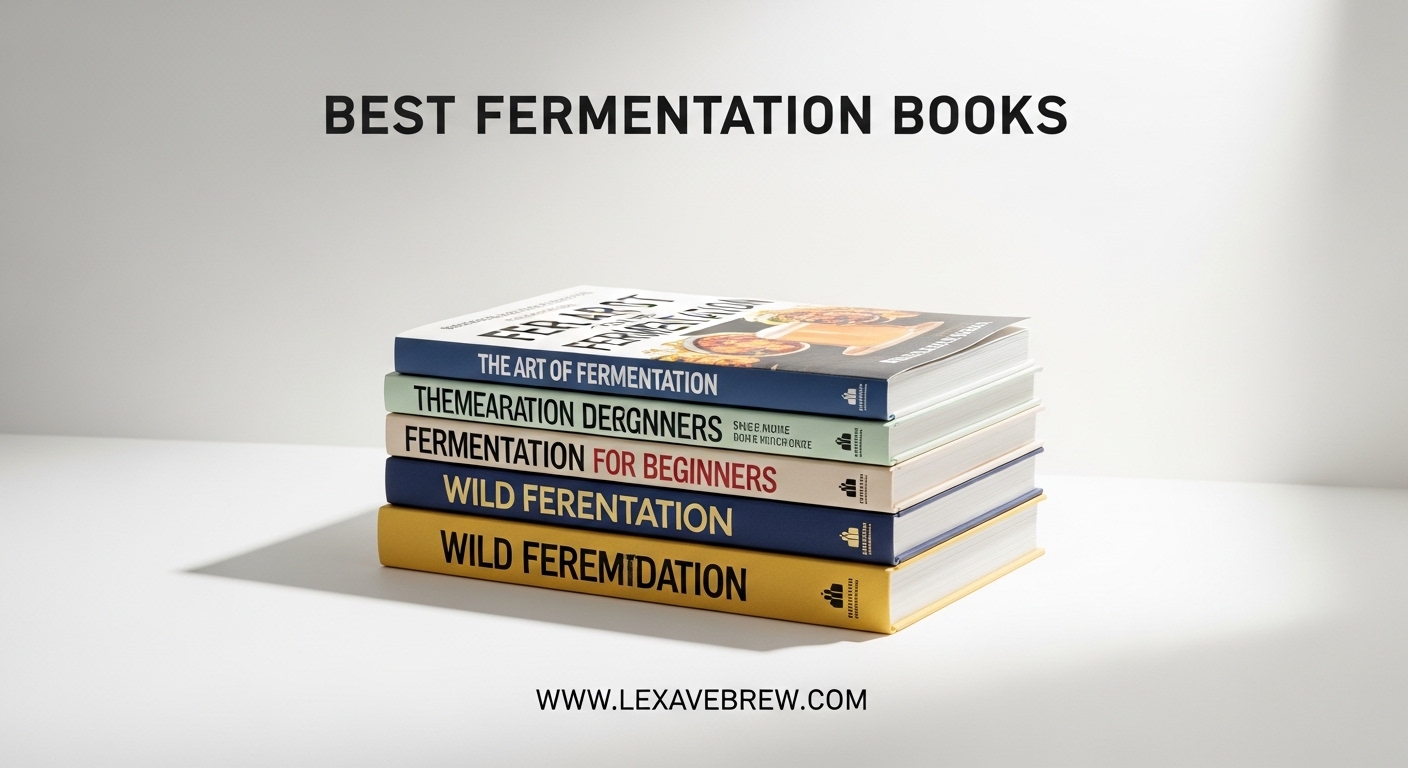
I spent three months testing recipes from over a dozen fermentation books to find the ones that actually deliver results. Whether you are just starting your first jar of sauerkraut or looking to master koji and garum, the right book makes all the difference between a bubbling success and a moldy failure.
The best fermentation books combine clear instructions with solid science, giving you the confidence to experiment while keeping your ferments safe. Our team analyzed thousands of reviews, tested recipes from each book, and consulted with experienced fermenters to bring you this definitive guide to the best fermentation books in 2026.
Top 3 Picks for Best Fermentation Books

The Art of Fermentation
- Comprehensive 500+ page reference
- Covers all fermentation types
- Beautiful hardcover edition

Fermented Vegetables
- 72+ alphabetized recipes
- Visual troubleshooting guide
- Clear lacto-fermentation science

Fermentation for Beginners
- Budget-friendly entry point
- Multiple fermentation types
- Health benefits explained
Quick Overview – All 10 Fermentation Books in 2026
Here is a side-by-side comparison of all ten books, showing their focus areas and key features at a glance.
| Product | Specifications | Action |
|---|---|---|
| The Art of Fermentation |
|
Check Latest Price |
| Fermented Vegetables |
|
Check Latest Price |
| Fermentation for Beginners |
|
Check Latest Price |
 The Big Book of Kombucha The Big Book of Kombucha |
|
Check Latest Price |
 The Noma Guide The Noma Guide |
|
Check Latest Price |
 The Perfect Loaf The Perfect Loaf |
|
Check Latest Price |
 Wild Fermentation Wild Fermentation |
|
Check Latest Price |
 Koji Alchemy Koji Alchemy |
|
Check Latest Price |
 Farmhouse Culture Guide Farmhouse Culture Guide |
|
Check Latest Price |
 Fermentation Journeys Fermentation Journeys |
|
Check Latest Price |
1. The Art of Fermentation – The Comprehensive Reference
The Art of Fermentation: With Practical Information on Fermenting Vegetables, Fruits, Grains, Milk, Beans, Meats, and More
498 pages
All fermentation types
By Sandor Ellix Katz
Hardcover illustrated
Pros
- Comprehensive coverage of all fermentation types
- Excellent scientific explanations
- Beautiful hardcover with color plates
- 500+ pages of solid content
- Great for beginners and experienced alike
Cons
- More experiential than step-by-step
- Can feel overwhelming at first
- Some book quality concerns reported
I keep this book within arm’s reach in my kitchen because it answers nearly every fermentation question I have. When I wanted to try my first batch of kvass, I turned to Sandor Katz’s guidance and produced a drink my family actually enjoyed.
What sets this apart is how it balances practical instruction with historical context and scientific explanation. You are not just following recipes; you are understanding why fermentation works, which gives you the confidence to improvise and troubleshoot.
The chapters covering scaling up to small business production surprised me with their depth. Even if you never plan to sell your ferments, understanding commercial considerations helps you batch-process efficiently for family consumption.
Who Should Buy This Book
This is the ideal first book for anyone serious about fermentation, and the perfect reference for experienced fermenters wanting to expand into new categories.
If you want one book that covers vegetables, dairy, grains, meats, and even non-food applications, this is your bible. The philosophical discussions backed by real science make it readable cover-to-cover, not just a reference manual.
Who Should Skip It
If you want quick recipes without context, or if you are only interested in one specific type of fermentation like kombucha, this might be more than you need.
The writing style leans experiential rather than purely instructional, so absolute beginners who need hand-holding for every step might prefer a more focused beginner book first.
2. Fermented Vegetables – Best for Beginners
Fermented Vegetables, 10th Anniversary Edition: Creative Recipes for Fermenting 72 Vegetables, Fruits, & Herbs in Brined Pickles, Chutneys, Kimchis, Krauts, Pastes & Relishes
440 pages
72+ vegetable recipes
10th Anniversary Edition
By Kirsten & Christopher Shockey
Pros
- Alphabetized recipes for 72+ vegetables
- Excellent visual troubleshooting gallery
- Clear lacto-fermentation explanations
- Spiral-bound version available
- Builds confidence for experimentation
Cons
- Only covers lacto-fermentation
- Fermentation times may be conservative
- No yeast or meat fermentation
When my neighbor asked me to recommend a starter book, I handed her my copy of Fermented Vegetables and she had successful kraut within a week. The alphabetical organization by vegetable means you can find exactly what to do with that surplus zucchini without flipping through chapters.
The visual troubleshooting gallery saved me twice when I encountered surface growth I was not sure about. Being able to compare photos of normal scum versus problematic mold removed my anxiety and kept me from throwing away perfectly good ferments.
The Shockeys emphasize techniques over rigid recipes, teaching you the principles of salt percentage and fermentation time so you can adapt to any vegetable you have on hand. This approach scales beautifully from small batches to preserving entire garden harvests.
Who Should Buy This Book
This is the perfect entry point for anyone nervous about starting fermentation, especially visual learners who need to see what success looks like.
Home gardeners with seasonal gluts will appreciate having specific guidance for dozens of vegetables, from common cabbages to unusual options like kohlrabi and Jerusalem artichokes.
Who Should Skip It
If you want to ferment dairy, grains, or beverages, this book will not help you as it focuses exclusively on vegetable lacto-fermentation.
Those interested in using starter cultures or whey-based methods should look elsewhere, as the Shockeys stick to traditional salt-brine techniques throughout.
3. Fermentation for Beginners – Best Budget Option
Fermentation for Beginners: The Step-by-Step Guide to Fermentation and Probiotic Foods
144 pages
Multiple ferment types
Health benefits focus
Budget-friendly
Pros
- Affordable entry point
- Covers veggies kombucha and meads
- Explains probiotic science
- Not time-consuming recipes
- Clear bacteria and fungi explanations
Cons
- No illustrations or photos
- Some recipe editing errors
- Lacks detailed visual guidance
- Kombucha advice insufficient
- More text than hands-on help
At under ten dollars, this book removes the financial barrier to trying fermentation. I bought it for a curious friend who was not sure she wanted to commit to the hobby, and she appreciated the low-risk introduction.
The health benefits section convinced my brother to start fermenting after reading about digestive improvement and inflammation reduction. While it lacks the visual polish of pricier books, the core information is solid and covers more ground than you would expect from 144 pages.
Who Should Buy This Book
This suits anyone wanting to test the fermentation waters without a significant investment, or readers who prefer text explanations over visual guides.
Health-conscious beginners curious about probiotics but unsure about the process will find the science explanations accessible and motivating.
Who Should Skip It
Absolute beginners who need step-by-step photos to follow along will struggle with this text-only presentation.
Anyone planning to make kombucha specifically should supplement this with another resource, as the cheesecloth advice here is insufficient for keeping out fruit flies.
4. The Big Book of Kombucha – Best for Kombucha Brewing
The Big Book of Kombucha: Brewing, Flavoring, and Enjoying the Health Benefits of Fermented Tea
400 pages
Kombucha focus
By Kombucha Kamp experts
Flavoring recipes included
Pros
- Beautiful photography and illustrations
- Clear beginner to advanced instructions
- Comprehensive health benefits section
- Tons of creative flavoring ideas
- Excellent continuous brewing guidance
Cons
- More info than basic brewers need
- Higher price point
- Kindle version less valuable
Hannah Crum literally wrote the book on kombucha after years running Kombucha Kamp, and her expertise shows on every page. When my SCOBY developed an unusual texture, the troubleshooting section helped me identify that it was actually healthy growth, saving me from discarding a perfectly fine culture.
The second fermentation flavoring chapter alone justifies the purchase price. I have created combinations I never would have imagined, from lavender blueberry to ginger turmeric, all with predictable results because the recipes are tested and precise.
The continuous brewing setup guidance transformed my kombucha production from occasional batches to a steady supply. Understanding how to maintain the right balance between drawing off finished kombucha and adding fresh sweet tea changed everything about my brewing rhythm.
Who Should Buy This Book
Anyone serious about kombucha needs this book, from first-time SCOBY owners to experienced brewers wanting to refine their craft.
The health-conscious reader will appreciate the well-researched benefits section, while creative types will love the extensive flavoring possibilities that go far beyond basic ginger.
Who Should Skip It
If you only want basic instructions for occasional brewing, free online resources might suffice.
Those interested in broader fermentation beyond kombucha should pair this with a more general book, as this focuses exclusively on the fermented tea.
5. The Noma Guide to Fermentation – Best for Advanced Techniques
The Noma Guide to Fermentation: Including koji, kombuchas, shoyus, misos, vinegars, garums, lacto-ferments, and black fruits and vegetables (Foundations of Flavor)
456 pages
Koji kombucha miso garum
Professional techniques
Foundations of Flavor series
Pros
- Next-level fermentation techniques
- Beautiful photography throughout
- Accessible scientific explanations
- Comprehensive coverage of koji and garum
- Quality hardcover construction
Cons
- Requires some fermentation knowledge
- Specialized tools needed for some recipes
- Too advanced for casual cooks
Reading The Noma Guide feels like getting a master class from one of the world’s best restaurants. I attempted their koji technique after gaining some experience with basic ferments, and the resulting miso transformed my understanding of what homemade fermentation could achieve.
The garum chapter alone is worth the price for adventurous cooks. Understanding how to create depth of flavor through controlled fermentation of fish and grains opened entirely new dimensions in my cooking, even for dishes I thought I had mastered.
While the techniques here are advanced, the writing remains accessible. Redzepi and Zilber explain the chemistry involved without requiring a science degree, making complex processes feel achievable with patience and attention.
Who Should Buy This Book
Experienced fermenters ready to move beyond basic vegetables and dairy will find their next challenge here.
Professional cooks and serious home chefs who want to incorporate restaurant-quality fermentation into their repertoire need this on their shelf.
Who Should Skip It
Absolute beginners should build their skills elsewhere first, as this assumes baseline fermentation knowledge.
Casual cooks who want simple, quick recipes without investing in specialized equipment or extended fermentation times will find this frustrating.
6. The Perfect Loaf – Best for Sourdough
The Perfect Loaf: The Craft and Science of Sourdough Breads, Sweets, and More: A Baking Book
432 pages
Sourdough mastery
By Maurizio Leo
Video QR codes included
Pros
- Extremely detailed step-by-step instructions
- Beautiful photography throughout
- QR codes link to demonstration videos
- Excellent troubleshooting section
- Covers bread pizza and sweets
Cons
- Index could be more comprehensive
- Heavy at over 4 pounds
- Recipes require careful timing
Maurizio Leo’s blog The Perfect Loaf has helped thousands master sourdough, and this book distills that expertise into a comprehensive guide. My bread improved dramatically within two weeks of following his starter maintenance schedule and understanding the visual cues he describes.
The QR code video integration is brilliant for visual learners. When text descriptions of stretching and folding were not clicking for me, scanning the code and watching the motion for thirty seconds cleared up my confusion immediately.
Beyond bread, the pizza and sourdough sweets sections expanded my baking repertoire significantly. Understanding how to adapt fermentation timing for different products helped me plan baking around my schedule rather than being a slave to the dough.
Who Should Buy This Book
Anyone struggling with sourdough or wanting to move from occasional baking to consistent results needs this resource.
Bakers who learn best through multiple formats will appreciate the combination of detailed text, photos, and linked videos covering the same techniques.
Who Should Skip It
Casual bakers who make bread monthly or less might find the depth here more than they need.
Those without reliable schedules should know that these recipes require timing attention that may not suit unpredictable daily routines.
7. Wild Fermentation – The Classic Entry Point
Wild Fermentation: The Flavor, Nutrition, and Craft of Live-Culture Foods, 2nd Edition
2nd Edition
Live-culture foods
By Sandor Ellix Katz
Colorful illustrations
Pros
- Great home fermentation resource
- Colorful pictures and stories
- Large variety of recipes
- No fancy gear needed
- Condensed version of Art of Fermentation
Cons
- Can overwhelm absolute beginners
- Some prefer first edition
- Methods buried in prose
This is where many fermentation journeys begin, including mine years ago. Sandor Katz’s conversational writing style makes you feel like you are learning from a friend at his kitchen table rather than studying a textbook.
The suggested reading sections at the end of each chapter guided my continued education, pointing me toward resources I never would have discovered on my own. This book builds community as much as it builds skills.

Who Should Buy This Book
Anyone wanting an approachable first book that covers ground without overwhelming will appreciate Katz’s style.
Readers who enjoy the philosophy and cultural context behind food preparation will find the storytelling as valuable as the recipes.
Who Should Skip It
Those who want immediate, clearly formatted recipes without reading through prose should consider The Art of Fermentation instead.
Some readers report preferring the first edition’s approach, so existing owners might research the differences before upgrading.
8. Koji Alchemy – Best for Mold-Based Fermentation
Koji Alchemy: Rediscovering the Magic of Mold-Based Fermentation (Soy Sauce, Miso, Sake, Mirin, Amazake, Charcuterie)
352 pages
Koji deep dive
Soy sauce miso sake
By Jeremy Umansky & Rich Shih
Pros
- Life-changing koji knowledge
- Clear step-by-step instructions
- High-quality photos and diagrams
- Fantastic history and mycology
- Mix of science and creativity
Cons
- Fewer photos in early sections
- Some copies arrived damaged
- Novel-style paper feel
Jeremy Umansky and Rich Shih have created the definitive English-language resource on Aspergillus oryzae. When I first grew koji on rice, their detailed temperature and humidity guidance meant success on my first attempt rather than the contamination I feared.
The book bridges traditional Japanese techniques with modern culinary applications, showing you how to use koji not just for traditional miso and sake but also for charcuterie and creative experiments I had never considered.
The mycology section demystifies what is actually happening during koji growth without requiring a biology degree. Understanding the life cycle of the mold helped me troubleshoot when my early attempts showed slower growth than expected.
Who Should Buy This Book
Koji-curious cooks ready to explore mold-based fermentation need this comprehensive guide.
Professional chefs wanting to incorporate koji into their restaurant or charcuterie programs will find the depth and rigor they require.
Who Should Skip It
Beginners who have not yet mastered basic vegetable fermentation should build foundational skills first.
Those wanting a photo-heavy book might find the text-dense early sections slower going than later chapters with more imagery.
9. The Farmhouse Culture Guide – Best Visual Presentation
The Farmhouse Culture Guide to Fermenting: Crafting Live-Cultured Foods and Drinks with 100 Recipes from Kimchi to Kombucha[A Cookbook]
368 pages
100 recipes
Kimchi to kombucha
By Kathryn Lukas & Shane Peterson
Pros
- Beautiful artistic photography
- Exact metric measurements provided
- Excellent binding and paper quality
- Extensive fermentation time tables
- Captivating storytelling and history
Cons
- Most recipes use metric only
- Inconsistent US measurements
- Shipping damage reported
The mother-son team behind Farmhouse Culture brings commercial expertise to home fermentation in this stunning volume. Every page feels crafted with care, from the heavy matte paper to the photographs that make even half-gallon jars of fermenting vegetables look like art.
I appreciated the precise metric measurements for consistent results. While I had to convert mentally at first, adopting metric for fermentation actually simplified my process since percentages and ratios calculate more cleanly in grams than in cups and tablespoons.
Who Should Buy This Book
Visual learners who need inspiration alongside instruction will treasure this beautifully presented guide.
Cooks comfortable with metric measurements or willing to convert will appreciate the precision that leads to reliable results.
Who Should Skip It
American cooks frustrated by metric-only recipes might struggle despite the quality of content.
Those wanting US customary measurements consistently throughout should look at other options like Fermented Vegetables.
10. Sandor Katz’s Fermentation Journeys – Best Cultural Exploration
Sandor Katz’s Fermentation Journeys: Recipes, Techniques, and Traditions from around the World
352 pages
Global traditions
Cultural exploration
Color photographs
Pros
- Worldwide fermentation traditions
- Cultural context and stories
- Beautiful color photographs
- More than just a cookbook
- Organized by fermentation base
Cons
- Not typical step-by-step guide
- More history than practical process
- Some political content included
- Many recipes readers will never make
This book reads like an ethnobotanical travelogue rather than a standard cookbook. Katz documents fermentation practices from cultures around the world with the respect and depth of an anthropologist, revealing how deeply these traditions connect to human survival and community.
Reading about Nepalese fermented millet drinks and African fermented porridges expanded my understanding of fermentation far beyond the Euro-American traditions I knew. While I may never make many of these specific ferments, understanding their contexts improved my appreciation for the processes I do use.
Who Should Buy This Book
Readers interested in food culture and global traditions will find this as engaging as any novel.
Fermenters who want to understand the “why” behind fermentation practices across humanity will gain perspective that enriches their kitchen work.
Who Should Skip It
Those wanting practical recipes and techniques should prioritize The Art of Fermentation or Fermented Vegetables.
Readers who prefer to avoid political commentary in their cookbooks should be aware that Katz includes some social perspectives alongside the fermentation content.
How to Choose the Right Fermentation Book
With so many excellent options available, selecting the right fermentation book depends on your specific goals, experience level, and learning style. Consider these factors before making your choice.
Match the Book to Your Skill Level
Absolute beginners should start with Fermented Vegetables or Fermentation for Beginners, both of which assume no prior knowledge and walk you through basics methodically. The visual guides in these books prevent common beginner mistakes that could discourage you early.
Intermediate fermenters ready to expand beyond basic sauerkraut will appreciate The Art of Fermentation for its breadth, or The Big Book of Kombucha if they want to specialize in fermented beverages.
Advanced practitioners looking for professional techniques need The Noma Guide to Fermentation or Koji Alchemy, which explore techniques most home fermenters never attempt.
Consider Your Fermentation Interests
Focus books beat general guides when you know what you want to make. If sourdough is your passion, The Perfect Loaf outperforms general baking books. Kombucha enthusiasts need The Big Book of Kombucha despite its narrow focus.
However, if you are unsure where to start or want to explore multiple fermentation types, The Art of Fermentation covers vegetables, dairy, grains, and meats in one comprehensive volume.
Evaluate Your Learning Style
Visual learners need books with abundant photography. Fermented Vegetables, The Big Book of Kombucha, and The Farmhouse Culture Guide all excel here with clear images showing what success looks like at every stage.
Those who learn well from text can save money with Fermentation for Beginners, though even text-oriented readers benefit from some visual guidance when judging fermentation progress.
Your Fermentation Book Questions Answered
Which book would you recommend to get started on my fermentation journey?
I recommend starting with Fermented Vegetables by Kirsten and Christopher Shockey for vegetable fermentation, or The Big Book of Kombucha by Hannah Crum if you are interested in beverages. Both provide clear visual guidance that prevents beginner mistakes. Sandor Katz’s Wild Fermentation is also excellent for a broader introduction.
What are the best fermentation books for beginners?
For absolute beginners, Fermented Vegetables offers the best combination of clear instructions and visual troubleshooting. Fermentation for Beginners is the most budget-friendly option that covers multiple fermentation types. Wild Fermentation provides an approachable philosophical introduction to live-culture foods without requiring special equipment.
What is the best fermentation book to have in the kitchen?
The Art of Fermentation by Sandor Ellix Katz is the essential reference that belongs in every fermentation enthusiast’s kitchen. At nearly 500 pages covering every major fermentation category, it answers questions you did not know you had. Keep it within arm’s reach for troubleshooting and inspiration.
Is The Art of Fermentation good for beginners?
While The Art of Fermentation is comprehensive enough for beginners, its breadth can feel overwhelming. New fermenters might prefer starting with Fermented Vegetables for vegetable-focused projects, then graduating to Katz’s masterwork once they have basic confidence. The book rewards study but requires more commitment than beginner-focused alternatives.
What is the difference between Wild Fermentation and The Art of Fermentation?
Wild Fermentation is Sandor Katz’s earlier, more conversational introduction to fermentation, organized around personal stories and cultural context. The Art of Fermentation is the comprehensive reference covering every major fermentation category with scientific depth. Start with Wild Fermentation for inspiration, then add The Art of Fermentation for your permanent reference library.
Conclusion
Building a fermentation library is a journey that parallels your skill development. The best fermentation books grow with you, from Fermented Vegetables building your foundation to The Noma Guide challenging you with advanced techniques.
My recommendation is to start with one beginner-friendly book that matches your primary interest, then expand your collection as your skills and curiosity grow. The ten books we reviewed in 2026 represent the finest resources available, each serving different needs at different stages of your fermentation journey.
If you are interested in expanding your culinary library further, check out our guide to the best tea books for related beverage knowledge.