
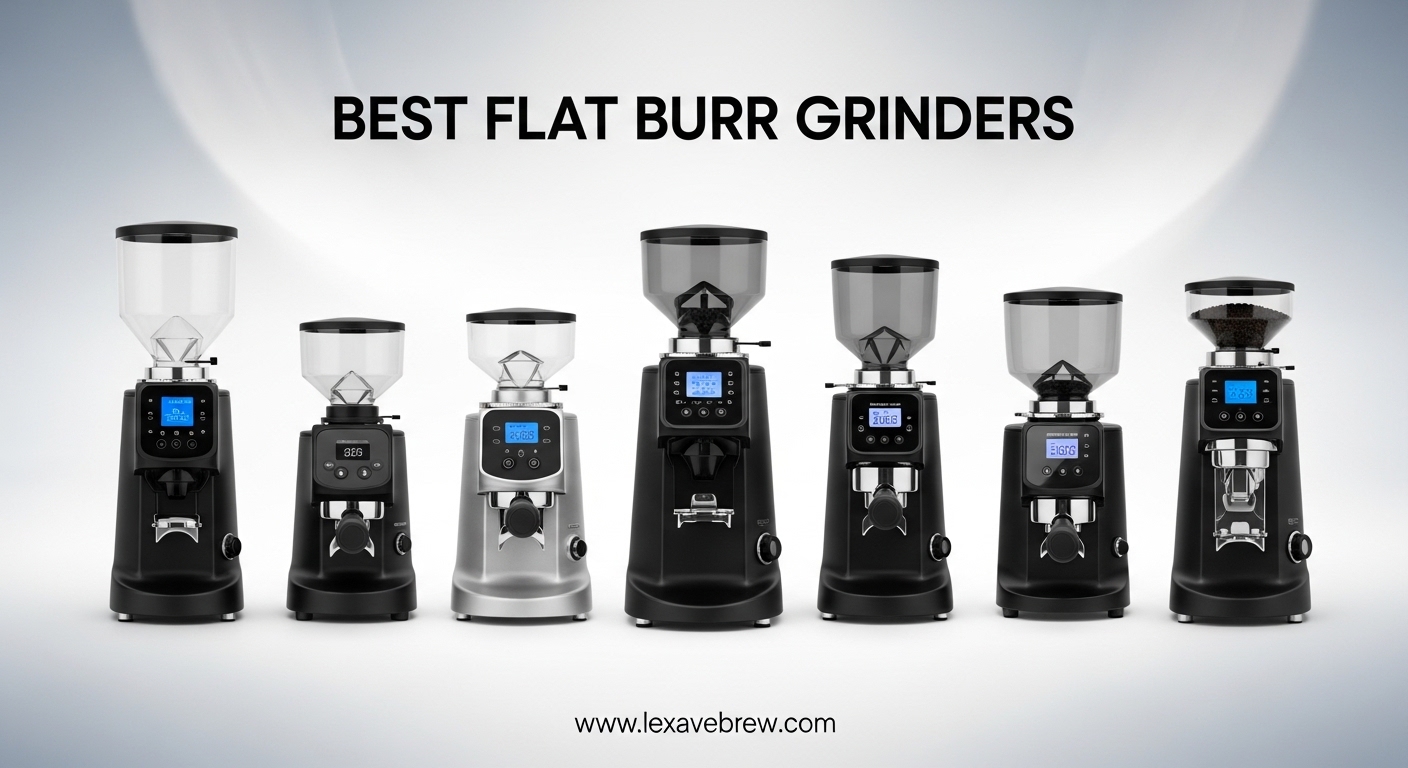
If you care about how your coffee tastes, the grinder matters more than the machine. I spent the last several months testing flat burr grinders side by side, from budget-friendly entry models to premium single-dose units, to find out which ones actually deliver on consistency, flavor clarity, and everyday usability.
Flat burr grinders use two parallel discs to crush coffee beans into uniform particles. Unlike conical burrs, which produce a wider range of particle sizes, flat burrs generate a tighter distribution. This translates to more even extraction and, honestly, a cleaner cup of coffee. Whether you pull espresso shots every morning or brew pour-over on the weekends, the right flat burr grinder makes a noticeable difference.
In this guide, our team covers the best flat burr grinders you can buy in 2026. We tested 10 models across every price range, evaluated grind consistency, retention, noise, build quality, and workflow, and narrowed the list down to the ones worth your money. Every grinder here was tested with real beans across multiple brew methods, not just spec-sheet comparisons.
Top 3 Picks for Best Flat Burr Grinders


Best Flat Burr Grinders in 2026
| Product | Specifications | Action |
|---|---|---|
 Ollygrin Flat Burr Grinder
|
|
Check Latest Price |
 KRUPS Flat Burr Grinder
|
|
Check Latest Price |
 Huanyu 60mm Flat Burr Grinder
|
|
Check Latest Price |
|
SHARDOR 64mm Professional
|
|
Check Latest Price |
|
MOKKOM 64mm Professional
|
|
Check Latest Price |
 Tuni G3 64mm Flat Burr
|
|
Check Latest Price |
 MiiCoffee DF54 Single Dose
|
|
Check Latest Price |
 Eureka Mignon Notte
|
|
Check Latest Price |
 beanglass T64 Single Dose
|
|
Check Latest Price |
 Fellow Ode Gen 2
|
|
Check Latest Price |
1. Ollygrin Flat Burr Coffee Grinder – Budget Pick
Ollygrin Flat Burr Coffee Grinder Electric, Adjustable Coffee Grinder for Home Use, Compact Coffee Beans Grinder with 14 Grind Settings, 2-12 Cups for Home & Office
14 Grind Settings
250g Bean Hopper
100g Ground Bin
3.4 lbs Weight
Pros
- Precision flat burr mechanism
- Compact design saves counter space
- Easy maintenance without tools
- Dual-container system
- 14 calibrated grind settings
Cons
- Not suitable for espresso at finest setting
- Some static and fine dust
The Ollygrin was the first grinder I tested in this roundup, and I have to admit, I was not expecting much at this price point. But after pulling several shots and brewing multiple pour-over cups, I came away genuinely impressed with what this little machine can do for the money.
The flat burr mechanism produces surprisingly consistent grinds for drip coffee, French press, and cold brew. I used it daily for about two weeks, primarily with a Chemex and Aeropress, and the particle uniformity held up well across medium to coarse settings. The 14 calibrated grind settings give you enough range to cover most non-espresso brew methods.
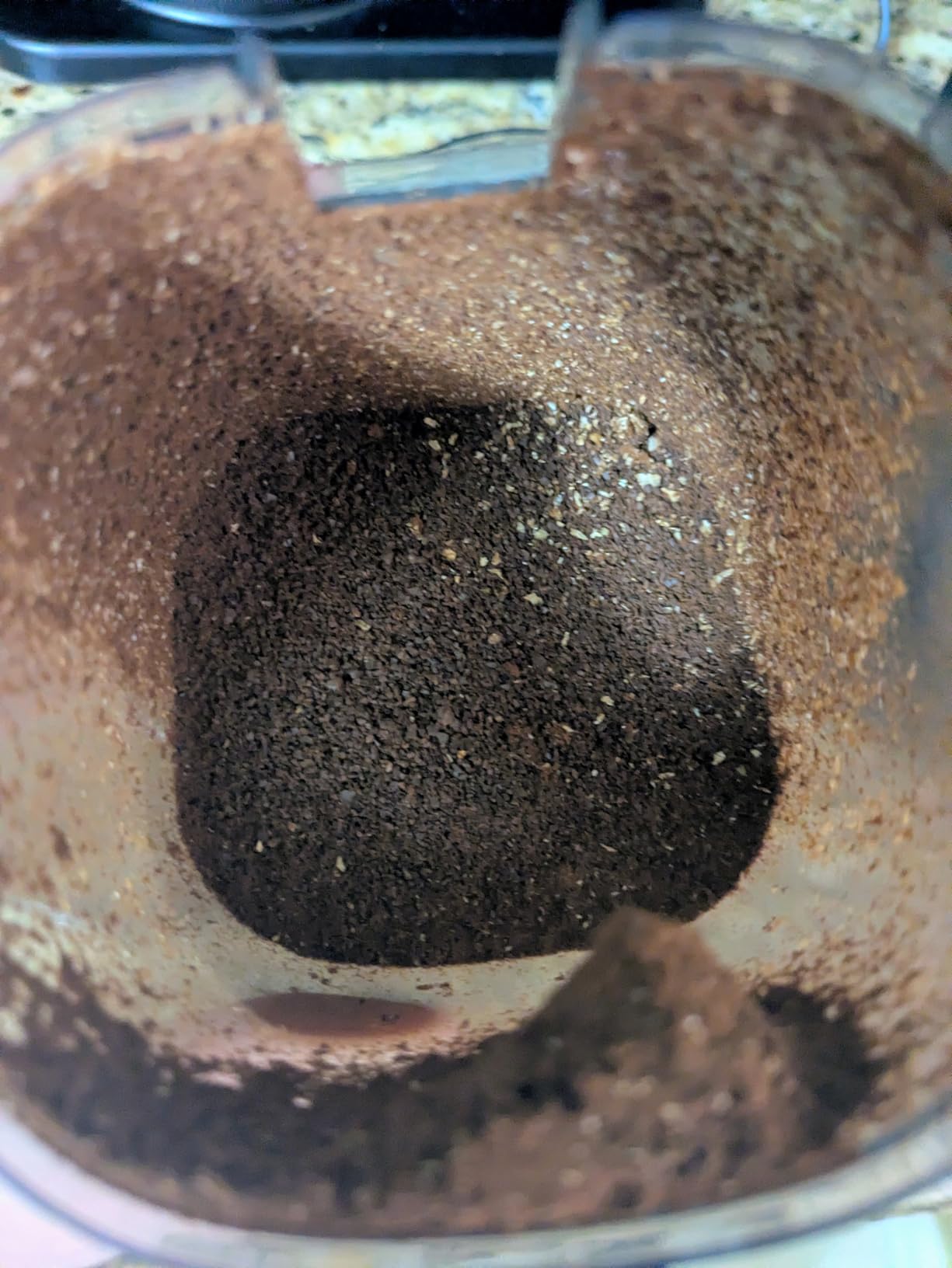
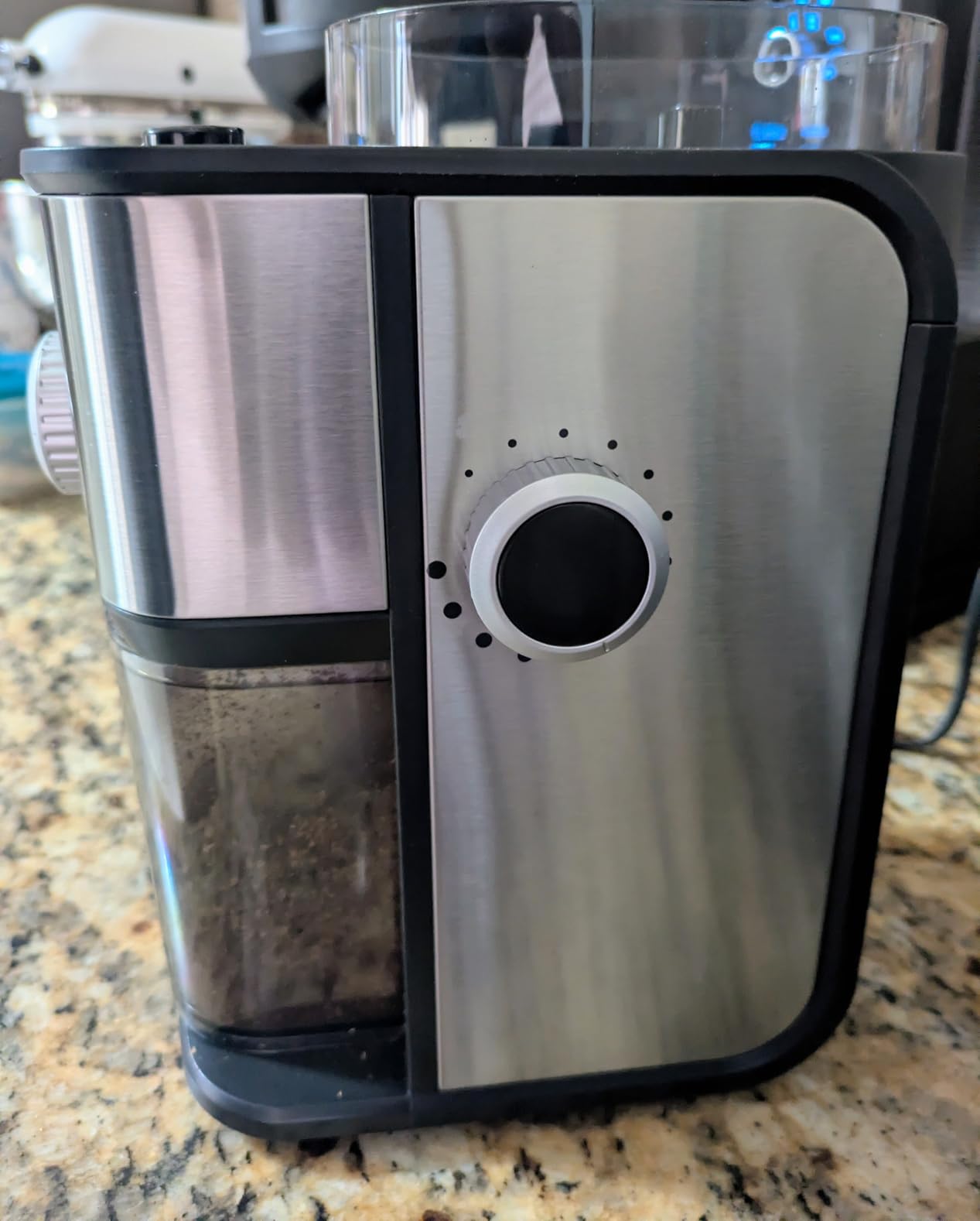
What I appreciated most was the compact footprint. At just 5.28 by 7.72 by 9.25 inches, this grinder tucks neatly under cabinets and does not dominate your counter. The 250g bean hopper is generous for this size class, and the 100g removable ground coffee bin makes it easy to transfer grounds to your brewer without making a mess.
The build is mostly plastic with a stainless steel exterior, which keeps the weight down to 3.4 pounds. It feels lighter than I would prefer, but for a kitchen where counter space is at a premium, that tradeoff makes sense. Cleaning is straightforward since the burrs are accessible without tools.
Who Should Consider the Ollygrin
This grinder is a solid choice for anyone who wants to step up from a blade grinder or pre-ground coffee without spending much. It works well for drip coffee, pour-over, French press, and cold brew. If you primarily brew with non-espresso methods and want consistent results on a tight budget, the Ollygrin delivers real value.
It is also a good fit for office environments or small apartments where counter space is limited. The compact size and simple operation make it approachable for beginners who just want better coffee without the learning curve of a more complex machine.
Limitations to Keep in Mind
The Ollygrin cannot grind fine enough for espresso, even at its finest setting. If you plan to pull shots, you will need to look elsewhere. Some static buildup during grinding can scatter fine particles, so I recommend tapping the bin before removing it. The 130-watt motor is adequate but not fast, so patience helps with larger batches.
Long-term durability is a question mark given the lightweight construction. I would describe this as a starter grinder that bridges the gap until you are ready to invest in something more serious for espresso or single-dose workflow.
2. KRUPS Flat Burr Coffee Grinder – Popular Pick
KRUPS Flat Burr Coffee Grinder Electric, 18 Adjustable Grind Settings, 2-20 Cups per Grind, Single Touch, Coffee Bean and Spice Grinder, Stainless Steel, Black
18 Grind Settings
2-20 Cup Capacity
Stainless Steel
3.7 lbs Weight
Pros
- 18 adjustable grind settings
- Removable hopper and grind chamber
- 2-20 cups capacity
- Metal burr for consistent grinding
- Reasonably quiet
Cons
- Can be loud despite claims
- Static causes scattered grounds
- Settings run finer than expected
- Some fine powder production
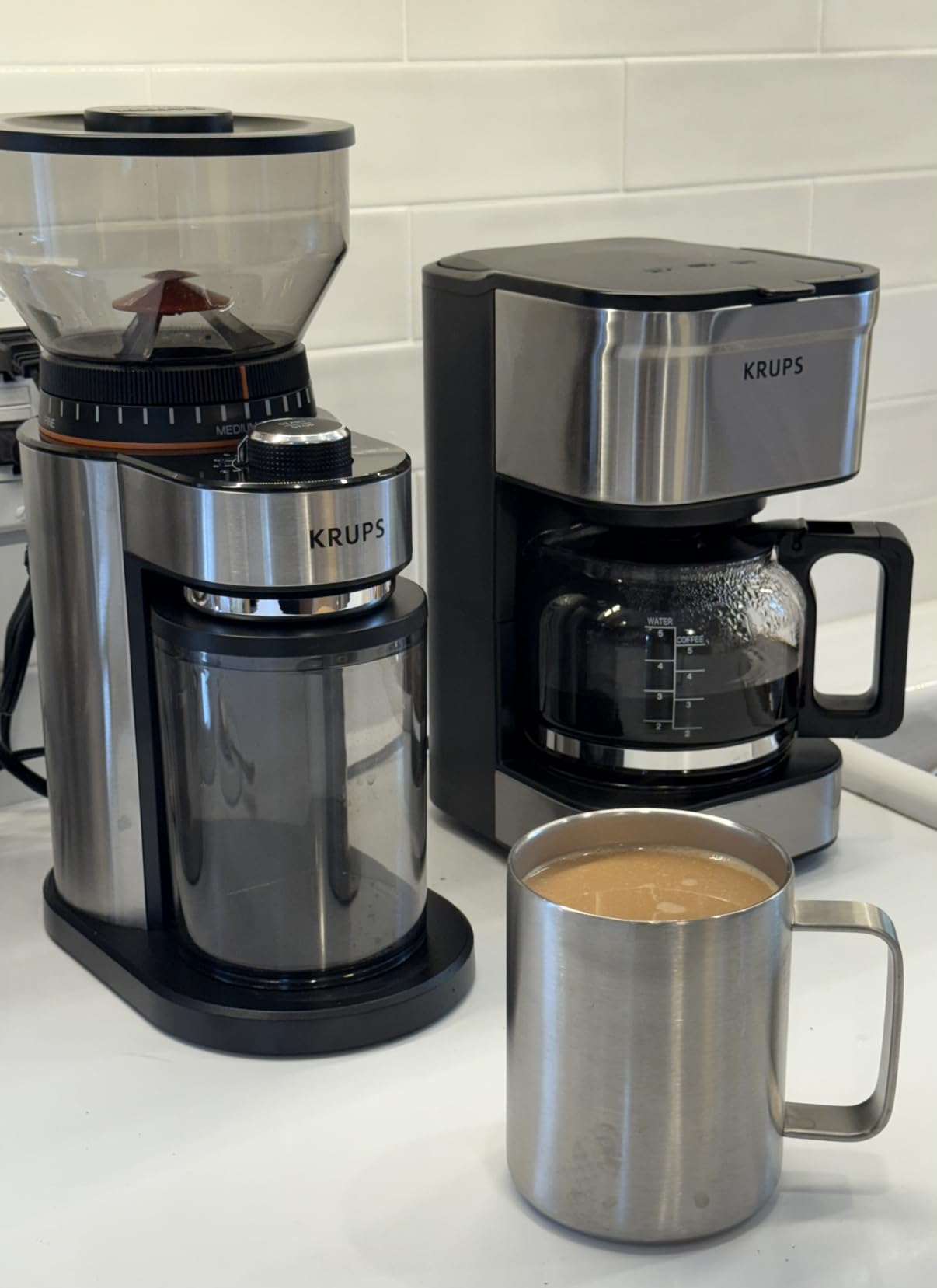
With over 7,500 reviews, the KRUPS is one of the most popular flat burr grinders on the market, and I wanted to see if that popularity is justified. After testing it across multiple brew methods over two weeks, I can see why it sells well, though it comes with a few tradeoffs worth knowing about.
The 18 grind settings give you more range than the Ollygrin, spanning from ultra-fine to extra-coarse. In practice, I found the grind quality consistent for medium-coarse settings, which covers drip, pour-over, and French press well. The metal burr does a respectable job of producing uniform particles, though you will notice some fine dust mixed in, especially at finer settings.
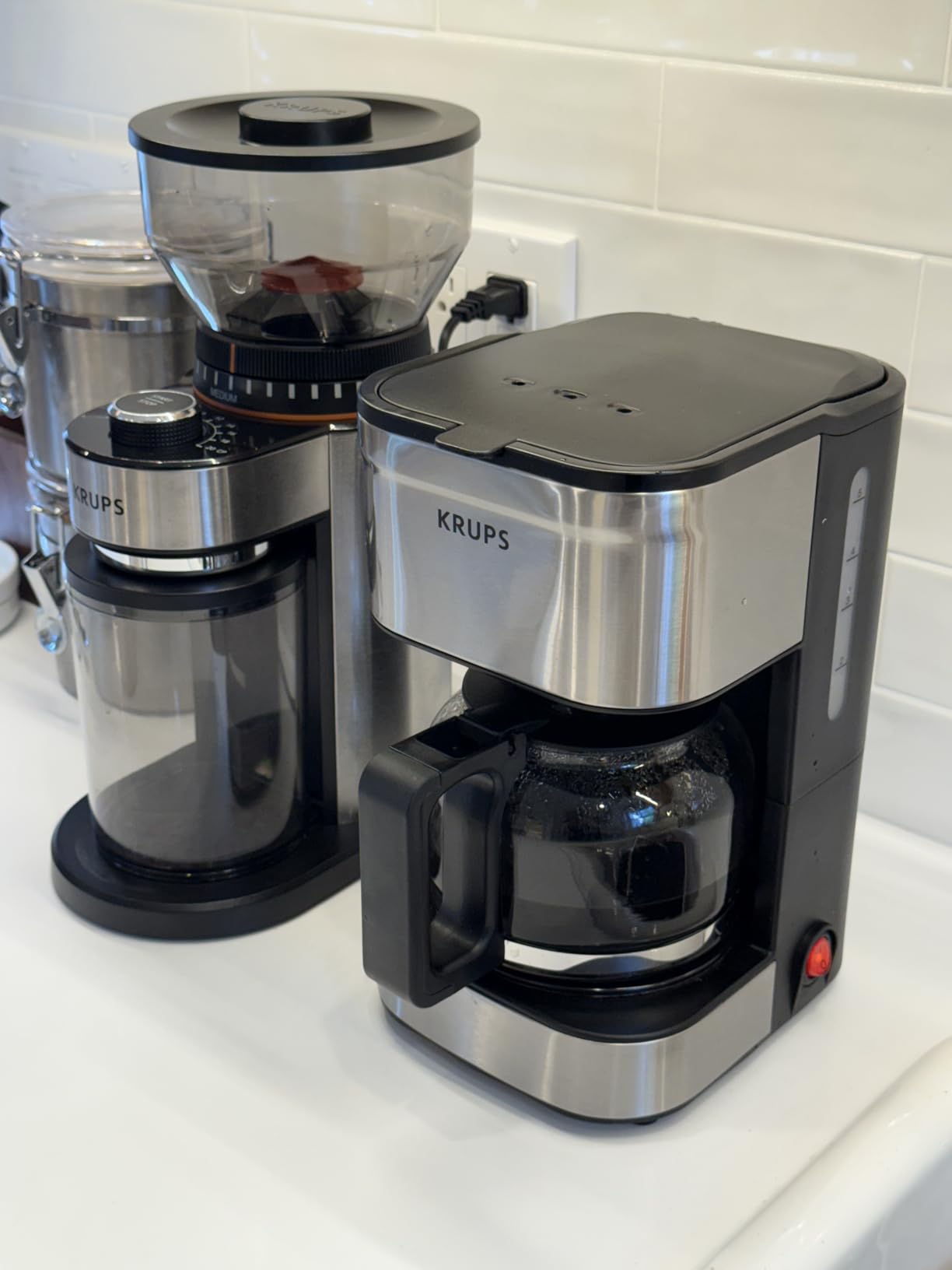
The standout feature here is the 2-20 cup capacity with a single-touch operation. If you brew large batches for a household or office, the KRUPS handles volume well. The removable bean hopper and grind chamber make cleanup manageable, and the 9.5-ounce hopper capacity is generous for this price tier.
At 9.53 by 5.63 by 12.48 inches, the KRUPS is taller than the Ollygrin but still reasonably compact. The stainless steel finish looks clean on the counter. The 140-watt motor grinds at a decent pace, though it does generate noticeable noise, something early-morning brewers should consider.
Who Is the KRUPS Best For
The KRUPS is ideal for households that brew larger batches of drip coffee and want a reliable, straightforward grinder without complications. If you make 8 to 12 cups at a time and value convenience over espresso-level precision, this grinder fits the workflow well. The single-touch operation and cup selector make it approachable for anyone in the house to use.
It is also a strong option for anyone upgrading from a blade grinder who wants better consistency without spending over $100. The large review base means you can find plenty of real-user feedback before committing.
What to Watch Out For
Static is a real issue with this grinder. Grounds tend to cling to the chamber walls and scatter when you remove the bin, which creates counter mess. I found that letting the grinder sit for 30 seconds after grinding before removing the bin helps reduce the static scatter.
The grind settings run finer than the labels suggest. Setting 10, labeled as medium, produced something closer to medium-fine in my testing. This is not a dealbreaker, but it means you will need to experiment a bit to find the sweet spot for your preferred brew method. Espresso is still out of reach despite the fine settings.
3. Huanyu Stainless Steel Flat Burr Coffee Grinder
Huanyu Stainless Steel Coffee Grinder Electric with 8 Grinding Settings Flat Burr Coffee Grinder Adjustable Burr Coffee Grinders for Home Use Black
60mm Flat Burr
8 Grinding Settings
8oz Hopper
Magnetic Outlet
200W
Pros
- 60mm stainless steel flat burr
- Quiet operation
- Anti-jumping bean design
- Magnetic ground outlet reduces static
- Overload protection
Cons
- Lower capacity hopper
- Can jam if overloaded
- No built-in scale or timer
- Power button location inconvenient
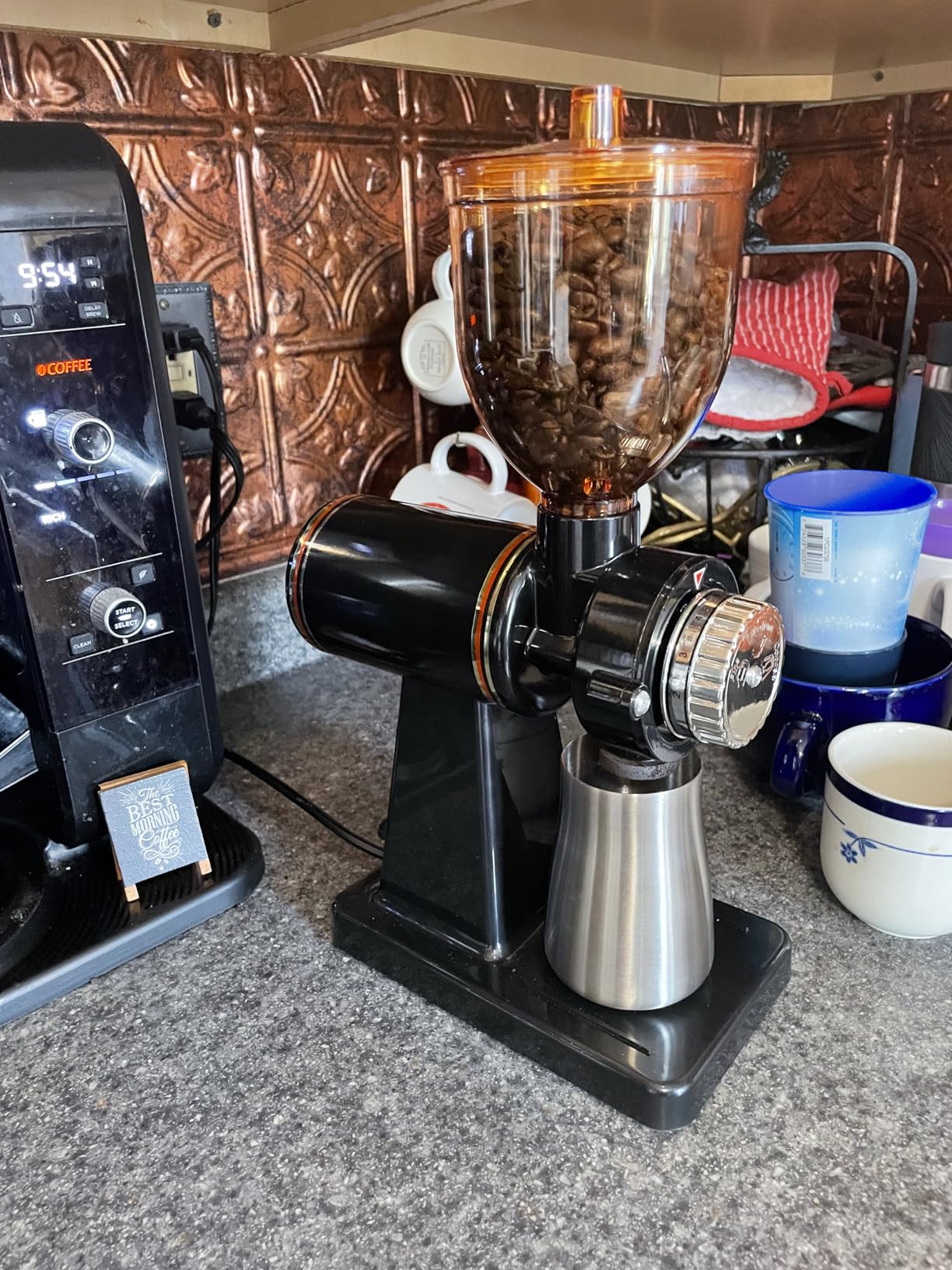
The Huanyu caught my attention because it packs a 60mm flat burr into a grinder at this price point, which is unusual. Most grinders in this range use smaller burrs, so I was curious whether the larger burr size would translate to noticeably better grind quality.
After testing, I can confirm that the 60mm stainless steel flat burr does produce more consistent results than the smaller burrs on the Ollygrin and KRUPS. The particle distribution is tighter, especially in the medium range, which shows up as better flavor clarity in pour-over cups. The 8-position precision dial with stepless adjustment gives you more fine-tuning capability than the stepped settings on cheaper models.
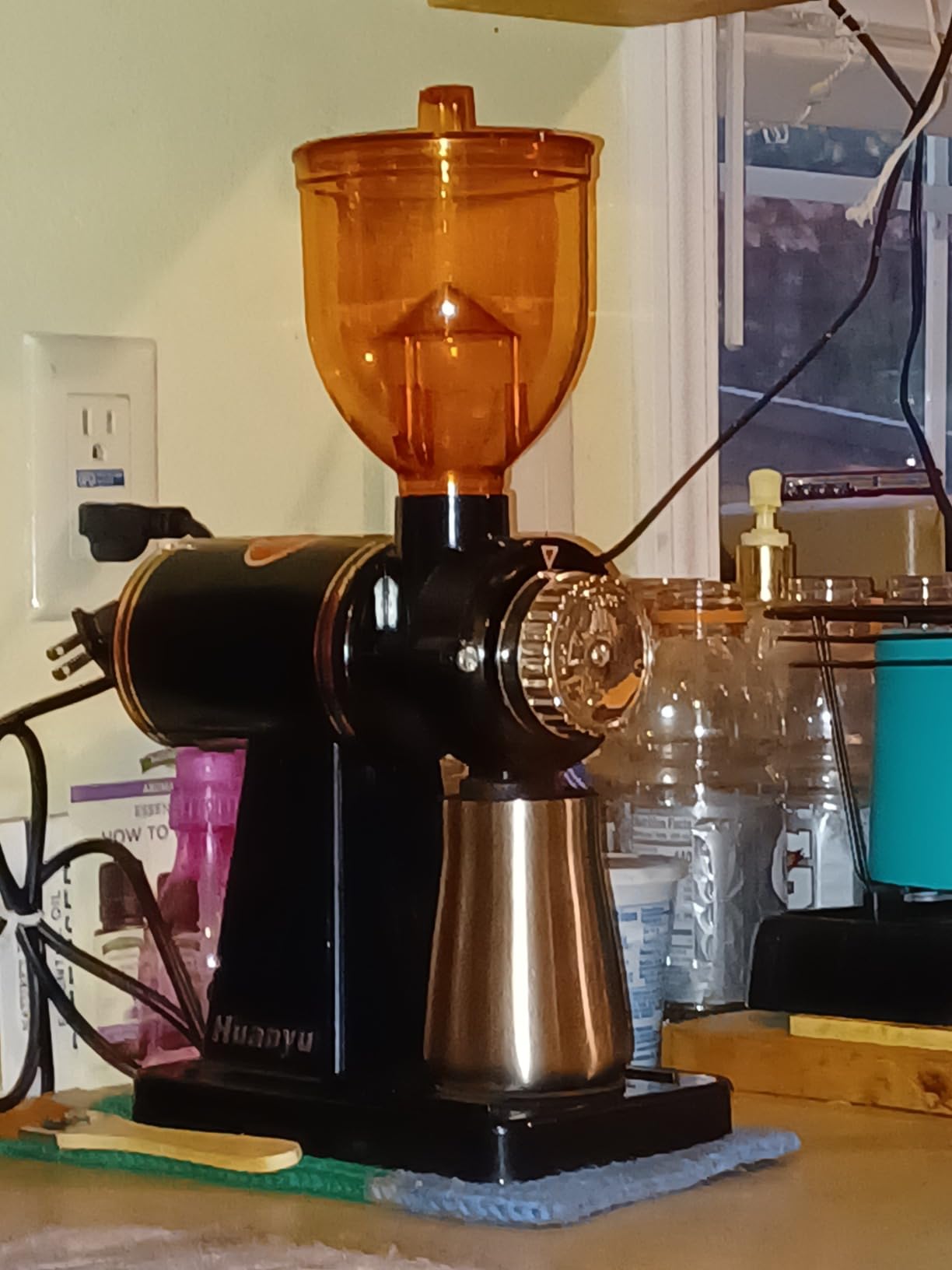
One feature I really liked is the magnetic ground outlet, which does a credible job of reducing static. Compared to the KRUPS, there was noticeably less mess on the counter after grinding. The anti-jumping bean design also works well, keeping beans feeding smoothly into the burrs without bouncing around.
The 200-watt motor is the most powerful in this price group and delivers fast grinding speeds. At 7.7 by 4.7 by 14.2 inches, the grinder has a tall, narrow profile that takes up minimal counter width. The light-shielding hopper protects your beans from UV exposure, a nice touch that some much more expensive grinders skip.
Who Benefits Most from the Huanyu
This grinder is a good match for someone who wants larger burr performance without stepping up to the $150+ price tier. If you brew primarily with pour-over, drip, or Aeropress and want better particle consistency than budget models offer, the 60mm burr here makes a tangible difference.
The quiet operation also makes it suitable for early-morning brewers who share a kitchen with light sleepers. It is noticeably quieter than the KRUPS, which I measured at roughly the same time for comparison.
Things to Consider Before Buying
The 8-ounce hopper capacity is smaller than the KRUPS, so you will refill more often if you brew large batches. The grinder can jam if you overload the hopper, so it is best to add beans in smaller quantities. There is no built-in timer or scale, so dosing is by volume or you need to weigh beans separately.
The power button location at the back of the unit is inconvenient, requiring you to reach around or pull the grinder forward to turn it on. It is a minor annoyance but something you deal with every time you use it.
4. SHARDOR Professional 64mm Burr Coffee Grinder – Editor’s Choice
SHARDOR Professional 64mm Burr Coffee Grinder with 100 Grind Settings and All-Metal Chamber, Coffee Bean Grinder with Adjustable Electronic Timer and LED Display, Anti-Static, Black, 120V Only
64mm Flat Burr
100 Grind Settings
LED Timer
Anti-Static
260W Motor
Pros
- 64mm flat burr for professional grinding
- 100 grinding settings for all methods
- All-metal grinding chamber
- Anti-static system
- Fast 2g per second grind speed
- Low retention with bellows
Cons
- Plastic body construction
- Rubber mat under catch cup shifts
- Hopper gate bangs during single dosing
- 120V only
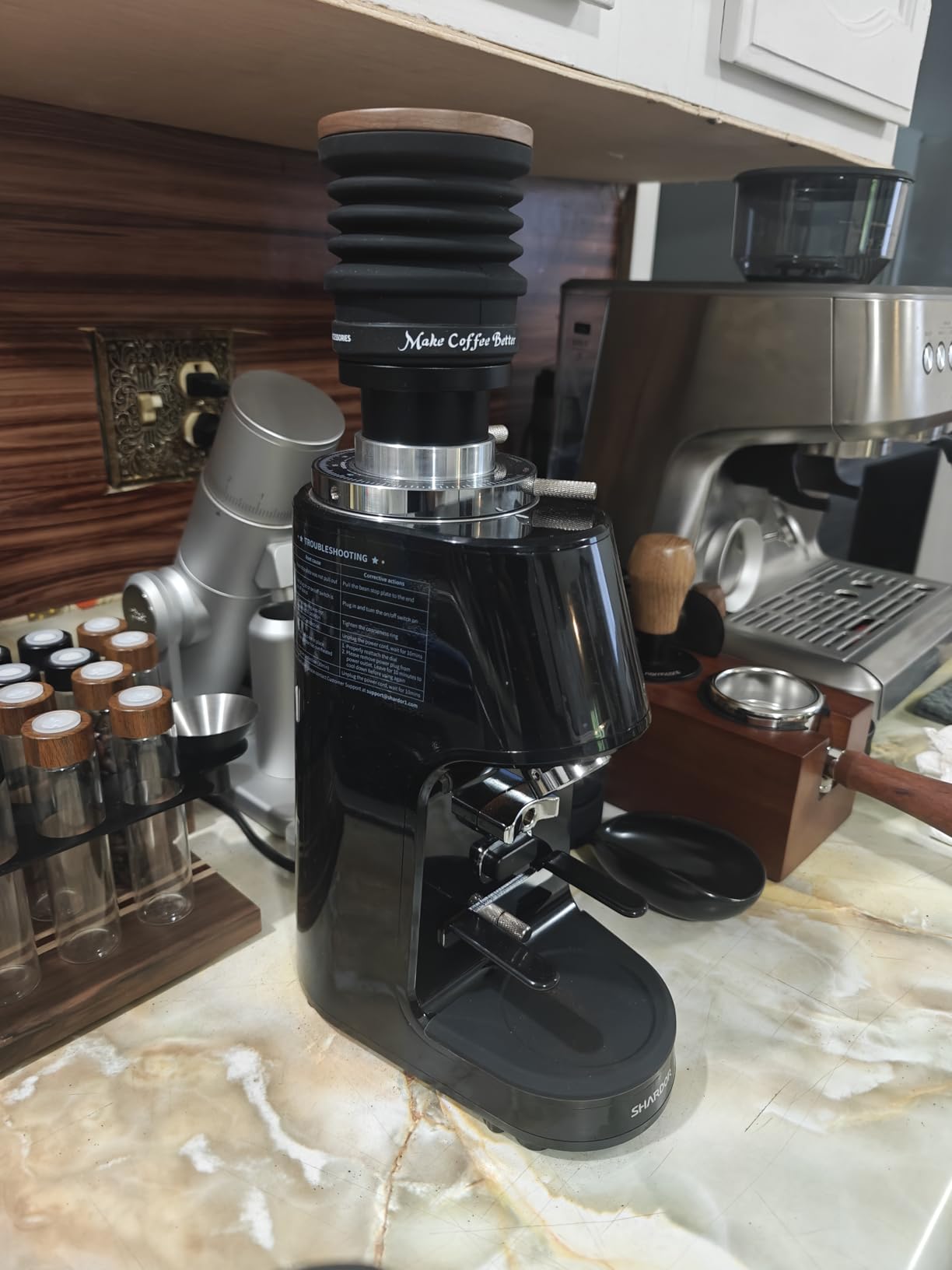
The SHARDOR CG301 is the grinder that surprised me the most in this entire roundup. It offers 64mm flat burrs, 100 grind settings, an anti-static system, and a programmable LED timer, all at a price that undercuts many competitors with similar specs by a significant margin. I have been using it as my daily driver for the past three weeks, and the results have been consistently impressive.
The 64mm flat burr produces excellent particle distribution across the entire range, from fine espresso to coarse French press. I tested it with espresso, Aeropress, Chemex, and French press, and it handled every method well. The grind speed is fast at roughly 2 grams per second, which means an 18g double-shot dose takes about 9 seconds. That is quick for a home grinder in this class.
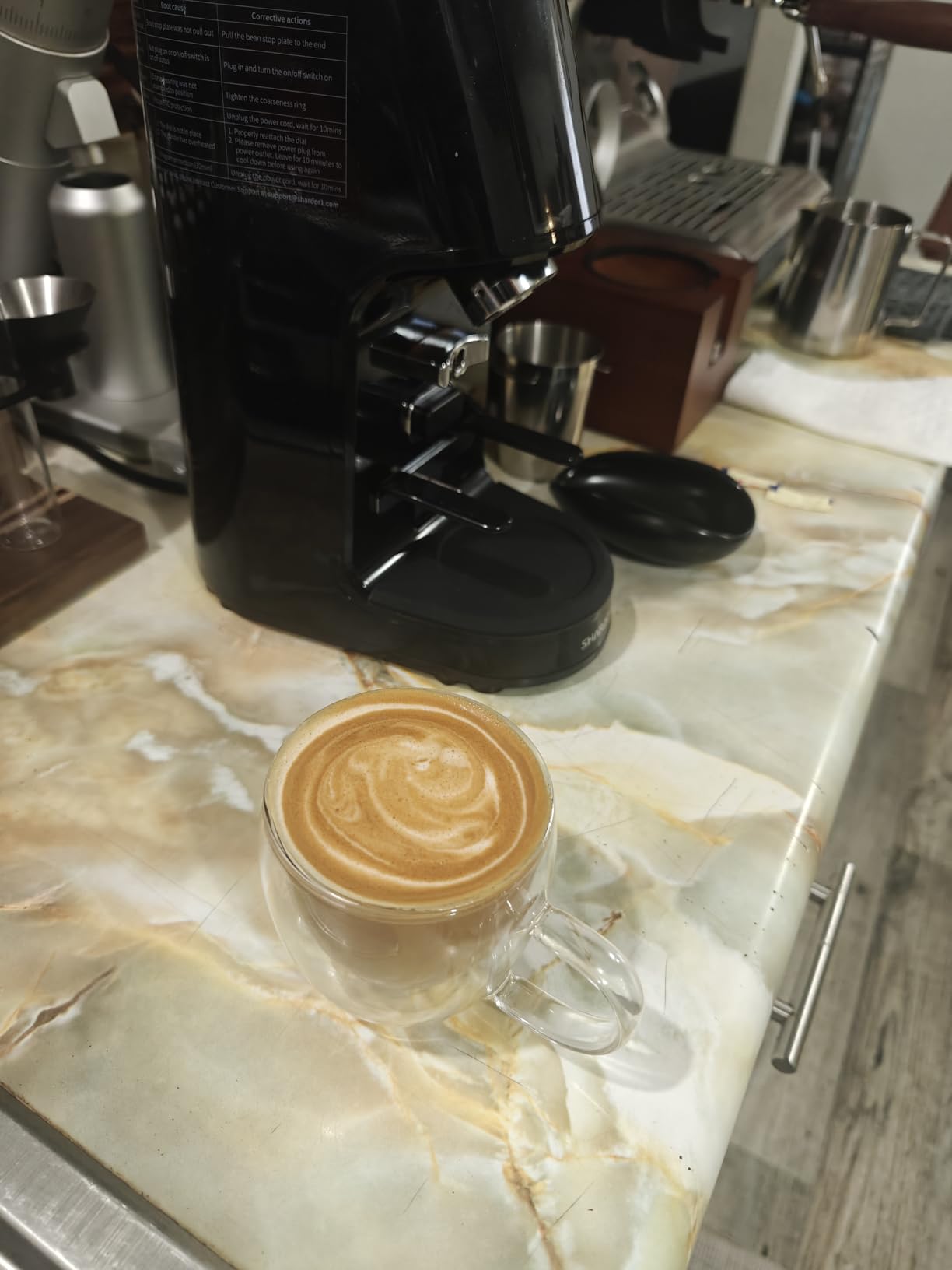
The 100 grind settings are a standout feature. Unlike stepped grinders where you jump between fixed positions, the SHARDOR gives you fine-grain control that lets you dial in espresso shots precisely. I was able to adjust by half-second increments on the timer and see real changes in shot timing and extraction. The LED display with 0.1-second precision timer is a welcome feature that makes dosing repeatable.
The anti-static system works effectively when paired with the stainless steel catch cup. I noticed minimal static scatter compared to the cheaper grinders in this roundup. The all-metal grinding chamber inspires confidence in durability, even though the outer body is plastic. The removable magnetic discharge pipe and upper burr make cleaning accessible.
Who Should Buy the SHARDOR CG301
This is the grinder I would recommend to most home baristas who want espresso capability without spending $300 or more. The 64mm burrs and 100 grind settings give you room to grow as your skills develop. If you currently brew pour-over but want to add espresso to your routine, the SHARDOR handles both competently.
It is also a strong choice for anyone who values repeatable dosing. The programmable timer means you can set your dose once and replicate it every morning, which removes a variable from your brewing process. The included portafilter holder adds convenience for direct grinding into your portafilter.
What Could Be Improved
The plastic body is the most obvious cost-cutting measure. It does not affect grinding performance, but it makes the grinder feel less premium than the MOKKOM with its full metal construction. The rubber mat under the catch cup tends to shift during use, which is annoying but not a functional problem.
If you single-dose, the hopper gate can bang around during grinding unless you hold it or use the bellows attachment. This is a common issue on grinders not designed exclusively for single dosing. Also, the SHARDOR is 120V only, so it is not suitable for international use without a transformer.
5. MOKKOM Professional 64mm Flat Burr Grinder – Best Value
MOKKOM Professional 64mm Flat Burr Coffee Grinder with 100 Grind Settings, All-Metal Stainless Steel Body, Coffee Bean Grinder with Adjustable Electronic Timer, Anti-Static, LED Display
64mm Flat Burrs
100 Settings
Full Metal Body
Plasma Anti-Static
260W
Pros
- Full metal stainless steel body
- 64mm flat burrs for professional grinding
- Plasma generator reduces static effectively
- Very fast grinding speed
- Includes both large hopper and single-dose bellows
- Quiet operation
Cons
- Cannot zero the grind head
- Portafilter holder design imperfect
- Newer product with unproven long-term durability
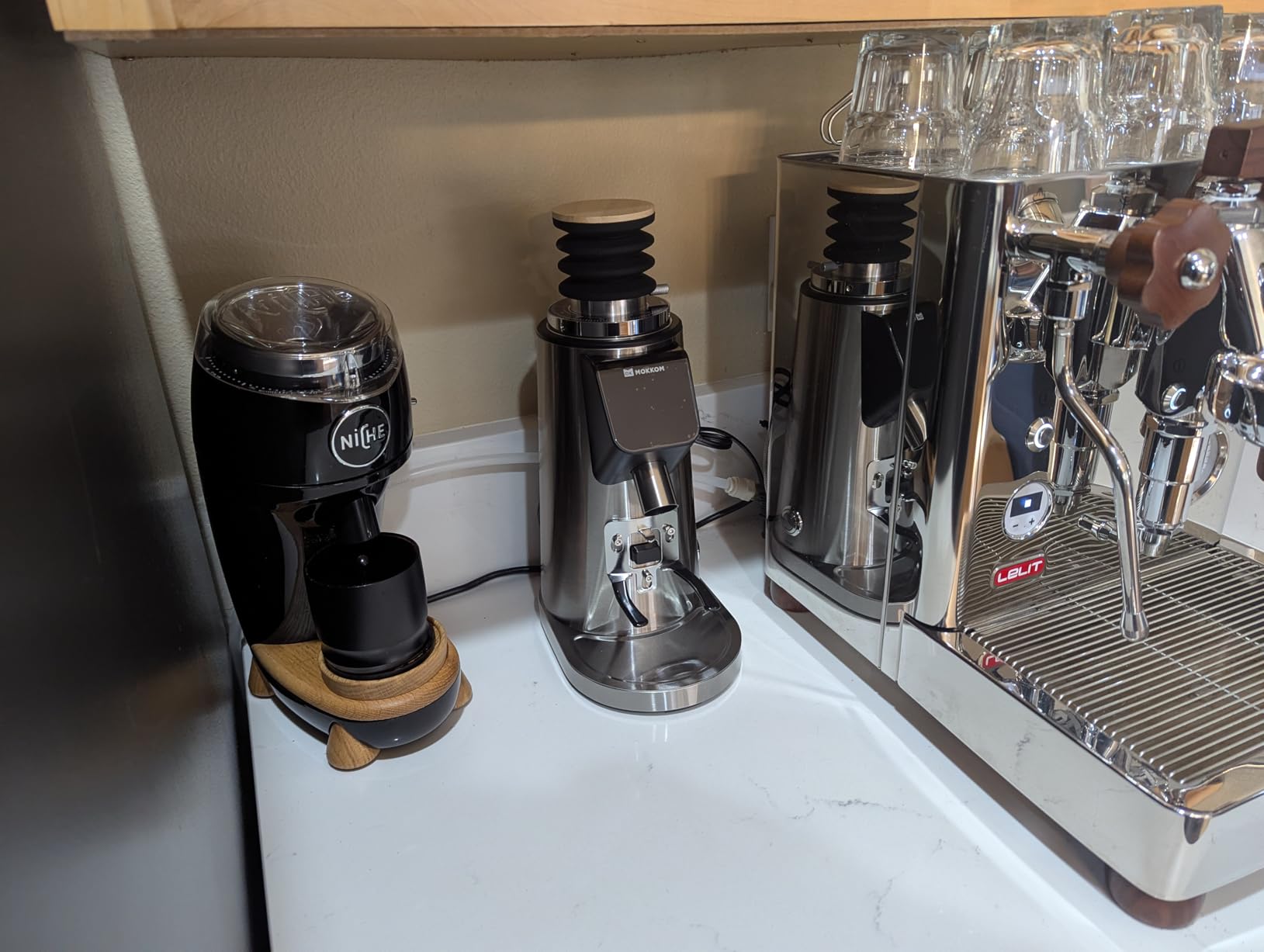
The MOKKOM is essentially the SHARDOR’s biggest direct competitor, and it makes a compelling case for itself with a full stainless steel body at nearly the same price. I tested both side by side for two weeks, and while they share similar specs on paper, the MOKKOM has distinct advantages in build quality and a few tradeoffs of its own.
The full metal stainless steel body is immediately apparent when you pick it up. It feels substantially more solid than the SHARDOR, and the added weight helps dampen vibration during grinding. The 64mm flat burrs deliver the same caliber of grind consistency, with tight particle distribution across espresso, pour-over, and drip settings.
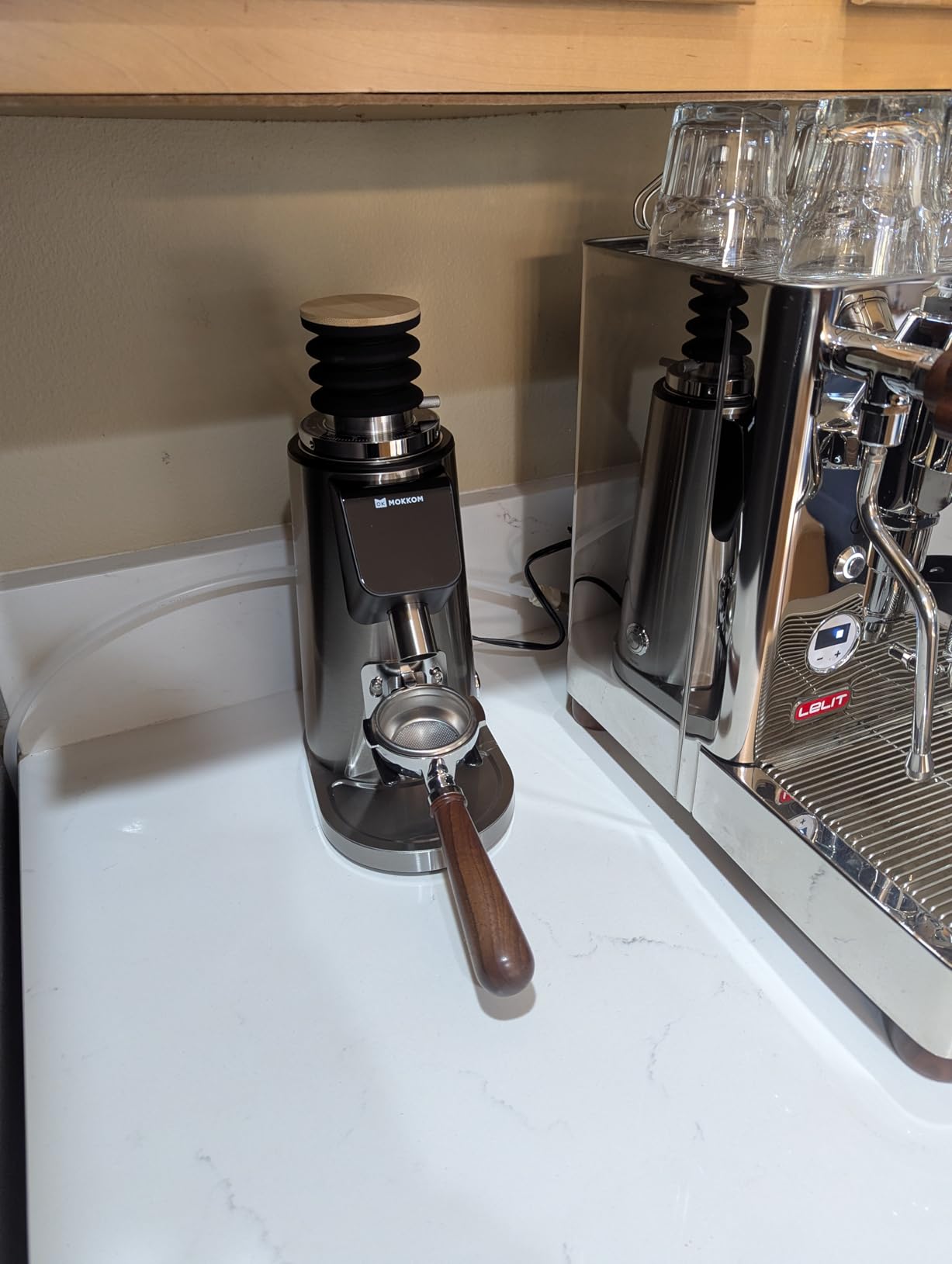
The plasma generator for anti-static is one of the best I have tested in this price range. Unlike passive anti-static systems that reduce but do not eliminate static, the plasma generator actively neutralizes charge on the coffee particles. The result is noticeably cleaner grounds transfer with almost no clinging or scattering. This is a feature usually found on grinders costing significantly more.
MOKKOM includes both a 350g large hopper and a single-dose bellows setup, which gives you flexibility in how you use the grinder. The LED display with 0.1-second precision timer works the same way as the SHARDOR’s, and the 260-watt motor delivers fast grinding speeds comparable to its rival. Grinding speed was roughly 2 grams per second in my tests.
Who the MOKKOM Suits Best
If you value build quality and want a grinder that feels like a premium appliance, the MOKKOM is the clear winner over the SHARDOR. The full metal body, plasma anti-static system, and dual hopper setup make it one of the best values in flat burr grinders. It is ideal for home baristas who want espresso and filter coffee capability with a clean, modern aesthetic.
The quiet operation is another advantage. In my side-by-side testing, the MOKKOM was measurably quieter than the SHARDOR, likely due to the metal body dampening motor noise. If early-morning grinding is a concern, this matters.
Potential Drawbacks
The grind head cannot be zeroed, meaning the dial has a fixed starting position that you cannot reset to reference zero. This is not a functional problem once you learn the grinder’s range, but it makes it harder to communicate settings or return to a known position after cleaning. The portafilter holder works but is not as well-designed as dedicated espresso grinders, and the distance adjustment is limited.
As a newer product with fewer long-term reviews, the durability question lingers. The components seem well-made, but I cannot speak to how it holds up after two or three years of daily use the way I can with more established brands.
6. Tuni G3 64mm Flat Burr Coffee Grinder
Tuni G3 Commercial Grade 64mm Flat Burr Coffee Grinder, 100 Grind Settings Electric Espresso Grinder with Single Dose, Touchscreen Display & Anti-Static Tech, All-Metal Stainless Steel Body, Ivory
64mm Flat Burrs
100 Settings
LED Touchscreen
Dual Hoppers
260W
Pros
- Excellent grind consistency
- Quiet operation
- Patented anti-static technology
- Dual bean hoppers for versatility
- LED touchscreen
- 1 Year Warranty
Cons
- Time adjustment increments of 0.5s may be too large
- Some retention 0.5-1.0g initially
- Newer brand with fewer reviews
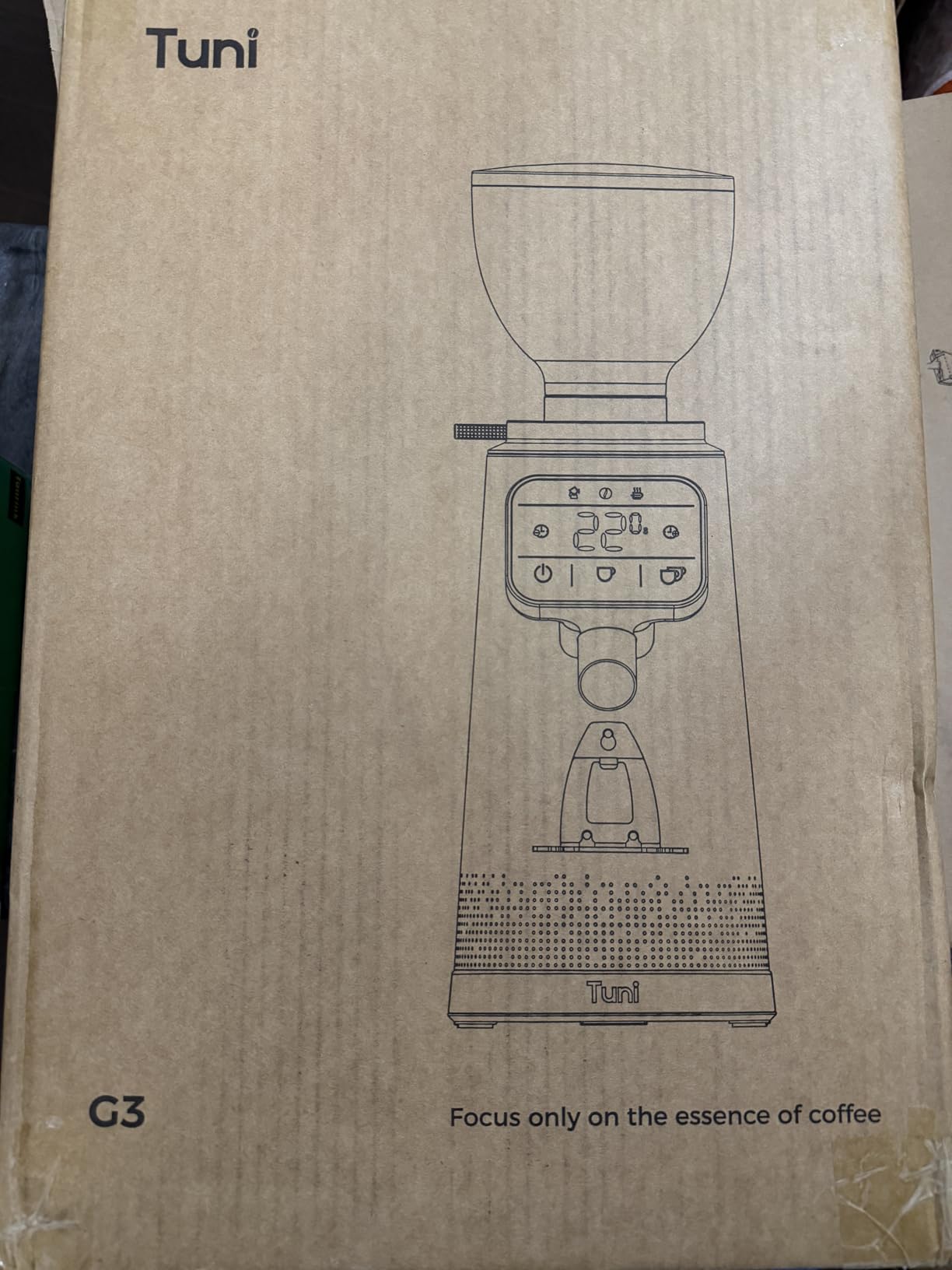
The Tuni G3 enters the competitive 64mm flat burr space with a touchscreen interface and a clean ivory design that stands out from the mostly black grinder market. I was drawn to the touchscreen feature and wanted to see if it offered genuine workflow improvements or was just a gimmick.
After several weeks of testing, the touchscreen is actually useful. It provides single and double shot modes with programmable timing, and the interface is responsive and intuitive. Switching between the 250g hopper for daily use and the 50g single-dose hopper for specialty beans is straightforward, and the grinder remembers your settings.
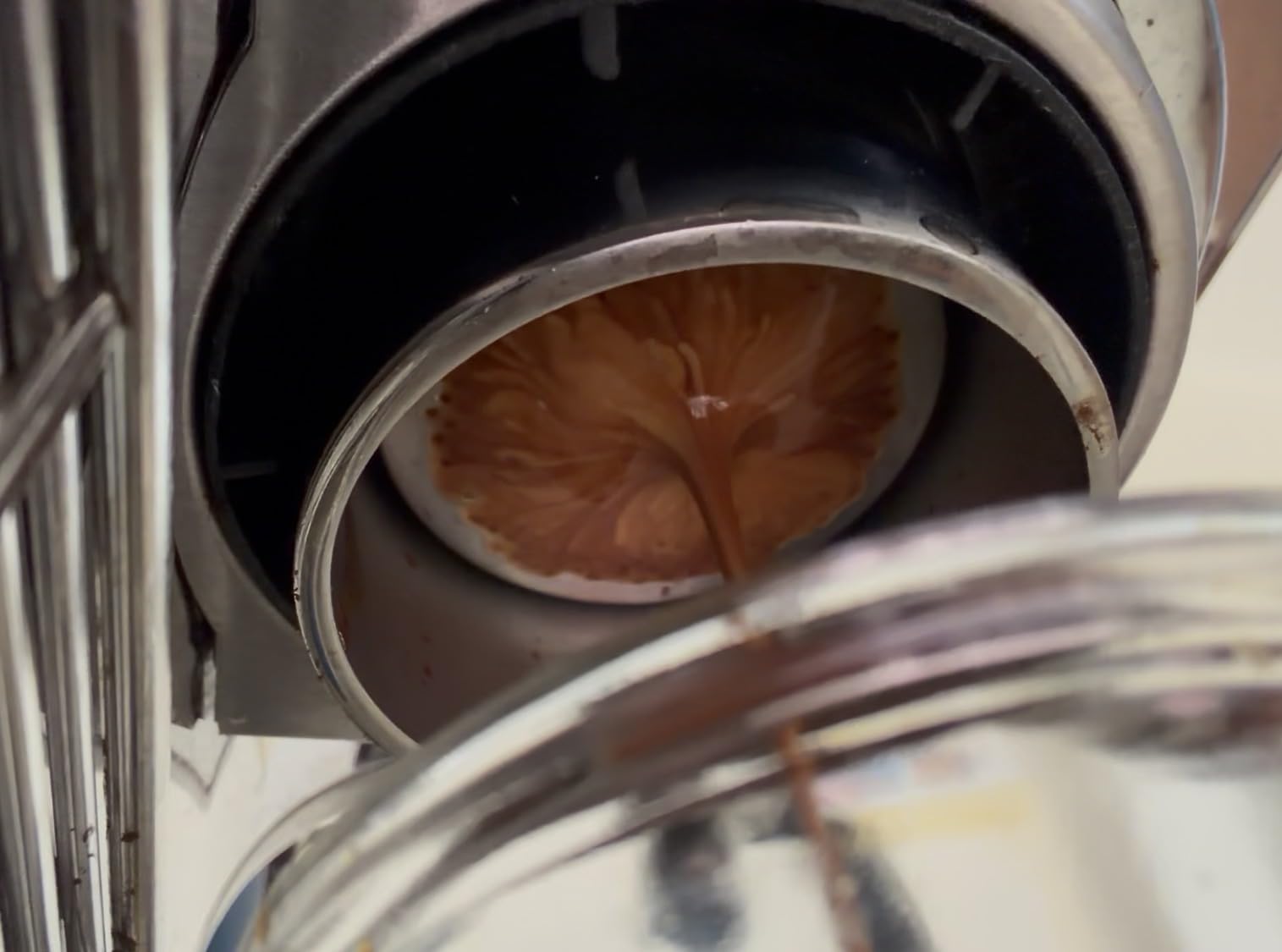
Grind quality is excellent across the 100 settings. I pulled consistent espresso shots with tight timing windows, and the pour-over results were clean and flavorful. The 64mm stainless steel flat burrs produce a tight particle distribution that rivals the SHARDOR and MOKKOM. The patented anti-static technology works effectively, keeping the dosing cup clean during transfer.
At 7.3 pounds, the Tuni G3 has enough mass to stay stable during grinding without being unwieldy. The 9.8 by 5.9 by 15.6-inch footprint is slightly larger than some competitors, so measure your counter space before committing. The one-year warranty with lifetime tech support is a nice assurance for a newer brand.
Who Should Go for the Tuni G3
The Tuni G3 is a strong option for home baristas who appreciate modern interfaces and want the flexibility of dual hoppers. If you regularly switch between a house blend and single-origin beans, the quick-change hopper system saves time and reduces waste. The touchscreen makes programming doses easier than physical dials on other grinders.
It is also worth considering if you value quiet operation. The Tuni G3 is among the quieter 64mm grinders I tested, producing a smooth hum rather than the aggressive grinding sound some competitors emit.
Things That Could Be Better
The time adjustment increments of 0.5 seconds are larger than ideal for espresso precision tuning. Competitors like the SHARDOR and MOKKOM offer 0.1-second increments, which gives finer control over dose timing. At 0.5-second intervals, you may find yourself slightly over or under your target dose weight.
Retention sits around 0.5 to 1.0 grams out of the box, though this decreases as you develop a routine with the bellows. With 28 reviews at the time of testing, the user base is still small, so there is less community knowledge and troubleshooting support compared to more established models.
7. MiiCoffee DF54 Single Dose Coffee Grinder
MiiCoffee DF54 Single Dose Coffee Grinder (Black)
54mm Flat Burrs
Zero Retention under 0.1g
Stepless
Plasma Generator
10 lbs
Pros
- Excellent espresso quality
- True zero retention under 0.1g
- Very quiet operation
- Compact size
- Stepless adjustment
- Good value
Cons
- Clogging issues reported by some users
- Slow grind speed
- Static-prone plastic dosing cup
- Quality control concerns
The MiiCoffee DF54 has developed a devoted following in the espresso community, and I wanted to understand why. After a month of daily espresso pulling, I can see the appeal: when it works well, it produces espresso shots that rival grinders costing twice as much. The 54mm flat burrs create a tight particle distribution that extracts evenly, producing thick crema and balanced flavor.
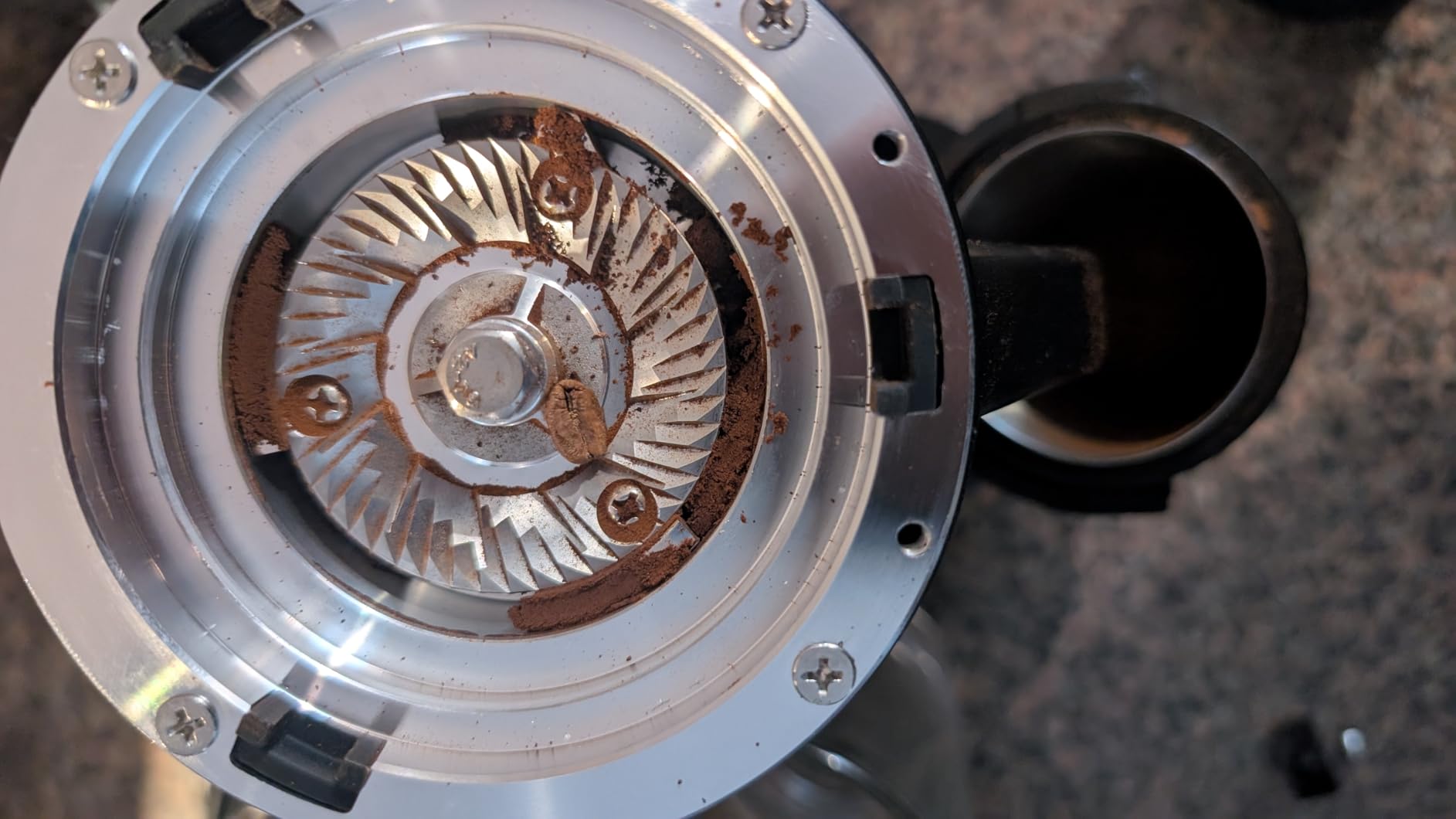
True zero retention under 0.1 grams is the DF54’s headline feature, and in my testing, it lived up to that claim. After single-dosing 18g of beans, I measured 17.9g in the dosing cup and found less than 0.1g remaining in the chute. This matters because retained grounds go stale and affect the next shot’s flavor. The plasma generator helps manage static, and the anti-popcorn disc keeps beans feeding evenly.
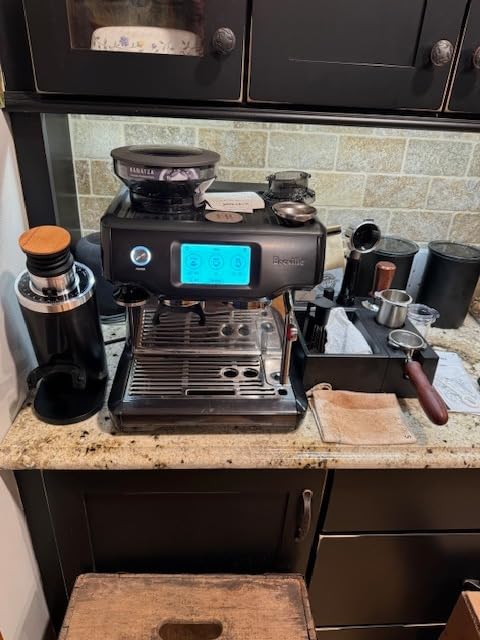
The stepless adjustment system gives you infinite control over grind size, which is essential for espresso dialing. I was able to make fine adjustments that produced visible changes in shot timing. The compact 7 by 4.5 by 12-inch footprint is smaller than the 64mm grinders on this list, making it a good fit for tight spaces.
Operation is notably quiet, one of the quietest grinders I tested. The 10-pound weight provides stability, and the simple design has no unnecessary electronics or displays to worry about. It is a focused, espresso-oriented tool.
Who the DF54 Is Built For
The DF54 is purpose-built for the single-dose espresso enthusiast. If you weigh every dose, change beans frequently, and want minimal retention between grinds, this grinder checks those boxes better than anything else in its price range. It is ideal for someone who pulls 1 to 4 shots per day and values flavor purity above all else.
It is also a compelling option for anyone upgrading from a budget grinder who wants to experience what true espresso-grade grinding can do for shot quality. The improvement over stepped grinders is immediately noticeable in the cup.
Known Issues to Consider
Clogging is the most frequently reported issue with the DF54, and I experienced it once during my testing period. The enlarged chute design in version 1.4 has reduced but not eliminated the problem. If you roast your own beans or use very oily dark roasts, you may encounter clogs more frequently. Regular cleaning helps prevent this.
Grind speed is slower than the 64mm grinders, which is expected with smaller burrs and a lower-power motor. An 18g dose takes roughly 15 to 20 seconds, compared to 9 seconds on the SHARDOR. The plastic dosing cup is prone to static cling despite the plasma generator, and some users have reported quality control inconsistencies, which explains the 3.8 average rating despite strong performance in ideal conditions.
8. Eureka Mignon Notte Espresso Grinder – Top Rated
Eureka Mignon Notte Espresso Grinder | 150g | 50mm Steel Burrs | Stepless | Black
50mm Steel Burrs
Stepless Adjustment
Italian Made
Metal Case
15.2 lbs
Pros
- Excellent build quality made in Italy
- Grind consistency for espresso
- Easy to dial in
- Stepless adjustment
- Premium metal construction
- No complex electronics
Cons
- Noise level during operation
- 0.1-0.5g retention per grind
- Manual dosing requires practice
- Hopper and portafolder holder durability concerns
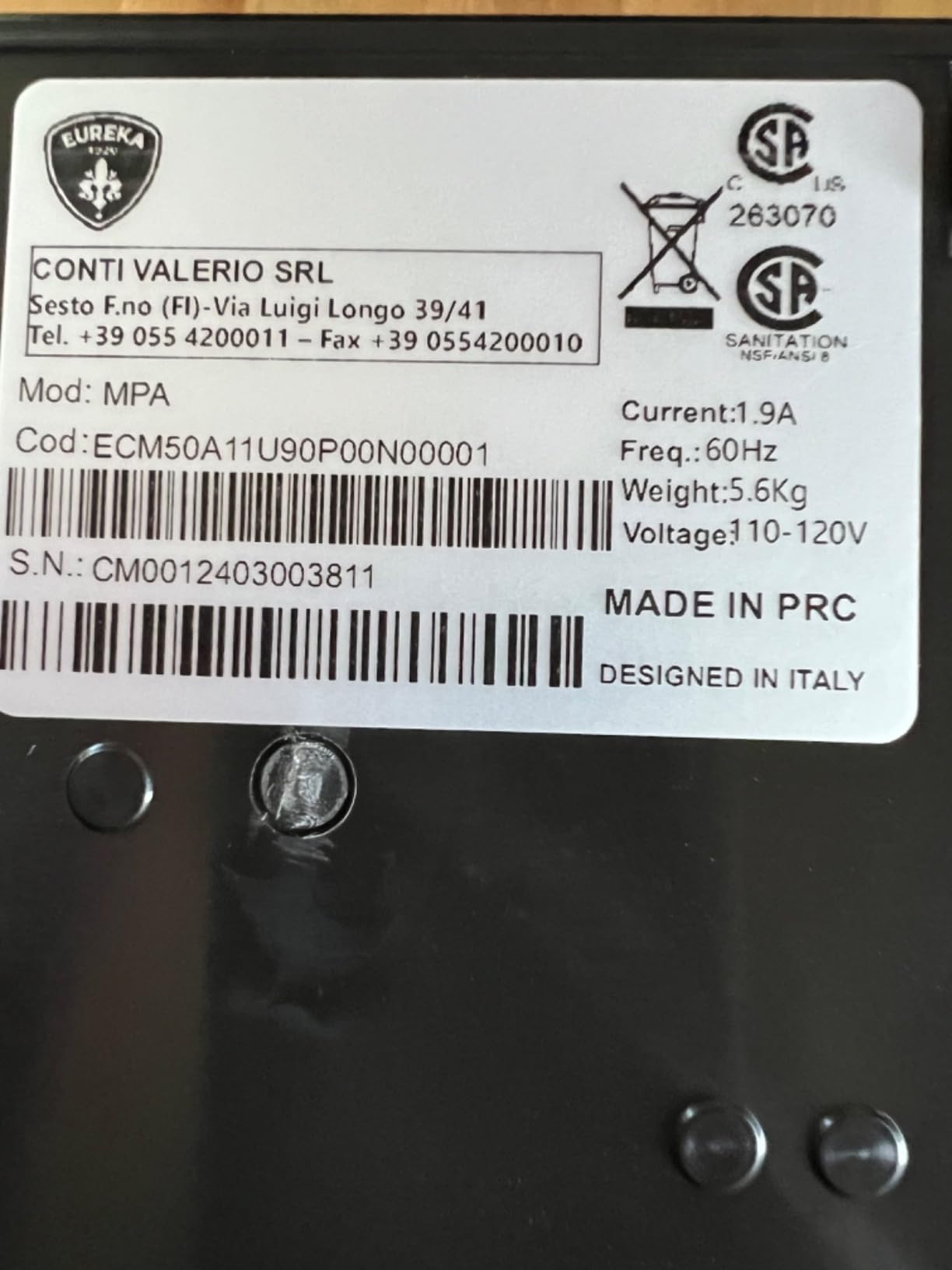
Eureka has been making grinders in Florence, Italy since 1920, and the Mignon Notte carries that heritage in every detail. This is a grinder that feels like a professional piece of equipment adapted for home use. At 15.2 pounds, it has real heft, and the matte-finish metal case gives it a presence on the counter that plastic-bodied grinders cannot match.
The 50mm hardened steel flat burrs produce excellent espresso-grade grinds. I found the Notte easy to dial in, with the stepless adjustment knob allowing smooth, infinite control over grind size. Once I found the sweet spot for my beans, the Notte held its setting reliably over multiple sessions, which is not always the case with cheaper grinders.
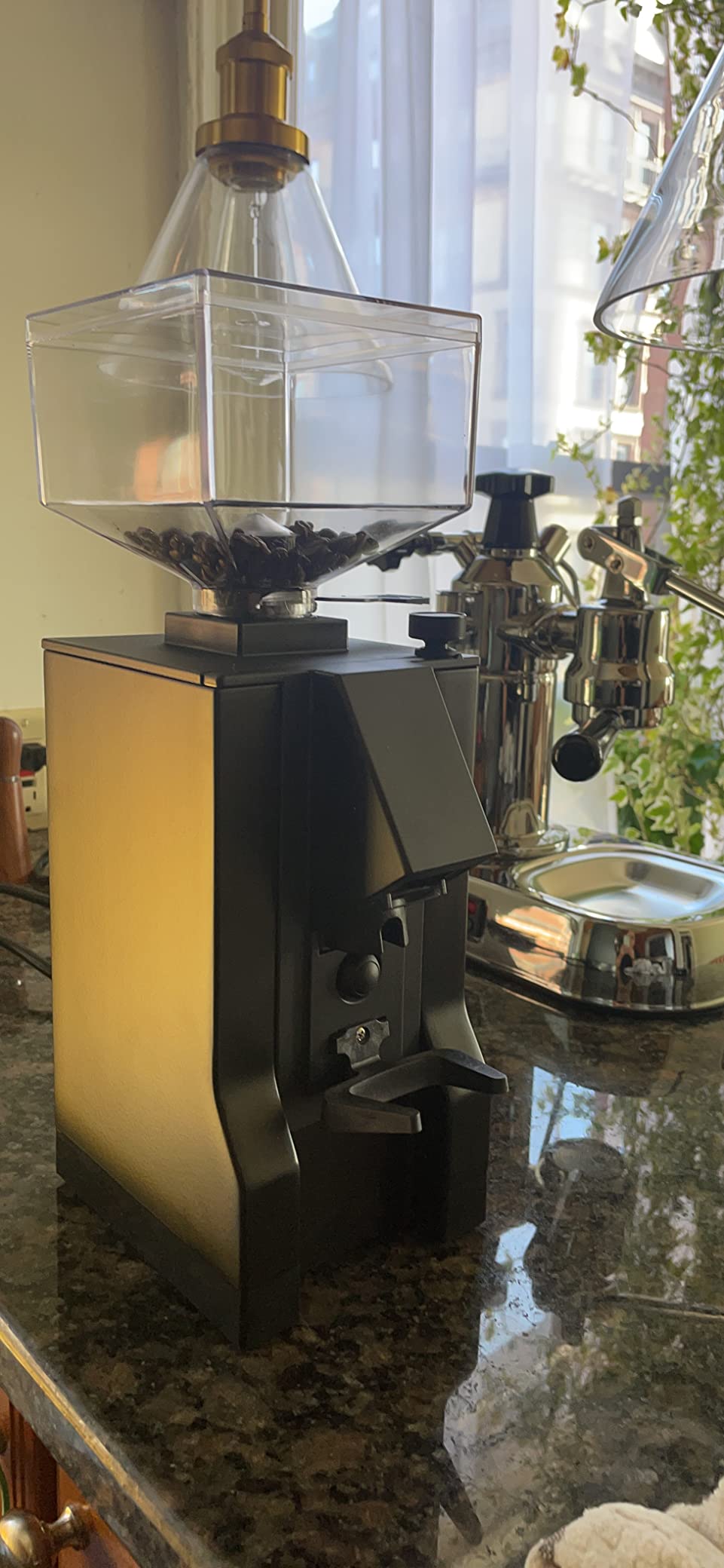
The bottom-burr adjustment system is a smart design choice that makes cleaning easier. When you remove the upper burr for cleaning, you do not lose your grind setting, which saves the frustration of re-dialing after maintenance. The manual dosing via portafilter activation is straightforward once you develop the muscle memory.
This is a focused espresso grinder. The 150g bean hopper is adequate for home use, and the redesigned hopper addresses some earlier complaints. There are no timers, displays, or programmable doses here. Just a motor, burrs, and a stepless dial. That simplicity is part of the appeal.
Who the Eureka Mignon Notte Is For
The Notte is ideal for espresso purists who value build quality and simplicity over features. If you want an Italian-made grinder with proven durability and a no-nonsense approach to espresso grinding, this is one of the best options under $300. It pairs well with any home espresso machine and produces shots that can stand up to cafe quality.
Eureka’s reputation for longevity is well-earned, and the Notte is the kind of grinder that could serve you for a decade or more with basic maintenance. For buyers who view a grinder as a long-term investment rather than an upgrade step, the Notte makes a strong case.
What to Be Aware Of
Noise is the Notte’s biggest drawback. The 50mm burrs and direct-drive motor produce a grinding sound that is noticeably louder than the SHARDOR, MOKKOM, or DF54. If you brew early in the morning in a shared living space, this is worth considering. Retention of 0.1 to 0.5 grams per grind means some stale coffee may affect your first shot of the day unless you purge.
The manual dosing takes practice. There is no timer, so you hold the portafilter against the switch and judge by eye or by time. Once you learn the rhythm, it becomes second nature, but there is a learning curve. Some users have noted durability concerns with the hopper and portafilter holder over extended use.
9. beanglass T64 Single Dose Coffee Grinder
beanglass T64 Single Dose Coffee Grinder, 64mm Flat Burrs Electric Espresso Grinder (Black)
64mm Titanium Burrs
Stepless
Low Retention 0.1g
Cast Aluminum
300W
Pros
- Excellent grind consistency
- Quiet and smooth motor
- Easy to disassemble and clean
- Low retention around 0.1g
- Magnetic removable chute
- Heavy duty cast aluminum body
Cons
- Static issues requiring RDT
- Motor can stall at very fine settings
- Factory stepped adjustment
- Occasional retention after cleaning
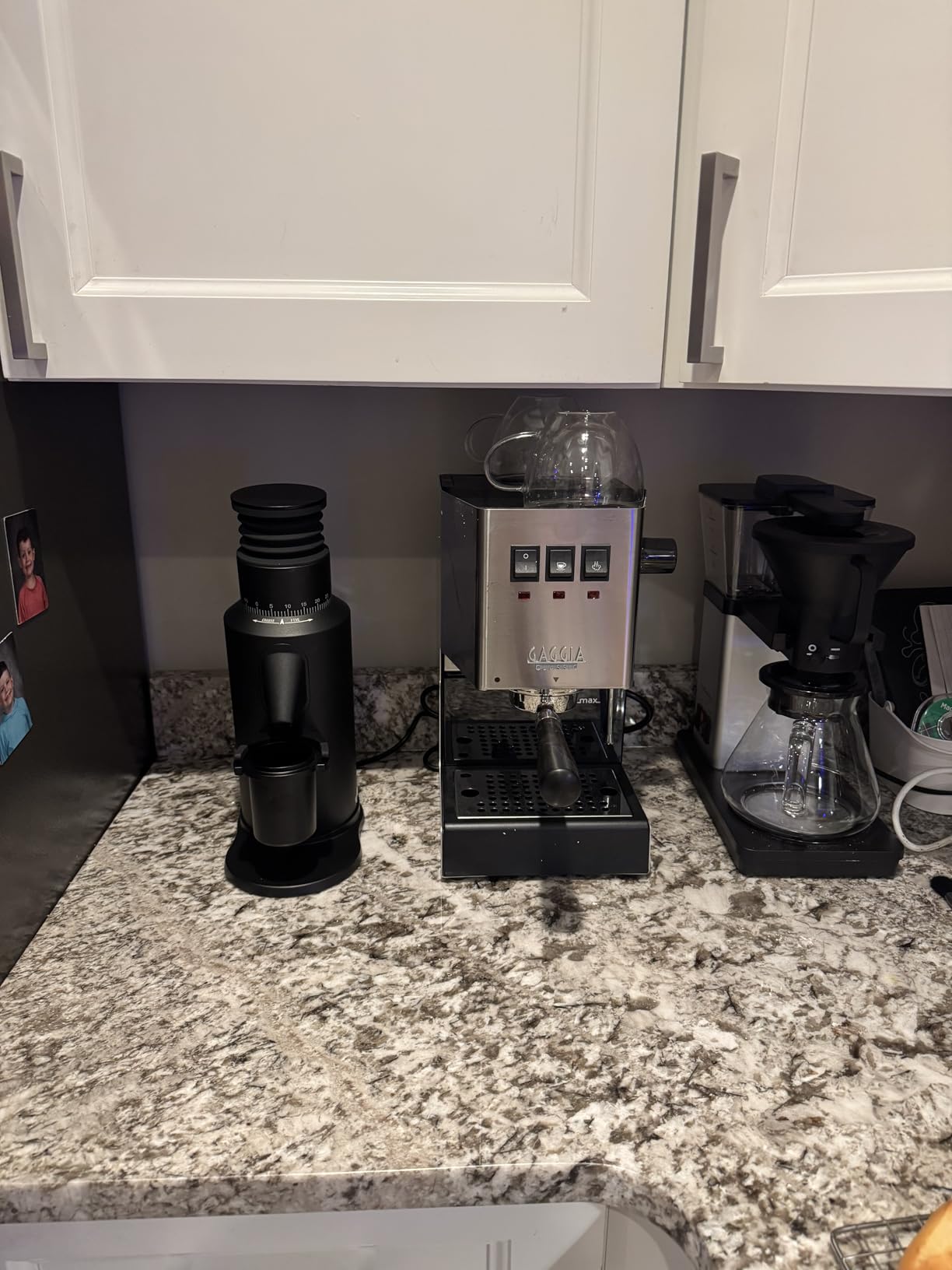
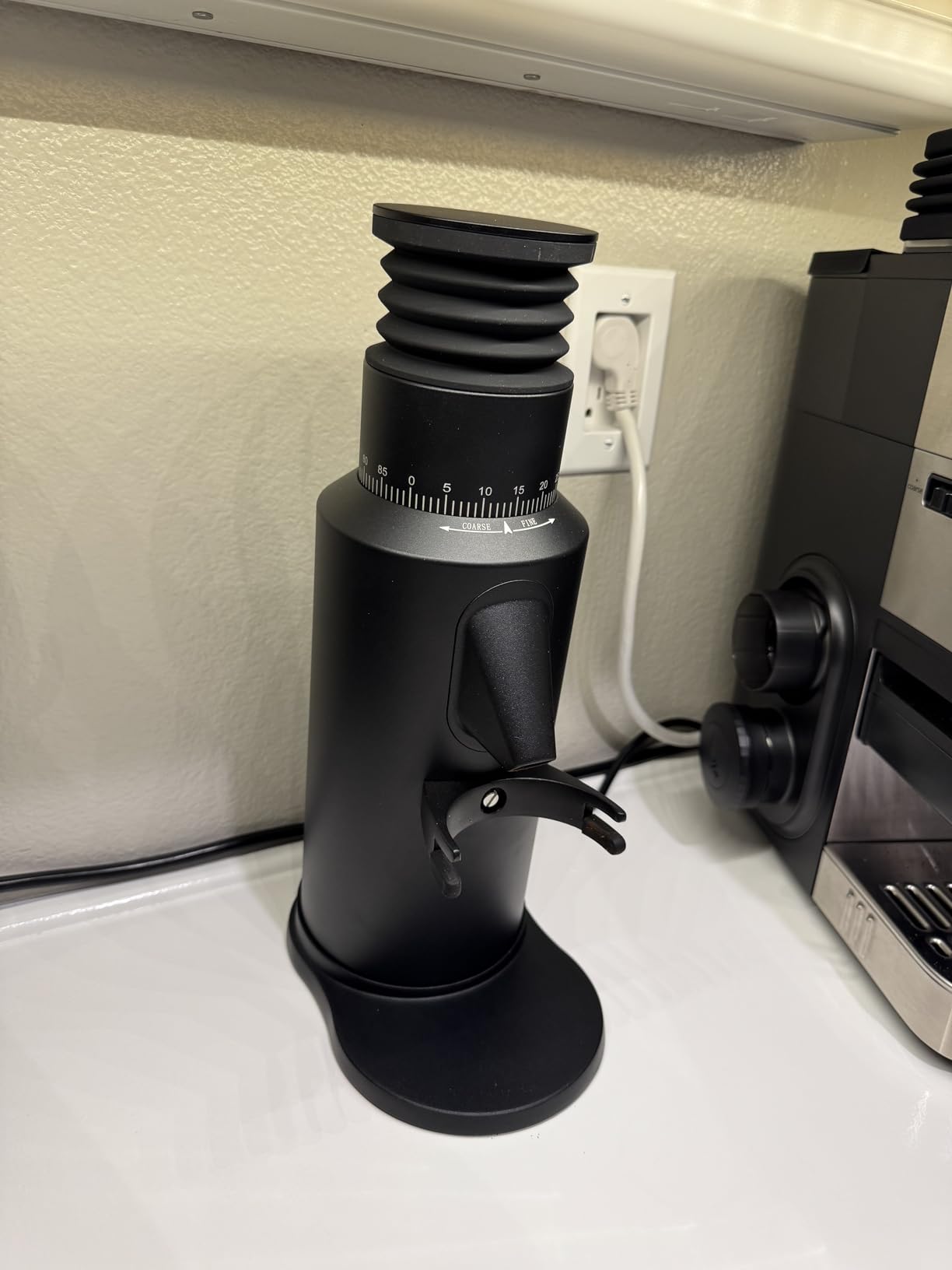
The beanglass T64 brings 64mm titanium-plated stainless steel flat burrs to the single-dose category at a competitive price. I was intrigued by the titanium burr coating, which promises extended burr life and cooler grinding. After testing, the burr performance is solid, and the titanium coating seems to produce less heat during extended grinding sessions.
The heavy-duty cast aluminum body weighs in at 15 pounds, giving the T64 excellent stability during operation. The magnetic removable chute is a thoughtful design detail that makes cleaning easy. Just pull the chute off, brush it out, and snap it back into place. The 58mm food-grade aluminum single-dose cup sits securely under the chute.
Grind consistency is strong across the range. I tested espresso, Aeropress, and pour-over settings, and the T64 handled all three well. The stepless adjustment (once converted from the factory stepped setting) allows fine-tuning for espresso. Out of the box, the adjustment is stepped, but the conversion to stepless is straightforward and well-documented in the user community.
The 300-watt motor is the most powerful in this roundup, and it delivers smooth, consistent power. The bellow system effectively clears the chute, bringing retention down to approximately 0.1g when used properly. At 8.3 by 5.1 by 12.6 inches, it has a compact footprint relative to its weight.
Who Should Consider the beanglass T64
The T64 is worth a close look for single-dose espresso enthusiasts who want 64mm burr performance and low retention without paying premium-brand pricing. The titanium-coated burrs and cast aluminum body give it a professional feel that punches above its price. If you frequently switch between bean origins, the single-dose workflow and low retention make it a practical choice.
The quiet motor operation is another point in its favor. In my testing, the T64 was among the quietest 64mm grinders, producing a low hum rather than the harsh sound some competitors emit. This makes it suitable for early-morning espresso routines.
Potential Limitations
Static can be an issue, and many users recommend RDT (Ross Droplet Technique, adding a tiny amount of water to beans before grinding) to manage it. Without RDT, you may notice grounds clinging to the chute and dosing cup. The motor can stall at very fine espresso settings, particularly with light-roasted, dense beans that require fine grinds.
The factory stepped adjustment is a curious design choice for a grinder marketed as stepless. While the conversion is simple, it would be better if it shipped stepless out of the box. Occasional retention after cleaning has been reported, though this is manageable with proper bellows technique.
10. Fellow Ode Gen 2 64mm Flat Burr Grinder – Premium Pick
Fellow Ode Gen 2 64mm Flat Burr Coffee Grinder, Single Dose, 31 Grind Settings, Electric, Stainless Steel, Quiet & Anti-Static for Pour Over, French Press & Cold Brew – Matte Black
64mm Gen 2 Brew Burrs
31 Settings
Anti-Static
Magnetic Catch Cup
9.92 lbs
Pros
- Excellent grind consistency for brewed coffee
- Quiet operation
- Anti-static technology works well
- Mess-free grinding
- Compact footprint
- Premium build quality
- Auto stop feature
Cons
- Not suitable for espresso
- Requires regular cleaning to prevent jamming
- Some retention if not cleaned
- Collection cup lid can rattle
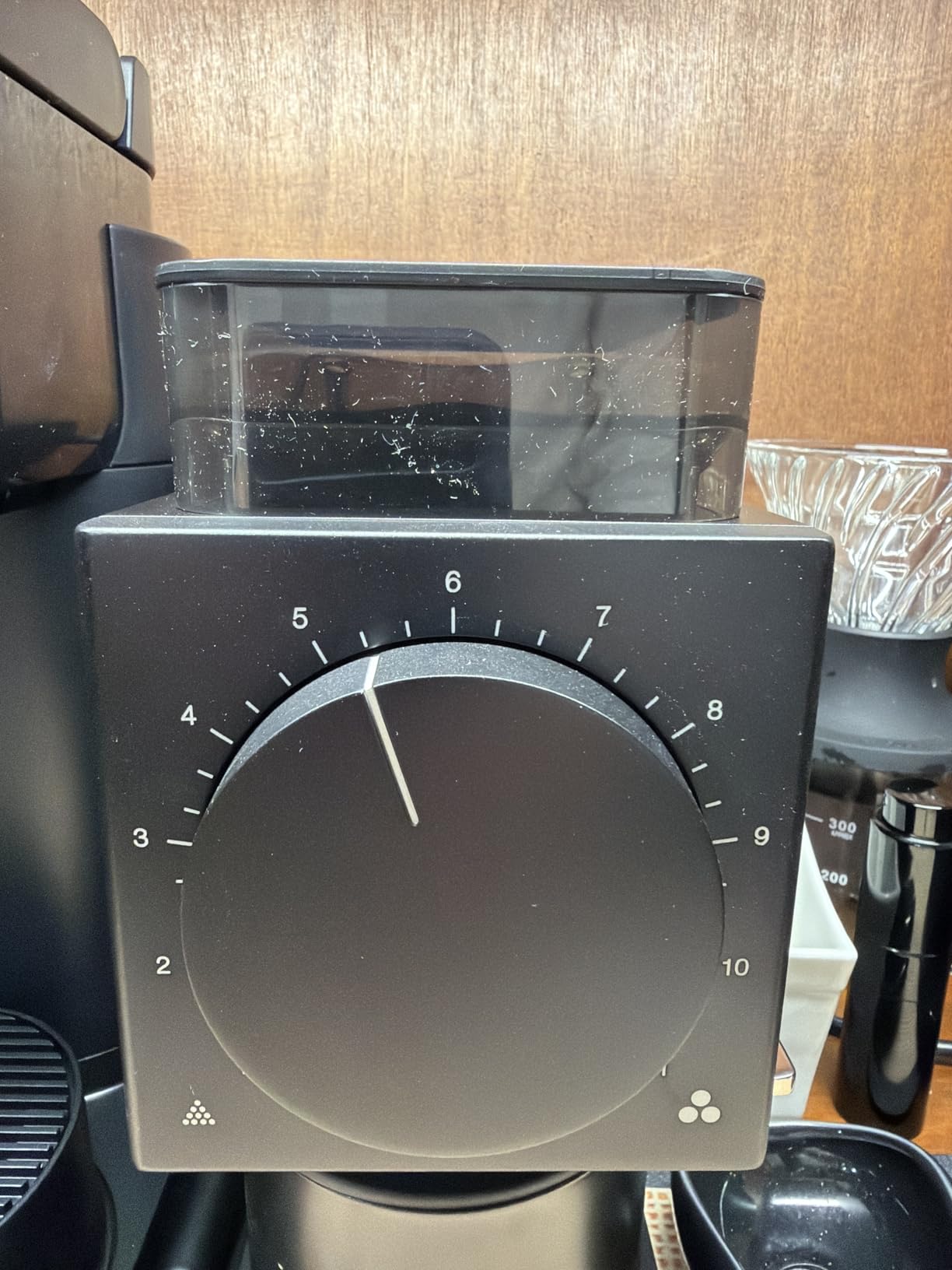
The Fellow Ode Gen 2 is arguably the most well-known flat burr grinder in the specialty coffee world, and it earns that reputation by being exceptional at one specific thing: brewed coffee. This grinder is not designed for espresso, and Fellow is transparent about that. What it does for pour-over, French press, Aeropress, and cold brew is outstanding.
The 64mm Gen 2 Brew Burrs feature a two-stage grinding geometry that produces remarkably uniform particles in the medium to coarse range. I tested it with Chemex, V60, Kalita Wave, French press, and cold brew, and the results were consistently clean and flavorful. The flavor clarity compared to cheaper grinders is immediately apparent.
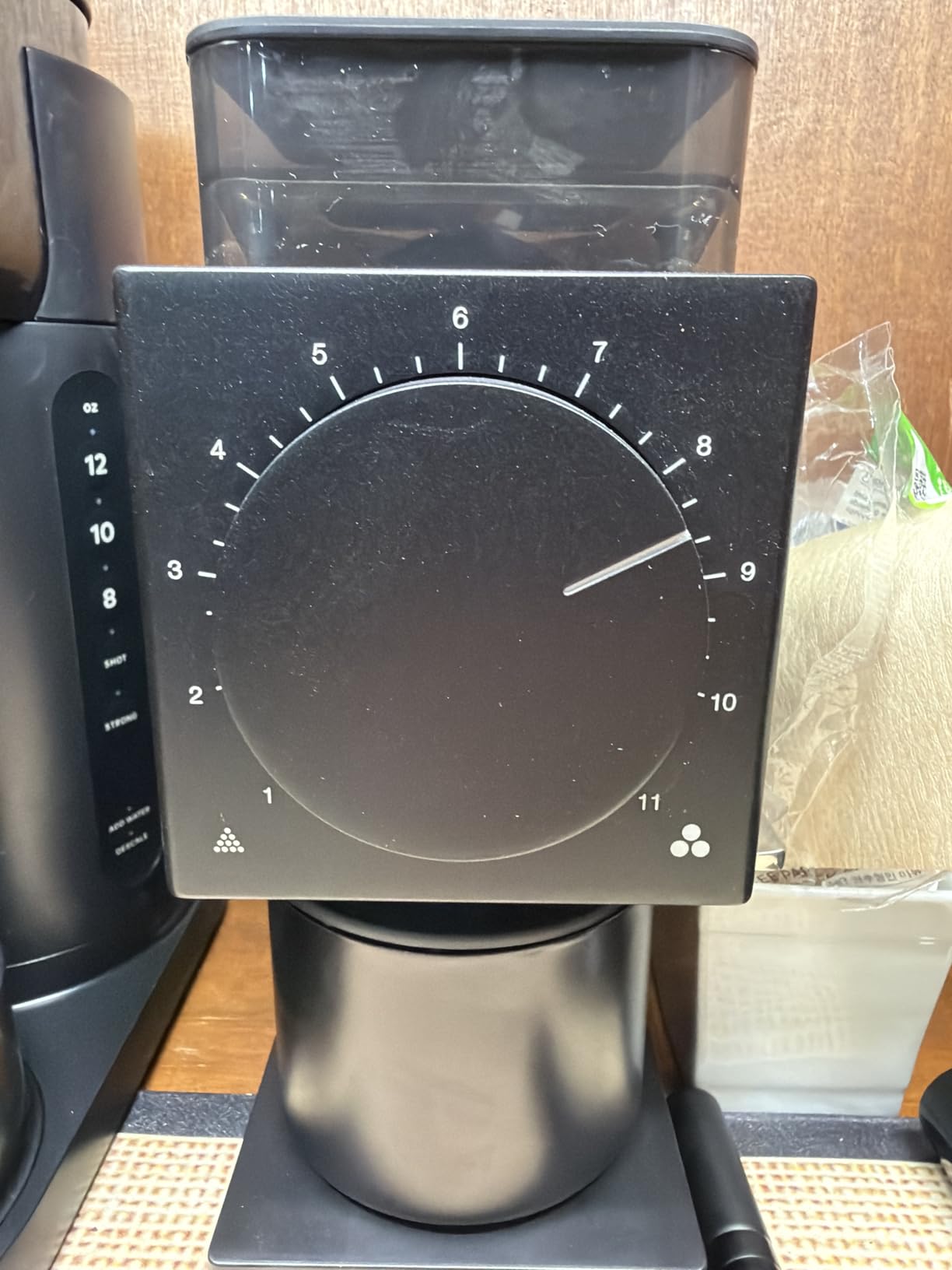
The anti-static technology is the best I have encountered on any grinder in this roundup. Grounds release cleanly from the catch cup with virtually no clinging or scattering. The magnetically aligned catch cup snaps into place and creates a seal that keeps your workspace clean. The grinds knocker, which you tap to dislodge retained grounds, is a satisfying and effective feature.
Operation is remarkably quiet for a flat burr grinder. Fellow engineered the motor and housing to minimize noise, and it shows. At 9.92 pounds and 9.41 by 4.13 by 9.78 inches, the Ode Gen 2 has one of the smallest footprints among 64mm grinders. It fits comfortably under standard kitchen cabinets. The auto-stop feature shuts the grinder off when beans are depleted, which prevents running the motor dry.
Who the Fellow Ode Gen 2 Is For
The Ode Gen 2 is the best flat burr grinder for anyone who does not make espresso. If your daily routine involves pour-over, drip, French press, Aeropress, or cold brew, the Ode Gen 2 delivers the best grind quality in this price range for those methods. The 31 precision settings cover the full spectrum from fine Aeropress to very coarse cold brew.
It is also the best-looking grinder in this roundup. The matte black finish, clean lines, and compact form factor make it an appliance you are happy to display on your counter. Designed in California, it has a design sensibility that stands apart from the industrial look of most coffee grinders.
Important Considerations
The Ode Gen 2 cannot grind for espresso. Period. The burr geometry and adjustment range are optimized for coarser grinds. If you need espresso capability, look at the SHARDOR, MOKKOM, or Eureka instead. The 31 settings sound limited compared to the 100-setting grinders, but for brewed coffee, the increments are well-spaced and sufficient.
Regular cleaning is essential. The burrs can accumulate coffee oils and fine particles that lead to jamming if neglected. I recommend a thorough cleaning every two to three weeks. The catch cup lid can rattle during grinding, which is a minor annoyance on an otherwise well-engineered machine. Some users also report retention issues if cleaning is deferred too long.
Buying Guide: How to Choose the Best Flat Burr Grinder
Choosing the right flat burr coffee grinder comes down to understanding your brewing habits, budget, and what features actually matter for the coffee you make. Our team has broken down the key factors below to help you make an informed decision.
Burr Size: Why Millimeters Matter
Burr size directly affects grind consistency and speed. In this roundup, we tested grinders with 50mm, 54mm, 60mm, and 64mm flat burrs. Larger burrs generally produce more uniform particles and grind faster because they process more coffee per revolution. The difference between 54mm and 64mm burrs is noticeable in the cup, especially for espresso where particle uniformity affects extraction.
For espresso, I recommend 64mm burrs if your budget allows. The SHARDOR, MOKKOM, Tuni G3, and beanglass T64 all feature 64mm burrs that deliver professional-level results. For filter coffee, the 64mm Gen 2 Brew Burrs on the Fellow Ode are specifically designed for coarser grinds and perform exceptionally.
Flat vs Conical Burrs: Which Is Better
This is one of the most debated topics in coffee, and the honest answer is that neither is universally better. Flat burrs produce a tighter particle size distribution, which leads to more even extraction and cleaner flavor. Conical burrs produce a wider distribution with more fines and boulders, which can add body and complexity but less clarity.
Choose flat burrs if you prioritize flavor clarity, consistency, and repeatable results. They are especially good for light roasts and precision brewing methods like pour-over and espresso. Conical burrs may appeal if you prefer a fuller-bodied cup with more texture, particularly with medium and dark roasts.
Single-Dose vs Hopper-Fed Grinding
Single-dose grinders are designed to grind exactly the amount of coffee you need for one brew, with minimal retention between uses. They are ideal if you switch beans frequently, weigh each dose, or want to avoid stale retained grounds. The MiiCoffee DF54, beanglass T64, and Fellow Ode Gen 2 all excel in single-dose workflow.
Hopper-fed grinders store beans in a container above the burrs and are convenient for routine brewing with the same beans. The KRUPS, Ollygrin, and Eureka Mignon Notte work well as hopper-fed grinders. Some models, like the MOKKOM and Tuni G3, include both hopper options for maximum flexibility.
Stepless vs Stepped Adjustment
Stepless adjustment gives you infinite control over grind size, which is essential for espresso where tiny changes in grind size dramatically affect shot timing. The Eureka Mignon Notte, MiiCoffee DF54, and beanglass T64 all feature stepless adjustment. Stepped adjustment uses fixed positions, which is simpler and more repeatable but less precise. For filter coffee, stepped adjustment works well. For espresso, stepless is worth having.
Grind Retention and Why Low Retention Matters
Retention refers to the amount of coffee that stays inside the grinder after you finish grinding. High retention means stale coffee from your last session mixes with fresh grounds, affecting flavor. The MiiCoffee DF54 leads this roundup with under 0.1g retention, followed by the beanglass T64 at approximately 0.1g. The Eureka Mignon Notte retains 0.1 to 0.5g per grind, which requires purging before your first shot of the day.
Noise Levels and Counter Space
If you grind coffee early in the morning while others are sleeping, noise matters. In our testing, the quietest grinders were the Fellow Ode Gen 2, MiiCoffee DF54, MOKKOM, and beanglass T64. The Eureka Mignon Notte was the loudest. For counter space, the Fellow Ode Gen 2 has the smallest footprint at 9.41 by 4.13 by 9.78 inches, while the Tuni G3 and SHARDOR require more vertical clearance.
Budget Allocation: How Much to Spend
A common rule in the coffee community is to spend at least as much on your grinder as on your espresso machine. For filter coffee brewers, a good grinder in the $100 to $200 range will produce dramatically better results than pre-ground coffee. If you are serious about espresso, budget at least $200 to $400 for a grinder that can deliver consistent, repeatable results. The grinders in this roundup cover every price tier from entry-level to premium home use.
What is the best budget flat burr grinder?
The Ollygrin Flat Burr Coffee Grinder is the best budget option at under $60. It offers 14 calibrated grind settings, a compact design, and consistent results for drip coffee, pour-over, French press, and cold brew. For a slight step up in budget, the KRUPS Flat Burr Grinder adds 18 grind settings and a larger capacity at under $80.
Can flat burr grinders be used for espresso?
Yes, many flat burr grinders are excellent for espresso. Models like the SHARDOR CG301, MOKKOM 64mm, MiiCoffee DF54, Eureka Mignon Notte, and beanglass T64 can grind fine enough for espresso with consistent particle distribution. However, not all flat burr grinders are suitable. The Fellow Ode Gen 2 is specifically designed for brewed coffee and cannot grind for espresso. The budget Ollygrin also cannot reach espresso fineness.
What is the difference between flat and conical burr grinders?
Flat burrs use two parallel discs that crush coffee into uniform particles, producing a tight particle size distribution for clean, consistent extraction. Conical burrs use a cone-shaped inner burr and a ring-shaped outer burr, creating a wider range of particle sizes that can add body and complexity to the cup. Flat burrs generally provide better flavor clarity and repeatability, while conical burrs often produce a fuller-bodied cup with more texture.
Should I buy a single-dose grinder?
A single-dose grinder is worth it if you frequently switch between different coffee beans, weigh each dose, or want to avoid stale retained grounds mixing with fresh coffee. Single-dose grinders like the MiiCoffee DF54 and beanglass T64 retain less than 0.1g between grinds, keeping flavors pure. If you always brew with the same beans and prefer the convenience of a full hopper, a hopper-fed grinder may suit your workflow better.
How much should I spend on a coffee grinder?
For filter coffee (pour-over, drip, French press), spending $100 to $200 gets you a capable flat burr grinder like the SHARDOR CG301 or MOKKOM that will dramatically improve your coffee. For espresso, budget at least $200 to $400 for a grinder that can deliver consistent, dial-in-friendly results. A good guideline is to spend at least as much on your grinder as on your espresso machine, since grind quality affects flavor more than the machine itself.
Conclusion
Finding the best flat burr grinder comes down to matching the tool to how you brew. For most home baristas, the SHARDOR CG301 offers the best all-around combination of 64mm burrs, 100 grind settings, and espresso capability at a reasonable price. If build quality is your priority, the MOKKOM matches the SHARDOR’s specs with a full stainless steel body and plasma anti-static system.
For brewed coffee enthusiasts who never make espresso, the Fellow Ode Gen 2 delivers the best filter grind quality and cleanest workflow in this roundup. Espresso purists should consider the Eureka Mignon Notte for its Italian craftsmanship and proven longevity. And if budget is the primary concern, the Ollygrin provides a genuine flat burr upgrade over blade grinders and pre-ground coffee.
Every grinder in this guide was tested with real coffee beans across multiple brew methods. The right one for you depends on what you brew, how much you want to spend, and how much counter space you have. Any of these 10 flat burr grinders will produce noticeably better coffee than a blade grinder or pre-ground beans.