
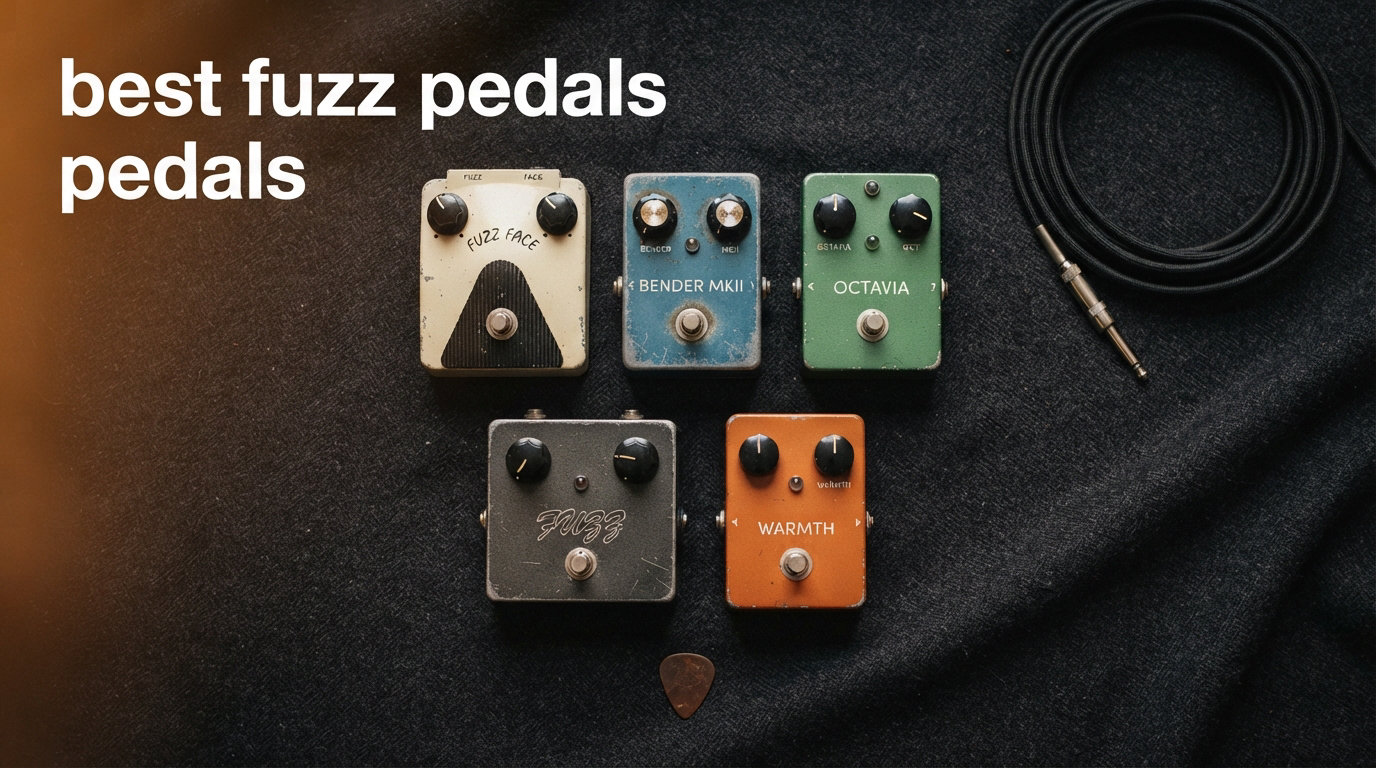
Few guitar effects carry the weight of a great fuzz pedal. From Jimi Hendrix’s saturated leads at Woodstock to the wall-of-sound textures of shoegaze and doom, fuzz has shaped the sound of modern music for over six decades. Whether you are chasing a vintage germanium growl, a crushing Big Muff wall of sustain, or an experimental octave-up splat, the right fuzz pedal transforms your tone into something unmistakable.
Finding the best fuzz pedals means understanding what separates a great one from a mediocre one. Our team spent months testing 10 of the most popular fuzz pedals on the market, running them through single-coil Stratocasters, humbucker, clean amps, and dirty amps. We paid attention to sustain, clean-up with the guitar volume knob, signal chain placement, and how each pedal responded to different playing styles.
This guide covers everything from budget-friendly options under $35 to premium Waza Craft builds. We tested silicon fuzz, vintage-style circuits, octave fuzz modes, and gated fuzz sounds. Whether you play blues, classic rock, stoner doom, or noise rock, you will find a recommendation that fits your rig. We also included a buying guide covering transistor types, circuit categories, signal chain placement, and fuzz-plus-overdrive stacking so you can make an informed decision.
Top 3 Picks for Best Fuzz Pedals
If you want the short version, here are our three favorites after extensive testing. These cover the three categories most guitar players care about: best overall, best value, and best budget pick.
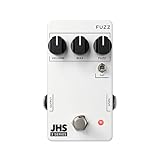
JHS Pedals 3 Series Fuzz
- Vintage-modern balance
- Bias knob for gated tones
- Fat toggle bass boost
Best Fuzz Pedals in 2026: Full Comparison
Below is our complete comparison table of all 10 fuzz pedals we tested. Use it to compare features, then scroll down for the full review of each one.
| Product | Specifications | Action |
|---|---|---|
| JHS Pedals 3 Series Fuzz |
|
Check Latest Price |
 Electro-Harmonix Big Muff Pi Electro-Harmonix Big Muff Pi |
|
Check Latest Price |
 EHX Green Russian Big Muff EHX Green Russian Big Muff |
|
Check Latest Price |
 TC Electronic Honey Pot Fuzz TC Electronic Honey Pot Fuzz |
|
Check Latest Price |
 Fender Hammertone Fuzz Fender Hammertone Fuzz |
|
Check Latest Price |
 Behringer Super Fuzz SF300 Behringer Super Fuzz SF300 |
|
Check Latest Price |
 Donner Fuzz Guitar Pedal Donner Fuzz Guitar Pedal |
|
Check Latest Price |
 BOSS FZ-1W Waza Craft Fuzz BOSS FZ-1W Waza Craft Fuzz |
|
Check Latest Price |
 Dunlop Band of Gypsys Fuzz Face Mini Dunlop Band of Gypsys Fuzz Face Mini |
|
Check Latest Price |
 Electro-Harmonix Nano Big Muff Pi Electro-Harmonix Nano Big Muff Pi |
|
Check Latest Price |
1. JHS Pedals 3 Series Fuzz – Best Overall Fuzz
JHS Pedals 3 Series Fuzz
Bias knob for gated fuzz
Fat toggle for bass boost
9V DC 9mA
Built in Kansas City
Pros
- Perfect vintage-modern balance
- Bias knob adds gated sounds
- Fat toggle boosts bass
- Fuzz knob usable across entire sweep
- Made in USA with 4-year warranty
Cons
- No dedicated tone knob
- Single fuzz flavor
I plugged the JHS 3 Series Fuzz into my signal chain expecting a straightforward fuzz, and what I got was one of the most musical dirt pedals I have played through in years. The Bias knob is the standout feature here. Roll it back and you get that splatty, gated, almost dying-battery fuzz sound that stoner rock and garage blues players love. Push it forward and the gate opens up into smooth, sustaining fuzz that cleans up beautifully with your guitar volume knob.
The Fat toggle is simple but effective. Engage it and the low end thickens noticeably without getting muddy. I found myself leaving it on most of the time with humbuckers, and toggling it off when playing single-coils through a brighter amp. The Fuzz knob is genuinely usable across its entire sweep, which is rare. Most fuzz pedals have a sweet spot between 60 and 80 percent. With the JHS, even low settings produce useful overdrive-like grit.
Josh Scott and the JHS team built this pedal to cover the widest possible range of fuzz tones in a single enclosure. After testing it against pedals costing twice as much, I can confirm it holds its own. The build quality is excellent, the true bypass is clean, and the 4-year warranty gives real peace of mind for gigging musicians.

From a technical standpoint, the 3 Series Fuzz uses a hybrid circuit design that blends characteristics of several classic fuzz topologies. The silicon transistor core provides consistency that germanium pedals cannot match. You will not experience the temperature drift that plagues vintage-style germanium fuzz, which means your tone stays stable from soundcheck to the last song of the night.
The pedal draws only 9mA, making it easy on your power supply. I ran it alongside five other pedals on a single 9V isolated supply with zero noise issues. The 1/4-inch jacks feel solid, and the knobs have a satisfying resistance that prevents accidental adjustments when you stomp near them.

Who This Pedal Is Perfect For
If you want one fuzz pedal that can cover blues, classic rock, garage rock, and even dip into stoner territory, this is it. The Bias control alone makes it worth the investment because it effectively gives you multiple fuzz pedals in one box. Players who rely on volume knob clean-up will love how responsive this circuit is.
It is also the best first fuzz pedal on this list. At its price point, you get American-made build quality, a real warranty, and enough tonal range to figure out what kind of fuzz player you are before investing in more specialized circuits.
Where It Falls Short
The lack of a dedicated tone knob is the main drawback. Your EQ shaping is limited to the Fat toggle and whatever your amp and guitar controls offer. Players looking for a specific scooped-mid Big Muff sound or a particular Fuzz Face character may find the 3 Series too generalist. It does one thing very well, but it does not clone any single vintage circuit.
If you need a pedal that nails one iconic sound perfectly, you may want something more specialized. But if versatility is your priority, this is hard to beat.
2. Electro-Harmonix Big Muff Pi – The Legend
Electro-Harmonix Big Muff Pi Guitar Effects Pedal
Original Big Muff circuit
Sustain, Tone, Volume
True bypass
9V battery included
Pros
- Iconic singing sustain
- Crushing distortion
- Adjustable tone control
- True bypass operation
- Pick attack preserved at high gain
- Musical and full-sounding
Cons
- Not for heavy metal scooped tones
- Limited versatility beyond classic fuzz
- Large enclosure
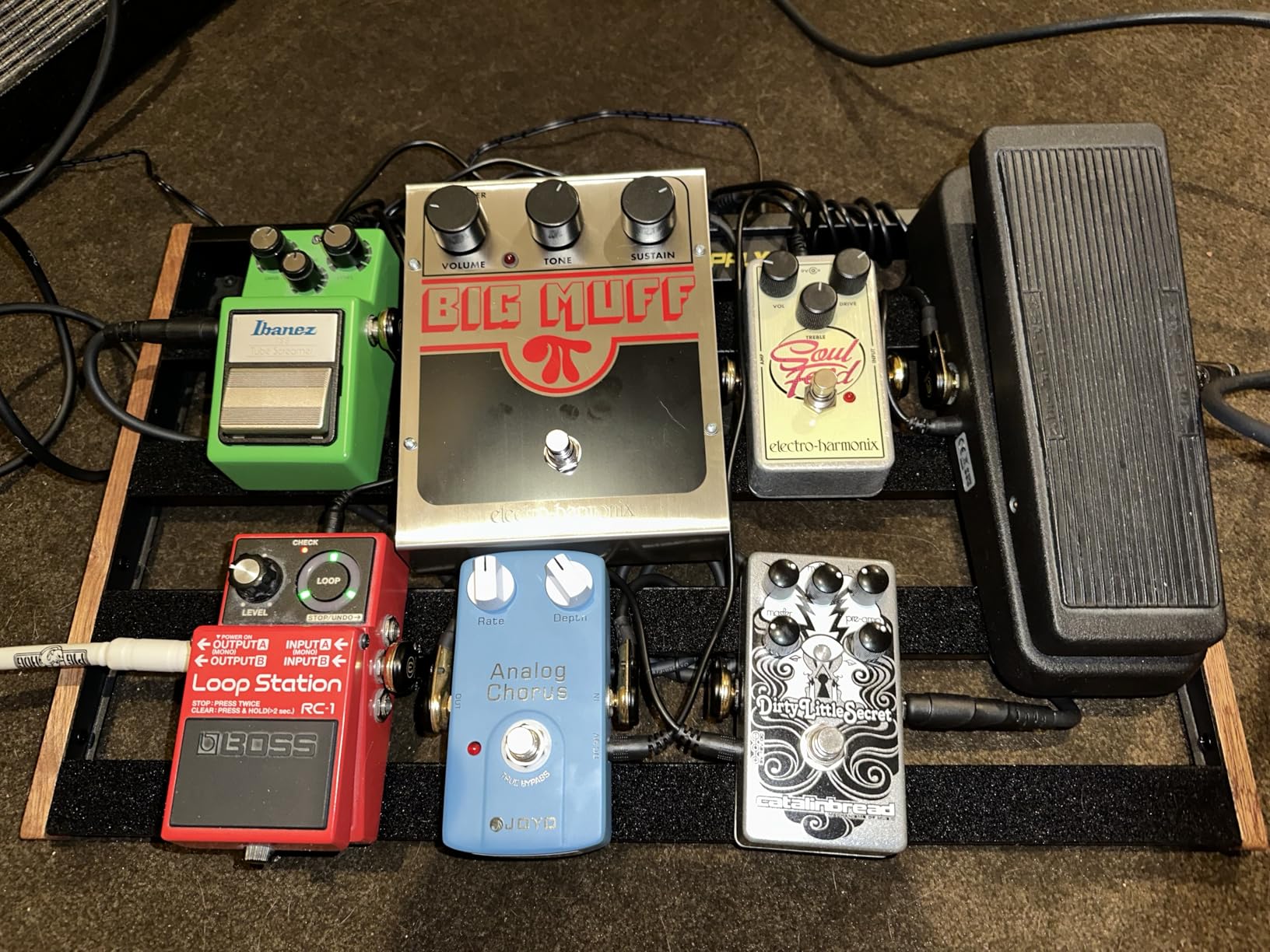
The Electro-Harmonix Big Muff Pi is the fuzz pedal against which all others are measured. When I first plugged this in, I instantly recognized the sound that defined records from Hendrix to Smashing Pumpkins to David Gilmour. The sustain on this thing is legendary. Hit a chord, let it ring, and the note seems to hang in the air forever with a smooth, singing quality that only a Big Muff produces.
What surprised me during testing was how musical this pedal remains even at maximum gain settings. Many high-gain fuzz pedals turn to mush when you push them, losing all pick attack and note definition. The Big Muff Pi keeps your articulation intact. You can play complex chords and every note rings through clearly. That is why it has been the go-to fuzz for lead players for over five decades.
The three controls are simple but effective. Volume sets your output level, Sustain controls the gain and compression, and Tone rolls between darker and brighter voicings. I found the Tone knob particularly useful for dialing in the right midrange character for different amps. Into a clean Fender, I preferred it slightly brighter. Into a darker tube amp, the middle position worked best.
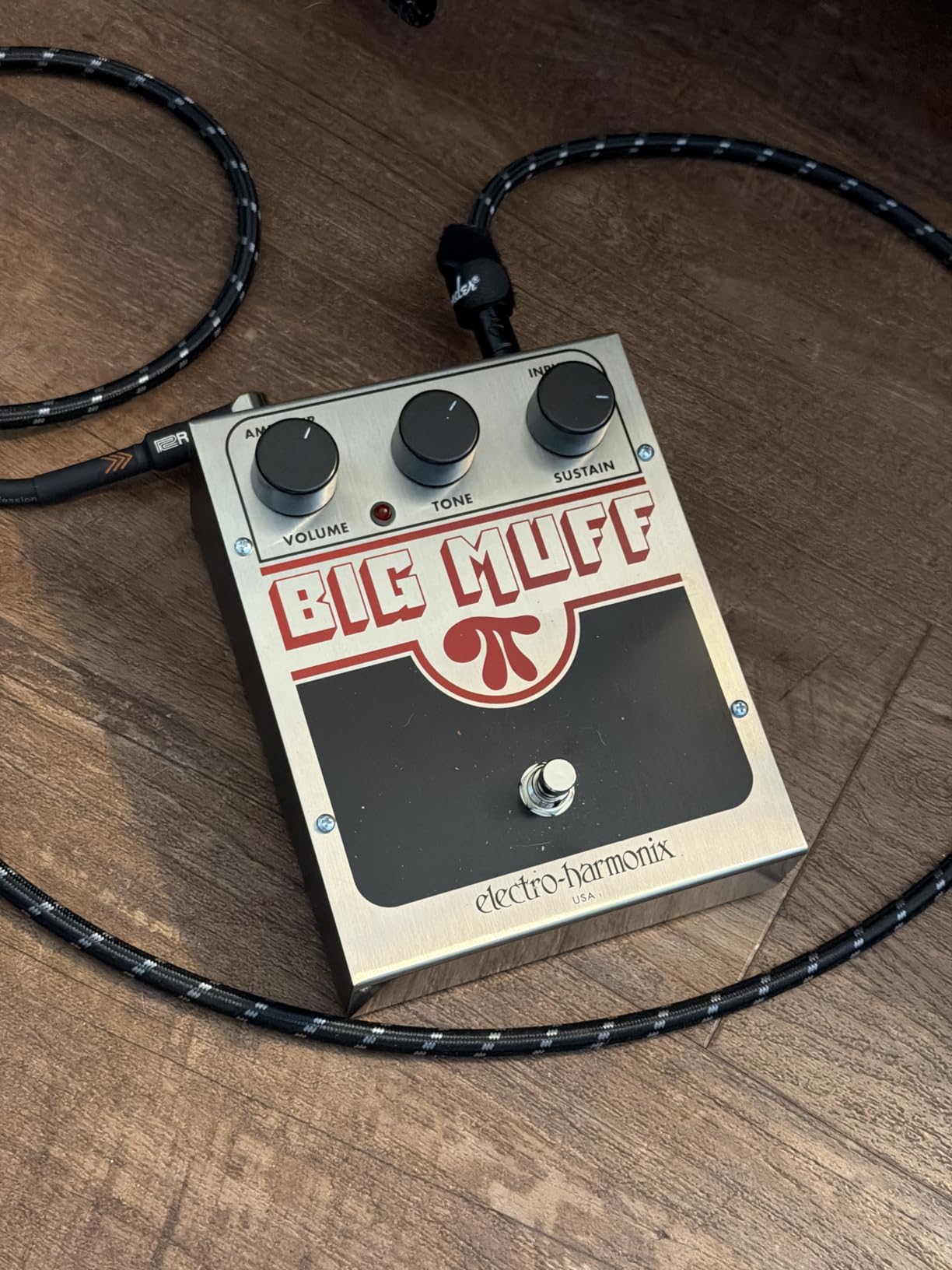
This is the original USA-made Big Muff circuit, not a reissue or a variant. It uses the classic op-amp design that produces the scooped midrange sound most people associate with the Big Muff name. The true bypass switching ensures your clean tone stays pristine when the pedal is off, which matters if you run long signal chains.
The enclosure is large, and that is worth noting for pedalboard space planning. This is the full-size Big Muff, not the Nano or the nano-style compact versions. It comes with a 9V battery included, which is a nice touch, and also accepts standard 9V DC power supply input. The build feels like it could survive being thrown across a stage.
Best Genres and Artist Associations
This pedal is the sound of 60s and 70s hard rock, Pink Floyd walls of sound, and 90s alternative. If you play Gilmour solos, Smashing Pumpkins riffs, or Jack White-style garage blues, this is your baseline reference. It excels at sustained lead lines and thick, atmospheric chord work.
It is not the right choice if you need tight, modern metal chugging. The scooped mids and saturated sustain work against the precision that metal requires. For that, a distortion pedal would serve you better.
How It Handles Volume Knob Clean-Up
The Big Muff Pi does not clean up as dramatically as a Fuzz Face when you roll back your guitar volume. It goes from full fuzz to a slightly dirty overdrive rather than achieving true clean tone. If volume knob clean-up is critical to your playing style, consider pairing this with a lower-gain setting or look at the Fuzz Face options on this list.
3. Electro-Harmonix Green Russian Big Muff Pi – Best for Bass and Doom
Electro-Harmonix Green Russian Big Muff Pi Fuzz Pedal
Vintage Russian circuit
Tone, Sustain, Volume
Compact EHX nano size
Bass and guitar friendly
Pros
- Massive low end
- Versatile and musical
- Volume cleanup better than standard Muff
- Compact enclosure
- Works great on bass guitar
- Black Keys blues tones
Cons
- Too much bass for some rigs
- Single voicing
The Green Russian Big Muff Pi is the darker, heavier cousin of the standard Big Muff. When I first engaged this pedal, the difference was immediately obvious. The low end is enormous. This is the fuzz that stoner rock, doom metal, and bass players have gravitated toward for decades. It sounds thicker and darker than the standard Big Muff, with a growl that sits perfectly under heavy riffing.
I tested this with both guitar and bass, and the results were impressive on both. On guitar through a clean amp, it produced thick Neil Young and Crazy Horse style tones with the sustain knob around noon. Crank the sustain and you get ferocious fuzz that handles drop tunings without losing definition. On bass, it added grind and saturation without destroying the fundamental low frequencies.
The volume knob clean-up is better than the standard Big Muff Pi. Roll back your guitar volume to about 5 and you get a usable crunch tone. It is not as responsive as a Fuzz Face in this regard, but it is noticeably more flexible than the original circuit.
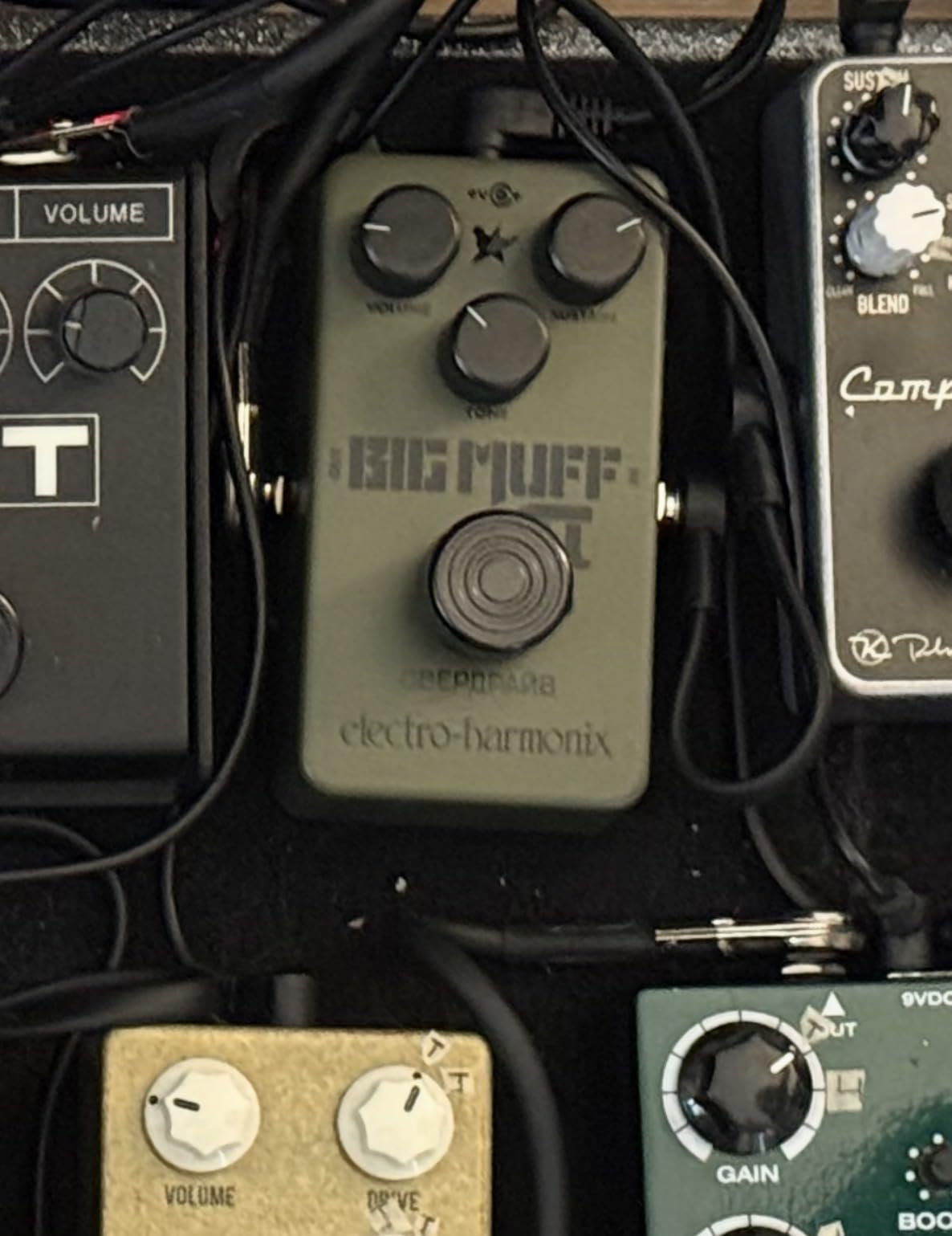
The compact nano-style enclosure is a welcome change from the full-size Big Muff box. It fits easily on a pedalboard alongside other effects. The vintage-correct army green chassis looks fantastic and feels solid. Electro-Harmonix includes a 9V battery, and the pedal also accepts standard center-negative DC power.
One thing to watch for is the bass response. If you are already playing through a dark-sounding amp with humbuckers, the Green Russian can overwhelm the low end. I found myself rolling the tone knob back toward the darker side to compensate when using it with a bright Fender amp, and pushing it brighter with a darker Marshall-style amp. Experiment with your specific rig.
Best Use Cases for the Green Russian
This is the pedal for stoner rock, doom metal, sludge, and heavy blues. If you play in drop tunings or use baritone guitars, the massive low end of this circuit handles low frequencies better than almost any other fuzz on this list. Bass players looking to add grit to their tone will also find this indispensable.
What to Watch Out For
The single biggest consideration is that the Green Russian has one voicing. There is no mode switching or multi-voice capability. You get the Russian Muff sound, and that is it. If that sound fits your music, you will love it. If you need versatility across multiple genres, consider pairing it with another fuzz or looking at the JHS 3 Series instead.
4. TC Electronic Honey Pot Fuzz – Best Value Fuzz
TC Electronic HONEY POT FUZZ Vintage-Flavored Fuzz Pedal with Massive Wall of Tones and Miles of Sustain
Big Muff style circuit
True bypass
Metal chassis
Compact footprint
Pros
- Smooth creamy fuzz tone
- Excellent sustain
- True bypass
- Metal tank build
- Works on bass guitar
- Quiet operation
- Incredible value
Cons
- Not a splatty untamed fuzz
- Can get muddy at high gain and volume
The TC Electronic Honey Pot Fuzz is the pedal that made me question why anyone would pay three times as much for a Big Muff. This thing delivers smooth, creamy fuzz with near-endless sustain at a price that leaves room in your budget for other pedals. I A/B tested it against the Electro-Harmonix Big Muff Pi and the tonal character is remarkably similar, with the Honey Pot being slightly darker and warmer.
The fuzz tone here is thick and wall-of-sound oriented rather than spitty and aggressive. If you want David Gilmour-style sustaining leads or thick shoegaze textures, the Honey Pot nails that sound. The gain control offers plenty of range, and the tone knob is actually useful for dialing in the right amount of brightness for your amp.
I was impressed by how quiet this pedal is. Many budget fuzz pedals introduce hiss and noise at high gain settings. The Honey Pot stays remarkably clean. The true bypass switching means your tone passes through unaffected when the pedal is disengaged.
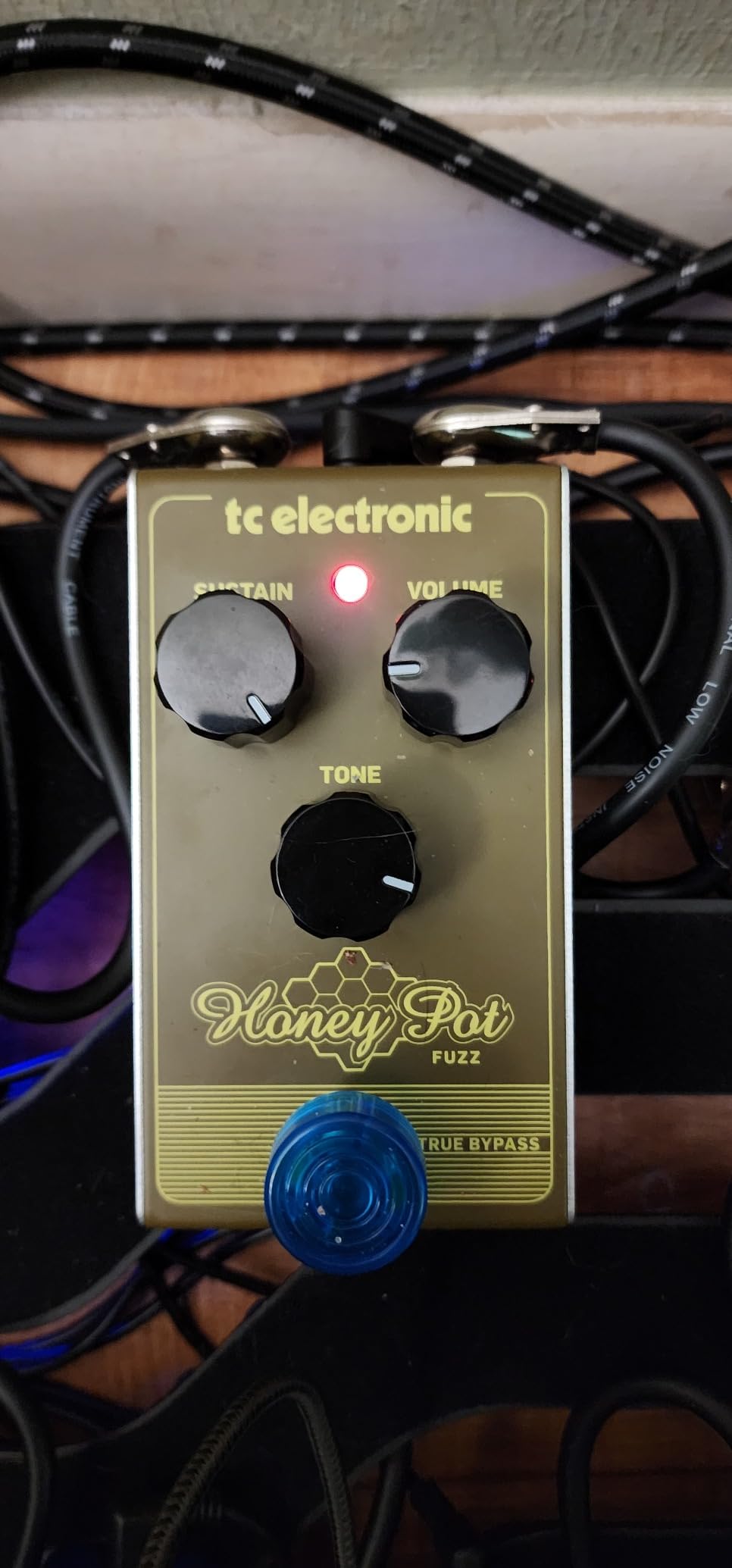
The metal chassis feels built like a tank, which is surprising at this price point. TC Electronic did not cut corners on the enclosure or the switching mechanism. The compact footprint means it takes up minimal pedalboard real estate. I was able to fit it into a tight spot on my board where a full-size Big Muff would never go.
I also tested this on bass guitar and the results were solid. The low end stays defined even with the gain pushed, making it a viable option for bass players who want fuzz without losing their fundamental tone. It is not as bass-optimized as the Green Russian, but at this price, it is hard to complain.
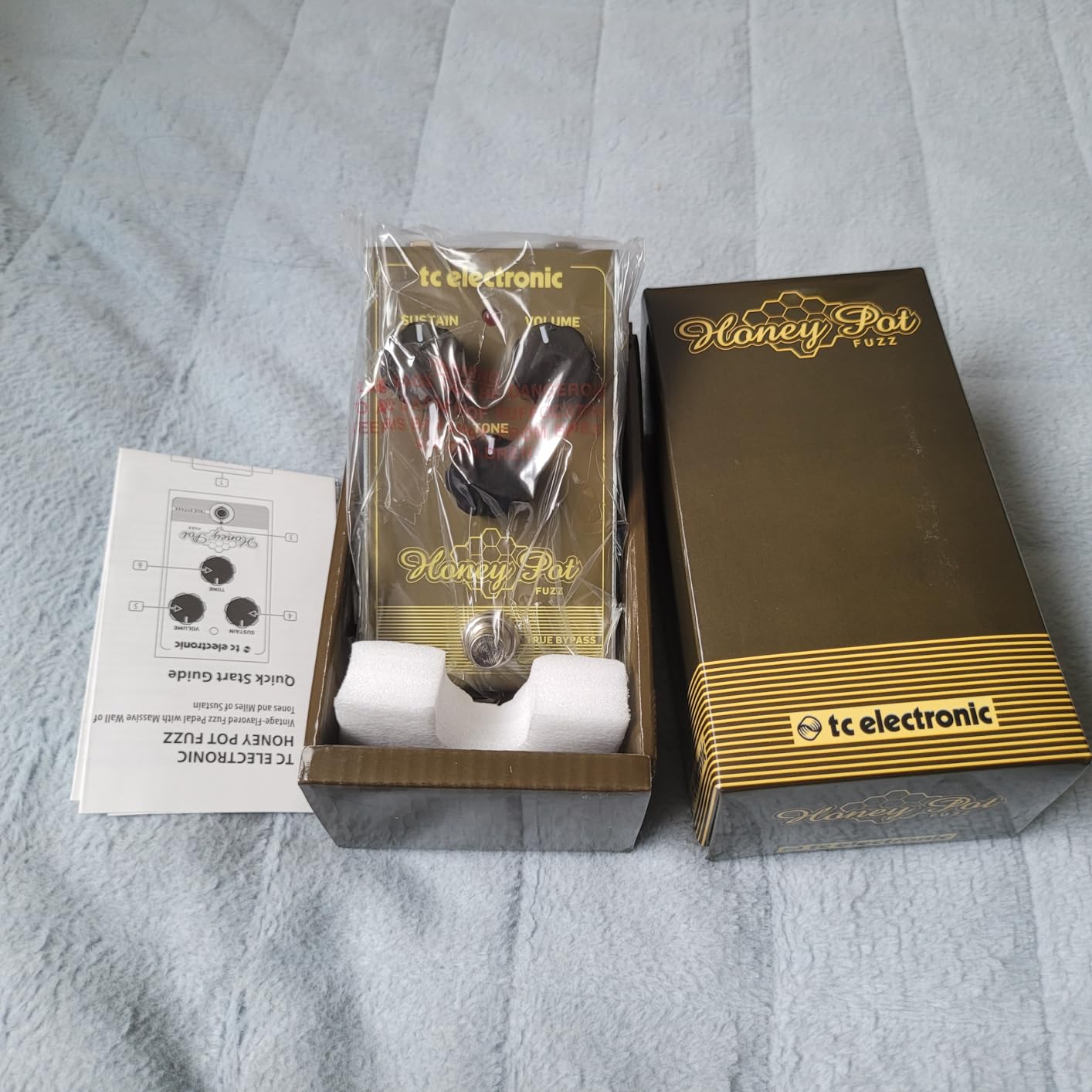
Best Budget Fuzz for Recording and Practice
If you are building a home studio or practice rig and want professional-quality fuzz tones without spending a fortune, this is the pedal. It handles recording beautifully, sitting well in a mix without needing excessive EQ correction. For live use, the metal build and true bypass give you the reliability you need.
Limitations to Consider
The Honey Pot is not the right choice if you want gated, splatty, or aggressive fuzz sounds. It is smooth and creamy by design. Push the gain too high at stage volume and it can get slightly muddy. For more aggressive textures, look at the Behringer SF300 or the JHS 3 Series with its Bias control.
5. Fender Hammertone Fuzz – Best Vintage-Style Fuzz
Fender Hammertone Fuzz Pedal, Guitar Accessories
Dual silicon diodes
Octave fuzz mode
True bypass
Internal trim pot for tone
Pros
- Vintage 60s and 70s Tone Bender style
- Dual silicon diodes with octave mode
- Dramatic character changes across gain range
- Solid build quality
- Good value for vintage tone
- Top-mounted jacks for pedalboards
Cons
- Not a heavy saturated fuzz
- Octave function is subtle
- Can sound dark out of the box
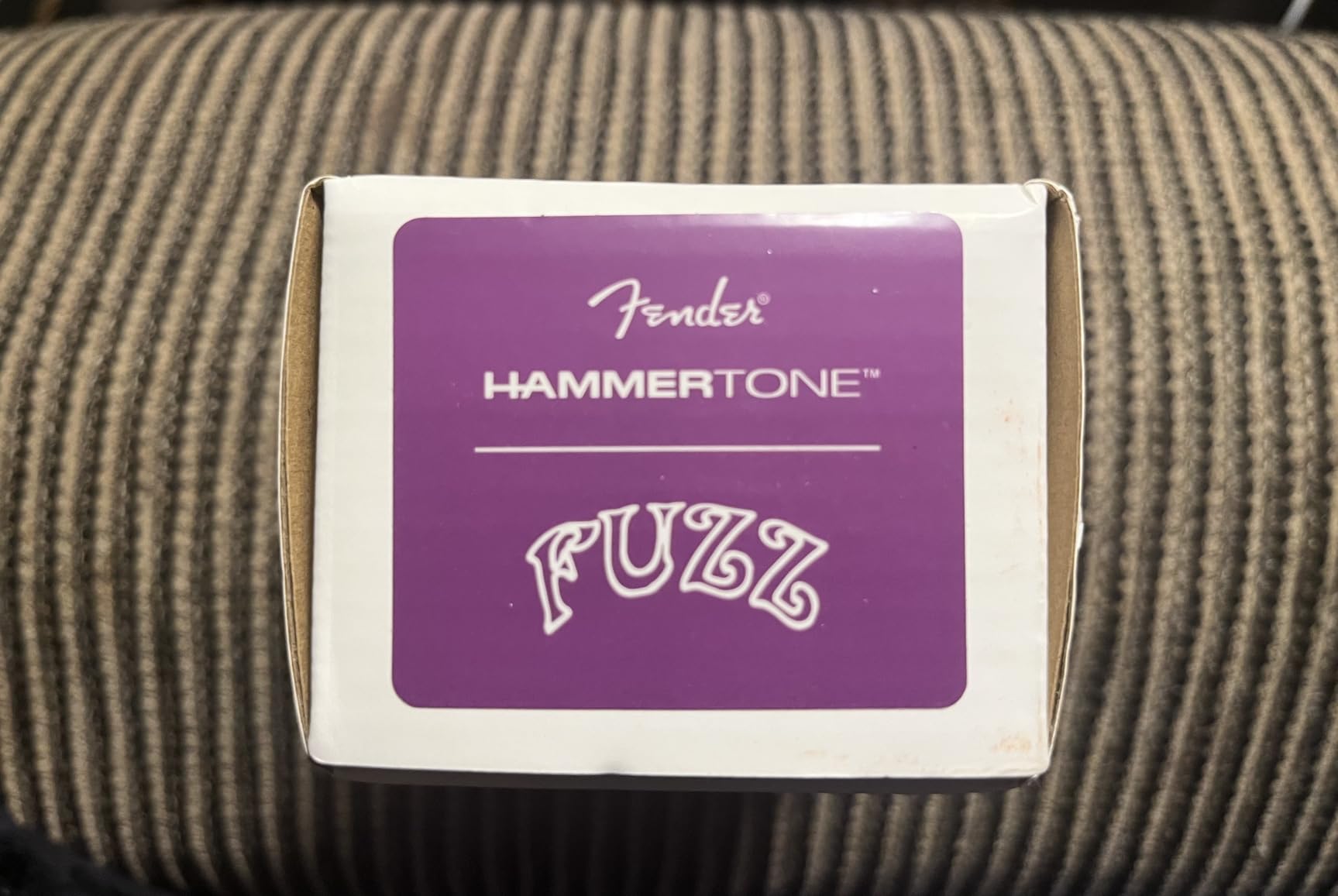
The Fender Hammertone Fuzz surprised me in the best way. I was not expecting a Fender-branded fuzz pedal to deliver such authentic vintage character, but this thing captures the splat and saturation of a classic Tone Bender or Fuzz Face circuit with impressive accuracy. If you are chasing 60s British invasion tones or early Hendrix fuzz sounds, this pedal gets you there without the boutique price tag.
The dual silicon diodes provide a brighter, more aggressive character than germanium circuits. What I love about this pedal is how dramatically the character changes depending on where you set the gain. At lower settings, you get a gritty overdrive that cleans up with your volume knob. Push the gain up and it transforms into a saturated, spatty fuzz with real attitude. The octave fuzz mode adds an upper-octave harmonic that is subtle rather than pronounced, which I actually prefer for musical applications.
The internal trim pot is a thoughtful addition. Out of the box, the Hammertone can sound a bit dark depending on your guitar and amp combination. Pop open the back, adjust the trim pot, and you can fine-tune the overall brightness to match your rig. This is the kind of feature usually reserved for pedals costing twice as much.
The top-mounted input and output jacks make this pedal extremely pedalboard-friendly. The true bypass footswitch is quiet and reliable. Fender included battery power capability alongside standard 9V DC input, giving you flexibility for different power situations.
In terms of where this sits in the fuzz landscape, it is not trying to be a Big Muff. It will not give you that singing, sustained wall of sound. Instead, it delivers the more aggressive, responsive, touch-sensitive fuzz sound associated with vintage Tone Bender and Fuzz Face circuits. Think Rolling Stones satisfaction, Beck-era Yardbirds, and early Zeppelin.
Best Guitars and Amps to Pair With
The Hammertone shines with single-coil pickups through a slightly driven tube amp. Stratocaster and Telecaster players will find the vintage character immediately familiar. With humbuckers, it gets thicker and more saturated, approaching classic rock lead tones. The internal trim pot lets you dial in the perfect brightness for whatever guitar and amp combination you use.
What It Does Not Do Well
If you need modern high-gain saturation, scooped mids, or the smooth sustaining lead sound of a Big Muff, this is not the right pedal. The octave mode is subtle, which may disappoint players looking for a prominent octave-up effect. For a dedicated octave fuzz, consider a pedal built specifically for that purpose.
6. Behringer Super Fuzz SF300 – Best Budget Fuzz
Behringer Super Fuzz Sf300 3-Mode Fuzz Distortion Effects Pedal
3 fuzz modes
Gain, 2-band EQ, Level
Classic fuzz, grunge, boost
9V battery or DC
Pros
- Recreates 60s and 70s Super Fuzz tones
- 3 versatile sound modes
- Fuzz 2 mode is perfect for stoner doom
- Powerful bass boost feature
- 2-band EQ for tone shaping
- Incredible value at under 30 dollars
Cons
- Plastic enclosure not tour-ready
- Not true bypass
- Battery replacement is cumbersome
The Behringer Super Fuzz SF300 is the pedal that proves you do not need to spend a fortune to get great fuzz tones. When I first plugged this in, I was genuinely shocked by how good it sounds. The SF300 is based on the legendary Univox Super Fuzz circuit, the same fuzz used by Pete Townshend and countless stoner rock bands. For the price of a couple of guitar cables, you get access to that iconic octave-up fuzz sound.
The three modes are what make this pedal special. Mode 1 is classic fuzz, which delivers a warm, balanced fuzz tone suitable for rhythm playing. Mode 2, labeled grunge, is where things get interesting. This is the thick, sludgy, octave-up fuzz that stoner doom and noise rock players love. Mode 3 is a clean boost, which is handy for pushing your amp or another pedal harder.
I spent most of my testing time in Mode 2, and it delivers the goods. The octave-up harmonic adds a distinctive upper register shimmer that cuts through any mix. The bass boost feature, accessible via a toggle switch, adds serious low-end wallop. Combined with the 2-band EQ, you have more tone-shaping control than most fuzz pedals at any price offer.
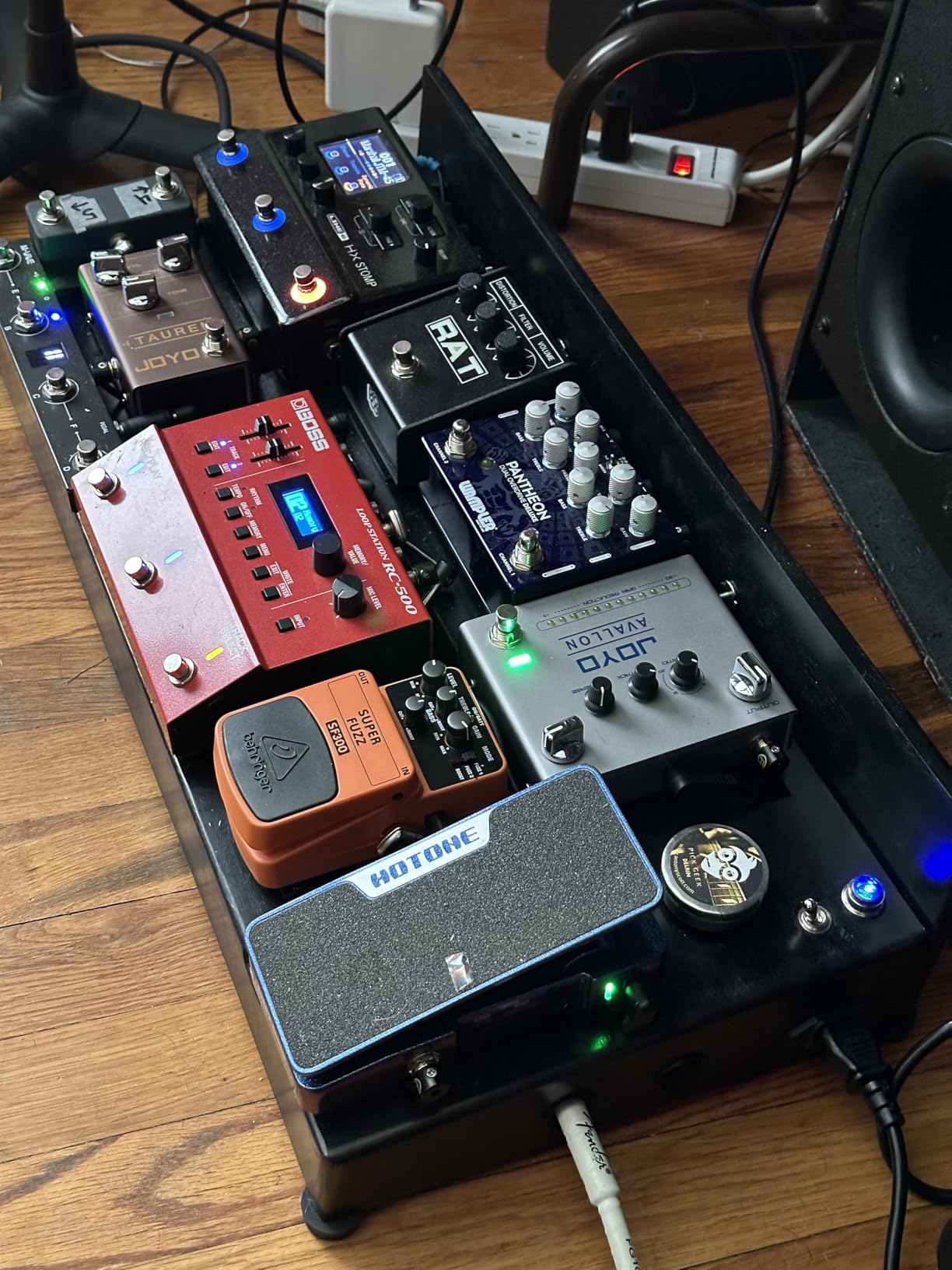
With nearly 3,800 customer reviews on Amazon, this is one of the most popular fuzz pedals ever made. The community consensus is clear: the SF300 punches far above its weight class. Forum discussions on r/guitarpedals frequently recommend this as the best first fuzz pedal for players on a budget.
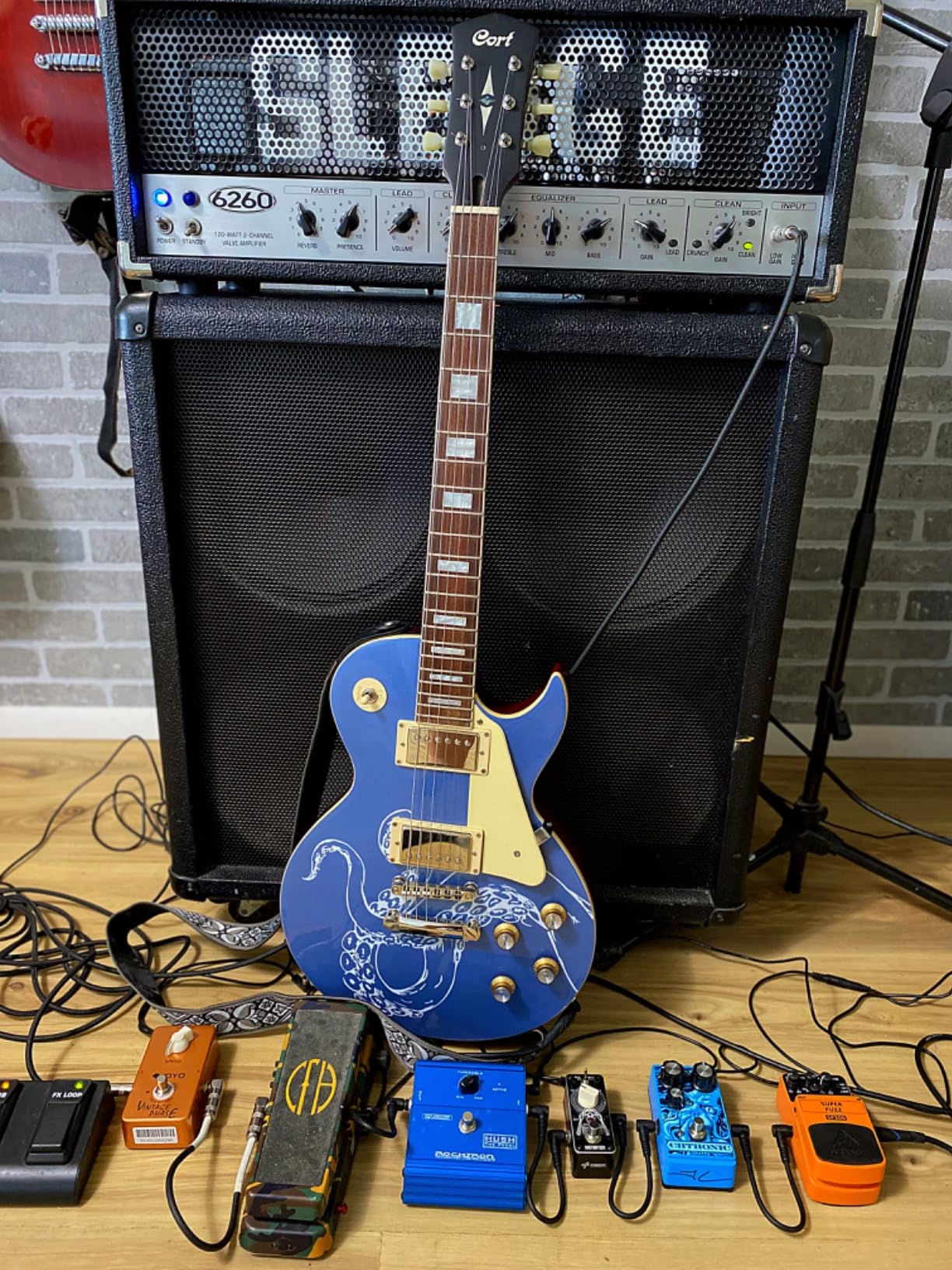
The main compromises are the plastic enclosure and the lack of true bypass. The plastic housing will not survive the kind of abuse that a metal-bodied pedal can take, so this is better suited for home, studio, and light gigging use. The buffered bypass can introduce slight tone coloring in long signal chains, though I did not find it problematic in my testing.
Best Applications for the SF300
This pedal is ideal for stoner rock, doom metal, grunge, noise rock, and any genre that benefits from thick, aggressive fuzz with octave harmonics. It is also an excellent choice for bass guitar in Mode 2, where the octave-up effect adds clarity and definition to low-end fuzz tones. For under $30, it is the best entry point into fuzz that exists on the market.
Build Quality and Long-Term Reliability
The plastic enclosure is the obvious weakness. If you tour heavily or are rough on your gear, consider the fact that this pedal may not survive being stepped on aggressively night after night. For home players and studio use, this is a non-issue. The electronics inside are solid, and the pedal should last years with reasonable care.
7. Donner Fuzz Guitar Pedal – Best Compact Fuzz
Donner Fuzz Guitar Pedal – Classic Stylish Fuzz Mini Effect Pedal for Electric Guitar/Bass, True Bypass
4 control knobs: Bass, Treble, Level, Vol
True bypass
Compact metal case
9V DC
Pros
- Excellent value for the price
- 4 dedicated EQ and level controls
- True bypass design
- Compact metal casing
- Works with guitar and bass
Cons
- May not suit professional recording or gigging
- Single fuzz character
The Donner Fuzz Pedal is a compact, no-frills fuzz that delivers solid classic fuzz tones at a price that is hard to argue with. I was initially skeptical given the low cost, but after running it through my test rig, I came away impressed by the build quality and the range of tones available through the four-control layout.
Having dedicated Bass and Treble controls on a fuzz pedal at this price point is unusual and welcome. Most budget fuzz pedals give you a single tone knob at best. The Donner lets you shape your EQ with real precision, which matters because fuzz pedals interact differently with every guitar and amp combination. I was able to dial in a tight, cutting tone for single-coils and a thicker, warmer sound for humbuckers using the same pedal.
The Level and Volume controls give you independent control over the fuzz intensity and the output level. This is a useful feature that more expensive pedals sometimes omit. The true bypass switching ensures your clean tone passes through unaffected when the pedal is off.
The compact metal casing feels durable and well-constructed. At just 3.7 by 1.7 by 2 inches, this is one of the smallest fuzz pedals on the market. It fits into the tightest pedalboard configurations. The purple finish is distinctive without being garish.
Best Use Cases for the Donner Fuzz
This pedal is ideal for beginners, home recordists, and practice rigs. The four-control layout gives you enough flexibility to experiment with different fuzz tones and figure out what works for your playing style. Some users note it may not be ideal for professional recording or gigging, but for the vast majority of players, it delivers more than enough quality and character.
How It Compares to Other Budget Options
Against the Behringer SF300, the Donner offers a different flavor of fuzz. The Behringer has the octave-up Super Fuzz character and three modes, while the Donner delivers a more traditional fuzz tone with superior EQ control. The Donner’s metal enclosure also gives it an edge in durability over the Behringer’s plastic housing. Both are excellent budget choices depending on the sound you are after.
8. BOSS FZ-1W Waza Craft Fuzz – Best Premium Fuzz
BOSS FZ-1w FUZZ –Distortion Effects Pedal. All-Analog Premium Waza Craft Pedal for the Ultimate BOSS Tone Experience. Vintage and Modern Modes. For Guitar and Other Instruments.
Vintage and Modern modes
Silicon transistor circuit
Waza Craft premium build
5-year warranty
Pros
- Touch sensitive and extremely quiet
- Excellent chord clarity
- Works anywhere in signal chain
- Great for stacking with other pedals
- Dynamic volume knob response
- Vintage and Modern modes
- 5-year BOSS warranty
Cons
- Not a traditional fuzz clone
- Muffled with dirty amps
- Limited gain at lower settings
The BOSS FZ-1W Waza Craft Fuzz is the most refined fuzz pedal I have ever played through. BOSS took their Waza Craft approach, which means hand-selected components and premium construction, and applied it to a fuzz circuit that is entirely their own design. This is not a Fuzz Face clone, a Big Muff copy, or a Tone Bender reproduction. It is a reinvented fuzz that solves the problems traditional fuzz pedals have been dealing with for decades.
The first thing I noticed was how quiet this pedal is. Fuzz pedals are notoriously noisy, especially at high gain settings. The FZ-1W has an exceptionally low noise floor. I was able to run it at maximum gain through a clean amp without the hiss that plagues most other fuzz circuits. The touch sensitivity is equally impressive. Every nuance of your picking dynamics translates through the pedal.
The Vintage mode delivers a retro fuzz character with aggressive bite and extreme sensitivity to input volume changes. Roll back your guitar volume and the fuzz cleans up beautifully, rivaling the best Fuzz Face circuits I have played. The Modern mode shifts to a fatter, more mid-focused sound that works across a wider range of musical styles. The Tone knob is tuned separately for each mode, which is a thoughtful detail.
One of the most significant advantages of the FZ-1W is that it works anywhere in your signal chain. Traditional fuzz pedals are notoriously picky about placement, often needing to be first in the chain and struggling with buffered bypass pedals before them. The BOSS handles whatever you throw at it. I tested it before and after buffers, overdrives, and modulation pedals with consistent results.
Best Applications for the Waza Craft Fuzz
This pedal is ideal for players who want premium fuzz tone without the headaches of vintage-style circuits. If you have a complex pedalboard with multiple buffers and other effects, the FZ-1W integrates seamlessly. It is also a fantastic stacking pedal. Place an overdrive in front of it and the two blend together musically in a way that few fuzz pedals manage.
Is the Premium Price Worth It?
The FZ-1W is not cheap, but you are paying for build quality, consistency, and the kind of engineering that solves real problems. The silicon transistor circuit means you never deal with temperature drift. The 5-year BOSS warranty is the best in the business. If you are a working musician who needs reliability night after night, this is an investment that pays off.
9. Dunlop Band of Gypsys Fuzz Face Mini – Best Hendrix Tone
Dunlop Band of Gypsys Fuzz Face Mini
Band of Gypsys Octavio circuit
Fuzz and Volume controls
Mini pedalboard size
Silicon transistor
Pros
- Authentic Hendrix Woodstock era tone
- Great fuzz and volume control range
- Musical volume knob interaction
- Combines smooth and biting fuzz
- Cuts through the mix
- Mini size is pedalboard-friendly
Cons
- Cleanup not as pristine as germanium versions
- More aggressive than FFM3
- Some prefer full-size Fuzz Face
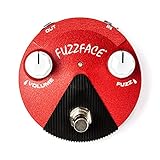
The Dunlop Band of Gypsys Fuzz Face Mini is the closest you can get to Jimi Hendrix’s live fuzz tone without buying a vintage pedal. Based on the Octavio circuit without the octave-up signal, this pedal captures the elusive sound Hendrix used at Woodstock, Berkeley, and the Fillmore East. When I engaged this pedal for the first time, the hair on the back of my neck stood up. It sounds exactly like you think it should.
The Fuzz Face circuit is legendary for its interaction with the guitar volume knob, and this mini version carries on that tradition. Roll your volume back to 6 or 7 and the fuzz cleans up to a slightly dirty, expressive tone. Push it to 10 and you get that full, saturated, singing sustain that defined Hendrix’s lead work. This dynamic response is what makes the Fuzz Face design so beloved, and Dunlop has nailed it here.
The mini enclosure is a practical improvement over the original full-size Fuzz Face. The circular Fuzz Face design looks iconic but is a nightmare for pedalboard planning. The mini version delivers the same sound in a rectangular enclosure that fits neatly alongside your other pedals. The on/off status LED is a welcome addition that the original lacked.
The Band of Gypsys voicing is distinct from other Fuzz Face variants. It combines smooth and biting fuzz characteristics in a way that cuts through a band mix exceptionally well. I found it particularly effective for lead work, where its midrange presence helps your solos soar above the rhythm section. The silicon transistors provide consistency and reliability that germanium versions cannot match.
Best Guitars and Signal Chain Placement
This pedal shines with single-coil pickups, especially Stratocasters. Place it first in your signal chain, directly after your guitar, for the best impedance interaction. The Fuzz Face circuit is designed to see the low-impedance output of your guitar pickups directly. Avoid placing buffered pedals before it, as buffers can alter the response in undesirable ways.
How It Compares to Other Fuzz Face Variants
Dunlop makes several Fuzz Face Mini models, each based on a different era of Hendrix’s tone. The Band of Gypsys version (FFM6) is more aggressive and cutting than the FFM3 germanium version, which is warmer and smoother. If you want the Woodstock and Band of Gypsys era sound specifically, this is the model to get. The cleanup is not quite as pristine as the germanium versions, but the trade-off is a more powerful, authoritative fuzz tone.
10. Electro-Harmonix Nano Big Muff Pi – Best Compact Big Muff
Electro-Harmonix Nano Big Muff Pi
Nano compact Big Muff
Sustain, Tone, Volume
True bypass
9V battery included
Pros
- Legendary Big Muff sound in nano size
- True bypass for signal integrity
- Battery included
- Excellent sustain
- Lighter bass than original sits better in mix
- Great for Gilmour-style tones
Cons
- Not Prime eligible
- Slightly less bass than full-size version
The Electro-Harmonix Nano Big Muff Pi takes the legendary Big Muff circuit and packages it in a pedalboard-friendly nano enclosure. I was curious whether the smaller size would compromise the sound, and the answer is a resounding no. This pedal delivers the same singing sustain and crushing distortion that made the Big Muff famous, just in a more manageable footprint.
What stood out during testing is that the Nano Big Muff has slightly less bass than the original full-size version. Far from being a drawback, this actually helps it sit better in a band mix. The original Big Muff can sometimes overwhelm the low end, especially alongside a bass player. The Nano’s slightly tighter low-mid focus means your fuzz tone cuts through without fighting for space with the bass guitar.
The three controls are identical to the full-size Big Muff: Volume, Sustain, and Tone. The Sustain control provides that characteristic compressed, almost infinite sustain that Big Muff players love. The Tone knob rolls between darker and brighter voicings, and I found it more useful than expected for matching different amp types. True bypass switching keeps your clean tone pristine when the pedal is off.
The inclusion of a 9V battery is a nice touch, and the pedal also accepts standard center-negative DC power. The nano enclosure means this pedal takes up about half the pedalboard space of the original Big Muff Pi, making it the practical choice for players with crowded boards.
Best Use Cases for the Nano Big Muff
This pedal is ideal for players who want the classic Big Muff sound but do not have room for the full-size enclosure. It is perfect for David Gilmour-style lead tones, shoegaze walls of sound, alternative rock rhythm work, and any genre that calls for thick, sustaining fuzz. The tighter low end compared to the original makes it particularly well-suited for live performance where mix clarity matters.
How It Differs From the Full-Size Big Muff Pi
The circuit is fundamentally the same, but the Nano has been voiced with slightly less bass response. This is a deliberate design choice that addresses one of the most common complaints about the original Big Muff, which is that it can be too boomy. The Nano version trades a small amount of low-end thunder for improved clarity and mix compatibility. For most players, this is an improvement rather than a compromise.
How to Choose the Best Fuzz Pedal: Buying Guide
Choosing the right fuzz pedal comes down to understanding three key things: the type of fuzz circuit, how it interacts with your guitar and amp, and where it fits in your signal chain. This buying guide walks through each of these factors so you can make an informed decision.
Transistor Types: Germanium vs Silicon vs Op-Amp
The transistor type is the single biggest factor in determining a fuzz pedal’s character. Germanium transistors produce warmer, smoother, more vintage-sounding fuzz. They are also temperature-sensitive, meaning your tone can shift as the pedal heats up during a gig. Silicon transistors produce brighter, more aggressive fuzz with consistent performance regardless of temperature. Op-amp circuits, like the Big Muff Pi, use integrated circuits instead of discrete transistors to create thick, saturated fuzz with long sustain.
Most modern players gravitate toward silicon and op-amp fuzz for their reliability. Germanium fuzz remains popular among tone purists who are willing to deal with its quirks for that unmistakable vintage sound. Some pedals, like the JHS 3 Series and the BOSS FZ-1W, use silicon transistors to approximate germanium character without the drawbacks.
Fuzz Circuit Categories
Understanding the three classic fuzz circuit families helps you narrow down your choice quickly. The Fuzz Face circuit is known for its touch sensitivity and volume knob clean-up. It is the sound of Hendrix and Eric Johnson. The Big Muff circuit delivers thick, sustaining fuzz with a scooped midrange. It is the sound of Gilmour, Smashing Pumpkins, and Jack White. The Tone Bender circuit offers aggressive, mid-forward fuzz that defined British invasion rock.
There are also specialized circuits like the Super Fuzz, which adds octave-up harmonics for a distinctive upper-register shimmer, and the Harmonic Percolator, which produces a unique gated, buzzy tone favored by noise rock and experimental players.
Signal Chain Placement
Fuzz pedals are sensitive to where they sit in your signal chain. Traditional Fuzz Face and Tone Bender circuits want to be first in the chain, directly connected to your guitar’s passive output. Placing a buffered pedal before them can alter the impedance relationship and change the fuzz character, often making it sound thinner or harsher.
Big Muff and op-amp fuzz circuits are more forgiving about placement. The BOSS FZ-1W is specifically designed to work anywhere in the signal chain, making it ideal for players with complex pedalboards. As a general rule, if your fuzz pedal sounds thin or harsh, try moving it earlier in the chain or removing any buffers that precede it.
Pickup Compatibility: Single-Coil vs Humbucker
Your guitar’s pickup type dramatically affects how a fuzz pedal sounds. Single-coil pickups, with their lower output and brighter character, tend to produce a clearer, more articulate fuzz tone. They pair beautifully with Fuzz Face and vintage-style circuits. Humbuckers, with their higher output and warmer character, push fuzz pedals harder and produce thicker, more saturated tones. They work well with Big Muff and modern high-gain fuzz circuits.
If you play both types of guitars, look for a fuzz pedal with flexible controls. The JHS 3 Series with its Bias and Fat controls, or the BOSS FZ-1W with its Vintage and Modern modes, can adapt to different pickup types more easily than single-voicing pedals.
Fuzz Plus Overdrive Stacking
One of the most common questions on guitar forums is how to stack a fuzz pedal with an overdrive. The general approach is to place the overdrive after the fuzz in the signal chain, using the overdrive to tighten and shape the fuzz tone. A Tube Screamer-style overdrive with its midrange hump and bass cut works particularly well for taming the boomy low end of Big Muff circuits.
Some players prefer to place a low-gain overdrive before the fuzz to push it harder. This works best with fuzz circuits that handle being hit harder gracefully, like the BOSS FZ-1W. Experiment with both approaches to find what works for your specific pedals and rig.
Bass Guitar and Fuzz
Not all fuzz pedals work well with bass guitar. Circuits that cut low frequencies, like some vintage Fuzz Face variants, can strip the fundamental bass tone. The Big Muff family, particularly the Green Russian variant, handles bass beautifully because it was designed with a strong low-end response. The TC Electronic Honey Pot and the Behringer SF300 also work well on bass, maintaining low-end definition even at high gain settings.
If bass fuzz is your primary goal, look for pedals specifically voiced for low frequencies or circuits known for their bass-friendly character.
Temperature Sensitivity and Reliability
Germanium fuzz pedals are notoriously sensitive to temperature changes. A pedal that sounds perfect at soundcheck may sound different two hours into a hot stage performance. This is a physical property of germanium transistors, not a defect. Silicon transistors and op-amp circuits do not have this problem, which is why most modern fuzz pedals use them.
If reliability is critical for your gigging situation, choose a silicon or op-amp fuzz. If you are a studio player or home enthusiast who can control the ambient temperature, germanium fuzz offers a unique warmth and character that silicon cannot fully replicate.
FAQs
Did Kurt Cobain use fuzz pedals?
Yes, Kurt Cobain used fuzz pedals, most notably the Boss DS-1 and the Electro-Harmonix Big Muff Pi. The Big Muff Pi was central to Nirvana’s thick, saturated guitar tone on albums like Nevermind and In Utero. Cobain used the Big Muff to create the wall-of-sound fuzz that defined the grunge era.
Does John Mayer use a fuzz pedal?
Yes, John Mayer uses fuzz pedals in his rig. He has been seen using various fuzz pedals including custom Fuzz Face style pedals. His fuzz tones are typically used for solos and specific tonal colors, often paired with his Three Kings-inspired blues tone.
What 5 pedals should every guitarist have?
The 5 pedals every guitarist should consider are a tuner pedal for accurate tuning, an overdrive or distortion pedal for your core dirt tone, a delay pedal for spatial effects, a reverb pedal for ambience, and a modulation pedal like chorus for depth. A fuzz pedal is an excellent sixth addition for players who want to explore saturated, sustaining tones.
What fuzz pedal did Jeff Beck use?
Jeff Beck used several fuzz pedals throughout his career, most notably the Dallas Arbiter Fuzz Face and various Tone Bender circuits. His fuzz tone on tracks like Beck’s Bolero helped define the sound of British blues rock in the late 1960s. He later incorporated Big Muff and other fuzz circuits into his evolving rig.
Where should a fuzz pedal go in the signal chain?
Most traditional fuzz pedals, especially Fuzz Face and Tone Bender circuits, should go first in the signal chain directly after the guitar. This is because they rely on the low-impedance interaction with your guitar pickups. Big Muff and op-amp fuzz circuits are more flexible. The BOSS FZ-1W is designed to work in any position.
Final Thoughts on the Best Fuzz Pedals for 2026
Fuzz is one of the most personal choices a guitar player makes. There is no single best fuzz pedal for everyone, but there is a best fuzz pedal for you. If you want versatility and American-made build quality, the JHS Pedals 3 Series Fuzz is our editor’s choice. If you want legendary tone on a budget, the TC Electronic Honey Pot Fuzz delivers Big Muff character at a fraction of the cost. And if you need maximum value, the Behringer Super Fuzz SF300 offers three modes of authentic fuzz for under $30.
The best fuzz pedals in 2026 cover the full spectrum from vintage warmth to modern aggression. Whether you play Hendrix-inspired blues, doom metal riffing, shoegaze soundscapes, or anything in between, the pedals on this list have been tested and proven to deliver. Consider your guitar, your amp, your genre, and your budget, and you will find the right fuzz for your rig.