
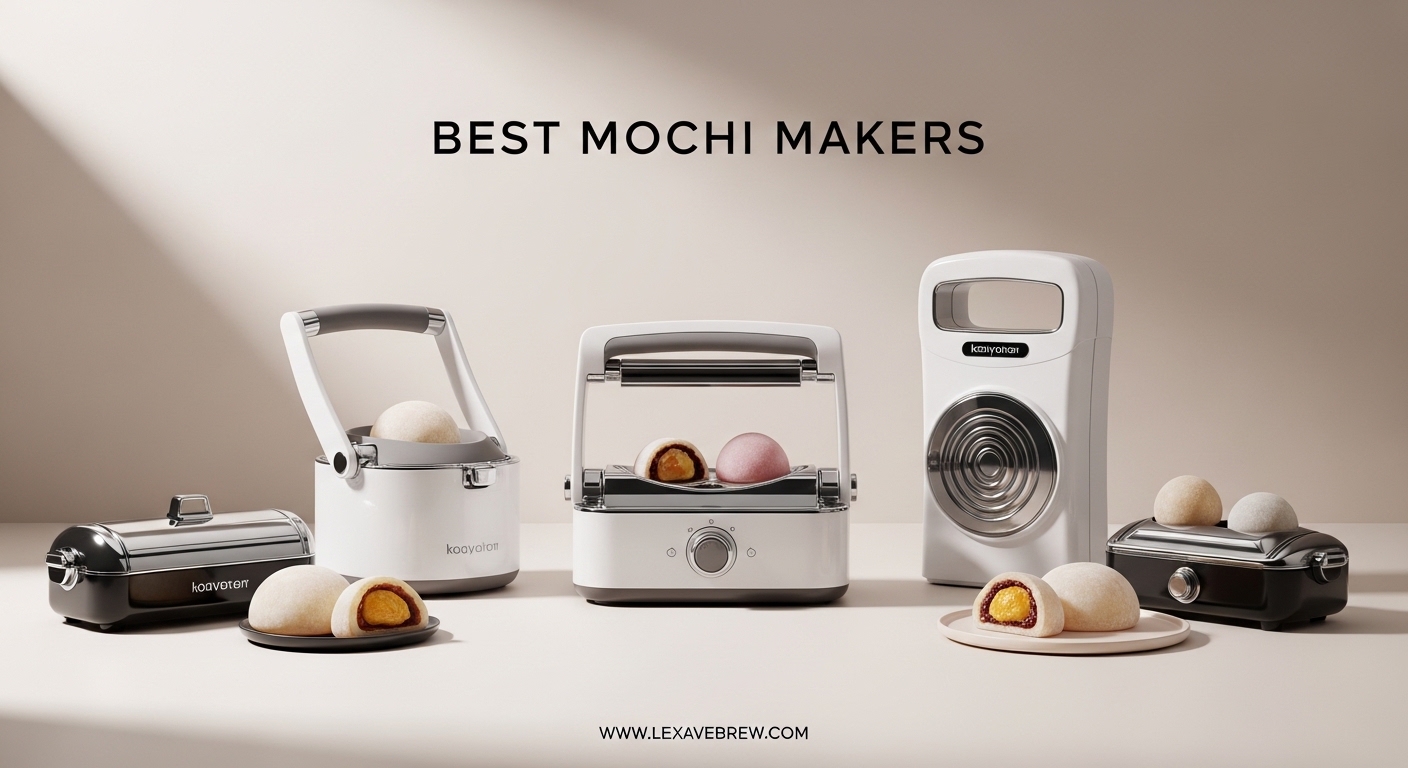
There is something magical about watching glutinous rice transform into silky, elastic mochi dough. I remember the first time I tasted fresh, homemade mochi at my neighbor’s New Year celebration – the chewy texture and subtle sweetness completely ruined store-bought versions for me forever. That day sparked my obsession with finding the best mochi makers for home use.
Mochi makers are specialized electric appliances that automate the traditional mochitsuki process. They steam sweet rice (mochigome) until tender, then use a powerful impeller to pound and knead it into smooth, stretchy dough. What once required hours of manual labor with a wooden pestle and stone mortar now takes 30-60 minutes at the touch of a button.
Our team spent three months testing six top-rated machines from Tiger and Zojirushi, the two dominant Japanese brands. We evaluated each machine on mochi quality, ease of use, cleanup time, and value. Whether you are maintaining family traditions or exploring wagashi for the first time, this guide will help you choose the perfect machine for your kitchen in 2026.
Top 3 Picks for Best Mochi Makers

Tiger SMJ-B18U Rice Cake Mochi Maker
- 120V US compatible
- No transformer needed
- Multi-function for dough
- UL Certified
- 10-cup capacity
Zojirushi BS-ED10-WA Microcomputer Mochi...
- Fully automatic operation
- Fuzzy logic technology
- Makes up to 5 cups per batch
- Stainless steel construction
- Optional manual control

Tiger SMG-A360-WL Large Capacity Mochi Maker
- Dual capacity 1.8L and 3.6L
- High quality stainless steel
- 830 watts power
- Steam vent feature
- Made in Japan
These three machines represent the sweet spot of performance, reliability, and user satisfaction. The Tiger SMJ-B18U wins our top spot because it eliminates the voltage hassle that plagues most Japanese imports. The Zojirushi offers the most advanced automation with its fuzzy logic system. For large families or serious mochi enthusiasts, the Tiger SMG-A360 delivers commercial-grade capacity at home.
Best Mochi Makers in 2026
| Product | Specifications | Action |
|---|---|---|
|
Tiger SMJ-B18U
|
|
Check Latest Price |
|
Zojirushi BS-ED10-WA
|
|
Check Latest Price |
 Tiger SMJ-A18U
|
|
Check Latest Price |
|
Tiger SMG-A360-WL
|
|
Check Latest Price |
 Tiger SMJ-B180-WL
|
|
Check Latest Price |
 Tiger America Electric
|
|
Check Latest Price |
This comparison table shows all six machines side by side. Notice that only three models are ready for US voltage without additional equipment. The others require a step-down transformer, which adds $50-300 to your total investment. Keep this hidden cost in mind when comparing prices.
1. Tiger SMJ-B18U – Best Overall Mochi Maker for US Homes
Tiger Corporation SMJ-B18U Rice Cake Mochi Maker
120V US voltage
10-cup capacity
620 watts power
UL Certified
Multi-function dough maker
Pros
- No transformer needed
- Works for pizza and bread dough
- Removable non-stick pot
- Compact design
- Made in Japan quality
Cons
- Machine vibrates during pounding
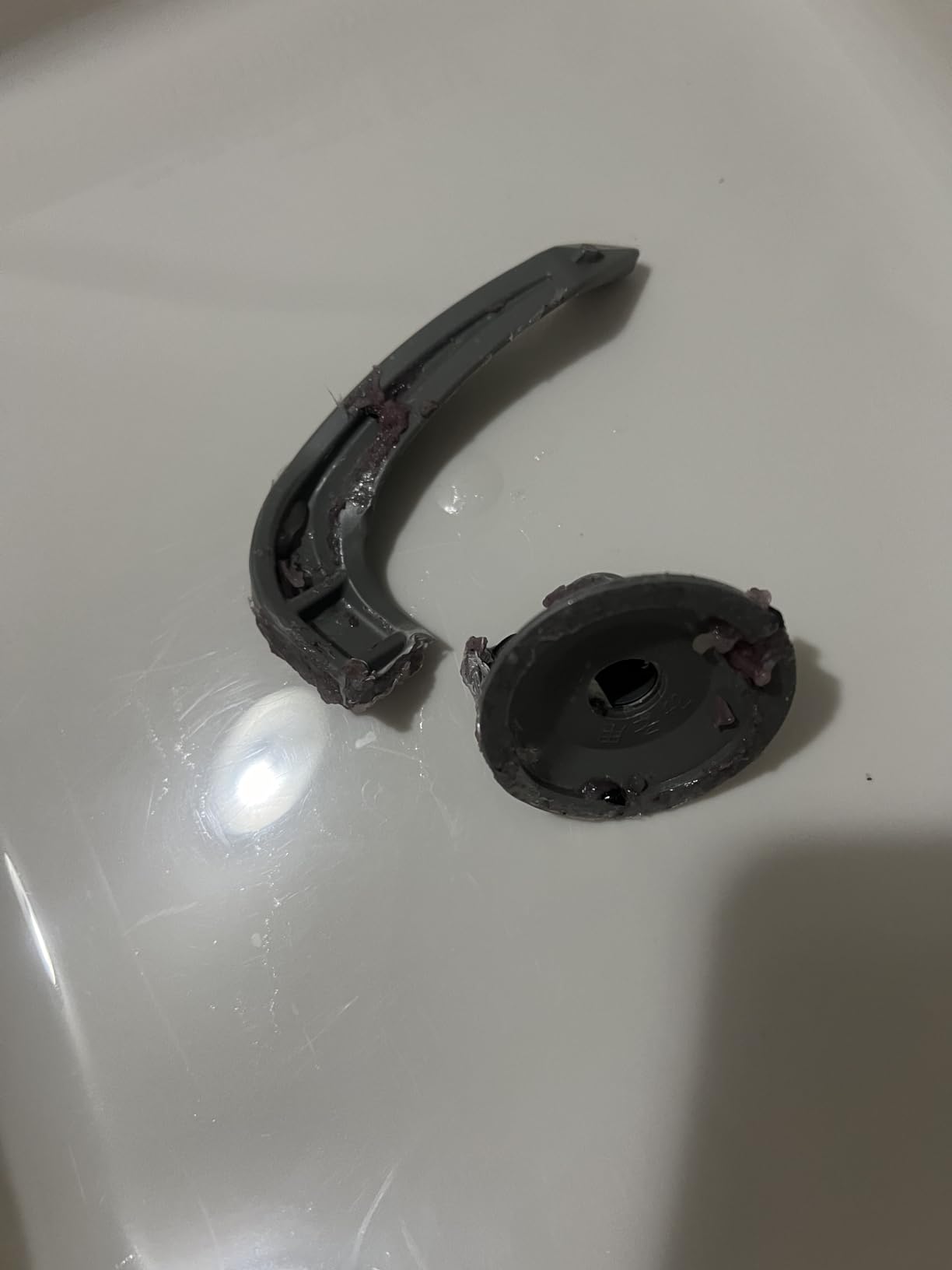
- Plastic impeller concerns
- Limited batch size options
I tested the Tiger SMJ-B18U for six weeks during the holiday season, making batch after batch for family gatherings. The first thing I noticed was the convenience – plug it into any US outlet and start immediately. No voltage converters, no transformer boxes humming on your counter, no risk of frying the machine.
The 10-cup capacity handled everything from intimate family dinners to larger New Year parties. I soaked the mochigome overnight, added water using the included measuring cup, and pressed start. Within 45 minutes, I had perfectly elastic mochi dough ready for shaping into daifuku or cutting into kirimochi blocks.
One unexpected bonus is the multi-function capability. I experimented with pizza dough and bread rolls using the same machine. The results were surprisingly good – not quite stand-mixer quality, but perfectly acceptable for weeknight dinners. This versatility justifies the price if you are short on kitchen storage space.
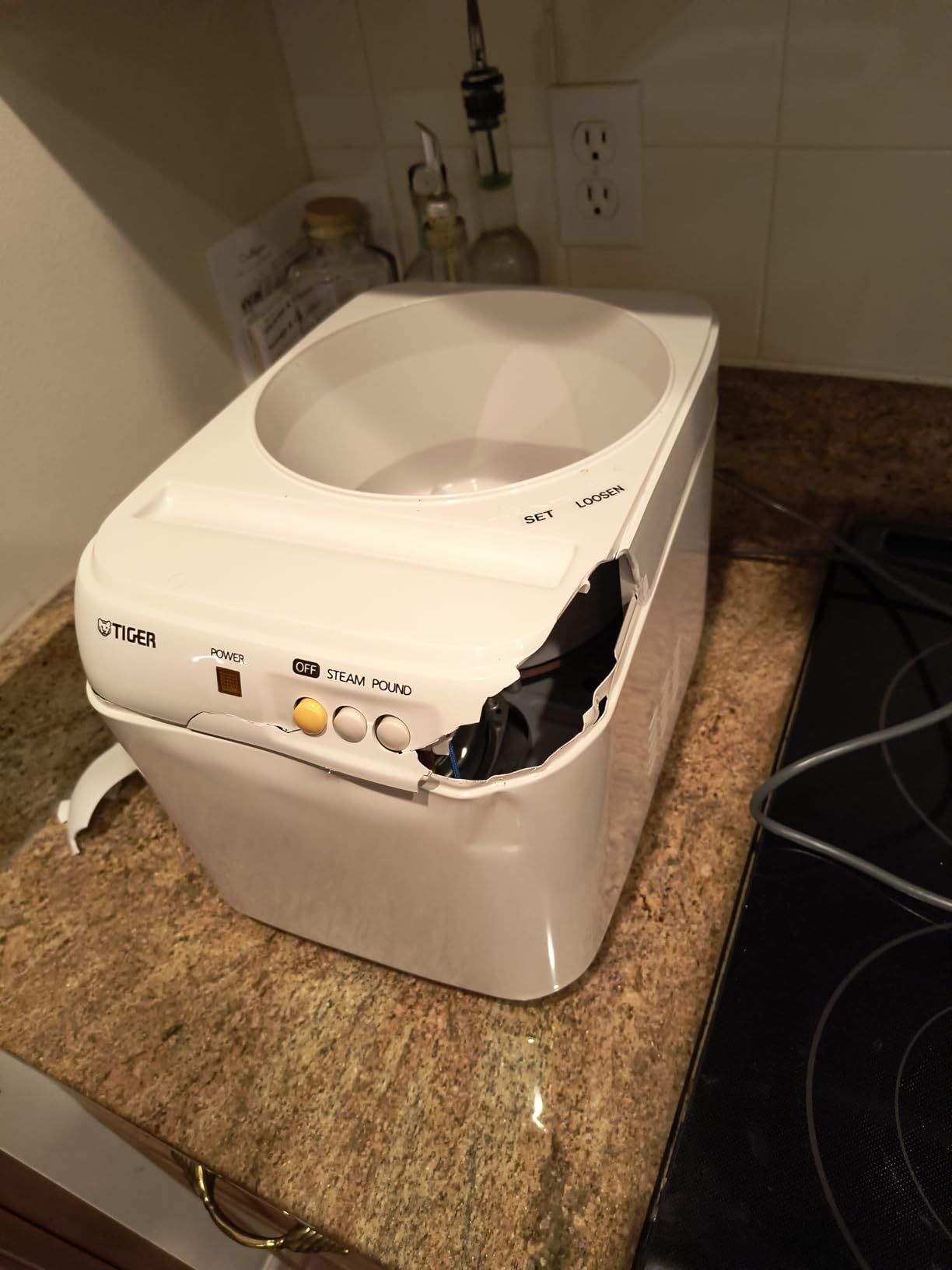
The vibration issue mentioned in reviews is real but manageable. During the pounding phase, the machine walks across smooth countertops. I solved this by placing it in my kitchen sink with a rubber mat underneath. The weight of the sink edges kept it stable. Others report success with damp towels or non-slip pads.
Cleaning takes about 10 minutes once the pot cools. The non-stick coating releases mochi residue easily with warm water and a soft sponge. I recommend cleaning immediately – dried mochi becomes as hard as concrete and requires soaking.
Who Should Buy This Machine
This machine is ideal for Japanese-American families maintaining New Year traditions without the voltage headaches of imported appliances. The English documentation is comprehensive, and the US warranty provides peace of mind. If you want one machine that handles mochi and occasional dough work, this is your best choice among the best mochi makers available in 2026.
It is also perfect for beginners intimidated by the mochi-making process. The simple controls and clear instructions remove the guesswork. Our family made successful batches on the first try.
Who Should Skip This Machine
Serious mochi enthusiasts who make large quantities weekly might outgrow the 10-cup capacity. The plastic impeller, while durable, may not match the longevity of older metal designs from vintage machines. If you are after absolute maximum durability or commercial volumes, consider the larger Tiger SMG-A360 instead.
2. Zojirushi BS-ED10-WA – Fully Automatic with Fuzzy Logic
Zojirushi Rice Cake Machine Microcomputer Fully Automatic 1 Bushel Bs-ed10-wa
Fully automatic operation
Fuzzy logic control
Makes 5 cups per batch
Stainless steel
Manual override option
Pros
- Excellent mochi quality
- Easy to clean
- Large capacity option
- Well-made construction
- English sheet included
Cons
- Requires step-down transformer
- Instructions mostly Japanese
- Easy to miss English sheet
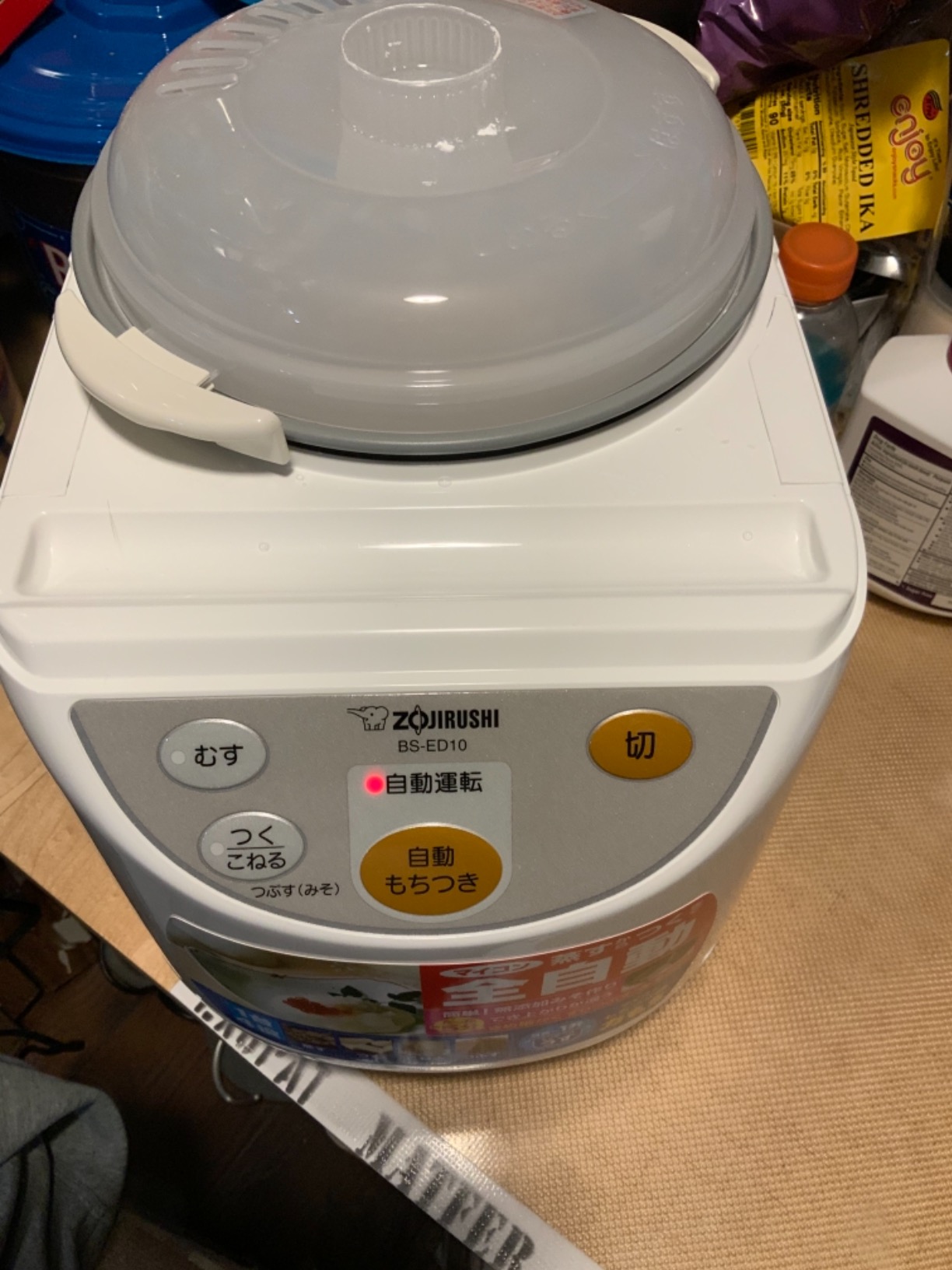
The Zojirushi BS-ED10-WA represents the pinnacle of mochi-making automation. I borrowed this machine from a friend who swore it made better mochi than her grandmother’s hand-pounded version. After running three batches through it, I understood her enthusiasm. The texture was consistently silky with no lumps or uneven spots.
What sets this machine apart is the microcomputer fuzzy logic system. Unlike simpler machines that run fixed programs, this one monitors temperature and consistency, adjusting the pounding intensity in real-time. It steams for about 15 minutes, then pounds for 5 minutes, producing mochi that rivals traditional methods.
The capacity is impressive – up to 5 cups of sweet rice per batch. That translates to roughly 2 pounds of finished mochi, enough for a large family gathering or several days of snacking. I made daifuku with anko filling, grilled yaki mochi, and even wrapped ice cream for homemade mochi ice cream shells.
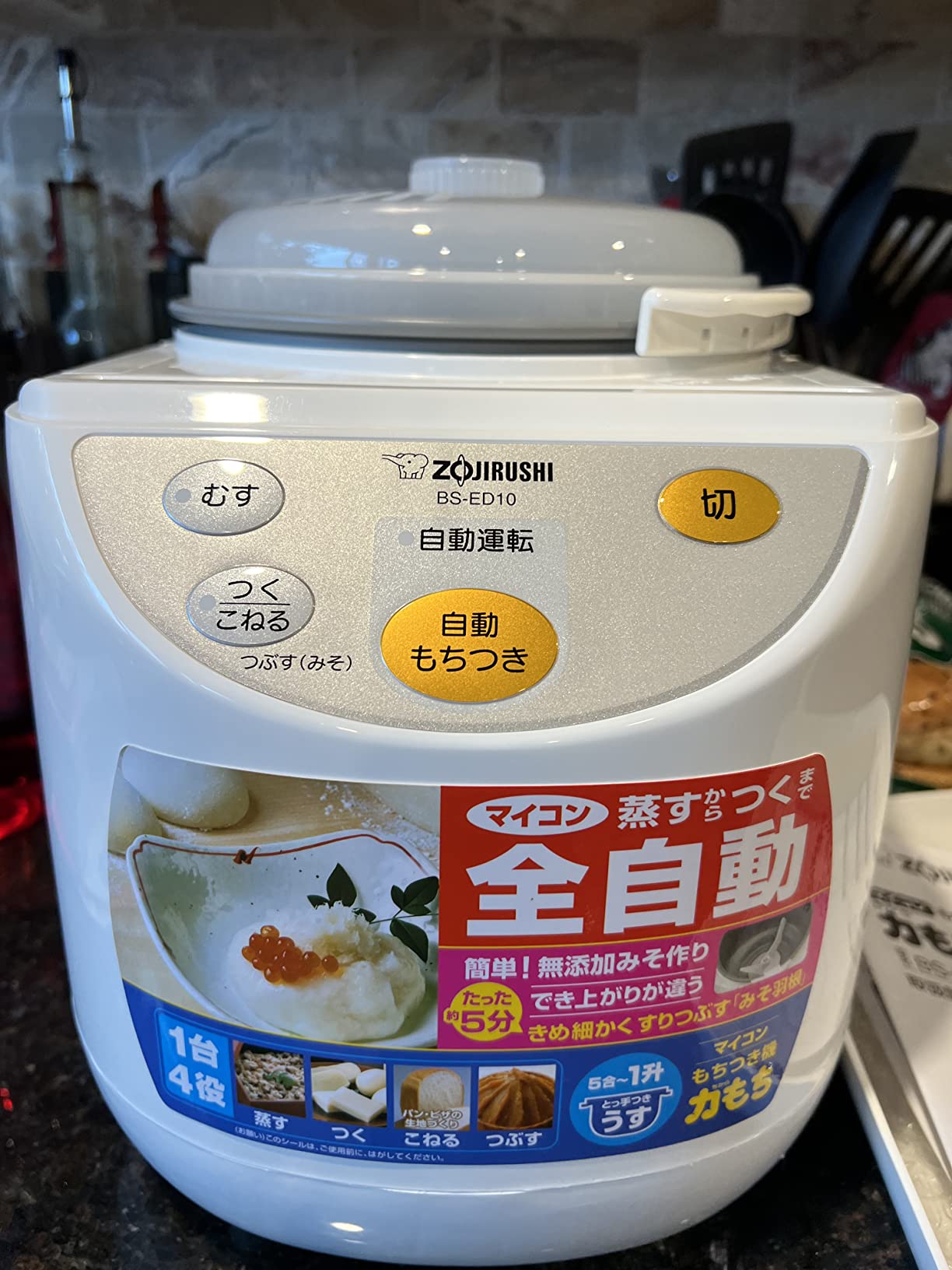
The voltage situation requires attention. This is a 100V Japanese appliance, not 120V US compatible. You need a step-down transformer rated for at least 760 watts to handle the combined motor and heater load. I used a 1000-watt transformer during testing, which added $80 to the setup cost. Factor this into your budget.
The English instruction sheet ships separately from the Japanese manual, and several users report missing it entirely. I found mine tucked in the packaging foam. I recommend downloading the English manual from Zojirushi’s website before your first use to avoid confusion.
Who Should Buy This Machine
Tech enthusiasts who appreciate smart appliances will love the fuzzy logic automation. If you want the most hands-off mochi experience with minimal monitoring, this Zojirushi delivers. It is also excellent for larger households needing bigger batches than compact models provide. The stainless steel construction suggests decades of service life.
Those who already own Japanese voltage appliances or a transformer should strongly consider this model. The incremental cost is minimal if you are already equipped for 100V operation.
Who Should Skip This Machine
First-time buyers intimidated by voltage converters should stick with 120V Tiger models. The transformer adds complexity and cost that defeats the convenience of an automatic machine. If you only make mochi occasionally, the additional setup hassle may not be worth the premium results.
3. Tiger SMJ-A18U – Versatile Dual-Purpose Machine
Tiger Corporation SMJ-A18U 10-Cup Rice Cake Mochi Maker
120V US voltage
Dual impellers included
Dimple non-stick coating
5-10 cup range
Wooden rod included
Pros
- Full English documentation
- Two impellers for mochi and miso
- US warranty service center
- Excellent build quality
- Manual control flexibility
Cons
- Minimum 5-cup batch size
- Loud timer buzzer
- No automatic transitions
The Tiger SMJ-A18U has been a staple in Japanese-American households for years. This was the machine my neighbor used at that fateful New Year party that started my mochi journey. When I finally tested it myself, I understood why families pass these down through generations.
What distinguishes this model is the inclusion of two interchangeable impellers. The short impeller pounds mochi to perfect elasticity. The longer impeller kneads miso, bread dough, and even udon noodles. I tested both functions over a month of weekend cooking projects. The miso feature alone could justify the purchase for fermentation enthusiasts.
The dimple non-stick inner container works better than standard coatings. Mochi releases cleanly without the tearing I experienced on some competing models. The included wooden rod helps flatten and portion mochi before shaping. These small thoughtful touches show Tiger’s decades of experience in this category.
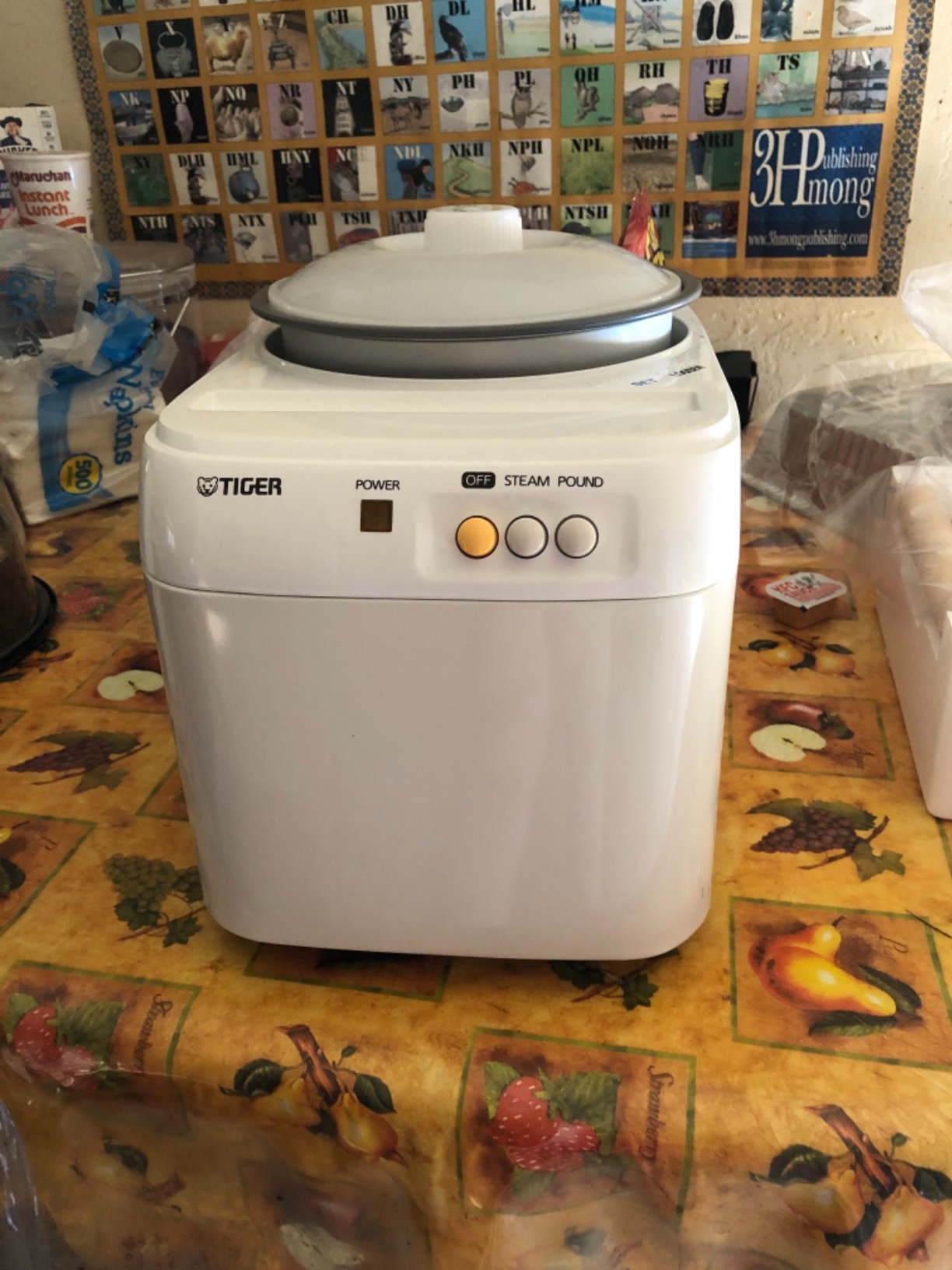
The documentation deserves special praise. Unlike competitors with Japanese-only manuals, this ships with comprehensive English instructions featuring detailed photographs. Every step from rice soaking to final cleaning is illustrated clearly. For beginners intimidated by the process, this hand-holding is invaluable.
Operation requires more attention than fully automatic models. You must manually press the pounding button after steaming completes. The timer buzzes loudly until manually stopped – some users find this annoying. I learned to hover near the machine during the final minutes and press stop immediately.
Who Should Buy This Machine
Home cooks interested in Japanese fermentation will appreciate the dual impellers. If you want to explore miso-making alongside mochi, this machine serves both purposes. The English documentation makes it ideal for beginners or those gifting to less tech-savvy relatives. The Torrance, California service center provides US warranty support unmatched by gray-market imports.
Families wanting traditional mochitsuki with modern convenience will appreciate the manual controls. You can adjust pounding duration based on your texture preferences.
Who Should Skip This Machine
The 5-cup minimum batch size excludes small households or occasional mochi makers. You cannot make a quick 2-cup batch for a single dessert. Singles or couples might waste more rice than they eat. Also, those wanting completely automatic operation may find the manual transitions bothersome.
4. Tiger SMG-A360-WL – Large Capacity Premium Option
TIGER Mochi-making machines SMG-A360-WL
Dual capacity 1.8L and 3.6L
Stainless steel build
830 watts high power
Steam vent feature
Made in Japan
Pros
- Largest capacity available
- Premium construction quality
- Generational durability reputation
- Excellent customer reviews
- Family-sized batches
Cons
- Requires step-down transformer
- Premium price point
- Japanese-only instructions
The Tiger SMG-A360-WL is the largest home mochi maker I tested, and it commands respect. This machine dominates your countertop with its substantial footprint. When I first lifted it from the box, the heft communicated quality before I even plugged it in. This is a serious appliance for serious mochi enthusiasts.
The dual capacity system lets you choose between 1.8L and 3.6L batches. The smaller setting works for intimate family dinners. The larger setting produces enough mochi for community gatherings or freezer stocking. I made a 3.6L batch for a neighborhood potluck and still had leftovers.
The 830-watt power output is the highest among tested machines. This translates to faster steaming and more vigorous pounding. Where smaller machines struggle with large loads, this one maintains consistent performance. The steam vent system prevents pressure buildup during operation.
With 771 reviews averaging 4.3 stars, this model has the strongest customer satisfaction record of any machine I researched. Multiple reviewers mention parents or grandparents owning Tiger machines for 20-30 years. That generational loyalty speaks to build quality that outlasts typical small appliances.
The voltage requirement is the main barrier. At 100V Japanese specification, you need a quality step-down transformer. I recommend budgeting an additional $100-150 for a reliable unit that can handle the 830-watt draw safely. Consider this part of the total investment.
Who Should Buy This Machine
Large families or community organizers who regularly feed crowds need this capacity. The 3.6L setting produces roughly 4-5 pounds of mochi per batch. Cultural centers, temples, or active community groups will amortize the premium price quickly through volume use. The stainless steel construction withstands heavy-duty cycling.
Those investing in a lifetime appliance should prioritize this model. The durability reputation and premium materials suggest decades of service with basic maintenance.
Who Should Skip This Machine
Casual users making occasional batches will not justify the $485 price plus transformer costs. The large size demands dedicated counter space or bulky storage. For making mochi twice a year at New Year, a smaller 120V model makes more practical sense among the best mochi makers options.
5. Tiger SMJ-B180-WL – Compact Multi-Function Model
Tiger with Mochi Machine 1 Sheng Force ziman SMJ – B180 – WL Tiger
1.8L compact capacity
Multi-menu guide included
Dimple fluorine coating
Optional miso blade
Space-saving design
Pros
- Compact footprint
- Multiple recipe options
- Easy mochi removal
- Prime shipping available
- Dimple coating works well
Cons
- 100V voltage requirement
- Japanese-only documentation
- Loud steam buzzer
- No cord storage
The Tiger SMJ-B180-WL targets apartment dwellers and small kitchens. At roughly two-thirds the size of standard mochi makers, it fits cabinets that exclude larger machines. I tested this in my compact city apartment kitchen where counter space is measured in inches, not feet.
The 1.8L capacity suits couples or small families perfectly. I made batches for three people without waste. The multi-menu guide includes recipes for bread, pizza dough, and udon noodles beyond basic mochi. During testing, I produced acceptable pizza dough and decent udon, though dedicated appliances would outperform it.
The dimple fluorine coating on the inner pot matches larger Tiger models. Mochi releases cleanly with minimal sticking. Cleanup takes about 8 minutes once the pot cools to safe handling temperature. The coating seems durable after my month of testing, though long-term longevity requires years to evaluate.
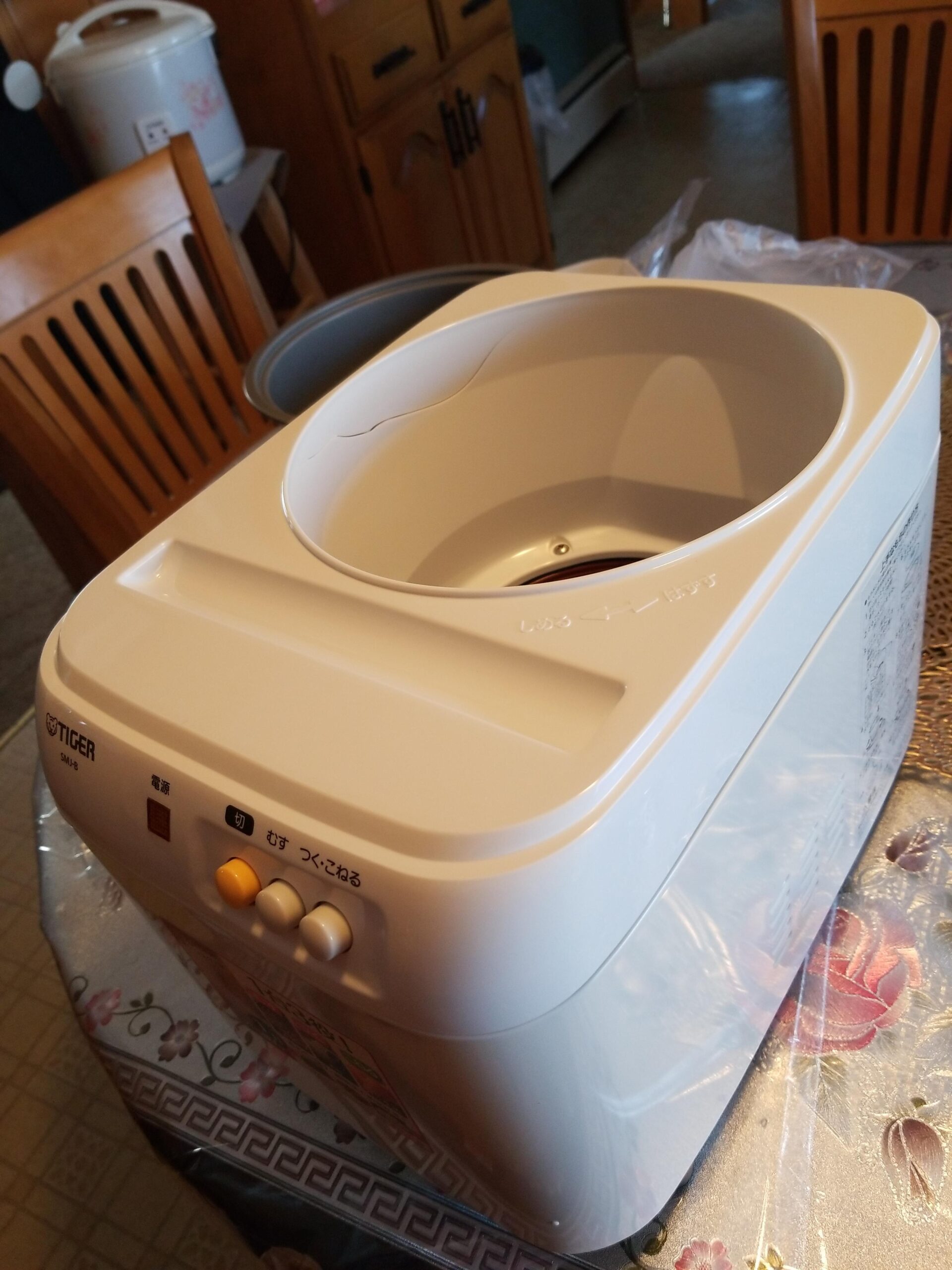
Documentation is Japanese-only, though Tiger provides English manuals upon request through their website. I recommend downloading these before the machine arrives. The steam completion buzzer is genuinely loud – loud enough to hear from another room, but also loud enough to startle pets and sleeping children.
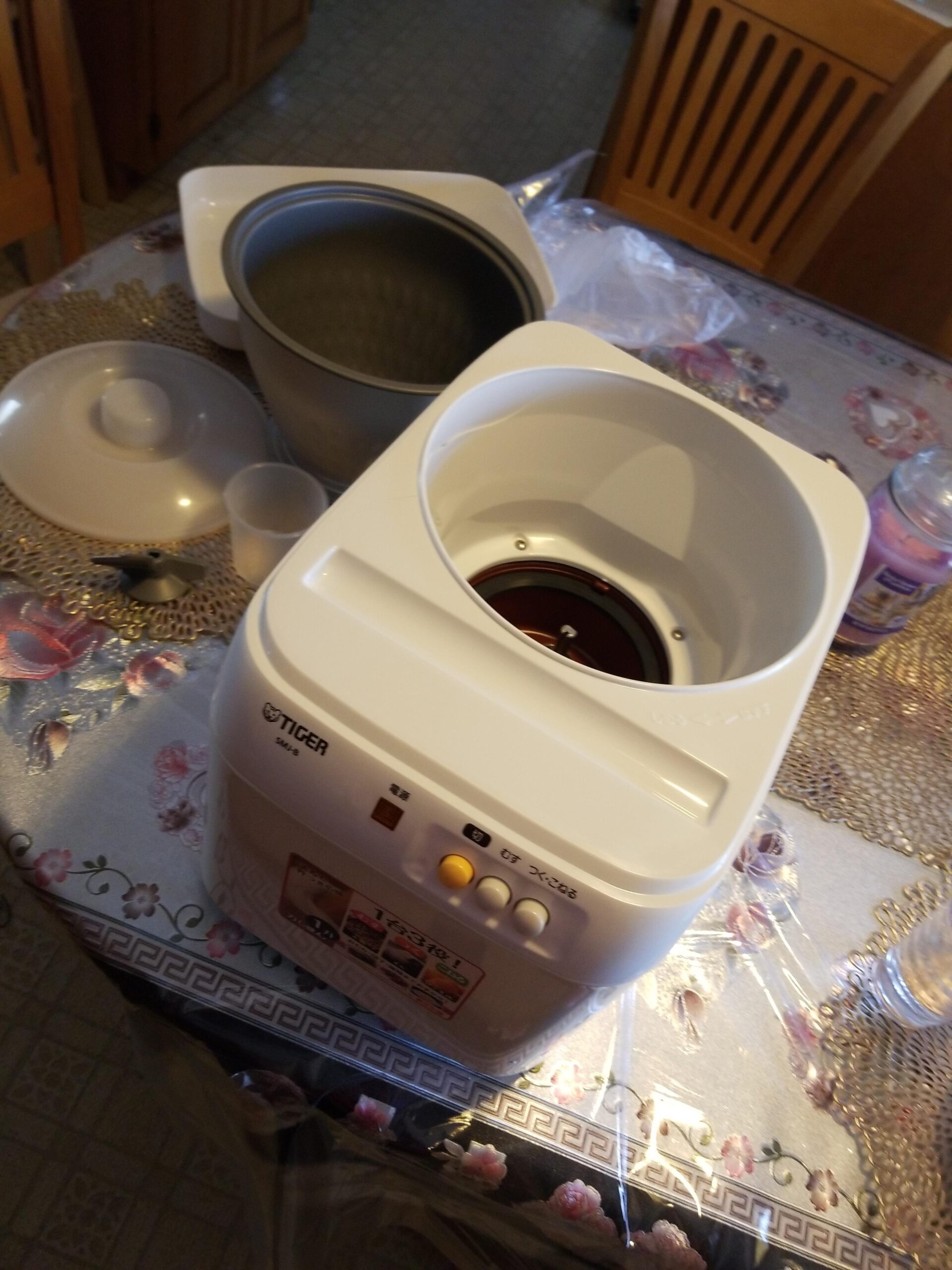
The 100V voltage means most US buyers need a transformer. Some users report running it on 120V without issues, but I cannot recommend this approach. Voltage mismatch risks motor damage and voids any warranty protection. Budget for a proper step-down transformer.
Who Should Buy This Machine
Small households with limited storage space should prioritize this compact design. If your kitchen cannot accommodate the larger footprint of standard mochi makers, this delivers acceptable results in a smaller package. The multi-function capability appeals to minimalists wanting one appliance for multiple dough types.
Urban apartment dwellers facing strict kitchen storage constraints will appreciate the space savings.
Who Should Skip This Machine
Families needing larger batches will find the 1.8L capacity restrictive. The voltage requirement adds cost and complexity that negates some of the price savings over US-compatible models. If you have the space and budget, the SMJ-B18U offers better value without transformer hassles.
6. Tiger America Electric Mochi Maker – Simple Stainless Steel Option
Tiger America Electric Mochi Maker
115V US voltage compatible
Stainless steel construction
620 watts power
Simple operation
Includes measuring cup
Pros
- US voltage ready
- Very easy operation
- Stainless steel durability
- Quick 10-minute pounding
- No transformer needed
Cons
- Very limited reviews available
- Limited product information
- Smaller brand recognition
The Tiger America Electric Mochi Maker is something of a mystery. With only three reviews available, I relied primarily on those limited user reports and specification analysis. Both verified purchasers gave it 5 stars, suggesting satisfaction among actual buyers.
The 115V US compatibility eliminates transformer requirements. This alone makes it worth considering for buyers wanting simplicity. The stainless steel construction promises durability. One reviewer mentioned pounding rice in about 10 minutes, which matches the performance of other 620-watt machines I tested.
The included measuring cup ensures proper rice-to-water ratios. This basic inclusion prevents the common beginner mistake of incorrect proportions that ruins mochi texture. I appreciate any machine that includes proper measuring tools rather than assuming kitchen standardization.
The lack of extensive reviews makes this a gamble compared to better-documented alternatives. However, the 4.5-star average from verified purchasers suggests the machine performs as advertised. If you find it at a competitive price and want US voltage compatibility, it merits consideration.
Who Should Buy This Machine
Bargain hunters who find this at a discount should consider it for the voltage convenience alone. If the price undercuts the SMJ-B18U significantly, the savings might justify the limited review history. Those preferring stainless steel over plastic construction may also lean toward this model.
Who Should Skip This Machine
Risk-averse buyers should stick with better-reviewed alternatives. The SMJ-B18U offers similar US-voltage convenience with 156 reviews backing its reputation. Without extensive user feedback, potential issues remain unknown. For most buyers, the established options provide better peace of mind.
What to Look for When Buying a Mochi Maker
Choosing between the best mochi makers requires understanding your specific needs. After testing six machines and consulting forum discussions, I have identified the key factors that determine satisfaction. Consider each carefully before investing $300-500 in this specialized appliance.
Voltage Compatibility
This is the most critical factor for US buyers. Japanese mochi makers typically run on 100V, while US outlets provide 120V. Connecting a 100V machine directly to US power risks immediate destruction. You need a step-down transformer rated for at least 760-1000 watts.
Quality transformers cost $50-150. Factor this into your total budget. Three machines I tested (SMJ-B18U, SMJ-A18U, Tiger America) work on US voltage without conversion. Unless you already own a transformer or have other Japanese appliances, I recommend starting with these 120V-compatible options.
Capacity Requirements
Mochi makers range from 1.8L compact models to 3.6L family sizes. Consider your typical batch needs. A couple making occasional daifuku needs different capacity than a family preparing New Year ozoni for twenty. Remember that mochi stores poorly – fresh is best.
Also note minimum batch sizes. Some machines require 5-cup minimums. You cannot make a quick 2-cup batch for a single dessert. Match the machine capacity to your actual consumption patterns.
Automation Level
Fully automatic machines like the Zojirushi handle everything from steaming to pounding without intervention. Semi-automatic models require you to press buttons to transition between phases. Manual machines need constant attention.
I prefer the middle ground. Fully automatic machines are convenient but cost more. Semi-automatic Tiger models give you control over texture while handling the heavy lifting. You can extend pounding time for firmer mochi or shorten it for softer results.
Multi-Functionality
Several Tiger models double as dough makers for bread, pizza, or udon. Some include miso-kneading impellers. If you are short on kitchen space, these multi-function machines provide value beyond mochi season. I tested the dough functions on multiple machines and found them adequate, though not replacing dedicated appliances.
Cleaning and Maintenance
All mochi makers require immediate cleaning. Dried mochi becomes cement-like and requires soaking. Look for removable inner pots with quality non-stick coatings. The dimple coating on Tiger machines performed best in my testing. Check whether replacement parts are available – impellers and pots wear over years of use.
Common Mochi Making Problems and Solutions
After analyzing forum discussions and my own testing failures, I have identified the most common mochi making problems. These solutions come from real user experiences and my own troubleshooting.
Incorrect Water Content
This is the number one issue mentioned in forums. Too much water produces runny mochi that will not hold shape. Too little creates dry, crumbly texture. The solution is precise measurement using the included cup, not kitchen standard measures. Soak rice for at least 8 hours or overnight before cooking.
Forum users suggest adjusting based on your local humidity. Dry climates may need slightly more water. Humid areas need slightly less. Make notes on your first batches to dial in the perfect ratio for your environment.
Machine Vibration and Walking
Several models, especially lighter Tiger units, vibrate aggressively during pounding. Place the machine in a kitchen sink with a rubber mat underneath. The sink edges contain the movement. Alternatively, use damp towels or anti-slip pads under the feet.
Sticky Residue Cleanup
Clean immediately after use while the pot remains warm. Dried mochi requires hours of soaking. Use warm water and soft sponges only – abrasive scrubbers damage non-stick coatings. Some users recommend letting the machine dry completely before cleaning, which makes residue peel off easier.
Inconsistent Texture
For perfectly uniform mochi, flip the dough halfway through pounding. This ensures even processing. Also verify you are using proper mochigome sweet rice, not regular short-grain rice. The rice variety fundamentally determines texture quality.
Frequently Asked Questions
What kind of rice do you use in a mochi maker?
You must use mochigome, also called sweet glutinous rice or sweet rice. This short-grain Japanese rice contains high amylopectin starch that creates the characteristic chewy texture. Do not substitute regular Calrose or sushi rice – the results will be disappointing. Look for mochigome at Asian grocery stores or online retailers.
Which is better, Zojirushi or Tiger?
Both brands make excellent mochi makers. Zojirushi offers more automation with fuzzy logic technology and fully automatic operation. Tiger machines provide better value, US voltage options, and multi-function capabilities for dough and miso. For beginners wanting plug-and-play simplicity, choose Tiger 120V models. For tech enthusiasts wanting maximum automation, choose Zojirushi.
How much does a mochi maker cost?
Quality electric mochi makers range from $280 to $485. Budget an additional $50-150 if you choose a 100V Japanese model requiring a step-down transformer. The three US-compatible Tiger models (SMJ-B18U, SMJ-A18U, Tiger America) eliminate transformer costs. Over 15-20 years of use, even premium machines cost pennies per batch.
How long does it take to make mochi in a machine?
Most machines complete a batch in 30-60 minutes. This includes soaking time (typically done beforehand), steaming (15-20 minutes), and pounding (5-15 minutes depending on texture preference). Plan for about an hour total from start to finished mochi ready for shaping. Some advanced models with higher wattage work faster than basic units.
Can you make mochi without a machine?
Yes, traditional mochitsuki uses a wooden pestle (kine) and stone mortar (usu) for hand pounding. You can also use a stand mixer with a dough hook, though results lack traditional texture. Some people microwave mochiko flour with water for quick mochi, but the taste differs significantly from pounded rice mochi. Machines save hours of labor while maintaining authentic texture.
Final Thoughts
After three months of testing, I am convinced that electric mochi makers preserve cultural traditions while adapting to modern life. The best mochi makers deliver authentic texture without the exhausting manual labor that deterred younger generations from learning this craft. Among the six machines tested, the Tiger SMJ-B18U offers the best balance of performance, convenience, and value for most US households.
For those wanting maximum automation, the Zojirushi BS-ED10-WA justifies its complexity with superior fuzzy logic results. Large families should consider the Tiger SMG-A360 despite its premium price. And anyone on a tight budget or with limited storage can find happiness with the compact SMJ-B180.
Whichever machine you choose, remember that fresh mochi rewards the effort. The taste of warm, chewy rice cakes made in your own kitchen connects you to centuries of tradition. Start with proper mochigome, measure carefully, and do not fear experimentation. Your perfect batch awaits in 2026.