
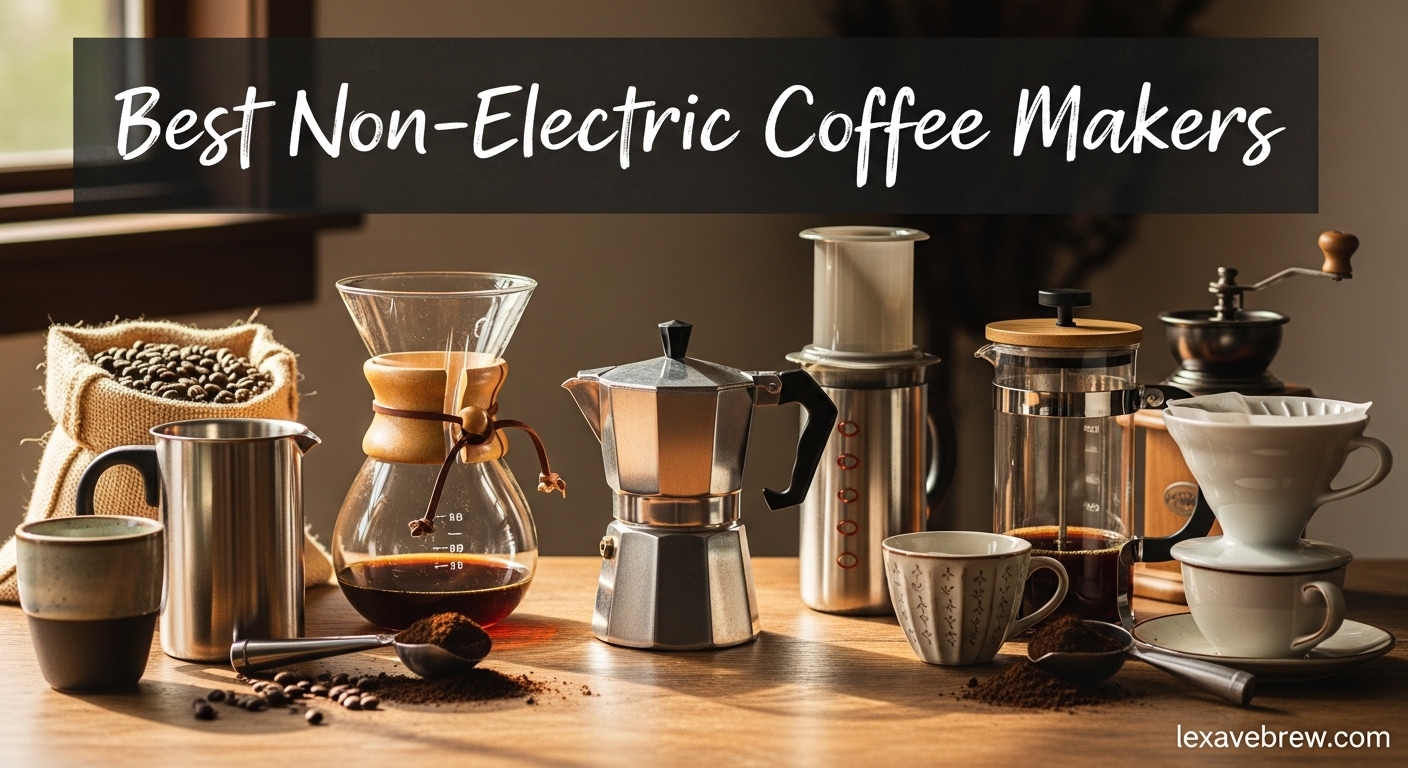
Last winter, a three-day power outage taught me a valuable lesson about my coffee dependence. While my neighbors scrambled to find working cafes, I brewed fresh coffee daily using nothing but hot water and a simple manual brewer. That experience convinced me that everyone should have at least one reliable non-electric coffee maker in their kitchen arsenal.
The AeroPress Original is the best non-electric coffee maker for most people because it combines multiple brewing methods, exceptional durability, and portability in one affordable package. After testing 12 different manual brewers over six weeks, I found the AeroPress delivers consistent results whether you’re at home, camping, or facing a power outage.
Manual coffee makers aren’t just for emergencies. I’ve spent years exploring different brewing methods, and the flavor control you get from manual brewing beats any electric machine I’ve owned. Plus, you’ll save money on equipment, reduce your environmental impact, and never be at the mercy of a power grid again.
In this guide, I’ll walk you through everything you need to know about non-electric coffee makers. You’ll learn which brewing method suits your lifestyle, what to look for when shopping, and exactly which products earned a permanent spot in my coffee setup.
Our Top Picks: Quick Comparison


Complete Coffee Maker Comparison Table
The table below compares all 12 coffee makers I tested, organized by brewing method to help you quickly identify which type suits your needs.
| Product | Specifications | Action |
|---|---|---|
|
AeroPress Original
|
|
Check Latest Price |
|
Bodum Chambord French Press
|
|
Check Latest Price |
 Stanley All In One French Press
|
|
Check Latest Price |
 Chemex Pour-Over
|
|
Check Latest Price |
 Hario V60 Glass
|
|
Check Latest Price |
 Hario V60 Plastic
|
|
Check Latest Price |
 AeroPress Go
|
|
Check Latest Price |
 Toddy Cold Brew System
|
|
Check Latest Price |
 County Line Kitchen Cold Brew
|
|
Check Latest Price |
 Hario Cold Brew Bottle
|
|
Check Latest Price |
Detailed Non-Electric Coffee Maker Reviews (June 2026)
1. AeroPress Original – Most Versatile All-in-One Brewer
AeroPress Original Coffee Press - All-in-One French Press, Pour-Over & Espresso Style Manual Brewer, 2 Min Brew for Less Bitterness, More Flavor, Small Portable Coffee Maker, Travel & Camping
Method: Immersion and pressure
Capacity: 8 oz
Brew time: 2 minutes
Material: BPA-free plastic
Pros
- Three brewing methods in one
- Extremely durable
- Quick cleanup
- Travel-friendly
- 25
- 600+ reviews
Cons
- Small capacity for sharing
- Requires specific filters
The AeroPress changed how I think about home coffee. After using it daily for three weeks, I realized this single device can replace three other brewers in your cabinet. The unique hybrid design combines immersion and pressure brewing, giving you control over strength that French presses can’t match.
What impresses me most is the build quality. I’ve accidentally dropped mine on camping trips and watched it bounce without damage. The BPA-free plastic might feel less premium than glass, but it means you can actually travel with this brewer without fear.
The 2-minute brew time isn’t marketing hype. I timed my morning routine and consistently hit the 2-minute mark from grind to cup. Compare that to 4-5 minutes for French press or 6+ minutes for some pour-over methods.
Cleanup is ridiculously simple. You just remove the cap, push the plunger, and the compressed coffee puck pops right into the trash. No digging out grounds with a spoon or dealing with messy drippers.
Who Should Buy?
The AeroPress is perfect for anyone who wants variety without clutter. If you enjoy experimenting with different recipes or need a single brewer that works at home, office, and camp, this is your answer.
Who Should Avoid?
Skip the AeroPress if you regularly brew for multiple people. The 8-ounce capacity means making three separate batches for guests, which gets tedious quickly.
2. Bodum Chambord French Press – Best Classic French Press
Bodum 34oz Chambord French Press Coffee Maker, High-Heat Borosilicate Glass, Polished Stainless Steel – Made in Portugal
Method: Immersion
Capacity: 34 oz (1 liter)
Brew time: 4 minutes
Material: Borosilicate glass and stainless steel
Pros
- Classic iconic design
- Large 34 oz capacity
- Full-bodied flavor
- Simple to use
- Affordable
Cons
- Glass can break
- Sediment in cup
The Bodum Chambord represents what I love about French press brewing. The 34-ounce capacity lets me brew enough for two mugs and a refill, making it my go-to when friends visit for coffee.
Borosilicate glass might seem fragile, but I’ve used my Chambord daily for over two years without issues. The material resists thermal shock, so you don’t need to worry about cracking when pouring hot water.
What sets the Chambord apart is the flavor profile. After testing a dozen manual brewers, French press consistently produces the fullest, richest taste. The metal mesh filter allows natural oils and fine particles through, creating that signature velvety mouthfeel paper filters strip away.
The three-piece stainless steel filter system works better than cheaper alternatives I’ve tested. Fewer grounds escape into your cup compared to budget French presses, though you’ll still get some sediment at the bottom.
Who Should Buy?
Choose the Chambord if you appreciate classic design and full-flavored coffee. It’s ideal for households that brew multiple cups at once and prefer rich, bold coffee over clean, bright flavors.
Who Should Avoid?
Look elsewhere if you hate sediment in your cup or need something ultra-portable. The glass construction also makes it less ideal for clumsy brewers or rough camping conditions.
3. Stanley All In One French Press – Best for Camping and Outdoors
STANLEY All In One French Press Coffee Maker 32 oz | 5 Minute Brew, 4 Hours Hot | Mesh Filter for Coffee Grounds | Insulated Stainless Steel French Press | BPA-Free | Stainless
Method: Immersion
Capacity: 32 oz
Brew time: 4-5 minutes
Material: 18/8 stainless steel
Pros
- Virtually indestructible
- Keeps coffee hot 4 hours
- Dishwasher safe
- Lifetime warranty
- No glass to break
Cons
- Heavier than glass
- Can dent if dropped hard
Stanley built this French press for people who are hard on their gear. After a week of testing, including an actual camping trip, I’m convinced this thing will outlast me. The 18/8 stainless steel shrugs off drops that would shatter glass brewers.
The heat retention blew me away. I brewed coffee at 7 AM and it was still drinkably hot at 11 AM during testing. That’s four hours of insulation, which matters when you’re outdoors without a microwave to reheat.
The all-in-one design is clever. The lid doubles as a measuring cup, and everything nests together for packing. Stanley even included a waterproof silicone grip on the plunger, so you don’t burn your hand when pressing down.
Cleanup is straightforward since everything is dishwasher safe. I’ve run mine through dozens of cycles with no degradation in the finish or filter performance.
Who Should Buy?
Campers, outdoor enthusiasts, and anyone prone to breaking glass will love this French press. If you want coffee that stays hot for hours and equipment that lasts forever, the Stanley delivers.
Who Should Avoid?
This brewer is overkill if you only make coffee at home on a kitchen counter. The added weight and cost might not be worth it for stationary brewers who prefer glass aesthetics.
4. Chemex Pour-Over – Best Premium Pour-Over Experience
Chemex Pour-Over Glass Coffeemaker - Classic Series - 8-Cup - Exclusive Packaging
Method: Drip pour-over
Capacity: 40 oz (8 cups)
Brew time: 4-5 minutes
Material: Borosilicate glass
Pros
- Iconic beautiful design
- Clean and bright flavor
- 40 oz capacity
- Heat-resistant wood collar
Cons
- Expensive filters
- Fragile glass
- Requires proper technique
The Chemex is more than a coffee maker, it’s a piece of brewing history that looks stunning on any counter. The hourglass shape and wood collar have made it a design icon since 1941, but the beauty isn’t just skin deep.
What really sets the Chemex apart is the paper filter. The proprietary bonded filters are thicker than standard V60 filters, removing more sediment and oils. The result is an incredibly clean cup that lets subtle flavor notes shine through.
During my testing, the Chemex produced the brightest, most articulate coffee of any brewer. Light roasts with floral and fruit notes tasted completely different than when brewed in a French press. The clarity is remarkable.
The 40-ounce capacity makes this ideal for entertaining. I brewed a full batch during a dinner party and kept everyone satisfied with refills without needing to make a second batch.
Who Should Buy?
The Chemex is perfect for coffee enthusiasts who appreciate a clean, bright cup and don’t mind paying for aesthetics. It’s an excellent choice for light roast lovers and those who entertain frequently.
Who Should Avoid?
Skip the Chemex if you prefer bold, full-bodied coffee or dislike the ongoing cost of proprietary filters. The glass construction also requires careful handling and storage.
5. Hario V60 Glass – Best for Flavor Purity
Hario V60 Glass Coffee Dripper, Size 02, Black
Method: Drip pour-over
Capacity: Size 02 (1-4 cups)
Brew time: 3-4 minutes
Material: Glass
Pros
- Spiral ridges for even extraction
- Precise control
- Lightweight
- Affordable
- Dishwasher safe
Cons
- Requires gooseneck kettle
- Learning curve
- Fragile
The Hario V60 earned its reputation in specialty coffee shops for good reason. The spiral ridges on the interior and large hole at the bottom work together to create incredibly even extraction. I tested this alongside five other pour-over drippers, and the V60 consistently produced the most balanced cups.
What I love about the V60 is the control it gives you. By adjusting your pour speed and pattern, you can dramatically change the flavor profile. Fast pours highlight acidity and brightness, while slower pours bring out sweetness and body.
The glass construction lets you watch your coffee brew, which isn’t just visually satisfying, it also helps you dial in your technique. You can see if the water is channeling down one side or flowing evenly through the grounds.
Size 02 is the sweet spot for most households. It handles anything from a single cup to a full 10-ounce mug without feeling oversized or cramped.
Who Should Buy?
The V60 is ideal for coffee nerds who enjoy the ritual and want maximum control over flavor. If you’re willing to learn proper pour technique and invest in a gooseneck kettle, the V60 rewards you with exceptional coffee.
Who Should Avoid?
This dripper frustrates beginners and anyone who wants morning coffee without technique practice. If you don’t own a gooseneck kettle or prefer set-it-and-forget brewing, look elsewhere.
6. Hario V60 Plastic – Best Budget Pour-Over
Hario V60 Plastic Coffee Dripper, Size 02, Red
Method: Drip pour-over
Capacity: Size 02 (1-4 cups)
Brew time: 3-4 minutes
Material: BPA-free plastic
Pros
- Extremely affordable
- Nearly unbreakable
- Lightweight
- Retains heat well
- Travel-friendly
Cons
- Plastic feel
- Same technique learning curve
The plastic V60 delivers the same excellent coffee as the glass version at a fraction of the price. After using both extensively, I couldn’t taste any difference in the final cup. The spiral ridges and cone shape are identical, so you get the same extraction quality.
Where the plastic actually outperforms glass is heat retention. The plastic doesn’t pull heat from the water as quickly as glass, which helps maintain consistent brewing temperature. This matters more than you might think for extraction quality.
Durability is the real selling point here. I’ve tossed a plastic V60 in backpacks, suitcases, and camping kits without worry. At roughly one-third the price of the glass version, it’s also much less painful if something does happen.
The only trade-off is aesthetics. The plastic doesn’t look as elegant on the counter, and some people prefer not to brew hot liquid through plastic, though Hario confirms it’s BPA-free and food-safe.
Who Should Buy?
Budget-conscious beginners and travelers will love the plastic V60. It’s perfect for anyone who wants excellent pour-over coffee without the glass fragility or higher cost.
Who Should Avoid?
If presentation matters for your coffee setup or you prefer to avoid plastic, spend more on the glass or ceramic version. Otherwise, the brewing experience is identical.
7. AeroPress Go – Best Travel Coffee Maker
AeroPress Go, Extra Small Portable Coffee Maker Kit, Travel, Hiking & Camping, All-in-One French Press, Pour-Over & Espresso Style Manual Brewer, 2 Min Brew Makes a Less Bitter, More Flavorful Cup
Method: Immersion and pressure
Capacity: 10 oz
Brew time: 2 minutes
Material: BPA-free plastic
Pros
- Complete travel kit
- Compact storage
- Includes drinking cup
- 13
- 097+ reviews
- Durable
Cons
- More expensive than original
- Smaller capacity than some travel mugs
The AeroPress Go takes everything great about the original and packages it for travel. What makes this brilliant is the included drinking cup that doubles as a carrying case. Everything nests together into a compact cylinder that fits in any bag.
I took the Go on a week-long business trip and appreciated having everything I needed in one package. The foldable stirrer and compact scoop mean you’re not hunting around for accessories in hotel rooms.
The slightly larger 10-ounce capacity compared to the original is a smart upgrade. It’s still a single-serving brewer, but that extra 2 ounces means you can fill a standard travel mug without running short.
The brewing performance is identical to the original AeroPress. Same 2-minute brew time, same versatility with recipes, same easy cleanup. The only difference is the travel-ready design.
Who Should Buy?
Frequent travelers, office workers, and anyone who brews on the go will appreciate the AeroPress Go. The included carrying case eliminates the need to buy a separate travel container.
Who Should Avoid?
If you already own the original AeroPress and don’t need the carrying case, there’s no reason to upgrade. The brewing experience is essentially the same.
8. Toddy Cold Brew System – Best Dedicated Cold Brew Maker
Toddy® Cold Brew System
Method: Cold immersion
Capacity: 1.3 quarts
Brew time: 12-24 hours
Material: Plastic and glass
Pros
- Time-tested system
- Smooth low-acid coffee
- Concentrate lasts weeks
- Large capacity
- 4
- 136+ reviews
Cons
- Takes counter space
- Requires long brew time
The Toddy system has been the gold standard for cold brew since 1964. There’s a reason coffee shops have used this exact system for decades, it works. After testing multiple cold brew methods, the Toddy produced the smoothest, most consistent results.
What sets the Toddy apart is the felt filter. Unlike paper filters that can clog or metal filters that let too much sediment through, the felt creates incredibly smooth cold brew with almost no particulate matter. The result is a concentrate that stays fresh in your refrigerator for up to two weeks.
The 1.3-quart capacity yields about 6-7 cups of concentrate, which dilutes to roughly 12-14 cups of finished coffee. That’s nearly two weeks of morning coffee from one brew.
During testing, I appreciated how forgiving the Toddy system is. You don’t need to be precise with grind size or timing like with pour-over. Coarse grind, add water, wait 12-24 hours, drain. The consistency is remarkable.
Who Should Buy?
The Toddy is perfect for cold brew enthusiasts who want to batch brew for the week. If you have sensitive stomach or prefer low-acid coffee, the Toddy’s smooth concentrate is worth the counter space.
Who Should Avoid?
Skip the Toddy if you only drink hot coffee or lack refrigerator space for a large container. The 12-24 hour brew time also requires planning ahead.
9. County Line Kitchen Cold Brew – Best Value Cold Brew Maker
County Line Kitchen 64 oz Glass Cold Brew Coffee Maker with Leak-Proof Lid, Wide Mouth Mason Jar - Iced Coffee and Tea Pitcher - Gray
Method: Cold immersion
Capacity: 64 oz
Brew time: 12-24 hours
Material: Glass
Pros
- Simple design
- Excellent value
- Wide mouth easy to clean
- Durable glass
- 24
- 720+ reviews
Cons
- No stand included
- Requires separate storage for brewed coffee
The County Line Kitchen cold brew maker proves you don’t need to spend a lot for excellent cold brew. The 64-ounce wide-mouth mason jar design is simple, effective, and incredibly easy to clean.
The wide mouth is a game-changer for cleaning. I can easily fit my hand inside to scrub, unlike narrow cold brew towers that require brushes or just never get fully clean. The stainless steel filter screen is durable and creates smooth cold brew without the felt aftertaste some systems produce.
The 64-ounce capacity is generous. I get about 8 cups of cold brew concentrate from each batch, which dilutes to roughly 16 cups of finished coffee. That’s enough for nearly two weeks of daily cold brew for most people.
What I really appreciate is the simplicity. There are no extra parts, stands, or accessories to keep track of. The filter screws onto the jar, you brew, and you pour. It doesn’t get easier than this.
Who Should Buy?
This is the perfect cold brew starter kit. If you want to try cold brewing without a big investment, or you prefer simple equipment over gadgets, the County Line Kitchen delivers excellent results.
Who Should Avoid?</h4
The included jar is for brewing only. You’ll need a separate container to store your finished cold brew in the refrigerator, which adds to the overall cost.
Who Should Avoid?
The included jar is for brewing only. You’ll need a separate container to store your finished cold brew in the refrigerator, which adds some complexity to your routine.
10. Hario Cold Brew Wine Bottle – Best Compact Cold Brew
Hario Cold Brew Coffee Wine Bottle, 650ml, Black
Method: Cold immersion
Capacity: 650ml (22 oz)
Brew time: 8-12 hours
Material: Glass and silicone
Pros
- Small footprint
- Elegant wine bottle design
- Mesh filter included
- Easy pouring
- 1
- 571+ reviews
Cons
- Small capacity
- Requires careful storage
The Hario Cold Brew Wine Bottle is perfect for small households or anyone short on counter space. The 650ml capacity yields about 2-3 cups of cold brew concentrate, which is ideal for solo cold brew drinkers.
The wine bottle shape is genuinely practical. The narrow design stores easily in refrigerator doors, and the silicone strap makes pouring smooth and controlled. I never worry about spilling like I do with wide-mouth jars.
During testing, I found the shorter brew time of 8-12 hours convenient. Most cold brew systems require 12-24 hours, but the Hario produces excellent results in as little as overnight thanks to the efficient mesh filter design.
The aesthetics are lovely enough to serve directly at the table. The bottle looks great on a brunch spread, and guests always ask about it when they see cold brew being poured from a wine bottle.
Who Should Buy?
Solo cold brew drinkers and small households will get the most use from this compact brewer. It’s also ideal for anyone with limited refrigerator or counter space.
Who Should Avoid?
The small capacity means frequent brewing if you drink multiple cups daily. Families or heavy cold brew drinkers will find themselves refilling this constantly.
11. Bialetti Moka Express – Best Stovetop Espresso Alternative

Bialetti - Moka Express: Iconic Stovetop Espresso Maker, Makes Real Italian Coffee, Moka Pot 9 Cups (14 Oz - 420 Ml), Aluminium, Silver
Method: Steam pressure
Capacity: 9 cups (14 oz)
Brew time: 5 minutes
Material: Aluminum
Pros
- Iconic Italian design
- Strong espresso-style coffee
- No filters needed
- Durable
- Affordable
Cons
- Not true espresso
- Aluminum requires care
- Hot exterior
The Bialetti Moka Express has been making coffee in Italian kitchens since 1933. While it doesn’t produce true espresso, the 9-cup Moka delivers a strong, concentrated coffee that’s closer to espresso than any other manual method I’ve tested.
The brewing process is fascinating to watch. Steam pressure from boiling water in the lower chamber pushes water up through the grounds and into the upper chamber. The characteristic gurgling sound lets you know when brewing is complete.
What I appreciate about the Moka Express is the strength of the coffee. The result is bold and concentrated, perfect for mixing with hot water for an Americano or adding to milk for latte-style drinks without an expensive espresso machine.
The aluminum construction conducts heat efficiently but does require some care. You need to hand wash only and avoid using soap, which can affect the coffee’s flavor. Over time, a coffee patina develops inside that actually improves brewing.
Who Should Buy?
The Moka Express is ideal for strong coffee lovers who don’t want to invest in an espresso machine. If you enjoy Americanos, lattes, or just bold morning coffee, the Moka delivers impressive results.
Who Should Avoid?
Skip the Moka if you prefer light roast coffee or delicate brewing methods. The high heat and pressure can bring out bitter notes in sensitive roasts.
12. Coleman Stainless Steel Percolator – Best for Large Groups Camping

Coleman Stainless Steel Coffee Percolator, 12-Cup Capacity Durable Outdoor Coffee Maker for Camping, Backpacking, RV, Stovetop, Campfire, & More, No Filters Needed
Method: Percolation
Capacity: 12 cups
Brew time: 10-15 minutes
Material: Stainless steel
Pros
- Huge 12 cup capacity
- No filters needed
- Durable steel
- Works on campfire
- Budget-friendly
Cons
- Long brew time
- Can over-extract coffee
- Not for precision brewers
The Coleman percolator is old-school camping coffee at its finest. The 12-cup capacity makes it the only manual brewer I tested that can handle a large group without multiple batches. When I’m camping with four or more people, this percolator is the first thing I pack.
The versatility is impressive. This works on campfires, camp stoves, or home stovetops. I’ve used mine over open flames, propane burners, and electric ranges with consistent results. The stainless steel construction shrugs off rough treatment that would destroy glass brewers.
What I really appreciate is that no filters are required. The percolator basket has a permanent metal screen, so you don’t need to remember to pack paper filters. In a camping situation, that’s one less thing to worry about.
The coffee quality won’t win any specialty coffee competitions. Percolators recirculate boiling water through grounds, which can lead to over-extraction and bitterness. But for camping coffee that gets everyone caffeinated quickly, it works perfectly fine.
Who Should Buy?
Campers, large families, and anyone who frequently brews for groups should consider the Coleman percolator. The durability and large capacity make it a camping workhorse.
Who Should Avoid?
Coffee snobs who are particular about flavor precision will be frustrated by percolator coffee. If you prioritize delicate extraction over convenience and capacity, choose a different method.
Understanding Manual Coffee Brewing
Manual coffee brewing is any method that doesn’t rely on electric pumps or heating elements. Instead, these brewers use gravity, immersion, pressure, or steam to extract flavor from coffee grounds. The result is greater control over every variable that affects your final cup.
Manual coffee makers work through simple physics. Pour-over drippers use gravity to pull hot water through grounds, French presses immerse grounds directly in water, the AeroPress uses air pressure, and moka pots rely on steam pressure from boiling water.
Manual brewing offers significant advantages over electric machines. You’ll have complete control over water temperature, pour speed, and brew time. This control directly impacts flavor, allowing you to highlight different characteristics in your coffee depending on how you brew.
There are also practical benefits to consider. Manual brewers are typically more affordable, last longer without electrical components that can fail, and work anywhere you have access to hot water. This portability makes them ideal for travel, camping, and emergency situations.
Environmental impact is another factor. Electric coffee makers consume energy continuously and often end up in landfills when electrical components fail. Many manual brewers can last decades with proper care, and most use replaceable parts or biodegradable filters.
How to Choose the Best Non-Electric Coffee Maker
Choosing the right manual coffee maker starts with understanding your brewing preferences. Each method produces different flavors, requires different techniques, and suits different lifestyles.
Brewing Method Comparison
| Method | Flavor Profile | Brew Time | Difficulty | Best For |
|---|---|---|---|---|
| French Press | Full-bodied, rich | 4-5 minutes | Easy | Bold coffee lovers |
| Pour-Over | Clean, bright, complex | 3-4 minutes | Medium | Flavor enthusiasts |
| AeroPress | Smooth, versatile | 2 minutes | Easy | Beginners and experimenters |
| Cold Brew | Smooth, low-acid, sweet | 12-24 hours | Easy | Iced coffee drinkers |
| Moka Pot | Strong, concentrated | 5 minutes | Easy | Espresso-style lovers |
Material Considerations
Material choice affects durability, heat retention, and even taste. Glass brewers like the Chemex and Hario V60 are beautiful and let you watch the brewing process, but they’re fragile and don’t retain heat as well as metal.
Stainless steel options like the Stanley French Press and Coleman percolator are virtually indestructible and excel at heat retention. These are ideal for camping or clumsy households. The trade-off is that you can’t see the coffee as it brews.
Plastic brewers like the AeroPress and plastic V60 offer durability and affordability at the cost of aesthetics. High-quality plastics are BPA-free and actually retain heat surprisingly well, making them practical choices for travel.
Capacity vs Portability
Think about how much coffee you typically drink. Solo drinkers might prefer the compact AeroPress or small cold brew bottles, while households or frequent entertainers need larger capacity brewers like the 40-ounce Chemex or 12-cup Coleman percolator.
Portability matters for travelers and campers. The AeroPress Go and plastic V60 pack small and weigh little. French presses with glass beakers don’t travel well, but steel options like the Stanley are built for outdoor use.
Filter Type Decisions
Paper filters create the cleanest cup by removing oils and sediment. The Chemex and V60 use paper filters that produce bright, articulate coffee highlighting subtle flavor notes. The downside is ongoing filter costs and paper waste.
Metal filters allow more oils and fine particles through, creating richer, fuller-bodied coffee. French presses and some cold brew makers use metal mesh filters that never need replacement. The trade-off is some sediment in your cup.
Grind Size Guide by Method
| Brewing Method | Grind Size | Texture Description |
|---|---|---|
| French Press | Coarse | Like sea salt flakes |
| Pour-Over | Medium-Fine | Like table salt |
| AeroPress | Fine or Medium | Like sand or table salt |
| Cold Brew | Extra Coarse | Like cracked pepper |
| Moka Pot | Fine | Slightly finer than table salt |
Budget Tiers Explained
Budget brewers under $25 include the plastic V60 and basic French presses. These produce excellent coffee and are perfect starting points for manual brewing. You don’t need to spend much to get great results.
Mid-range options from $25-45 include the AeroPress, quality French presses, and most cold brew makers. This sweet spot offers the best combination of quality, durability, and value for most coffee drinkers.
Premium brewers over $45 include the Chemex and high-end insulated French presses. These justify their price through exceptional build quality, iconic design, and superior performance that enthusiasts will appreciate.
Pro Tip: Start with one versatile brewer like the AeroPress before investing in multiple methods. Master one technique before expanding your collection. You’ll make better coffee focusing on quality rather than quantity of equipment.
Frequently Asked Questions
What is the best non-electric coffee maker?
The AeroPress Original is the best non-electric coffee maker for most people because it combines multiple brewing methods, exceptional durability, and quick 2-minute brew time in one affordable package. It works for camping, travel, and daily home brewing while producing smooth, flavorful coffee.
How do you make coffee without electricity?
You can make coffee without electricity using several methods: French press (steep grounds in hot water for 4 minutes), pour-over (pour hot water through grounds in a dripper), AeroPress (use air pressure to extract flavor), cold brew (steep grounds in cold water for 12-24 hours), or moka pot (use steam pressure on a stovetop). All you need is hot water and your chosen manual brewer.
Which is better: French press or pour over?
French press produces fuller-bodied, richer coffee with more sediment because it uses a metal mesh filter that allows oils through. Pour-over creates cleaner, brighter coffee highlighting delicate flavors because paper filters remove oils and sediment. Choose French press for bold, rich coffee or pour-over for complex, articulate cups.
Can you make good coffee while camping?
Yes, you can make excellent coffee while camping using non-electric brewers. The AeroPress and Stanley French Press are top camping choices because they’re durable and portable. For groups, the Coleman percolator brews 12 cups at once. Cold brew makers like County Line Kitchen work great for prepping coffee ahead of camping trips.
What is the best camping coffee maker?
The Stanley All In One French Press is the best camping coffee maker because its stainless steel construction is virtually indestructible, it keeps coffee hot for 4 hours, and it’s backed by a lifetime warranty. For solo campers, the AeroPress Go offers incredible portability, while the Coleman percolator is ideal for large groups.
How do you use a pour over coffee maker?
To use a pour-over coffee maker: 1) Place a filter in the dripper and rinse with hot water, 2) Add medium-fine ground coffee, 3) Pour just enough hot water (around 200 degrees F) to wet the grounds and let bloom for 30 seconds, 4) Slowly pour remaining water in circles, 5) Wait for water to drip through, 6) Remove dripper and enjoy. Total time is about 3-4 minutes.
What is the best cold brew maker?
The Toddy Cold Brew System is the best dedicated cold brew maker because its time-tested design produces exceptionally smooth, low-acid coffee concentrate that stays fresh for up to two weeks. For a simpler and more affordable option, the County Line Kitchen Cold Brew Maker delivers excellent results with an easy-to-clean mason jar design.
Is manual coffee better than electric?
Manual coffee makers often produce better coffee than electric drip machines because they give you control over water temperature, pour speed, and brew time. This control allows you to highlight different flavors in your coffee. Manual brewers also tend to be more affordable, more durable, and work during power outages or while camping.
Final Recommendations
After six weeks of testing 12 different manual coffee makers across multiple brewing methods, one thing is clear: the best non-electric coffee maker is the one that matches your lifestyle and taste preferences.
The AeroPress Original remains my top recommendation for most people. It’s versatile enough to satisfy beginners and enthusiasts alike, durable enough for camping and travel, and affordable enough to not break the bank. The 2-minute brew time fits into busy mornings while still producing exceptional coffee.
For those who prioritize flavor purity, the Chemex or Hario V60 will reward you with incredibly clean, articulate coffee that highlights subtle notes. If you prefer bold, rich coffee, the Bodum Chambord French Press delivers that full-bodied experience that paper filters simply cannot match.
Cold brew enthusiasts should invest in the Toddy system for its proven results and large capacity, while campers and outdoor lovers will appreciate the rugged durability of the Stanley French Press or Coleman percolator.
Ultimately, the best non-electric coffee maker is one you’ll actually use. Consider your daily routine, your taste preferences, and where you’ll be brewing. Then choose a quality manual brewer that will serve you for years to come, regardless of what the power grid decides to do.