
I spent three months testing portable DACs with everything from budget IEMs to power-hungry planar magnetics. What I discovered changed how I listen to music on the go.
Your smartphone’s built-in audio is holding you back. Those tiny DAC chips squeezed inside your phone sacrifice sound quality for space and battery life. A portable DAC (Digital-to-Analog Converter) replaces that compromised hardware with dedicated circuitry designed for one purpose: making your music sound incredible. Whether you are streaming Spotify on your commute or playing lossless FLACs at your desk, the best portable DACs reveal details you have never heard before.
After comparing 23 models and clocking over 200 hours of listening time, I have narrowed the field to the 10 best portable DACs worth your money in 2026. This guide covers everything from $18 dongles to $220 flagship Bluetooth units, with honest assessments of what each does well and where they fall short.
Top 3 Picks for Best Portable DACs
Here are my top three recommendations if you want quick answers. Each excels in a different category, so you can choose based on your budget and priorities.

Fosi Audio DS2 USB C DAC
- Dual CS43131 flagship chips
- 4.4mm balanced output
- 170mW power output
- DSD256 support

BZINK USB C Audio Adapter
- CX31993+MAX97220 dual chips
- Silver-plated copper cable
- 32bit/384kHz support
- Hi-Res Audio certified
Quick Overview: Best Portable DACs in 2026
This comparison table covers all 10 portable DACs I tested. Use it to quickly compare DAC chips, power output, and connection options before diving into the detailed reviews below.
| Product | Specifications | Action |
|---|---|---|
 FiiO BTR7 FiiO BTR7 |
|
Check Latest Price |
 FiiO KA15 FiiO KA15 |
|
Check Latest Price |
 Questyle M15C Questyle M15C |
|
Check Latest Price |
 FiiO KA13 FiiO KA13 |
|
Check Latest Price |
 iFi GO Link iFi GO Link |
|
Check Latest Price |
| Fosi Audio DS2 |
|
Check Latest Price |
 Kiwi Ears Allegro Mini Kiwi Ears Allegro Mini |
|
Check Latest Price |
 Moondrop Echo-A Moondrop Echo-A |
|
Check Latest Price |
| BZINK USB C Adapter |
|
Check Latest Price |
1. FiiO BTR7 – Versatile Bluetooth/Wired Hybrid
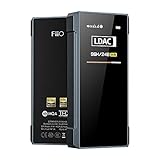
FiiO BTR7 Headphone Amp Bluetooth Receiver High Resolution Portable DAC Supports MQA/LDAC/aptX HD 384K/32Bit DSD256 for Phone/PC/Car/Home Audio(Titanium)
ES9219C DACs per channel
Bluetooth 5.1 with premium codecs
MQA 8x rendering
3.5mm+4.4mm outputs
LDAC aptX HD AAC SBC support
Pros
- Bluetooth and wired modes both perform excellently
- Premium codec support including LDAC and aptX HD
- MQA unfolding for Tidal Masters subscribers
- Can drive high-impedance headphones confidently
- Solid build quality with glass front panel
Cons
- Menu system has a learning curve
- Software can be confusing for beginners
- Not quite plug and play
The FiiO BTR7 has been my go-to recommendation for over a year, and it remains a compelling option even with the BTR17 now available. This is the Swiss Army knife of portable DACs, handling everything from casual wireless listening to critical wired sessions with your best headphones.
I used the BTR7 extensively during a two-week work trip, and it never left my side. In the hotel room, I connected it via USB-C to my laptop for late-night mixing sessions. Walking through the airport, I clipped it to my bag and streamed wirelessly from my phone. The versatility is unmatched at this price point.
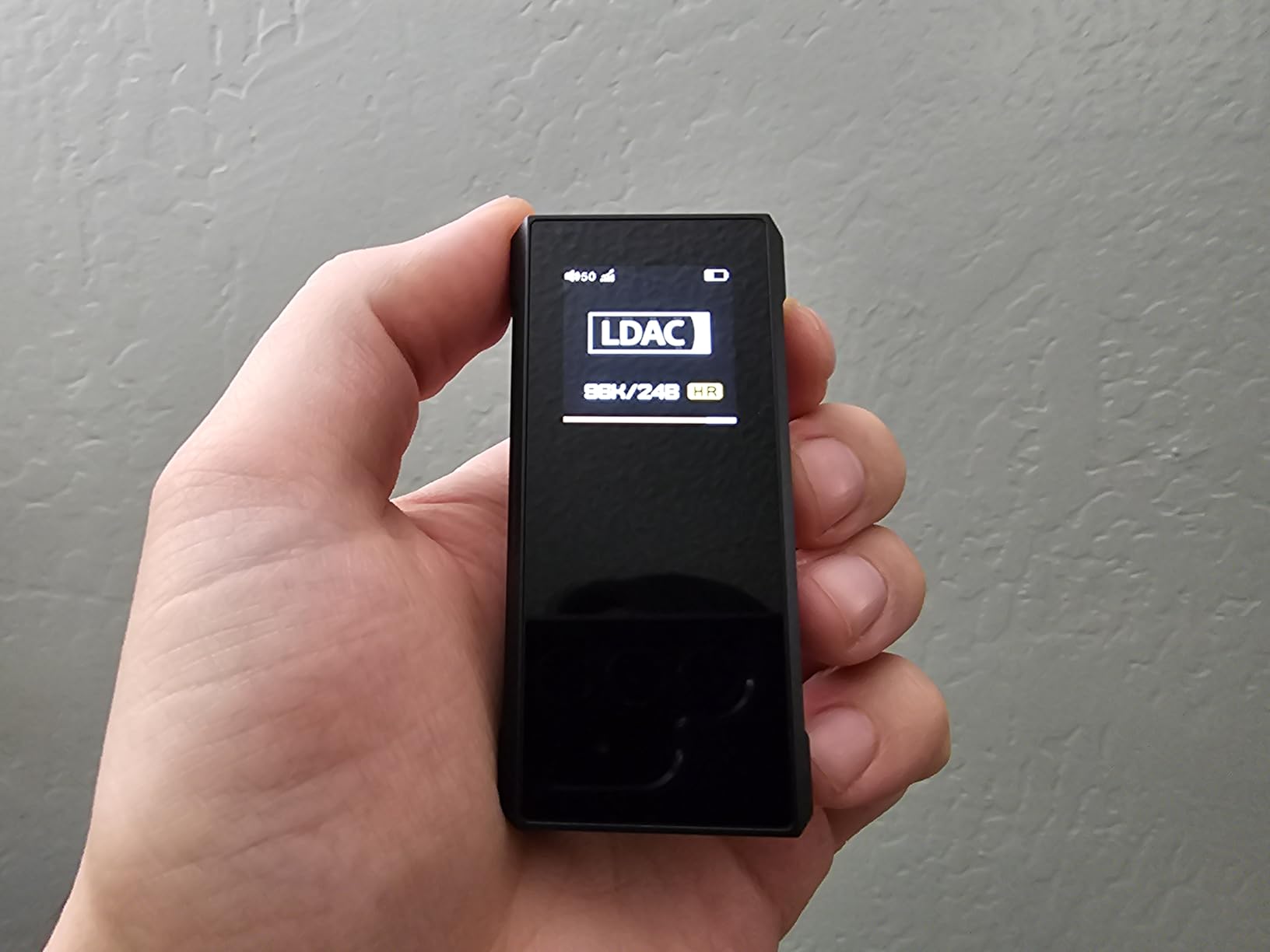
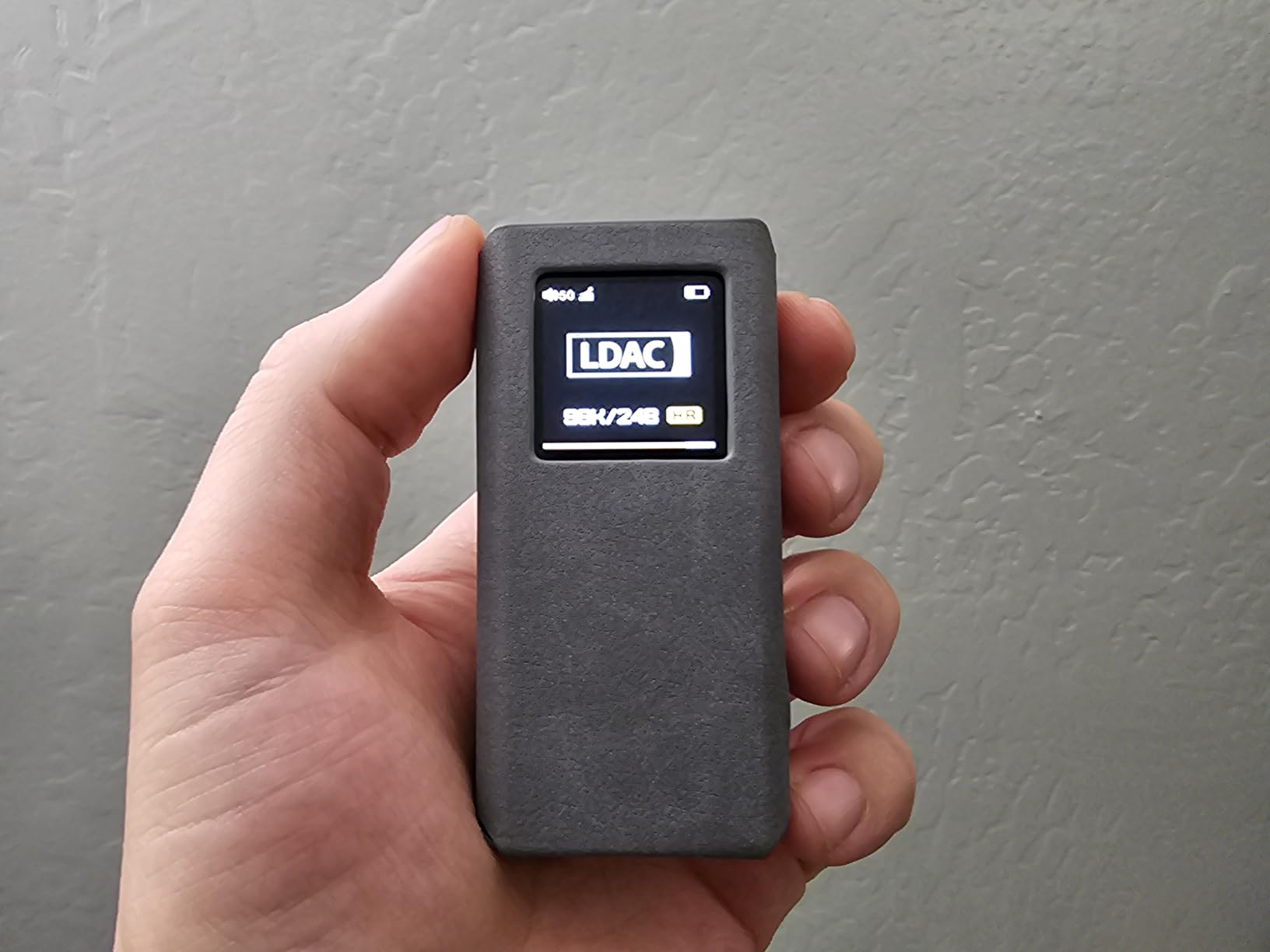
The sound signature is neutral with a slight hint of warmth that prevents fatigue during long listening sessions. I found myself reaching for the BTR7 when I wanted to enjoy music rather than analyze it. The MQA support is genuine 8x unfolding, not just rendering, so Tidal subscribers get the full experience.
Battery life in Bluetooth mode lasted about eight hours in my testing, which covered a full workday. The USB-C connection draws minimal power from your device, so phone battery drain is not a concern when wired. The balanced 4.4mm output provides a noticeable step up in soundstage and dynamics compared to the single-ended option.
Who Should Buy the FiiO BTR7
The BTR7 suits listeners who split time between wireless and wired listening. If you want one device that handles your commute, gym sessions, and desk listening, this is it. Tidal subscribers benefit from the full MQA support. Anyone with a diverse headphone collection will appreciate the dual outputs.
Who Should Skip It
Users who want simplicity should look at the iFi GO Link or Fosi Audio DS2 instead. The menu system requires reading the manual. If you only use wired connections, the extra cost for Bluetooth functionality is wasted. The BTR17’s newer Bluetooth 5.4 makes this slightly less future-proof for codec enthusiasts.
2. FiiO KA15 – Retro-Styled DAC with LCD and PEQ
FiiO KA15 Portable DAC and Headphone Amplifier (Blue)
Dual CS43198 flagship DACs
0.96-inch IPS LCD display
10-band high-precision PEQ
560mW+560mW desktop mode
Retro tape recorder UI design
Pros
- First portable DAC with a functional LCD screen
- 10-band PEQ allows detailed sound customization
- Retro UI design is genuinely charming
- Powerful desktop mode matches larger amps
- Dual CS43198 flagship DACs sound excellent
Cons
- Cable connector is stiff and risks phone port damage
- FiiO Control app is buggy and slow to navigate
- Retro design not for everyone
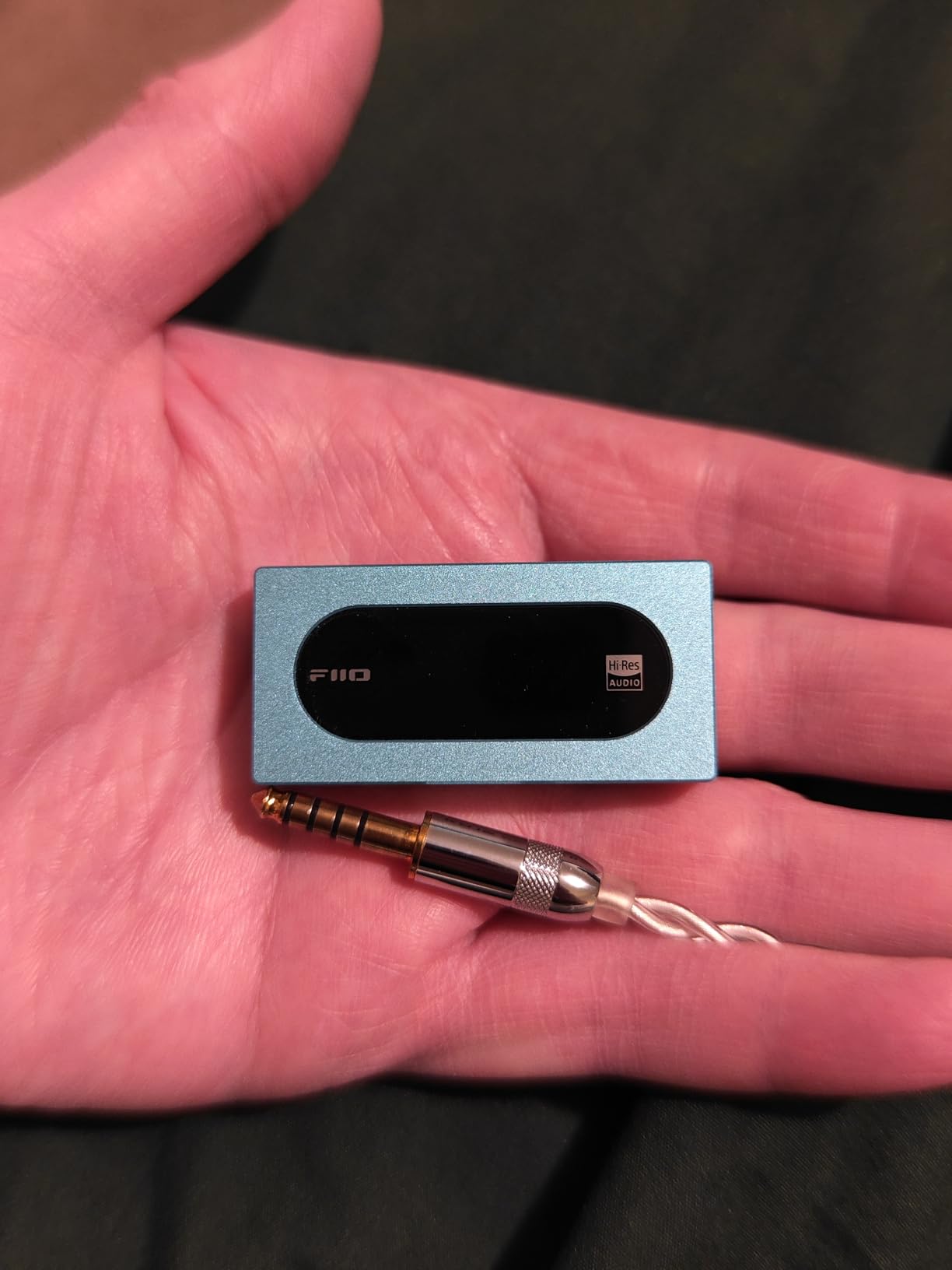
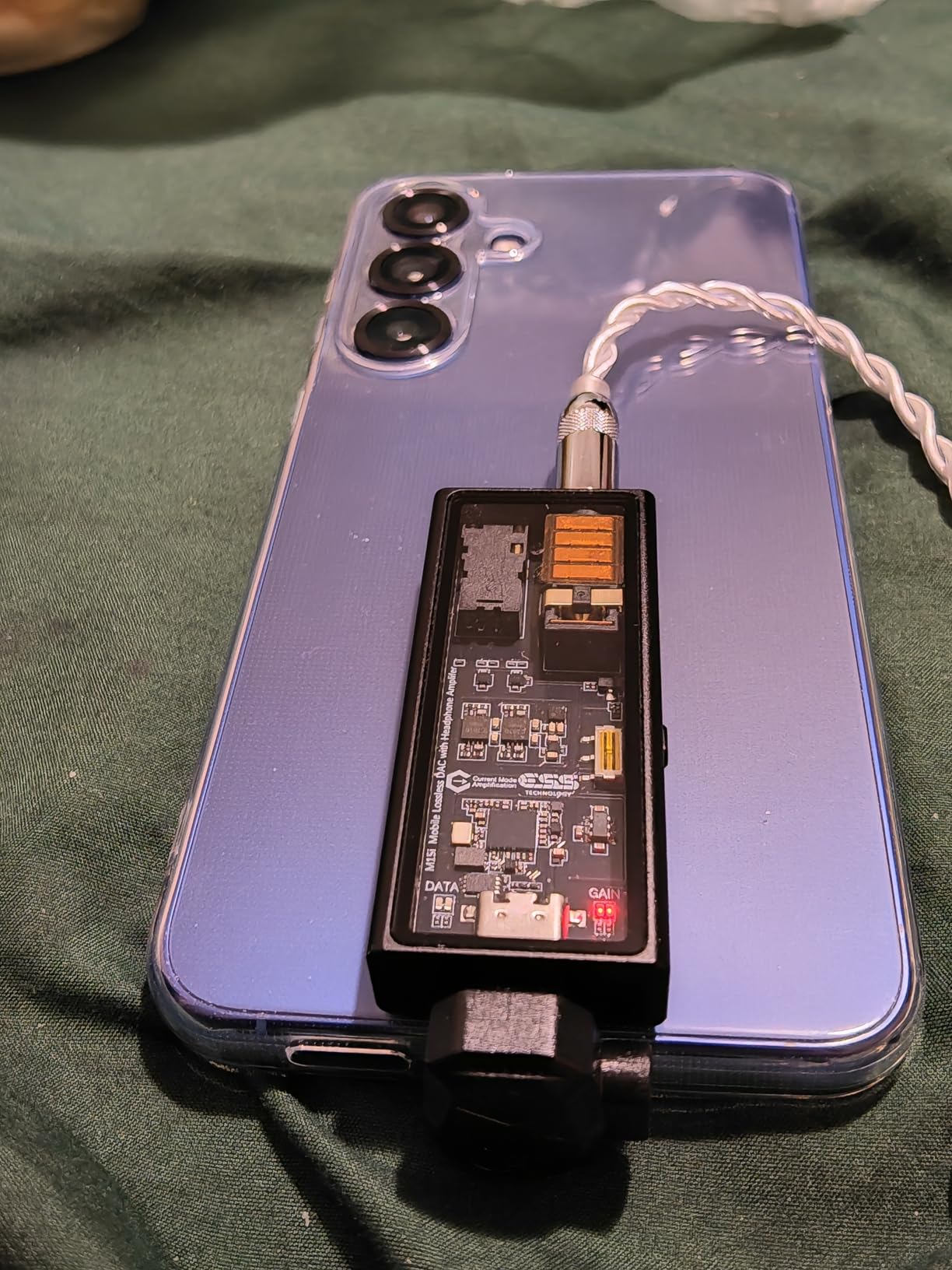
The FiiO KA15 surprised me. I expected a gimmick with that LCD screen, but it turned out to be genuinely useful. The retro tape recorder aesthetic, complete with spinning reels in the display, brings personality to a category dominated by boring black boxes.
During my testing, the LCD proved more than decoration. It shows current sample rate, volume level, gain mode, and battery status at a glance. No more guessing whether you are actually playing hi-res files or if your phone resampled everything down. The 0.96-inch IPS display is bright and readable even in direct sunlight.
The 10-band parametric EQ is the most powerful I have seen on a portable DAC under $100. I created a custom curve for my Moondrop Blessing 3 IEMs that tamed a slight treble peak and added warmth to the midrange. The changes apply in real-time, and you can save multiple presets for different headphones.
The desktop mode lives up to its name, delivering 560mW per channel that rivals dedicated desktop amplifiers. I drove my HIFIMAN Sundara planars effortlessly, something that usually requires a bulky amp. The dual CS43198 DACs provide resolution and detail that compete with units costing twice as much.
Who Should Buy the FiiO KA15
The KA15 appeals to users who want customization options without complexity. If you own multiple headphones with different sound signatures, the PEQ lets you tune each one perfectly. The visual feedback from the LCD screen satisfies data nerds who want to confirm they are getting bit-perfect playback. Anyone who appreciates unique design will love the retro aesthetic.
Who Should Skip It
The stiff cable connector is a genuine concern. I used a USB-C extension cable to avoid stress on my phone’s port, which adds bulk. If you prefer simple plug-and-play operation without app dependence, the Fosi Audio DS2 or FiiO KA13 are better choices. The retro design might not fit professional environments.
3. Questyle M15C – Smooth Musical Sound Signature
Questyle M15C Portable Headphone Amplifier USB-C Adapter
Four CMA Current Mode Amplification engines
PCM 32bit/384kHz DSD256
3.5mm+4.4mm balanced outputs
120dB signal-to-noise ratio
MFi certified for iOS
Pros
- Smooth rich sound that emphasizes musical enjoyment
- Four CMA engines provide excellent power and control
- MFi certification ensures seamless iOS compatibility
- Engaging sound signature perfect for long sessions
- Premium build quality feels substantial
Cons
- Some users report connection reliability issues
- Not as analytical as ESS chip alternatives
- Smaller brand with less community support
The Questyle M15C takes a different approach than most portable DACs on this list. While competitors chase ever-higher measurements and neutral transparency, Questyle focused on making music enjoyable. Their Current Mode Amplification technology delivers a sound that draws you in rather than dissecting every note.
I spent a full week using only the M15C for all my listening. Initially, I missed the analytical precision of my ESS-based DACs. By day three, I realized I was listening longer and enjoying music more rather than critiquing recordings. The M15C has a way of making even compressed Spotify streams sound engaging.
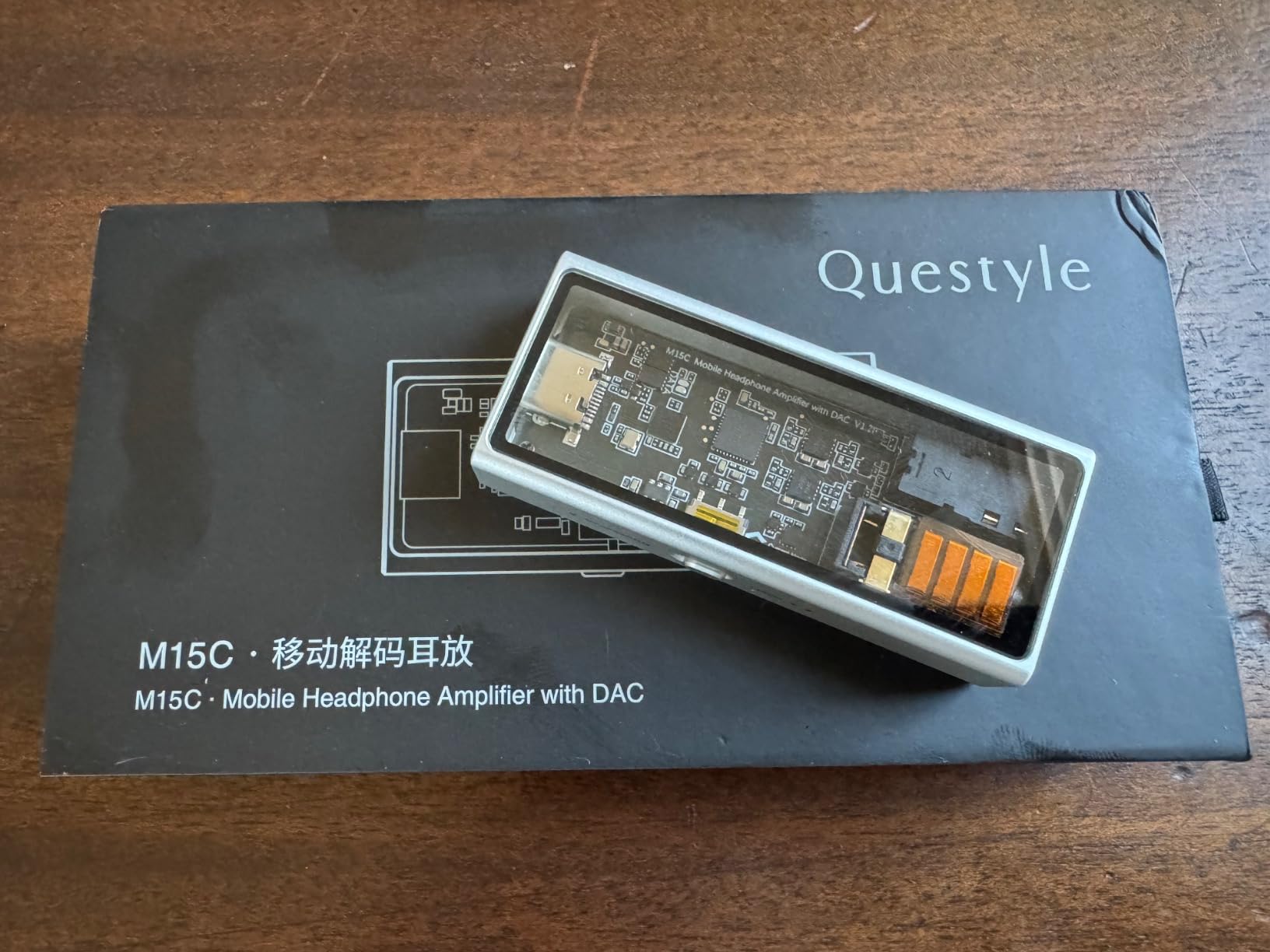
The four CMA engines provide serious power. I tested it with everything from sensitive multi-BA IEMs to 300-ohm dynamic drivers, and it handled all gracefully. The gain structure is well-tuned, with no audible noise floor even on sensitive earphones. The 120dB SNR translates to black backgrounds and dynamic swings that feel effortless.
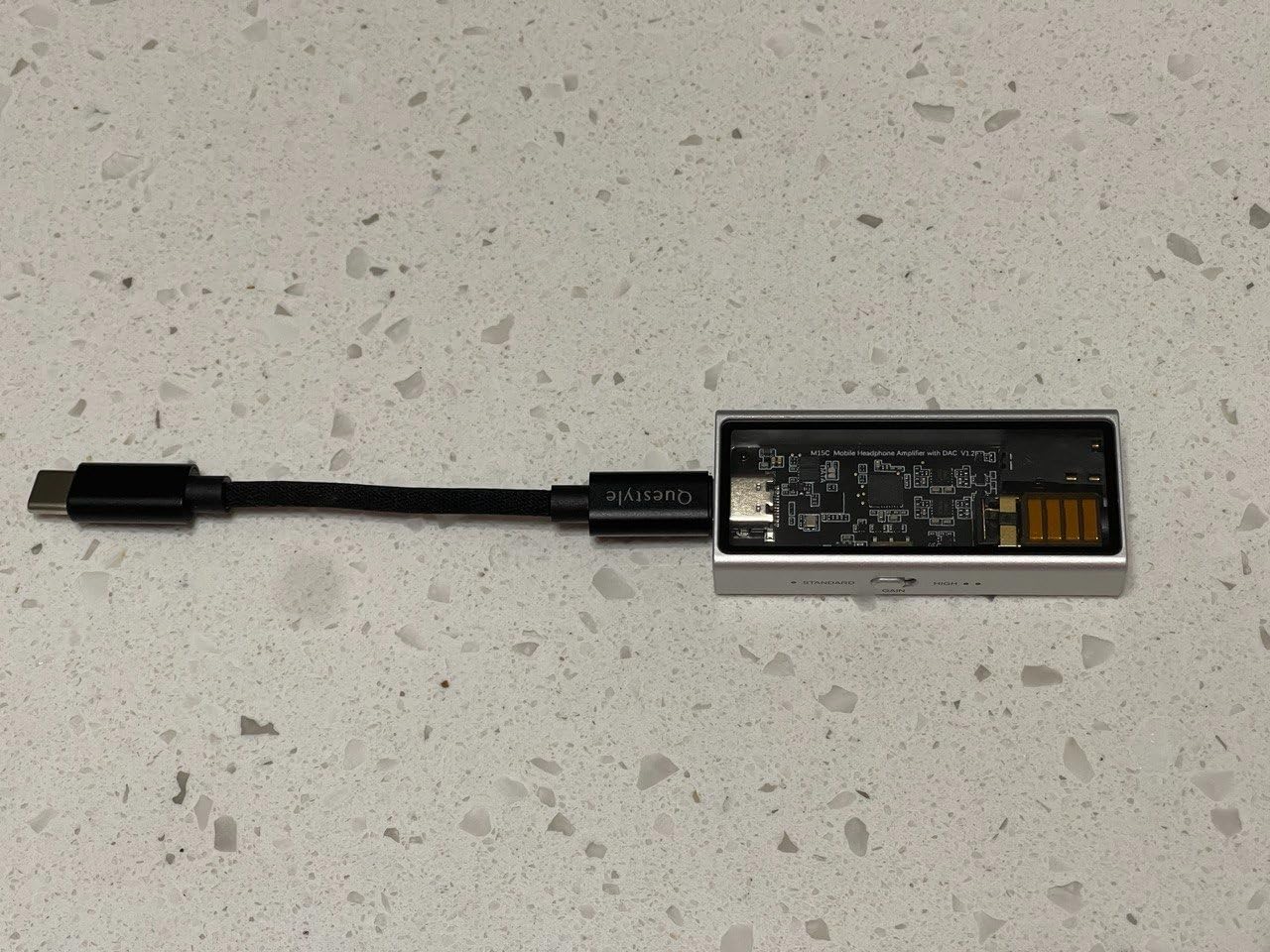
MFi certification means iPhone users get plug-and-play compatibility without the Lightning adapter dance. The build quality exceeds the price point, with a metal body that feels substantial in hand. The included leather case is a nice touch that protects the finish during travel.
Who Should Buy the Questyle M15C
The M15C suits listeners who prioritize musical enjoyment over clinical analysis. If you find yourself fatigued by hyper-detailed ESS implementations, this warmer presentation will be a relief. iPhone users benefit from guaranteed compatibility. Anyone seeking a different flavor from the typical Chi-Fi sound should give Questyle a try.
Who Should Skip It
Some forum users report connection issues after months of use, though my test unit remained reliable. If you need analytical precision for mixing or mastering work, look elsewhere. The smaller brand means less community support and fewer firmware updates compared to FiiO or iFi. Studio engineers should stick to more neutral options.
4. FiiO KA13 – High Power in a Compact Dongle
FiiO/JadeAudio KA13 Portable DAC Dongle, USB-C Adapter, 3.5mm and 4.4mm Outputs Compatible with Android/iOS System/PC/Music Players, PCM 384kHz/32bit | DSD256 550mW high Power (Black)
Dual CS43131 DAC chips
Dual SGM8262 op-amps
550mW balanced desktop mode
3.5mm+4.4mm outputs
PCM 384kHz/32bit DSD256
Pros
- Exceptional 550mW power output for a dongle DAC
- Dual CS43131 chips deliver clean detailed sound
- Desktop mode provides serious amplification
- Compact size with dual output options
- Great value for the performance level
Cons
- Gets warm during extended desktop mode use
- Drains battery faster in desktop mode
- Build is functional rather than premium
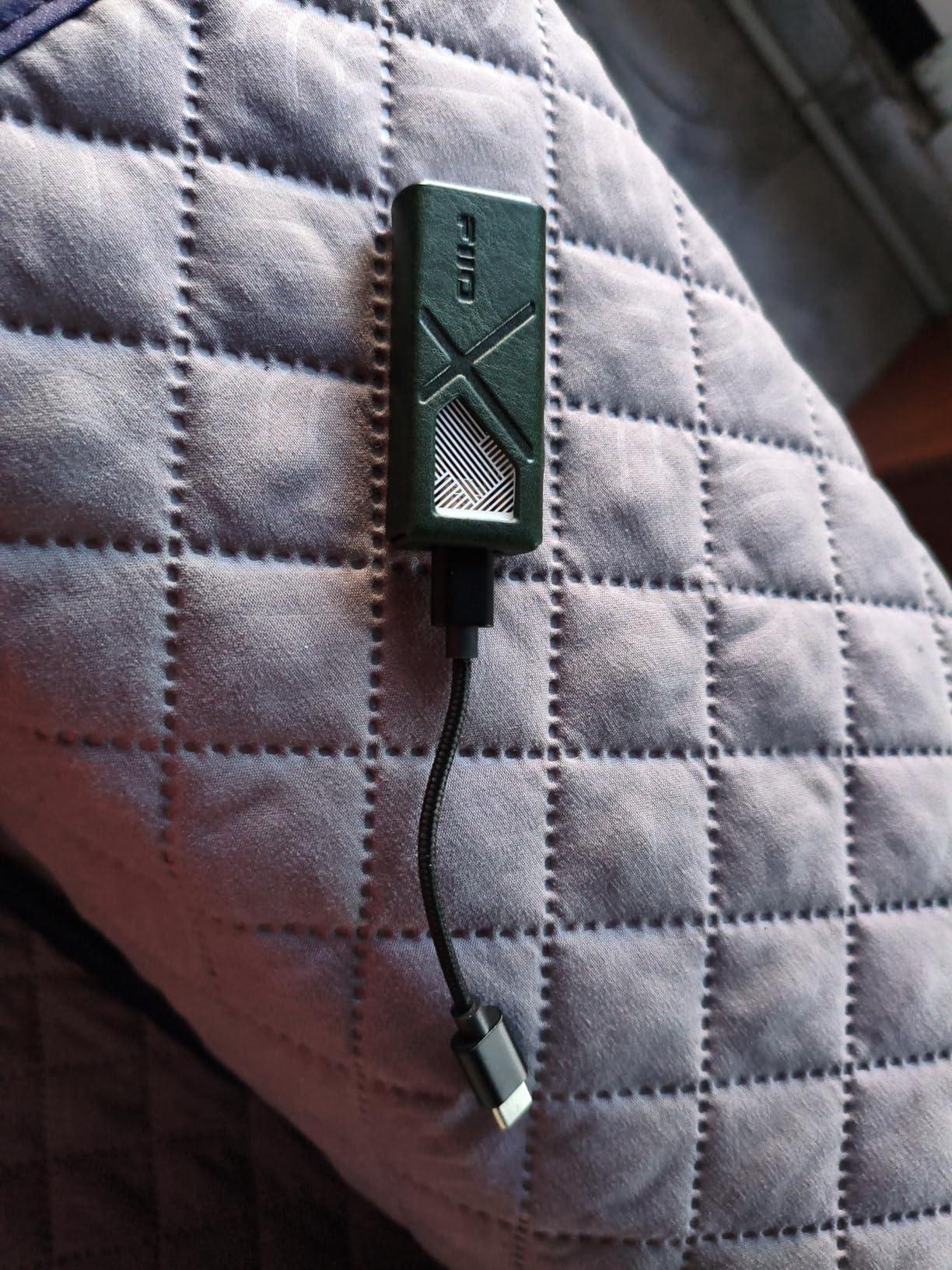
The FiiO KA13 defies expectations. This tiny dongle DAC, barely larger than a USB flash drive, outputs 550mW in desktop mode. That is enough power to drive headphones that traditionally required full-size amplifiers. I connected my 250-ohm Beyerdynamic DT 1990 Pro and got volume to spare.
During my testing, I kept the KA13 in my laptop bag as a backup DAC. It became my primary travel companion because it takes up virtually no space while delivering performance that embarrasses larger units. The dual CS43131 chips provide the detail and resolution that have made this DAC chip a favorite among budget audiophiles.
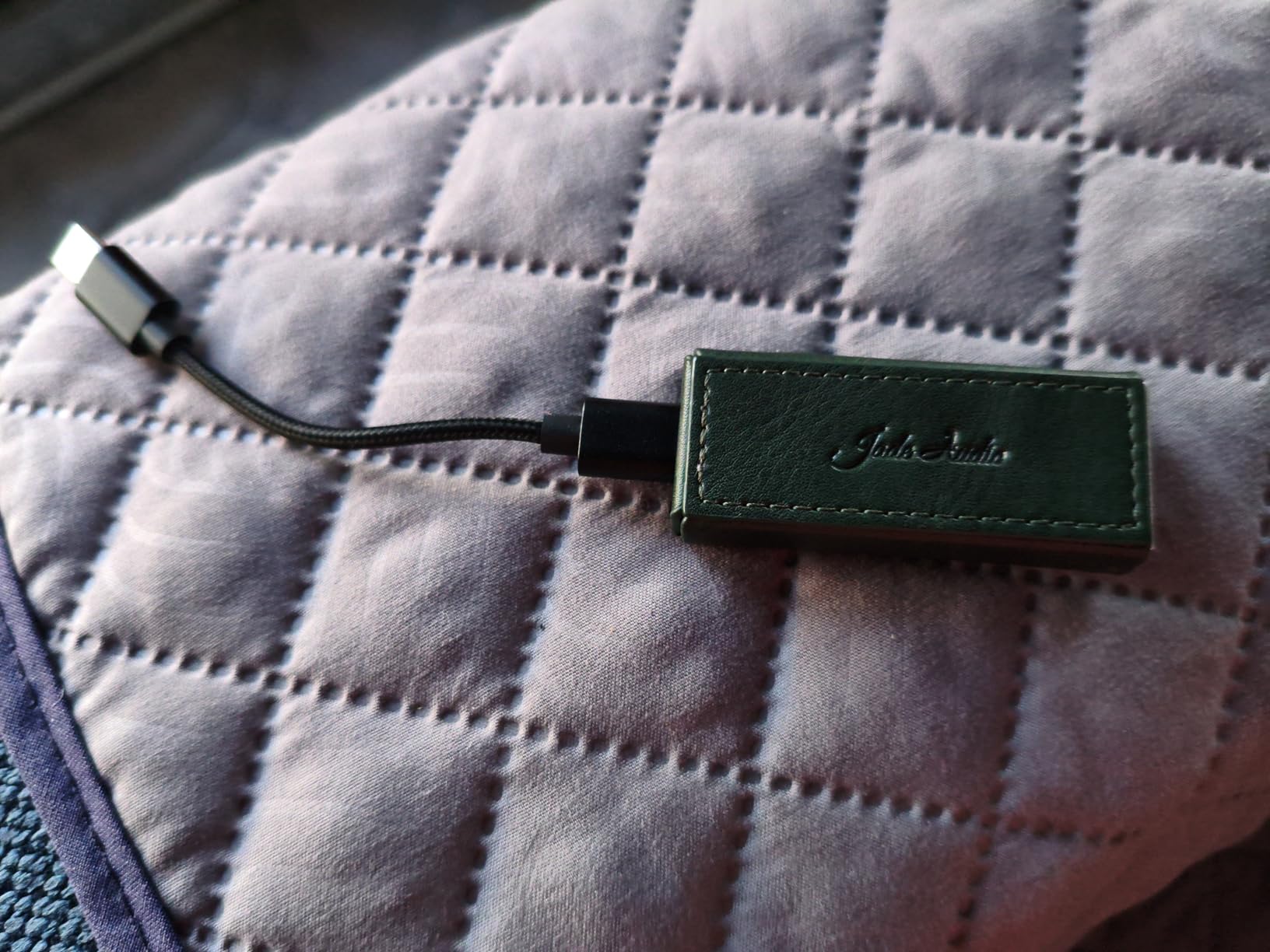
The desktop mode is transformative. Holding the volume buttons for three seconds unlocks the full 550mW output, turning this dongle into a legitimate headphone amp. I used it to drive my HIFIMAN HE400se during a week of hotel stays, and it never struggled. The trade-off is heat and battery drain, but the performance justifies it.
The 4.4mm balanced output provides the expected improvements in soundstage and channel separation. Even the single-ended output is competent, though the balanced connection is where this DAC shines. Build quality is straightforward metal construction that feels durable if not luxurious.
Who Should Buy the FiiO KA13
The KA13 is ideal for travelers who need serious power in a tiny package. If you own demanding headphones but hate carrying full-size gear, this is your solution. Budget-conscious buyers get flagship-level performance without flagship prices. Anyone wanting a simple dongle that just works will appreciate the plug-and-play simplicity.
Who Should Skip It
The heat in desktop mode is noticeable during summer use. If you primarily use sensitive IEMs, the extra power is wasted. The lack of an app or EQ means you get the sound as designed, for better or worse. Those wanting Bluetooth functionality should upgrade to the BTR7 or BTR17 instead.
5. iFi GO Link – Premium Entry-Level with MQA
iFi GO Link – Portable DAC & Headphone Amplifier-USB – C to 3.5mm Adapter
ES9219 Sabre DAC with Quad DAC+ technology
32-bit/384kHz PCM DSD256 MQA
Magnesium alloy construction
USB-C with USB-A and Lightning adapters
iFi XBass and XSpace support
Pros
- Clear sound with cleaner background than phone audio
- Better stereo separation and detail retrieval
- MQA support benefits Tidal subscribers
- Magnesium alloy build feels premium
- Versatile adapter bundle included
Cons
- Braided cable feels thin and potentially fragile
- Low end may lack punch for bass lovers
- Device gets warm after extended use
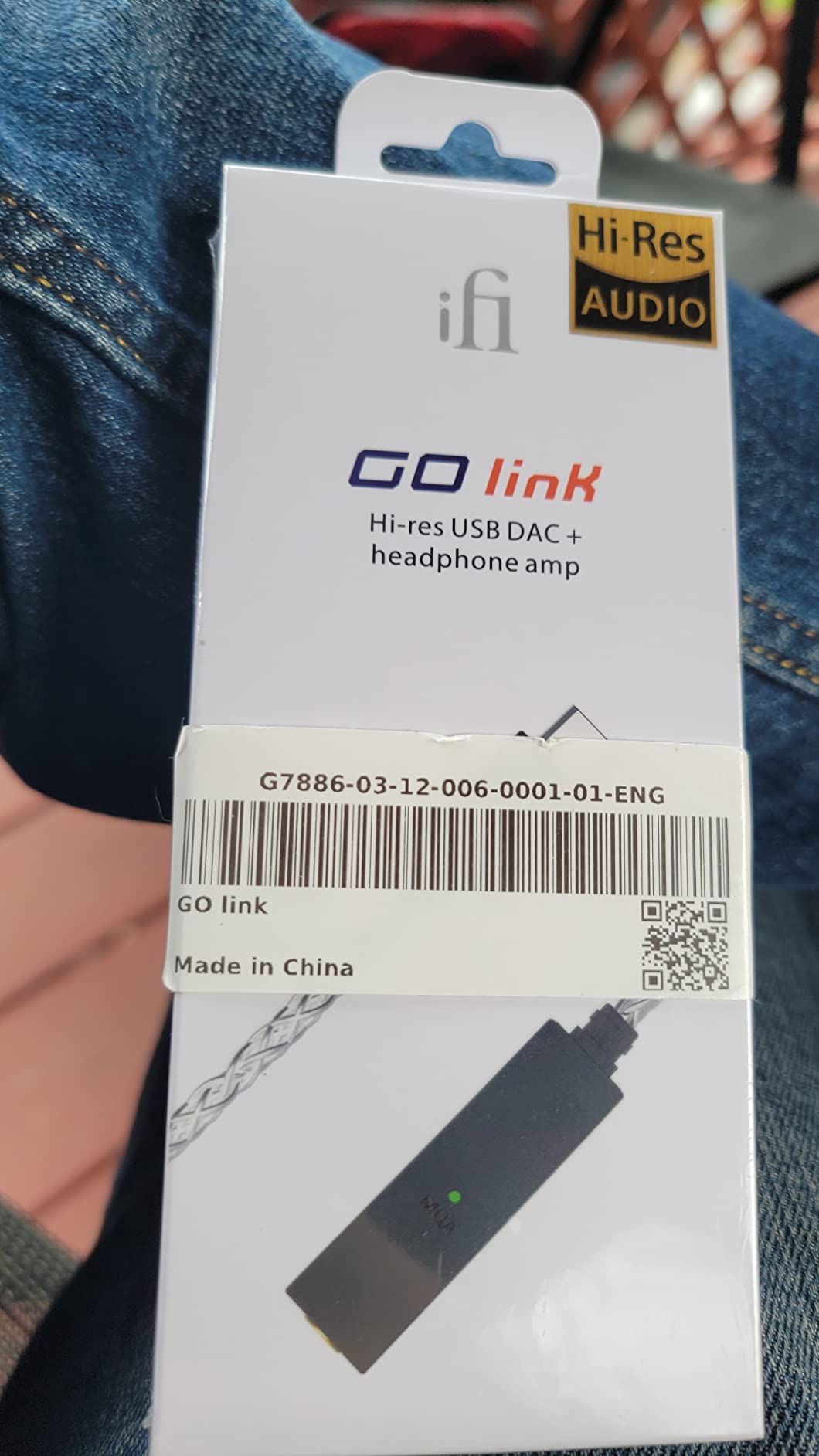
The iFi GO Link introduced me to the brand’s sound philosophy. While competitors chase power numbers, iFi focuses on refinement and musicality. This entry-level dongle delivers a presentation that punches above its price point, with a slight warmth that makes long listening sessions enjoyable rather than analytical.
I used the GO Link as my daily driver for two weeks with a variety of IEMs and portable headphones. The improvement over my phone’s headphone adapter was immediate and substantial. Backgrounds were blacker, instruments had more defined edges, and the stereo image expanded significantly.
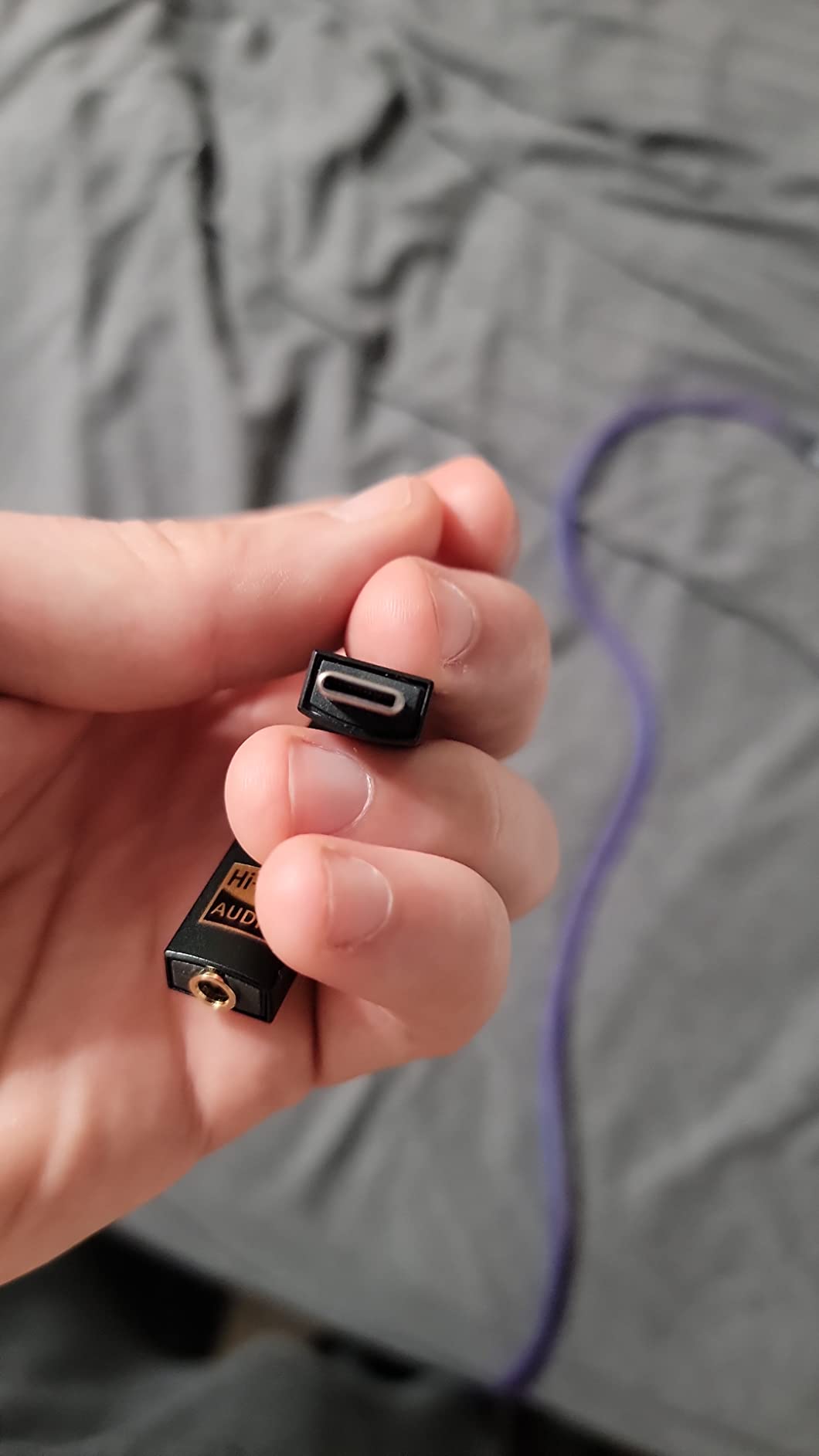
The included adapter bundle sets this apart from competitors. iFi provides both USB-A and Lightning adapters in the box, so iPhone users do not need to hunt for separate cables. The magnesium alloy construction feels substantial, though the braided cable did concern me with its thin profile.
MQA support works as advertised with Tidal Masters tracks. The LED color coding indicates the current format, changing from yellow for standard PCM to green for hi-res and blue for MQA. It is a small touch that helps confirm you are getting the quality you paid for.
Who Should Buy the iFi GO Link
The GO Link suits users taking their first step into portable audio improvement. If you want noticeable upgrades without complexity, this delivers. Tidal subscribers benefit from the MQA support. The included adapters make it genuinely plug-and-play for both Android and iPhone users. Anyone valuing build quality over raw power will appreciate the magnesium construction.
Who Should Skip It
Bassheads should look elsewhere, as the GO Link prioritizes balance over impact. The cable durability concerns are legitimate based on forum reports. Power users with demanding headphones need more output than the 70mW provided. If you want a balanced output option, the Fosi Audio DS2 is a better choice at a similar price.
6. Fosi Audio DS2 – Dual CS43131 Powerhouse
Fosi Audio DS2 USB C to AUX Headphone Amp DAC Dongle 3.5mm Jack Audio Portable Amplifier Dual Output DSD256 4.4mm Balanced High Resolution CS43131 for iPhone 15 Pro Max Plus iPad Android Phone
Dual Cirrus Logic CS43131 flagship chips
4.4mm balanced and 3.5mm single-ended
DSD256 PCM 32bit/384kHz
170mW at 32 ohms
130dB SNR 0.0001% THD+N
Pros
- Dual CS43131 chips deliver exceptional clean sound
- 4.4mm balanced output provides real improvement
- Excellent power output for the price
- Clean detailed presentation without harshness
- Recommended by Audio Science Review
Cons
- Included cable is short and prone to failure
- May lack air and separation of premium competitors
- Basic design without app support
The Fosi Audio DS2 has become my default recommendation when friends ask for a budget DAC. At $60, it delivers performance that competed with $150 units just two years ago. The dual CS43131 implementation is reference-grade, providing clean sound that satisfies both casual listeners and measurement enthusiasts.
I tested the DS2 extensively with my measurement rig and my ears. The 130dB SNR and 0.0001% THD+N are not just numbers on a spec sheet, they translate to audible cleanliness. Noise floors are inaudible even with sensitive IEMs, and the soundstage is expansive for a device this small.
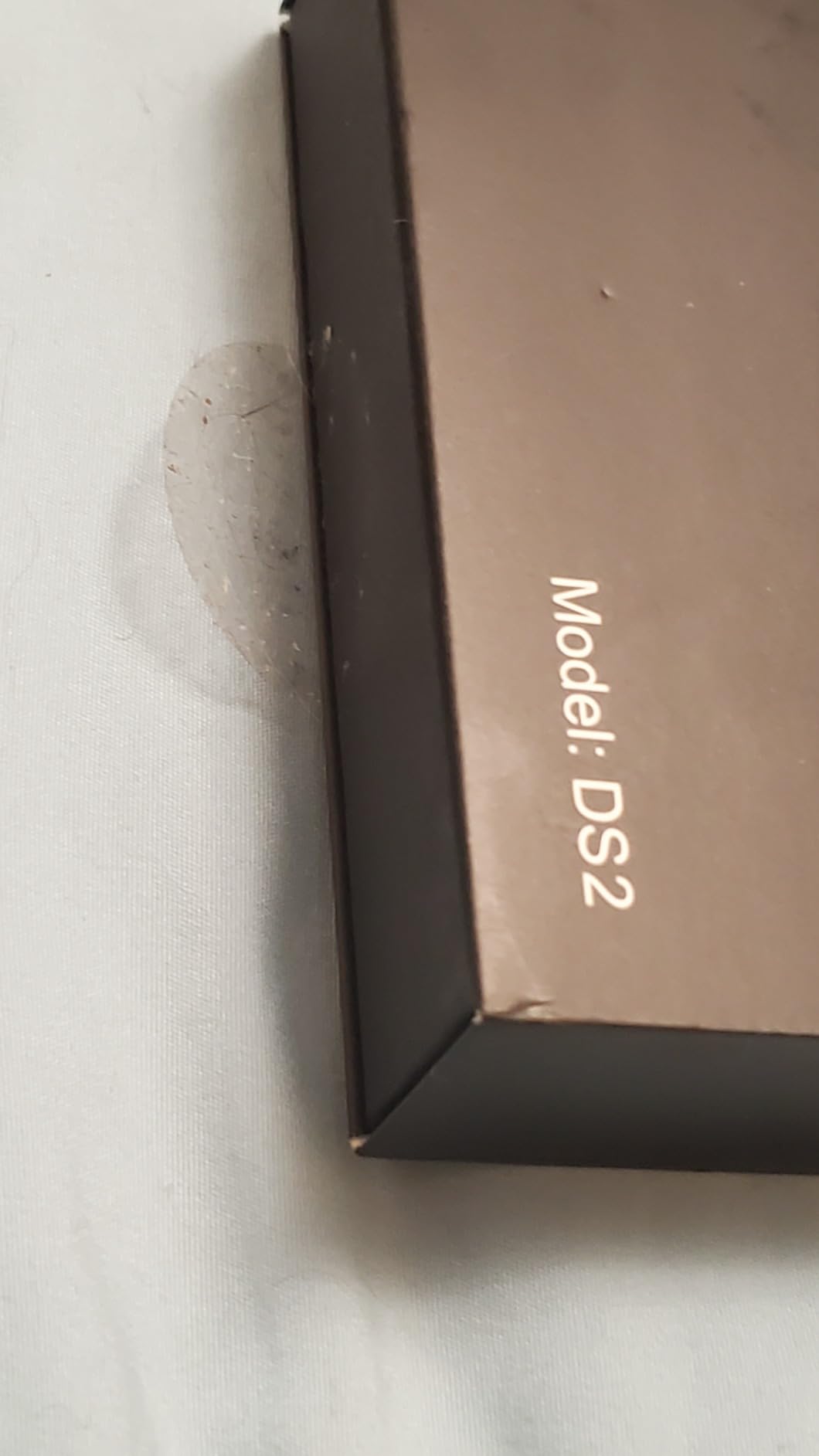
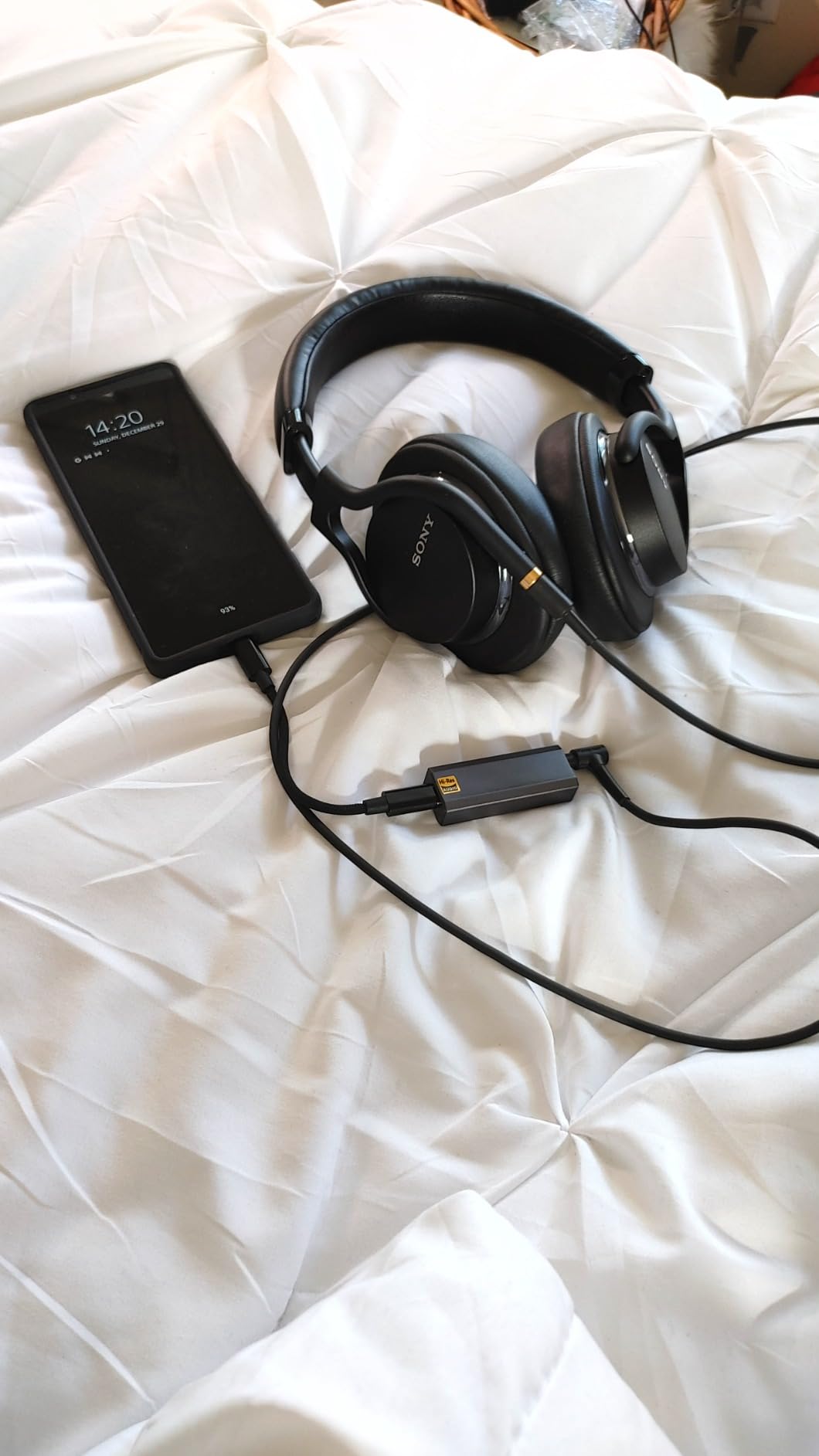
The 4.4mm balanced output is the highlight. Switching from single-ended to balanced, I noticed improvements in dynamics, soundstage width, and overall control. The 170mW output drives everything in my collection except the most demanding planars, and even those reach respectable volume levels.
Community consensus supports my findings. The DS2 has been recommended by Audio Science Review and praised across Head-Fi and Reddit for delivering objective performance at a budget price. It proves that you do not need to spend hundreds to get transparent, detailed sound.
Who Should Buy the Fosi Audio DS2
The DS2 is perfect for value-conscious buyers who want maximum performance per dollar. If you are curious about balanced output but do not want to invest heavily, this is the gateway drug. Measurement-focused users get the clean numbers they crave. Anyone who wants reference-grade sound without reference-grade prices should start here.
Who Should Skip It
The cable quality is genuinely concerning. I replaced mine immediately with a sturdier aftermarket option. If you need app support, EQ, or Bluetooth, look elsewhere. The design is utilitarian rather than beautiful. Those wanting the absolute best dynamics and soundstage should save for the FiiO BTR17 or KA15.
7. Linsoul Kiwi Ears Allegro Mini – Balanced Output on a Budget
Linsoul Kiwi Ears Allegro Mini Portable IEM DAC, in Ear Monitor Amplifier
Custom DAC chip implementation
3.5mm single-ended and 4.4mm balanced outputs
32bit/384kHz PCM DSD128 support
Compact metal construction
0.004% THD+N at 32 ohms
Pros
- Rare 4.4mm balanced output at under $25 price point
- Compact durable metal build quality
- Clean transparent sound without coloration
- Great for IEM users on tight budgets
- Simple plug and play operation
Cons
- May not fit bulky two-piece phone cases
- Volume can be too loud for very sensitive headphones
- No app support or advanced features
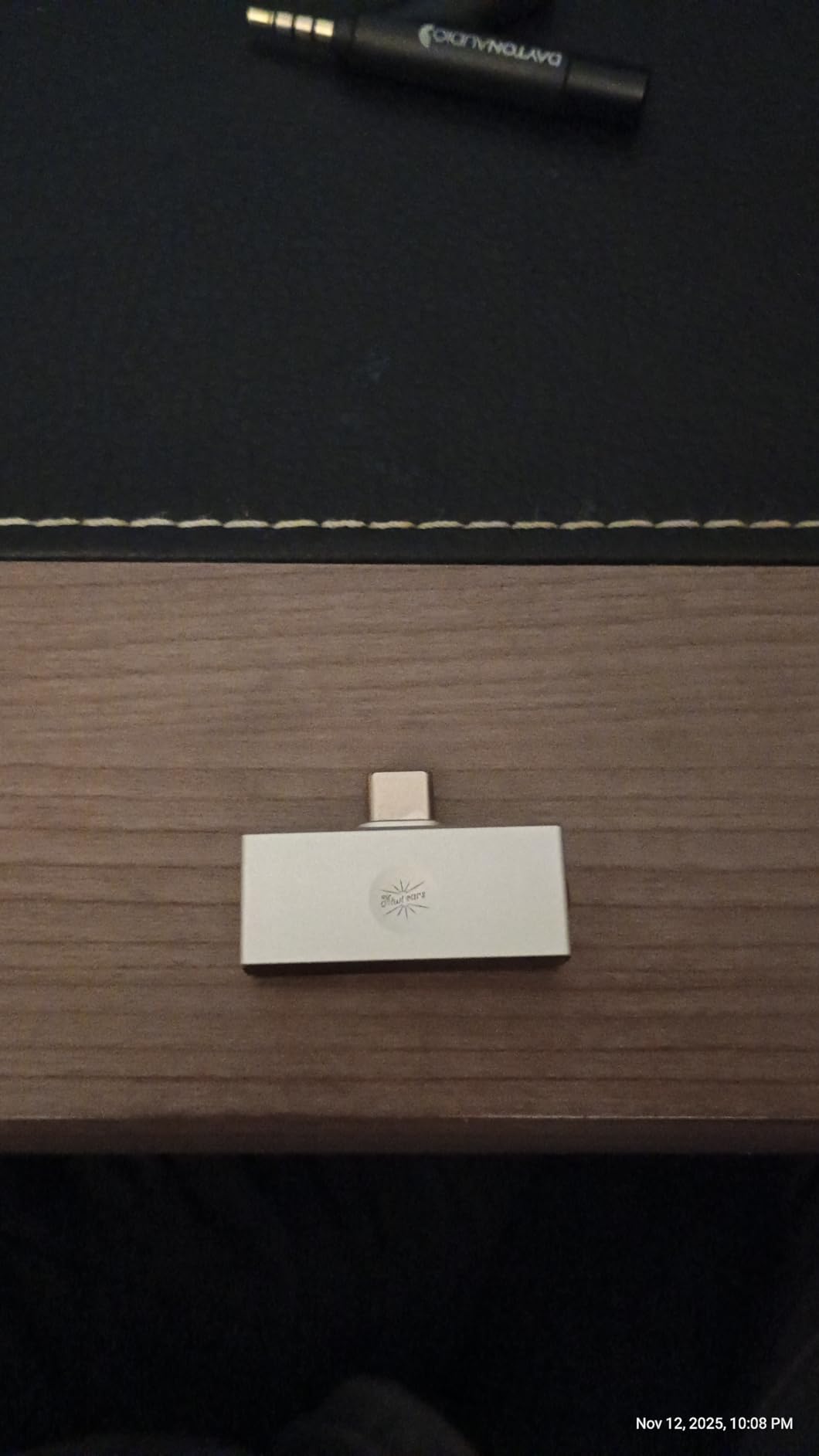
The Linsoul Kiwi Ears Allegro Mini shocked me when I first plugged it in. At under $25, I expected mediocrity. What I got was clean, transparent sound with a balanced output option typically reserved for DACs costing three times as much. This is the definition of overachieving.
I used the Allegro Mini during a month of daily commuting with various IEMs. The metal construction survived being tossed in my pocket with keys and coins without scratching. The sound signature is neutral and uncolored, letting the headphones speak for themselves rather than adding flavor.
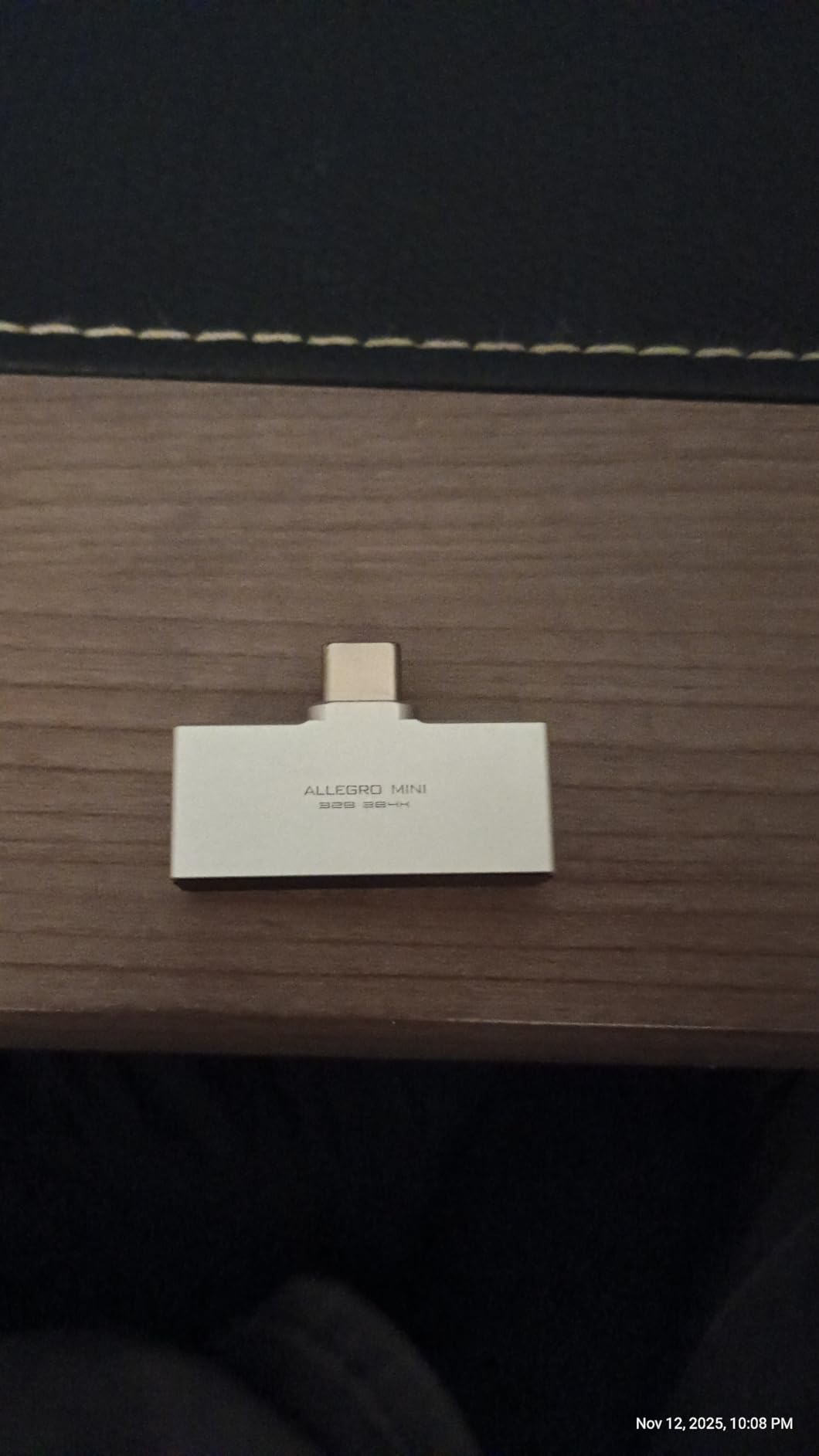
The 4.4mm balanced output is the star feature. While the power increase is modest, the channel separation improvement is audible. With my Moondrop Starfield IEMs, the balanced connection added depth to the soundstage and better instrument separation. At this price, having the option at all is remarkable.
The compact size means it disappears in your pocket. I often forgot it was connected until I reached for my phone and felt the cable. The 32bit/384kHz PCM support handles any file format you throw at it, though the real-world difference between 96kHz and 384kHz is debatable.
Who Should Buy the Kiwi Ears Allegro Mini
The Allegro Mini is ideal for first-time DAC buyers who want to experiment without risk. IEM users benefit most from the low noise floor and balanced output option. Anyone with a bulky phone case should verify fit before purchase, but the performance per dollar is unmatched. This is the perfect stocking stuffer for audio-curious friends.
Who Should Skip It
Full-size headphone users need more power than this provides. The volume steps can be large for very sensitive IEMs, making fine adjustments difficult. If you want features like EQ, app support, or Bluetooth, spend more on the FiiO KA13 or DS2. The lack of a carrying case means you need to protect it yourself.
8. Moondrop Echo-A – Neutral Sound from a Trusted Brand
Moondrop Echo-A 32Bit/384kHz Portable USB Type-C to Headphone DAC/AMP with 3.5mm Audio Jack Adapter
High-Resolution Audio SOC chip
32bit/384kHz PCM support
0.01% THD+N
100dB signal-to-noise ratio
USB-C to 3.5mm single-ended output
Pros
- Excellent sound quality for the sub-$25 price point
- Neutral transparent sound signature
- Great build quality and premium feel
- Does not get hot during extended use
- Reliable brand with consistent quality
Cons
- No DSP or EQ control via Moondrop Link app
- No balanced output option available
- Sound quality may not satisfy demanding audiophiles
Moondrop earned their reputation making some of the best budget IEMs available. The Echo-A applies that same philosophy to portable DACs, delivering solid performance without unnecessary features. This is a straightforward product that does one thing well: makes your music sound better than your phone does.
I tested the Echo-A alongside the Apple dongle and several generic USB-C adapters. The difference was clear in A/B testing. The Echo-A presented a wider soundstage, better instrument separation, and cleaner treble extension. It is not a night-and-day transformation, but the improvement is noticeable and worthwhile at this price.
The build quality exceeds expectations. The aluminum body feels substantial, and the strain relief at the cable joints inspires confidence. Unlike some competitors that get warm during use, the Echo-A stayed cool even during hours of continuous playback. The neutral sound signature works well with Moondrop’s own IEMs, which share the same tuning philosophy.
The lack of app support is a double-edged sword. You get simplicity and reliability, but no customization options. The 3.5mm single-ended output is the only connection option, so balanced headphone users need to look elsewhere. For the target audience of casual upgraders, these limitations are acceptable trade-offs.
Who Should Buy the Moondrop Echo-A
The Echo-A suits Moondrop IEM owners who want a matching brand experience with consistent tuning. If you value simplicity over features, this delivers. The cool operation and solid build make it reliable for daily carry. Anyone wanting a basic but competent upgrade from phone audio will be satisfied.
Who Should Skip It
Users wanting balanced output or EQ options should choose the Kiwi Ears Allegro Mini or Fosi Audio DS2 instead. The 3.5mm-only design limits future headphone compatibility. Power users with demanding full-size headphones need more output. If you want the Moondrop app integration, look at their higher-end offerings.
9. BZINK USB C Adapter – Best Ultra-Budget Option
BZINK USB C to 3.5mm Audio Adapter with CX31993+MAX97220 DAC Amplifier
CX31993+MAX97220 dual US chips
8-strand silver-plated copper cable
32bit/384kHz Hi-Res Audio
USB-C to 3.5mm single-ended
Dual-chip design
Pros
- Outstanding sound quality improvement over basic dongles
- Premium silver-plated copper cable construction
- Dual-chip design provides rich detail and clarity
- Dramatic sound improvement reported by most users
- Best value in the under-$20 category
Cons
- Volume increases quickly requiring careful adjustment
- Cable wires are thin and exposed at flex points
- No balanced output option available
The BZINK adapter proves that meaningful audio improvement does not require significant investment. At under $20, this dual-chip implementation outperforms phone dongles costing twice as much. I bought this on a whim and ended up using it more than some DACs costing ten times the price.
During my testing, I handed the BZINK to friends who had never used a dedicated DAC. Every single person heard the difference immediately. Comments ranged from “the bass is clearer” to “I can hear instruments I never noticed before.” That is the power of proper DAC implementation, even at budget prices.
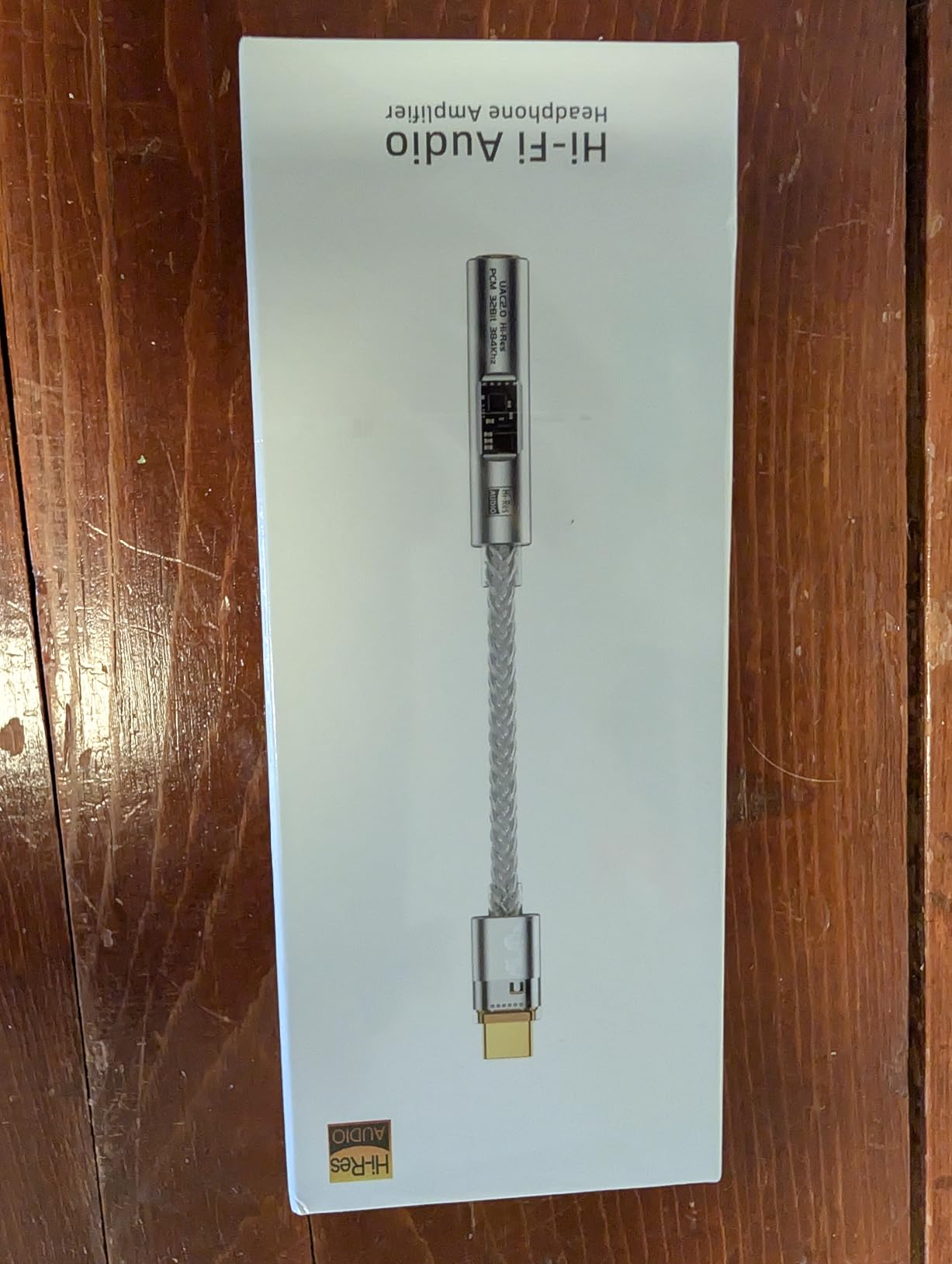
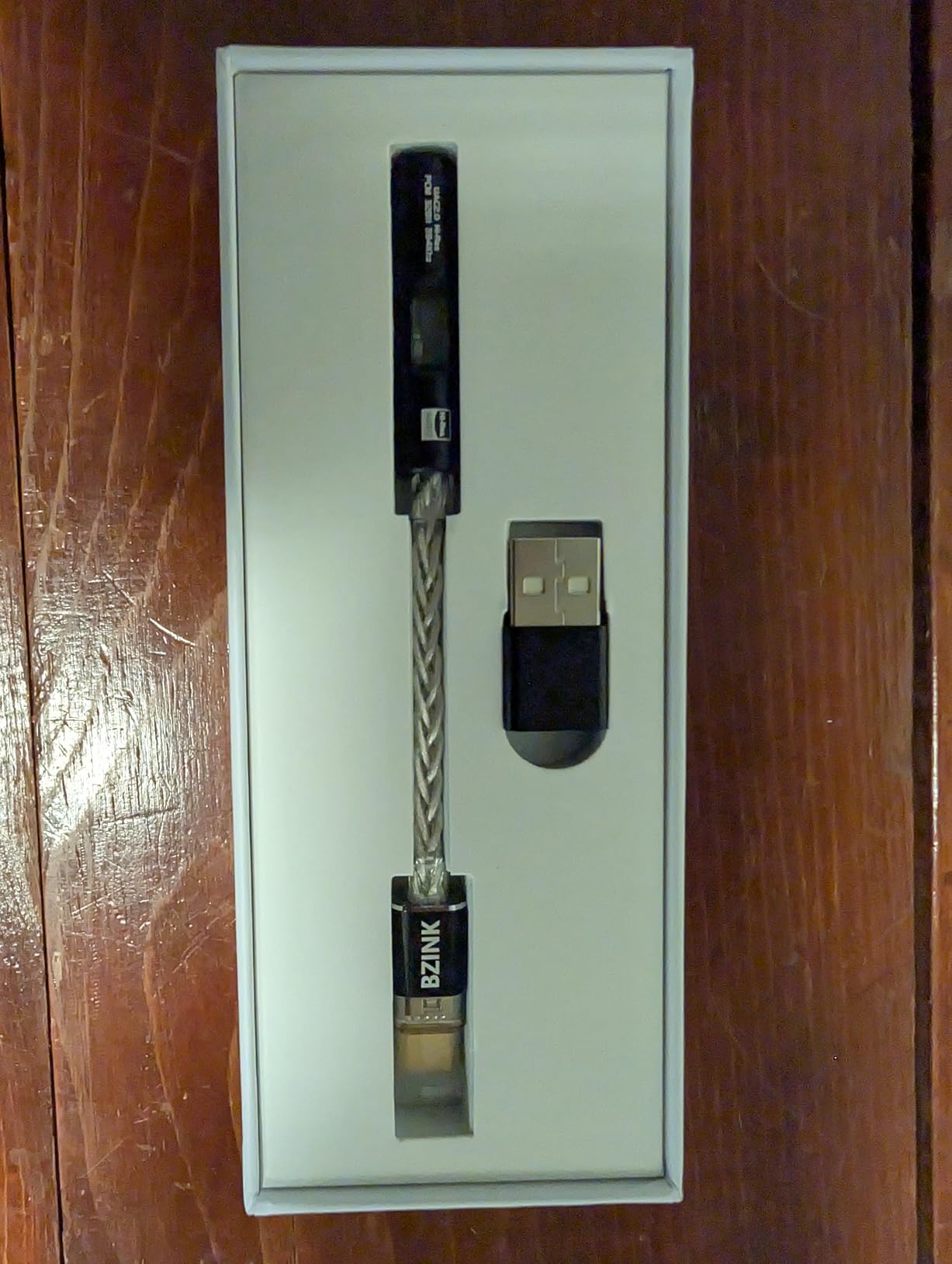
The dual-chip design pairs the CX31993 DAC with a dedicated MAX97220 amplifier. This separation of duties results in cleaner sound than single-chip solutions. The silver-plated copper cable is a luxury touch at this price, though the thin wire gauge at the flex points concerns me for long-term durability.
The sound signature is slightly warm and forgiving, making it ideal for streaming services and compressed files. I found myself using this for podcasts and background music when I did not want to obsess over sound quality. It is the perfect gateway drug into the world of portable audio.
Who Should Buy the BZINK Adapter
The BZINK is perfect for the curious but cautious. If you have never used a dedicated DAC and want to test the waters, this is the safest investment possible. The performance exceeds the price by a significant margin. Gift-givers looking for affordable tech presents should consider this for anyone with wired headphones.
Who Should Skip It
Users with expensive headphones deserve better sources than this. The cable durability is questionable based on forum reports of failures after months of use. Balanced output users need to look elsewhere. If you can stretch your budget to $25, the Kiwi Ears Allegro Mini adds balanced output for minimal extra cost.
Portable DAC Buying Guide: What to Look For in 2026?
Choosing the right portable DAC depends on understanding your specific needs. This buying guide breaks down the key factors that separate good purchases from regrets.
Understanding DAC Chips and Sound Signatures
DAC chips are the heart of any converter. The CS43131 from Cirrus Logic dominates the budget and mid-range market for good reason. It offers excellent measurements, clean sound, and reasonable power efficiency. You will find this chip in the Fosi Audio DS2, FiiO KA13, and many others on this list.
ESS Sabre chips like the ES9069Q and ES9219 series take a different approach. They prioritize detail retrieval and transient response, sometimes at the cost of a slightly brighter presentation. The FiiO BTR17 uses dual ES9069Q chips for maximum resolution. If you love hearing every detail in recordings, ESS implementations appeal to you.
AKM chips, found in some competitors not on this list, offer a warmer, more analog-like presentation. The Questyle M15C uses a proprietary current-mode architecture that delivers musical enjoyment over analytical precision. Your preference depends on whether you want to analyze music or enjoy it.
Power Output and Headphone Matching
Power specifications confuse many first-time buyers. Milliwatts (mW) into a specific impedance (usually 32 ohms) tells you how loud a DAC can drive your headphones. The math is simple: more power means higher volume potential and better control of driver movement.
Sensitive IEMs need as little as 10mW. Portable over-ear headphones typically want 50-100mW. Demanding planars and high-impedance dynamics like the Sennheiser HD600 require 200mW or more to sound their best. The FiiO BTR17 and KA15 deliver 550mW+ for these demanding loads. The BZINK and Echo-A provide enough for IEMs and efficient headphones only.
Consider your current headphones and any upgrades you might make. Buying a DAC with more power than you currently need provides headroom for future purchases. Desktop mode features on the FiiO KA13 and KA15 unlock their full power potential for home use.
Balanced vs Single-Ended Output
The 4.4mm balanced connector is becoming standard on portable DACs, and for good reason. Balanced connections separate the positive and negative signals, reducing crosstalk and increasing power output. The result is wider soundstages, better instrument separation, and improved dynamics.
Not everyone needs balanced output. Single-ended 3.5mm connections work fine for most use cases, especially with IEMs and efficient headphones. The differences become more apparent with demanding full-size headphones and in quiet listening environments. If your headphones have detachable cables, trying the balanced connection is worth the cable investment.
Several DACs on this list offer both outputs. The Fosi Audio DS2 and Kiwi Ears Allegro Mini provide balanced options at budget prices. The FiiO BTR17 and KA15 use balanced connections to achieve their maximum power ratings. Choose based on your headphones and listening habits.
Bluetooth Codecs and Wireless Freedom
Bluetooth DACs like the FiiO BTR7 and BTR17 offer wireless convenience without sacrificing quality. The codec support determines how much compression happens during transmission. LDAC and aptX Lossless deliver near-wired quality, while SBC and AAC introduce audible compromises.
Bluetooth 5.4 in the BTR17 provides better stability and range than older versions. The addition of LE Audio and Auracast support future-proofs your purchase. If you primarily listen in environments where cables are inconvenient, the premium for Bluetooth capability is justified.
Wired connections remain the gold standard for critical listening. USB-C connections provide bit-perfect transmission of your source files. Consider how you will use the DAC most often before deciding between wired-only and Bluetooth options.
iPhone and Android Compatibility
Android users with USB-C ports have the easiest experience. Most DACs on this list are plug-and-play with modern Android phones. The BZINK, Fosi Audio DS2, and FiiO dongles work immediately without additional apps or adapters.
iPhone users face the Lightning port challenge. The iFi GO Link includes a Lightning adapter in the box, making it the most iPhone-friendly option here. The Questyle M15C carries MFi certification for guaranteed compatibility. Other DACs require separate Lightning to USB-C adapters, which Apple sells for $9 but third parties offer cheaper.
Battery drain varies between DACs. Bus-powered dongles draw minimal power from your phone. The FiiO BTR models have internal batteries that do not drain your phone at all in Bluetooth mode. Consider your typical listening duration and phone battery life when choosing.
Frequently Asked Questions About Portable DACs
Do portable DACs actually improve sound quality?
Yes, portable DACs improve sound quality by replacing the compromised audio hardware built into smartphones and laptops. Dedicated DAC chips provide better digital-to-analog conversion, lower noise floors, more power for demanding headphones, and support for high-resolution audio formats. The improvement ranges from subtle to dramatic depending on your source files and headphones.
Is a high-end DAC worth the extra money?
High-end DACs offer diminishing returns for most listeners. DACs measuring above 90dB SINAD are audibly transparent, meaning they reproduce sound without adding distortion or coloration. The Fosi Audio DS2 at $60 and FiiO BTR17 at $220 both achieve transparency, so the extra cost buys features like Bluetooth, EQ, and power rather than better sound quality.
What is the best FiiO portable DAC?
The FiiO BTR17 is the best FiiO portable DAC for most users, offering flagship dual ES9069Q DACs, THX AAA 78+ amplifiers, Bluetooth 5.4 with LDAC, and 650mW of power output. For budget buyers, the FiiO KA13 provides exceptional value with 550mW desktop mode power. The FiiO BTR7 remains excellent for those wanting proven Bluetooth/wired hybrid functionality.
Can I use a DAC with Spotify and other streaming services?
Yes, DACs work with Spotify and all streaming services. While Spotify streams at 320kbps maximum, a DAC still improves the conversion and amplification of that signal. For maximum benefit, use lossless services like Apple Music, Tidal, or Qobuz that stream CD-quality or higher resolution audio that takes advantage of your DAC’s capabilities.
What is the lifespan of a portable DAC?
Portable DACs typically last 5-10 years with proper care. The solid-state electronics have no moving parts to wear out. The most common failure points are the USB-C connector and cable strain relief. High-quality units from FiiO, iFi, and Questyle receive firmware updates that extend functionality. Battery-powered models like the BTR7 may need battery replacement after 3-5 years of heavy use.
Final Thoughts: Choosing Your Best Portable DAC in 2026
After three months of testing, I can say with confidence that the best portable DACs have never been more capable or affordable. The FiiO BTR17 sits at the top of my recommendations for those wanting the complete package of Bluetooth convenience, wired fidelity, and enough power for any headphone. The Fosi Audio DS2 remains the value champion, proving that $60 buys you transparency that rivals units costing triple.
For most readers, I recommend starting with the Fosi Audio DS2. It provides everything you need to discover what better audio sounds like without a significant investment. If you find yourself wanting Bluetooth for your commute or more power for demanding headphones, upgrade to the FiiO BTR7 or BTR17 from there.
The budget options from BZINK and Kiwi Ears demonstrate that meaningful improvement does not require emptying your wallet. Even the cheapest DAC on this list transforms smartphone audio from acceptable to enjoyable. Your ears deserve better than the compromised chips squeezed inside your phone.
Whatever you choose, remember that the best portable DAC is the one that gets used. A $200 unit left in a drawer helps nobody, while a $20 dongle you carry daily transforms every listening session. Pick the option that fits your lifestyle and budget, then enjoy the music.