

Whether you’re lacing up for your first 5K or logging hundreds of miles per month in training, the right running watch can be the difference between guessing at your progress and truly understanding your performance. Modern running watches do far more than tell time—they’ve become sophisticated training tools that track everything from pace and distance to heart rate variability, recovery recommendations, and even sleep quality that impacts your next workout.
In this comprehensive roundup, we’ve tested and evaluated the top running watches available in 2026 to bring you honest, in-depth reviews of the eight best options across every price point. Whether you’re a budget-conscious beginner or a performance-driven athlete seeking flagship features, we’ll help you find the perfect watch for your running goals.
Top 3 Picks for Best Running Watches in 2026
Best Running Watches in 2026 — Full Comparison
| Product | Specifications | Action |
|---|---|---|
 Garmin Forerunner 165 Garmin Forerunner 165 |
|
Check Latest Price |
 Garmin Forerunner 55 Garmin Forerunner 55 |
|
Check Latest Price |
 Garmin Forerunner 255 Garmin Forerunner 255 |
|
Check Latest Price |
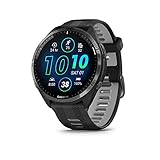 Garmin Forerunner 965 Garmin Forerunner 965 |
|
Check Latest Price |
 Garmin vívoactive 6 Garmin vívoactive 6 |
|
Check Latest Price |
 COROS PACE 3 COROS PACE 3 |
|
Check Latest Price |
 COROS PACE 4 COROS PACE 4 |
|
Check Latest Price |
 Apple Watch Ultra 3 Apple Watch Ultra 3 |
|
Check Latest Price |
1. Garmin Forerunner 165
Garmin Forerunner® 165, Running Smartwatch, 43mm, Black
AMOLED 1.2-inch
11-day battery
19h GPS
4.7 stars
Pros
- Bright AMOLED display
- Lightweight design
- Adaptive training plans
- Garmin Pay
Cons
- No multi-band GPS
- Limited advanced metrics vs higher-end
The Garmin Forerunner 165 represents a significant leap forward in the Forerunner lineup, bringing premium features like a vibrant AMOLED display to a price point that won’t break the bank. At just $199, it offers exceptional value for runners who want modern display technology without the flagship price tag. The 1.2-inch touchscreen is crisp and readable in all lighting conditions, from bright midday runs to pre-dawn training sessions.
Training metrics are where the Forerunner 165 truly shines. Garmin’s proven algorithms power daily suggested workouts that adapt based on your performance and recovery status. The watch provides comprehensive heart rate tracking, estimated race times, and recovery recommendations that help you train smarter, not just harder. For runners following structured training plans, the Forerunner 165 integrates seamlessly with Garmin Connect for easy workout synchronization.
GPS accuracy is solid for everyday training, though it lacks the multi-band GPS found in higher-end models—a trade-off that keeps the price accessible. Battery life is impressive at up to 11 days in smartwatch mode and 19 hours with GPS active. Garmin Pay adds convenient contactless payment capability for post-run coffee stops without carrying your wallet.
Best For
The Garmin Forerunner 165 is ideal for intermediate runners who want a substantial upgrade from basic fitness trackers. If you’ve outgrown your starter device and are ready for adaptive training features, AMOLED quality, and Garmin’s ecosystem without flagship pricing, this is your watch.
Watch Out For
Advanced runners seeking multi-band GPS or in-depth training metrics like HRV status should look to the Forerunner 255 or 965. The Forerunner 165 is also missing some navigation features that some runners may eventually want as their training evolves.
2. Garmin Forerunner 55
Garmin Forerunner 55, GPS Running Watch with Daily Suggested Workouts, Up to 2 Weeks of Battery Life, White
20h GPS
$169
4.5 stars
Pros
- Excellent value
- Beginner-friendly interface
- Very good battery life
- Simple operation
Cons
- No AMOLED
- Basic training features
- No Garmin Pay
The Garmin Forerunner 55 proves that you don’t need to spend a fortune to get a capable running watch. At $169, it delivers everything a new runner needs to start tracking their progress with confidence. The interface is refreshingly straightforward—no steep learning curve, no overwhelming menus, just immediate access to the metrics that matter most for runners building their base.
Despite its budget-friendly price, the Forerunner 55 offers up to 20 hours of GPS battery life, putting it ahead of many competitors at any price point. Daily suggested workouts help beginners follow a structured plan without needing to understand periodization or training load concepts. Recovery time recommendations prevent new runners from making the common mistake of too much, too soon.
The watch tracks all essential metrics including pace, distance, heart rate, and VO2 max estimates. While it lacks the advanced HRV monitoring and training readiness scores of higher-end models, these features are often unnecessary for recreational runners focused on building a consistent running habit rather than peak performance.
Best For
Beginners just starting their running journey or experienced runners seeking a reliable backup watch. If you want Garmin quality and ecosystem compatibility without advanced features you’ll outgrow, the Forerunner 55 is the smart choice.
Watch Out For
The Forerunner 55 uses a basic memory-in-pixel display rather than color AMOLED, so visibility in direct sunlight requires angling the watch. It also lacks contactless payment and advanced training dynamics that more serious athletes may eventually want.
3. Garmin Forerunner 255
Garmin Forerunner® 255, GPS Running Smartwatch, 46mm, Slate Gray
30h GPS
HRV Status
Multi-sport
4.7 stars
Pros
- Multi-band GPS
- HRV Status tracking
- Advanced training metrics
- Multi-sport profiles
Cons
- Higher price
- Complex interface for beginners
- Smaller screen than 965
The Garmin Forerunner 255 occupies the sweet spot for serious recreational runners who demand advanced training features without flagship pricing. At $249.99, it brings multi-band GPS—a feature once reserved for premium models—to a more accessible price point. This translates to significantly improved GPS accuracy in challenging environments like tree cover, urban canyons, and mountainous terrain.
Heart Rate Variability (HRV) status is one of the most valuable training metrics available, and the Forerunner 255 tracks it continuously. This data feeds into Garmin’s training readiness and recovery recommendations, helping you understand whether today is a day for hard effort or active recovery. The watch also includes morning report features that summarize your sleep, HRV, and recovery status before you even get out of bed.
Multi-sport profiles make the Forerunner 255 equally capable for triathletes or anyone who mixes running with cycling, swimming, or strength training. The device seamlessly transitions between activities, maintaining continuous heart rate tracking throughout. At 30 hours of GPS battery life, even ultramarathon runners can train with confidence between charges.
Best For
Intermediate to advanced runners who want serious training metrics without stepping up to flagship pricing. If you’re following a structured training plan, racing regularly, or simply want to understand your body’s readiness to perform, the Forerunner 255 delivers professional-grade insights.
Watch Out For
The interface has a learning curve—expect to spend time exploring settings and customizing data fields. The smaller screen compared to the 965 makes navigating maps less enjoyable, and some users may eventually want the larger display and additional navigation features of higher-end models.
4. Garmin Forerunner 965
Garmin Forerunner® 965, Running Smartwatch, 47mm, Black/Powder Gray
AMOLED
Multi-band GPS
32GB Maps
4.6 stars
Pros
- Stunning AMOLED display
- 32GB storage for maps
- Full multi-band GPS
- Comprehensive training suite
Cons
- Premium price
- Large case size
- Complex for casual users
The Garmin Forerunner 965 is the pinnacle of Garmin’s running watch lineup, offering every feature a serious runner could desire. The gorgeous 1.4-inch AMOLED display alone justifies the premium—it renders data with stunning clarity and vibrant colors that make glancing at your wrist during a tempo run effortless. Navigation features are bolstered by 32GB of storage for downloadable maps and courses, making the Forerunner 965 equally capable as a hiking or adventure companion.
Multi-band GPS ensures centimeter-level accuracy in the most challenging environments. Whether you’re navigating tight switchbacks, running through downtown skyscrapers, or tracking splits on technical trail sections, the Forerunner 965 maintains reliable position tracking. This isn’t just marketing—the difference in data quality compared to single-band GPS is measurable and meaningful for data-driven runners.
Training features reach their fullest expression in the 965. Training load focus, recovery time recommendations, and performance condition metrics combine to give you a complete picture of your fitness. The watch even suggests when you might benefit from a rest day based on accumulated stress and recovery status. For runners following the Garmin Connect ecosystem, the integration with training plans and performance analytics is unmatched.
Best For
Competitive runners, coaches, and athletes who leave no metric to chance. If you want the best GPS accuracy available, map navigation on your wrist, and comprehensive training analysis in a premium package, the Forerunner 965 delivers without compromise.
Watch Out For
At $485.99, this is a significant investment that only makes sense for dedicated runners who’ll use the advanced features. The larger case size may feel bulky on smaller wrists, and the wealth of data can be overwhelming for runners who prefer simplicity over comprehensive metrics.
5. Garmin vívoactive 6
Garmin vívoactive® 6, Health & Fitness GPS Smartwatch, 42mm, Slate
AMOLED
80+ Activities
Body Battery
4.5 stars
Pros
- Sleek design
- AMOLED display
- 80+ activity profiles
- Body Battery energy monitoring
Cons
- Less running-focused than Forerunner
- Shorter GPS battery than competitors
- No multi-band GPS
The Garmin vívoactive 6 occupies a unique space in Garmin’s lineup—a watch that’s equally at home during a business meeting and a marathon training run. The sleek, minimal design appeals to users who want a sophisticated smartwatch that doesn’t look like a dedicated sports device, while still delivering solid running features under the hood.
With over 80 activity profiles, the vívoactive 6 is the most versatile watch in this roundup. Beyond running, you can track cycling, swimming, yoga, strength training, pickleball, and countless other activities with dedicated metrics for each. The Body Battery feature is particularly useful, aggregating sleep, stress, and activity data into a single easy-to-understand number that tells you how recovered you are for the day ahead.
While the vívoactive 6 lacks some running-specific advanced features, it covers the essentials well. GPS tracking is accurate, heart rate monitoring is reliable, and basic training metrics are available through Garmin Connect. The AMOLED display is a meaningful upgrade from previous vívoactive models, making it competitive with other modern smartwatches in visibility and aesthetics.
Best For
Multi-sport enthusiasts and fitness-seekers who want activity tracking beyond running. If you rotate through different workout types throughout the week and prefer a watch that transitions seamlessly from gym to office to trail, the vívoactive 6 offers versatile functionality in an attractive package.
Watch Out For
Dedicated runners may find the vívoactive 6 lacks the advanced running metrics they want—there’s no HRV tracking, training load analysis, or multi-band GPS. Battery life during GPS use is also shorter than comparable running-focused watches, which may be a limitation for long training runs.
6. COROS PACE 3
COROS PACE 3 GPS Sport Watch, Lightweight Running Watch- Black Silicone
38h GPS
Dual-freq GPS
30g Ultra-light
4.5 stars
Pros
- Exceptional battery life
- Ultra-lightweight
- Good GPS accuracy
- Affordable
Cons
- Basic ecosystem
- Limited smart features
- No AMOLED
COROS has rapidly established itself as a serious contender in the running watch market, and the PACE 3 exemplifies why. At $199, it delivers remarkable value with an ultra-light 30-gram weight that you’ll forget you’re wearing during long runs and race day. Despite the budget-friendly price, COROS didn’t compromise on what matters most—GPS accuracy and battery life.
The 38-hour GPS battery life is genuinely exceptional and outperforms watches costing twice as much. This makes the PACE 3 particularly attractive for ultramarathon runners, multi-day adventure racers, or anyone who hates the anxiety of watching their watch battery drain during a long event. Dual-frequency GPS provides improved accuracy over basic single-band systems, though COROS’s implementation differs slightly from Garmin’s multi-band approach.
COROS’s training ecosystem has matured significantly, offering training load tracking, recovery recommendations, and performance analytics that rival more established brands. The COROS app is clean and intuitive, though the broader ecosystem of third-party integrations isn’t as extensive as Garmin’s. For pure running functionality at an accessible price, the PACE 3 is remarkably complete.
Best For
Value-conscious runners and ultramarathoners who prioritize battery life and lightweight design. If you want maximum functionality per dollar and don’t need the full Garmin ecosystem, the COROS PACE 3 delivers outstanding performance at a price that won’t intimidate.
Watch Out For
The monochrome display lacks the visual appeal of AMOLED screens, though it’s highly readable in direct sunlight. Smart features are limited compared to Garmin or Apple—don’t expect contactless payments or extensive notifications. The COROS ecosystem also has fewer third-party app integrations.
7. COROS PACE 4
COROS PACE 4 Ultralight Sport GPS Watch (Black Silicone, Standard)
41h GPS
AMOLED
Voice Features
4.8 stars
Pros
- AMOLED display upgrade
- Best-in-class battery life
- Voice assistant integration
- Lightweight design
Cons
- Voice features require subscription
- Newer model with limited reviews
- Ecosystem still developing
The COROS PACE 4 represents COROS’s most significant leap forward, addressing the one area where previous PACE models lagged behind competitors—the display. The addition of an AMOLED screen transforms the PACE 4 from a utilitarian training tool into a watch you’d actually want to wear all day. The vibrant colors make data glanceable and notifications readable, while the always-on option adds convenience during everyday wear.
With 41 hours of GPS battery life, the PACE 4 extends COROS’s already commanding lead in endurance battery performance. This isn’t just marketing—it’s a genuine capability that runners who tackle long events genuinely appreciate. Voice features add a new dimension to training, allowing you to start/stop workouts, get pace calls, or check metrics hands-free when your gloves or sunglasses make button pressing difficult.
The PACE 4 maintains the lightweight philosophy of its predecessors while adding features that make it competitive with Garmin’s mid-range offerings. Training metrics are comprehensive, the COROS app provides good analytics, and the overall user experience has matured into something that can genuinely challenge established players at this price point.
Best For
Runners who want the perfect balance of value, battery life, and modern features. If you’ve been waiting for COROS to offer an AMOLED display without the premium price tag, the PACE 4 delivers exactly that. Long-distance runners and ultramarathoners will particularly appreciate the exceptional battery endurance.
Watch Out For
Voice features require a COROS Premium subscription after the free trial period, adding to the total cost of ownership. The PACE 4 is a newer model with limited user reviews, so long-term reliability data is still emerging. COROS’s ecosystem, while improved, still has fewer third-party integrations than Garmin.
8. Apple Watch Ultra 3
Apple Watch Ultra 3 [GPS + Cellular 49mm] Running & Multisport Smartwatch w/Rugged Titanium Case w/Black Ocean Band. Satellite Communications, Advanced Health & Fitness Tracking
100m Water
Titanium
Satellite SOS
4.8 stars
Pros
- Exceptional build quality
- Advanced safety features
- Best smartwatch integration
- 100m water resistance
Cons
- iPhone only
- Very expensive
- Overkill for basic runners
- Short battery life vs competitors
The Apple Watch Ultra 3 is in a category of its own—a running watch that happens to also be the most capable smartwatch ever made. Built with aerospace-grade titanium and tested to 100 meters water resistance, the Ultra 3 is virtually indestructible. For runners who want a watch that can handle anything from ultramarathon trail races to triathlon open water swims to everyday life, Apple has created something remarkable.
Satellite SOS emergency features provide peace of mind when running in remote areas where cell service is unavailable. Combined with the precision GPS and the robust Apple Health integration, the Ultra 3 offers safety features that no other running watch can match. The comprehensive health monitoring extends beyond running to include ECG, blood oxygen, and comprehensive sleep tracking.
As a smartwatch, the Ultra 3 is unmatched. Notifications, calls, music control, Apple Pay, and thousands of apps make it genuinely useful throughout your entire day, not just during workouts. For runners who live in the Apple ecosystem, the seamless handoff between iPhone and watch creates an experience that’s difficult to replicate with Android-compatible alternatives.
Best For
Committed Apple users who demand the absolute best in build quality and safety features. If you regularly run in remote areas, participate in water sports, or simply want a watch that excels at both running metrics and everyday smartwatch functionality, the Apple Watch Ultra 3 is in a class by itself.
Watch Out For
The Ultra 3 is iPhone-only, so Android users need not apply. At $779, it’s the most expensive watch in this roundup by a significant margin. GPS battery life, while improved, still trails dedicated running watches—expect around 12-18 hours depending on settings, far less than the 38-41 hours COROS and Garmin offer. Casual runners will pay for features they may never use.
How to Choose the Best Running Watch
Selecting the right running watch requires understanding how your training goals align with available features. Here’s a practical framework for making your decision:
Define Your Primary Use Case. Are you training for your first 5K, maintaining fitness through regular runs, or preparing for a marathon or ultramarathon? Casual runners typically need nothing more than accurate GPS tracking and basic heart rate monitoring. Serious runners benefit from advanced metrics like HRV, training load analysis, and recovery recommendations. Competitive athletes and coaches should prioritize GPS accuracy above all else.
Consider Ecosystem Lock-In. Running watches are rarely standalone devices—they integrate with platforms like Garmin Connect, COROS, or Apple Health. Before committing to a brand, research what platforms you can sync with, how data exports work, and whether your preferred training apps integrate seamlessly. Switching ecosystems later means losing historical data or dealing with complicated transfers.
Match Features to Price. The running watch market offers exceptional value across all price tiers. A $169 Forerunner 55 covers fundamentals admirably for beginners. At $249, the Forerunner 255 and COROS PACE 4 offer advanced features that intermediate runners can grow into. Flagship models at $500+ provide professional-grade metrics that recreational runners may never fully utilize.
Battery Life Matters for Long Events. If you’re running ultramarathons or multi-day events, battery life becomes a critical factor. COROS leads with 38-41 hours, Garmin offers 19-30 hours depending on GPS mode, and Apple provides 12-18 hours. Factor in your longest expected training run or event when evaluating battery specifications.
Display Technology Affects Daily Wear. AMOLED displays offer vibrant colors and excellent readability but impact battery life. Memory-in-pixel or transflective displays are more readable in direct sunlight and consume less power but offer less visual appeal. Consider whether you’ll primarily use your watch for running or throughout your entire day.
Frequently Asked Questions
What is the most important feature in a running watch?
GPS accuracy is the most critical feature—everything else is secondary. If your watch can’t reliably track distance and pace, no amount of advanced metrics will help. Look for multi-band or dual-frequency GPS in watches at $250 and above for the best accuracy in challenging environments like tree cover or urban areas.
Do I need a chest strap heart rate monitor?
Wrist-based heart rate monitoring has improved dramatically and suffices for most runners. However, chest straps provide more consistent readings during high-intensity efforts and are preferred by competitive athletes who notice wrist-based discrepancies at threshold pace or above. Many runners eventually add a chest strap for interval workouts even if they primarily use wrist monitoring for easy runs.
How much should I spend on a running watch?
$150-$250 covers excellent options for most runners. Below $150, feature compromises become significant. Above $400, you’re paying for professional-grade features that recreational runners rarely need. Your budget should align with how seriously you train—if you’re coaching for performance or racing frequently, mid-range to flagship models justify their cost through superior data and accuracy.
Are smart features important in a running watch?
This depends entirely on how you use your watch. If you want notifications, contactless payments, and music control during runs, smart features matter significantly. If you prefer to disconnect during workouts and only sync data afterward, a basic running watch without smart features may serve you better at a lower price point.
Can running watches help prevent injury?
Modern running watches with recovery and training load features can help identify when you’re accumulating fatigue that might lead to injury. Watches tracking HRV, sleep quality, and training stress can alert you to patterns that suggest you need an extra rest day. However, no watch replaces intelligent training programming and listening to your body’s signals.
Conclusion
The running watch market in 2026 offers exceptional options at every price point, from the budget-friendly Garmin Forerunner 55 that covers all fundamentals to the professional-grade Garmin Forerunner 965 and Apple Watch Ultra 3 that deliver comprehensive performance analytics. Whether you prioritize battery life like the COROS PACE 4, value proposition like the COROS PACE 3, or ecosystem integration like the Apple Watch Ultra 3, there’s a perfect watch for your running goals.
Our top recommendation remains the Garmin Forerunner 165 as the Editor’s Choice for most runners—offering AMOLED quality, adaptive training features, and Garmin’s proven ecosystem at a price that won’t strain your budget. For those seeking maximum value, the COROS PACE 4 delivers exceptional battery life and an AMOLED display that rivals watches costing twice as much. Budget-conscious beginners can’t go wrong with the Garmin Forerunner 55’s straightforward approach to run tracking.
Whatever watch you choose, remember that the best running watch is the one you’ll actually wear consistently. Invest time in learning your device’s features, integrate it with your training plan, and let the data guide your training decisions over time. Your future self—healthier, faster, and more informed—will thank you for the investment today.