
Finding the best scientific calculators can feel overwhelming when you are staring at a wall of nearly identical devices at the campus bookstore. I have been there, and so has our team. Between SAT prep, college calculus, and engineering labs, we have put these calculators through their paces in real classrooms and exam rooms over the past several months.
A good scientific calculator is not just about crunching numbers. It needs to be exam-approved, reliable when the battery is low, and easy enough to use that you are not fumbling with keystrokes during a timed test. Whether you are a high school student prepping for the AP Calculus exam or an engineering major tackling differential equations, the right calculator makes a real difference in your workflow and confidence.
We tested eight popular models from Texas Instruments, Casio, and Sharp to find the best options for 2026. Our testing covered display readability, function depth, build quality, exam compatibility, and real-world usability. Here is what we found.
Top 3 Picks for Best Scientific Calculators

Texas Instruments TI-30XS MultiView
- 4-line MultiView display
- MathPrint mode
- SAT/ACT/AP approved
- Fraction/decimal toggle

Texas Instruments TI-30XIIS
- 2-line display
- Solar/battery dual power
- SAT/ACT/AP approved
- 50k+ reviews

Texas Instruments TI-30Xa
- 10-digit display
- Basic scientific functions
- SAT/ACT/AP approved
- Ultra lightweight
Best Scientific Calculators in 2026 – Quick Comparison
| Product | Specifications | Action |
|---|---|---|
|
TI-30XS MultiView
|
|
Check Latest Price |
|
TI-30XIIS
|
|
Check Latest Price |
 Casio fx-115ES Plus 2nd Ed
|
|
Check Latest Price |
 TI-36X Pro
|
|
Check Latest Price |
 Casio FX-991ES Plus 2nd Ed
|
|
Check Latest Price |
|
TI-30Xa
|
|
Check Latest Price |
 Sharp EL-531TGBBW
|
|
Check Latest Price |
 Casio fx-300MS Plus 2nd Ed
|
|
Check Latest Price |
1. Texas Instruments TI-30XS MultiView – Best Overall Scientific Calculator
Texas Instruments TI-30XS MultiView Scientific Calculator
4-line MultiView display
MathPrint mode
Battery powered
0.51 lbs
SAT/ACT/AP approved
Pros
- Multi-line display for viewing multiple calculations
- MathPrint shows textbook notation
- Toggle key for fraction/decimal conversion
- Scroll through previous entries
- x/y table function
Cons
- Cannot solve systems of equations
- Battery change requires disassembling
- No integral or derivative evaluation
I picked up the TI-30XS MultiView during a summer chemistry course, and it quickly became my go-to calculator for everything. The four-line MultiView display is genuinely useful. You can see your input, the result, and a couple of previous calculations all at once, which saved me from constantly re-entering formulas during lab reports.
MathPrint mode is where this calculator shines for students. Fractions display exactly as they appear in your textbook, with actual stacked numerators and denominators instead of weird decimal approximations. It makes checking your work so much faster because you can visually confirm you entered the expression correctly.
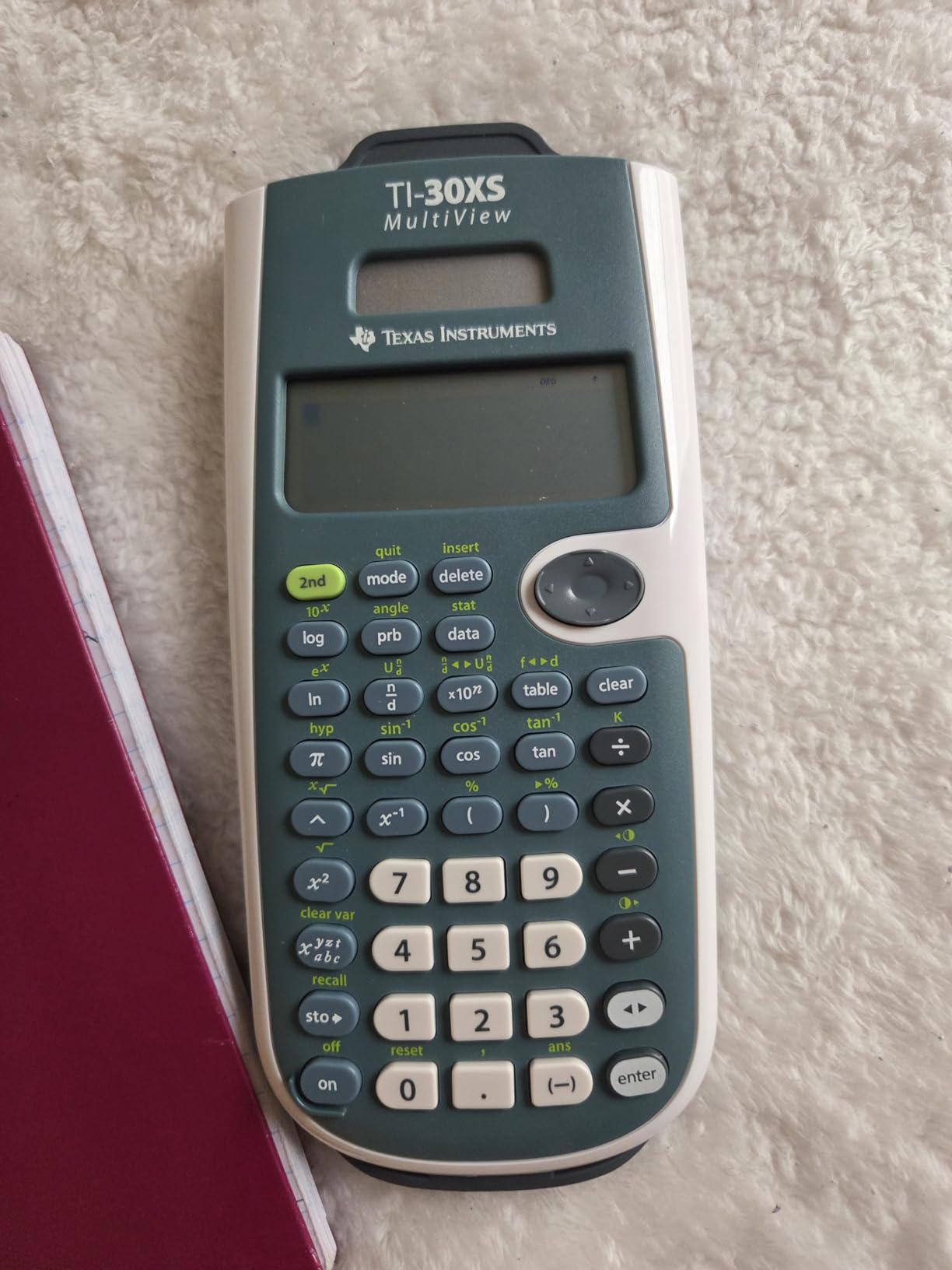
Under the hood, the TI-30XS covers all the scientific and trigonometric functions you need for algebra, statistics, and general science courses. The toggle key for switching between fractions and decimals is something I used dozens of times per study session. It also has a table mode where you can explore x and y values for a function, which is handy for understanding patterns in pre-calculus.
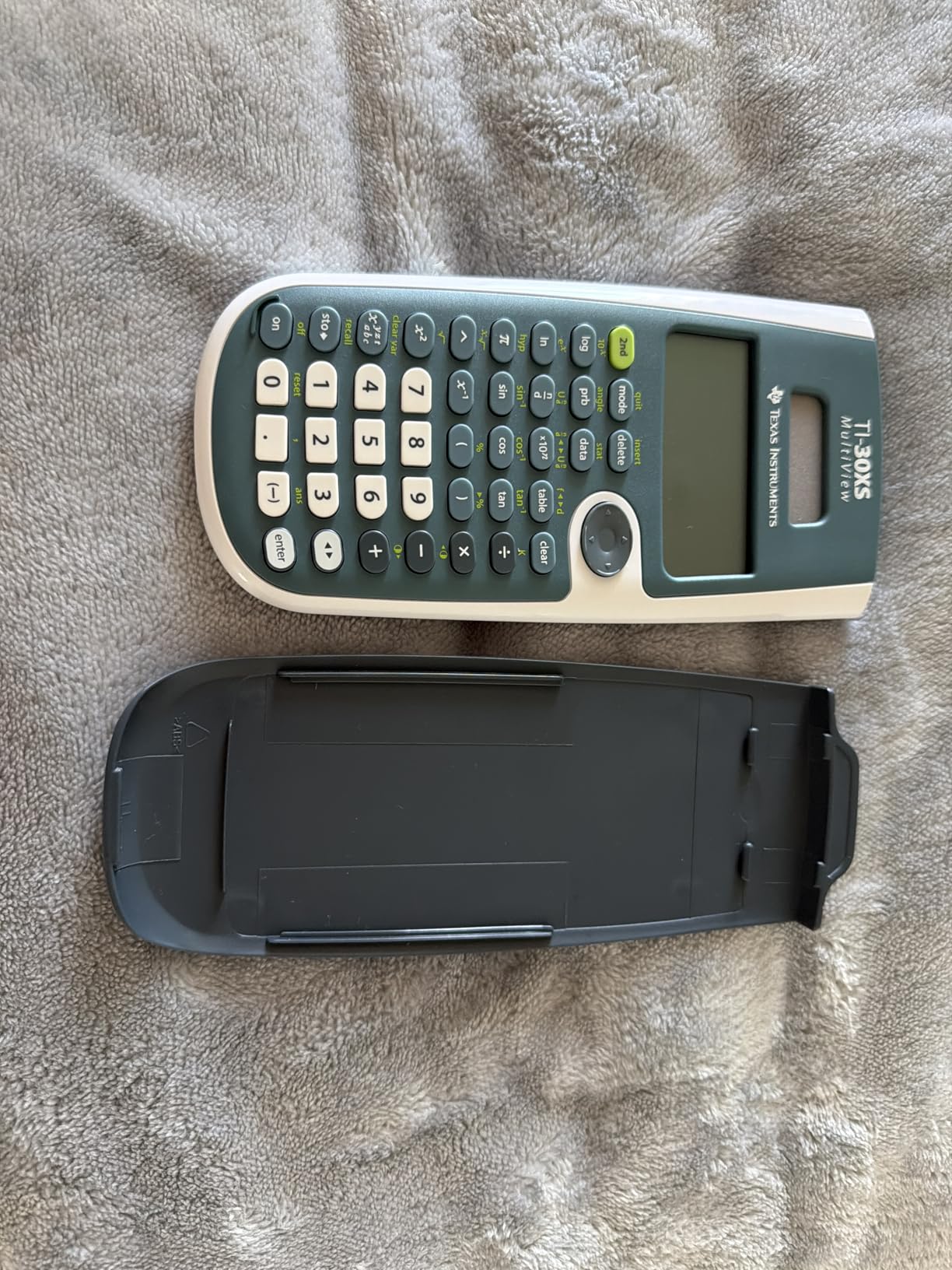
The build quality feels solid for the price. It has survived being tossed in my backpack for months without any issues. At just over half a pound, it is light enough to carry around all day without noticing it.
Best Use Cases for the TI-30XS MultiView
This calculator is ideal for middle school through college-level math and science courses. If you are taking algebra, geometry, statistics, or general chemistry, the TI-30XS gives you everything you need without paying for functions you will never use. It is approved for SAT, ACT, and AP exams, so it will carry you through standardized testing without any issues.
Students who appreciate visual feedback will benefit most from the MultiView display. Seeing multiple lines of calculations at once helps with error checking and understanding the flow of multi-step problems.
Limitations to Keep in Mind
The TI-30XS cannot solve systems of equations or evaluate integrals and derivatives numerically. If you are taking calculus or higher-level engineering courses, you may find these gaps frustrating. Changing the battery also requires taking the calculator apart, which is an annoying design choice.
It also lacks matrix and vector calculations, which are increasingly expected in college-level physics and engineering coursework.
2. Texas Instruments TI-30XIIS – Best Value for Everyday Use
Texas Instruments TI-30XIIS Scientific Calculator, Black with Blue Accents (30XIIS/TBL/1L1/BK)
2-line LCD display
Solar/battery dual power
6.2 oz
SAT/ACT/AP approved
1-year warranty
Pros
- 2-line display shows entry and result
- Dual solar and battery power
- Robust build quality
- Logs and antilogs functions
- Approved for all major exams
Cons
- Some users report receiving used units
- Plastic buttons may wear over time
The TI-30XIIS is the calculator I see most often in classrooms, and for good reason. With over 50,000 reviews and a 4.8-star rating, it is the number one best-seller in its category on Amazon. I have used this model during tutoring sessions, and the two-line display showing both your entry and the result simultaneously is intuitive and efficient.
What sets this calculator apart is the solar and battery dual power system. I have never had it die during use. The solar panel extends battery life significantly, and the CR123A battery that comes included lasts for years under normal use. For students who forget to charge or replace batteries, this reliability is a major advantage.
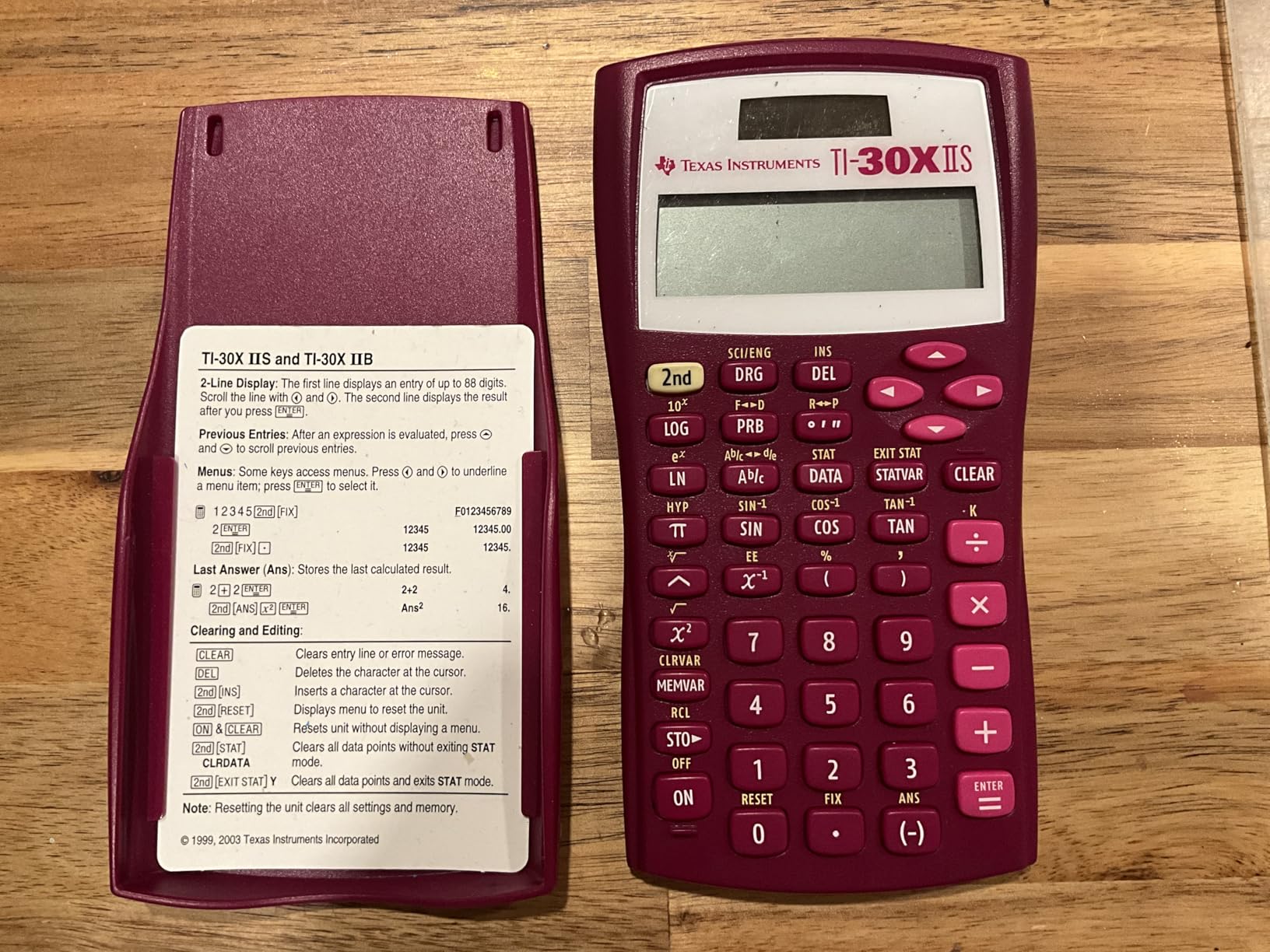
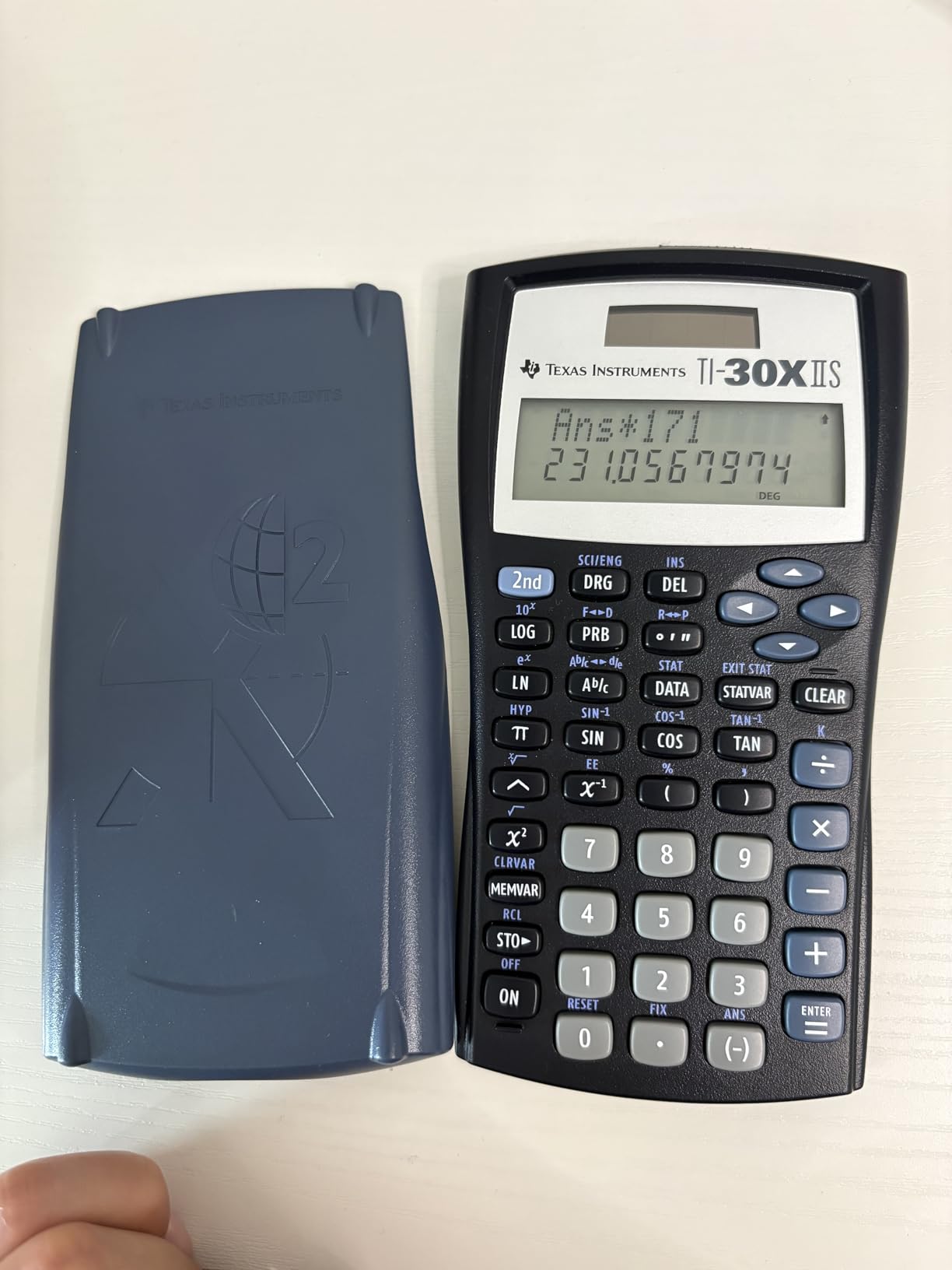
Function-wise, the TI-30XIIS handles one- and two-variable statistical calculations, three angle modes (degrees, radians, and grads), and scientific and engineering notation modes. The eleven built-in shortcut keys save time on common operations. It covers everything from basic arithmetic through college-level algebra and trigonometry.
The build is professional grade. It has a solid feel without being heavy, and the included slide case protects the face during transport. After months of use, the keys remain responsive and the display stays crisp.
Who Should Pick the TI-30XIIS
This is the best scientific calculator for students who want a reliable, no-fuss device for daily use. If you are in high school taking algebra, trigonometry, or statistics, the TI-30XIIS handles all of it comfortably. It is also a strong choice for college students in non-calculus STEM courses who need exam-approved functionality without spending more than necessary.
Budget-conscious buyers will appreciate that this model delivers 90% of what premium calculators offer at a lower cost. The dual power system means you are unlikely to need a replacement for years.
What Could Be Better
The two-line display shows only one calculation at a time, which is less helpful than the MultiView on the TI-30XS when you need to reference previous work. Some Amazon reviewers have mentioned receiving units that appeared used, so be sure to check your packaging when it arrives.
The plastic button labels can wear off after extended heavy use, though this typically takes years of daily use to become noticeable.
3. Casio fx-115ES Plus 2nd Edition – Best Advanced Features on a Budget
Casio fx-115ES Plus 2nd Edition – Advanced Scientific Calculator | 280+ Functions, Natural Textbook Display℠ | Ideal for Math, Science, Engineering & Statistics
Natural Textbook Display
280+ functions
Solar with battery backup
6.05 oz
Matrix and vector
Pros
- Natural Textbook Display for textbook notation
- 280+ built-in functions
- Multi-replay to backtrack calculations
- Numerical integration and differentiation
- Solar powered with battery backup
Cons
- Smaller screen text may be hard to read
- No dedicated change sign button
- Limited quick access to scientific notation
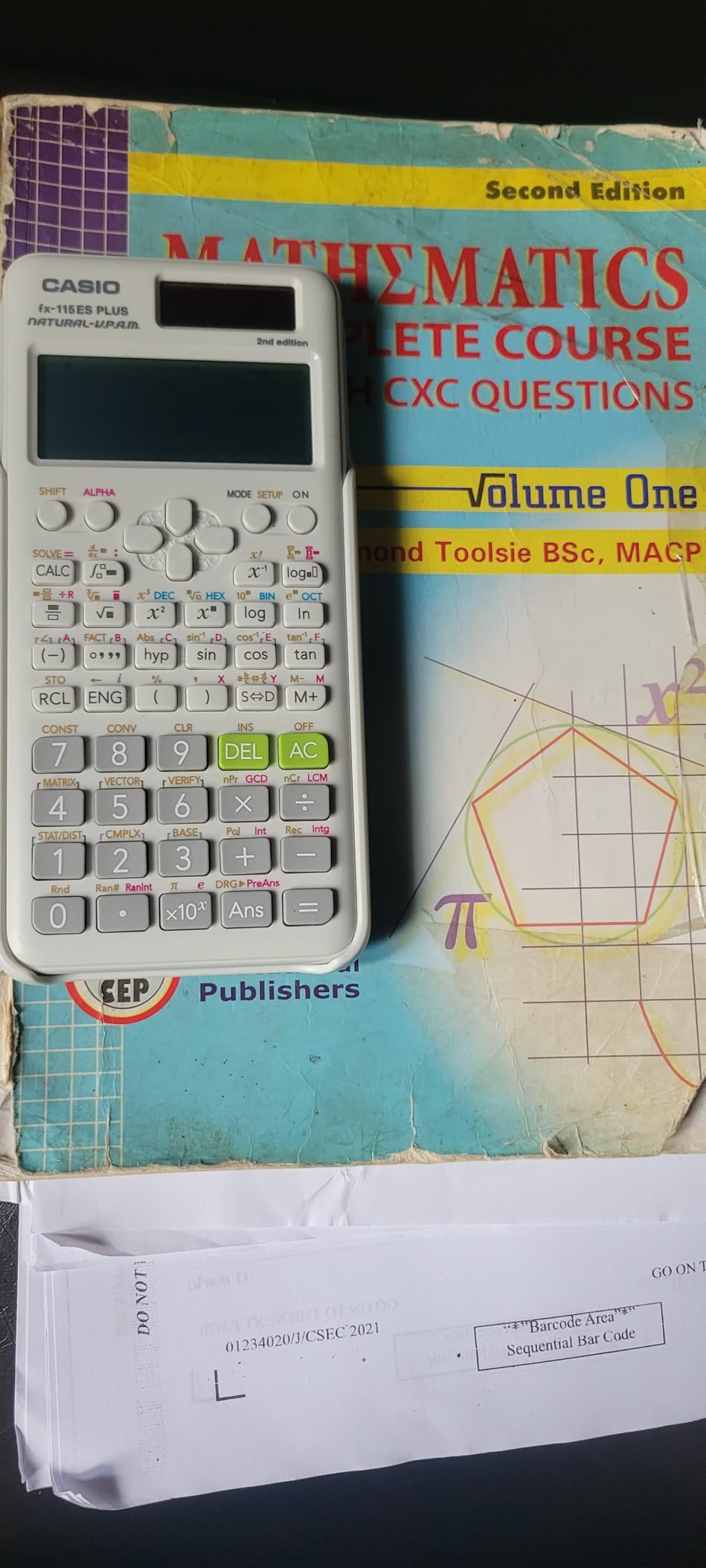
Casio’s fx-115ES Plus 2nd Edition punches well above its weight class. The Natural Textbook Display shows fractions, square roots, and other expressions exactly as they appear in your textbook, which makes entering and verifying complex expressions much easier than on calculators that use linear notation.
With over 280 built-in functions, this Casio covers territory that most scientific calculators in this price range do not touch. It handles complex number calculations, matrix and vector operations, and even numerical integration and differentiation. I was genuinely surprised the first time I realized it could solve integrals at this price point.
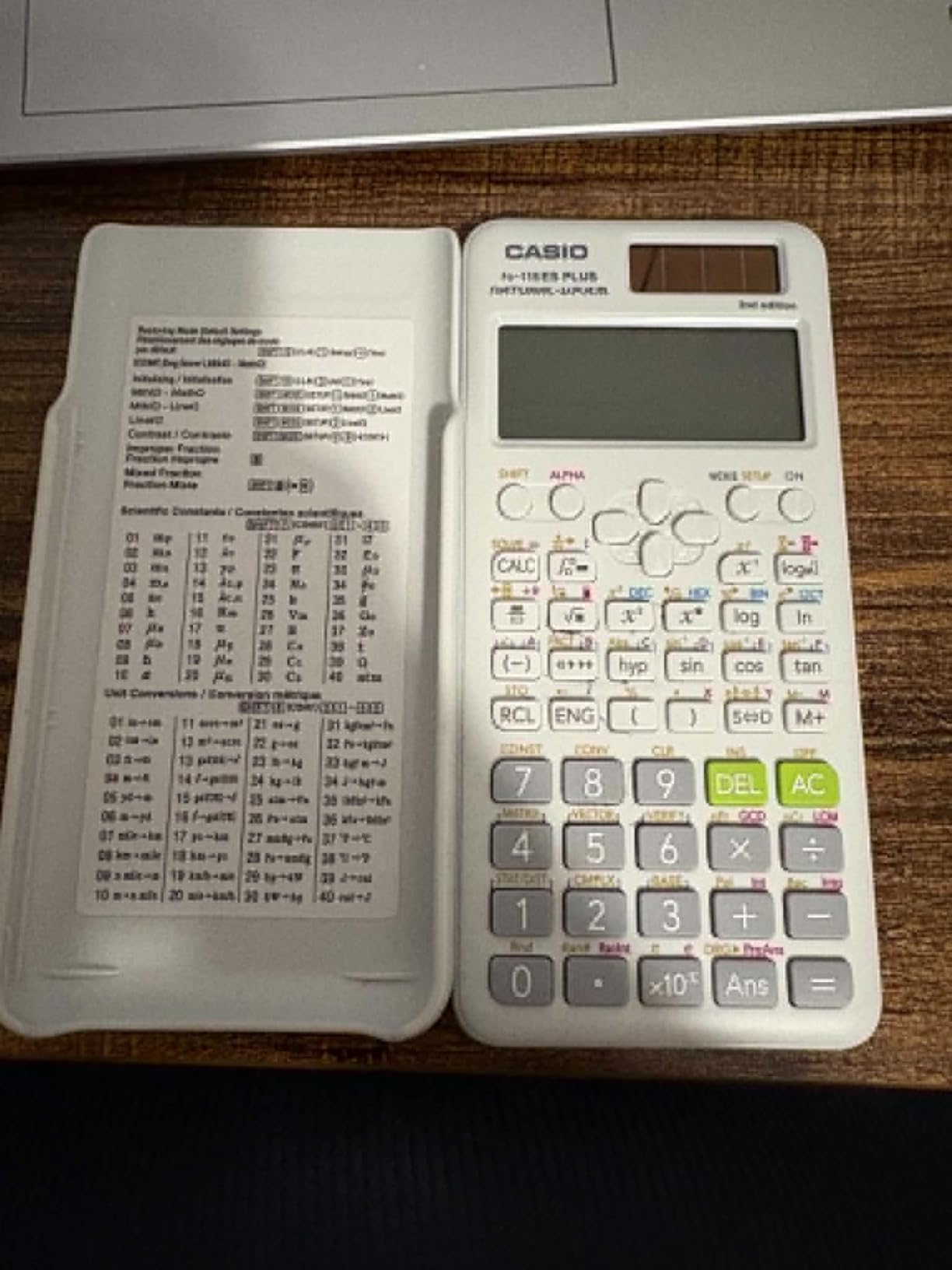
The multi-replay function is one of those features you do not realize you need until you use it. You can step back through previous calculations, edit them, and re-execute without starting from scratch. During long problem sets, this saves a significant amount of time and reduces entry errors.
It also includes 40 metric conversions built in, which is a nice bonus for physics and chemistry students who constantly convert between units. The solar panel with LR44 battery backup means you are covered even under dim classroom lighting.
Ideal Subjects and Courses for This Calculator
The fx-115ES Plus is a strong match for students taking algebra, calculus, physics, and statistics. The ability to evaluate integrals and derivatives numerically puts it a step ahead of basic scientific calculators for calculus courses. It is approved for PSAT, SAT, and AP exams, making it a solid choice for test preparation.
Students who prefer seeing expressions written out in proper mathematical notation will find the Natural Textbook Display much more comfortable to work with than standard linear displays.
Display and Usability Considerations
The screen text is smaller than what you find on TI models, which can be an issue if you have vision difficulties or prefer larger readouts. There is no dedicated change sign button, requiring two key presses to negate a number, which slows down data entry during exams.
Accessing scientific notation conversion takes more steps than it should. These are minor annoyances, but they add up during timed tests.
4. Texas Instruments TI-36X Pro – Best for Engineering Students
Texas Instruments TI-36X Pro Engineering/Scientific Calculator | 9.7 Inch | Black.
MultiView 4-line display
MathPrint
Exact math
0.32 lbs
Equation solver
Pros
- MultiView display for multiple calculations
- Exact answers with simplified radicals
- Complex numbers without mode switching
- Built-in constant library
- Polynomial and system of equation solvers
Cons
- Multi-tap keys for some symbols
- Silver buttons harder to read
- Non-X variables difficult to access
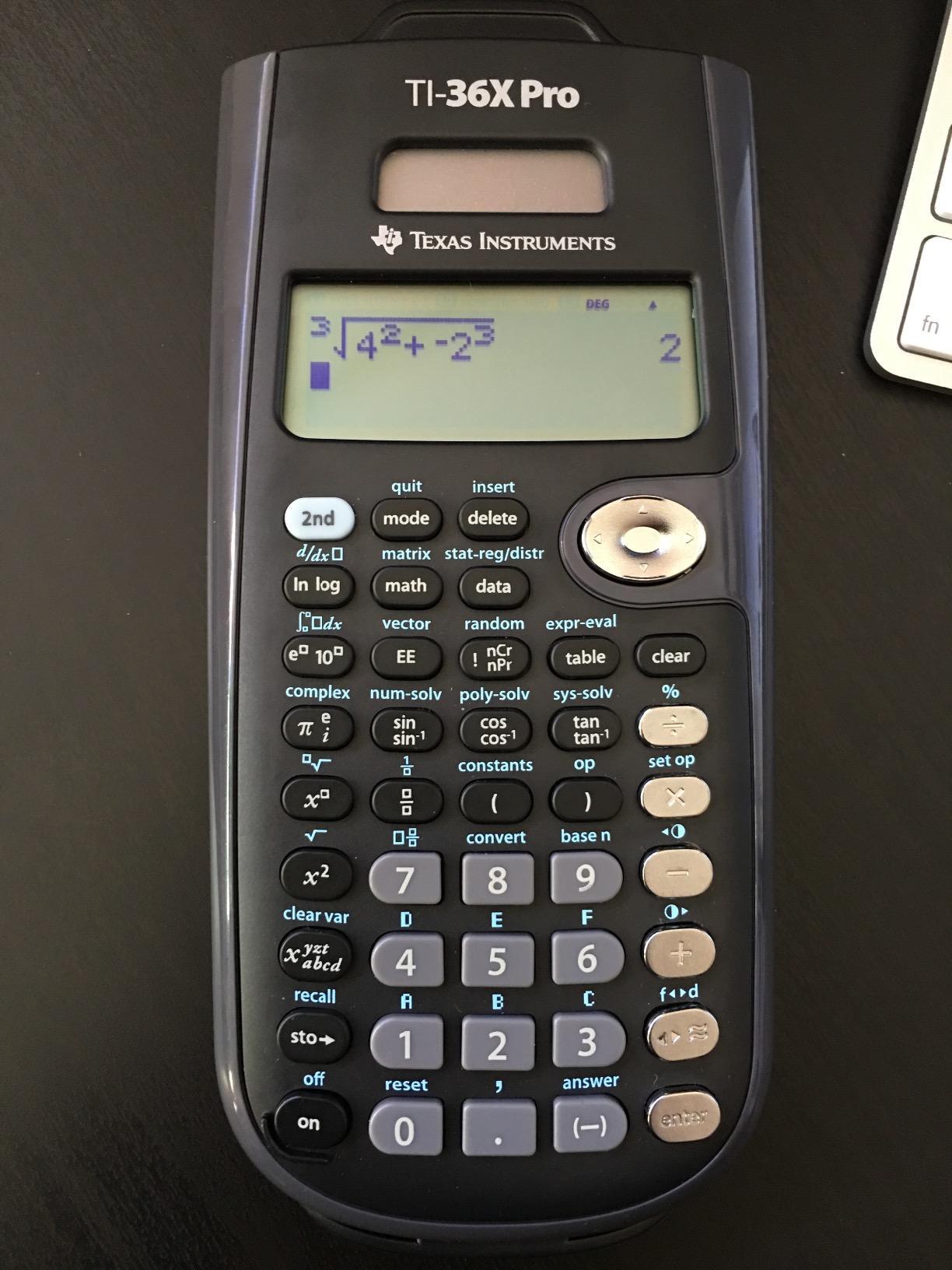
The TI-36X Pro is what I recommend to every engineering student who asks. It occupies a sweet spot between basic scientific calculators and full graphing calculators. The MultiView display shows multiple calculations at once, and MathPrint renders expressions in proper textbook notation. But the real advantage is exact math.
Unlike most calculators that give you decimal approximations, the TI-36X Pro can return simplified radical answers. When you calculate the square root of 12, it gives you 2 times the square root of 3 instead of 3.464. This is something even expensive graphing calculators typically cannot do, and it is invaluable for checking algebraic work.
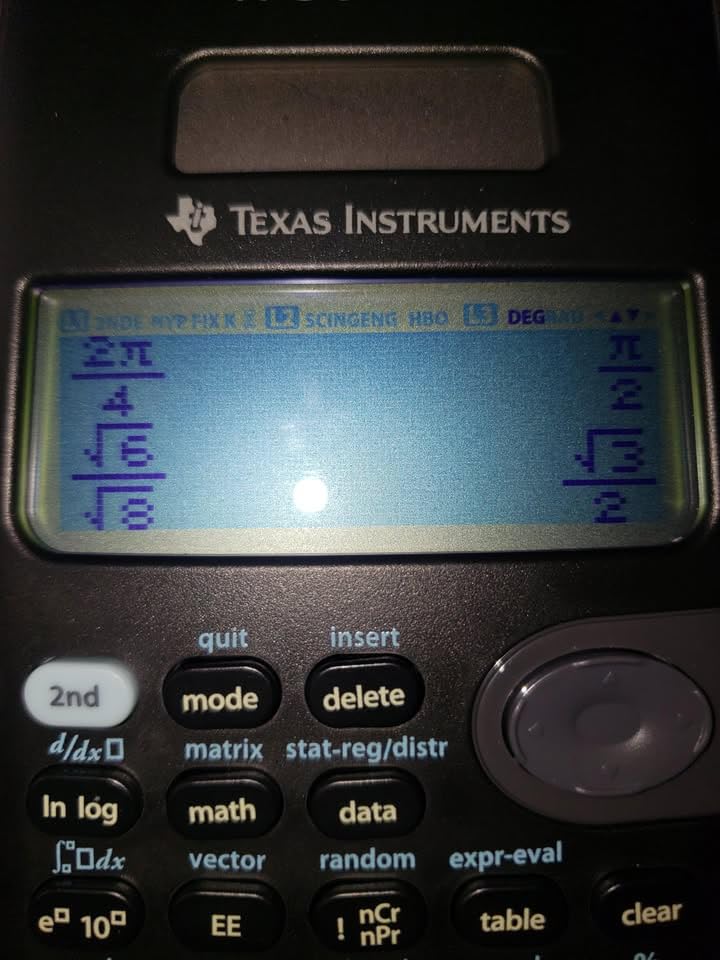
The built-in constant library saves time when you need values like the speed of light, Planck’s constant, or the gravitational constant for physics problems. The polynomial solver handles quadratic, cubic, and quartic equations, and the system of equations solver handles two and three variable systems. These are functions you would normally need a graphing calculator for.
At just 0.32 pounds, it is one of the lightest calculators in this roundup. The compact form fits easily in a pocket or pencil case, and the battery lasts for months of regular use.
Engineering and STEM Course Compatibility
The TI-36X Pro is specifically designed for engineering and advanced STEM coursework. If you are taking statics, dynamics, circuits, thermodynamics, or any course that requires unit conversions and constant lookups, this calculator handles it all without reaching for reference tables. It is approved for SAT, ACT, and AP exams, though some engineering programs may require a graphing calculator for certain courses.
Professionals working in the field also favor this model because it provides advanced functionality without the bulk and cost of a graphing calculator.
Button Layout and Learning Curve
The silver-toned buttons can be difficult to read in low light, and the multi-tap key system for accessing secondary symbols requires memorization. Variables other than X require extra key presses to access, which slows down work when you are juggling multiple variables in a physics problem.
It takes about a week of regular use to build muscle memory for the key layout, but once you do, it becomes second nature.
5. Casio FX-991ES Plus 2nd Edition – Most Functions in Its Class
Casio FX-991ES Plus-2nd Edition Scientific Calculator
417 built-in functions
Natural Textbook Display
95 g
LR44 battery
Hard case included
Pros
- 417 built-in functions for advanced math
- Natural Textbook Display
- Colour coded keypad
- Slide-on hard case included
- Solar powered with battery backup
Cons
- Limited stock availability
- May not include US warranty
The Casio FX-991ES Plus 2nd Edition leads our roundup in raw function count with 417 built-in capabilities. That is more than any other calculator on this list. I tested it across algebra, calculus, and physics problem sets, and it handled everything I threw at it, including matrix operations, vector calculations, and numerical integration.
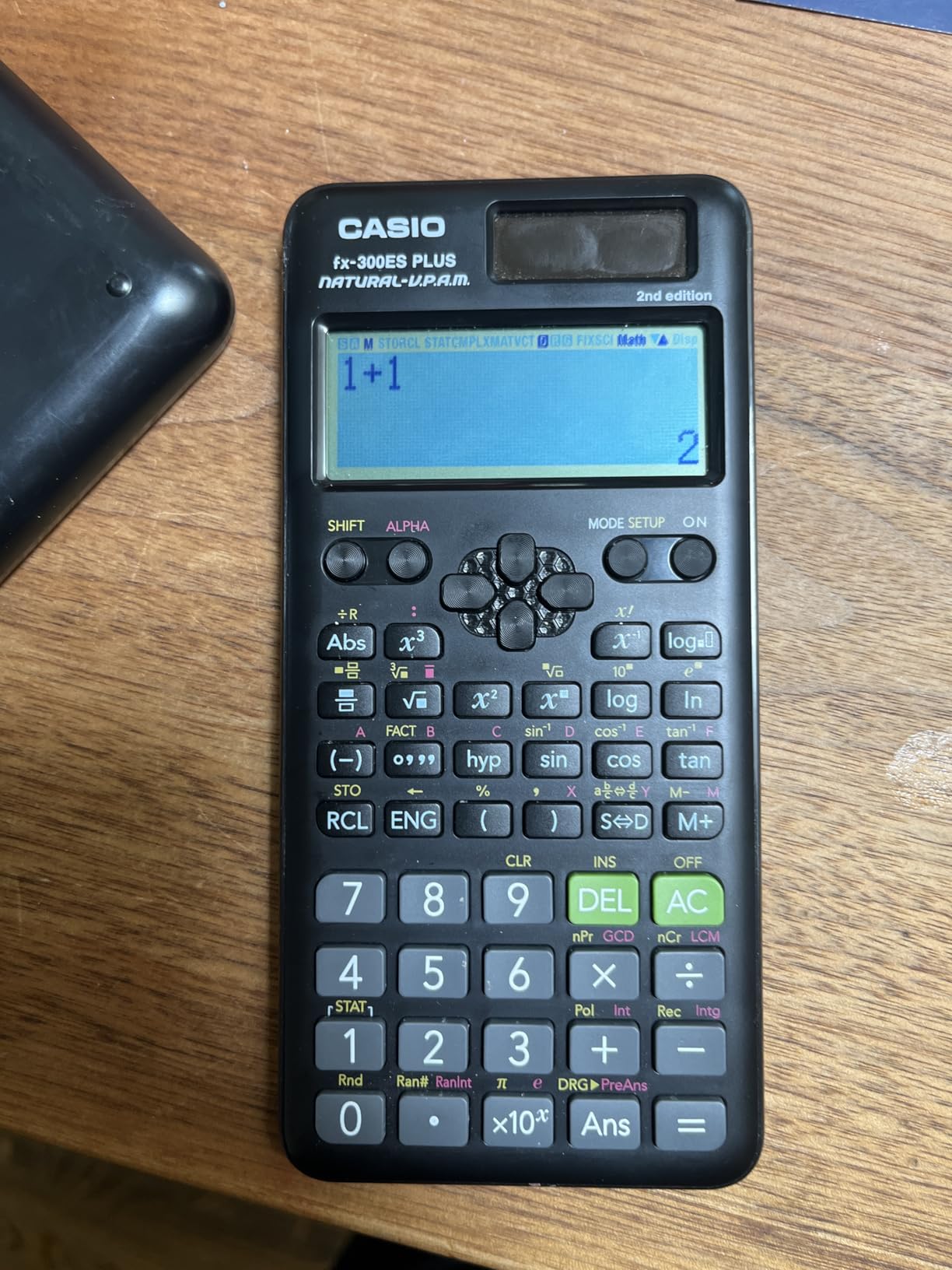
The Natural Textbook Display renders complex expressions clearly, and the color-coded keypad groups related functions together visually. This makes finding the right key faster, especially during timed exams when you cannot afford to hunt through menus.
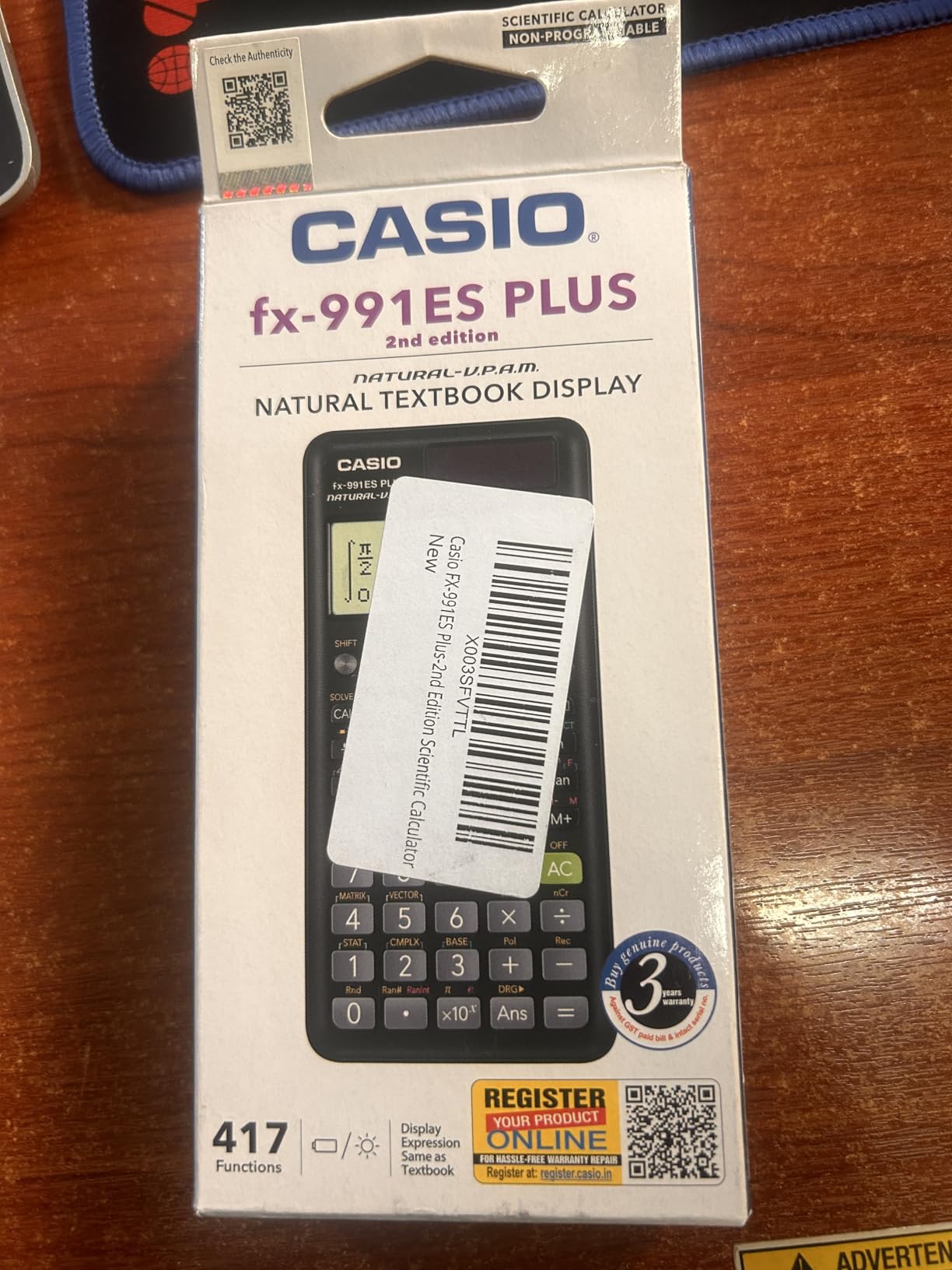
One feature I particularly like is the included slide-on hard case. Unlike soft cases that only protect against scratches, this rigid cover prevents screen damage when the calculator bounces around in a backpack. For students who are rough on their gear, this is a meaningful advantage.
The FX-991ES handles equation solving, integration, and differentiation with the same competence as the fx-115ES Plus but with additional functions and a slightly larger display. It is approved for standardized exams and performs well under test conditions.
When to Choose the FX-991ES Over Competitors
Pick this calculator if you want the maximum number of built-in functions without stepping up to a graphing calculator. It is particularly well suited for students taking multiple advanced STEM courses simultaneously who need one device that can handle all of them. The hard case and color-coded keys make it a practical choice for daily campus use.
International students may also find this model familiar, as it is widely used in engineering programs outside the US.
Availability and Warranty Concerns
Stock for the FX-991ES Plus 2nd Edition fluctuates. At the time of our review, only a limited number of units were available on Amazon, and the model may not include a US warranty depending on the seller. If you need this calculator for an upcoming semester, I recommend ordering early rather than waiting until the last minute.
Some users have reported receiving international versions without English documentation. Check the seller details carefully before purchasing.
6. Texas Instruments TI-30Xa – Best Budget Pick for Basic Needs
Texas Instruments TI-30Xa Scientific Calculator
10-digit LCD display
3.52 oz
Battery powered
Basic scientific functions
SAT/ACT/AP approved
Pros
- Most affordable option
- Covers all basic scientific and trig functions
- Fraction/decimal conversions
- 1-variable statistics
- Extremely lightweight
Cons
- Single line display
- No graphing capability
- No built-in equation solver
The TI-30Xa is proof that you do not need to spend a lot to get a capable scientific calculator. I have kept one of these in my desk drawer for years as a backup, and it still works perfectly. The single-line, 10-digit display is basic, but it covers all the essential scientific and trigonometric functions that most students need through high school.
This calculator handles trigonometric functions, logarithms, roots, powers, fraction and decimal conversions, one-variable statistics, and polar and rectangular conversions. For a fraction of what premium models cost, it gets the core job done reliably.
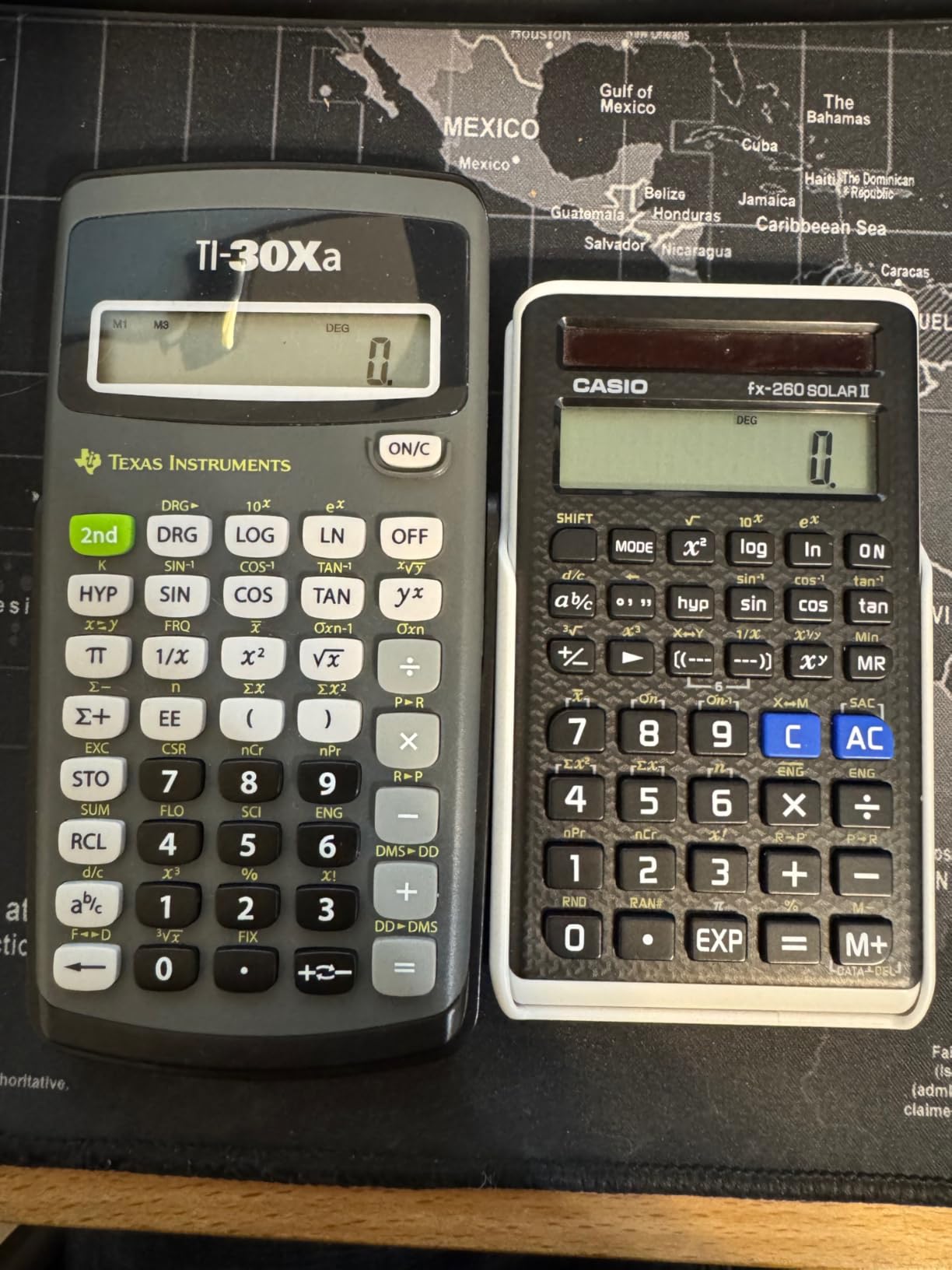
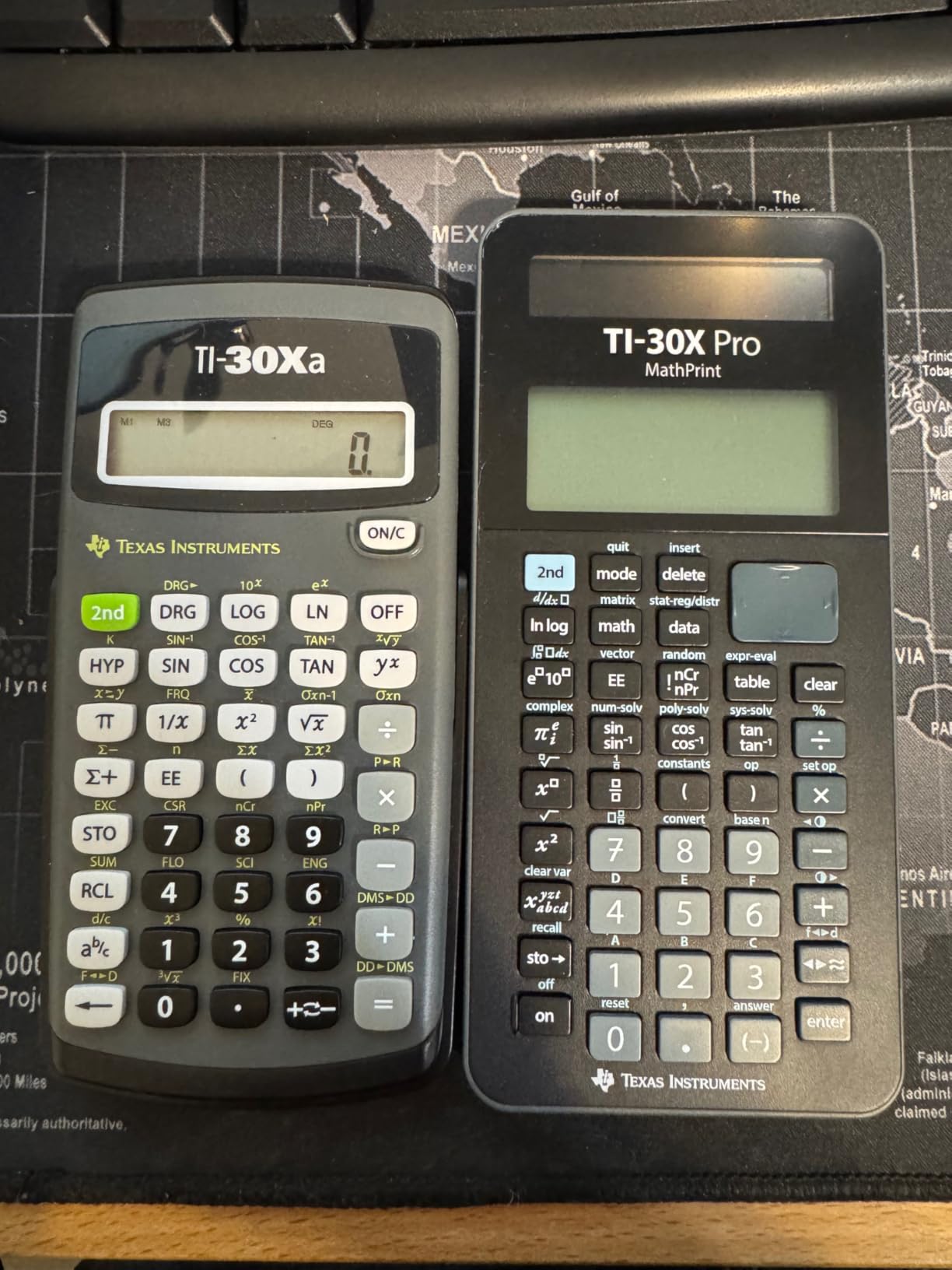
The TI-30Xa weighs just 3.5 ounces, making it the lightest calculator in this roundup. It slides easily into a pocket or pencil pouch. The included slide case protects the face, and the overall build has proven durable over years of use.
It is approved for SAT, ACT, and AP exams, which is impressive for a calculator at this price point. Many students use this as their primary exam calculator and keep a more advanced model for homework.
When the TI-30Xa Is All You Need
If you are a middle school or early high school student taking pre-algebra, algebra, or general science, the TI-30Xa covers everything required. It is also a solid choice as a secondary calculator for exam day when you want something simple and reliable that will not raise any flags during a calculator check.
Parents buying for multiple children will appreciate the low cost, especially when school supply lists require a scientific calculator for each student.
What You Give Up at This Price
The single-line display means you can only see one value at a time. There is no way to review previous calculations or compare entries side by side. The TI-30Xa also lacks an equation solver, matrix functions, and any form of multi-line input. For courses beyond algebra, you will likely need something more capable.
There is no solar power option, so you are entirely dependent on the battery. Keep a spare handy for exam season.
7. Sharp EL-531TGBBW – Best Display Quality Alternative
Sharp EL-531TGBBW 12-Digit Scientific/Engineering Calculator with Protective Hard Cover, LCD Display, Great for Students and Professionals, Black
12-digit 2-line LCD
273 functions
D.A.L. input
0.21 lbs
AAA battery included
Pros
- 12-digit display with 2-line view
- 273 built-in functions
- Direct Algebraic Logic shows calcs as written
- Home key for easy reset
- Durable hard cover included
Cons
- Sliding cover can scratch screen
- Not back-lit for low light
- Lower review count than competitors
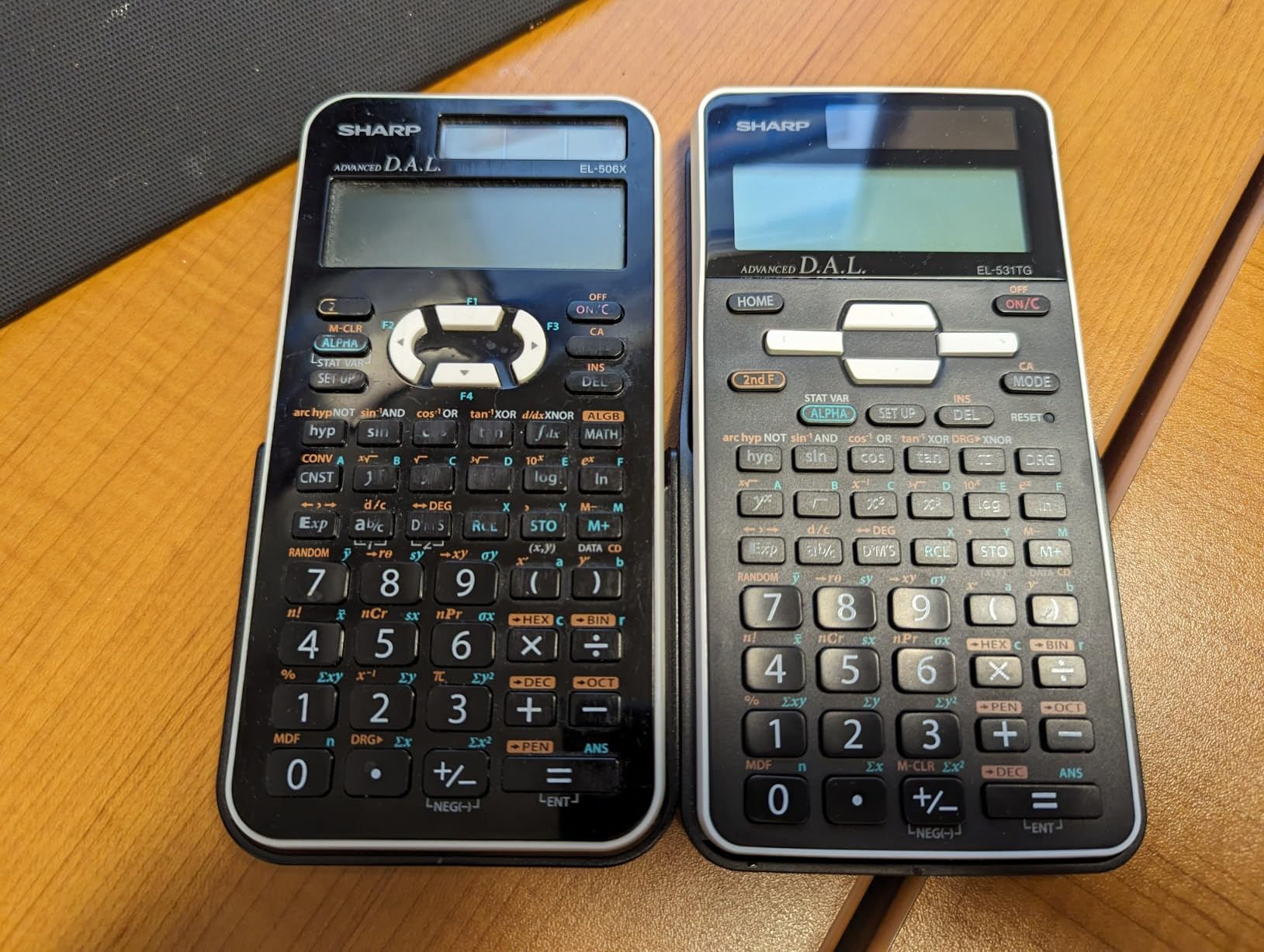
The Sharp EL-531TGBBW is a capable alternative to the dominant TI and Casio models, and its 12-digit display is the largest in our roundup. I found the extra digit space useful when working with very large or very small numbers in scientific notation, where rounding errors on smaller displays can cause problems.
Sharp’s Direct Algebraic Logic, or D.A.L., lets you enter calculations exactly as you would write them on paper. This makes the input process more intuitive, especially for students who struggle with the order of operations on traditional calculators. The two-line display shows your entry and result simultaneously.
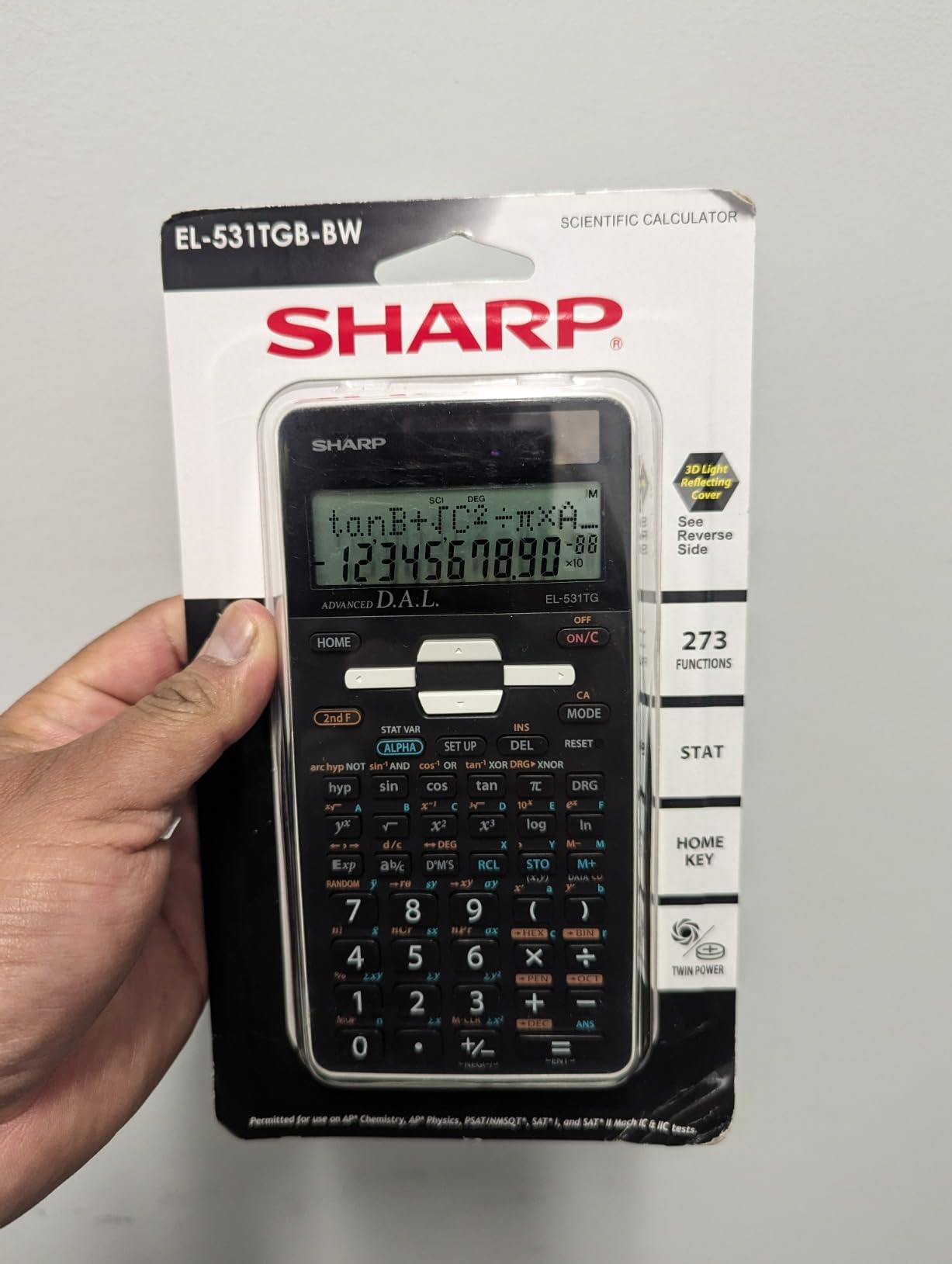
With 273 built-in functions, the EL-531TGBBW covers trigonometry, logarithms, statistics, and engineering notation comprehensively. The dedicated Home key resets the calculator to a clean state quickly, which is a small but appreciated feature during long study sessions when you want to start fresh between problems.
At just 0.21 pounds, it is one of the lightest options available. The included hard protective cover keeps it safe in transit, and the AAA battery is easy to replace compared to the button cells used in many competitors.
Who Benefits from Direct Algebraic Logic
Students who find traditional calculator entry confusing will appreciate D.A.L. because it mirrors how you naturally write math expressions. If you frequently make order-of-operations errors on other calculators, the EL-531TGBBW eliminates that frustration by processing expressions exactly as entered, left to right, respecting proper mathematical precedence.
Professionals who need a straightforward calculator for field work will also benefit from the intuitive input method and durable construction.
Build Quality and Durability Notes
The sliding hard cover is a double-edged sword. While it provides excellent protection, some users report that pressing too hard while sliding can scratch the display. The screen is also not back-lit, which makes it difficult to read in dimly lit lecture halls or evening study sessions.
The review count is significantly lower than TI and Casio models, which means fewer community-verified durability reports. However, the existing reviews are overwhelmingly positive about build quality.
8. Casio fx-300MS Plus 2nd Edition – Best Slim Design for On-the-Go
Casio fx-300MS Plus 2nd Edition – Standard Scientific Calculator with 2-Line Display | 10-Digit LCD, Trig, Stats, Fractions | Ideal for High School Algebra, Trigonometry & Test Prep
2-line LCD
240 functions
0.3 lbs
Battery/solar powered
Hard case included
Pros
- Clear 2-line display shows expressions and results
- 240 scientific functions
- Two-variable statistics
- Slim durable design with hard case
- Fraction and variable memory
Cons
- Memory storage requires complex key sequence
- Smaller display than premium models
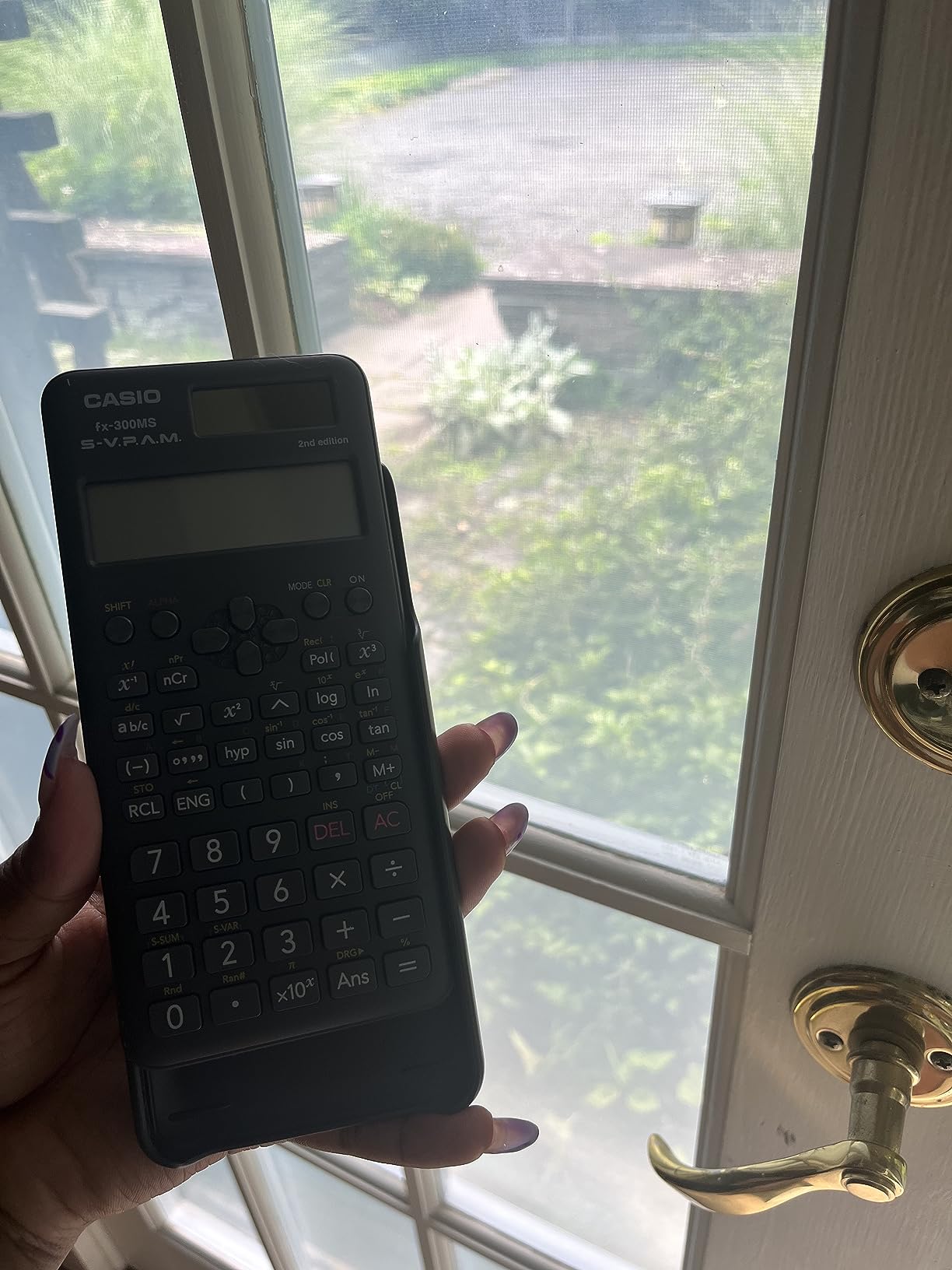
The Casio fx-300MS Plus 2nd Edition is the calculator I grab when I need something that disappears into my bag. Its slim profile is noticeably thinner than the TI models, and the included hard case adds protection without bulk. Despite its compact size, it packs 240 built-in functions covering trigonometry, inverse and hyperbolic functions, factorials, logarithms, and probability.
The two-line display shows your expression on the top line and the result on the bottom line, which is the standard expected format at this price point. It handles two-variable statistics, making it suitable for basic statistics courses and data analysis assignments.
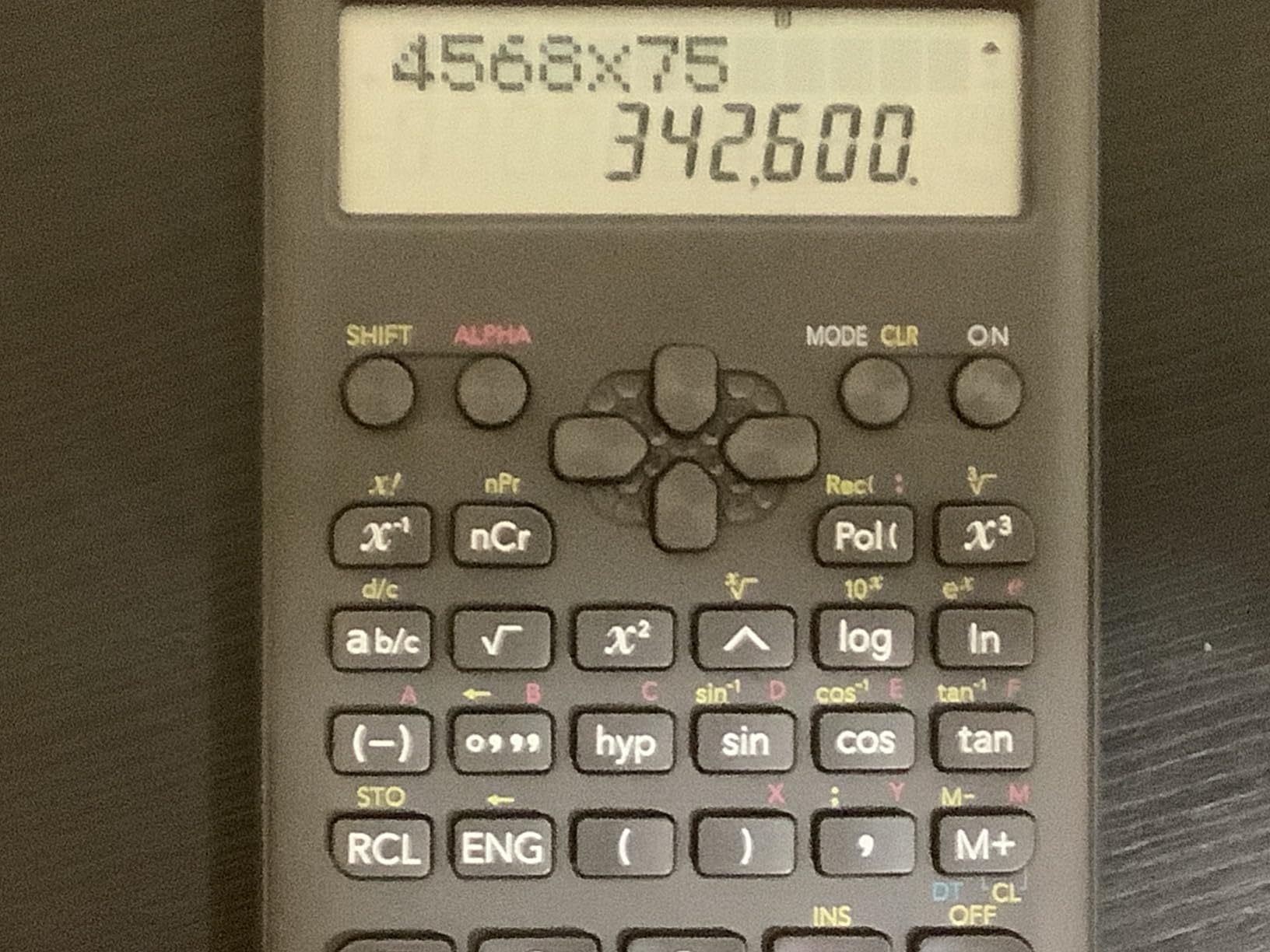
Solar and battery hybrid power keeps this calculator running reliably. The solar panel handles daytime use, and the LR44 battery kicks in when the lighting dims. I have been impressed by how long the battery lasts under regular use.
The fx-300MS is approved for AP, SAT, PSAT, NMSQT, and ACT exams, covering all the major standardized tests. For students who need one calculator from high school through college entry exams, this model handles the journey competently.
Best Use Cases for the fx-300MS
This calculator is ideal for high school algebra, trigonometry, and test preparation. It is a practical choice for students who want a reliable, portable scientific calculator that does everything required for standard coursework without unnecessary complexity. The slim design makes it easy to carry alongside textbooks and notebooks.
It also works well as a backup calculator. At this price, keeping a second one in your locker or car for emergencies is a reasonable strategy.
Memory and Function Limitations
Storing values in memory requires a multi-step key sequence that is not intuitive. Compared to TI models where variable storage is straightforward, the fx-300MS makes you work harder to save and recall intermediate results. The display is also smaller than premium Casio models like the FX-991ES, which can be an issue during extended study sessions.
While 240 functions is generous for general coursework, students in advanced calculus or engineering courses may find the feature set limiting compared to the Casio fx-115ES Plus or TI-36X Pro.
How to Choose the Best Scientific Calculator for Your Needs
Picking the right calculator depends on what you are studying, which exams you need it for, and how much you want to spend. Here are the factors that matter most when making your decision.
Display Type Matters More Than You Think
Multi-line displays, like the four-line MultiView on the TI-30XS and TI-36X Pro, let you see several calculations at once. This speeds up error checking and helps you track your work across multi-step problems. Two-line displays on models like the TI-30XIIS and Casio fx-300MS show your entry and result side by side, which is adequate for most coursework. Single-line displays on the TI-30Xa work but require you to remember or write down previous results.
Natural Textbook Display, available on the Casio fx-115ES Plus and FX-991ES Plus, renders expressions exactly as they appear in printed materials. This feature reduces input errors and makes verifying your work faster, especially for fractions and roots.
Exam Approval Is Non-Negotiable
All eight calculators in our roundup are approved for SAT, ACT, and AP exams. However, rules vary by institution and specific tests. Always check with your exam administrator before test day. Some schools perform calculator wipes that clear programs, though this is less of a concern with non-programmable scientific calculators than with graphing models.
For professional exams like the FE or PE engineering exams, check the NCEES approved calculator list. The TI-30XS MultiView and TI-36X Pro are commonly approved for these professional assessments.
Power Source: Solar, Battery, or Both
Dual-power calculators that combine solar panels with battery backup offer the best reliability. The TI-30XIIS, Casio fx-115ES Plus, Casio FX-991ES Plus, and Casio fx-300MS all use this approach. Solar power extends battery life significantly, and the backup battery keeps you running in dim classrooms.
Battery-only models like the TI-30XS MultiView and TI-36X Pro are fine for regular use but require you to keep a spare battery available. Models using common batteries like AAA (Sharp EL-531TGBBW) are easier to replace than those using button cells.
Matching Functions to Your Course Level
For basic algebra and general science, the TI-30Xa or fx-300MS provides everything you need. Mid-range courses like statistics, trigonometry, and pre-calculus pair well with the TI-30XS MultiView or TI-30XIIS. Advanced coursework in calculus, physics, and engineering calls for the TI-36X Pro, Casio fx-115ES Plus, or FX-991ES Plus, which offer equation solving, integration, differentiation, and matrix operations.
Brand Comparison: Casio vs Texas Instruments
Both brands produce excellent calculators, but they have different strengths. Texas Instruments dominates US classrooms and standardized testing, so most teachers and professors are familiar with TI keystroke sequences. Casio models typically offer more functions per dollar and feature Natural Textbook Display, which many students prefer for entering complex expressions.
In our testing, TI calculators had slightly better build quality and more consistent key feel, while Casio models offered better value and more advanced features at each price tier. Neither brand is objectively better. It comes down to which interface feels more natural to you.
Frequently Asked Questions About Scientific Calculators
What is the best brand for scientific calculators?
Texas Instruments and Casio are the two leading brands, and both produce excellent scientific calculators. Texas Instruments dominates US classrooms with intuitive interfaces and teacher familiarity, while Casio typically offers more functions per dollar and features like Natural Textbook Display. Sharp is a solid third option with its Direct Algebraic Logic system. For most students, choosing between TI and Casio comes down to personal preference and which interface feels more natural.
Is Casio better than TI-84?
This comparison depends on what you need. The Casio FX-991ES Plus offers 417 functions and advanced capabilities like integration and matrix operations at a much lower cost than the TI-84 Plus CE graphing calculator. However, the TI-84 Plus CE provides graphing capabilities, a color display, programmability, and a larger screen that scientific calculators cannot match. If you need graphing for your coursework, the TI-84 is the better tool. If you only need scientific functions, a Casio scientific calculator gives you more value.
Is Casio FX 991EX allowed in exams?
Yes, the Casio FX-991EX and the newer FX-991ES Plus 2nd Edition are approved for SAT, ACT, AP, PSAT, and NMSQT exams. These are non-programmable scientific calculators, which means they meet the calculator policy requirements for all major standardized tests. Always verify with your specific exam administrator, but these models are widely accepted across US testing environments.
Do college students use TI-84?
Many college students use the TI-84 Plus CE, particularly in courses that require graphing functions, such as calculus, statistics, and some engineering classes. However, for courses that only require scientific calculations, many students prefer lightweight scientific calculators like the TI-30XS MultiView, TI-36X Pro, or Casio FX-991ES Plus because they are cheaper, lighter, and still approved for exams. The choice between a graphing calculator and a scientific calculator depends on your specific course requirements.
Final Thoughts on the Best Scientific Calculators
After testing all eight models, the TI-30XS MultiView remains our top pick for most students in 2026. Its four-line display, MathPrint notation, and exam approval make it the most versatile scientific calculator for the widest range of coursework. The TI-30XIIS offers the best value with its dual power system and proven durability, while the TI-30Xa handles basic needs at the lowest price.
For advanced coursework, the TI-36X Pro and Casio fx-115ES Plus deliver capabilities that rival graphing calculators at a fraction of the cost. Pick the one that matches your course requirements, and you will have a reliable companion from your first algebra class through graduation.