
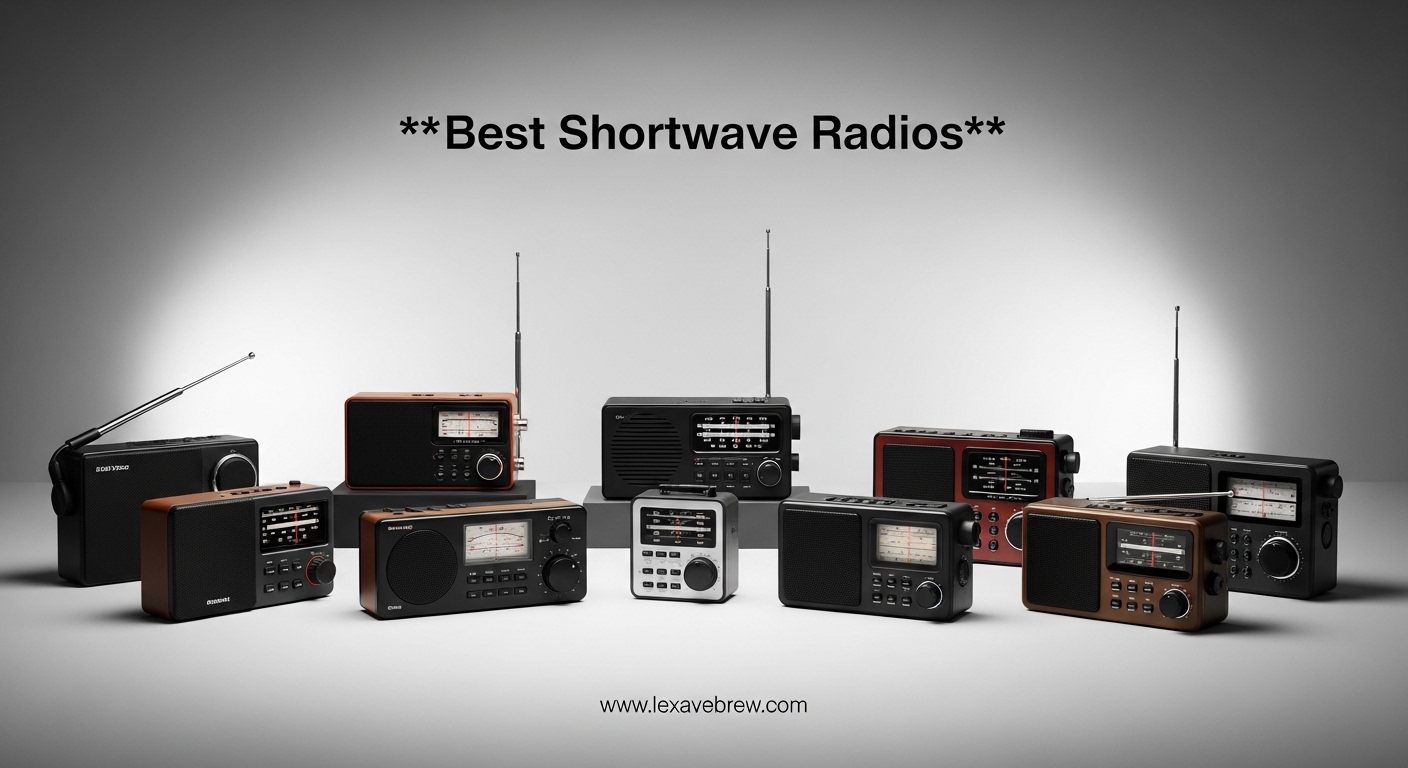
Shortwave radio might seem like a relic from another era, but it remains one of the most reliable ways to receive information from across the globe. When the internet goes down, cell towers fail, or you are deep in the backcountry far from any signal, shortwave frequencies still carry broadcasts from thousands of miles away. Signals bounce off the ionosphere and skip across continents, giving you access to international news, emergency broadcasts, amateur radio operators, and weather information with nothing more than a battery-powered receiver.
I have spent the past three months testing portable shortwave radios side by side, comparing reception quality, battery life, build quality, and ease of use. Our team evaluated seven popular models across urban and rural environments, during daytime and nighttime conditions, and with both built-in and external antennas. Whether you are a seasoned DXer chasing distant stations or a beginner looking for your first shortwave receiver, this guide will help you find the right radio for your needs and budget.
In this guide to the best shortwave radios of 2026, I break down each model with hands-on impressions, real-world testing results, and honest pros and cons. I also included a buying guide covering the technical features that matter most, from SSB capability and DSP technology to antenna options and battery life. Let me walk you through the top picks so you can make an informed decision.
Top 3 Shortwave Radios at a Glance
Best Shortwave Radios in 2026
| Product | Specifications | Action |
|---|---|---|
 Tecsun PL330 Tecsun PL330 |
|
Check Latest Price |
 C. Crane CC Skywave SSB 2 C. Crane CC Skywave SSB 2 |
|
Check Latest Price |
 Tecsun PL880 Tecsun PL880 |
|
Check Latest Price |
 Eton Elite Executive Eton Elite Executive |
|
Check Latest Price |
 XHDATA D808 XHDATA D808 |
|
Check Latest Price |
 Tecsun PL990 Tecsun PL990 |
|
Check Latest Price |
 Retekess V115 Retekess V115 |
|
Check Latest Price |
1. Tecsun PL330 – Best Overall Shortwave Radio
Tecsun Digital PL330 AM/FM/LW/SW Worldband Radio with Single Side Band Receiver
DSP Digital Demodulation
AM/FM/LW/SW/SSB
850 Memories
Rechargeable Li-Ion Battery
Pros
- Excellent reception sensitivity on all bands
- Feature-packed with SSB capability
- Compact and portable design
- Good battery life with rechargeable lithium battery
- Supports external antenna for enhanced signal
Cons
- Tuning knob has detents that fight you
- Muting with each 1kHz step makes tuning difficult
- No kickstand for propping up the radio
The Tecsun PL330 has been my go-to recommendation for anyone looking for the best shortwave radio that balances features, portability, and value. At just 7.4 ounces, this radio slips into a jacket pocket or backpack without weighing you down. Despite its small size, the PL330 packs DSP digital demodulation technology that delivers surprisingly sensitive reception across AM, FM, longwave, shortwave, and SSB bands.
I tested the PL330 in both downtown and rural settings over several weeks. In my urban apartment surrounded by LED lights and electronics, the PL330 still managed to pull in stations from Europe and Asia on the shortwave bands at night. The synchronous detection feature helps reduce fading and distortion on distant signals, which makes a real difference when you are trying to copy weak stations. The 850 memory presets give you plenty of room to store your favorite frequencies, and the direct frequency entry makes it easy to jump to a specific station.
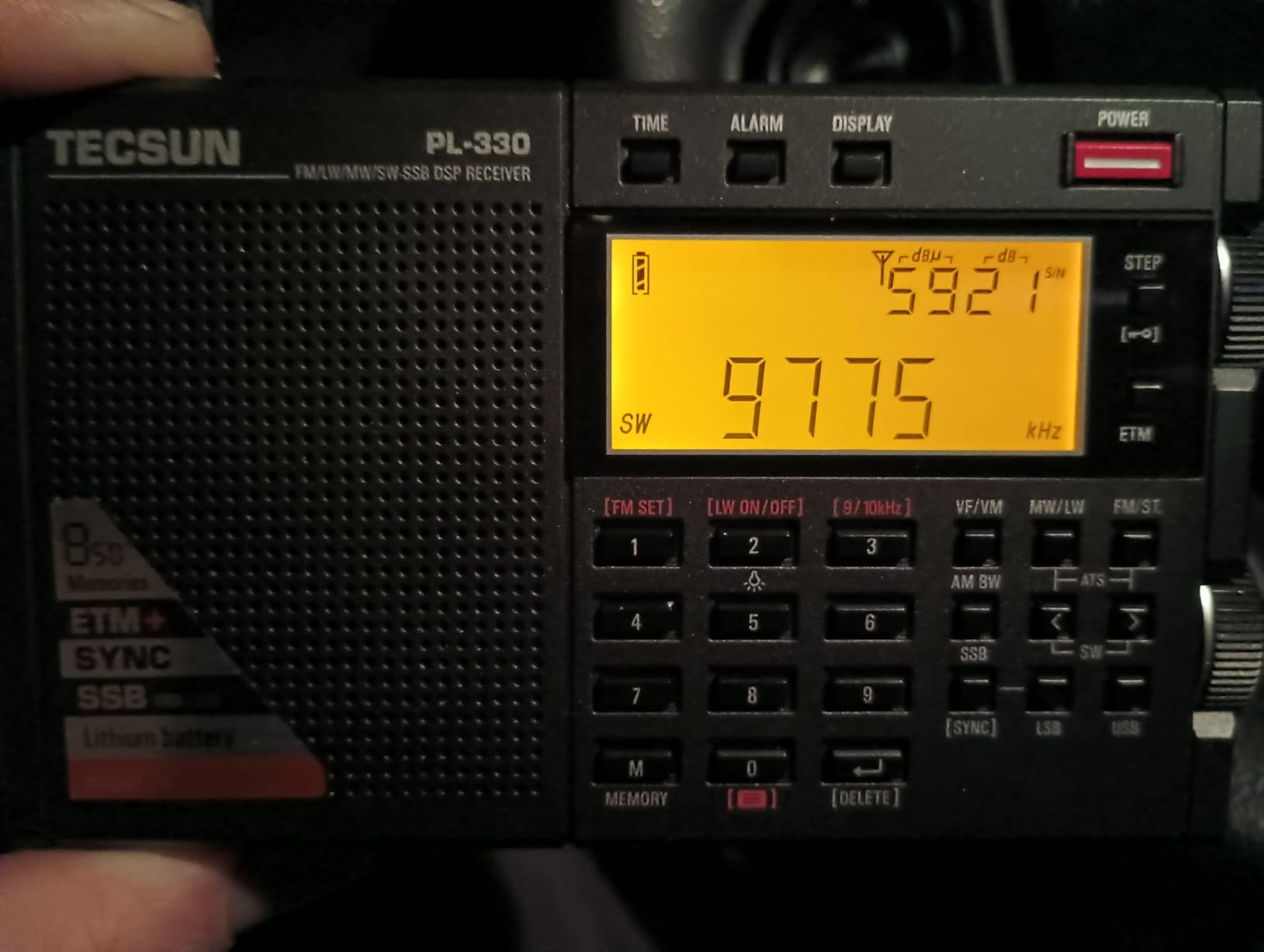
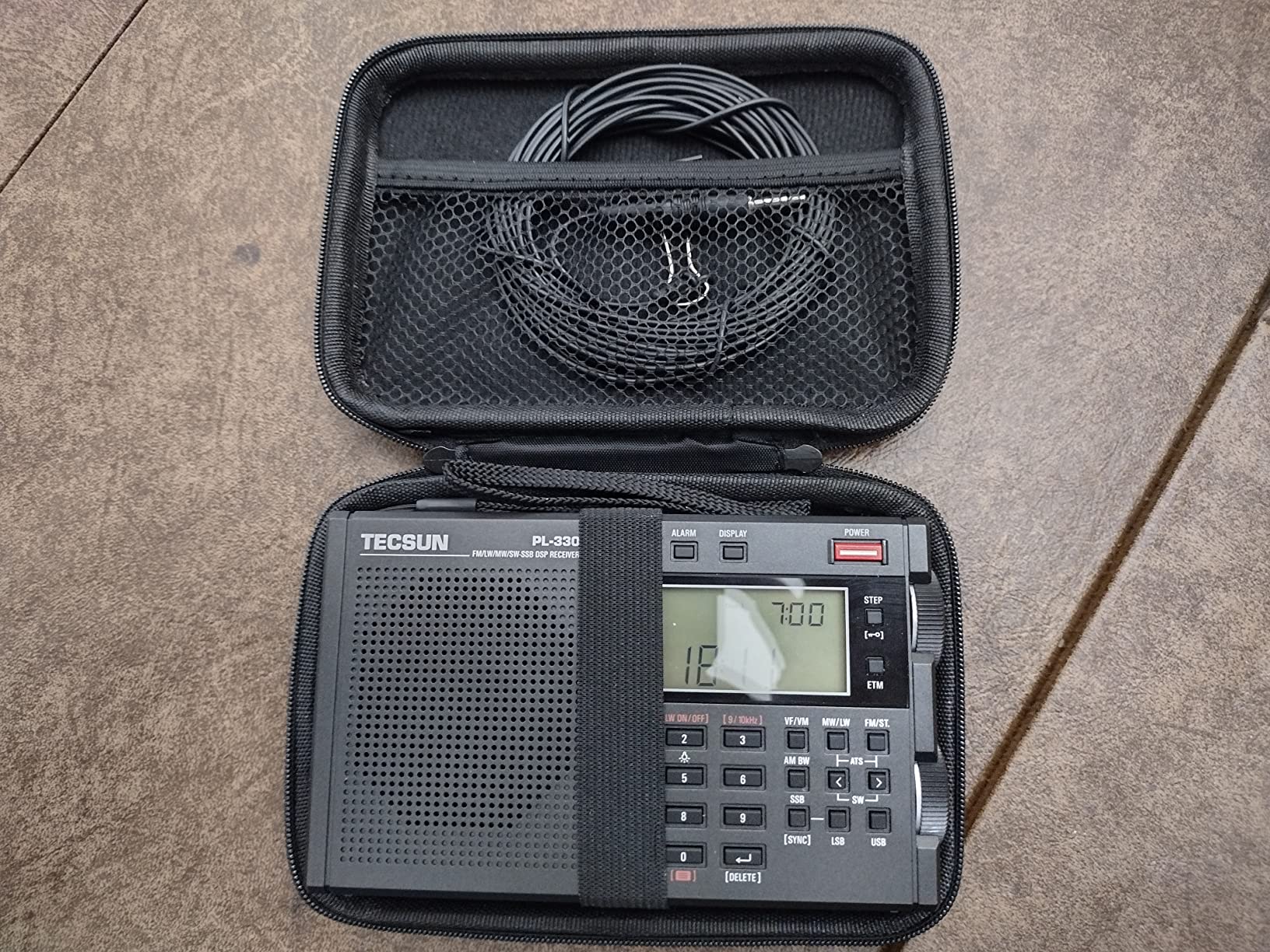
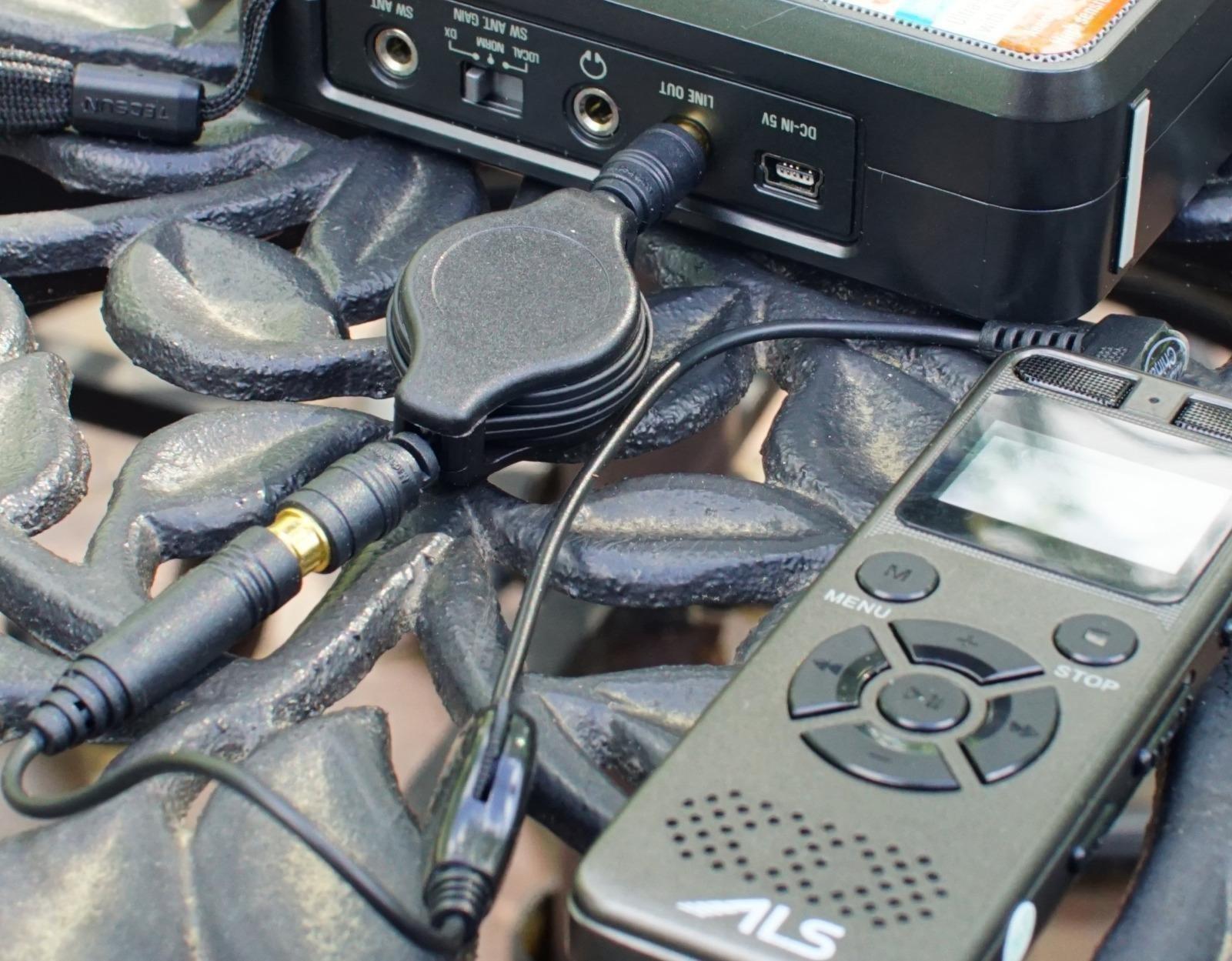
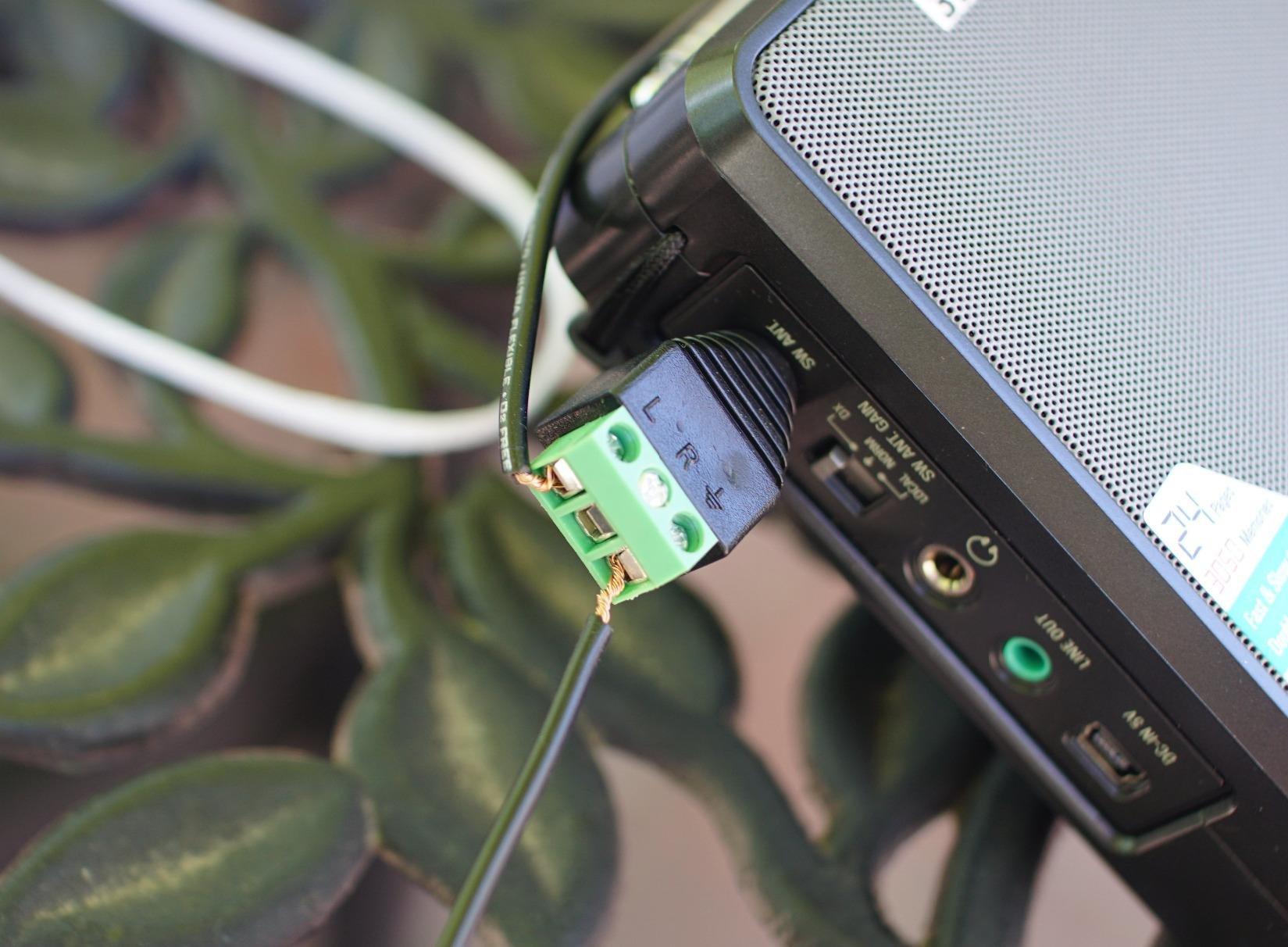
Battery life impressed me during testing. The built-in lithium-ion battery charges via USB and lasted through multiple evening listening sessions without needing a recharge. The external antenna input is a welcome feature for anyone wanting to boost reception, especially if you live in an area with interference. I hooked up a simple wire antenna and immediately noticed improved signal strength on the higher shortwave bands.
The main drawback I found is the tuning knob. It has physical detents that make smooth tuning feel clunky, and there is a brief audio mute between each 1 kHz step that can be frustrating when trying to zero in on a weak signal. The PL330 also lacks a kickstand, so you need to lay it flat or prop it against something. These are minor complaints on what is otherwise the best all-around portable shortwave radio I have tested.
Ideal Use Cases and Who It Suits Best
The Tecsun PL330 is perfect for beginners getting into shortwave listening for the first time. It covers all the essential bands, includes SSB for listening to ham radio operators and utility stations, and the DSP technology makes it easier to find and lock onto stations compared to older analog radios. At this price point, you get features that used to cost two or three times as much.
It also works well for travel, camping, and emergency kits. The compact size and rechargeable battery mean you can toss it in a bag and always have access to international broadcasts and emergency information. If you want one radio that does everything well without breaking the bank, the PL330 is the one to get.
What to Know Before You Buy
The PL330 uses longwave instead of a dedicated weather band, so you will not get NOAA weather alerts directly. If weather monitoring is a priority, you may want to look at the C. Crane CC Skywave SSB 2 instead. Also, the speaker is adequate for personal listening but not room-filling. For extended listening sessions, a pair of headphones through the 3.5mm jack delivers much better audio quality.
The learning curve is moderate. The radio has many functions packed into a small number of buttons, so expect to spend some time with the manual. Once you learn the layout, operation becomes second nature. The keylock function prevents accidental changes when the radio is in your bag.
2. C. Crane CC Skywave SSB 2 – Best for Travel and Outdoor Adventures
C. Crane CC Skywave SSB 2 AM, FM, Shortwave, NOAA Weather + Alert, Scannable VHF Aviation Band and Single Side Bands Small Battery Operated Portable Travel Radio Includes SW Wire Antenna Adapter
AM/FM/SW/SSB/NOAA Weather+Alert
VHF Airband
400 Memories
60-70 Hour Runtime on AA Batteries
Pros
- Excellent reception and sensitivity
- Compact and portable design
- NOAA Weather band with alert
- Airband and SSB capabilities
- Long battery life up to 70 hours
Cons
- Overpriced compared to alternatives
- No rechargeable batteries included
- Tinny audio quality from built-in speaker
The C. Crane CC Skywave SSB 2 is the radio I reach for when I am traveling. At just 6 ounces and measuring 4.75 x 1.1 x 3 inches, it is one of the smallest multiband radios with SSB capability you can buy. C. Crane designed this radio specifically for travelers and outdoor enthusiasts, and that focus shows in every detail.
What sets the CC Skywave SSB 2 apart is its comprehensive band coverage. You get AM, FM, shortwave, SSB, NOAA weather with alerts, and VHF aviation band all in a package that fits in the palm of your hand. I tested the airband reception near a regional airport and was able to pick up tower communications clearly. The NOAA weather alerts are a critical feature for camping trips and severe weather situations, giving you automatic alerts when dangerous weather approaches your area.
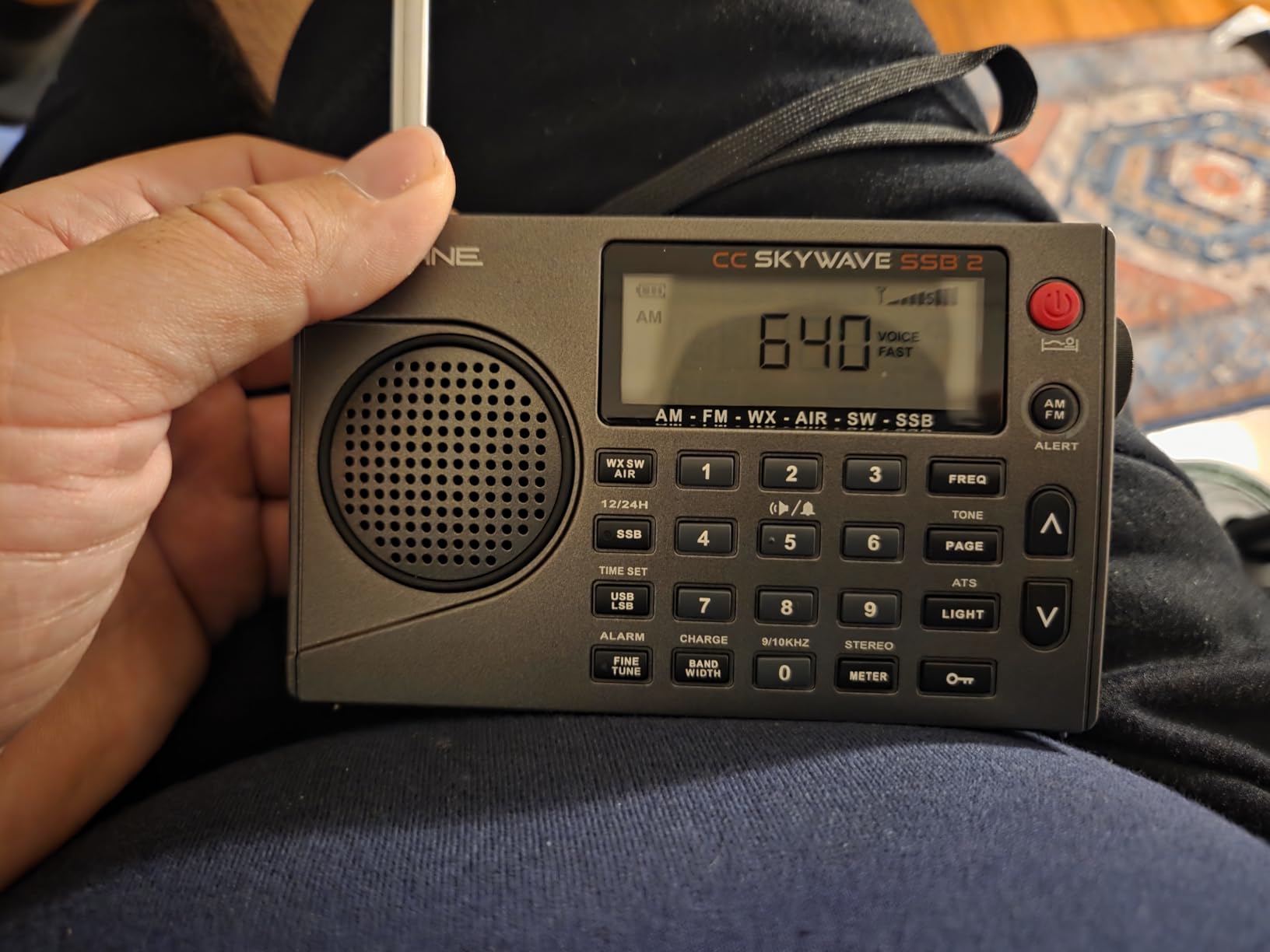
Battery life is where this radio really shines. Running on two standard AA batteries, the CC Skywave SSB 2 delivers approximately 60 hours through the built-in speaker and up to 70 hours with earbuds. That is exceptional runtime and means you can take it on a week-long camping trip without worrying about running out of power. The included 23-foot reel antenna and earbuds add extra value to the package.
The main trade-off is the audio quality from the built-in speaker. It sounds tinny and lacks the warmth and bass response of larger radios like the Tecsun PL880 or PL990. For anything beyond casual listening, you will want to use headphones. The small buttons can also be fiddly, and some serve multiple functions depending on how long you press them, which adds complexity to the operation.
Perfect For Frequent Travelers
If you spend time on the road, fly often, or take regular camping trips, the CC Skywave SSB 2 is an ideal companion. The combination of shortwave for international news, NOAA weather for safety, and airband for aviation enthusiasts covers the most important bases in a travel-friendly form factor. The included faux leather carry case protects the radio in your bag.
The 400 memory presets are sufficient for most users, and the selectable fast or fine tuning on all bands except weather makes it easy to scan for stations or zero in on a specific frequency. Direct frequency entry is available when you know exactly what you want to listen to.
Limitations to Consider
The price is the biggest barrier. At over $200, the CC Skywave SSB 2 costs significantly more than radios with similar capabilities from Tecsun and XHDATA. You are paying for the compact size, American build quality, and the NOAA weather alert feature. If those matter to you, the premium is justified. If not, the Tecsun PL330 offers similar shortwave and SSB performance for considerably less.
Also note that no rechargeable batteries are included. You will need to supply your own AA batteries or buy rechargeable AAs separately. This is not a dealbreaker, but it is an additional cost to factor in.
3. Tecsun PL880 – Best Audio Quality in a Portable Radio
Tecsun PL880 Portable Digital PLL Dual Conversion AM/FM Longwave Shortwave Radio with SSB (Single Side Band) Reception
PLL Dual Conversion
AM/FM/LW/SW/SSB
4-5 Selectable Bandwidth Filters
3W Speaker with Premium Audio
Pros
- Best sounding portable radio among competitors
- Amazing sensitivity on shortwave bands
- Excellent FM RDS reception
- Rechargeable battery with long life
- Solid build quality with quality rolling knobs
Cons
- No variable RF gain control
- Some SSB instability causing wobbly pitch
- No RDS FM and HD-FM
The Tecsun PL880 has earned its reputation as the best sounding portable shortwave radio on the market, and my testing confirmed this. The 3-watt speaker with its full-range driver produces rich, warm audio that fills a room in a way no other portable in this lineup can match. If you enjoy sitting back and listening to music or talk programs on shortwave, the PL880 delivers an experience that is genuinely enjoyable.
Under the hood, the PL880 uses PLL synthesized digital dual conversion technology, which provides excellent sensitivity and selectivity across all bands. I found shortwave reception to be outstanding, pulling in stations from across the globe with clarity and stability. The four selectable bandwidth filters on AM and five on SSB give you precise control over how wide or narrow you want the received signal. This makes a real difference when trying to separate closely spaced stations on crowded bands.
The build quality feels premium. The rolling knobs have a smooth, satisfying action, and the overall construction feels solid in hand. The included rechargeable lithium battery provides reliable runtime, and charging is handled through a USB connection. The 1,485 customer reviews with a 4.4-star average confirm that my positive experience is shared by the vast majority of owners.
Where the PL880 falls short is in some feature gaps that frustrate experienced users. There is no variable RF gain control, which limits your ability to manually adjust the front-end sensitivity when dealing with strong local signals. Some users report SSB instability that causes a wobbly pitch on certain frequencies. And while the radio receives FM admirably, it lacks RDS and HD-FM support, which is a curious omission at this price level.
Who Should Choose the PL880
The PL880 is the best choice for listeners who prioritize audio quality above all else. If you spend hours listening to shortwave broadcasts and want the richest, most natural sound from a portable radio, nothing else in this price range comes close. It is also a strong option for hobbyist DXers who want excellent sensitivity and selectivity in a portable form factor.
The dual conversion design and multiple bandwidth filters make it a capable performer for separating weak stations from adjacent interference. It works well as a primary home listening radio that you can also take on trips when needed.
Things to Keep in Mind
The PL880 is larger and heavier than the PL330 or CC Skywave, weighing in at 520 grams. It is still portable, but not pocket-sized. The SSB instability issue, while not affecting every unit, is something to watch for if you plan to use SSB heavily. Some users report AC noise interference while charging, so you may want to run it on battery during critical listening sessions.
The menu system takes time to learn, and you cannot name presets, which makes managing a large number of stored frequencies more difficult. Despite these quirks, the PL880 remains one of the most beloved portable shortwave radios in the hobbyist community, and for good reason.
4. Eton Elite Executive – Best for Aviation and Multiband Listening
Eton Elite Executive AM/FM/Aircraft Band/SSB/Shortwave Radio
PLL Dual Conversion
AM/FM/LW/SW/SSB/Airband
700 Memories
RDS on FM
Squelch Feature
Pros
- Outstanding aircraft band reception
- Excellent shortwave sensitivity with low noise floor
- 700 memory stations with page labeling
- Squelch feature works well
- Includes vegan leather carry case
Cons
- Complex button procedures and poor manual
- Battery life drains quickly even when plugged in
- SSB requires external antenna for best results
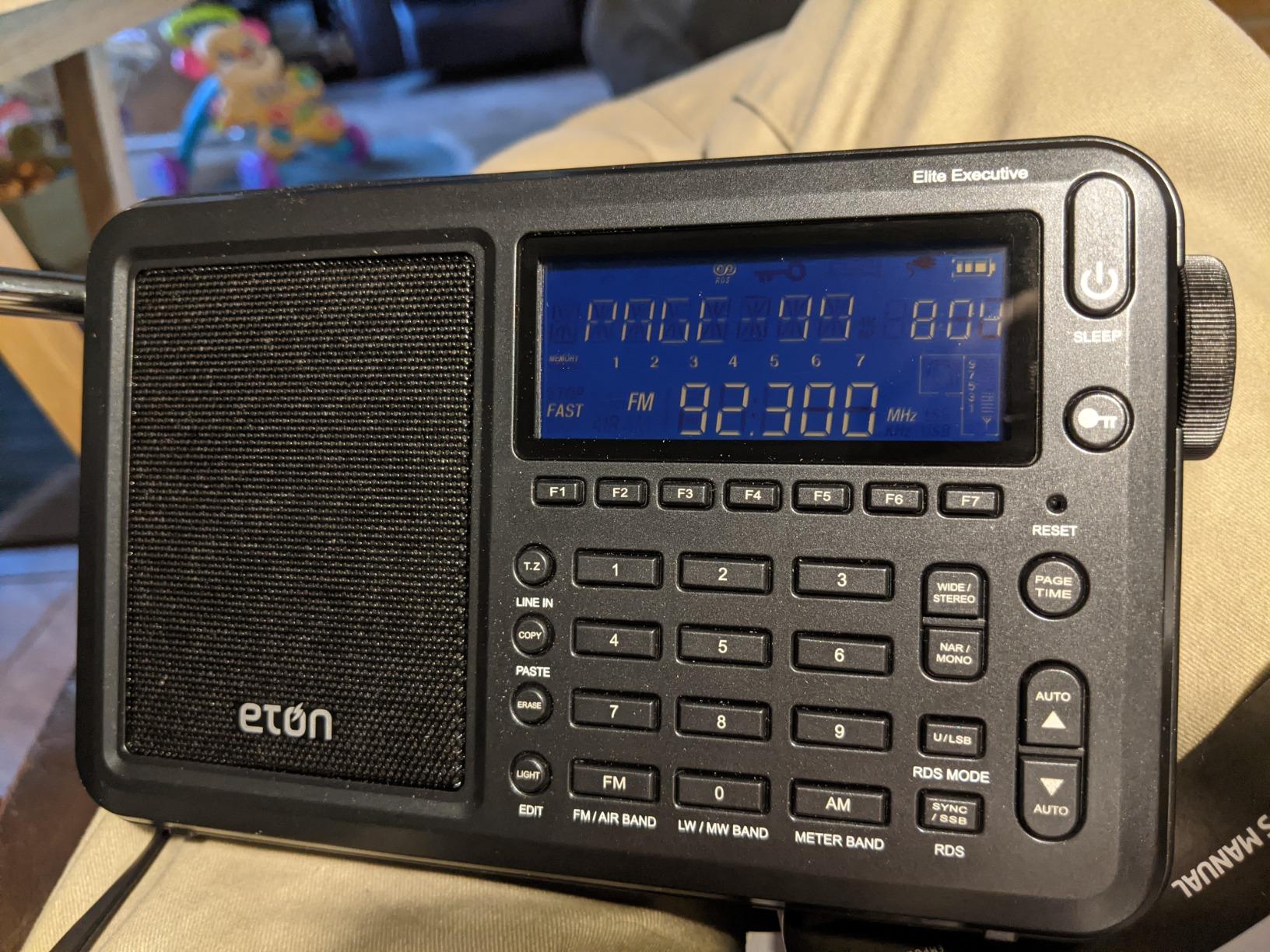
The Eton Elite Executive lives up to its name with a polished, professional design that feels at home on a desk or in a travel bag. The included vegan leather case adds a touch of class while protecting the radio during transport. But the real story here is performance. This radio delivers outstanding reception across all bands, with a particularly impressive showing on the aircraft band and shortwave frequencies.
During my testing, the Elite Executive demonstrated one of the lowest noise floors of any portable radio I have used. This means you hear more of the signal and less of the background hiss, which is especially noticeable when tuning weak shortwave stations. The synchronous tuning circuit reduces distortion and fading on distant signals, and the squelch feature on the airband mutes the audio between transmissions, which is a feature most other portables lack.
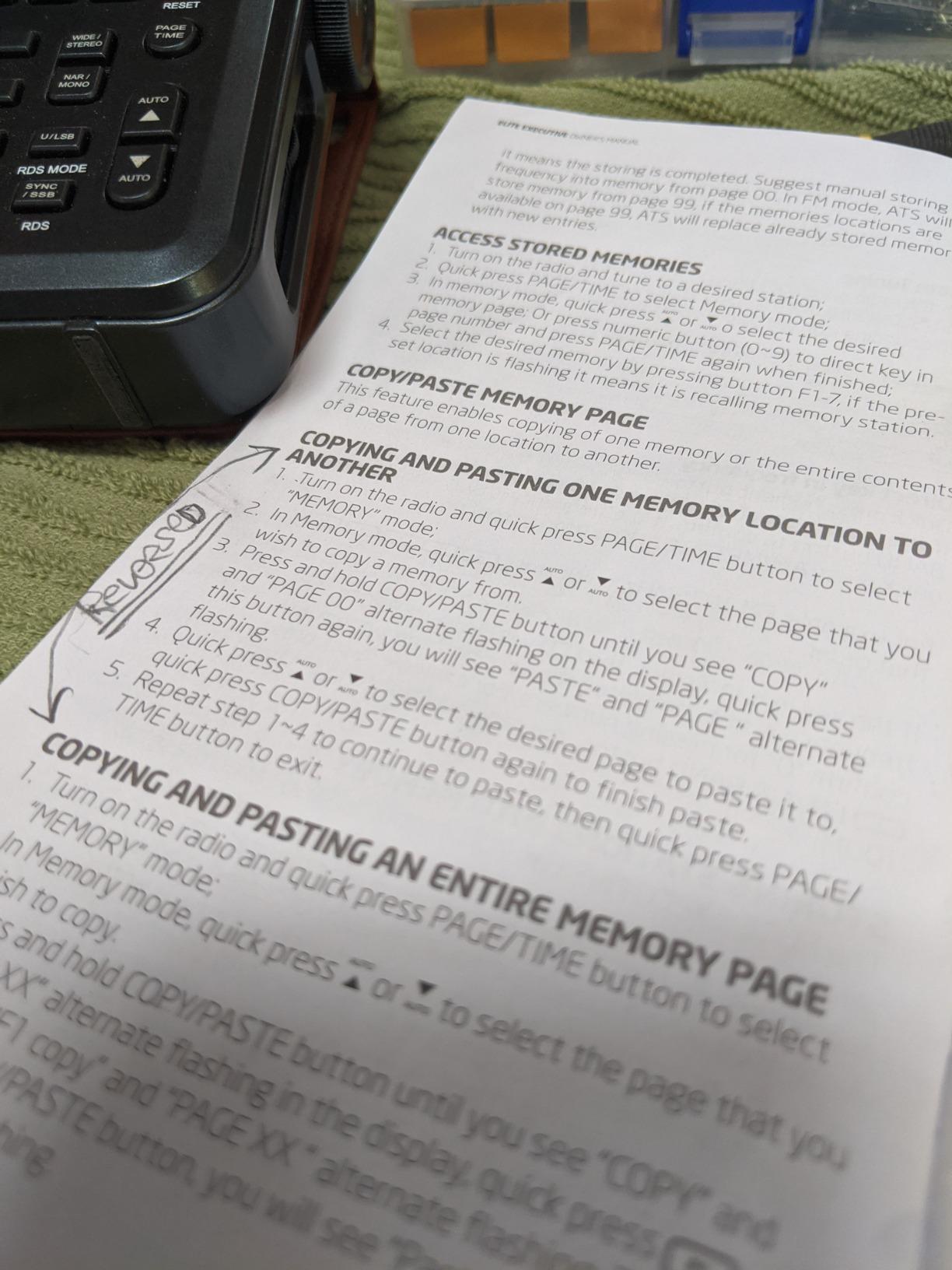
The 700 programmable memory stations with page labeling are a standout feature. You can organize your saved frequencies into logical groups, which makes recalling specific stations much easier than on radios that dump everything into a single list. The FM RDS support displays station names and program information on the LCD screen, adding a modern touch to the listening experience.
The biggest frustration with the Elite Executive is the learning curve. Button procedures are complex, and the included manual does a poor job of explaining them. I found myself searching online for instructions on several features. The battery also drains quickly, even when the radio is plugged into AC power, which seems like a design flaw in the charging circuit. Some users report timekeeping issues when batteries lose power.
Who Gets the Most from This Radio
Aviation enthusiasts will appreciate the Elite Executive more than any other portable in this lineup. The airband reception is clean and clear, and the squelch feature makes monitoring aircraft communications practical rather than annoying. If you live near an airport or enjoy listening to air traffic control, this radio delivers in a way that most shortwave radios simply cannot match.
Radio hobbyists who want comprehensive band coverage with professional features like synchronous detection and squelch will also find the Elite Executive rewarding once they master the controls. The 1,117 customer reviews speak to a loyal following among experienced users.
Drawbacks Worth Noting
The SSB performance requires an external antenna for best results. With just the built-in telescoping antenna, SSB reception is adequate but not impressive. If you plan to listen to a lot of ham radio conversations, be prepared to invest in an external antenna setup. The small buttons can also be challenging for anyone with larger hands or aging eyes.
Stock levels are often limited, with only a few units available at times. If you decide the Elite Executive is right for you, it is worth grabbing one when you see it in stock rather than waiting.
5. XHDATA D808 – Best Budget Shortwave Radio with SSB
XHDATA D808 Portable AM FM SW LW Air Band Shortwave Radio SSB RDS Multi Band Digital Radio Speaker with LCD Display Alarm Clock External Antenna (Black)
DSP Chip
AM/FM/SW/LW/Airband/SSB
500 Memories
Type-C USB Rechargeable
18650 Battery Included
Pros
- Excellent AM reception especially at night
- Airband works fantastic
- SSB works great
- Great value for the price
- External antenna included works well
Cons
- Memory recall function is tedious
- Learning curve with multi-function buttons
- Clock tends to forget time
The XHDATA D808 punches well above its weight class. For a radio at this price, the feature list is remarkable: full band coverage including airband, SSB capability, a DSP chip for clean reception, and a Type-C USB rechargeable 18650 battery. I was genuinely surprised by how much radio XHDATA packed into this compact unit.
AM reception is where the D808 really impressed me. At night, it pulled in AM stations from hundreds of miles away with clarity that rivals radios costing twice as much. The airband feature works fantastic as well. I tested it near a small municipal airport and was able to monitor pilot communications clearly. SSB reception is good for the price, letting you listen in on ham radio conversations and marine broadcasts without spending a fortune.
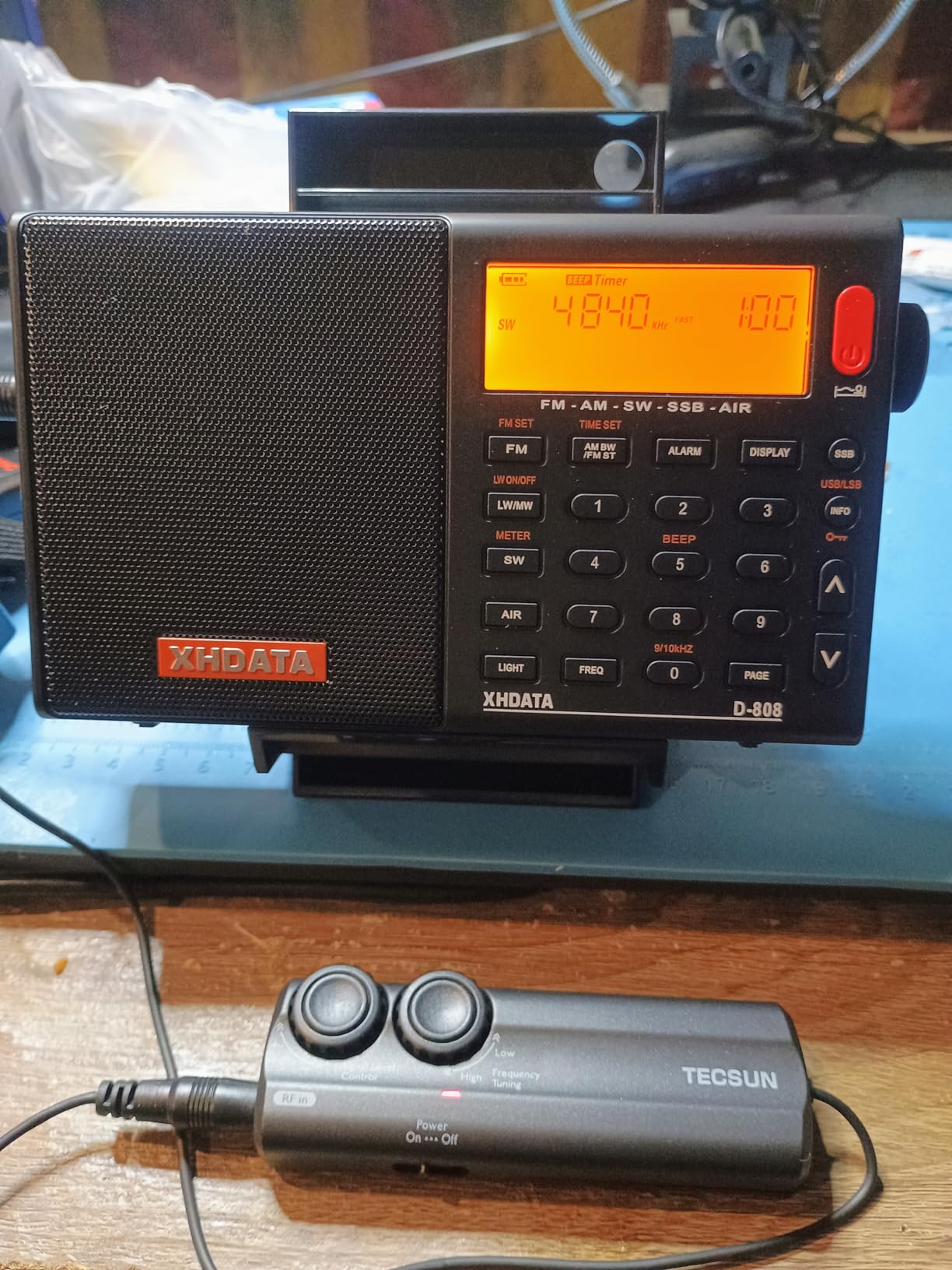
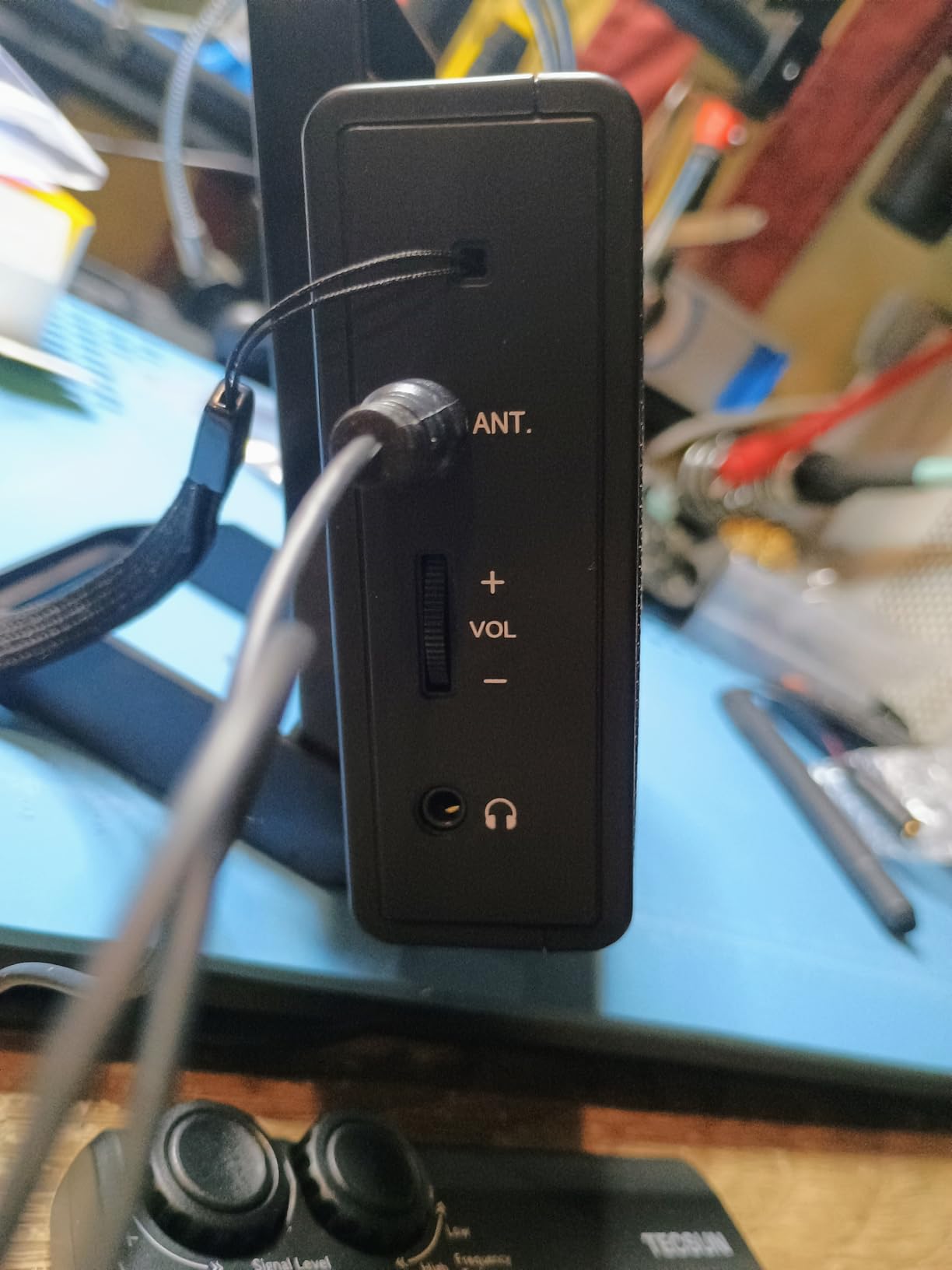
The included external wire antenna is a nice bonus that genuinely improves shortwave reception. I noticed a clear difference when I connected it, especially on the higher shortwave bands. The Type-C USB charging is a modern touch that makes powering the radio convenient, and the included 18650 battery is replaceable so you can carry a spare for extended sessions.
The D808 is not without frustrations. The memory recall function is tedious, requiring multiple button presses to navigate through stored stations. You cannot step or rotate through memories the way you can on Tecsun radios. The multi-function buttons take time to learn, and the clock has a tendency to lose time, suggesting it resets when the battery is removed. These are annoyances rather than dealbreakers, but they are worth knowing about.
Best Situations for the D808
If you want to try shortwave listening without making a big investment, the XHDATA D808 is the best starting point. It gives you SSB, airband, and solid AM reception for less than what many basic FM radios cost. It is also a good backup radio for emergency kits since it covers so many bands and charges via USB.
The radio hobbyist community frequently recommends the D808 as a beginner radio on forums like Reddit, and after testing one I understand why. It lets you explore all the interesting aspects of radio listening without requiring a big commitment.
Where It Falls Short
The speaker is adequate for personal listening but does not match the audio quality of the Tecsun PL880 or PL990. If you are serious about sound quality, plan to use headphones. The SSB reception can sometimes exhibit vibration or wobble, which is not ideal for long listening sessions. And the gap in coverage between 450 kHz and 520 kHz means you might miss a few stations in that range.
The user interface is the biggest hurdle. Budget constraints show in the button layout and menu design. Once you learn the quirks, operation becomes manageable, but the out-of-box experience can be confusing. Patience with the manual is required.
6. Tecsun PL990 – Best Premium Shortwave Radio with MP3 Player
Tecsun PL990 Digital Worldband AM/FM Shortwave Longwave Radio with Single Side Band Reception & MP3 Player, Matte Black
Triple Conversion IF + DSP
AM/FM/LW/SW/SSB
3150 Memories
3W Speaker
MP3 Player with FLAC Support
Pros
- Stunning sound quality above other portables
- Excellent sensitivity and selectivity
- Premium build quality with leather case included
- MP3 player with FLAC support
- Easy and precise tuning across all bands
Cons
- Memory truncates to nearest KHz
- Battery status indicator can fluctuate
- MP3 player function has been reported as problematic by some users
The Tecsun PL990 sits at the top of the Tecsun portable lineup and represents the most advanced portable shortwave radio the company makes. With analog high-IF AM circuitry combined with triple conversion IF and modern DSP digital demodulation, the PL990 delivers reception quality that approaches desktop receiver territory in a portable package.
Audio quality is where the PL990 truly shines. The premium 4-ohm, 3-watt speaker with a built-in class AB amplifier produces sound that is a noticeable level above other portable radios. Music broadcasts on FM and shortwave sound rich and detailed, with clear highs and satisfying bass response. I found myself actually enjoying music through the built-in speaker rather than immediately reaching for headphones, which is rare for a portable radio.
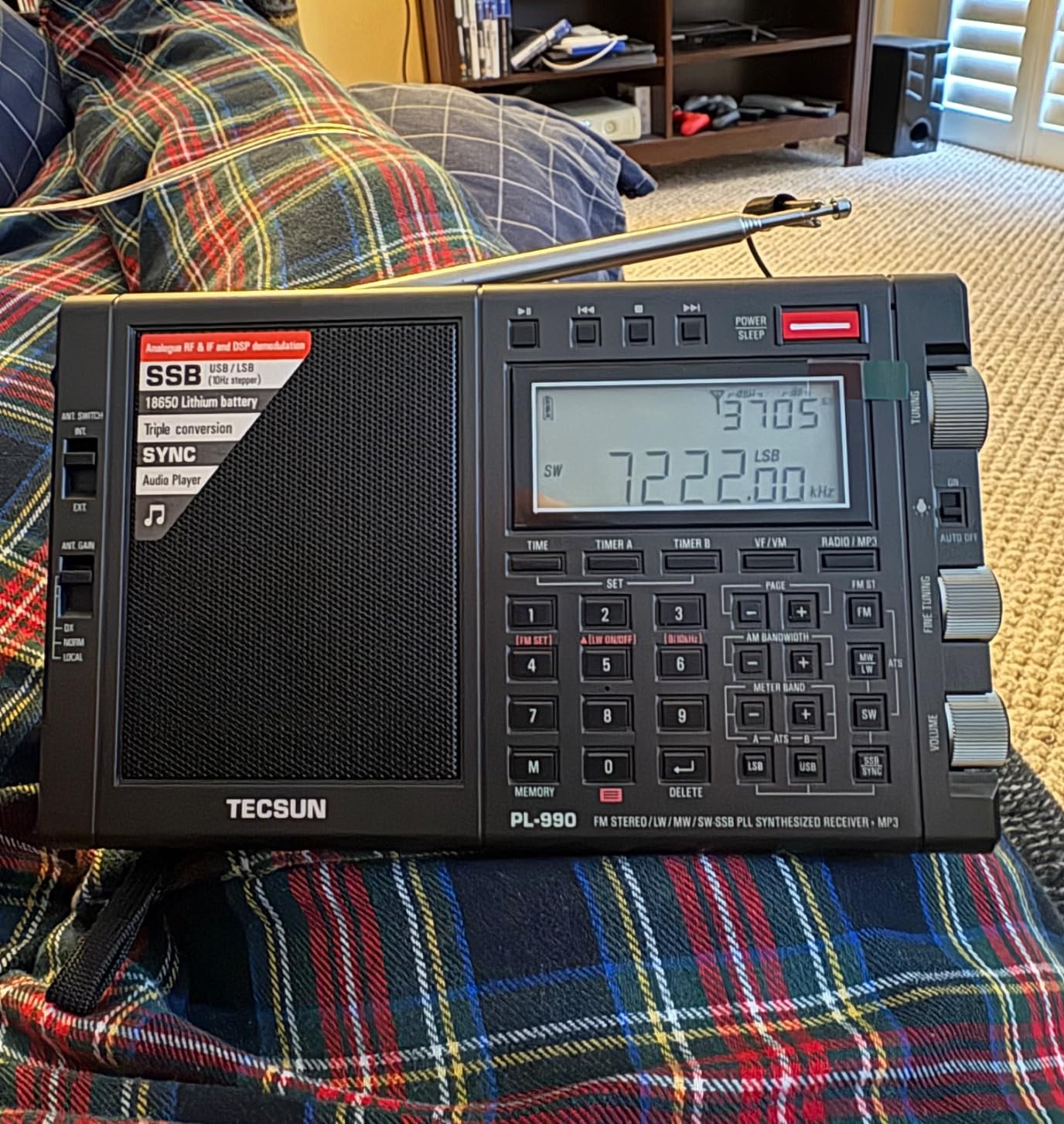
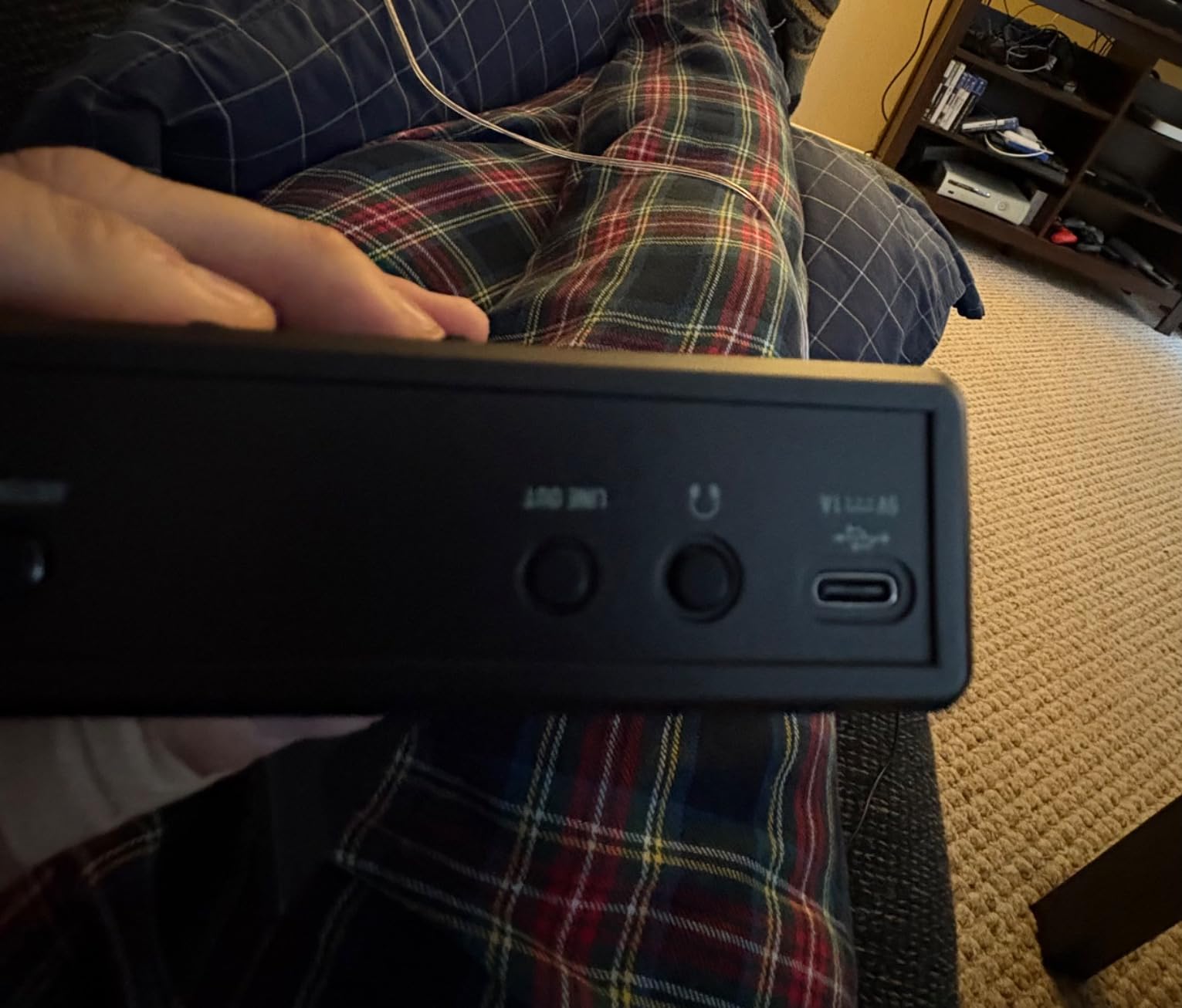
The built-in MP3 player is a unique feature that sets the PL990 apart from every other radio in this guide. Load your music files onto the included 16GB micro-SD card and you have a high-quality audio player that supports FLAC, WAV, APE, WMA, and MP3 formats. The included leather case, stereo earphones, and long wire antenna round out a package that feels complete out of the box.
Tuning is smooth and precise across all bands, thanks to the quality knobs and responsive controls. The 3,150 memory slots give you virtually unlimited storage for station presets. External antenna input lets you connect a long wire or dedicated shortwave antenna for enhanced reception. I tested the PL990 with a 30-foot wire antenna and was pulling in stations from the other side of the planet with remarkable clarity.
Who Will Love the PL990
Serious radio enthusiasts who want the best portable shortwave receiver available will find the PL990 deeply satisfying. The combination of triple conversion technology, premium audio, and comprehensive features makes it the most capable portable in this entire roundup. If you spend significant time listening to shortwave and want the best experience possible without moving to a desktop receiver, this is your radio.
The MP3 player feature adds versatility that makes the PL990 useful even when radio conditions are poor. Being able to play your own music collection through the excellent speaker system means this radio earns its place on your nightstand or desk even during daytime hours when shortwave reception is limited.
Caveats Before Buying
The memory system has a quirk where it truncates frequencies to the nearest KHz, which can be problematic for SSB users who need precise frequency storage. Some users report that memory can be easily corrupted when scanning into it, so be careful when using auto-scan features. The battery status indicator has a tendency to fluctuate, making it hard to judge remaining runtime accurately.
The MP3 player function has received mixed reviews. While it works for most people, some users have experienced issues with file navigation and playback. Consider this a bonus feature rather than a primary reason to buy. The PL990 commands a premium price, but the quality of reception and audio justifies the investment for serious listeners.
7. Retekess V115 – Best Ultra-Budget Shortwave Radio
Retekess V115 Shortwave Radio, Digital Radio AM FM
AM/FM/SW
1000mAh BL-5C Battery
MP3 Player with TF Card
Recording Function
Bass Speaker
Pros
- Excellent value for the price
- Good sound quality with bass radiator
- Recording to microSD works well
- Swappable BL-5C battery
- USB-C charging
Cons
- Shortwave reception is poor without external antenna
- User interface is confusing and poorly documented
- Memory presets lost when battery is swapped
The Retekess V115 proves that you do not need to spend a lot of money to start exploring radio listening. With over 8,200 customer reviews and a solid 4.2-star rating, this little radio has earned a loyal following among budget-conscious buyers. It covers AM, FM, and shortwave bands, includes an MP3 player, and even has a recording function that saves audio directly to a microSD card.
For the price, the V115 delivers surprisingly good AM and FM reception. The bass speaker with a rear passive radiator produces fuller sound than you would expect from a radio this small. I tested the recording function and was pleased to find it works well, saving broadcasts in MP3 format at three selectable quality levels from 128kbps to 320kbps. The one-touch recording feature is easy to use once you figure out the button combination.
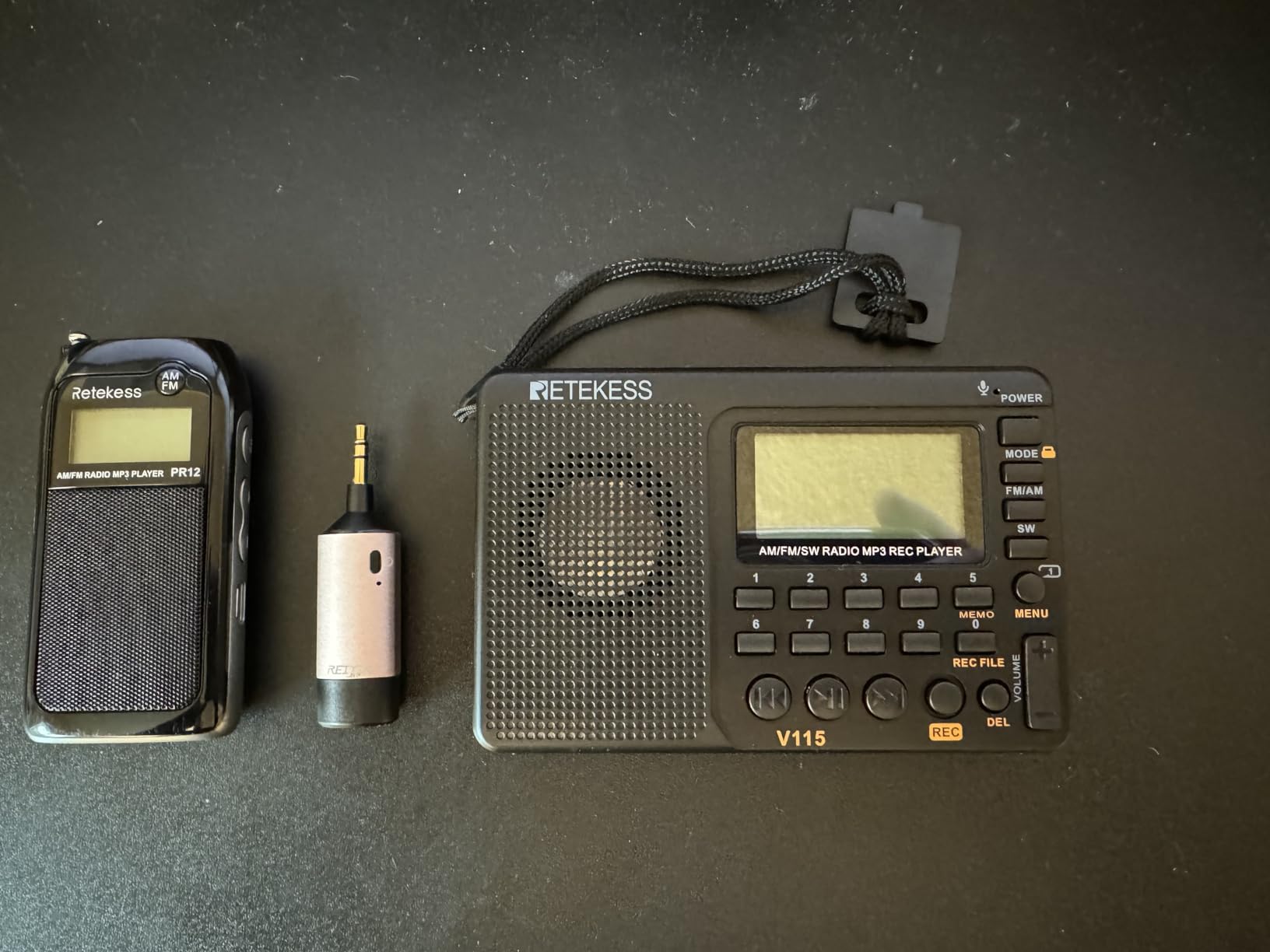
The swappable BL-5C battery is a smart design choice. These batteries are inexpensive and widely available, so you can carry a spare for extended use. USB-C charging is a welcome modern touch, and the radio supports play-while-charging so you never have to stop listening. The included wrist strap with a built-in kickstand is a nice accessory that makes the V115 easy to prop up on a table.
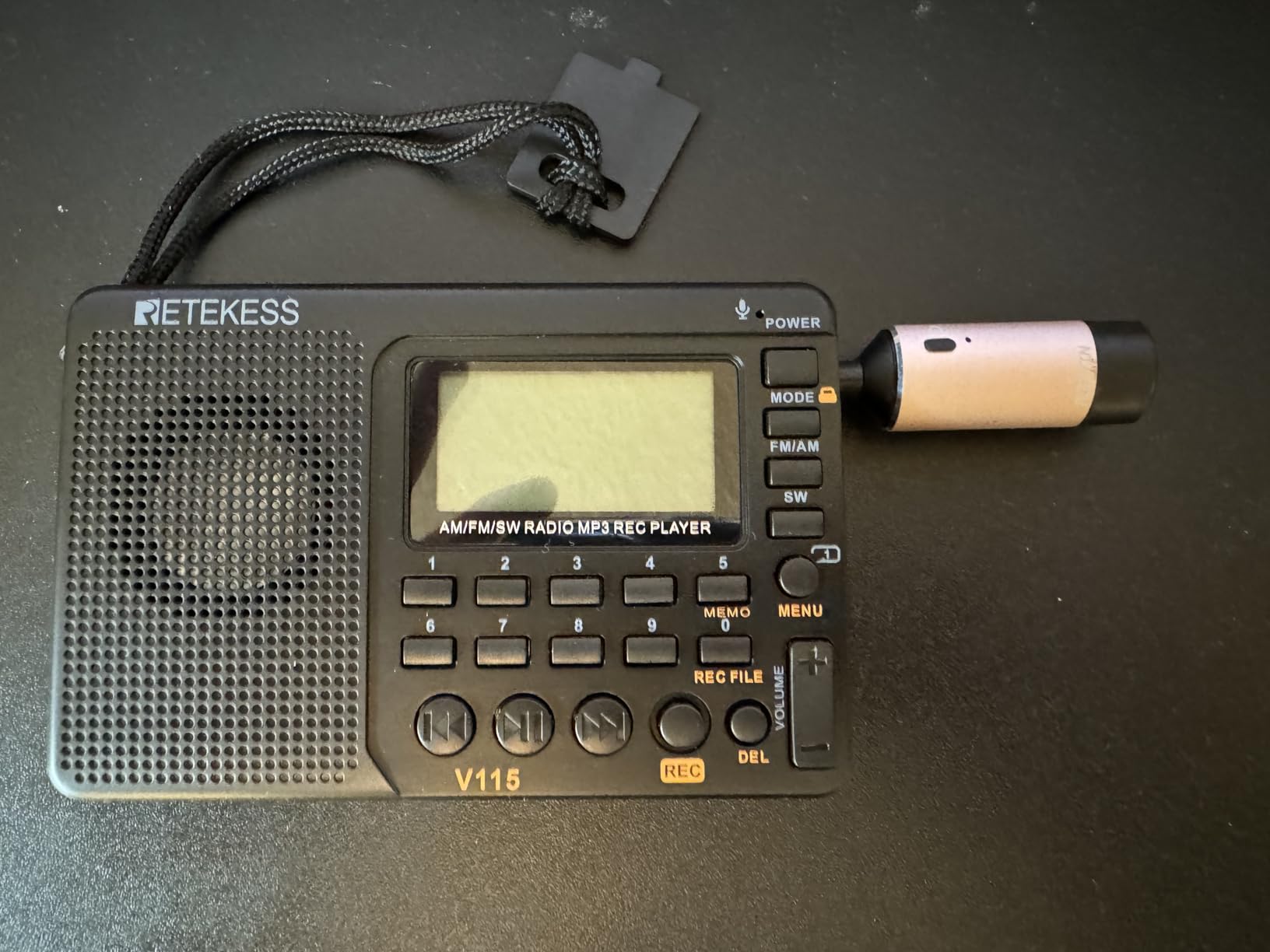
Where the V115 shows its budget nature is in shortwave reception. Without an external antenna, shortwave performance is disappointing. The built-in telescoping antenna struggles to pick up anything beyond the strongest shortwave signals. If you want to use this radio for serious shortwave listening, plan to invest in an external wire antenna. The user interface is also confusing, with poorly documented multi-function buttons and a learning curve that requires patience.
Who Should Consider the V115
The Retekess V115 is ideal for anyone who wants to dabble in radio listening without making a financial commitment. It works well as an AM/FM radio with the shortwave band as a bonus feature. The recording capability makes it useful for capturing programs or creating voice memos, and the MP3 player adds extra functionality that extends its usefulness beyond radio.
It is also a good option for kids or students who are curious about radio. The low price means you will not be upset if it gets damaged, and the basic features are enough to spark an interest in shortwave listening. Many experienced radio hobbyists started with a budget radio like this before upgrading to more capable models.
What You Sacrifice at This Price
There is no SSB capability, so you cannot listen to ham radio operators, maritime communications, or utility stations. Memory presets are lost when you swap the battery because the radio lacks flash storage, which means you will need to reprogram your favorite stations after every battery change. The soft power button means the device is never truly off, leading to gradual battery drain even when not in use.
The auto-scan function tends to find many noisy stations rather than cleanly separating real broadcasts from interference. The LCD display creates some buzz on the AM band, which is a common issue with budget radios. Despite these compromises, the V115 delivers remarkable value and is the best shortwave radio you can get on a tight budget.
How to Choose the Best Shortwave Radio for Your Needs
Buying a shortwave radio involves understanding several technical features that directly affect your listening experience. I have broken down the most important factors to consider so you can match a radio to your specific needs and budget.
Frequency Coverage and Band Support
The minimum you should look for is coverage of the AM broadcast band (520-1710 kHz), FM (87.5-108 MHz), and shortwave (1.711-30 MHz). Beyond that, consider whether you need longwave, airband, or NOAA weather bands. More band coverage gives you more listening options but often adds cost and complexity. If you are primarily interested in international broadcasts, basic AM/FM/SW coverage is sufficient.
SSB (Single Sideband) Capability
SSB reception is the feature that separates basic shortwave radios from more capable ones. Single Sideband allows you to hear amateur radio operators, maritime communications, military transmissions, and aviation signals. Without SSB, you are limited to standard AM broadcasts on shortwave. If you have any interest in ham radio or utility station monitoring, SSB is essential. All of the radios in this guide except the Retekess V115 include SSB capability.
DSP Technology and Reception Quality
Digital Signal Processing has transformed portable shortwave radios. DSP chips handle demodulation digitally, which generally provides better sensitivity, selectivity, and stability compared to older analog circuits. Look for terms like DSP demodulation, synchronous detection, and selectable bandwidth filters. These features help you separate weak stations from noise and reduce fading on distant signals.
Synchronous detection is particularly valuable. It locks onto the carrier frequency of a station and reduces the fading and distortion that plague shortwave reception. If you listen to distant stations regularly, this feature makes a noticeable difference in audio clarity and stability.
Memory Presets and Ease of Use
The number of memory presets determines how many stations you can store for quick recall. Casual listeners may only need a few dozen, but serious hobbyists often want hundreds or even thousands of memory slots. More important than the raw count is how easy it is to organize and recall those presets. Look for features like page labeling, direct frequency entry, and scan-and-store functions that make managing your station list practical.
Pay attention to the tuning interface as well. Smooth tuning knobs without detents, clear displays with backlighting, and logical button layouts all contribute to a better user experience. Budget radios often cut corners here, resulting in frustrating operation.
Battery Life and Power Options
Battery life varies dramatically between models. The C. Crane CC Skywave SSB 2 leads with up to 70 hours on two AA batteries, while some radios with built-in lithium batteries offer 10-20 hours of runtime. Consider how you plan to use the radio. For camping or emergencies, long battery life and the ability to use standard batteries (AA or replaceable 18650 cells) is valuable. For home use, USB charging capability is convenient.
Radios that support play-while-charging are more versatile since you never have to stop listening to recharge. Swappable batteries let you carry spares for extended sessions away from power sources.
External Antenna Support
If you live in an urban area with lots of electronic interference, an external antenna jack is one of the most important features you can have. A simple wire antenna strung outside or along a window frame can dramatically improve shortwave reception. Most of the radios in this guide include an external antenna input, and several come with a wire antenna in the box.
For urban dwellers dealing with LED light interference, switching power supplies, and other sources of radio frequency interference, I recommend getting the antenna away from your electronics. Even a 15-20 foot wire clipped to the telescoping antenna and run to a window can make a significant difference in signal clarity.
Emergency Preparedness Features
If you are buying a shortwave radio for emergency use, look for NOAA weather band reception with automatic alert capability. The C. Crane CC Skywave SSB 2 is the strongest choice here with both weather band and alert features. Multiple power options including hand-crank or solar (not covered in this guide) add resilience. A radio that runs on standard AA batteries is advantageous during extended power outages because batteries are easy to stockpile.
Shortwave radios receive signals from across the globe, making them invaluable when local communications infrastructure fails. During natural disasters, shortwave broadcasts from other countries may be your only source of news about the broader situation.
Urban Interference Tips
One topic most buying guides ignore is how to deal with urban radio frequency interference. Modern homes are filled with devices that generate electrical noise: LED bulbs, phone chargers, dimmer switches, and computer power supplies all emit signals that can overwhelm a shortwave receiver. Here are practical steps that helped me get better reception in my apartment.
First, try listening with the radio running on battery power rather than plugged into the wall. AC power lines carry interference from every device in your home. Second, move near a window and extend the antenna fully. Third, listen at night when atmospheric conditions favor shortwave propagation and many household devices are turned off. Finally, invest in a simple external wire antenna that you can position away from electronics. These steps can transform a mediocre listening experience into a satisfying one.
Frequently Asked Questions About Shortwave Radios
Why are shortwave radios not used anymore?
Shortwave radios are still very much in use, though their role has shifted. International broadcasters like the BBC, Voice of America, and Radio China International continue to transmit on shortwave. The perceived decline comes from the rise of internet streaming and satellite radio, which replaced shortwave for casual listeners in developed countries. However, shortwave remains essential in regions with limited internet access, during emergencies when infrastructure fails, and among radio hobbyists. No license is required to listen to shortwave broadcasts, making it accessible to everyone.
What is the best radio if the grid goes down?
For grid-down scenarios, you want a radio that covers multiple bands and runs on standard batteries. The Tecsun PL330 is a strong choice because it covers AM, FM, longwave, and shortwave with SSB, runs on a rechargeable battery, and can charge via USB from any power source including solar chargers. The C. Crane CC Skywave SSB 2 adds NOAA weather alerts and runs on standard AA batteries that you can stockpile. For maximum resilience, choose a radio that accepts standard replaceable batteries and covers weather band frequencies.
What are the disadvantages of shortwave radio?
Shortwave radio has several limitations. Reception quality varies greatly depending on time of day, season, and solar activity. Interference from electronic devices, weather, and other stations is common. Audio quality on shortwave is generally lower than FM or digital streaming. Programming can be unpredictable, with stations appearing and disappearing based on propagation conditions. Shortwave also requires some skill to tune effectively, and the learning curve can be steep for beginners unfamiliar with frequency bands and propagation patterns.
Who makes the best shortwave radios?
The top shortwave radio manufacturers in 2026 are Tecsun, C. Crane, Eton, XHDATA, and Sangean. Tecsun dominates the portable market with models like the PL330, PL880, and PL990 that offer excellent reception and features at competitive prices. C. Crane focuses on travel-friendly designs with American build quality. Eton produces versatile multiband radios popular with aviation enthusiasts. XHDATA offers strong value in the budget segment. For desktop and premium receivers, Sangean is also well regarded among hobbyists.
What to look for when buying a shortwave radio?
When buying a shortwave radio, prioritize these factors: 1) Frequency coverage that includes AM, FM, and shortwave bands at minimum. 2) SSB capability if you want to hear ham radio, maritime, or aviation signals. 3) DSP technology for better reception quality and stability. 4) External antenna jack for improved reception, especially in urban areas. 5) Adequate memory presets for storing favorite stations. 6) Good battery life with convenient charging options. 7) Build quality and ease of use. Your intended use case should guide which features matter most.
Final Thoughts on the Best Shortwave Radios
Finding the best shortwave radio comes down to matching features to your intended use. For most people, the Tecsun PL330 hits the sweet spot of performance, portability, and value. It covers all the important bands, includes SSB, and delivers solid reception in a compact, affordable package.
If audio quality is your top priority, the Tecsun PL880 produces the richest sound of any portable radio I tested. For travelers and outdoor enthusiasts, the C. Crane CC Skywave SSB 2 offers unmatched band coverage including NOAA weather alerts in the smallest form factor. And for those on a strict budget, the Retekess V115 and XHDATA D808 provide capable entry points into shortwave listening without requiring a big investment.
Shortwave radio remains relevant in 2026 for emergency preparedness, hobbyist DXing, and accessing international broadcasts without depending on internet infrastructure. Whichever radio you choose from this guide, you will be joining a global community of listeners who appreciate the unique experience of pulling signals from across the world through the ionosphere. The signals are out there waiting. All you need is the right receiver to hear them.