
There’s something almost magical about watching a siphon coffee maker at work. Water rises through a glass tube, mixes with coffee grounds in the upper chamber, and then cascades back down as rich, aromatic coffee. After testing dozens of vacuum brewers over the past three years, our team has become genuinely obsessed with this theatrical brewing method.
If you’ve never experienced siphon-brewed coffee, you’re missing out on one of the cleanest, most nuanced cups possible. The best siphon coffee makers produce coffee that’s remarkably smooth, with pronounced brightness and zero sediment. It’s the brewing method that turns making coffee into an event.
In this guide, we’ll walk you through our top picks for 2026, explain exactly how vacuum brewing works, and help you choose the right siphon for your brewing style. Whether you’re a seasoned home barista or just curious about this 180-year-old brewing technique, we’ve got you covered.
Top 3 Picks for Best Siphon Coffee Makers in 2026
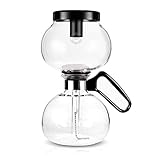
Yama Glass 8-Cup Stovetop
- 24oz capacity
- Gas stovetop compatible
- Borosilicate glass
- Reusable cloth filter

Hario Technica 600ml
- Japanese craftsmanship
- Heat-resistant glass
- Stainless steel stand
- Alcohol burner included
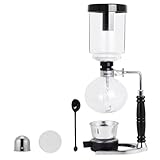
YUCHENGTECH Siphon 600ml
- Affordable entry point
- Multiple heat source compatible
- Buffer clamp design
- Borosilicate glass
Best Siphon Coffee Makers in 2026
| Product | Specifications | Action |
|---|---|---|
|
Yama Glass 8-Cup Stovetop
|
|
Check Latest Price |
|
Hario Technica 600ml
|
|
Check Latest Price |
 Hario NXAR-5 NEXT
|
|
Check Latest Price |
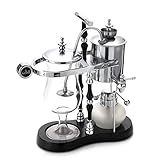 Diguo Belgian Balance
|
|
Check Latest Price |
 Nispira Belgium Royal Copper
|
|
Check Latest Price |
 Nispira Belgian Gold/Blue
|
|
Check Latest Price |
 Yama Glass 5 Cup Tabletop
|
|
Check Latest Price |
|
YUCHENGTECH Siphon
|
|
Check Latest Price |
1. Yama Glass 8-Cup Stovetop Siphon Coffee Maker – Best Overall
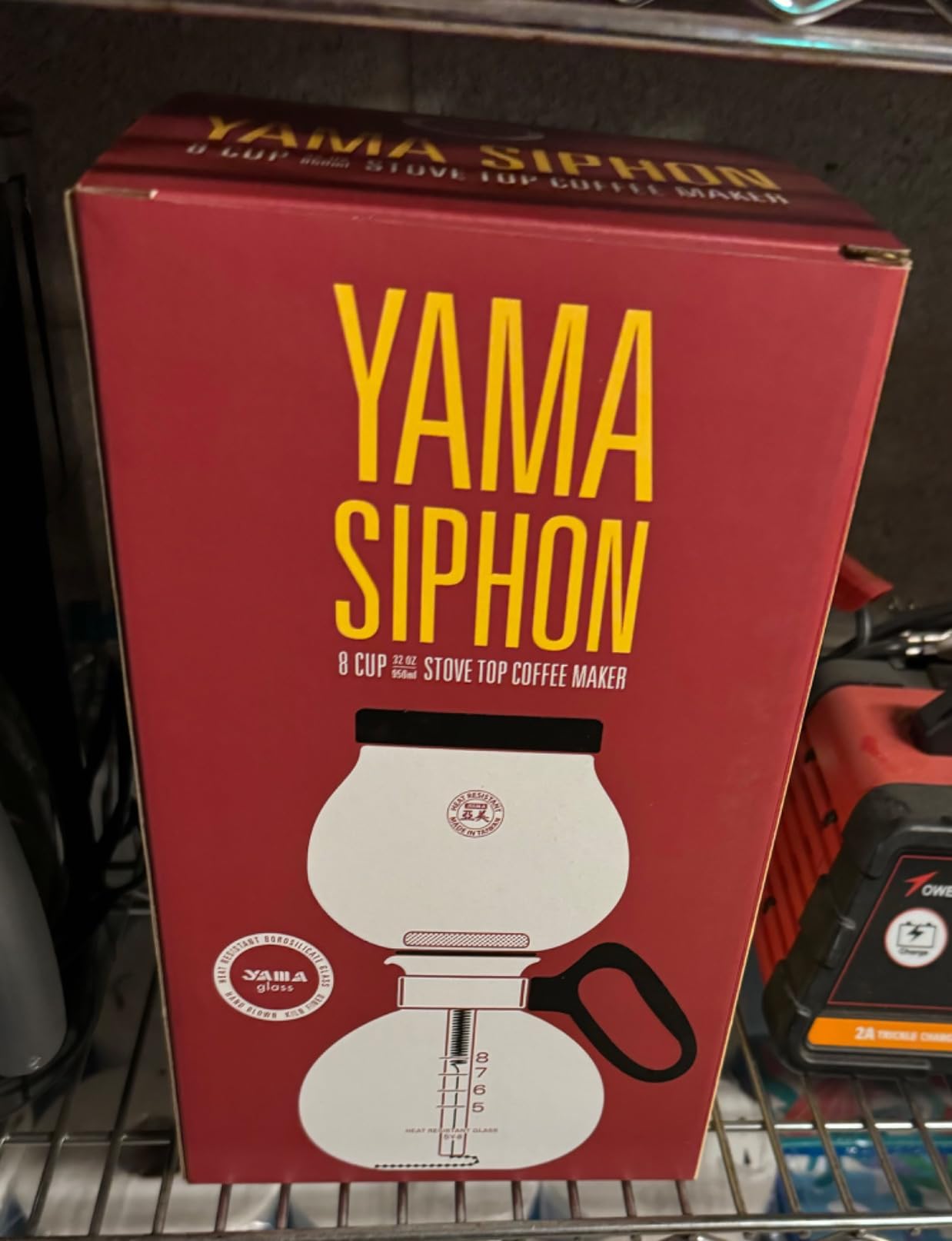
Yama Glass 8-Cup Stovetop Siphon Coffee Maker, 24 Oz Vacuum Brew, Heat-Resistant Borosilicate Glass
24oz capacity
Stovetop compatible
Borosilicate glass
Reusable cloth filter
Pros
- Produces exceptionally smooth coffee without bitterness
- Large 24oz capacity for serving guests
- Works directly on gas stovetop for faster heating
- No plastic parts means no plastic taste
Cons
- Learning curve to perfect technique
- Glass components require careful handling
- Challenging on electric stovetops
- Cloth filter needs maintenance
After brewing hundreds of cups with various siphon makers, the Yama Glass 8-Cup Stovetop has become our go-to recommendation for most coffee enthusiasts. The stovetop compatibility is what sets this model apart. Instead of waiting 30 minutes for an alcohol burner to do its job, you can place this directly on your gas stove and have water rising in about 5 minutes.
The 24oz capacity is genuinely useful. While most siphon makers top out at 600ml (barely two mugs), this one brews enough for four people to enjoy a proper cup. We’ve used it for dinner parties where guests gather around the stove, watching the vacuum brewing process like it’s dinner theater.
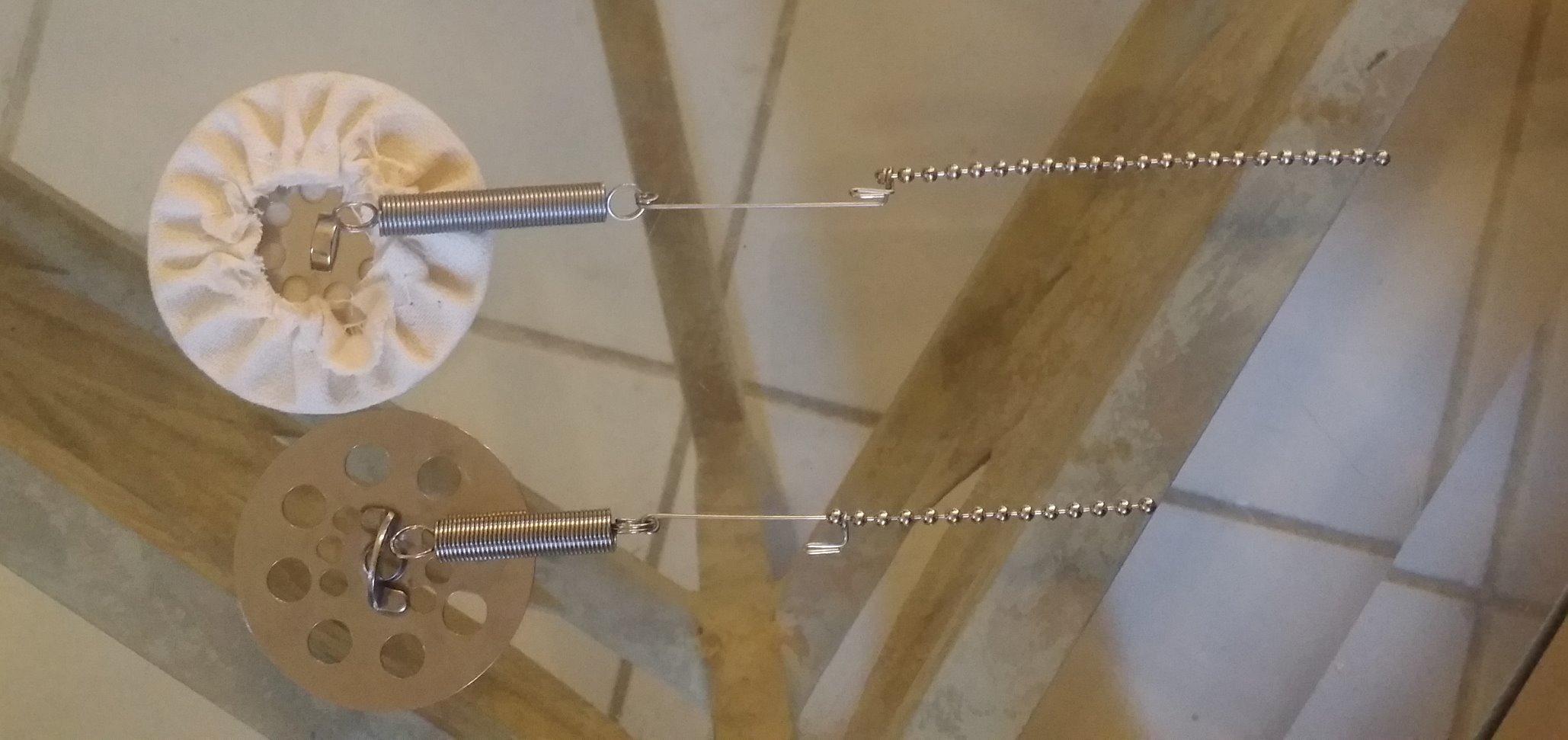
The borosilicate glass is thick and feels substantial in hand. After two years of regular use, ours shows no signs of clouding or stress fractures. The reusable cloth filter produces that signature clean cup that siphon brewing is famous for. We notice fruit notes that get lost in French press brewing and none of the muddy sediment.
What surprised us most was discovering that coffee doesn’t have to be bitter. The vacuum brewing method extracts all the flavor compounds without over-extracting the bitter ones. Our first cup was a revelation. We had no idea our favorite Ethiopian beans had such bright, citrusy notes.
Who Should Buy This
This is ideal for anyone with a gas stovetop who wants to entertain guests with theatrical coffee brewing. The larger capacity makes it practical for households of 2-4 people or anyone who hosts regularly. If you appreciate clean, nuanced coffee and don’t mind a 10-minute brewing ritual, this delivers exceptional results.
Who Should Skip This
If you have an electric or induction stovetop, the heating will be inconsistent. This is also not for anyone seeking quick, grab-and-go coffee. The glass components require gentle handling, so households with young children or limited counter space might want a more durable option.
2. Hario Technica Coffee Syphon – Premium Japanese Craftsmanship
Hario "Technica" Coffee Syphon, 600ml
600ml capacity
Japanese made
Heat-resistant glass
Stainless steel stand
Pros
- Exceptional build quality from Japan
- Produces incredibly smooth coffee
- Beautiful conversation piece
- Cloth filters are reusable and long-lasting
Cons
- Alcohol burner heats slowly
- Learning curve for beginners
- Glass requires careful handling
- Denatured alcohol not included
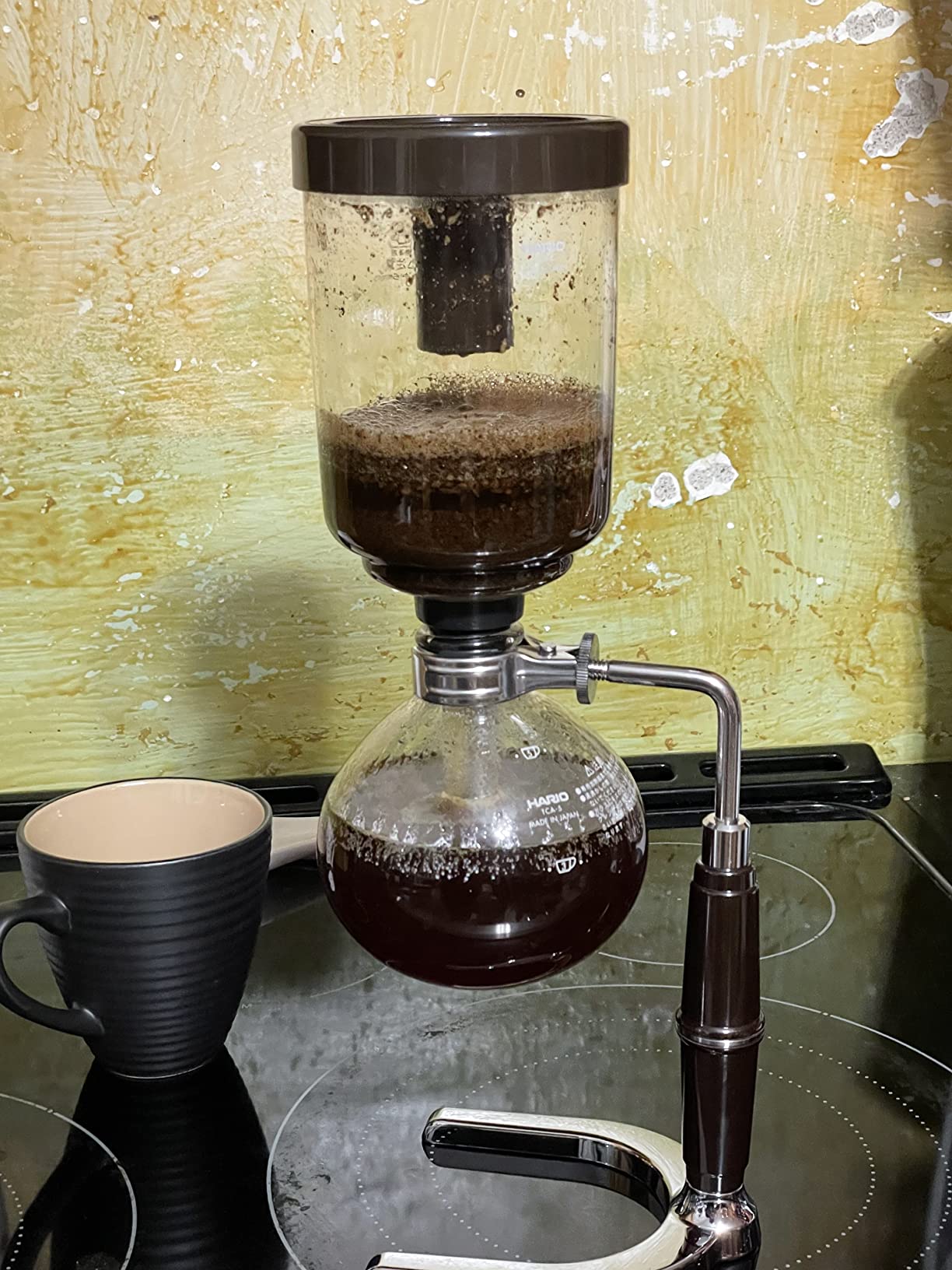
When you hold the Hario Technica, you can feel the difference that Japanese manufacturing makes. Every joint fits precisely, the glass is flawlessly blown, and the stainless steel components have a satisfying weight. This is a piece of functional art that happens to make outstanding coffee.
The brewing results are consistently impressive. After dialing in our technique over several weeks, we achieved coffee that rivals specialty cafe quality. The cloth filter allows oils to pass through while catching all grounds, resulting in a cup with remarkable clarity and pronounced fruit notes.
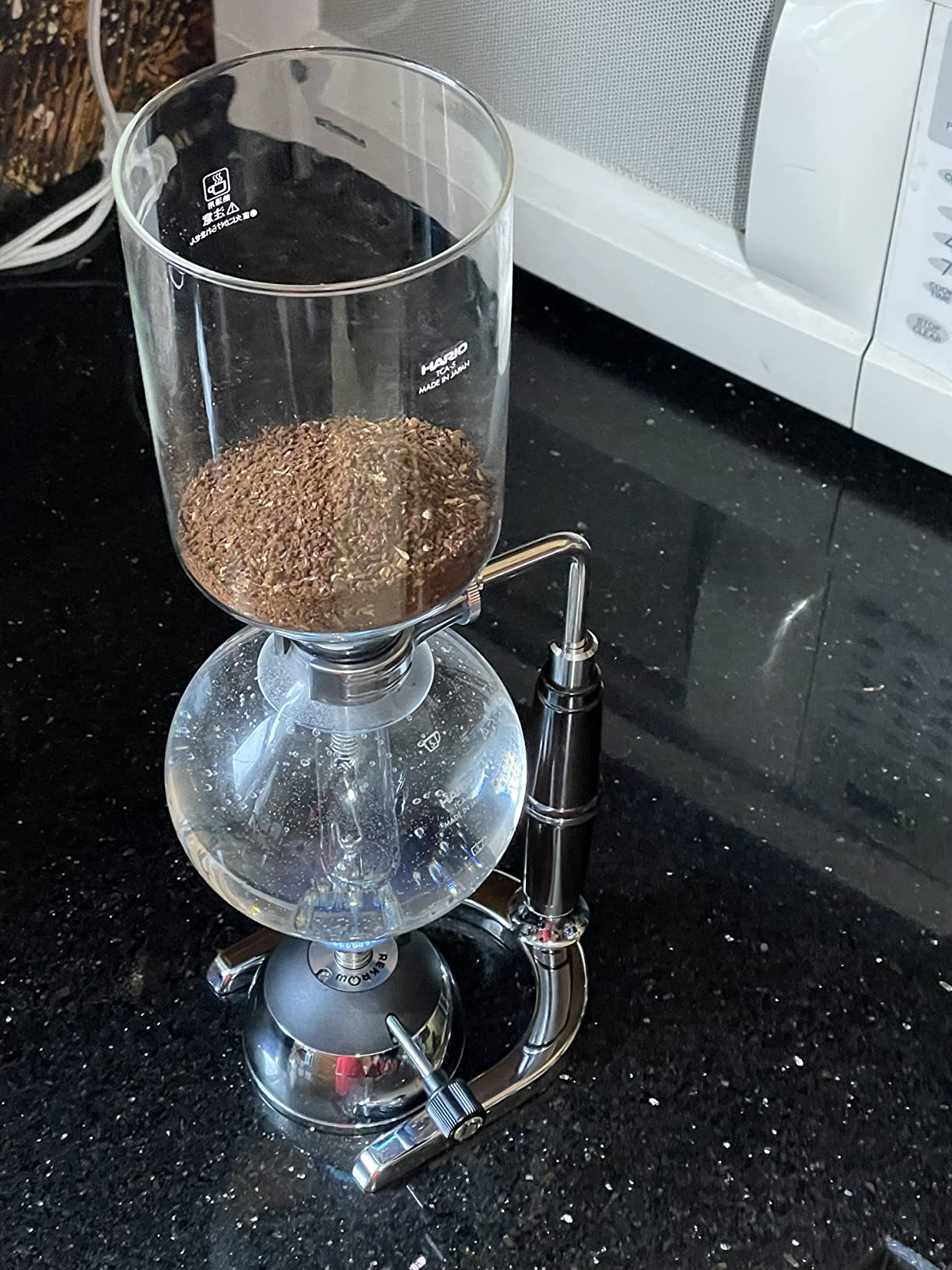
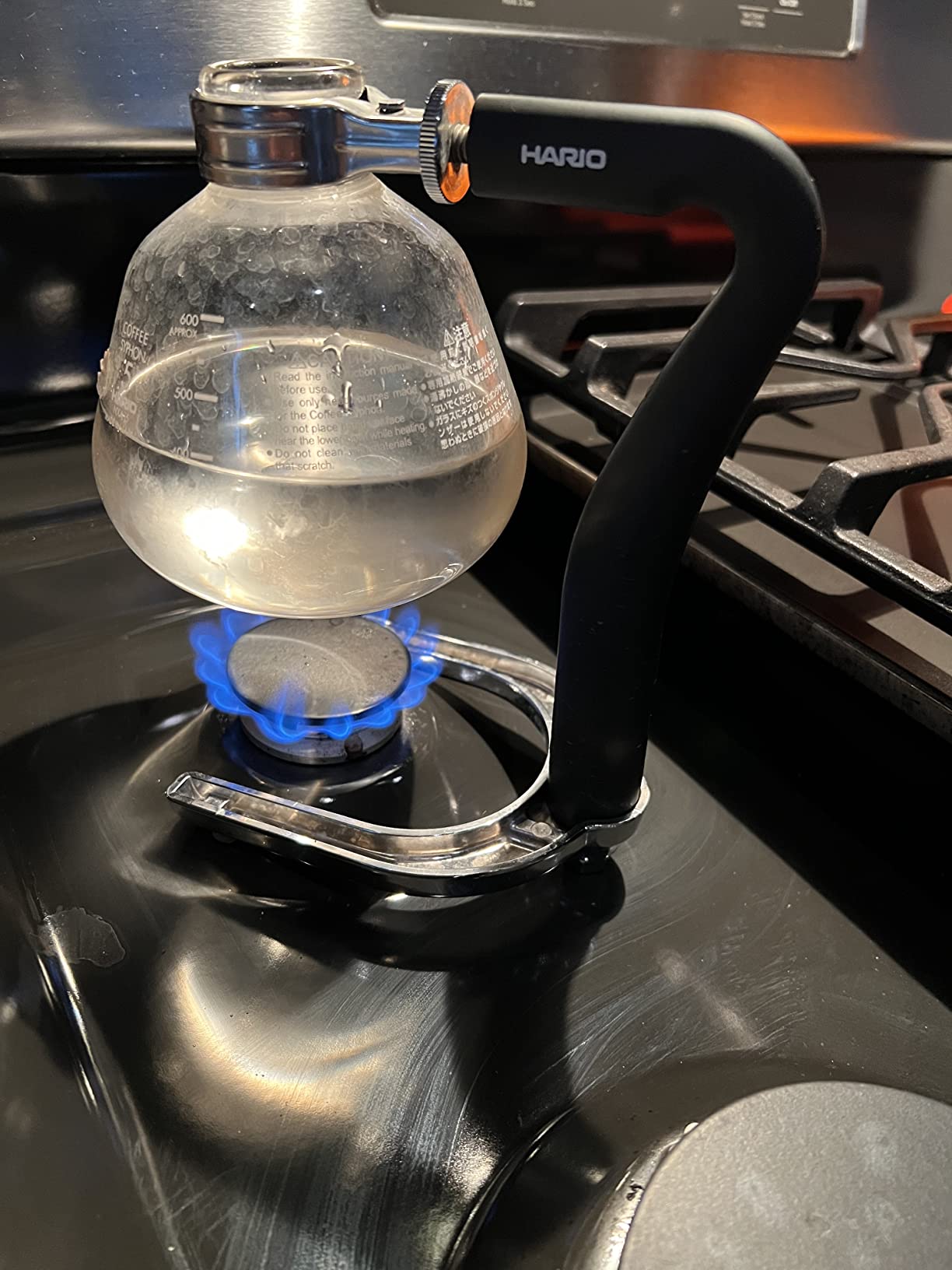
The included alcohol burner works, but we strongly recommend upgrading to a butane burner. The alcohol burner takes 25-30 minutes to bring cold water to brewing temperature, while a butane burner cuts that time to 8-10 minutes. Pre-heating your water in a kettle first also dramatically speeds things up.
One thing we love is how the cloth filters last. With proper care (rinsing immediately after use and storing in water in the refrigerator), a single filter can handle 50+ brews. The flavor profile from cloth filtration is noticeably cleaner than paper filters, which absorb some of the aromatic oils.
Who Should Buy This
Coffee enthusiasts who appreciate precision engineering and are willing to invest in the best will love this. It’s perfect for weekend brewing rituals when you have time to enjoy the process. If you already own a butane burner or are willing to buy one separately, this delivers cafe-quality results.
Who Should Skip This
If you’re new to siphon brewing, the learning curve combined with slow alcohol burner heating might feel frustrating. This is also not ideal for anyone wanting quick morning coffee. The 600ml capacity is limiting if you regularly serve more than two people.
3. Hario NXAR-5 Coffee Siphon NEXT – Modern Design with Dual Filters
Hario NXAR-5 Coffee Siphon Next Coffee Drip for 5 People, Black
600ml capacity
Made in Japan
Cloth and metal filters
Modern aesthetic
Pros
- Includes both cloth and metal filter options
- Thick quality glass construction
- Beautiful modern design
- Glass components are dishwasher safe
Cons
- Alcohol burner is slow
- Butane burns through fuel quickly
- Only 600ml capacity
- Setup and cleanup are involved
The Hario NXAR-5 represents the evolution of siphon design. While the Technica has a classic laboratory aesthetic, the NEXT feels more contemporary with cleaner lines and a sleeker profile. But what really sets it apart is the inclusion of both cloth and metal filters.
Having two filter options is genuinely useful. The cloth filter produces that ultra-clean, bright cup that siphon brewing is famous for. But when we want something with more body and mouthfeel, switching to the metal filter lets more oils through. It’s like having two different brewers in one.
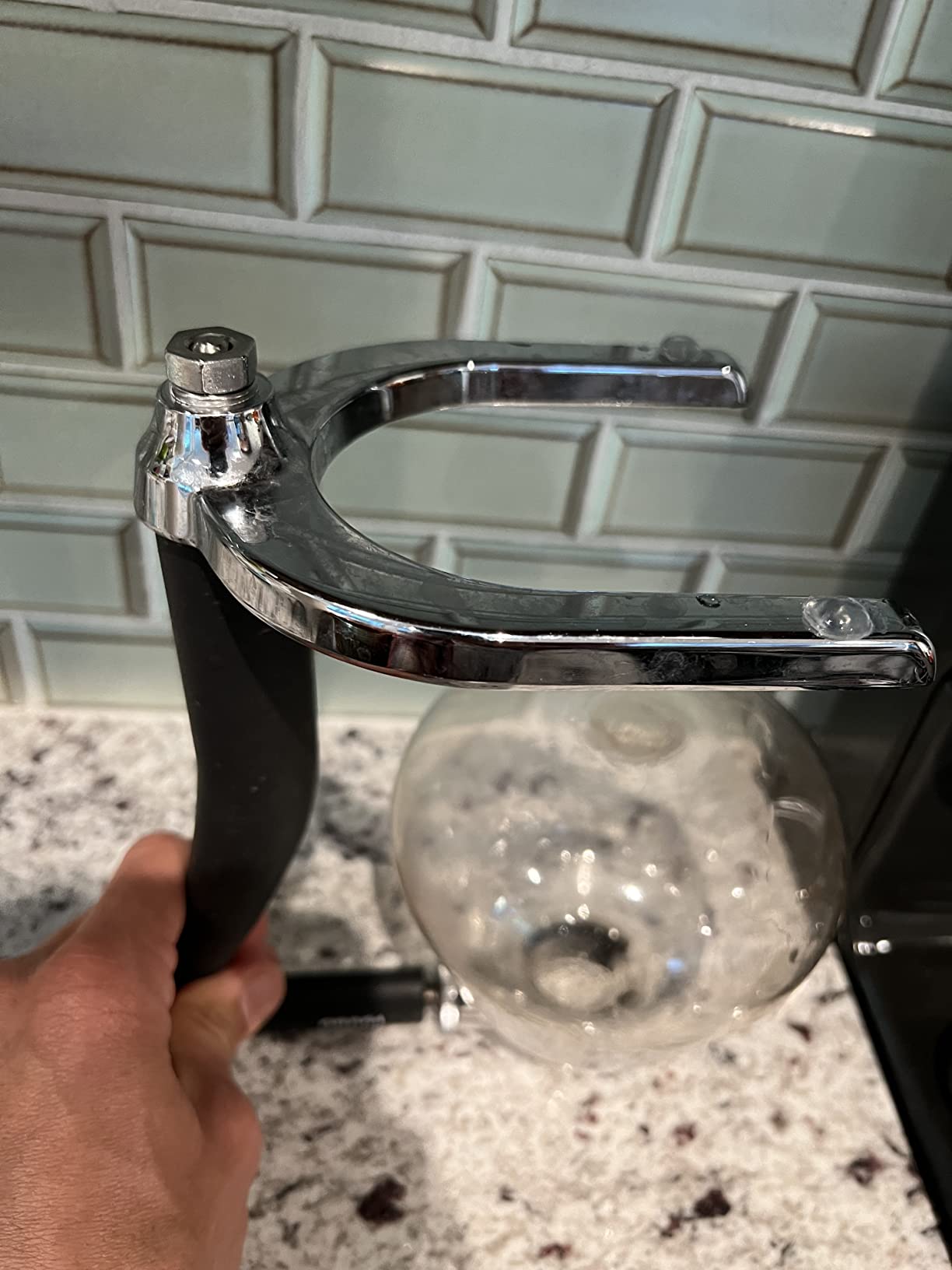
The glass quality is excellent, and we appreciate that the glass components are dishwasher safe. After brewing, we simply separate the chambers and place them on the top rack. This makes cleanup significantly easier than hand-washing every component.
We’ve found that some users successfully modify this unit to work on gas stovetops by removing the stand and using the lower chamber directly on the burner. However, this requires careful attention and isn’t officially supported by the manufacturer.
Who Should Buy This
This is perfect for coffee lovers who want flexibility in their brewing. The dual filter system lets you experiment with different flavor profiles. If you appreciate modern design aesthetics and have a dishwasher, the convenience factor is significant.
Who Should Skip This
If you need larger capacity for serving guests, the 600ml limit will feel restrictive. The slow alcohol burner heating is a drawback if you’re not willing to invest in a butane burner separately. Those seeking the absolute fastest cleanup might prefer a simpler design.
4. Diguo Belgian Balance Siphon – Elegant Semi-Automatic Brewing
Diguo Belgian/Belgium Balance Siphon/Syphon Coffee Maker. Elegant Double Ridged Fulcrum with Tee handle
500ml capacity
Semi-automatic shut-off
Belgian balance design
Stainless steel and glass
Pros
- Stunning visual centerpiece
- Semi-automatic with auto shut-off
- No electricity required
- High-quality borosilicate glass
Cons
- Only 500ml capacity
- Takes 8-20 minutes per brew
- Fuel not included
- Higher price point
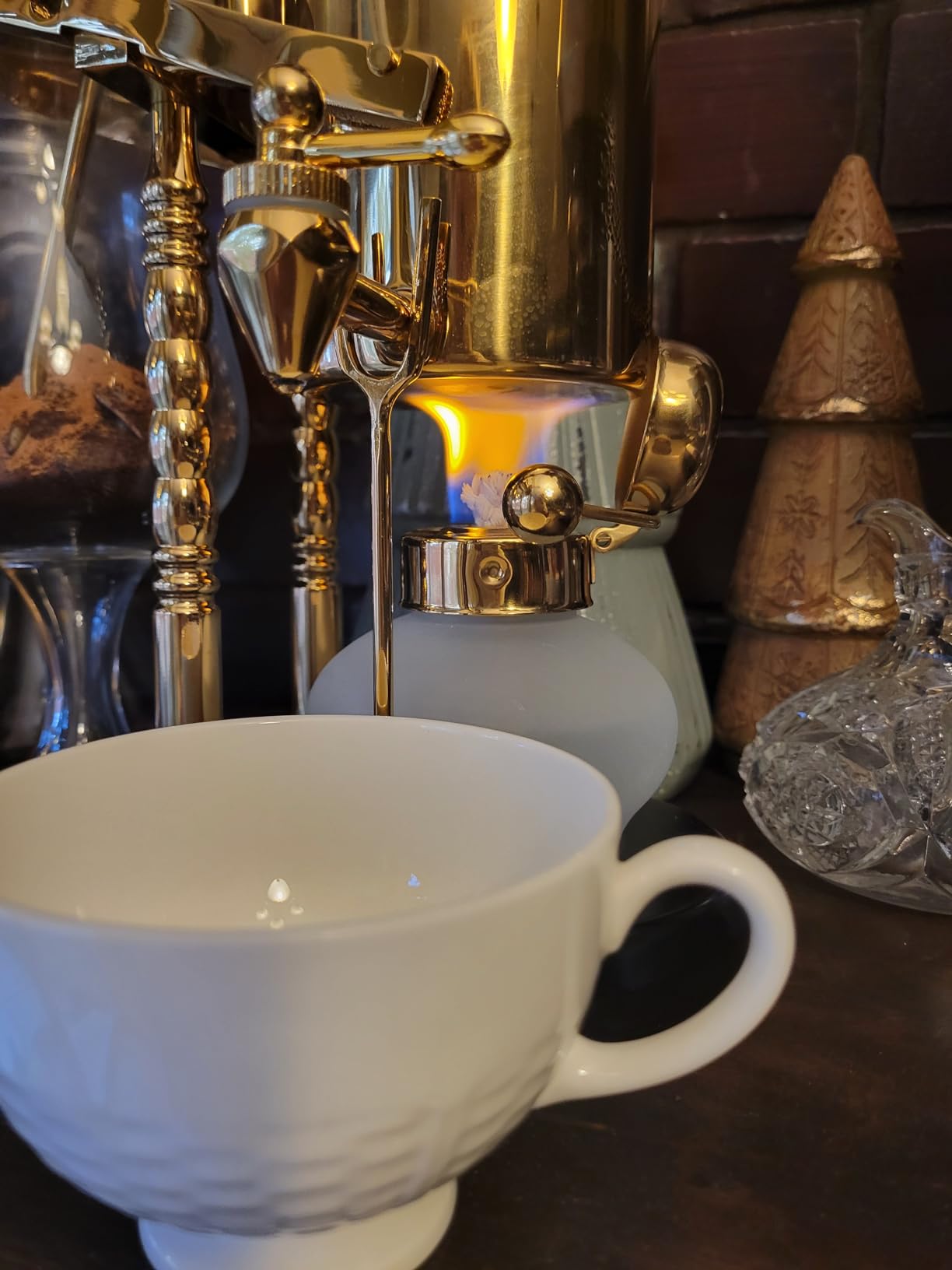
The Diguo Belgian Balance Siphon is unlike any other brewer in our collection. The balance mechanism is mesmerizing to watch. As the water heats and rises to the upper chamber, the counterweight shifts. When brewing completes, the balance tips, automatically removing the heat source from the lower chamber. It’s part coffee maker, part kinetic sculpture.
Beyond the theatrical appeal, this semi-automatic feature is genuinely practical. Unlike standard siphons that require you to manually remove the heat source, the Diguo handles this automatically. This means more consistent results and less babysitting during brewing.
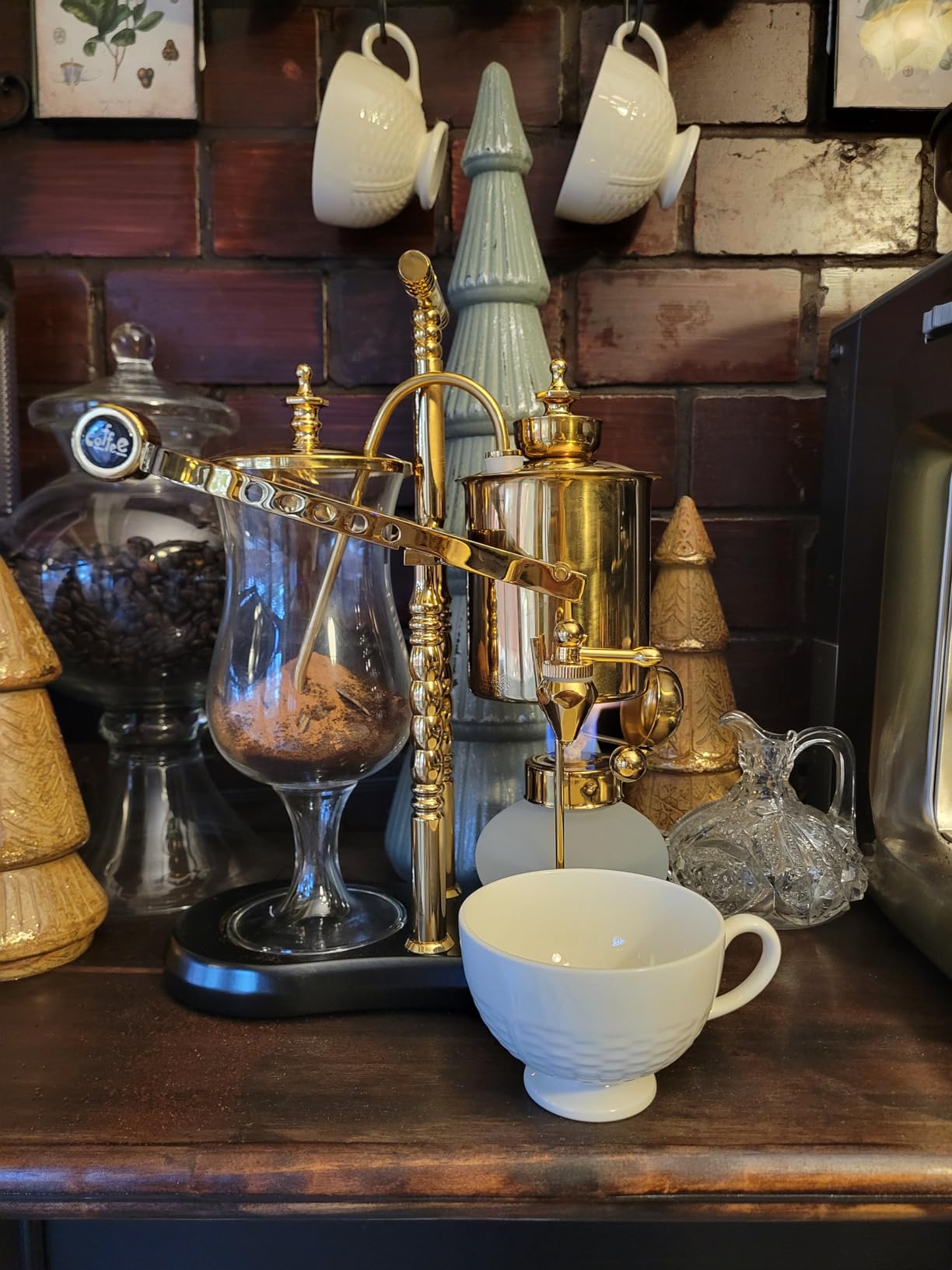
The build quality is impressive. The black and silver plated finish on the fulcrum combined with the wooden board base gives it an antique, sophisticated appearance. Guests always comment on it before even tasting the coffee. It’s become a permanent fixture on our sideboard.
The coffee quality matches the aesthetics. The vacuum brewing produces clean, aromatic coffee with excellent clarity. We notice floral notes in our Ethiopian beans that get muted in other brewing methods. The medical grade silicone seals ensure no off-flavors contaminate the brew.
Who Should Buy This
Anyone who values aesthetics as much as function will appreciate this piece. The auto-shutoff makes it more approachable for beginners. If you entertain frequently and want a conversation piece that also makes excellent coffee, this delivers on both fronts.
Who Should Skip This
The 500ml capacity is limiting for households larger than two people. At this price point, some users expect more capacity. The brewing time of 8-20 minutes means this isn’t for anyone seeking quick coffee. The cloth filter requires the same maintenance as all siphon filters.
5. Nispira Belgium Royal Family Balance Syphon Copper – Best Value
Nispira Belgium Royal Family Balance Syphon Unique Gravity Vintage Coffee Maker Vacuum Brewing System Copper 500 ml
500ml capacity
Copper finish
Balance siphon design
Auto shut-off
Pros
- Beautiful copper finish design
- Fascinating brewing process
- Auto shut-off feature
- No electricity required
Cons
- Only 500ml capacity
- 14-20 minute brewing time
- Fuel not included
- Copper requires maintenance
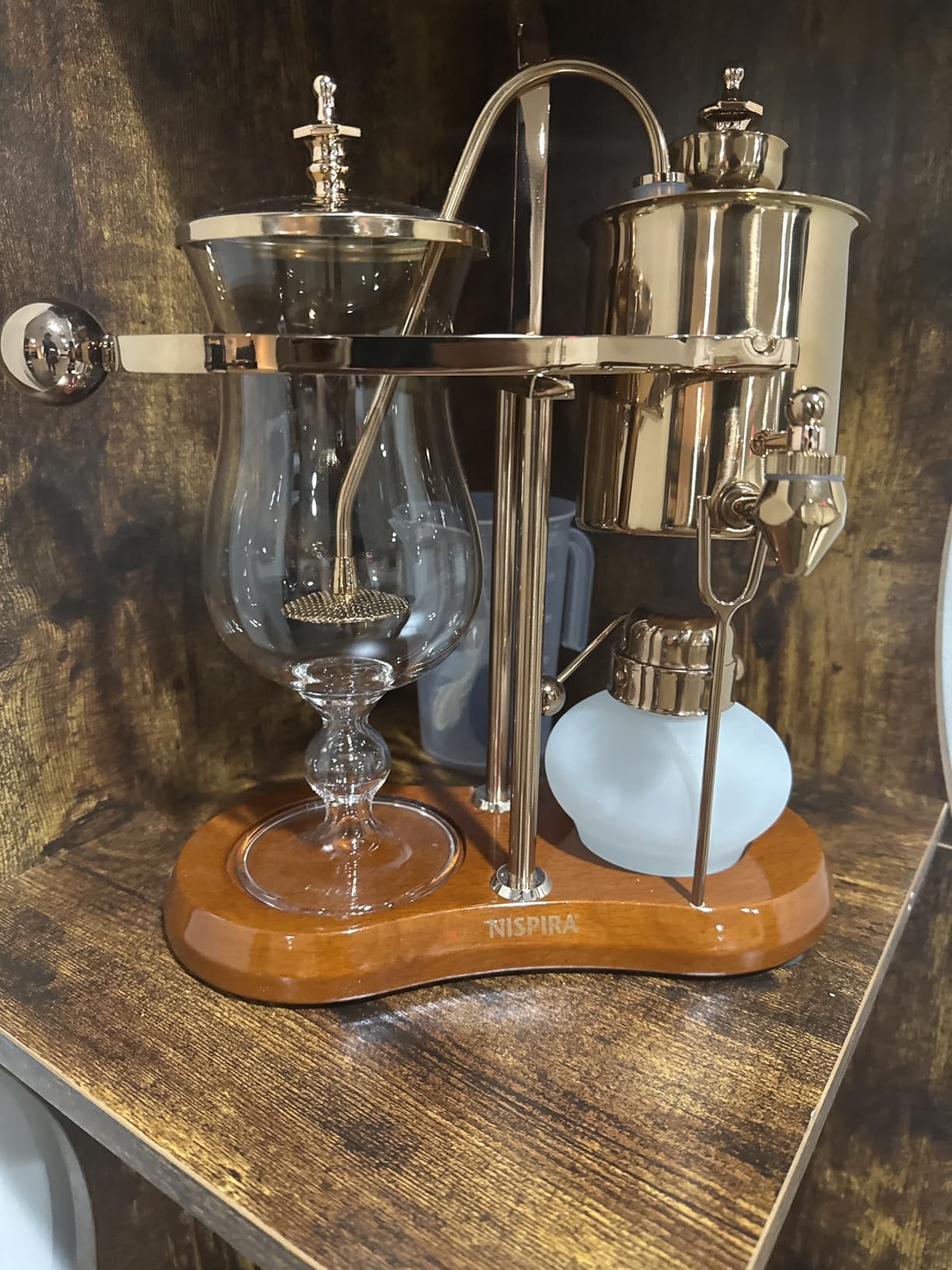
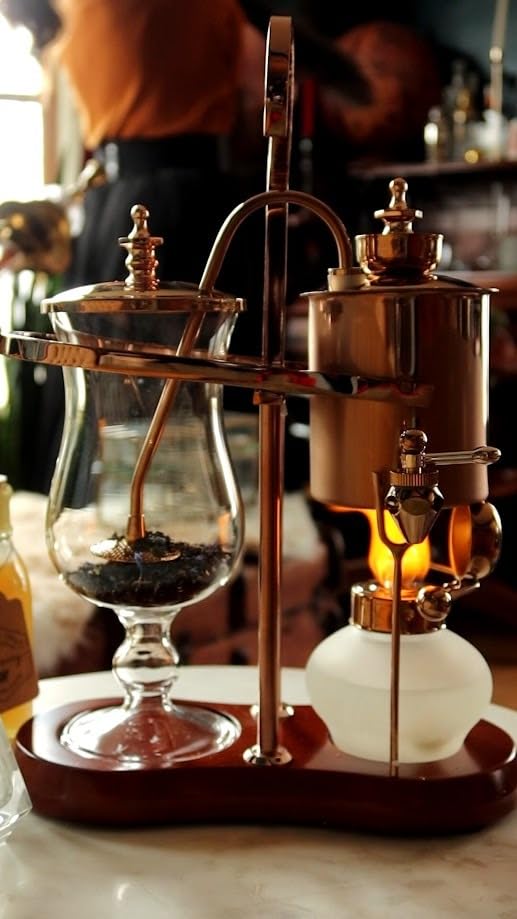
The copper finish on the Nispira Belgium Royal Balance Syphon is genuinely stunning. Photographs don’t capture how the light plays off the copper plating against the wooden base. It looks like an antique that belongs in a Victorian parlor, yet it’s fully functional and available at a reasonable price point.
The balance mechanism works the same as the Diguo. When brewing completes, the weight distribution shifts and automatically removes the heat source. This consistency is valuable for dialing in your recipe without worrying about timing the heat removal.
We’ve brewed dozens of cups with this unit, and the results are consistently smooth and aromatic. The vacuum extraction produces that characteristic clean cup with pronounced acidity and zero bitterness. For anyone who finds pour-over brewing too acidic, siphon brewing offers a different experience with cleaner brightness.
The copper finish does require occasional maintenance to prevent water spots and maintain the shine. A quick wipe with a microfiber cloth after each use keeps it looking pristine. Some users apply a thin coat of copper polish periodically for maximum luster.
Who Should Buy This
This is perfect for anyone who wants the balance siphon experience without the premium price tag. The copper finish makes it an excellent gift for coffee enthusiasts. If you appreciate vintage aesthetics and want a brewer that doubles as decor, this delivers.
Who Should Skip This
If you need to brew more than two cups at a time, the 500ml capacity is too small. The copper maintenance might feel tedious if you prefer low-care appliances. Those seeking quick, convenient brewing should look elsewhere.
6. Nispira Belgian Balance Syphon Gold and Peacock Blue – Stylish Color Option
Nispira Belgian Balance Syphon Vacuum Coffee Maker, 500ml Vintage Gravity Brewing System, Gold & Peacock Blue Finish, Manual Tabletop Coffee Brewer
500ml capacity
Gold and peacock blue finish
Belgian balance design
Complete accessories included
Pros
- Unique gold and peacock blue finish
- Authentic Belgian balance brewing
- Complete accessory set
- No electricity needed
Cons
- 500ml capacity only
- 14-20 minute brewing time
- Alcohol fuel not included
- Cloth filter maintenance required
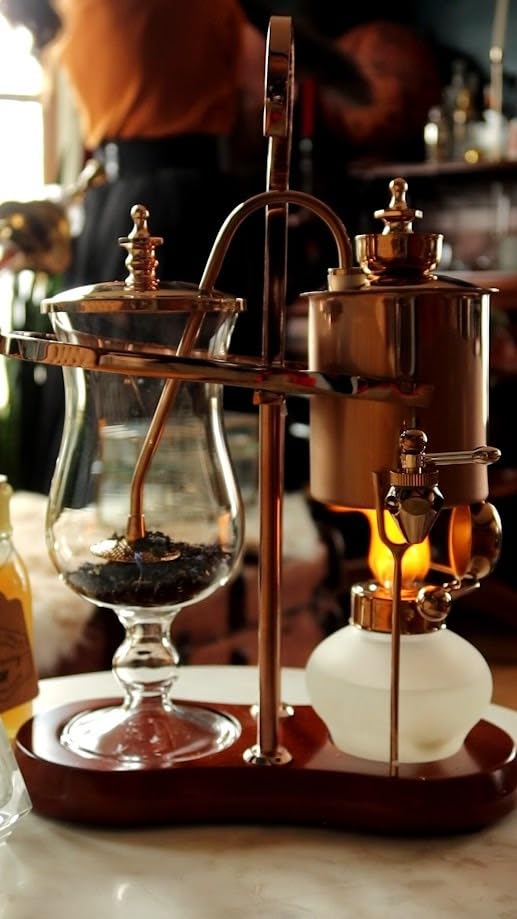
For anyone who finds standard siphon designs too clinical, the Nispira Belgian Balance in Gold and Peacock Blue offers a refreshing alternative. The gold-tone frame with the deep peacock blue base creates a striking visual that stands out from typical kitchen appliances.
The balance mechanism operates identically to other Belgian-style siphons. The brew process is semi-automatic, with the tipping action removing the heat source when brewing completes. This makes it one of the more user-friendly options for beginners who might struggle with timing.
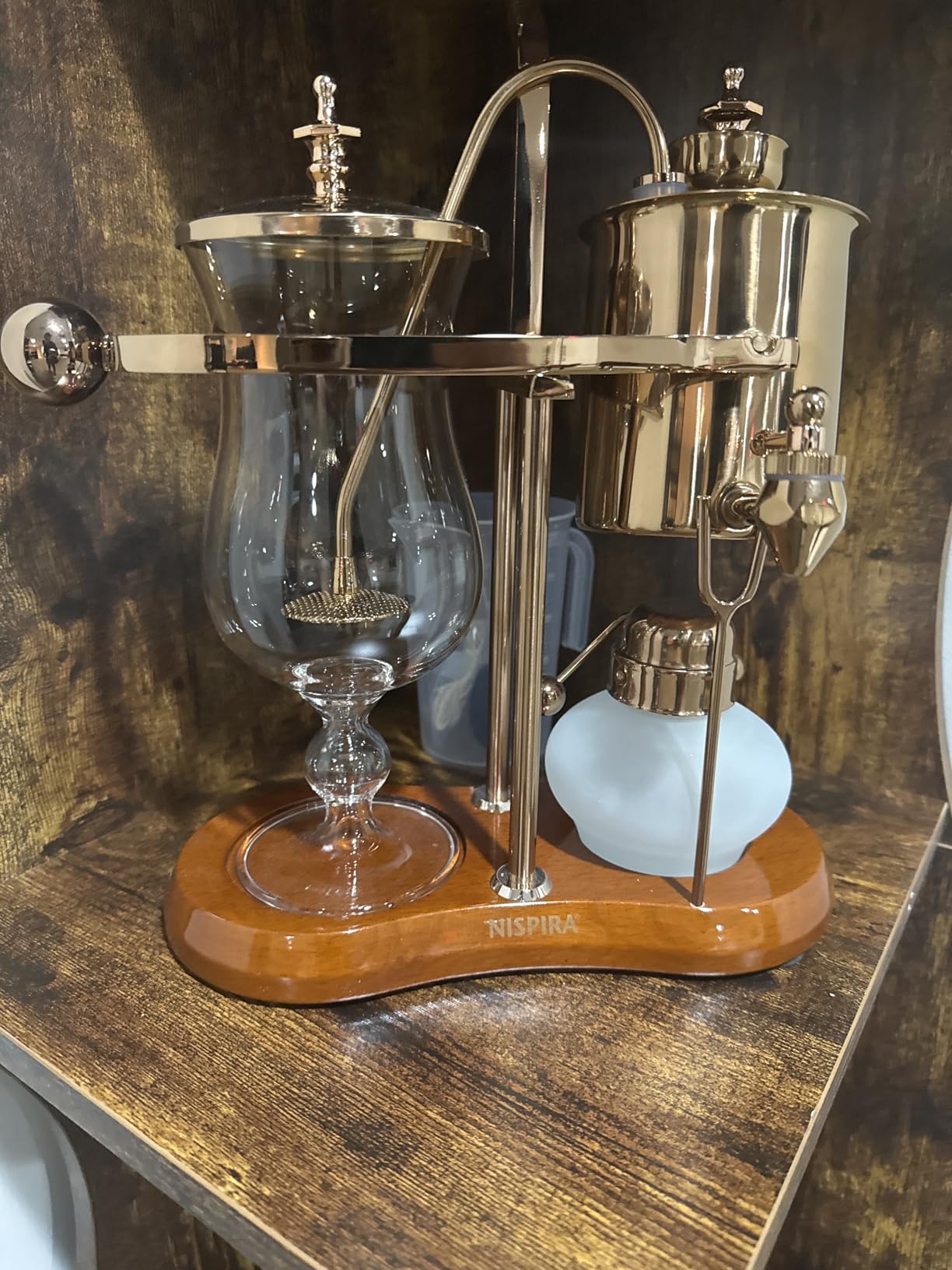
The complete accessory set is a nice touch. You get the alcohol burner, reusable filter, and measuring spoon included. While you’ll need to purchase denatured alcohol separately, everything else needed to start brewing comes in the box.
The coffee quality matches other balance siphons. We get clean, aromatic brews with excellent clarity. The vacuum extraction highlights the fruit and floral notes in our light roast beans while avoiding the harshness that can come from over-extraction.
Who Should Buy This
Anyone who wants their coffee equipment to make a visual statement will appreciate this design. The gold and peacock blue color scheme works beautifully in kitchens with warm color palettes. Gift-givers looking for something unique will find this hits the mark.
Who Should Skip This
The 500ml capacity is limiting for entertaining. If you prefer neutral-colored appliances that blend in, this bold design might not suit your aesthetic. The same cloth filter maintenance requirements apply as with all siphon brewers.
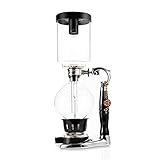
7. Yama Glass 5 Cup Tabletop Siphon – Great for Beginners
Yama Glass 5 Cup Tabletop Siphon (Syphon) (Alcohol Burner), 20-Ounce, Clear
20oz capacity
Alcohol burner included
Hand-blown glass
Complete accessory set
Pros
- Produces smooth rich coffee
- Beautiful laboratory appearance
- Complete accessories included
- More affordable entry point
Cons
- Alcohol burner heats slowly
- Learning curve for beginners
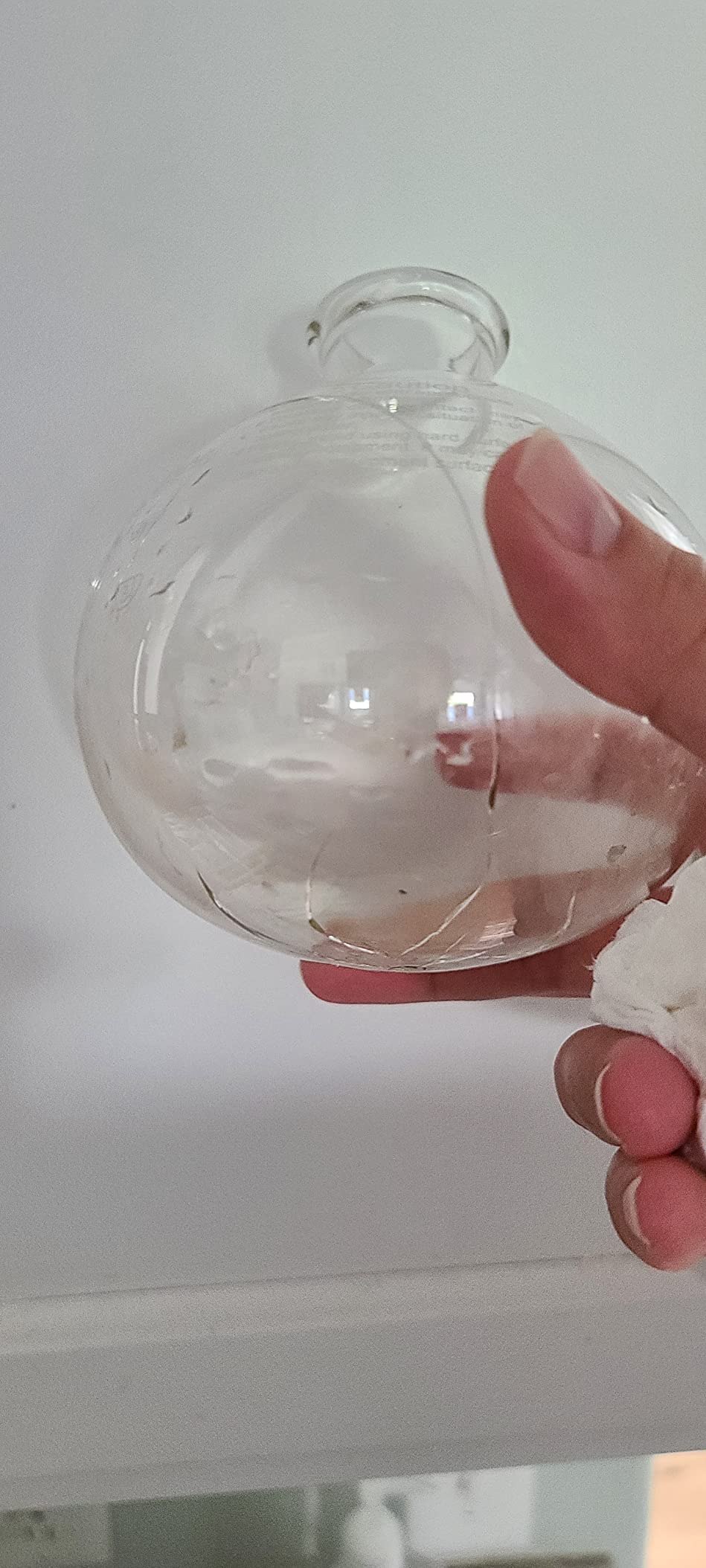
- Glass is fragile
- Cloth filter maintenance needed
The Yama Glass 5 Cup Tabletop was the first siphon brewer many of us tried, and it remains a favorite recommendation for newcomers to vacuum brewing. The hand-blown tempered glass has that classic scientific laboratory aesthetic that makes the brewing process feel like conducting an experiment.
Everything you need comes in the box: the stand, alcohol burner, filters, scoop, and the siphon unit itself. This completeness makes it easy to start brewing immediately without hunting for compatible accessories. The included cloth filters produce excellent results once you dial in your technique.
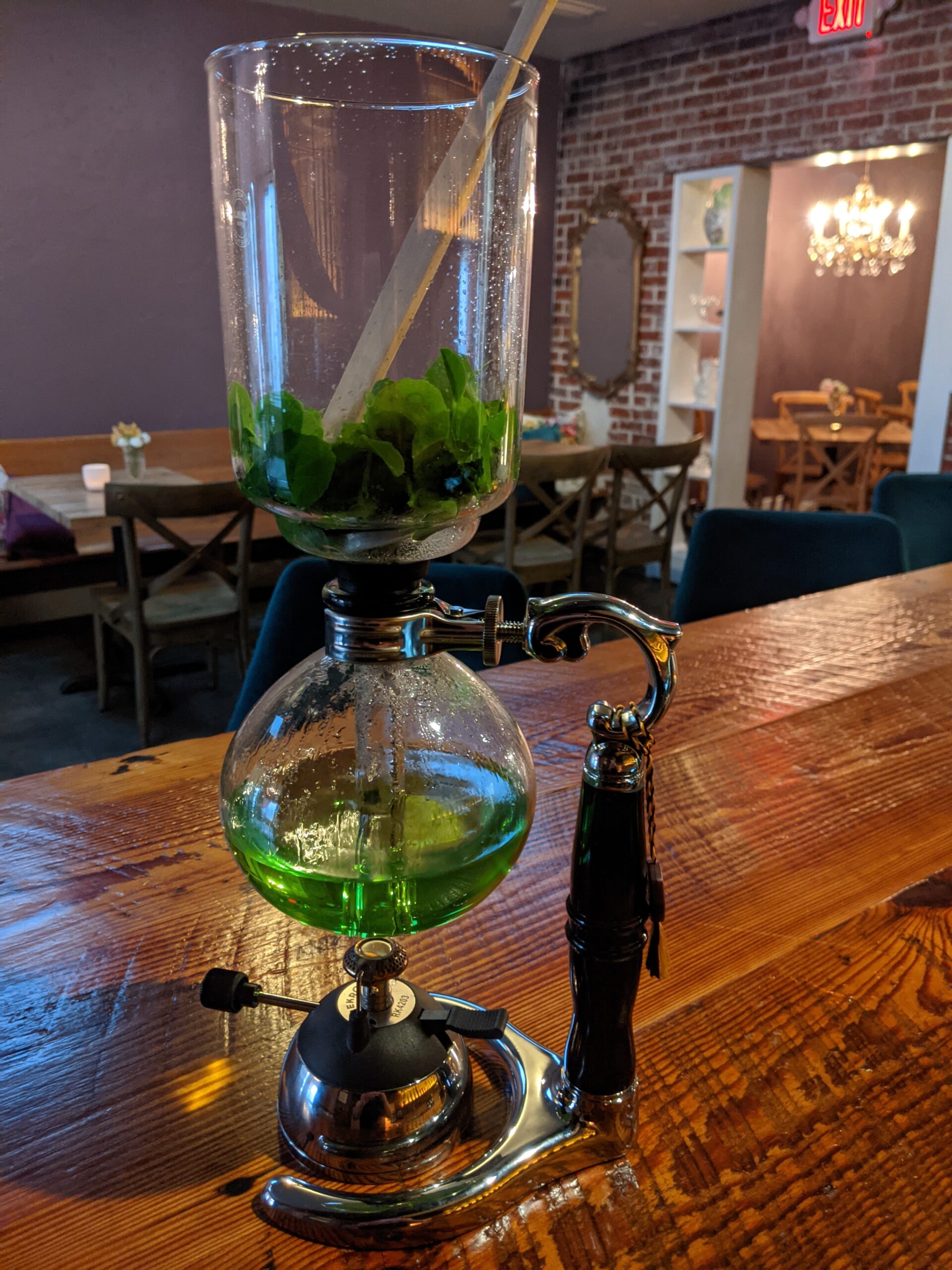
The 20oz capacity is practical for 2-3 people. We use this most weekend mornings when we have time to enjoy the brewing ritual. There’s something satisfying about watching the water rise, steep with the grounds, and cascade back down as finished coffee.
The main learning curve involves managing the alcohol burner. It’s slow, taking 25-30 minutes from cold water to finished brew. We recommend pre-heating your water in a kettle first, which cuts brewing time in half. Many users eventually upgrade to a butane burner for faster, more controllable heating.
Who Should Buy This
This is perfect for anyone curious about siphon brewing who wants to try it without a major investment. The complete accessory set means you can start brewing right away. If you appreciate the classic scientific aesthetic and have time for the brewing ritual, this delivers excellent results.
Who Should Skip This
If you want quick morning coffee, the alcohol burner heating time will feel excessive. Those who prefer modern aesthetics might find the laboratory look dated. The 20oz capacity may be limiting if you regularly serve more than 2-3 people.
8. YUCHENGTECH Siphon Coffee Maker – Budget Pick
YUCHENGTECH Siphon Syphon Coffee Maker Tabletop Glass Siphon Pot Glass Technica Siphon Vacuum Coffee Maker(5 Cups(600ml))
600ml capacity
Borosilicate glass
Multiple heat source compatible
Buffer clamp design
Pros
- Great value for money
- Compatible with multiple heat sources
- Sturdy stainless steel base
- Fascinating brewing process
Cons
- Capacity is smaller than advertised
- Alcohol burner is slow
- Quality control varies
- Learning curve required
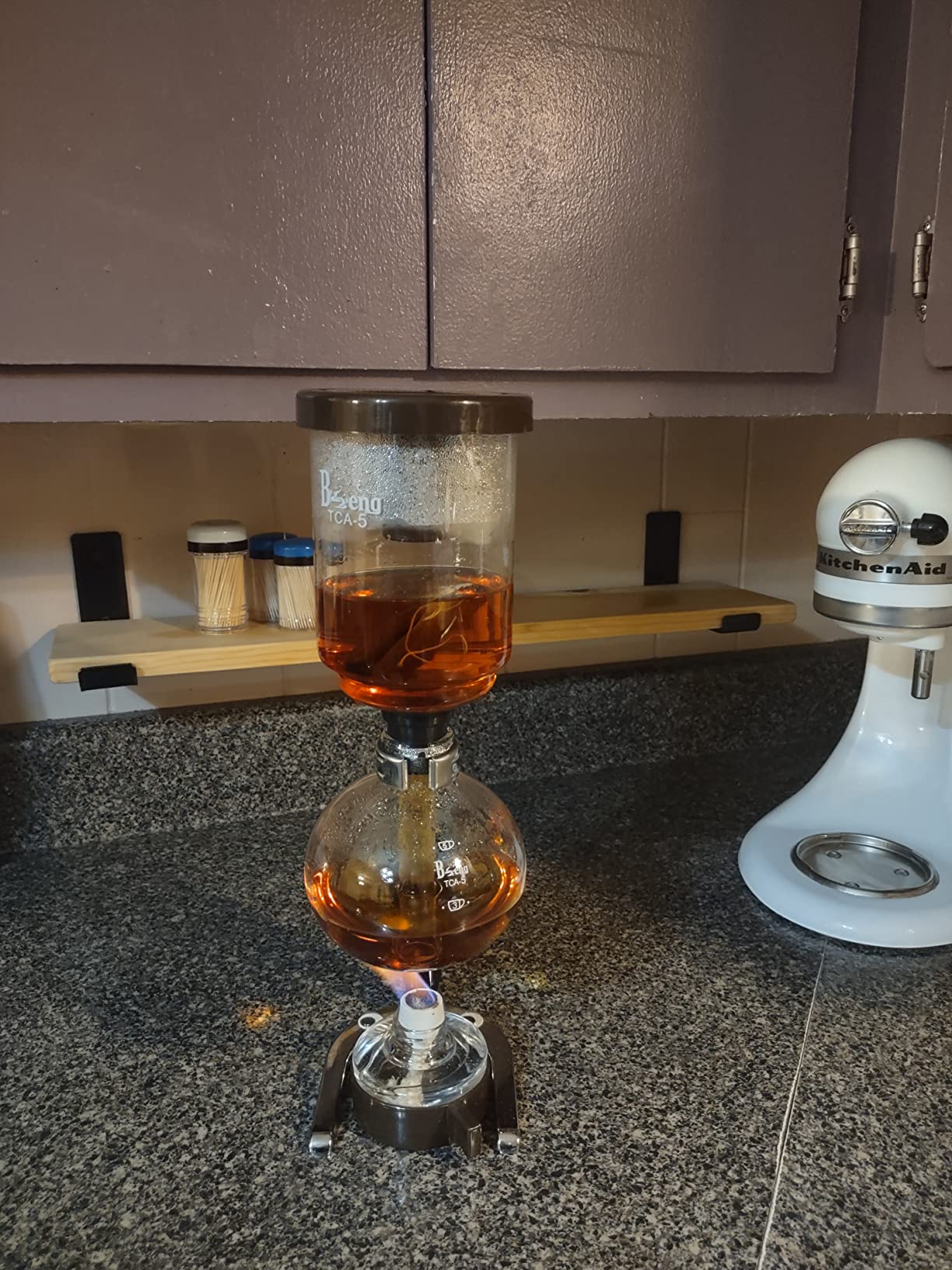
The YUCHENGTECH Siphon Coffee Maker proves you don’t need to spend a fortune to experience vacuum brewing. At under $40, it’s the most affordable entry point we’ve found that still produces legitimate siphon coffee. The borosilicate glass construction handles temperature changes well, and the stainless steel base feels sturdy.
The buffer clamp design is a thoughtful safety feature. It holds the lower pot securely and distributes pressure evenly, reducing the risk of accidents. This is particularly valuable for beginners who are still getting comfortable handling the glass components.
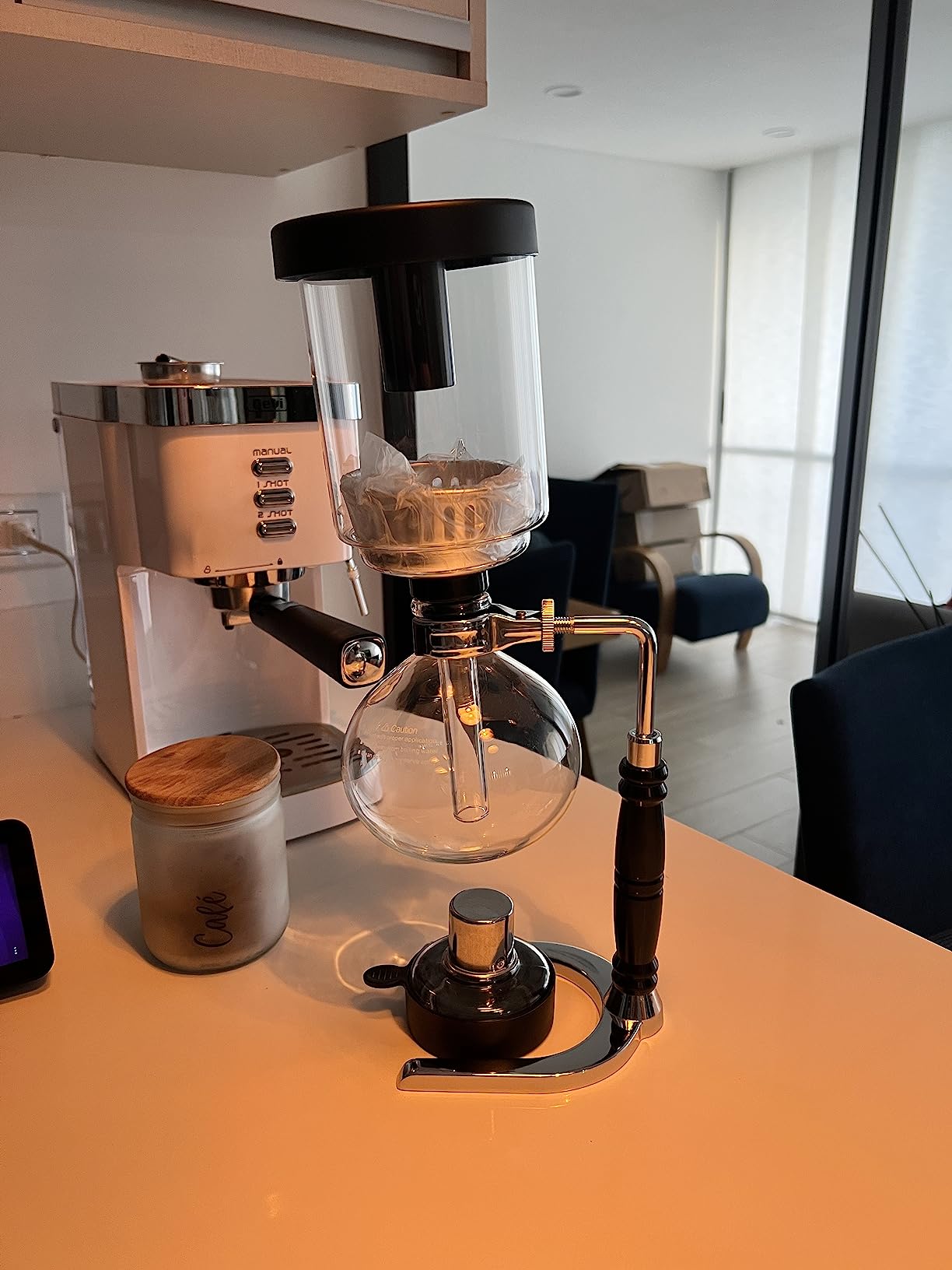
Compatibility with multiple heat sources is a major advantage. The base works with alcohol lamps, halogen heaters, and even gas stoves. This flexibility means you can start with the included alcohol burner and upgrade later without needing a new siphon.
The main caveat is the capacity description. While advertised as 5 cups, the 600ml actually makes about 2-2.5 mugs of coffee. This isn’t unique to this model (most siphon makers use optimistic cup measurements), but it’s worth noting if you’re expecting to serve a crowd.
Who Should Buy This
This is ideal for anyone who wants to try siphon brewing without committing to a larger investment. The multiple heat source compatibility gives you flexibility to upgrade your heating method later. If you’re curious about vacuum brewing but unsure if it’s for you, this lets you find out affordably.
Who Should Skip This
If you want the absolute best build quality and are willing to pay for it, premium Japanese brands offer superior fit and finish. Those who need larger capacity should look at the Yama 8-Cup stovetop model instead. Quality control can vary, so inspect your unit carefully upon arrival.
How Siphon Coffee Makers Work
Siphon brewing relies on basic physics: vapor pressure and vacuum suction. The brewer consists of two glass chambers connected by a tube with a filter at the top. Water goes in the bottom chamber, coffee grounds in the top.
When you apply heat to the bottom chamber, the water begins to boil and create vapor pressure. This pressure forces the hot water up through the tube into the upper chamber where it mixes with the coffee grounds. The water typically reaches 195-205 degrees Fahrenheit, ideal for coffee extraction.
The coffee steeps in the upper chamber for 1-2 minutes. This immersion brewing extracts flavor compounds evenly from all the grounds. Unlike pour-over where water flows through, every ground gets equal contact time with the water.
When you remove the heat source, the bottom chamber begins cooling. As it cools, a vacuum forms that sucks the brewed coffee back down through the filter. The grounds remain in the upper chamber, and you’re left with clean, sediment-free coffee in the bottom.
What to Look for When Buying a Siphon Coffee Maker
Heat Source Options
The heat source dramatically affects your brewing experience. Alcohol burners are traditional and included with most siphons, but they’re slow (20-30 minutes from cold) and hard to control. Butane burners offer faster heating (8-10 minutes) and adjustable flames, but require purchasing fuel separately. Halogen beam heaters provide the most consistent heat but are expensive standalone units.
Stovetop-compatible siphons like the Yama 8-Cup offer the fastest heating when used on gas stoves. However, they won’t work on induction cooktops, and electric coils can create hot spots that stress the glass. If you have a gas stove, stovetop-compatible models are worth considering.
Stovetop vs Tabletop vs Balance Siphons
Stovetop siphons sit directly on your stove burner. They heat faster but require moving hot glass from stove to serving area. Tabletop siphons come with stands and use separate burners, keeping everything in one place but heating more slowly. Balance siphons feature a tipping mechanism that automatically removes heat when brewing completes, offering semi-automatic operation.
Your choice depends on your setup and preferences. If you have a gas stove and value speed, stovetop models make sense. If you want to brew at the table for guests, tabletop or balance designs work better.
Filter Types
Cloth filters are standard and produce the cleanest cup. They allow oils to pass while catching all grounds, resulting in coffee with excellent clarity and body. However, cloth filters require maintenance: rinse after each use and store in water to prevent mold and mineral buildup.
Metal filters let more oils and fine particles through, producing coffee with more body but less clarity. They’re easier to clean but change the flavor profile. Paper filters are rare for siphons but some users adapt them for easier cleanup, though they absorb aromatic oils and reduce complexity.
Glass Quality
Borosilicate glass is essential for siphon brewing. It handles rapid temperature changes without cracking and resists clouding over time. Premium Japanese brands like Hario use their own proprietary glass formulations that are slightly thicker and more durable. Budget models may use thinner glass that’s more prone to thermal shock.
Check that all glass components feel substantial and fit together precisely. Loose-fitting chambers can leak during brewing, while overly tight fits make assembly difficult when hot.
Capacity Considerations
Most siphons brew 500-600ml, which translates to 2-3 mugs of coffee. The Yama 8-Cup Stovetop offers larger 24oz capacity for serving 4+ people. Balance siphons typically max out at 500ml. If you regularly entertain or have a larger household, consider capacity carefully.
Note that manufacturers often use optimistic cup measurements (3-4oz per cup). A 5-cup siphon might only make 2 standard mugs. Always check the actual milliliter capacity when comparing models.
Troubleshooting Common Siphon Problems
Water Not Rising
If water isn’t rising to the upper chamber, check your seal first. The rubber gasket between chambers must create an airtight fit. Ensure it’s clean, properly seated, and not dried out or cracked. If the seal is worn, replacement gaskets are available for most major brands.
Insufficient heat is another common cause. Alcohol burners may not produce enough heat if the wick is too short or the fuel is old. Butane burners need fresh fuel canisters. For stovetop models, ensure your flame is high enough but not so high it creates hot spots.
Slow Drawdown
If coffee takes longer than 2 minutes to drain back down, your filter may be clogged. This happens when grind size is too fine or when too many fine particles pass through. Try a slightly coarser grind or stir the grounds less vigorously during brewing.
Cloth filters can also become clogged with oils over time. Boiling them with a coffee equipment cleaner or replacing them entirely solves this issue.
Coffee Tastes Bitter
Bitterness usually indicates over-extraction. Try reducing your brew time in the upper chamber from 2 minutes to 1-1.5 minutes. Lower water temperature can also help. If you’re boiling the water in the bottom chamber, let it cool slightly before the coffee rises.
Grind size matters too. Too fine a grind extracts more quickly and can lead to bitterness. Aim for medium-fine, slightly coarser than espresso but finer than drip coffee.
What is the best siphon coffee maker?
The Yama Glass 8-Cup Stovetop Siphon is our top pick for most users. Its stovetop compatibility means faster heating, and the 24oz capacity serves more people than typical 600ml siphons. For premium Japanese quality, the Hario Technica offers exceptional craftsmanship and produces outstanding coffee.
How does a siphon coffee maker work?
A siphon coffee maker uses vapor pressure and vacuum suction to brew coffee. Heat applied to the bottom chamber creates pressure that forces hot water up into the top chamber where it steeps with coffee grounds. When heat is removed, the cooling bottom chamber creates a vacuum that pulls the brewed coffee back down through a filter, leaving grounds behind.
Are siphon coffee makers worth it?
For coffee enthusiasts who appreciate clean, nuanced cups and enjoy the brewing process, siphon makers are absolutely worth it. They produce exceptionally smooth coffee with pronounced brightness and zero sediment. However, they require time (10-30 minutes per brew), maintenance (cloth filter care), and careful handling of glass components. They’re not ideal for anyone seeking quick, convenient coffee.
What is the best grind for siphon coffee?
Use a medium-fine grind for siphon brewing, slightly coarser than espresso but finer than drip coffee. The grind should feel like table salt. Too fine will clog the filter and over-extract, causing bitterness. Too coarse will under-extract, producing weak, sour coffee. Experiment with your specific beans to find the sweet spot.
How long should you siphon coffee?
Let the coffee steep in the upper chamber for 1-2 minutes after the water fully rises. Shorter steep times (1 minute) produce brighter, more acidic cups. Longer steeps (2 minutes) extract more body but risk bitterness. The total brew time from cold water is typically 10-15 minutes with butane heat or 25-30 minutes with alcohol burners.
Conclusion
Siphon coffee makers occupy a unique space in the brewing world. They’re not for everyone, but for those who appreciate the ritual of brewing and seek the cleanest possible cup, they deliver an experience unlike any other method. The theatrical brewing process makes coffee an event rather than just a beverage.
For most users, we recommend starting with the Yama Glass 8-Cup Stovetop for its faster heating and practical capacity. If you have the budget and want premium Japanese quality, the Hario Technica produces exceptional results. Budget-conscious beginners should consider the YUCHENGTECH to try vacuum brewing without a major investment.
Whichever model you choose, take time to dial in your technique. The learning curve is real, but once you master it, you’ll produce coffee that rivals the best specialty cafes. That’s the promise of the best siphon coffee makers: coffee that tastes the way the roaster intended, with all its complexity and nuance intact.