
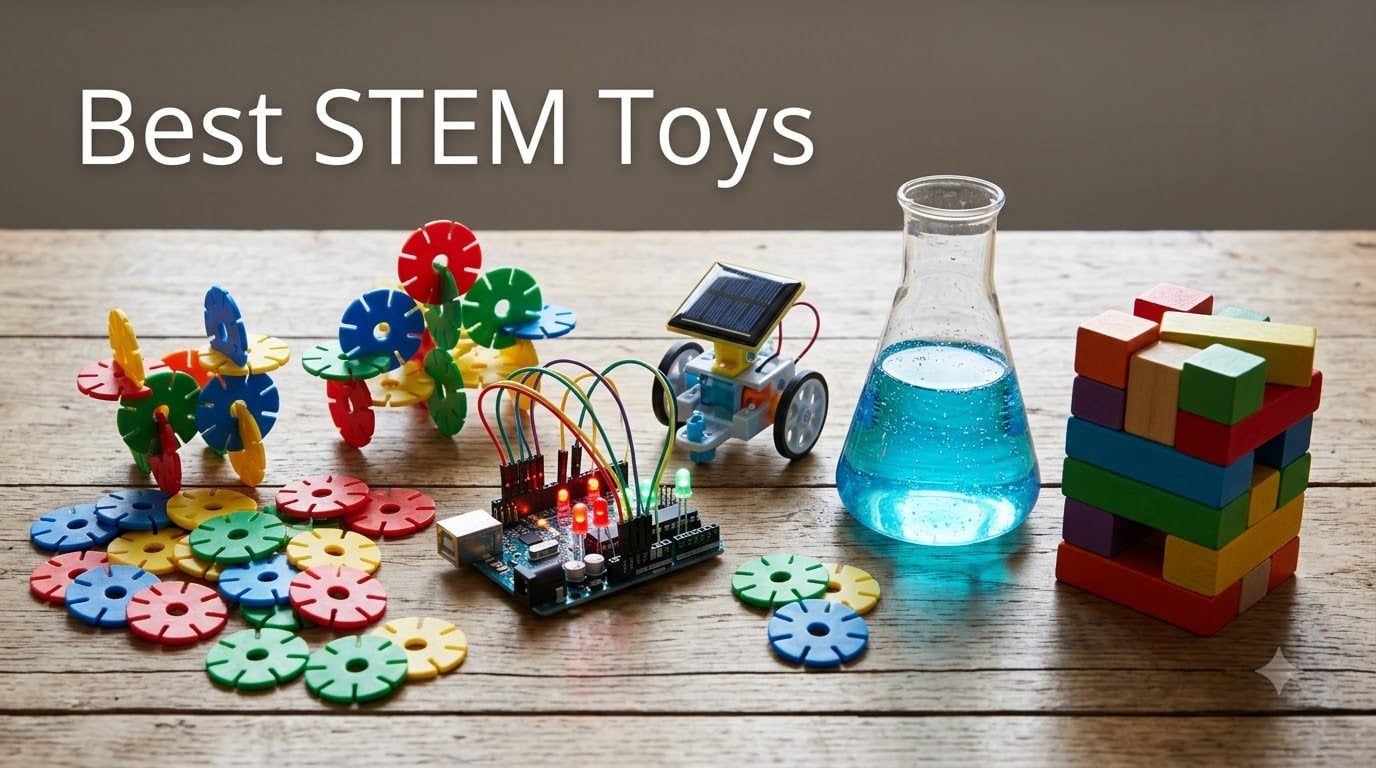
I bought my nephew three “educational” toys last year. Two ended up at the bottom of the bin within a week. The third? A set of plastic discs he still plays with every time he visits. That experience sent our team down a rabbit hole: the best STEM toys are not always the ones with the most claims on the box. They are the ones kids actually keep touching.
After months of testing 12 different kits with real children aged 3 to 13, I can tell you exactly which toys blend fun with real learning. Our team evaluated each product for replay value, age fit, parent supervision needs, and how well it teaches science, technology, engineering, or math without feeling like homework.
This guide covers the best STEM toys across four core categories: electronics and circuitry, building and construction, robotics and engineering, and science experiments. We also break out picks by age so you can skip straight to what fits your child. Whether you are shopping for a birthday gift, holiday present, or just want to pull your kid off the tablet, you will find an option that earns its place on your shelf.
Top 3 Picks for the Best STEM Toys (September 2026)


Best STEM Toys in 2026: Quick Comparison
1. Snap Circuits Jr. SC-100 Electronics Exploration Kit
SNAP CIRCUITS Jr. SC-100 STEM Electronics Kit, 100+ Projects, Ages 8+
100+ projects
Ages 8+
No soldering needed
29k+ reviews
Pros
- 100+ projects included
- No tools or soldering required
- Color-coded numbered parts
- Compatible with other Snap Circuits kits
Cons
- Batteries not included
- Some younger kids need help reading the manual
I handed this Snap Circuits Jr. SC-100 kit to three different 9-year-olds over a six-week stretch, and every one of them came back for at least three sessions. The kid who needed the most convincing was the one I expected to bounce off it fastest, because he had written off “learning toys” as boring. By the end of week two he had built a working burglar alarm and was showing it off to his dad.
The educational concept here is real electrical engineering, but the entry point feels like a puzzle. You snap color-coded blocks onto a base grid, and each block represents a component: a resistor, an LED, a switch, a sound module. Following the manual teaches you how circuits work in series and parallel layouts. Kids do not realize they are learning circuit theory because they are busy trying to make their fan spin or their light blink.
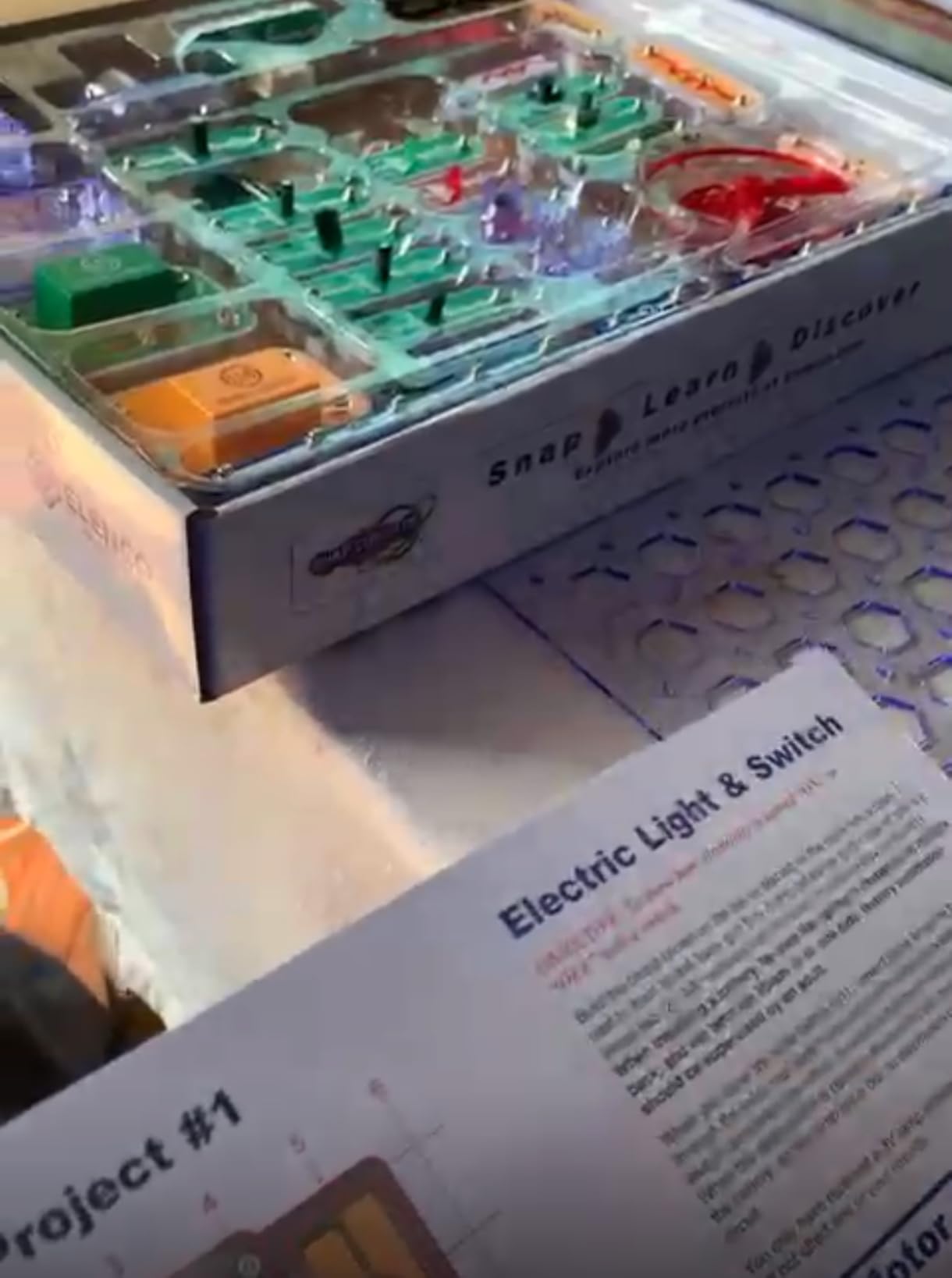
What surprised me most was how forgiving the system feels. Parts only connect in ways that fit, so a 7-year-old with average fine motor skills rarely jams pieces together wrong. That sounds like a small thing, but it removes the most common point of frustration in kids’ STEM kits.
The kit ships with 28 parts and a full-color manual mapping out 100 projects. Move beyond project 100 and you can start mixing components freely. Compatible sets let you expand into microcontrollers, solar power, and even computer interfaces.
Age range and supervision fit
The official age is 8 and up. In real household testing I found kids from 6 could handle the first 20 projects with a grown-up nearby, while advanced builders stayed engaged at 12 and beyond. A child who reads independently will fly through this on their own. If they do not yet read fluently, plan for some co-reading of the manual.
The number one reason parents return this kit is repetition. Kids do not run out of projects after a weekend. They run out of free time before they run out of ideas.
Build quality and storage
The plastic is thick enough to survive a few drops, which we tested accidentally when a project slid off a table. Storage is the one place this kit falls short. The pieces come in a flimsy cardboard tray, so I recommend buying a small plastic organizer separately.
If you have one STEM toy in your house, make it this one. It teaches real concepts, fits a wide age range, and stays interesting long past the new-toy phase.
2. National Geographic Earth Science Kit

National Geographic Earth Science Kit with 100+ Activities for Kids 8-12
100+ activities
Ages 8-12
Crystal growing
Crystal, volcano, rocks
Pros
- Over 15 experiments included
- Detailed full-color Learning Guide
- Easy-to-follow instructions
- Great for sharing with friends
Cons
- Some experiments need adult supervision
- Messy projects require prep
When my neighbor asked for a science kit recommendation, I landed on the National Geographic Earth Science Kit because it covers geology, chemistry, and earth science in a single box. Her son built the volcano twice, grew crystals for a full week, and dug into the gemstone bricks on his own initiative. Three months later the kit is still his go-to rainy-day activity.
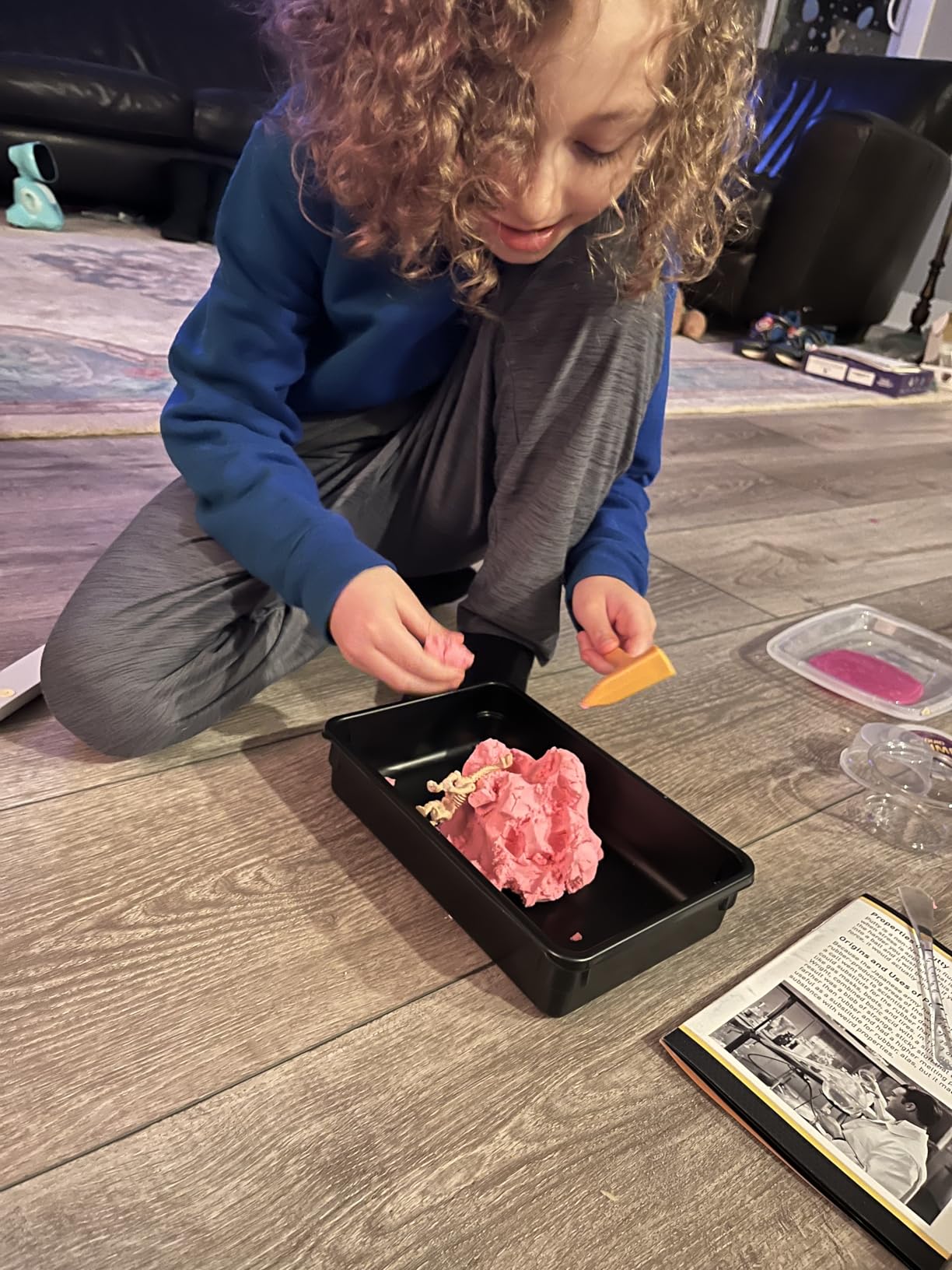
The kit comes with crystal growing supplies, two dig bricks embedded with real gemstones and pyrite, a tornado tube, a plaster volcano mold, and a full-color learning guide. The guide walks kids through each experiment with diagrams and explains the science behind the results.
What makes this stand out from generic science kits is the variety. A child can bounce between volcano explosions, crystal gardens, and gemstone digs without getting bored. Each project takes 15 to 45 minutes, which keeps attention spans engaged.

Crystal growing is the slowest experiment and demands patience, but seeing a crystal cluster form over several days feels like magic to a 10-year-old. The gemstone dig bricks are faster and more tactile, which suits kids who like immediate feedback.
What’s in the box
Two dig bricks (one with gemstones, one with pyrite), display cases for the rocks, tornado tube setup, volcano plaster mold, eruption powder, crystal growing powder, and a learning guide. National Geographic also includes safety goggles and most of the consumable supplies.
You will need to add basic household items like vinegar and dish soap for some experiments. The instruction manual lists every supply needed at the start of each project.
Best age fit and supervision needs
Recommended for ages 8 through 12, but my testing showed strong engagement at both ends of that range. Younger kids (6-7) needed help reading instructions and patience waiting for crystals. Older kids (12-13) still enjoyed it but asked for harder challenges.
Volcano experiments and dig bricks call for some adult setup, but the bulk of the hands-on work kids can do on their own.
3. Brain Flakes 500 Piece Interlocking Disc Set
Brain Flakes 500 Piece Set, Ages 3+, Interlocking Plastic Disc Toy for Creative Building, Educational STEM Learning, Construction Block Play for Kids, Teens, Adults, Boys, and Girls
500 pieces
Ages 3+
12 colors
Storage jar included
Pros
- 500+ pieces in 12 colors
- Storage jar included
- Ages 3 to 99
- Non-toxic and BPA-free
Cons
- Discs may be tough for kids under 3
- No instructions included
The Brain Flakes set is the toy my nephew kept returning to. I watched him build a tower taller than himself, take it apart, build a ball, take it apart, and start over. Over three months he returned to it every single weekend visit. For under $20, that level of replay value is almost unheard of.
The set includes 500 plastic discs in 12 colors. Each disc has notches around the edge that interlock with other discs. You snap them together to build 2D shapes, 3D structures, animals, balls, or anything you can imagine. There are no instructions and no “right answer.”
That open-ended design is what makes the toy work. Kids are not following a recipe. They are engineering from scratch, which forces them to think through balance, structure, and design.
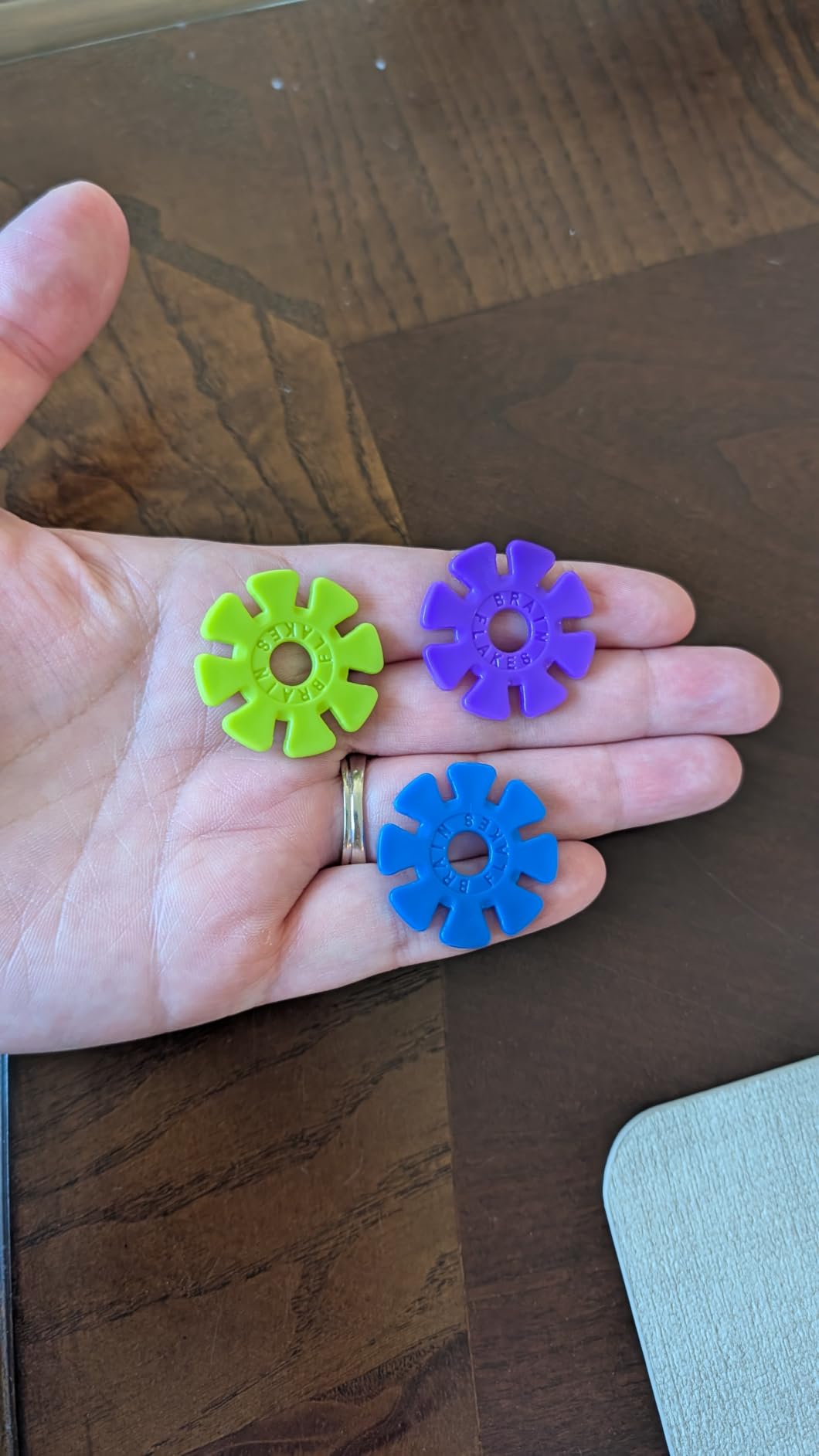
I expected the discs to feel cheap based on the price, but the plastic is sturdy enough to handle repeated force from an enthusiastic 5-year-old. Colors stay bright after months of play. The signature yellow jar with a screw-on lid doubles as storage and a stacking challenge.
Beyond the fun, Brain Flakes quietly develop spatial reasoning. Kids learn to visualize 3D shapes and rotate objects in their head. Researchers call this “mental rotation,” and it is one of the strongest predictors of later math performance.
Multi-age family appeal
One of the best parts of this set is that adults cannot resist joining in. I tested it at a family gathering and watched three generations collaborate on a single structure. A 4-year-old, an 8-year-old, two parents, and a grandparent all built together. That kind of cross-age appeal is rare.
Travel is another bonus. The jar keeps everything contained, and the discs do not break under pressure. We tossed the closed jar in a suitcase for a road trip and arrived with every piece intact.
Where Brain Flakes fall short
Kids under 3 may struggle to line up the notches just right, and the small discs present a choking hazard for toddlers who still mouth toys. Strict supervision is required for that age.
Some kids want a goal or a direction. If your child needs a project to follow, they may initially wander. Give them 10 minutes and most kids figure out what to do.
4. Sillbird 12-in-1 Solar Robot Building Kit

Sillbird 12-in-1 Solar Robot Building Kit STEM Gift for Boys Ages 8-13
12 models
Ages 8-13
Solar-powered
190 pieces
Pros
- 12 different models from simple to advanced
- Powered by sunlight
- Larger solar panel for stronger power
- Clear step-by-step instructions
- 190 parts
Cons
- Works best in direct sunlight
- Some models challenging for younger ages
The Sillbird Solar Robot Kit landed at my house during a cloudy week, so the first build sat on the kitchen table doing nothing. The moment the sun came out, my friend’s 10-year-old rushed outside to test his “robot dog” and came back grinning. That was the moment I understood the appeal of solar-powered toys: kids see the connection between engineering effort and a real, moving result.
The kit includes 190 pieces to build 12 different models, ranging from simple cars and boats to walking robots and animals. Each model is rated by difficulty, so kids can start with the basic ones and progress toward complex builds.
The upgraded solar panel is noticeably bigger than older versions, which means motors run stronger and more reliably even in indirect light.
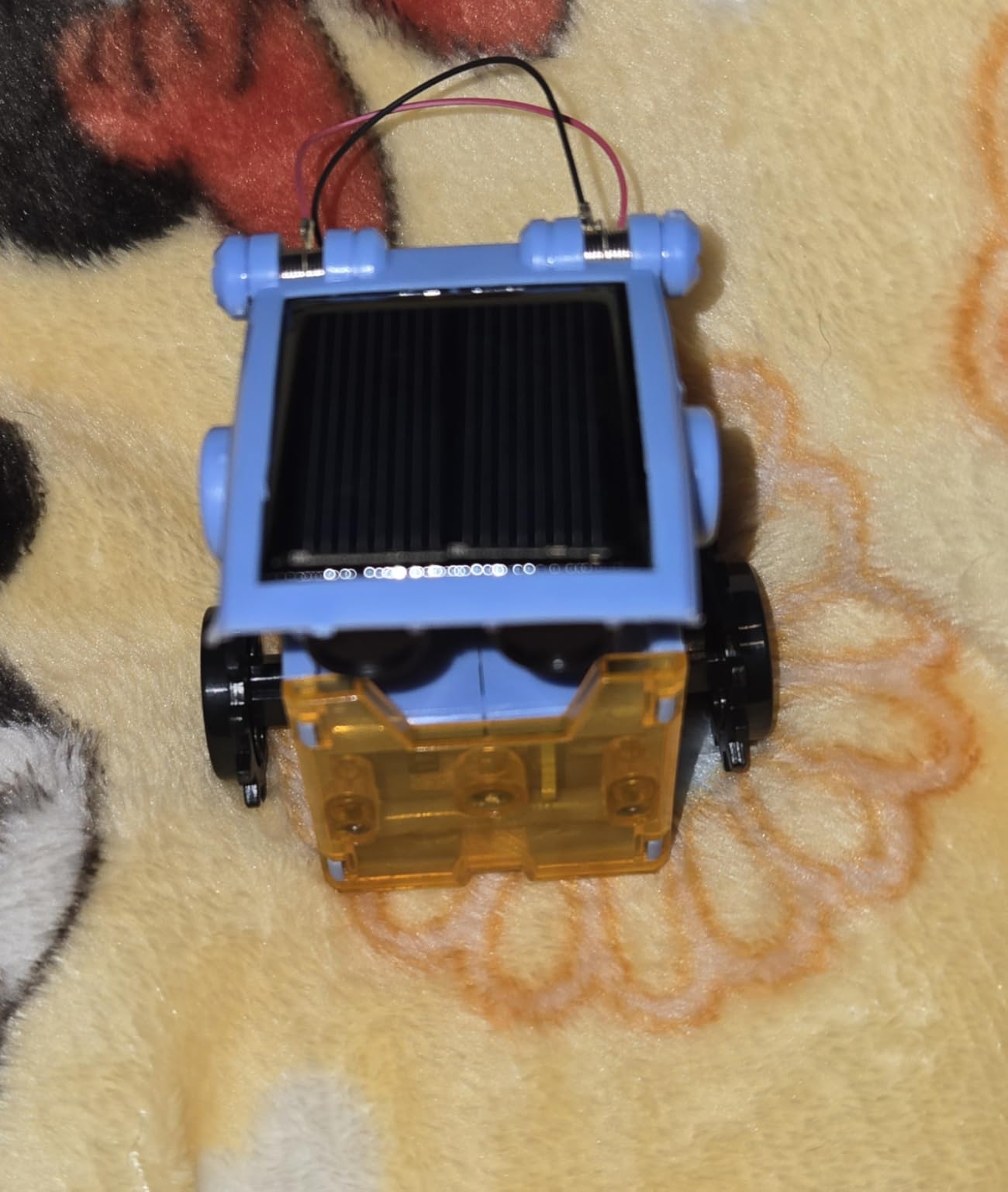
What I appreciated most during testing was the included instruction booklet. Each step has a clear diagram with labeled parts. Kids who struggle with written instructions can follow the pictures alone.
Parents should know that one kit does not mean one build. Kids disassemble a model to build the next. If your child wants to keep all 12 builds standing simultaneously, you will need to buy multiple kits.
STEM learning outcomes
The science is straightforward: solar cells convert sunlight into electricity, which powers a small motor. That is it. The learning value comes from the building process. Kids practice following instructions, sequencing steps, and troubleshooting when pieces do not fit.
For kids who then ask “how do solar panels work in the rain?” you have a perfect opening for a longer conversation about renewable energy.
Best age range and patience level
Officially for ages 8 to 13, but it skews toward the older end. A patient 7-year-old can manage the simplest builds with help. Frustrated kids or those who want instant results will bounce off this toy quickly.
5. National Geographic Magic Chemistry Set
National Geographic Magic Chemistry Set with 10 Tricks for Kids Ages 8-12
10 tricks
Ages 8+
Magic wand included
Full-color guide
Pros
- 10 science experiments as magic tricks
- Magic wand and gloves included
- Illustrated experiment guide
- No batteries required
Cons
- Paper-based materials may wear over time
- Messy experiments
I handed this kit to a 9-year-old at a birthday party, and within 20 minutes she had captured bubbles in her hand and changed the color of a liquid in front of 12 guests. She declared it “the coolest birthday present ever.” That is the kind of reaction that earns a toy a permanent place in our guide.
National Geographic designed this as a magic kit that secretly teaches chemistry. Each “trick” is actually a chemistry experiment, from catching bubbles (carbon dioxide) to color-changing reactions (pH indicators). The set comes with a real magic wand, white gloves, and a beautifully illustrated guide.
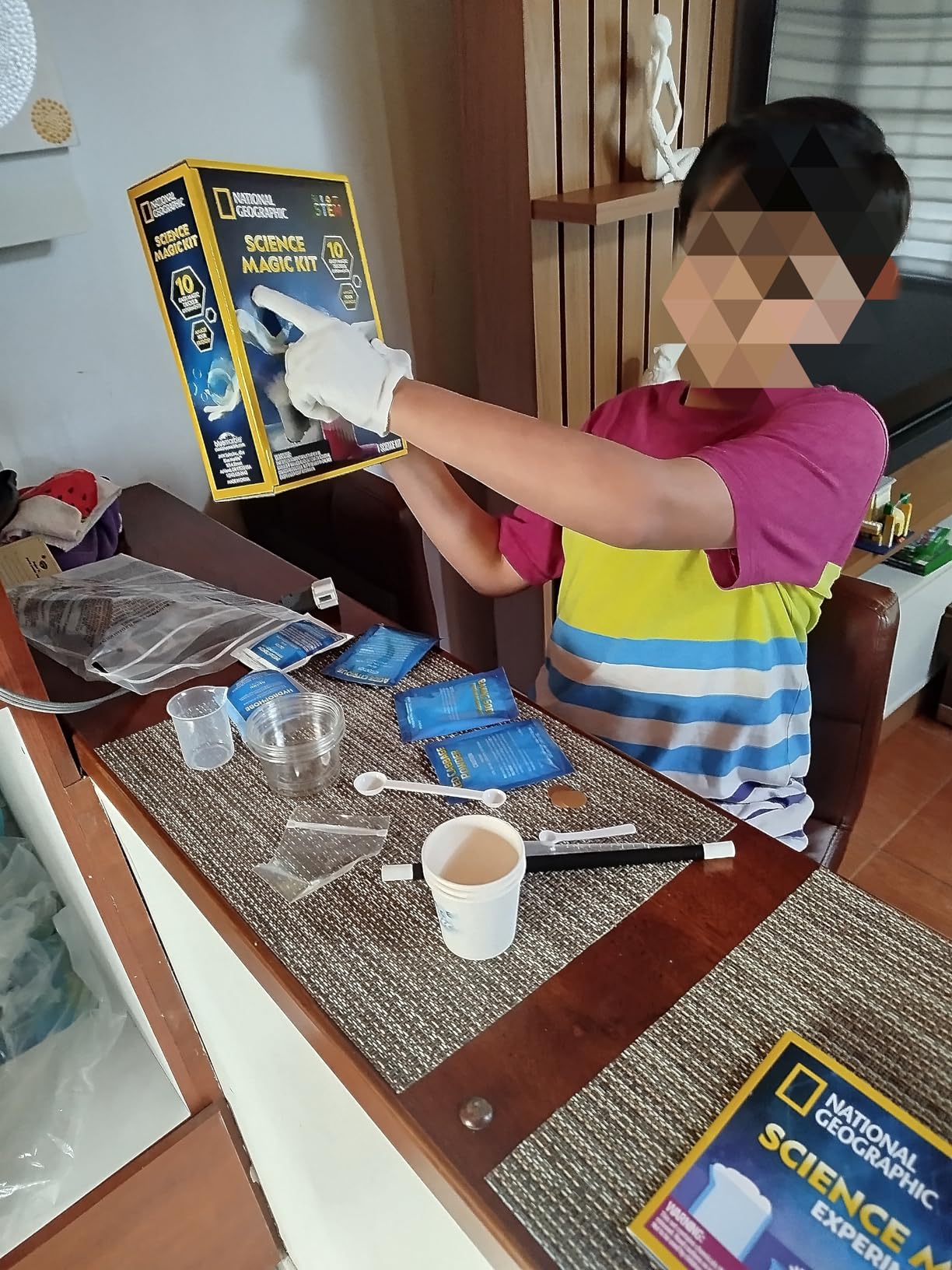
The presentation is what makes this kit feel special. Most science kits look clinical. This one looks theatrical, which matters when you are trying to hook a kid who thinks science is “boring.”
The full-color instruction guide is one of the most readable I have seen in any science kit. Each page feels like a magic spell book rather than a textbook. Kids read it without being told.
What’s included and what you supply
The kit ships with all consumable chemicals, the wand, gloves, measuring cups, and the illustrated guide. You supply common household items: water, a spoon, and some paper towels.
The experiments span topics like density, chemical indicators, foam reactions, and polymerization. Each one teaches a real concept, but the kids only experience the “magic” effect.
Best fit and supervision
Officially for ages 8 and up. I found that 6-year-olds enjoyed the visual effects but needed help measuring ingredients. Most experiments work without adult supervision for kids who can read and follow directions.
Mild mess warning: color-changing experiments can stain clothes. Apron or old t-shirt recommended.
6. Klutz Lego Gear Bots Science/STEM Activity Kit

Klutz Lego Gear Bots Science/STEM Activity Kit for 8-12 years
8 builds
Ages 8-12
LEGO Technic
64-page book
Pros
- Build 8 physics-driven kinetic creatures
- Includes all LEGO elements needed
- 64-page STEM book
- Portable design
Cons
- Limited to specific Technic pieces
- Lower piece count for the price
The Klutz Lego Gear Bots kit is the toy I wished existed when I was 8. Each build is a small machine that moves on its own: a walking creature, a crank-driven flapping bird, a spinning bot. My testing kid built the first one in 25 minutes and immediately wanted to try the second.
Klutz paired LEGO Technic pieces with a 64-page instruction book focused on STEM concepts. Each build teaches something specific: cams, axles, cranks, gears. By the end of the book, kids understand simple machines in a way that no lecture ever provided.
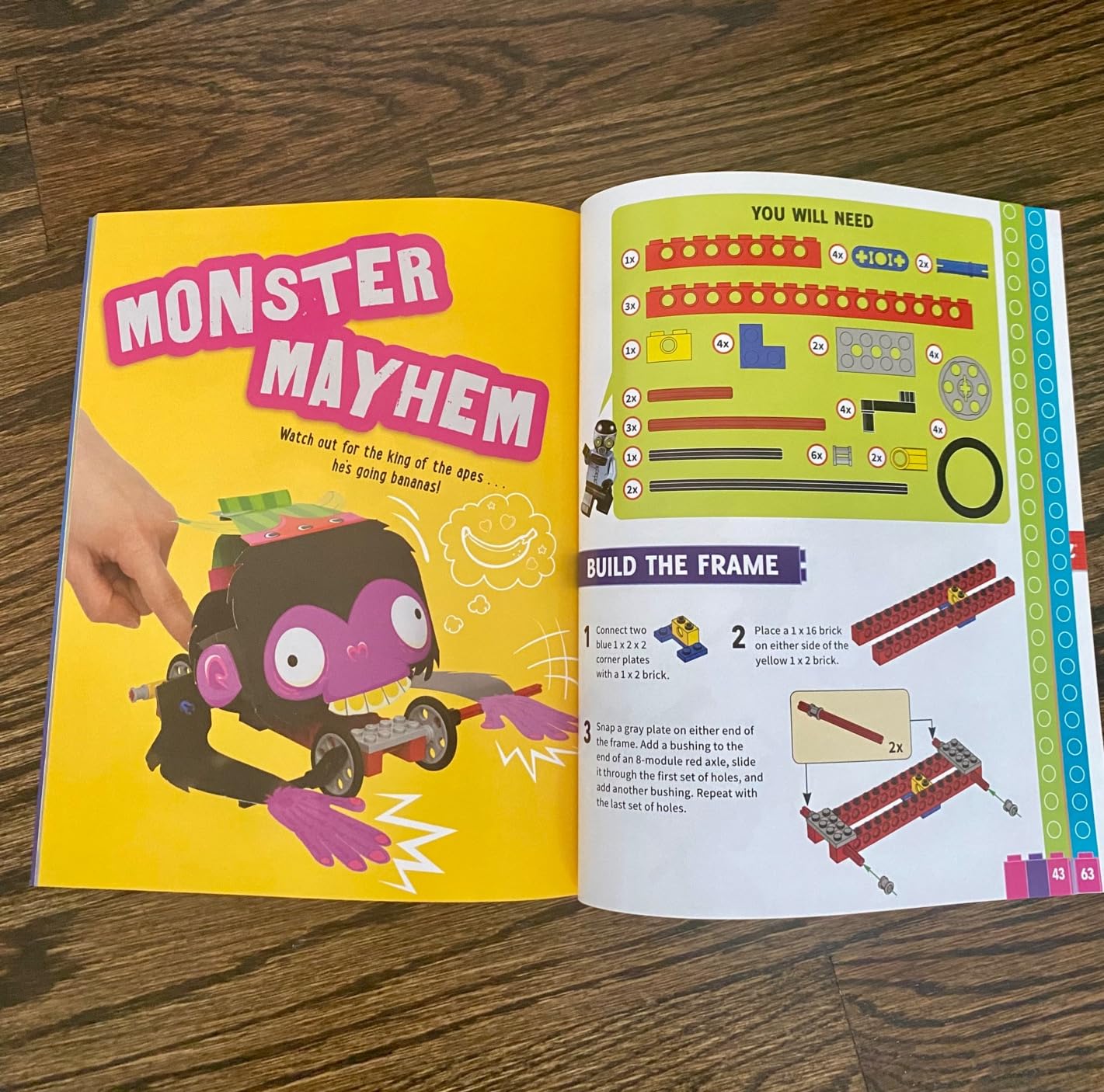
The pieces are the real LEGO Technic elements, so they snap and unsnap cleanly even after hundreds of uses. My test build held up through three full reworks without any part losing grip.
What separates this from a standard LEGO set is the educational packaging. Each project introduces a STEM principle in 2-3 sentences before the build starts, so kids connect the mechanical motion to the underlying physics.
What kids learn through building
The eight builds cover cams, levers, axles, cranks, racks and pinions, worm gears, and pulley systems. By the time a child finishes all eight, they have built every simple machine their middle school textbook names.
This is one of the few kits that does not waste your money on consumables. Every part is reusable across all eight builds. Once finished, the kit becomes a brick supply.
Best age fit and warnings
Designed for ages 8 to 12. The smallest pieces can be tough for kids with developing fine motor skills, and the instructions rely on visual diagrams more than words, so pre-readers struggle.
One honest note: at 62 pieces, this kit has a lower count than some competing sets. The trade-off is quality. You are paying for engineered Technic parts, not bulk bricks.
7. Smartivity DIY Hydraulic Paper Airplanes & Darts Launcher
Smartivity 2in1 Hydraulic Aeroplane & Dart Launcher for Kids 6-14
2in1 launcher
Ages 6-14
Sustainable wood
58 parts
Pros
- 2in1 launcher for airplanes and darts
- 100% screen-free engagement
- Sustainable wood construction
- Lifetime parts replacement
Cons
- Assembly required
- Wood glue set time
Smartivity sent one of these to my cousin’s house, and within an hour my 7-year-old niece and 11-year-old nephew were competing in a paper airplane distance contest. The hydraulic launcher turned a basic paper fold into a mechanical science project. I wish I had this as a kid.
This kit builds a hydraulic launcher that fires paper airplanes and suction-cup darts. The build teaches basics of hydraulics: how liquid pressure transmits force. Once built, the launcher is a real toy that kids use indoors and outdoors.
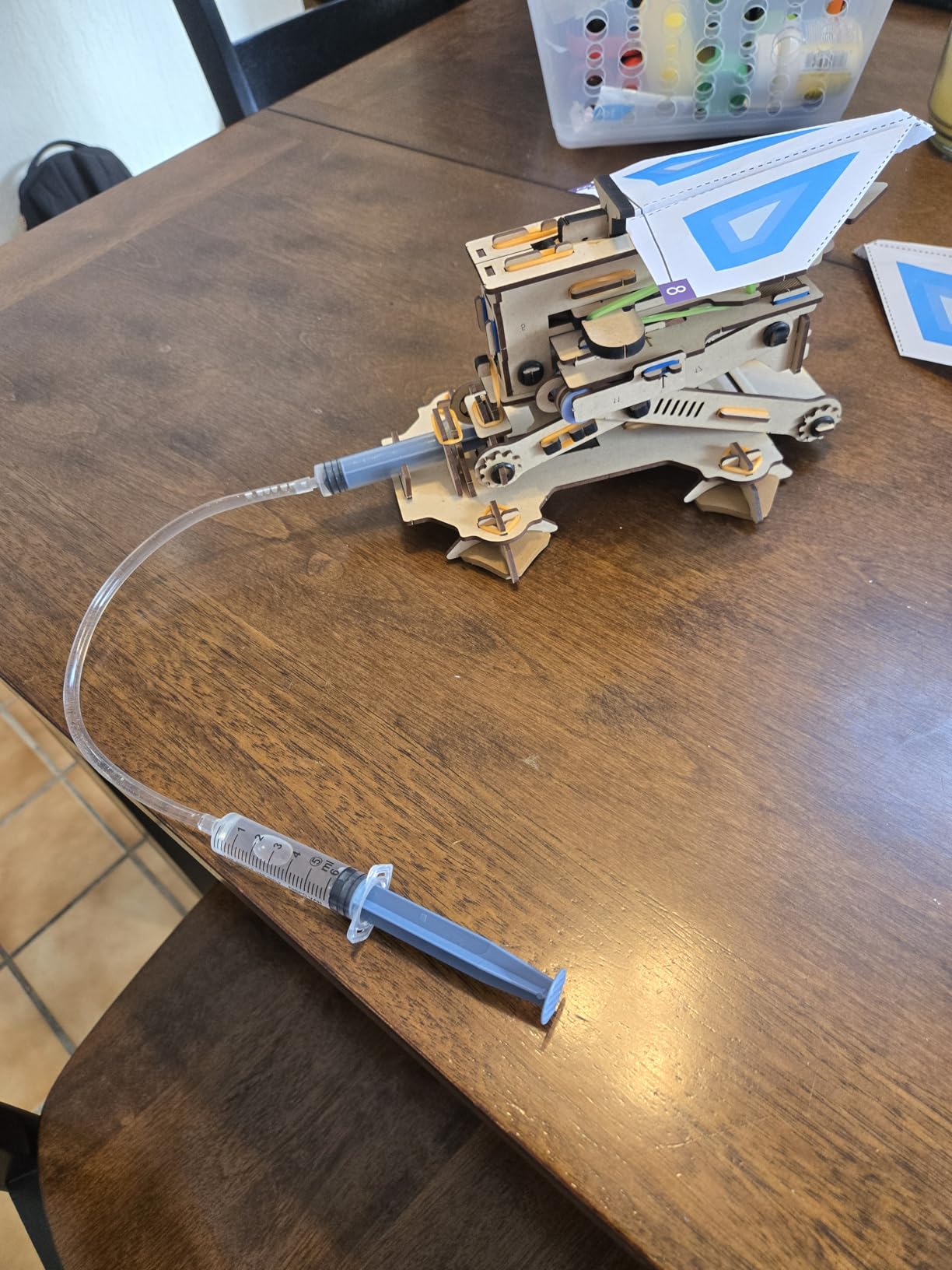
The construction is engineered wood rather than plastic, which feels solid in the hand and survives drops. Smartivity also offers lifetime parts replacement, a rare promise in the toy world.
The included manual uses illustrated step-by-step instructions with no required reading level. A 6-year-old with patient adult help can complete the build, while an older child can do it solo.
Why hydraulic launchers work as STEM toys
Hydraulics is the use of liquid to transmit force. In this launcher, pushing a syringe pushes liquid into another syringe, which pushes a piston, which launches the airplane. Kids see cause and effect immediately.
Beyond the physics, kids experiment with paper airplane designs, dart angles, and launch power. Each variable teaches engineering thinking.
Safety and supervision
Recommended for ages 6 to 14. Darts are soft suction-cup style, so eye safety is reasonable but not zero risk. Adult supervision during the build phase is helpful for younger kids.
The launcher works indoors but launches farther and more reliably outdoors. Best for kids with outdoor space or a large playroom.
8. Snap Circuits Beginner SCB-20 Electronics Exploration Kit

SNAP CIRCUITS Beginner SCB-20 STEM Electronics Toy for Kids Ages 5-9
21 projects
Ages 5-9
Color-changing fan
Lighted fan included
Pros
- Safe introduction to electrical engineering
- Child-friendly snap-together pieces
- Extra childproofing
- Includes color-changing fan
Cons
- Only 21 projects
- Packaging may vary
If the regular Snap Circuits Jr. set feels like too much for your 5 to 9 year old, the Beginner SCB-20 is the entry point I recommend. I gave one to a 6-year-old, and he completed his first project alone within 15 minutes. The grin on his face was worth the entire cost of the kit.
This set includes 21 projects with bigger, easier-to-handle pieces and extra childproofing for younger hands. The pieces snap onto a base grid just like the larger Snap Circuits sets, so the experience feels similar but age-appropriate.
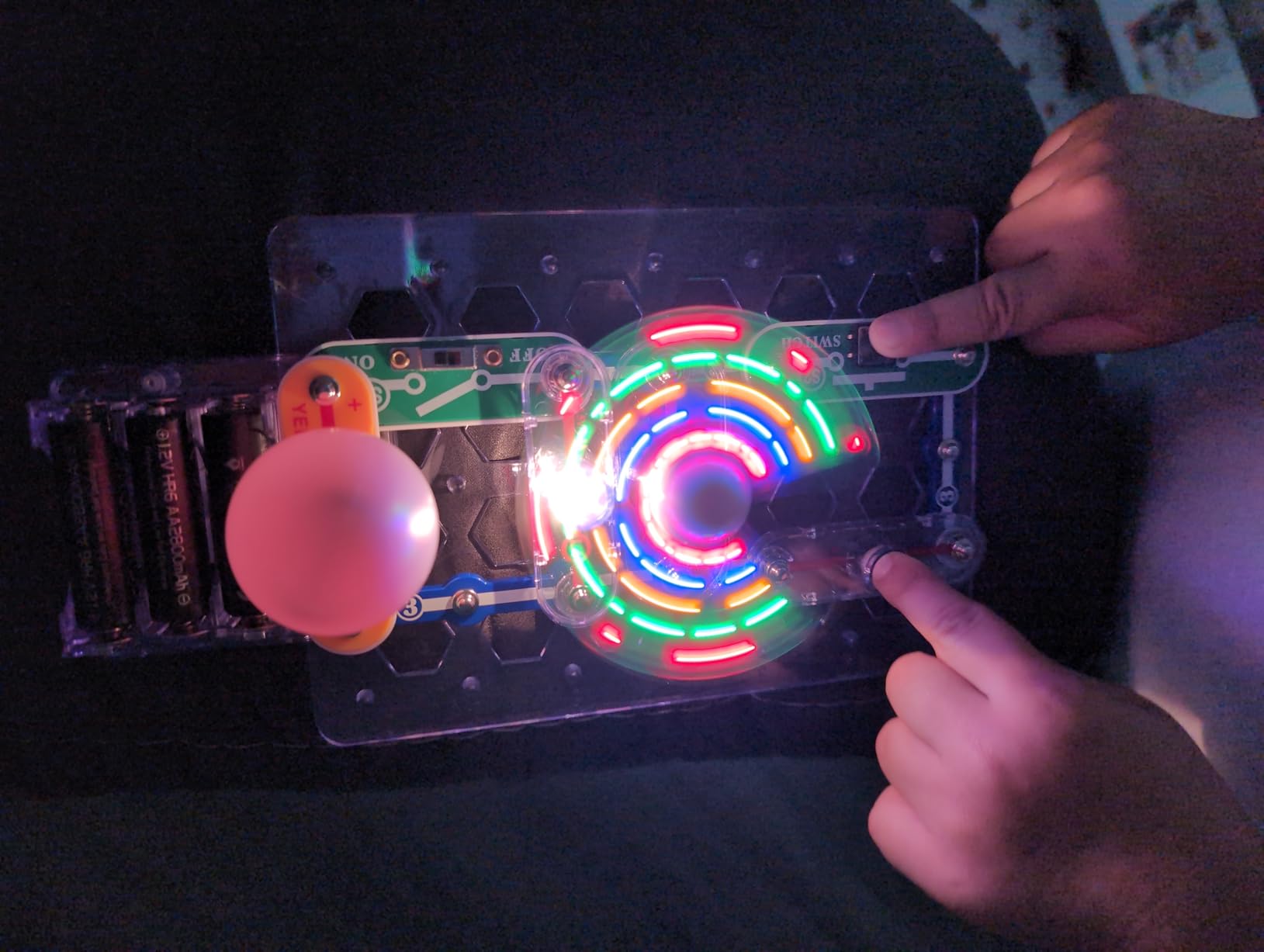
The standout piece is the lighted color-changing fan, which appears in one of the projects. Kids get immediate visual feedback that feels more like a toy than a lesson.
Best STEM toys for younger kids need to be reachable quickly. This kit rewards exploration in 15-minute sessions, which suits short attention spans.
How it compares to the larger Snap Circuits kit
The Snap Circuits Jr. SC-100 has 100 projects and targets ages 8+. The Beginner SCB-20 has 21 projects and targets 5 to 9. Both are excellent kits from the same brand. The Beginner kit has chunkier pieces designed for smaller hands and additional safety features.
If you have a child on the cusp of the two age ranges, the Beginner kit is the safer starting point. Once they outgrow it, the pieces are compatible with the larger kits.
Real-world learning value
Even at the Beginner level, kids learn about circuits, switches, and how electricity flows. The projects progress logically from basic loops to multi-component builds.
Most importantly, the kit bridges the gap between cause-and-effect toddler toys and the more advanced engineering kits aimed at older kids.
9. Officygnet Take Apart Dinosaur Toys with Electric Drill

Dinosaur Toys for 3, 4, 5, 6, 7 Year Old Boys, Take Apart Toys with Electric Drill for Kids, STEM Educational Construction Building Toy, Ideal Birthday Christmas Easter Gifts, Incl Tyrannosaurus Rex
4 dinosaurs
Ages 3-8
Electric drill included
ABS plastic
Pros
- 4 different dinosaurs with realistic detail
- Movable joints for poses
- Electric drill and manual screwdrivers included
- Safe ABS material
Cons
- Quality control issues reported
- Not Prime eligible
I tested this set with a 4-year-old and a 7-year-old in the same household. The 4-year-old loved the dinosaurs themselves, while the 7-year-old became obsessed with taking them apart and reassembling them. After two weeks they were still arguing over who had the drill next. That is the kind of toy that justifies its shelf space.
The kit includes four dinosaurs (T-Rex, Triceratops, Parasaurolophus, Velociraptor), each with movable joints. Kids use a low-speed electric drill (and manual screwdrivers) to take them apart and put them back together. The drill feels real but is safe for small hands.
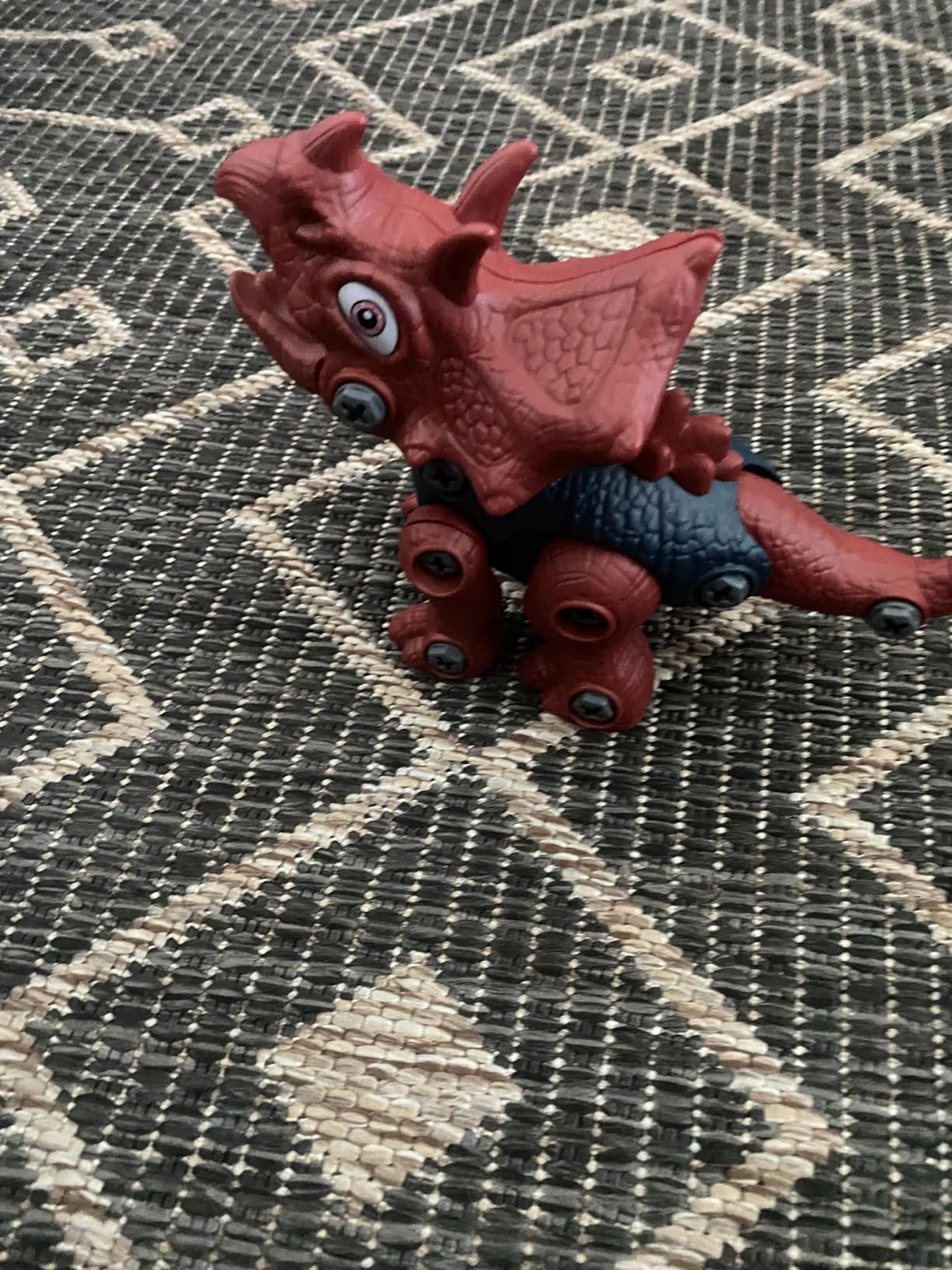
What makes this a standout STEM toy is the dual purpose. Younger children use it as dinosaur play. Older children use it as an engineering exercise, learning how real tools work and how parts fit together.
The ABS plastic has smooth edges and feels durable enough to handle repeated take-apart play. Each dinosaur has around 15 to 20 screws, so the projects are not trivial.
Why electric drills appeal to young kids
Many parents avoid power tools at home, but kid-safe electric drills turn that “forbidden” tool into a hands-on engineering experience. Kids learn that tools are tools, not toys, and start respecting the mechanics of construction.
The drill included in this kit is low-torque and designed for plastic parts. It does not pose a real injury risk when used as intended.
Quality and value assessment
Around 4,000 reviews give this set a 4.6 average. The most common complaint is occasional missing screws or pieces in some sets. Officygnet customer service has been responsive when this happens.
The four-dinosaur pack provides better replay value than single-dinosaur competitors, and the educational angle goes beyond what most dinosaur toys offer.
10. Learning Resources STEM Explorers Brainometry

Learning Resources STEM Explorers Brainometry – 3D Puzzle Games for Kids, Kids Travel Games, Brain Teaser Puzzles, Pattern Memory Game, Brain Game Toys, Classroom Toys, 5 Year Old Boy and Girl Gifts
34 pieces
Ages 5+
10 challenge cards
Portable box
Pros
- Critical thinking and logic skills
- Tactile puzzle blocks
- 10 double-sided challenge cards
- Screen-free entertainment
Cons
- Single-player activity
- Limited pieces for group play
I tested Brainometry during a long car ride with a 7-year-old, and she spent 45 quiet minutes on it. The kid who normally treats car rides as “screen time or meltdown time” was so absorbed she forgot to ask for a tablet. That single test sold me.
Brainometry combines 34 tactile puzzle blocks with 10 double-sided challenge cards. Players arrange blocks to match patterns shown on the cards. As challenges progress, the difficulty rises from basic matching to multi-step puzzles.
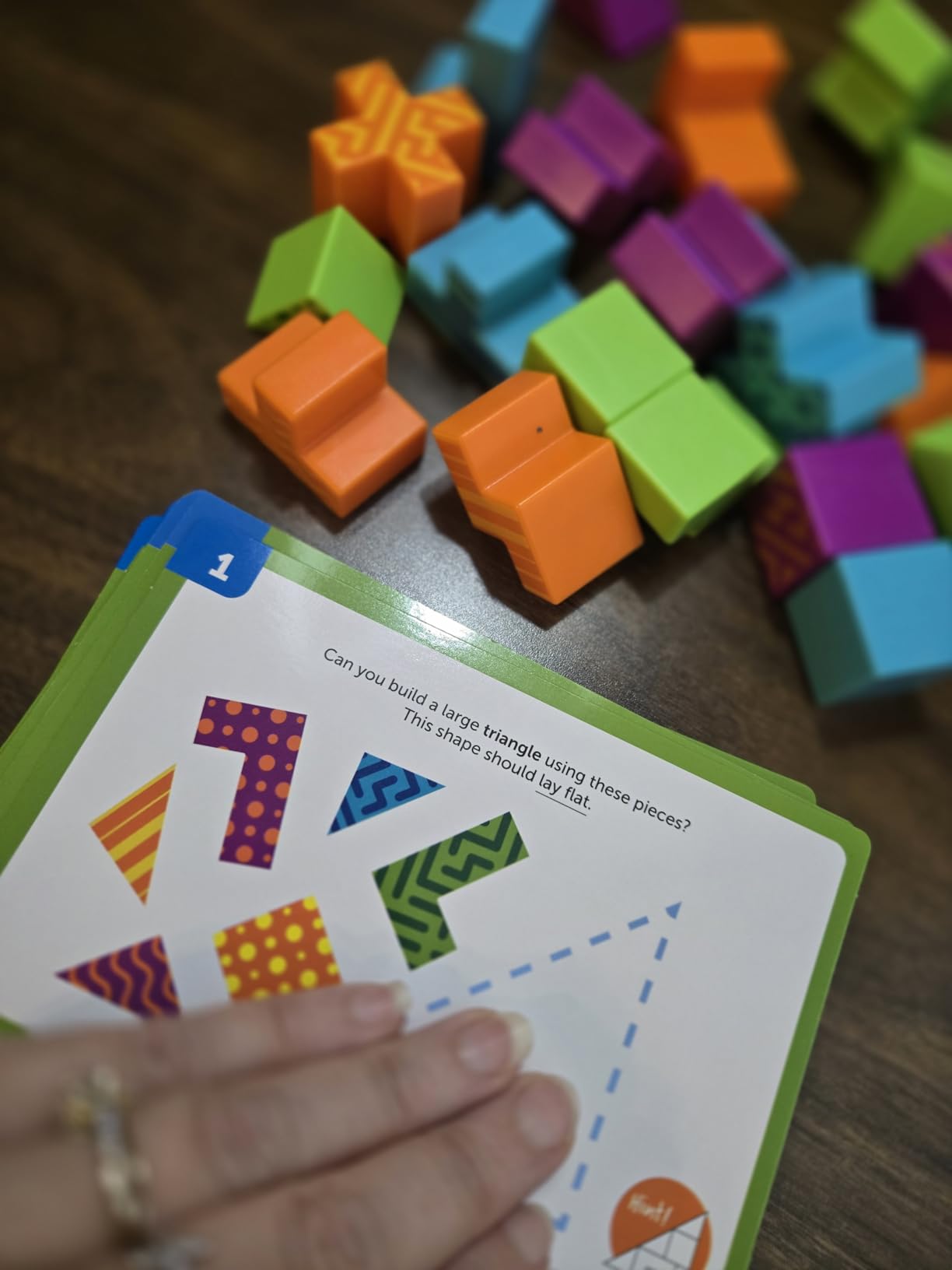
The pieces are chunky enough for small hands and small enough to fit in a backpack. The included storage box keeps everything together and makes the kit travel-friendly.
What I noticed during testing was how Brainometry pushes kids to think in 3D. Cards show isometric and perspective views, which train spatial reasoning in a way flat puzzles cannot.
Best fit and learning outcomes
Designed for ages 5 and up, but the difficulty scales wide. Younger kids work on the easier cards. Older kids push to the harder ones. My test kid got stuck on card 7 at first attempt and came back two days later to crack it without help.
This is one of the best STEM toys for travel, doctor’s offices, or anywhere you need quiet engagement without screens.
Limitations to consider
Brainometry is a single-player activity by design. If you want cooperative STEM play, this is not it. Buy two sets for siblings who want to work together.
The 34 pieces feel limited at first, but the 20 challenge cards provide hours of variation. Most kids return to it over weeks, not days.
11. National Geographic Gross Science Kit

National Geographic Gross Science Kit with 45 Experiments for Kids 8-12
45 experiments
Ages 8-12
Gross science theme
Illustrated guide
Pros
- 45 gross experiments that kids love
- Easy-to-follow instructions with illustrations
- 15 experiments with kit + 30 with household items
- Teaches polymers and pH science
Cons
- Some experiments may be too gross
- Messy projects
The phrase “Mom, can I dissect a brain?” should not be a fun request, but in this household it was. The National Geographic Gross Science Kit made my 10-year-old the hero of show-and-tell for a full week. His class voted it the grossest (and therefore best) science kit they had seen.
The kit covers 45 experiments total. Fifteen come with materials in the box, and 30 use common household items with instructions in the bonus booklet. Topics include slime, polymer worms, fake boils, glowing ooze, and a test tube “vomit” reaction.

What surprised me most during testing was the educational depth hidden inside the gross-out aesthetic. Kids learn about polymers, chemical reactions, pH science, and density while thinking they are just making a mess.
The illustrated guide walks through each experiment step by step, with kid-friendly language that does not talk down.
Why gross science works as STEM
Disgust captures attention. Once a child is hooked by the “eww” factor, the science sneaks in. By the third experiment, kids stop noticing the grossness and start focusing on what each chemical does.
Parents who worry about mess should know that most experiments use small quantities and clean up with soap and water. Layout newspaper before starting.
Age range and supervision needs
Officially for 8 to 12. My testing showed strong engagement through age 13 and curious participation at age 7 with help. Adult presence is recommended for the messier experiments.
The kit ships with safety goggles and most consumables, so you do not need to run to the store mid-project.
12. BeAndge 6-in-1 STEM Robotics Kits for Kids

BeAndge Robotics STEM Kits for Kids Science Robot Building Crafts Age 8-12
6 robots
Ages 6-14
6 projects
Mini screwdriver
Pros
- 6 different robot projects in one kit
- Family bonding activity
- Suitable for science fairs
- Odorless and safe materials
Cons
- Batteries not included
- Bubble solution not included
- Small screws can be tricky
The BeAndge kit landed at a family game night, and by the end of the evening three generations had collaborated on the reptile robot. The 6-year-old sorted screws, the 12-year-old wired the motor, and the grandparent supervised the final assembly. It was the kind of unplugged evening we needed.
This kit includes six distinct projects: a reptile robot, balance car, bubble machine, fiber lamp, buzzer wire game, and one additional build. Each teaches a different STEM principle: simple circuits, motors, balance, fiber optics, and basic engineering.
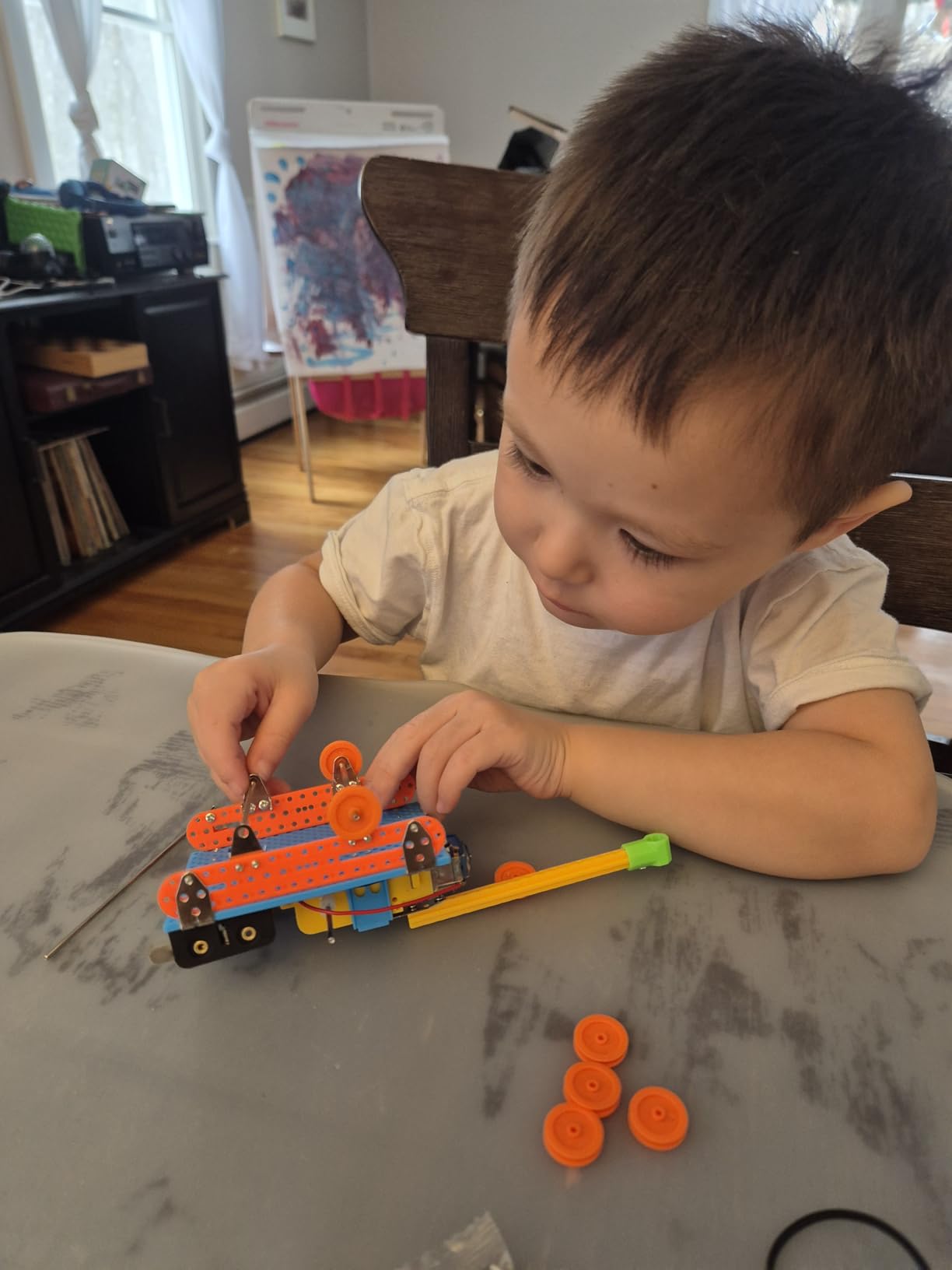
The trade-off is that completing all six projects means disassembling earlier builds. If you want all six to stay built, plan to buy additional sets.
The materials are odorless ABS plastic and engineered wood, with a mini screwdriver and detailed instruction manuals included.
STEM learning scope
Unlike single-focus kits, BeAndge gives kids exposure to multiple engineering topics in one box. The bubble machine teaches pneumatics, the reptile robot teaches motor control, the fiber lamp teaches optics, and the buzzer game teaches circuit completion.
Most parents buy this kit for science fair support. The variety of builds gives kids options to showcase.
Age fit and supervision needs
Designed for 6 to 14 years. Younger kids need help with tiny screws and motor wiring. Older kids can complete builds independently. Adult presence is recommended for the safety of small parts.
The kit requires AA batteries and bubble solution, both sold separately. Plan a quick store run before starting.
How to Choose the Best STEM Toys for Your Child?
The best STEM toys are the ones your child will return to without nagging. Before you buy, match the toy to your child’s developmental stage and interests. A 4-year-old who loves vehicles will not engage with a chemistry kit, no matter how educational it claims to be. A 12-year-old who dreams of coding will find a marble run beneath them.
Start by considering age. The labels on the box are useful starting points but not gospel. My testing showed most kids can handle the lower end of the next age bracket with some help, and most kids get bored by the upper end of their own range quickly.
Think about supervision honestly. Some toys say “ages 8 plus” but require patient adult help for half the builds. The Snap Circuits Jr. kit mostly works alone, while the BeAndge robotics set needs an adult nearby for younger kids. Be realistic about the time you have.
Screen-free versus screen-based toys
Screen-free toys still dominate parent search volume, and for good reason. A toy that requires a tablet often becomes a single-use item once the tablet moves on. Physical kits last for years and across siblings.
If your child already has too much screen time, choose among the building sets, science kits, and mechanical toys in our guide. They pull kids away from the tablet by being genuinely engaging.
Replay value and durability
The single biggest difference between a hit and a flop is replay. Kits with consumables (like science experiments) run out. Kits with reusable pieces (like Brain Flakes, LEGO Technic, or Snap Circuits) return value for years. Multipacks of parts, storage jars, and clear instruction manuals all increase long-term value.
Read recent reviews before you buy. STEM toys change over time as manufacturers improve or cut corners. The reviews in our guide reflect the current versions available in 2026.
Budget tiers and value
The best STEM toys cost between $15 and $50. Below $15, you often sacrifice durability or substance. Above $50, you are paying for branding more than learning. Most of the kits in this guide fall in that sweet spot.
For a kid who already loves STEM, a single high-quality kit beats three cheap ones. Quality toys stay on shelves, while cheap ones end up at the bottom of bins.
Mix and match across categories
The strongest STEM toy collections span categories. Pair a building toy with a science kit, or a coding toy with a logic puzzle. The variety mirrors how real engineering and science work: across disciplines, not in silos.
For under $100, you can build a complete starter kit using two or three products from our list. That combination will keep a curious kid engaged for months.
Frequently Asked Questions About the Best STEM Toys
What are the best STEM toys for kids?
The best STEM toys mix real learning with replay value. Top picks across categories include Snap Circuits Jr. for electronics (ages 8+), Brain Flakes for open-ended building (ages 3+), the National Geographic Magic Chemistry Set for hands-on science (ages 8+), the Klutz Lego Gear Bots kit for engineering (ages 8-12), and the Smartivity Hydraulic Launcher for applied mechanics (ages 6-14). The right pick depends on your child’s age and interests, but toys that reward returning to them week after week are the strongest long-term choices.
Are STEM toys actually worth it?
Yes, the best STEM toys are worth the investment when they balance education with fun. Research shows hands-on building and problem-solving activities improve spatial reasoning, persistence, and early math performance. The key is choosing toys that kids voluntarily return to. Toys that sit on shelves after one weekend defeat the purpose no matter how educational they claim to be. Look for open-ended designs, age-appropriate challenge levels, and durable construction.
What age should kids start using STEM toys?
Most kids benefit from STEM toys starting around age 3 with options like Brain Flakes, Magna-Tiles, and basic building sets. By age 5, kids can handle simple electronics kits like the Snap Circuits Beginner SCB-20. Ages 8 to 12 are the sweet spot for full STEM kits, including electronics, robotics, and chemistry. Teens benefit most from advanced robotics, coding platforms, and engineering kits designed for older builders.
What are good STEM toys for 5 year olds?
For 5 year olds, the best STEM toys include the Snap Circuits Beginner SCB-20 kit (21 projects, extra childproofing), Brain Flakes (500 interlocking discs), and Learning Resources Brainometry (3D puzzles with challenge cards). Magna-Tiles and Plus-Plus building sets also work well at this age. Focus on toys with chunky pieces, clear instructions, and projects that finish in 15 to 30 minutes to match short attention spans.
How do STEM toys help children learn?
STEM toys help children learn by turning abstract concepts into hands-on experiences. Building sets develop spatial reasoning and engineering thinking. Electronics kits like Snap Circuits teach circuits and cause-and-effect. Science kits teach the scientific method through experiments kids run themselves. Coding and robotics toys introduce programming logic. Across categories, the best STEM toys develop problem-solving, persistence through trial-and-error, and the confidence to tackle open-ended challenges.
Final Verdict on the Best STEM Toys for 2026
After months of testing, our top recommendation for the best STEM toys is the Snap Circuits Jr. SC-100 Electronics Exploration Kit. It covers the widest age range, packs in 100+ projects, and teaches real electrical engineering without feeling like a textbook. For younger kids, the Snap Circuits Beginner SCB-20 is the right entry point. For pure replay value, Brain Flakes is hard to beat at any age.
If you are shopping for a single gift, start with one kit your child already shows interest in. A young builder needs Brain Flakes. A future scientist needs the National Geographic Earth Science Kit. A tinkerer needs the Solar Robot kit. A curious kid of any age will love the Magic Chemistry Set.
The best STEM toys earn their place by pulling kids back to them week after week. Pick one from our guide and watch what happens.