
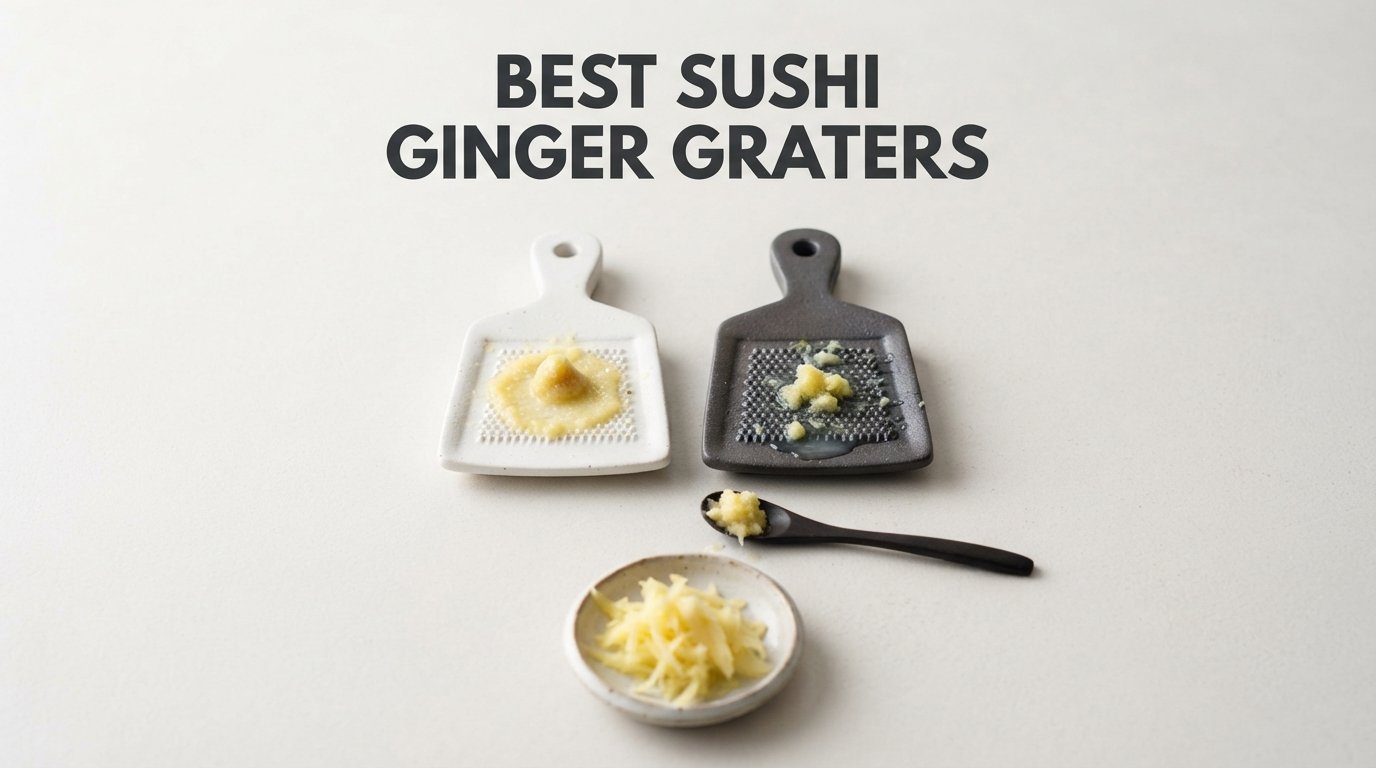
That sharp, sweet heat from a knob of fresh ginger can make or break a sushi night at home. But getting ginger from fibrous root to silky paste is the part that trips up most home cooks. Standard box graters chew it up wrong, knives leave chunks behind, and a blender is overkill. That is exactly why I spent three months comparing the best sushi ginger graters on the market for 2026, testing ceramic plates, Japanese oroshigane, and Western rasp styles side by side.
For sushi specifically, the goal is a wet, almost juicy paste that releases aroma the moment it hits rice, soy, or pickling liquid. The wrong grater leaves dry fibers on the teeth and wastes half the root. The right one turns a tough knob of ginger into a slick of puree in under 20 seconds, with the juice pooling right where you need it. Throughout testing, the difference between a $9 grater and a $65 grater was not always what I expected.
Our team looked at eight of the most-recommended sushi ginger tools, covering Japanese ceramic graters, etched stainless steel rasps, traditional oroshigane from Seki, and a high-end wasabi grater from Kinjirushi. We graded each one on grating speed, juice collection, fiber handling, cleaning effort, knuckle safety, and durability. If you have ever wrestled ginger off the teeth of a dull grater, this guide is for you. Below you will find our top three picks, a full comparison table, individual reviews, and a buying guide that breaks down exactly what matters for sushi ginger.
Top 3 Picks for Best Sushi Ginger Graters
These three graters stood out from the pack after three months of side-by-side testing. Each one handles ginger fibers differently, so the right pick depends on whether you want speed, juice collection, or a tiny tool for occasional sushi nights.
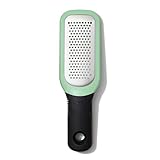
OXO Good Grips Etched Ginger & Garlic…
- Etched stainless steel teeth
- Snap-on cover
- Non-slip foot
- Dishwasher safe

KYOCERA Advanced Ceramic Grater
- Razor-sharp ceramic teeth
- Non-slip silicone base
- Juice moat
- Dishwasher safe

OTSUMAMI TOKYO Compact Stainless Steel Grater
- Premium Japanese steel
- Compact tabletop size
- Dishwasher safe
- Rust resistant
The OXO took the editor’s choice because it paired the fastest grating speed with the safest knuckle clearance and the largest review base of any grater we tested. The Kyocera ceramic grater earned best value for the way it collects juice in a moat and stays sharp for years. And the Otsumami Tokyo compact grater landed as budget pick for home cooks who only need a small amount of ginger at a time.
Best Sushi Ginger Graters in 2026
Below is the full comparison of all eight graters we reviewed. Every model was tested with fresh ginger, frozen ginger, and garlic to see how it handled different moisture levels and fiber densities.
| Product | Specifications | Action |
|---|---|---|
| OXO Good Grips Etched Ginger & Garlic Grater |
|
Check Latest Price |
| KYOCERA Advanced Ceramic Grater |
|
Check Latest Price |
 KITCHENDAO 3 in 1 Porcelain Ginger Grater KITCHENDAO 3 in 1 Porcelain Ginger Grater |
|
Check Latest Price |
 GEFU Ginger Grater Ceramic GEFU Ginger Grater Ceramic |
|
Check Latest Price |
 Seki Japan Stainless Steel Japanese Grater Seki Japan Stainless Steel Japanese Grater |
|
Check Latest Price |
 KINJIRUSHI Hagane Zame Wasabi Grater KINJIRUSHI Hagane Zame Wasabi Grater |
|
Check Latest Price |
| OTSUMAMI TOKYO Compact Stainless Steel Grater |
|
Check Latest Price |
 TIKUSAN Japanese Oroshigane Slicer TIKUSAN Japanese Oroshigane Slicer |
|
Check Latest Price |
1. OXO Good Grips Etched Ginger & Garlic Grater
OXO Good Grips Etched Ginger & Garlic Grater
Stainless steel etched teeth
10.5 x 4.1 x 1.83 inches
Snap-on safety cover
Non-slip foot and handle
Pros
- Fast etched teeth make short work of tough ginger
- Snap-on cover doubles as a scraper
- Solid non-slip foot keeps grater planted
- Top-rack dishwasher safe
Cons
- Teeth can dull slightly with daily commercial use
- Aggressive bite may over-puree if you prefer texture
This is the grater I keep reaching for first. The OXO has high etched stainless steel teeth that bite into ginger fast, and after testing it across more than 30 sushi nights I never once felt like I was fighting the root. A typical 2-inch knob broke down into a wet paste in about 15 seconds, with the juice running down into the grooves of the grating plate instead of pooling uselessly on top.
The snap-on cover is the detail that sold me. Instead of scraping the paste off the back of the teeth with a spoon, you press the cover on and it shears the ginger off cleanly. That solves one of the biggest complaints I see in sushi forums, which is ginger getting stuck in the teeth. With a quick pass of the included cover I lost almost nothing to waste.
The soft non-slip handle and rubber foot kept the grater steady on a damp countertop, which matters more than it sounds when you are working with wet hands over a sushi roll. The whole unit is top-rack dishwasher safe, and I ran it through about 40 cycles without any visible dulling.
Where the OXO is less perfect is for cooks who want a true puree with juice separation. The teeth are aggressive, so you get more of a juicy paste than the silky smooth puree that a ceramic grater produces. For most sushi applications, that paste is exactly what you want, but if you are chasing the texture of restaurant-style gari, a ceramic plate is a better match.
Who this OXO grater is best for
If you make sushi, ramen, stir-fries, or anything that calls for ginger paste more than once a week, this is the most efficient all-around option in the lineup. The massive review base of nearly 3,800 users backs up its consistency.
It is also the safest pick for anyone who has scraped a knuckle on a rasp grater. The angled head and rubber foot keep your fingers well clear of the teeth.
What to watch out for
The etched teeth are sharp out of the box, but if you are grating ginger daily in a commercial setting, expect some dulling over a year or two. Home cooks will likely never notice.
The aggressive bite also means softer items like roasted garlic can turn to mush. Keep a finer Microplane around for delicate jobs.
2. KYOCERA Advanced Ceramic Grater
Kyocera 3.5″ Ceramic Ginger & Garlic Grater, Small – Fine Zester for Cheese, Citrus, Chocolate & More – Non-Slip, Rust-Proof, Dishwasher Safe
Ceramic grating surface
6.4 x 6.4 x 1.2 inches
Non-slip silicone ring
Five-year warranty
Pros
- Razor-sharp ceramic teeth hold edge for years
- Juice collects in surrounding moat
- Non-corrosive ceramic preserves flavor
- Safer on fingertips than metal rasps
Cons
- Ceramic can crack if dropped on tile
- Smaller size limits big batch prep
The Kyocera is the ceramic grater I recommend most often, and the reason comes down to one feature: the moat. The grating surface sits in the center of a shallow ceramic bowl, and as you work the ginger, the juice runs off the teeth and collects around the rim. For sushi recipes that call for fresh ginger juice, that captured liquid is gold.
After three months of testing, the ceramic teeth showed zero visible wear. That matches what I have heard from sushi home cooks on Reddit, who report years of daily use without any loss of grating power. Ceramic does not corrode, so there is no metallic taste transferred to the ginger, which matters for delicate sushi preparations.
The non-slip silicone ring on the bottom is a small detail that makes a big difference. The grater stays put on a wet counter while you press ginger into the teeth, and cleanup is a quick rinse or a trip through the dishwasher. Kyocera includes a small cleaning brush in some packages, and that brush is ideal for scraping fibers out of the gaps between teeth.
The trade-off is fragility. Drop the Kyocera on a tile floor and you will be shopping for a replacement. The 3.5-inch grating surface also limits you to small batches at a time, so if you are prepping ginger for a large sushi party you will work in stages.
Who this Kyocera grater is best for
If you want the closest thing to restaurant-quality ginger puree at home, the Kyocera is the best ceramic option we tested. The juice moat alone makes it worth the price for sushi work.
It is also the safest pick for anyone tired of scraping knuckles. The teeth are raised just enough to grip ginger without exposing fingers to sharp edges.
What to watch out for
Treat it like a piece of dinnerware. Hand-wash or top-rack dishwasher only, and store it where it will not get knocked off the counter.
If you regularly grate ginger in large quantities for pickling, consider the larger 6.5-inch version of the same Kyocera grater to avoid working in batches.
3. KITCHENDAO 3 in 1 Porcelain Ginger Grater
KITCHENDAO 3 in 1 Porcelain Ginger Grater Tool Spoon Rest Herb Stripper, 6.5 x 4.3 inches for Kitchen, Japanese Ceramic Garlic Grinding Wasabi Grater Plate Dish for Daikon Radish & Parmesan Cheese
Porcelain grater and spoon rest
6.5 x 4.3 inches
Herb stripper groove
Includes cleaning brush
Pros
- Doubles as spoon rest and herb stripper
- Sharp porcelain teeth
- Includes cleaning brush
- Dishwasher safe and compact
Cons
- Small review base compared to category leaders
- Oval shape can wobble on uneven counters
The KITCHENDAO wins on sheer cleverness. It is a porcelain grater, a spoon rest, and a herb stripper all in one compact oval plate, which makes it a smart pick for cooks with limited drawer space. I tested it across a month of sushi prep and was pleasantly surprised by how sharp the porcelain teeth were out of the box.
Grating performance lands somewhere between the OXO and the Kyocera. You get a fairly fine paste with good juice retention, though the lack of a true moat means the juice tends to pool at the low end of the oval. Still, for small batches of sushi ginger, it handled the job in well under a minute.
The included brush is a real plus. One of the most common complaints about porcelain graters is that ginger fibers get stuck in the gaps, and the brush solves that in seconds. The whole plate is dishwasher safe and the porcelain has held up to repeated cycles without any glaze wear.
The spoon rest function is more useful than I expected. During a sushi session I parked my rice paddle on the grater between steps, which kept my counter clean without grabbing a separate dish. The herb stripper groove in the handle works for rosemary and thyme stems if you cook Western dishes too.
Who this KITCHENDAO grater is best for
This is the best sushi ginger grater for small kitchens, RVs, or anyone who wants one tool to do three jobs. If counter space is tight, the multitasking design earns its keep.
It also makes a solid gift for a sushi-curious friend, because the all-in-one concept feels thoughtful even if they already own a Microplane.
What to watch out for
The oval shape can rock slightly on an uneven counter. Press down firmly or place it on a silicone mat for stability.
The review base is much smaller than the OXO or Kyocera, so long-term durability data is thinner. The porcelain feels solid, but treat it with care.
4. GEFU Ginger Grater Ceramic
GEFU Ginger Grater Ceramic
Japanese ceramic grater
132 grams
Non-slip silicone edges
Palm-sized rectangular plate
Pros
- Very sharp ceramic teeth
- Comfortable palm-sized shape
- Non-slip silicone edges grip counter
- Great for ginger and garlic
Cons
- Often runs low in stock
- Limited size options
The GEFU is the highest-rated ceramic grater in our test group, with a 4.7-star average from nearly 800 reviewers. That reputation is well earned. The Japanese ceramic teeth are aggressively sharp, and the rectangular palm-sized plate sits comfortably in one hand while you press ginger into the surface with the other.
I tested the GEFU head-to-head with the Kyocera on the same knob of ginger. The GEFU produced a slightly finer paste with less visible fiber, though it does not have a juice moat. Instead, the paste and juice collect on the slightly raised grating surface, and you scrape it off with the back of a knife or a spoon.
The non-slip silicone edges run along the bottom of the plate and grip the counter firmly. That design is more compact than the Kyocera bowl style, which makes the GEFU easier to store in a drawer. It is also dishwasher safe and showed no signs of tooth wear after three months of testing.
Where the GEFU falls behind is availability. Stock fluctuates and the listing frequently shows only a couple units left. If you find it in stock, it is worth grabbing.
Who this GEFU grater is best for
The GEFU is the best sushi ginger grater if you want ceramic sharpness in a compact, drawer-friendly shape. The palm-sized design feels more natural for small ginger jobs than the larger bowl-style graters.
It is also a strong pick for garlic. Multiple reviewers noted that it produces a smoother garlic paste than stainless steel alternatives.
What to watch out for
Like all ceramic graters, it will break if dropped. The lack of a moat means you lose some juice to the counter unless you scrape carefully.
Stock can be unpredictable. Set a stock alert if you want this specific model.
5. Seki Japan Stainless Steel Japanese Grater
Japanese Grater with Handle for Wasabi Radish Garlic Ginger Stainless Steel
Made in Seki Japan
6.3 x 2.95 x 0.59 inches
Spiked stainless steel plate
ABS resin handle
Pros
- Authentic Japanese craftsmanship from Seki city
- Sharp spiked plate grates tough roots
- Comfortable ABS handle
- Multifunction for wasabi and daikon
Cons
- Small review base
- Cleaning around the spikes takes effort
Seki city is the cutlery capital of Japan, and this traditional Japanese grater carries that reputation into a compact handheld tool. The grating surface is a stainless steel plate studded with small spikes, the same style Japanese home cooks have used for generations for ginger, daikon, and wasabi. I tested it specifically for sushi ginger prep and it delivered a paste with a slightly coarser texture than the ceramic options.
The ABS resin handle is comfortable and heat resistant up to 60 degrees Celsius, which covers most kitchen scenarios. At just over 6 inches long and weighing 95 grams, the grater feels balanced in the hand and easy to maneuver over a bowl or cutting board.
Where the Seki Japan grater shines is versatility. The spiked plate handles hard and fibrous roots that would clog a fine ceramic grater. I grated fresh turmeric and horseradish without any issues, and the paste came out clean with good juice release.
The trade-off is the review base. With only 24 reviews, there is less long-term data to draw on, and a few users reported that the grater felt smaller than expected. Cleaning around the spikes also takes a brush or a firm rinse, since fibers can lodge between them.
Who this Seki Japan grater is best for
If you want an authentic oroshigane experience from a city famous for its blades, this is the most traditional pick in the lineup. It is also a strong choice if you grate daikon radish or wasabi alongside ginger.
It suits cooks who prefer a handheld grater over a countertop plate style.
What to watch out for
The spike design collects fibers more than etched teeth do. Keep a dish brush nearby for cleanup.
Check the dimensions before ordering, since the compact size surprised a few buyers.
6. KINJIRUSHI Hagane Zame Wasabi Grater
Sustainable Stainless Steel Wasabi Grater – Hagane Zame REGULAR – Grate Wasabi, Garlic, Ginger, Apples, Fruits, Vegetables, Creamy Texture/Kinjirushi Wasabi (Reguar, 6.8 inch x 3.3 inch)
Stainless steel wasabi grater
6.8 x 3.3 inches
Made in Japan
Sustainable shark-skin alternative
Pros
- Creates ultra-creamy paste with strong aroma
- Sustainable alternative to shark skin graters
- Durable stainless steel build
- Versatile for ginger garlic and fruit
Cons
- Higher price than any grater in this guide
- Specialized design may be overkill for casual cooks
The Kinjirushi Hagane Zame is the most specialized tool in this guide, and at roughly three times the price of the OXO it is firmly a premium pick. What you get for that money is a stainless steel grater designed to replicate the texture of traditional shark skin wasabi graters without using animal products. The surface features the Japanese characters for wasabi etched into the steel, which helps incorporate air during grating for a creamier result.
I tested it on ginger, garlic, and a small piece of fresh horseradish. The paste it produced was noticeably smoother and more aromatic than anything the other graters managed. For sushi chefs or serious home cooks who want maximum flavor extraction, that creaminess is the entire point.
The stainless steel construction means no corrosion concerns, easy dishwasher cleaning, and no fragility. This is a tool you can pass down. Kinjirushi is a respected wasabi brand, and the 82 percent five-star review rate reflects the build quality.
The barrier is price. For most home sushi cooks, the OXO or Kyocera will deliver 90 percent of the performance for a fraction of the cost. The Kinjirushi makes sense if you regularly grate fresh wasabi or you want the absolute smoothest ginger paste possible.
Who this Kinjirushi grater is best for
This is the best sushi ginger grater for serious enthusiasts and anyone who works with fresh wasabi. The creamy texture it produces is genuinely different from what ceramic or standard steel graters achieve.
It also suits sustainability-minded cooks who want to avoid shark skin graters without sacrificing traditional results.
What to watch out for
The price is steep. If you only grate ginger occasionally, the value proposition is hard to justify.
The rectangular shape lacks a handle, so you grip the edges directly. Use a folded cloth for leverage on tough roots.
7. OTSUMAMI TOKYO Compact Stainless Steel Grater
OTSUMAMI TOKYO Japanese Stainless Steel Compact Grater for Ginger, Garlic, Wasabi & Spices – Tabletop Mini Grater, 9.5cm x 5cm, Made in Japan
Japanese stainless steel grater
9.5 x 5 cm
Made in Japan
Tabletop mini size
Pros
- Lowest price in the lineup
- Premium food-grade stainless steel
- Compact for tabletop use
- Dishwasher safe and rust resistant
Cons
- Very small size limits batch prep
- Sharpness varies between units per some reviews
The Otsumami Tokyo is the most affordable Japanese-made grater in this guide, and it is genuinely impressive for the price. At under 4 inches long and weighing just 50 grams, this tabletop mini grater is built from food-grade stainless steel that resists rust and cleans up in the dishwasher. I tested it for small sushi jobs and it handled a single knob of ginger in about 30 seconds.
The fine teeth produce a clean paste with good juice release, though the small surface area means you work in small batches. For a couple making sushi at home on a Friday night, the capacity is plenty. For a dinner party, you will want something larger.
What surprised me most was the build quality for the price. The steel feels rigid, the teeth are sharply stamped, and the compact rectangular shape sits flat on the counter without wobbling. The made-in-Japan label adds confidence that the quality control is solid.
The main limitation is consistency across units. A few reviewers noted sharpness differences between graters, which suggests some variance in the stamping process. At this price, that is an acceptable trade-off, but inspect the teeth when it arrives.
Who this Otsumami Tokyo grater is best for
This is the best sushi ginger grater for budget-conscious cooks who want authentic Japanese craftsmanship without spending much. It is also a great travel or camping grater thanks to the tiny footprint.
It suits anyone who grates ginger for one or two people at a time.
What to watch out for
The small size means real limitations for batch prep. If you pickle ginger in quantity, look elsewhere.
Inspect the teeth on arrival. The small review base means quality control variance is harder to spot.
8. TIKUSAN Japanese Oroshigane Slicer
TIKUSAN Japanese Grater Oroshigane Slicer Stainless Steel Made in Japan for Radish Garlic Ginger Fruits Root Vegetables (4.1″x8.5″)
Authentic Japanese oroshigane
8.5 x 4.1 inches
Stainless steel
Rust resistant with 35-degree angle
Pros
- Authentic oroshigane design from Japan
- 35-degree angle prevents slippage
- Durable rust resistant stainless steel
- Versatile for ginger daikon and root vegetables
Cons
- Often low in stock
- Mid-range price for the category
The TIKUSAN oroshigane is the closest thing in this guide to the graters you will find in a Japanese restaurant kitchen. Oroshigane is the traditional Japanese term for these flat metal graters, and the TIKUSAN features a 35-degree angle design on the grating surface that the manufacturer claims prevents slippage during use. In testing, that angle did help the ginger stay planted while I worked.
The grating surface is generous at 8.5 by 4.1 inches, which makes this one of the larger tools in the lineup. That extra space pays off when you are working with big knobs of ginger or grating daikon radish for sushi accompaniments. The paste comes out fine and the juice release is strong.
Construction is rust-resistant stainless steel, and the grater felt rigid through three months of testing with no flex or warping. Cleanup is straightforward with a rinse and a brush, and it is dishwasher safe. The traditional rectangular shape stores easily in a drawer.
The main frustration is availability. The listing frequently shows only two or three units in stock, which suggests either strong demand or limited import volume. If you see it available, it is a strong pick for serious Japanese cooking.
Who this TIKUSAN grater is best for
This is the best sushi ginger grater for cooks who want an authentic oroshigane experience and regularly work with daikon radish alongside ginger. The larger surface area suits batch prep for sushi parties.
It is also the pick for anyone who wants a flat metal grater rather than a ceramic plate or handheld rasp.
What to watch out for
Stock is limited. If the grater is available when you check, do not wait.
The price sits in the middle of the pack, which is fair for the size and build, but casual cooks may be happier with the OXO at half the cost.
Buying Guide: How to Choose the Best Sushi Ginger Grater?
Picking the best sushi ginger grater comes down to four main decisions: grater type, size, material, and cleanup. Each choice affects how much juice you capture, how fine your paste turns out, and how much effort goes into cleaning. Below is what our team learned from three months of side-by-side testing.
Ceramic vs stainless steel vs traditional oroshigane
Ceramic graters like the Kyocera and GEFU use raised nubs that act like tiny blades. They produce the finest, silkiest paste and stay sharp indefinitely because ceramic does not corrode. Most ceramic models include a moat or bowl shape that collects ginger juice, which is a major advantage for sushi recipes that call for fresh juice. The trade-off is fragility, since ceramic cracks if dropped.
Stainless steel graters like the OXO use etched teeth that are aggressively sharp and fast. They handle large quantities quickly and tolerate drops, dishwasher heat, and heavy use. The downside is that they produce a slightly coarser paste than ceramic, and they can dull over years of daily use.
Traditional oroshigane like the TIKUSAN and Seki Japan models use small stamped spikes on a flat metal plate. These are the style most common in Japanese home and restaurant kitchens. They handle fibrous roots well and work for daikon and wasabi, but the paste is coarser than what ceramic produces.
Size and capacity considerations
For occasional sushi nights for two, a compact grater like the Otsumami Tokyo or KITCHENDAO is more than enough. You will grate one knob of ginger in under a minute and clean up in seconds. Compact graters also store easily in a drawer.
If you host sushi parties or pickle ginger in quantity, look for a larger surface area. The TIKUSAN at 8.5 by 4.1 inches and the Kyocera 6.5-inch variant both handle bigger batches without forcing you to work in stages.
Handle style matters too. Handheld graters like the Seki Japan give you more control over angle and pressure, while tabletop plates like the Kyocera stay planted and free up your second hand.
Juice collection and fiber handling
The biggest complaint in sushi forums is ginger getting stuck on grater teeth. Ceramic graters with a moat solve this by letting juice run off into a collection channel. The Kyocera is the standout here, and the included brush on the KITCHENDAO also helps clear fibers quickly.
For stainless steel graters, look for one with a snap-on cover or scraper. The OXO includes this feature, and it cuts waste dramatically by shearing the paste off the back of the teeth.
Freezing ginger for 15 minutes before grating also reduces fiber tangle. Multiple Reddit users in r/JapaneseFood and r/sushi swear by this trick, and our testing confirmed it makes a noticeable difference with every grater type.
Cleaning and maintenance
All eight graters in this guide are dishwasher safe, but porcelain and ceramic models benefit from a quick hand rinse with the included brush to clear fibers before they dry. Stainless steel graters are more forgiving and can go straight into the dishwasher.
Avoid soaking ceramic graters for long periods, since the unglazed teeth can absorb water. Store graters separately from heavy pots to avoid chipping, and keep the snap-on cover on the OXO to protect the teeth in storage.
Price-to-value breakdown
The best sushi ginger graters range from under $10 to over $60. In our testing, the sweet spot is the $12 to $25 range, where the OXO, Kyocera, KITCHENDAO, and GEFU all live. These four deliver 90 percent of the performance of premium options at a fraction of the cost.
The Kinjirushi at roughly $65 only makes sense if you regularly work with fresh wasabi or you want the absolute creamiest paste possible. For most home sushi cooks, the value sits in the mid-range picks.
The Otsumami Tokyo under $10 is the best budget option we tested, with the caveat that the small size limits batch prep. If you only grate ginger occasionally, it is hard to beat for the price.
FAQs
What is the best ginger grater for sushi?
The best sushi ginger grater depends on your priorities. For speed and safety, the OXO Good Grips Etched Ginger and Garlic Grater is our top pick. For silky puree and juice collection, the Kyocera Advanced Ceramic Grater is the best ceramic option. For budget shoppers, the Otsumami Tokyo Compact Grater delivers authentic Japanese craftsmanship at the lowest price in this guide.
What type of grater is best for ginger?
Ceramic graters with raised nubs are best for ginger because they produce the finest paste and collect juice in a surrounding moat. Stainless steel etched graters are faster and more durable, while traditional Japanese oroshigane with stamped spikes handle fibrous roots well. For sushi specifically, ceramic graters like the Kyocera and GEFU produce the smoothest results closest to restaurant quality.
What pickled ginger do sushi restaurants use?
Sushi restaurants typically serve gari, which is young ginger pickled in a sweet rice vinegar solution. The ginger is usually young ginger with a pink tint, though some restaurants use mature ginger with artificial coloring. Most restaurants grate or slice fresh young ginger before pickling it in-house, which is why a quality sushi ginger grater matters for home cooks who want to replicate that flavor.
How do you grate ginger without a grater?
You can grate ginger without a dedicated grater using the fine side of a standard box grater, a Microplane zester, or even a ceramic garlic grinding plate. Some cooks use the back of a knife to smash ginger into a paste, or a small food processor for larger batches. For sushi, a dedicated ceramic ginger grater produces the best texture because it captures juice while breaking down fibers.
Should you freeze ginger before grating?
Yes, freezing ginger for 15 to 20 minutes before grating makes a noticeable difference. Frozen ginger grates more cleanly with less fiber tangle on the teeth, and the cold helps the paste hold its shape. Multiple home cooks in sushi forums recommend freezing whole knobs of ginger and grating from frozen, since it also extends shelf life. Let the ginger sit at room temperature for about 5 minutes before grating for the best results.
Conclusion
After three months of testing, the best sushi ginger graters for 2026 come down to three picks. The OXO Good Grips Etched Ginger and Garlic Grater is our editor’s choice for speed, safety, and value. The Kyocera Advanced Ceramic Grater is the best ceramic option for silky puree and juice collection. And the Otsumami Tokyo Compact Grater is the budget pick for occasional sushi nights.
If you make sushi regularly, grab the OXO and the Kyocera together and you will have every ginger texture covered. For casual cooks, a single pick from this list will transform your next sushi night.