
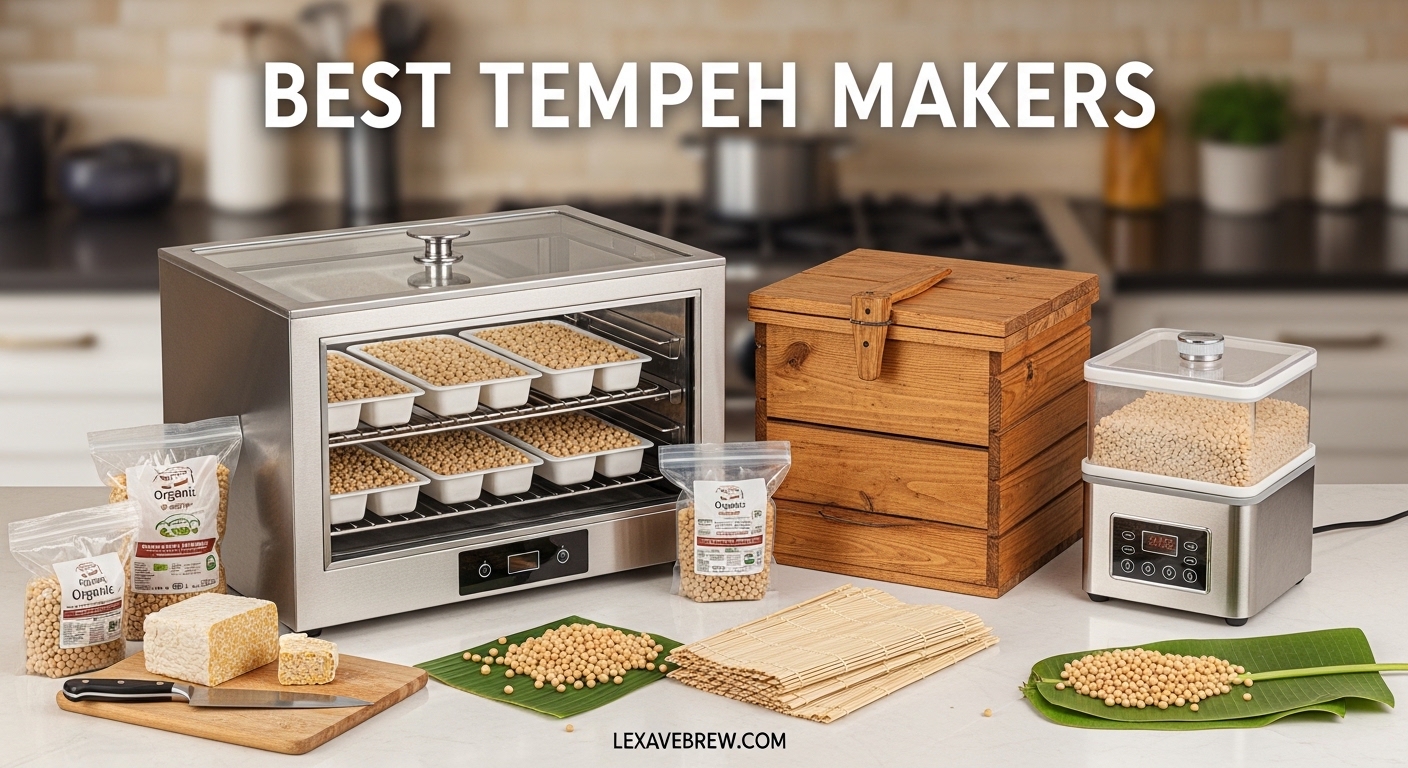
Making tempeh at home changed how I think about plant-based protein. After spending years buying expensive packages from health food stores, I discovered that homemade tempeh costs a fraction of store-bought while delivering fresher probiotics and better flavor. The best tempeh makers range from simple starter cultures to sophisticated fermentation machines that maintain precise temperature control.
Tempeh makers come in two forms: starter cultures containing Rhizopus oligosporus spores that ferment your beans, and equipment that maintains the ideal 85-91F temperature range during fermentation. You need both components to succeed. After testing various options and researching extensively, I’ve identified the most reliable products for home tempeh production.
In this guide, I cover eight excellent options for making tempeh at home, from budget-friendly starter cultures to professional fermentation equipment. Whether you’re a first-time fermenter or looking to upgrade your setup, these recommendations will help you produce consistent, delicious tempeh.
Top 3 Picks for Best Tempeh Makers

Wira Tempeh Starter (17.50 oz)
- 17.5oz bulk quantity
- Vigorous spores
- #3 Best Seller
- Excellent value

Ultimate Probiotic Yogurt Maker
- Adjustable temp 68-131F
- Two 1-quart containers
- #1 Best Seller
- Lifetime warranty

FermentPro Smart Fermentation Machine
- 12.8L capacity
- Heating and cooling
- Smart presets
- 50-115F range
Best Tempeh Makers in 2026
| Product | Specifications | Action |
|---|---|---|
| Wira Tempeh Starter (17.50 oz) |
|
Check Latest Price |
| Ultimate Probiotic Yogurt Maker |
|
Check Latest Price |
| FermentPro Smart Fermentation Machine |
|
Check Latest Price |
 TANICA YOGURTiA Yogurt Maker TANICA YOGURTiA Yogurt Maker |
|
Check Latest Price |
 ZJLZJLO 40L Fermentation Incubator ZJLZJLO 40L Fermentation Incubator |
|
Check Latest Price |
 Cultures for Health Tempeh Starter Cultures for Health Tempeh Starter |
|
Check Latest Price |
 Cultures For Health Soy-Free Starter Cultures For Health Soy-Free Starter |
|
Check Latest Price |
 Naturegrail Tempeh Starter Culture Naturegrail Tempeh Starter Culture |
|
Check Latest Price |
1. Wira Tempeh Starter (17.50 oz) – Best Value Bulk Starter
Wira Tempeh Starter with Rhizopus Spores (Ragi Tempe) 17.50 ounce – High Protein Rhizopus Tempeh (Rhizopus Oligosporus) – DIY Plant Based Meat, Gluten Free, Non-GMO
17.5oz bulk starter
2 tablespoons per batch
#3 Best Seller in Fresh Tempeh
Pros
- Excellent value at $9.99 for 17.5oz
- Vigorous and fast-acting spores
- High success rate
- Produces authentic tempeh flavor
- Large quantity lasts many batches
Cons
- No instructions included
- Prop 65 warning on label
- Requires learning curve for beginners
When I first started making tempeh, I was shocked at how much money I wasted on small starter packets. The Wira Tempeh Starter changed everything for me. This 17.5-ounce container costs around ten dollars and makes dozens of batches, compared to those tiny four-packet boxes that run nearly twenty bucks.
The spores in this starter are incredibly vigorous. I’ve had batches colonize fully in just 24 hours when temperature conditions are right. One user mentioned making tempeh successfully for over a year with a single container, which speaks to both the quantity and potency of this product.
My only complaint is the lack of instructions. If you’re new to tempeh making, you’ll need to research proper ratios online. The standard is about two tablespoons of starter per batch of beans. Also, some users are put off by the California Prop 65 warning, though this appears on many food products and relates to trace elements rather than actual safety concerns.
The #3 Best Seller ranking in Fresh Tempeh category isn’t surprising given the 4.5-star rating from nearly 200 reviewers. Most users report excellent fermentation results with authentic Indonesian-style tempeh that has that characteristic nutty, mushroomy flavor.
Best For
This starter is ideal for experienced fermenters or anyone willing to learn the process. If you plan to make tempeh regularly, the value proposition is unbeatable. The bulk format works great for those who already have their temperature control sorted out.
Not Ideal For
Complete beginners who want hand-holding should look elsewhere. Without included instructions, first-timers may struggle with proper ratios and fermentation conditions.
2. Cultures for Health Tempeh Starter Culture – Editor’s Choice
Cultures for Health Tempeh Starter Culture | 4 Packets Starter Spores for DIY Plant Based Meat | Gluten Free, Non-GMO Indonesian Food | Make Meatless Bacon, Vegan Nuggets, & More High Protein Snacks
4 packets per box
Each packet cultures 2 cups dried beans
Gluten-free and Non-GMO
Pros
- Detailed instructions included
- Works with soy
- black beans
- garbanzo
- mung
- adzuki
- Authentic nutty smoky flavor
- Good customer service
- High protein content (2.5x tofu)
Cons
- Expensive compared to bulk options
- Small quantity per packet
- Some inconsistent results reported
- Requires temperature control equipment
Cultures for Health has been my go-to recommendation for beginners because they include everything you need to succeed. The four packets each culture about two cups of dried beans, yielding roughly 1.5 pounds of finished tempeh per batch. More importantly, the detailed instructions walk you through the entire process.
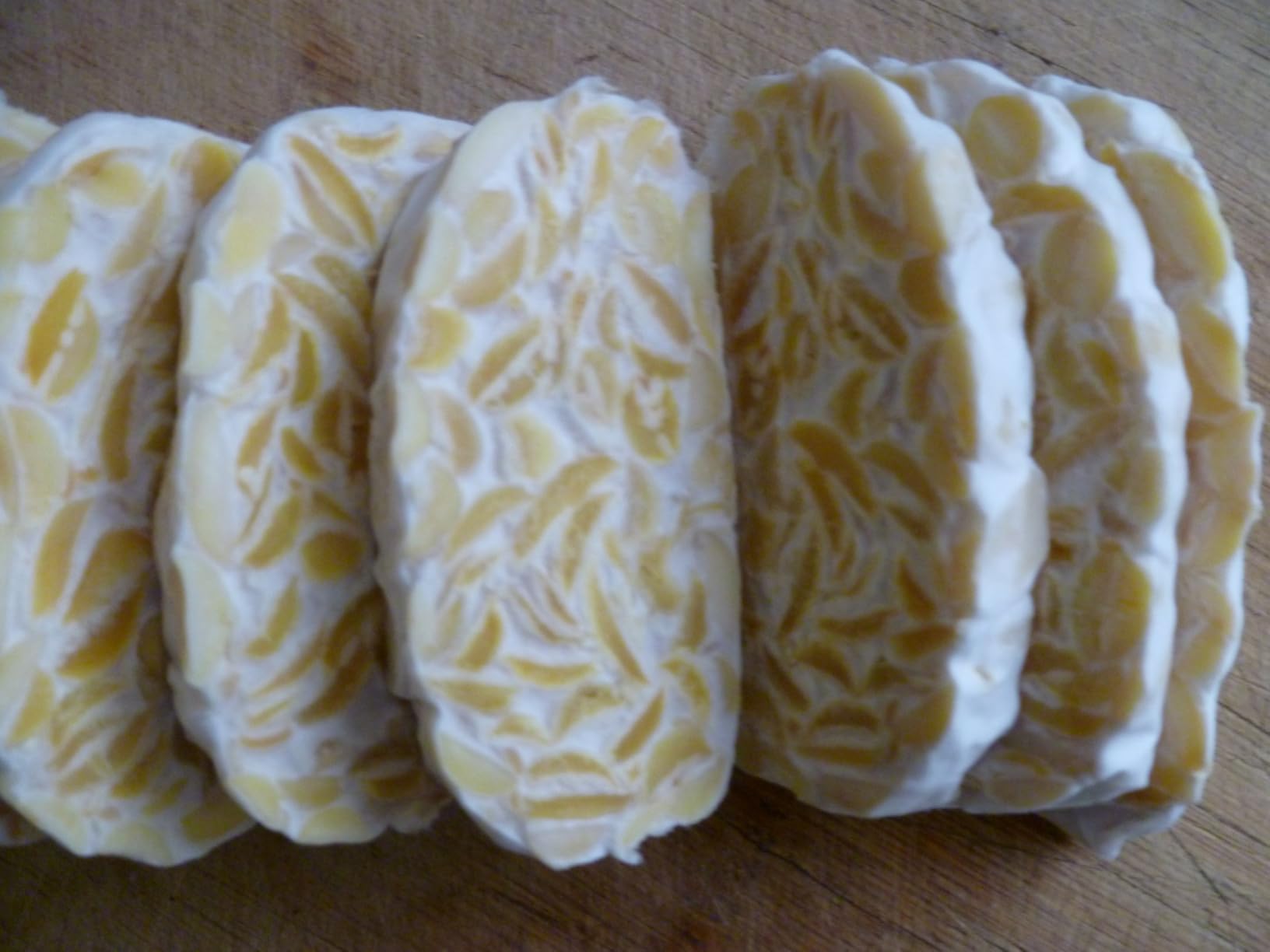
I’ve used this starter with soybeans, chickpeas, and black beans with consistent results. The Rhizopus oryzae culture produces tempeh with that classic nutty, smoky, mushroomy flavor that makes tempeh so distinctive. Each batch has developed a solid white mycelium cake that holds together perfectly when sliced.
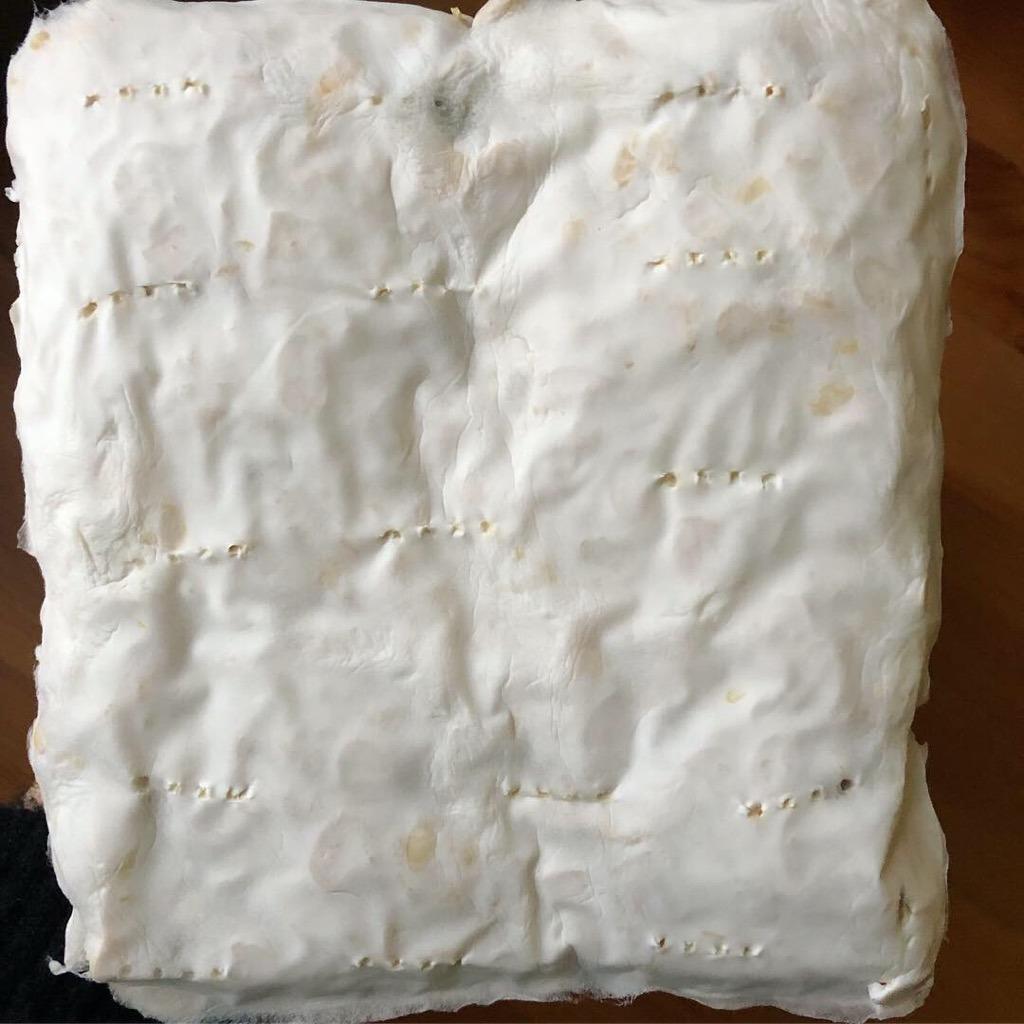
The main drawback is cost per batch. At around five dollars per packet, you’re paying a premium for the convenience and reliability. Serious tempeh makers often switch to bulk starters after learning the ropes. Still, for your first few batches, the peace of mind is worth it.
With over 550 reviews and a 4.3-star rating, this starter has proven itself reliable. The 70% five-star rating shows most users achieve successful fermentation. Their customer service is responsive if you run into problems, which adds value for beginners.
Best For
First-time tempeh makers who want clear guidance and reliable results. The included instructions and customer support make this the safest choice for learning the fermentation process.
Not Ideal For
Budget-conscious fermenters planning to make tempeh regularly will find better value in bulk starter options like the Wira product.
3. Cultures For Health Soy-Free Tempeh Starter – Best for Soy Allergies
Cultures For Health Soy-Free Tempeh Starter Culture | 4 Packets Spores for DIY Plant Based Meat | Gluten Free, Non-GMO Indonesian Food | Make Meatless Bacon, Vegan Nuggets, & More High Protein Snacks
4 soy-free packets
Rhizopus oligosporus culture
Works with various beans and grains
Pros
- Soy-free formula for allergies
- Each packet cultures 2 cups dried beans
- Clear instructions included
- Versatile with multiple bean types
- Good customer service
Cons
- Expensive per packet
- Very small powder amount
- Can develop black spores quickly
- Crumbly texture if not fermented properly
Not everyone can eat soy, and that’s where this soy-free starter becomes essential. I recommended this to a friend with soy allergies who thought tempeh was off-limits forever. She now makes incredible black bean and chickpea tempeh using this Rhizopus oligosporus culture.
The four packets follow the same format as the regular Cultures for Health starter, each culturing about two cups of dried beans. The difference is that this culture contains rice and Rhizopus oligosporus without any soy components, making it safe for those with soy sensitivities.
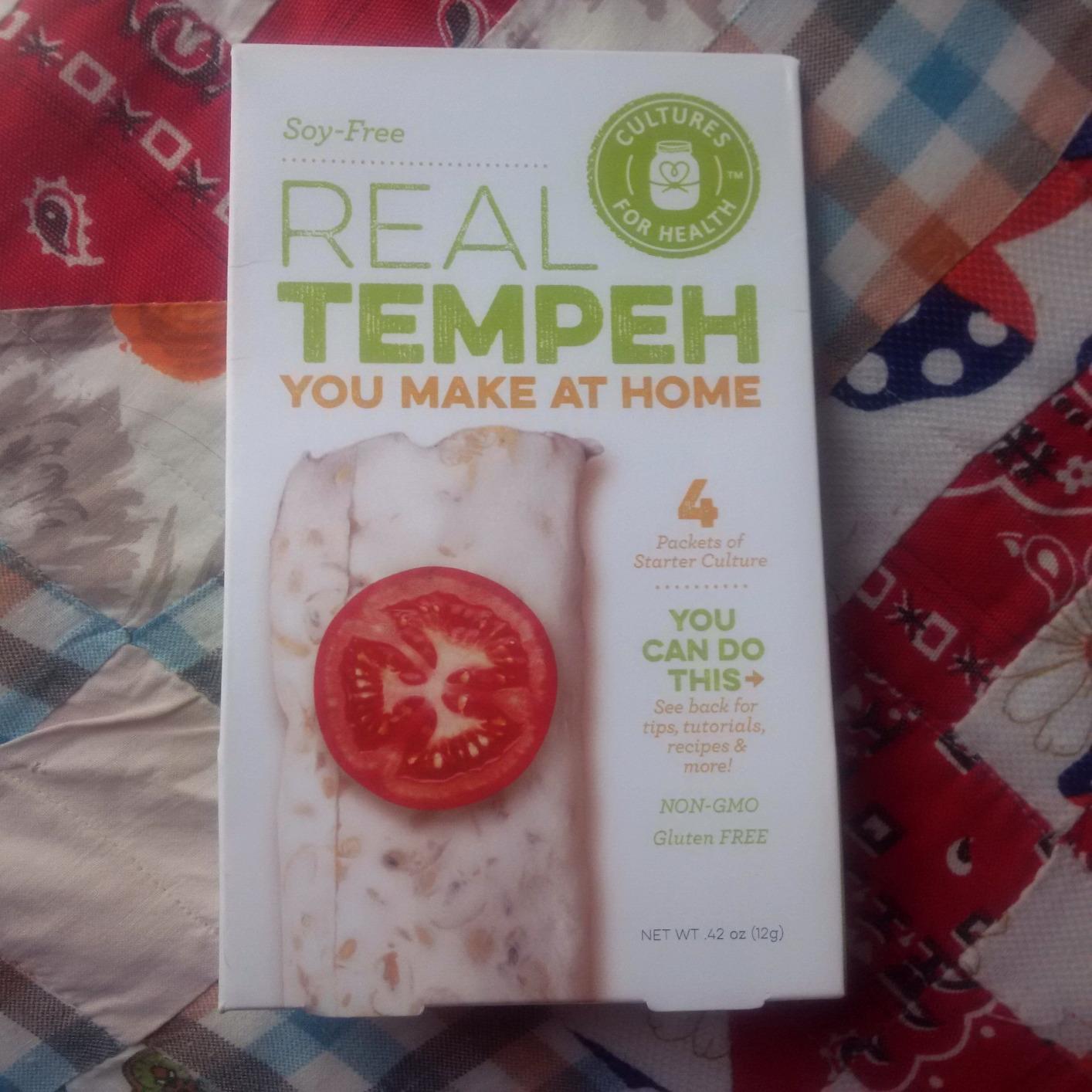
One thing I noticed is that this culture sometimes develops black spores more quickly than soy-based starters. These black spots are actually mature spores and are completely safe to eat. In Indonesia, over-fermented tempeh with black spots is called tempe bosok and is prized for its stronger flavor.
Temperature sensitivity is more pronounced with this starter. Maintaining that 85-91F sweet spot is critical for achieving the firm, cake-like texture. Too cool and fermentation stalls; too warm and you get crumbly results.
Best For
Anyone with soy allergies or sensitivities who wants to make tempeh from alternative beans like chickpeas, black beans, or mung beans.
Not Ideal For
Those seeking maximum value should consider that you’re paying the same price for the same quantity as regular starter, just without soy content.
4. Naturegrail Tempeh Starter Culture – Budget Pick
Tempeh Starter Culture with Rhizopus Spores – Make Delicious Tempeh at Home, High Protein Rhizopus Tempeh (Rhizopus oligosporus) – Net Weight: 0.7oz. DIY Plant Based Meat. Gluten Free, Non-GMO.
Rhizopus oligosporus spores
0.7oz package
Works with beans, peas, cereals
Pros
- Most affordable option at $8.99
- Fast-acting spores
- Works with various legumes
- Instructions included
- Good success rate
Cons
- Small quantity at 0.7oz
- Product image may be misleading
- Black spore formation if over-fermented
- Temperature and humidity sensitive
At under nine dollars, the Naturegrail starter is the most budget-friendly option I’ve tested. The 0.7-ounce package provides enough spores for multiple batches, making it an excellent entry point for curious beginners who don’t want to commit much money upfront.
The Rhizopus oligosporus culture activates quickly when conditions are right. I’ve had good results with garbanzo beans and lentils using this starter. The fermentation produces that characteristic white mycelium network that binds the beans together into a solid cake.
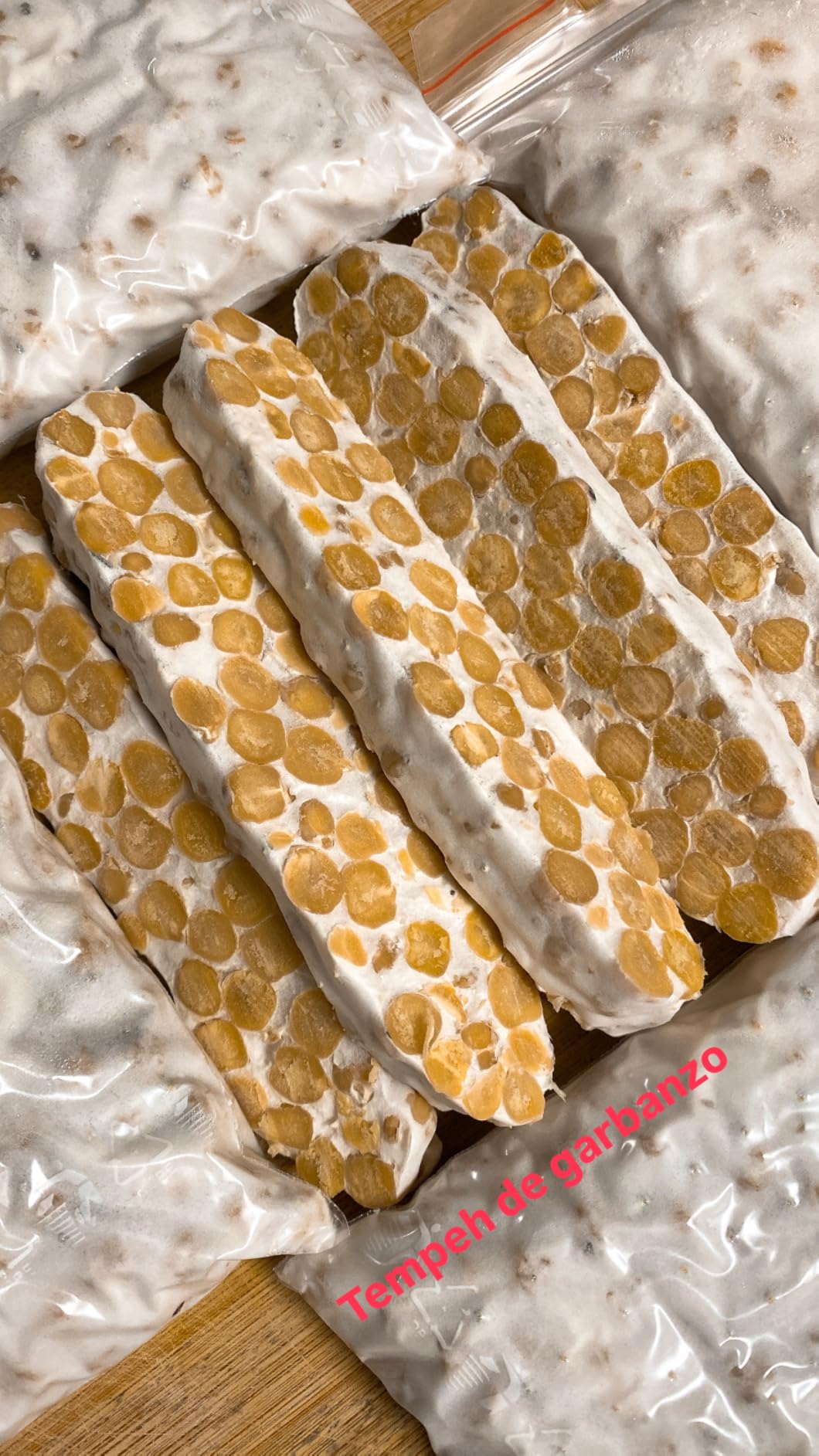
Be aware that the product images can be misleading. Some buyers expected to receive additional equipment based on the pictures, but you only get the starter powder. This is standard for starter culture products, but worth noting if you’re completely new to tempeh making.
The 4.0-star rating from nearly 80 reviews shows decent satisfaction, though the 16% one-star rating indicates some users struggled with fermentation. This usually comes down to temperature control rather than the starter itself.
Best For
Budget-conscious beginners who want to try tempeh making without a significant investment. Great for experimentation with different bean types.
Not Ideal For
Those expecting comprehensive kits or guaranteed success should look at more established brands with better customer support infrastructure.
5. Ultimate Probiotic Yogurt Maker – Top Rated Fermentation Equipment
Ultimate Probiotic Yogurt Maker with Adjustable Time & Temperature Control, Make Trillions of Probiotics for Better Gut Health, Two 1-Quart Containers for Larger Batches, ULTIMATE LIFETIME WARRANTY
Adjustable temp 68-131F
Two 1-quart glass containers
#1 Best Seller in Yogurt Makers
BPA-free
Pros
- Precise temperature control 68-131F
- Two large 1-quart containers
- 100% BPA-free construction
- Lifetime manufacturer warranty
- Recommended by health experts
Cons
- Higher price at $65.66
- Requires separate starter purchase
- Learning curve for optimal times
- Must add water to reservoir
The Ultimate Probiotic Yogurt Maker isn’t marketed as a tempeh maker, but its temperature range makes it perfect for tempeh fermentation. I discovered this when looking for alternatives to expensive specialized equipment. The adjustable temperature control from 68 to 131F covers the ideal tempeh range of 85-91F.
What sets this apart is the precision. Unlike using an oven light or heating mat, you can dial in exactly 86F and trust it will stay there. The water bath system provides even, gentle heat that prevents hot spots which can kill your culture or promote contamination.
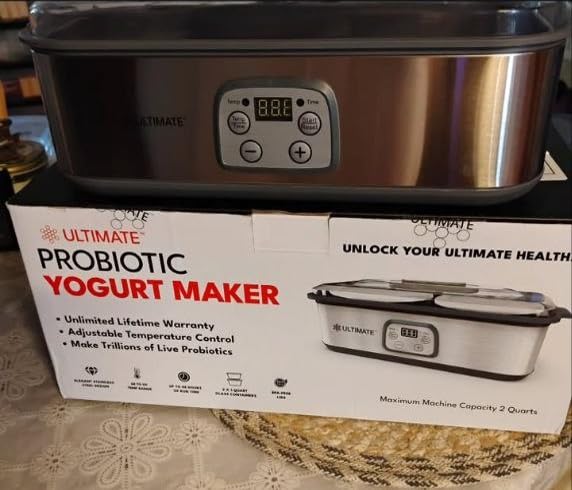
The #1 Best Seller ranking in yogurt makers with over 4,200 reviews speaks to its reliability. While most users make yogurt, the same temperature control that produces trillions of probiotics in 36-hour yogurt ferments works perfectly for tempeh’s 24-48 hour cycle.
The lifetime warranty is exceptional. Few kitchen appliances offer this level of manufacturer confidence. Customer service has been responsive when users have questions, which is valuable when adapting the machine for non-standard uses like tempeh.
Best For
Home fermenters who want precise temperature control without spending hundreds on specialized equipment. Also great for making yogurt, making it a versatile addition to any kitchen.
Not Ideal For
Those wanting dedicated tempeh equipment may prefer an all-in-one solution designed specifically for tempeh fermentation.
6. FermentPro Smart Fermentation Machine – Premium All-in-One Solution
FermentPro 12.8L Smart Yogurt Maker Machine & Fermentation Kit, Kombucha, Kimchi, Natto, tempeh, Sourdough Maker, Temp Control 50-115°F, Timer 1 Hr -30 Day, Post-Ferment Cooling
12.8L capacity
50-115F temp control
Heating and cooling
Smart presets
Pros
- Precise heating and cooling control
- Large 12.8L capacity
- 4-way viewing window
- Smart presets for various ferments
- Post-ferment cooling feature
- Free app with recipes
Cons
- Higher price at $349.99
- Fan noise during operation
- 5 degree F temp increments
- Takes counter space
The FermentPro represents the premium end of home fermentation equipment. What makes it special for tempeh is the cooling function. After about 12 hours of fermentation, tempeh generates its own heat and can overcook itself. The FermentPro’s cooling feature prevents this automatically.
The 12.8-liter capacity fits multiple tempeh bags or molds simultaneously. I can fit four to six standard tempeh bags inside, which means producing a week’s supply in one fermentation cycle. The viewing windows let you monitor mycelium growth without opening the door and disturbing conditions.
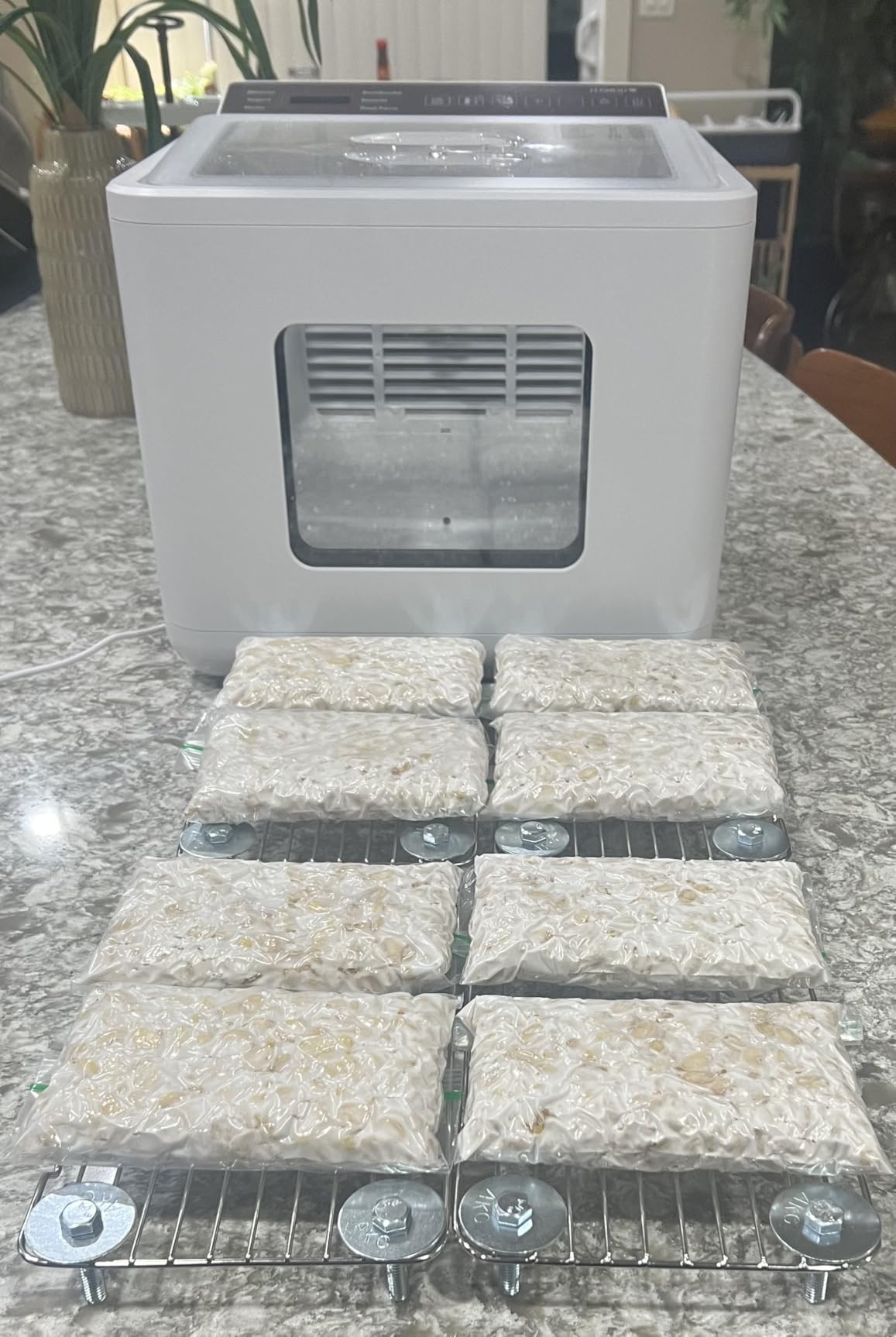
Developed by a microbiologist PhD, this machine addresses real fermentation challenges. The smart presets cover yogurt, kombucha, kimchi, natto, and tempeh. Each preset optimizes temperature and timing for the specific ferment, removing guesswork from the process.
The free companion app provides recipes and guides, which is helpful for beginners. Energy efficiency is another plus. The machine costs only cents per batch to run, making it economical despite the upfront investment.
Best For
Serious fermentation enthusiasts who want professional-grade results. The cooling feature makes this especially valuable for tempeh where temperature management is critical.
Not Ideal For
Casual users or those with limited counter space may find this machine too large and expensive for occasional use.
7. TANICA YOGURTiA Yogurt Maker – Compact Japanese Quality
[TANICA] YOGURTiA Yogurt Maker & Fermented Food Machine – Precise Temperature Control (1°F/1°C Increments) for Consistent Results, 77-158°F (25-70°C), 100-240V, Made in Japan, 2 Glass Pots, Timer
Made in Japan
2 glass pots (1100ml each)
25-70C temperature range
1-48 hour timer
Pros
- Made in Japan quality
- Compact and lightweight (1.87 lbs)
- Two glass pots with lids
- Wide temperature range
- Very quiet operation
- Memory function for settings
Cons
- Smaller 1100ml capacity per pot
- Glass pots can break in shipping
- Instructions could be clearer
- Higher price at $249.99
Japanese manufacturing quality shines in the TANICA YOGURTiA. At just 1.87 pounds, this compact machine takes minimal counter space while delivering precise temperature control. The temperature range of 25C to 70C (77F to 158F) covers tempeh fermentation requirements perfectly.
The two glass pots hold 1100ml each, which is ideal for smaller tempeh batches. I appreciate the glass construction because it’s easy to sanitize and doesn’t retain odors or flavors from previous ferments. The included lids make storage straightforward.
![[TANICA] YOGURTiA Yogurt Maker & Fermented Food Machine - Made in Japan - 2 Glass Pots, Adjustable Temperature & Timer for Greek Yogurt, Natto, Miso, Amazake customer photo 1](https://lexavebrew.com/wp-content/uploads/2026/03/B0FF9GHZGX_customer_1.jpg)
Operation is nearly silent, unlike machines with fans. This matters if your kitchen is near living spaces. The memory function stores your last three settings, so returning to proven tempeh parameters takes just a button press.
Customer service has been excellent according to reviews. Broken glass pots during shipping are the main complaint, but TANICA reportedly replaces them quickly. The international voltage support (100-240V) means this machine travels well.
Best For
Those wanting compact, high-quality equipment that handles multiple fermentation types. Perfect for apartment dwellers or anyone with limited counter space.
Not Ideal For
Large families or those wanting to make big batches should consider larger capacity options.
8. ZJLZJLO 40L Food Fermentation Incubator – Professional Large Capacity
Multi-Function 40L Food Fermentation Incubator | Digital Dough & Yogurt Proofer for Sourdough, Natto, Tempeh, Pizza, Soap Curing & Crafts,A
40L capacity
20-50C temp range
60-90% humidity control
Stainless steel
Pros
- Massive 40L capacity
- Dual temperature and humidity control
- Dual digital displays
- Energy efficient at 1kWh/day
- Stainless steel construction
- Overheat protection
Cons
- No customer reviews yet (new product)
- High price at $748.99
- Not Prime eligible
- Large footprint (26x30x20 inches)
- Unknown brand reliability
The ZJLZJLO 40L incubator represents professional-grade fermentation equipment scaled for serious home use or small commercial operations. The 40-liter capacity dwarfs typical home fermenters, allowing production of multiple large tempeh batches simultaneously.
What sets this apart is humidity control alongside temperature. Tempeh needs moisture during fermentation, and this machine maintains 60-90% humidity automatically. The dual digital displays show real-time temperature and humidity readings, eliminating guesswork.
Energy efficiency at approximately 1 kWh per day keeps operating costs reasonable despite the large size. The stainless steel construction ensures durability and easy cleaning, critical for food fermentation where sanitation matters.
As a newer product, there are no customer reviews yet. The lack of track record is the main risk factor here. However, the specifications and feature set align with professional fermentation requirements.
Best For
Small-scale commercial producers, serious hobbyists, or those wanting to make very large batches. The humidity control feature makes this stand out for tempeh specifically.
Not Ideal For
Casual home users will find this oversized and overpriced for their needs. The lack of reviews also makes it a riskier purchase.
Buying Guide: Choosing the Right Tempeh Maker
Successful tempeh making requires understanding two separate components: starter culture and fermentation equipment. Here’s what to consider for each.
Types of Tempeh Makers
Starter cultures contain Rhizopus oligosporus or Rhizopus oryzae spores that ferment your beans. You cannot make tempeh without these specific mold cultures. Packet-style starters work well for beginners, while bulk starters offer better value for regular production.
Fermentation equipment maintains the 85-91F temperature range that tempeh requires. Options range from DIY solutions like heating mats and styrofoam coolers to dedicated machines with precise digital controls. Your choice depends on budget and how often you plan to make tempeh.
Temperature Control Requirements
Tempeh ferments optimally between 85F and 91F, with 86F (30C) being ideal. Below 85F, fermentation slows significantly or stops. Above 91F, you risk promoting harmful bacteria or killing the beneficial mold. After about 12 hours, tempeh generates its own heat through fermentation, so external heating may need reduction.
Machines with both heating and cooling functions, like the FermentPro, handle this transition automatically. Simpler setups require manual monitoring and adjustment during fermentation.
Capacity Considerations
Small households do fine with equipment handling 1-2 pounds of tempeh per batch. Larger families or regular consumers benefit from bigger capacity. Commercial-scale producers need 40L+ incubators like the ZJLZJLO.
Remember that tempeh keeps for about a week refrigerated and freezes well. Making larger batches less frequently often makes sense.
Starter Culture Selection
For first-timers, choose a starter with detailed instructions like Cultures for Health. Those with soy allergies need soy-free options. Regular producers should consider bulk starters like Wira for better economics.
Starter culture potency matters. Fresh starter works faster and more reliably. Store cultures in the refrigerator or freezer to extend shelf life from weeks to months.
Budget vs Professional Options
DIY temperature control using heating mats, thermometers, and insulated containers costs under $50 but requires more attention. Mid-range machines like the Ultimate Probiotic Yogurt Maker offer precision around $65. Professional equipment ranges from $250 to $750+ but provides set-and-forget convenience and larger capacity.
Consider how often you’ll make tempeh. Occasional batches justify simpler, cheaper setups. Weekly production benefits from dedicated equipment.
FAQs
What temperature do you ferment tempeh at?
Tempeh ferments best between 85F and 91F (29-33C), with 86F (30C) being optimal. This temperature range allows Rhizopus oligosporus mold to grow properly while preventing harmful bacteria. After 12 hours of fermentation, tempeh generates its own heat, so you may need to reduce external heating.
Can I make tempeh without a starter culture?
No, you cannot make tempeh without Rhizopus oligosporus or Rhizopus oryzae starter culture. Unlike some fermented foods that can use wild fermentation, tempeh requires these specific mold spores. The culture is inexpensive and essential for safe, successful tempeh production.
What are common tempeh making mistakes?
Common mistakes include incorrect moisture levels (beans too wet or too dry), temperature fluctuations outside the 85-91F range, poor airflow in fermentation containers, not properly hulling soybeans, using old or expired starter culture, and contamination from unsanitized equipment. Adding vinegar helps prevent bacterial contamination.
How long does tempeh starter culture last?
At room temperature, tempeh starter remains viable for 3-4 weeks. Refrigerated, it lasts 6 months or longer. In the freezer, starter can remain potent for a year or more. Always check expiration dates and store in airtight containers away from moisture.
Why does my tempeh have black spots?
Black spots on tempeh are mature spores from the Rhizopus mold and are completely safe to eat. In Indonesia, this over-fermented tempeh is called tempe bosok and is actually prized for its stronger, more complex flavor. Black spots indicate your tempeh fermented slightly longer than typical but is not spoiled.
Conclusion
Making tempeh at home becomes straightforward once you have the right starter culture and temperature control. For beginners, the Cultures for Health Tempeh Starter combined with the Ultimate Probiotic Yogurt Maker provides reliable results with minimal frustration. Regular producers should consider the Wira bulk starter for value and the FermentPro Smart Machine for convenience.
The best tempeh makers remove the guesswork from fermentation. Whether you choose a simple starter culture and DIY temperature setup or invest in professional equipment, fresh homemade tempeh delivers superior flavor and probiotics compared to store-bought options. Start with what fits your budget and upgrade as your skills and frequency increase.