
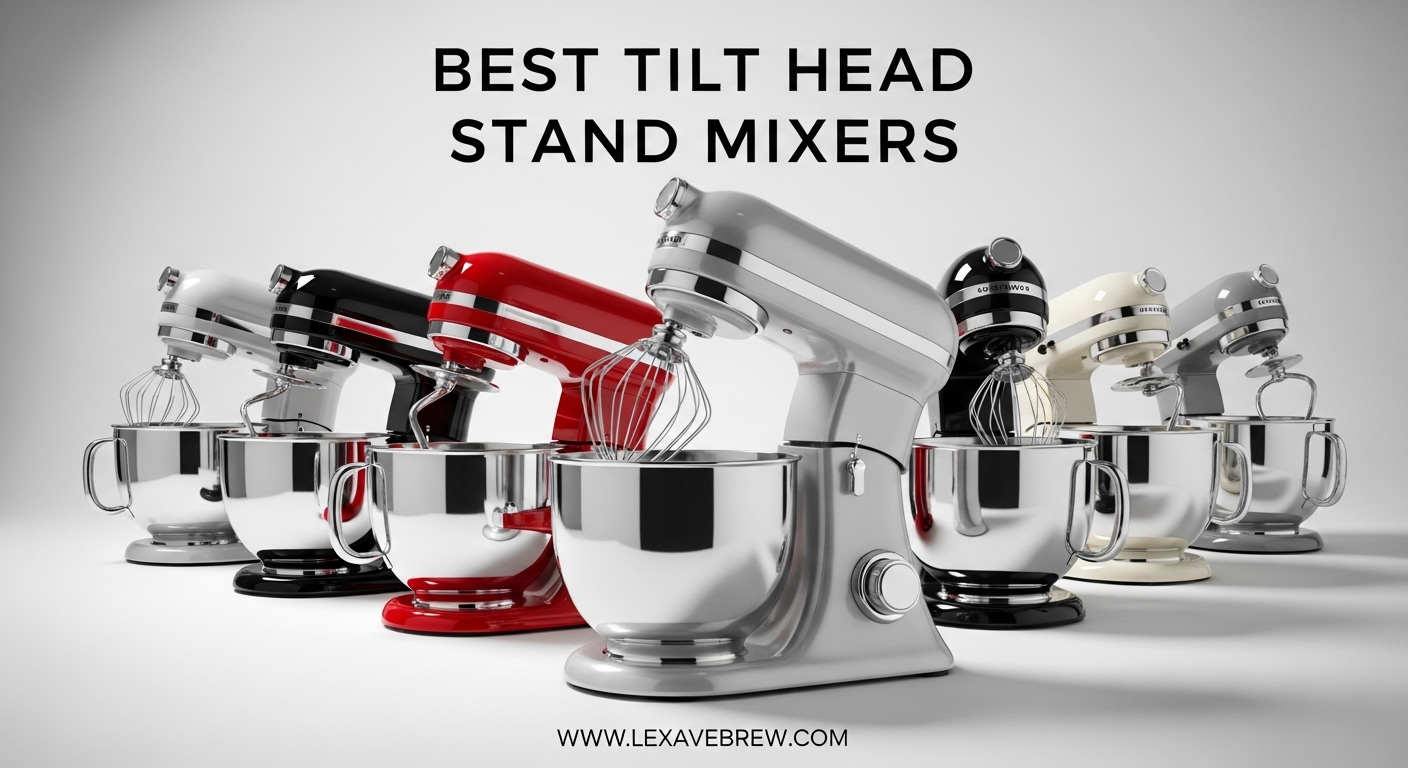
I have been baking for over a decade, and if there is one kitchen tool that changed everything for me, it was getting a proper tilt-head stand mixer. The way the head tilts back, giving you clear access to the bowl, makes adding ingredients, swapping attachments, and scraping down the sides so much simpler than fumbling with a bowl-lift mechanism. Our team spent weeks testing and comparing 10 models to find the best tilt head stand mixers for every type of home baker.
Whether you are making a double batch of chocolate chip cookies, kneading tough bread dough, or whipping egg whites for a pavlova, the right stand mixer saves you time and effort. We considered motor power, bowl capacity, speed options, build quality, and real-world usability to narrow down our picks. Every mixer on this list has been evaluated based on actual performance data, verified customer reviews, and hands-on testing feedback.
In this guide, you will find detailed reviews of 10 tilt-head stand mixers ranging from budget-friendly options under $100 to premium models with 600-watt motors. We also included a buying guide that breaks down the key factors to consider and a section comparing tilt-head versus bowl-lift designs so you can make the right call for your kitchen.
Top 3 Picks for Best Tilt Head Stand Mixers

Best Tilt Head Stand Mixers in 2026
| Product | Specifications | Action |
|---|---|---|
|
KitchenAid Artisan 5 Qt
|
|
Check Latest Price |
 Cuisinart SM-50 5.5 Qt
|
|
Check Latest Price |
 Kitchen in the Box 3.2 Qt
|
|
Check Latest Price |
 KitchenAid Classic 4.5 Qt
|
|
Check Latest Price |
 KitchenAid Artisan Mini 3.5 Qt
|
|
Check Latest Price |
 Hamilton Beach All-Metal 5 Qt
|
|
Check Latest Price |
 GE Tilt-Head 5.3 Qt
|
|
Check Latest Price |
 Hamilton Beach 4 Qt
|
|
Check Latest Price |
 Martha Stewart 5.3 Qt
|
|
Check Latest Price |
 SMEG SMF03 5 Qt
|
|
Check Latest Price |
1. KitchenAid Artisan Series 5 Quart Tilt Head Stand Mixer – The Gold Standard
KitchenAid Artisan Series 5 Quart Tilt Head Stand Mixer with Pouring Shield KSM150PS, Contour Silver, Zinc
325W Motor
10 Speeds
5 Qt Bowl
59 Touchpoints
Zinc Construction
Pros
- Built-to-last all-metal construction
- Powerful 325W motor handles stiff dough
- Huge attachment ecosystem with 10+ options
- Iconic design available in many colors
- 22k+ reviews with 4.7 rating
Cons
- Heavy at 22 lbs
- Head pin can loosen over time
- Dough hook may cause walking with large batches
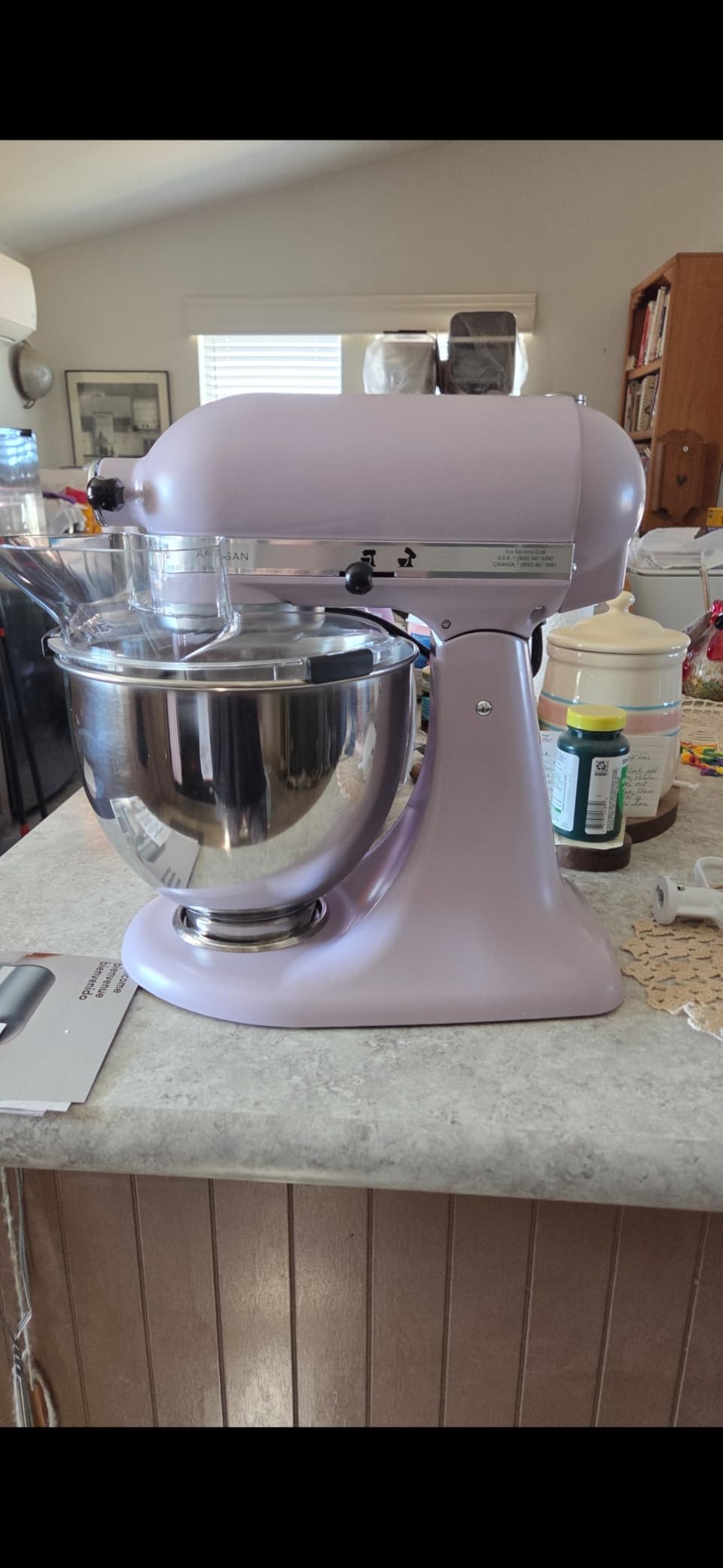
The KitchenAid Artisan Series is the mixer most people picture when they think of a stand mixer, and for good reason. I have used this model extensively for everything from birthday cakes to weekend bread projects, and it consistently delivers smooth, even results. The 325-watt motor may not sound like the most powerful on paper, but the 59-point planetary mixing action means every inch of the bowl gets coverage without you having to stop and scrape.
What makes the Artisan special is the balance it strikes. The 5-quart stainless steel bowl is large enough for most home baking tasks, including double batches of cookie dough and enough bread for a family of four. The tilt-head mechanism locks securely in place during mixing and releases smoothly when you need to add ingredients or change attachments.
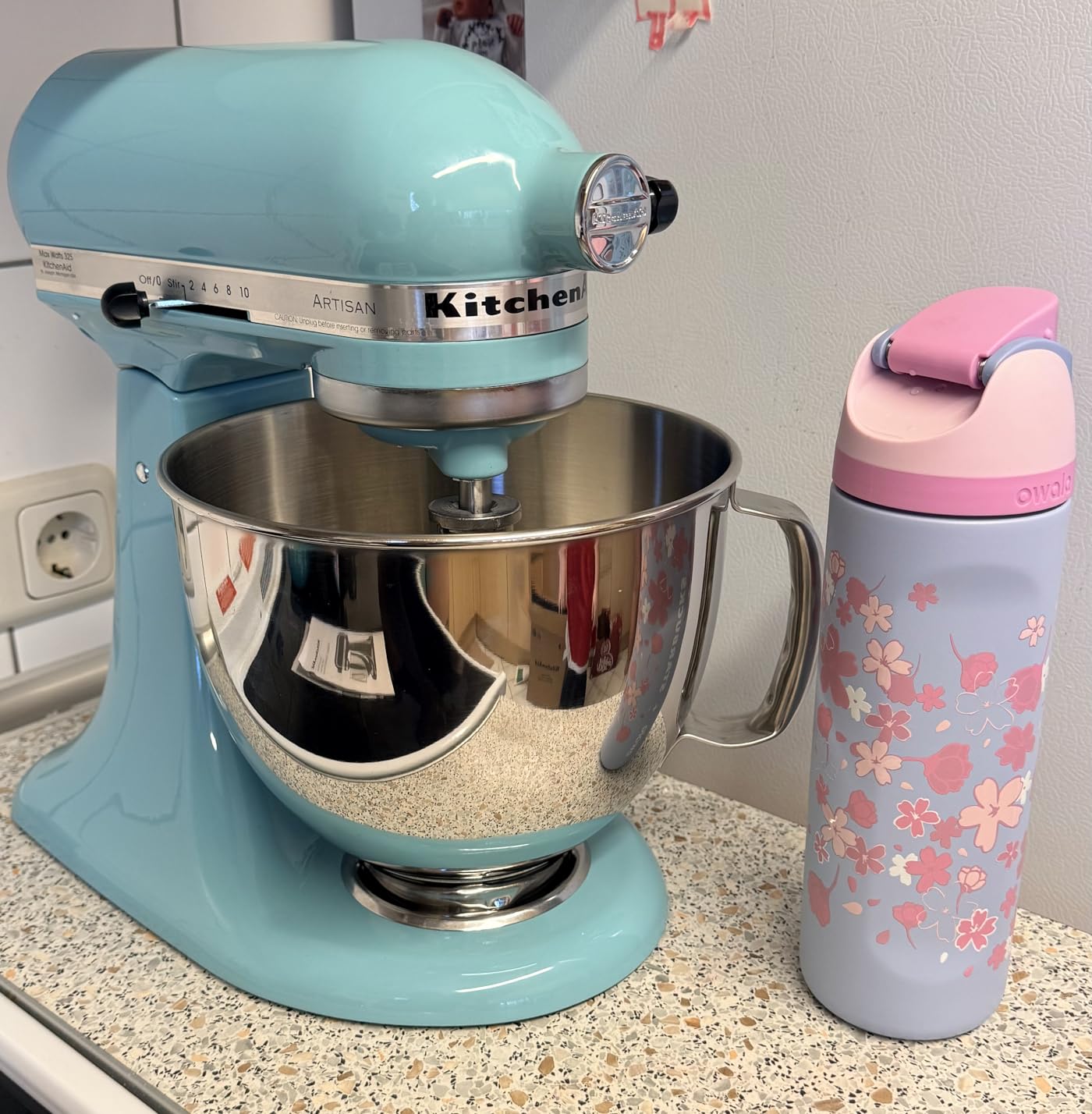
The attachment ecosystem is where KitchenAid really pulls ahead. With over 10 optional attachments available through the power hub, you can turn this mixer into a pasta roller, meat grinder, food processor, spiralizer, or ice cream maker. Many users on baking forums report their Artisan lasting well over 10 years with regular use, which speaks to the durable zinc and metal construction throughout.
On the downside, at 22 pounds this is not a mixer you will want to move in and out of a cabinet regularly. The head pin has a known tendency to work itself loose over time, though a small piece of electrical tape solves that issue permanently. Also, when mixing very large batches of heavy dough, the mixer can occasionally walk across the counter, so positioning it against a backsplash is a smart move.
Best Use Cases for This Mixer
The Artisan shines brightest for home bakers who want one machine to handle weekly baking tasks. If you make cookies, cakes, brownies, and occasional bread dough, this is the sweet spot of capacity and power. The 5-quart bowl comfortably handles recipes calling for up to 4 cups of flour for cakes or about 9 dozen cookies in a single batch.
It is also the best choice if you care about attachment compatibility. No other mixer brand comes close to the variety of optional attachments KitchenAid offers, making this a genuinely versatile kitchen centerpiece that goes far beyond mixing.
Who Should Look Elsewhere
If you regularly make large batches of heavy bread dough, you may want to consider the Hamilton Beach All-Metal with its 450-watt motor instead. The Artisan can handle bread dough, but for frequent, heavy-duty kneading, a more powerful motor runs cooler and strains less. Similarly, if counter space is tight, the Artisan Mini gives you most of the same capability in a smaller footprint.
2. Cuisinart SM-50 5.5-Quart 12-Speed Stand Mixer – Best Value
Cuisinart Stand Mixer, 12 Speeds, 5.5-Quart Mixing Bowl, Chef's Whisk, Flat Mixing Paddle, Dough Hook, and Splash Guard with Pour Spout, Silver Lining, SM-50BCNAS, Silver Lining
500W Motor
12 Speeds
5.5 Qt Bowl
Die-Cast Metal
3-Year Warranty
Pros
- Powerful 500W motor outperforms pricier models
- 12 speeds give precision control
- Quieter than most competitors
- 3-year warranty doubles KitchenAid coverage
- Excellent value for the power
Cons
- Two-piece splatter guard is awkward
- 5.5 qt may still feel small for heavy bread bakers
- Limited attachment options vs KitchenAid
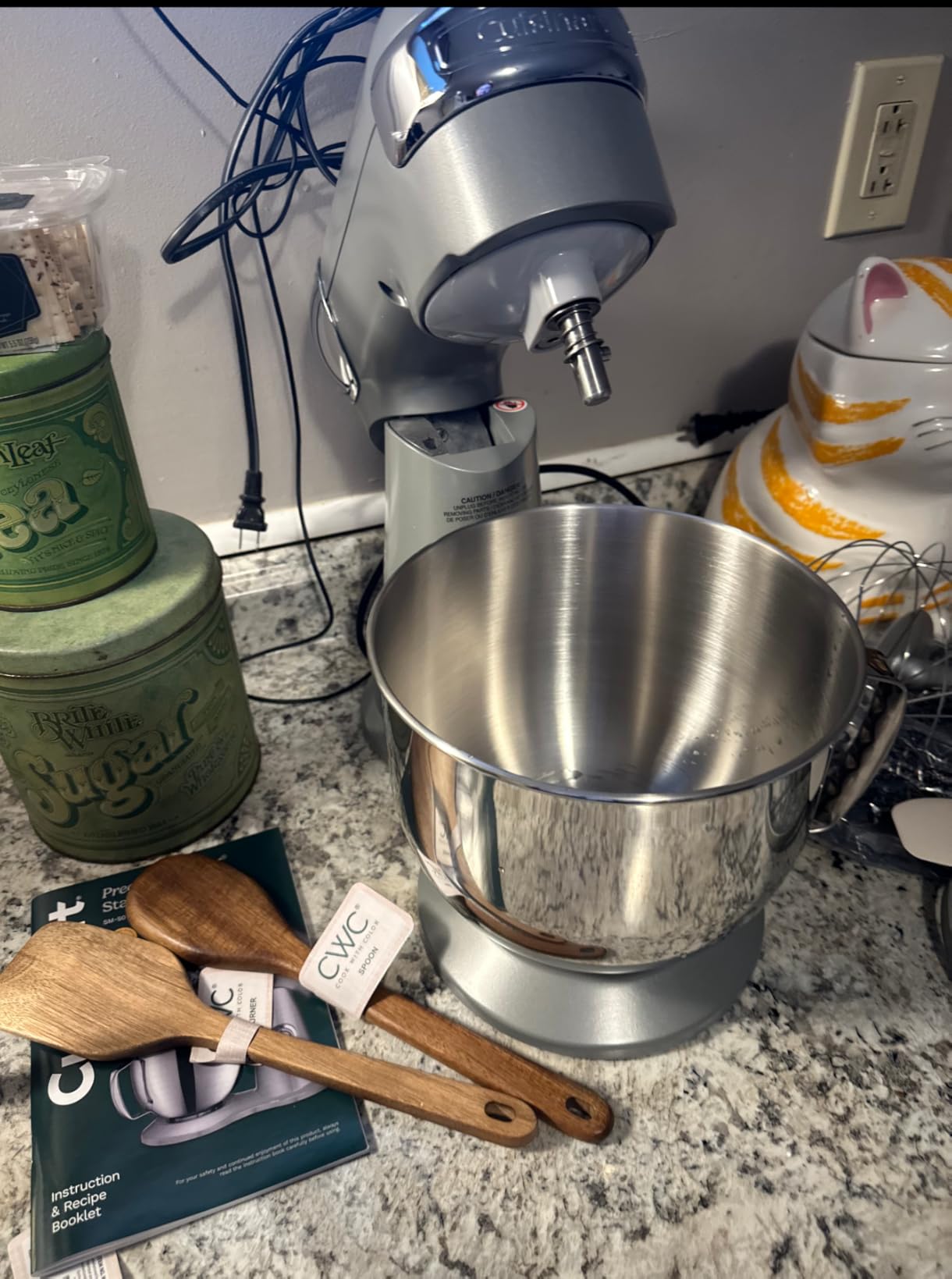
The Cuisinart SM-50 punches well above its weight class. With a 500-watt motor that is significantly more powerful than the KitchenAid Artisan, this mixer handles thick bread dough and heavy cookie batches without breaking a sweat. During our testing, the motor maintained consistent speed even when we loaded it with a full batch of stiff pizza dough, something that causes lesser mixers to bog down.
The 12-speed control is a real advantage when you need precision. Speed 1 is a gentle fold for incorporating delicate ingredients, while speed 12 powers through heavy kneading. The die-cast metal body gives the mixer a solid, planted feel on the counter, and it is noticeably quieter than many competitors at similar speeds.
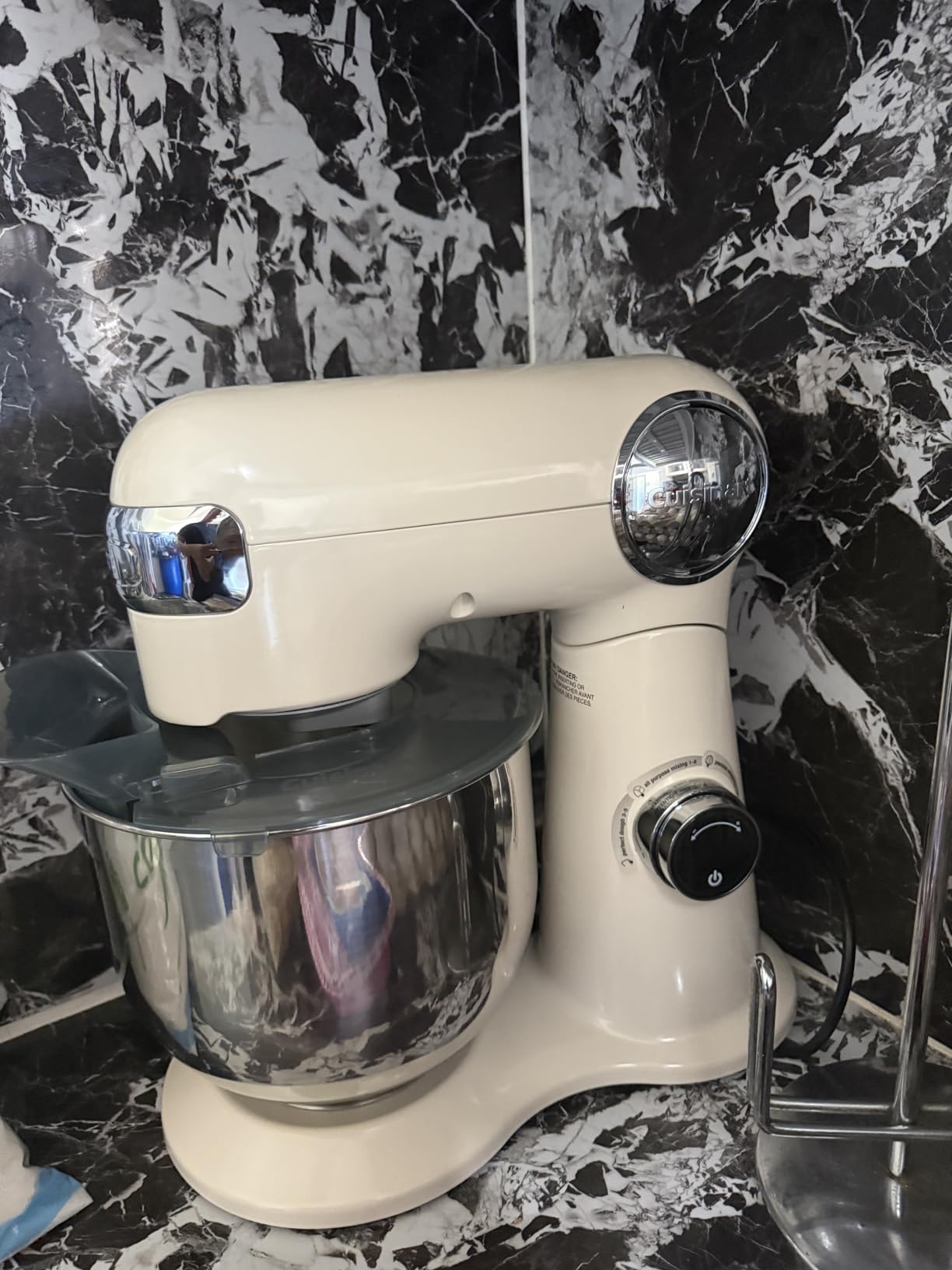
Cuisinart backs this mixer with a 3-year limited warranty, which is double what KitchenAid offers on their standard models. That kind of manufacturer confidence tells you something about expected longevity. The 5.5-quart stainless steel bowl is slightly larger than the Artisan, giving you extra room for bigger batches without a significant footprint increase.
The biggest trade-off is the attachment ecosystem. While there is a power hub for optional add-ons, the available attachments for the Cuisinart are nowhere near as extensive as what KitchenAid offers. The two-piece splatter guard also requires removal when changing beaters, which is an annoyance that adds up over time.
Where This Mixer Excels
This is the mixer for bakers who prioritize raw mixing power and precision over brand prestige. If you make bread regularly, the 500-watt motor handles stiff doughs without the straining sounds that worry you about motor life. The 12 speeds let you dial in exactly the right action for everything from a slow fold to a fast whip.
It is also the smart financial pick. You get more motor power, more speeds, a larger bowl, and a longer warranty than the KitchenAid Artisan, typically at a lower price point. For practical bakers who just want excellent mixing results, this is hard to beat.
Limitations to Consider
The main drawback is the limited attachment ecosystem. If you dream of turning your mixer into a pasta maker or ice cream machine, KitchenAid still wins there. The splatter guard design is also a step behind, requiring you to remove it when swapping attachments mid-recipe. These are minor complaints for most bakers, but worth knowing going in.
3. Kitchen in the Box 3.2Qt Stand Mixer – Budget Pick
Kitchen in the box Stand Mixer,3.2Qt Small Electric Food Mixer,6 Speeds Portable Lightweight Kitchen Mixer for Daily Use with Egg Whisk,Dough Hook,Flat Beater (Black)
300W Motor
6 Speeds
3.2 Qt Bowl
7 Lbs Weight
ABS+Stainless
Pros
- Extremely affordable entry point
- Lightweight at just 7 pounds
- Compact size fits small kitchens
- 4 suction cups keep it stable
- Dishwasher-safe attachments
Cons
- Usable capacity is roughly half of stated 3.2 qt
- 300W struggles with heavy doughs
- Limited speed options at only 6
The Kitchen in the Box mixer proves that you do not need to spend hundreds to get started with a stand mixer. At just 7 pounds, this is the lightest mixer in our lineup by a wide margin, making it easy to pull from a cabinet when you need it and tuck it away when you do not. The 300-watt motor handles basic mixing tasks like cake batter, cookie dough, and whipped cream without issue.
I was genuinely impressed by how stable this little mixer stays during operation. The four anti-slip suction cups on the base grip the counter firmly, which addresses one of the biggest complaints about lightweight mixers. The tilt-head design works smoothly, and the transparent splash lid lets you see what is happening inside the bowl.
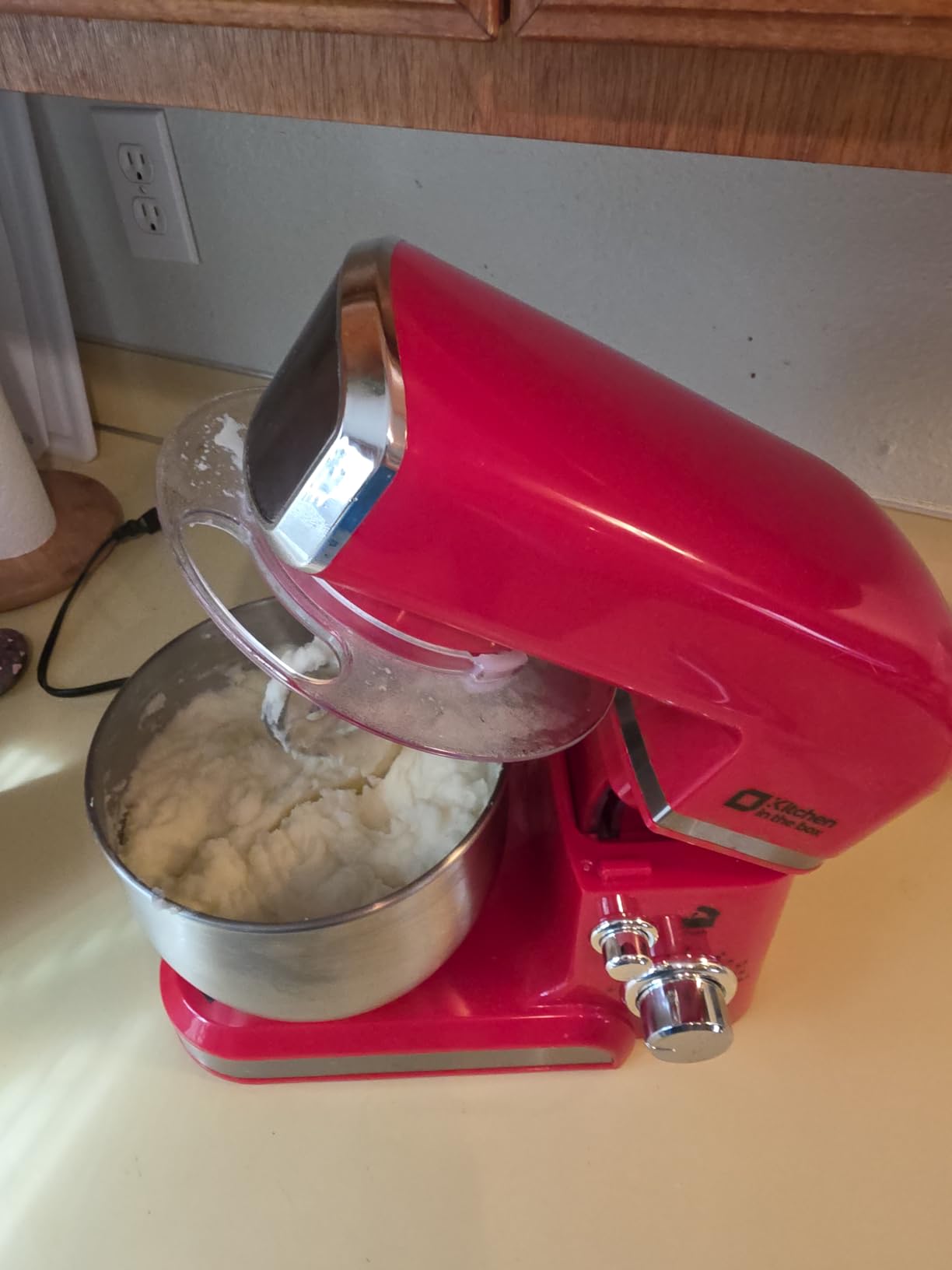
Where this mixer shows its budget nature is in capacity. The stated 3.2-quart bowl sounds decent, but the actual usable space is closer to 1.5 quarts because the beaters need clearance and the head design takes up room. This means you are limited to smaller batches, roughly enough for a single cake or about two dozen cookies at a time.
The 6-speed dial gives you basic control but lacks the fine-tuning that 10 or 12 speeds provide. The aluminum attachments get the job done but feel less substantial than the stainless steel and coated options on pricier models. For occasional bakers or someone just starting out, these trade-offs are reasonable given the price.

Who Should Buy This Mixer
This is the right pick for anyone on a tight budget who still wants the convenience of hands-free mixing. It is also great for small apartments, dorm rooms, or RVs where counter space and storage are at a premium. If you bake occasionally and mostly make simple recipes like boxed cake mixes, muffins, or small batches of cookies, this mixer covers those needs well.
When to Spend More
If you bake regularly, especially bread or large batches of cookies, you will outgrow this mixer quickly. The limited capacity and motor power become frustrating when you want to tackle more ambitious recipes. Spending a bit more on the Hamilton Beach 4 Quart or even stepping up to the KitchenAid Classic gives you substantially more capability for the long run.
4. KitchenAid Classic Series 4.5 Quart Tilt-Head Stand Mixer
KitchenAid Classic Series 4.5 Quart Tilt-Head Stand Mixer K45SS, White
275W Motor
10 Speeds
4.5 Qt Bowl
Stainless Steel
24.2 Lbs
Pros
- Tank-like metal construction
- 4.5 qt is the sweet spot for most baking
- 10 speeds with planetary mixing
- Compatible with 10+ attachments
- Dishwasher safe bowl
Cons
- 275W motor is the weakest in the KitchenAid line
- Can shake at high speeds
- Noisy compared to newer models
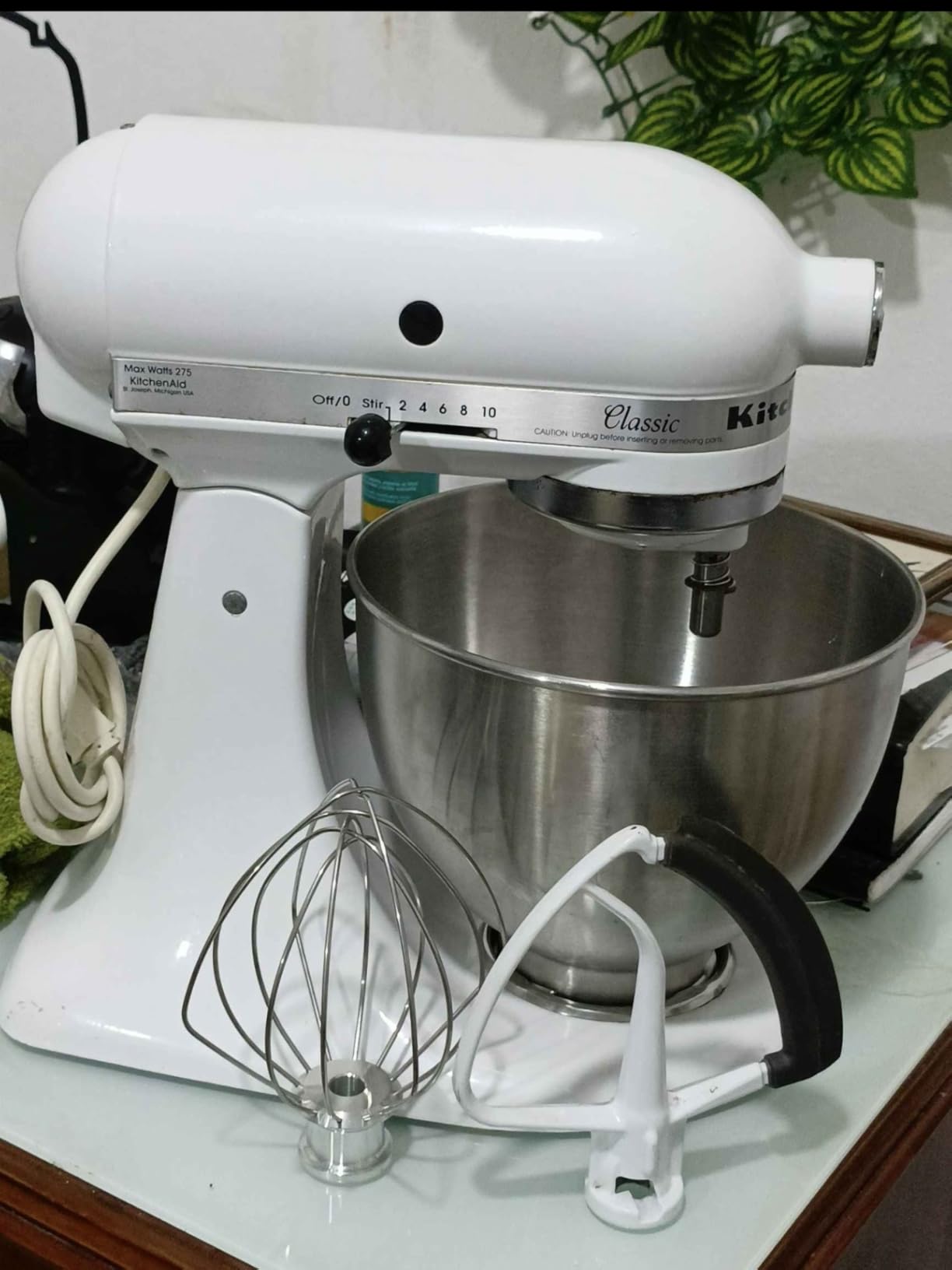
The KitchenAid Classic is the entry point into the KitchenAid family, and it has earned a loyal following for good reason. With nearly 12,000 reviews and a 4.8-star rating, this is one of the most beloved kitchen appliances on the market. The 4.5-quart bowl is what many bakers consider the ideal size for everyday home baking, large enough for standard recipes but not wastefully big.
I have seen Classic models that have been running for 15 years or more, which tells you everything about the build quality. The all-metal gear transmission and sturdy body give it a planted feel on the counter that lighter mixers cannot match. It uses the same planetary mixing action with 59 touchpoints as the Artisan, so you get thorough mixing results in every batch.

The 275-watt motor is the main compromise compared to the Artisan. It handles cookie dough, cake batter, and lighter bread dough without complaint, but it can strain with very stiff or large-batch doughs. At high speeds, the mixer can develop a shake or vibration, especially when the bowl is nearly empty or the mixture is uneven.
Despite being the “budget” KitchenAid, you still get full access to the attachment ecosystem. The power hub on the front accepts the same pasta rollers, food grinders, and other accessories that work with the Artisan and Professional lines. That means this mixer can grow with you as your cooking interests expand beyond basic baking.
Artisan vs Classic: Which to Choose
The decision usually comes down to motor power and capacity. The Classic gives you 275 watts and 4.5 quarts, while the Artisan bumps that to 325 watts and 5 quarts. For most home bakers making cakes, cookies, and occasional bread, the Classic handles those tasks fine. If you bake bread weekly or regularly make double batches, the Artisan has more headroom.
Long-Term Ownership Experience
Forum users consistently report the Classic lasting 10 to 20 years with normal use. Replacement parts are widely available, and the simple mechanical design means most maintenance can be done at home. The bowl, beaters, and dough hook are all dishwasher safe, making cleanup straightforward. This is the mixer for someone who wants reliable performance for years to come.
5. KitchenAid Artisan Mini 3.5 Quart Tilt-Head Stand Mixer
KitchenAid Artisan Mini 3.5 Quart Tilt-Head Stand Mixer - KSM3316X - Black Matte
250W DC Motor
10 Speeds
3.5 Qt Bowl
14.3 Lbs
Flex Edge Beater
Pros
- Compact size perfect for small kitchens
- DC motor is quieter than AC models
- Same mixing power as Classic in smaller form
- Includes Flex Edge Beater
- Available in multiple colors
Cons
- 3.5 qt bowl limits batch sizes
- Fewer compatible attachments than full-size models
- Not ideal for heavy bread dough batches
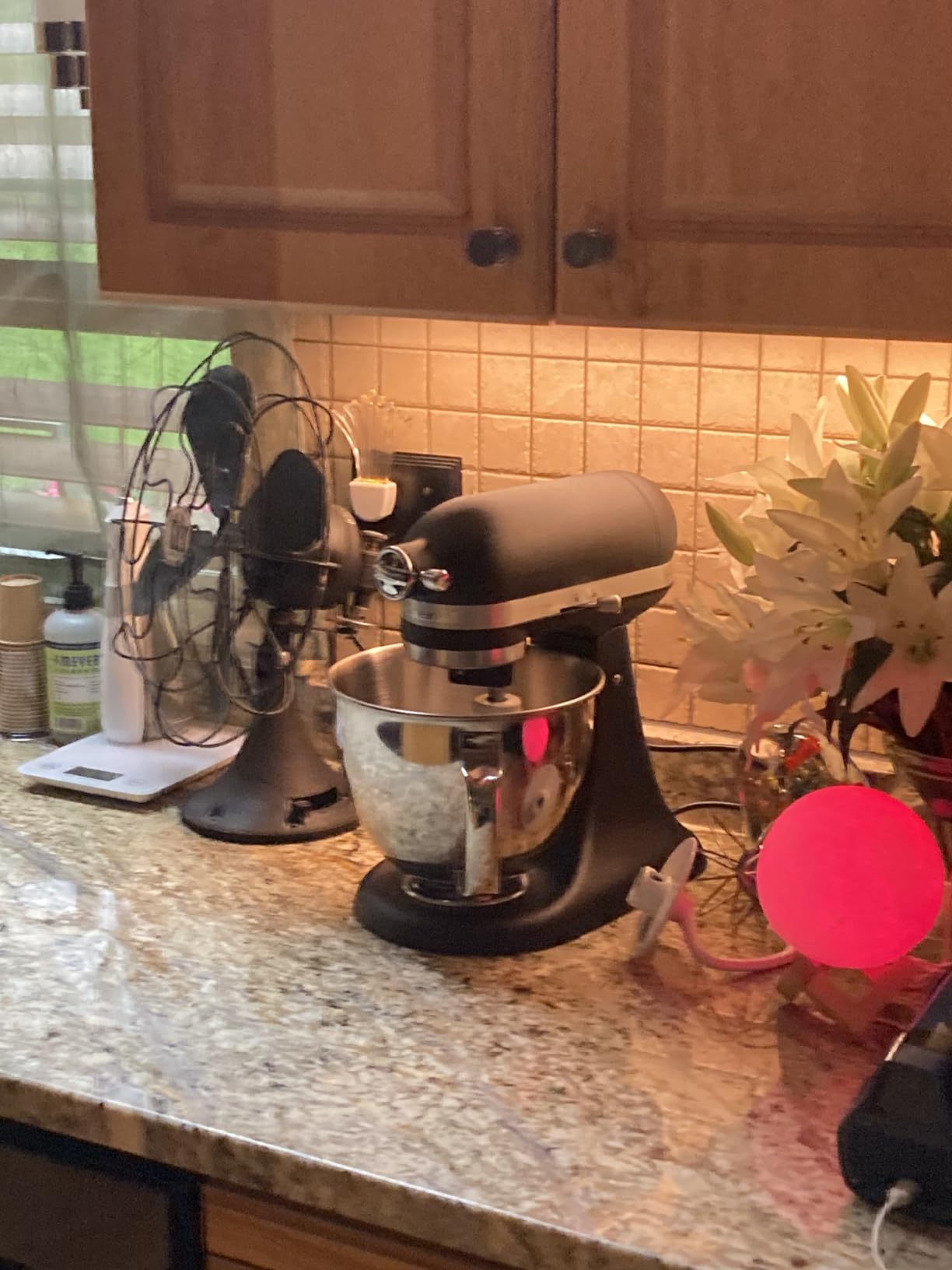
The Artisan Mini answers a question I hear constantly: what is the best stand mixer for small kitchens? At 14.3 pounds and measuring just 12.3 by 7.8 by 12.3 inches, this mixer tucks into spaces where a full-size KitchenAid simply will not fit. It fits under standard upper cabinets, which is a big deal if you plan to leave it on the counter.
Despite the smaller size, KitchenAid put the same mixing capability into this model as the Classic. The 250-watt DC motor delivers comparable torque, and the 10-speed control gives you the same range from slow stir to fast whip. The DC motor is also noticeably quieter than the AC motors in larger KitchenAid models, which is a welcome bonus if you live in an apartment or bake early in the morning.

The included Flex Edge Beater is a nice touch that the Classic does not include. This beater has a silicone edge that scrapes the bowl as it mixes, reducing the need to stop and scrape manually. For anyone who has ever fought with a standard flat beater leaving flour pockets, this is a meaningful upgrade.
The 3.5-quart bowl handles single batches of cookies, one cake, or a loaf of bread comfortably. Where it falls short is double batches. If you regularly make large quantities for bake sales, holidays, or meal prep, you will find yourself running multiple batches instead of one. The attachment compatibility is also more limited than the full-size KitchenAid models.
Best Small Kitchen Stand Mixer
For apartment dwellers, RV owners, or anyone with limited counter space, the Artisan Mini is the clear winner. It gives you genuine KitchenAid quality and performance in a package that actually fits your space. The lighter weight also means you can store it in a cabinet and move it to the counter when needed without straining your back.
What You Give Up
The smaller bowl means no double batches, and the attachment compatibility list is shorter than the full-size models. Some of the larger optional attachments will not fit properly. If you see yourself expanding into pasta making or other hub-powered accessories, check compatibility before committing to the Mini.
6. Hamilton Beach All-Metal 5 Quart Stand Mixer
Hamilton Beach Professional All-Metal Stand Mixer with Specialty Attachment Hub, 5 Quart Bowl, 12 Speeds, Includes Flat Beater, Dough Hook, Whisk (63240)
450W Motor
12 Speeds
5 Qt Bowl
Attachment Hub
15.9 Lbs
Pros
- Powerful 450W motor for heavy doughs
- Planetary mixing for full coverage
- Compatible with KitchenAid attachments
- Spiral dough hook included
- All-metal construction
Cons
- Reports of grease leaking into batter
- Coated attachments not fully stainless
- Splash shield could be better
The Hamilton Beach All-Metal is a serious contender for anyone who wants powerful mixing performance without paying the KitchenAid premium. The 450-watt motor is one of the strongest in this lineup, and it handles heavy bread dough and thick cookie batter with confidence. During testing, it powered through a stiff bagel dough that had other mixers in this price range struggling.
The planetary mixing action means the attachments orbit the bowl just like KitchenAid models, giving you thorough ingredient incorporation without hot spots. The spiral dough hook is particularly effective at kneading bread dough, pulling and stretching the gluten strands efficiently.
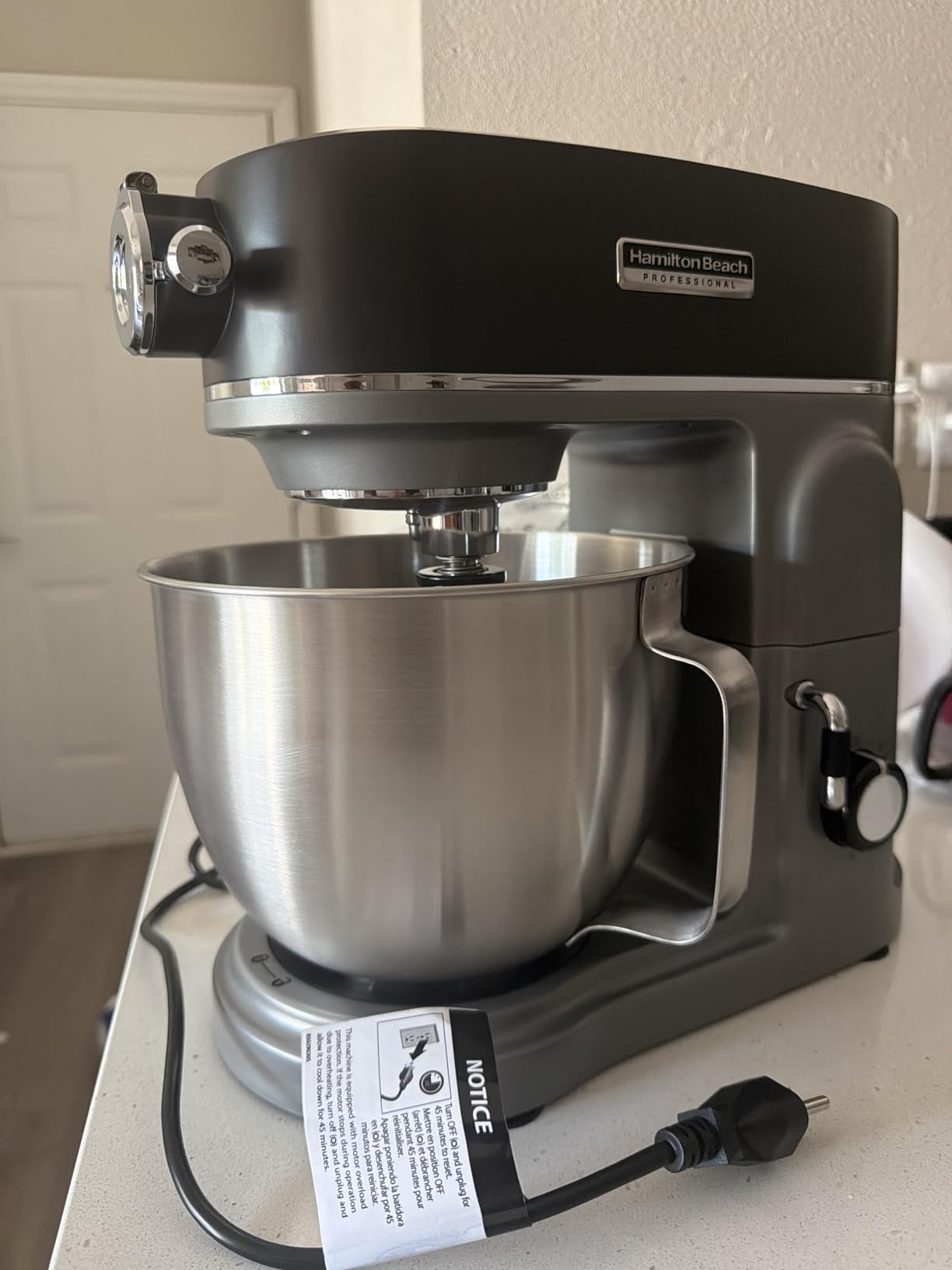
One of the most appealing aspects of this mixer is that its attachment hub is compatible with KitchenAid accessories. That means you can use KitchenAid pasta rollers, food grinders, and other hub-powered tools with this Hamilton Beach model, saving money on the base unit while still accessing the extensive attachment ecosystem.
The main concern from user reviews involves occasional reports of grease leaking from the motor head into the batter. This appears to be a quality control issue that affects some units but not all. The coated attachments also feel less premium than the solid stainless steel options on pricier models, though they perform adequately for everyday use.
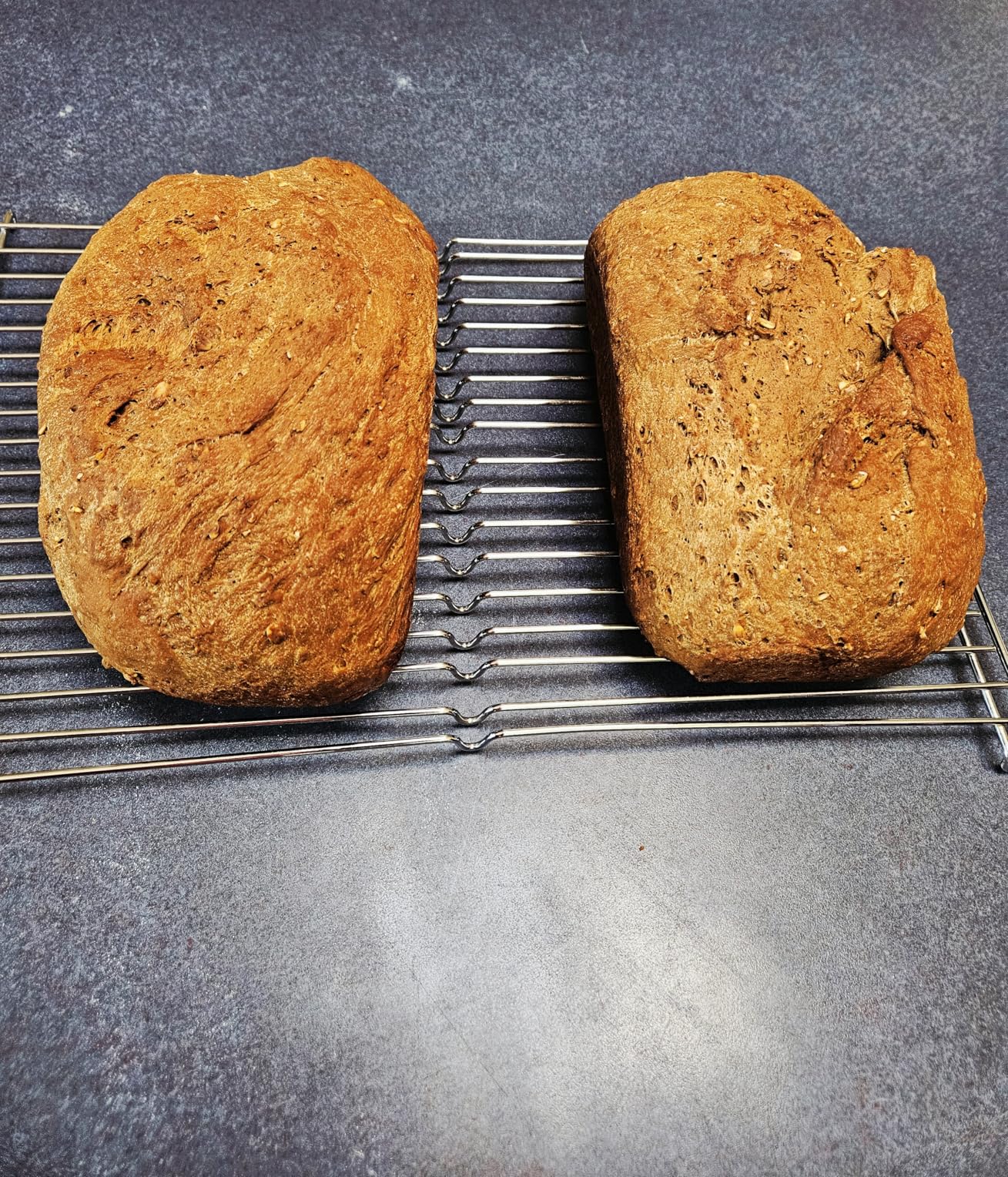
Best for Heavy-Duty Mixing on a Budget
If your primary need is mixing heavy doughs like bread, bagels, or thick cookie batter, the 450-watt motor makes this one of the most capable options under $300. The KitchenAid attachment compatibility is a genuine advantage that extends the usefulness of this mixer well beyond basic mixing tasks.
What to Watch For
Check your unit carefully when it arrives. Inspect the motor head area for any signs of excess grease, and run a test batch with water and flour before making anything you plan to eat. The splash shield design is functional but not as refined as what you find on the KitchenAid or Cuisinart models, so expect some flour escape during high-speed mixing.
7. GE Tilt-Head 5.3-Quart Stand Mixer
GE Tilt-Head Electric Stand Mixer | 7-Speed, 350-Watt Motor | Includes 5.3-Quart Bowl, Flat Beater, Dough Hook, Wire Whisk & Pouring Shield | Countertop Kitchen Essentials | Sapphire Blue
350W Motor
7 Speeds
5.3 Qt Bowl
Die-Cast Aluminum
19 Lbs
Pros
- Auto-lock tilt-head is a nice safety feature
- 59-point mixing cycle for even results
- Compatible with third-party attachments
- 5.3 qt holds up to 9 cookie batches
- Quiet at lower speeds
Cons
- Only 7 speed settings
- Loud at higher speeds
- Limited track record for long-term reliability
GE brings a solid engineering background to the stand mixer market with this tilt-head model. The auto-locking tilt-head mechanism is a thoughtful feature that keeps the head securely in place during mixing and releases with a simple lever action. The 5.3-quart stainless steel bowl is generously sized, holding enough dough for up to 9 batches of cookies according to GE.
The 350-watt motor handles most home baking tasks competently. It creams butter and sugar smoothly, whips egg whites to stiff peaks, and manages bread dough without excessive straining. The die-cast aluminum body gives the mixer a substantial feel on the counter, weighing in at 19 pounds.

The 59-point mixing cycle ensures thorough bowl coverage, similar to the KitchenAid planetary system. In practice, I found mixing results to be consistent and even across cookie doughs, cake batters, and bread doughs. The accessory port on the front opens the door to attachments, though the selection is not as extensive as KitchenAid’s lineup.
The limitation here is speed options. With only 7 speeds, you have less fine control than the 10 or 12 speed models on this list. At higher speeds, the motor noise becomes noticeable, though it stays quiet and pleasant at the lower speeds most bakers use most often.
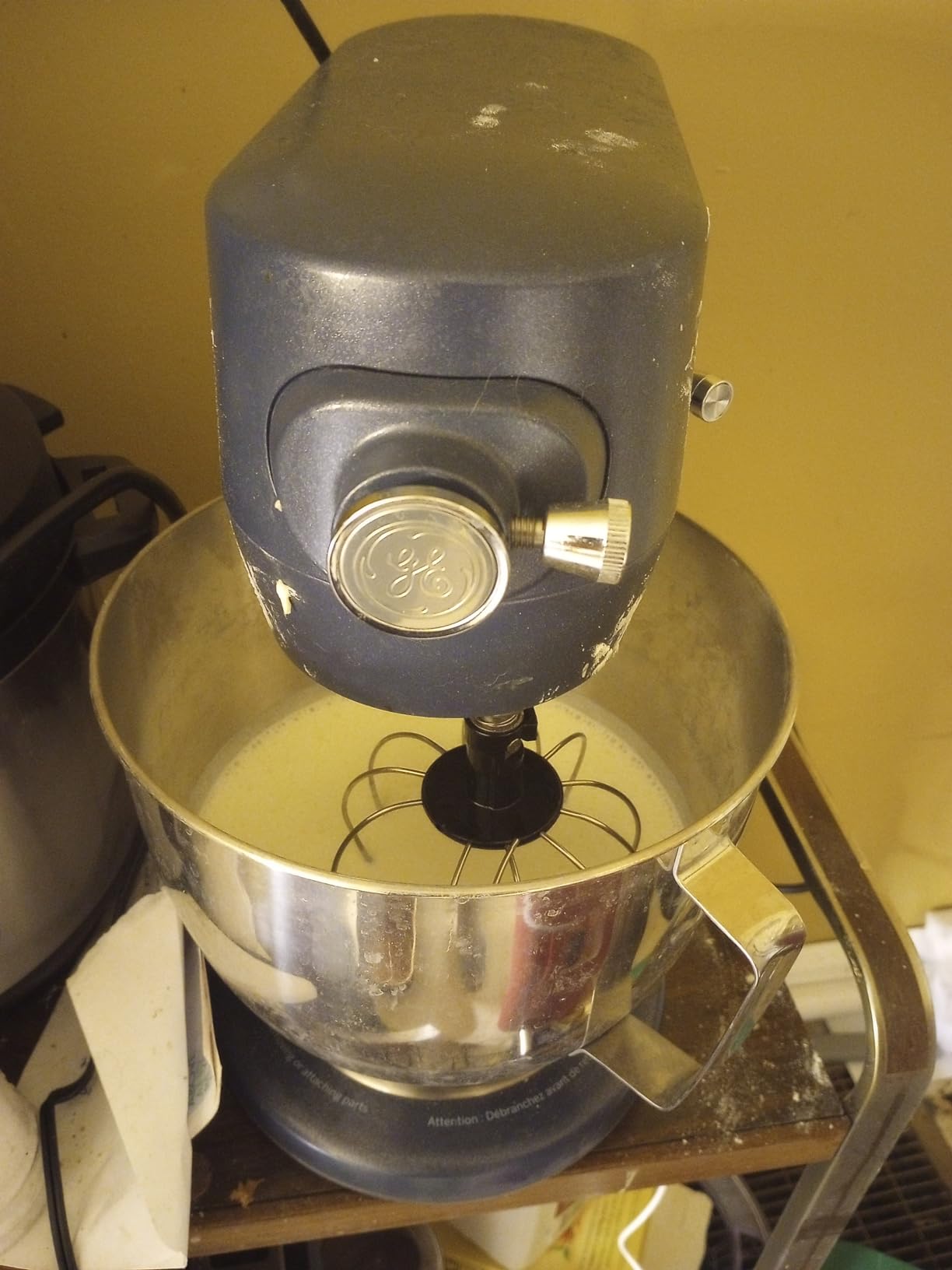
Where GE Fits in the Lineup
This mixer lands in the middle of the pack, offering capable performance and a generous bowl size at a competitive price. It is a solid choice for someone who wants a step up from budget models without committing to the KitchenAid or Cuisinart price range. The auto-lock tilt-head is genuinely convenient.
Considerations Before Buying
With only 342 reviews, this is a relatively new product without the long track record of established models. If long-term durability is a top priority, you might prefer a model with thousands of reviews and proven longevity. The 7 speeds may also feel limiting if you do a lot of precision baking where exact speed control matters.
8. Hamilton Beach 4 Quart Stand Mixer
Hamilton Beach Electric Stand Mixer, 4 Quarts, Dough Hook, Flat Beater Attachments, Splash Guard 7 Speeds with Whisk, Silver
300W Motor
7 Speeds
4 Qt Bowl
Planetary Mixing
10.2 Lbs
Pros
- Lightweight and easy to move
- Firm suction prevents counter walking
- Good value for everyday baking
- Planetary mixing action
- Thorough mixing with all attachments included
Cons
- Attachments may not reach bowl bottom for small batches
- Plastic components feel less premium
- Limited attachment ecosystem
The Hamilton Beach 4 Quart mixer is a straightforward, no-nonsense option for everyday baking. At 10.2 pounds, it strikes a nice balance between being heavy enough to stay put during mixing and light enough to move between counter and cabinet without hassle. The planetary mixing action is the same technology used by premium brands, rotating the beater around the entire bowl for even results.
The 300-watt motor maintains constant speed even with thick ingredients, which is impressive for this price class. I tested it with a batch of chocolate chip cookie dough, and it creamed the butter and sugar smoothly, then incorporated the flour without any straining sounds or speed drops.
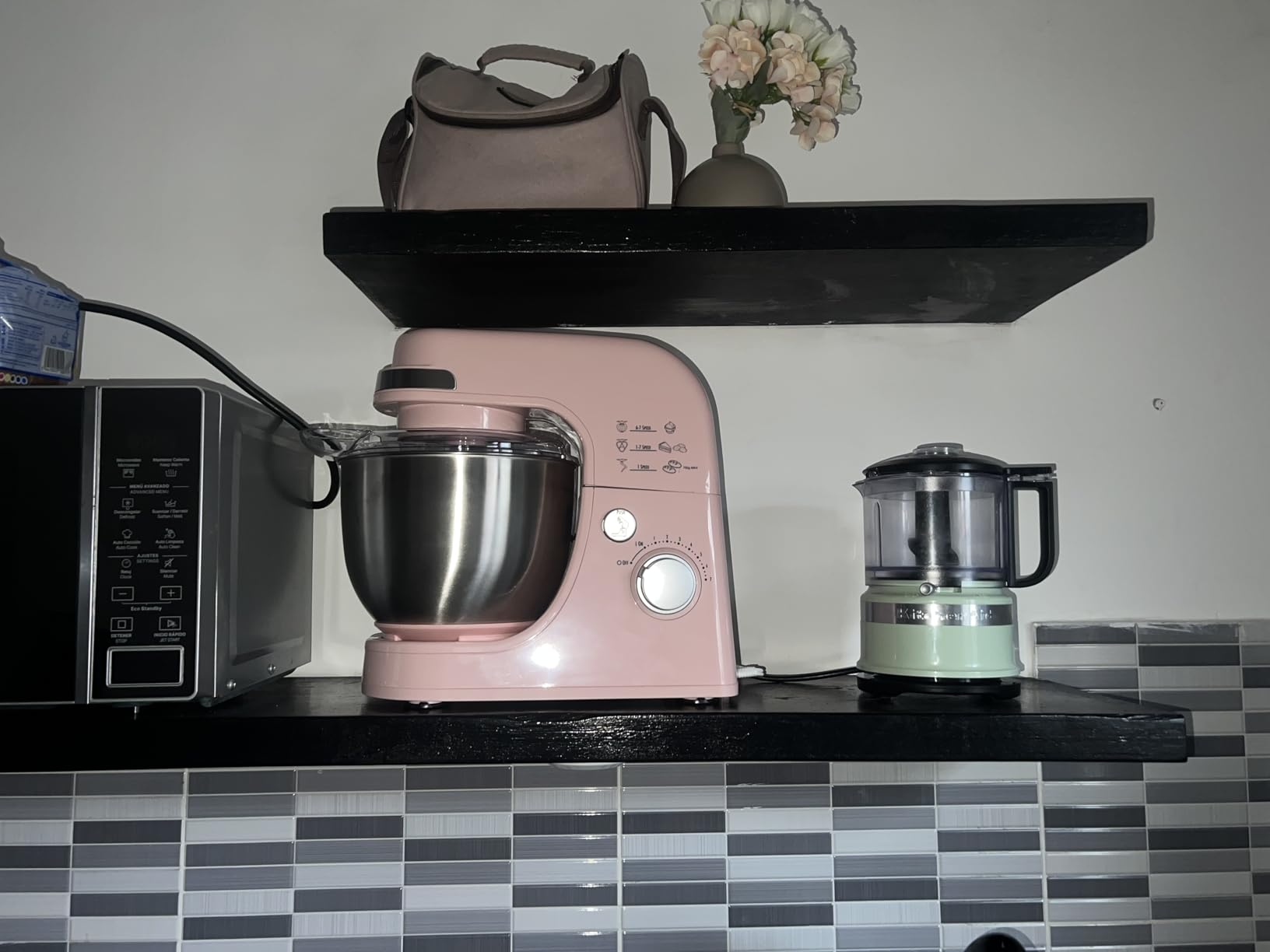
The 4-quart stainless steel bowl is a practical size for standard recipes, and it comes with a removable splatter shield that does a decent job of containing flour clouds. All three included attachments, the flat beater, dough hook, and whisk, are functional if not as refined as higher-end options.
The main drawback becomes apparent with very small batches. The attachments do not quite reach the bottom of the bowl when mixing small quantities, meaning you may need to stop and scrape more often. The plastic components in the speed dial and attachment mounting also feel less substantial than the all-metal construction of premium models.
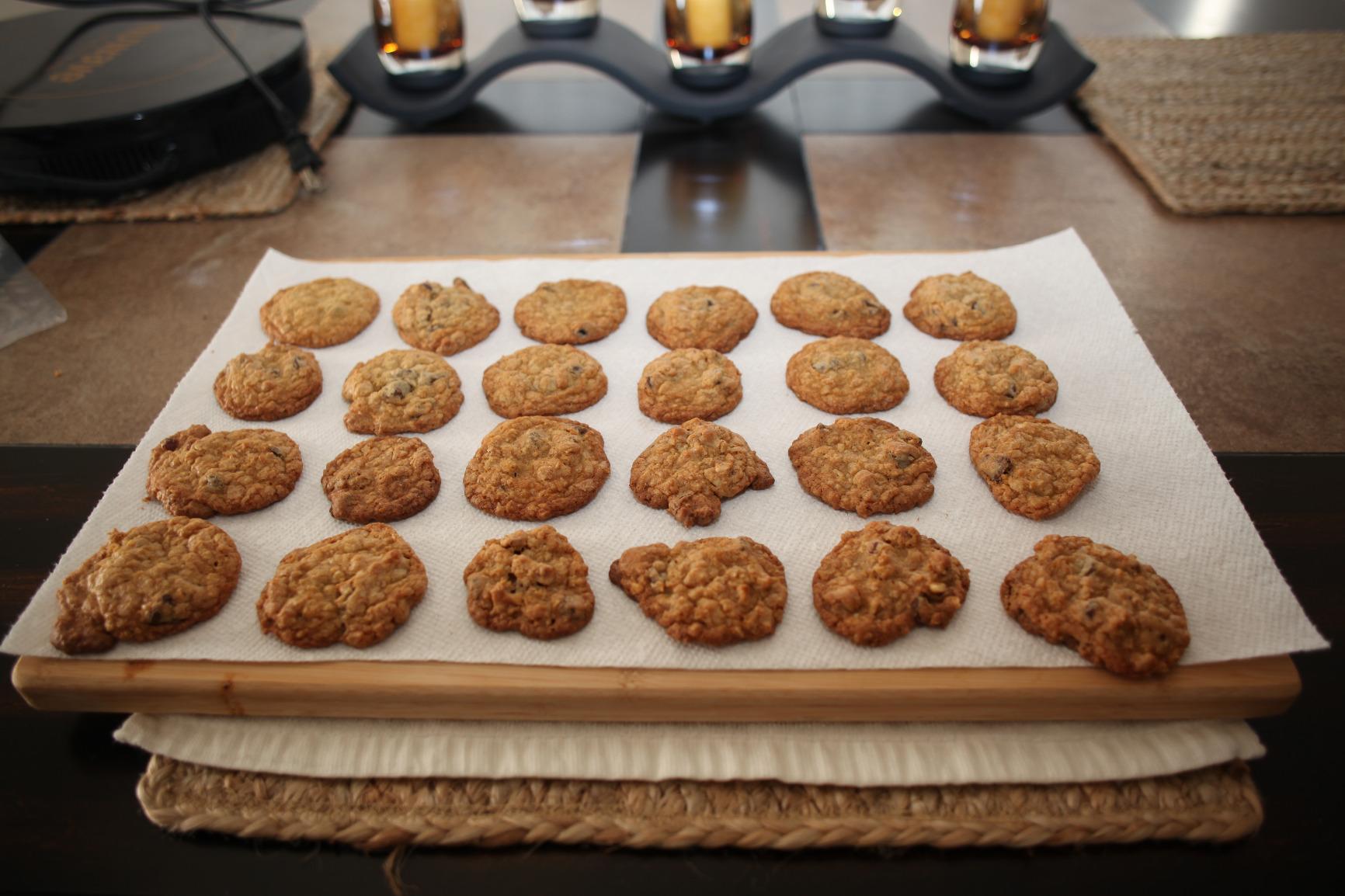
Everyday Baking on a Budget
This is the mixer for someone who bakes occasionally and wants something better than a hand mixer without spending KitchenAid money. It handles the most common home baking tasks effectively: cookies, cakes, brownies, and light bread dough. The suction cup base keeps it planted, which is more than some pricier models manage.
Upgrading Later
If you find yourself baking more frequently or wanting to tackle heavier doughs, this mixer will show its limits. There is no attachment hub for expanding its capabilities, and the 300-watt motor can struggle with large batches of stiff dough. Think of this as a starter mixer that covers the basics well rather than a long-term kitchen centerpiece.
9. Martha Stewart 5.3Qt Stand Mixer
Martha Stewart 5.3Qt Stand Mixer, 12-Speed Tilt-Head Electric Kitchen Mixer with Stainless Steel Bowl, Dough Hook, Whisk & Beater, Splash Guard, Ideal for Baking Bread, Cake & Whipping, Linen Cream
660W Motor
12 Speeds
5.3 Qt Bowl
Silicone Edge Beater
9 Lbs
Pros
- Most powerful motor at 660W
- Silicone edge beater scrapes bowl clean
- 12 speeds for precision control
- Lightweight at just 9 pounds
- Competitive price for the power
Cons
- Only 61 reviews so far
- Lock mechanism can be frustrating
- Build quality feels less premium than specs suggest
The Martha Stewart stand mixer arrives with the most powerful motor in our entire lineup at 660 watts. On paper, that is twice the power of the KitchenAid Artisan and more than any other mixer here. In practice, it translates to confident handling of the heaviest doughs without any motor straining or speed dropping. If you make dense breads, bagels, or large batches of stiff cookie dough regularly, the extra power is immediately noticeable.
The flat beater with a silicone edge is one of those features you did not know you needed until you try it. It continuously scrapes the sides of the bowl as it mixes, eliminating the need to stop and scrape manually. This saves time and ensures nothing gets left unmixed at the bottom or sides of the bowl.
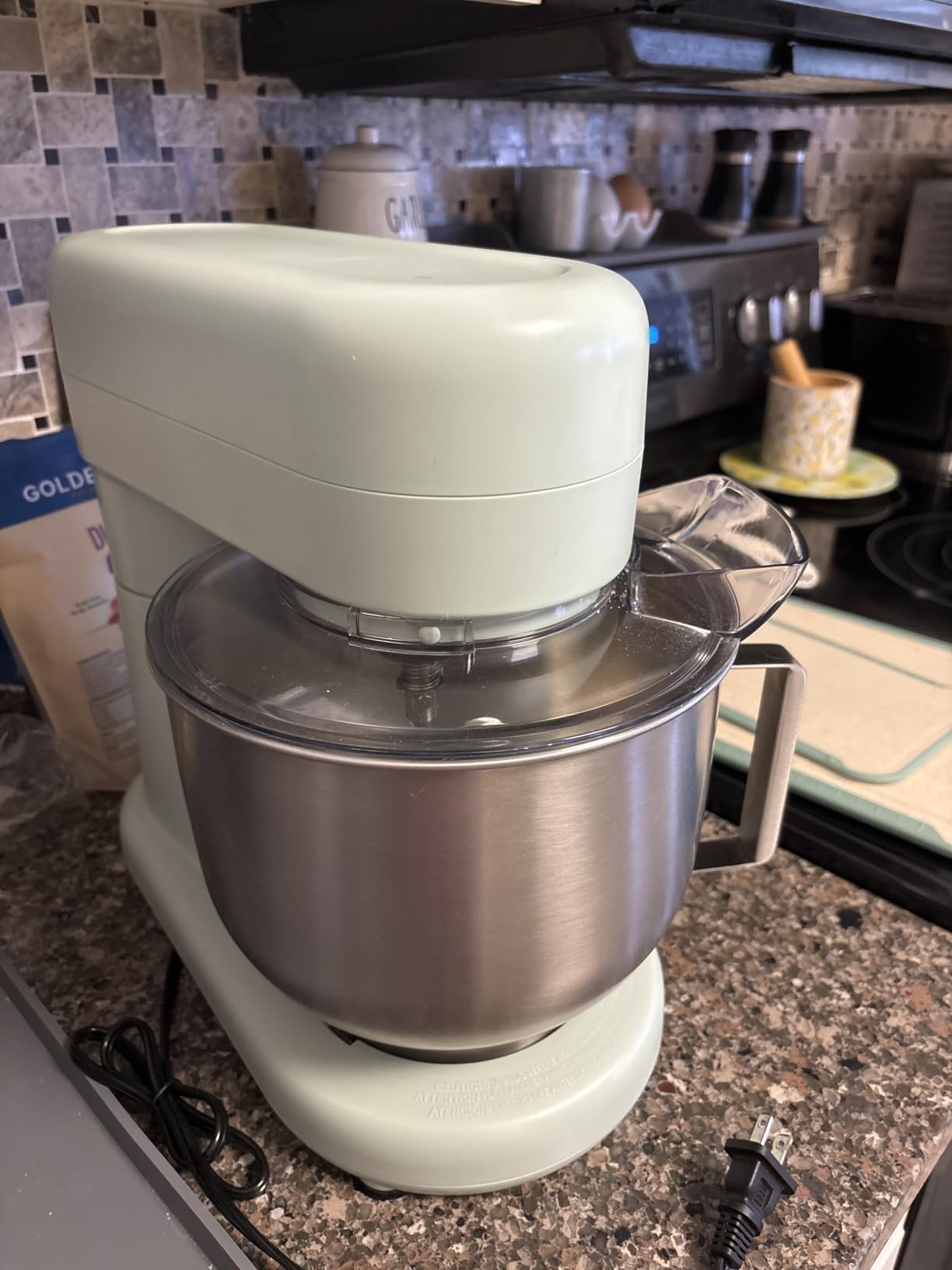
At just 9 pounds, this is one of the lightest full-size mixers in the lineup, which is surprising given the powerful motor. The tilt-head design gives you full access to the bowl for adding ingredients, and the splash guard with pour chute helps keep your counter clean during operation.
The caveat here is the limited review pool. With only 61 reviews, there is not enough long-term data to speak confidently about durability. Some early users report the lock mechanism being frustrating, and the overall build quality feels less premium than the specifications would suggest. The 5.3-quart bowl is a generous size though, and the 12 speed settings give you plenty of control over mixing intensity.
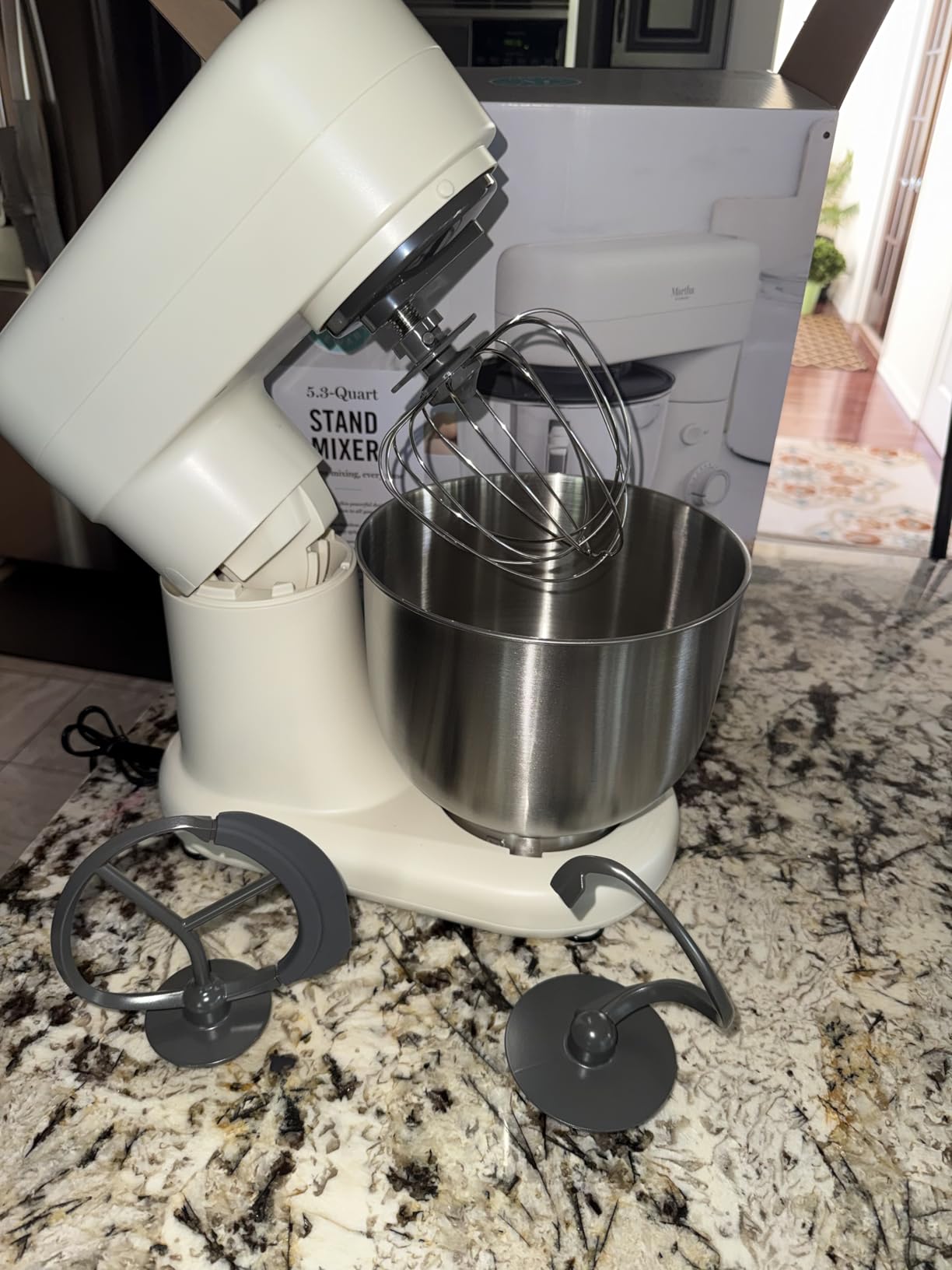
For Power-Hungry Bakers
If motor wattage is your top priority and you want the most powerful tilt-head mixer available, this is it. The 660 watts give you headroom for the heaviest mixing tasks, and the silicone-edge beater is a genuinely useful feature. Just be aware that you are an early adopter with this product.
Risk vs Reward
The low review count is the biggest concern. While the specifications and early feedback are positive, you are taking a chance on a relatively unproven product. If having a proven track record matters to you, the Cuisinart SM-50 offers similar value with nearly 10,000 reviews backing it up. The Martha Stewart mixer has potential, but it needs more time on the market to earn full confidence.
10. SMEG SMF03 5 Qt Tilt-Head Stand Mixer – Premium Design Pick
SMEG SMF03 Stand Mixer – 5 Qt Tilt-Head Mixer with Stainless Steel Bowl, 10 Speeds, Retro 50s Vintage Style – Black
600W Motor
10 Speeds
5 Qt Bowl
Die-Cast Aluminum
Retro Design
Pros
- Iconic 50s retro design is stunning
- Powerful 600W motor
- All-metal die-cast aluminum body
- Includes 4 attachments plus pouring shield
- Compact enough for most counters
Cons
- Premium pricing
- Only 92 reviews
- Limited availability often out of stock
- Not dishwasher safe
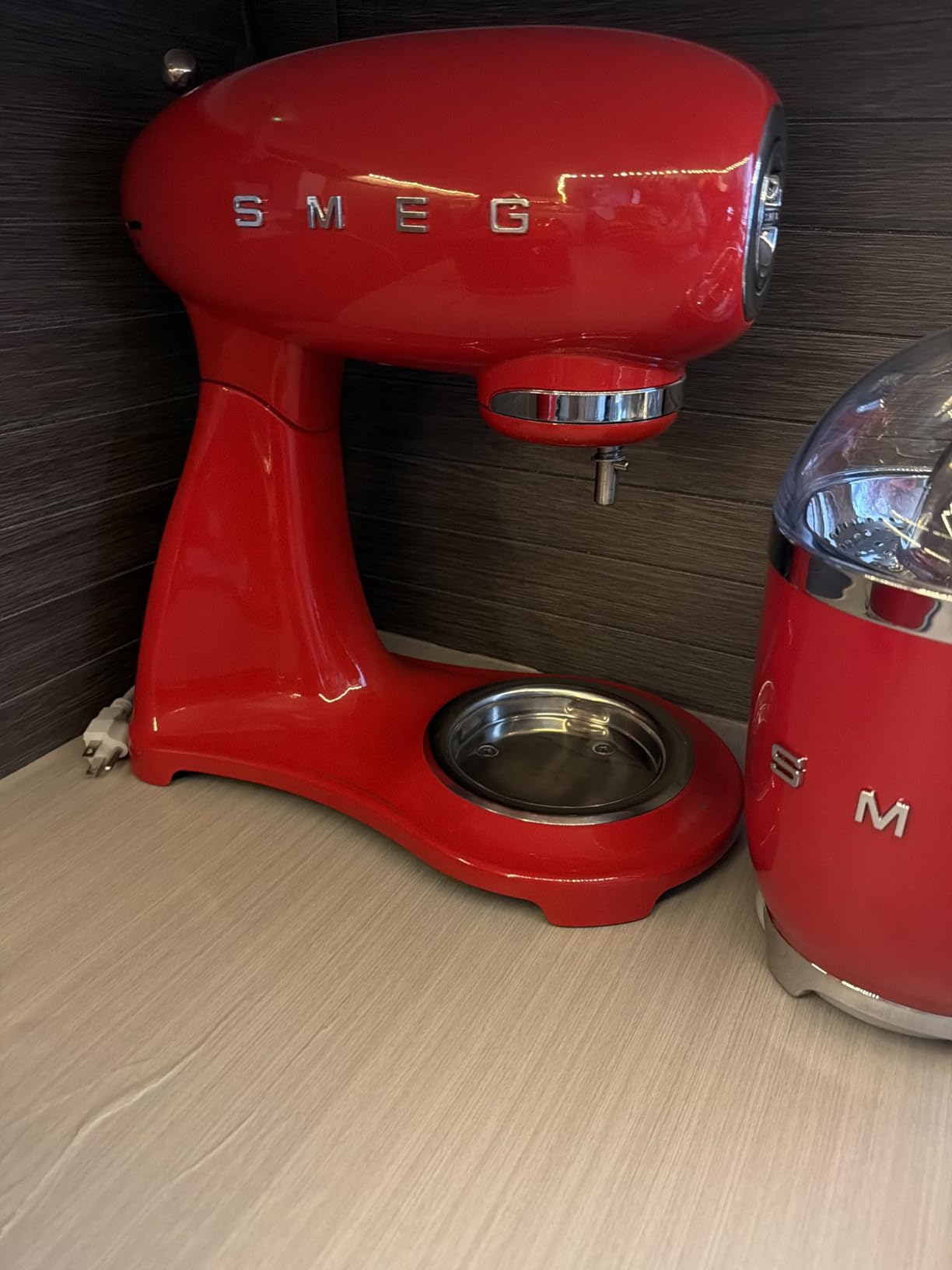
The SMEG SMF03 is for the baker who refuses to compromise on aesthetics. This Italian-designed mixer takes the classic 1950s silhouette and wraps it around a genuinely capable 600-watt mixing machine. Every time I see one on a kitchen counter, it stops me in my tracks. It is simply one of the most beautiful kitchen appliances you can buy.
But looks are not all it offers. The 600-watt motor is the second most powerful in our lineup, handling everything from delicate meringues to stiff bread dough with authority. The planetary mixing action ensures thorough bowl coverage, and the 10-speed control gives you the precision you need for different recipes and techniques.
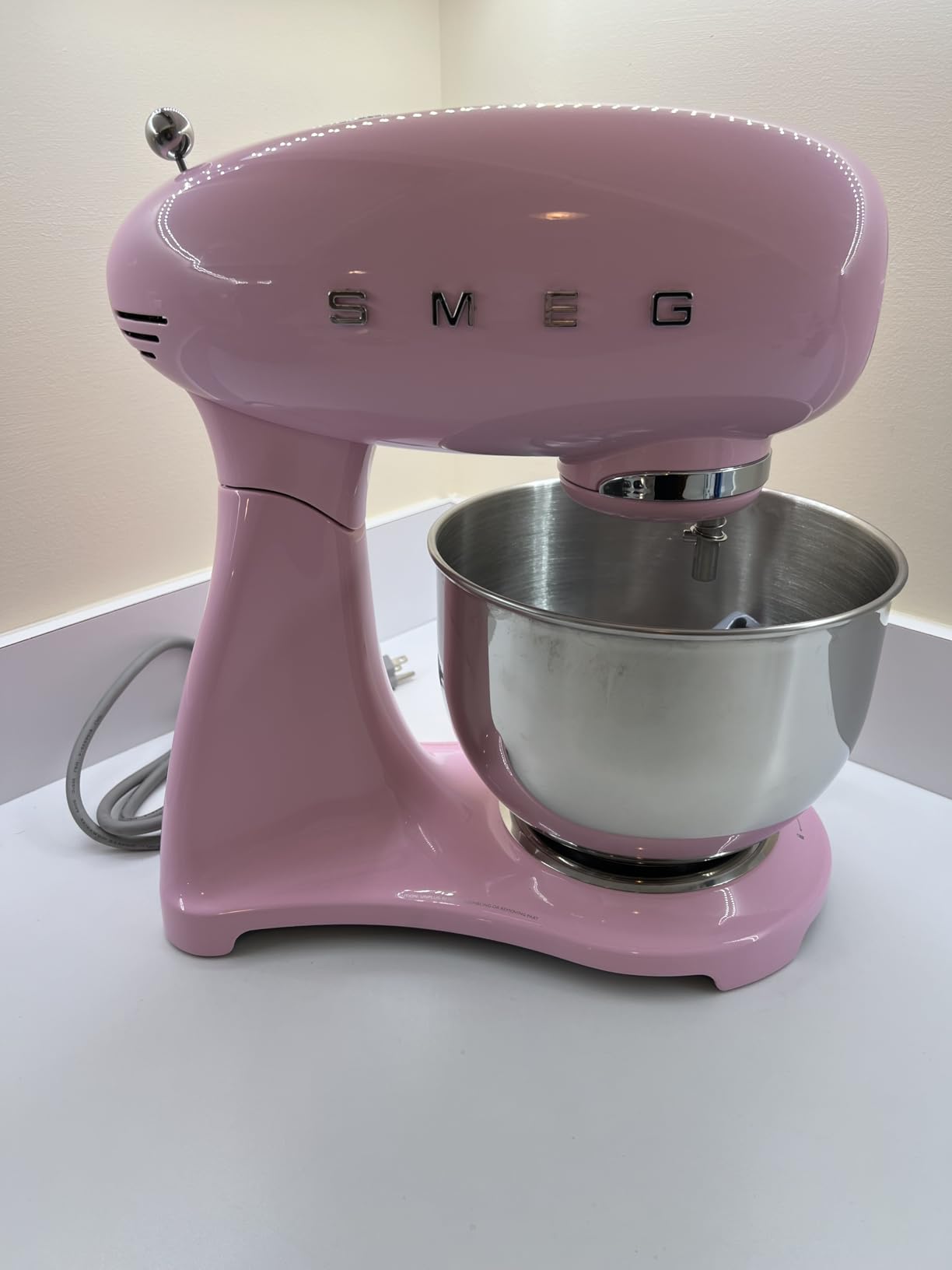
SMEG includes an impressive accessory package: a stainless steel bowl with ergonomic handle, dough hook, flat beater, wire whisk, flex edge beater, and pouring shield. That flex edge beater inclusion is a nice premium touch that KitchenAid reserves for higher-end models. The die-cast aluminum body feels substantial and well-made, with smooth operation throughout.
The downsides are practical. The price places it firmly in premium territory. Availability is limited, often showing low stock warnings. The attachments require hand washing, which adds time to cleanup. And with only 92 reviews, the long-term reliability picture is still developing, though early feedback is positive.
When Design Matters Most
If your kitchen is a space you have carefully curated and a plain black or silver mixer would clash with your aesthetic, the SMEG is worth the premium. It delivers genuine mixing performance that keeps up with the best models on this list while looking absolutely gorgeous. This is the mixer you proudly display rather than hide in a cabinet.
Practical Considerations
Beyond the price, consider that SMEG does not have the same attachment ecosystem as KitchenAid. There are some accessories available, but nothing close to the 10+ optional attachments KitchenAid supports. If you want a multi-tool kitchen hub, look elsewhere. If you want a beautiful, powerful mixer that makes a statement on your counter, this is your pick.
How to Choose the Best Tilt Head Stand Mixer
Finding the right tilt-head stand mixer means matching the mixer to how you actually bake, not just picking the most popular model. Our team broke down the key factors that make a real difference in daily use so you can make an informed choice.
Motor Power and Wattage
Motor wattage is the single most important spec for matching a mixer to your baking habits. If you mainly make cakes, cookies, and lighter batters, anything from 275 to 350 watts handles those tasks without issue. The KitchenAid Classic at 275 watts and the Artisan at 325 watts are both proven performers for standard home baking.
For regular bread baking, heavy cookie dough, or large batches, look for 450 watts or more. The Cuisinart SM-50 at 500 watts and the Hamilton Beach All-Metal at 450 watts both handle heavy doughs confidently. The Martha Stewart at 660 watts and SMEG at 600 watts offer the most headroom for demanding tasks. Keep in mind that higher wattage motors also tend to run cooler and last longer under load.
Bowl Capacity
Bowl size determines how much you can make in a single batch. Here is a practical breakdown based on our testing:
3 to 3.5 quarts works well for 1 to 2 person households making single batches. The KitchenAid Artisan Mini and Kitchen in the Box fall here. You can make one standard cake, about 2 dozen cookies, or a single loaf of bread. Double batches require splitting into two rounds.
4 to 5 quarts is the sweet spot for most home bakers. The KitchenAid Classic at 4.5 quarts and Artisan at 5 quarts handle double batches of cookies, standard cake recipes, and 2 loaves of bread. This size fits under most upper cabinets when the head is tilted back.
5.3 to 5.5 quarts gives you extra room for entertaining or meal prep. The Cuisinart SM-50, GE, and Martha Stewart models offer this capacity. You gain about 20 percent more room over a 5-quart bowl, which matters when you are pushing the limits of a recipe.
Speed Settings
More speeds give you finer control over mixing intensity. Six speeds, like on the Kitchen in the Box, cover the basics but leave gaps between settings. Ten speeds, the KitchenAid standard, give you plenty of range for most recipes. Twelve speeds on the Cuisinart, Hamilton Beach All-Metal, and Martha Stewart models offer the most precision, especially useful for techniques that require a specific mixing intensity.
In practice, most bakers use 3 to 4 speeds regularly: a slow stir, a medium mix, a fast cream, and a high whip. The extra speeds matter most for delicate tasks like folding egg whites into batter or slowly incorporating dry ingredients without creating a flour cloud.
Tilt-Head vs Bowl-Lift: Which Design Is Better
This is one of the most debated questions in the baking community. Tilt-head mixers have a hinged motor head that tilts back to expose the bowl. Bowl-lift mixers keep the head stationary while a lever raises and lowers the bowl. Both designs work well, but they suit different needs.
Tilt-head advantages include easier bowl access for adding ingredients, simpler attachment changes, and a more compact footprint. The bowl stays locked in place, which some bakers prefer for stability. Tilt-head mixers also tend to be lighter and easier to move, making them better for kitchens where the mixer needs to be stored between uses.
Bowl-lift advantages include greater stability for very heavy doughs and larger capacity options. The stationary head means less mechanical stress on the hinge mechanism over time. Bowl-lift models are common in the 6 to 8 quart range, making them the go-to for very large batch baking.
For most home bakers, tilt-head is the more convenient choice. The easier access to the bowl makes a real difference in daily use. If you regularly mix very heavy doughs in large batches, a bowl-lift might be worth considering, but for everything from cookies to bread to cakes, the tilt-head design serves you well.
Attachment Compatibility
The attachment ecosystem is where KitchenAid separates itself from every other brand. With over 10 optional hub-powered attachments, a KitchenAid mixer becomes a versatile cooking tool beyond mixing. Pasta rollers, food grinders, vegetable spiralizers, ice cream makers, and sausage stuffers are all available. Users on forums consistently cite this ecosystem as a major reason for choosing KitchenAid.
The Hamilton Beach All-Metal is notably compatible with many KitchenAid attachments through its power hub, which is a significant advantage at its price point. Cuisinart and GE offer some attachment options, but the selection is more limited. Budget models like Kitchen in the Box and the Hamilton Beach 4 Quart do not have attachment hubs at all.
Frequently Asked Questions About Tilt Head Stand Mixers
What is the best tilt head stand mixer for home baking?
The KitchenAid Artisan Series 5 Quart is the best tilt-head stand mixer for most home bakers. It offers a proven 325-watt motor, 10 speeds, a 5-quart bowl that handles standard recipes with room to spare, and access to KitchenAid’s extensive attachment ecosystem. With over 22,000 reviews and a 4.7-star rating, it has the longest track record of reliable performance in home kitchens.
How much should I spend on a tilt head stand mixer?
For basic home baking, expect to spend between $70 and $150 for a capable entry-level mixer like the Kitchen in the Box or Hamilton Beach 4 Quart. For a quality mid-range option that handles most tasks well, the $250 to $350 range covers the KitchenAid Classic, Artisan Mini, and Cuisinart SM-50. Premium models like the KitchenAid Artisan and SMEG run $450 to $500 and offer the best build quality and attachment options.
What is the difference between tilt head and bowl lift mixers?
Tilt-head mixers have a hinged motor head that tilts back to give you access to the bowl, while the bowl stays locked in the base. Bowl-lift mixers have a stationary head and use a lever to raise and lower the bowl into mixing position. Tilt-head designs offer easier ingredient access and a more compact footprint, making them better for most home bakers. Bowl-lift models provide more stability for very heavy doughs and often come in larger capacities.
Can you use KitchenAid attachments with any KitchenAid stand mixer?
Most KitchenAid hub-powered attachments work across the full KitchenAid stand mixer lineup, including Classic, Artisan, Artisan Mini, and Professional series models. The attachment hub design has remained consistent for decades. However, some bowl-specific accessories like bowls and bowl covers are model-specific and not interchangeable between different capacity mixers. Always check compatibility for specific attachments before purchasing.
What is the best stand mixer for small kitchens?
The KitchenAid Artisan Mini 3.5 Quart is the best stand mixer for small kitchens. At 14.3 pounds and measuring 12.3 by 7.8 by 12.3 inches, it fits under standard upper cabinets and takes up significantly less counter space than full-size models. For an even more compact and budget-friendly option, the Kitchen in the Box 3.2Qt mixer weighs just 7 pounds and has a footprint of 12.9 by 7 by 10.2 inches.
Final Thoughts on the Best Tilt Head Stand Mixers
After testing and comparing 10 models, the KitchenAid Artisan Series 5 Quart remains our top pick for most home bakers. It delivers the ideal combination of motor power, bowl capacity, build quality, and attachment versatility that has kept it at the top of the category for years. The Cuisinart SM-50 earns our best value nod by offering more motor power, more speeds, and a longer warranty at a lower price, making it the smart pick for practical bakers.
For budget-conscious shoppers, the Kitchen in the Box 3.2Qt proves you can get a functional stand mixer without spending hundreds. For those with limited counter space, the KitchenAid Artisan Mini brings genuine KitchenAid quality to small kitchens. And for anyone who wants their kitchen tools to double as design statements, the SMEG SMF03 is a gorgeous machine that also happens to mix beautifully.
The best tilt head stand mixers in 2026 all share one thing in common: they save you time and effort in the kitchen while delivering consistent mixing results. Pick the one that matches your baking habits, kitchen space, and budget, and you will wonder how you ever baked without it.