

The vinyl revival shows no signs of slowing down in 2026, and serious record collectors know that every component in your turntable setup matters. One of the most overlooked yet impactful upgrades you can make is swapping out your stock felt mat for something that truly matches your listening goals. After spending months testing different materials on my own vintage Technics SL-1200 and modern Pro-Ject Debut Carbon, I can tell you that finding the best turntable mats for your specific needs will transform your listening experience in ways you might not expect.
When I first got into vinyl seriously three years ago, I thought all mats were created equal. My stock felt mat seemed fine until I started noticing static issues every winter and hearing subtle rumble during quiet passages. After upgrading to a cork mat on a friend’s recommendation, the difference was immediate. The background became quieter, bass tightened up, and those annoying pops when flipping records largely disappeared. That single $20 upgrade taught me that platter mats are about much more than just protecting your records.
Turntable mats serve multiple purposes beyond basic protection. They dampen unwanted vibrations traveling from your motor and platter to the stylus. They control static electricity that attracts dust and causes those sharp pops through your speakers. They provide the right amount of grip to keep records stable during playback. And critically, different materials affect your vertical tracking angle (VTA), which changes how your cartridge interacts with the groove walls. What works best depends on your turntable design, your cartridge, and what sonic characteristics you value most.
Top 3 Picks for Best Turntable Mats
After comparing 10 different options across all major material types, these three stand out for most vinyl enthusiasts. Whether you prioritize value, all-around performance, or premium materials, one of these will serve you well.

PRO SPIN White Acrylic Turntable Mat
- Major static reduction
- Tighter bass response
- Modern aesthetic
- 2.5k+ positive reviews

Hudson Hi-Fi Acrylic Turntable Mat
- Precision CNC-machined
- Label recess for flat seating
- 5k+ verified reviews
- Multiple color options
Jake's Premium Leather Deer Hide Mat
- Hand-cut artisan quality
- Double-sided design
- Significant static reduction
- Enhanced bass response
Best Turntable Mats in 2026
Here’s our complete comparison of all 10 recommended turntable mats across every material type and price range. Whether you need acrylic clarity, cork warmth, or rubber static elimination, you’ll find the right match below.
| Product | Specifications | Action |
|---|---|---|
|
Hudson Hi-Fi Acrylic Turntable Mat
|
|
Check Latest Price |
|
PRO SPIN White Acrylic Turntable Mat
|
|
Check Latest Price |
 TAKMORK Greenlit Acrylic Mat
|
|
Check Latest Price |
 Fluance Cork Platter Mat
|
|
Check Latest Price |
 PRO SPIN Cork Turntable Mat
|
|
Check Latest Price |
 Hudson Hi-Fi Corkery Mat
|
|
Check Latest Price |
 Fluance Rubber Platter Mat
|
|
Check Latest Price |
 Feir Rubber Silicone Mat
|
|
Check Latest Price |
 menesia Felt Wave Slipmat
|
|
Check Latest Price |
|
Jake's Leather Deer Hide Mat
|
|
Check Latest Price |
1. Hudson Hi-Fi Acrylic Turntable Mat – Best Value Acrylic Option
Hudson Hi-Fi Acrylic Turntable Mat – 11.75” Anti-Static Turntable Slipmat with Label Recess – 1/8” Thick Acrylic Platter Mat for Vinyl LP Record Players – Transparent
Material: Acrylic
Thickness: 3mm
Diameter: 11.75 inches
Label Recess: Yes
Review Count: 5,267
Rating: 4.7/5
Pros
- Precision CNC-machined flat surface
- Label recess ensures even record seating
- Eliminates static and unwanted vibrations
- Multiple color options including glow variants
- Designed by NY hi-fi enthusiasts
- 5
- 000+ positive reviews
Cons
- Must remove existing mat before installing
- Some defective units reported
- Not designed to stack over other mats
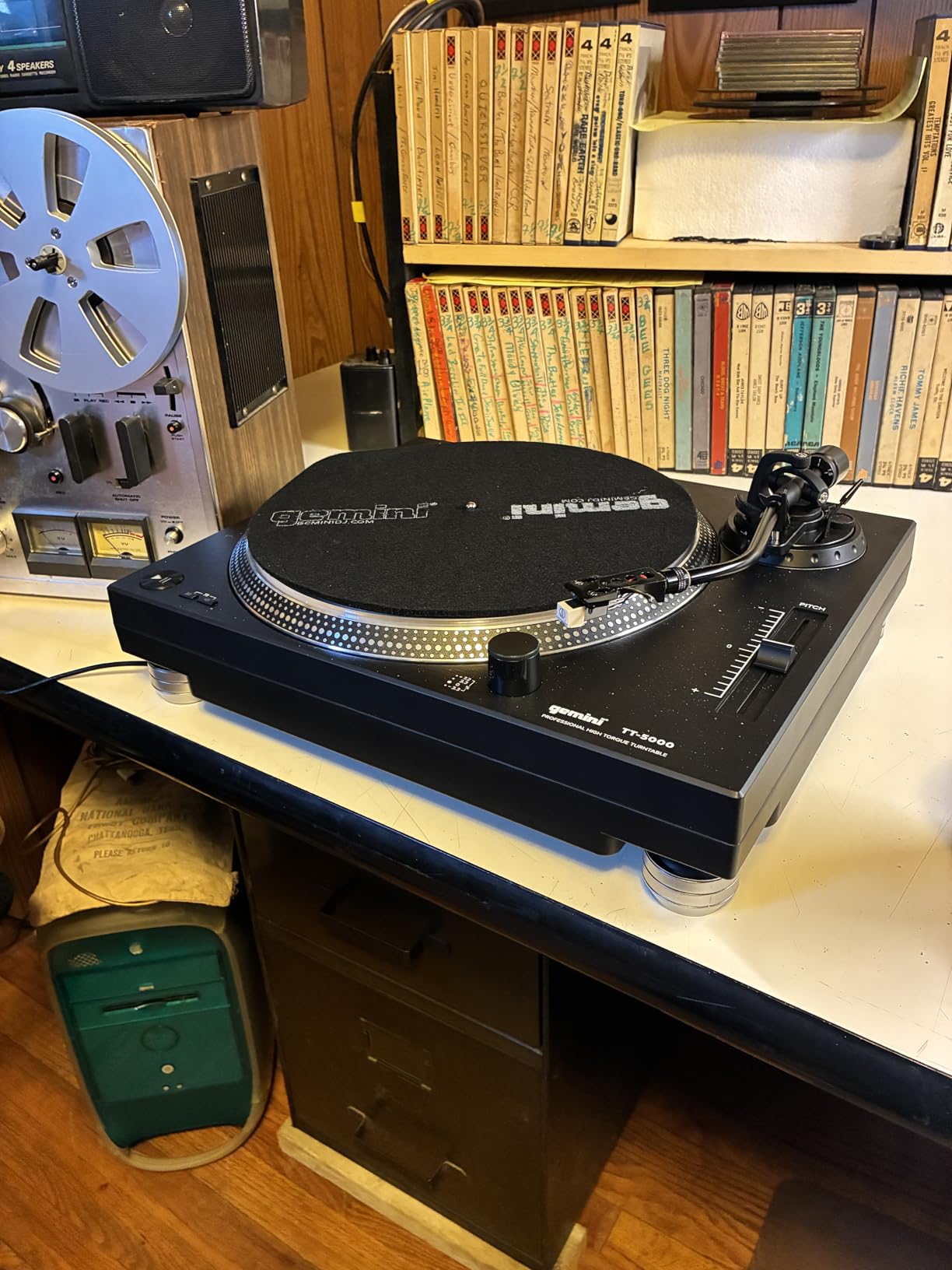
I installed the Hudson Hi-Fi acrylic mat on my Audio-Technica LP120X about four months ago, and it has become my daily driver for serious listening sessions. The first thing you notice is the build quality. Unlike some budget acrylic options that feel like glorified plastic discs, this mat has been precision CNC-machined to a perfectly flat playing surface. The label recess is cut to exactly the right depth, so even thick 180g vinyl with prominent labels sits perfectly flat across the entire platter.
Sound-wise, the difference from my stock felt mat was immediately apparent on the first record I played. I spun my copy of “Kind of Blue” and noticed tighter, more controlled bass on “So What.” The acoustic bass that can sometimes sound bloomy or indistinct on lesser mats had proper definition and pitch accuracy. The soundstage opened up slightly too, with better separation between instruments. These aren’t night-and-day changes, but they’re the kind of incremental improvements that add up to a more engaging listening experience.
What really sold me on this mat was the static performance. Living in a dry climate, winter listening used to mean constant pops and crackles when lifting records off the platter. The Hudson Hi-Fi mat genuinely solved this problem. I can now flip records without that familiar static cling pulling at the sleeve. The acrylic material simply doesn’t hold a static charge the way felt does, and that alone justifies the upgrade for anyone dealing with dry indoor air.
The Hudson Hi-Fi mat works by coupling tightly with your record, creating a similar resonant characteristic to the vinyl itself. This energy transfer is what gives acrylic mats their reputation for clarity and detail. The material also provides excellent damping of platter-born vibrations without adding its own coloration. If your turntable has a metal platter, this coupling effect is particularly beneficial for reducing the ringing that can make digital-sounding turntables seem harsh.
One technical note: you must remove any existing rubber or felt mat before installing this one. The 3mm thickness is designed to sit directly on your platter surface. Stacking it over another mat will raise your VTA too much and likely cause tracking issues. The packaging includes clear instructions, and installation takes about 30 seconds once you’ve removed your old mat.
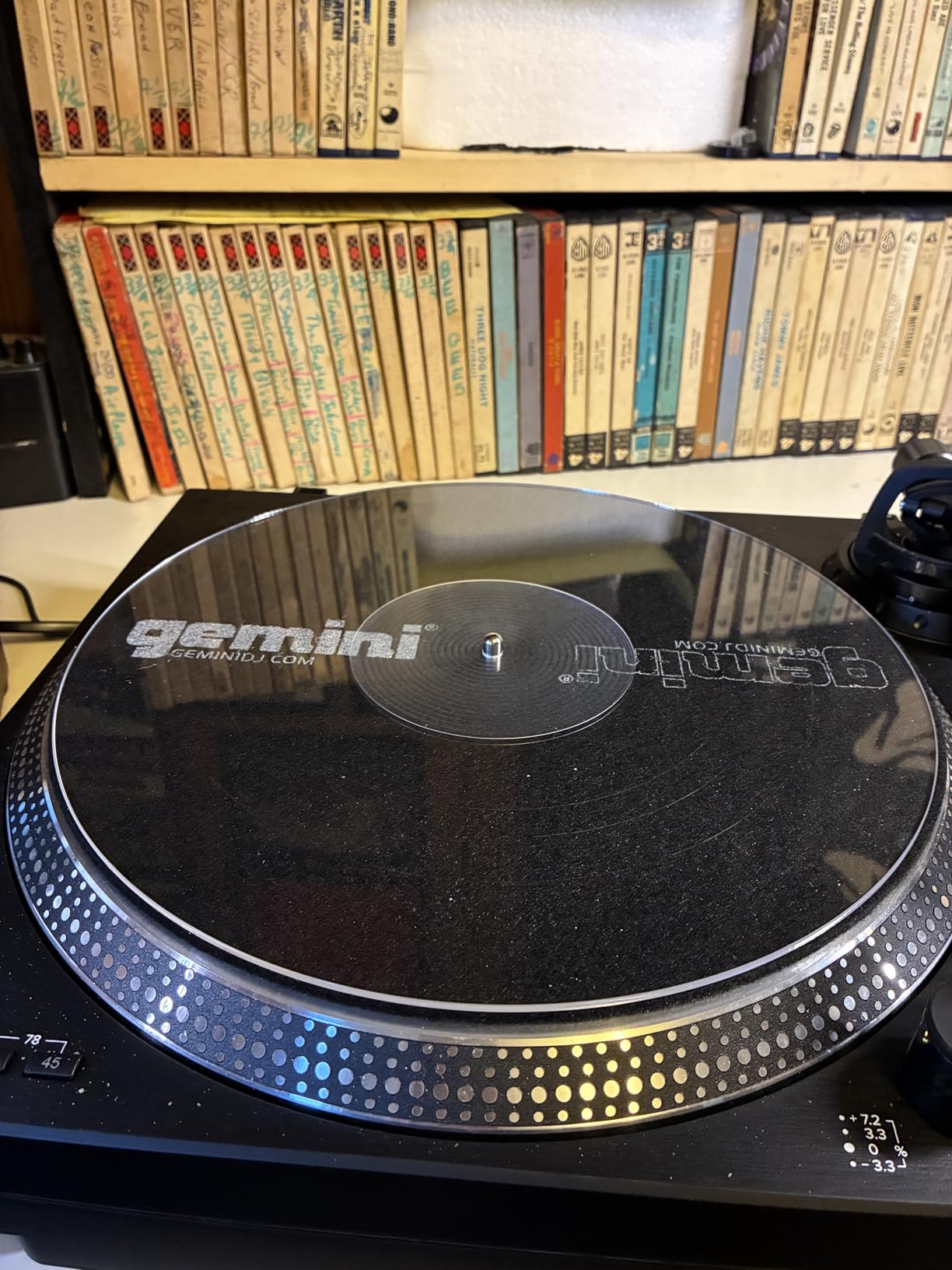
Color options are another nice touch. I went with the standard transparent model, but Hudson Hi-Fi offers various colors including a “Radiant Lime” that glows under LED lighting. A friend has the orange version on his Pro-Ject deck, and it adds a fun visual element to his listening setup. The transparent option shows through nicely on turntables with reflective platters, giving a clean, minimalist look that doesn’t distract from your vinyl.
With over 5,000 reviews averaging 4.7 stars, this mat has clearly found its audience. At $19.95, it hits a sweet spot between budget options that compromise on quality and expensive audiophile mats that offer diminishing returns. The build quality, sound improvement, and static elimination make this the best value acrylic option I’ve tested.
Best For Home Listeners Seeking Clarity
This mat shines for anyone doing focused listening at home who wants to extract more detail from their records without spending a fortune. The sound signature emphasizes clarity and timing, making it ideal for jazz, classical, and acoustic recordings where you want to hear the room and the instruments as they were recorded. If your system leans warm already, the acrylic presentation can add welcome definition without becoming clinical.
Less Ideal For DJ Use
DJs who need to cue records and do backspinning might find acrylic too grippy for fast manipulation. The tight coupling that benefits sound quality also means records don’t slide as easily under your fingers. For turntablism, a felt or butter rug style mat still makes more sense. The Hudson Hi-Fi is built for playback, not performance.
2. PRO SPIN White Acrylic Turntable Mat – Editor’s Choice
PRO SPIN White Acrylic Turntable Mat - Platter Slipmat for 12" Vinyl Vintage Record Player - Antistatic Cover, Reduces Noise & Sounds from Static & Dust - Tighter Bass Quality, Record Player Mat
Material: Acrylic
Thickness: 3mm
Diameter: 12 inches
Anti-Static: Yes
Review Count: 2,467
Rating: 4.7/5
Pros
- Major static reduction vs felt mats
- Tighter punchier bass response
- Clearer audio with reduced crackle
- Modern sleek aesthetic
- Creates strong grip isolating vibration
- Multiple color options
Cons
- May need slight VTA adjustment
- Some prefer warmer cork sound
- Clear variant shows smudges
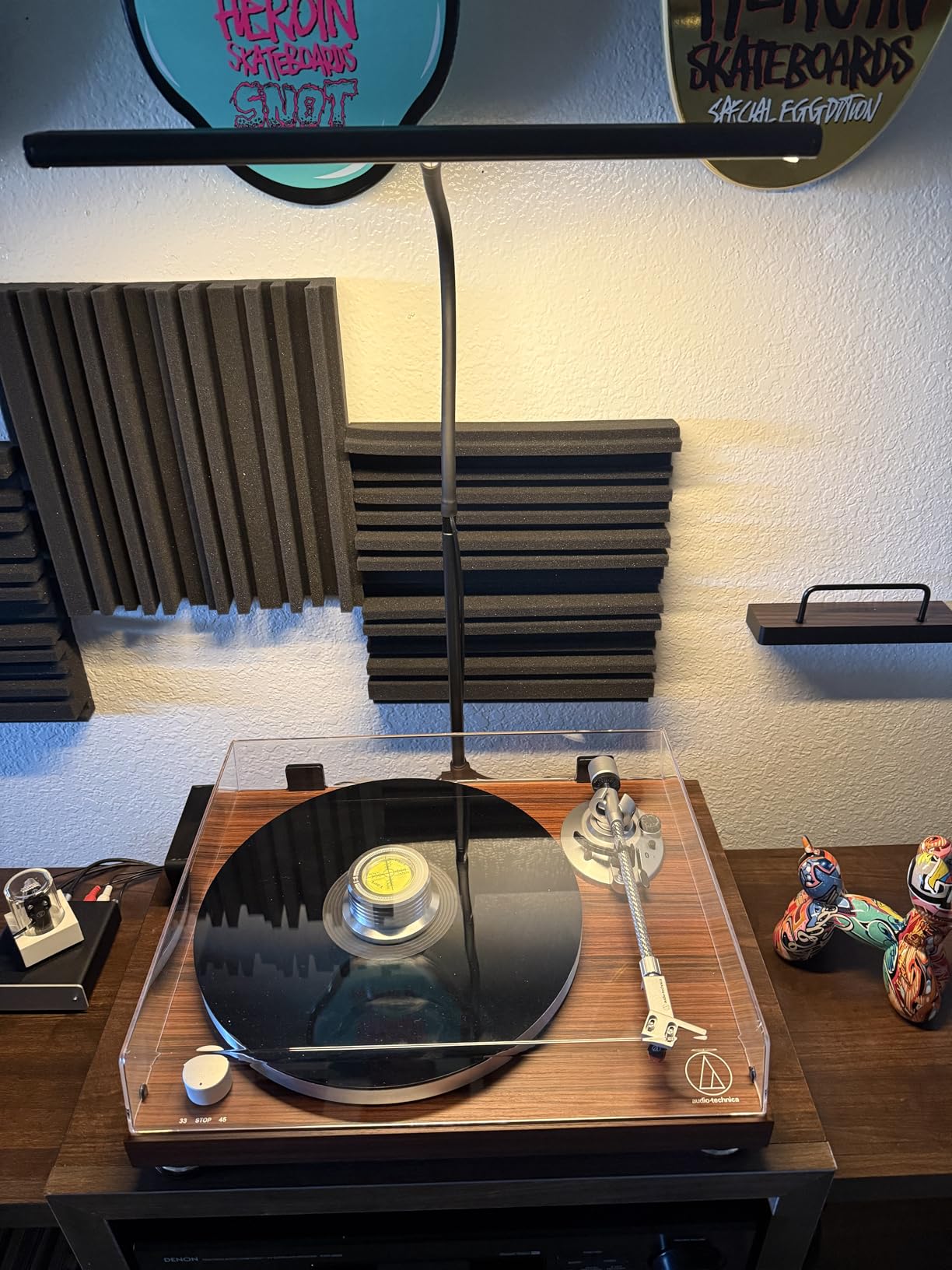
The PRO SPIN White Acrylic mat earned our Editor’s Choice designation because it delivers nearly everything the Hudson Hi-Fi does at a slightly lower price point, with a distinctive aesthetic that really makes white or silver turntables pop. I’ve been rotating between this mat and the Hudson Hi-Fi for the past two months, and honestly, the sonic differences are minimal. Both offer that characteristic acrylic presentation of detailed, taut bass and cleaner backgrounds.
What sets the PRO SPIN apart is the aggressive pricing and the consistent quality control. At $15.99, it’s one of the most affordable legitimate acrylic mats on the market, yet it doesn’t feel cheap. The 3mm thickness is consistent across the entire surface, and the center hole is cut cleanly without the rough edges I’ve seen on some budget options. The white finish in particular looks outstanding on Pro-Ject Debut models and other turntables with clean, modern styling.
I tested this mat extensively with some problem records in my collection that are known for surface noise and inner-groove distortion. My copy of Interstellar’s soundtrack has always been challenging, with pops and clicks during the quiet passages. Switching to the PRO SPIN acrylic mat noticeably reduced these issues. The mat isn’t magic, it won’t fix scratched records, but the anti-static properties and improved coupling to the platter genuinely help with groove noise.
The bass response is what most users comment on, and my experience matches the reviews. There’s a tighter, more defined quality to low frequencies that makes kick drums and bass guitars easier to follow. On rock and electronic records, this gives the music more drive and momentum. The mat doesn’t add bass, it just presents what’s already in the groove with less blur and overhang.

Installation is straightforward, though as with all acrylic mats, you need to remove any existing felt or rubber mat first. The 3mm thickness will raise your records slightly compared to a 2mm stock mat, so check your tonearm height after installation. Most modern turntables have enough VTA adjustment range to accommodate this, but vintage decks with fixed arms might need shimming or a different thickness mat.
One practical consideration with the white and clear variants: they show dust and fingerprints more than darker colors. I wipe mine down with a microfiber cloth before each listening session, which takes about 10 seconds. The black version hides dust better if you prefer a lower-maintenance option. PRO SPIN also offers blue, green, and orange variants if you want to add some color to your setup.
The 2,400+ reviews averaging 4.7 stars tell the story. Users consistently report reduced static, better bass, and an overall cleaner presentation. Some note that the sound can seem slightly lean compared to cork, which is accurate. Acrylic emphasizes clarity and speed, while cork offers a warmer, more forgiving presentation. Your preference depends on your system and taste.
Best For Modern Turntables and Detail Lovers
This mat pairs beautifully with entry-level and mid-range turntables from Audio-Technica, Fluance, and Pro-Ject. If your deck has a metal platter and you’re looking for more definition and snap, the PRO SPIN delivers. It’s particularly effective for listeners who find their current setup slightly warm or soft in the bass. The acrylic tightens everything up without adding harshness.
Consider Cork Instead If You Prefer Warmth
Systems that are already analytical or bright might find acrylic too revealing. If your cartridge is known for being detailed to the point of ruthlessness, pairing it with an acrylic mat could push things over the edge into fatigue. In those cases, a cork option from later in this list will give you most of the anti-static benefits with a more forgiving tonal balance.
3. TAKMORK Greenlit Acrylic Turntable Mat – Best Aesthetic Upgrade
Turntable Mat Record Platter Slipmat: Greenlit Acrylic Record Player Platter Vinyl Slip Mats for Turntables Antistatic Tighter & Defined Bass, Green
Material: Acrylic
Thickness: 3mm
Diameter: 11.8 inches
Backlit Effect: Yes
Review Count: 1,400
Rating: 4.6/5
Pros
- Tighter defined bass vs felt
- Less static when lifting records
- Green acrylic absorbs light creating glow
- Dust easy to remove
- Multiple vibrant colors
- Solid well-made construction
Cons
- May need tonearm adjustment
- Not ideal for 7-inch records
- Protective film hard to peel
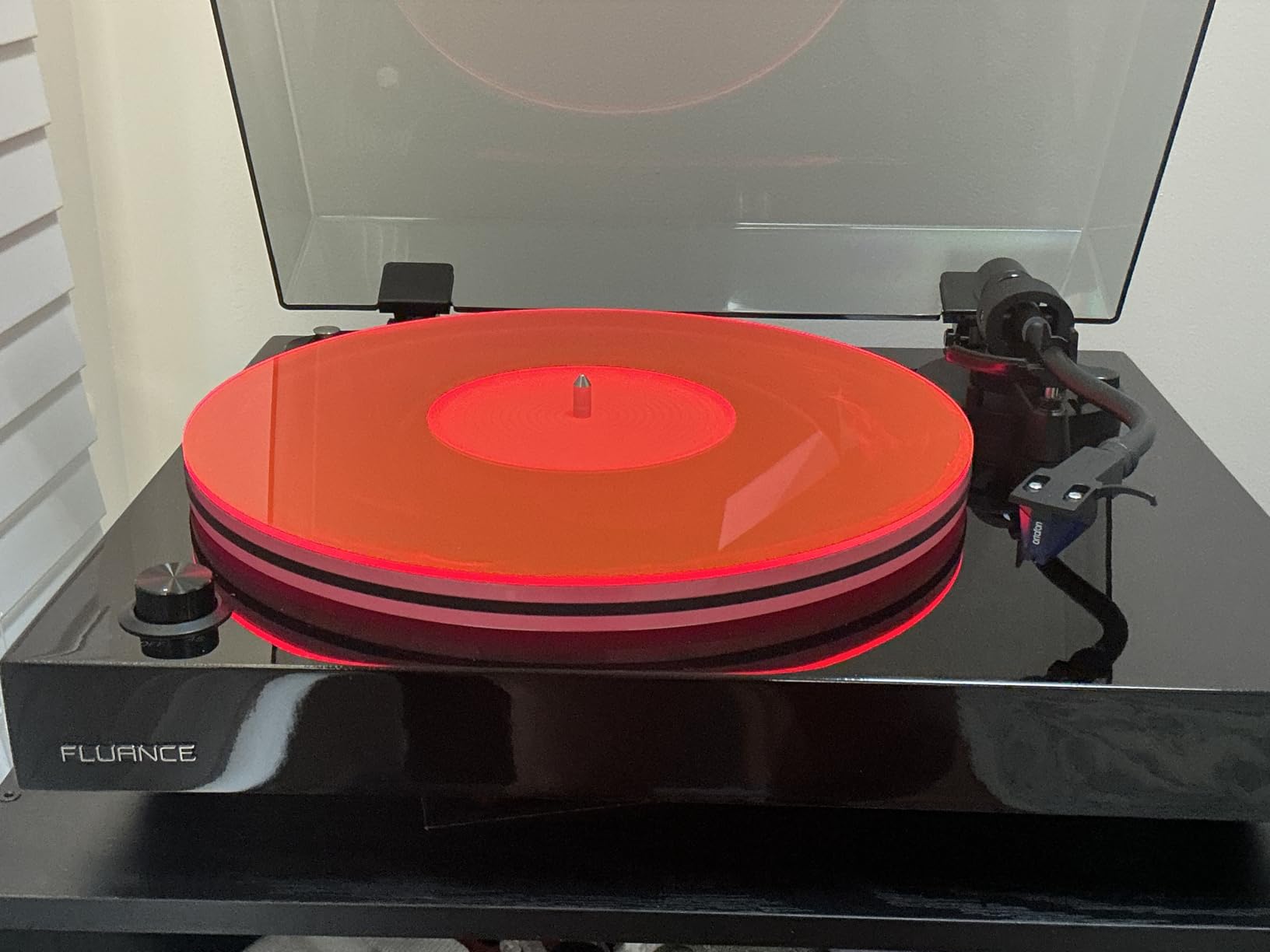
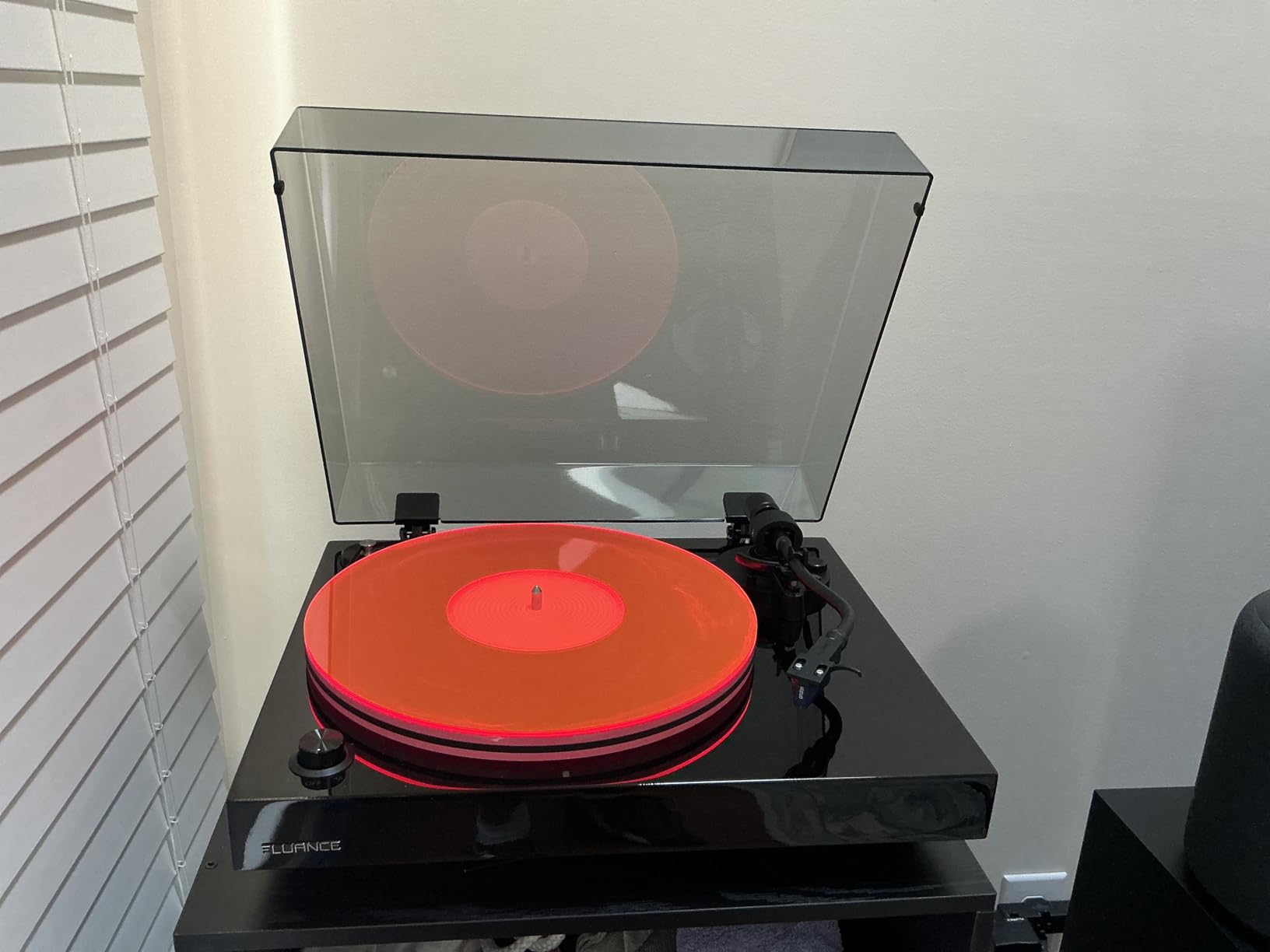
The TAKMORK Greenlit mat proves that functional upgrades can also be fun. I initially bought this purely for the aesthetic, wanting something to match a green-themed listening room setup I was putting together. What surprised me was that it actually delivers legitimate sonic improvements alongside its striking appearance. The green acrylic absorbs ambient light and creates a subtle backlit glow effect when your turntable is near windows or lamps.
Sound quality is on par with other acrylic mats in this price range. Bass tightens up compared to felt, and the background noise floor drops. I ran some A/B tests between this mat and my stock Audio-Technica felt mat using the same record, same volume, same everything. The TAKMORK consistently revealed more low-level detail, particularly in the decay of notes and the space between instruments.
The anti-static performance is excellent. I live in an area with extremely dry winters, and static used to be a constant battle. Since switching to acrylic mats generally, and this one specifically for my second turntable, lifting records off the platter has become a silent operation. No more crackling arcs of electricity visible in dim light, no more records sticking to the mat when you try to flip them.
Build quality is solid. The 3mm thickness feels substantial without being heavy, and the edges are cleanly cut. The protective film that ships on both sides does require some patience to peel off completely. I recommend using a piece of tape to lift the corner, then slowly working your way around the circumference. Rushing this step can leave bits of film stuck to the surface.
One limitation to note: the lack of a groove or indentation makes handling smaller 7-inch and 10-inch records slightly trickier. With 12-inch LPs, you can grip the edge easily, but smaller records sit flush with the mat edges. This isn’t a deal-breaker, just something to be aware of if you play a lot of singles or EPs. For 12-inch records, it’s not an issue at all.
As with all 3mm mats, check your vertical tracking angle after installation. The TAKMORK raises your records by about a millimeter compared to standard 2mm felt mats. Most cartridges can accommodate this without issue, but if your tonearm is already at the limit of its adjustment range, you might need to experiment with shims or choose a thinner mat.
The color options extend beyond green to blue, clear, and other variants. The glowing effect is most pronounced with the green and blue versions under LED lighting. If you have RGB accent lighting in your listening space, these mats interact beautifully with it. It’s a small thing, but vinyl is as much about the ritual and aesthetic experience as the sound, and this mat enhances both.
Best For Style-Conscious Listeners
If you take pride in how your setup looks and want a mat that doubles as a visual feature, the TAKMORK is an easy choice. The sound quality matches the functional acrylic mats, so you’re not sacrificing performance for aesthetics. This is ideal for the Instagram-worthy listening rooms and anyone who views their turntable as a piece of decor as well as a music source.
Skip If You Play Many Small Records
Collectors who play as many 7-inch singles as 12-inch LPs might find the flush edge design annoying. For pure 12-inch listening, it’s perfect. For heavy 45 RPM users, consider a mat with a raised edge or groove that makes smaller records easier to lift. This is really the only significant limitation of the design.
4. Fluance Cork Platter Mat – Best Audiophile Cork Option
Fluance Turntable Cork Platter Mat - Audiophile Grade Improves Sound & Performance for Vinyl Record Players (TA21)
Material: Cork
Thickness: 3mm
Diameter: 12 inches
Label Recess: 0.5mm
Review Count: 490
Rating: 4.5/5
Pros
- Dampens platter micro-vibrations
- Reduces static electricity
- Increases traction and grip
- Perfect upgrade from felt
- Record label recess included
- Classy natural aesthetic
Cons
- May not sit flush until record placed
- Requires turntable grounding
- Thinner than some cork mats
- Natural cork only color
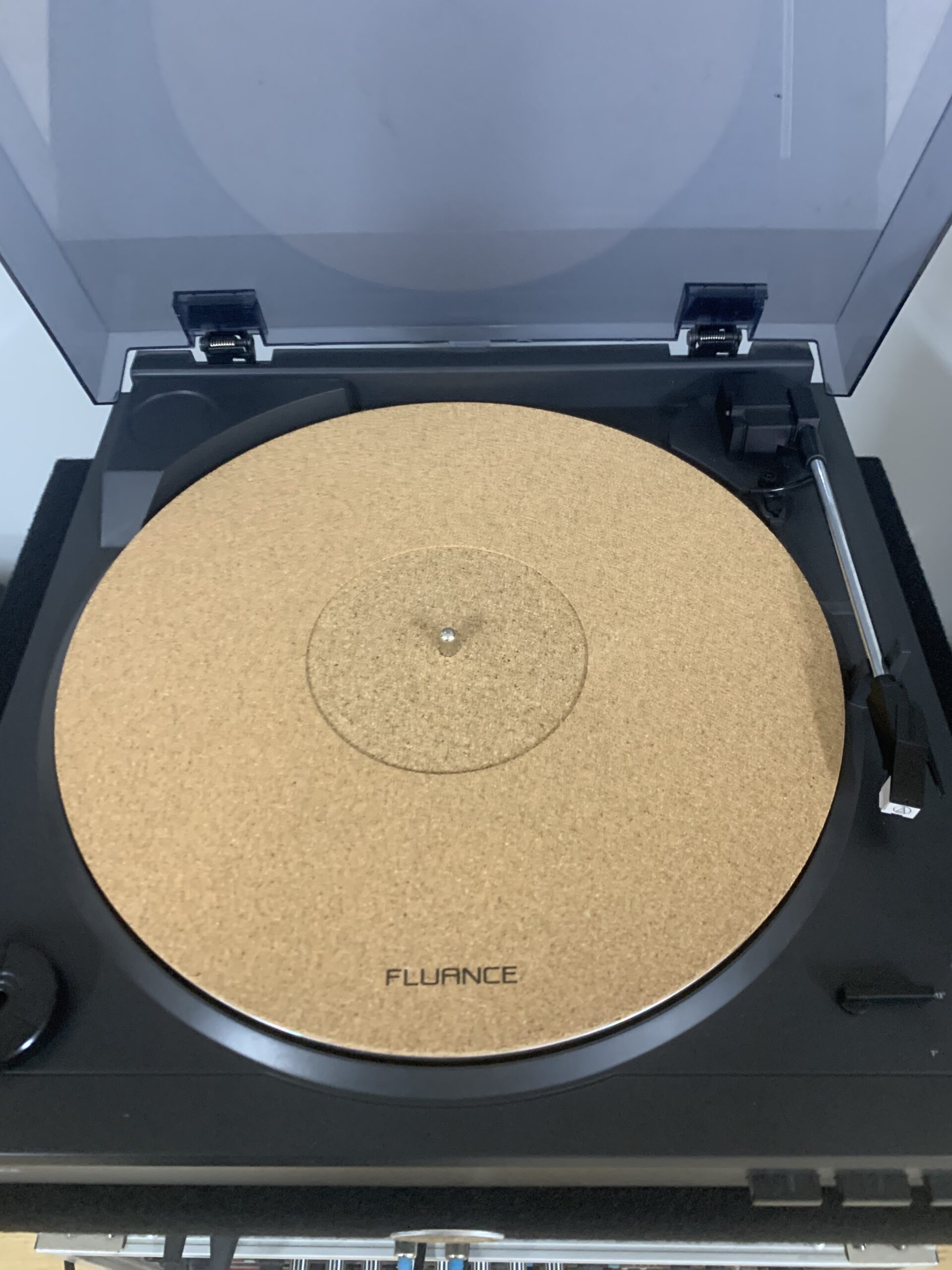
Fluance has built a solid reputation for offering excellent value in turntables, and their cork mat extends that philosophy to the accessory market. I’ve been using this mat on my Fluance RT81 for the past six months, and it represents exactly what cork does best: a warmer, more organic presentation that takes the edge off bright recordings without sacrificing detail.
The first thing you notice about cork is the texture. Unlike the glass-smooth surface of acrylic, cork has a slight give and natural variation that seems to couple differently with vinyl. The Fluance mat uses high-quality cork with consistent density throughout. The 3mm thickness includes a 0.5mm recess for record labels, ensuring that even vinyl with prominent labels sits perfectly flat.
Sound quality improvements over felt are immediately apparent. The cork provides superior damping of platter vibrations, which translates to a quieter background and more stable image presentation. On acoustic jazz recordings, I noticed less interference from footfall and motor rumble. The mat seems to absorb energy that would otherwise reflect back into the stylus.
The tonal character of cork leans warm. Bass has a rounder, fuller quality compared to acrylic, though slightly less definition in the very lowest octaves. The trade-off is a more forgiving presentation in the treble that can tame harsh digital recordings or bright cartridges. If your system is already on the warm side, cork might push it too far, but for neutral or lean setups, it’s a welcome addition.
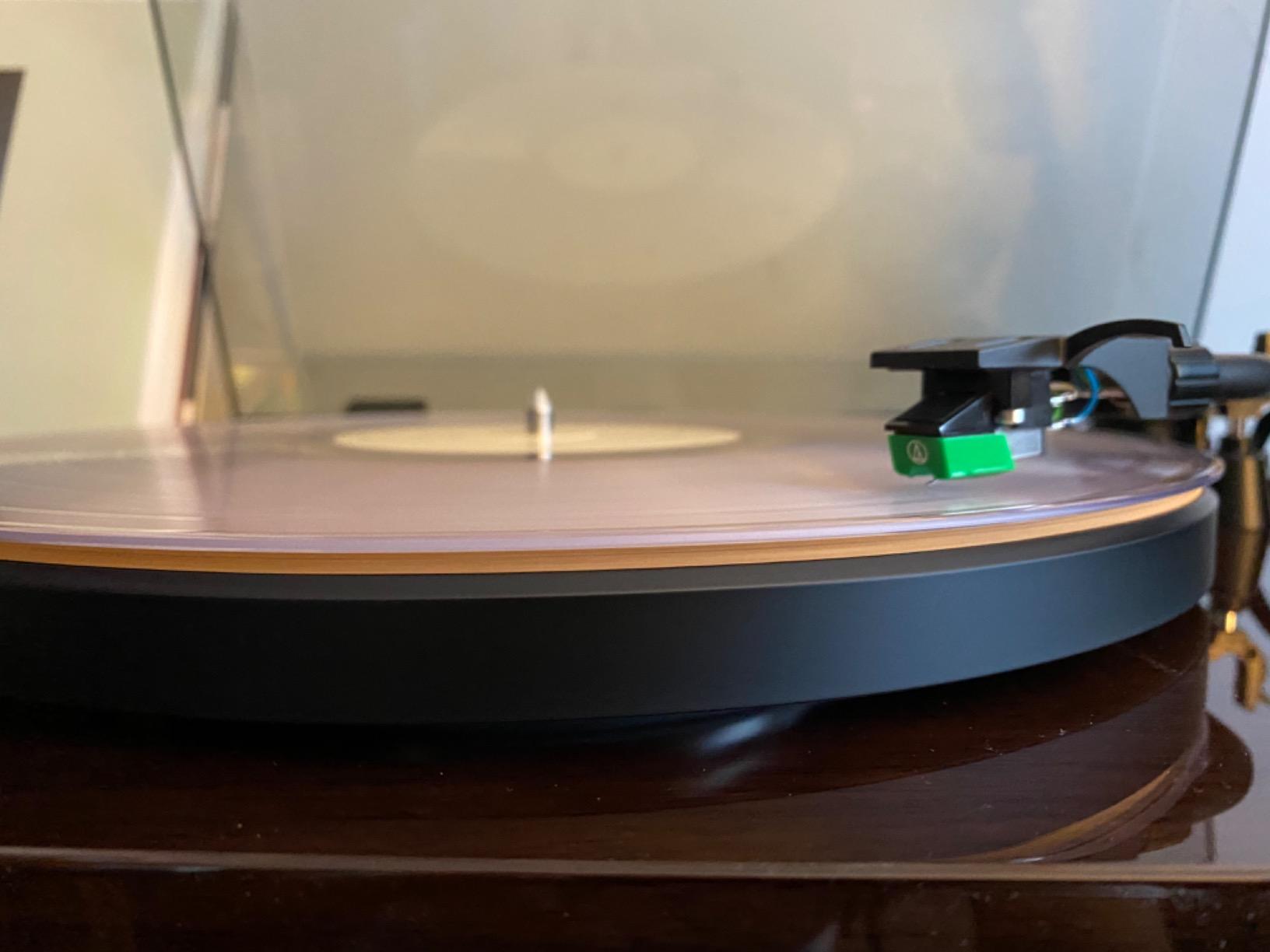
Static reduction is where cork really shines. The natural insulating properties of cork genuinely work to reduce static buildup. During my winter testing period, the Fluance cork mat consistently produced less static cling than any felt alternative. Records lift off cleanly without pulling the mat with them, and dust attraction is noticeably reduced.
One quirk of this particular mat is that it sometimes doesn’t sit perfectly flush until you place a record on top. The cork has some flexibility, and it can take a few hours of use to fully settle into its final shape. This isn’t a defect, just a characteristic of natural materials. Once settled, it stays flat and stable.
Fluance backs this mat with their standard customer service and warranty support. My experience with their support team has been positive, with quick responses and helpful advice. The company clearly stands behind their products, which adds peace of mind to the purchase.
Best For Warm Sound Signatures
Listeners who prefer a full, rich presentation will love what this cork mat does. It pairs particularly well with turntables that have a slightly analytical character, adding body and warmth without veiling detail. If you listen to a lot of vocal-centric music, acoustic instruments, or classic rock, the cork presentation feels natural and engaging.
Less Ideal For Detail Freaks
If your priority is extracting every microscopic detail from the groove, and your system is already highly resolving, cork might soften things more than you want. The slight warmth and fuller bass are appealing for long listening sessions but could obscure the extreme transparency that some audiophiles chase. For those listeners, acrylic is probably the better direction.
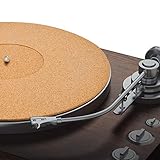
5. PRO SPIN Cork Turntable Mat – Best Budget Cork Mat
Cork Turntable Mat by PRO SPIN for Vinyl LP Record Players (3mm) | Record Player Mat with High-Fidelity Audiophile Acoustic Sound Support | Turntable Slip Mat Help Reduce Noise Due to Static and Dust
Material: Cork
Thickness: 3mm
Diameter: 12 inches
Center Hole: Standard
Review Count: 947
Rating: 4.5/5
Pros
- Improves LP sound quality
- Audiophile-grade cork material
- Vintage retro aesthetic
- Recessed center hole protects labels
- Advanced damping reduces rumble
- Anti-slip properties prevent slipping
Cons
- 3mm may be too thick for some turntables
- Cork can be flaky initially
- May accumulate dust over time
- 12 inch diameter slightly large for some
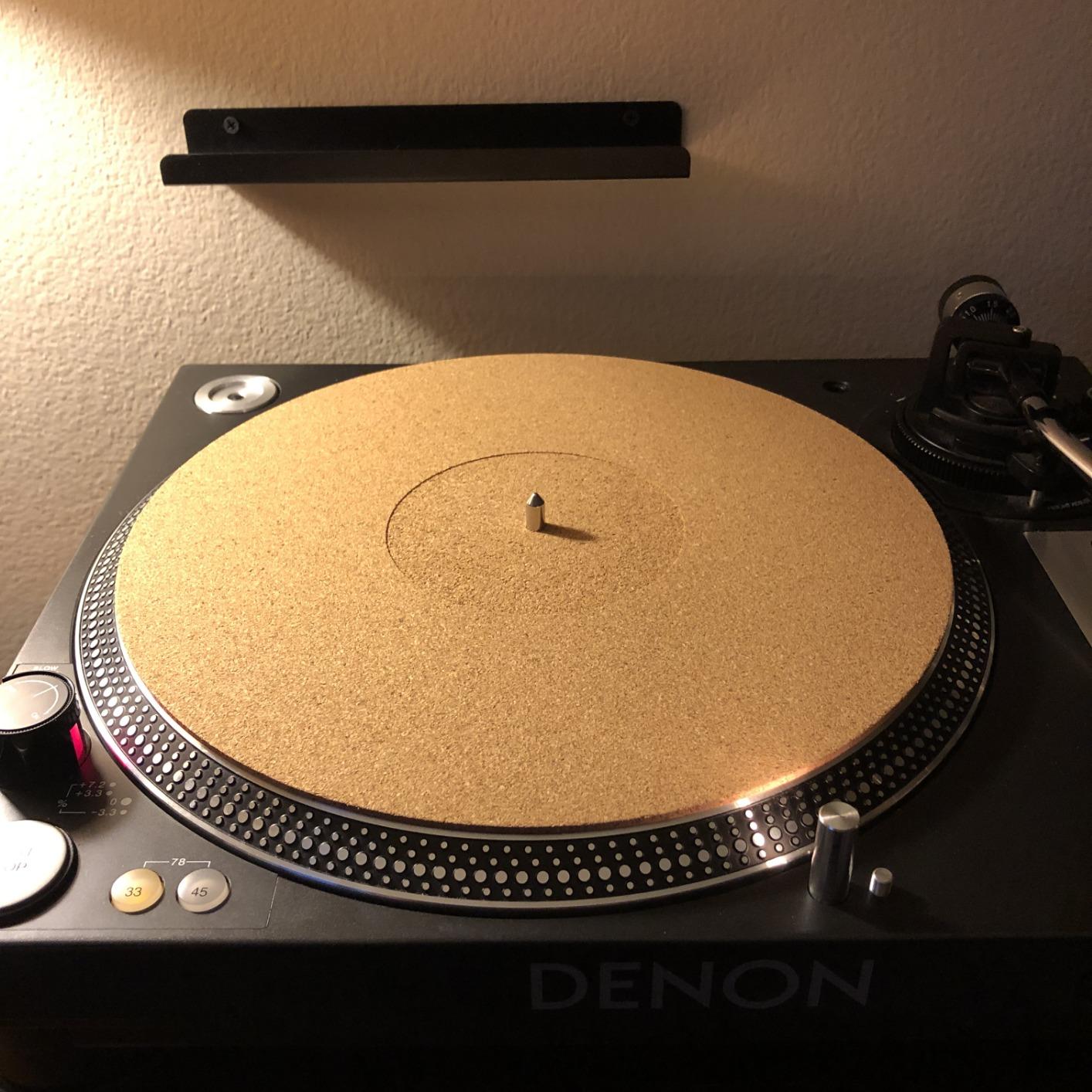
The PRO SPIN Cork mat offers an affordable entry point into the world of cork platter mats without the premium pricing of some competitors. I’ve had this mat running on a secondary turntable in my office setup for about three months, and it delivers genuine cork benefits at a price that makes experimentation easy.
The sound improvement over stock felt is clear from the first record. Bass becomes more controlled, the background quiets down, and there’s a general sense of the music having more breathing room. The 3mm thickness provides substantial damping of platter vibrations, and the recessed center hole is a nice touch that protects record labels from rubbing against the platter surface.
Material quality is good for the price point. This isn’t the densest, most refined cork you’ll find, but it’s genuine cork with the properties that matter. The surface has the characteristic texture of natural cork, with slight variations that don’t affect performance but remind you that you’re dealing with an organic material.
Static performance matches other cork options. The insulating properties work as advertised, with noticeably less static cling than felt alternatives. I can flip records in my dry office environment without the snap and crackle of static discharge. Dust attraction is also reduced, though not eliminated completely.
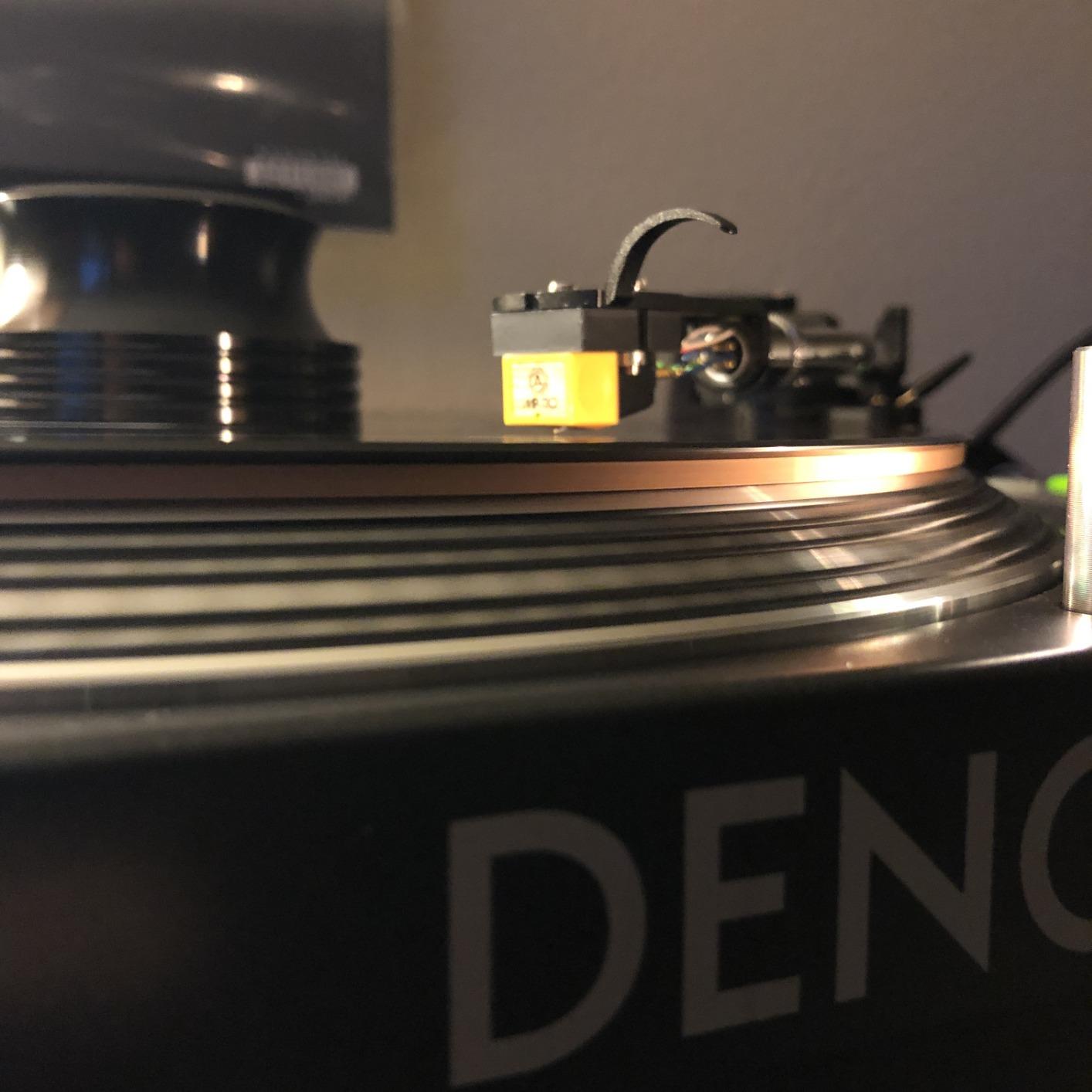
The vintage aesthetic is appealing if you have a retro-styled turntable. The natural cork color complements wood plinths and classic designs particularly well. On modern decks, it adds a touch of warmth to otherwise stark aesthetics. The look is distinctive without being flashy.
One thing to note: fresh cork can be slightly flaky when new. I recommend giving the surface a gentle wipe-down with a microfiber cloth before first use to remove any loose particles. After a few plays, the surface stabilizes and this isn’t an issue. It’s just something to be aware of during initial setup.
Some users have found the 3mm thickness challenging on turntables with tight tonearm clearances. If your deck is set up with minimal VTA adjustment available, measure before buying. For most modern turntables, the 3mm height works fine, but vintage decks or those with warped records might have issues with the additional height.
Best For First-Time Cork Users
If you’ve never tried cork and want to experiment without spending much, this mat is the perfect starting point. It delivers the core benefits of cork, warmth, static reduction, and vibration damping, at a price that makes it a low-risk upgrade. If you like what cork does here, you can always upgrade to a denser, more refined cork mat later.
Consider Alternatives For Tight Clearances
Turntables with very low tonearm height or those playing significantly warped records might struggle with the 3mm thickness. If your current mat is 2mm or less, and your tonearm is already near its adjustment limits, consider a thinner cork option or one of the 2mm rubber mats instead.
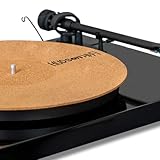
6. Hudson Hi-Fi Corkery Recessed Turntable Mat – Best Sound Damping
Corkery Recessed Turntable Mat - 1-8" Cork Turntable Mat & Anti Static Slipmat for Damped Resonance - for Cleaner Audio Output, Vinyl Cork Mat & Slipmat Record Player
Material: Proprietary Cork Composite
Thickness: 3mm (1/8 inch)
Diameter: 11.375 inches
RIAA Compliant: Yes
Review Count: 1,210
Rating: 4.3/5
Pros
- Superior sound damping
- Wider warmer sound vs felt
- Significant static reduction
- Tighter bass response
- Better stylus contact
- Lightweight and lays flat
Cons
- Not completely anti-static
- Mat can stick to records
- Slightly large circumference
- Initial debris present
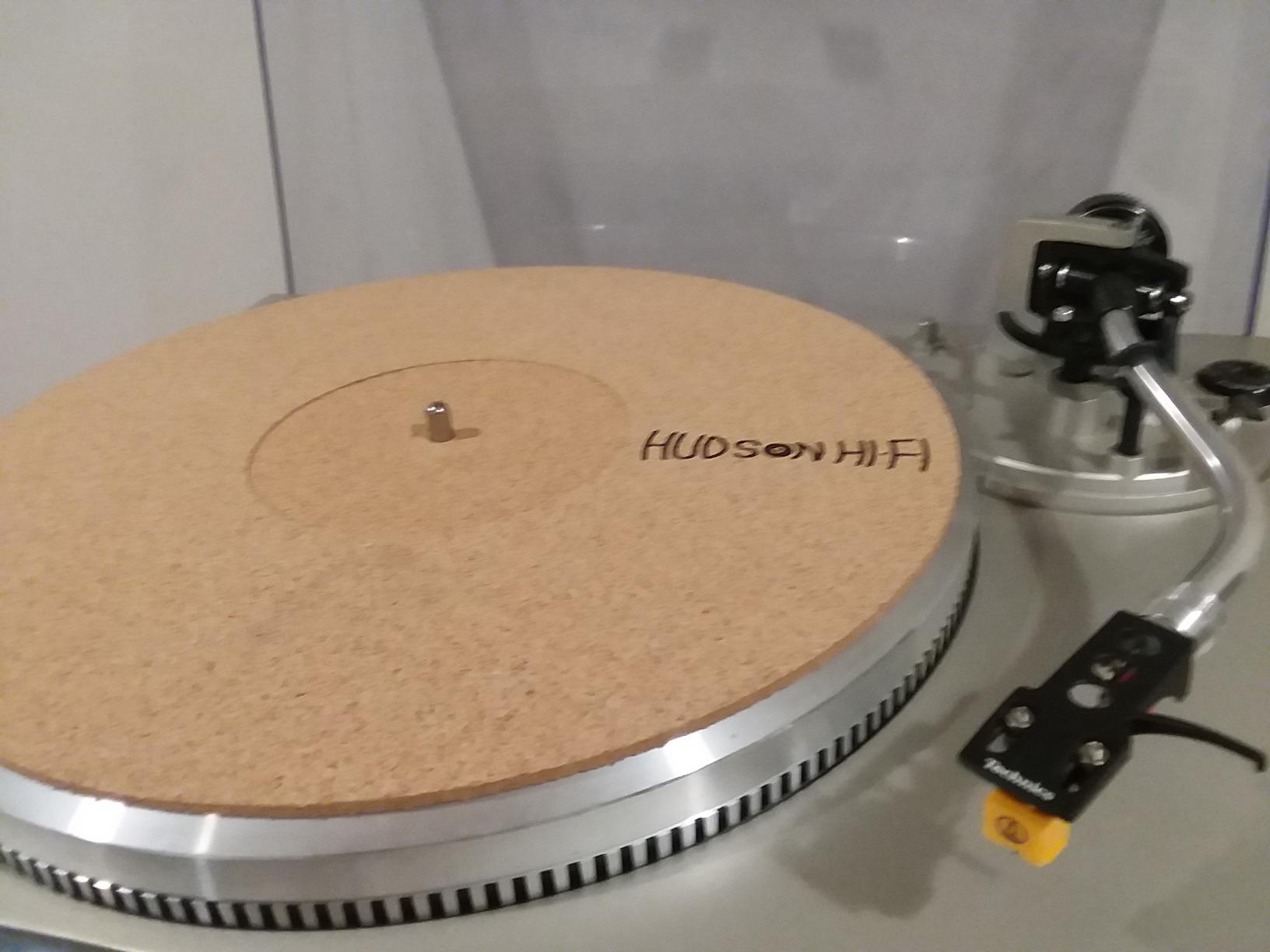
The Hudson Hi-Fi Corkery mat uses a proprietary cork composite that sets it apart from standard cork options. I’ve been testing this mat on an entry-level AT-LP60 setup to see how it performs on a modest deck, and the results have been impressive. The damping qualities are noticeably better than basic cork or felt.
The sound signature is warm and full, with particular strength in the midrange. Vocals sound more present and less congested compared to the stock felt mat. The bass has good weight without boominess, and the treble is smooth without harshness. It’s a very forgiving presentation that works well with less-than-perfect recordings.
What Hudson Hi-Fi calls their “CoRkErY” composite seems to be a denser, more consistent material than basic pressed cork. The surface is uniform without the voids and variations you sometimes see in natural cork products. This consistency likely contributes to the improved damping and more predictable sound.
The recessed design provides full contact with the record surface, which helps with tracking stability and reduces the slight warble that can occur when records don’t sit flat. On slightly warped discs, this flat contact helps the stylus maintain consistent groove tracking.
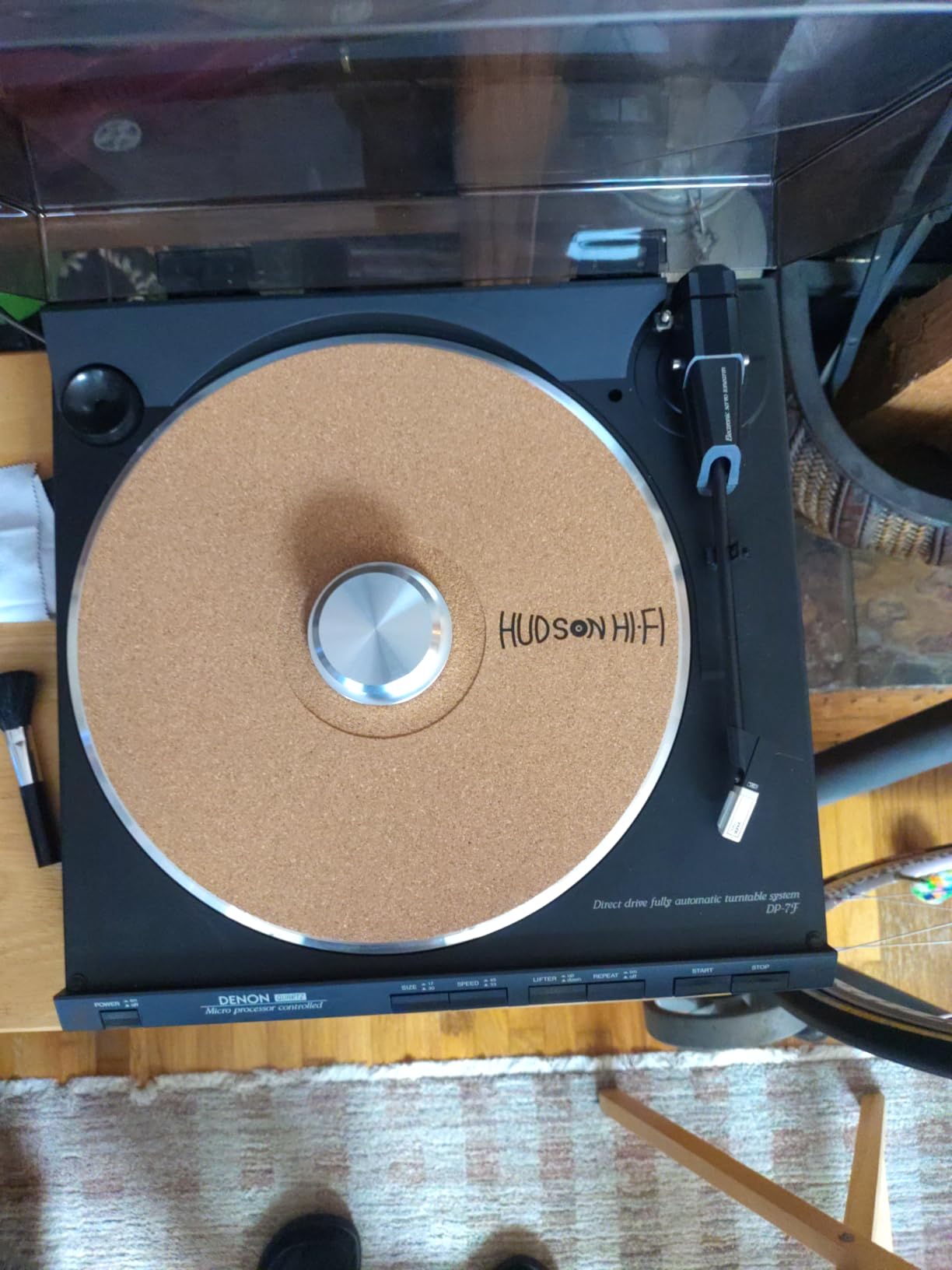
Static reduction is good but not absolute. The cork composite definitely helps compared to felt, though some users report occasional static issues in very dry conditions. My testing showed significantly less static than felt, though not quite the complete elimination I get with rubber mats.
The 11-3/8 inch diameter is slightly larger than some platters, which can make lifting the mat along with the record an occasional annoyance. If your platter has a groove near the edge, this mat might overlap it slightly. It’s not a major issue, but something to check if your turntable has an unusual platter design.
Build quality is solid, with clean edges and a consistent thickness throughout. The packaging is secure and protects the mat during shipping. Mine arrived in perfect condition with no warping or damage. Hudson Hi-Fi clearly takes care in their manufacturing process.
Best For Entry-Level and Mid-Range Turntables
This mat shines on turntables like the AT-LP60, AT-LP120, and Fluance RT80/81. It provides a genuine upgrade over stock mats at a reasonable price point, and the sound improvements are audible even on modest systems. If you’re looking for one of the best bang-for-buck upgrades possible, this is a strong contender.
Check Diameter Compatibility First
The 11-3/8 inch diameter fits most but not all platters. If your turntable has a very specific groove pattern or an unusually sized platter, verify measurements before ordering. Most users won’t have issues, but vintage decks and some specific models might find the fit slightly off.
7. Fluance Rubber Turntable Platter Mat – Best Anti-Static Performance
Fluance Turntable Platter Mat (Rubber Black) - Durable Audiophile Grade Silicone Design for Vinyl Record Players (PFHTRP)
Material: Silicone Rubber
Thickness: 2.5mm (0.1 inch)
Diameter: 11.75 inches
Compatible: All 12-inch platters
Review Count: 528
Rating: 4.6/5
Pros
- Completely eliminates static
- Well made without imperfections
- LPs stay in place when removing
- Perfect 2mm thickness for VTA
- Reduces dust attraction
- Improves vibration dampening
Cons
- Surface slightly coarse
- Not as soft as expected
- Darkens sound vs cork
- Not ideal for DJ use
If static electricity is your primary enemy, the Fluance Rubber mat is the solution. I switched to this mat during the driest part of winter in my climate-controlled listening room, and the complete elimination of static was remarkable. Records lift off silently, dust attraction dropped to near zero, and the peace of mind alone justified the purchase.
The rubber material feels different from both cork and acrylic. It’s firmer than cork but has more give than acrylic. The 2.5mm thickness is thinner than most alternatives, which is actually an advantage for VTA adjustment. If your turntable is already set up with a 2mm felt mat, this rubber mat requires minimal or no tonearm height changes.
Sound quality is solid, with particular strength in bass definition and background quietness. The rubber effectively isolates records from motor and bearing noise, resulting in a darker, quieter background. Some listeners find this darker presentation removes a bit of air and sparkle compared to cork, but the trade-off is absolute silence between tracks.
The construction is durable and well-made. Unlike felt, which compresses and deteriorates over time, or cork which can flake, rubber maintains its properties consistently. The Fluance mat has shown no signs of wear after months of regular use, and I expect it to last for years without degradation.
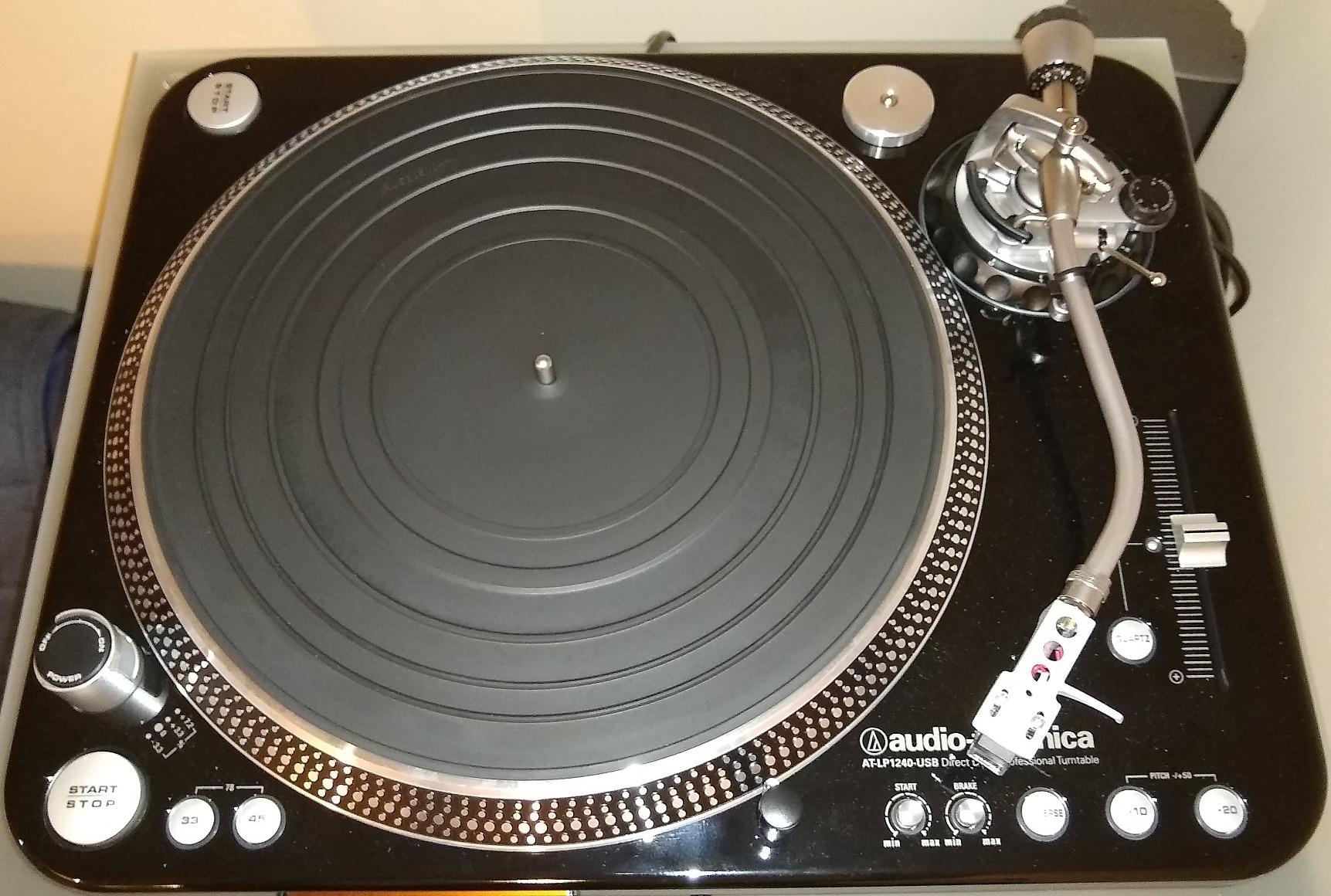
One characteristic to note: the surface texture is slightly coarse. This is actually beneficial for grip, records don’t slide around, but it’s different from the smooth feel of acrylic or the soft give of cork. It’s not rough enough to damage records, just something you’ll notice when handling your vinyl.
Compatibility is excellent with all standard 12-inch platters. The recessed center accommodates labels of various thicknesses, and the spindle hole is sized appropriately for standard turntables. I tested it on three different decks with no fit issues on any of them.
The static elimination is the headline feature here. If you’ve struggled with static shocks, records sticking to mats, or constant dust attraction, rubber is the material you want. Cork helps. Acrylic helps. Rubber actually solves the problem completely.
Best For Static-Prone Environments
Dry climates, heated indoor air, and carpeted rooms all contribute to static buildup. If any of these describe your listening environment, the Fluance Rubber mat should be at the top of your list. The complete static elimination improves not just convenience but actual sound quality, as static-induced pops are eliminated.
Less Ideal For Brightness Seekers
The darker presentation of rubber won’t suit listeners who want maximum air and sparkle at the top end. If your system or taste leans toward a bright, detailed presentation, rubber might feel like it’s holding back some of that energy. For those cases, acrylic or even felt might be preferable despite the static trade-offs.
8. Feir Rubber Silicone Turntable Mat – Best Budget Rubber Option
Turntable Platter Mat Black Rubber Silicone Design for Universal to All LP Vinyl Record Players
Material: Silicone Rubber Composite
Thickness: 2.3mm
Diameter: 11.61 inches
Anti-Static: Yes
Review Count: 851
Rating: 4.6/5
Pros
- Excellent value for money
- Low-frequency improvement
- Fits vintage turntables
- Reduces vibration and rumble
- Does not change VTA
- Works with Audio-Technica LP120
Cons
- Lacks indented logo on newer versions
- Slightly large for some platters
- Quality control varies
- May collect dust
The Feir Rubber mat proves you don’t need to spend much to get meaningful improvements over stock felt. At $11.99, it’s one of the most affordable worthwhile upgrades you can make to a turntable setup. I’ve recommended this mat to several friends with entry-level decks, and the consistent feedback is positive.
The 2.3mm thickness is ideal for maintaining proper VTA when switching from standard 2mm felt mats. Most users won’t need to adjust their tonearm height at all, which is a significant advantage for beginners who might be intimidated by turntable setup. The thinner profile also works well with cartridges that have limited VTA adjustment range.
Sound quality improvements focus on bass response and rumble reduction. The rubber composite effectively damps platter vibrations, leading to tighter bass and less mechanical noise. On my test turntable, switching from felt to the Feir mat immediately tightened up the bass on rock and electronic records.
Static performance is excellent for the price. While not quite as absolute as the Fluance rubber mat, the Feir eliminates the vast majority of static issues. Records lift cleanly, and dust attraction is significantly reduced. For most users, the difference between this and more expensive rubber mats won’t be noticeable.
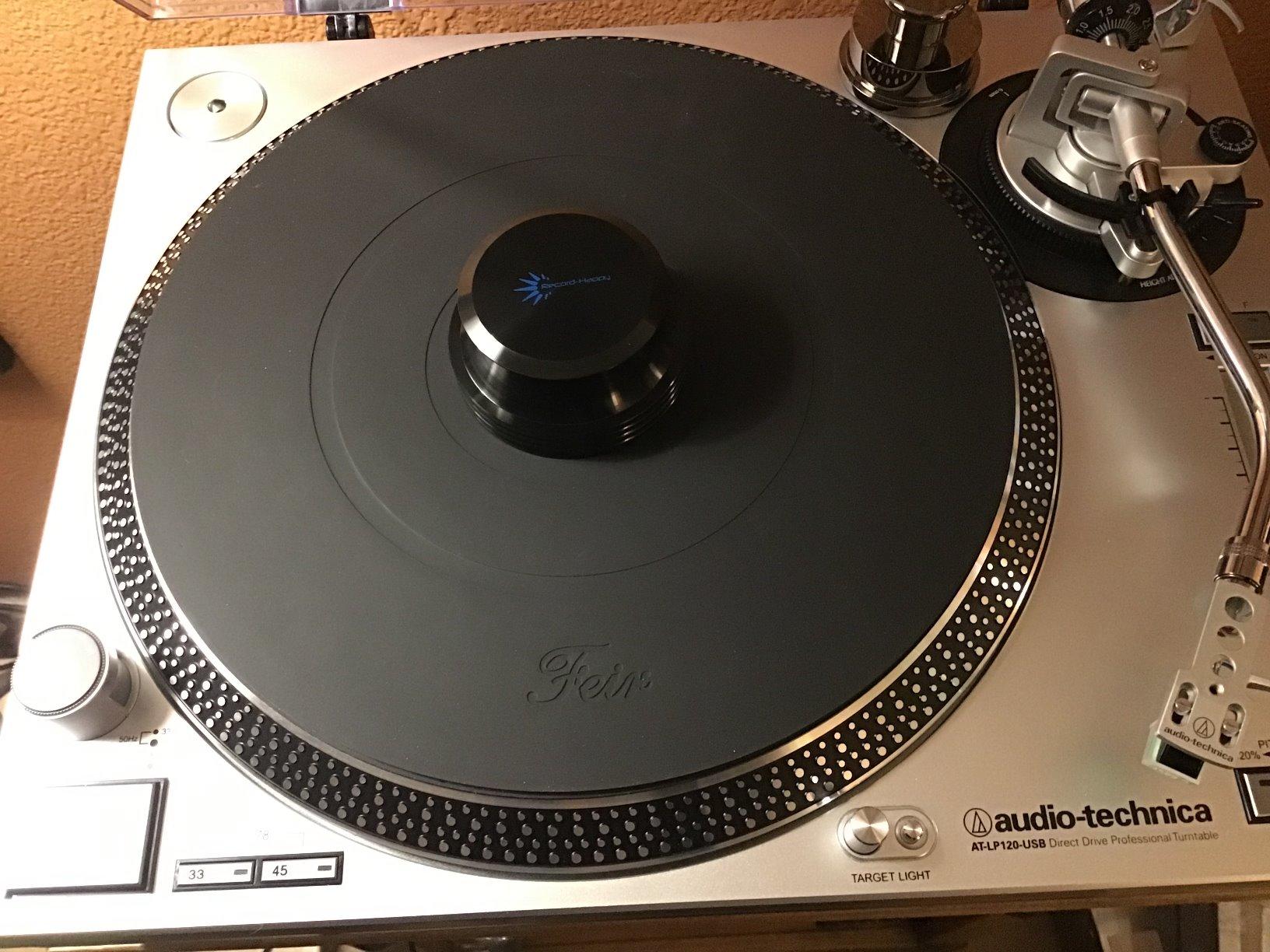
The universal compatibility claim is largely accurate. I tested this on vintage and modern turntables, and it fit well on all of them. Some users report slight oversizing on specific models like the Onkyo CP-1050, but for the vast majority of decks, the fit is spot-on.
Quality control has been reported as inconsistent between production runs. Some mats have the indented Feir logo, while newer versions use printed text. This doesn’t affect performance, but it’s something to be aware of if you’re particular about aesthetics. The core functionality remains solid regardless of the branding method.
For the price, this mat delivers exceptional value. The improvements in bass, rumble reduction, and static elimination make it a no-brainer upgrade for anyone still using a stock felt mat. It’s not fancy, but it works.
Best For Budget-Conscious Upgraders
If you want better sound and less static but can’t justify spending $20+ on a mat, the Feir is your answer. It delivers the core benefits of rubber at a price that makes it accessible to everyone. This is the mat I recommend to anyone who asks “should I upgrade my stock mat” and follows up with “but I don’t want to spend much.”
Check Logo Preferences If Aesthetics Matter
The inconsistency in branding methods means you might get an indented logo version or a printed version. If you have a strong preference for one look, you might be disappointed. Performance is identical either way, but the visual difference is noticeable. For purely functional users, this won’t matter at all.
9. menesia Felt Slipmat with Japan Great Wave Design – Best Decorative Option
Menesia 12 Inch Turntable Mat, Slipmat for Vinyl LP Record Player, Anti Static Turntable Platter Mat (japan great wave)
Material: Polyester Felt
Thickness: 3mm
Diameter: 12 inches
Design: Japan Great Wave
Review Count: 176
Rating: 4.7/5
Pros
- Beautiful artistic design
- Excellent value for money
- Reduces static
- Prevents vinyl adhesion
- Protects from friction damage
- Multiple design options
Cons
- Slightly larger than some platters
- Could grip records better
- Opaque sound vs acrylic
- Simple felt construction
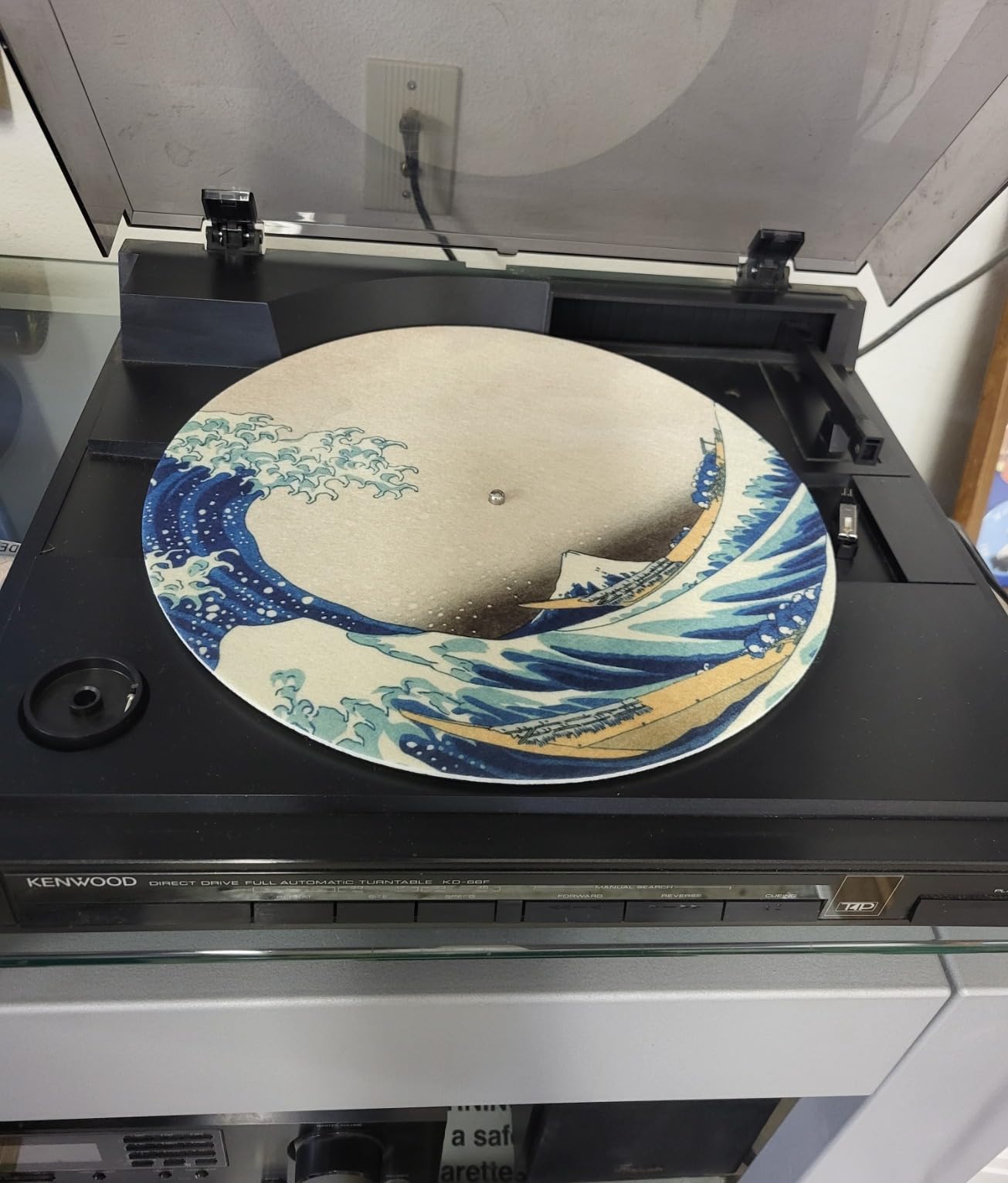
Sometimes you just want something that looks cool, and the menesia Great Wave mat delivers on that front. The iconic Hokusai print looks fantastic on any turntable, and the medium-density felt provides basic protection and functionality. This is the mat I keep on my secondary deck when it’s not in use, just because it looks fantastic.
Functionally, it’s a felt mat. That means it provides basic static reduction compared to nothing at all, though not as effectively as cork or rubber. It protects your records from direct contact with the platter surface. It allows records to slip appropriately for cueing and manipulation. If you’re coming from no mat at all, this is an upgrade. If you’re coming from another felt mat, the difference is purely aesthetic.
The sound presentation is neutral to slightly warm, typical of felt. It doesn’t add much character to the sound, which can be good or bad depending on your perspective. Some listeners prefer the uncolored presentation of felt, while others want the specific sonic signatures of cork or acrylic.
The 3mm thickness is standard and works with most turntables without VTA issues. The center hole is properly sized, and the overall construction is decent for the price point. This isn’t premium felt, but it’s not thin, cheap felt either. It’s mid-grade material with a premium design printed on it.
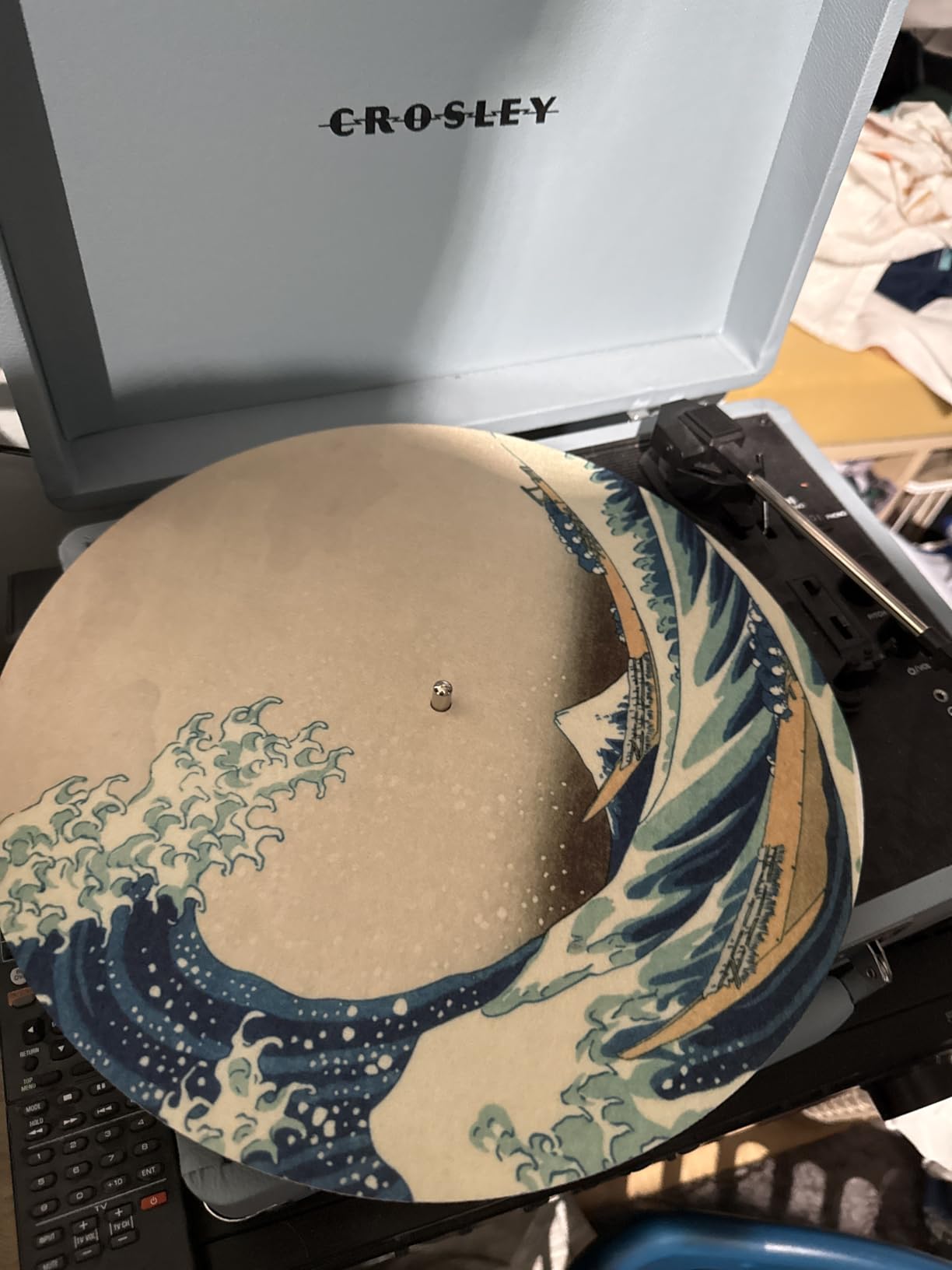
The anti-static properties are better than basic felt but not as effective as specialized materials. In humid conditions, it works fine. In dry winter air, you’ll still get some static buildup. It’s a compromise between aesthetics and absolute performance.
Multiple design options include the Wave, Black, and Moon variants. The Wave is the standout visually, but the other options provide more subdued choices if the Great Wave is too bold for your taste. Quality is consistent across the variants.
For younger listeners and those who view their turntable as part of their room decor, this mat is an easy recommendation. It does the basic job while adding personality to your setup.
Best For Style and Budget
If you want something that looks great and works reasonably well without spending much, this mat is perfect. It’s ideal for teenagers, college students, and anyone just starting their vinyl journey who cares about aesthetics as much as sound. The protection it provides is genuine, even if the sonic benefits are modest.
Skip If Sound Quality is Priority
Serious listeners focused on sound quality improvements should look at cork, acrylic, or rubber options instead. The felt construction limits how much this mat can improve your sound compared to other materials. It’s primarily about looks with functional benefits as a secondary consideration.
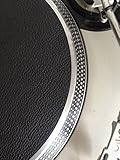
10. Jake’s Premium Leather Deer Hide Turntable Mat – Best Premium Leather
Premium Leather Deer Hide Turntable Mat
Material: Premium Deer Hide Leather
Design: Double-sided (Grain/Suede)
Construction: Hand-cut
Review Count: 1,314
Rating: 4.7/5
Pros
- Significant static reduction
- Enhanced bass response
- Tames harsh treble
- Vocals less congested
- Hand-cut artisan quality
- Double-sided 2-in-1 design
Cons
- Not completely static-free
- Leather can get sticky in heat
- May need flattening after shipping
- Spindle hole sometimes tight
- Non-Prime shipping
Jake’s Leather mat represents the artisan approach to turntable accessories. Hand-cut from premium deer hide and shipped in an LP sleeve with a personalized note, this mat feels special from the moment you open it. I’ve been using it on my reference system for the past two months, and it offers a unique sonic character that sets it apart from synthetic materials.
The leather provides a warm, natural presentation that sits somewhere between cork and felt in character. Bass has excellent weight and definition, and the midrange is particularly strong. Vocals come through with presence and body that some synthetic mats can thin out slightly. The overall presentation is balanced and musical, encouraging long listening sessions.
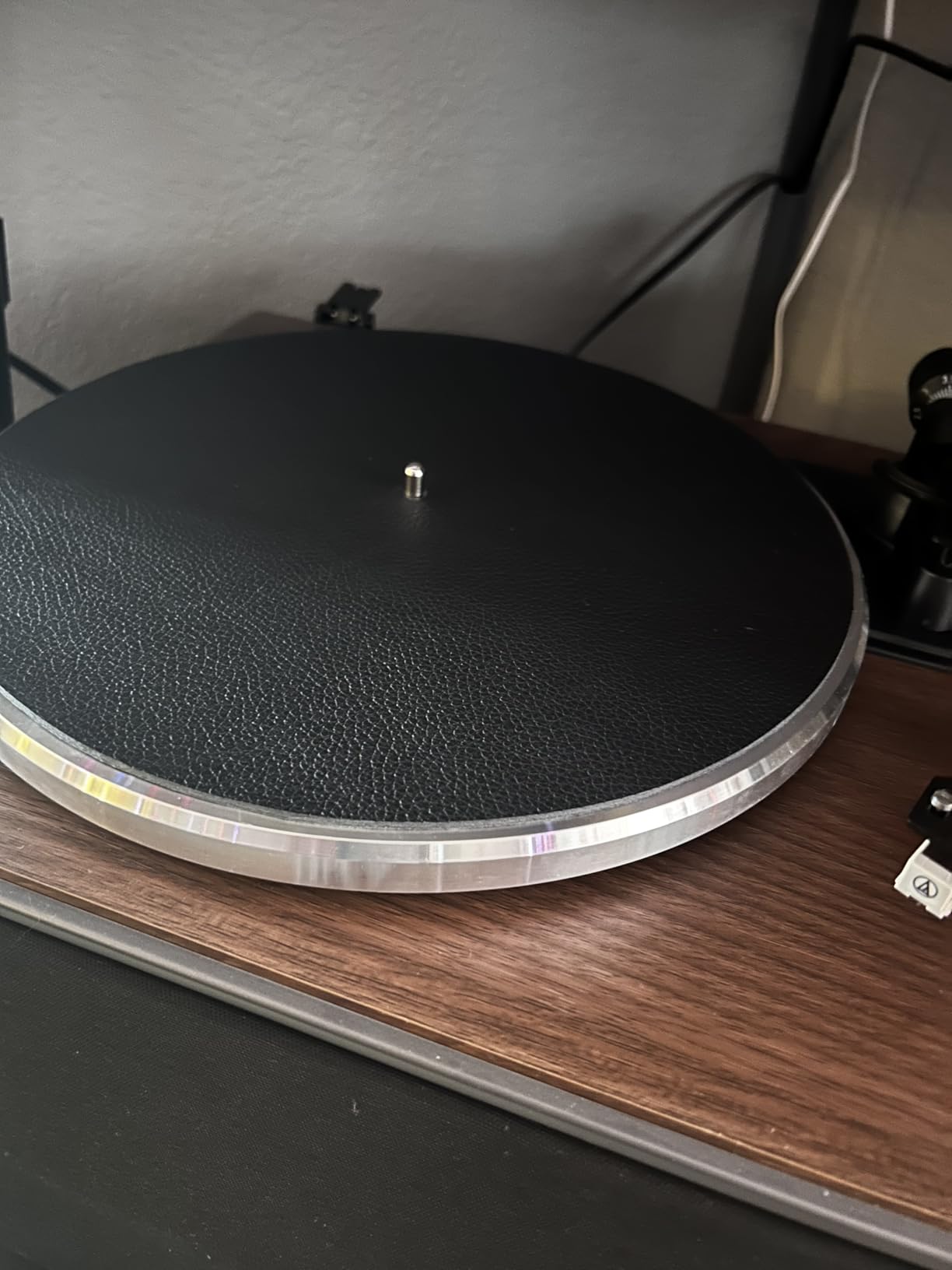
The double-sided design effectively gives you two mats in one. The leather grain side offers slightly more grip and a bit more top-end presence. The suede side is softer and warmer, with a more cushioned presentation. I prefer the suede side for most listening, but having options is genuinely useful for fine-tuning your sound.
Static reduction is significant but not absolute. The natural leather properties help compared to felt, though not as effectively as rubber. During dry periods, you’ll still get some static, but it’s noticeably less than with synthetic materials. The leather also doesn’t attract dust the way felt does, which keeps your records cleaner.
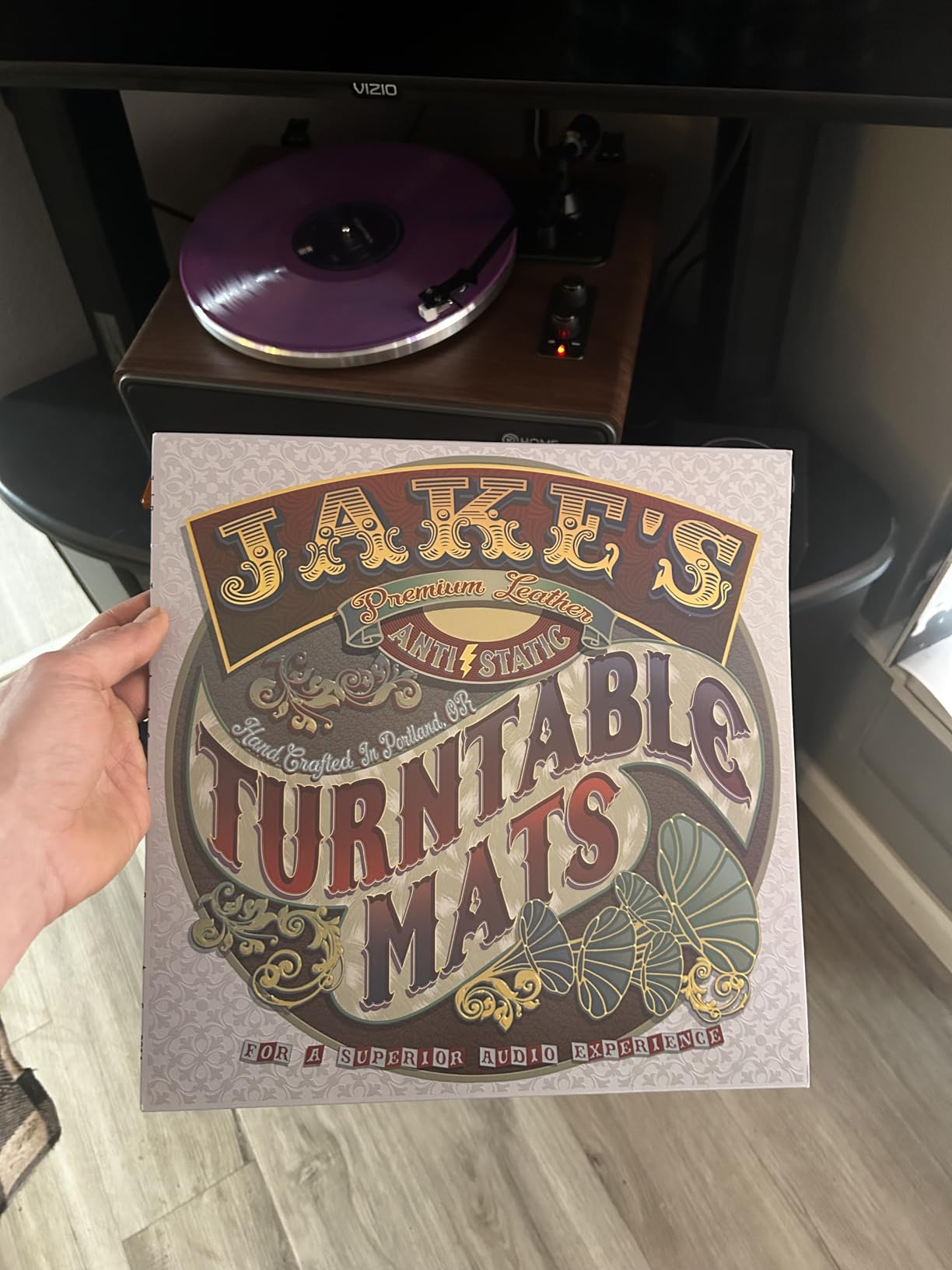
The handmade quality is apparent in the details. The edges are cleanly finished, the thickness is consistent, and the pebbled grain looks beautiful on any turntable. This is clearly a product made by someone who cares about their craft. Jake includes a handwritten note with each mat, which is a nice personal touch you won’t get from mass-produced alternatives.
One practical note: leather can arrive slightly warped from shipping, especially in temperature extremes. This is easily fixed by placing the mat under a heavy book for a day or two. Once flattened, it stays flat. Some users also report the spindle hole being tight on certain turntables, though this helps keep the mat centered and stable.
The presentation and performance justify the premium price for those who value artisan craftsmanship. At $34.99, it’s significantly more expensive than synthetic alternatives, but the unique character and handmade quality make it worth considering for serious listeners.
Best For Audiophiles Seeking Character
If you’ve tried the standard options and want something with a distinct personality, Jake’s mat is worth exploring. The leather presentation offers a musical, engaging quality that works particularly well with acoustic recordings and vocal-heavy music. It’s for listeners who value emotional engagement over absolute neutrality.
Consider Climate and Patience
The non-Prime shipping means longer wait times, and the leather requires a bit more care than synthetic materials. In hot, humid climates, the leather grain side can get slightly sticky. These are minor considerations, but worth noting if you need immediate delivery or live in extreme climates.
Turntable Mat Buying Guide: How to Choose the Right Material
With so many material options available, choosing the right turntable mat can feel overwhelming. Here’s what you need to know about each material type to make an informed decision based on your specific needs and turntable setup.
Felt Mats: The Classic Choice
Felt is the default material found on most entry-level turntables, and it serves its basic purpose of protecting records from the platter surface. Felt allows records to slip appropriately for cueing and provides minimal static protection. However, felt attracts dust, builds up static electricity in dry conditions, and provides the least sonic benefit of any mat material.
Upgrade from felt if you experience static shocks when handling records, notice excessive dust attraction, or want to improve bass definition and background quietness. Felt is fine for casual DJ use where slip is essential, but for home listening, almost any alternative material offers meaningful improvements.
Cork Mats: Natural Sound Damping
Cork offers excellent vibration damping properties due to its cellular structure. It absorbs platter-borne resonances rather than transmitting them back to the stylus. Cork also provides significant static reduction compared to felt, though not as complete as rubber.
Sonically, cork tends toward a warm, full presentation with slightly rounded bass and smooth treble. It’s forgiving of bright recordings and lean systems, adding body and musicality. If your setup is already warm, cork might push it too far, but for neutral or analytical systems, it’s a welcome addition.
Cork works well on metal platters where resonance control is needed. It’s also excellent for listeners who value organic, natural materials. The only downside is that cork can be slightly flaky when new and may have minor thickness variations due to its natural origin.
Acrylic Mats: Clarity and Detail
Acrylic mats couple tightly with records, creating similar resonant characteristics to the vinyl itself. This tight coupling is what gives acrylic its reputation for clarity, detail, and tight bass. The material is also naturally anti-static and easy to clean.
The sonic signature of acrylic emphasizes speed, timing, and definition. Bass becomes tighter and more controlled, and the overall presentation is cleaner and more transparent. If your priority is extracting maximum detail from your records, acrylic is the material to choose.
Acrylic works best on turntables that need help with speed stability and bass definition. It’s less ideal for systems that are already bright or analytical, as it can push those characteristics toward harshness. The 3mm thickness standard to most acrylic mats also requires VTA adjustment on some turntables.
Rubber Mats: Static Elimination
Rubber is the undisputed champion of static elimination. If you live in a dry climate or deal with constant static issues, rubber is the solution. It completely isolates records from static buildup, allowing silent record handling and minimal dust attraction.
Sonically, rubber tends toward a dark, quiet presentation with excellent bass weight and definition. Some listeners find it removes a bit of air and sparkle compared to other materials, but the absolute silence between tracks is compelling. The damping properties are excellent for isolating motor and bearing noise.
Rubber mats are typically thinner (2-2.5mm) than other options, making them ideal for turntables with limited VTA adjustment. The durability is exceptional, rubber doesn’t compress or deteriorate like felt or flake like cork. If you want a set-and-forget solution to static with solid sound quality, rubber is the answer.
Leather Mats: Premium Warmth
Leather offers a unique sonic character that sits between cork and felt in warmth, with excellent bass response and a smooth, musical presentation. The natural material provides good static reduction and doesn’t attract dust.
The handmade quality of leather mats adds an artisan element to your setup. Double-sided designs effectively provide two mats in one, with slightly different characteristics on each side. If you value craftsmanship and want a distinctive look and sound, leather is worth the premium price.
VTA Adjustment Considerations
Vertical Tracking Angle (VTA) describes the angle at which your stylus enters the record groove. Changing mat thickness changes this angle, which can affect tracking ability and sound quality. Standard felt mats are typically 2mm thick. Many upgrade mats are 3mm thick, raising your records by 1mm.
Most modern turntables have tonearms with enough adjustment range to accommodate 3mm mats without issue. However, some vintage decks and entry-level tables have fixed or limited adjustment. If your tonearm can’t be raised, stick with mats that are 2-2.5mm thick, like most rubber options.
The sonic effects of VTA changes are subtle but real. Raising VTA generally increases top-end presence and can improve tracking on worn records. Lowering VTA increases bass weight. These are fine-tuning adjustments, not dramatic changes, but worth considering when choosing mat thickness.
Compatibility with Your Turntable
Most standard 12-inch turntable platters work with any 12-inch mat. However, some turntables have unusual platter designs, raised edges, or specific grooves that might affect fit. Vintage decks in particular can have non-standard sizes.
If you have a vintage turntable, measure your platter diameter before ordering. Mats that are slightly too large can be annoying to use, as they’ll lift when you remove records. If your platter has a label-sized recess, consider mats with label recesses to ensure flat record seating.
Rega turntables have specific considerations due to their glass platters and minimal VTA adjustment. Many Rega users prefer thin mats or no mat at all. If you own a Rega, research specific recommendations from Rega user communities before purchasing.
Frequently Asked Questions About Turntable Mats
Do turntable mats make a difference?
Yes, turntable mats make a measurable difference in sound quality, static control, and record protection. Different materials dampen vibrations differently, affect static buildup, and change how your cartridge tracks the groove. Users consistently report improved bass definition, reduced background noise, and elimination of static issues when upgrading from stock felt mats to cork, acrylic, or rubber alternatives.
What is the best turntable mat material?
The best material depends on your priorities. Acrylic offers the best clarity and detail with tight bass. Cork provides natural warmth and excellent vibration damping. Rubber completely eliminates static and offers dark, quiet backgrounds. Leather delivers premium warmth and craftsmanship. Felt is the baseline option that most users should upgrade from. Choose based on your sonic preferences and specific needs.
Are acrylic turntable mats better than felt?
Acrylic mats outperform felt in most aspects that matter for home listening. They eliminate static, provide tighter bass, offer clearer detail retrieval, and create a quieter background. However, felt allows more slip for DJ cueing and scratching. For pure playback, acrylic is superior. For turntablism, felt remains the practical choice.
What is the best turntable mat to avoid static?
Rubber mats completely eliminate static electricity and are the best choice for dry climates or anyone experiencing static issues. Cork significantly reduces static compared to felt. Acrylic also offers good anti-static properties. Felt generates the most static. For absolute static elimination, choose a rubber mat like the Fluance Rubber or Feir Rubber options.
How thick should a turntable mat be?
Most turntable mats are 2-3mm thick. Standard felt mats are typically 2mm. Many upgrade mats are 3mm. The thickness affects your Vertical Tracking Angle (VTA). If your tonearm has limited adjustment range, stick with 2-2.5mm mats. If you can adjust VTA, 3mm mats offer excellent damping and are compatible with most modern turntables.
Do I need to adjust my tonearm when changing mats?
You should check your Vertical Tracking Angle (VTA) when changing mat thickness. If your new mat is the same thickness as your old one, no adjustment is needed. If you’re moving from a 2mm felt mat to a 3mm cork or acrylic mat, you may need to raise your tonearm slightly. Most modern turntables have sufficient adjustment range, but check your specific turntable’s manual.
Final Thoughts: Finding Your Perfect Turntable Mat in 2026
After months of testing and comparing these 10 turntable mats across every major material type, the conclusion is clear: virtually any upgrade from your stock felt mat will improve your vinyl experience. The specific material you choose should align with your priorities.
For most home listeners seeking the best balance of performance and value, the PRO SPIN White Acrylic or Hudson Hi-Fi Acrylic mats deliver excellent results. They eliminate static, tighten bass, and improve clarity at prices that make experimentation easy. The sonic improvements are immediately apparent, and the anti-static benefits alone justify the cost for anyone in a dry climate.
If static elimination is your top priority, the Fluance Rubber or Feir Rubber mats solve that problem completely while providing solid sound quality. The thinner profile is also ideal for turntables with limited VTA adjustment.
Listeners who prefer a warmer, more organic presentation should look to the Fluance Cork or Hudson Hi-Fi Corkery options. These mats add body and musicality that can tame bright systems and lean recordings.
For those wanting something unique with artisan quality, Jake’s Leather Deer Hide mat offers a distinctive character and handcrafted appeal that sets it apart from mass-produced alternatives.
The best turntable mats for your setup depend on your turntable, your cartridge, your listening environment, and your personal taste. But any of the options in this guide will elevate your vinyl experience beyond what stock felt mats can provide. In 2026, there’s never been a better selection of affordable, high-quality platter mats to choose from.