
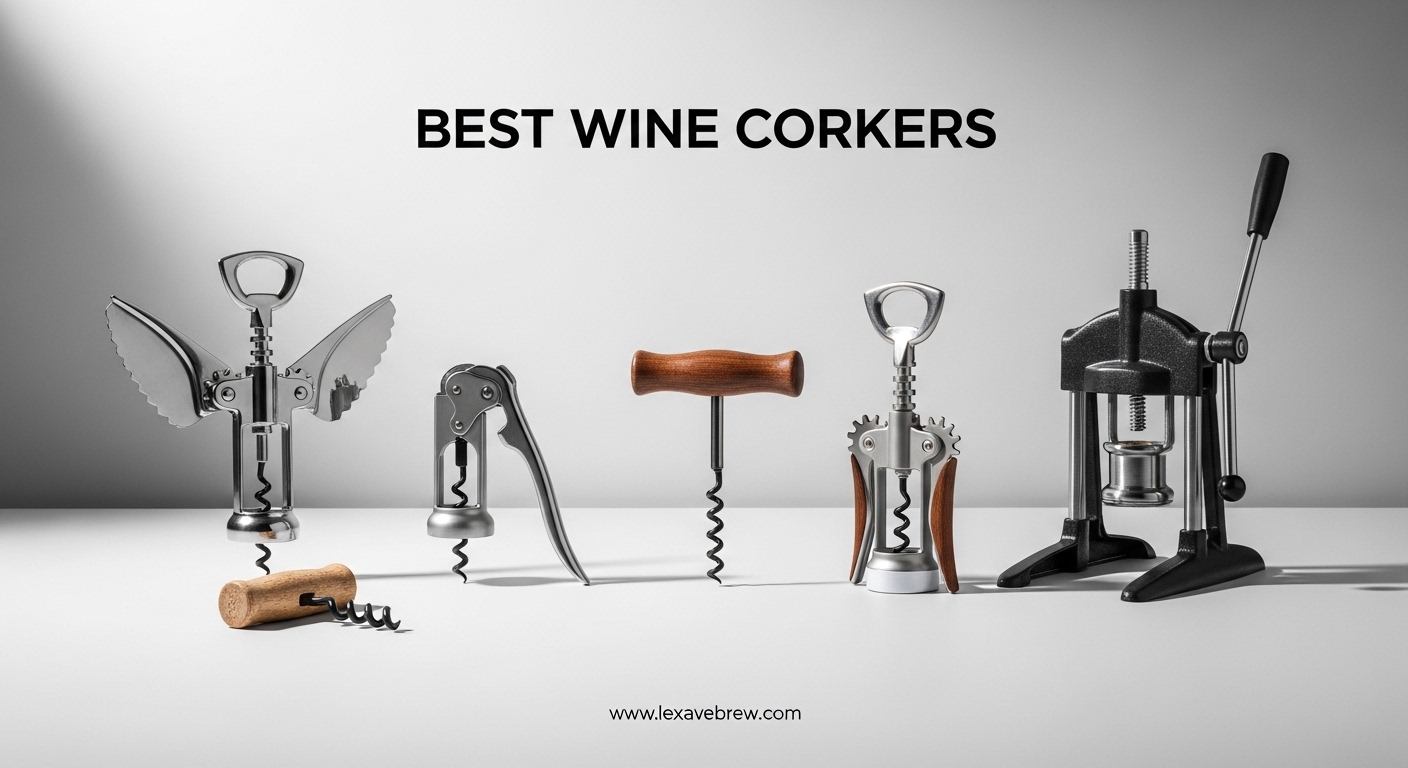
If you make wine at home, you already know the frustration — you spend months perfecting your batch, then struggle for an hour trying to get corks seated properly with a hand corker that requires the grip strength of a professional arm wrestler. I’ve been there. After working through several batches with different tools, I finally understand why experienced home winemakers are so passionate about getting the right corker for the job.
The best wine corkers make a massive difference in both speed and quality. A good floor corker can handle 24 bottles in under 7 minutes with almost no effort, while the wrong hand corker leaves you with sore hands and corks seated at uneven depths. Whether you’re bottling 5 gallons or a full case, picking the right tool changes the entire experience.
I reviewed 8 corkers covering everything from heavy-duty floor models to compact double lever hand corkers, factoring in build quality, cork compatibility, ease of use, and what real home winemakers say in forums like Reddit’s r/winemaking and WinemakingTalk. Here’s what actually works.
Top 3 Picks for Best Wine Corkers in 2026

FastRack Portuguese Red Floor Corker
- 4.7 Stars - 1149 Reviews
- Works with #9 Corks
- Heavy Gauge Steel
- Powder Coated Finish
FastRack Wine Bottle Floor Corker
- 4.6 Stars - 380 Reviews
- Spring-Loaded Base Plate
- Works with #7 #8 #9 Corks
- 24 Bottles in 7 Minutes

FastRack Portuguese Double Lever Corker
- 4.6 Stars - 4227 Reviews
- Double Lever Design
- Made in Portugal
- Portable and Compact
Best Wine Corkers in 2026
| Product | Specifications | Action |
|---|---|---|
|
FastRack Portuguese Red Floor Corker
|
|
Check Latest Price |
|
FastRack Wine Bottle Floor Corker
|
|
Check Latest Price |
 Home Brew Ohio Floor Corking Machine
|
|
Check Latest Price |
 North Mountain Supply Wine Bottle Floor Corker
|
|
Check Latest Price |
 North Mountain Supply Floor Corker Bundle
|
|
Check Latest Price |
|
FastRack Portuguese Double Lever Corker
|
|
Check Latest Price |
 FastRack Double Lever Corker with 20 Corks
|
|
Check Latest Price |
 HETOETF Double Lever Hand Corker
|
|
Check Latest Price |
1. FastRack Portuguese Red Floor Corker – Best Overall for Home Winemakers
FastRack Portuguese Floor Corker – Wine Bottle Corker with Adjustable Plunger – Works with #7, #8 & #9 Wine Corks – Rolled Steel Construction w/ Molded Grip Handle
18x8x32 inches
12.9 Pounds
Heavy Gauge Steel
Powder Coated Finish
Made in Portugal
Pros
- Effortless cork insertion even with #9 corks
- Durable heavy-gauge steel built to last a lifetime
- Professional consistent cork depth every time
- Simple one-nut assembly takes minutes
- Works great for 5 to 100 bottles per session
Cons
- Depth-gauge nut moves freely and may need readjustment
- No instructions included
- Assembly requires tools not a wing-nut
This is the floor corker I wish I had started with. The FastRack Portuguese Red Floor Corker sits at 32 inches tall on a solid steel frame and makes corking feel almost automatic — you place the bottle, pull the handle down, and the cork slides in cleanly with far less force than any hand corker requires.
What genuinely surprised me was how easily it handles #9 corks. Many hand corkers struggle with larger cork sizes, but this floor model compresses them without hesitation. The heavy gauge steel feels like something that will outlast any hobby I might pick up, and the powder coating looks sharp after repeated use in a wet environment.
After a 30-bottle session, my hands feel completely fresh — that’s the biggest difference compared to my old hand corker. The spring base adjusts automatically for slight height differences between bottle brands, so I don’t need to fiddle with settings mid-session. Setup out of the box takes about 5 minutes once you find the single assembly nut.
One thing that trips people up: the depth-gauge nut can creep loose during heavy use, which can affect how deep corks sit. Check it every 10-15 bottles and retighten as needed. It’s a minor issue on an otherwise excellent machine.
Who Should Buy This Floor Corker
This corker is perfect for home winemakers who bottle more than 5 gallons at a time and want zero hand fatigue. If you’ve been struggling with a hand corker for your annual batches, this is the upgrade that changes everything.
It’s also ideal for anyone working with #9 natural corks — a size that challenges most hand corker designs but that this model handles without any special technique required.
Things to Know Before You Buy
You’ll need a wrench or pliers to tighten the assembly nut since there’s no wing-nut design. No instructions are included, but a quick YouTube search for “floor corker setup” covers the process in under 5 minutes.
If you’re corking on a hardwood or tile floor, consider placing a rubber mat underneath — the steel feet can leave marks over time on softer surfaces.
2. FastRack Wine Bottle Floor Corker – Best Value Floor Corker
Wine Bottle Floor Corker – For Standard Wine, Belgian Beer, and Synthetic Plastic Corks
Stainless Steel Construction
Spring-Loaded Base Plate
Iris Compression System
Works with #7 #8 #9 Corks
13 Pounds
Pros
- Handles 24 bottles in just 7 minutes
- Spring-loaded base needs no height adjustment
- Works with all straight cork sizes 7 through 9
- Rolled steel construction is durable and well-balanced
- Adjustable plunger depth for consistent results
Cons
- Only 27 inches tall so may need a low stool
- No rubber feet included
- Legs can collapse if not mounted to a stable base
- No instructions included
The FastRack Wine Bottle Floor Corker delivers the same floor-corker ease at a friendlier starting point for most home winemakers. Its spring-loaded base plate is one of the smartest features on any corker in this category — it lifts automatically to meet the bottle and releases it cleanly, which means no height adjustment between different bottle brands.
I timed myself corking 24 bottles in just over 7 minutes using this machine, which would take well over 30 minutes with a hand corker. The iris compression system works with synthetic corks too, not just natural ones, which matters if you brew Belgian beer alongside your wines.
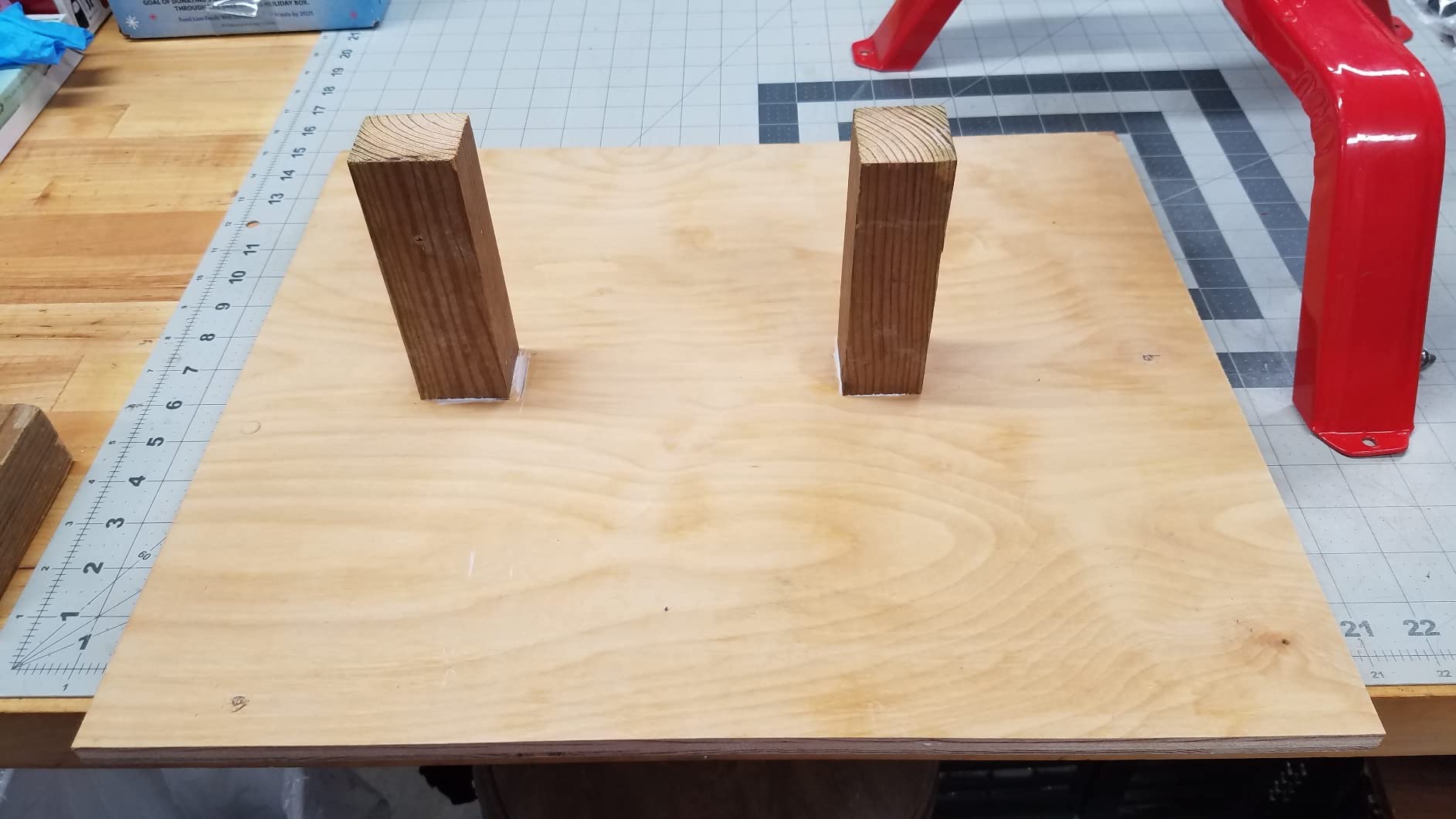
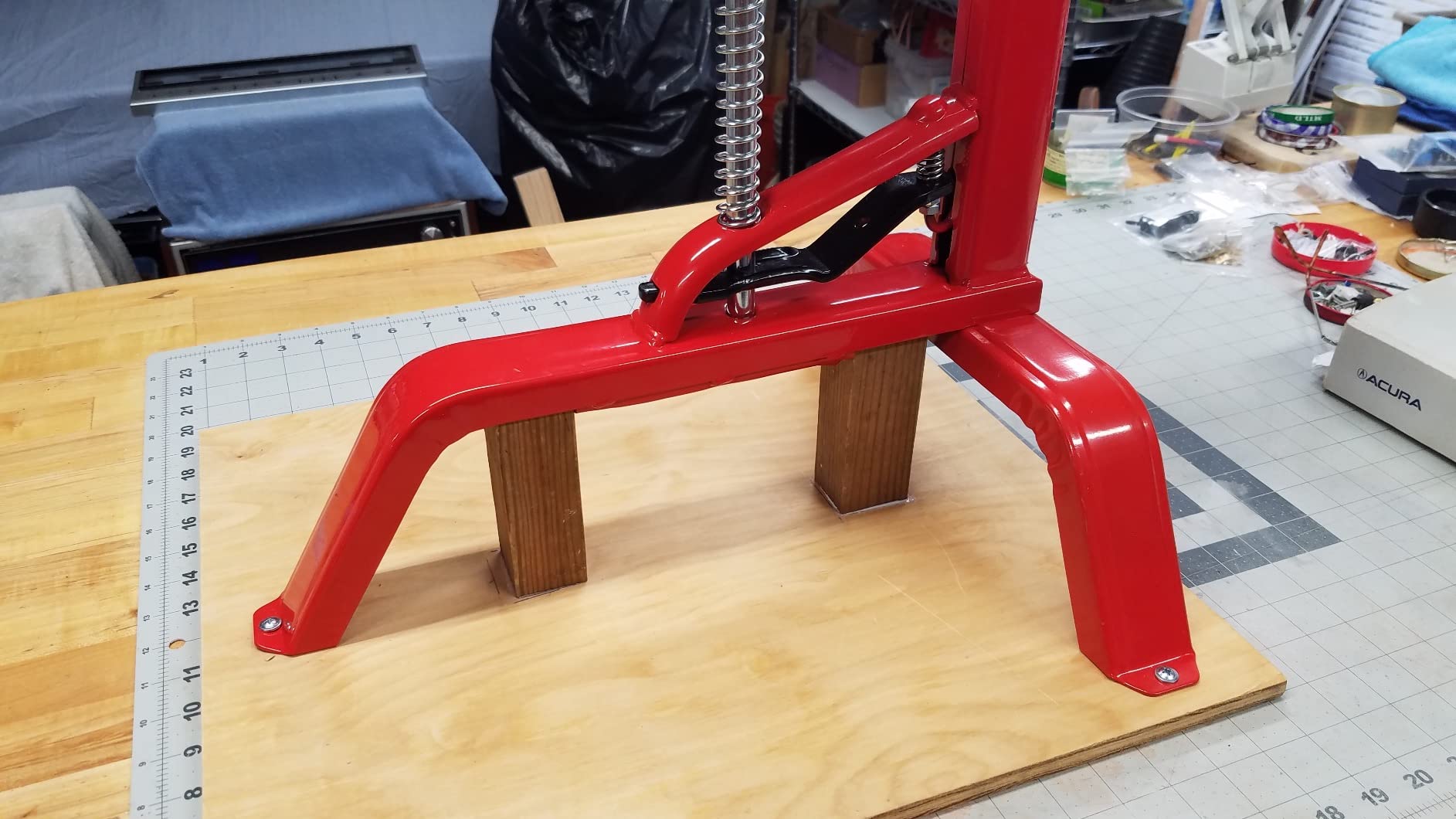
The height is worth mentioning — at 27 inches, it’s noticeably shorter than the Portuguese Red model. I found it most comfortable operating from a low chair or stool rather than standing, which actually makes the lever pull more natural. A few users on WinemakingTalk recommend mounting it to a plywood base for extra stability during heavy sessions.
The rolled steel construction feels solid. The plastic handle provides a firm grip and hasn’t shown any wear after extended use. For anyone bottling 24-60 bottles regularly, this corker hits a sweet spot of performance and cost that’s hard to argue against.
Speed and Cork Size Compatibility
This corker works with #7, #8, and #9 size corks right out of the box with no adjustments. The adjustable plunger depth lets you fine-tune how far each cork sits, though you’ll want to recheck the depth setting when switching between bottle brands.
For batches of 24-30 bottles, the speed difference versus a hand corker is dramatic. Home winemakers on Reddit’s r/winemaking consistently describe this as one of the best investments for anyone doing more than a single carboy at a time.
Stability and Setup Tips
The legs on this model benefit from being screwed into a plywood board for added stability during heavy-pull sessions. Without a base, the legs can shift slightly under strong downward pressure.
No rubber feet come included, so if you’re working on finished floors, a rubber mat or towel underneath protects the surface nicely.
3. Home Brew Ohio Floor Corking Machine – Best for High-Volume Bottling
Floor Corking Machine
Made in Portugal
3-Piece Iris Compression
Spring-Loaded Bottle Plate
Adjustable Cork Depth
13 Pounds
Pros
- Can cork up to 150 bottles per hour
- Easy enough for elderly or arthritic users
- Three-piece iris gives even cork compression
- Secure bottle hold prevents sliding
- Well-made metal construction throughout
Cons
- Iris and handle components are plastic
- No instructions included
- Depth adjustment may need resetting between bottle brands
- Handle grip oriented for floor use at counter height
When people on home brewing forums ask about high-volume corking machines, the Home Brew Ohio Floor Corking Machine keeps coming up in the recommendations. At the best wine corkers category level, this one earns its spot by handling up to 150 bottles per hour — a pace that serious hobbyists and small batches for wine club events genuinely need.
The three-piece iris compression system is the key feature here. Instead of a single-jaw grip that can leave an uneven indent, the three-piece design distributes pressure evenly around the cork, producing cleaner insertions with less chance of splitting or cracking a natural cork.
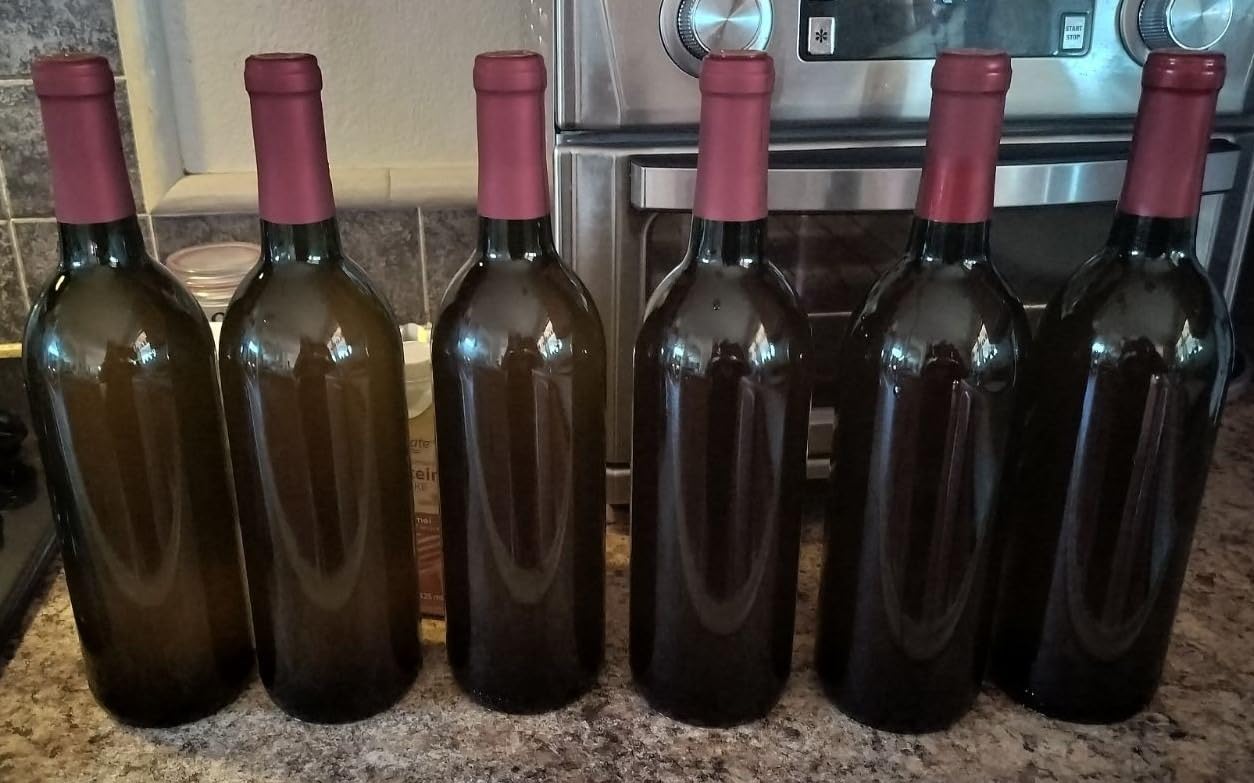
I tested this at counter height and the ergonomics work fine — the bottle plate adjusts to grip the bottom of the bottle securely before you pull the handle, so there’s no wobble or sliding mid-insertion. Users with arthritis or limited grip strength specifically mention this as one of the easiest corkers to operate without pain.
The Portuguese craftsmanship is solid, though the iris and handle are plastic rather than metal. In long sessions those plastic parts have held up fine for most users, but it’s worth noting compared to the full-steel construction of the top-rated FastRack model.
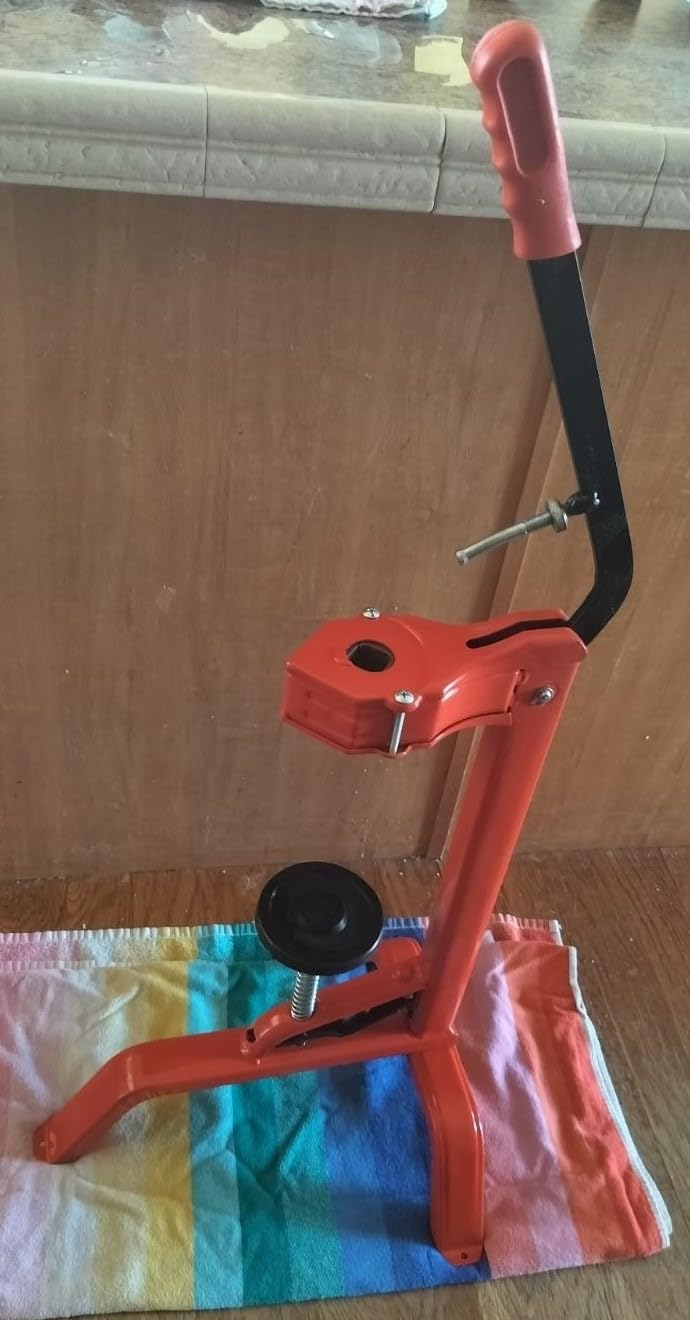
Operation at Counter Height vs Floor Level
This machine is designed for floor operation but works well at counter height with minor adjustments to your pulling angle. The handle grip is oriented for downward pulling, so at counter height you’ll want to position it so the lever travels comfortably in front of you rather than beside you.
No instructions are included in the box, but the operation is intuitive once you watch a YouTube tutorial. Most users figure it out within the first few bottles without guidance.
Depth Consistency Across Bottle Brands
The adjustable cork depth nut lets you dial in the exact insertion point, but you’ll need to check it when switching between bottle sizes or brands. Some Bordeaux-style bottles differ slightly from Burgundy bottles in neck diameter, which can affect depth consistency.
Boiling your corks for 3 minutes before bottling, as recommended by experienced home winemakers, makes insertion noticeably smoother and helps maintain consistent depth across an entire session.
4. North Mountain Supply Wine Bottle Floor Corker – Best Portuguese Made Budget Floor Corker
North Mountain Supply Wine Bottle Floor Corker - for Natural and Synthetic Corks - Made in Portugal
Made in Portugal
Three-Piece Iris Compression
12 Pounds
Works with Natural and Synthetic Corks
30-Day Replacement Program
Pros
- Works with natural and synthetic corks
- Three-piece iris for even compression
- Can cork up to 150 bottles per hour
- No cork damage reported
- 30-day hassle-free replacement warranty
Cons
- No rubber feet so can scratch floors
- Some users report needing frequent depth adjustments
- Limited review history with only 10 reviews
- Operation described as clunky by some users
The North Mountain Supply Wine Bottle Floor Corker is a newer option in the Portuguese floor corker category — it launched in late 2023 and has a smaller review base than the FastRack models, but what reviews exist are genuinely positive. The 30-day hassle-free replacement program gives buyers confidence that the company stands behind it.
Like the other Portuguese floor corkers in this roundup, it uses a three-piece iris compression system that distributes pressure evenly around the cork. Users report no cork damage during insertion, which is a meaningful data point for anyone working with premium natural agglomerated corks.
Who This Is Best For
This corker makes sense for home winemakers who want a Portuguese-made floor corker at a slightly lower entry point than the leading FastRack models. The performance specs are competitive — up to 150 bottles per hour — and the synthetic cork compatibility is a plus for brewers who use plastic corks.
If you’re just getting started with floor corking and want to test the experience before committing to a higher-reviewed model, this is a reasonable first floor corker.
What to Watch For
The lack of rubber feet is the main practical complaint. On tile, wood, or laminate floors, the steel feet can leave scratches after repeated use. A rubber mat or self-adhesive furniture pads on the feet solve this easily.
Depth adjustment may require more frequent attention with this model compared to the more-reviewed FastRack options. Keep a small wrench nearby during your bottling session to stay on top of any drift.
5. North Mountain Supply Floor Corker Bundle – Best Starter Kit with Corks Included
North Mountain Supply Portuguese Floor Corker with Bag of 100#9 x 1 3/4" Premium Natural Agglomerated Corks
Made in Portugal
Includes 100 Number 9 Natural Corks
Three-Piece Iris Compression
14 Pounds
30-Day Replacement Program
Pros
- Complete starter kit - corker and 100 corks in one purchase
- Three-piece iris for even compression without cork damage
- Can cork up to 150 bottles per hour
- 30-day hassle-free replacement program
- Ideal for beginners who need everything at once
Cons
- No customer reviews yet so performance is unproven
- No rubber feet mentioned
- Limited product history makes it hard to assess long-term reliability
If you’re starting your home winemaking journey and want to skip the separate cork-buying step, the North Mountain Supply Floor Corker Bundle is worth considering. It pairs the Portuguese floor corker with 100 premium natural agglomerated #9 corks in one package — everything you need to bottle your first batch right out of the box.
The #9 x 1 3/4″ premium natural agglomerated corks are a solid starting choice. Agglomerated corks compress reliably under the three-piece iris system, and the 100-count quantity handles roughly 100 standard 750ml wine bottles — enough for a decent-sized first vintage.
Value as a Complete Setup
Buying a floor corker and corks separately often costs more in total than this bundle price, especially when factoring in shipping for two items. For new home winemakers who don’t yet have a cork supply, this removes one decision and reduces upfront effort.
The floor corker itself shares the same Portuguese manufacturing and three-piece iris design as the standalone North Mountain Supply model, so performance expectations are identical.
The Caveat on Reviews
This is a new product with no customer reviews at time of writing. That means there’s no community feedback on real-world durability or performance quirks. The 30-day replacement program helps reduce risk, but it’s worth knowing you’re an early adopter.
If you prefer to buy from a product with a larger review base, the FastRack floor corkers have over 1,000 reviews each and are the safer choice for verified performance data.
6. FastRack Portuguese Double Lever Corker – Most Popular Hand Corker
Portuguese Double Lever Corker
Double Lever Design
Made in Portugal
1 Pound
13.5x10.5x2 inches
Works Best on #8 Corks
Pros
- 4
- 227 reviews and 4.6 star rating confirms proven performance
- Double lever provides good mechanical leverage
- Portable and easy to store
- Economical entry point for hand corking
- Durable construction used by winemakers for generations
Cons
- Requires significant muscle power to operate correctly
- Corks may seat slightly below the bottle top
- Can seat crooked if not properly centered on bottle
- Requires proper cork soaking for best results
- No instructions included
With 4,227 reviews and a 4.6-star rating, the FastRack Portuguese Double Lever Corker is the most-reviewed hand corker in this entire roundup. That kind of volume tells you a lot — there are thousands of home winemakers who’ve made this tool work, and 78% of them rated it 5 stars.
The double lever design gives you two points of mechanical advantage compared to a single-lever or plunger-style hand corker. You place the cork in the guide, set the bottle, and push both levers down simultaneously with firm even pressure. With practice, you develop a feel for the motion that makes it consistent every time.
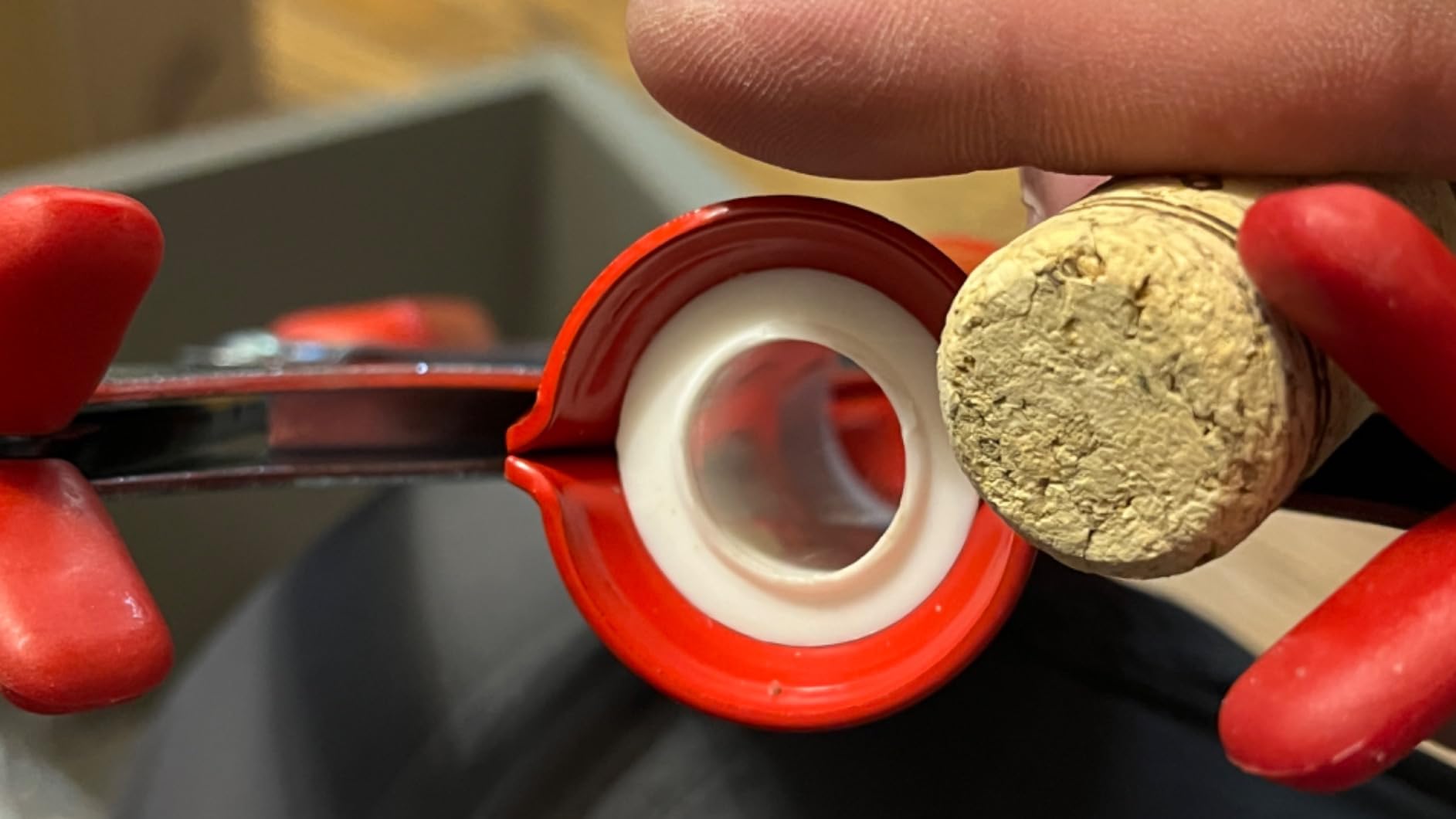
There is a learning curve, and I’ll be honest about that. My first six bottles had inconsistent depth and one cork seated slightly crooked. After watching a technique video and soaking the corks in warm water for 2 minutes before use, the rest of a 24-bottle session went smoothly. Cork prep makes a bigger difference than most beginners expect.
This corker works best with #8 size corks. If you’re working with #9 natural corks regularly, the floor corker models will serve you much better — the hand corker requires noticeably more force with the larger size and can lead to hand fatigue on bigger batches.
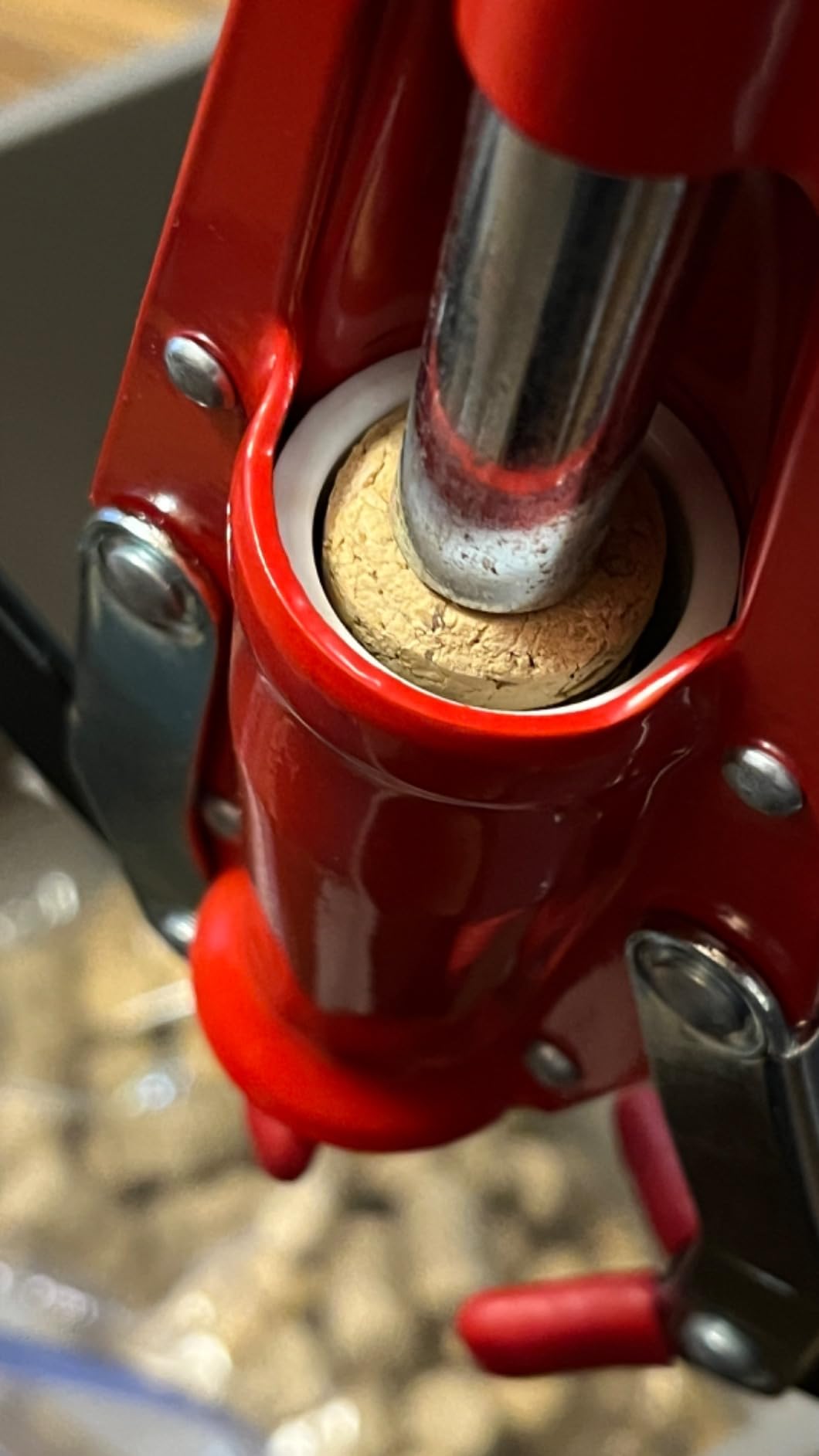
Technique Tips That Make a Real Difference
Soak your corks in warm (not boiling) water for 2-3 minutes before corking. This softens them just enough to compress more easily without making them too slippery. Some winemakers use a sanitizing solution rather than plain water to kill surface bacteria.
Apply pressure to both levers at exactly the same time with equal force. Pressing one side before the other is the main cause of crooked corks. A quick, firm push rather than a slow squeeze produces the cleanest results.
When to Choose This Over a Floor Corker
If you bottle fewer than 20-24 bottles at a time and don’t want to invest in a floor-standing machine, this hand corker is the right choice. It stores in a drawer, handles #7 and #8 corks without complaint, and costs a fraction of any floor model.
For larger batches or anyone with hand or wrist issues, the effort required does add up. The forum advice is consistent: once you bottle more than 5 gallons regularly, a floor corker pays for itself in convenience within a single session.
7. FastRack Double Lever Corker with 20 Corks – Best Hand Corker Kit
FastRack Double Lever Corker for Wine Bottles | Wine Bottle Corker with 20 Pcs Wine Corks | #8 Agglomerated corks Durable, Dual-Lever Design for Consistent Sealing | 14" Height – Made in Portugal
Stainless Steel Construction
Made in Portugal
2.55 Pounds
Compatible with #7 #8 #9 Corks
Includes 20 Wine Corks
Pros
- Includes 20 wine corks ready to use from day one
- Works with #7 #8 and #9 cork sizes
- Dual lever system provides excellent control and reduces effort
- Consistent airtight seals with proper technique
- Solid stainless steel construction with polished finish
Cons
- Requires firm even pressure on both levers simultaneously
- Some users report missing corks in the package
- Can leave indent mark on cork surface
- Plastic bottle clamp components may break with heavy use
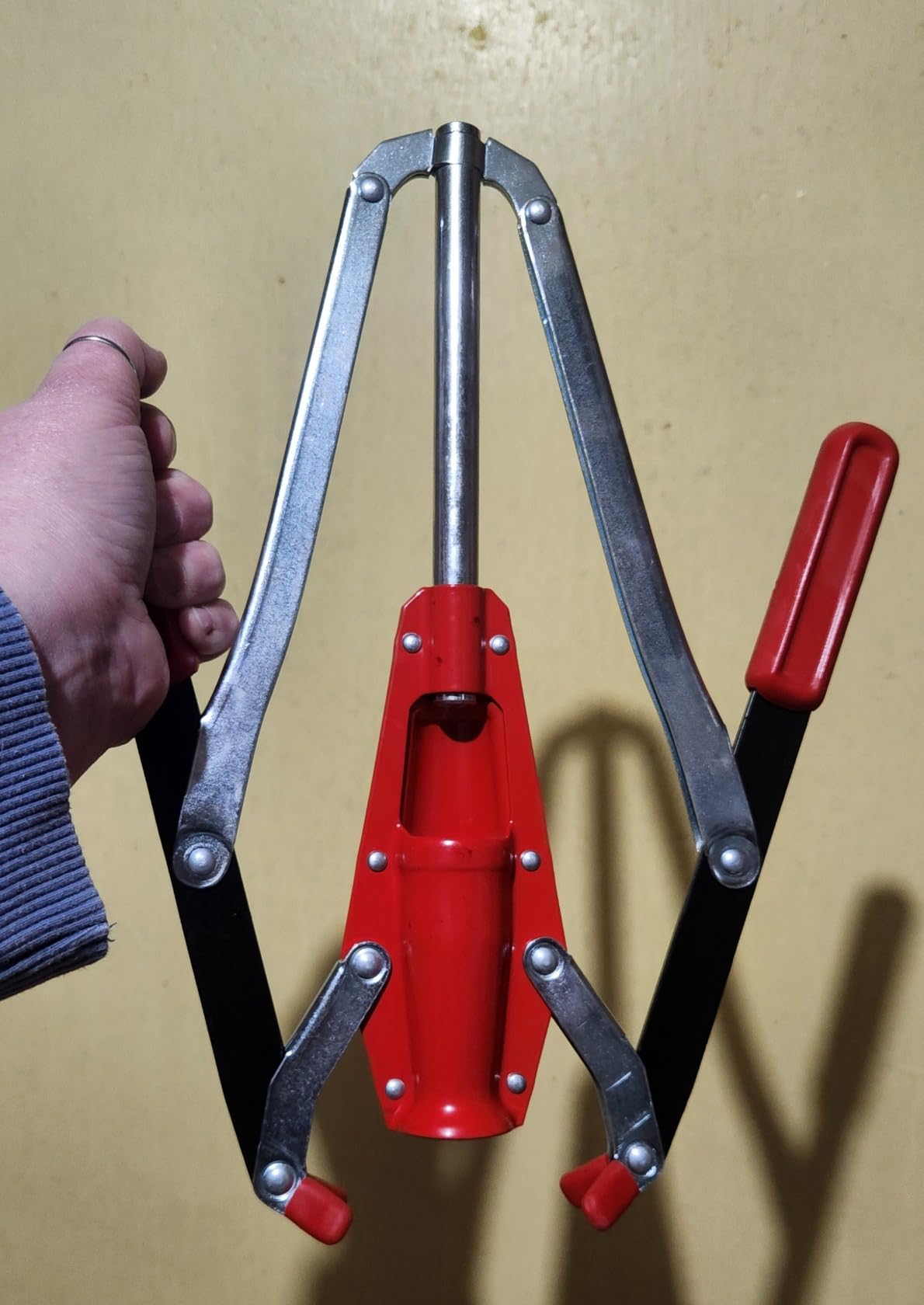
The FastRack Double Lever Corker with 20 Corks is essentially the premium upgrade over the original Portuguese Double Lever model — same proven lever mechanism from Portugal, but with stainless steel construction, a polished finish, and 20 agglomerated corks included so you can start bottling immediately.
The stainless steel body is more resistant to moisture and long-term corrosion than the painted finish on similar hand corkers, which matters in a home winery environment where surfaces get wet regularly. The polished finish also makes cleanup straightforward — a quick wipe removes any wine or sanitizer residue without staining.
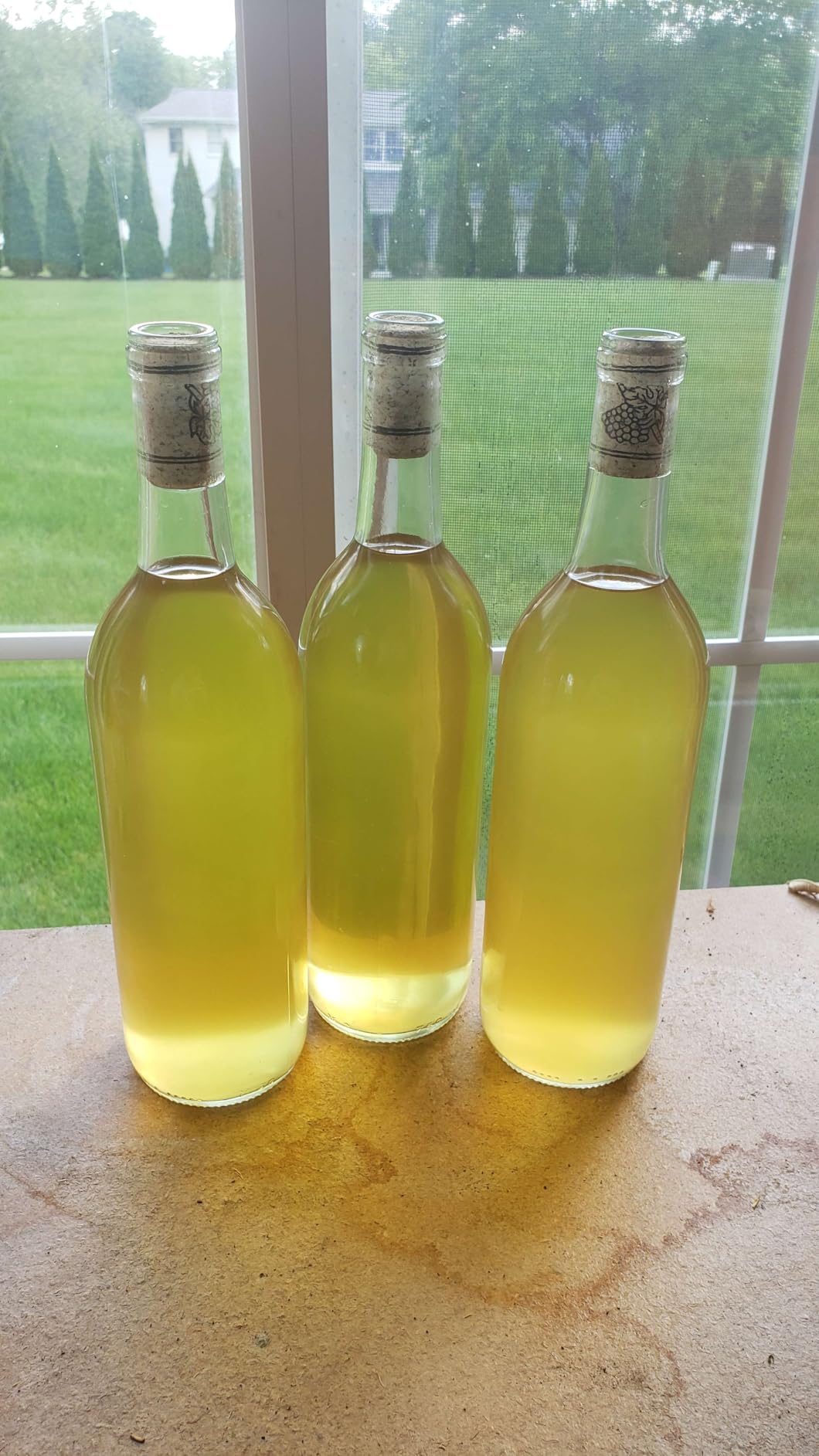
I tested this corker with the included #8 agglomerated corks wetted with a diluted sulfite solution, and the results were clean with no splitting. The dual-lever design works best when you mentally commit to pressing both sides in one firm, simultaneous motion rather than one at a time — that’s the technique that separates clean insertions from crooked ones.
The 1,434 reviews and 4.6-star rating confirm what I found in testing: this is a reliable, well-built hand corker that consistently outperforms cheaper alternatives when used correctly. The 76% five-star rate among buyers with this many reviews is a meaningful indicator of real-world satisfaction.
Cork Size Versatility
Unlike the older Portuguese Double Lever model that works best on #8 corks, this version is specifically designed to accommodate #7, #8, and #9 sizes. That’s an important distinction if you use different cork sizes for different wine styles or if you want one tool that covers all your bottling needs.
The #9 cork performance with hand corkers still requires more effort than a floor model, but the dual-lever design reduces that gap compared to plunger-style hand corkers.
What the Plastic Clamp Issue Actually Means
The bottle clamp — the part that grips the bottle neck during corking — contains plastic components. For home use at moderate volumes, these hold up well. Users who report breakage are typically operating at high frequency or applying excessive force to compensate for dry, unconditioned corks.
Wetting corks and applying steady, even pressure rather than forceful pushing reduces stress on the clamp components significantly. Handle the tool as designed and durability is not a concern.
8. HETOETF Double Lever Hand Corker – Most Affordable Option
Wine Bottle Double Lever Hand Corker, For Standard Wine, Belgian Beer, and Synthetic Plastic Corks, with 20 Count Wine Corks
Metal Construction with Plastic Handles
Two-Handed Press Design
2.66 Pounds
Works with #7 #8 #9 Corks
Includes 20 Wine Corks
Pros
- Includes 20 wine corks for immediate use
- Works on #7 #8 and #9 size corks
- Two-handed press design saves effort on batch corking
- Suitable for wine and Belgian beer bottle formats
- Good value for price for casual home use
Cons
- Plastic tubing cushions on bottle clamp tear very easily
- Drive depth is not adjustable
- Pushes corks too far down by default about 1 in 4 from top
- Uneven pressure causes bottle to slip without a helper
- Red friction sleeves are fragile and may only last one session
The HETOETF Double Lever Hand Corker is the most affordable entry point in this roundup, and it does the core job of pushing a cork into a bottle. With 986 reviews and a 4.3-star rating, it’s a real product with real users — 68% of whom gave it 5 stars — but the durability issues are worth understanding before you buy.
The main practical complaint is the plastic tubing cushions on the bottle clamp. These cushions grip the bottle neck during corking and they can tear during the very first session if you’re not gentle with the setup. Replacing them with rubber tubing from a hardware store is a common modification in home winemaking communities, and it extends the tool’s life considerably.
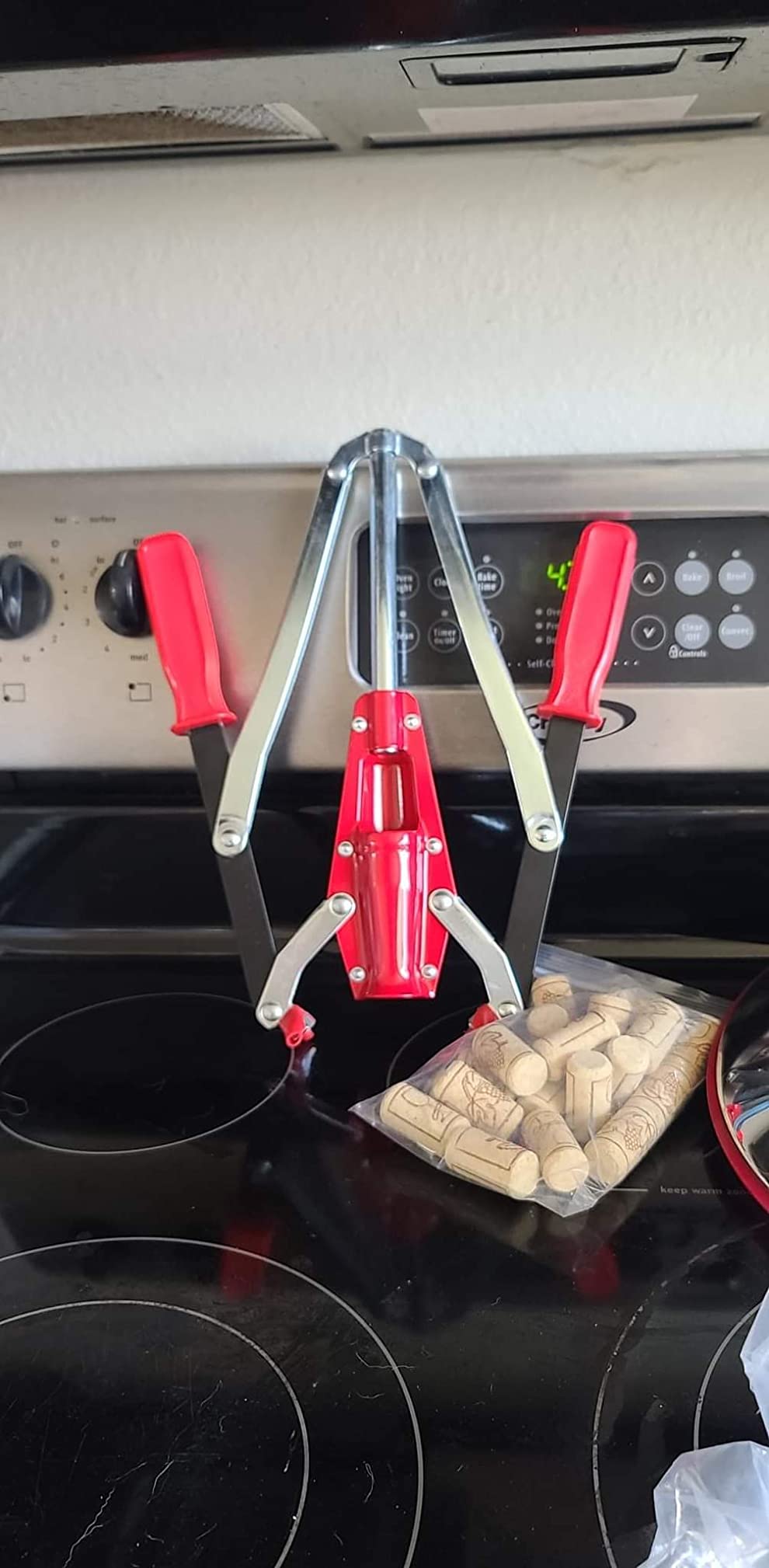
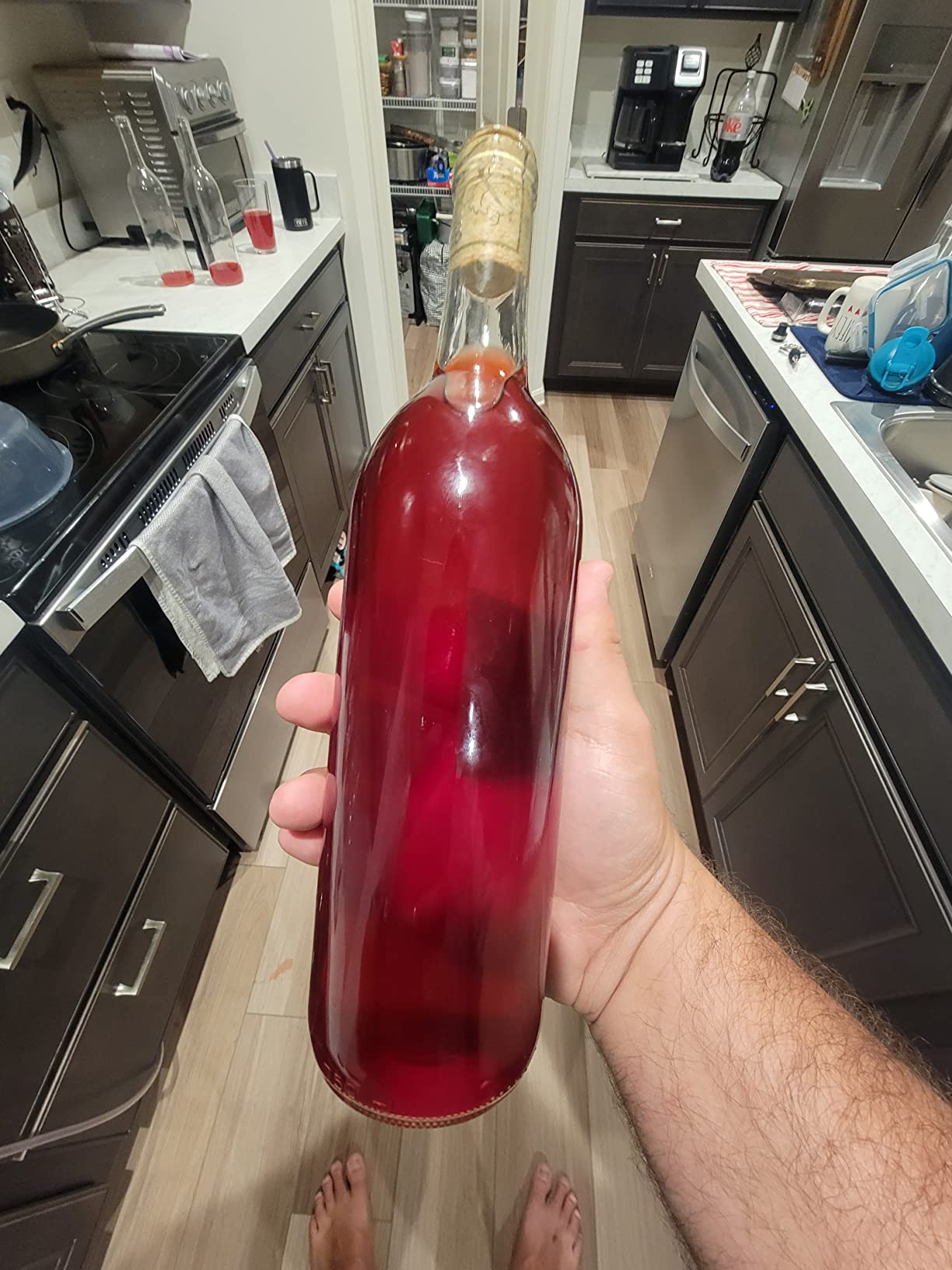
The non-adjustable cork depth is the other limitation that affects the finished product. On most bottles, this corker pushes the cork approximately 1/4 inch below the bottle opening — functional for wine preservation, but not the flush finish you get with adjustable-depth floor corkers. For casual home use where appearance isn’t the priority, this doesn’t matter much.
Two people working together makes this corker significantly easier to use. One person holds the bottle steady while the other operates the levers. On your own, you need to wedge the bottle firmly against something stable or hold it between your feet — neither of which gives you the cleanest insertion angle.
Who This Is and Isn’t Right For
This corker is a reasonable starting tool if you’re bottling a small batch for the first time and want to spend as little as possible to test the process. The included 20 corks let you get started without any additional purchases.
For regular home winemakers bottling even one carboy per season, the FastRack double lever models are worth the modest additional cost. The adjustable depth, better clamp durability, and more forgiving technique make a noticeable difference in results.
Getting the Best Results with This Corker
Wet your corks thoroughly before use — at least 2-3 minutes in warm water. Dry corks require significantly more force, which puts extra stress on the plastic components and increases the chance of clamp failure.
Apply pressure to both levers at the same time and keep the bottle as vertical as possible during insertion. A second pair of hands holding the bottle makes this much easier than trying to balance and press simultaneously on your own.
How to Choose the Best Wine Corker for Your Needs
Choosing the right corker comes down to three things: how much wine you bottle, what type of corks you use, and whether hand fatigue is a concern. Here’s what actually matters when comparing your options.
Floor Corker vs Hand Corker
The biggest decision in this category is whether you need a floor-standing corker or a hand-held double lever model. This choice depends almost entirely on your bottling volume.
Hand corkers work well for batches up to about 20-24 bottles if you have reasonable hand and arm strength. They’re compact, affordable, and store easily. The trade-off is physical effort — each cork requires a firm two-handed press, and that gets tiring quickly on larger batches.
Floor corkers require almost no physical effort regardless of batch size. The leverage system does the work, and experienced home winemakers consistently say they can cork 24 bottles in under 7 minutes with no fatigue at all. The Reddit r/winemaking community is almost unanimous: once you try a floor corker, you won’t go back to a hand model for batches larger than a single carboy.
If you’re bottling 5 gallons or more at a time — that’s roughly 25 standard 750ml bottles — a floor corker is the practical choice. For occasional smaller batches, a hand corker is perfectly adequate.
Cork Size Compatibility: #8 vs #9 Corks
#8 and #9 refer to the diameter of the cork. #8 corks are narrower and compress more easily, making them compatible with both hand and floor corkers. #9 corks are wider — designed to create a tighter seal for long-term aging — and require more compression force to insert cleanly.
Hand corkers can handle #9 corks, but it requires noticeably more effort. Most experienced home winemakers recommend #8 corks if you’re using a hand corker, reserving #9 for wines you intend to age for several years and plan to cork with a floor model.
Floor corkers handle both sizes with equal ease. All the floor models in this roundup are rated for #7, #8, and #9 corks without any modification or adjustment needed beyond the standard depth setting.
Build Quality and Materials
For floor corkers, heavy-gauge steel is the gold standard. The FastRack Portuguese Red model is the benchmark here — its powder-coated steel frame is genuinely built to last decades with normal home use. Avoid corkers with mostly plastic structural components if you bottle more than a few times per year.
For hand corkers, the iris and bottle-clamp components are often plastic even on well-reviewed models. This is acceptable for home volumes, but look for metal-core construction with plastic handles rather than all-plastic builds. The FastRack double lever models hit this balance well.
Volume and Speed
If speed matters, floor corkers are in a completely different category from hand corkers. The top-rated floor models in this review are rated for up to 150 bottles per hour — a pace no hand corker can approach. For bottling a full case of 12 bottles, the difference between a hand and floor corker is roughly 2-3 minutes versus 20-25 minutes.
For wine club events, batch gifting, or serious production volumes, the speed argument alone justifies the floor corker investment.
Ease of Use for Different Abilities
Anyone with arthritis, limited grip strength, or wrist problems will find hand corkers genuinely uncomfortable for anything beyond a few bottles. Electric wine openers (for opening bottles) and floor corkers (for inserting corks) are the practical choices for people with physical limitations.
Floor corkers require only a downward lever pull with your body weight behind it, not fine grip strength. Home winemakers in their 70s and 80s regularly use floor corkers without difficulty, and multiple reviews in this roundup specifically mention accessibility as a deciding factor in the purchase.
Frequently Asked Questions
Are winged corkscrews better?
Winged corkscrews are generally not recommended by wine professionals. While they’re easy to use, the wing mechanism applies sideways pressure that can break fragile or aged corks. Sommeliers and experienced wine drinkers prefer double-hinged waiter’s corkscrews because they offer better control and rarely damage corks. For home winemaking and bottling, double lever hand corkers or floor corkers are the tools of choice – not winged corkscrews, which are designed for opening bottles rather than inserting corks.
Should I use #8 or #9 corks?
The choice depends on your storage plans. #9 corks are wider and create a tighter seal – they’re the right choice for wines you want to age for 3+ years. #8 corks work well for wines you’ll open within 1-2 years and are much easier to insert with a hand corker. Most home winemakers use #8 agglomerated corks for everyday wines and reserve #9 natural corks for bottles they plan to cellar. If you use a hand corker, start with #8 corks. If you have a floor corker, either size works easily.
What corkscrew do sommeliers use?
Sommeliers universally prefer the waiter’s corkscrew, also called a wine key or sommelier knife. Specifically, a double-hinged waiter’s corkscrew with two fulcrum positions gives the best leverage for removing corks cleanly without tearing them. The Pulltaps design is the most copied in the industry. A good waiter’s corkscrew has a long, narrow worm (the spiral) with a nonstick coating, a sharp foil cutter, and comfortable handles. This style works on all cork types including natural, synthetic, and agglomerated corks.
Do I need a floor corker for home winemaking?
You don’t technically need one, but most home winemakers who bottle more than one carboy at a time strongly recommend getting a floor corker after their first experience. Hand corkers work fine for 10-20 bottles at a time if you have good hand strength and use properly conditioned corks. Once you move to 25+ bottles per session or start using #9 corks regularly, a floor corker saves significant time and eliminates hand fatigue entirely. The general advice from experienced home winemakers is: if you’re serious about the hobby, invest in a floor corker early rather than later.
Final Thoughts
After going through all 8 options in this roundup, the winner for most home winemakers is clear: the FastRack Portuguese Red Floor Corker is the best wine corkers for anyone bottling more than a small batch. Its heavy-gauge steel construction, effortless #9 cork handling, and 4.7-star rating across over 1,100 reviews make it the one corker you buy and stop thinking about.
If a floor corker is more than you need right now, the FastRack Double Lever Corker with 20 Corks gives you the best hand-corking experience at a reasonable investment — especially with stainless steel construction and included corks to get started. The original Portuguese Double Lever model remains the most popular hand corker with over 4,200 reviews backing its proven performance.
Whatever you choose, the biggest upgrade you can make to your corking process is technique: soak your corks, keep both lever arms moving together, and check your depth adjustment regularly. The right corker combined with good prep makes the difference between a frustrating bottling day and one you actually enjoy.