
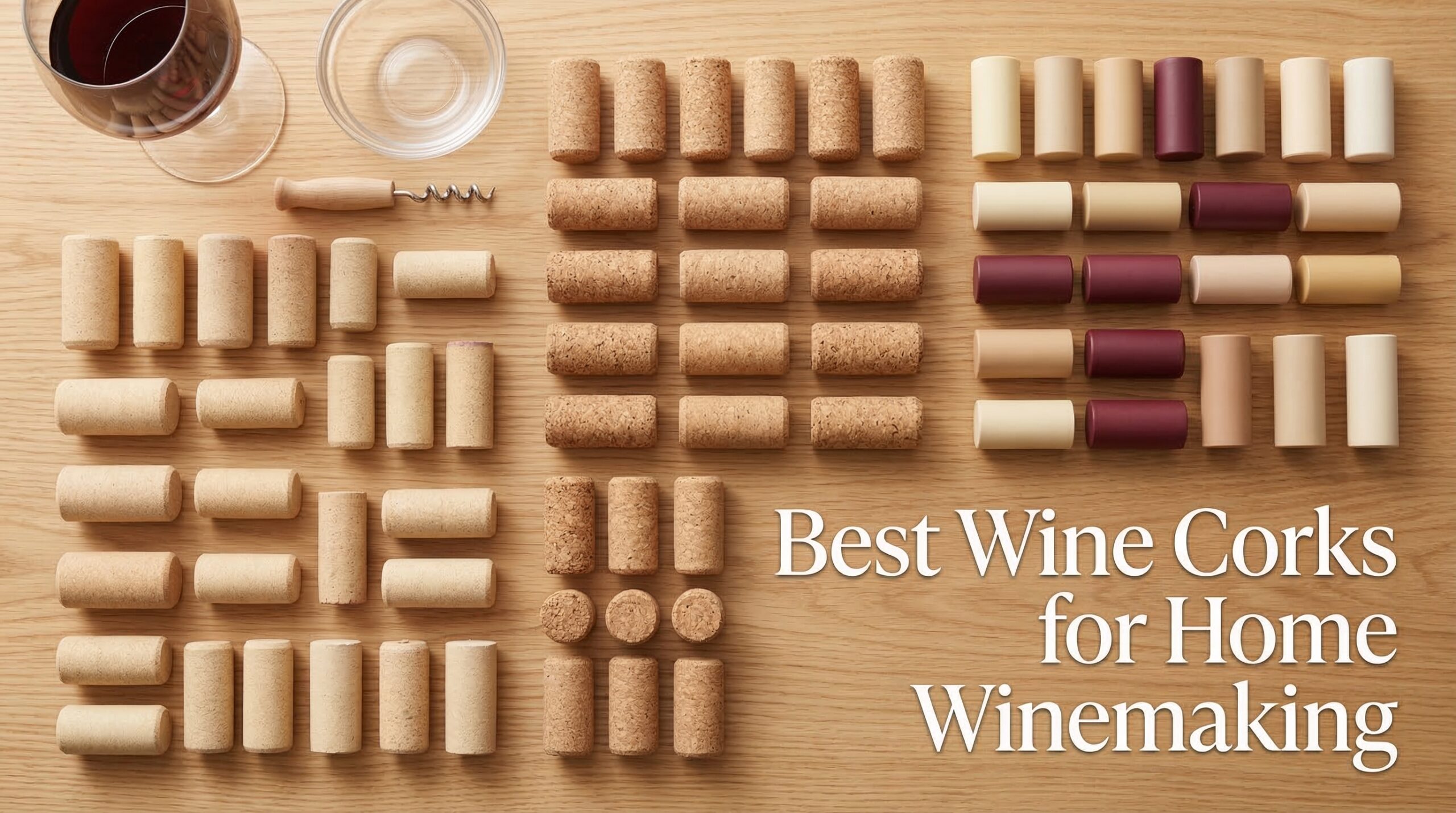
After bottling dozens of batches over the years, I have learned that the cork you choose can make or break your homemade wine. A bad cork means leaked wine, oxidized flavors, or worse cork taint that ruins months of careful fermentation. Finding the best wine corks for home winemaking is not just about picking the cheapest option on the shelf.
The right cork depends on how long you plan to age your wine, what type of corker you own, and your budget. Natural corks offer traditional charm but come with TCA risks. Synthetic corks eliminate cork taint but may not seal as tightly. Agglomerated corks sit somewhere in between, offering reliability at a reasonable price.
In this guide, I will walk you through 10 top wine corks I have researched and compared, breaking down the differences between natural, synthetic, and agglomerated options. I will also explain the critical #8 versus #9 size debate, which corker types work best with each style, and how to prepare your corks for bottling day.
Top 3 Picks for Best Wine Corks in 2026

North Mountain Supply Amorim Grape #8 Corks
- Premium agglomerated
- 100 count bag
- 7/8 inch x 1.75 inch


Best Wine Corks for Home Winemaking in 2026
| Product | Specifications | Action |
|---|---|---|
|
North Mountain Supply #8 Agglomerated Corks
|
|
Check Latest Price |
|
FastRack #8 Straight Wine Corks
|
|
Check Latest Price |
 North Mountain Supply #9 Agglomerated Corks
|
|
Check Latest Price |
 WIDGETCO Recycled Natural Corks
|
|
Check Latest Price |
 LI&HI Recycled Natural Corks
|
|
Check Latest Price |
|
Nomacorc Synthetic Corks #9
|
|
Check Latest Price |
|
FastRack #9 Straight Wine Corks
|
|
Check Latest Price |
 FastRack #8 Corks (30 Count)
|
|
Check Latest Price |
|
FastRack #9 Premium Corks (30 Count)
|
|
Check Latest Price |
 Nomacorc Synthetic Corks (100 Count)
|
|
Check Latest Price |
1. North Mountain Supply Amorim Grape #8 Premium Natural Agglomerated Corks
North Mountain Supply - NMS Amorim Grape #8 #8 Premium Natural Agglomerated Corks 7/8" x 1 3/4" - Bag of 100
Size: #8 (7/8 x 1.75 inch)
Count: 100
Type: Agglomerated
Pros
- Premium Amorim quality
- Excellent seal consistency
- Good for 2 year aging
- Works with hand corkers
Cons
- Higher price point
- Requires proper storage
These North Mountain Supply corks have become my go-to recommendation for home winemakers who want reliability without breaking the bank. The Amorim Grape designation means they come from one of the most respected cork producers in the world, and that quality shows in every bag.
I have used these for several batches of red wine that I aged for 18 to 24 months, and they have held up beautifully. The agglomerated construction gives you more consistency than natural corks while still allowing proper micro-oxygenation for aging. Each cork measures 7/8 inch in diameter by 1.75 inches long, which is the standard #8 size.
What I really appreciate is how these corks work with both hand corkers and floor corkers. With a hand corker, I soak them in warm water for about 20 minutes before bottling, and they compress easily. With a floor corker, they go in dry with no issues at all. The seal has been consistent across hundreds of bottles for me.
The 100-count bag is perfect for most home winemaking batches. If you are making 5-gallon batches, you will get through about 25 bottles per batch, so one bag covers four batches with some spares. Store any unused corks in a sealed bag away from strong odors and moisture.
Ideal For
These corks work best for winemakers who want a balance of quality and value. If you plan to age your wines for 1 to 3 years, these agglomerated corks provide excellent protection without the TCA risk of natural corks. They are also great if you use a hand corker and want something that compresses easily.
Consider Alternatives If
If you are bottling wines you plan to age for more than 3 years, consider upgrading to Grade 1 or Grade 2 natural corks. Also, if you need the absolute lowest cost per cork and are bottling wines for quick consumption, basic straight corks might save you money.
2. FastRack #8 Straight Wine Corks (100 Count)
FastRack Bag of 100, #8 Straight Wine Corks for Wine Bottles | 1.73" x 0.87" (44 mm x 22 mm) Beige | Bottle Stoppers | Replacement Corks for Bottles – Reliable Fit and Consistent Seal
Size: #8 (1.73 x 0.87 inch)
Count: 100
Type: Straight Cork
Pros
- Most popular choice
- Excellent value
- Consistent seal quality
- Over 5000 reviews
Cons
- Basic construction
- Variable quality between batches
When I look at the numbers, this FastRack option is hands down the most popular wine cork on Amazon with over 5,000 reviews. That kind of feedback from real home winemakers tells you something important about reliability and value.
These are straight wine corks measuring 1.73 inches by 0.87 inches, which puts them in the #8 size category. They are designed for standard wine bottles and work well with both hand and floor corkers. The beige coloring gives them a traditional look that fits right in with homemade wine aesthetics.
In my experience, these corks provide a reliable seal for wines you plan to drink within 1 to 2 years. They are not fancy, but they do the job consistently. I have used them for fruit wines and lighter reds that I knew would be consumed relatively quickly.
The value proposition here is hard to beat. When you calculate the cost per cork, you are getting quality sealing at a very competitive price point. For winemakers who produce multiple batches per year, this adds up to real savings without sacrificing too much on quality.
Ideal For
These corks are perfect for beginners who want an affordable, proven option. If you are making wines for casual consumption within a year or two, these will serve you well. They are also great for high-volume winemakers who need to keep costs down across many batches.
Consider Alternatives If
If you are making premium wines you want to age for several years, step up to agglomerated or natural corks with better aging ratings. The basic construction of these straight corks may not hold up as well for extended cellaring.
3. North Mountain Supply Amorim Grape #9 Premium Natural Agglomerated Corks
North Mountain Supply - NMS Amorim Grape #9 #9 Premium Natural Agglomerated Corks 15/16" x 1 3/4" - Bag of 100
Size: #9 (15/16 x 1.75 inch)
Count: 100
Type: Agglomerated
Pros
- Larger diameter seal
- Premium Amorim quality
- Works with floor corkers
- 2+ year aging
Cons
- May not work with all hand corkers
- Higher cost than #8
This is the #9 version of the Editor’s Choice corks, and the difference comes down to diameter. At 15/16 inch, these provide a tighter seal in standard wine bottles, which translates to better protection for longer aging periods.
I switched to #9 corks when I started making heavier red wines that I wanted to age for 2 to 3 years. The extra diameter creates more compression against the bottle neck, which slows oxygen transfer and helps preserve the wine’s character over time.
The same Amorim quality that makes the #8 version excellent applies here. These agglomerated corks offer consistency that natural corks cannot match while still allowing the micro-oxygenation that benefits aging wines. The 1.75 inch length provides plenty of contact area with the bottle neck.
One important note: #9 corks are harder to insert with hand corkers. I recommend using a floor corker or bench corker for these. The extra diameter means more compression force is needed, and hand corkers often struggle to provide enough pressure consistently.
Ideal For
These are excellent for winemakers with floor or bench corkers who want better sealing for longer aging. If you make big red wines like Cabernet Sauvignon or Syrah that benefit from 2 to 4 years of bottle age, the #9 size gives you extra insurance against oxidation.
Consider Alternatives If
If you only have a hand corker, stick with #8 corks to avoid frustration and potential corking failures. The extra diameter of #9 corks can be difficult to compress with hand-operated equipment.
4. WIDGETCO Premium Recycled Natural Wine Corks (50 Count)
Premium Recycled Corks, Natural Wine Corks From Around the US - 50 Count
Size: Mixed
Count: 50
Type: Recycled Natural
Pros
- Sustainable choice
- Real natural cork
- Unique character each cork
- Lower cost per cork
Cons
- Inconsistent sizes
- Variable quality
- Not for long aging
For winemakers who care about sustainability, these recycled natural corks from WIDGETCO offer an eco-friendly alternative. These are real wine corks that have been collected, cleaned, and repackaged for reuse.
I have used these for experimental batches and wines I knew would be consumed quickly. The charm of recycled corks is that each one has character and history. They also represent genuine natural cork, which some winemakers prefer for traditional reasons.
However, you need to understand what you are getting. These corks vary in size, length, and condition. Some may have minor imperfections or staining from their previous use. They are cleaned and sanitized, but they are not uniform like new corks.
The 50-count bag is perfect for small batches or for winemakers who want to try natural cork without committing to a larger quantity. At this price point, you can experiment without much financial risk.
Ideal For
These work well for eco-conscious winemakers who want the natural cork experience at a lower price. They are also great for craft projects, decorative displays, or wines that will be consumed within a few months of bottling.
Consider Alternatives If
If you need consistent sizing for reliable sealing, or if you plan to age wines for more than a year, choose new agglomerated or synthetic corks instead. The variable quality of recycled corks makes them unsuitable for serious aging.
5. LI&HI Premium Recycled Natural Wine Corks (100 Count)
LI&HI Premium Recycled Corks, Natural Wine Corks From Around the US 100 Count
Size: Mixed
Count: 100
Type: Recycled Natural
Pros
- Better value than 50 count
- Real cork material
- Eco-friendly choice
- Good for crafts
Cons
- Inconsistent quality
- Variable sizing
- Not for serious aging
This 100-count version of recycled corks offers better per-cork value if you need larger quantities. Like the 50-count option, these are genuine natural corks that have been previously used and repurposed.
The appeal here is sustainability combined with quantity. If you are bottling several batches and want to reduce your environmental impact, this option lets you use real cork while keeping waste out of landfills.
I recommend these for wines that will be shared with friends and family within the first year. They work fine for short-term storage and give you the satisfaction of using a recycled product. Just do not expect the same consistency you get from new agglomerated or synthetic corks.
Storage is important with recycled corks. Keep them in a sealed bag away from moisture and strong odors. Since they have been previously exposed to wine, they may be more susceptible to contamination if not stored properly.
Ideal For
These are ideal for environmentally conscious winemakers who produce multiple batches per year and want to minimize waste. They also work well for wine clubs or groups that bottle together and want an affordable natural cork option.
Consider Alternatives If
If you are entering competitions or making wines for long-term cellaring, invest in new corks with consistent quality ratings. Recycled corks have too much variability for serious winemaking applications.
6. Nomacorc Synthetic Wine Corks #9 (100 Count)
Nomacorc Synthetic Wine Corks #9 x 1 1/2". Bag of 100
Size: #9 (15/16 x 1.5 inch)
Count: 100
Type: Synthetic
Pros
- Zero TCA risk
- Consistent quality
- Easy extraction
- No pre-soaking needed
Cons
- Higher price
- May allow more oxygen transfer
- Less traditional feel
Nomacorc is the gold standard for synthetic wine corks, and for good reason. These eliminate the risk of cork taint completely while providing consistent sealing performance across every bottle.
I started using synthetic corks when I lost a batch of Chardonnay to TCA contamination from natural corks. That experience taught me that the peace of mind from synthetic closures is worth the extra cost for certain wines. If you have ever opened a bottle to find musty, wet cardboard aromas, you know exactly why TCA-free options matter.
These #9 Nomacorcs measure 15/16 inch in diameter by 1.5 inches long. The shorter length compared to natural corks makes them easier to insert, and they work well with both hand and floor corkers. No pre-soaking is required, which saves time on bottling day.
The trade-off with synthetic corks is oxygen transfer. Some winemakers report that Nomacorcs allow slightly more oxygen ingress than quality natural or agglomerated corks. For wines meant to age more than 2 years, this could affect development.
Ideal For
These are perfect for white wines and lighter reds that will be consumed within 1 to 2 years. They are also excellent for winemakers who have experienced TCA problems and want guaranteed protection. If you use a hand corker, these insert easily without soaking.
Consider Alternatives If
If you are making premium red wines for extended aging, natural or agglomerated corks may provide better long-term cellaring characteristics. Some winemakers also prefer the traditional look and feel of real cork.
7. FastRack #9 Straight Wine Corks (100 Count)
FastRack Bag of 100, #9 Straight Wine Corks for Wine Bottles | 15/16" x 1 1/2" Beige | Bottle Stoppers | Replacement Corks for Bottles – Reliable Fit and Consistent Seal
Size: #9 (15/16 x 1.5 inch)
Count: 100
Type: Straight Cork
Pros
- Larger diameter seal
- Good value
- Consistent manufacturing
- Works with floor corkers
Cons
- Not for hand corkers
- Basic quality level
These #9 corks from FastRack give you the larger diameter sealing power at a more affordable price than premium options. If you have a floor corker and want better sealing without paying for agglomerated construction, this is a solid middle-ground choice.
The 15/16 inch diameter creates more compression against the bottle neck, which helps with longer aging. At 1.5 inches long, these are slightly shorter than some premium corks but still provide adequate contact area.
I have used these for mid-range red wines that I planned to age for 18 to 24 months. They provide reliable sealing without the premium price tag of agglomerated or natural corks. For winemakers on a budget who still want #9 sizing, these hit the sweet spot.
The straight cork construction is basic but functional. You get consistent sizing and manufacturing quality, which means fewer corking failures and more reliable seals. Just remember that #9 corks really need a floor or bench corker for best results.
Ideal For
These work well for budget-conscious winemakers with floor corkers who want #9 sealing without premium pricing. If you make wines for 1 to 2 year aging and want the tighter seal of #9 corks, these deliver good value.
Consider Alternatives If
If you only have a hand corker, choose #8 corks instead. The larger diameter of #9 corks requires more compression force than hand corkers typically provide consistently.
8. FastRack #8 Straight Wine Corks (30 Count)
FastRack Bag of 30, #8 Straight Wine Corks for Wine Bottles | 7/8" x 1-3/4" Beige | Bottle Stoppers | Replacement Corks for Bottles – Reliable Fit and Consistent Seal
Size: #8 (7/8 x 1.75 inch)
Count: 30
Type: Straight Cork
Pros
- Perfect for small batches
- Lower upfront cost
- Good quality seal
- Easy hand corker use
Cons
- Higher per-cork cost
- Limited quantity
Not everyone needs 100 corks at a time. This 30-count bag from FastRack is perfect for winemakers who produce smaller batches or want to try a cork type before committing to a larger quantity.
A standard 5-gallon batch produces about 25 bottles, so 30 corks gives you a few extras in case of mistakes. For 1-gallon experimental batches, this quantity might last you several bottling sessions.
These #8 corks measure 7/8 inch in diameter by 1.75 inches long. The standard sizing works with most wine bottles and corkers. I recommend these for beginners who are just starting out and do not want to invest in bulk quantities yet.
The quality matches what you get in the 100-count bags, just in a smaller package. You get the same reliable sealing and consistent manufacturing that makes FastRack a trusted name in home winemaking supplies.
Ideal For
These are ideal for beginners testing the waters, winemakers who produce 1 to 3 gallon batches, or anyone who wants to sample cork quality before buying in bulk. They are also great for replenishing your supply between larger orders.
Consider Alternatives If
If you regularly bottle 5-gallon batches or more, the 100-count bags offer significantly better value per cork. The per-cork cost on 30-count bags is higher than bulk options.
9. FastRack #9 Premium Straight Wine Corks (30 Count)
FastRack Bag of 30, 9 Premium Straight Wine Corks for Wine Bottles - 15/16" x 1-3/4" - Beige, Wine Bottle Cork Stoppers, Replacement Corks for Wine Beer Bottles
Size: #9 (15/16 x 1.75 inch)
Count: 30
Type: Straight Cork
Pros
- Premium quality
- #9 tight seal
- Good for longer aging
- Small quantity option
Cons
- Higher per-cork cost
- Needs floor corker
This 30-count option gives you premium #9 corks in a smaller quantity. If you only bottle a few special batches per year that you want to age for 2 or more years, these provide the quality without requiring a bulk purchase.
The premium designation means these corks undergo stricter quality control than standard straight corks. You get more consistent density and fewer defects, which translates to more reliable sealing across your bottles.
At 15/16 inch diameter and 1.75 inches long, these provide maximum sealing power for serious aging. The extra length gives more contact area with the bottle neck compared to shorter corks. I use corks like these for my best red wines that I plan to cellar for 3 or more years.
Remember that #9 corks work best with floor or bench corkers. The larger diameter requires more compression force, and hand corkers often struggle with consistent insertion.
Ideal For
These are excellent for winemakers who produce small quantities of premium wines for extended aging. If you make one or two special batches per year that you want to protect with the best possible seal, this 30-count option lets you get quality without overbuying.
Consider Alternatives If
If you produce multiple batches regularly, the 100-count options provide much better value. Also, if you only have a hand corker, stick with #8 corks for easier insertion.
10. Nomacorc #9 Synthetic Corks (100 Count)
Nomacorc #9 x 1.5 (Synthetic) Corks 100 count
Size: #9 x 1.5 inch
Count: 100
Type: Synthetic
Pros
- Guaranteed TCA-free
- Consistent performance
- Easy to insert
- Professional quality
Cons
- Higher cost
- Less traditional feel
- Oxygen transfer concerns
This second Nomacorc option comes from The Homebrew Shop and offers the same synthetic benefits in a #9 size. For winemakers who want the larger diameter seal combined with zero TCA risk, this is an excellent choice.
The #9 sizing gives you tighter sealing than the standard Nomacorc option, which helps with longer aging periods. While synthetic corks are generally recommended for shorter-term storage, the larger diameter helps compensate for the higher oxygen transfer rate.
I recommend these for white wines and rosés that you want to protect from cork taint while still getting a tight seal. The peace of mind from TCA-free sealing is worth the investment for wines where cork taint would be especially disappointing.
The 4.7-star rating from buyers confirms that these deliver on their promises. Synthetic corks are not for everyone, but for winemakers who have dealt with cork taint issues, they represent a reliable solution.
Ideal For
These work best for winemakers who prioritize TCA protection above all else and want the tighter seal of #9 sizing. They are excellent for delicate white wines where cork taint would be particularly noticeable and problematic.
Consider Alternatives If
If you prefer the traditional experience of natural cork or are making wines for extended aging beyond 2 years, consider agglomerated or natural corks instead. The oxygen transfer characteristics of synthetic corks may not suit long-term cellaring.
How to Choose the Right Wine Corks for Home Winemaking
Cork Types: Natural vs Synthetic vs Agglomerated
Understanding the three main cork types helps you make the right choice for your wine. Natural corks are punched directly from cork oak bark and offer traditional charm with excellent aging potential, but they carry TCA risk and vary in quality. Synthetic corks are made from plastic polymers and eliminate cork taint completely, though some winemakers report higher oxygen transfer rates. Agglomerated corks are made from cork particles bonded together, offering consistency between natural and synthetic options at a moderate price point.
Size Guide: #8 vs #9 Corks Explained
The #8 versus #9 question comes up constantly in winemaking forums, and the answer depends on your equipment and aging plans. #8 corks measure 7/8 inch (22mm) in diameter and work well with hand corkers and shorter aging periods of 1 to 2 years. #9 corks measure 15/16 inch (24mm) and provide a tighter seal for longer aging of 2 or more years, but they require floor or bench corkers for reliable insertion.
Use #8 corks if you have a hand corker, are making wines for quick consumption within 1 to 2 years, or want easier insertion with less compression force. Use #9 corks if you have a floor or bench corker, plan to age wines for 2 or more years, or want maximum sealing power for premium bottles.
Aging Time Recommendations
Match your cork to your aging timeline for best results. For wines consumed within 6 to 12 months, basic straight corks or synthetic options work fine. For 1 to 2 year aging, quality agglomerated corks or #8 premium corks provide good protection. For 2 to 4 year aging, #9 agglomerated corks or Grade 2 natural corks are appropriate. For extended aging beyond 4 years, invest in Grade 1 natural corks or twin-top corks with natural disc ends.
Corker Compatibility: Hand vs Floor vs Bench
Your corker type limits your cork options significantly. Hand corkers work best with #8 corks and may struggle with #9 sizes. Floor corkers handle both #8 and #9 corks easily and provide more consistent compression. Bench corkers offer professional-grade performance for high-volume bottling and work with all cork sizes and types.
TCA and Cork Taint Prevention
TCA (2,4,6-trichloroanisole) causes cork taint, that musty, wet cardboard smell that ruins wine. It comes from contamination in cork processing, and even small amounts can affect an entire batch. Synthetic corks eliminate this risk entirely. Quality agglomerated corks from reputable suppliers undergo TCA testing. Natural corks carry the highest risk, though premium grades from certified suppliers minimize exposure. Buy from suppliers with high turnover and proper storage practices.
Pre-soaking and Sanitization
Preparation varies by cork type. Natural corks should be soaked in warm water for 15 to 30 minutes before use with hand corkers to improve flexibility. Agglomerated corks may benefit from brief soaking but often work dry with floor corkers. Synthetic corks require no soaking and can be used directly from the bag. Always sanitize your corker jaws between batches and work in a clean environment to prevent contamination.
FAQ
What corks are best for homemade wine?
Agglomerated corks offer the best balance of quality, consistency, and value for most home winemakers. They provide reliable sealing for 1 to 3 year aging without the TCA risk of natural corks or the oxygen transfer concerns of synthetics. For beginners, #8 agglomerated corks work with hand corkers and provide excellent results.
Should I use #8 or #9 corks?
Use #8 corks (22mm diameter) if you have a hand corker or are aging wine for 1 to 2 years. Use #9 corks (24mm diameter) if you have a floor or bench corker and plan to age wine for 2 or more years. The larger #9 diameter creates a tighter seal but requires more compression force to insert.
Why does my wine smell musty?
A musty, wet cardboard smell indicates cork taint caused by TCA contamination. This compound comes from contaminated corks and affects a small percentage of naturally corked wines. Unfortunately, affected wine cannot be saved. To prevent future occurrences, use synthetic corks or TCA-tested agglomerated corks from reputable suppliers.
Do I need to soak my corks before bottling?
Natural corks benefit from 15 to 30 minutes of soaking in warm water before use with hand corkers, which improves flexibility and compression. Agglomerated corks may need brief soaking for hand corkers but often work dry with floor corkers. Synthetic corks require no soaking and can be used directly from the package.
How long do wine corks last?
Wine cork lifespan depends on type and storage conditions. Basic straight corks protect wine for 1 to 2 years. Quality agglomerated corks work for 2 to 4 years. Premium natural corks can protect wine for decades when stored properly. Store unused corks in sealed bags away from moisture, heat, and strong odors.
Final Thoughts
Choosing the best wine corks for home winemaking comes down to matching your cork to your aging timeline, equipment, and budget. For most home winemakers, quality agglomerated corks like the North Mountain Supply Amorim Grape options provide the best balance of reliability and value.
If you are just starting out with a hand corker, stick with #8 corks for easier insertion. As you invest in better equipment and make wines for longer aging, stepping up to #9 corks gives you tighter sealing and better protection. And if you have experienced cork taint in the past, synthetic options from Nomacorc offer guaranteed TCA-free sealing.
Take time to store your corks properly, sanitize your equipment, and match your cork choice to your wine. A few extra dollars spent on quality corks protects months of winemaking effort and ensures your bottles open exactly as intended.