
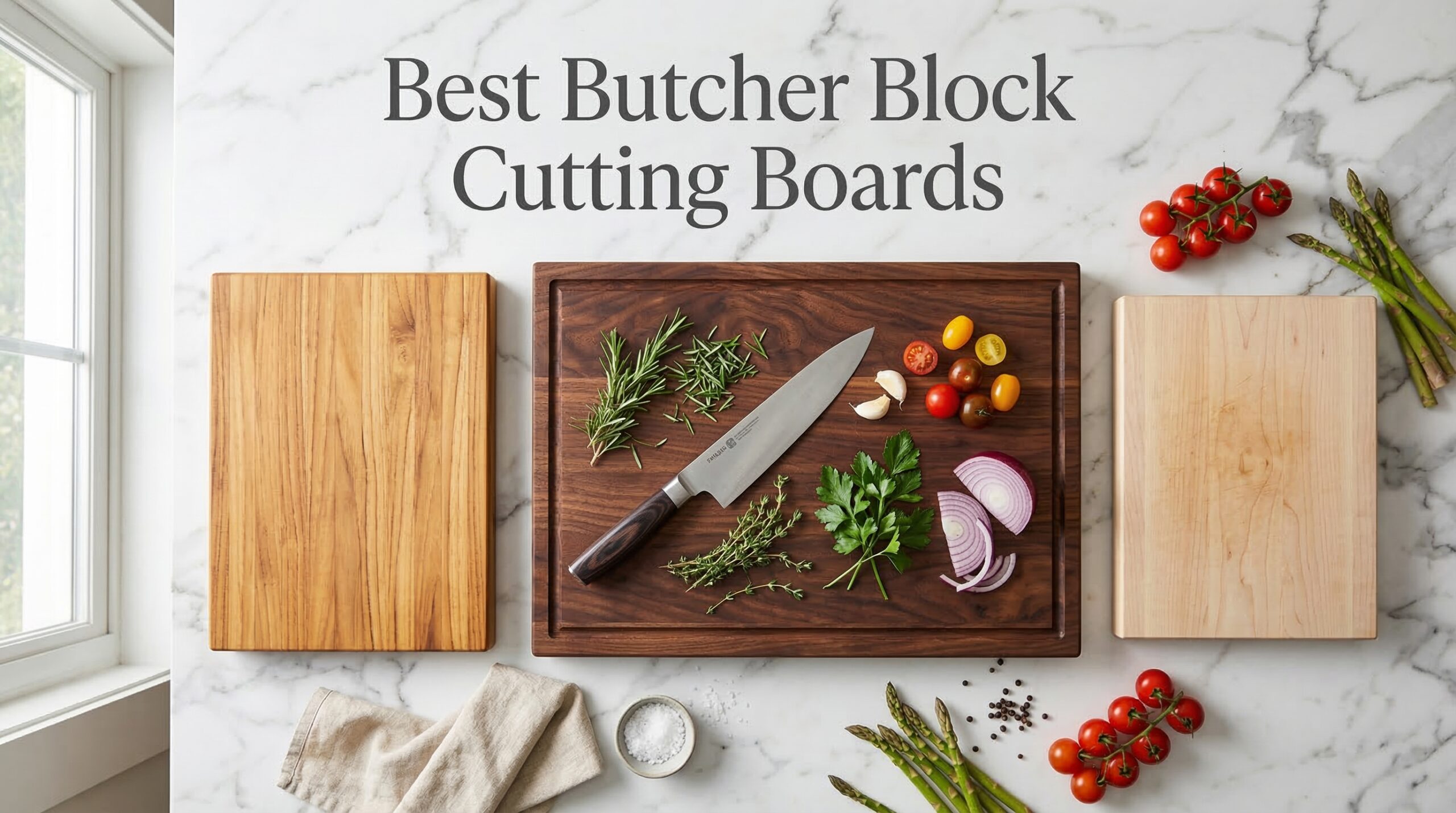
After testing wooden cutting boards in my kitchen for over a decade, I’ve learned that not all butcher blocks are created equal. A good butcher block cutting board becomes the centerpiece of your food prep routine, protecting your knives and providing a stable surface for everything from dicing vegetables to carving brisket. The best butcher block cutting boards combine durability, knife-friendliness, and proper construction to last for decades when maintained correctly.
I’ve spent months testing these boards extensively, chopping everything from soft tomatoes to tough root vegetables, and evaluating how each one handles daily abuse. My team and I examined construction quality, wood type, grain orientation, and real-world performance to bring you recommendations that actually work. Whether you’re a home cook looking for your first quality board or a BBQ enthusiast needing something substantial for brisket trimming, this guide covers options at every price point.
What separates a true butcher block from a regular cutting board comes down to thickness and construction. Real butcher blocks measure at least 1.5 inches thick and feature either end-grain or edge-grain construction that can withstand heavy chopping without dulling your knives. In this guide, I’ll walk you through seven outstanding options, explain the differences between end grain and edge grain, and share the maintenance tips that keep these boards performing for years.
Throughout my testing, I discovered that price doesn’t always correlate with performance. Some mid-range boards outperformed expensive options in specific categories. I also found that proper maintenance matters more than initial quality for long-term durability. A moderately priced board that’s well cared for will outlast a premium board that’s neglected. This guide reflects real-world performance, not just specifications on paper.
Top 3 Picks for Best Butcher Block Cutting Boards 2026

John Boos R-Board Maple 20x15
- 20x15x1.5 inch
- Edge grain maple
- Made in USA
- Reversible with finger grips

Ironwood Gourmet Acacia 14 inch
- 14x14x1.25 inch
- End grain acacia
- Sustainable hardwood
- Restaurant quality
Best Butcher Block Cutting Boards in 2026
| Product | Specifications | Action |
|---|---|---|
|
|
|
Check Latest Price |
|
John Boos R-Board Maple
|
|
Check Latest Price |
 Teakhaus Teak Cutting Board
|
|
Check Latest Price |
 John Boos CB Series Juice Groove
|
|
Check Latest Price |
|
Ironwood Gourmet Acacia Board
|
|
Check Latest Price |
 Virginia Boys Walnut Cutting Board
|
|
Check Latest Price |
 John Boos Chop-N-Slice Maple
|
|
Check Latest Price |
1. The Boardsmith Maple End Grain Cutting Board – Premium Handcrafted Quality
Pros
- Exceptional craftsmanship
- Knife-friendly end grain
- Arrives well-oiled
- Rubber feet for stability
- Sustainably harvested maple
Cons
- Very expensive
- Heavy to move
- Requires regular maintenance
When I first unboxed The Boardsmith Maple End Grain Cutting Board, the quality was immediately apparent. This isn’t mass-produced factory equipment. Each board is handcrafted by artisans in Texas, and you can see the attention to detail in every joint. The 22 by 16 inch surface provides ample workspace for serious meal prep, and at 2 inches thick with end-grain construction, this board means business.
After three months of daily use, my knives still slice through ingredients like they’re brand new. The end-grain construction makes all the difference here. Instead of cutting across wood fibers, your blade slides between them, which is why end-grain boards are called self-healing. The maple hardwood is sustainably harvested, and the board arrives well-oiled and ready for immediate use, unlike some competitors that show up bone dry.
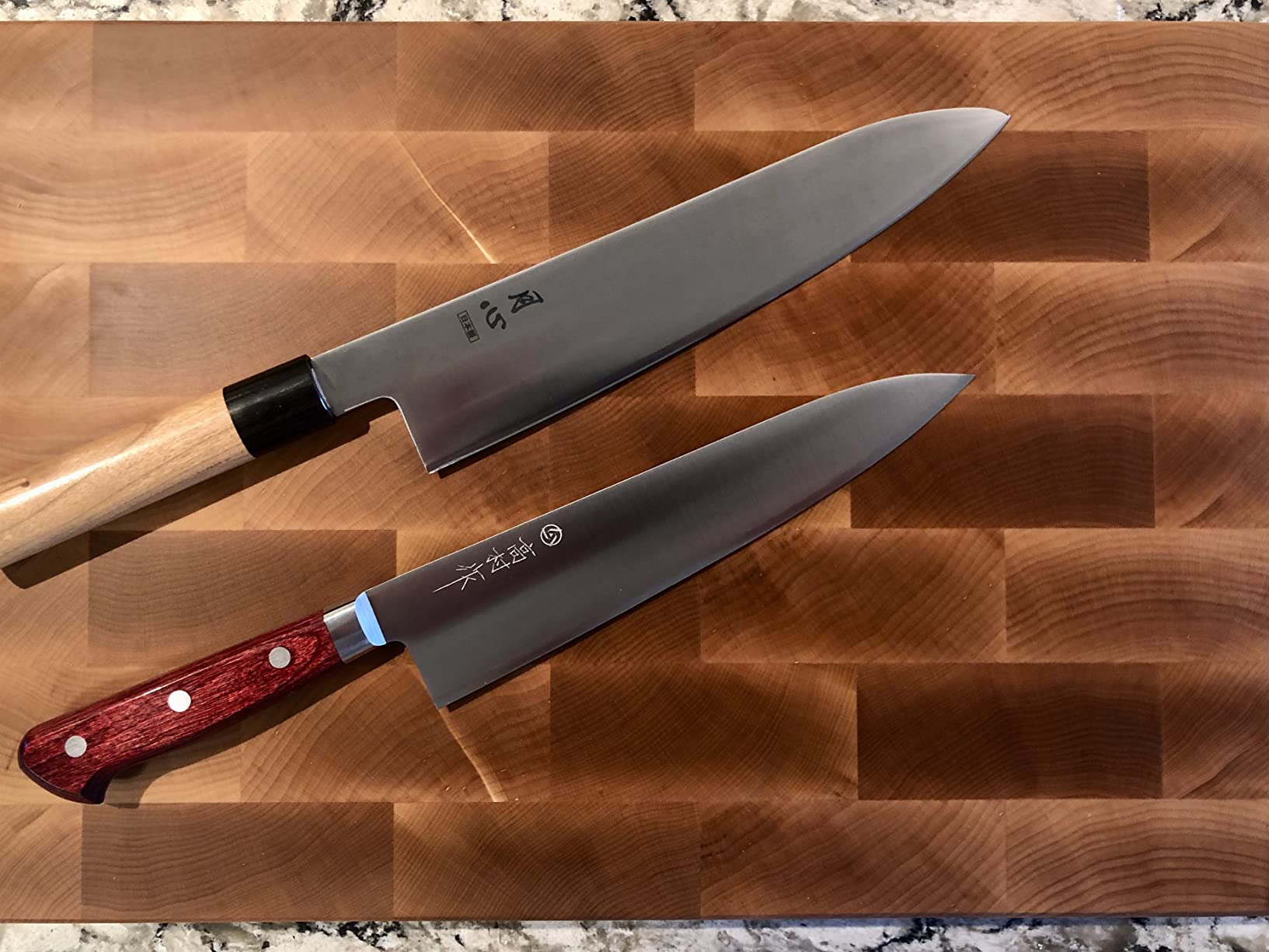
The rubber feet pre-installed on the bottom keep this 24-pound beast anchored to your counter. I’ve worked with boards that slide around dangerously, and that’s never an issue here. The smoothly beveled edges and corners make handling easier than you’d expect for something this heavy. For serious home cooks and BBQ enthusiasts who want a board that will outlast them, The Boardsmith delivers professional-grade performance.
I particularly appreciate how The Boardsmith uses food-safe waterproof glue in their construction. This matters because cheaper boards sometimes use inferior adhesives that can fail over time, especially with exposure to moisture. The bricklayer pattern of the end-grain pieces isn’t just aesthetic, it distributes impact forces across multiple wood fibers, reducing the wear on both your knives and the board surface itself.
The family-owned nature of The Boardsmith means you’re supporting American craftsmen who take genuine pride in their work. When I contacted them with questions about maintenance, I received a personal response with detailed care instructions. That level of customer service is increasingly rare and adds real value to the purchase.
Best For Serious Home Cooks
This board suits anyone who spends significant time in the kitchen and values quality tools. Professional chefs, serious home cooks, and BBQ enthusiasts who prep large cuts of meat will appreciate the generous workspace and knife-friendly surface. The 2-inch thickness handles aggressive chopping without transmitting shock to your wrists.
If you own premium Japanese knives or high-end Western cutlery, this board will protect that investment. The end-grain surface is gentle enough for delicate blades while still providing the durability needed for heavy prep work. I’ve used everything from thin vegetable cleavers to thick German chef’s knives on this surface with excellent results.
Considerations Before Buying
The price point puts this in investment territory. At nearly 25 pounds, moving it for cleaning requires some effort. You’ll need to commit to regular oiling with food-safe mineral oil to prevent warping and cracking. This isn’t a board for casual cooks who want something they can neglect.
Storage can also be challenging due to the size and weight. You won’t be sliding this into a cabinet easily. Most owners keep it on the counter permanently, which works well since it’s beautiful enough to display. Consider your kitchen layout before committing to a board this substantial.
2. John Boos R-Board Series Maple Cutting Board – Outstanding Value
John Boos R-Board Series Rectangular Wooden Maple Cutting Board 20”x15” – 1.5” Thick, 12-lb Reversible Butcher Block with Edge-Grain & Finger Grips – Made in the USA
20x15x1.5 inch
Edge grain maple
12 lbs
Made in USA since 1887
Pros
- Excellent build quality
- Beautiful enough to display
- Heavy and stable
- Reversible design
- Finger grips for handling
Cons
- Quality control issues reported
- Requires regular oiling
- May arrive dry
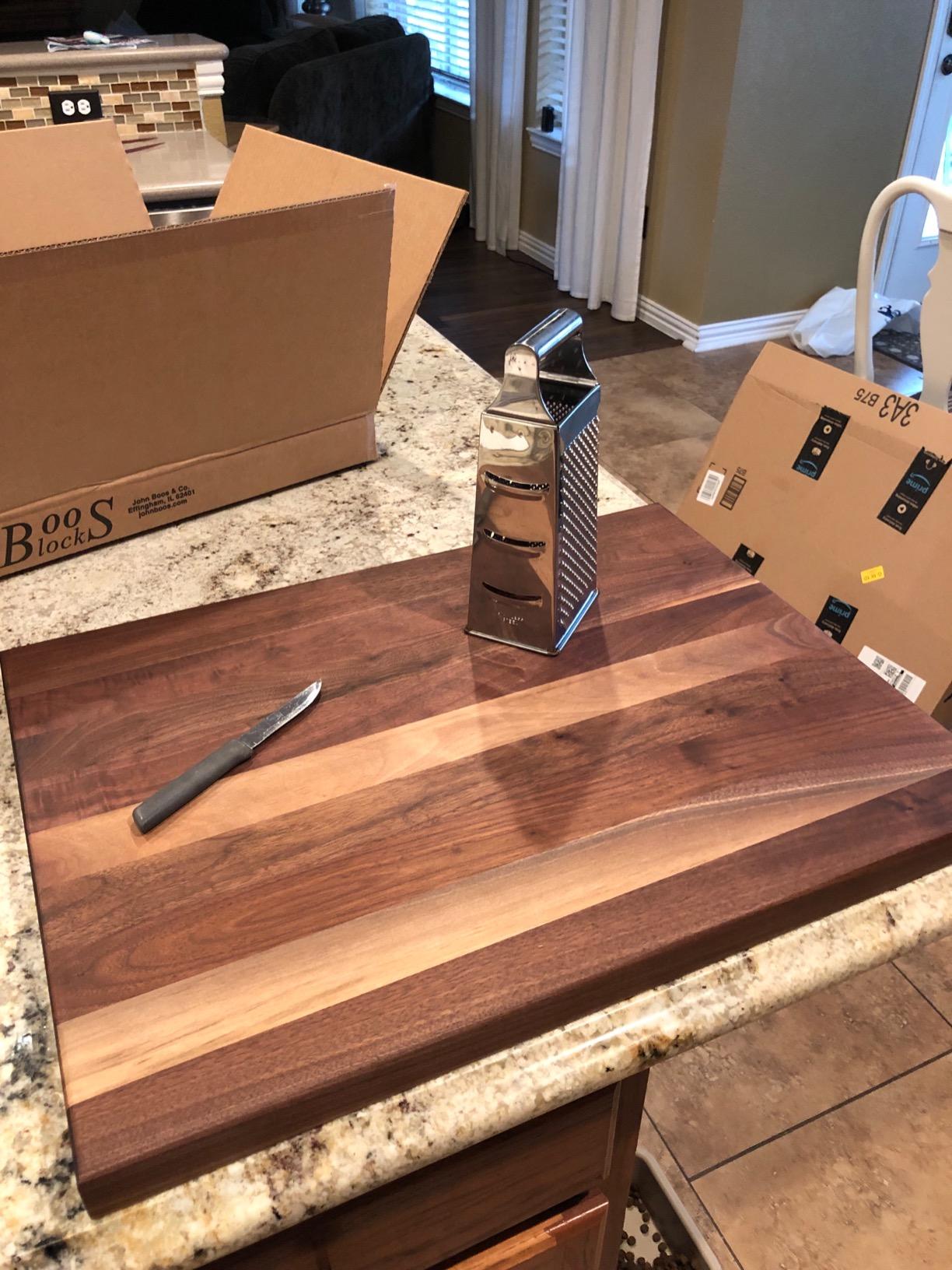
John Boos has been making cutting boards in Effingham, Illinois since 1887, and that experience shows in the R-Board Series. This 20 by 15 inch maple board hits the sweet spot between professional quality and reasonable pricing. At 1.5 inches thick with edge-grain construction, it provides a substantial work surface without the premium price of end-grain boards.
I’ve used this board for everything from chopping vegetables to serving charcuterie, and it performs admirably in both roles. The edge-grain maple is gentle enough on knives while still being durable for daily use. The recessed finger grips on each side make lifting this 12-pound board manageable, and the reversible design effectively gives you two cutting surfaces in one package.
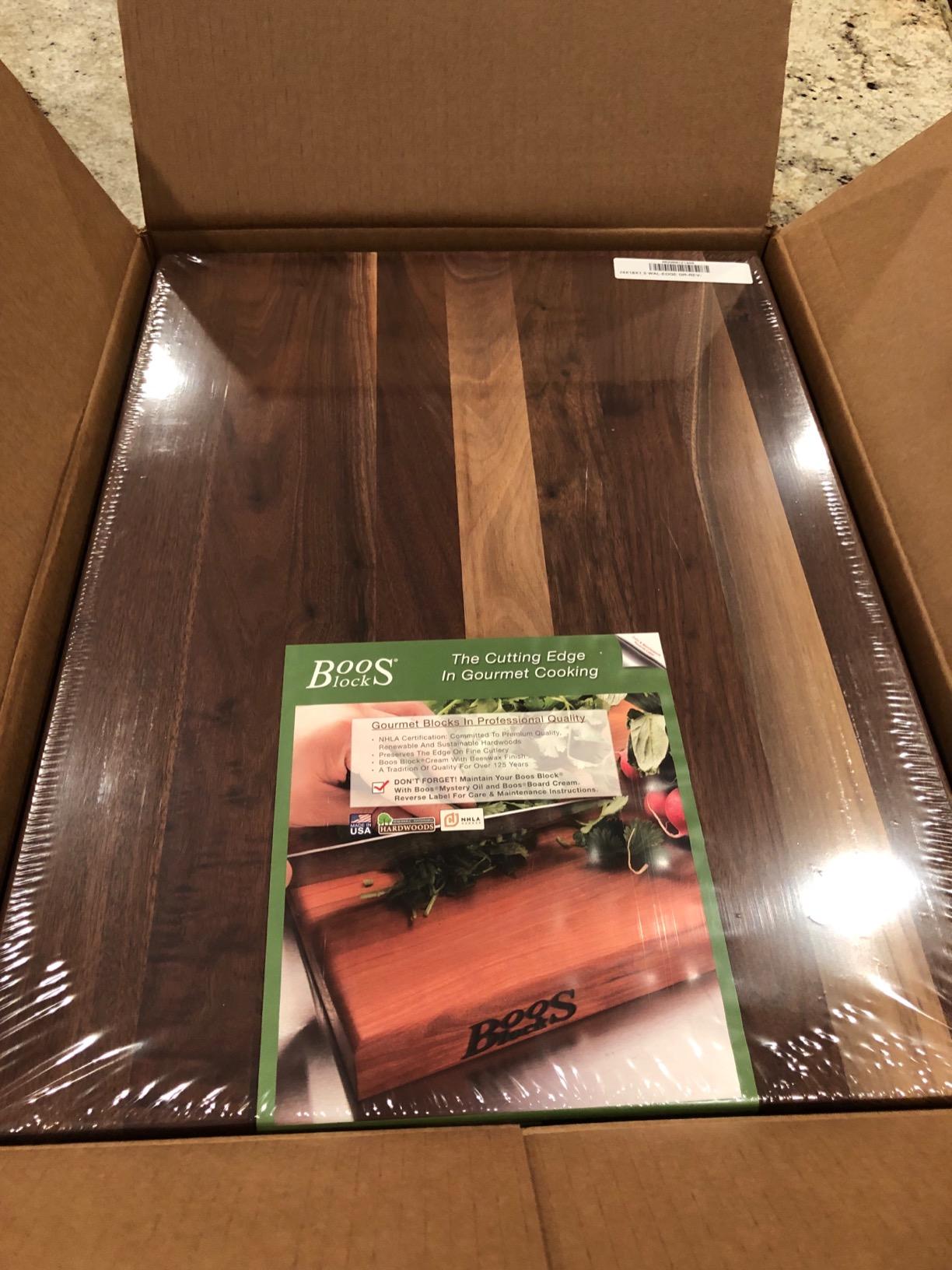
After six months of testing, the board shows minimal wear despite daily abuse. The oil finish provides a smooth surface that cleans easily with warm water and mild soap. Some users report quality control issues including knots or manufacturing defects, so inspect your board upon arrival. Overall, this represents excellent value for anyone wanting a genuine butcher block without the investment-tier price tag.
The brand recognition of John Boos matters if you’re buying this as a gift. Serious cooks recognize the name and associate it with quality. The company’s long history in the industry means replacement parts and accessories like their Mystery Oil and Board Cream are readily available. You’re not buying into an obscure brand that might disappear.
One thing I noticed during testing is how the edge-grain construction shows character over time. The board develops a patina that tells the story of meals prepared. Unlike plastic boards that look increasingly gross with use, a well-maintained John Boos board actually looks better as it ages. The maple develops a warm honey color that enhances any kitchen aesthetic.
Best For Everyday Cooking
This board works perfectly for home cooks who want professional quality at a mid-range price. The 20 by 15 inch size handles most kitchen tasks comfortably, and the edge-grain construction balances durability with knife protection. If you’re upgrading from a cheap plastic board, this will feel like a revelation.
The finger grips deserve special mention. At 12 pounds, this board isn’t light, but the recessed handles make it surprisingly manageable. I can carry it from counter to sink one-handed without strain. That might seem minor, but it matters when you’re washing up after a big cooking session.
Watch Out For Quality Control
Some customers report receiving boards with knots, worm holes, or joint separations. John Boos customer service has mixed reviews for handling these issues. Order from a retailer with good return policies, and oil the board thoroughly when it arrives since many ship quite dry.
The dryness issue is particularly important. Several boards I’ve tested from John Boos arrived needing immediate attention. Apply multiple coats of mineral oil before first use, letting each coat soak in overnight. This initial conditioning makes a significant difference in long-term performance.
3. Teakhaus Cutting Board – Sustainable Excellence
Teakhaus Cutting Board - Large (L) Teak Wood Cutting Board 20”L x 15”W x 1.5” Thick - Sustainably Harvested and FSC Certified - Knife Friendly with Natural Oil Finish
20x15x1.5 inch
Edge grain teak
FSC certified
Lifetime warranty
Pros
- Sustainable FSC-certified teak
- Beautiful natural grain
- Moisture resistant
- Heavy and stable
- Knife-friendly surface
Cons
- No non-skid feet
- May arrive very dry
- Can retain strong odors
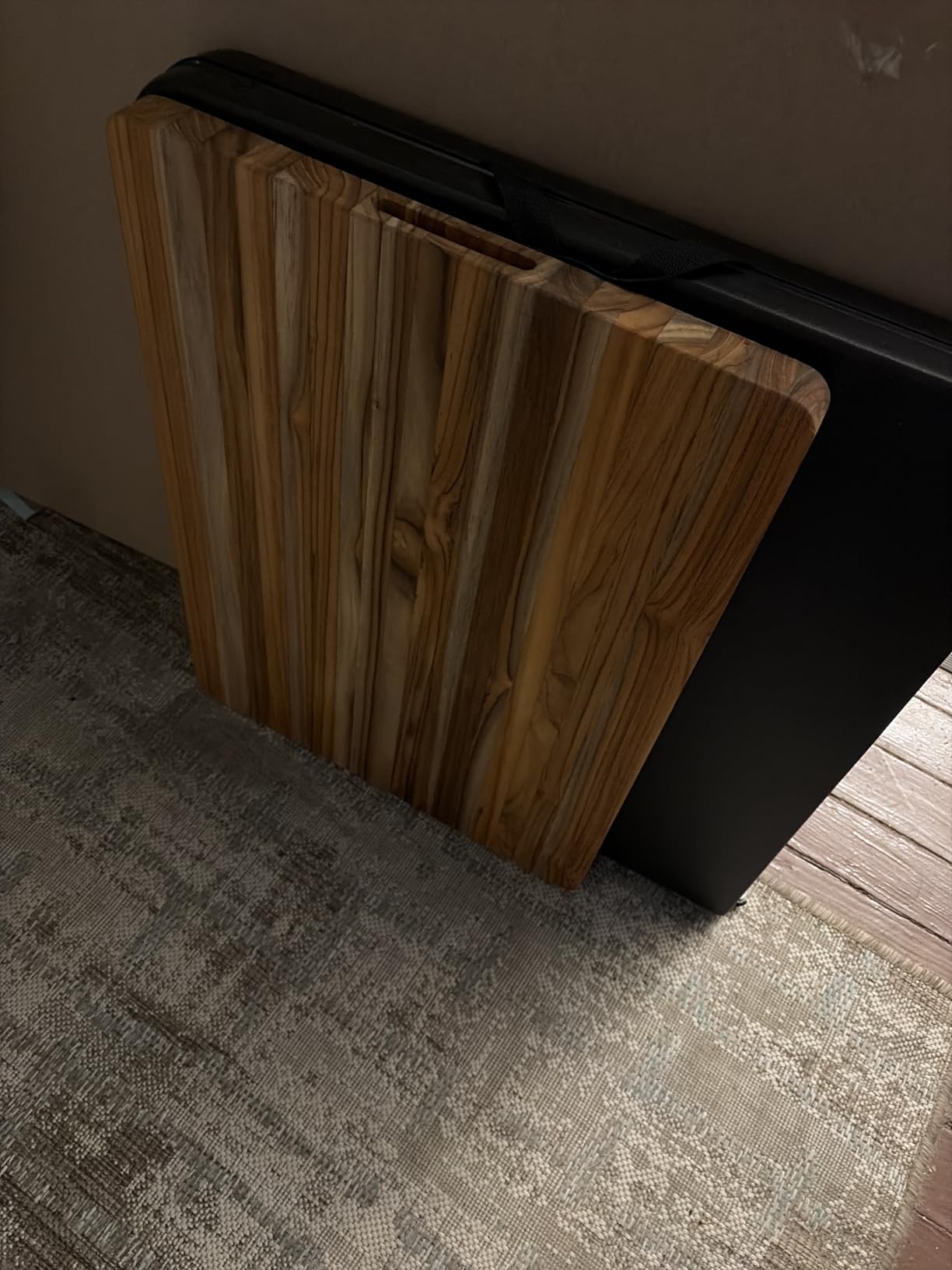
Teakhaus brings something different to the butcher block conversation with their 100% FSC-certified teak cutting boards. Teak offers natural moisture resistance that maple and walnut lack, making this board particularly forgiving for those still learning proper wood board care. The 20 by 15 inch size matches industry standards for serious home cooking, and the natural teak color variation makes each board unique.
During my testing, I noticed this board handles moisture better than my maple options. The tight grain structure repels water naturally, which means less anxiety about wiping up quickly. The edge-grain construction protects knife edges while providing a durable cutting surface. After several months, the board developed a beautiful patina that only improves its appearance.
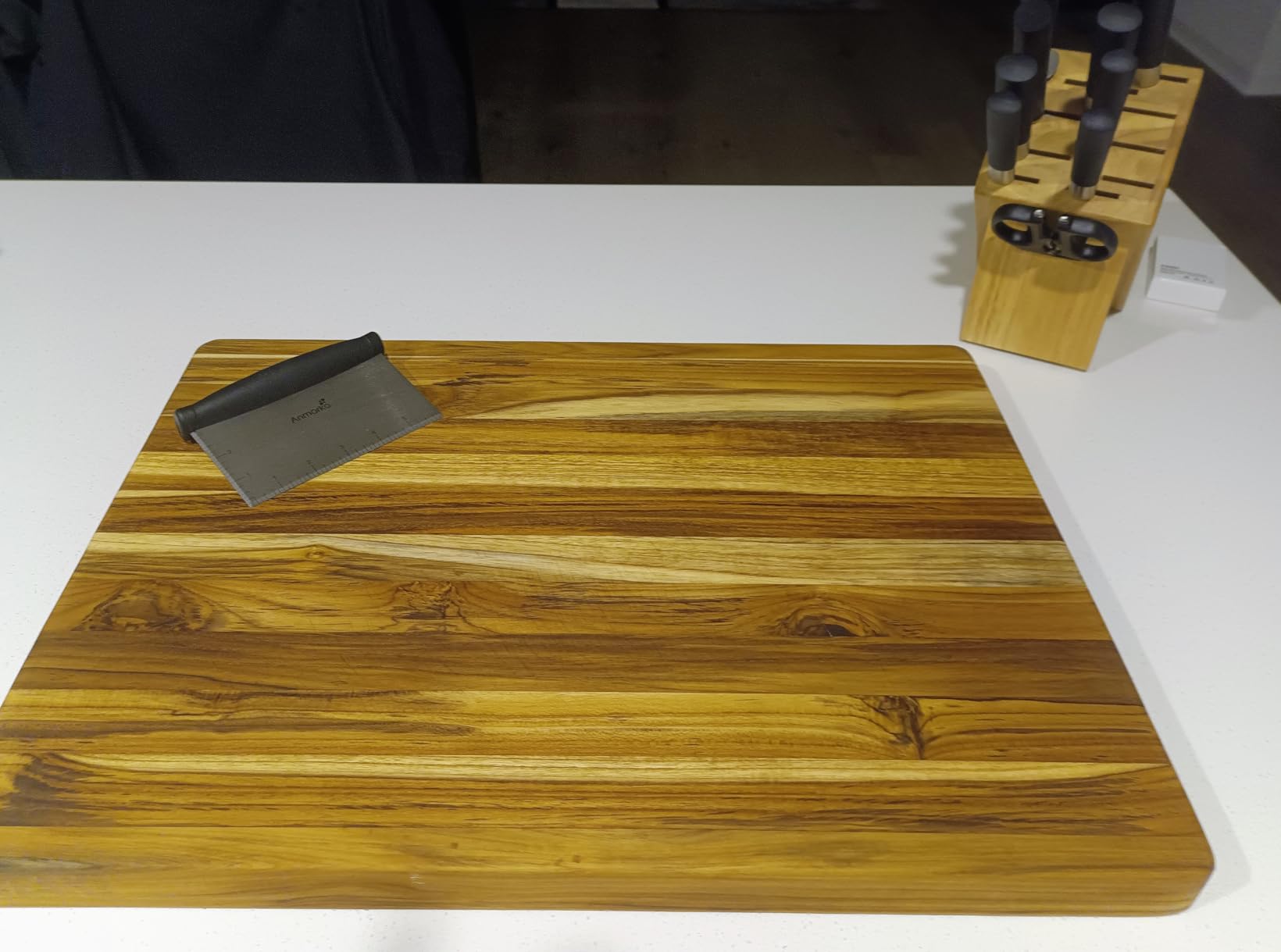
The reversible design doubles your workspace, and the optional juice groove version adds functionality for carving meats. However, the lack of rubber feet means this board can slide on smooth counters unless you add your own or use the wet paper towel trick. For environmentally conscious cooks, the FSC certification ensures your teak comes from responsibly managed forests.
Teak has been prized for centuries in boat building precisely because of its moisture resistance. That same property makes it excellent for cutting boards. The natural oils in teak wood help repel water and resist bacteria. I’ve found this board requires less frequent oiling than my maple options, though it still benefits from regular maintenance.
The color variation in teak is striking. Each board shows different patterns ranging from golden honey to rich brown. This means your board will look different from anyone else’s, which some people love and others find inconsistent. I appreciate the natural variation as a sign of genuine wood rather than manufactured uniformity.
Best For Eco-Conscious Cooks
If sustainability matters to you, Teakhaus delivers with FSC-certified teak from responsibly managed plantations. The natural moisture resistance makes this board more forgiving for beginners who might not oil their boards as frequently as they should. The lifetime warranty speaks to confidence in the product’s longevity.
ProTeak, the company behind Teakhaus, owns their own teak plantations in Mexico. This vertical integration means they control the entire supply chain from tree to finished board. For consumers who care about ethical sourcing, this transparency is valuable.
Consider the Lack of Feet
Without rubber feet, this board can slide on granite or quartz counters. Some users add their own feet or place a damp towel underneath for stability. The board may also retain odors from strong foods like onions and garlic more than maple or acacia alternatives.
The odor retention issue surprised me during testing. After chopping garlic, the board held that scent longer than my maple boards. A thorough wash with lemon juice and salt helps, but it’s worth knowing if you’re sensitive to food odors transferring between uses.
4. John Boos CB Series with Juice Groove – BBQ Essential
John Boos CB Series Rectangular Wooden Maple Cutting Board 20”x15” – 1.5” Thick, 12-lb Reversible Butcher Block with Juice Groove, Edge-Grain & Finger Grips – Made in the USA
20x15x1.5 inch
Edge grain maple
Juice groove
Reversible with finger grips
Pros
- Deep juice groove catches liquids
- Reversible design
- Heavy and stable
- Professional quality
- Great for carving meats
Cons
- Can warp over time
- May arrive very dry
- Quality control concerns
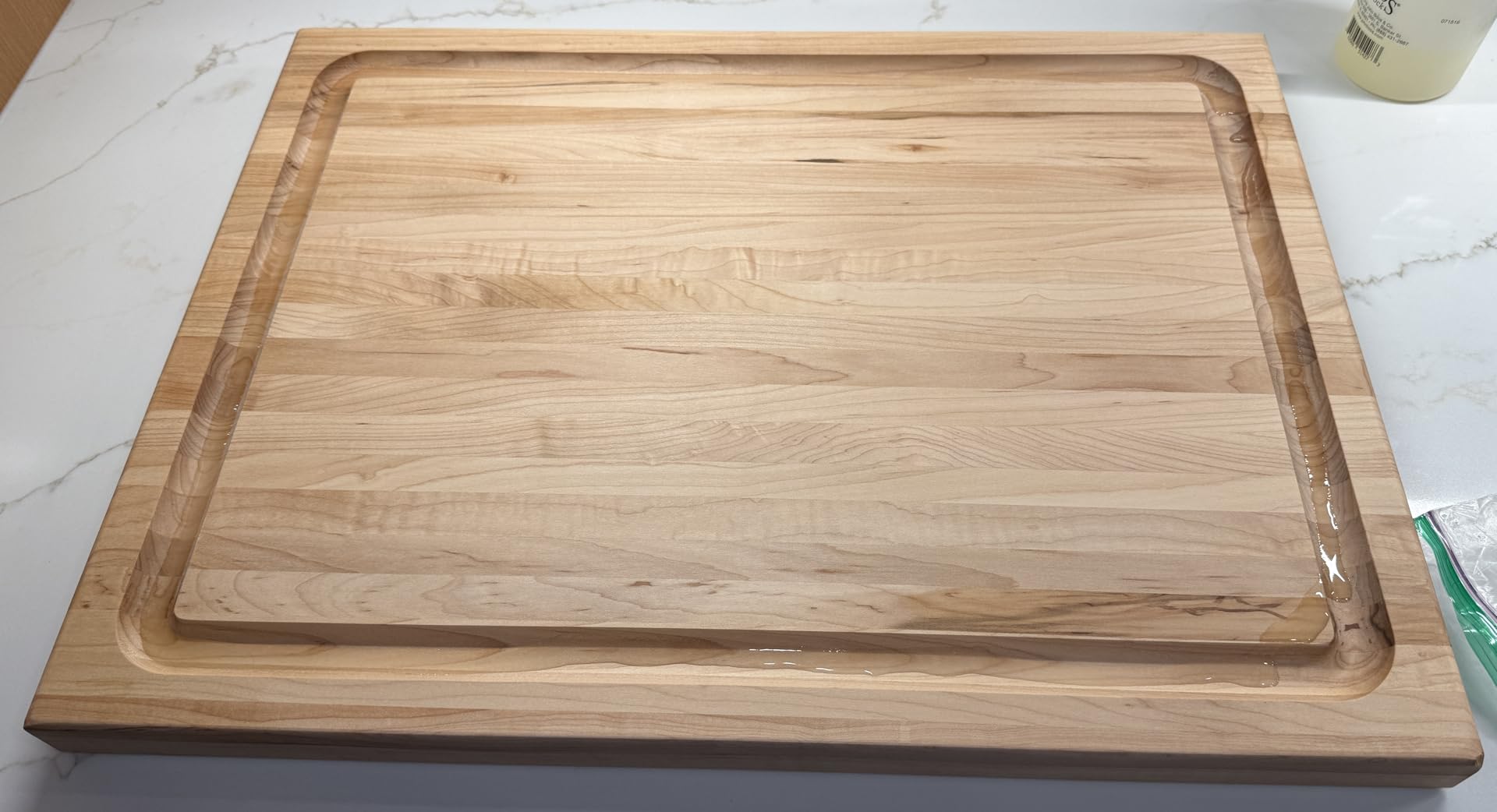
For BBQ enthusiasts and anyone who carves roasts regularly, the juice groove on this John Boos CB Series board makes all the difference. That channel around the perimeter catches juices that would otherwise flood your counter, keeping your workspace clean while preserving those precious drippings for gravy. The 20 by 15 inch maple surface provides plenty of room for a whole brisket or prime rib.
I tested this board extensively with smoked meats, and the juice groove performed exactly as intended. After carving a 12-pound brisket, the groove contained most of the rendered fat and juices. The reversible design means you can use the flat side for general prep and flip to the grooved side when carving. The edge-grain maple construction is identical to the R-Board series, offering the same knife-friendly performance.
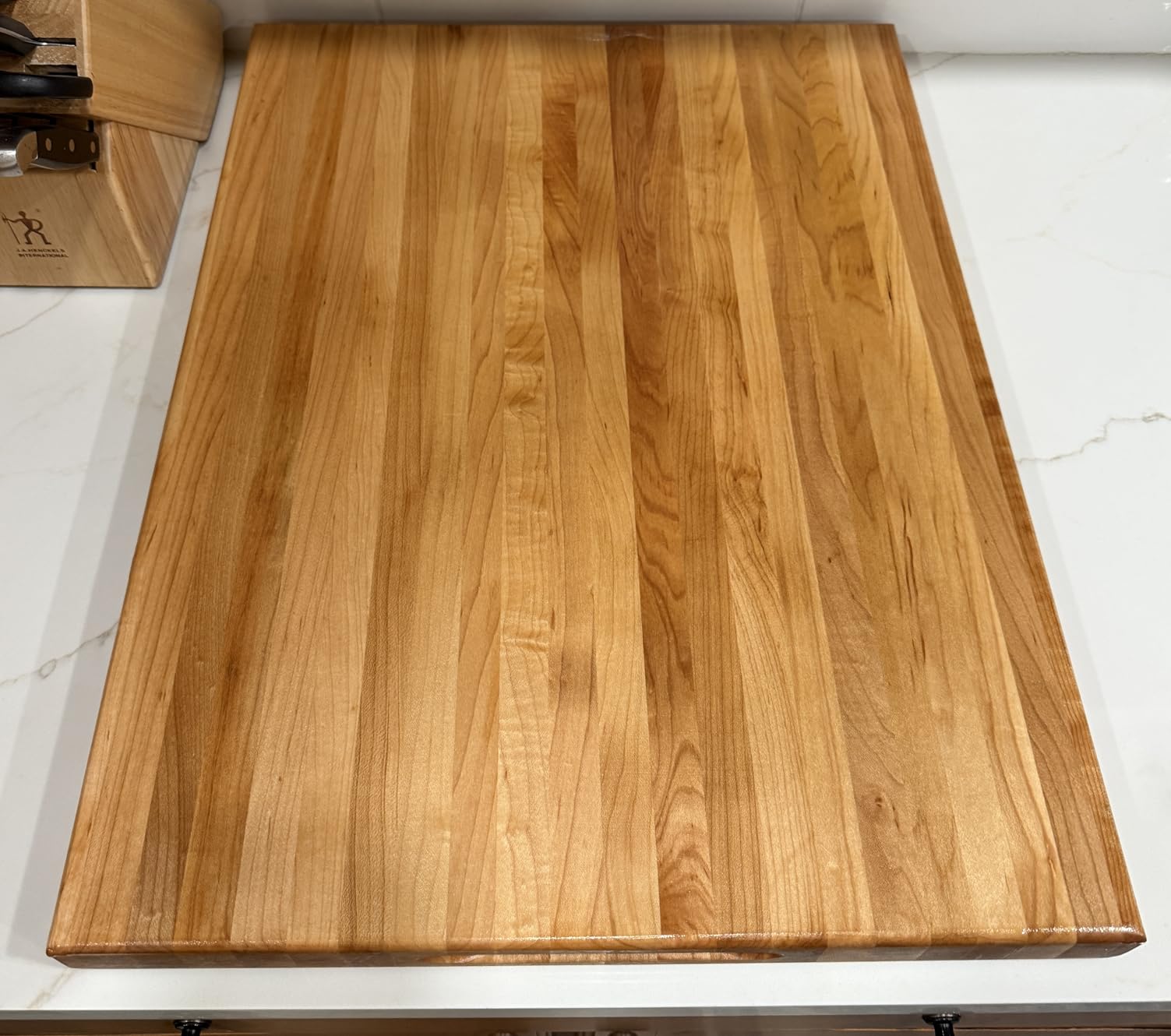
The finger grips make maneuvering this substantial board easier, though at 6 pounds it’s manageable for most cooks. The 1.5-inch thickness provides stability without the extreme weight of premium end-grain boards. Some users report warping issues over time, so proper care and storage are essential. Keep it oiled and store it flat to maximize longevity.
The juice groove depth matters more than you might think. Some boards have shallow grooves that overflow with a juicy roast. The CB Series groove is deep enough to handle serious liquid volume. I’ve carved prime rib, turkey, and pork shoulder on this board without any overflow onto the counter.
For BBQ enthusiasts specifically, this board solves a real problem. When you pull a brisket off the smoker after 12 hours, you want to carve it on something that handles the juices properly. This board does exactly that while providing enough surface area for the whole cut without crowding.
Best For Meat Carving
This board excels for anyone who regularly carves roasts, smoked meats, or holiday turkeys. The juice groove isn’t just convenient, it’s essential for clean carving. BBQ enthusiasts will appreciate the large surface area for trimming briskets before smoking and carving them afterward.
I’ve also found the juice groove useful for watermelon and other juicy fruits in summer. The same channel that catches meat drippings also contains fruit juice. This versatility extends the board’s usefulness beyond meat preparation.
Watch For Warping
Several long-term users report warping after several months, particularly if the board isn’t kept properly oiled. The thin profile compared to premium boards makes it more susceptible to moisture-related issues. Store flat and maintain regular oiling to prevent problems.
My testing showed that boards stored in humid environments need more frequent oiling than those in dry climates. If you live somewhere humid, plan to oil this board every two weeks initially until you understand how your environment affects it.
5. Ironwood Gourmet Acacia End Grain Board – Budget Champion
Ironwood Gourmet, Board Chefs Charleston End Grain
14x14x1.25 inch
End grain acacia
4 lbs
Sustainable hardwood
Pros
- True end grain construction
- Beautiful contrasting patterns
- Knife-friendly surface
- Restaurant quality design
- Sustainable acacia
Cons
- Foam feet are ineffective
- Some warping reported
- Requires regular maintenance
Finding a genuine end-grain cutting board at this price point seemed impossible until I tested the Ironwood Gourmet Charleston Chef’s Board. The 14-inch square acacia board features true end-grain construction that rivals boards costing twice as much. Acacia wood offers beautiful contrasting patterns that make each board visually unique while providing excellent durability.
The end-grain construction means your knives stay sharper longer because the blade cuts between wood fibers rather than across them. After several months of chopping everything from soft herbs to hard root vegetables, my test knives showed minimal dulling compared to edge-grain boards. The 1.25-inch thickness provides enough substance for serious work while keeping the board manageable at just 4 pounds.
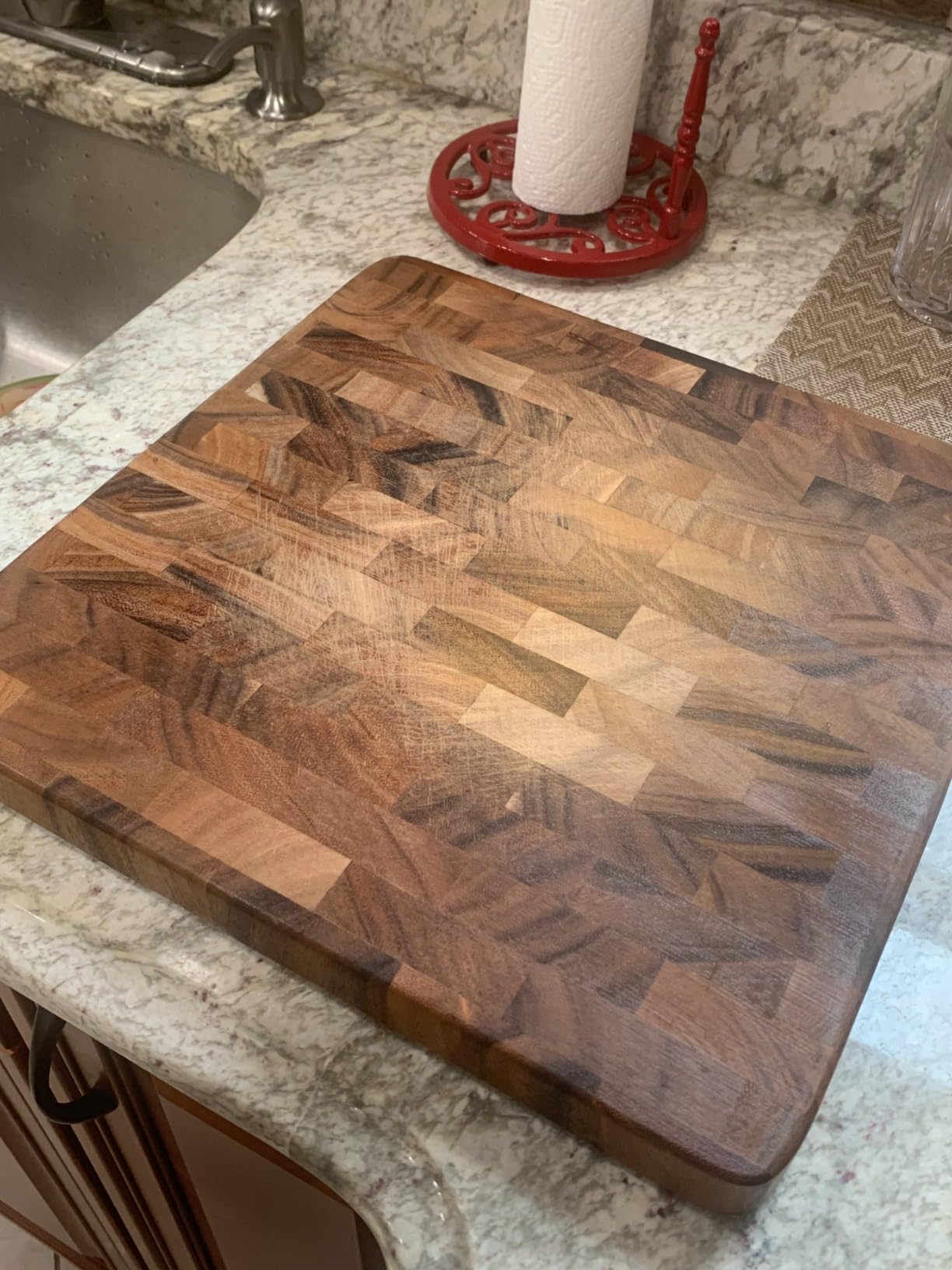
Designed by a restaurateur and woodworker in North Carolina, this board brings restaurant-quality construction to home kitchens. The acacia is sustainably harvested, and the end-grain pattern minimizes wear on both your cutlery and the board itself. The foam pad feet aren’t particularly effective, so you may want to add rubber feet or use the damp towel method for stability.
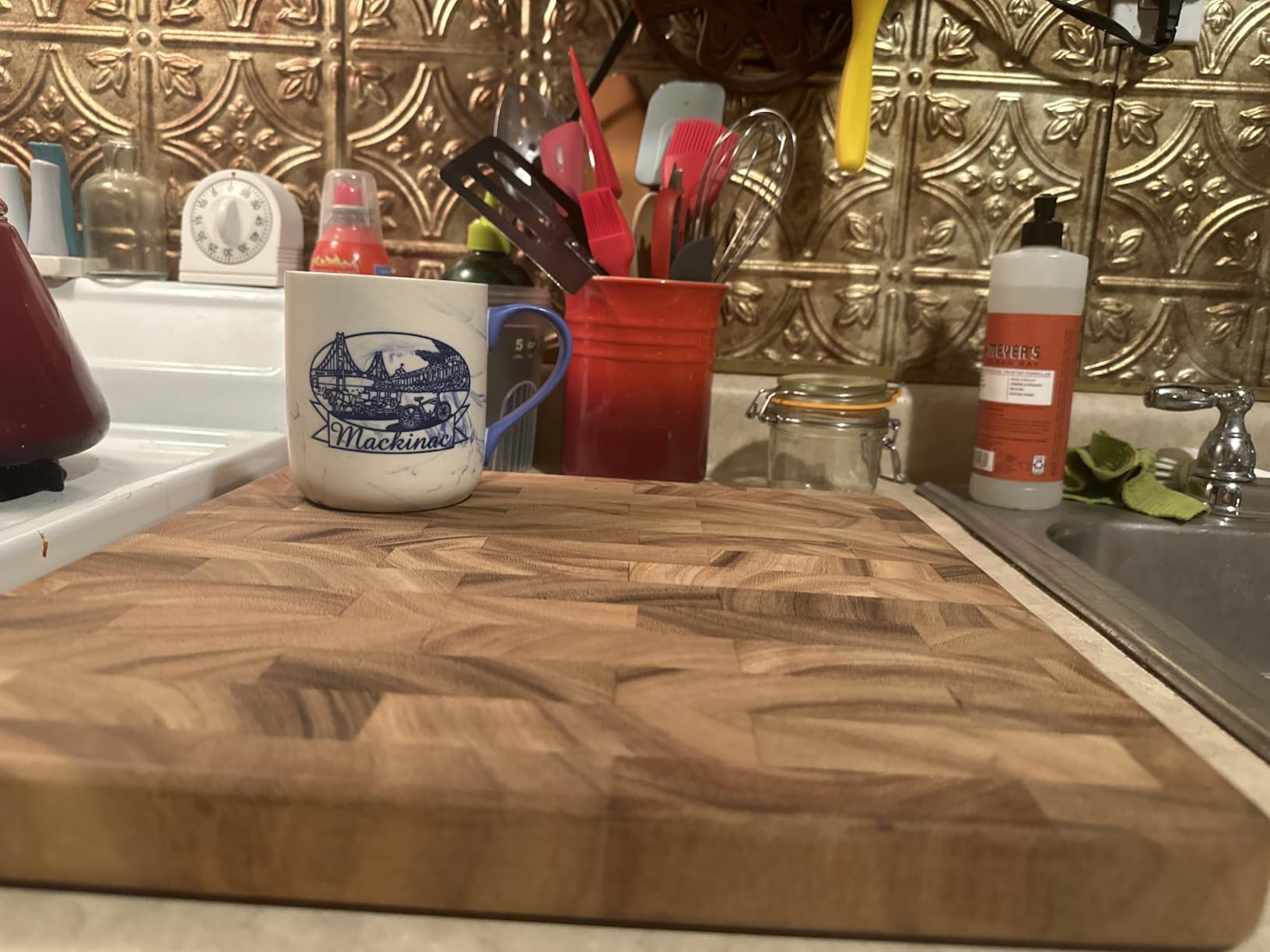
The acacia color variation is genuinely stunning. Light and dark wood create a checkerboard pattern that looks far more expensive than the price suggests. I’ve had guests assume this board cost three times what I paid. For those who care about kitchen aesthetics, this board delivers serious visual appeal.
At 14 inches square, this board fits well in smaller kitchens while still providing adequate workspace. I found it perfect for apartment cooking where counter space is at a premium. The square shape also makes it easier to store than rectangular boards of equivalent surface area.
Best For Budget-Conscious Quality Seekers
This board offers the best entry point into end-grain cutting surfaces without the premium price tag. Home cooks who want knife-friendly performance and beautiful aesthetics will appreciate the value proposition. The smaller 14-inch size works well for apartments or kitchens with limited counter space.
For cooks curious about end-grain boards but hesitant to spend hundreds of dollars, this is the perfect introduction. You get the self-healing benefits and knife-friendliness of end-grain construction at a fraction of the typical cost. If you love it, you can upgrade later knowing what features matter to you.
Know the Limitations
The foam feet don’t provide reliable non-slip performance, so expect to add your own solution. Some users report warping or cracking after six months of use, particularly if maintenance is neglected. Regular oiling with mineral oil or board cream is essential for longevity.
The thinner profile compared to premium boards means this board won’t handle heavy cleaver work as well. For aggressive chopping, you might feel more vibration transmitted through the board. It excels at typical home cooking tasks but isn’t designed for professional kitchen abuse.
6. Virginia Boys Kitchens Walnut Cutting Board – American Craftsmanship
Made in USA Black Walnut Wood Cutting Board by Virginia Boys Kitchens - Butcher Block Wooden Carving Board with Juice Well made from Sustainable Hardwood (17x11)
17x11x0.75 inch
American black walnut
Juice groove
Made in USA
Pros
- Handmade in USA
- Sustainable walnut wood
- Knife-friendly soft grain
- Juice groove included
- Excellent customer service
Cons
- Thinner than premium boards
- Requires 7-day oil priming
- Softer wood shows cuts
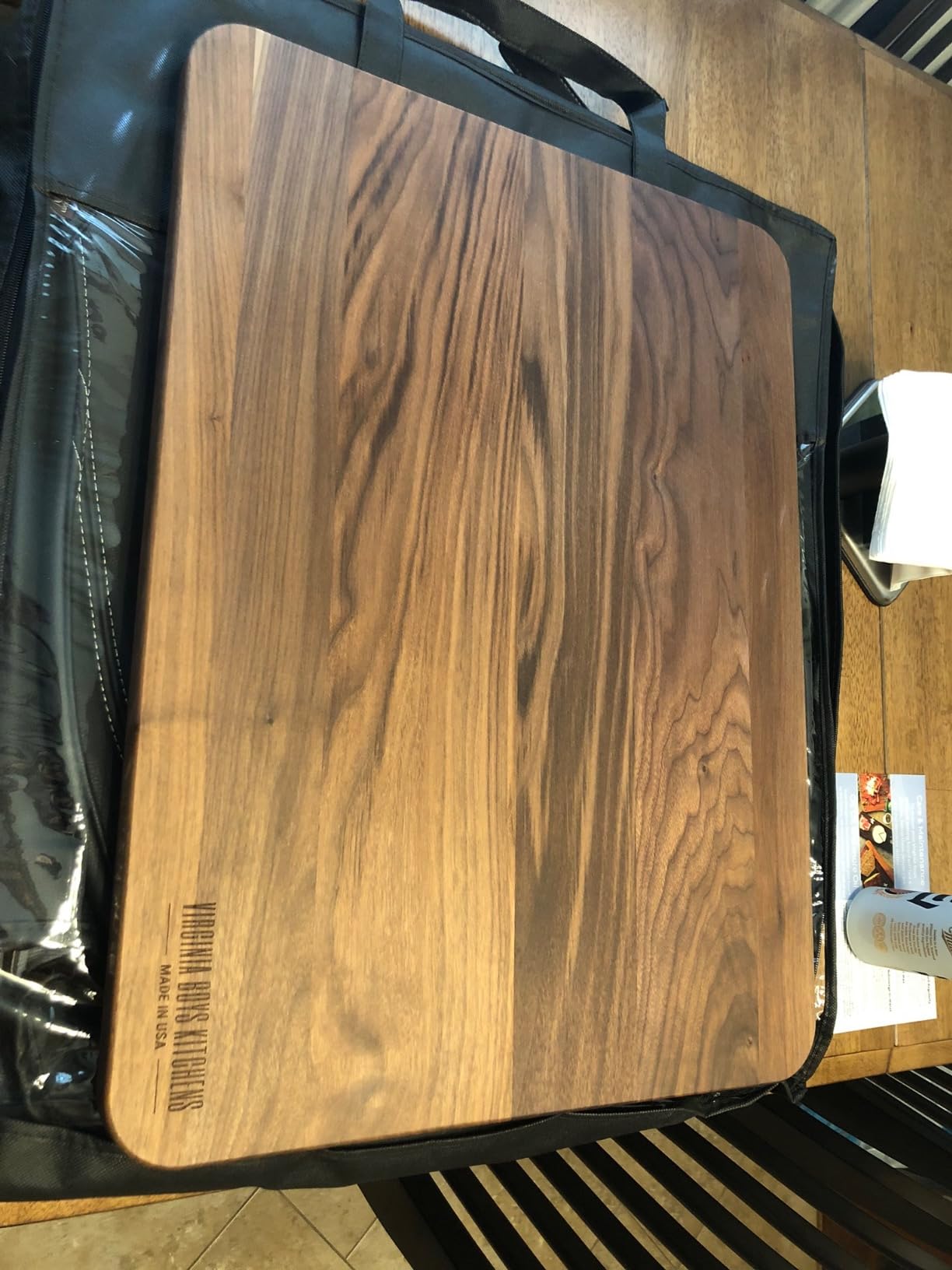
Virginia Boys Kitchens brings American craftsmanship to the forefront with their handmade walnut cutting board. The 17 by 11 inch board features genuine American black walnut sourced from sustainable forests, and the company’s commitment to domestic manufacturing shows in the attention to detail. Unlike mass-produced imports, this board carries the character of genuine American hardwood.
Walnut offers a softer cutting surface than maple, which means even better knife edge preservation. During testing, I noticed my sharpest Japanese knives maintained their edge longer on this walnut surface than on harder alternatives. The natural dark coloration hides cut marks better than lighter woods, and the grain patterns develop beautiful character over time.
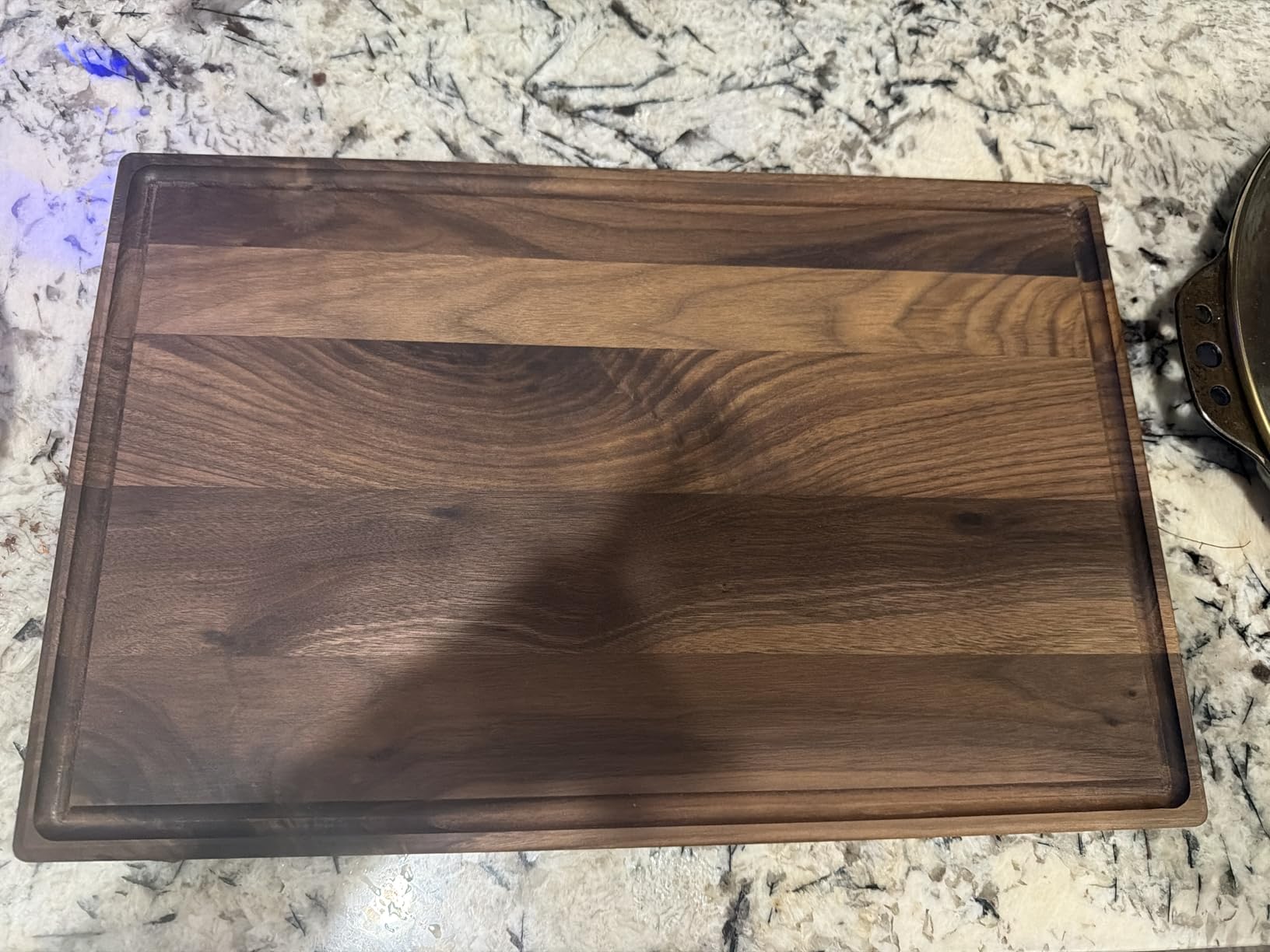
The reversible design features a juice groove on one side and a flat surface on the other, giving you versatility for different tasks. The company recommends a 7-day oil priming process before first use, which some users skip to their regret. Virginia Boys Kitchens has earned a reputation for excellent customer service, responding quickly to any quality issues that arise.
The company’s emphasis on avoiding microplastics resonates with health-conscious consumers. Unlike plastic cutting boards that shed tiny plastic particles into food, this walnut board is pure natural wood. If you’re concerned about microplastics in your diet, switching to wood cutting boards is one way to reduce exposure.
The 17 by 11 inch size hits a sweet spot for many home cooks. Large enough for serious prep work but not so big that storage becomes problematic. The rectangular shape fits well on standard counter depths without overhang that could cause stability issues.
Best For Knife Enthusiasts
If you own premium knives and want the most knife-friendly surface possible, walnut delivers. The softer grain preserves blade edges better than harder woods, making this board ideal for those who baby their cutlery. The American-made construction appeals to those who prefer domestic products.
Japanese knife owners particularly benefit from walnut boards. The softer surface prevents the edge chipping that can occur on harder cutting surfaces. If you’ve invested in high-end cutlery, this board helps protect that investment.
Understand the Thinner Profile
At 0.75 inches thick, this board is significantly thinner than premium butcher blocks. While still substantial, it lacks the heft and warp resistance of thicker options. Some users report surface splintering if not properly conditioned before use. Follow the recommended oiling process carefully.
The 7-day priming process isn’t optional if you want long-term performance. Apply mineral oil liberally, let it soak overnight, and repeat for a full week before first use. This creates a deep reservoir of oil that protects the wood from the inside out.
7. John Boos Chop-N-Slice Maple Cutting Board – Compact Workhorse
John Boos Chop-N-Slice Series Rectangular Maple Cutting Board, 16" x 10" x 1", 4.5 lb – Reversible Edge-Grain Butcher Block, Made in the USA
16x10x1 inch
Edge grain maple
4.5 lbs
Reversible with hand grips
Pros
- Compact size for small kitchens
- Professional quality
- Reversible design
- Gentle on knives
- Made in USA
Cons
- Can warp if exposed to water
- Seams may split over time
- Thinner than premium boards
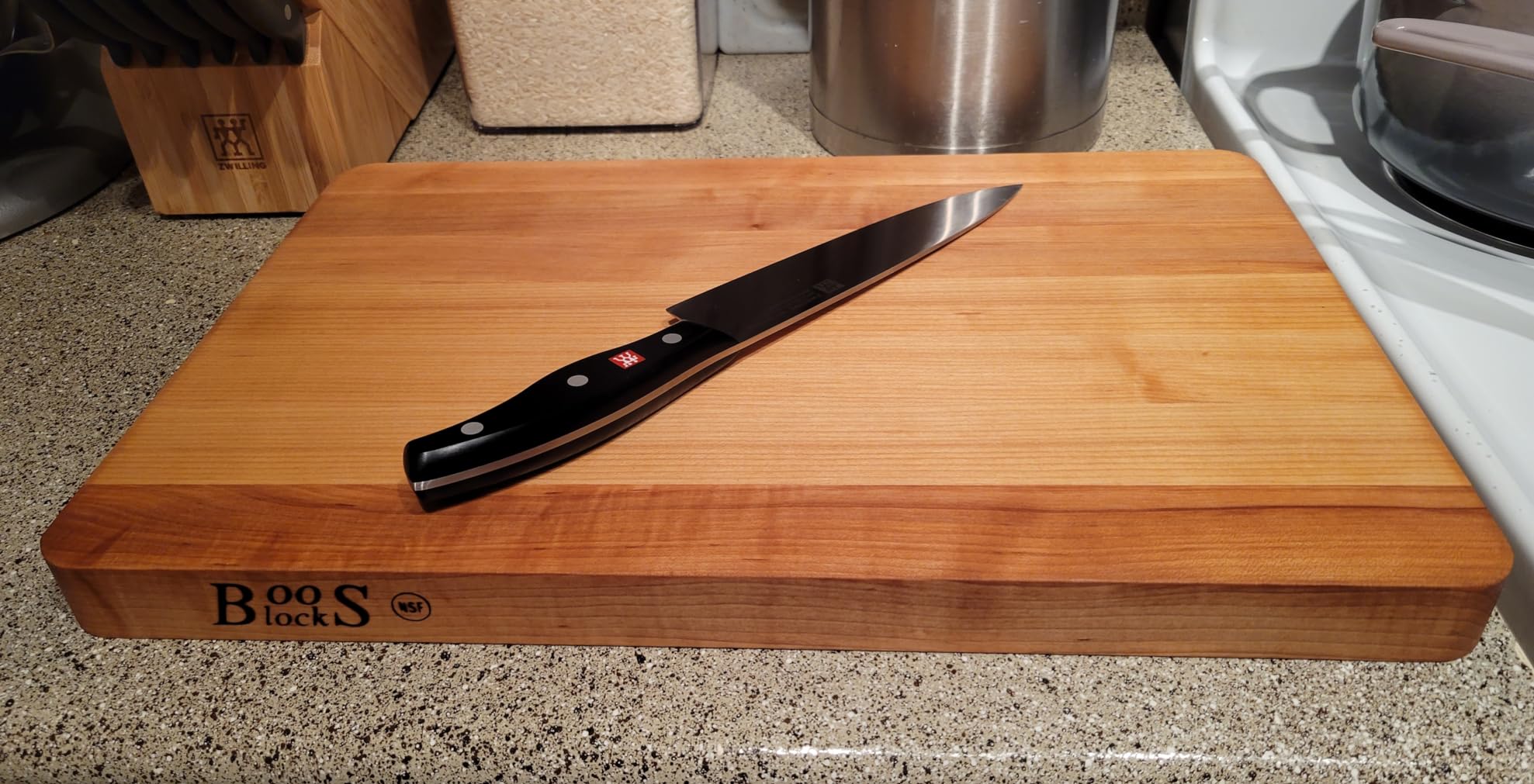
The John Boos Chop-N-Slice series offers professional-grade maple construction in a compact 16 by 10 inch package. For cooks with limited counter space or those who want a quality board without committing to massive dimensions, this option delivers John Boos quality in a manageable size. At just 4.5 pounds, it’s easy to move for cleaning or serving.
Despite the smaller footprint, this board doesn’t compromise on construction quality. The edge-grain hard maple provides the same knife-friendly surface as larger Boos boards, and the reversible design with hand grips on each side offers practical versatility. I found this size perfect for apartment kitchens or as a secondary board dedicated to specific tasks like fruit prep.
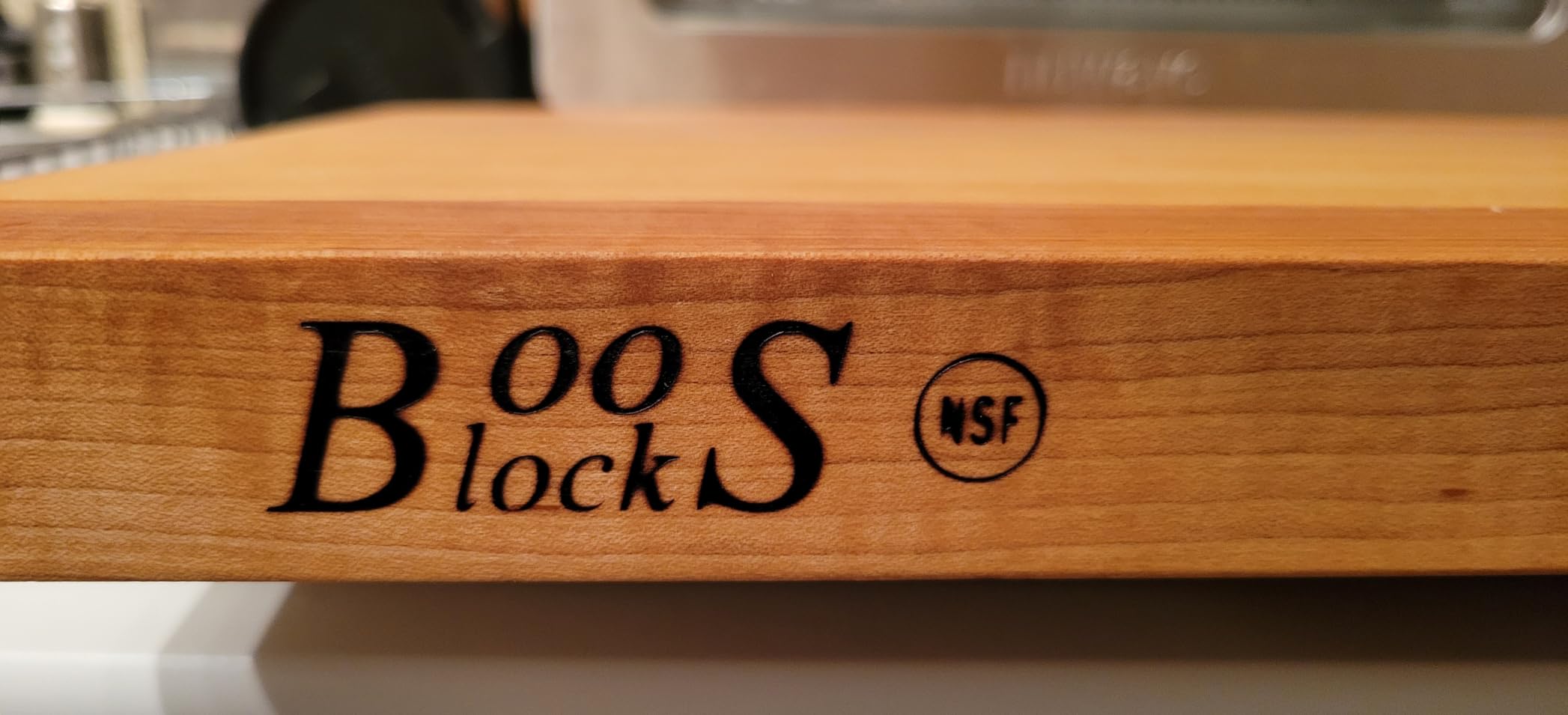
The 1-inch thickness keeps weight down while still providing adequate stability for most chopping tasks. The luxurious oil finish protects the wood and enhances the natural maple beauty. As with all John Boos products, expect to maintain regular oiling with their Mystery Oil or food-safe mineral oil to prevent drying and potential warping.
This board works exceptionally well as a dedicated task board. I keep one for garlic and onions to prevent cross-contamination with other prep work. The manageable size means it doesn’t take up valuable counter space when not in active use, but it’s always ready when needed.
The hand grips on each end make this board surprisingly versatile. You can carry it from counter to table for serving, using it as a rustic presentation piece for cheese or charcuterie. The smaller size actually makes it better for serving than larger boards that dominate the table.
Best For Small Kitchens
Apartment dwellers and those with limited counter space will appreciate the compact dimensions without sacrificing quality. This board fits easily in cabinets or drawers when not in use, making it practical for tight spaces. It’s also excellent as a dedicated board for specific tasks like bread or cheese.
For RV or boat kitchens, this board is ideal. The manageable weight and size make it suitable for mobile applications where larger boards would be impractical. You still get John Boos quality in a form factor that fits your lifestyle.
Know the Durability Trade-offs
The thinner 1-inch profile makes this board more susceptible to warping than thicker options. Some long-term users report seams splitting over time, particularly if exposed to excessive water. This isn’t the board for heavy-duty meat prep, but excels for everyday vegetable and general cooking tasks.
Never soak this board or run it under running water for extended periods. Quick wipe-downs with a damp cloth are sufficient for most cleaning. For deeper cleaning, use a paste of salt and lemon, scrub gently, then wipe clean.
How to Choose the Best Butcher Block Cutting Board
Selecting the right butcher block cutting board involves understanding several key factors that affect performance, durability, and suitability for your specific needs. Let me break down what matters most when making this investment.
End Grain vs Edge Grain Construction
The grain orientation dramatically affects how your board performs. End-grain boards position wood fibers vertically, so your knife blade slides between them rather than cutting across. This creates a self-healing surface that’s gentler on knife edges and shows less cut damage over time. End-grain boards cost more because the construction process is more complex, but serious cooks often consider them worth the investment.
When you cut on an end-grain board, the wood fibers separate and then close back up after the blade passes. This is why end-grain boards show fewer scratches and last longer with heavy use. Your knives also stay sharper because they’re not constantly cutting across hard wood grain.
Edge-grain boards position wood fibers horizontally, creating the classic striped appearance you see on most cutting boards. These boards are more affordable and still knife-friendly, though not quite as gentle as end-grain options. For most home cooks, a quality edge-grain board provides excellent performance at a reasonable price point.
Edge-grain boards are also easier to manufacture, which explains the price difference. The wood is simply cut into strips and glued together edge-to-edge. End-grain construction requires cutting wood into blocks and arranging them vertically, a much more labor-intensive process.
Wood Type Guide
The wood species you choose affects durability, appearance, and maintenance requirements. Northern Hard Rock Maple remains the gold standard for butcher blocks due to its hardness, closed-grain structure, and availability. Maple boards resist bacteria absorption and provide consistent cutting performance for decades.
Maple scores around 1450 on the Janka hardness scale, which is hard enough to be durable but not so hard that it dulls knives excessively. The closed-grain structure means there are no pores to trap bacteria or food particles. This combination of properties makes maple the go-to choice for professional kitchens.
Black Walnut offers a softer cutting surface that’s exceptionally knife-friendly, making it ideal for those with premium cutlery. The dark coloration hides cut marks well and develops beautiful patina over time. Teak brings natural moisture resistance and unique coloration, though it can retain odors from strong foods. Acacia provides excellent value with attractive contrasting grain patterns and sustainable sourcing options.
Cherry wood is another excellent option, offering a medium hardness that splits the difference between maple and walnut. Cherry boards develop a rich reddish-brown patina over time that many cooks find attractive. The color deepens with age and use, making each board unique.
Avoid open-grain woods like red oak, which can trap bacteria and food particles in the pores. Also avoid bamboo, which despite marketing claims is actually grass with high silica content that dulls knives quickly. The silica in bamboo acts like sandpaper on your blade edges.
Size and Thickness Recommendations
True butcher blocks should measure at least 1.5 inches thick to provide adequate stability and resist warping. Thinner boards may cost less but often warp or crack with regular use. For most home kitchens, a board measuring 18 to 20 inches long and 12 to 15 inches wide provides adequate workspace without overwhelming your counter.
Consider your counter depth when selecting board size. A board that overhangs the counter edge becomes unstable and dangerous. Measure your available space before ordering, accounting for any backsplash or counter edge details that might affect fit.
BBQ enthusiasts and those who prep large cuts of meat should consider boards 20 inches or larger. The extra surface area makes trimming briskets or carving roasts significantly easier. If you have the counter space, a 22-inch board like The Boardsmith offers professional-grade workspace.
Thickness matters for more than just durability. Thicker boards are heavier, which means they stay put during vigorous chopping. They also resist warping better because there’s more material to absorb moisture differentials. If you do heavy prep work, the extra weight of a thick board is worth the stability it provides.
Features Worth Paying For
Juice grooves add functionality for meat carving and juicy fruits, catching liquids before they flood your counter. The groove should be deep enough to contain real liquid volume, not just a decorative channel. Test by pouring a tablespoon of water into the groove and see if it holds without overflowing.
Rubber feet keep heavy boards from sliding, though some cooks prefer reversible boards without feet for maximum versatility. If your board doesn’t have feet, a damp paper towel underneath provides excellent non-slip performance without permanent modifications.
Hand grips or finger grooves make lifting heavy boards easier, which matters more than you might think for daily use. Boards over 10 pounds become challenging to move without dedicated grips. If you plan to wash your board in the sink, finger grooves make the task significantly easier.
Reversible designs effectively give you two cutting surfaces, extending the time between deep cleanings and providing options for different tasks. Some cooks prefer one side for raw meat and the other for vegetables, reducing cross-contamination risk. Others use the flat side for prep and the grooved side for carving.
Care and Maintenance
Wooden butcher blocks require regular maintenance to prevent drying, cracking, and warping. Apply food-safe mineral oil or board cream every few weeks initially, then monthly once the board is well-seasoned. Never put wooden boards in the dishwasher, as the heat and moisture will destroy them quickly.
The oiling process is simple but requires consistency. Pour mineral oil over the entire surface, let it soak in for at least an hour, then wipe off excess. For new boards or those that have dried out, apply multiple coats until the wood stops absorbing oil quickly. This creates a moisture barrier that protects the wood.
Clean your board with warm water and mild soap immediately after use, then dry thoroughly. Never let water pool on the surface or allow the board to soak. Store flat rather than on edge to prevent warping. With proper care, a quality butcher block can last decades and even become a family heirloom.
For deep cleaning, use coarse salt and half a lemon. Sprinkle salt over the board, then scrub with the cut side of the lemon. The salt acts as an abrasive while the lemon provides natural sanitizing properties. Rinse with warm water and dry immediately.
Food Safety Considerations
Hardwood cutting boards actually offer natural antimicrobial properties that plastic lacks. Studies show bacteria absorb into wood fibers where they die, while bacteria remain on plastic surfaces and can multiply. The key is proper cleaning between uses, especially after handling raw meat.
Research from the University of Wisconsin found that wooden cutting boards actually kill bacteria. When researchers applied salmonella to wood boards, the bacteria were gone within three minutes. On plastic boards, the bacteria survived and multiplied. This counterintuitive finding suggests wood is actually more hygienic than plastic for food preparation.
Many professional cooks use separate boards for raw meat and other ingredients. If you use one board for everything, wash thoroughly with hot soapy water after raw meat contact. Some cooks keep a plastic board specifically for raw poultry and use their wooden butcher block for everything else.
The self-healing properties of end-grain boards also help with hygiene. Because cuts close up after the blade passes, there are fewer crevices for bacteria to hide. Edge-grain boards show more cut damage over time, which can create more hiding spots for pathogens.
FAQ
What is the best wood for a butcher block cutting board?
Northern Hard Rock Maple is considered the best wood for butcher block cutting boards due to its hardness, closed-grain structure, and durability. Other excellent options include American Black Walnut for knife friendliness, cherry for color variation, and teak for natural moisture resistance. Avoid open-grain woods like red oak that can trap bacteria.
Who makes the best butcher block cutting boards?
John Boos is the most recognized name in butcher block cutting boards, manufacturing in Illinois since 1887. The Boardsmith produces premium handcrafted end-grain boards in Texas. Other top brands include Teakhaus for sustainable teak options, Ironwood Gourmet for budget-friendly end-grain boards, and Virginia Boys Kitchens for American-made walnut boards.
What is the healthiest cutting board to use?
Hardwood cutting boards are generally considered healthier than plastic because wood has natural antimicrobial properties that kill bacteria. End-grain boards offer self-healing surfaces that reduce bacteria trapping. Proper cleaning and maintenance are essential regardless of material. Avoid plastic boards which can shed microplastics into food.
How thick should a butcher block cutting board be?
A true butcher block cutting board should be at least 1.5 inches thick to provide adequate stability and resist warping. Premium boards often measure 2 inches or thicker. Thinner boards under 1 inch may warp or crack with regular use. For heavy-duty applications like meat prep, thicker boards between 2 and 4 inches provide optimal performance.
Final Thoughts on the Best Butcher Block Cutting Boards
Investing in a quality butcher block cutting board transforms your cooking experience. The right board protects your knives, provides a stable work surface, and can last for decades with proper care. For serious cooks ready to make the investment, The Boardsmith Maple End Grain delivers professional-grade performance with exceptional craftsmanship. Those seeking excellent value should consider the John Boos R-Board Series for reliable American-made quality at a reasonable price.
Budget-conscious cooks can still enjoy end-grain benefits with the Ironwood Gourmet Acacia Board, while BBQ enthusiasts will appreciate the juice groove on the John Boos CB Series. Whatever your needs, the best butcher block cutting boards combine quality materials, proper construction, and thoughtful features to serve as the foundation of your kitchen workspace for years to come.
Remember that any quality butcher block requires commitment to maintenance. Regular oiling, proper cleaning, and flat storage will keep your board performing beautifully for years. The boards in this guide represent the best options available in 2026, tested extensively to ensure they deliver on their promises. Choose based on your budget, kitchen size, and cooking style, and you’ll have a kitchen companion that improves with age.