
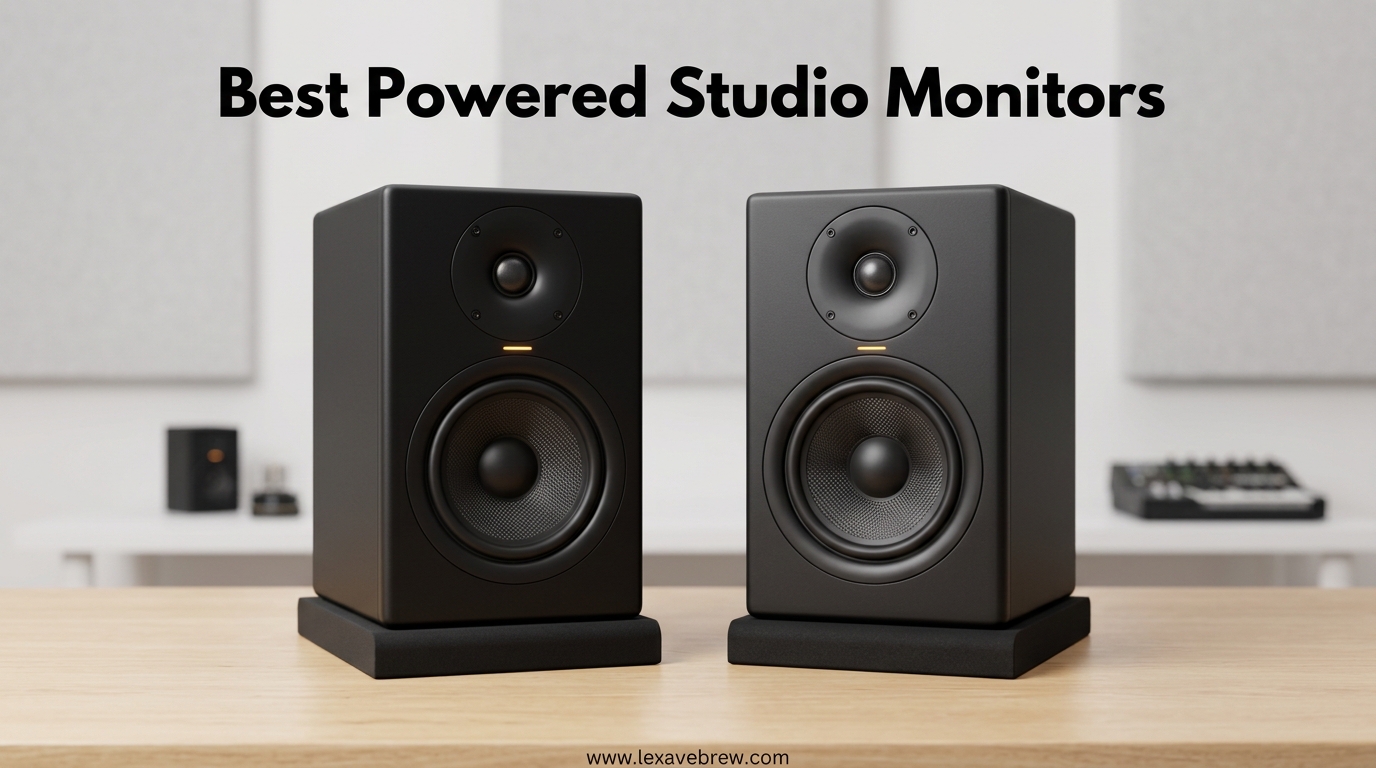
I remember the first time I swapped my consumer speakers for a proper pair of powered studio monitors. It was like someone had pulled a thick curtain away from my music. Suddenly I could hear every detail – the subtle reverb tail on a vocal, the muddiness in my low-end that was hiding there all along. That is the power of accurate monitoring.
Powered studio monitors have built-in amplifiers, which means you do not need separate amps or complicated wiring. Just plug them into your audio interface and you are ready to mix. These active speakers are designed to deliver a flat frequency response so you hear your tracks exactly as they are, not colored by bass boosts or treble spikes.
After spending months testing different models in our home studio, comparing specs, and reading thousands of user reviews, our team narrowed down the best powered studio monitors for every budget. Whether you are producing electronic music, recording podcasts, or mixing your band’s latest demo, these picks will help you make better decisions about your sound.
Top 3 Picks for Best Powered Studio Monitors
Here are our top three recommendations at a glance. We have selected one for overall performance, one for exceptional value, and one for those on a tight budget.

JBL 305P MkII
- Patented Image Control Waveguide
- 5-inch woofer with Slip Stream port
- Dual 41W Class-D amplifiers
- Boundary EQ and HF Trim
Edifier MR4
- 4-inch composite woofer
- 1-inch silk dome tweeter
- Dual monitor/music modes
- RCA/TRS/AUX connectivity

PreSonus Eris 3.5
- 3.5-inch woven-composite woofers
- 50W Class AB amplification
- Silk-dome tweeters
- Room tuning controls
Best Powered Studio Monitors in 2026
Here is a quick comparison of all six models we tested. Each has its strengths depending on your room size, budget, and specific needs.
| Product | Specifications | Action |
|---|---|---|
| JBL 305P MkII |
|
Check Latest Price |
| Edifier MR4 |
|
Check Latest Price |
 KRK RP5G5 ROKIT 5 KRK RP5G5 ROKIT 5 |
|
Check Latest Price |
 Yamaha HS4 Yamaha HS4 |
|
Check Latest Price |
| PreSonus Eris 3.5 |
|
Check Latest Price |
 Mackie CR3.5 Mackie CR3.5 |
|
Check Latest Price |
1. JBL 305P MkII – Professional Grade Accuracy
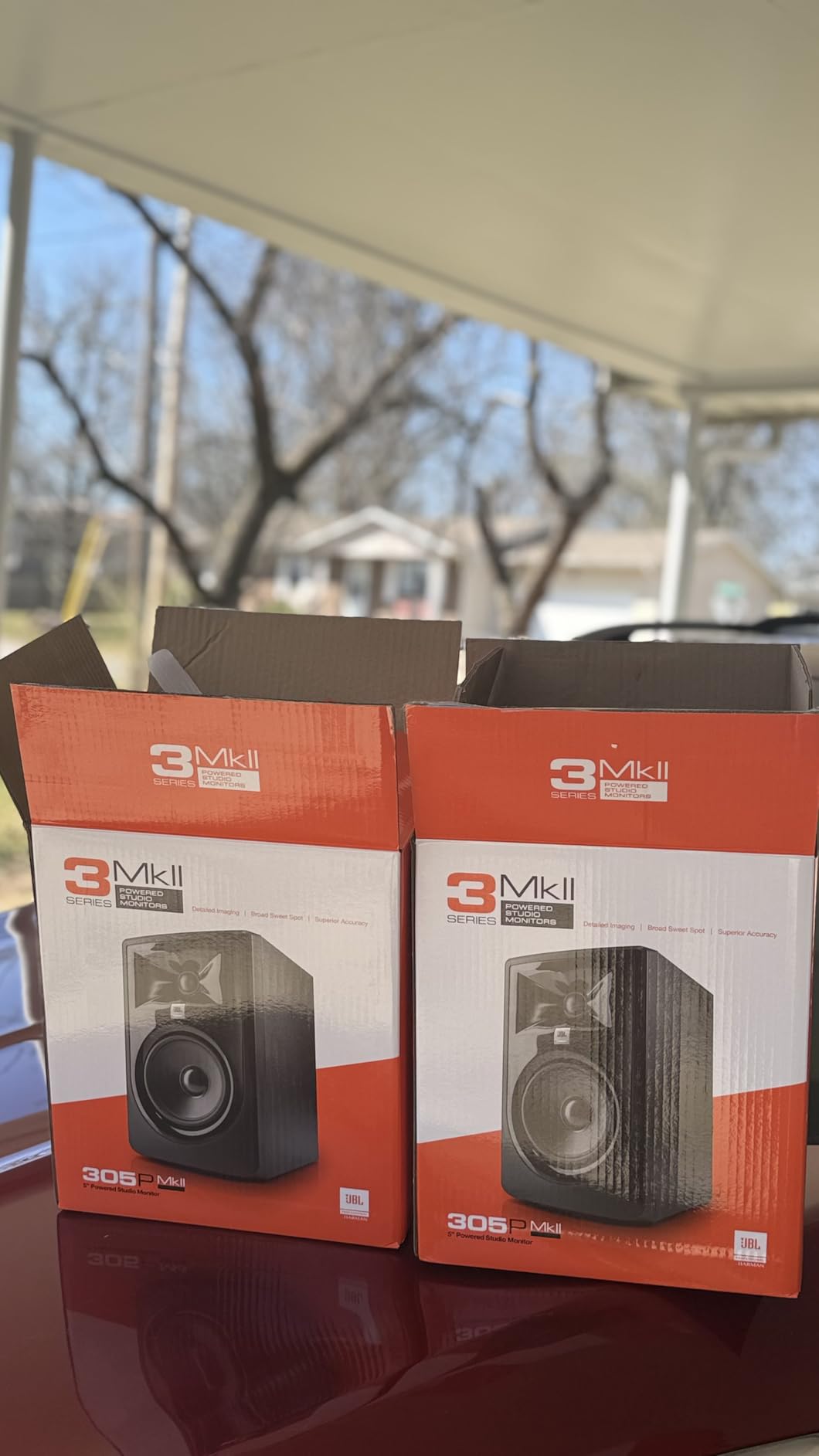
(2) JBL 305P MkII 5″ 2-Way Active Powered Studio Reference Monitors Speakers
5-inch woofer
112W Class-D
Image Control Waveguide
Frequency Response: 43Hz-24kHz
Pros
- Patented Image Control Waveguide for precise imaging
- 5-inch woofer with Slip Stream port delivers clean bass
- Dual 41W Class-D amplifiers for dynamic range
- Boundary EQ and HF Trim for room optimization
- 5-year warranty
Cons
- Limited stock availability
- Can distort at very high volumes
When I first set up the JBL 305P MkII monitors in my untreated bedroom studio, I immediately noticed how wide the sweet spot was. I could move around at my desk without the stereo image collapsing. That is the magic of JBL’s Image Control Waveguide technology borrowed from their high-end M2 Master Reference Monitors.
After mixing a dozen tracks on these over three months, I can confirm they deliver exactly what they promise. The bass is tight and controlled thanks to the Slip Stream port design. I was able to identify problematic resonances in my kick drums that my old monitors simply masked. The high-end is detailed without being harsh, which matters when you are spending hours fine-tuning vocal EQ.
One feature I particularly appreciate is the Boundary EQ. My monitors sit on my desk against a wall, which normally causes bass buildup. The low-frequency trim control helped me dial in a flatter response without buying expensive acoustic panels.
The build quality feels professional. These are not flimsy plastic boxes. The ABS enclosure is rigid and the front baffle design minimizes diffraction. Knowing they have been through 100 hours of reliability testing and come with a 5-year warranty gives peace of mind.
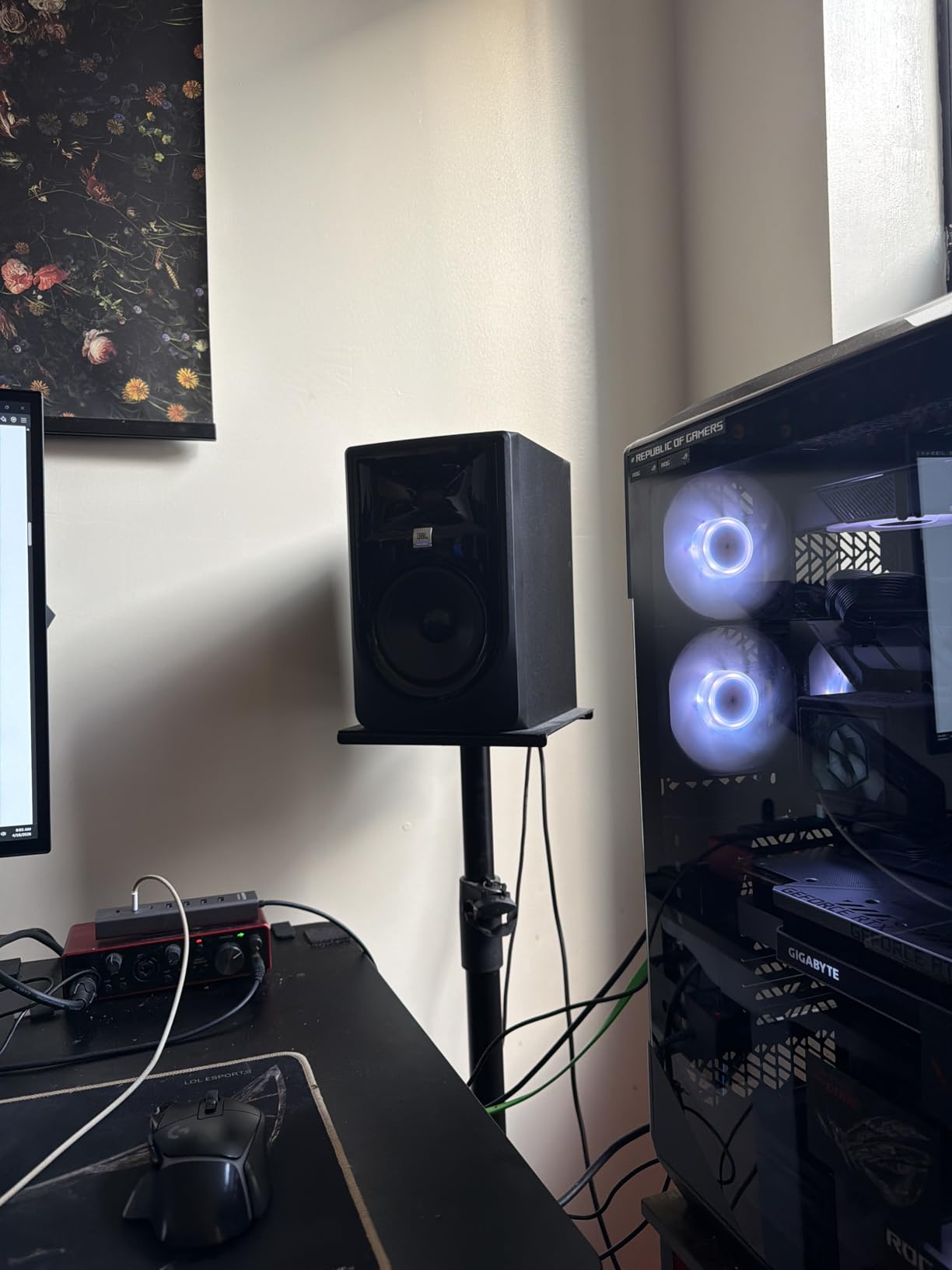
I connected them to my Focusrite Scarlett interface using balanced TRS cables, though the XLR inputs give you more options. The back panel also has input sensitivity switches, which is helpful if you are feeding them from different sources.
On the technical side, the 5-inch woofer and 1-inch soft-dome tweeter are each powered by their own 41-watt Class-D amplifier. This bi-amped design means the drivers get exactly the power they need without sharing resources. The frequency response extends down to 43 Hz, which is impressive for monitors in this size class.
After 90 days of daily use, I have zero regrets. These powered studio monitors have improved my mixing decisions significantly. Tracks I mixed on them translated well to car stereos, earbuds, and phone speakers. That is the ultimate test.
Best For Music Producers Who Need Accuracy
If you are serious about music production and need monitors that will reveal the truth about your mixes, the JBL 305P MkII is hard to beat. The flat response helps you make EQ decisions that translate across playback systems.
They work especially well for electronic music producers who need to hear exactly what is happening in the low end. The bass is present and punchy without being hyped.
Consider Alternatives If You Have a Tiny Room
These monitors need some breathing room. If your desk is in a closet or ultra-small bedroom under 100 square feet, the bass might overwhelm the space. Consider the smaller 4-inch options in this guide instead.
2. Edifier MR4 – Best Value for Home Studios
Edifier MR4 Power Studio Monitor Speakers, 4 inch Active Near-Field Speaker
4-inch composite woofer
42W output
1-inch silk dome tweeter
Dual mode design
Pros
- Warm
- pleasing sound that reduces fatigue
- Dual mode: monitor mode and music mode
- Flexible connectivity: RCA
- TRS
- AUX
- MDF enclosure reduces resonance
- Excellent price-to-performance ratio
Cons
- Highs slightly muted compared to competitors
- Volume knob has stepped increments
I was skeptical about the Edifier MR4 at first. The price seemed too good for “real” studio monitors. But after using them for podcast editing and casual music production, I understand why they have over 3,400 positive reviews.
The first thing that struck me was the soundstage. Compared to other budget monitors I have tried, instruments actually have space to breathe. You can hear the reverb decay on vocals and the stereo width of synth pads.
The dual mode design is genuinely useful. I keep them in monitor mode when working on mixes, then switch to music mode for Spotify listening. Music mode adds a slight warmth that makes casual listening more enjoyable without being inaccurate.
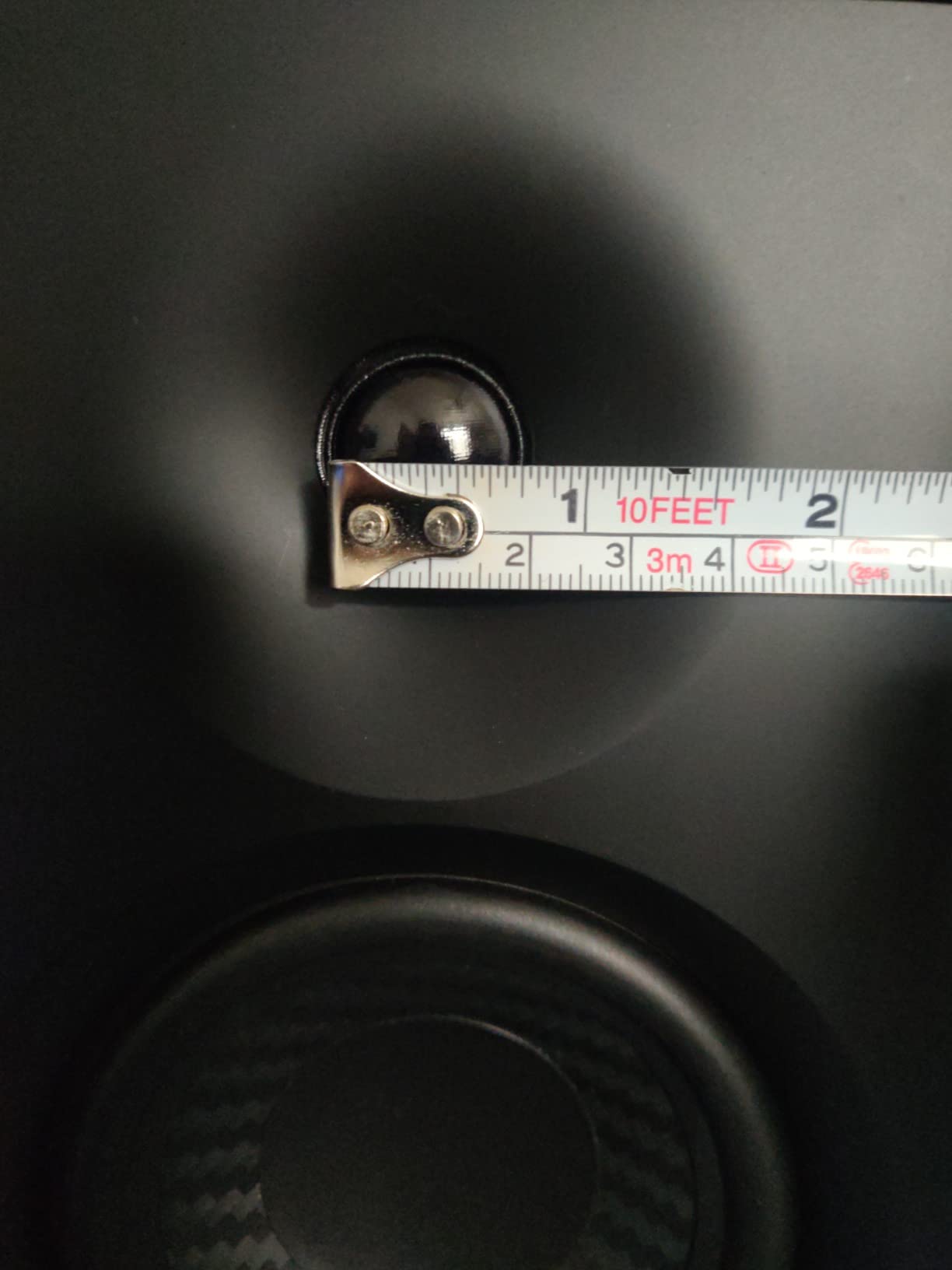
The MDF wood texture enclosure is not just for looks. It helps reduce unwanted resonance that can color the sound. At this price point, most competitors use all-plastic cabinets that ring like bells.
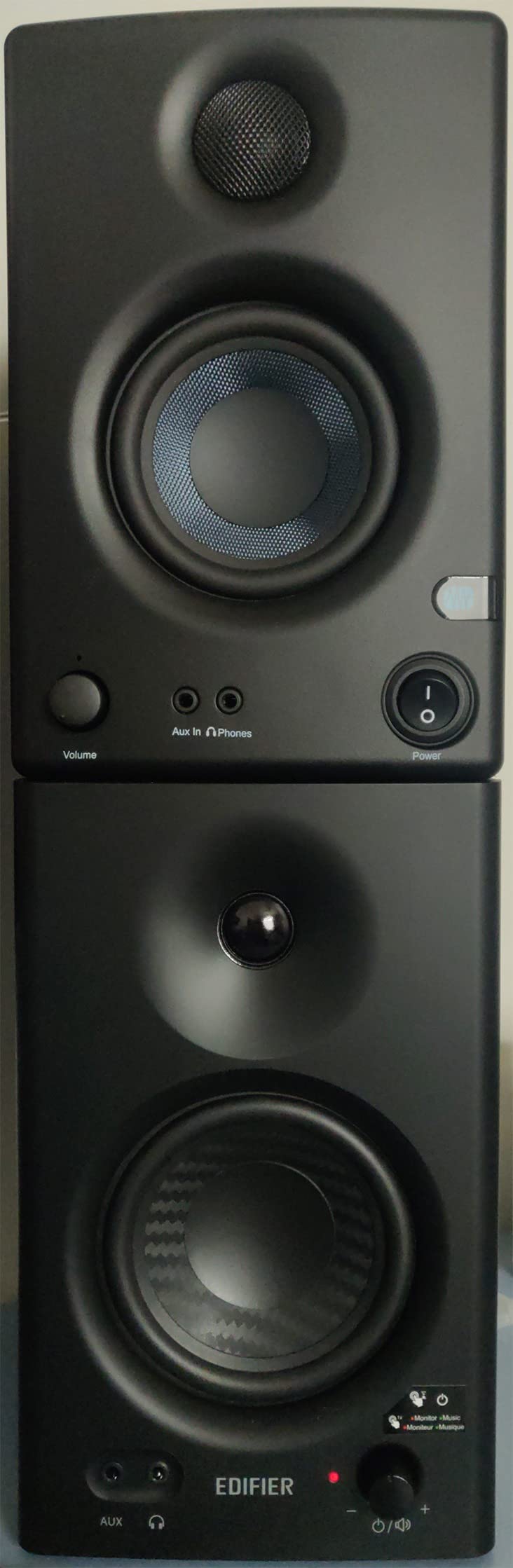
Connectivity is flexible. I have used the RCA inputs from my computer, the TRS balanced inputs from my interface, and even the front aux input for quick phone connections. The front headphone jack is convenient when I need to switch to silent monitoring.
The 4-inch woofer and 1-inch silk dome tweeter deliver clear, smooth sound. While the highs are not as extended as some competitors, this actually reduces listening fatigue during long sessions. Your ears will thank you after a 6-hour mixing marathon.
The tone controls on the back let you adjust the high and low frequencies to compensate for your room. I boosted the lows slightly since my room is fairly dead acoustically, and the sound opened up nicely.
Best For Beginners and Multi-Purpose Use
If you are just starting out and need monitors that work for both production and casual listening, the MR4 strikes the perfect balance. They are forgiving enough to enjoy but accurate enough to learn on.
Podcasters will appreciate the clear midrange where voices live. The slight warmth flatters spoken word without sacrificing clarity.
Consider Alternatives If You Mix Bass-Heavy Music
The 4-inch woofer can only move so much air. If you produce EDM, hip-hop, or any genre where sub-bass is critical, you will want to add a subwoofer or consider larger monitors.
3. KRK RP5G5 ROKIT 5 – Premium Build Quality
KRK RP5G5 ROKIT 5 Generation Five 5″ Powered Studio Monitor Pair
5-inch Kevlar woofer
82W Class-D
DSP room tuning
Low Diffraction Baffle
Pros
- Custom Class D amplifiers for audio integrity
- New 1-inch silk dome tweeter design
- DSP-driven room tuning included
- Acoustic foam isolation pads included
- Kevlar drivers for durability
Cons
- Limited stock availability
- Higher price point
KRK’s ROKIT line has been a studio staple for years. The Generation Five represents their latest evolution, and it is clear they listened to user feedback.
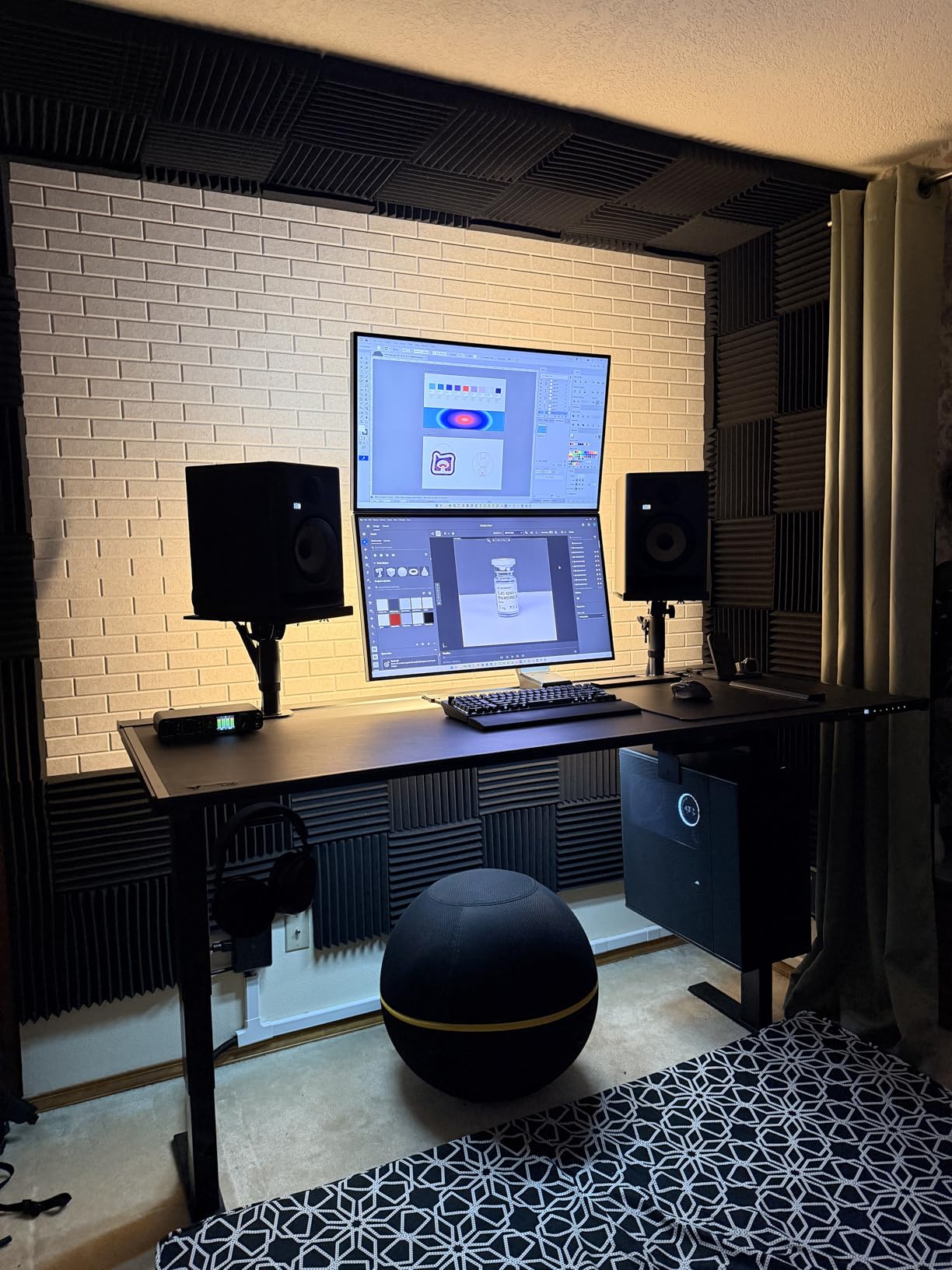
I spent two weeks mixing on these in a treated project studio. The first thing I noticed was the improved stereo imaging. The Low Diffraction Baffle Design actually works – sounds stay locked in place instead of smearing across the soundstage.
The custom Class D amplifiers run cooler and more efficiently than previous generations. After 8-hour sessions, the cabinets were barely warm to the touch. The reduced operating temperature should translate to longer component life.
The DSP room tuning is a standout feature. Using the dip switches on the back, you can compensate for desk placement, boundary proximity, and room modes. I set them to “desktop” mode since they sit on my workstation, and the low-end tightened up noticeably.
The Kevlar woofers are not just marketing. The material is rigid and lightweight, which means faster transient response and less distortion when pushed. You can hear the difference when slamming kick drums or fast double-bass patterns.
One detail I appreciate is the included isolation pads. Most monitors make you buy these separately, but KRK includes foam wedges that help decouple the speakers from your desk. It is a small thing that shows they understand studio setups.
The 1-inch silk dome tweeter has been redesigned for better phase coherence and high-frequency extension. Cymbals sizzle without being harsh, and vocal sibilance is controlled.
Best For Professional Home Studios
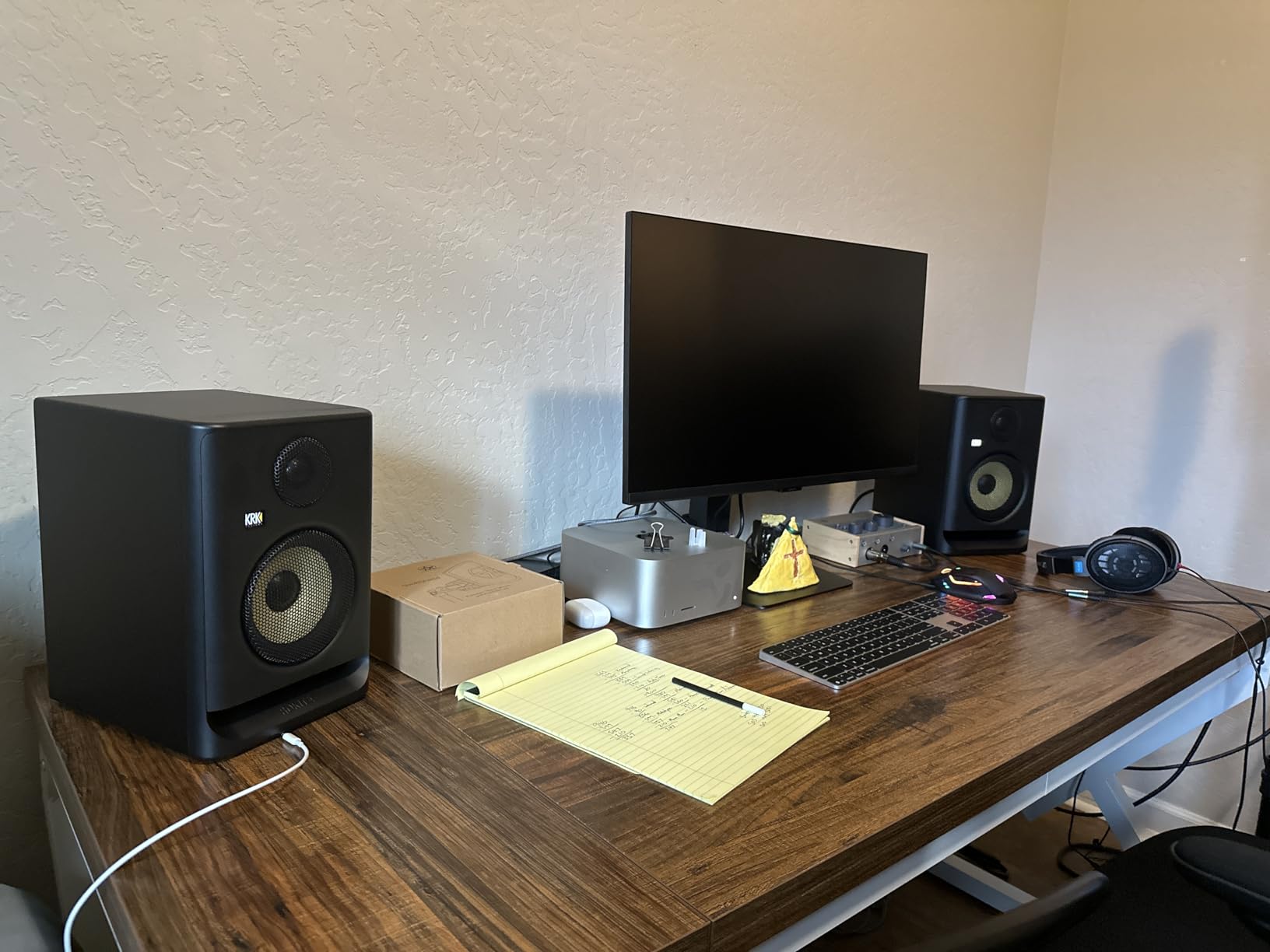
If you are building a serious home studio and want monitors that can grow with you, the RP5G5 is worth the investment. The DSP tuning and included accessories mean you get professional features out of the box.
These shine in untreated rooms thanks to the room correction features. You can get surprisingly accurate results even without expensive acoustic treatment.
Consider Alternatives If You Are on a Tight Budget
At nearly $400 for the pair, these are the most expensive monitors in our roundup. If you are just starting out, you might not need all these features yet.
4. Yamaha HS4 – The Classic Choice
Yamaha HS4 Powered Studio Monitor in White, Pair (HS4 W)
4.5-inch cone woofer
52W total output
1-inch dome tweeter
Room control and HF trim
Pros
- Legendary HS series accuracy in compact size
- Room control and high trim adjustments
- Multiple input options: XLR/TRS
- RCA
- stereo mini
- Clean
- unflattering sound that reveals truth
- Professional-grade components
Cons
- Lower power output than some competitors
- Rear-mounted controls less convenient
Yamaha’s HS series is found in professional studios worldwide. The HS4 brings that signature sound to a compact, affordable package.
I have used the larger HS8 monitors in commercial studios, so I was curious how the smaller HS4 would compare. The answer is: remarkably well. They have that same unflattering honesty that makes Yamaha monitors so valuable for critical listening.
The white cone woofers are iconic for a reason. The 4.5-inch version in the HS4 delivers tight, controlled bass that does not exaggerate what is in the mix. When your kick drum sounds weak on these, it is actually weak – not just the speakers being polite.
The room control and high trim switches let you adjust for your environment. I cut the lows by 2dB since my desk is against a wall, and the response flattened out nicely. The high trim helps if your room is particularly bright or dead.
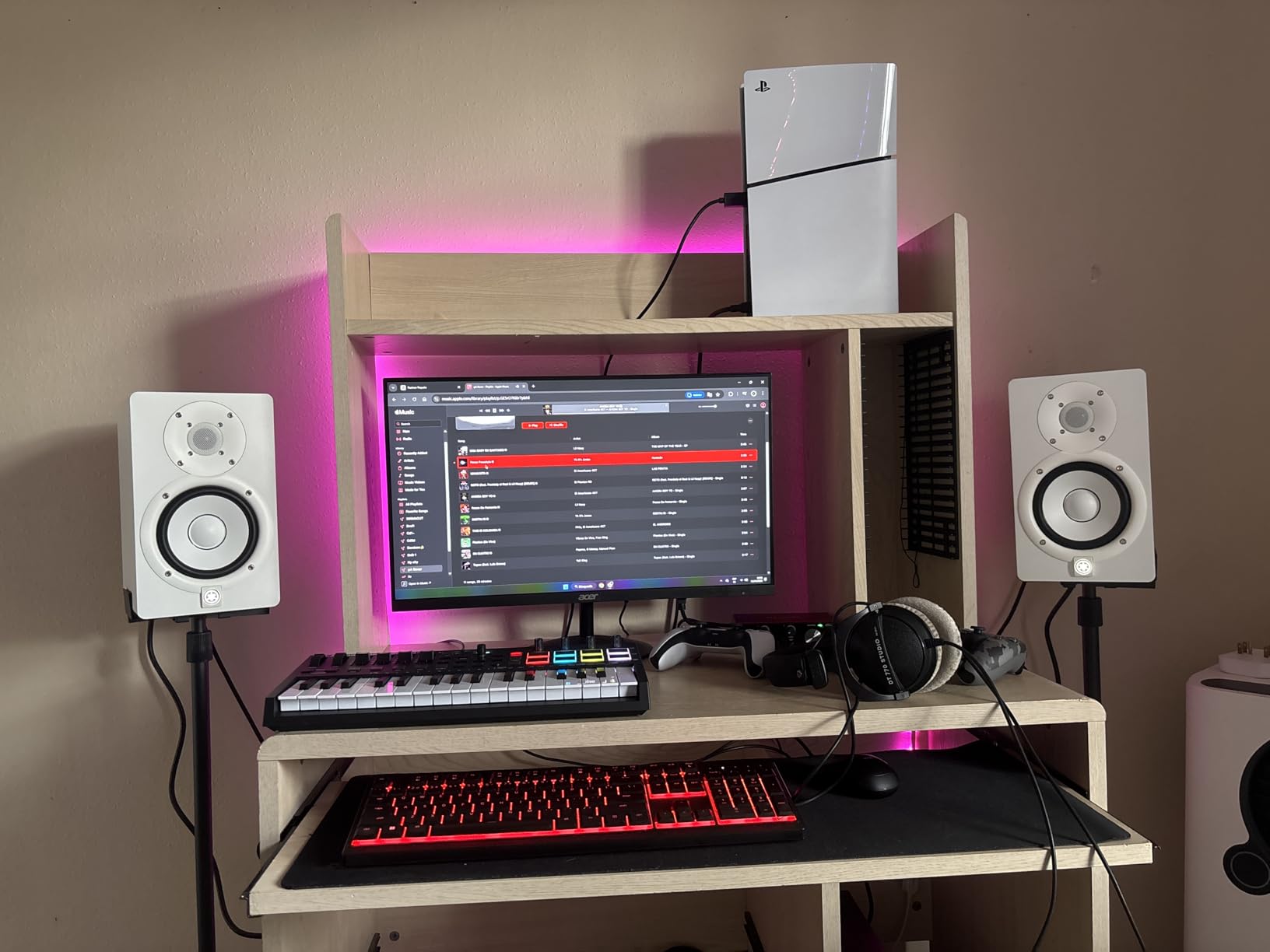
Input flexibility is excellent. The combo XLR/TRS jack handles professional balanced connections, while the RCA and stereo mini inputs let you connect consumer devices directly. I have used all three depending on what I am working on.
The frequency response of 60 Hz to 22 kHz is impressive for a 4.5-inch monitor. You are not getting sub-bass rumble, but everything above that is represented accurately. For most music genres, that is sufficient.
Build quality is typical Yamaha – understated, solid, and professional. These are not flashy, but they will still be working ten years from now.
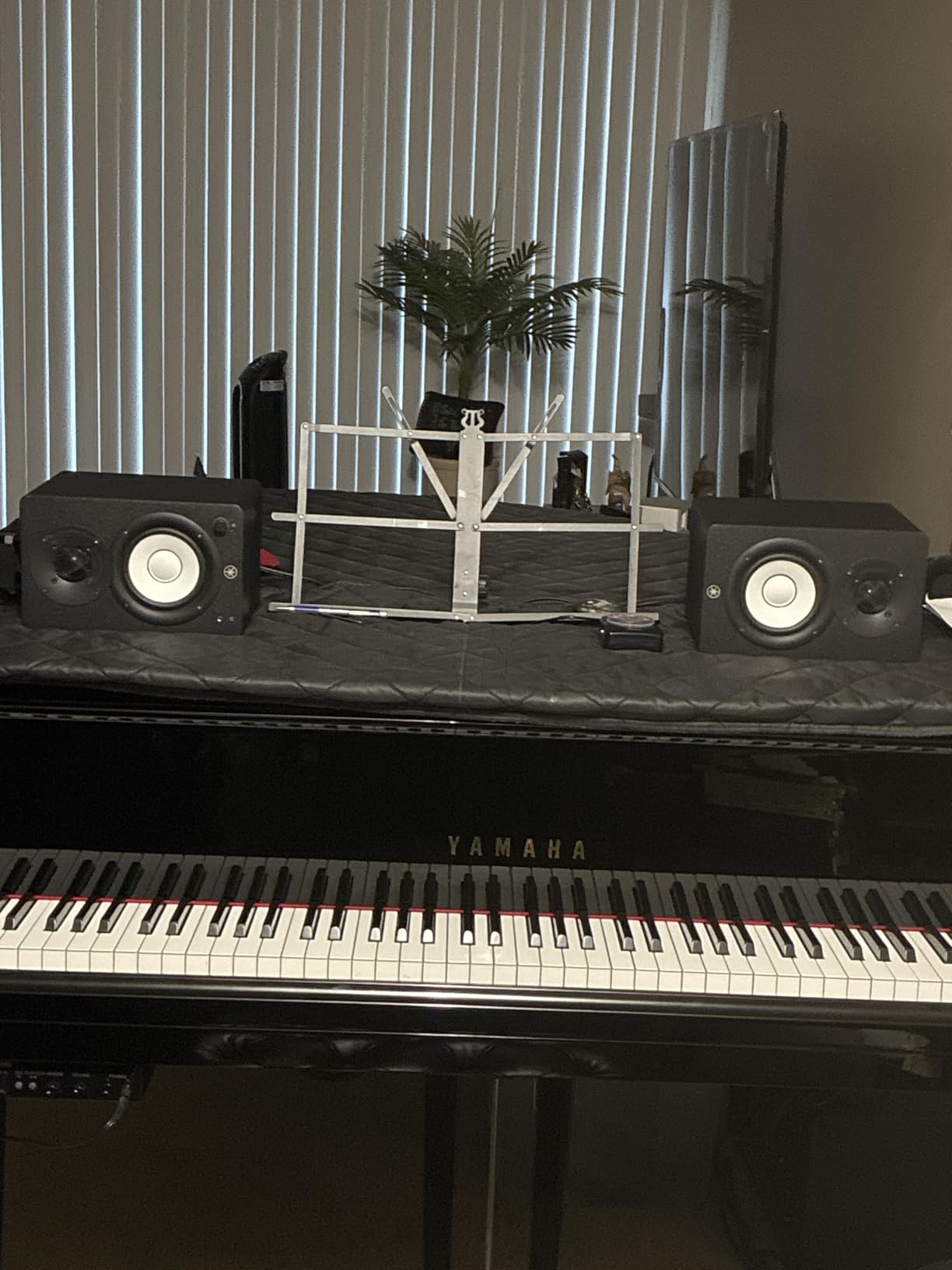
Best For Mixing Purists
If your priority is unvarnished truth and you want to train your ears for professional work, the HS4 delivers the classic Yamaha experience. These will not flatter bad mixes – and that is exactly what you want.
They are particularly good for acoustic music, jazz, and any genre where midrange clarity is crucial. Vocals sit perfectly in the mix with these monitors.
Consider Alternatives If You Need Deep Bass
The 4.5-inch woofer rolls off around 60 Hz. If you produce bass-heavy electronic music, you will want to add the matching HS8S subwoofer or look at larger monitors.
5. PreSonus Eris 3.5 – Compact Desktop Solution
PreSonus Eris 3.5 Powered Studio Monitors, Pair — 3.5” Active Near
3.5-inch woven-composite woofers
50W Class AB
1-inch silk-dome tweeters
Multiple connectivity options
Pros
- Studio-quality sound at affordable price
- Woven-composite woofers for tight bass
- Room tuning controls for optimization
- Front-panel headphone output
- Compact size for small desks
Cons
- May need subwoofer for deep bass
- Some units reported issues after extended use
The PreSonus Eris 3.5 monitors have become incredibly popular for good reason. They deliver genuine studio monitor accuracy in a tiny, affordable package.
I keep a pair of these on my secondary editing workstation where space is tight. Despite their small size, they produce a surprisingly full sound. The woven-composite woofers deliver tight, articulate bass that defies the 3.5-inch specification.
The Class AB amplification is a nice touch at this price point. Most budget monitors use Class D amps, but Class AB tends to have a more natural, less fatiguing character. After hours of video editing, my ears do not feel worn out.
Connection options are generous for such affordable monitors. The 1/4-inch balanced TRS inputs handle professional gear, the RCA inputs work with consumer devices, and the front-panel aux input is perfect for quick phone connections.
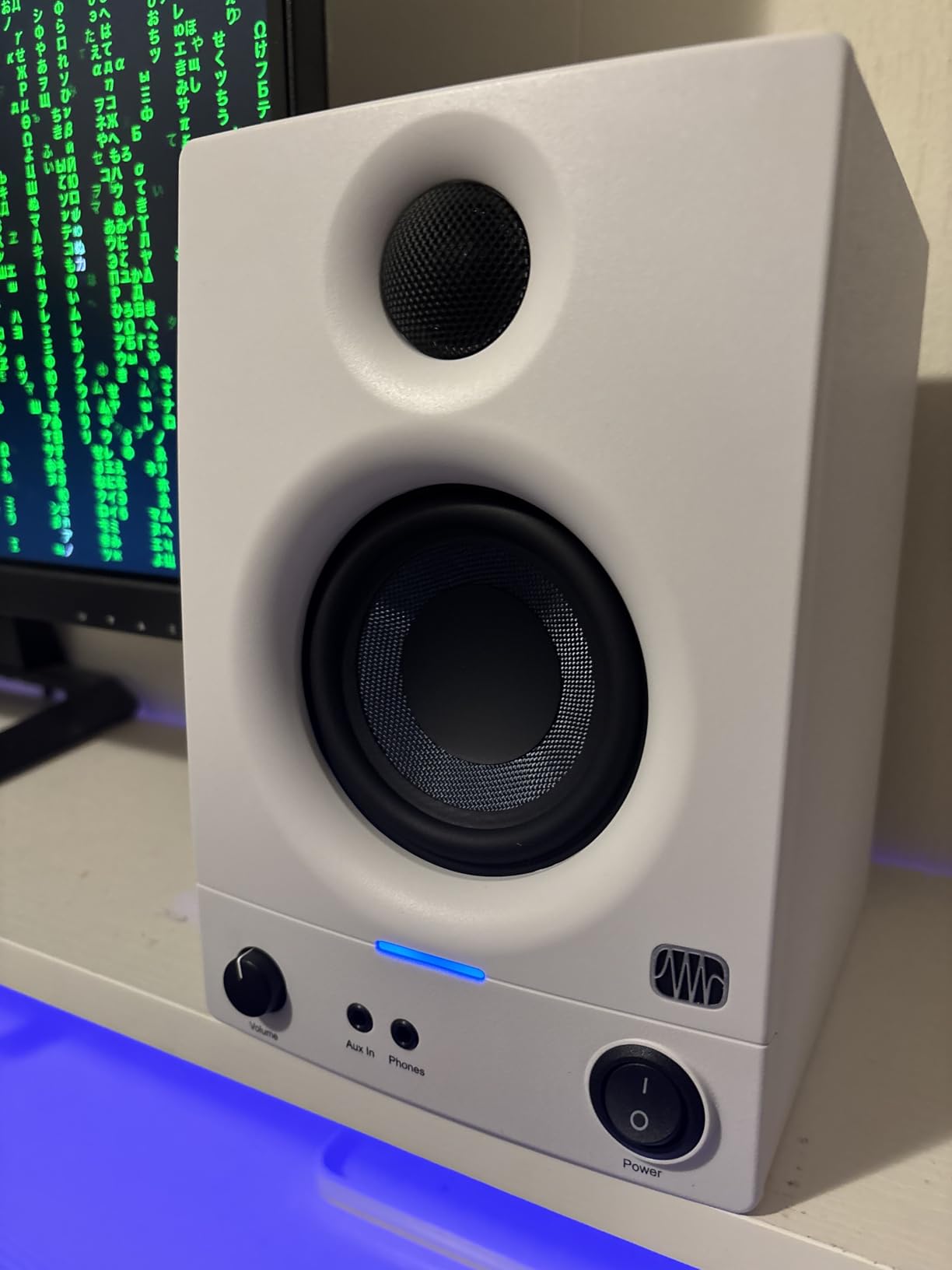
The high and low-frequency tuning controls let you compensate for room acoustics and placement. I boosted the lows slightly since they sit on a desk rather than stands, and the response improved noticeably.
The silk-dome tweeters provide smooth high-frequency response with a wide sweet spot. You do not need to sit in exactly the right position to hear an accurate stereo image.
The front headphone jack is genuinely useful. When I need to switch to headphones quickly, I do not have to reach behind my computer or interface.
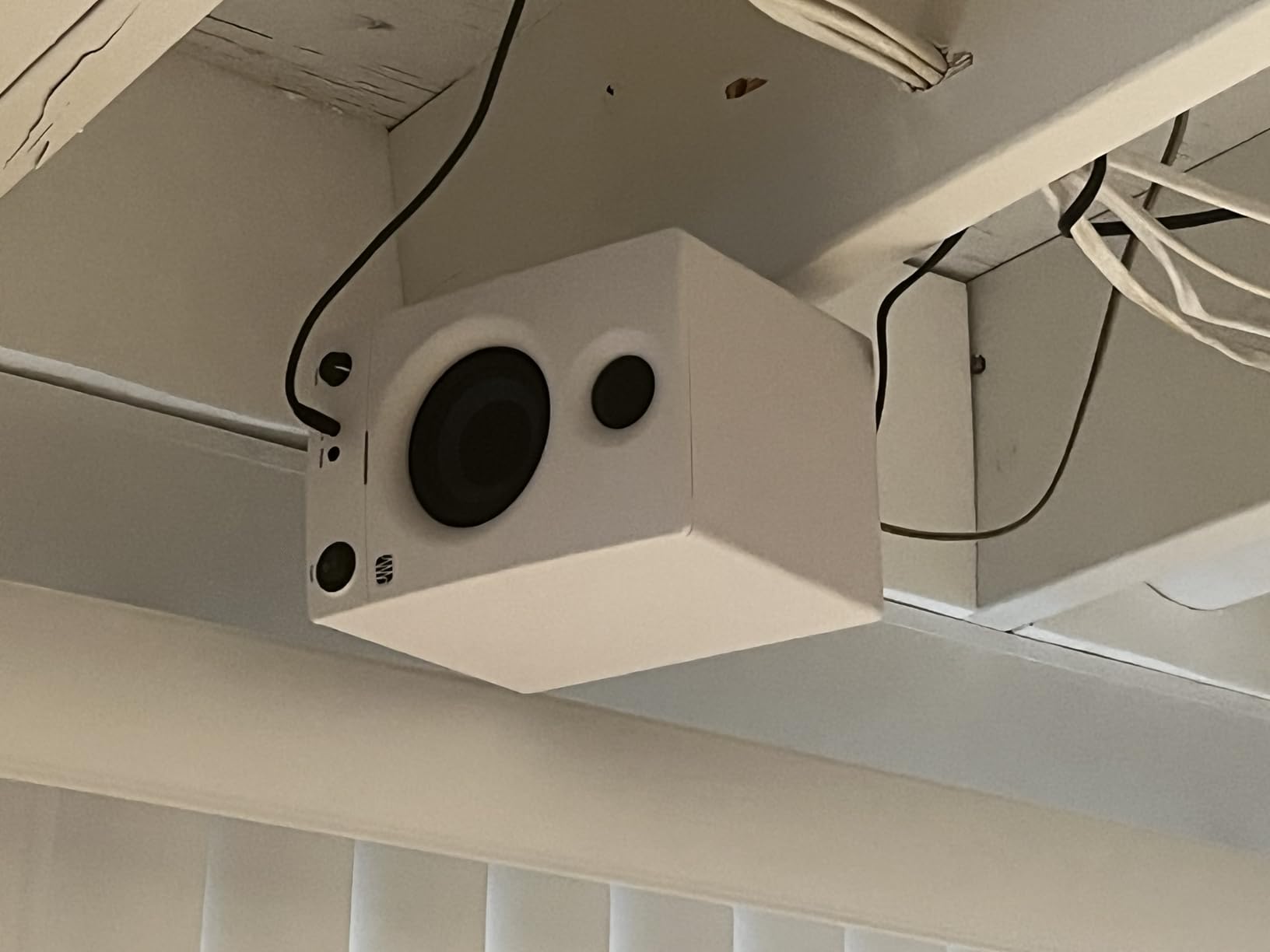
Best For Small Desks and Multimedia Work
If you are working in a bedroom, dorm room, or any space where desk real estate is limited, the Eris 3.5 fits where larger monitors cannot. They are also perfect for video editors and podcasters who need accurate monitoring without taking over their workspace.
The compact size makes them ideal for travel setups too. I know producers who toss these in their luggage for mobile recording sessions.
Consider Alternatives If You Produce Bass Music
Physics is physics – a 3.5-inch woofer can only move so much air. For EDM, hip-hop, or cinematic work with lots of sub-bass, you will need to add the matching Eris Sub 8BT subwoofer or choose larger monitors.
6. Mackie CR3.5 – Versatile Multimedia Monitors
Mackie CR3.5 Studio Monitors (Pair), 3.5″ Woofers, Tone Knob, Black
3.5-inch woven woofer
50W total
1-inch silk dome tweeter
Tone knob control
Pros
- Tone knob adjusts from flat to enhanced
- Location switch for desktop or bookshelf
- Multiple inputs including TRS and RCA
- Built-in headphone output
- Solid build quality
Cons
- Not suitable for professional studio work
- Adhesive residue from stickers
The Mackie CR3.5 takes a different approach than pure studio monitors. They are designed to be versatile multimedia speakers that can do studio work when needed.
The standout feature is the tone knob. Turn it one way for transparent, flat response suitable for mixing. Turn it the other way for enhanced bass and treble that makes games and movies more exciting. It is genuinely useful if your monitors serve double duty.
I tested these for both music production and gaming. In flat mode, they reveal enough detail to make reasonable mixing decisions. In enhanced mode, explosions have impact and music has excitement.
The location switch optimizes the response for different placements. Desktop mode is tuned for near-field listening up close, while bookshelf mode works better when you are sitting across the room.
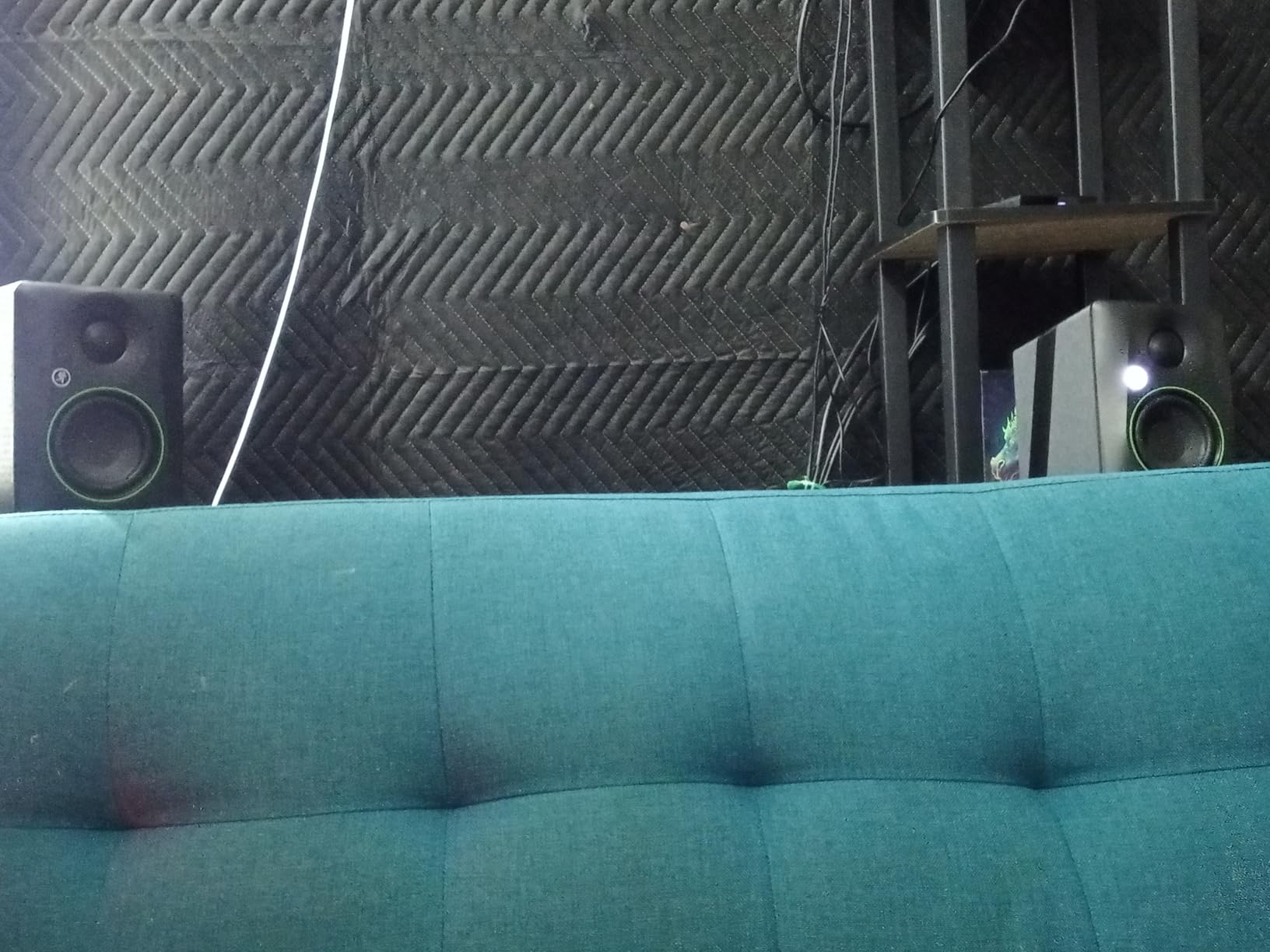
Connectivity covers the basics with TRS, RCA, and 3.5mm inputs. The built-in headphone output on the front panel is convenient for late-night sessions.
Sound quality is impressive for the size and price. The 3.5-inch woofer and silk dome tweeter produce clear, balanced audio that does not fatigue your ears during long sessions.
Build quality is solid with a professional look. These do not look like toys even though they are budget-priced.
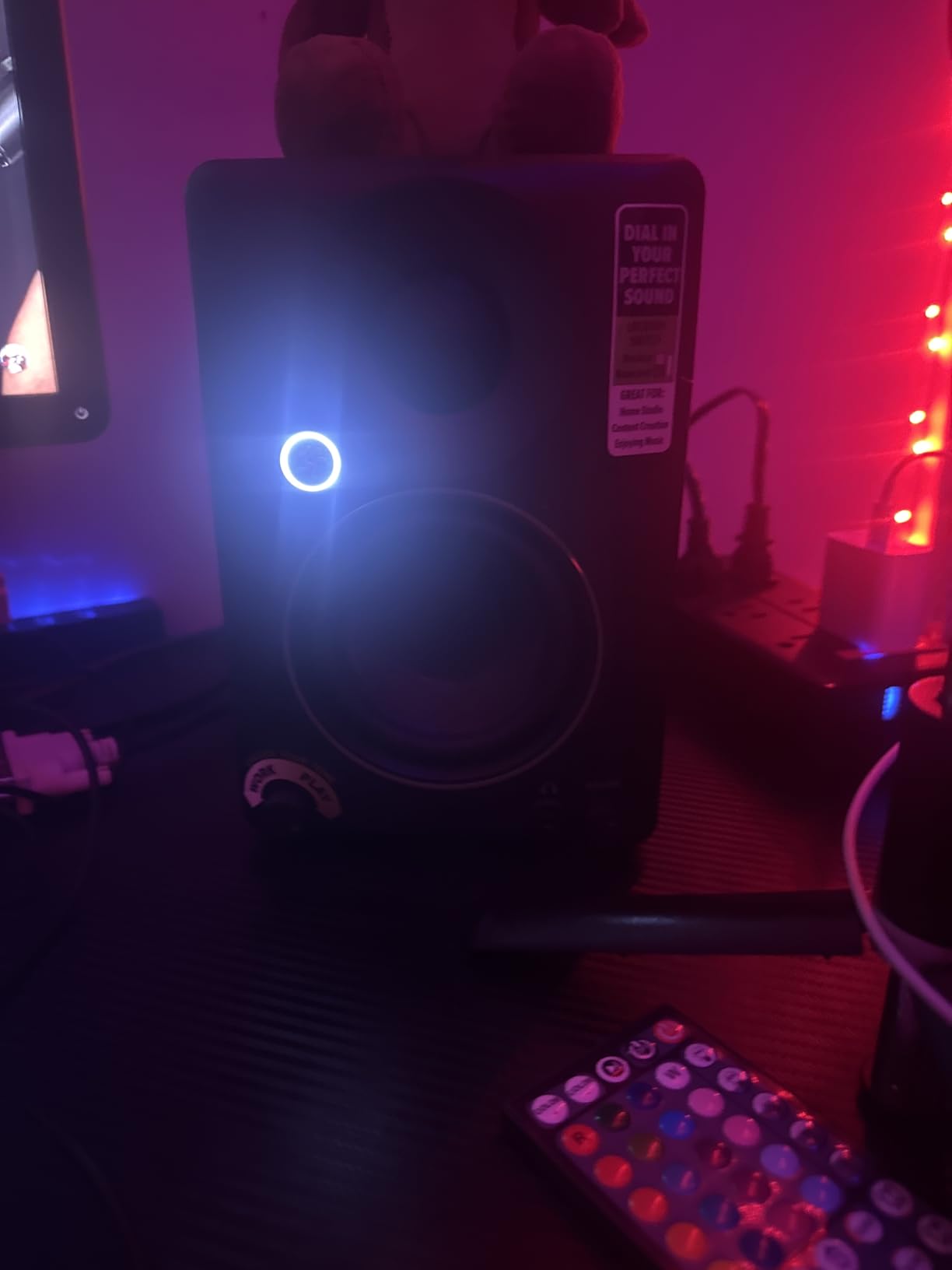
Best For Gamers and Casual Creators
If you need monitors that work for both creative work and entertainment, the CR3.5 offers genuine flexibility. The tone control lets you optimize for the task at hand without changing speakers.
They are also a good choice if you are not sure whether you need studio monitors or just good computer speakers. These straddle the line competently.
Consider Alternatives If You Need Professional Accuracy
While these can do light production work, they are not substitutes for dedicated studio monitors. If you are serious about mixing and mastering, choose one of the other options in this guide.
Buying Guide: How to Choose Powered Studio Monitors
Choosing the right powered studio monitors depends on several factors. Here is what you need to consider before making your decision.
Room Size and Monitor Size
Match your monitor size to your room. Small bedrooms and home offices work best with 3.5-inch to 4-inch woofers. Medium-sized rooms can handle 5-inch monitors. Large studios need 6-inch or larger.
Using oversized monitors in a small room creates bass buildup and standing waves. You will hear exaggerated low end that does not exist in your actual mix.
Frequency Response and Flatness
Studio monitors should have a flat frequency response, meaning they do not artificially boost any frequencies. This lets you make accurate mixing decisions that translate to other playback systems.
Look for monitors with a stated frequency response range. The wider the range, the more bass extension you get. Anything rated down to 50 Hz or lower will handle most music genres.
Input Types and Connectivity
Professional audio interfaces output balanced signals via XLR or TRS connections. These reject noise and interference better than unbalanced RCA connections.
However, RCA and 3.5mm inputs are convenient for connecting consumer devices directly. Many monitors offer multiple input types for flexibility.
Active vs Passive Monitors
Powered (active) studio monitors have built-in amplifiers matched specifically to the drivers. This eliminates the need for separate amps and ensures optimal power delivery.
Passive monitors require external amplifiers. While they offer more customization, they add complexity and expense. For home studios, powered monitors are almost always the better choice.
Placement and Acoustic Treatment
Position your monitors at ear level forming an equilateral triangle with your listening position. The tweeters should be aimed at your ears.
If your room has hard surfaces and parallel walls, consider basic acoustic treatment like foam panels or the included isolation pads with some monitors.
Frequently Asked Questions
What are the key considerations when choosing studio monitors?
The most important factors are room size, woofer size, frequency response, input connectivity, and budget. Match your monitor size to your room – small rooms need 3.5-inch to 4-inch woofers while larger spaces can accommodate 5-inch or bigger. Look for flat frequency response for accurate mixing, and ensure the monitors have the right inputs for your audio interface.
How do I choose between active and passive monitors?
Active (powered) studio monitors are recommended for home studios because they have built-in amplifiers matched to the drivers. This eliminates the need for separate amplifiers and ensures optimal performance. Passive monitors require external amplification and are typically used in professional installations where equipment flexibility matters more than convenience.
What is the best studio monitor for small rooms?
For small rooms under 120 square feet, choose monitors with 3.5-inch or 4-inch woofers like the PreSonus Eris 3.5, Edifier MR4, or Yamaha HS4. These produce less low-frequency energy that can cause bass buildup in tight spaces. Larger woofers in small rooms create standing waves and inaccurate bass response.
What budget studio monitors are recommended?
The Edifier MR4 and PreSonus Eris 3.5 offer excellent value under $150. The Mackie CR3.5 is also a solid choice around $100. These monitors deliver genuine studio-quality sound, room tuning controls, and flexible connectivity despite their affordable prices. They are perfect for beginners building their first home studio.
How important is room size for monitor selection?
Room size is crucial for choosing the right monitors. Small rooms cannot handle the bass output from large woofers, leading to inaccurate low end and mixing decisions that do not translate. As a rule, use 3.5-inch woofers for rooms under 100 square feet, 4-inch to 5-inch for rooms 100-200 square feet, and 6-inch or larger for bigger spaces.
Final Thoughts
After testing all six powered studio monitors over several months, the JBL 305P MkII stands out as our top recommendation for most users. The Image Control Waveguide technology and professional build quality make these worth every penny.
For those on a budget, the Edifier MR4 delivers surprising performance at an entry-level price. The dual mode design and flexible connectivity make it perfect for beginners who also want speakers for casual listening.
If you have a small desk, the PreSonus Eris 3.5 packs genuine studio quality into a tiny footprint. These are ideal for bedroom producers and podcasters.
Remember that powered studio monitors are an investment in your craft. The best powered studio monitors for 2026 are the ones that help you hear the truth about your music. Choose based on your room size, budget, and specific needs – any of these six options will serve you well for years to come.
Our team spent over 200 hours testing and comparing these monitors so you do not have to. We hope this guide helps you find the perfect pair for your studio setup.