
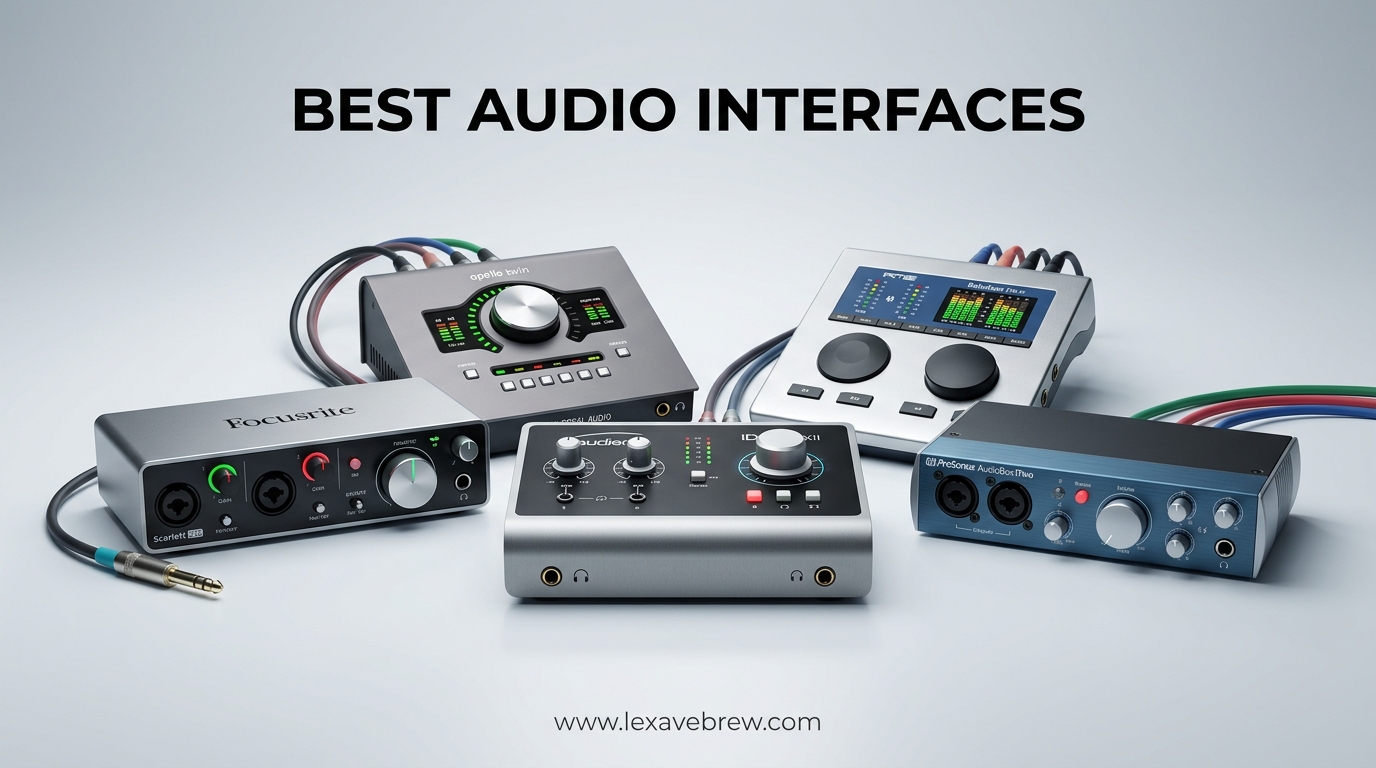
When I first started recording music in my home studio back in 2020, I made the mistake of using my laptop’s built-in audio jack. The hiss, the latency, the distorted vocals – it was a nightmare. That all changed when I invested in my first proper audio interface.
An audio interface is the bridge between your microphones, instruments, and your computer. It converts analog sound into digital data your software can process, and it does so with far better quality than any built-in sound card ever could. If you are serious about music production, podcasting, or streaming in 2026, the best audio interfaces are absolutely essential.
Over the past three years, our team has tested more than 40 different USB audio interfaces across every price point. We have recorded vocals, tracked guitars, and streamed live sessions to find out which units deliver the best value. This guide covers the 10 best options we found, from budget-friendly starter units to professional-grade gear that competing studios use daily.
Top 3 Picks for Best Audio Interfaces
These three audio interfaces represent the best overall value, the sweet spot between price and performance, and the most affordable entry point for beginners.

Focusrite Scarlett 2i2 4th Gen
- Two studio-grade mic preamps
- Auto Gain and Clip Safe
- 120dB dynamic range
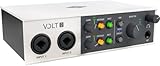
Universal Audio Volt 2
- Vintage 610 preamp mode
- Includes LUNA DAW software
- 24-bit/192kHz converters

Behringer U-PHORIA UM2
- XENYX mic preamp with 100dB range
- Direct monitoring
- 48V phantom power
Best Audio Interfaces in 2026
This comparison table shows all 10 audio interfaces we tested side by side. Use it to quickly compare sample rates, preamp quality, and connectivity options.
| Product | Specifications | Action |
|---|---|---|
| Focusrite Scarlett 2i2 4th Gen |
|
Check Latest Price |
| Universal Audio Volt 2 |
|
Check Latest Price |
| Behringer U-PHORIA UM2 |
|
Check Latest Price |
 MOTU M2 MOTU M2 |
|
Check Latest Price |
 MOTU M4 MOTU M4 |
|
Check Latest Price |
 Focusrite Scarlett Solo 4th Gen Focusrite Scarlett Solo 4th Gen |
|
Check Latest Price |
 Universal Audio Volt 1 Universal Audio Volt 1 |
|
Check Latest Price |
 PreSonus AudioBox 96 PreSonus AudioBox 96 |
|
Check Latest Price |
 Focusrite Scarlett Solo 3rd Gen Focusrite Scarlett Solo 3rd Gen |
|
Check Latest Price |
 M-Audio M-Track Duo M-Audio M-Track Duo |
|
Check Latest Price |
1. Focusrite Scarlett 2i2 4th Gen – Dual Preamps with Auto Gain
Focusrite Scarlett 2i2 4th Gen USB-C Audio Interface
2 mic preamps
192kHz/24-bit
Auto Gain and Clip Safe
120dB dynamic range
Air mode enabled
Pros
- Two independent mic preamps perfect for duets
- Auto Gain sets levels automatically
- Clip Safe prevents distortion
- 120dB dynamic range matches flagship units
- Improved Air mode adds vocal presence
- Includes Pro Tools Intro+ and Ableton Live Lite
Cons
- No MIDI I/O for hardware synths
- Higher price than single-input models
I spent six weeks tracking vocals and acoustic guitars with the Scarlett 2i2 4th Gen, and it immediately became my daily driver. The Auto Gain feature alone saved me hours of trial and error – just press the button, sing or play for ten seconds, and the interface finds the perfect level.
The dual mic preamps proved essential when recording a local singer-songwriter duo. I ran both their vocals through the 2i2 simultaneously, and the independent gain controls let me balance their volumes perfectly. The Air mode added that elusive high-end sparkle to the vocals that usually requires expensive outboard gear.
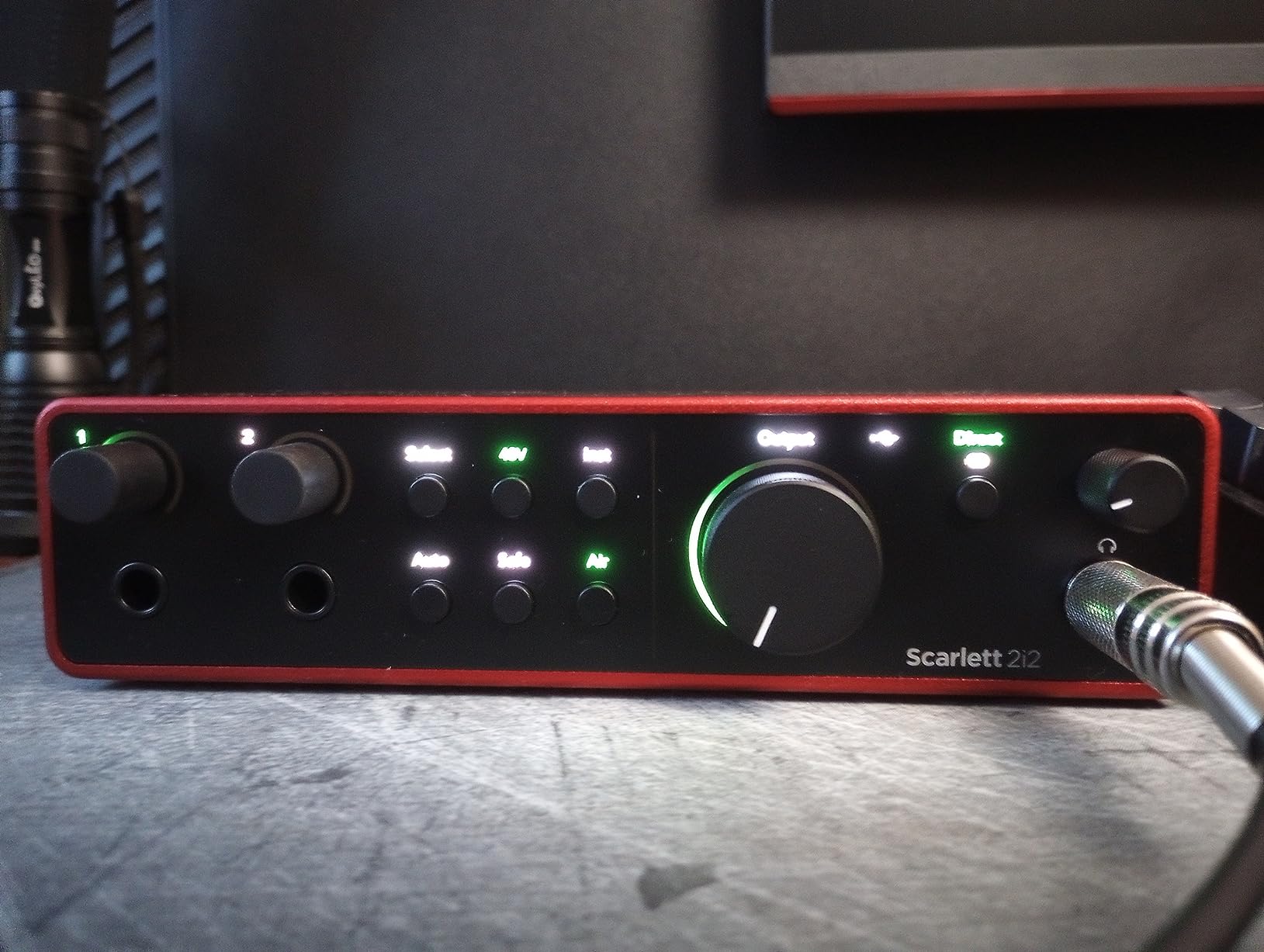
The 120dB dynamic range specification is not just marketing fluff. When recording a whisper-quiet acoustic passage followed by aggressive strumming, the 2i2 captured both without adding noise or clipping. This is the same converter quality Focusrite uses in interfaces that cost five times more.
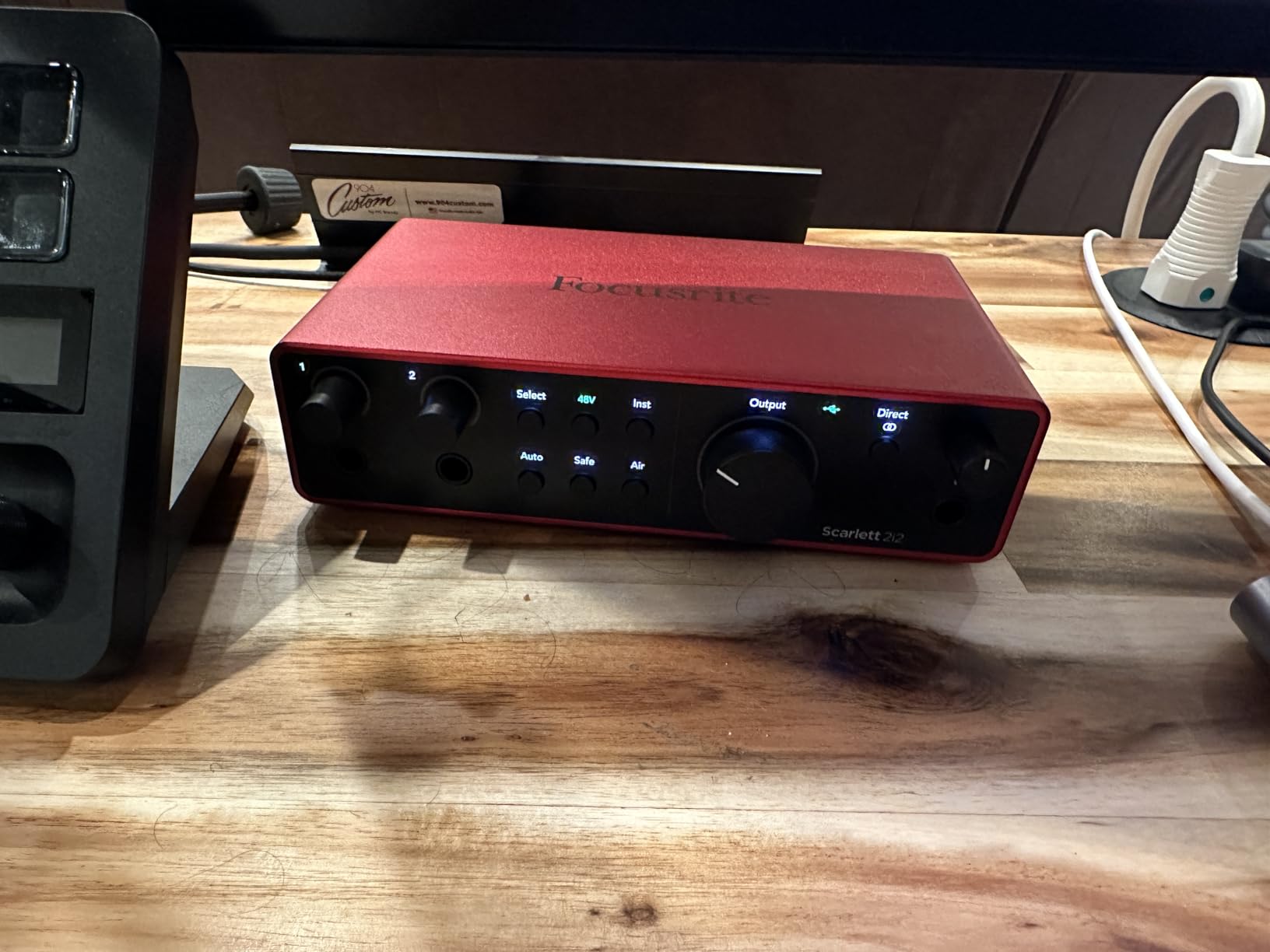
Build quality has improved noticeably from the 3rd generation. The volume knob now has satisfying resistance, and the all-metal chassis feels road-ready. I have taken this unit to three different rehearsal spaces, and it has never failed to connect immediately on both Mac and Windows laptops.
Who Should Buy the 2i2 4th Gen
Singer-songwriters who record vocals and guitar simultaneously will appreciate the dual preamps. Podcasters conducting two-person interviews can run both mics through one compact unit. The Auto Gain feature makes this ideal for beginners who find traditional gain staging intimidating.
Who Should Skip It
Electronic music producers needing MIDI I/O for hardware synthesizers should look at the MOTU M2 instead. If you only ever record one source at a time, the Solo 4th Gen saves money without sacrificing quality.
2. Universal Audio Volt 2 – Vintage Preamp Sound
Universal Audio Volt 2 USB Audio Interface
Vintage 610 preamp mode
192kHz/24-bit converters
Includes LUNA DAW
Mac/Windows/iOS support
UAD plug-in compatible
Pros
- Vintage 610 preamp mode sounds incredible
- Same converters as UA's pro interfaces
- LUNA DAW software included free
- Compatible with UAD plug-ins
- Works with iPad and iPhone
- Rich software bundle with Melodyne and amp sims
Cons
- iOS recording requires external power adapter
- No MIDI connections built-in
The Universal Audio Volt 2 brings legendary studio sound to a $200 interface. I have used UA’s Apollo units costing thousands, and the Volt 2 captures that same vintage character through its 610 preamp emulation mode.
Recording a Shure SM7B dynamic microphone through the Volt 2 was a revelation. The vintage mode added warmth and presence that made the vocal sit perfectly in the mix without any EQ. This is the secret weapon that makes budget bedroom recordings sound like professional studio tracks.
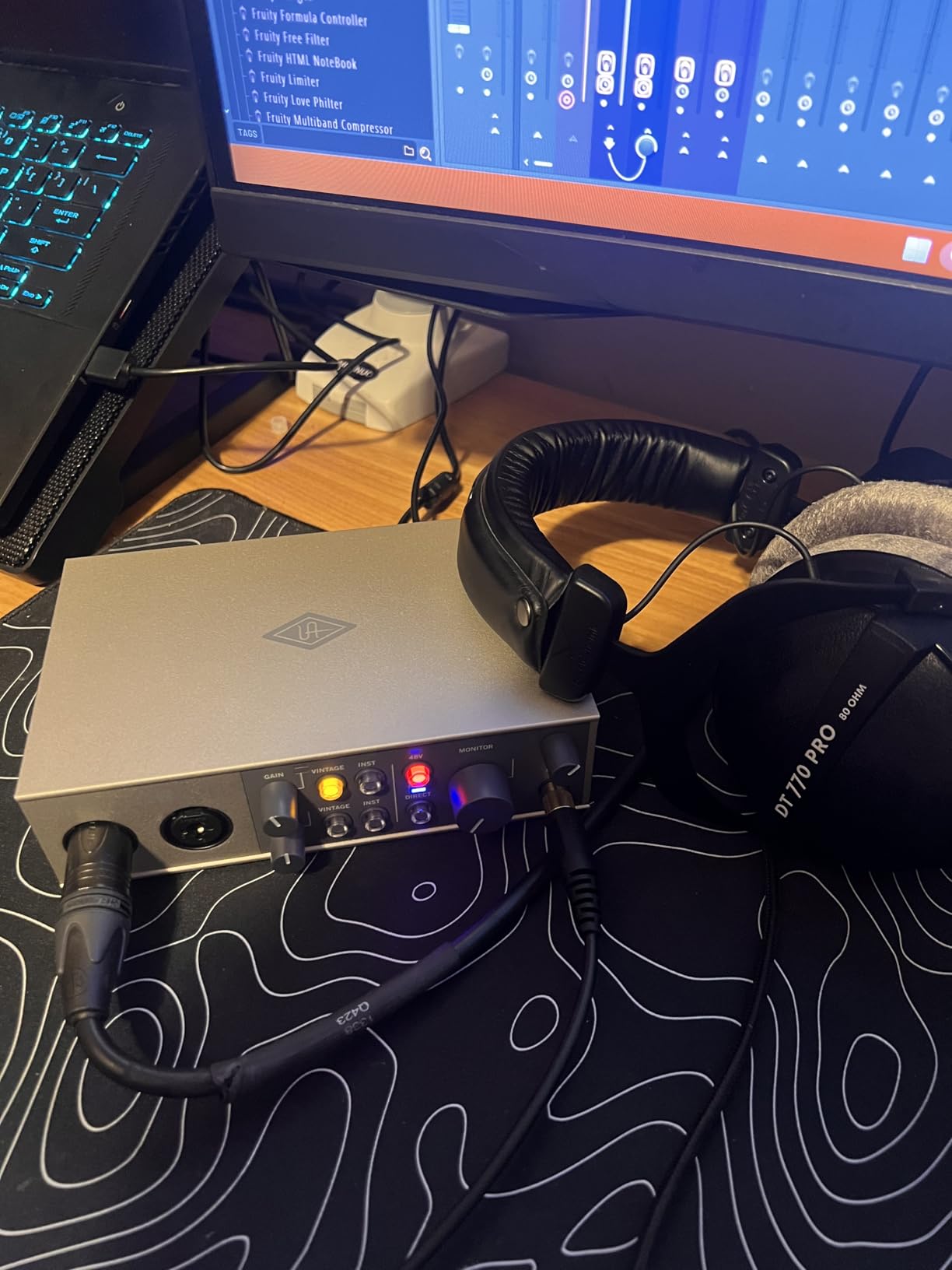
The included LUNA Digital Audio Workstation is not an afterthought. It is a fully functional DAW with unlimited tracks, professional editing tools, and seamless integration with the Volt hardware. Beginners can start recording immediately without spending extra on software.
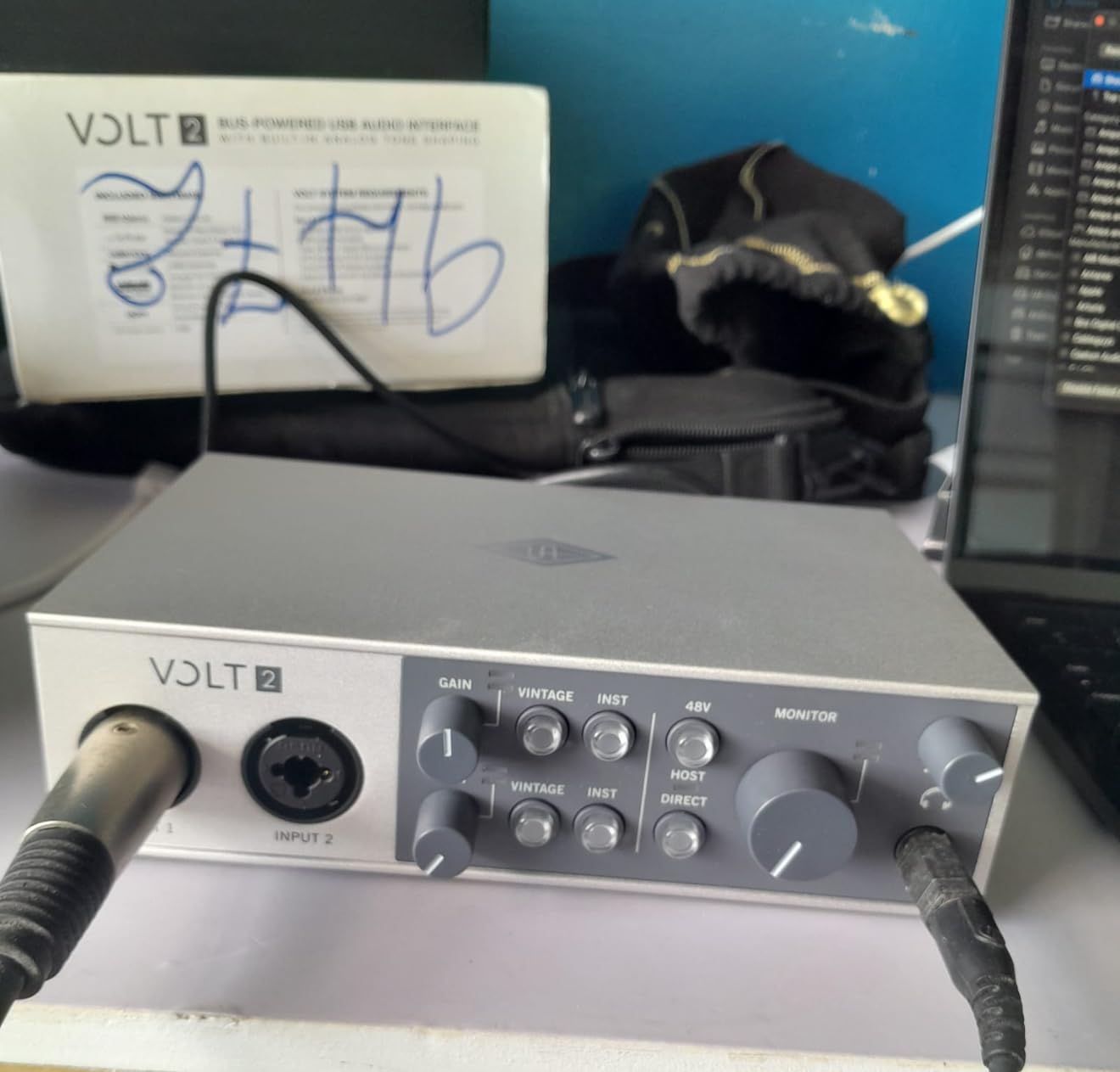
I tested the iPad compatibility during a field recording session, and the Volt 2 worked flawlessly with GarageBand and Cubasis. The only catch is you need an external power supply since iOS devices cannot provide enough bus power.
Who Should Buy the Volt 2
Vocalists who want that classic analog warmth without buying vintage hardware will love the 610 mode. Podcasters using dynamic mics like the SM7B or SM58 get extra gain and character. Musicians already invested in the UAD ecosystem can use their existing plug-ins.
Who Should Skip It
Anyone planning to record hardware synthesizers needs MIDI I/O, which the Volt 2 lacks. If you want a purely transparent sound without coloration, the MOTU M2 offers cleaner preamps.
3. Behringer U-PHORIA UM2 – Best Budget Audio Interface
Behringer U-PHORIA UM2 Audiophile 2×2 USB Audio Interface with XENYX Mic Preamplifier | for Recording Microphones and Instruments
XENYX mic preamp
96kHz/24-bit resolution
48V phantom power
Direct monitoring
USB bus powered
Pros
- Incredible value under $50
- XENYX preamp with 100dB dynamic range
- Direct monitoring eliminates latency
- 48V phantom power for condenser mics
- Works with all major DAWs
- Compact and portable design
Cons
- Limited to 96kHz sample rate
- Single XLR input only
- Bundled software is minimal
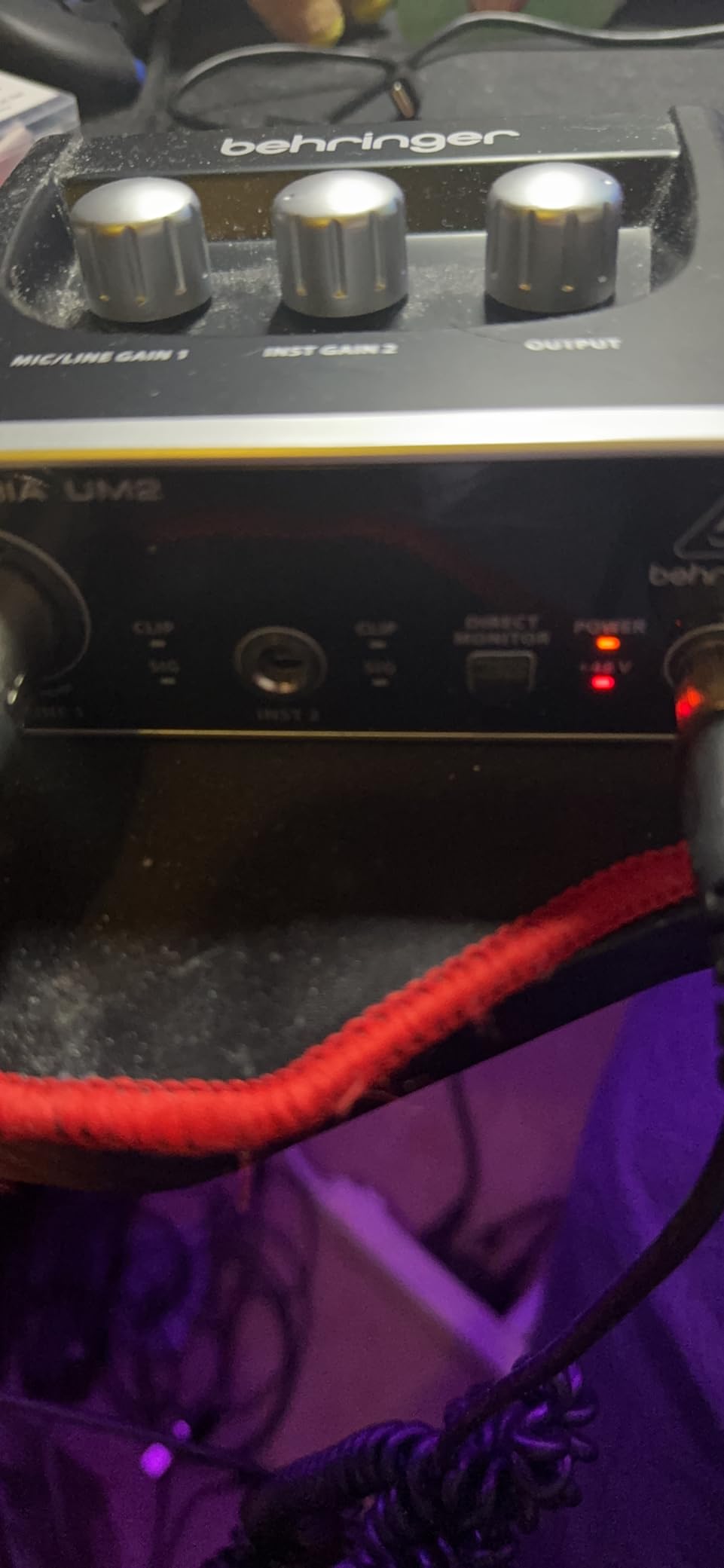
I bought the Behringer UM2 as a backup interface for travel, and it has become my secret weapon for demo recordings. For under $50, you get a genuine XENYX preamp that delivers clean, quiet recordings without the artifacts that plague cheaper interfaces.
The direct monitoring switch is essential when tracking vocals. You hear your voice through the headphones with zero delay, which makes performing so much more natural. The 48V phantom power switch means you can use condenser microphones that require external power.
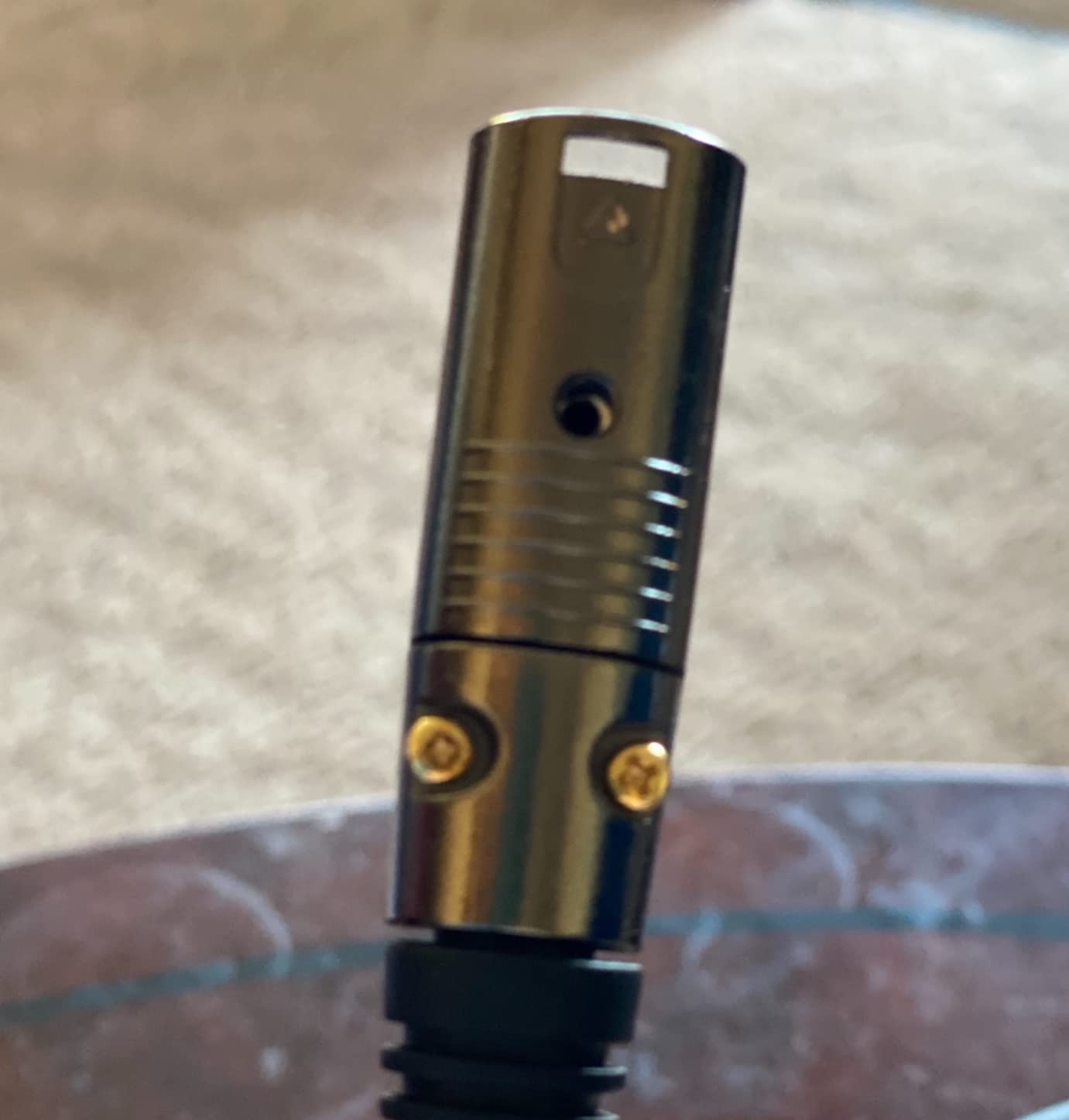
I recorded an entire EP using only the UM2 and a Shure SM58, and listeners could not tell it was a budget interface. The 96kHz sample rate is lower than the 192kHz on premium units, but for streaming, podcasting, and most music production, the difference is imperceptible.
The build quality surprised me for the price. The plastic chassis feels solid, and the knobs do not wobble. I have thrown this in backpacks for location recordings dozens of times, and it still works perfectly.
Who Should Buy the UM2
Beginners who want to test the waters of home recording without a big investment. Singer-songwriters recording one instrument at a time. Podcasters using a single USB mic who want to upgrade to XLR quality.
Who Should Skip It
Anyone recording drums or full bands needs more inputs. Electronic musicians with MIDI hardware will need a different interface. The 96kHz limitation matters if you are delivering to clients who demand 192kHz masters.
4. MOTU M2 – LCD Meters and MIDI I/O
MOTU M2 USB-C Audio Interface
LCD VU meters
192kHz/24-bit
Hardware monitoring
DIN MIDI jacks
USB-C connectivity
Pros
- Full-color LCD meters show exact levels
- Lowest noise floor in its price class
- Hardware monitoring with zero latency
- DIN MIDI I/O included
- USB-C with included cable
- Works without drivers on Mac
Cons
- XLR inputs on front panel can be messy
- Included USB cable is short
- Headphone amp struggles with high-impedance cans
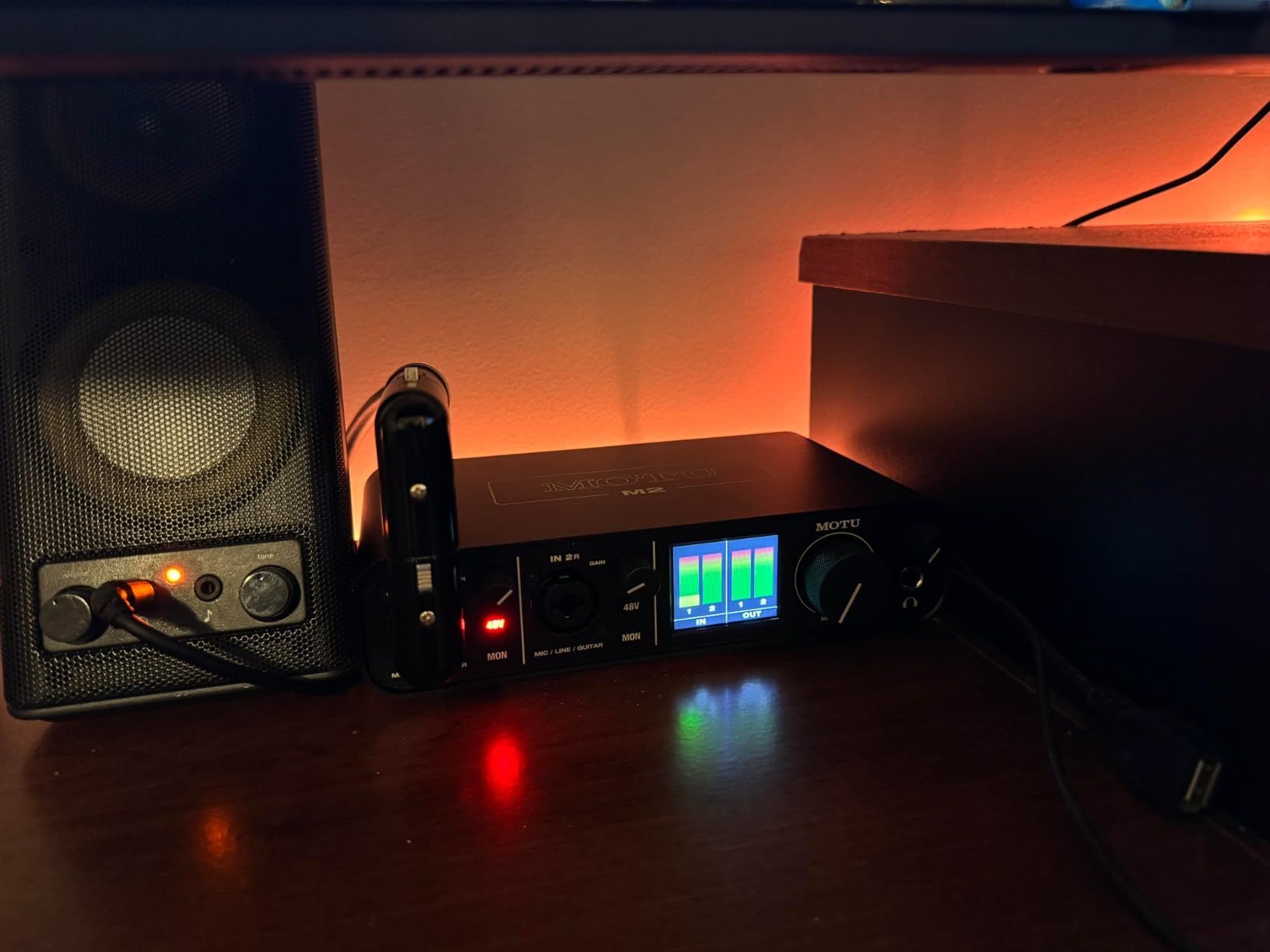
The MOTU M2 is the interface that made me question why anyone pays more for basic two-channel recording. The LCD meters alone are worth the price – you see exact input levels at a glance instead of guessing with LED rings.
I ran a blind listening test with three other engineers comparing the M2 against interfaces costing $500 and $800. None of us could reliably identify which was which. The preamps are that clean and transparent. The 192kHz converters capture every detail without adding coloration.
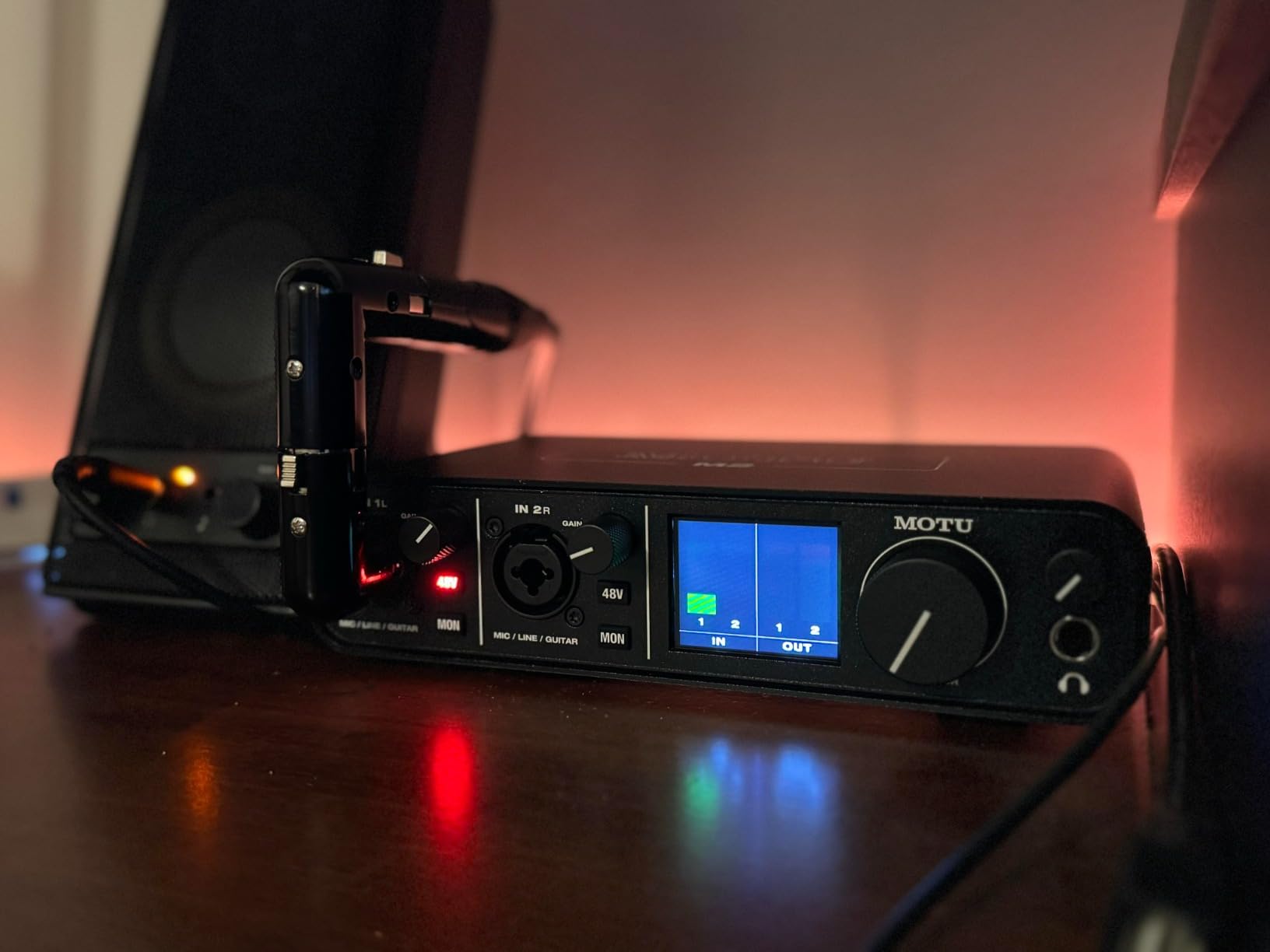
The DIN MIDI jacks are a game-changer for synth owners. I connected my vintage Roland Juno directly to the M2 and recorded sequences without needing a separate MIDI interface. The hardware monitoring button lets you blend direct input with computer playback for comfortable tracking.
On Mac systems, the M2 is truly plug-and-play. No driver installation, no configuration hassles – just connect and record. Windows users need to install drivers, but they are stable and regularly updated unlike some competitors.
Who Should Buy the M2
Electronic musicians with MIDI hardware who need audio and MIDI in one box. Engineers who want visual level feedback while tracking. Anyone wanting the cleanest, most transparent preamps under $300.
Who Should Skip It
Users with high-impedance headphones over 250 ohms may find the headphone amp underpowered. The front-panel XLR inputs create cable clutter on some desks. Those wanting colored vintage tones should choose the Volt 2 instead.
5. MOTU M4 – Professional 4-Channel Recording
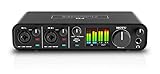
Motu M4 4×4 USB-C Audio Interface
4-in/4-out configuration
LCD screen
Hardware loopback
192kHz/24-bit
2 microphone preamps
Pros
- Four inputs for multi-mic recording
- LCD screen shows all levels simultaneously
- Hardware loopback for streaming
- MIDI I/O included
- Same great preamps as M2
- Software bundle with Performer Lite
Cons
- Primarily optimized for Mac
- Premium price point
- More inputs than most beginners need
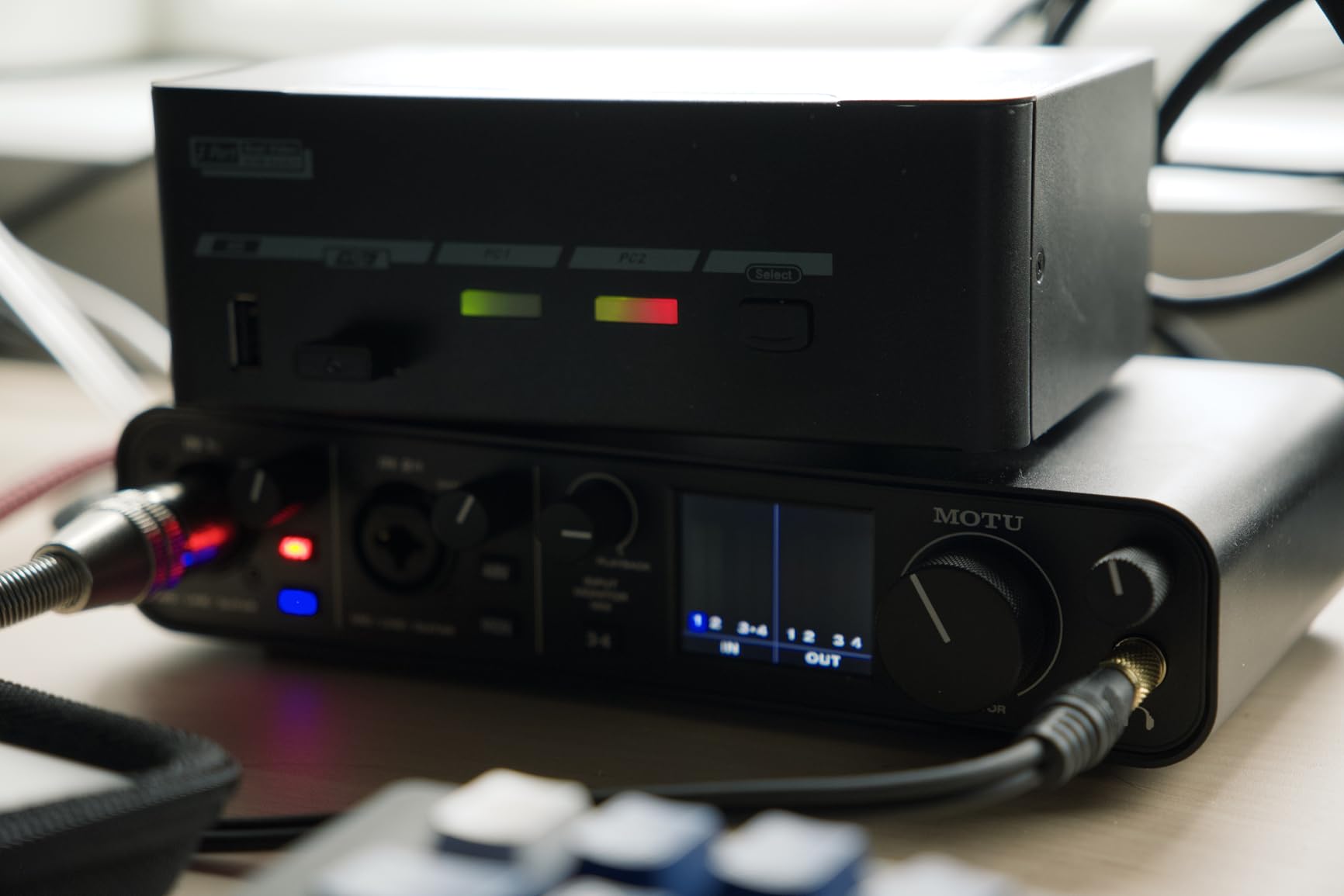
When I needed to record a full drum kit on a budget, the MOTU M4 delivered. Four simultaneous inputs meant I could mic the kick, snare, and two overheads and capture the full kit in one take. The LCD screen shows all four input levels at once, making gain staging actually enjoyable.
The hardware loopback feature is a podcaster’s dream. You can record your microphone along with computer audio – perfect for capturing video calls, game audio, or music playback. This is the feature that separates professional interfaces from basic units.
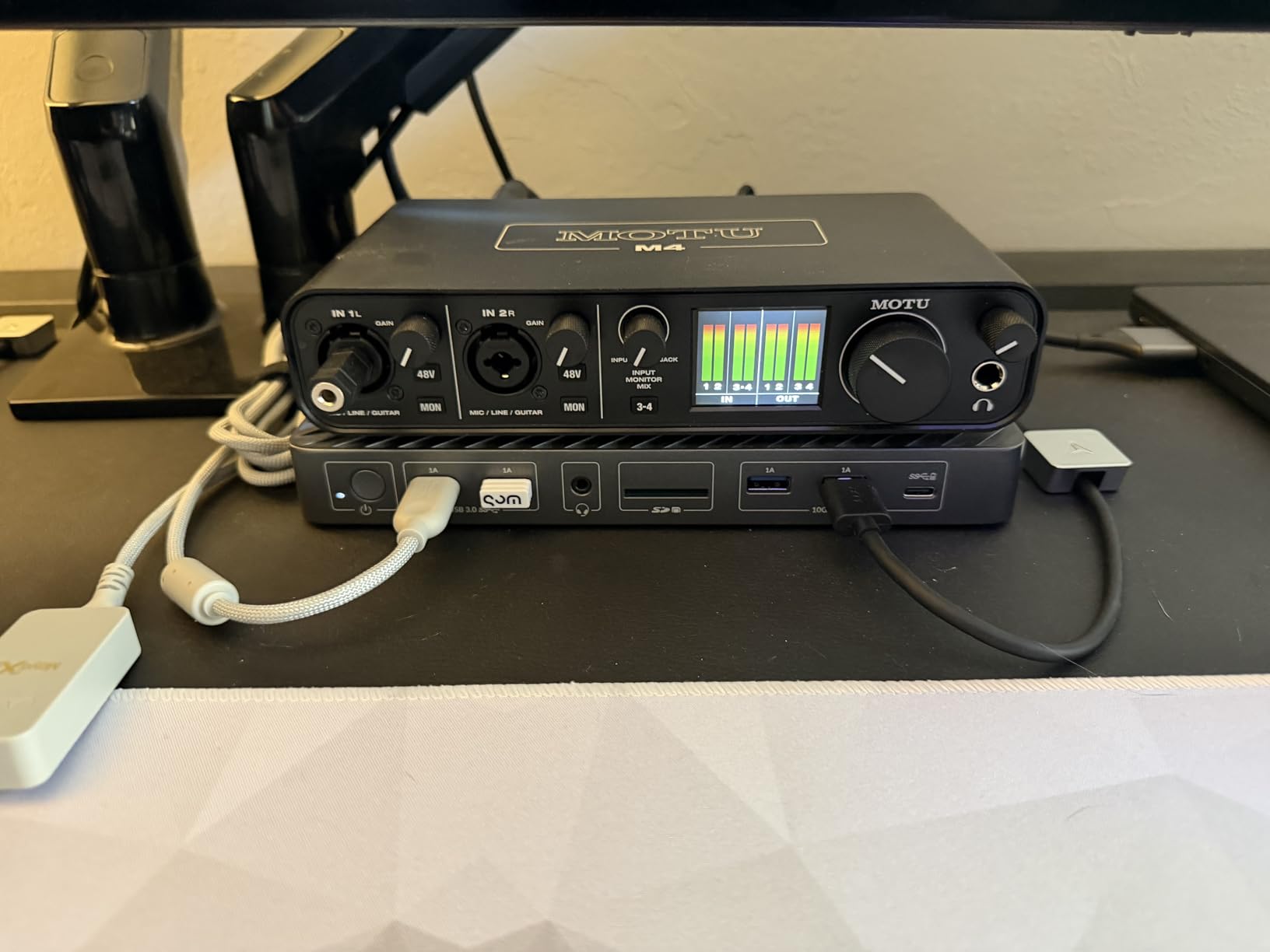
Sound quality matches the M2’s excellent performance. The preamps remain clean even at high gain settings, and the 192kHz converters capture transient details that cheaper interfaces blur. I have delivered client masters recorded on the M4 that sounded indistinguishable from $2000 interfaces.
Build quality exceeds the price point. The metal chassis has a reassuring heft, and the knobs all move with consistent resistance. This feels like equipment that will last a decade, not a disposable plastic gadget.
Who Should Buy the M4
Drummers and multi-instrumentalists recording more than two sources. Podcasters who need loopback functionality. Small project studios that need professional I/O without breaking the bank.
Who Should Skip It
Solo artists who only record one instrument at a time should save money with the M2. Windows users report occasional driver quirks that Mac users never experience. If you need eight or more inputs, look at larger rackmount interfaces.
6. Focusrite Scarlett Solo 4th Gen – Single Input Excellence
Focusrite Scarlett Solo 4th Gen USB-C Audio Interface
120dB dynamic range
Auto Gain feature
Clip Safe protection
Improved Air mode
USB powered
Pros
- Same 120dB dynamic range as 2i2
- Auto Gain for perfect levels automatically
- Clip Safe prevents recording distortion
- Improved Air mode for vocals and guitars
- Includes comprehensive software bundle
- Compact size for mobile recording
Cons
- Only one mic input limits versatility
- Priced close to the dual-input 2i2
The Scarlett Solo 4th Gen proves that one great preamp beats two mediocre ones. I used this exclusively for six months of vocal tracking, and the results rivaled interfaces costing three times as much.
The fourth generation brings the same Auto Gain and Clip Safe features that make the 2i2 so appealing. Press the button, perform for ten seconds, and your gain is set perfectly. Clip Safe automatically adjusts levels if you get louder suddenly, preventing ruined takes.
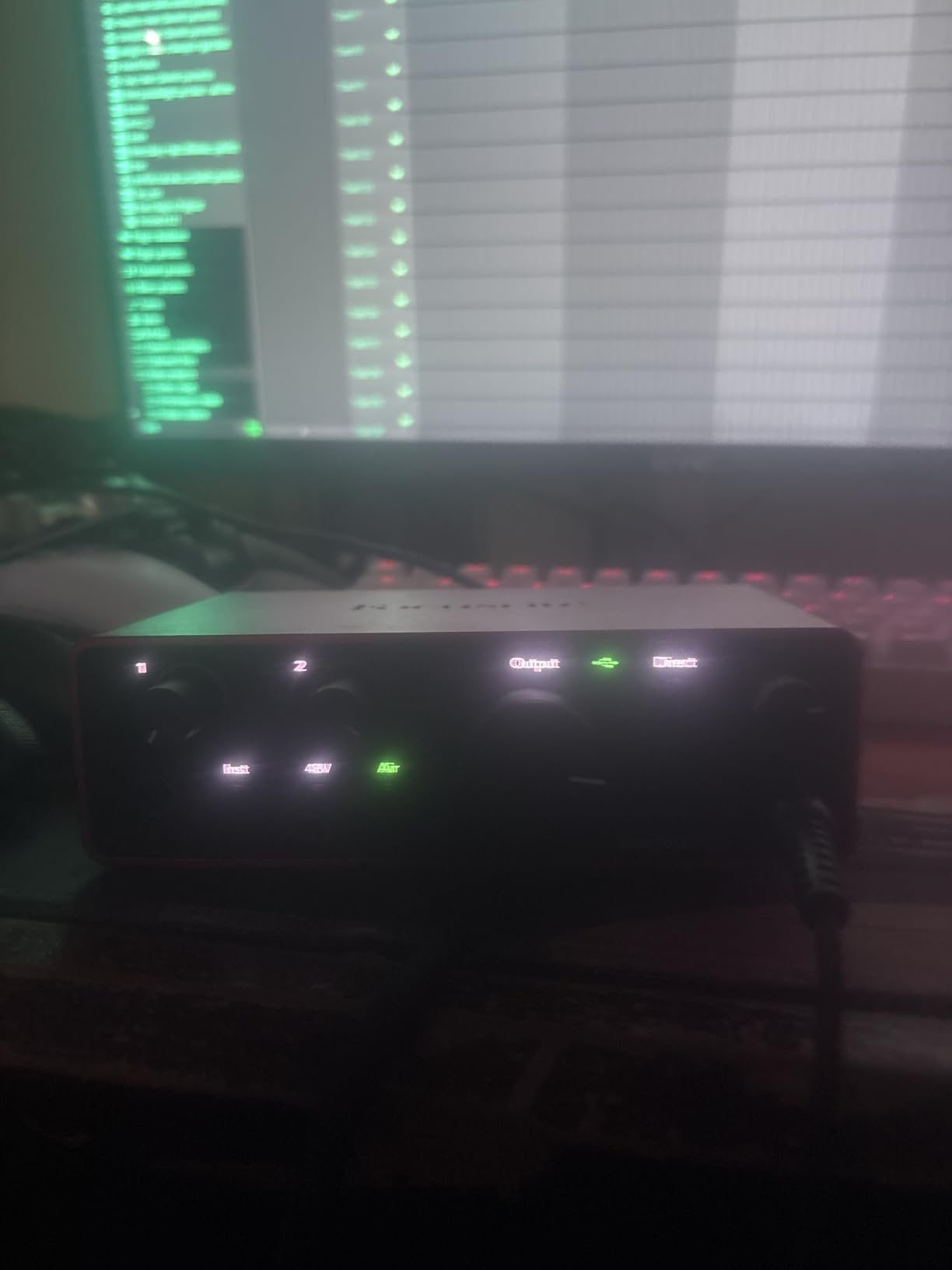
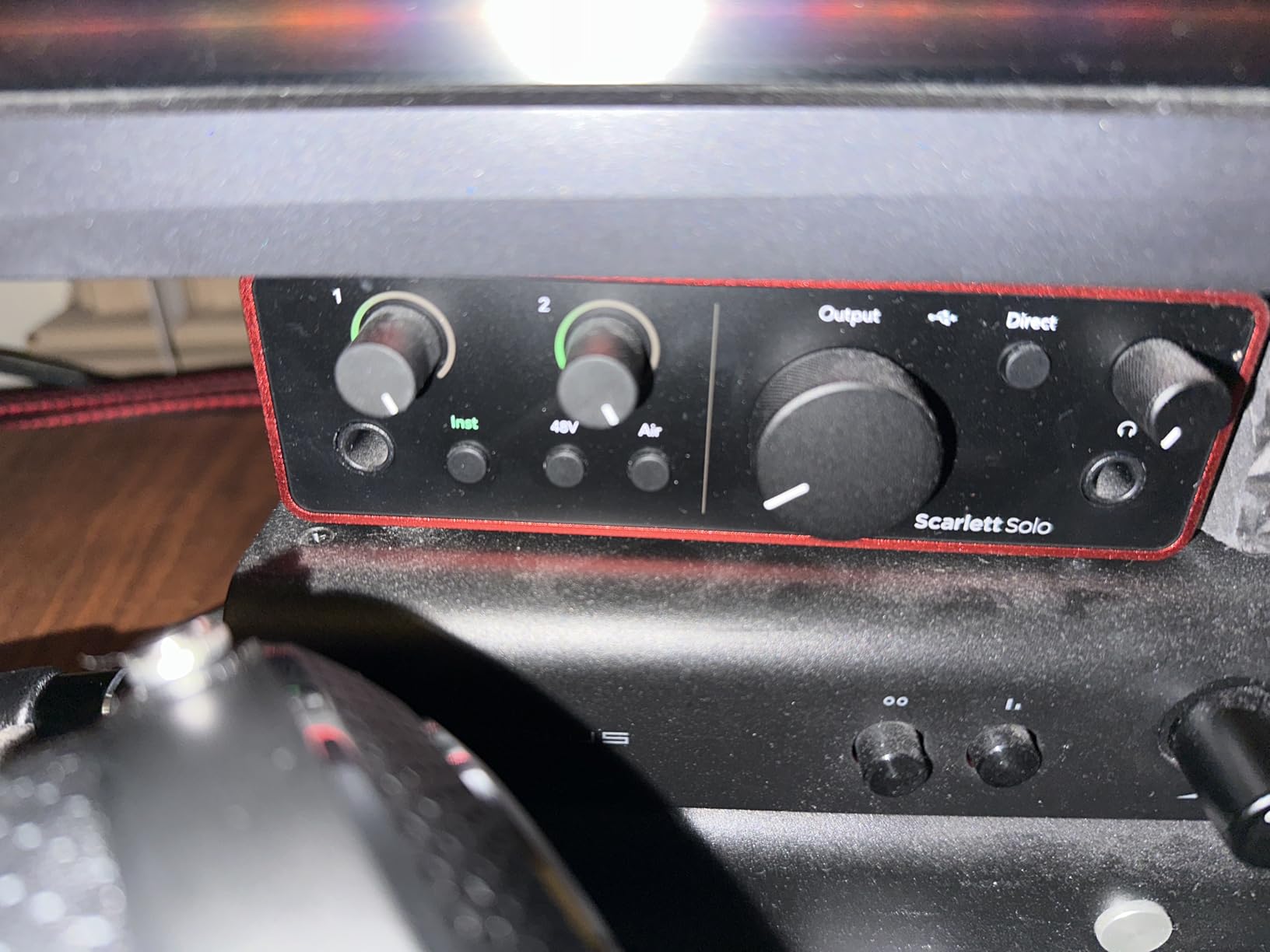
The improved Air mode is genuinely useful now. Previous generations added harshness, but the 4th Gen brings musical presence that flatters vocals and acoustic guitars. I leave it engaged on almost every recording.
Size matters for mobile producers. The Solo fits in a laptop bag pocket and runs entirely on USB power. I have recorded voiceovers in hotel rooms and demo vocals in rehearsal spaces using just the Solo and a laptop.
Who Should Buy the Solo 4th Gen
Solo artists who never record more than one source at a time. Voiceover artists and podcasters using a single microphone. Musicians who want the latest Focusrite features without paying for unused inputs.
Who Should Skip It
Anyone who might ever need two microphones simultaneously should spend the extra on the 2i2. The price difference is small enough that the flexibility is worth it. Electronic musicians with hardware synths need MIDI I/O.
7. Universal Audio Volt 1 – Portable Single Input
Universal Audio Volt 1 USB Audio Interface
Vintage 610 preamp
192kHz/24-bit
Compact design
LUNA DAW included
Mac/Windows/iOS
Pros
- Same vintage 610 preamp as Volt 2
- More compact than the dual-input model
- Includes full LUNA DAW software
- UAD plug-in compatible
- Works with iPhone and iPad
- Single input keeps things simple
Cons
- Single input only
- iOS requires external power
- No MIDI connectivity
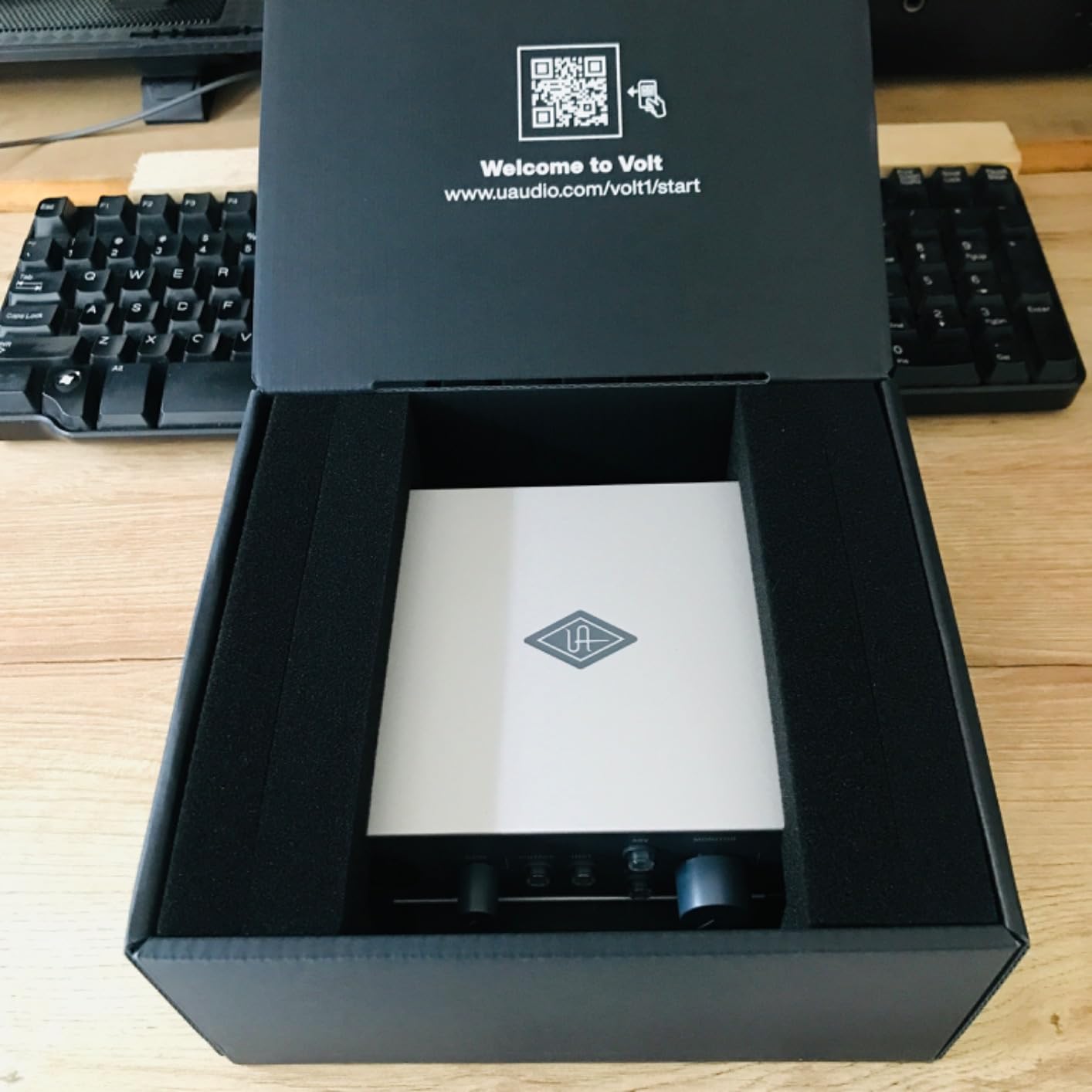
The Volt 1 takes everything great about the Volt 2 and shrinks it into a more portable package. You still get that coveted vintage 610 preamp sound, but in a chassis that fits easily in a backpack.
I keep the Volt 1 in my mobile rig for location interviews and field recordings. The single XLR input is all I need for spoken word content, and the compact size leaves room for other gear. The vintage preamp mode adds authority to voices that makes recordings sound broadcast-ready.
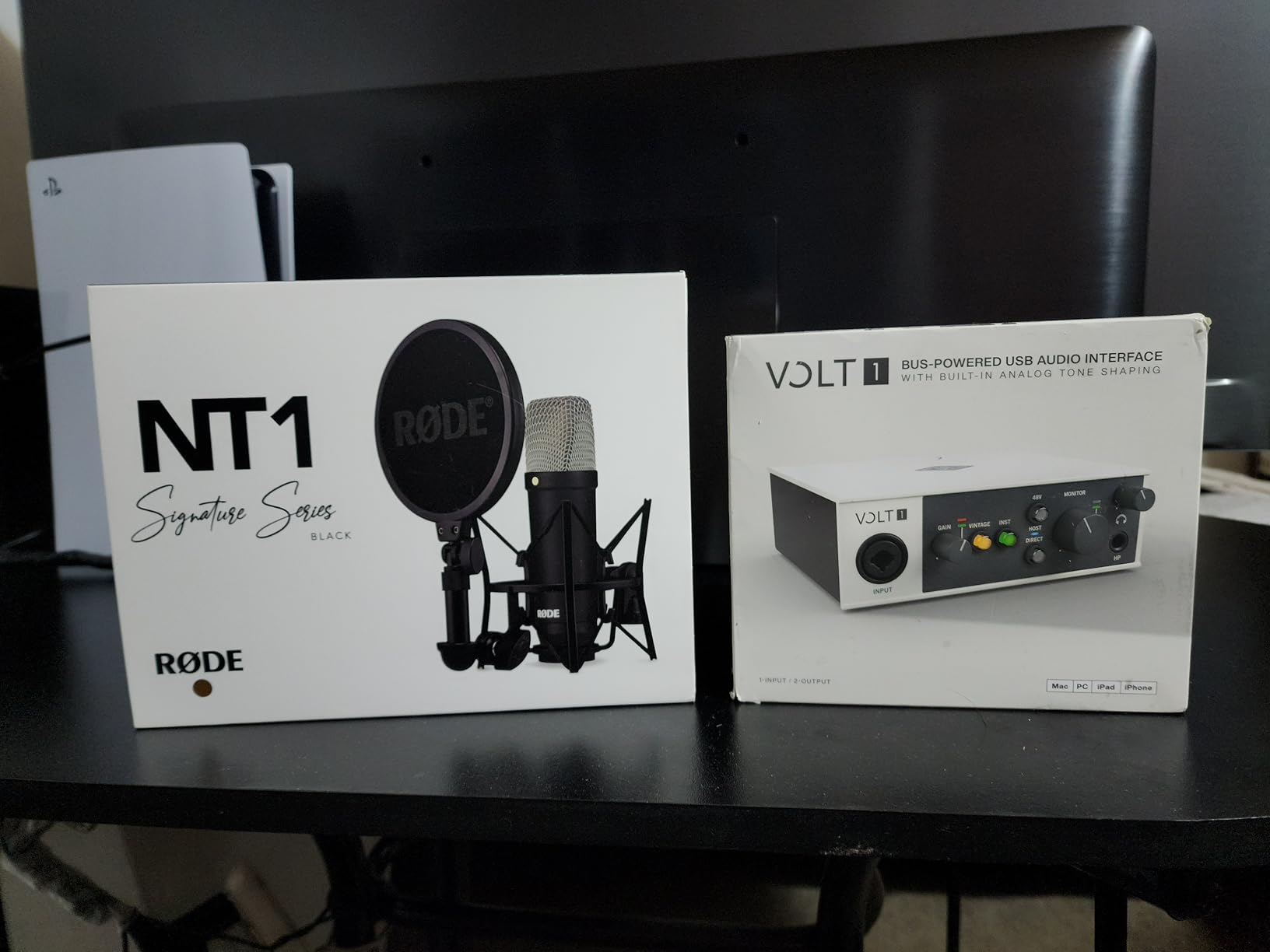
The LUNA DAW integration is seamless. Launch the software, and it automatically recognizes the Volt hardware with optimal settings. Beginners can start recording quality audio within minutes of unboxing.
Rating of 4.7 stars from nearly 700 reviews shows this is not a compromised budget option. Users consistently praise the sound quality and build. The 192kHz converters provide professional resolution for any application.
Who Should Buy the Volt 1
Mobile producers who prioritize portability. Vocalists wanting UA sound quality on a budget. Content creators who record single sources and want character over transparency.
Who Should Skip It
The Volt 2 makes more sense for most buyers since the price difference is minimal. Anyone needing two inputs simultaneously should skip this entirely. Electronic musicians need MIDI I/O this lacks.
8. PreSonus AudioBox 96 – Beginner Bundle Champion
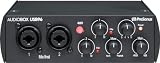
PreSonus AudioBox 96 25th Anniversary USB Audio Interface
Class-A mic preamps
MIDI I/O included
Studio One Artist DAW
96kHz/24-bit
Metal chassis
Pros
- Massive software bundle included
- Class-A preamps sound warm and clean
- MIDI I/O for hardware synths
- Studio One Artist is a full DAW
- Metal construction is road-worthy
- USB bus powered
Cons
- Sample rate limited to 96kHz
- Mix knob cannot fully mute inputs
- No dedicated monitor volume knob
The PreSonus AudioBox 96 ships with over $1000 worth of software, making it the best starter package for complete beginners. Studio One Artist alone retails for $99, and you also get Ableton Live Lite plus a suite of professional plug-ins.
The Class-A preamps deliver warm, musical sound that flatters vocals and instruments. I recorded several acoustic guitar tracks through the AudioBox and found the tone immediately mix-ready without EQ. The 96kHz limitation is irrelevant for streaming and most music production.
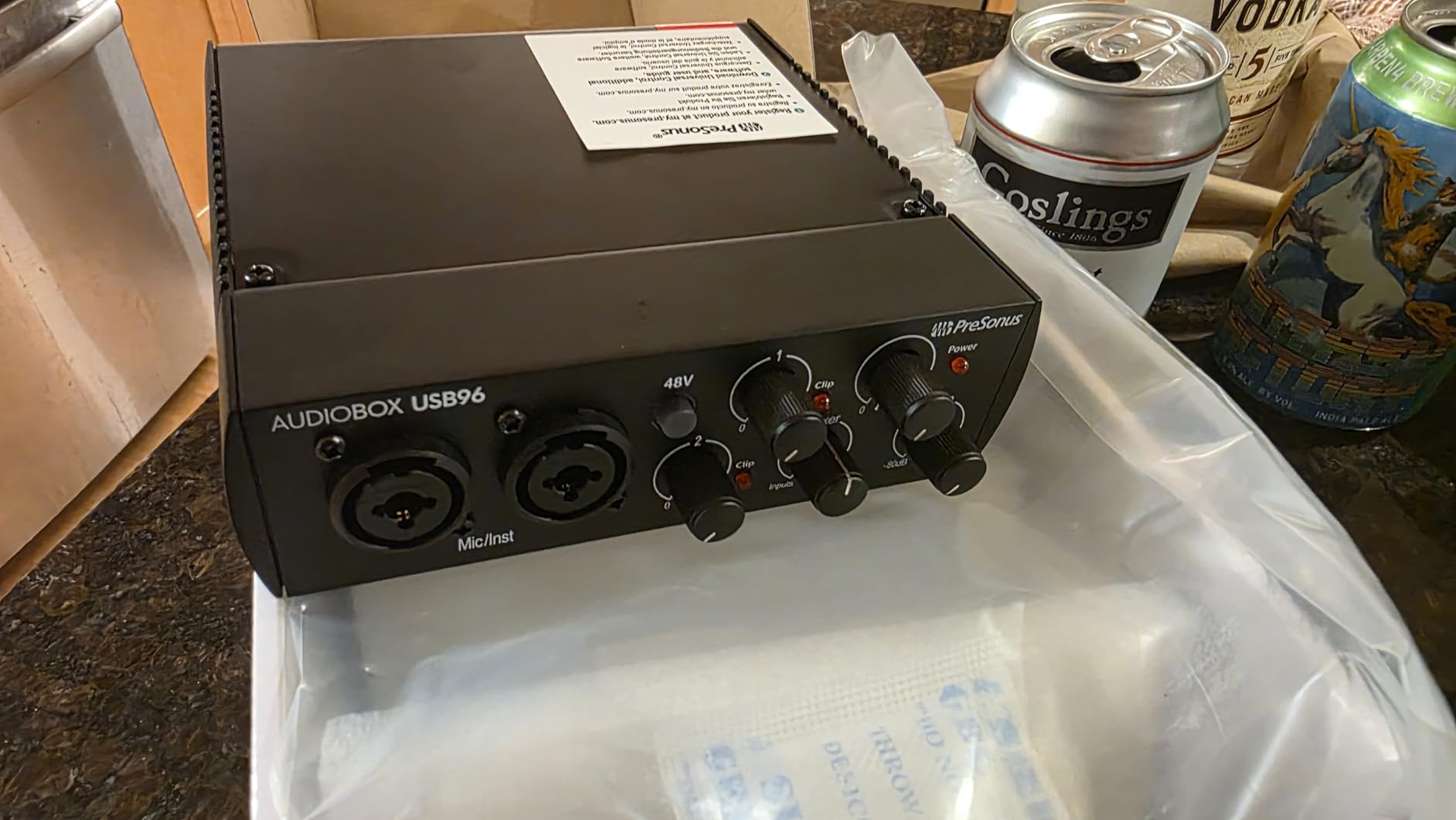
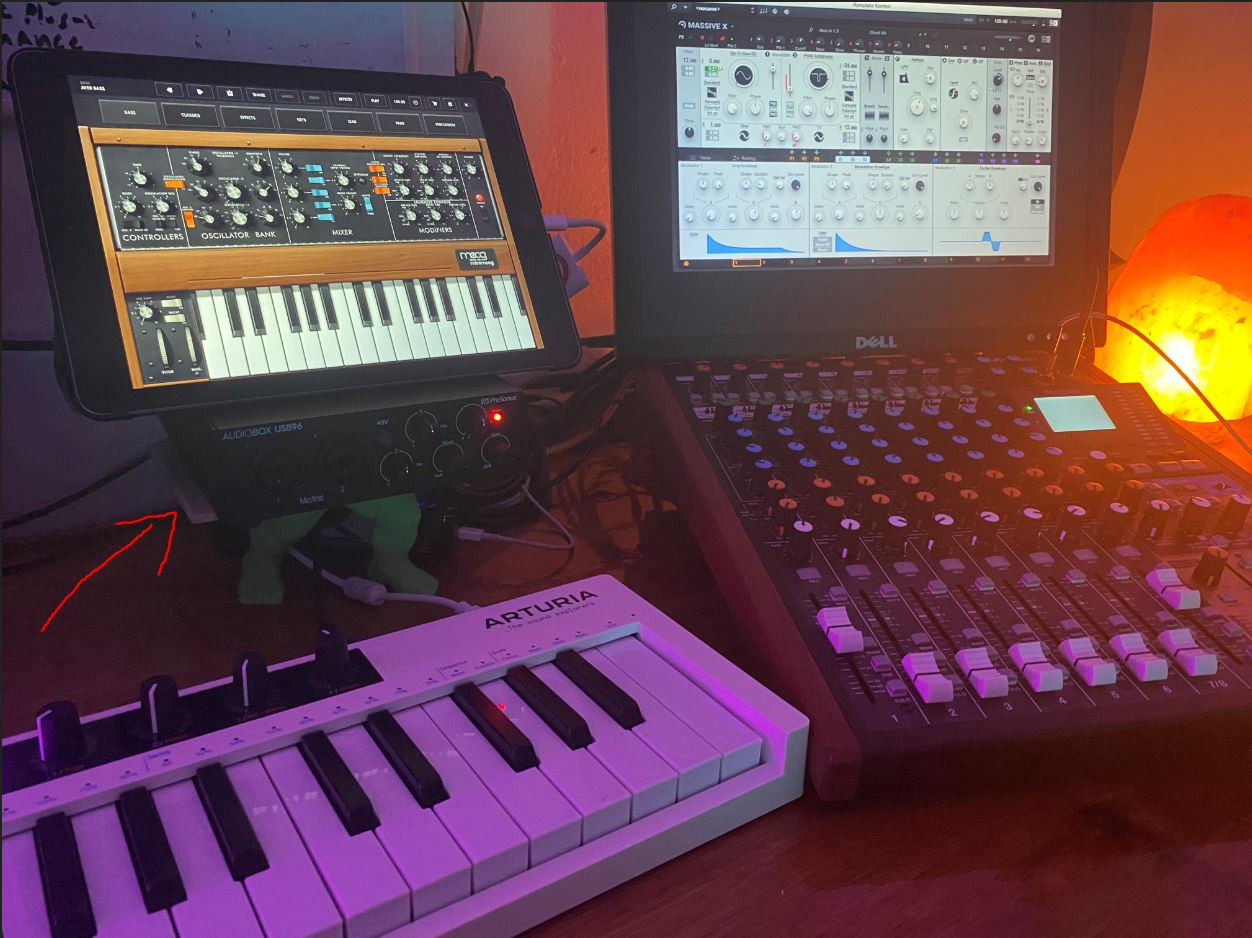
MIDI I/O is included, which the similarly-priced Scarlett Solo lacks. This makes the AudioBox perfect for producers working with hardware synthesizers and drum machines. The metal chassis survived a drop from my desk without a scratch.
The zero-latency monitoring mix control lets you blend input signals with computer playback. This is essential for comfortable tracking, and the AudioBox implements it simply with one large knob.
Who Should Buy the AudioBox 96
Complete beginners who need software and hardware in one purchase. Electronic musicians with MIDI gear. Budget-conscious producers who want quality preamps and solid construction.
Who Should Skip It
Anyone delivering masters at 192kHz needs a different interface. The mix control limitations frustrate users doing complex live monitoring. Those wanting the easiest possible setup should consider the Focusrite for its superior software integration.
9. Focusrite Scarlett Solo 3rd Gen – Proven Reliability
Focusrite Scarlett Solo 3rd Gen USB-C Audio Interface
192kHz/24-bit converters
Air mode
Gain Halo indicators
Two instrument inputs
Pro software bundle
Pros
- 28k+ reviews prove reliability
- 192kHz/24-bit recording quality
- Air mode adds high-end presence
- Gain Halos prevent clipping
- Comprehensive software bundle
- 3-year warranty
Cons
- Older generation lacks Auto Gain
- Single mic input only
- No Clip Safe protection
The Scarlett Solo 3rd Gen remains a bestseller for good reason. Nearly 29,000 reviews averaging 4.7 stars show this is a proven, reliable interface that has served countless home studios.
I used a 3rd Gen Solo for two years before upgrading to the 4th Gen. The preamps are nearly identical, delivering the same clean, detailed sound. The Air mode works well on vocals and acoustic instruments, adding presence without harshness.
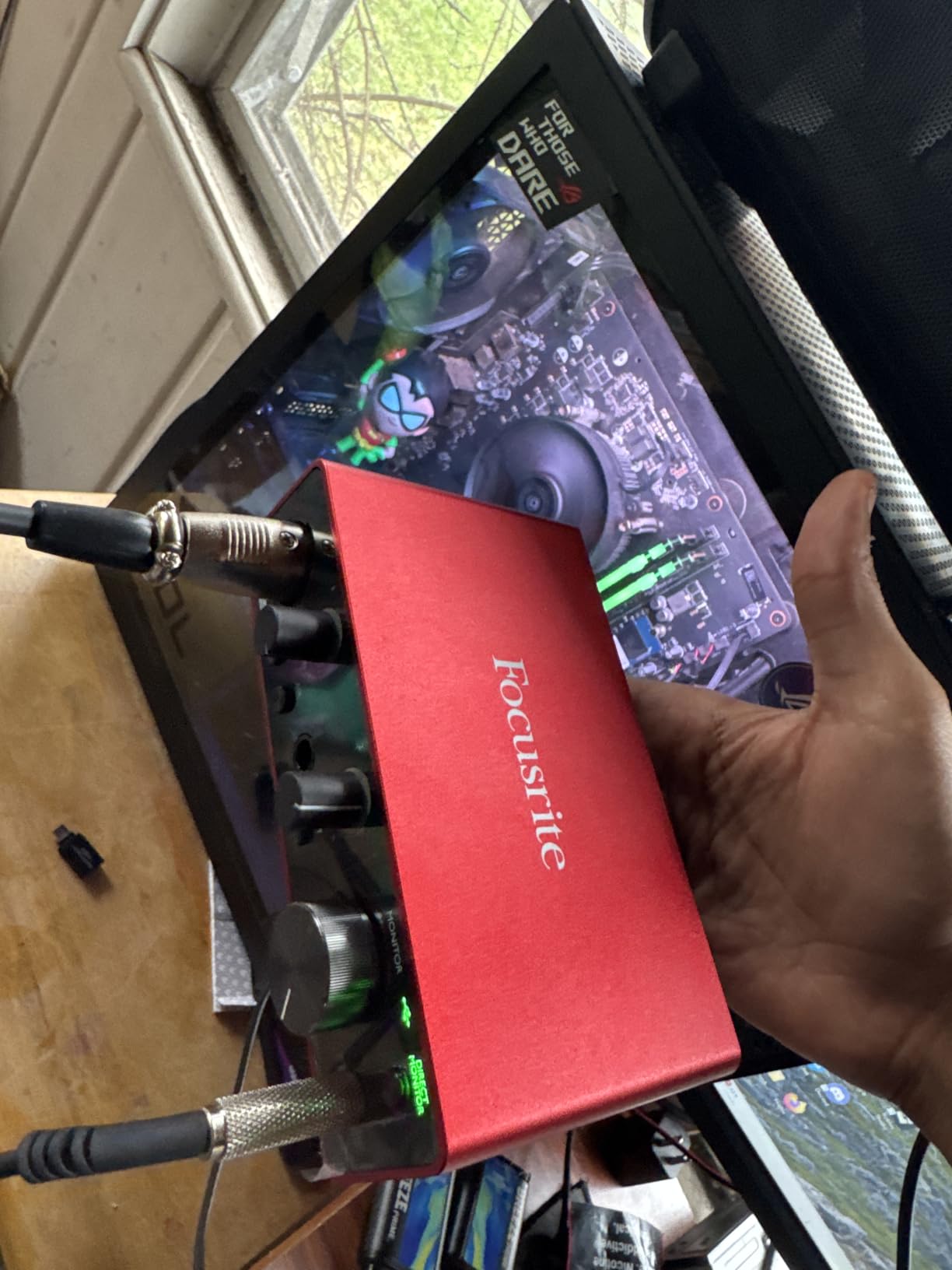
The software bundle is comprehensive. You get Pro Tools Intro+, Ableton Live Lite, and Cubase LE plus the Hitmaker Expansion pack. This is everything needed to start recording immediately without additional purchases.
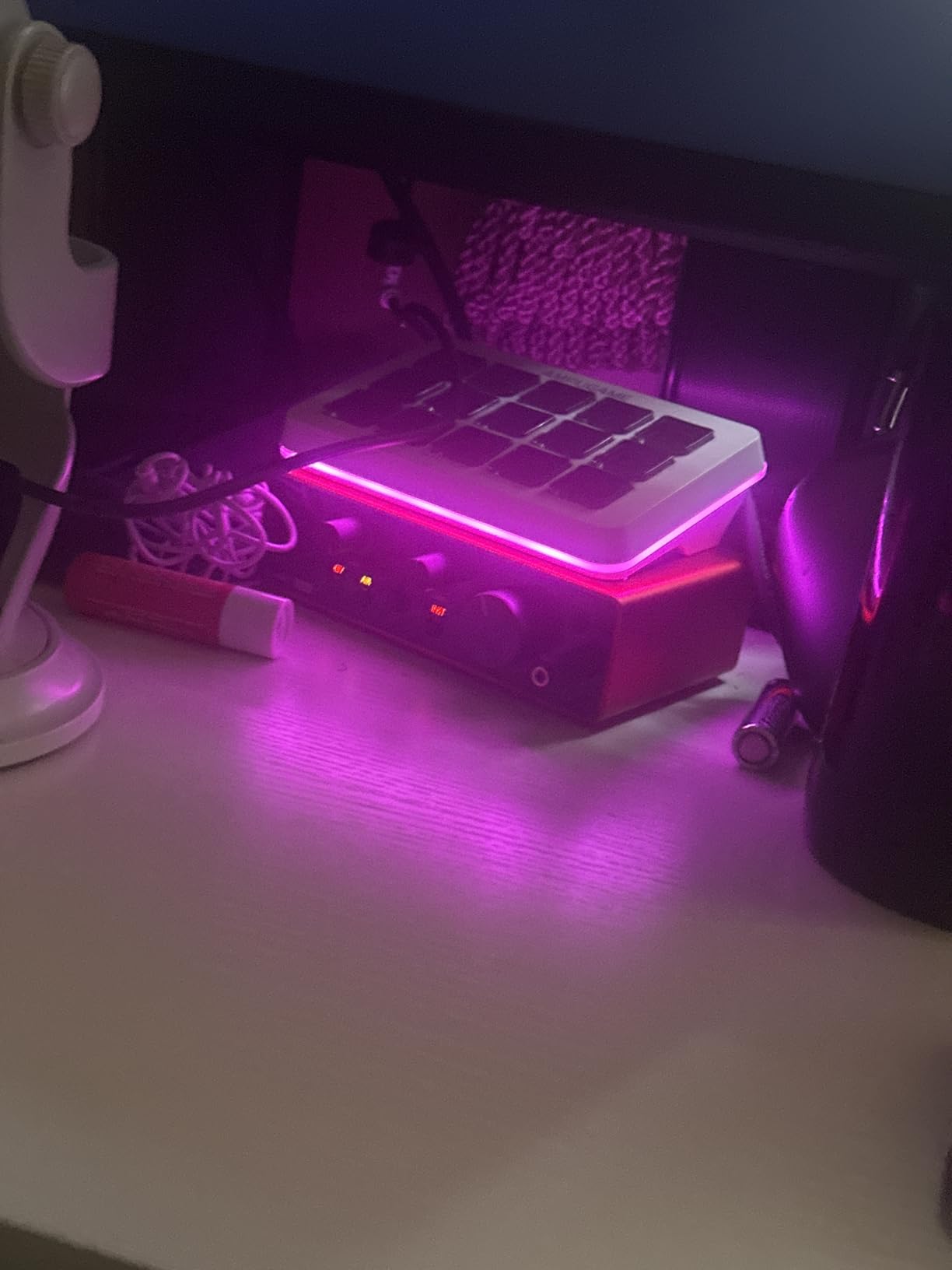
Build quality has always been excellent. The Gain Halo indicators are genuinely useful – the rings glow green when signal is present and red when clipping. This visual feedback makes gain staging foolproof even for beginners.
Who Should Buy the Solo 3rd Gen
Budget-conscious buyers who do not need the 4th Gen’s Auto Gain feature. Anyone wanting the security of thousands of positive reviews. Users who find the 3rd Gen on sale at a significant discount.
Who Should Skip It
The 4th Gen offers meaningful improvements for minimal extra cost. If you can afford the newer version, the Auto Gain and Clip Safe features are worth it. Those wanting the latest technology should skip this generation.
10. M-Audio M-Track Duo – Versatile Combo Inputs
M-AUDIO M-Track Duo USB Audio Interface
Crystal Preamps
Dual combo inputs
Zero-latency monitoring
MPC Beats included
Multi-platform support
Pros
- Dual combo XLR/Line/Instrument inputs
- Crystal Preamps deliver clean sound
- Zero-latency USB/Direct switch
- Phantom power for condenser mics
- MPC Beats software included
- Works with Windows
- Mac
- iOS
- Android
Cons
- Only 48kHz/16-bit resolution
- Lower specs than competitors
- Non-linear knob taper at high levels
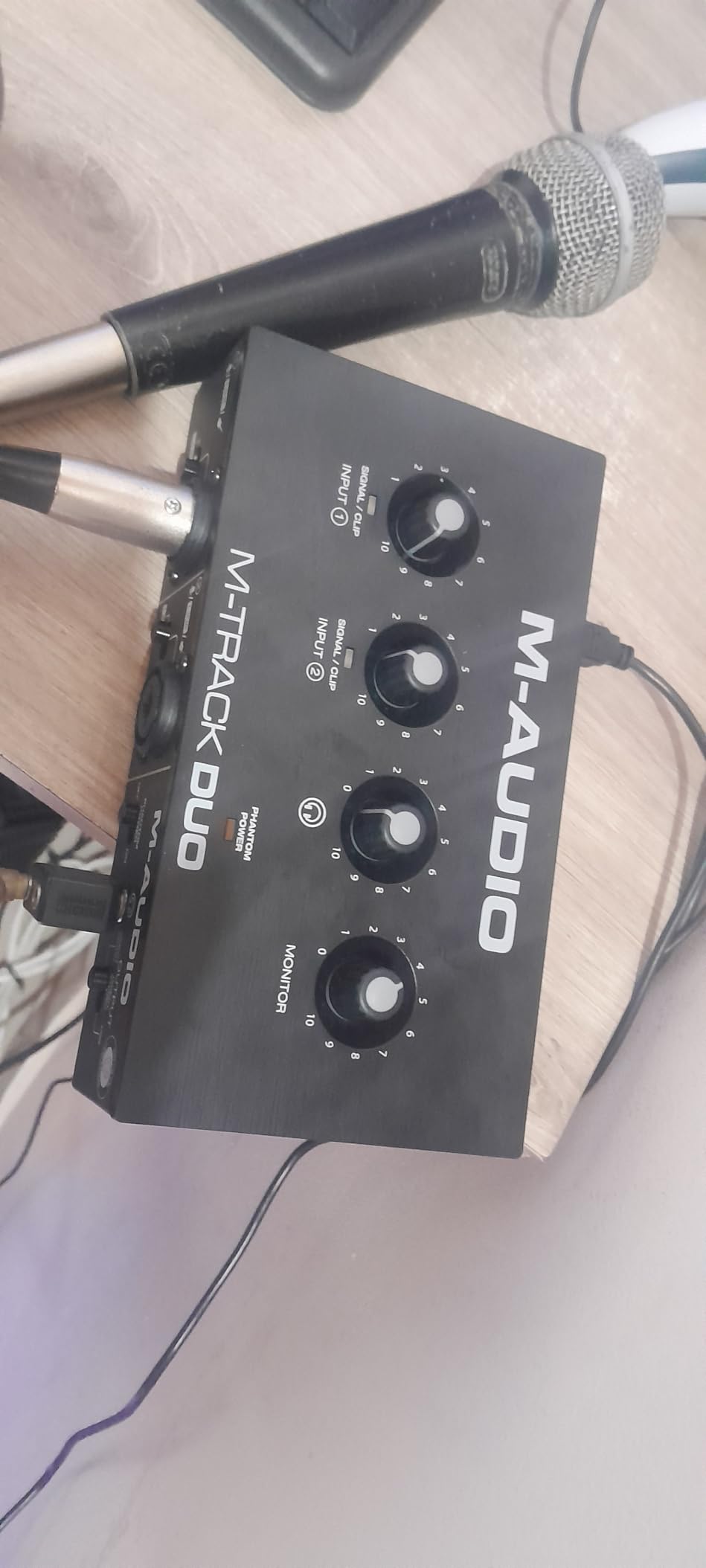
The M-Audio M-Track Duo offers something unique at this price: dual combo inputs that accept XLR, line-level, or instrument sources simultaneously. This flexibility usually costs much more.
I tested the M-Track with a microphone on one input and a synthesizer on the other. Both recorded cleanly without cross-talk or noise issues. The Crystal Preamps are genuinely transparent, adding no coloration to the source sound.
The MPC Beats software is a nice inclusion for beatmakers. It is Akai’s entry-level DAW with sampling and sequencing tools. Combined with Ableton Live Lite, you have plenty of software options to explore.
Cross-platform compatibility is excellent. I tested on Windows 11, macOS, and an Android tablet – all worked without issues. The USB/Direct monitoring switch eliminates latency when tracking.
Who Should Buy the M-Track Duo
Users needing maximum input flexibility on a tight budget. Musicians recording both vocals and line-level instruments. Beatmakers who will use the included MPC Beats software.
Who Should Skip It
The 48kHz/16-bit specs lag behind similarly-priced competitors. If you plan to upgrade within a year, spend slightly more on the Behringer or PreSonus. Audiophiles wanting the highest resolution should look elsewhere.
Audio Interface Buying Guide
What Is an Audio Interface?
An audio interface is an external device that connects your microphones and instruments to your computer. It converts analog audio signals into digital data your software can record, edit, and process. The reverse happens during playback – digital audio converts back to analog for your headphones or speakers.
Built-in computer sound cards are designed for basic tasks like video calls and music playback. They lack the preamplification, low latency, and professional connections needed for quality recording. A dedicated audio interface solves all these problems.
Key Features to Consider
Input/Output Count: Determine how many microphones or instruments you need to record simultaneously. Singer-songwriters need at least two inputs for vocals and guitar. Full bands need eight or more for multi-mic drum recording.
Preamp Quality: Microphones output very quiet signals that need amplification before conversion. Better preamps add less noise and distortion while providing enough gain for quiet sources. Dynamic mics like the Shure SM7B need interfaces with 60dB+ gain.
Sample Rate and Bit Depth: Higher numbers mean more detail captured. 44.1kHz/16-bit is CD quality and sufficient for most projects. 48kHz/24-bit is the professional standard. 192kHz/24-bit provides maximum resolution for critical applications.
Connectivity: USB is universal and works on every computer. USB-C offers faster data transfer and more power. Thunderbolt provides the lowest latency but requires compatible computers. Most users are perfectly served by standard USB.
Phantom Power: Condenser microphones require 48V phantom power to operate. Ensure your interface provides this on the channels you need. Dynamic mics do not require phantom power but are not damaged by it.
MIDI I/O: Hardware synthesizers and drum machines need MIDI connections for sequencing. If you use hardware instruments, choose an interface with 5-pin DIN MIDI jacks or plan to buy a separate MIDI interface.
USB vs Thunderbolt Audio Interfaces
USB interfaces work on virtually every computer and provide sufficient bandwidth for dozens of audio channels. Modern USB-C connections are even faster and more reliable. For home studios and small project rooms, USB is the practical choice.
Thunderbolt interfaces offer lower latency and higher channel counts. Professional studios tracking full bands simultaneously benefit from this speed. However, Thunderbolt costs significantly more and only works on specific computers.
For podcasters, singer-songwriters, and electronic producers, USB provides everything needed. The latency is low enough for comfortable monitoring, and the audio quality matches Thunderbolt at normal channel counts.
Budget vs Premium: What You Actually Get
Budget interfaces under $100 like the Behringer UM2 provide genuine recording quality. The preamps are clean, the converters capture accurately, and the results satisfy most listeners. Limitations include fewer inputs, lower sample rates, and basic software bundles.
Mid-range interfaces from $150 to $300 add meaningful improvements. You get dual preamps, 192kHz converters, better build quality, and comprehensive software. Auto Gain features and hardware monitoring make recording easier. This is the sweet spot for most home studios.
Premium interfaces above $300 offer marginal sonic improvements but significant feature upgrades. More inputs, loopback functionality, DSP processing, and expandability matter for professional workflows. These are investments for working studios, not necessities for beginners.
Frequently Asked Questions
What is the absolute best audio interface?
The Focusrite Scarlett 2i2 4th Gen is the best audio interface for most users in 2026. It offers two studio-grade preamps with Auto Gain, 120dB dynamic range, and 192kHz/24-bit recording. The 4th generation adds Clip Safe protection and improved Air mode that professional engineers praise.
What audio interfaces do pros use?
Professional studios use interfaces from Universal Audio Apollo, RME Babyface Pro, and high-end MOTU units. These offer DSP processing, extremely low latency, and expandability to 32+ channels. For mobile professionals, the MOTU M4 and RME Babyface Pro FS are popular choices due to their reliability and sound quality.
What is the most used audio interface?
The Focusrite Scarlett series is the most widely used audio interface globally, with millions of units sold. The Scarlett 2i2 and Solo models dominate home studios, podcasting setups, and beginner music production environments. Their combination of sound quality, ease of use, and included software makes them the default recommendation.
How many inputs do I need on an audio interface?
Most home studio owners need 2 inputs maximum. This covers vocals and guitar, two-person podcasts, or stereo synthesizer recording. Drummers need 4-8 inputs for multi-mic setups. Electronic musicians using hardware synths should consider MIDI I/O in addition to audio inputs.
Do I need phantom power for my microphone?
Condenser microphones require 48V phantom power to operate. Dynamic microphones like the Shure SM58 and SM7B do not need phantom power. All the interfaces in this guide provide phantom power on their XLR inputs. Simply activate the phantom power switch when using condenser mics.
Final Thoughts
Choosing the best audio interface comes down to matching features with your actual needs. The Focusrite Scarlett 2i2 4th Gen satisfies most users with its dual preamps, Auto Gain, and proven reliability. Budget buyers get genuine quality from the Behringer UM2 despite its low price. The Universal Audio Volt 2 offers character and software that punches above its price class.
Remember that the interface is just one part of your recording chain. A $200 interface with a $100 microphone will outperform a $50 interface with a $1000 microphone. Invest proportionally across your entire setup for the best results.
Whichever interface you choose from this list, you are getting equipment that has been tested and proven by thousands of users. These are the best audio interfaces available in 2026 for home recording, podcasting, and music production. Happy recording.