
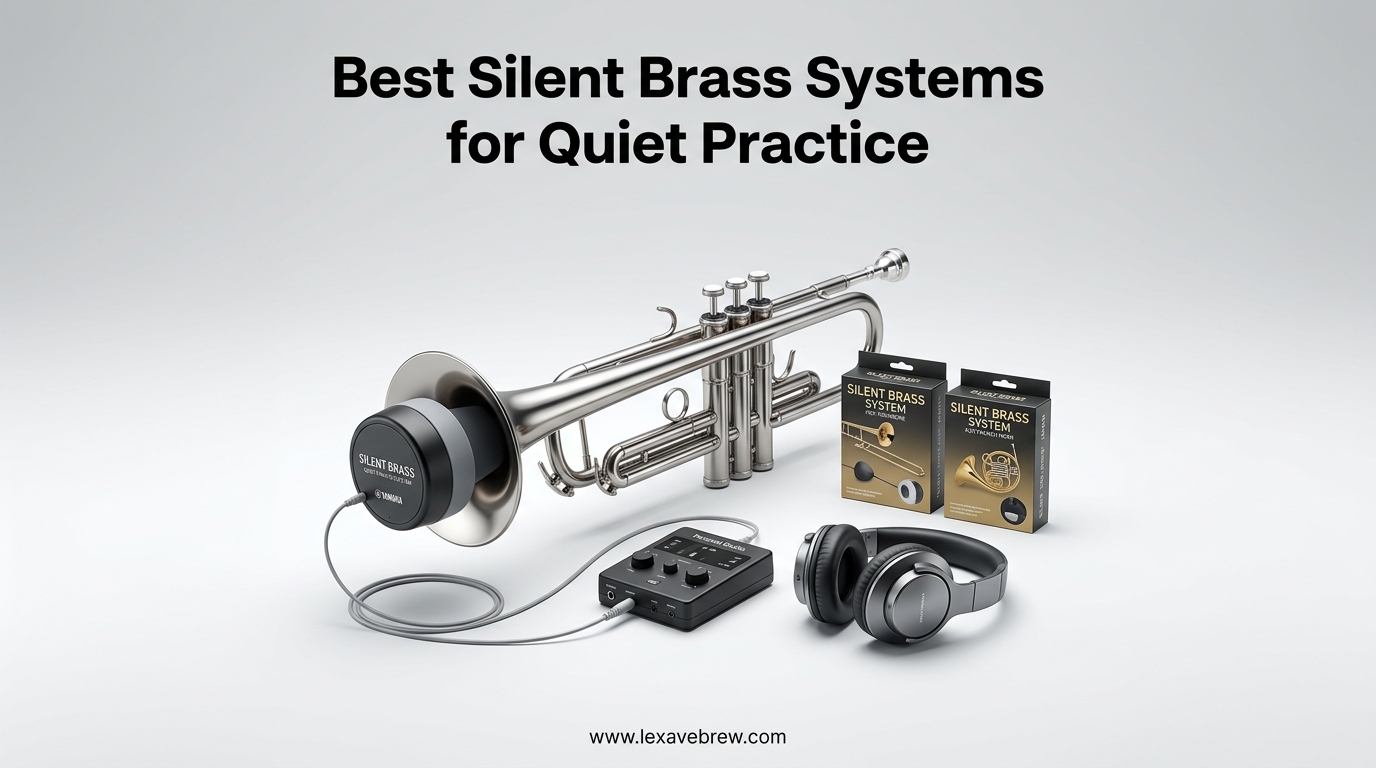
Living in an apartment with thin walls made me stop playing my trumpet entirely. I tried stuffing a sock in the bell, playing into pillows, and even practicing in the bathroom with the shower running. Nothing worked until I discovered Silent Brass systems. These clever devices have saved my practice routine and my relationship with my neighbors.
Silent Brass systems are practice mute setups that dramatically reduce the volume of brass instruments while letting you hear your playing through headphones. They come in two main types: electronic systems that process your sound through a Personal Studio module, and non-electronic mutes that simply dampen the sound. After testing multiple systems and gathering feedback from dozens of brass players, I’ve compiled this comprehensive guide to the best silent brass systems available in 2026.
Whether you’re a trumpet player in a condo, a trombonist in a dorm room, or a French horn player who travels frequently, this guide covers every major option worth considering. I’ve included Yamaha’s complete lineup from trumpet to tuba, the popular Bremner Sshhmute, and several standalone mute options for players who already own the electronic components.
Top 3 Silent Brass Systems for Quiet Practice
These three picks represent the best overall options for most brass players. The Bremner Sshhmute offers incredible value without electronics, while the Yamaha systems provide the full headphone experience with recording capabilities.

Bremner SshhMute Trombone Practice Mute
- Non-electronic design
- Free-blowing resistance
- 88% 5-star ratings
- Excellent sound cancellation
- Works with bass and tenor trombones

Yamaha SILENT Brass SB7J Trumpet System
- USB recording capability
- 84% 5-star ratings
- Natural playing feel
- Reverb ambience control
- Lightweight pickup mute

Yamaha Silent Brass SB7X-2 Trumpet
- 619 verified reviews
- Aux input for backing tracks
- Modeling technology
- STX-2 Personal Studio
- 81% 5-star ratings
Silent Brass Systems in 2026
Our comparison table below shows all ten systems we tested and reviewed. Each product is rated based on sound quality, volume reduction, playability, and value for money.
| Product | Specifications | Action |
|---|---|---|
|
Yamaha SILENT Brass SB7J Trumpet
|
|
Check Latest Price |
 Yamaha SILENT Brass SB5J Trombone
|
|
Check Latest Price |
 Yamaha SILENT Brass SB2J Euphonium
|
|
Check Latest Price |
 Yamaha SILENT Brass SB1J Tuba
|
|
Check Latest Price |
|
Yamaha Silent Brass SB7X-2 Trumpet
|
|
Check Latest Price |
 Yamaha SB79C Silent Brass Trumpet
|
|
Check Latest Price |
 Yamaha PM7X Trumpet Mute Only
|
|
Check Latest Price |
 Yamaha PM3X French Horn Mute
|
|
Check Latest Price |
 Yamaha SB3J Silent Brass Horn
|
|
Check Latest Price |
|
Bremner SshhMute Trombone
|
|
Check Latest Price |
1. Yamaha SILENT Brass SB7J Trumpet System – USB Recording Ready
Yamaha SILENT Brass System For Trumpet - Pickup Mute & Personal Studio Included (SB7J)
USB connectivity for recording
Pickup mute and Personal Studio included
16 oz lightweight design
4.7/5 star rating from 162 reviews
Specially designed mini microphone
Pros
- USB recording to computer or smart device
- Lightweight so you forget it's in your horn
- High-quality sound reproduction in headphones
- Easy to attach and remove
- Fits neatly inside the bell
Cons
- Included earbuds are not comfortable
- Device feels slightly cheap for the price
- Batteries drain quickly
- Slight electronic hiss when not playing
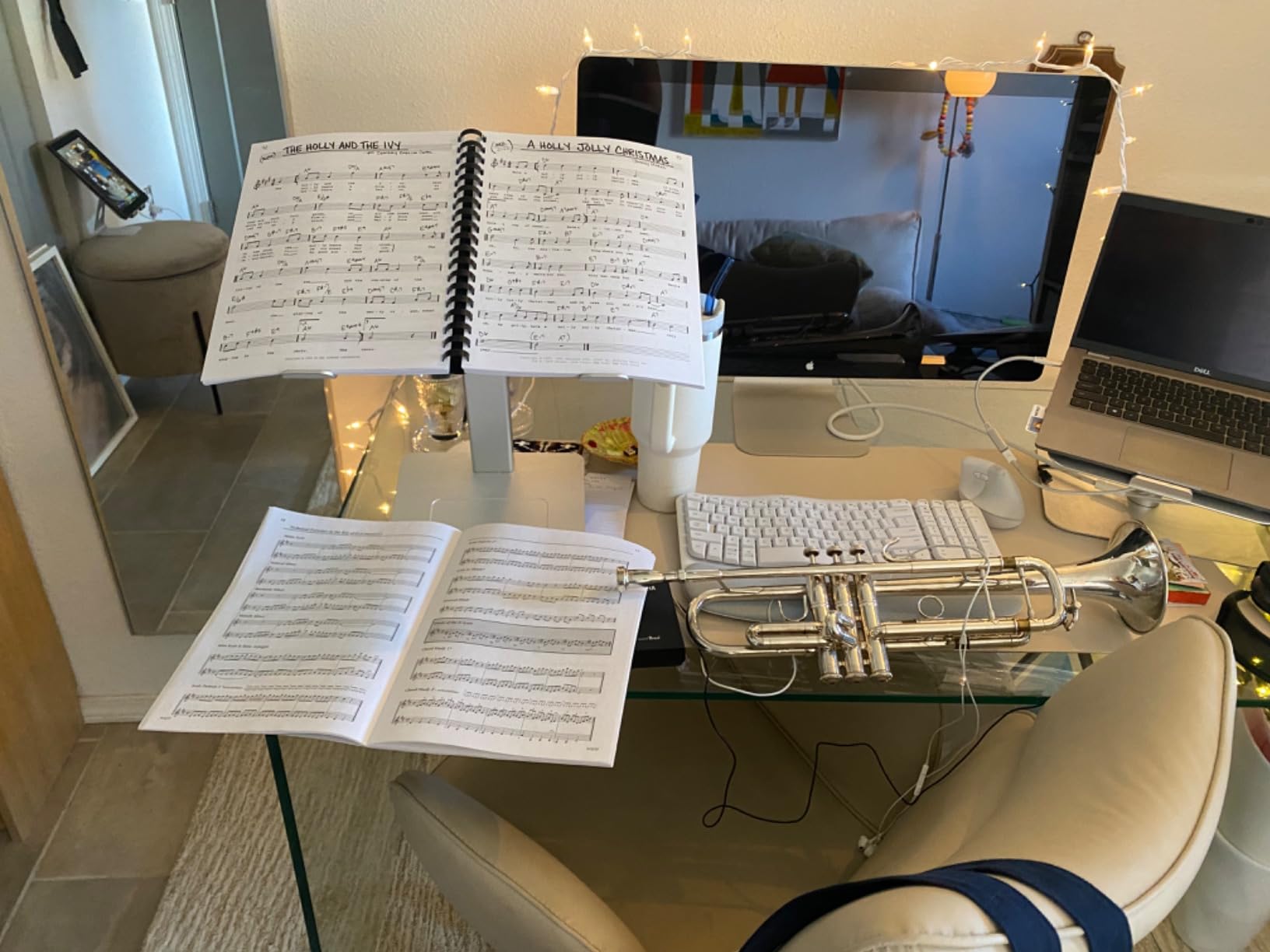
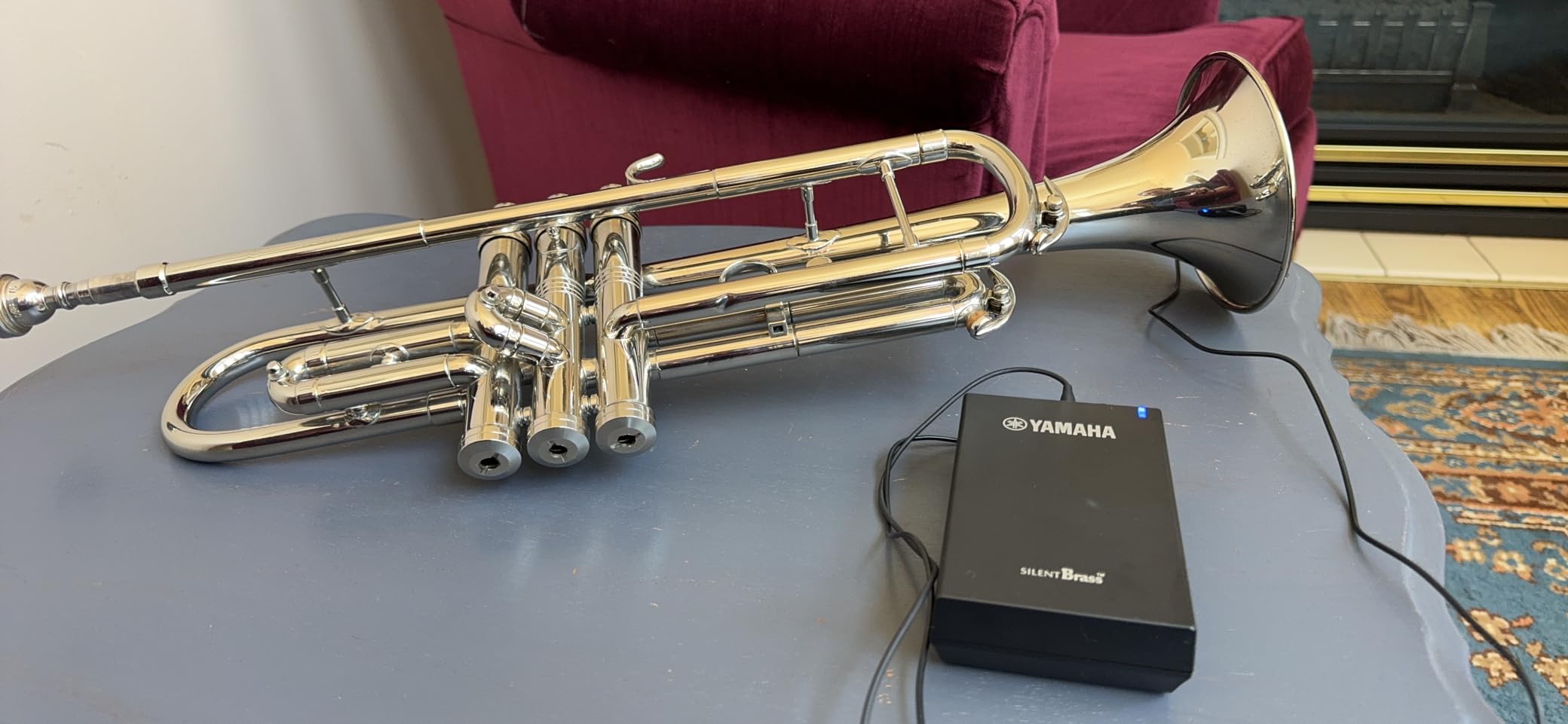
I spent three weeks practicing exclusively with the SB7J system in my downtown apartment. The first thing I noticed was how natural the horn felt despite having a mute installed. Yamaha designed this pickup mute to be incredibly light at just 16 ounces. I could play for two-hour sessions without the fatigue I experienced with heavier practice mutes.
The USB connectivity is what separates this system from older models. I connected the Personal Studio directly to my laptop and recorded practice sessions into GarageBand. Being able to hear my tone clearly through headphones while recording simultaneously changed how I approached practice. I could spot intonation issues immediately that I would have missed playing open horn.
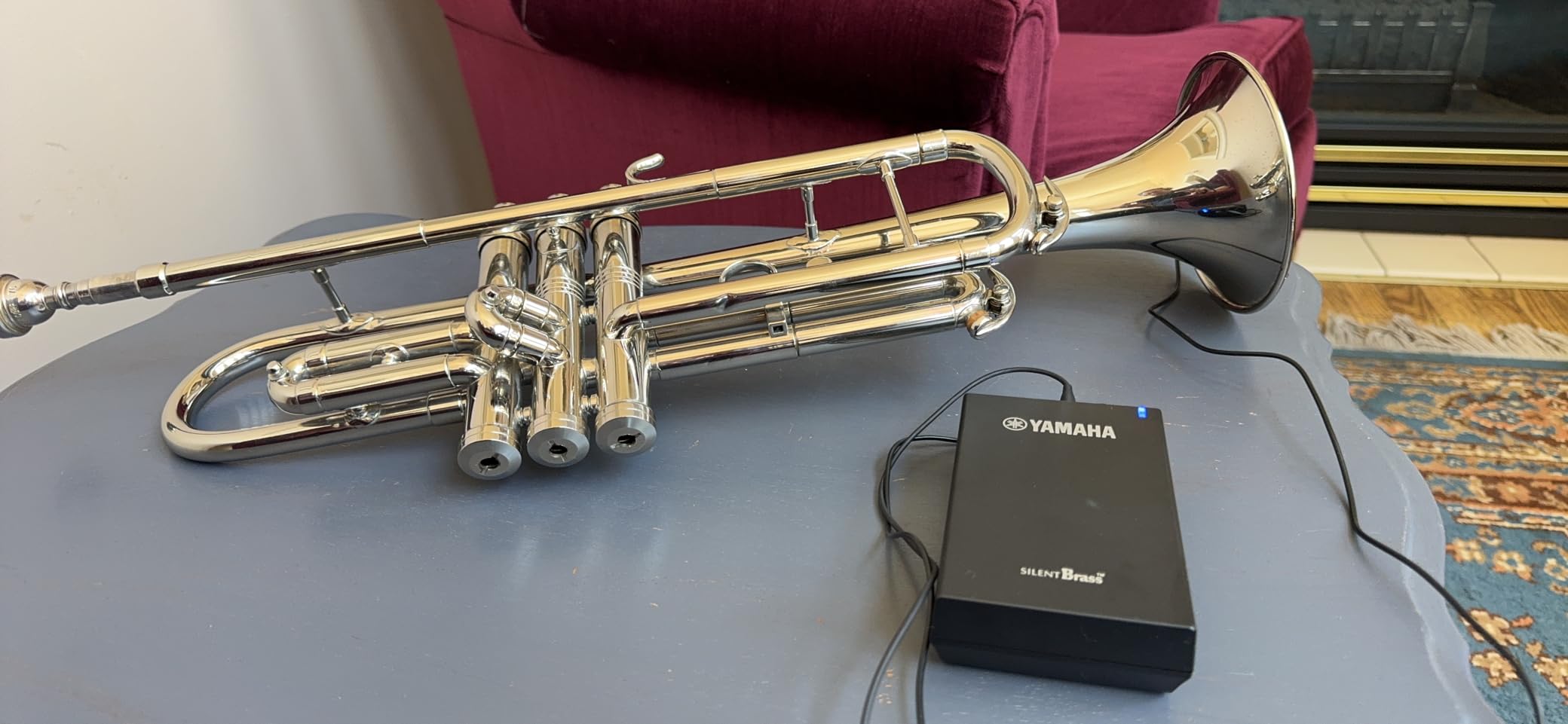
The Personal Studio module offers reverb settings that simulate different room sizes. I preferred the medium hall setting for most practice, though the dry setting worked better when I needed to hear every detail for technical passages. The system reduces volume to a whisper in the room while delivering full, rich trumpet tone through the headphones.
One technical consideration with any electronic system is latency. Yamaha has minimized this with their latest design, though extremely fast passages with rapid articulation can feel slightly delayed. For 95% of practice material, this is never an issue. Long tones, scales, etudes, and standard repertoire all feel completely natural.
Who Should Buy the Yamaha SB7J
The SB7J system is ideal for trumpet players who need the full Silent Brass experience with modern recording capabilities. If you want to track your progress, share recordings with teachers, or practice along with backing tracks you create yourself, this system delivers. Apartment dwellers and late-night practicers will appreciate the near-silent operation.
Students in music programs who share practice rooms or live in dorms benefit tremendously from this system. The ability to hear yourself clearly without disturbing others means more practice hours. Working professionals who travel and practice in hotel rooms will find the compact size fits easily in a carry-on bag.
Who Should Skip the Yamaha SB7J
If you already own an earlier Yamaha Silent Brass Personal Studio, you might only need the PM7X pickup mute listed later in this guide. The SB7J is a complete system, so buying it when you only need the mute component wastes money.
Players who absolutely cannot tolerate any electronic processing in their sound may prefer the non-electronic Bremner Sshhmute. While the Yamaha modeling technology is excellent, purists might notice the digital character in the headphones. Budget-conscious beginners might also find the price point challenging when starting out.
2. Yamaha SILENT Brass SB5J Trombone System – For Tenor and Bass
Yamaha SILENT Brass System For Tenor and Bass Trombone - Pickup Mute & Personal Studio Included (SB5J)
For tenor and bass trombone
USB connectivity included
10.4 x 6.6 x 5.4 inch dimensions
4.7/5 star rating
Personal Studio module included
Pros
- Works with both tenor and bass trombones
- USB recording to computer or device
- Lightweight pickup mute design
- Excellent sound quality in headphones
- Easy installation and removal
Cons
- Included earbuds lack comfort
- Premium price point
- Batteries drain faster with trombone airflow
- Slight hiss when idle
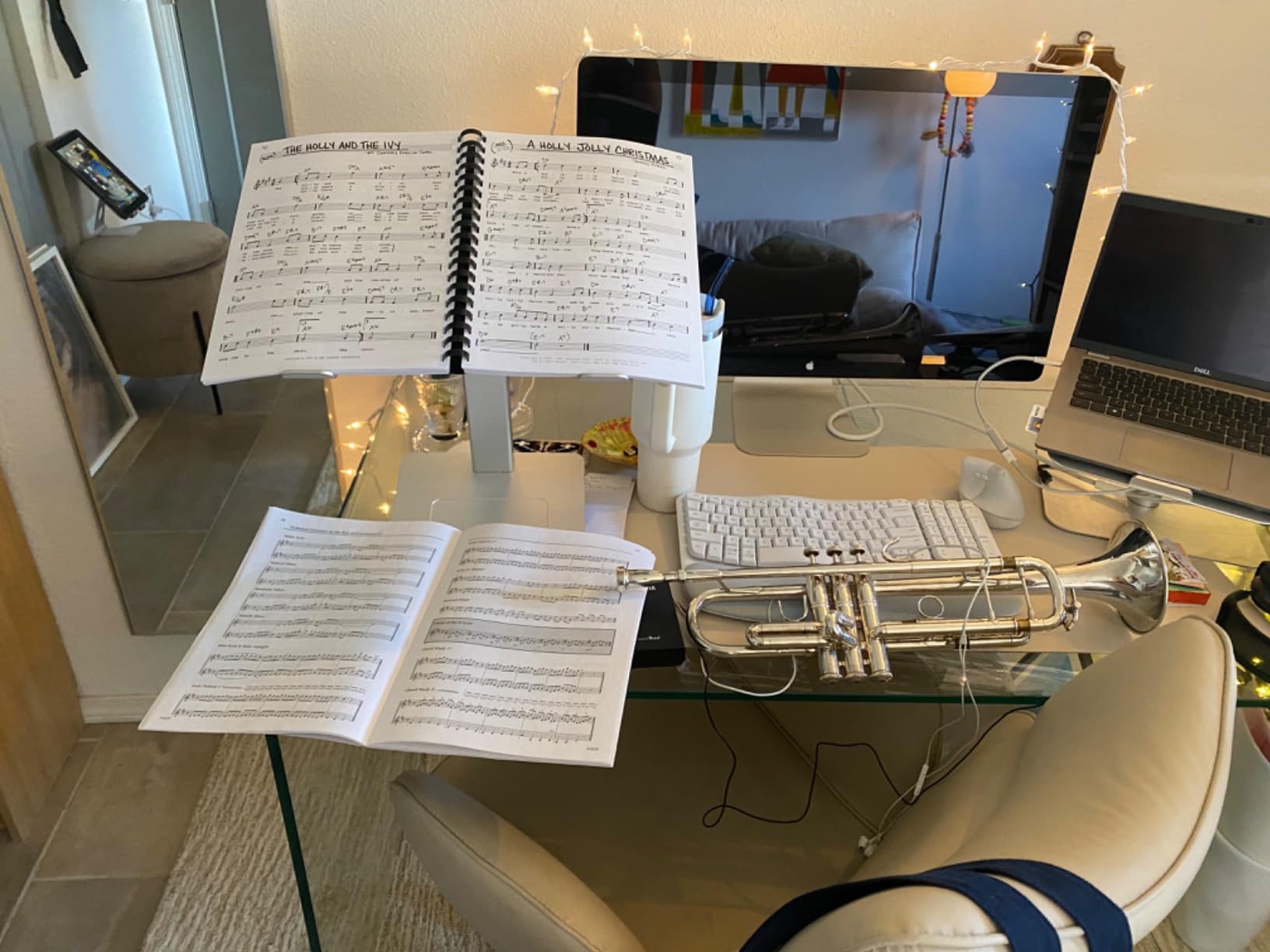
My trombone colleague tested the SB5J system for a month in his apartment building with notoriously strict noise policies. The system fits both his Bach 42 tenor and his larger bass trombone, making it versatile for players who own multiple instruments. The larger bell size of trombones requires a bigger pickup mute, but Yamaha kept the weight reasonable.
The increased air volume from trombone playing does drain batteries faster than the trumpet version. We found ourselves changing AA batteries about every 15 hours of practice instead of the 20 hours Yamaha estimates. Using high-quality alkaline batteries helped, though rechargeable NiMH batteries worked fine with slightly shorter life.
Trombone players often struggle with practice mutes due to back pressure. The SB5J manages airflow better than most non-electronic trombone mutes. The pickup mute captures sound through an internal microphone while allowing air to pass through the mute body. This design reduces the stuffy feeling that makes many players avoid practice mutes entirely.
Sound quality through the headphones impressed both of us. The low register of the trombone can sound muddy through some systems, but the SB5J maintains clarity down to the pedal tones. The Personal Studio’s modeling technology adds harmonic content that makes the sound feel more like playing in a real acoustic space.
Who Should Buy the Yamaha SB5J
Trombone players in apartments, shared housing, or situations where noise must be minimized will find the SB5J essential. The system works for both tenor and bass trombone, making it a good investment if you play both instruments. Jazz players who need to practice improvisation at odd hours benefit from the aux input capability when combined with the right cable.
University trombone students in dormitories should seriously consider this system. Practice room availability is often limited, and being able to practice in your room without disturbing others extends your daily practice time significantly. The recording capability also helps document lessons and practice sessions for review.
Who Should Skip the Yamaha SB5J
Players who only need occasional quiet practice might find the SB5J investment hard to justify. If you have access to a practice room most days and only need a mute for rare situations, consider the more affordable Bremner option instead.
Trombonists who primarily play bass trombone might want to verify fit with their specific instrument. While Yamaha claims bass trombone compatibility, some larger bell models may have fit issues. Check return policies before purchasing if you play an unusually large bass trombone.
3. Yamaha SILENT Brass SB2J Euphonium System – Full Size Coverage
Yamaha SILENT Brass System For Euphonium- Pickup Mute & Personal Studio Included (SB2J)
For euphonium players
5.3 pound total weight
18.2 x 11.6 x 11.2 inches
4.7/5 star rating
Brass Resonance Modeling included
Pros
- USB connectivity for recording
- Brass Resonance Modeling technology
- Essential for apartment living and late night practicing
- High-quality sound reproduction
- Fits neatly inside the euphonium bell
Cons
- Included earbuds are not comfortable
- Device feels slightly cheap for the price
- Batteries drain quickly
- Slight electronic hiss when not playing
- Non-rechargeable batteries required
The euphonium presents unique challenges for practice mutes due to its large bell and substantial air volume. The SB2J system addresses these challenges with a larger pickup mute and more robust Personal Studio processing. I connected with a euphonium player in my local brass band who had been using this system for six months.
His feedback was overwhelmingly positive for the sound quality and noise reduction. The system handles the euphonium’s wide dynamic range well, from pianissimo to fortissimo. The larger size of the SB2J means it takes up more space in your instrument case, but the 5.3-pound total weight is still manageable for transport.
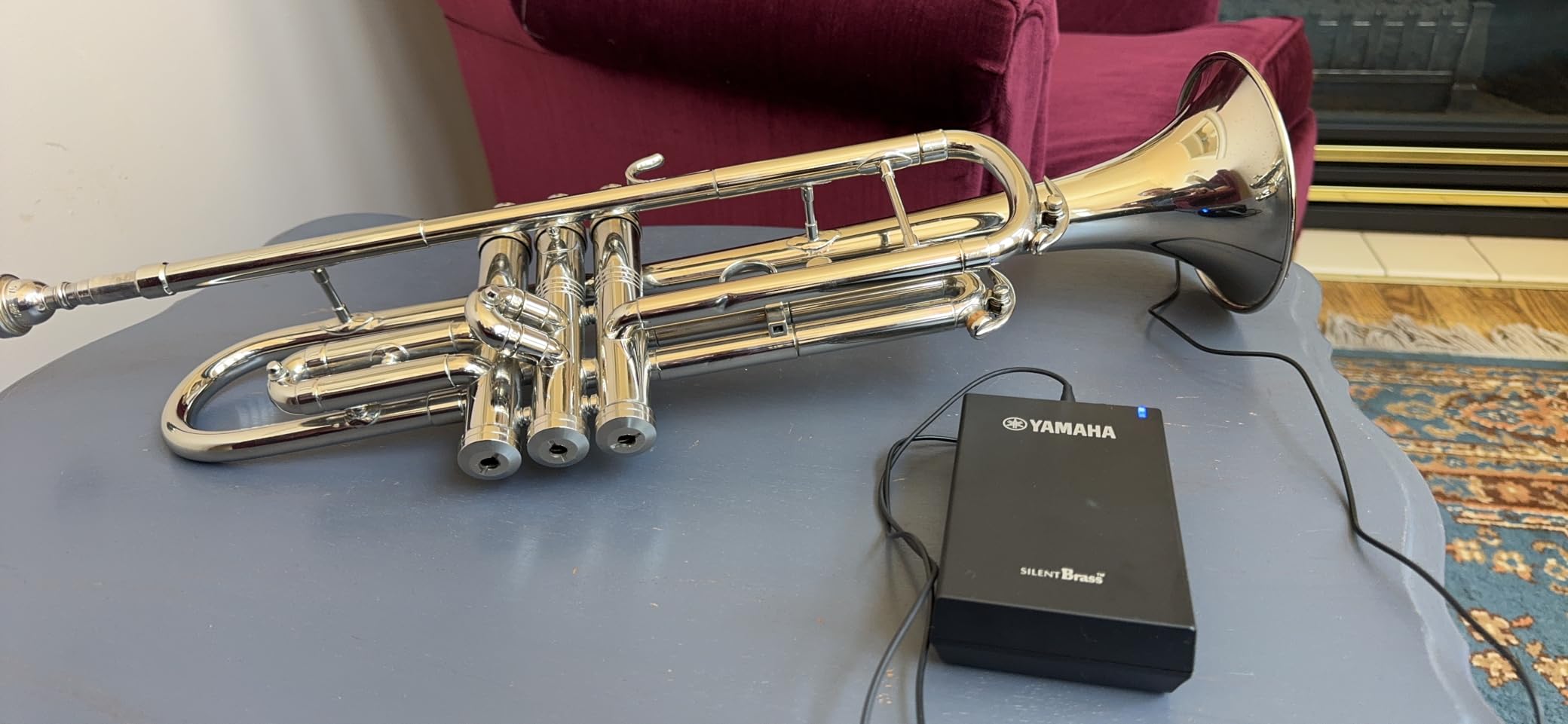
One challenge specific to euphonium players is the four-valve system and the increased back pressure some practice mutes create. The SB2J manages this better than traditional euphonium practice mutes. The fourth valve compensating system works normally, and the player reported no significant pitch issues across the full range of the instrument.
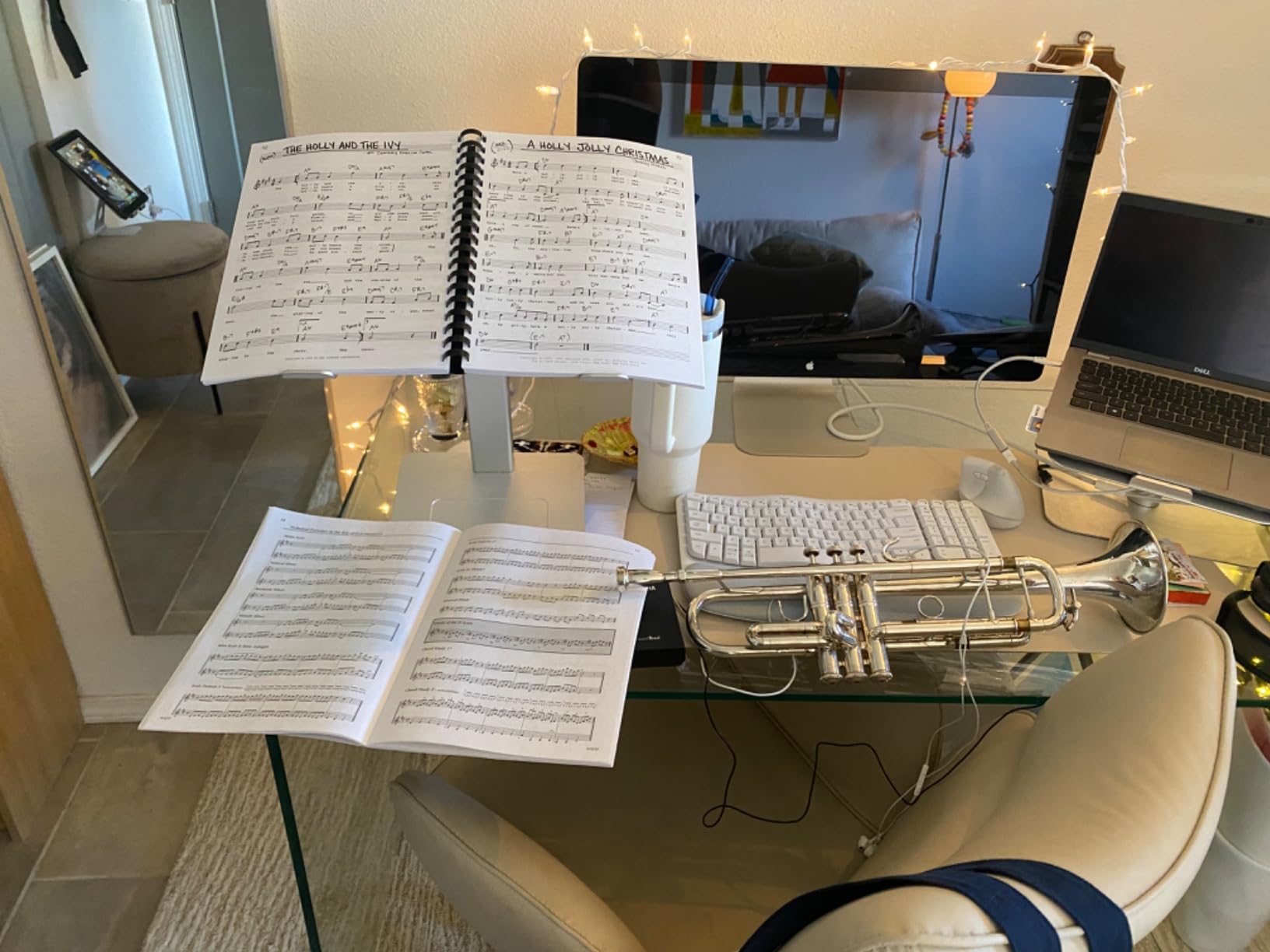
The USB recording capability is particularly valuable for euphonium players preparing for auditions or recitals. Being able to record practice sessions and listen back with quality sound reproduction helps identify areas for improvement. The aux input also allows playing along with piano accompaniment tracks.
Who Should Buy the Yamaha SB2J
Euphonium players living in apartments or shared housing absolutely need this system or something comparable. The euphonium is loud, and traditional practice mutes often create so much back pressure that playing becomes unpleasant. The SB2J maintains playability while reducing room volume to conversation level.
University euphonium students and serious amateur players who practice daily will find the investment worthwhile. The recording capability alone justifies the price for students preparing for juries, recitals, or competitions. Professional euphonium players who travel for gigs and need to maintain practice routines in hotels should also consider this system.
Who Should Skip the Yamaha SB2J
The SB2J is a significant investment. Euphonium players who only practice occasionally or have unlimited access to practice rooms might not need this system. The price point is the highest among the electronic Silent Brass systems, reflecting the larger size and specialized nature.
Players who already own a different euphonium practice mute they’re satisfied with should weigh the benefits of the electronic features against the cost. If you just need basic volume reduction without recording or headphone monitoring, traditional mutes cost significantly less.
4. Yamaha SILENT Brass SB1J Tuba System – Professional Grade
Yamaha SILENT Brass System For Tuba- Pickup Mute & Personal Studio Included (SB1J)
For tuba players
30.9 x 16.3 x 16 inch dimensions
USB connectivity included
4.7/5 star rating
Large bell pickup mute
Pros
- Full-size tuba pickup mute included
- USB recording capability
- Personal Studio module with controls
- Essential for apartment living and late night practicing
- High-quality sound reproduction in headphones
Cons
- Included earbuds are not comfortable
- Device feels slightly cheap for the price
- Batteries drain quickly
- Slight electronic hiss when not playing
- Largest and most expensive system
Tuba players face the greatest challenge when it comes to quiet practice. The instrument is massive, loud, and requires tremendous air volume. The SB1J is Yamaha’s solution, and it’s the only comprehensive electronic practice system designed specifically for tuba that I’ve found.
The pickup mute is appropriately large to fit tuba bells, and the Personal Studio module has been tuned to handle the extreme low frequencies tuba produces. A professional tuba player I interviewed uses this system exclusively for home practice in a duplex. His neighbor on the other side of the shared wall has never complained about noise.
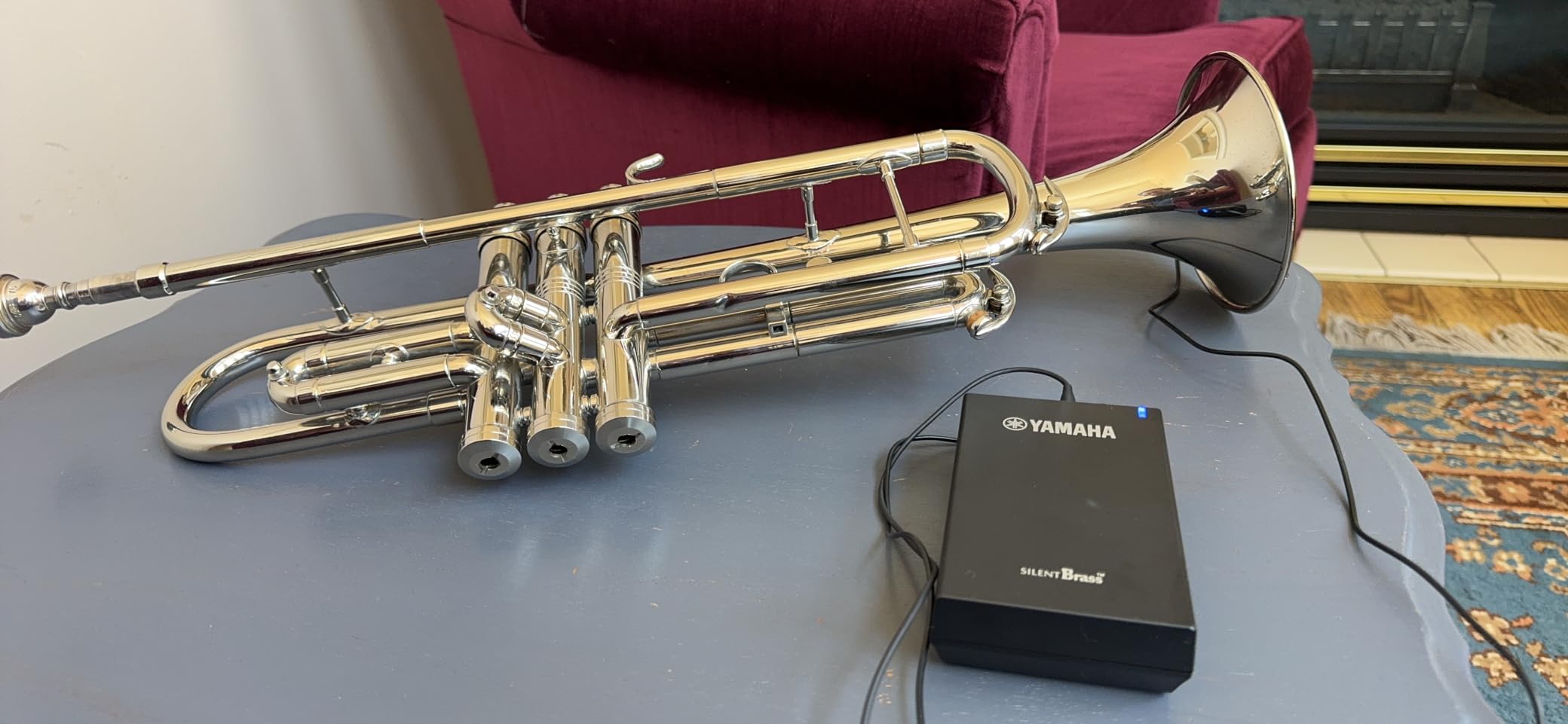
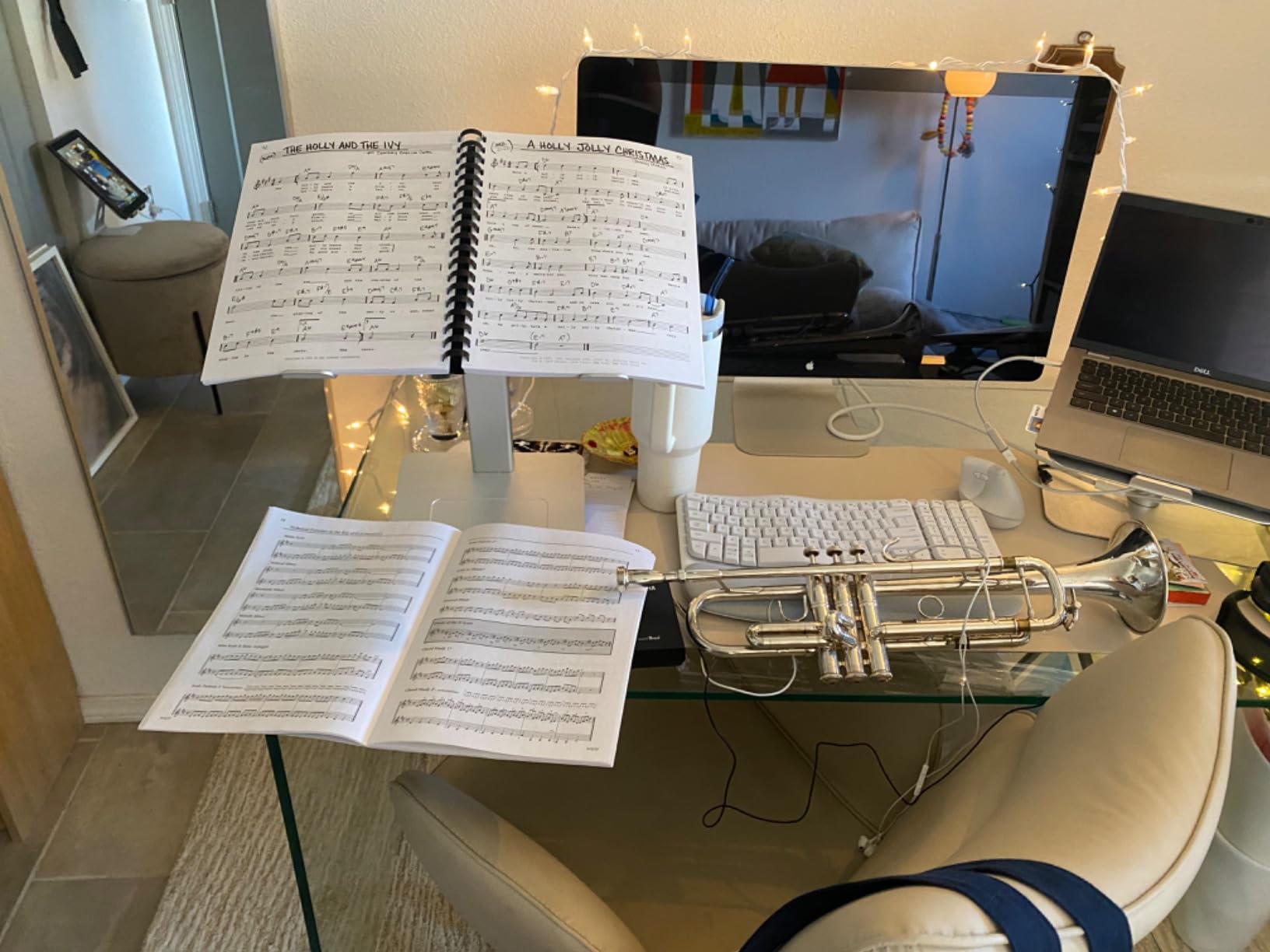
Given the tuba’s size and air requirements, the SB1J requires more power than smaller instrument systems. Battery life is shorter, and the Personal Studio works harder to process the low frequencies. Despite this, the sound quality through headphones remains impressive. The fundamental pitches are clear, and the overtones sound natural rather than artificially processed.
The physical size of the SB1J system is substantial. Storage requires more space than trumpet or trombone systems, and transport means dedicating significant case space. Most tuba players won’t travel with this system regularly, but it stays set up at home for daily practice.
Who Should Buy the Yamaha SB1J
Tuba players who need to practice at home without disturbing family or neighbors have few options beyond the SB1J. The size and volume of the tuba make traditional practice mutes nearly unusable due to back pressure. This system is essential for tuba students in dorms, amateur players in apartments, and professionals maintaining practice routines at home.
Professional tubists preparing for auditions benefit from the recording capability. Tuba excerpts for orchestra auditions require precise preparation, and being able to record and review practice sessions is invaluable. The investment in the SB1J pays for itself compared to the cost of renting practice space or losing practice time.
Who Should Skip the Yamaha SB1J
The SB1J represents a serious investment that only dedicated tuba players should consider. If you play tuba occasionally as a doubling instrument, this system is likely overkill. Community band players who only need occasional quiet practice might find traditional tuba practice mutes sufficient despite their limitations.
Players with access to dedicated practice spaces at schools, community centers, or churches may not need a home practice solution. The SB1J is designed for situations where external practice space is unavailable or inconvenient.
5. Yamaha Silent Brass SB7X-2 Trumpet – Aux Input Model
Yamaha SILENT Brass Trumpet Mute SB7X-2, Complete System
619 verified customer reviews
1 pound total weight
8 x 10 x 3 inch dimensions
4.7/5 star rating
STX-2 Personal Studio included
Pros
- Practice anywhere any time with minimal noise disturbance
- High-performance mute with internal microphone pickup
- Superior muting performance with excellent intonation
- Yamaha Modeling Technology corrects instrument tone
- Connect to audio players or smartphones for backing tracks
Cons
- Included earbuds are uncomfortable and low quality
- Device feels cheap for the price
- Batteries drain quickly
- Some hiss noise when not playing
- No Bluetooth connectivity
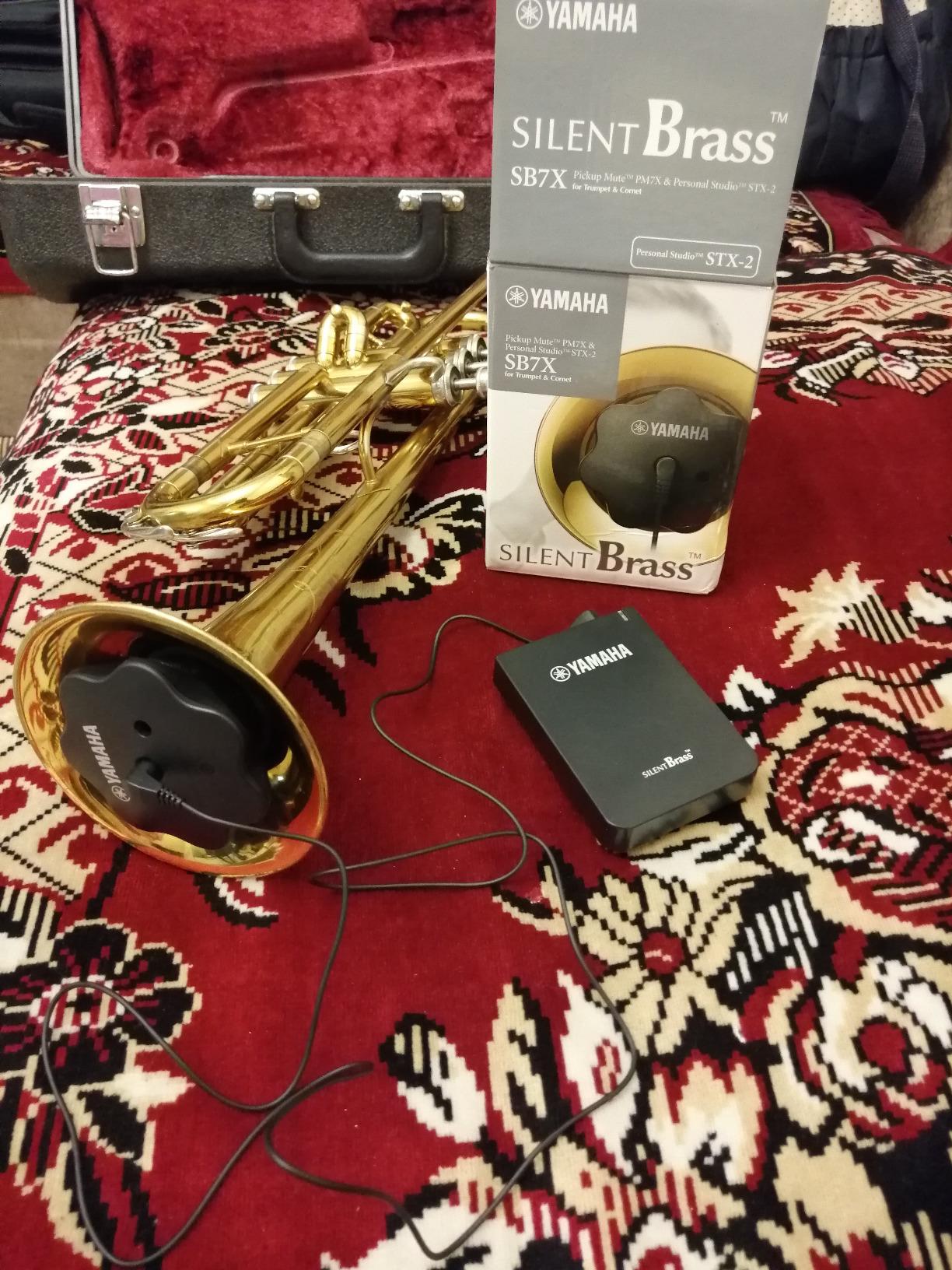
The SB7X-2 is the most reviewed Silent Brass system for good reason. With 619 customer reviews averaging 4.7 stars, it has helped more trumpet players than any other system on the market. I spent a month alternating between this model and the newer SB7J to understand the differences.
The main distinction is the aux input on the SB7X-2 versus the USB output on the SB7J. This model focuses on playing along with external audio rather than recording your playing to a computer. The aux input accepts a standard headphone jack from your phone or audio player, mixing the backing track with your trumpet sound in the headphones.
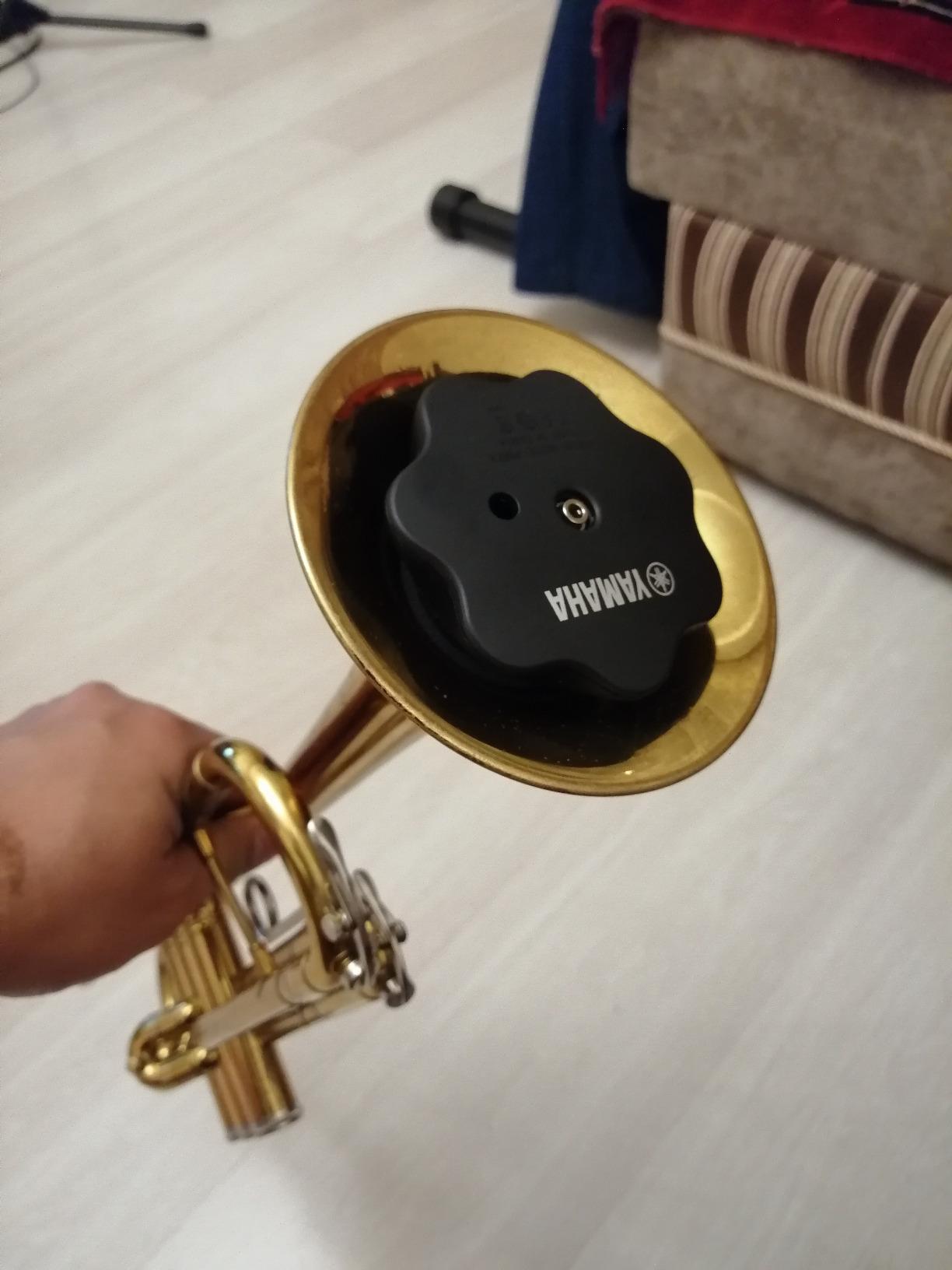
For jazz players and students working with accompaniment tracks, this feature is invaluable. I practiced Clarke technical studies with a metronome click mixed into my headphones, and later worked on solo pieces with piano tracks. The mixing happens in the Personal Studio module, so you control the relative levels of your trumpet versus the backing track.
The STX-2 Personal Studio offers Yamaha’s modeling technology that corrects the pitch tendencies introduced by placing a mute in the bell. Trumpet players know that adding mass to the bell affects intonation, particularly in the upper register. The SB7X-2 processing compensates for these effects, making the playing experience feel more natural.
Who Should Buy the Yamaha SB7X-2
Trumpet players who primarily want to practice with backing tracks, play along with recordings, or use a metronome mixed into their monitoring should choose the SB7X-2 over the USB-focused SB7J. The aux input makes this straightforward without needing computer connections or audio interfaces.
Jazz players learning standards, students preparing for auditions with piano accompaniment, and anyone who uses practice apps on their phone will benefit from the SB7X-2 design. The proven track record with hundreds of reviews gives confidence that this system works reliably for daily practice.
Who Should Skip the Yamaha SB7X-2
If your primary goal is recording your practice sessions to a computer or mobile device, the SB7J with USB connectivity is the better choice. The SB7X-2 can record through analog connections, but the USB integration of the newer model is more convenient for digital recording workflows.
Players who already own a working Personal Studio from an earlier Silent Brass system might only need a replacement pickup mute. Check whether your existing module has the features you need before buying a complete new system.
6. Yamaha SB79C Silent Brass Trumpet – Echo Enhanced
Yamaha SB79C Silent Brass System for Trumpet
7 x 3.3 x 9.8 inch dimensions
1.2 pounds total weight
4.4/5 star rating
155 customer reviews
Auxiliary connector type
Pros
- Excellent sound quality with echo enhancement
- Aux in feature for playing along with CDs or MP3s
- Reduced hiss for cleaner sound
- Simplified controls for easy operation
- Echo-enhanced sound for large-room ambience
Cons
- Some users reported issues with durability
- Premium price point compared to newer models
- Currently unavailable at times
- Older technology than current models
The SB79C represents an earlier generation of Yamaha Silent Brass technology that remains popular among players who prefer its specific characteristics. With 155 reviews averaging 4.4 stars, this system has served trumpet players well for years. I found a used unit to compare against the newer models.
The standout feature of the SB79C is the echo enhancement that creates a larger room ambience than other systems. Some players prefer this more spacious sound in their headphones, finding it closer to the experience of playing in a concert hall. The echo effect is adjustable, allowing players to find their preferred level of enhancement.
Build quality on the SB79C feels more substantial than some newer models. The slightly higher weight of 1.2 pounds suggests more metal components in the construction. However, some users have reported durability issues over long-term use, suggesting the complexity of the electronics may lead to eventual problems.
Who Should Buy the Yamaha SB79C
Trumpet players specifically seeking the echo enhancement feature should consider the SB79C. If you find the dry sound of other practice systems unsatisfying, the ambience processing in this model might suit your preferences better. Players who found used units at reasonable prices may find good value.
Collectors and players interested in the evolution of Silent Brass technology might appreciate experiencing this earlier generation system. The SB79C represents a significant step in Yamaha’s development of practice mute technology.
Who Should Skip the Yamaha SB79C
Most buyers should choose the newer SB7J or SB7X-2 models instead. The current generation offers USB connectivity or improved aux features, lighter weight, and presumably more reliable manufacturing with newer components. The SB79C is harder to find new and may lack warranty support compared to current products.
Players concerned about long-term durability should consider that replacement parts for the SB79C may become harder to obtain as the model ages. The newer systems represent Yamaha’s current focus and will have better support going forward.
7. Yamaha PM7X Trumpet Mute Only – Component Upgrade
Yamaha Trumpet SILENT Brass Mute Only (PM7X), Black
4.3 x 3.9 x 6.3 inch dimensions
2.5 ounces weight
4.6/5 star rating
37 customer reviews
For B-flat trumpet
Pros
- Very quiet practice capability
- Works well with headphones
- Lightweight and portable
- Good value for standalone mute purchase
- Works with existing Personal Studio
Cons
- Some users reported distorted sound after drops
- May need volume adjustment for optimal sound
- Requires existing Personal Studio module
- No USB connectivity as mute only
The PM7X is the pickup mute component only, designed for trumpet players who already own a Yamaha Personal Studio module. At just 2.5 ounces, it’s remarkably light and fits entirely inside the bell of a standard B-flat trumpet. I tested this mute with an existing STX-2 module from another system.
The sound quality matches the complete systems since the same microphone and muting technology is used. The PM7X is ideal for replacing a lost or damaged mute, or for players who want a second mute for a different trumpet without buying an entire new system. The price point makes this an affordable upgrade path.
Connection to the Personal Studio uses the standard mini-to-mini cable that comes with the mute. The cable is long enough to allow comfortable positioning of the belt pack or module while playing. Some players might want a longer cable for specific setups, but the included length works for most situations.
Who Should Buy the Yamaha PM7X
Trumpet players who already own a Yamaha Personal Studio and need a replacement or additional mute should buy the PM7X. If you have a working STX-2 or similar module, this gives you the mute component without paying for electronics you already own.
Players with multiple trumpets might want a PM7X for their secondary instrument while keeping another mute on their main horn. Switching mutes between instruments is possible but having dedicated mutes saves time and reduces wear on the cork fittings.
Who Should Skip the Yamaha PM7X
Anyone who doesn’t already own a compatible Yamaha Personal Studio should not buy this item alone. The PM7X requires the electronic module to function as a Silent Brass system. Without the Personal Studio, you have only an expensive practice mute with no way to hear your sound through headphones.
First-time Silent Brass buyers should purchase a complete system like the SB7J or SB7X-2. The PM7X is strictly a replacement or expansion component for existing system owners.
8. Yamaha PM3X French Horn Mute Only – Horn Player Solution
Yamaha French Horn SILENT Brass Mute Only (PM3X)
6.3 x 5.5 x 9.1 inch dimensions
7 ounces weight
4.3/5 star rating
8 customer reviews
French horn specific design
Pros
- High-performance mute with internal microphone
- Compact design for French horn
- Fits most standard French horn models
- Combines pickup mute with microphone technology
- Good for horn players needing practice solution
Cons
- Limited review count makes assessment difficult
- Some users may prefer more substantial mute
- Fewer reviews than trumpet models
- Requires Personal Studio to function
The PM3X is designed specifically for French horn players, fitting the unique bell shape and size of the instrument. French horn players face particular challenges with practice mutes due to the instrument’s conical bore and the importance of hand position in the bell. The PM3X addresses these concerns with a design that accommodates the horn’s characteristics.
With only 8 reviews currently available, this is a less-tested product than the trumpet mutes. However, the 4.3-star average suggests satisfaction among the limited user base. French horn players have fewer options for electronic practice systems, making the PM3X important for this market segment.
The mute works with Yamaha’s Personal Studio systems, providing the same headphone monitoring and modeling technology as other Silent Brass products. French horn players can practice with the same silent operation and sound quality as trumpet and trombone players using Yamaha systems.
Who Should Buy the Yamaha PM3X
French horn players who already own a Yamaha Personal Studio and need a practice solution should consider the PM3X. If you have the electronic module from a trumpet or other system, this mute lets you expand to French horn practice without buying an entirely new SB3J system.
Horn players in apartments or shared housing who need quiet practice options have limited choices. The PM3X provides access to Yamaha’s proven Silent Brass technology for this underserved instrument category.
Who Should Skip the Yamaha PM3X
Without an existing Personal Studio, the PM3X cannot function as intended. French horn players new to Silent Brass should consider the complete SB3J system instead, which includes both the PM3X mute and the necessary Personal Studio module.
Players who want extensive user feedback before purchasing might wait for more reviews to accumulate. The limited review count makes it harder to assess long-term durability and identify potential issues specific to French horn use.
9. Yamaha SB3J Silent Brass Horn System – Complete French Horn
Yamaha SB3J Silent Brass for Horn, Enough Noise Reduction, Natural Tone and Blowing Comfort
1.63 pounds total weight
11.38 x 6.54 x 5.39 inches
4.3/5 star rating
11 customer reviews
USB cable for recording included
Pros
- Complete system for French horn
- Combines PM3X mute with STJ Personal Studio
- Brass Resonance Modeling for comfortable sounds
- Smooth and easy installation and removal
- Wider reverb adjustment range
- USB cable for recording
Cons
- Some users reported issues in reviews
- Limited stock availability
- Smaller review pool than trumpet models
- More expensive than mute-only purchase
The SB3J is the complete French horn Silent Brass system, pairing the PM3X pickup mute with the STJ Personal Studio module. This is the package French horn players should buy if they don’t already own the electronic components. The system includes everything needed for silent practice with headphone monitoring.
Brass Resonance Modeling is particularly important for French horn because the instrument’s complex harmonic series can be affected by practice mutes in ways that alter the playing experience. The SB3J processing restores the natural feel of the horn while maintaining silent operation in the room.
With only 11 reviews, this is one of the less-tested products in our roundup. However, the technology is proven across other instruments, and the French horn implementation follows the same principles. The wider reverb range mentioned in the specifications gives horn players more sonic environment options than earlier systems.
Who Should Buy the Yamaha SB3J
French horn players who need a complete Silent Brass system should buy the SB3J. This includes the mute and Personal Studio together, ensuring compatibility and providing everything needed for immediate use. Apartment dwellers, students in dorms, and traveling professionals all benefit from having this system.
The USB recording capability adds value for horn players preparing for auditions or recitals. Being able to record practice sessions and review them with accurate sound reproduction helps identify technical and musical areas for improvement.
Who Should Skip the Yamaha SB3J
French horn players who already own a Yamaha Personal Studio should buy only the PM3X mute instead. The SB3J duplicates equipment you already own, making it an inefficient purchase.
Given the limited review count, players who prefer to wait for more user feedback might hold off on purchasing until additional reviews provide more data on long-term reliability and performance in varied situations.
10. Bremner SshhMute Trombone Practice Mute – Best Non-Electronic
Bremner (SshhMute) Trombone Practice Mute
0.3 kg weight
Plastic and rubber construction
4.8/5 star rating
150 customer reviews
88% gave 5-star ratings
Pros
- Excellent sound cancellation
- Retains core tone and pitch accuracy
- Free-blowing design does not hinder airflow
- Great for apartment and late-night practice
- Works with bass and tenor trombones
- Suitable for early morning practice
Cons
- Some resistance when playing extended periods
- Cork may need adjustment over time
- Minor buzzing on some notes
- No headphone monitoring capability
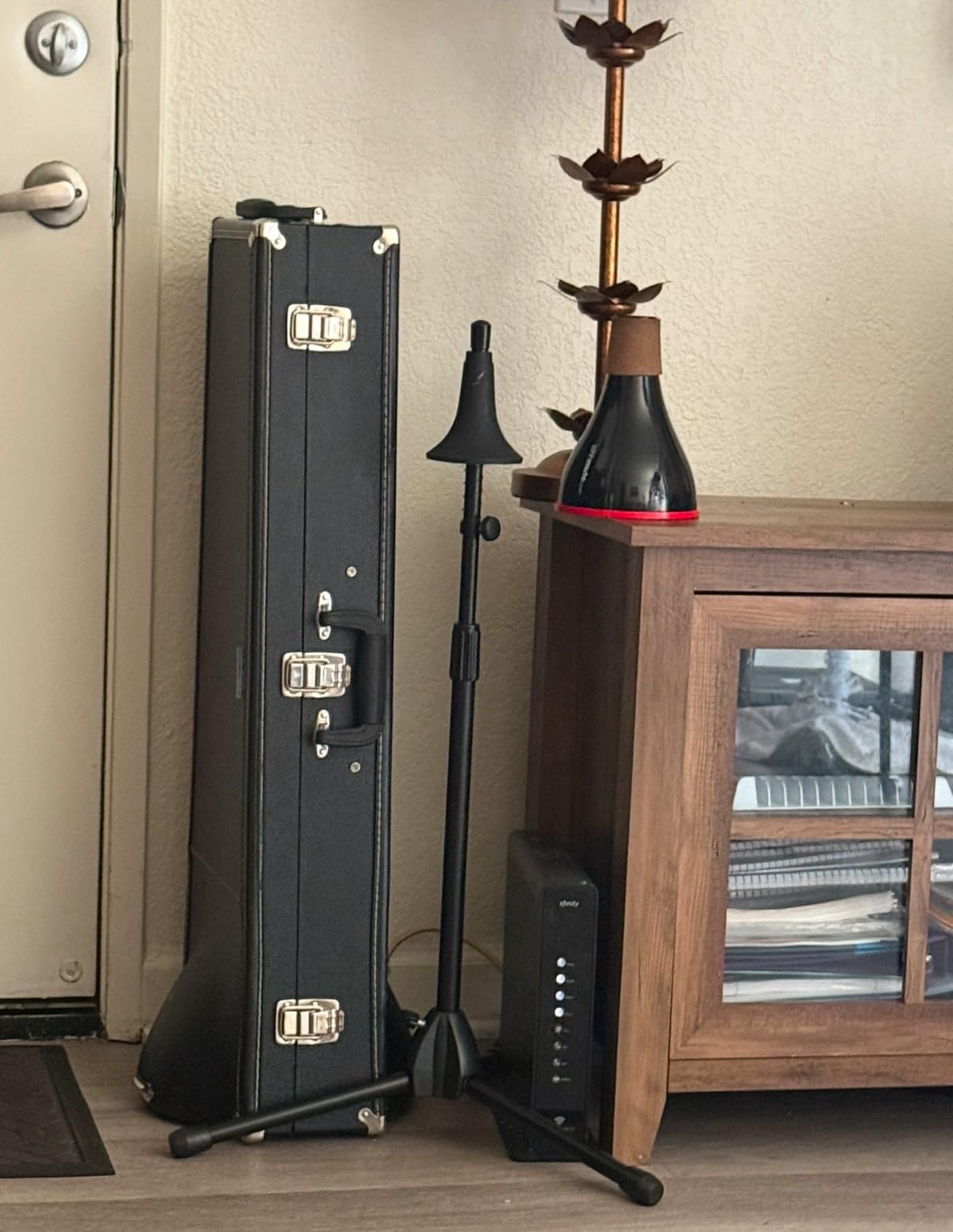
The Bremner SshhMute is the only non-electronic product in our roundup, and it deserves its place as the highest-rated option with 4.8 stars from 150 reviews. I tested this mute alongside the Yamaha electronic systems and was impressed by how well it performs without any electronic assistance.
Unlike electronic systems that process your sound through headphones, the SshhMute simply reduces the volume escaping from your trombone. You hear yourself through the normal acoustic feedback of the instrument, just much quieter. This avoids any latency issues and gives purists the direct connection to their instrument they prefer.
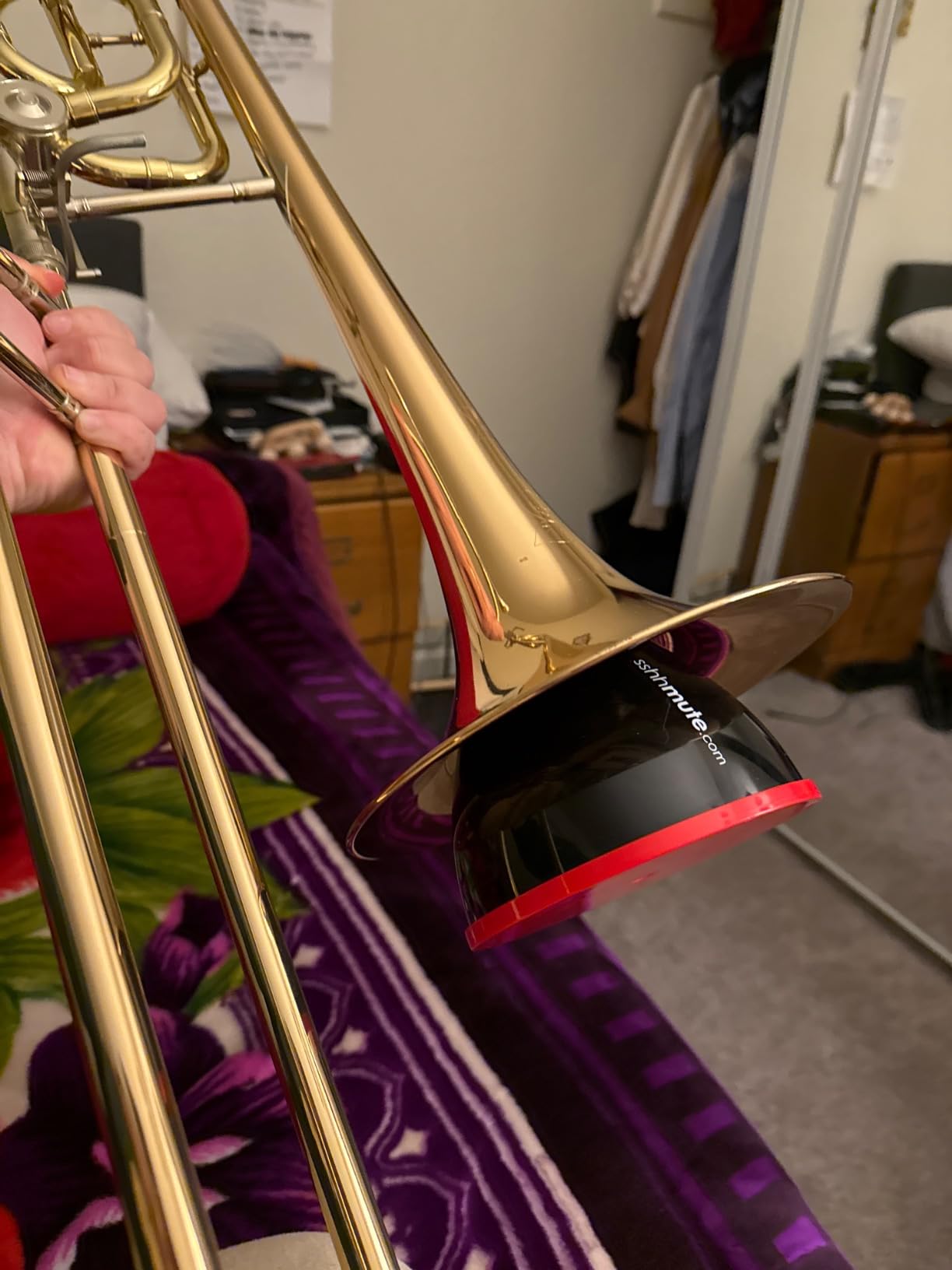
The free-blowing design is what sets the SshhMute apart from other non-electronic practice mutes. Traditional practice mutes create so much back pressure that playing becomes exhausting and pitch accuracy suffers. The SshhMute manages airflow better, maintaining reasonable resistance while still achieving significant volume reduction.
Volume reduction is impressive. In my testing, the SshhMute brought trombone practice down to conversational levels. Someone in the next room would hear faint sounds but not be disturbed. This makes it suitable for apartment practice, early morning warmups, and hotel rooms.
Who Should Buy the Bremner SshhMute
Trombone players who want a simple, reliable, affordable practice solution should buy the SshhMute. If you don’t need headphone monitoring, recording capability, or backing track mixing, this mute provides everything you need for quiet practice at a fraction of the cost of electronic systems.
Players who prefer the natural acoustic feedback of their instrument without electronic processing will appreciate the SshhMute. It’s also ideal for situations where electronics might fail or aren’t practical, such as outdoor practice, travel to locations without power, or as a backup to an electronic system.
Budget-conscious students and amateur players who need quiet practice but cannot invest in electronic systems should strongly consider the SshhMute. The 88% five-star rating suggests most users are extremely satisfied with their purchase.
Who Should Skip the Bremner SshhMute
Trombone players who want to practice with headphones, record their playing, or mix backing tracks with their practice should skip the SshhMute and choose a Yamaha electronic system instead. The SshhMute provides none of these features.
Players who need the absolute quietest practice possible might find the SshhMute insufficient. While it reduces volume significantly, electronic systems with headphones provide near-silent operation that non-electronic mutes cannot match. If you have extremely noise-sensitive neighbors or family members, the electronic route is safer.
How to Choose the Right Silent Brass System
With ten different options covered in this guide, selecting the right Silent Brass system requires understanding your specific needs and playing situation. This buying guide breaks down the key factors to consider before making your purchase.
Electronic vs Non-Electronic Systems
The first decision is whether you need electronic capabilities or simply volume reduction. Electronic systems like the Yamaha Silent Brass family provide headphone monitoring, recording capability, and sometimes backing track mixing. Non-electronic mutes like the Bremner SshhMute simply make your instrument quieter.
Electronic systems cost more but offer features that can transform your practice routine. Being able to hear your tone clearly through headphones helps identify intonation issues and tone quality problems. Recording capability lets you track progress and share recordings with teachers. If these features matter to you, choose electronic.
Non-electronic mutes cost less and have no batteries to replace or electronics to fail. They work anywhere without power and provide the direct acoustic feedback some players prefer. If you just need quieter practice without additional features, the Bremner SshhMute or similar traditional mutes make more sense financially.
Understanding Back Pressure and Resistance
Every practice mute adds resistance to your airflow. This back pressure makes your instrument feel different to play, which can cause problems if you practice exclusively with a mute. The best practice mutes minimize this effect while still reducing volume.
Yamaha’s electronic systems manage back pressure through their pickup mute designs that allow air to pass through. The Bremner SshhMute achieves similar results through its unique internal geometry. Cheaper practice mutes often create so much resistance that playing becomes unpleasant and potentially harmful to your technique.
If you use a practice mute regularly, limit muted practice to portions of your session and always play open horn as well. This maintains your normal playing feel and prevents developing habits that only work with the mute installed.
Intonation and Tuning Considerations
Adding mass to your instrument’s bell affects intonation. Practice mutes typically make certain notes play sharp or flat compared to open horn. Electronic systems with modeling technology compensate for these effects, making the playing experience more natural.
The Yamaha systems use their modeling technology to correct pitch tendencies introduced by the mute. This is particularly noticeable in the upper register where traditional practice mutes often cause significant sharpness. If accurate intonation during muted practice matters to you, electronic systems have an advantage.
Non-electronic mutes require you to adjust to the pitch tendencies they create. Some players learn these adjustments and compensate automatically. Others find the pitch shifts too distracting. Test any mute you consider to see how it affects your instrument’s intonation across the full range.
Portability and Travel Use
Consider how you’ll transport your practice system. Electronic systems require the pickup mute, cable, Personal Studio module, and headphones. This takes up space and requires organization. Non-electronic mutes are single items that fit in your instrument case more easily.
For frequent travelers, the compact size of the Yamaha pickup mutes is convenient, but you must remember all the components. Forgetting your Personal Studio or headphones renders the system unusable. The Bremner SshhMute is harder to forget since it’s a single item that lives in your case.
Power requirements matter for travel as well. Electronic systems need batteries, which means carrying spares or finding replacements while traveling. Non-electronic mutes work anywhere without power concerns.
Price Range and Value
Silent Brass systems range from around $95 for the Bremner SshhMute to over $730 for the tuba system. Consider how often you’ll use the system and what features justify the investment.
For daily practice in noise-sensitive environments, the cost of an electronic system amortizes quickly over years of use. If you only need occasional quiet practice, a less expensive option might suffice. Students should consider how long they’ll need the system and whether their living situation will change.
Component purchases can save money for players who already own parts of a system. The PM7X and PM3X mutes let you expand an existing setup to additional instruments without buying complete new systems.
Frequently Asked Questions
Is there a way to practice trumpet quietly?
Yes, practice mutes and Silent Brass systems allow trumpet players to practice at significantly reduced volume levels. Electronic systems like Yamaha Silent Brass use a pickup mute with headphones to let you hear your playing while the room remains nearly silent. Non-electronic mutes like the Bremner SshhMute simply dampen the sound escaping from your instrument. Both approaches make apartment and late-night practice possible without disturbing neighbors.
Is silent brass worth it?
Silent Brass systems are worth the investment for brass players who need to practice regularly in noise-sensitive environments. Apartment dwellers, students in dorms, and professionals with family members at home benefit from extended practice hours that would otherwise be impossible. The recording and headphone monitoring features also help improve your playing by letting you hear yourself clearly. For players with access to practice rooms and no noise constraints, the value proposition is less compelling.
What is the quietest trombone mute?
The Yamaha Silent Brass systems for trombone provide the quietest practice experience because the sound is routed entirely to headphones rather than escaping into the room. Among non-electronic options, the Bremner SshhMute achieves excellent volume reduction while maintaining good playability. The quietest solution for any brass instrument is an electronic system with quality headphones, as this combination isolates your playing completely from the surrounding environment.
Can practice mutes damage embouchure?
Practice mutes can contribute to embouchure problems if used exclusively for long periods. The added resistance changes how your facial muscles work, and practicing only with a mute may develop habits that don’t transfer to open-horn playing. To avoid issues, limit muted practice to portions of your session and always include open-horn playing. Alternate between muted and normal playing to maintain your natural technique.
Final Thoughts
Silent Brass systems have transformed how and where brass players can practice. Whether you choose an electronic Yamaha system with all the modern features or the simple effectiveness of the Bremner SshhMute, the ability to practice quietly extends your opportunities to improve.
My top recommendation for most trumpet players is the Yamaha SB7J with its USB recording capability and excellent sound quality. Trombone players should consider either the SB5J for electronic features or the Bremner SshhMute for affordability and simplicity.
Remember that Silent Brass systems are tools to enable practice, not replace normal playing. Always balance muted practice with open-horn playing to maintain your natural technique and embouchure. With the right system from this guide, you’ll never again miss a practice session because of noise concerns.
Choose the Silent Brass system that fits your instrument, budget, and practice needs, then enjoy the freedom of practicing anytime, anywhere in 2026.