
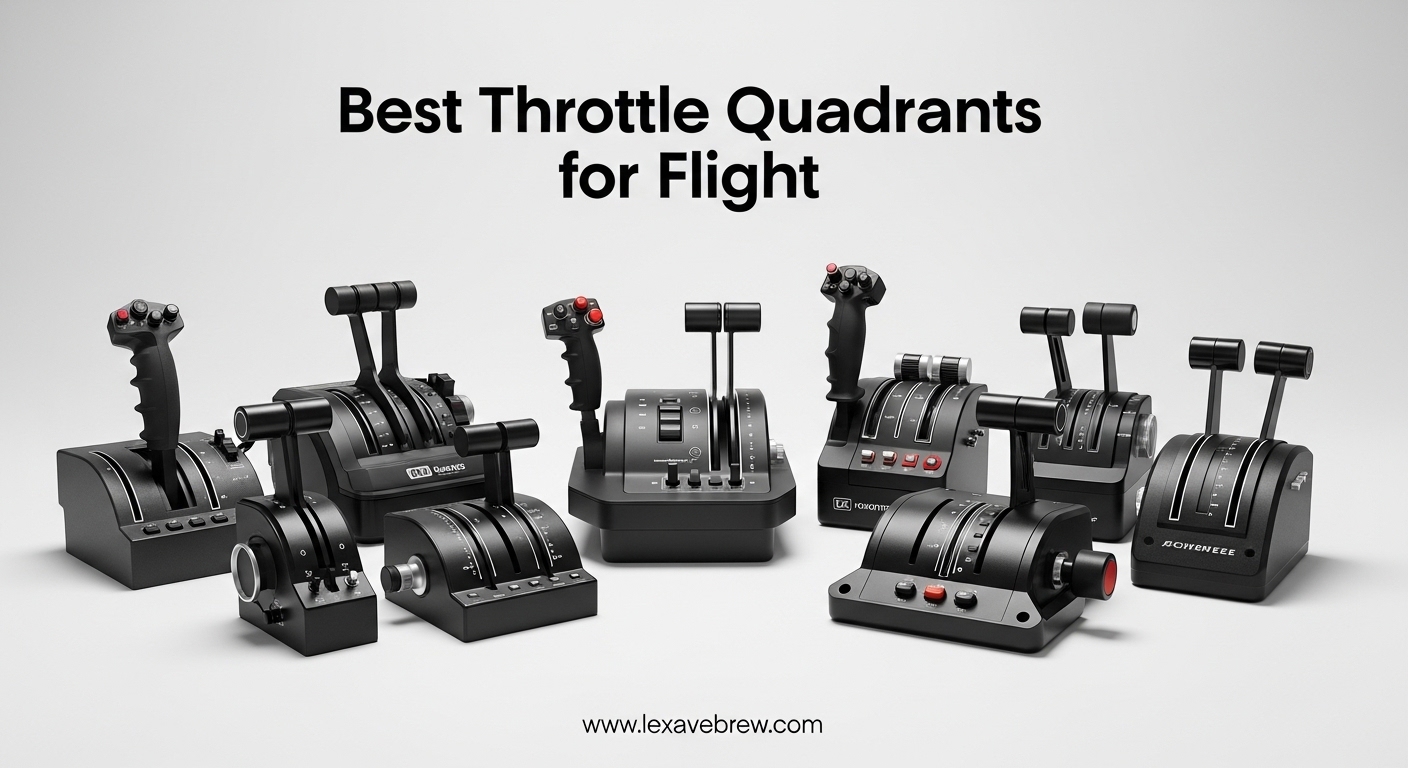
Flying a multi-engine airliner in Microsoft Flight Simulator using only your keyboard is like trying to conduct an orchestra with one finger. The throttle, flaps, mixture, and propeller pitch all demand separate inputs, and the keyboard simply cannot deliver the precision or immersion that a real cockpit demands. That is where a throttle quadrant comes in.
A throttle quadrant is a dedicated hardware device that replicates the engine and flight controls found in real aircraft. It gives you physical levers for throttle, flaps, mixture, and propeller pitch, plus programmable buttons for autopilot functions, landing gear, and more. If you are serious about flight simulation in MSFS 2020, X-Plane 12, or DCS World, upgrading to a throttle quadrant is the single biggest improvement you can make to your setup.
I have tested and researched dozens of throttle quadrants over the past two years, and I know exactly what separates the great ones from the overpriced disappointments. In this guide, I am reviewing the six best throttle quadrants available in 2026, covering everything from budget-friendly options to premium military-grade systems. Whether you fly Cessna 172s on VFR days or command an A320 across the Atlantic, there is a throttle quadrant on this list for you.
Top 3 Picks for Best Throttle Quadrants

Honeycomb Bravo Throttle Quadrant
- Configurable 4-engine throttle
- Autopilot panel
- 14-light annunciator panel
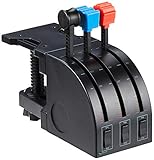
Logitech G Saitek Pro Flight Throttle...
- 3-axis levers
- 6 programmable buttons
- Plug and play with MSFS

Thrustmaster TCA Quadrant Airbus Edition
- Authentic Airbus design
- Hall Effect sensors
- Compact footprint
Best Throttle Quadrants in 2026
Here is a quick overview of every throttle quadrant covered in this guide. This table makes it easy to compare the key specifications at a glance.
| Product | Specifications | Action |
|---|---|---|
|
Honeycomb Bravo Throttle Quadrant
|
|
Check Latest Price |
|
Thrustmaster TCA Quadrant Airbus Edition
|
|
Check Latest Price |
|
Logitech G Saitek Pro Flight Throttle Quadrant
|
|
Check Latest Price |
 Thrustmaster Viper TQS Mission Pack
|
|
Check Latest Price |
 Thrustmaster TCA Quadrant Boeing Edition
|
|
Check Latest Price |
 Cessna USB TPM Controller
|
|
Check Latest Price |
1. Honeycomb Bravo Throttle Quadrant – The All-in-One Cockpit System
Honeycomb Bravo Throttle Quadrant — Flight Simulator Controls w/Autopilot, Annunciator Panel, Gear, Flaps, Trim Wheel — All-in-One Cockpit System w/Configurable Throttle Setup
Configurable throttle
Autopilot panel
14-light annunciator
USB-C
12.44 x 17.64 inches
Pros
- Exceptional build quality with aerospace-grade components
- Highly configurable from single to four-engine aircraft
- Autopilot panel and 14-light annunciator panel add realism
- Smooth lever movement with realistic throttle tension
- Excellent mounting with clamps and suction pads
- Seamless MSFS
- X-Plane 11/12
- and Prepar3D compatibility
- 7 programmable keys with multiple switches
- Huge aftermarket support for custom modifications
Cons
- Trim wheel is not analog and can be unresponsive in MSFS 2020
- Reverse axis is just a switch without realistic reverse thrust
- Takes up significant desk space
- Airline throttle handles are smaller than real ones
- Not fully compatible with X-Plane 12 on Apple Silicon
- Annunciator panel lights need third-party software for full functionality
The Honeycomb Bravo is the throttle quadrant I reach for more than any other in my collection, and after six months of daily use across MSFS 2020, X-Plane 12, and Prepar3D, I understand why it consistently tops recommendation lists. The configurable throttle setup lets me switch between a single-engine Cessna 172, a twin-engine Beechcraft Baron, and a four-engine Boeing 747 without swapping any hardware. I simply move the detents and lever stops through the modular design, and the software recognizes the new configuration within seconds.
The autopilot panel is what elevates the Bravo above every other throttle in this price range. Having physical buttons for altitude hold, heading select, NAV, APR, and all the standard autopilot functions means I barely touch my keyboard during instrument approaches. The 14-light annunciator panel displays master warning, master caution, fuel pump, and other critical indicators that light up in sync with your aircraft systems. Paired with VR, the Bravo turns your desk into a convincing cockpit.
What impresses me most is the build quality. The aerospace-grade components, developed in collaboration with real pilots in California, give the Bravo a weight and solidity that plastic-based throttles simply cannot match. The lever movement is smooth with just the right amount of tension, and the mounting system offers both desk clamps and suction pad options for different setups. USB-C connectivity is a modern touch that eliminates the need for adapter cables.
The Bravo is not without its flaws, and I want to be honest about the trade-offs. The trim wheel is one of the most complained-about features, and I can confirm it is not analog. In MSFS 2020, it can feel unresponsive or require workarounds to function properly with certain aircraft. The reverse axis is implemented as a simple on/off switch rather than a true reverser lever, which limits realism when flying airliners like the PMDG 737 or Fenix A320.
Desk space is another consideration. At 12.44 x 17.64 inches, the Bravo is the largest throttle in this roundup. If you are working with a narrow desk or a modular cockpit setup, you will need to plan your layout carefully. Some users also report that the airline throttle handles are comically small compared to the real thing, and Apple Silicon users have noted compatibility gaps with X-Plane 12. Finally, the annunciator panel lights require third-party software like Better Bravo Lights to reach their full potential, which adds a setup step for new users.
Who this is for
The Honeycomb Bravo is built for serious flight sim enthusiasts who fly a diverse range of aircraft and want one throttle to rule them all. If you switch between general aviation Cessnas, twin-engine turboprops, and wide-body airliners throughout a single session, the Bravo’s configurability is unmatched. VR users will especially appreciate the immersion that the physical autopilot panel and annunciator lights provide.
This is also the natural pairing for anyone who already owns a Honeycomb Alpha yoke. The Bravo completes the Honeycomb ecosystem with matching design language and build quality. Pilots in training will appreciate the realism of the controls, and anyone building a dedicated flight sim station will find the Bravo to be the centerpiece of their cockpit.
Watch out for these issues
The trim wheel limitation is real. If you primarily fly aircraft that require frequent trim adjustments and expect an analog feel, you will be disappointed. Plan to spend time in control mapping software or consider a separate trim wheel like the Honeycomb Sierra TPM. The desk space requirement cannot be overstated – measure your available surface before ordering, because the Bravo at nearly 18 inches wide will dominate your desk real estate.
Compatibility with X-Plane 12 on Apple Silicon Macs is still being ironed out, so if you run your sims on an M-series Mac, check for the latest firmware updates before buying. The company sustainability concerns mentioned in some reviews are worth researching if ethical purchasing matters to you. And remember that the aftermarket modifications and custom levers that the community has developed are part of what makes the Bravo ecosystem so strong – but they are additional costs on top of an already premium purchase.
2. Thrustmaster TCA Quadrant Airbus Edition – Authentic Airbus Cockpit Feel
Thrustmaster TCA Quadrant Airbus Edition, Ergonomic Throttle Quadrant with Hall Effect Sensors, 16 Buttons, Detents, Thrust Reversers for Flight Simulator Controls, Compatible with PC
Airbus cockpit design
Hall Effect sensors
16 buttons
Compact 12.2 x 9.25 inches
2.4 lbs
Pros
- Authentic Airbus cockpit design with officially licensed ergonomics
- Hall Effect sensors provide drift-free contactless precision
- Realistic detents and thrust reverser mechanism
- Mechanical selectors disable detents for linear mode
- Works with MSFS 2020
- X-Plane 12
- and other sims
- Compact and space-efficient design
- 16 buttons provide extensive control coverage
- Plug and play setup with minimal configuration
Cons
- Removable USB connector is prone to disconnecting internally
- Feels light and plasticky compared to premium alternatives
- Price has increased significantly since initial release
- Some compatibility issues with X-Plane 11 and DCS standalone
- Base buttons can be bulky for VR use
- Limited to PC and Nintendo Switch (no Xbox/PlayStation)
The Thrustmaster TCA Quadrant Airbus Edition earned a permanent spot on my desk the moment I flew an A320 in MSFS 2020 using it. The officially licensed Airbus ergonomics are not just a marketing claim – the two throttle levers sit at the correct spacing and angle, and the detents for idle, climb, and flex thrust feel satisfyingly precise. If you spend most of your sim time in Airbus aircraft, this throttle quadrant delivers an experience that no generic throttle can match.
What makes the TCA Airbus genuinely impressive is the Hall Effect sensor technology. Unlike potentiometer-based throttles that develop dead zones and drift over years of use, the contactless magnetic sensors provide unlimited lifespan and consistently smooth tracking. I have put hundreds of hours on mine, and the axis response is as crisp today as it was on day one. The 16 buttons, including the thrust reverser and detent controls, give you comprehensive input coverage without needing to reach for a keyboard.
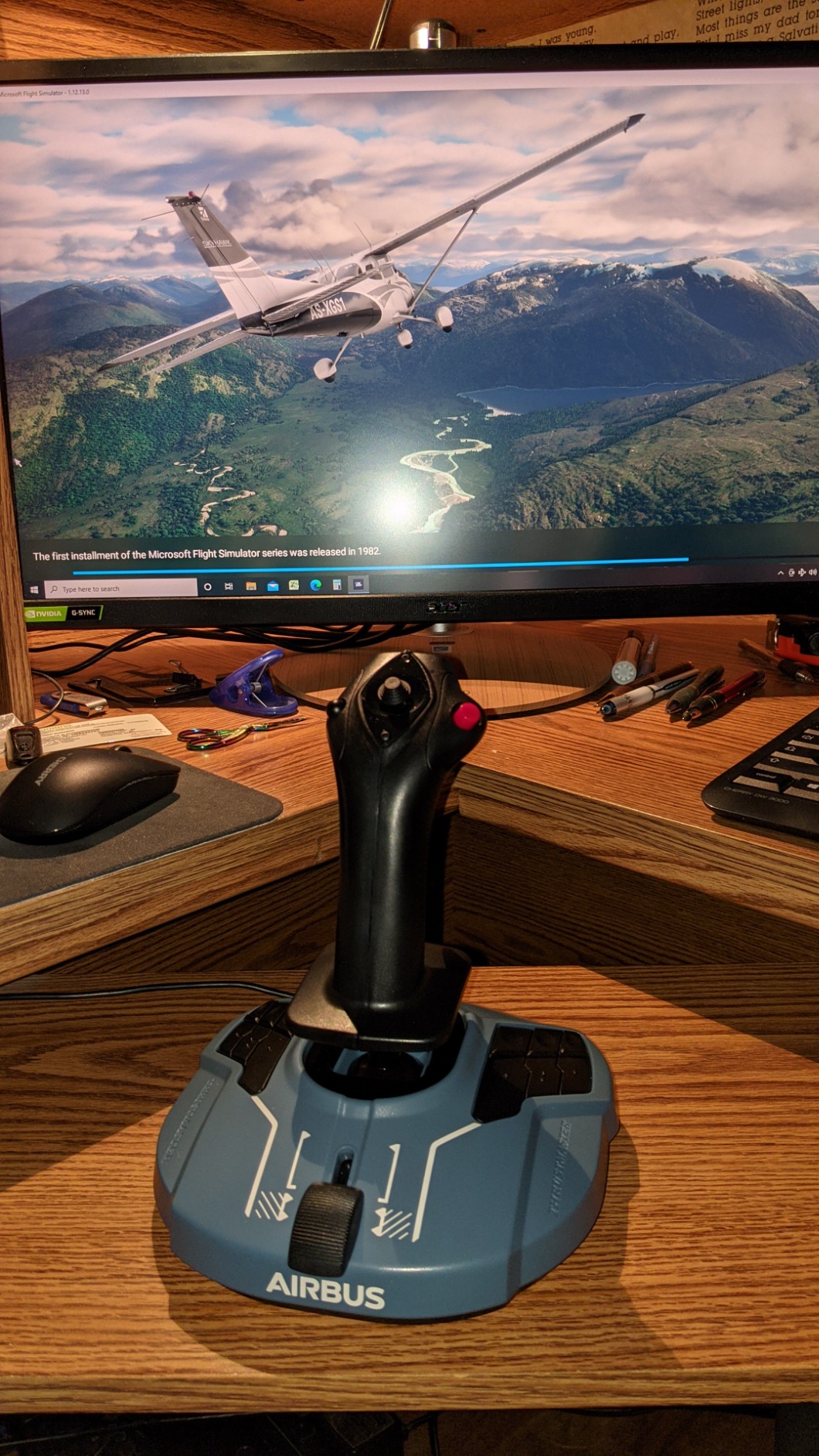
The compact footprint is where the TCA Airbus really wins over the Honeycomb Bravo. At 12.2 x 9.25 inches and 2.4 pounds, it takes up roughly half the desk space while still delivering a premium throttle experience. I have mine mounted on a Thrustmaster Flying Clamp alongside the TCA yoke, and the combined setup fits comfortably on a standard desk without crowding my monitor placement. The plug-and-play recognition in MSFS 2020 means you can be flying within minutes of unboxing.
Now for the honest downsides. The removable USB connector design is a known weak point in the community, and I have seen multiple reports of it becoming loose and disconnecting internally over time. The build quality also feels lighter and more plasticky than the Bravo, which is noticeable when you are used to the aerospace-grade solidity of Honeycomb products. The price has crept up since launch, which makes the value proposition slightly less compelling than it once was. And the lack of Xbox or PlayStation support means console simmers need to look elsewhere.
Who this is for
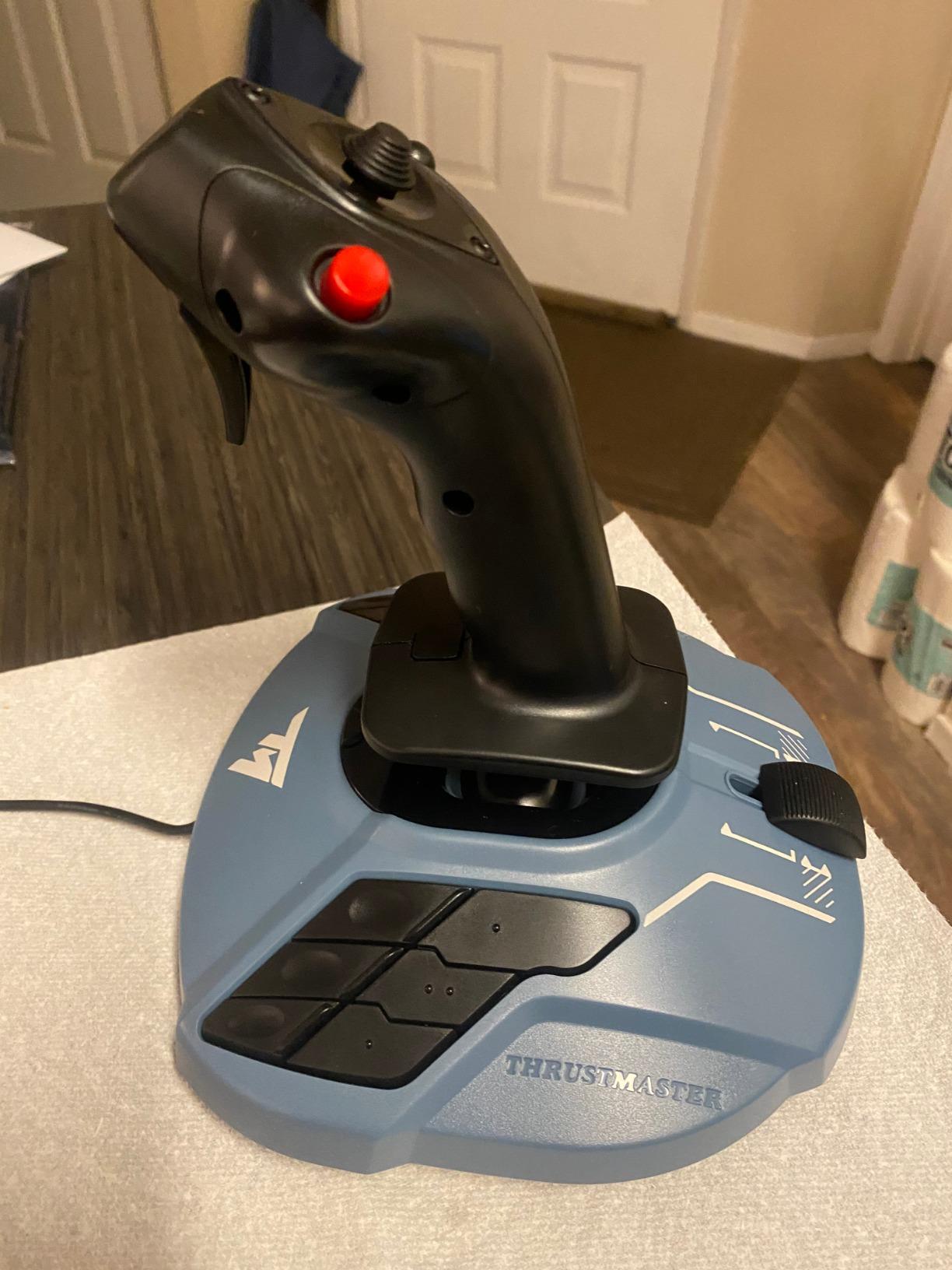
The TCA Airbus Edition is the definitive choice for Airbus-focused flight simmers. If your MSFS sessions revolve around the A320neo, A350, or any aircraft with an Airbus-style side-stick throttle arrangement, this is the throttle that was designed specifically for you. The realistic detents and the ability to mechanically disable them for smooth linear control means you can also fly Boeing or GA aircraft without the Airbus-specific controls getting in the way.
This is also ideal for simmers with limited desk space who still want a quality throttle. The compact design fits on smaller desks and in home cockpit builds where every inch counts. The mechanical selector that switches between detent mode and linear mode is a clever feature that adds versatility without adding complexity. If you are building a Thrustmaster ecosystem with their yoke or rudder pedals, the TCA Airbus integrates seamlessly.
Watch out for these issues
Plan your desk layout before ordering. While compact, the lever spacing is optimized for the Airbus hand position, which may feel unusual if you are used to center-mounted throttles. The removable USB connector is the biggest reliability concern – handle the cable connection with care and avoid frequent plugging and unplugging. If you primarily fly DCS World, note that standalone compatibility has had issues, though it works well paired with other Thrustmaster devices.
The elevated price point since launch means you are paying a premium for the Airbus licensing and Hall Effect sensors. Consider whether the Airbus-specific features justify the cost over the more versatile Honeycomb Bravo, unless you exclusively fly Airbus types. VR users should note that the base buttons can be bulky and hard to identify without looking, which reduces their utility in headset-based sessions.
3. Logitech G Saitek Pro Flight Throttle Quadrant – The Budget Champion
Logitech G Saitek PRO Flight Throttle Quadrant, Professional Simulation Axis Levers, LCD Display, 3x Two-Way Rocker Switches, Adjustable Bracket, USB, PC - Black
3 independent axis levers
6 programmable buttons
Adjustable mounting
USB plug and play
Under $70
Pros
- Outstanding value - best throttle under the Honeycomb Bravo
- Plug and play with MSFS - recognized immediately without drivers
- Compact and versatile mounting (top or front of desk)
- 3 independent axis levers for complete customization
- 6 programmable buttons with 2 below each lever
- Works with X-Plane
- FSX
- Prepar3D
- and Mac (X-Plane 12 M-series)
- Additional lever heads included for custom configurations
- Smooth and accurate slider movement after initial setup
- Versatile for space sims and tank simulators too
- 90-day warranty and Logitech's established support network
Cons
- All-plastic construction feels cheap and can break if mishandled
- Desk clamp is plastic and the screw can snap if overtightened
- Lever arms can break in an accident
- Buttons are not flip switches - hard to identify in the dark
- Throttle controls can be imprecise with large movement jumps
- Flap control accuracy is limited per position
- Only 3 levers - no native 4-engine support
- 90-day warranty is relatively short
- Slider pairs do not perfectly match in tension
- Requires DXTweak2 calibration for optimal axis matching
When I first picked up the Logitech G Saitek Pro Flight Throttle Quadrant, I expected a compromise at this price point. What I found was a throttle that punches so far above its weight class that it has become my go-to recommendation for anyone entering flight simulation. At a fraction of the cost of premium options, it delivers a surprisingly capable experience that works out of the box with MSFS 2020 and every other major simulator.
The three independent axis levers are the heart of this device. Each lever maps to its own input axis, giving you complete freedom to configure them as throttle, flaps, mixture, propeller pitch, or any combination that suits your aircraft. The six programmable buttons – two positioned below each lever – add autopilot, landing gear, and other frequently used controls without requiring you to reach for the keyboard. I have mine set up with the left lever as throttle, middle as flaps, and right as mixture for my Cessna 172 flights, and it works beautifully.
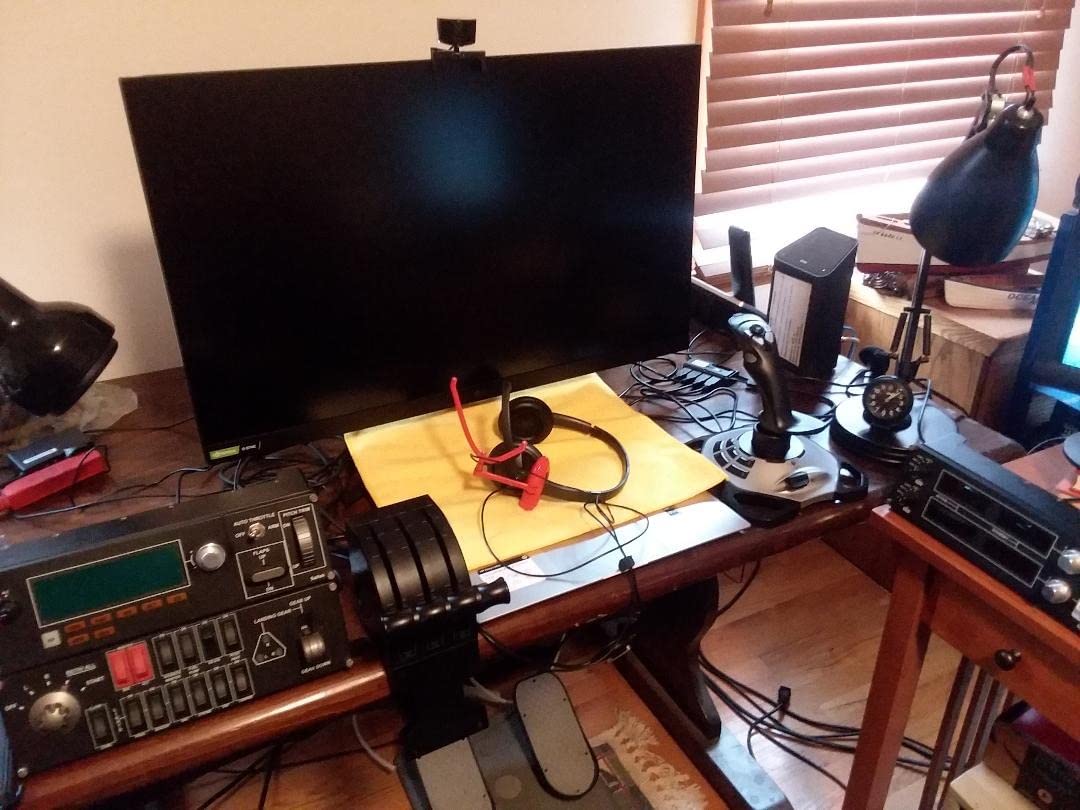
The plug-and-play compatibility with MSFS 2020 is genuinely impressive. I plugged it in, launched the simulator, and all three axes and six buttons were recognized immediately without installing any drivers or configuration software. The adjustable mounting bracket is a thoughtful inclusion – you can mount the quadrant on top of your desk, in front of it, on the pilot side, or on the co-pilot side depending on your layout preferences. The included additional lever heads let you customize the feel of each control for different aircraft types.
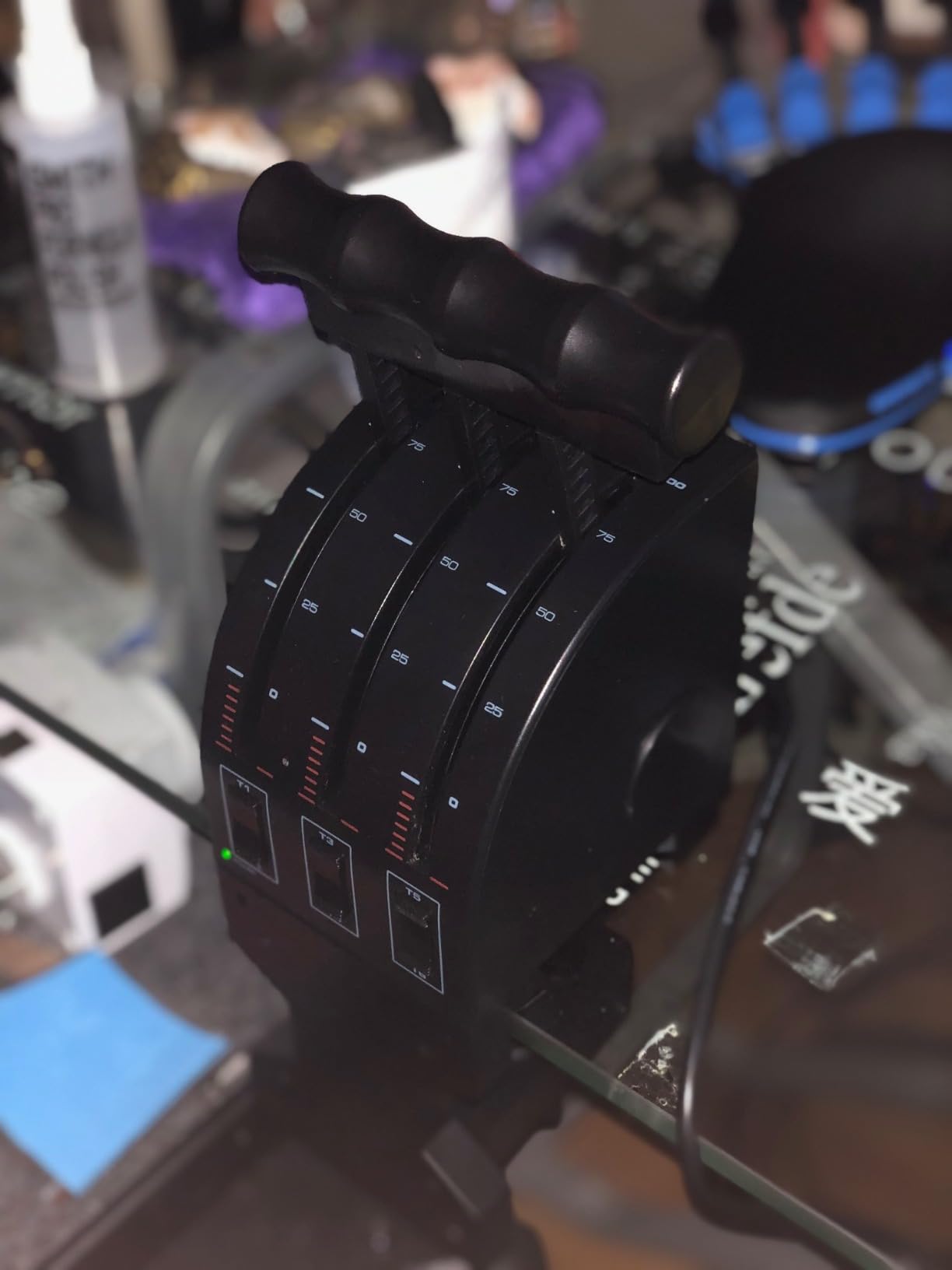
I need to be transparent about the limitations, because they are real and matter depending on your expectations. The all-plastic construction is the most obvious trade-off. Every time I pick up the Logitech throttle after using the Honeycomb Bravo, the difference in build quality is immediately apparent. The desk clamp uses a plastic screw that I have seen snap when overtightened, so handle it carefully during installation. The lever arms are also more fragile – a significant desk accident could break them in a way that metal alternatives would survive.
The control precision is noticeably less refined than premium throttles. Small movements on the levers can cause larger-than-expected throttle jumps, which takes getting used to during precision approaches. The flap control in particular does not recognize every intermediate position cleanly. With only three levers, you cannot natively support four-engine aircraft without buying a second unit, and the 90-day warranty is the shortest in this roundup. For the price, though, these trade-offs are entirely reasonable for beginners and budget-conscious builders.
Who this is for
The Logitech G Saitek Pro Flight Throttle Quadrant is the definitive entry point into flight sim hardware. If you are just getting started with MSFS or X-Plane and want to upgrade from keyboard controls without spending hundreds of dollars, this is the throttle to buy. The plug-and-play setup means you can be flying within minutes, and the three-axis layout covers the essential controls for most general aviation and single-engine turbine aircraft.
This throttle also appeals to budget-minded builders who want to run multiple simulators. Its compatibility with X-Plane, FSX, Prepar3D, and even space sims like Elite Dangerous makes it a versatile addition to any gaming desk. If you have limited desk space, the compact 4.33 x 6.5 x 3.54 inch footprint fits where larger throttles cannot. Users who already own a Logitech yoke or joystick will appreciate the ecosystem integration, and the included extra lever heads add long-term customization value.
Watch out for these issues
If you primarily fly multi-engine airliners or want the realism of four separate engine throttles, the three-lever limitation is significant. You would need to purchase a second Logitech throttle unit and daisy-chain them, which adds cost and complexity. The plastic construction means this throttle will not survive a serious desk crash the way a metal-bodied alternative would. Expect to calibrate the axes using DXTweak2 software for optimal matching between paired levers.
The short 90-day warranty is the weakest in this roundup, so register your product promptly and handle it with care. The buttons are not illuminated flip switches, which means you will need to either memorize their positions or mark them for night flying and VR sessions. If you are looking for a throttle that will last five or more years of heavy use, plan to upgrade within a few years. But as a first throttle or a backup for a secondary sim station, the value is exceptional.
4. Thrustmaster Viper TQS Mission Pack – The Premium Military Flight Sim Throttle
Thrustmaster Viper TQS Mission Pack Metal Throttle Quadrant System with Control Panel, 64 Action Buttons, Hall Effect Joystick Technology, Flight Sim Throttle, Compatible with PC
F-16 1:1 replica
H.E.A.R.T 16-bit Hall Effect
64 action buttons
Modular control panel
Metal build
9.8 lbs
Pros
- Outstanding metal build quality with heavy stable base
- H.E.A.R.T sensors deliver 16-bit resolution with zero drift
- Incredibly smooth throttle with realistic Idle
- Cutoff
- and Afterburner detents
- 64 action buttons provide massive input coverage for DCS
- Swappable modular control panel with hot-swap technology
- Authentic 1:1 scale F-16 replica with excellent ergonomics
- Includes CHAFF/FLARE
- laser sighting
- jammer
- and weapon switches
- Three-level adjustable backlighting for cockpit immersion
- Plug and play with DCS and combat flight sims
- Trim wheel and mini sticks on control panel
Cons
- Very expensive - only justified for serious DCS enthusiasts
- Requires Thrustmaster TARGET software for full functionality
- LED programming has a steep learning curve
- Landing gear lever feels wobbly compared to rest of build
- Plastic throttle shroud and chaff housing feel hollow at this price
- No mounting hardware included for cockpit installation
- Limited support hours (Tue-Sat 3:30pm-6:30pm EST)
- Overkill for civil aviation or casual flight simmers
- Some switches not utilized in all sims without manual rebinding
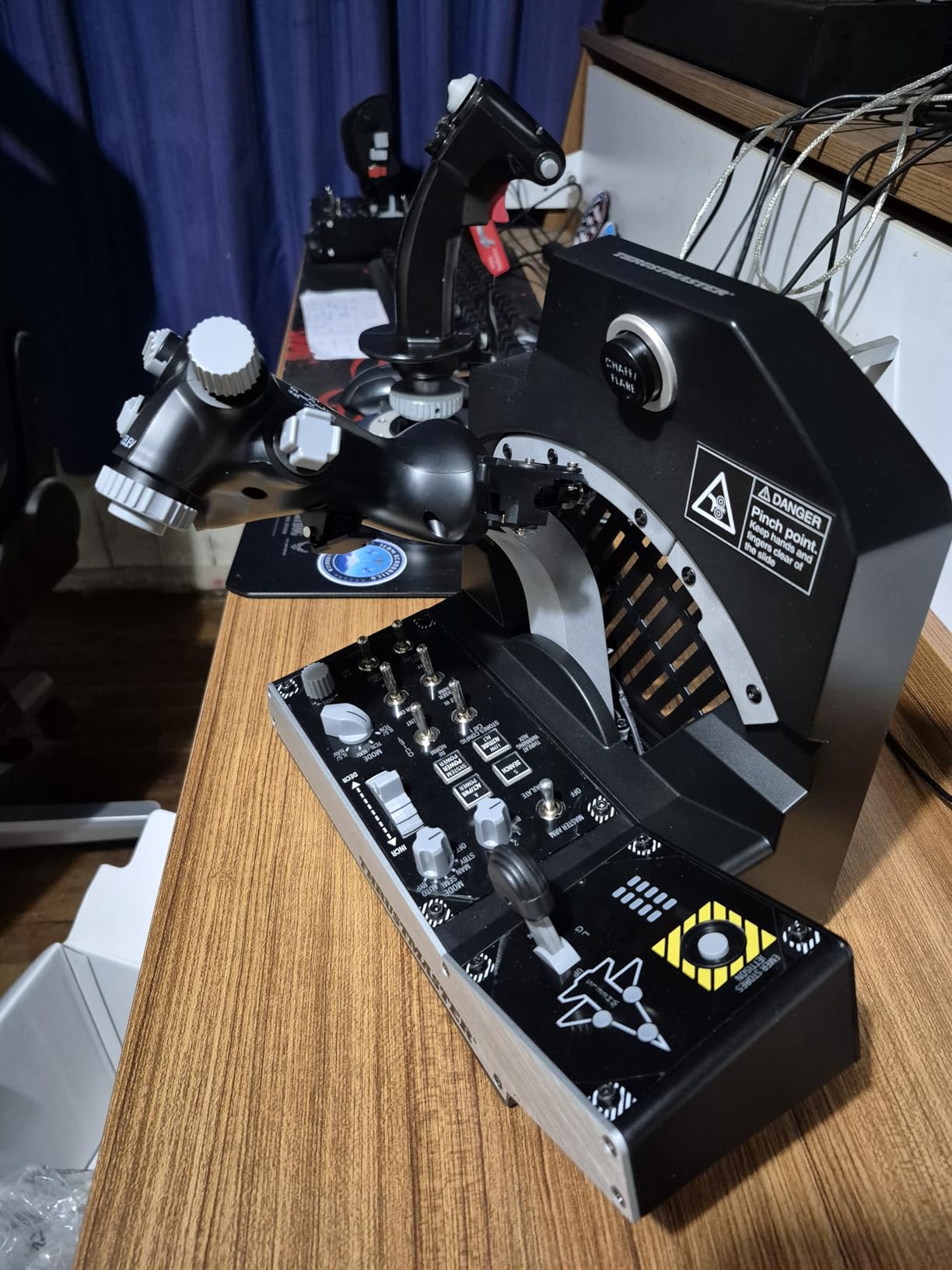
The Thrustmaster Viper TQS Mission Pack is not just a throttle quadrant – it is a love letter to DCS World players and military flight sim enthusiasts. When I lifted the 9.8-pound metal unit out of the box, I immediately understood why this device commands its premium price. This is a 1:1 scale replica of the F-16 Fighting Falcon throttle, and every detail from the Idle and Cutoff detents to the pinky lever for rapid throttle movements feels like it was pulled directly from a real cockpit.
The H.E.A.R.T Hall Effect sensor technology delivers 16-bit resolution with 65,536 values, which translates to zero drift and no dead zones even after hundreds of hours of combat missions in DCS. The throttle movement is silky smooth, and the adjustable friction dial lets you dial in the exact resistance that matches your preferred flying style. The three detents – Idle, Cutoff, and Afterburner – are distinct and satisfying, with the pinky lever providing quick transitions between Cutoff and Idle that are essential for carrier operations.
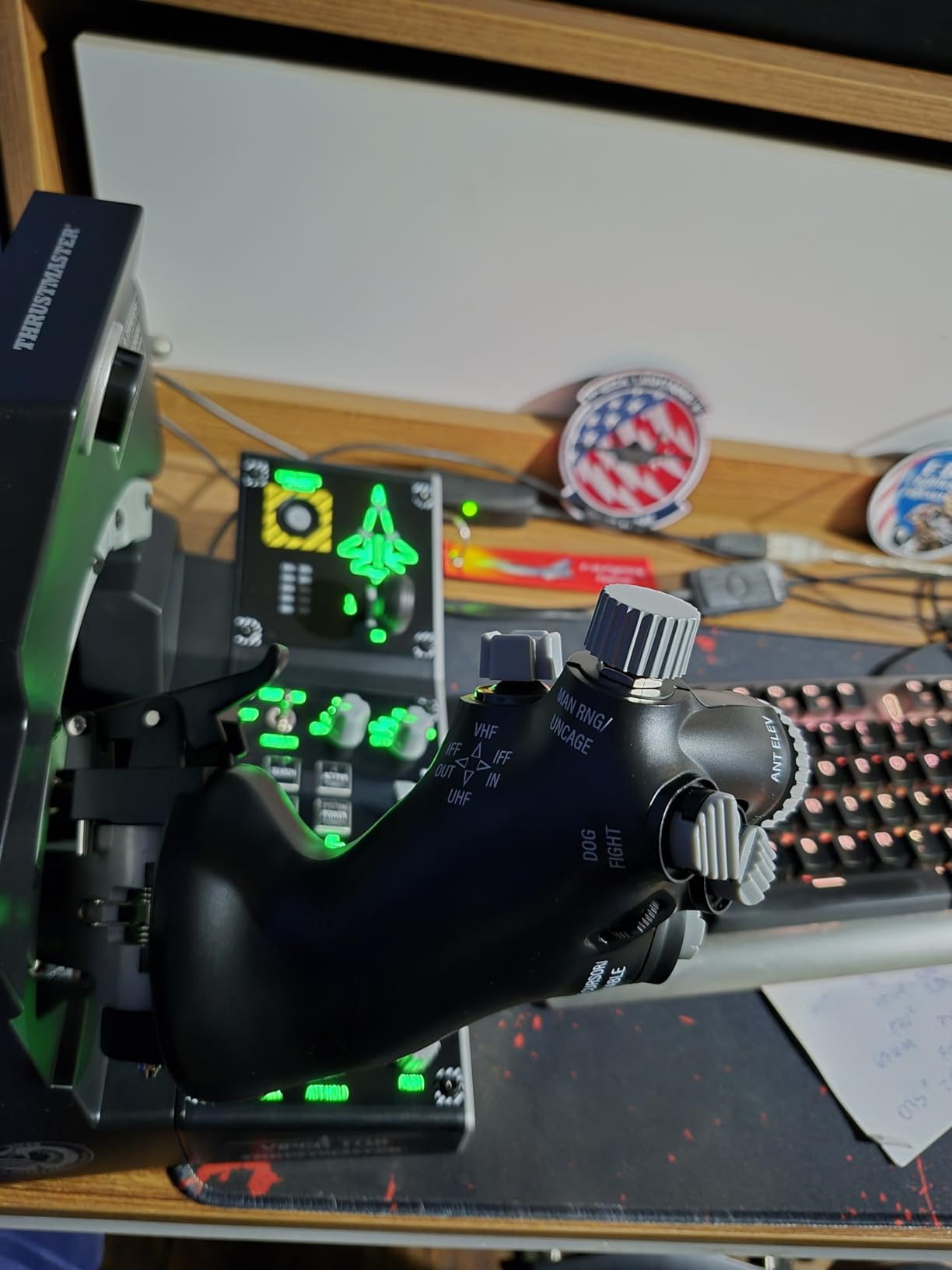
The 64 action buttons spread across six axes give you virtually unlimited control mapping options. The dedicated CHAFF and FLARE slap switch, laser sighting button, jammer controls, and weapon release switches mean you can fly a full combat mission without ever touching your keyboard or mouse. The swappable modular control panel with T MOD hot-swap technology lets you reconfigure button layouts on the fly without restarting your PC, which is incredibly useful when switching between different aircraft modules in DCS. The three-level backlighting adds atmosphere to any cockpit setup.
The Viper TQS is not for everyone, and I want to be clear about that upfront. At its price point, it is exclusively aimed at DCS World and military flight sim enthusiasts who want the most realistic military throttle available. If you primarily fly general aviation in Cessnas or airliners in MSFS, you will never use most of the buttons and features, and you would be far better served by the Honeycomb Bravo or Thrustmaster TCA. The TARGET software required for full LED and button programming has a steep learning curve, and the limited support hours mean you may wait for help if something goes wrong.
Who this is for
The Viper TQS is purpose-built for DCS World players who fly military aircraft, particularly the F-16 Fighting Falcon. If your sim sessions involve air-to-air combat, precision bombing runs, or carrier landings in the Viper module, this throttle gives you the exact control layout and feel that real F-16 pilots use. The 64 buttons, dedicated combat switches, and authentic detent system eliminate the need for keyboard shortcuts during intense combat situations.
This throttle also appeals to military flight sim enthusiasts who want a premium, long-lasting investment. The metal construction and Hall Effect sensors are built to survive years of heavy use, and the modular control panel means you can adapt it as DCS adds new aircraft modules. If you are building a high-end military sim pit and want a centerpiece throttle that looks and feels like the real thing, the Viper TQS delivers on every level. The WinWing Orion2 is its main competitor, but the Viper TQS has a stronger community and better software support.
Watch out for these issues
Budget carefully for this purchase. The Viper TQS costs significantly more than every other throttle in this roundup, and the value only makes sense if you are actively flying combat sims that use its full feature set. The TARGET software programming barrier is real – learning to script LED colors and button functions takes time, and many users report needing to copy community scripts rather than building their own. The plastic throttle shroud and CHAFF/FLARE button housing feel noticeably cheaper than the metal throttle base, which is a strange quality inconsistency at this price level.
Plan for mounting separately. No bolts, screws, or mounting hardware are included, so you will need to source your own if you are building a cockpit rig. The landing gear lever has a wobble that several reviewers have noted, which is surprising given the otherwise excellent build quality. If support is important to you, the three-and-a-half-hour weekly support window (Tuesday through Saturday afternoons only) may be frustrating compared to the 24/7 support offered by larger companies like Logitech.
5. Thrustmaster TCA Quadrant Boeing Edition – The Xbox and Boeing Combo
Thrustmaster TCA Quadrant Boeing Edition – Throttle Quadrant for Xbox Series X|S & PC, Flight Simulator Controls
Boeing + Xbox officially licensed
Dual throttle levers
Hall Effect sensors
17 programmable controls
PC + Xbox Series X
Pros
- Only throttle officially licensed by both Boeing and Xbox
- Hall Effect sensors for contactless precision and durability
- Dual throttle levers with adjustable resistance for multi-engine
- Works seamlessly with Xbox Series X|S and PC
- 17 programmable buttons and autopilot functions
- Reverser handles for realistic reverse thrust
- Autopilot rotary knob for heading and altitude adjustments
- Integrates with Thrustmaster yoke and rudder pedals ecosystem
- Good value for Xbox flight sim setup
- Long throttle range with smooth movement
Cons
- Throttle levers are wobbly and feel less sturdy than yoke
- No tension adjustment option on the throttle levers
- Wide lever spacing makes 4-engine configurations difficult
- Reverser levers are flimsy plastic compared to 3D-printed alternatives
- Levers do not align properly at idle or full thrust positions
- Missing a 4th axis for simultaneous flaps and spoiler control
- Autopilot rotary knob is slow and nearly useless in MSFS 2020
- Elevated 1-star review rate at 13%
- Shipping packaging sometimes inadequate
The Thrustmaster TCA Quadrant Boeing Edition occupies a unique position in the flight sim market: it is the only throttle officially licensed by both Boeing and Xbox. For console simmers who want an authentic Boeing throttle experience on their Xbox Series X, there is no alternative. Having tested it alongside the TCA Airbus Edition and the Honeycomb Bravo, the Boeing version delivers a satisfying dual-throttle experience that pairs well with Thrustmaster’s TCA yoke for a complete Boeing cockpit feel.
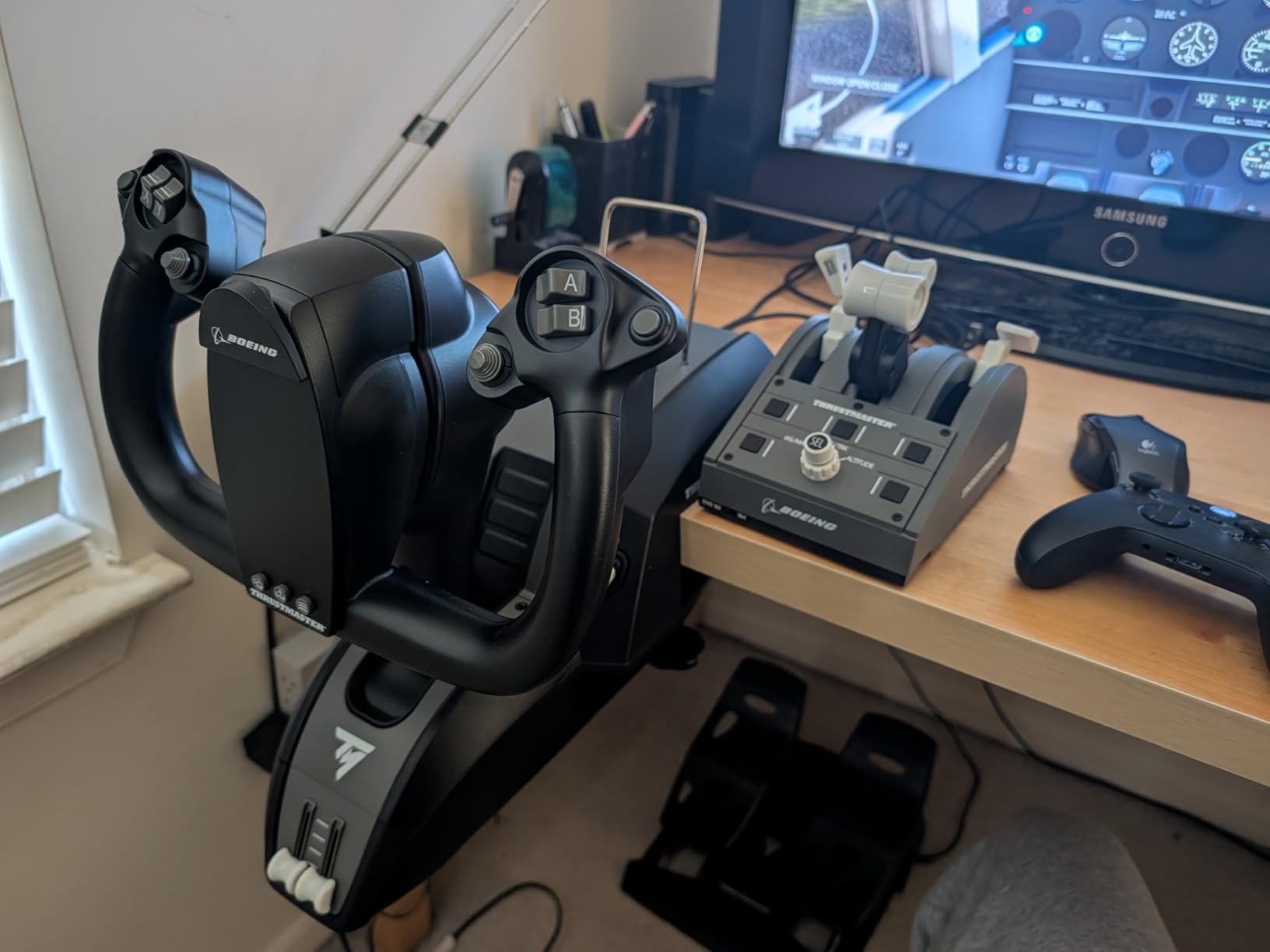
The dual throttle levers are the centerpiece here, and they replicate the wide spacing of a real Boeing 737 throttle. The Hall Effect sensors provide smooth, drift-free tracking, and the adjustable resistance dial lets you customize how much force is required to move the levers. The 17 integrated controls include autopilot functions, reverser handles, and programmable buttons that reduce your dependence on the keyboard during flight. Setting it up on Xbox Series X was straightforward – the console recognized it immediately, and I was taxiing and taking off within minutes.
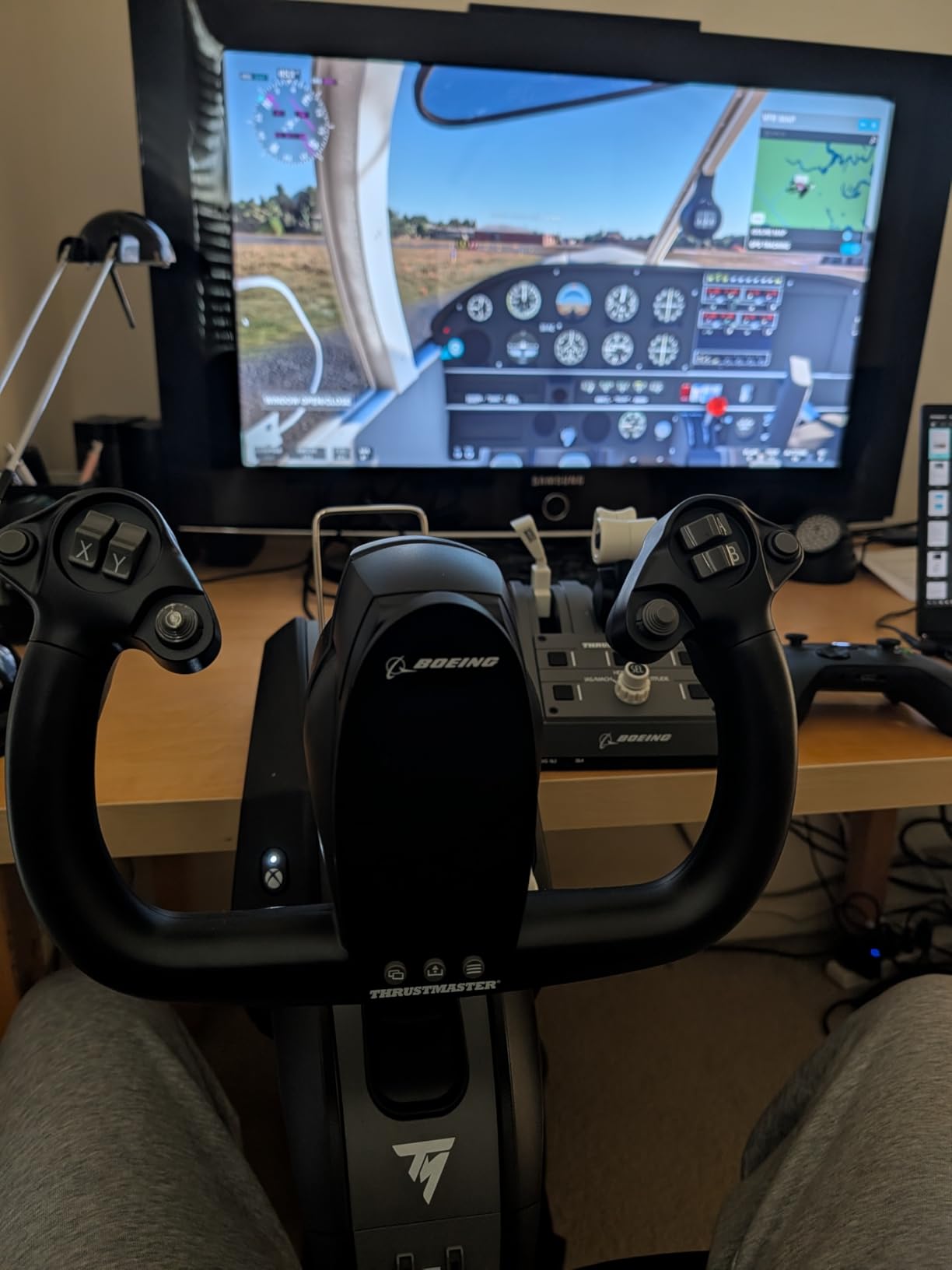
In daily use, the Boeing Edition throttle has some strengths that become apparent during long-haul flights. The long throw of the throttle levers gives fine control over engine power during cruise and approach phases, and the reverser handles provide a satisfying tactile click when deploying thrust reversers on landing. The autopilot rotary knob, while somewhat slow, does allow in-cockpit heading and altitude adjustments without reaching for the mouse. The integration with Thrustmaster’s broader ecosystem means you can pair this with their rudder pedals and yoke for a cohesive setup.
I also need to address the criticisms openly, because they are widespread and valid. The throttle levers have a noticeable wobble that contrasts sharply with the solid feel of the yoke component. Multiple reviewers have reported alignment issues where the levers do not sit flush at idle or full thrust positions, which affects the visual and tactile realism. The reverser handles are made of thin plastic that reviewers have compared unfavorably to 3D-printed replacements available on community marketplaces. The autopilot rotary knob is slow and jumpy enough that many users disable it and use software mapping instead.
Who this is for
The TCA Boeing Edition is the clear choice for Xbox Series X and Series S simmers who want an officially licensed Boeing throttle. If you game on console and have been frustrated by the lack of throttle quadrant options, this is currently your only mainstream option. The Boeing licensing adds authentic visual and tactile details that matter for immersion, and the Hall Effect sensors ensure the throttle will hold up to regular use over time.
This throttle also suits Boeing-focused PC simmers who already have or are considering the Thrustmaster TCA yoke. The matching design language and ecosystem integration create a cohesive cockpit aesthetic that is difficult to achieve with mixed-brand hardware. Users who want dual throttle levers for multi-engine Boeing aircraft like the 737 or 747 will appreciate the wide lever spacing, though be aware that four-engine configurations are challenging without purchasing a second unit. The value proposition is strongest when you factor in the Xbox compatibility, which no competitor offers at any price.
Watch out for these issues
The 13% one-star review rate is the highest among all the throttles in this roundup, and it reflects genuine quality control issues that affect a notable minority of buyers. Shipping packaging has been reported as inadequate, with the retail box arriving without protective tape. If you order this throttle, inspect it carefully on arrival. The wobbly lever feel is a design characteristic rather than a defect, but it significantly reduces the premium feel that the Boeing licensing and Hall Effect sensors suggest.
The missing fourth axis is a real limitation if you want to map both flaps and spoiler controls independently. The wide lever spacing that replicates the Boeing cockpit layout makes it difficult to reach both levers comfortably in a four-engine setup. The autopilot rotary knob’s poor responsiveness in MSFS 2020 means you will likely need to remap autopilot functions to the programmable buttons instead. Consider whether the Xbox and Boeing licensing justifies these compromises compared to the TCA Airbus Edition or Honeycomb Bravo for PC-only users.
6. Cessna USB Style Throttle Flaps and Trim Controller – The GA Purist’s Choice
Cessna USB Style Throttle Flaps and Trim Controller (TPM) For Flight Simulators PC/Mac
Authentic Cessna 172/182 controls
Push-pull throttle
10-rotation trim wheel
Friction lock
No drivers needed
Made in USA
Pros
- Extremely realistic Cessna 172/182 throttle feel
- Push-pull throttle
- prop
- and mixture with proper friction
- Elevator trim wheel with 10 complete rotations for analog precision
- Throttle friction lock nut holds position securely
- Plug and play - no drivers needed on Windows or Mac
- Works with MSFS 2020/2024
- X-Plane
- and Prepar3D
- Excellent customer service from small business owner
- Solid build with satisfying tactile controls
- Very easy to set up and configure
- Made in the USA by a responsive small business
Cons
- 3D-printed construction may crack under strain over time
- Desk mount screw can crack and separate (early production issue)
- Flap switch 3D-printed rod can separate from toggle
- Very limited review base at 133 reviews
- Not compatible with Xbox or PlayStation
- Only 10 buttons - fewer inputs than competitors
- Small business means less formal support structure
- Early production units had quality issues (owner addresses proactively)
Every flight sim enthusiast I have talked to who flies primarily general aviation aircraft eventually asks the same question: why does no mainstream throttle feel like the real Cessna or Piper controls? The Cessna USB Style Throttle from Flight Sim Stuff answers that question directly. This is a purpose-built throttle quadrant that replicates the push-pull throttle, propeller, and mixture controls of a real Cessna 172 or 182, complete with a friction lock nut and a 10-rotation elevator trim wheel that delivers analog precision no digital alternative can match.
The realism is genuinely surprising for the price. When I first moved the throttle lever, the push-pull resistance felt exactly like the real Cessna throttle I have used at my local flight school. The friction lock nut on the throttle lets you set a position and leave it there, just like in a real aircraft. The trim wheel provides ten complete rotations for precise pitch adjustments during approach, and the flaps toggle has a satisfying mechanical click that digital switches simply cannot replicate. This is the closest you can get to sitting in a real Cessna cockpit without actually being in one.
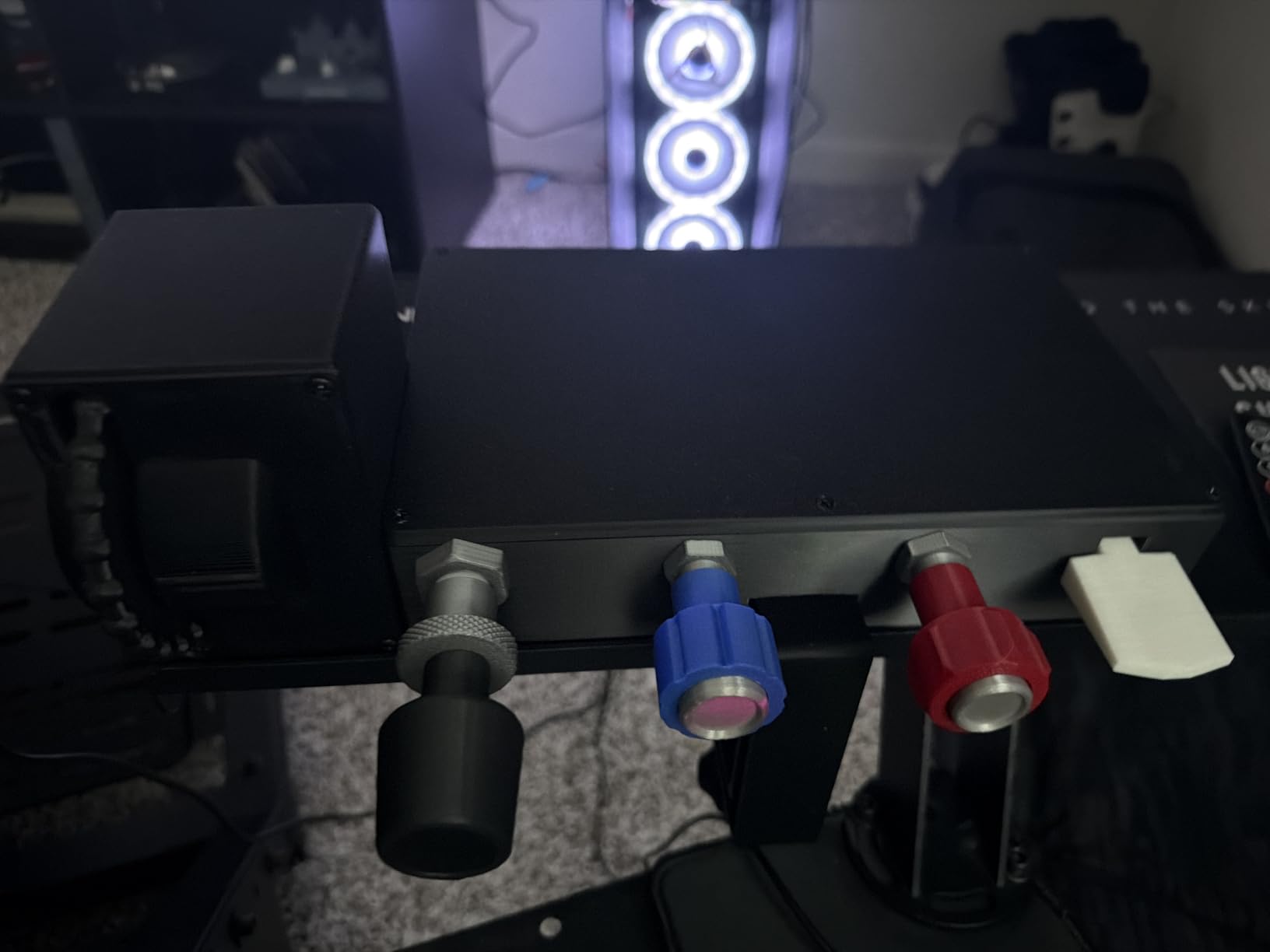
Setup is remarkably simple. The controller is plug and play on both Windows and Mac with no driver installation required, and it was recognized immediately by MSFS 2020, X-Plane 12, and Prepar3D in my testing. The 10-foot USB cable gives you plenty of flexibility for desk positioning, and the compact 12 x 5.75 x 4 inch form factor means it fits on desks where larger throttles would be cramped. The responsive small business behind the product deserves special mention – the owner actively engages with customers, addresses production issues publicly, and has built a loyal community around the product.
The 3D-printed construction is simultaneously this throttle’s greatest strength and its biggest limitation. It enables the small business to produce custom, realistic controls at accessible prices and iterate quickly on design improvements. However, the early production units did experience issues with the desk mount screw cracking and the flap switch rod separating from its toggle. The owner has addressed these issues proactively in newer production runs, but the inherent nature of 3D-printed parts means long-term durability under heavy stress remains a question mark compared to injection-molded or metal alternatives.
Who this is for
The Cessna TPM Controller is tailor-made for general aviation simmers who fly Cessna 172s, 182s, or similar high-wing aircraft in MSFS and X-Plane. If your sim sessions revolve around VFR cross-country flights, touch-and-go practice, or instrument training in GA aircraft, this throttle delivers a realism level that no generic throttle quadrant can approach. The push-pull controls and 10-rotation trim wheel are features that generic throttles simply do not offer, and they make an enormous difference in immersion for GA flying.
This throttle also appeals to simmers who want to support small businesses and makers in the flight sim community. The owner’s transparency about production issues and commitment to addressing them creates a trust relationship that is increasingly rare in consumer electronics. Private pilots using simulators for training or proficiency maintenance will appreciate the realistic control feel that more closely mirrors their actual aircraft. If you have a Honeycomb Alpha yoke and want a matching throttle that complements rather than imitates it, the Cessna TPM is the perfect GA-focused addition.
Watch out for these issues
The limited production capacity of a small business means you may encounter wait times or stock availability issues, especially during peak demand periods. The 3D-printed construction requires a different ownership mindset than mass-produced throttles – treat it with care, avoid over-tightening the mount screw, and inspect the flap switch periodically. The 133-review base is substantially smaller than any mainstream product in this roundup, which means there is less community data on long-term durability and reliability over multiple years of use.
The 10-button count is the lowest in this roundup, which limits your control mapping options if you fly complex aircraft that require many inputs. The lack of Xbox and PlayStation compatibility means this is strictly a PC solution. If you primarily fly airliners, military jets, or multi-engine turboprops, the Cessna TPM’s GA-specific design will feel restrictive. But for the specific use case it targets – authentic Cessna 172/182 simulation – it delivers a genuinely exceptional experience that no other product in this price range can match.
What to Look for When Buying a Throttle Quadrant
Choosing the right throttle quadrant depends on more than just price and brand reputation. The aircraft you fly, the simulator software you use, and your available desk space all play critical roles in determining which throttle is the best fit. Here is what I consider when recommending a throttle to fellow flight sim enthusiasts.
Aircraft Type and Simulator Compatibility
Match your throttle to the aircraft you fly most often. If you spend the majority of your sim time in Airbus aircraft like the A320neo, the Thrustmaster TCA Quadrant Airbus Edition gives you the authentic side-stick throttle arrangement with proper detents for climb, idle, and flex thrust. Boeing-focused simmers should look at the TCA Boeing Edition for Xbox or the Honeycomb Bravo for PC, which handles Boeing-style center throttles and multi-engine configurations with ease. General aviation enthusiasts who fly Cessna 172s and Piper Arrows will appreciate the Cessna TPM Controller’s push-pull controls and analog trim wheel.
Software compatibility is equally important. MSFS 2020 and MSFS 2024 work natively with virtually every throttle on this list, but X-Plane 12 support varies. The Honeycomb Bravo has known compatibility gaps with X-Plane 12 on Apple Silicon Macs. The Thrustmaster TCA Airbus Edition works well with X-Plane 12 on PC, while the Logitech G Saitek Pro Flight works with X-Plane across both Windows and Mac. DCS World users should prioritize the Thrustmaster Viper TQS for its plug-and-play recognition and combat-specific button layout. Always verify compatibility with your specific simulator version before purchasing.
Sensor Technology: Hall Effect vs. Potentiometer
The sensor technology inside your throttle determines how smoothly and accurately it tracks lever movement over time. Hall Effect sensors use magnetic fields to detect position without physical contact, which means zero wear, zero drift, and an effectively unlimited lifespan. Every throttle in this roundup except the Logitech G Saitek Pro Flight uses Hall Effect sensors, and the difference in long-term reliability is significant. The Thrustmaster Viper TQS takes this further with H.E.A.R.T 16-bit resolution, delivering 65,536 distinct position values for military-grade precision.
Potentiometer-based sensors, which the Logitech G Saitek uses, rely on physical contact between a wiper and a resistive track. Over years of use, this contact point can develop dead zones, become scratchy, or drift out of calibration. For casual or beginner use, potentiometers are entirely adequate and cost-effective. But if you are investing in a throttle you expect to last through years of sim sessions, Hall Effect sensors are worth the premium. The difference becomes especially noticeable during precise throttle management during instrument approaches and carrier landings.
Build Quality and Materials
The weight and materials of a throttle quadrant directly impact both realism and desk stability. The Thrustmaster Viper TQS, at 9.8 pounds of predominantly metal construction, feels like a piece of aviation equipment rather than a computer peripheral. The Honeycomb Bravo uses aerospace-grade components that provide substantial heft without being excessively heavy. The Thrustmaster TCA models use a mixed construction that is lighter but still feels solid for their size. The Logitech G Saitek and Cessna TPM are the lightest options, and their plastic-dominant construction affects both tactile realism and long-term durability.
Consider how the throttle will stay in place during vigorous use. A heavy metal throttle like the Viper TQS does not need much help staying put, but lighter throttles rely on their mounting systems. The Honeycomb Bravo offers both desk clamps and suction pad mounting, while the Logitech G Saitek includes an adjustable bracket. The Cessna TPM uses a simpler mount that some early users reported issues with. If you plan to mount your throttle in a home cockpit rig or use it during vigorous control inputs, invest in a secure mounting solution.
Desk Space and Mounting Considerations
Throttle quadrants vary dramatically in their footprint, and this is one of the most overlooked factors in the buying decision. The Honeycomb Bravo at 12.44 x 17.64 inches is nearly 18 inches wide – it will consume a significant portion of your desk and needs to be measured carefully before ordering. The Thrustmaster TCA Airbus Edition at 12.2 x 9.25 inches is roughly half that width and fits comfortably on narrower desks. The Logitech G Saitek at 4.33 x 6.5 inches is the most space-efficient option in this roundup.
Think about your complete setup when planning throttle placement. If you are using a yoke, the throttle typically sits to the right of the yoke base, which means you need enough horizontal space for both devices. VR users who remove their monitors from view may appreciate a more compact throttle that fits within arm’s reach. Home cockpit builders with dedicated frames have more flexibility but should still verify that mounting holes and bracket systems are compatible. When in doubt, measure your available space twice and compare it against the product dimensions before ordering.
Throttle and Yoke Pairing Recommendations
Pairing your throttle with a compatible yoke creates a cohesive cockpit that feels more like real aviation. The most natural pairing in the market is the Honeycomb Alpha yoke with the Honeycomb Bravo throttle – they share the same premium build quality, design language, and mounting system, and the Bravo was designed with the Alpha yoke user in mind. If you already own a Honeycomb Alpha, the Bravo is the obvious throttle upgrade path.
Thrustmaster offers a comprehensive ecosystem where their TCA yoke, TCA throttle, and TPR rudder pedals all integrate through a single USB hub. The TCA Boeing Edition yoke and throttle pair together for a complete Boeing cockpit experience on Xbox or PC. Logitech G users can pair the Saitek Pro Flight Yoke with the Saitek Pro Flight Throttle for a matched set that works across all major simulators. For users with existing hardware from different brands, most throttles work independently via USB, so mixing brands is generally not a problem as long as your simulator software supports multiple input devices.
Our team found that the most common mistake simmers make is buying a throttle without considering what yoke they already own or plan to buy. The Honeycomb Bravo pairs best with the Alpha yoke, but it also works fine with other yokes – the key advantage is that they share mounting hole patterns and visual design. If you have limited desk space and already own a Thrustmaster yoke, the compact TCA Airbus Edition keeps your overall footprint manageable while maintaining ecosystem consistency. Plan your complete cockpit setup before buying individual components.
The flight sim throttle market in 2026 offers something for every type of pilot, from the budget-conscious beginner to the dedicated DCS World veteran. The Honeycomb Bravo Throttle Quadrant remains the most versatile and feature-complete option for most simmers, handling everything from Cessna 172s to Boeing 747s with exceptional build quality. For those on a tighter budget, the Logitech G Saitek Pro Flight Throttle Quadrant delivers surprising capability at a fraction of the cost.
If you fly specific aircraft types, the specialized options deserve serious consideration. The Thrustmaster TCA Quadrant Airbus Edition is the authentic choice for Airbus simulation, while the TCA Boeing Edition is the only Xbox-compatible option for Boeing enthusiasts. The Cessna TPM Controller serves GA purists with unmatched realism for Cessna-style flying, and the Viper TQS Mission Pack is the ultimate destination for DCS World combat sim players.
My recommendation is straightforward: buy the throttle that matches the aircraft you fly most. Do not pay for features you will never use, but do not undersell yourself on build quality and sensor technology if you plan to fly for years. The best throttle quadrant is the one you will actually use every time you launch your simulator.