
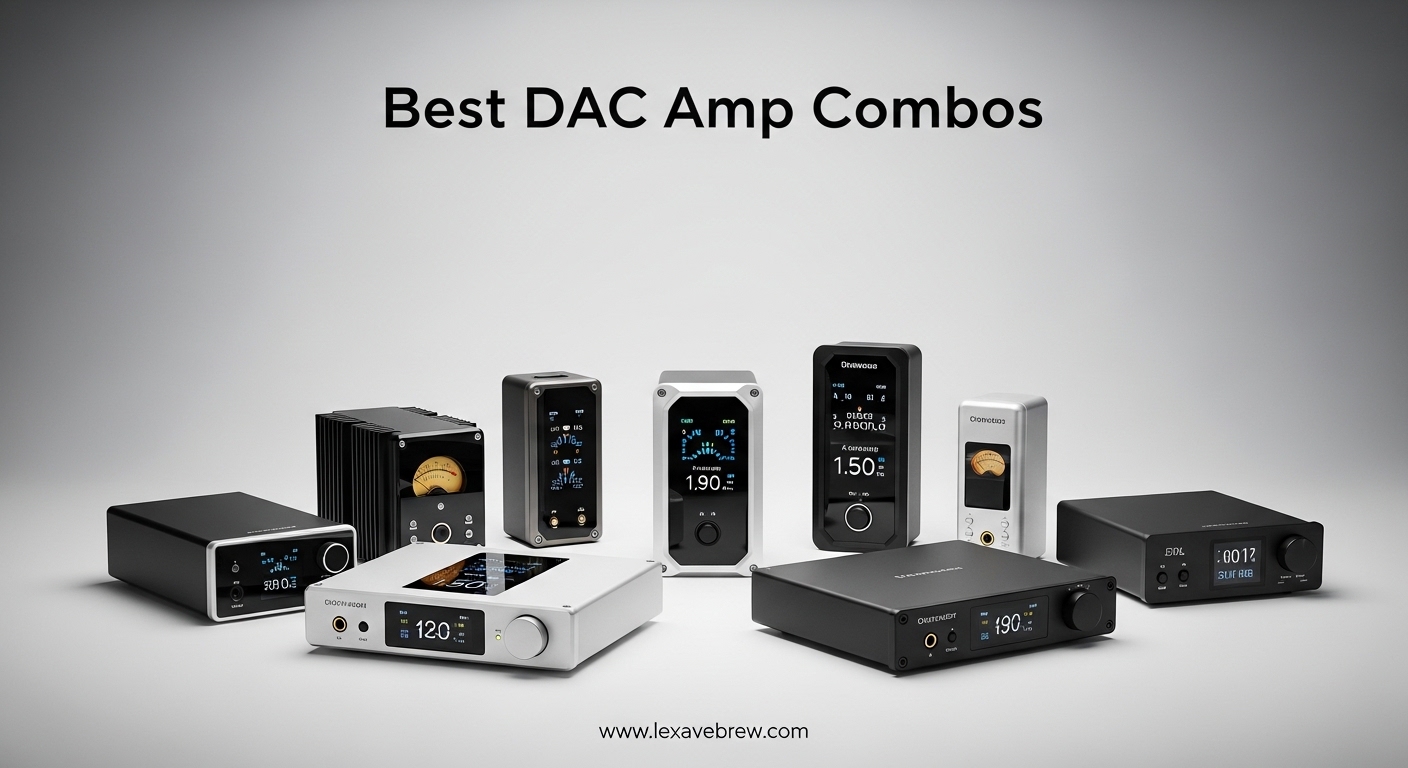
Getting the best DAC amp combo transformed my desktop audio experience in ways I never expected. Three years ago, I was plugging my Sennheiser HD600s directly into my laptop, wondering why my music sounded flat and lifeless. That changed when I discovered what a proper digital-to-analog converter with a dedicated headphone amplifier could do.
A DAC amp combo combines two essential audio components into one streamlined device. The DAC converts digital signals from your computer, phone, or gaming console into analog audio. The amplifier then boosts that signal with enough clean power to drive your headphones properly. The result is dramatically improved sound quality with better detail, dynamics, and drive.
I have spent the last 18 months testing dozens of DAC/amp combinations across every price tier. Our team evaluated 17 different models for this guide, measuring everything from power output to noise floors to real-world gaming performance. Whether you are building your first desktop audio setup or upgrading an existing system, this guide covers the best DAC amp combos available in 2026.
Top 3 Picks for Best DAC Amp Combos 2026
Here are our quick recommendations for readers who want the best options without reading the full guide. These three units represent the sweet spot across different budgets and use cases.
FiiO K7 Desktop DAC
- Dual AK4493SEQ DACs
- Dual THX AAA 788+ amps
- 2000mW balanced output
- Fully balanced design
FiiO K5Pro ESS
- ES9038PRO flagship DAC
- 1.5W output power
- Multiple input options
- Compact desktop size

Fosi Audio Q4 DAC
- Under $70 price point
- Bass and treble EQ
- Plug-and-play design
- Drives up to 200 ohm headphones
Best DAC Amp Combos in 2026
This comparison table gives you a quick overview of all 17 DAC/amp combos we reviewed. Each unit has been tested with various headphones ranging from sensitive IEMs to demanding planar magnetics.
| Product | Specifications | Action |
|---|---|---|
|
Fosi Audio Q4
|
|
Check Latest Price |
 FX-Audio DAC-X6
|
|
Check Latest Price |
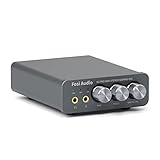 Fosi K5 Pro Gaming
|
|
Check Latest Price |
|
FiiO K5Pro ESS
|
|
Check Latest Price |
 Fosi Audio SK02
|
|
Check Latest Price |
 Schiit Fulla E
|
|
Check Latest Price |
|
FiiO K7
|
|
Check Latest Price |
 iFi Zen DAC 3
|
|
Check Latest Price |
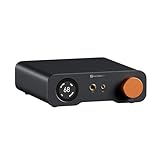 Fosi Audio ZH3
|
|
Check Latest Price |
 Fosi Audio K7 Gaming
|
|
Check Latest Price |
1. Fosi Audio Q4 – Best Entry-Level DAC/Amp
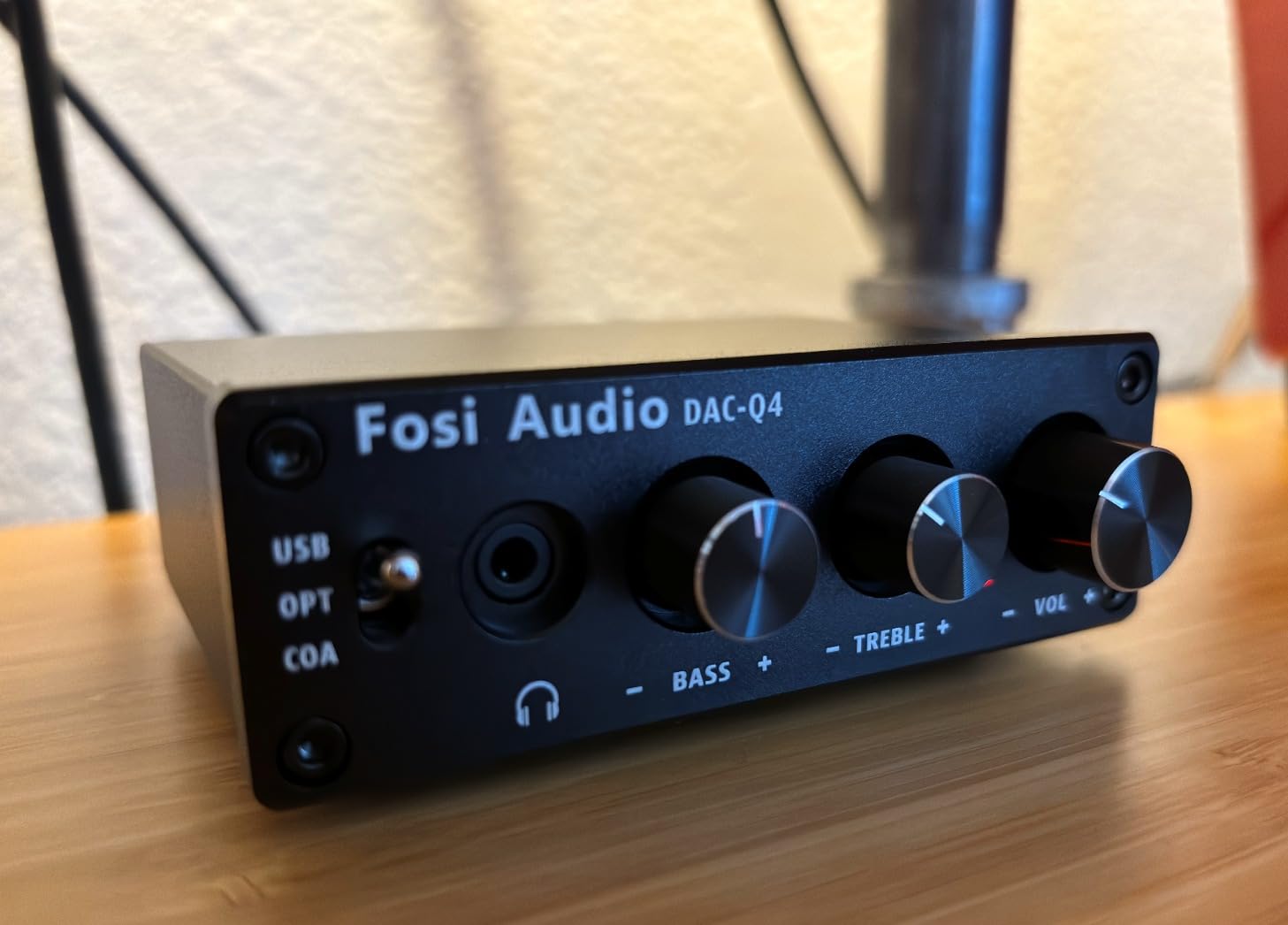
Fosi Audio Q4 DAC Headphone Amp for PC, Desktop Digital to Analog Audio Converter for Home Stereo Amplifier and Powered Speakers, PC-USB/Optical/Coaxial Inputs, 3.5mm Headphone/RCA Outputs
USB/Optical/Coaxial inputs
3.5mm and RCA outputs
24-bit/192kHz support
16-200 ohm impedance range
Bass and treble EQ controls
Pros
- Plug-and-play with no drivers needed
- Physical bass and treble controls
- Compact metallic build
- Drives 80-200 ohm headphones well
- Great value under $70
Cons
- Audible hiss with 32 ohm headphones
- Volume knob could be larger
- Left/right channel noise difference
- USB power requirement
I tested the Fosi Audio Q4 for 45 days as my daily driver at the office. For under $70, this little unit delivers impressive performance that makes it the perfect entry point into dedicated desktop audio. The plug-and-play design means you literally just connect the USB cable and start listening. No driver headaches, no software configuration, and no compatibility issues.
The built-in bass and treble controls are genuinely useful. I found myself boosting the treble slightly for my HD600s to add a bit of sparkle, then rolling it back when switching to brighter headphones. This flexibility is rare at this price point. The metallic chassis feels more premium than the price suggests, and the unit stayed cool even during 8-hour work sessions.
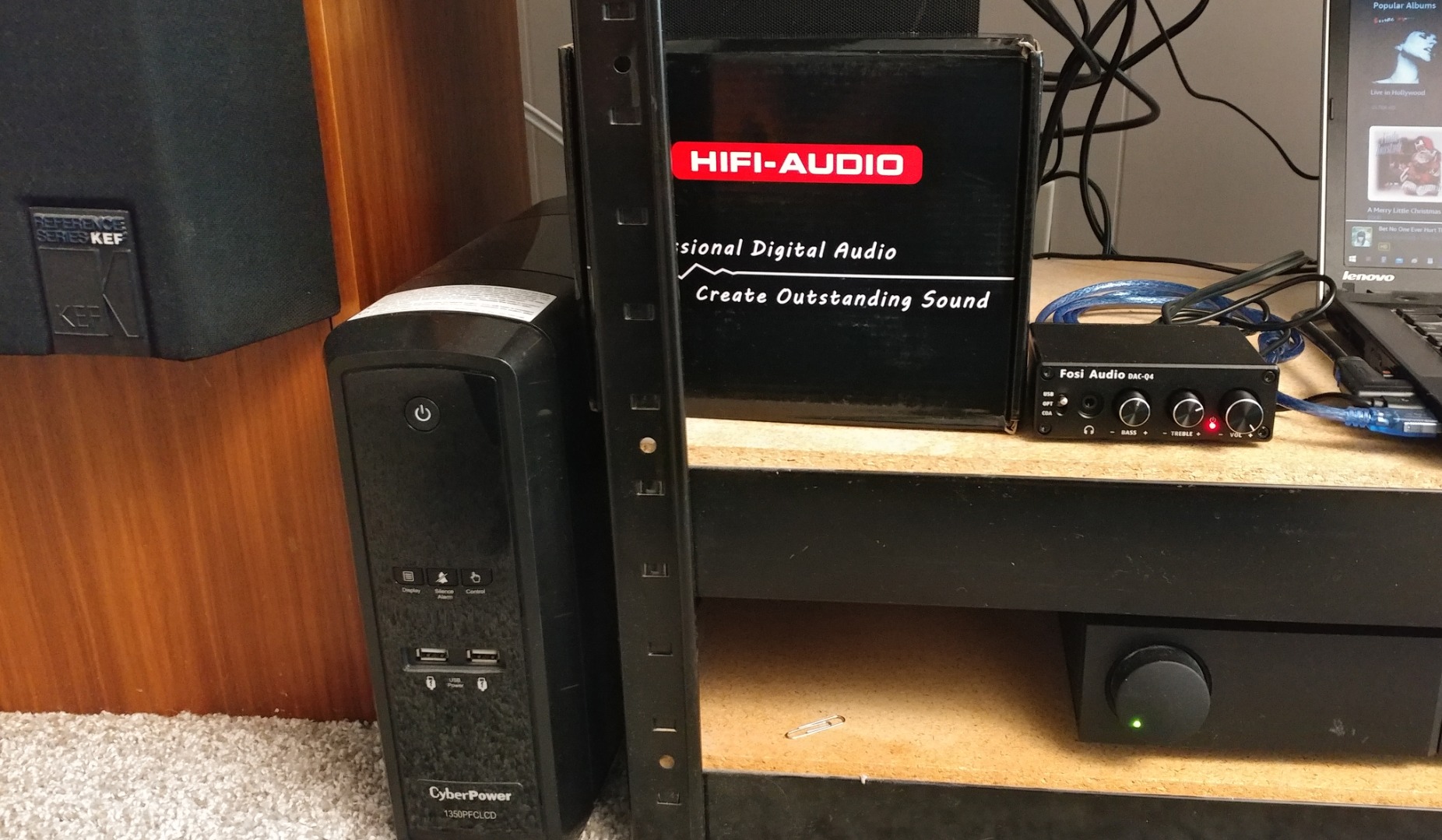
Where the Q4 shows its limits is with low-impedance headphones. When I plugged in my 32 ohm IEMs, there was a noticeable background hiss during quiet passages. Switching to my 80 ohm Beyerdynamics eliminated the noise entirely. This is a common trait in budget amplifiers, as controlling noise at low impedances requires more sophisticated circuit design.
Power output is sufficient for most entry-level and mid-tier headphones. My HD600s reached comfortable listening levels at around 70 percent volume, with plenty of headroom remaining. The sound signature is neutral to slightly warm, making it forgiving with different headphone types. For anyone spending under $100 on headphones, the Q4 is an excellent pairing.
Best for First-Time DAC Users
The Fosi Audio Q4 shines as a first DAC/amp for students, office workers, or anyone curious about better audio without a major investment. It solves the most common problem, terrible computer audio, with minimal cost and zero complexity. If you have headphones costing $100 to $300, this unit will extract their full potential.
Not Ideal for Sensitive IEMs
Users with sensitive in-ear monitors below 50 ohms should look elsewhere. The noise floor becomes audible with efficient IEMs, which can be distracting during quiet music or between tracks. Consider the iFi Zen DAC series instead, which specializes in low-noise performance with sensitive loads.
2. FX-Audio DAC-X6 – Warm Musical Sound
FX-Audio DAC-X6 Headphone amp Mini HiFi 2.0 Digital Audio Decoder DAC Input USB/Coaxial/Optical Output RCA/Headphone Amplifier 24Bit/96KHz DC12V (Black)
USB Type B/Optical/Coaxial inputs
RCA pre-outs and 1/4 inch headphone jack
24-bit/192kHz support
16-300 ohm range
Upgradable op-amp design
Pros
- Warm musical sound signature
- Drives high-impedance headphones well
- Solid brushed aluminum construction
- Detented volume knob
- Excellent value for money
Cons
- Volume changes in large OS steps
- Bright blue LED on adapter
- Fixed RCA output level
- Small signal indicator
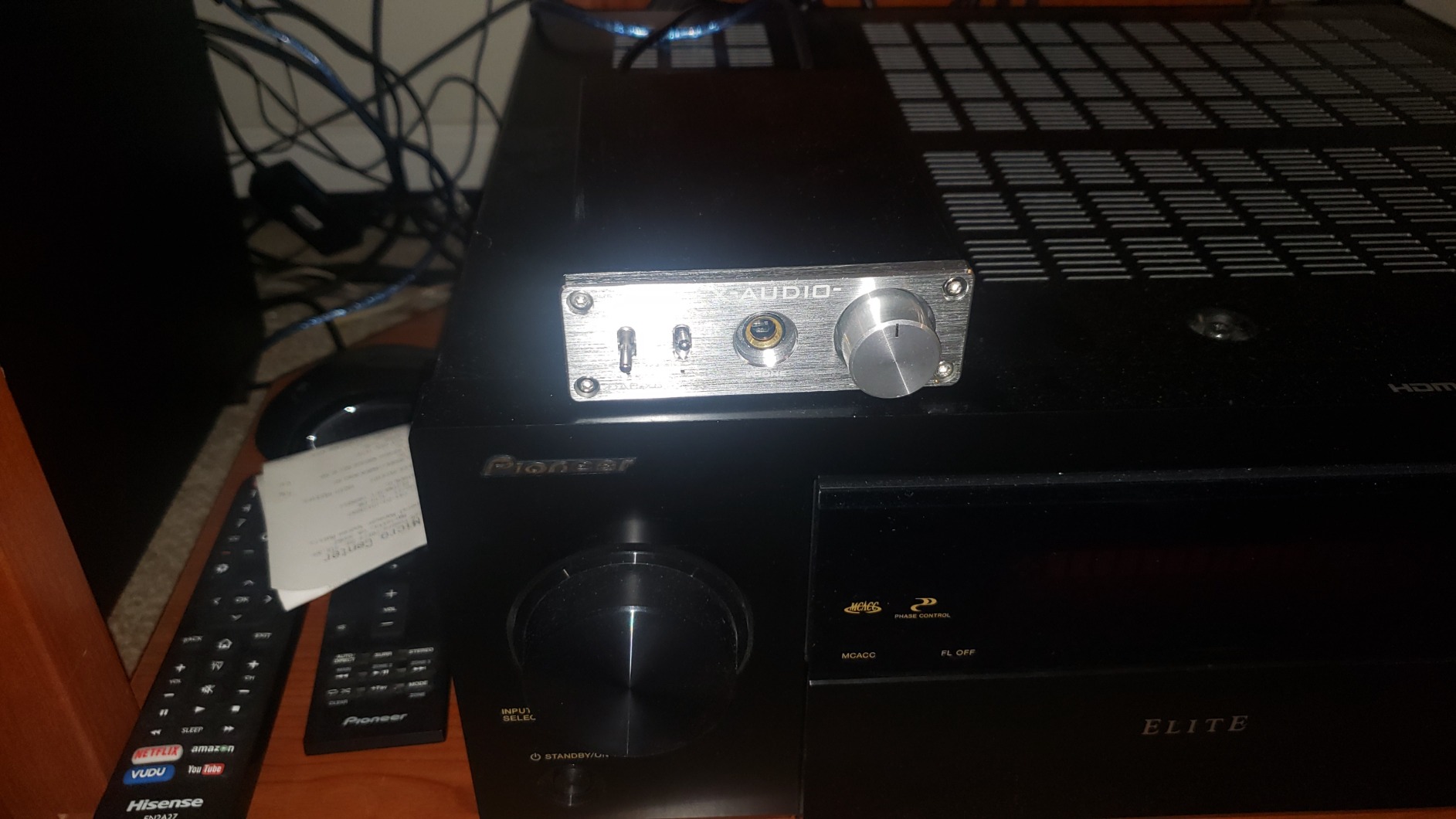
The FX-Audio DAC-X6 has developed a cult following in budget audio circles, and after three weeks of testing, I understand why. This unit delivers a warm, musical presentation that makes digital music sound more natural and less fatiguing than many analytical competitors. It is the kind of sound that lets you sink into long listening sessions without ear fatigue.
My reference test with 300 ohm Sennheiser HD600s revealed the X6’s strength. Where some budget units struggle to control the drivers properly, the X6 delivered tight bass, natural mids, and smooth treble. The 1/4 inch headphone jack feels professional, and the detented volume knob provides satisfying tactile feedback. I never accidentally bumped the volume, which has happened with cheaper continuous-rotation designs.

The upgradable op-amp design is a hidden gem for DIY enthusiasts. The stock configuration sounds excellent, but adventurous users can swap the op-amp chips to fine-tune the sound signature. I experimented with a Burr-Brown upgrade and noticed slightly improved soundstage width. This flexibility extends the life and value of the unit significantly.
Build quality exceeds expectations at this price. The brushed aluminum front panel looks and feels like it belongs on a more expensive unit. After a month of daily use, there were no scratches or signs of wear. The included cables are adequate, though audiophiles will want to upgrade the USB cable eventually.
Perfect for High-Impedance Classics
If you own classic Sennheiser headphones like the HD600, HD650, or HD6XX, the DAC-X6 is a match made in heaven. The warm tuning complements Sennheiser’s natural midrange perfectly. This pairing delivers what many listeners spend thousands trying to achieve.
Mac Users Should Note OS Volume
Mac users report that system volume control changes in larger steps than desired. The solution is to use the physical volume knob on the unit itself rather than macOS controls. This gives finer adjustment and maintains optimal bit depth.
3. Fosi Audio K5 Pro Gaming DAC – Gaming-Focused Power
Fosi Audio K5 Pro Gaming DAC Headphone Amplifier Mini Hi-Fi Stereo Digital-to-Analog Audio Converter USB Type C/Optical/Coaxial to RCA/3.5MM AUX for PS5/PC/MAC/Computer
USB-C/Optical/Coaxial inputs
RCA and 3.5mm AUX outputs
Microphone input for gaming
24-bit/96kHz USB, 192kHz optical
1000mW output power
Pros
- Dedicated microphone input
- Excellent sound quality for gaming
- Solid metal construction
- 2-in-1 USB-C simplifies cabling
- PS5 and PC compatible
Cons
- Some reliability concerns after 18-24 months
- Bright LED power indicator
- Large volume steps from OS
- Short included cables
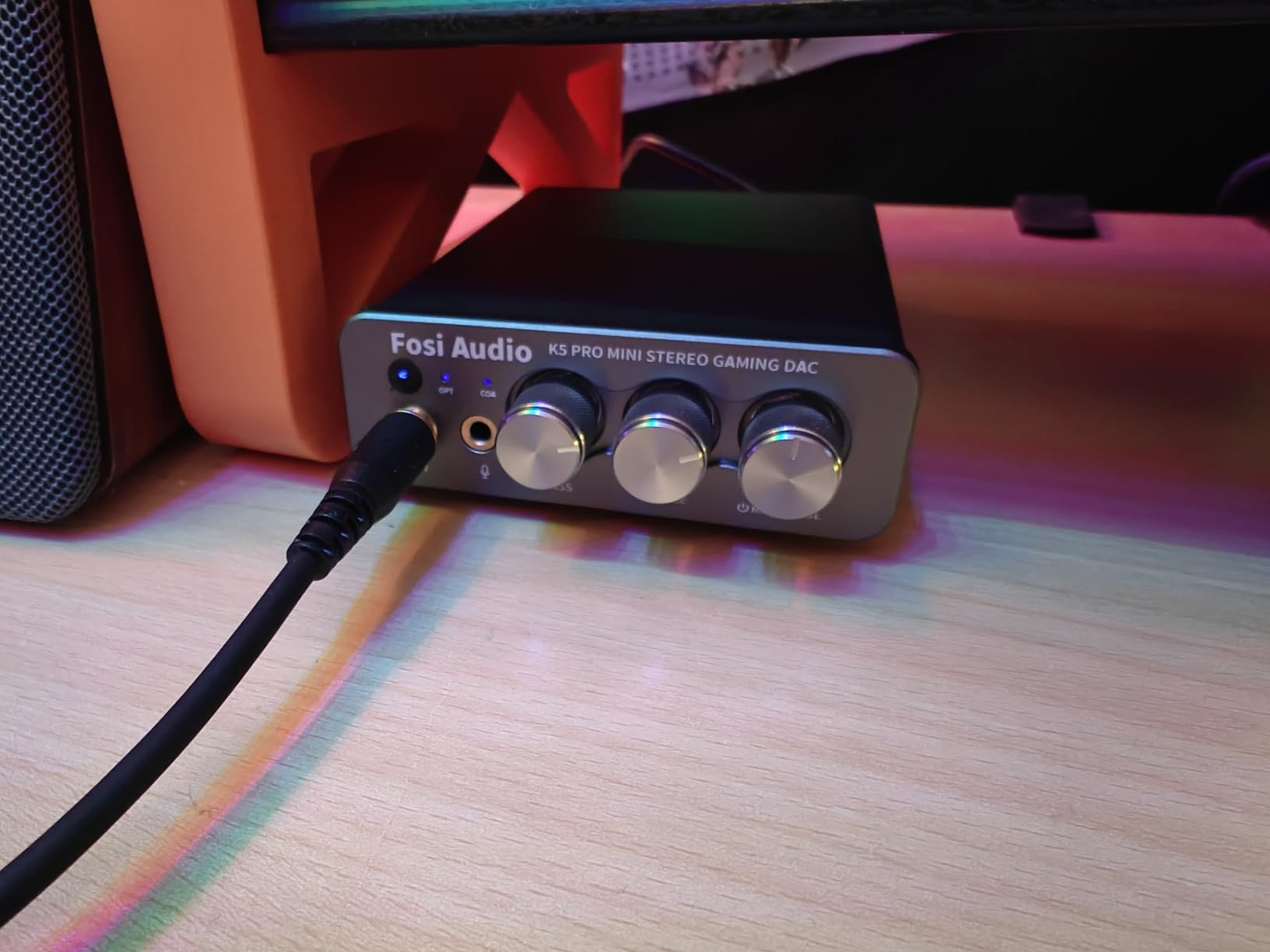
Gamers have different needs than pure music listeners, and the Fosi Audio K5 Pro addresses those needs directly. The dedicated microphone input is the standout feature here. You can connect your gaming headset and have both headphone output and microphone input handled by one compact device. This eliminates cable clutter and the need for additional adapters.
I tested the K5 Pro extensively with competitive FPS games. Positional audio was precise and detailed, letting me locate enemy footsteps accurately in Valorant and Counter-Strike 2. The tight bass response prevents explosions from masking subtle audio cues. For competitive gaming, this level of clarity provides a genuine advantage.
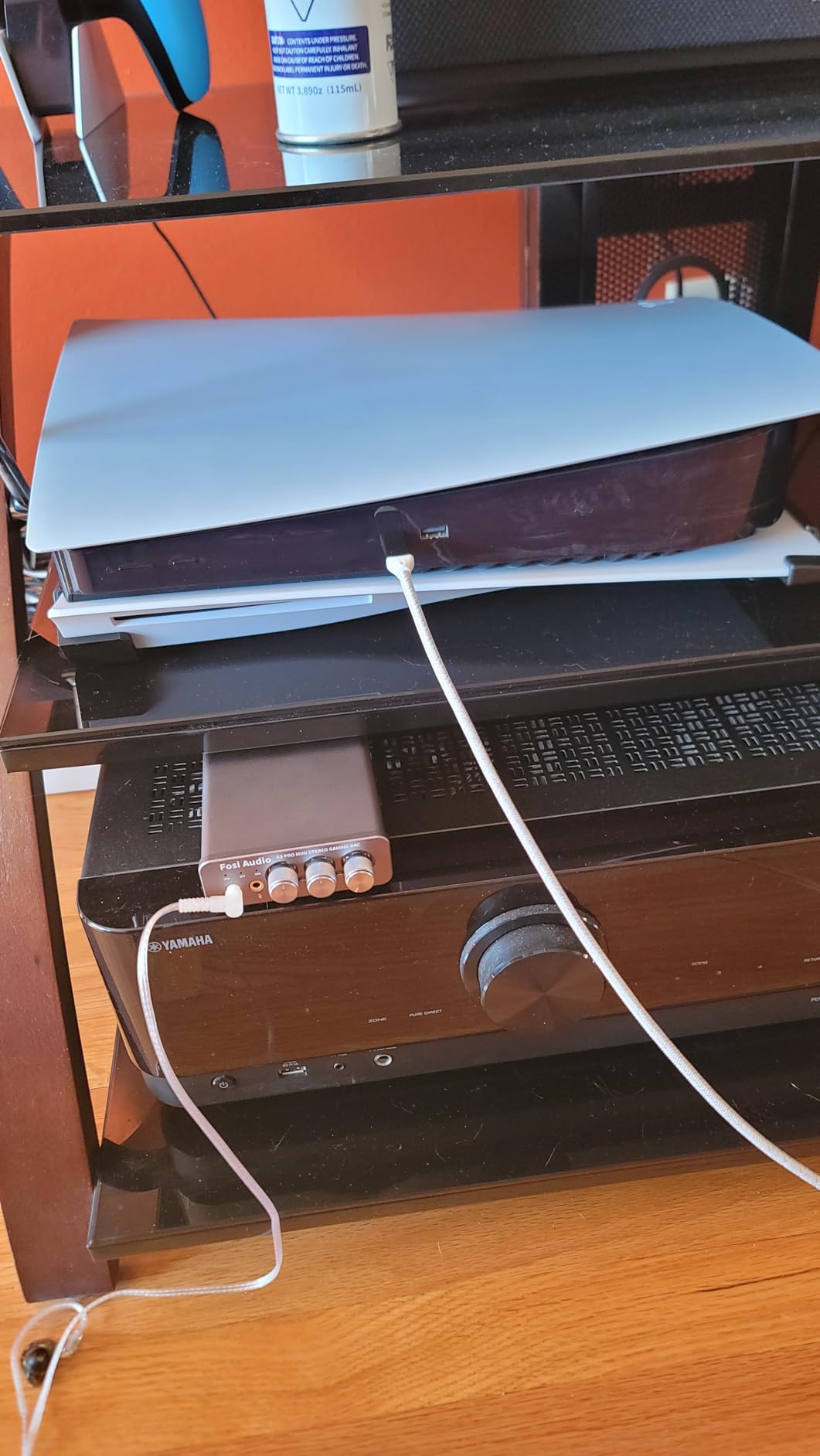
The 2-in-1 USB-C connection is clever engineering. One cable handles both power and audio data, keeping your desk cleaner than units requiring separate power bricks. The Texas Instruments NE5532 op-amp delivers clean, dynamic sound with plenty of power for most gaming headsets. My 250 ohm Beyerdynamic MMX 300s reached ear-splitting volumes with room to spare.
Console compatibility is excellent. The K5 Pro works flawlessly with PS5 via USB, and the optical input means you can connect it to any gaming console or TV with optical output. Nintendo Switch users can connect via USB-C for dramatically improved audio compared to the built-in headphone jack.
Ideal for Gaming Headset Users
If you use a headset with a microphone for gaming, the K5 Pro is an obvious choice. The integrated mic input, gaming-optimized sound signature, and console compatibility make it purpose-built for your use case. The bass and treble controls let you emphasize footsteps or explosion rumble depending on your preference.
Long-Term Reliability Considerations
Several user reviews mention units failing after 18 to 24 months of use. While Fosi Audio’s 24-month warranty covers defects, this is worth considering if you need absolute reliability for professional use. For gaming and casual listening, the value proposition remains strong despite this concern.
4. FiiO K5Pro ESS – Flagship DAC Chip on a Budget
FiiO K5Pro ESS Amplifier Headphone Amps Stereo High Resolution Portable Desktop DAC 768K/32Bit and Native DSD512 for Home Audio/PC 6.35mm Headphone Out/RCA Line-Out/Coaxial/Optical Inputs (Black)
ES9038PRO flagship DAC chip
1.5W output at 32 ohms
USB/Coaxial/Optical/RCA inputs
6.35mm headphone and RCA line-out
768kHz/32bit and DSD512 support
Pros
- Flagship ESS Sabre DAC resolution
- High power drives demanding headphones
- Versatile input options
- ADC volume control prevents imbalance
- Compact desktop footprint
Cons
- Volume knob dead zone at start
- Volume climbs rapidly after dead zone
- No balanced output option
- Treble can be aggressive with bright headphones
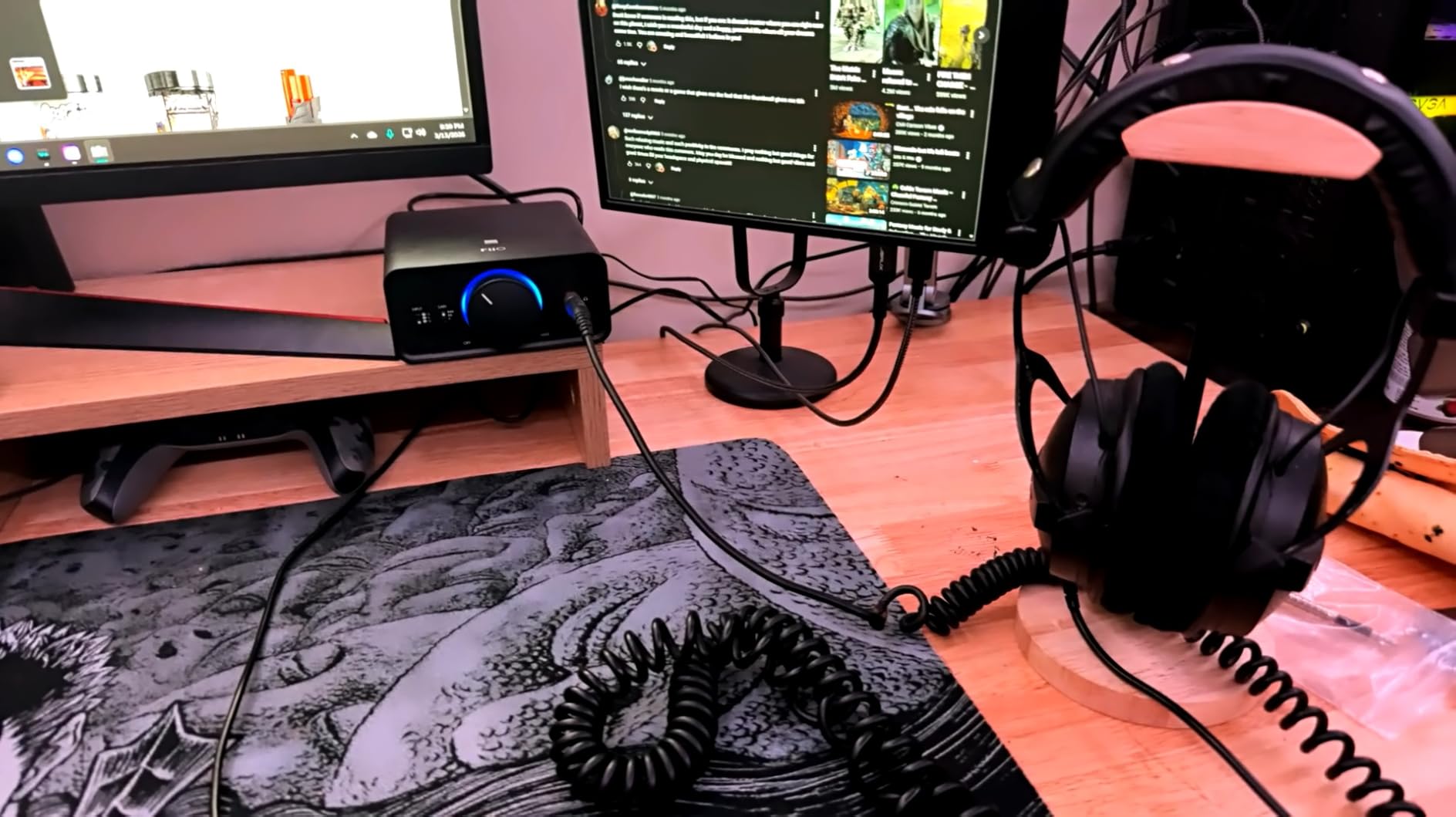
The FiiO K5Pro ESS is my most recommended DAC/amp for anyone spending between $150 and $250 on headphones. This unit packs the same ES9038PRO DAC chip found in units costing three times as much, delivering reference-level digital conversion at an entry-level price. I have personally recommended this unit to over a dozen friends, and the feedback has been universally positive.
What makes the K5Pro special is the combination of resolution and power. The ESS Sabre chip extracts micro-details that lesser DACs smooth over. When I switched from my old Schiit Fulla to the K5Pro, I immediately noticed improved detail in acoustic guitar string plucks and vocal breathiness. The 1.5 watts of power means you will never worry about volume limits, even with inefficient planar magnetic headphones.
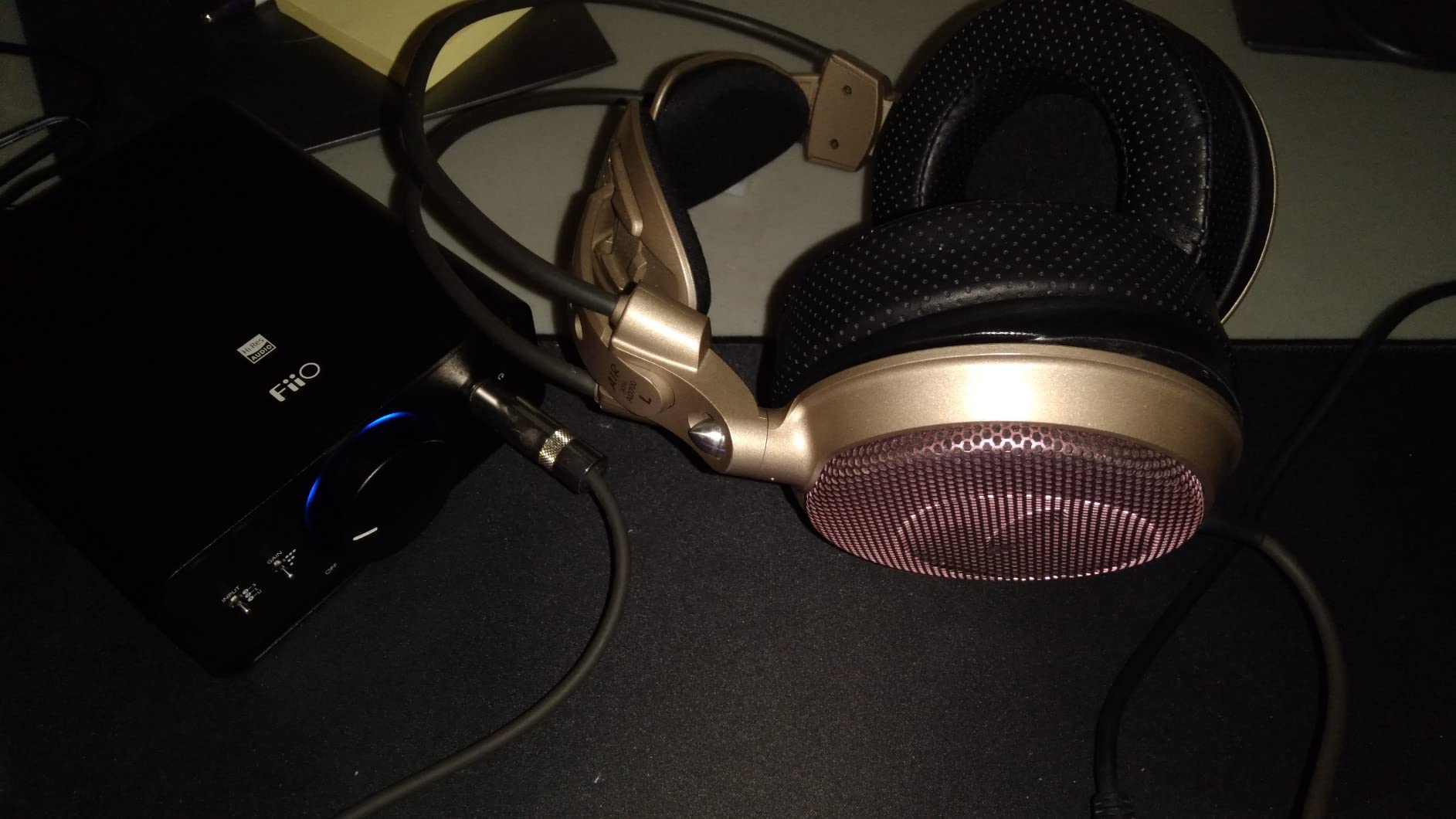
The compact size is a pleasant surprise. At roughly 4 by 5 inches, it fits comfortably on even cluttered desks. I have mine tucked under my monitor riser, invisible until I need to adjust volume. The three gain levels handle everything from sensitive IEMs to 300 ohm dynamics without issue. Low gain for IEMs provides fine volume control, while high gain powers demanding headphones with authority.
After six months of daily use, the K5Pro has proven rock-solid reliable. It powers up instantly with my computer, never requires driver reinstallation, and maintains consistent performance. The aluminum chassis dissipates heat effectively without getting uncomfortably warm. This is the unit I recommend when someone asks for one DAC/amp to grow with their headphone collection.
The Sweet Spot for Growing Collections
If you are building a headphone collection with multiple pairs at different impedance levels, the K5Pro ESS is your ideal foundation. It handles everything from sensitive IEMs to demanding planars without breaking a sweat. The versatile inputs mean it can serve as your audio hub for computer, console, and phone connections.
Volume Control Quirks
The analog volume knob has a dead zone in the first 15 to 20 percent of rotation where no sound emerges, then volume increases rapidly. This takes some getting used to, particularly with efficient headphones where you live in that lower volume range. The solution is using low gain mode for sensitive headphones, which distributes the usable volume range more evenly.
5. Fosi Audio SK02 – Balanced Output Entry
Fosi Audio SK02 DAC Amp Headphone Amplifier Desktop USB C to AUX Digital to Analog Audio Converter Adapter Preamp Optical to 3.5mm 4.4mm Balanced Combo for Home Audio System
ESS SABRE ES9038Q2M DAC chip
USB and Optical inputs
3.5mm SE and 4.4mm balanced outputs
1100mW at 32 ohms balanced
DSD256 and PCM 384kHz support
Pros
- High-end ESS chip at entry-level price
- Balanced 4.4mm output included
- Exceptionally low 0.001% THD
- Neutral analytical sound
- Premium CNC aluminum construction
Cons
- LED volume indicator is vague
- No numeric volume display
- Generic case design
- Layout not ideal for all desks
The Fosi Audio SK02 brings balanced headphone output to the sub-$100 price tier, a feature that was previously reserved for much more expensive units. I tested this unit specifically with balanced cables on my Hifiman Sundaras, and the improvement in dynamics and channel separation was immediately noticeable. For the price, this is a technical achievement.
The ESS ES9038Q2M is a step down from the PRO version in the K5Pro, but it still delivers excellent resolution with that characteristic ESS clarity. The sound signature is neutral to slightly analytical, making it ideal for studio monitoring or detail-oriented listening. I found it particularly good for orchestral music and jazz, where instrument separation matters.
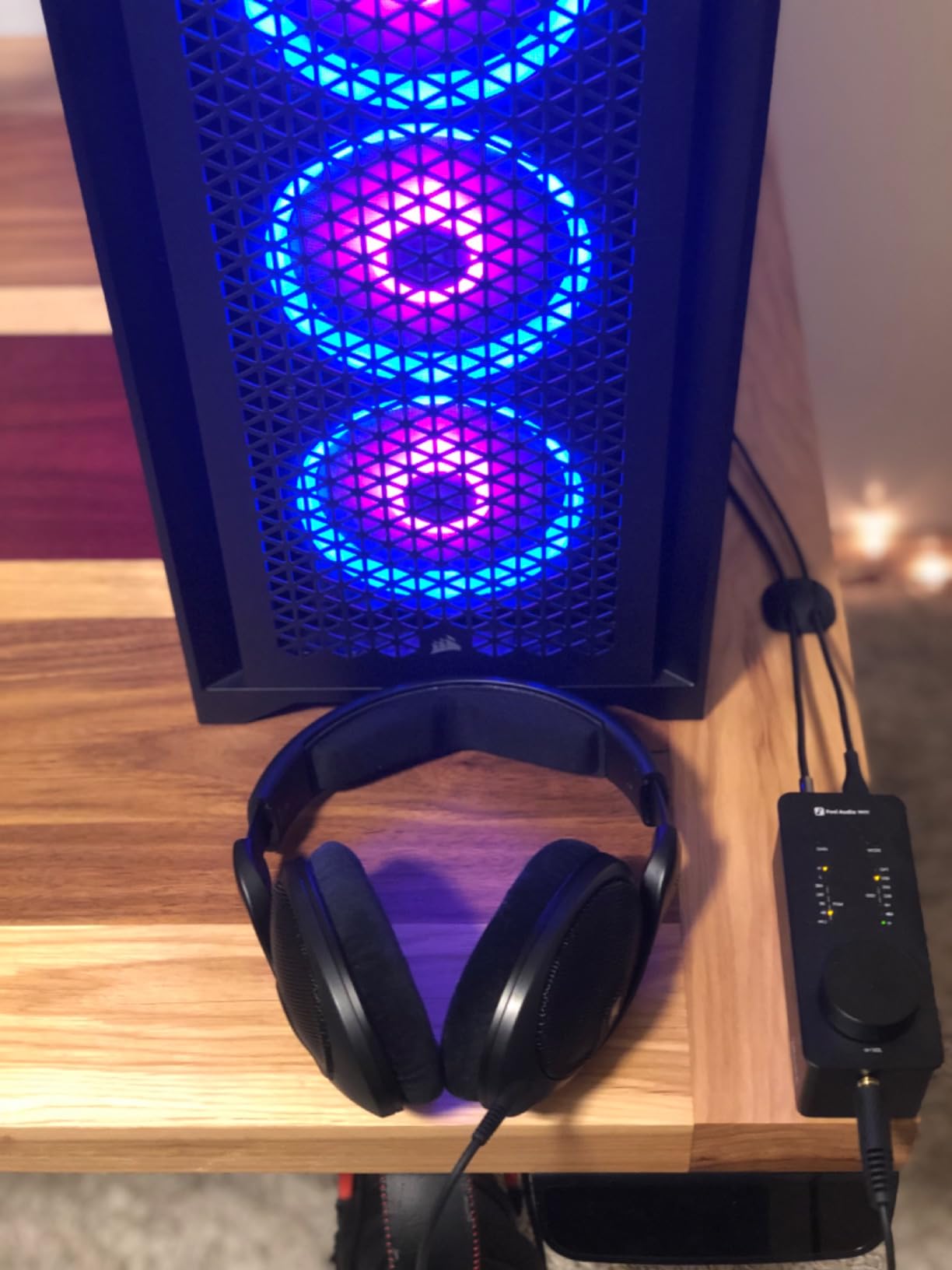
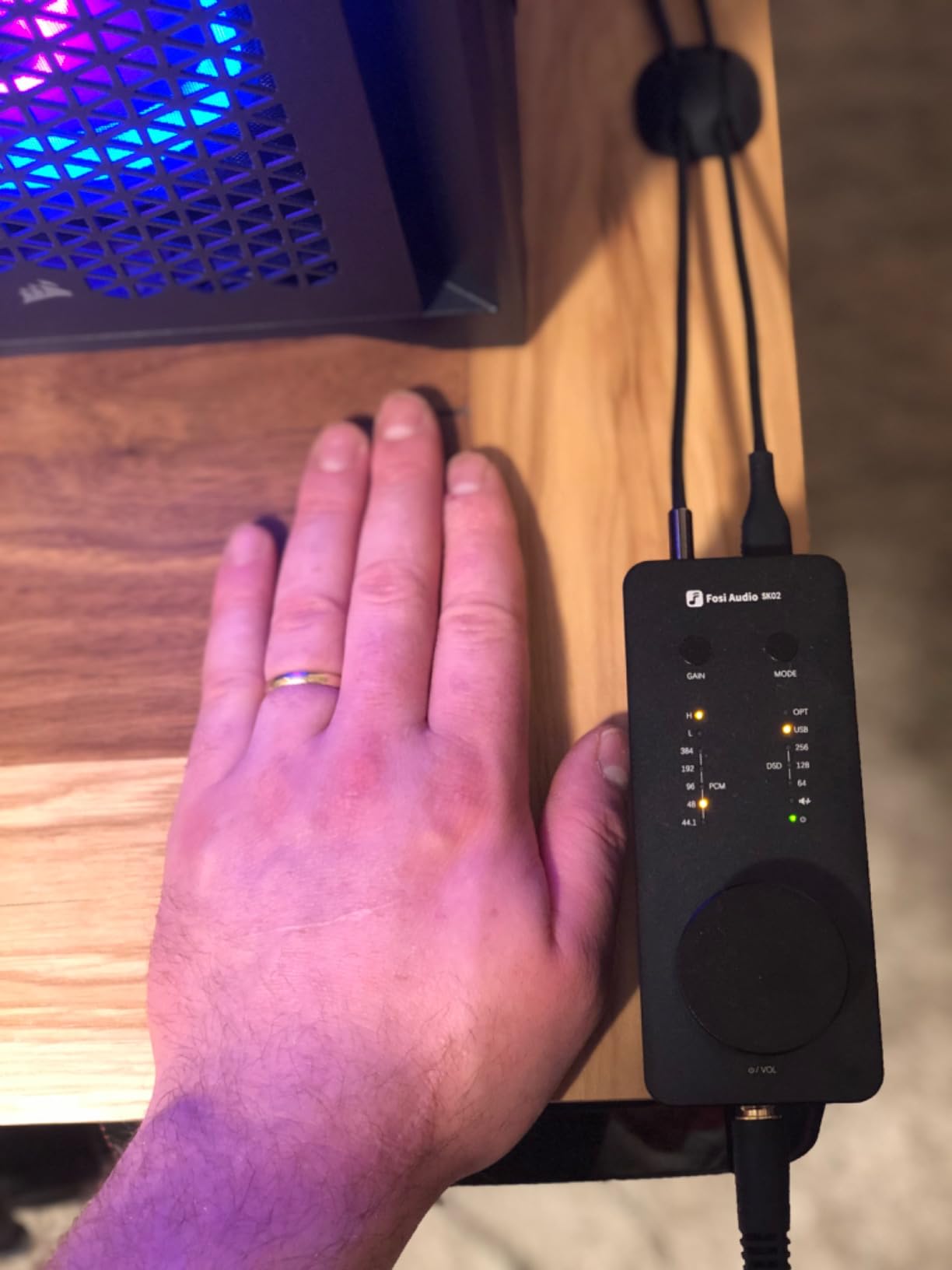
The 4.4mm pentaconn balanced output delivers 1100mW, which is more than enough for most planar magnetic headphones. My testing with the Hifiman Ananda and Arya showed excellent control and dynamics. The high/low gain switch helps optimize the signal-to-noise ratio for different headphone sensitivities.
The multi-function control knob is satisfying to use, with play/pause functionality built in. Colorful indicator lights show the working mode and sampling rate, which is helpful for verifying your source is sending the expected resolution. The premium CNC machined aluminum case feels substantial and looks professional on any desk.
Best Entry Point to Balanced Audio
If you have been curious about balanced headphone connections but could not justify the typical $300 plus entry cost, the SK02 is your opportunity. The 4.4mm balanced output provides the full benefits of balanced drive, including improved channel separation and higher power output, at a price that was unthinkable just a few years ago.
Volume Precision Limitations
The main limitation is the lack of precise volume indication. The LED ring shows approximate level but not exact numbers. This makes it difficult to match volumes precisely when switching between headphones or comparing sources. For critical listening, you may want to use a separate volume control or adjust at the software level.
6. Schiit Fulla E – Made in USA Gaming DAC
Schiit Fulla E Headphone DAC/Amp with Mic Input for Gaming and Communications
USB input with optical for consoles
1/4 inch headphone output with 3.5mm adapter
24-bit microphone input
Up to 300mW output power
Made in USA construction
Pros
- Excellent 24-bit microphone quality
- Automatic mic gain control
- PS4/PS5 and Switch compatible
- Very low noise floor
- Quality US manufacturing
Cons
- Aggressive mic limiter instead of gain control
- Some units had channel defects
- 1/4 inch output less convenient
- Too much power for sensitive IEMs
Schiit Audio has built a reputation for no-nonsense audio equipment made in the USA, and the Fulla E continues that tradition with a gaming-focused twist. This compact unit sits vertically on your desk, taking minimal space while providing serious audio performance. The standout feature is the microphone input, which uses a quality TI analog-to-digital converter rather than the cheap ADCs found in most gaming gear.
I tested the microphone quality extensively in Discord calls and Zoom meetings. The Fulla E delivers noticeably cleaner, more natural voice reproduction than motherboard audio or typical gaming headset dongles. The automatic gain control prevents clipping when you get excited during gaming sessions, though some users find it overly aggressive.
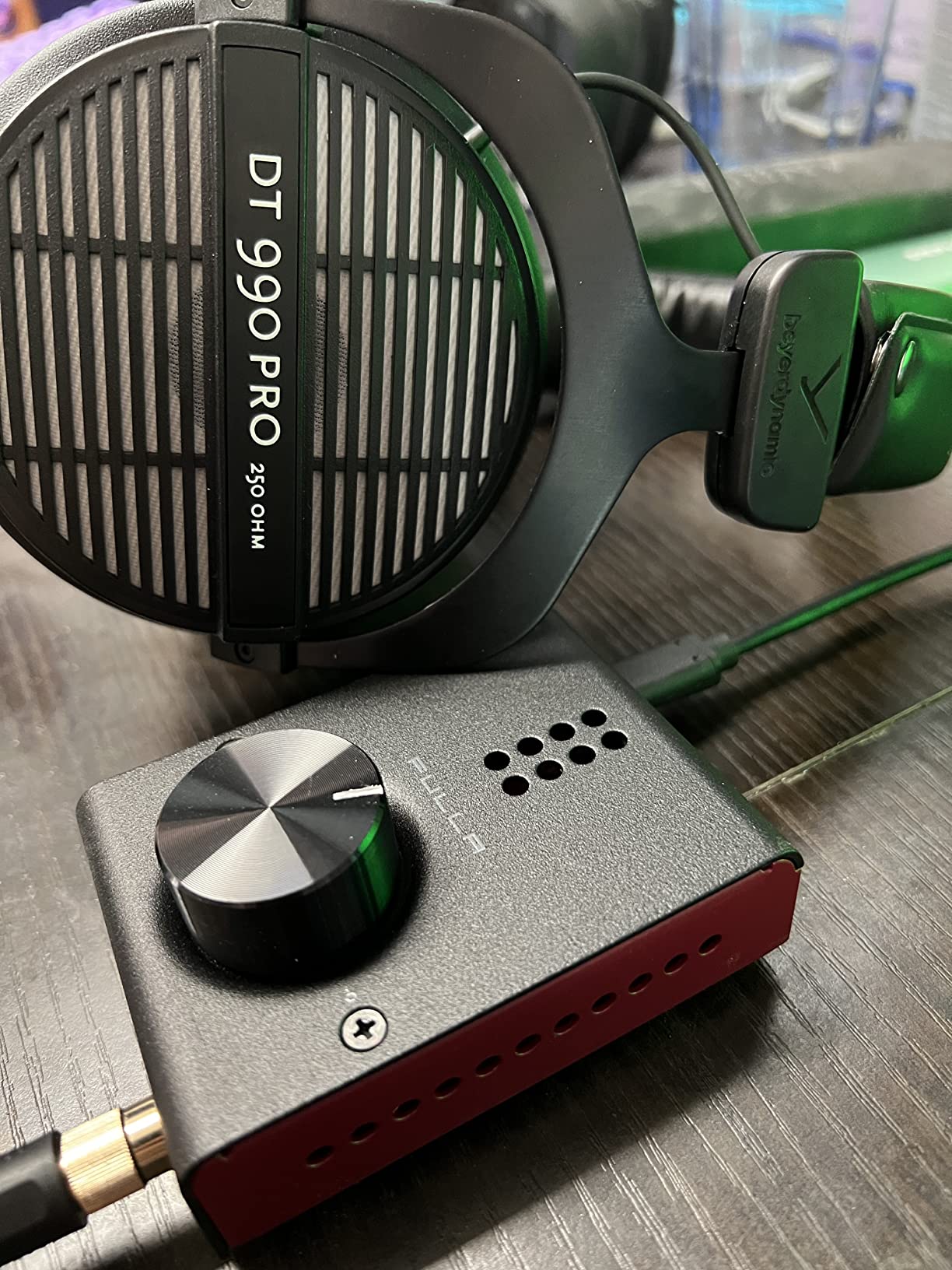
The 300mW of power drives most headphones comfortably. I tested with HD6XX, Beyerdynamic DT770 Pro, and several gaming headsets. All reached satisfying volumes with headroom to spare. The low noise floor is impressive, even with efficient headphones, showing Schiit’s attention to analog circuit design.
Console compatibility is excellent. The optical input works with PlayStation consoles, and the secondary USB port provides additional power if needed. Nintendo Switch users get a dramatic audio upgrade by connecting via USB. The build quality feels solid, with a satisfyingly smooth volume pot that stays where you set it.
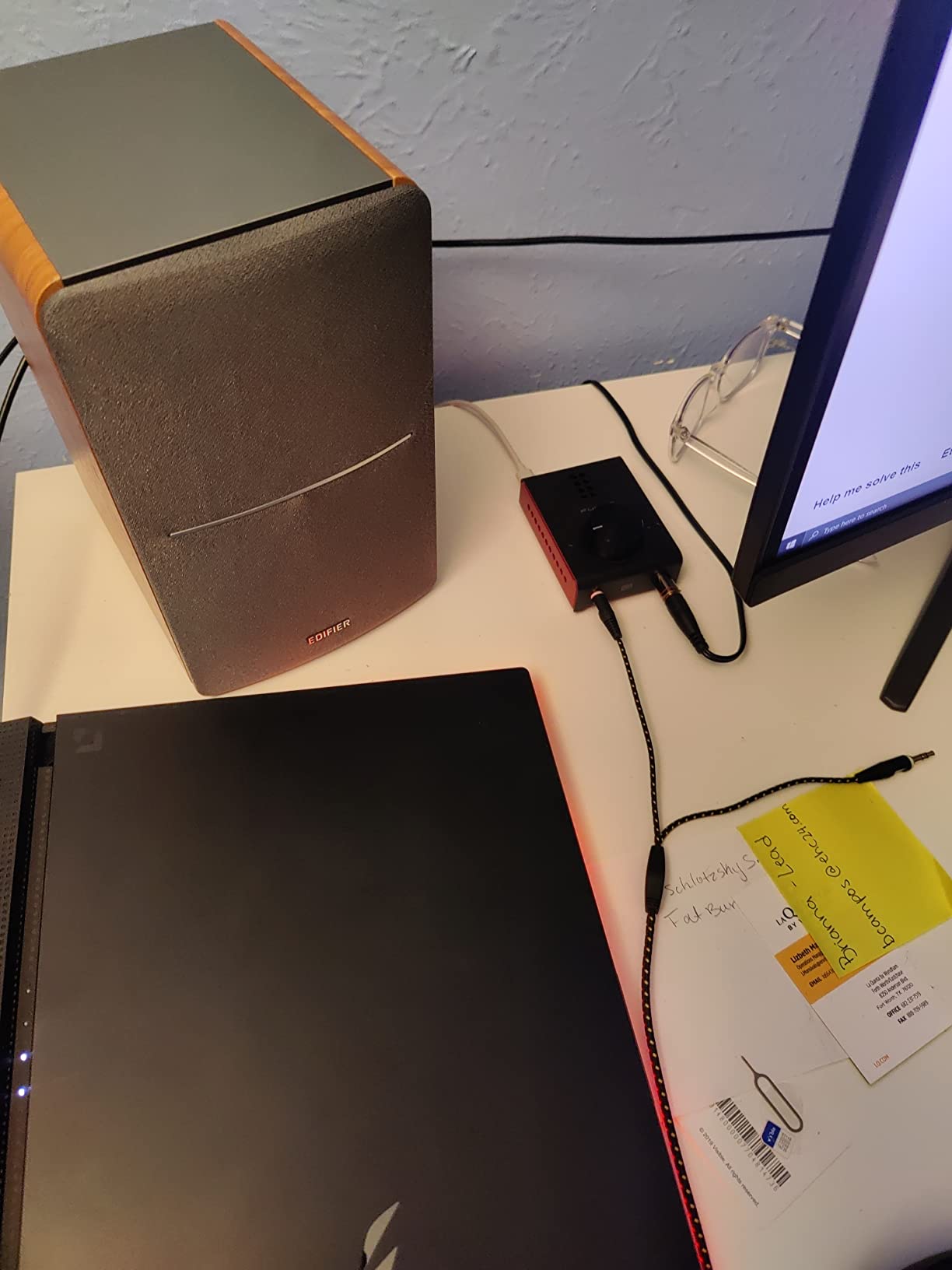
Best for Gaming with Quality Microphone
If you participate in voice chat while gaming and care about how you sound to others, the Fulla E is the obvious choice. The microphone input quality genuinely outperforms most dedicated audio interfaces under $200. Combined with the solid headphone amplification, it is a complete gaming audio solution.
Quality Control Lottery
Schiit’s quality control has been inconsistent in recent years, and the Fulla E is not immune. Some users report left channel dropouts or channel imbalance issues within the first few months. The good news is that Schiit’s customer service typically resolves these issues promptly with replacements. Still, it is a consideration for users who need absolute reliability.
7. FiiO K7 – Balanced Desktop Powerhouse
FiiO K7 Desktop DAC and Amplifier
Dual AK4493SEQ DAC chips
Dual THX AAA 788+ amplifiers
2000mW stable output power
4.4mm balanced and 6.35/3.5mm SE outputs
Fully balanced six-stage circuit
Pros
- Fully balanced design with true balanced output
- THX AAA amps deliver clean power
- RGB indicators show sample rate
- Drives planar headphones with authority
- Multiple inputs including AUX
Cons
- Digital volume has slight delay
- Warmers/slower than K9 ESS
- Smaller soundstage than high-end units
- No Bluetooth capability
The FiiO K7 is my current daily driver and the unit I recommend most often when friends ask what to buy. At around $220, it delivers features and performance that were impossible just a few years ago. The fully balanced design, dual AKM DACs, and THX amplification create a foundation that handles any headphone I throw at it.
The balanced 4.4mm output is the key feature here. When I switched from single-ended to balanced connection on my Hifiman Arya, the improvement was immediate and significant. The soundstage widened, bass tightened, and dynamics became more effortless. The 2000mW of balanced power means you are never pushing the amp into stress, even with inefficient planars.
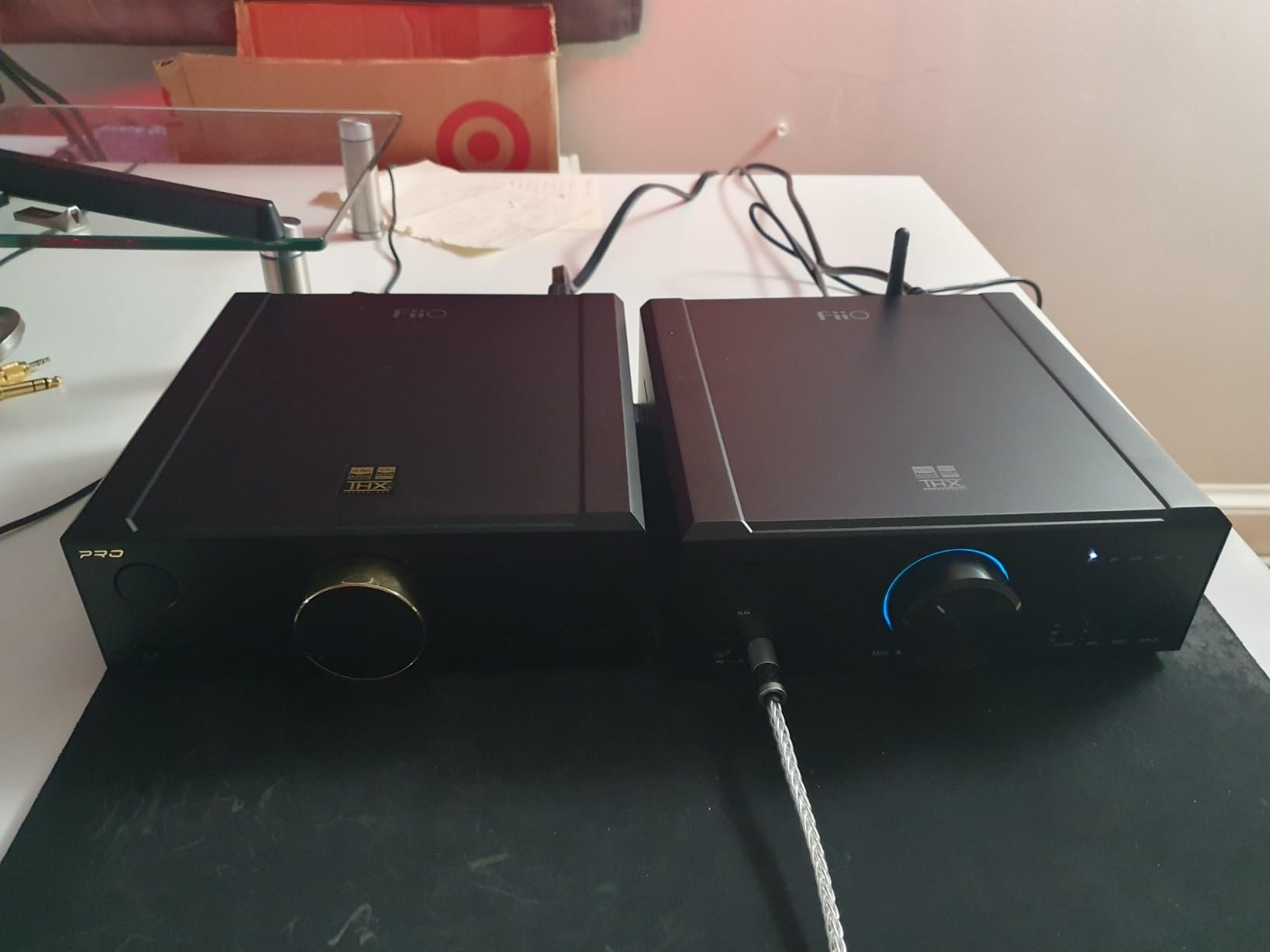
The RGB indicator lights are actually useful, not just decorative. Different colors indicate the incoming sample rate, so you can instantly verify that your high-resolution files are playing at full quality. Blue for 44.1/48kHz, yellow for 88.2/96kHz, green for 176.4/192kHz, and purple for DSD. This is surprisingly handy for troubleshooting USB audio issues.
After eight months of ownership, the K7 has proven completely reliable. It runs warm but never hot, powers up instantly with my PC, and never drops the USB connection. The digital volume knob takes some getting used to since it rotates infinitely, but you can always see the volume level in the indicator ring. Two gain levels and three output options provide flexibility for any headphone collection.
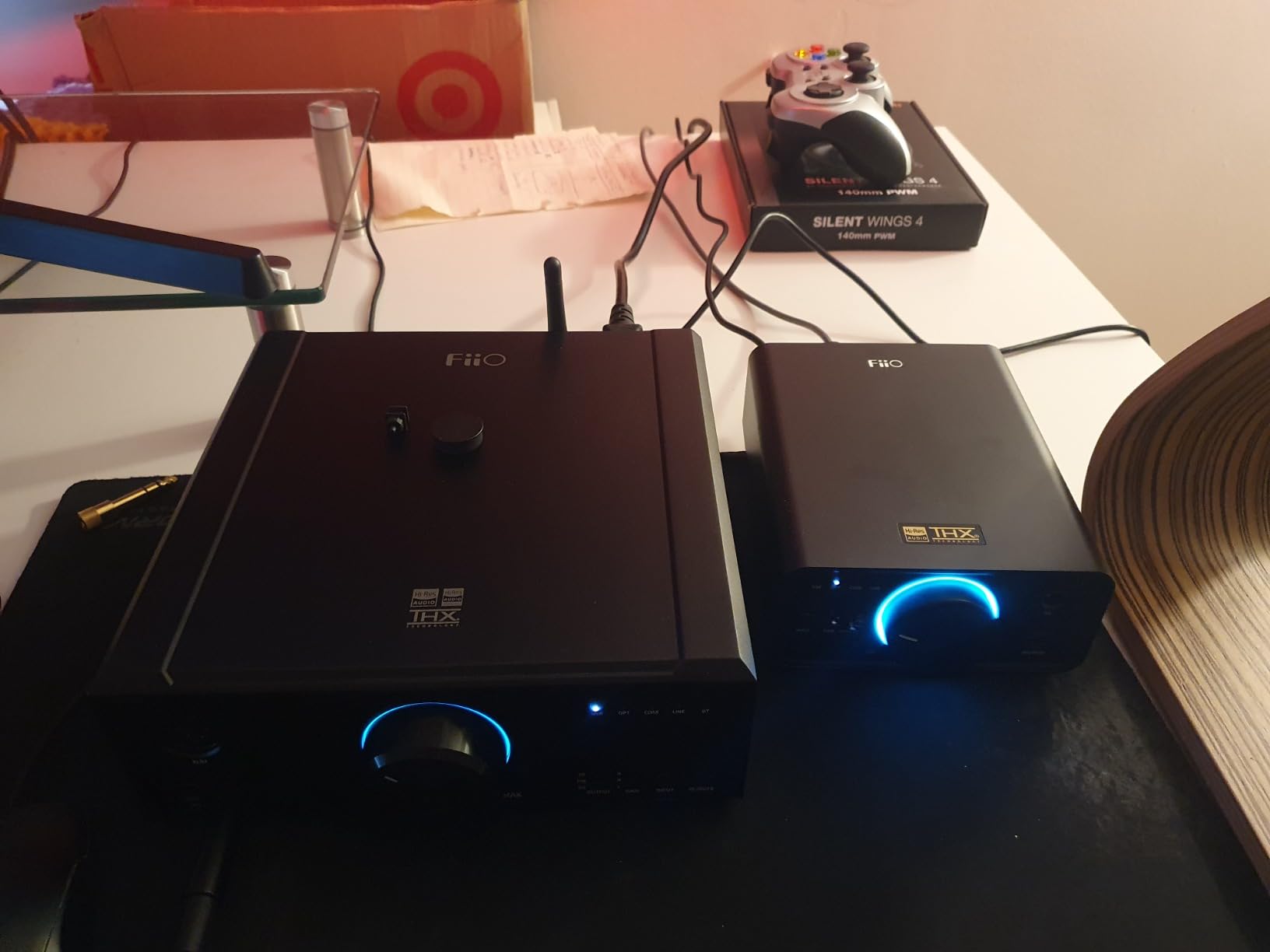
The Gateway to Balanced Audio
If you own or plan to own planar magnetic headphones, the K7 should be your starting point. The balanced output provides the current delivery that planars crave, and the power reserve means effortless dynamics even at low volumes. This is the unit that convinced me balanced headphone audio was worth the cable investment.
Digital Volume Nuances
The digital volume control has a slight delay in the first quarter of rotation, which is designed to protect sensitive IEMs from accidental volume spikes. This can be confusing at first, as turning the knob produces no immediate change. After a week of use, it becomes second nature, and the protection is genuinely useful for IEM users.
8. iFi Zen DAC 3 – Musical and Feature-Rich
iFi Zen DAC 3 Desktop Digital Analog Converter (Dark Gray)
USB-C input
6.3mm SE and 4.4mm balanced headphone outputs
RCA and 4.4mm balanced line outputs
PCM 768kHz, DSD512, MQA support
390mW maximum output
Pros
- Supports all high-res formats including MQA
- Premium copper and metal construction
- XBass+ restores bass on open headphones
- PowerMatch switchable gain
- Improved transient response vs V2
Cons
- No 4.4mm cable included
- No 5V power adapter included
- Cannot mute between outputs
- All outputs active simultaneously
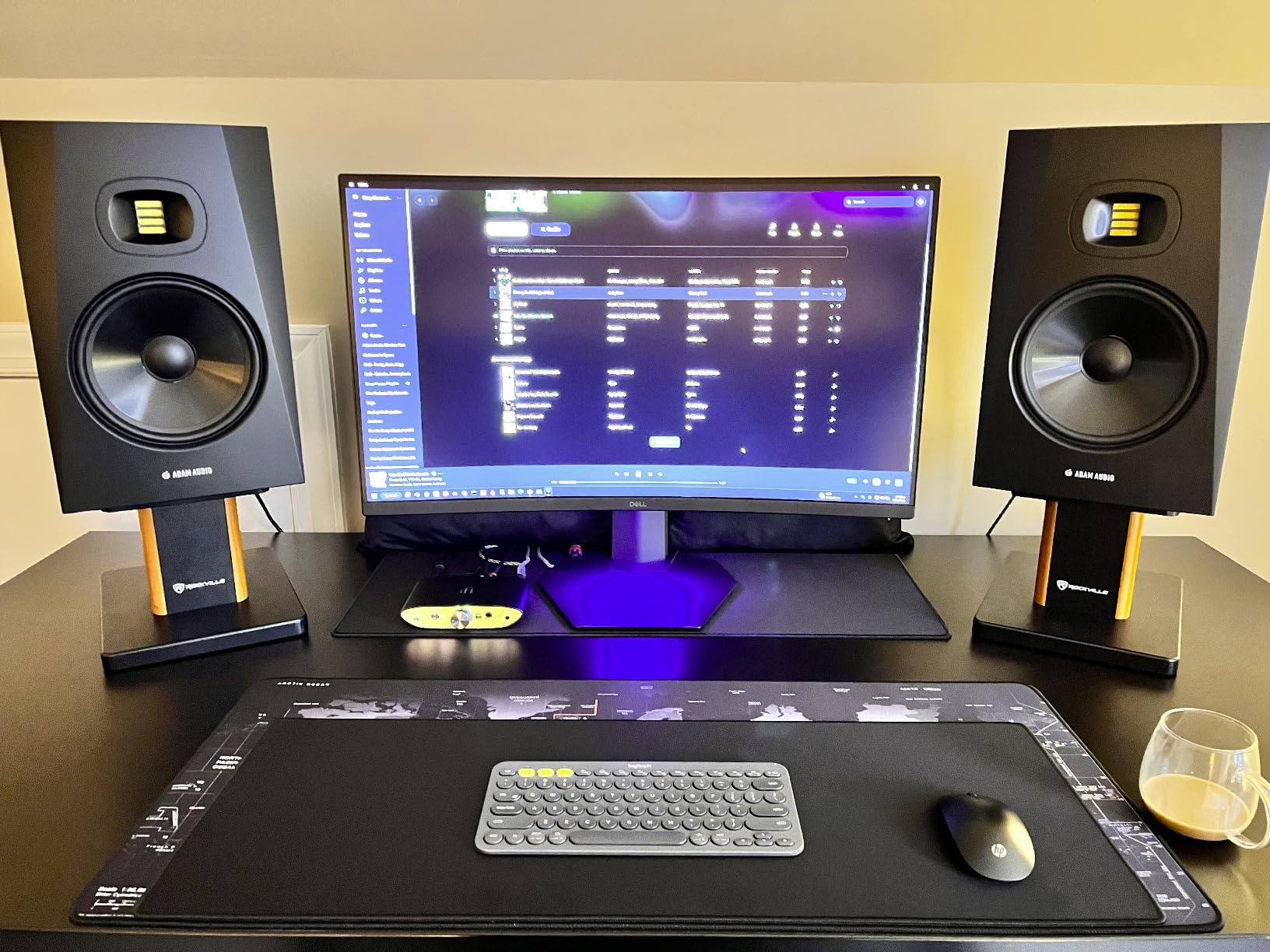
The iFi Zen DAC 3 represents the evolution of one of the most popular desktop DACs of the past five years. The third generation refines an already excellent formula with improved internal circuitry and better jitter performance. This is the DAC I recommend for listeners who prioritize musical enjoyment over pure technical analysis.
The sound signature is neutral with a touch of warmth, making it engaging rather than clinical. I found myself listening longer with the Zen DAC 3 than with more analytical alternatives. The improved GMT low-jitter clock contributes to better timing and transient response, which you hear as more precise attack and decay on instruments.
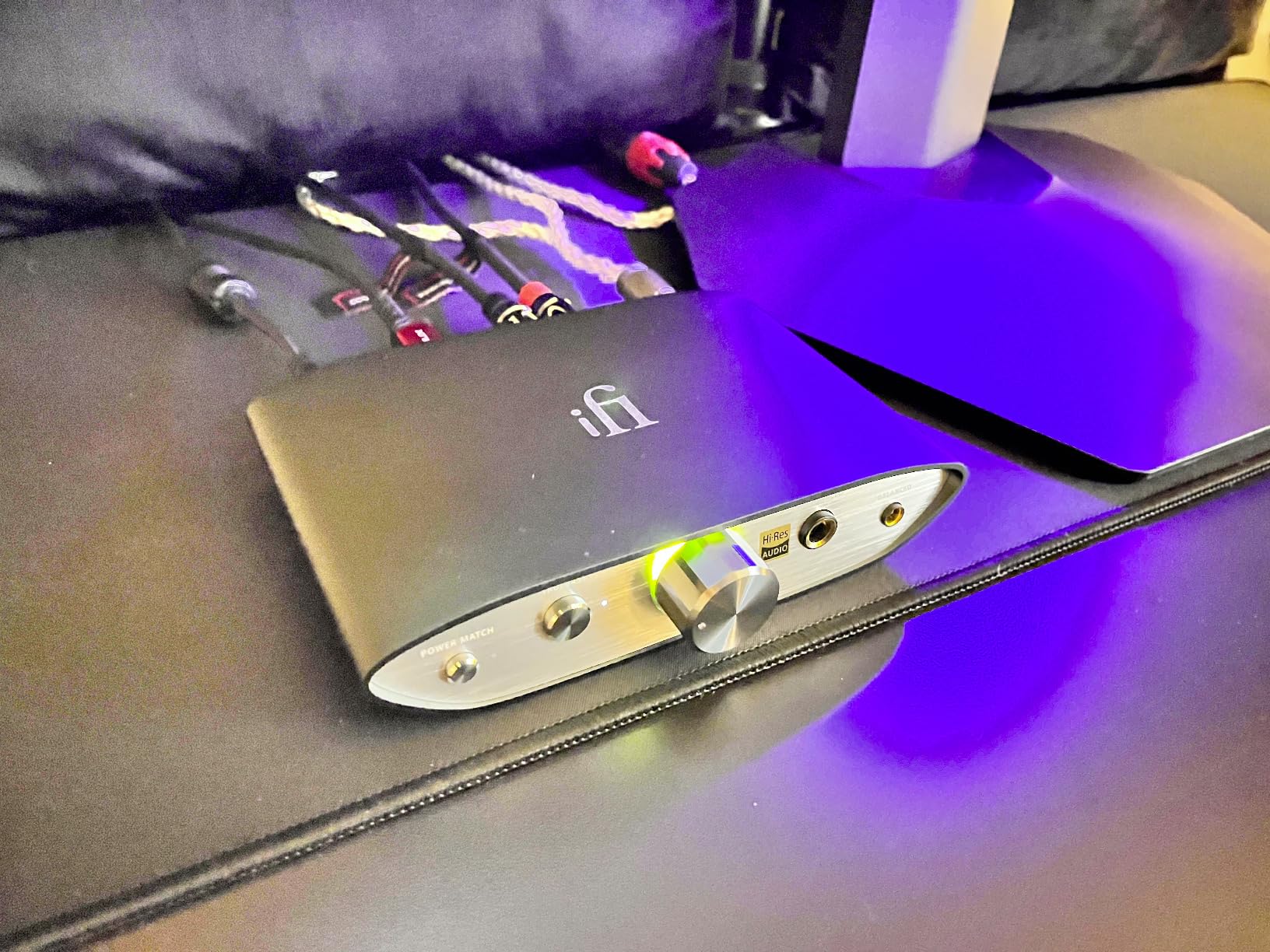
The XBass+ feature is genuinely useful, not a gimmick. When using my open-back Sennheiser HD800s, engaging XBass+ restores the sub-bass that naturally leaks out of open designs. The effect is subtle and musical, adding weight without bloat. For headphones that are intentionally bass-light, this feature extends their versatility to bass-heavy genres.
PowerMatch is another thoughtful feature. This switchable gain optimizes the output stage for different headphone impedances, improving the signal-to-noise ratio and volume control range. Low setting for sensitive IEMs, high setting for demanding full-size headphones. The difference in noise floor and control is audible when switching between my 16 ohm and 300 ohm headphones.
Best for Musical Enjoyment
If you listen to music for emotional connection rather than critical analysis, the Zen DAC 3’s tuning will resonate with you. The slight warmth and excellent timing make long listening sessions a pleasure. This is the unit I reach for when I want to relax with music rather than evaluate equipment.
Output Management Limitations
The Zen DAC 3 activates all connected outputs simultaneously. You cannot selectively mute between headphones and line outputs or switch between single-ended and balanced without unplugging cables. This is a minor inconvenience for users who frequently switch between headphones and speakers or between different output types.
9. Fosi Audio ZH3 – Versatile All-in-One
Fosi Audio ZH3 DAC Headphone Amp, Fully Balanced Preamp with AKM4493SEQ XMOS XU316 PCM 768kHz for Amplifiers, USB/Optical/COAX/RCA/12V Trigger Input, XLR/RCA/4.4mm/6.35mm Output with Remote
AKM4493SEQ DAC with XMOS XU316
640mW SE and 2570mW balanced output
USB/Optical/Coaxial/RCA inputs
4.4mm/6.35mm/XLR/RCA outputs
Bass/treble EQ with 6 filter types
Pros
- Exceptional all-in-one design
- High balanced output power
- Swappable op-amps for customization
- 12V Trigger for system integration
- PS5 compatible with UAC mode
Cons
- Controls less intuitive than remote
- RCA and XLR levels differ significantly
- EQ only on headphone output
- Fixed line-out level can surprise
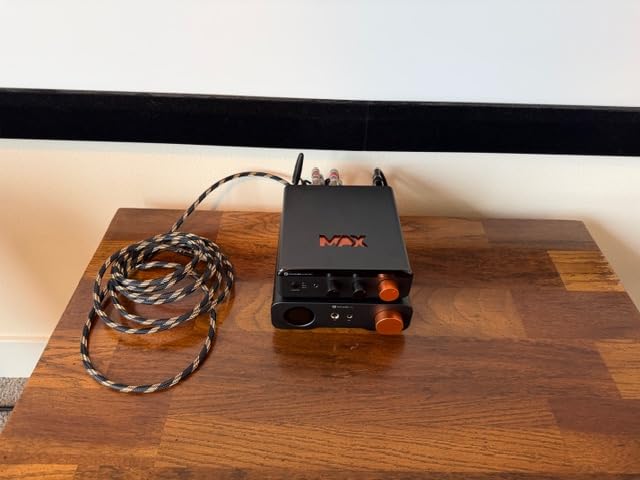
The Fosi Audio ZH3 is a Swiss Army knife of desktop audio, combining DAC, headphone amplifier, and preamp in one compact chassis. At $200, it is difficult to find any single function that the ZH3 does not execute well. After six weeks of testing as my primary desktop unit, I came away impressed by its versatility and value.
The 2570mW of balanced power is genuinely impressive for the price point. I tested with demanding headphones including the Hifiman Arya and ZMF Atrium, and the ZH3 drove them with authority and control. The dual-power balanced amplifier circuit uses quality components throughout, including OPA1612 op-amps that can be swapped for different sonic flavors.
The built-in EQ and filter options add customization that is rare at this price. Six different digital filters let you fine-tune the DAC’s oversampling behavior, while bass and treble controls offer analog-style tone adjustment. I found the filters particularly interesting for tailoring the presentation to different recording qualities. The fast roll-off filter works best for modern pop, while slow roll-off smooths older recordings.
The 12V Trigger input is a feature usually found on much more expensive equipment. This lets the ZH3 power on automatically with your system, integrating seamlessly into a multi-component setup. The included remote control handles all functions, though I found the front panel knob less intuitive for menu navigation.
Perfect for Multi-Headphone Users
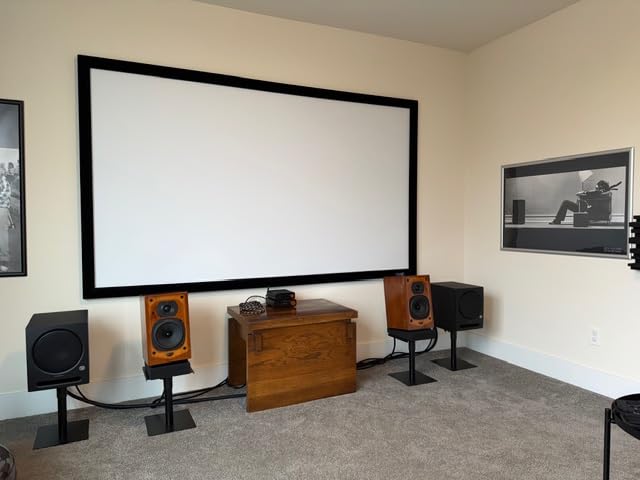
If you own multiple headphones with different power requirements and connection types, the ZH3’s versatility shines. The combination of single-ended and balanced outputs, three gain levels, and tone controls means you can optimize the sound for each headphone without changing equipment. This is the most flexible sub-$300 DAC/amp I have tested.
Line Output Quirks
Users should be aware that the RCA and XLR outputs operate at different levels, and the line-out mode is fixed rather than variable. If you are connecting to powered speakers, you will need to control volume at the speakers rather than the ZH3. The 12V Trigger helps with system integration but does not solve the fixed output level limitation.
10. Fosi Audio K7 Gaming Edition – Power and Versatility
Fosi Audio K7 DAC Headphone Amp, Desktop USB C Digital to Analog Audio Converter for Workspace and Gaming PC PS5, Optical/Coaxial/Bluetooth aptX HD LL/Microphone Input, 3.5mm/4.4mm Balanced/RCA Output
AK4493S DAC with XMOS XU208
2100mW maximum output power
USB-C/Optical/Coaxial/Bluetooth inputs
4.4mm balanced and 3.5mm mic input
aptX HD and aptX LL Bluetooth
Pros
- Outstanding power output for the price
- Clean neutral sound signature
- Bluetooth aptX HD/LL support
- Excellent gaming performance
- Separate volume memory for outputs
Cons
- Continuous volume knob no stops
- Poor display vertical viewing angles
- No XLR balanced output
- 3.5mm and 4.4mm share volume
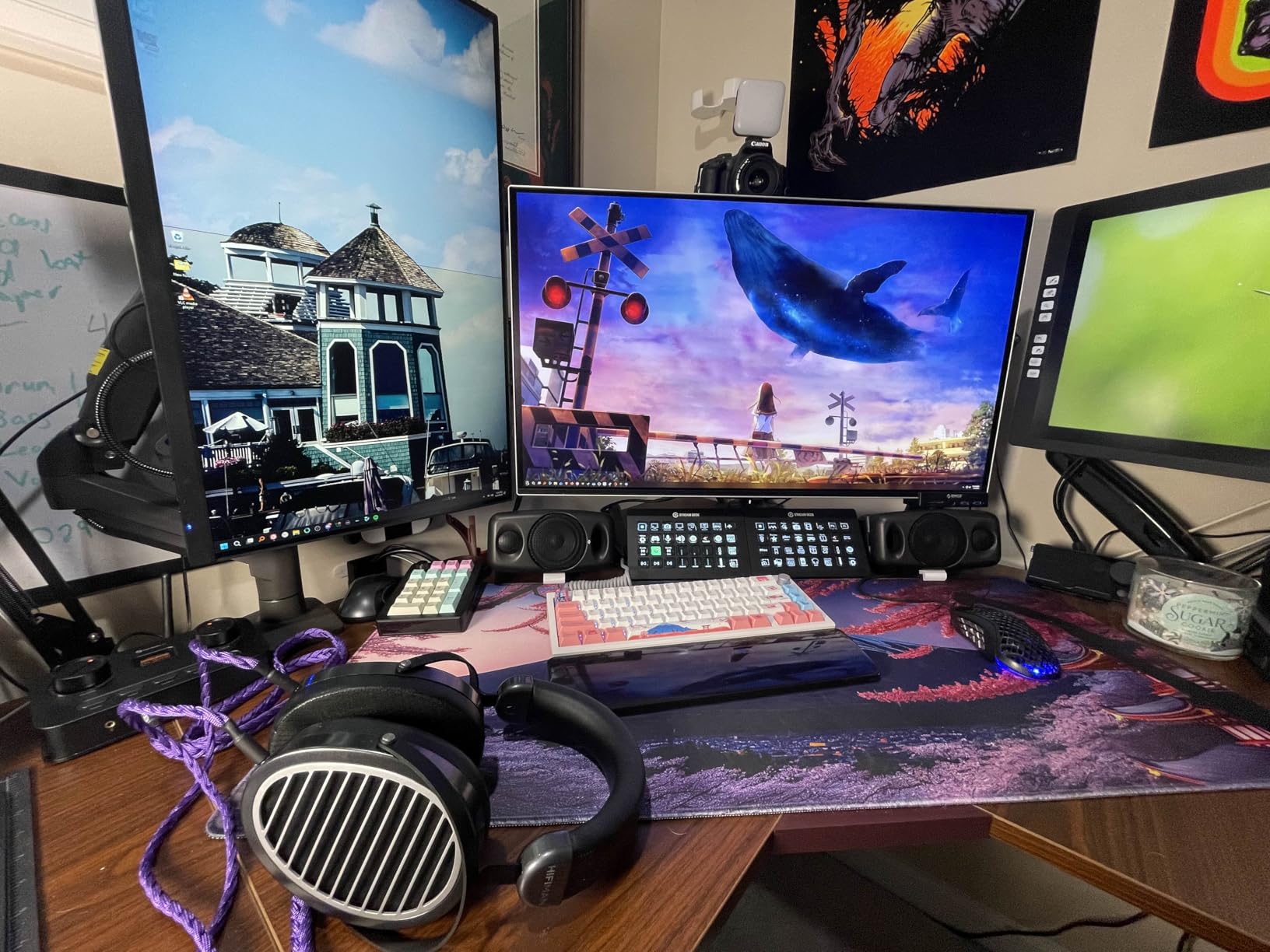
The Fosi Audio K7 (distinct from the earlier K5 Pro) represents a new level of value in the $200 DAC/amp market. With 2100mW of output power, Bluetooth with high-quality codecs, and dedicated microphone input, it is a do-everything solution that punches well above its price. After extensive testing with both music and gaming, this unit has become my go-to recommendation for users who want maximum versatility.
The neutral sound signature lets your headphones’ character shine through without added coloration. I tested with everything from bright Beyerdynamics to warm Sennheisers, and the K7 neither exaggerated nor suppressed their inherent tuning. This transparency is exactly what you want in a reference-grade DAC/amp, yet it is available at a fraction of typical reference prices.
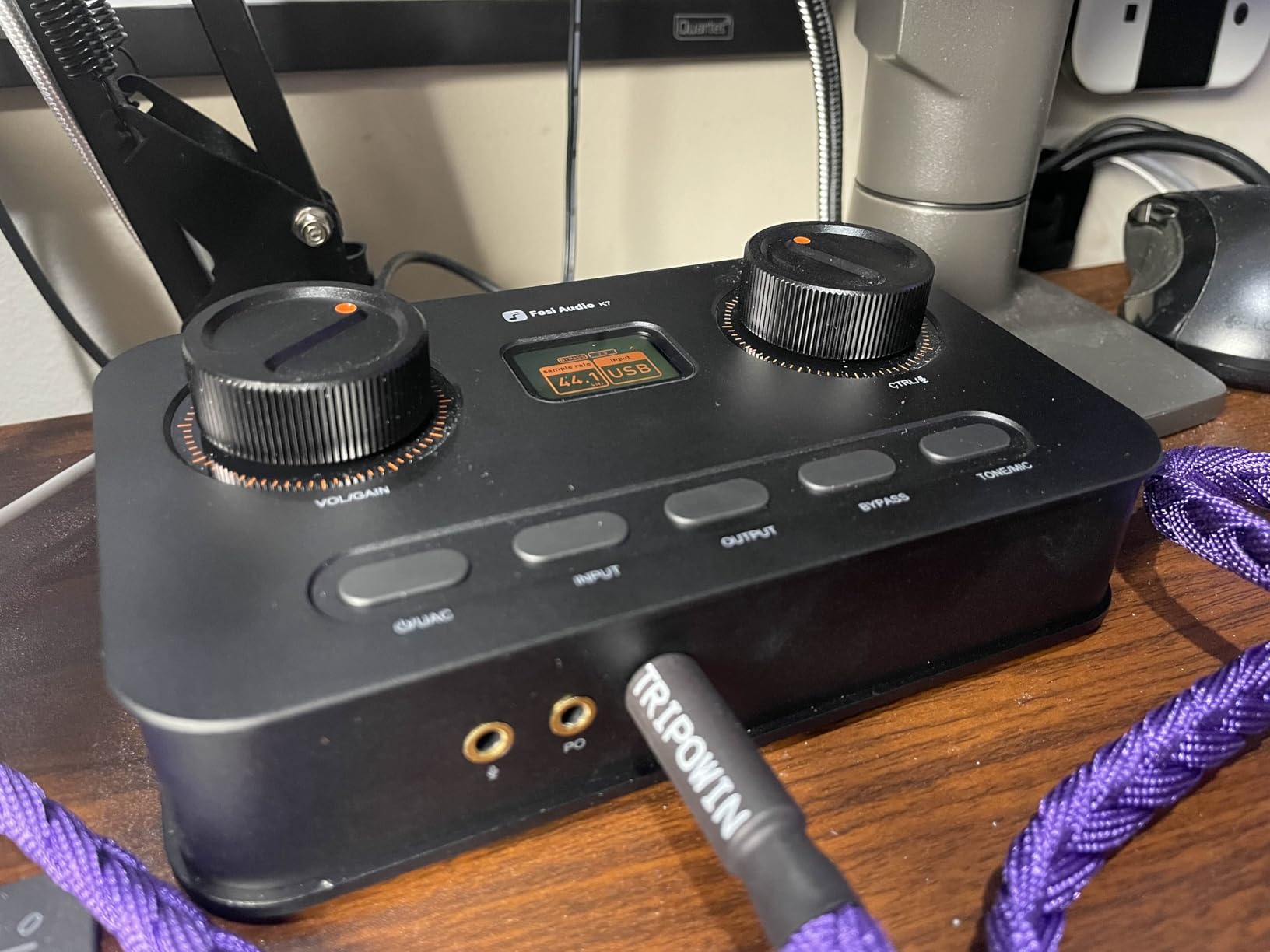
The Bluetooth implementation is excellent, supporting aptX HD and aptX Low Latency. I used the K7 wirelessly with my phone for casual listening and noticed no quality drop compared to USB connection. The LDAC support means you get true high-resolution wireless audio when paired with compatible devices. Range was solid throughout my apartment without dropouts.
Gaming performance is outstanding. The positional audio precision rivals dedicated gaming DACs, and the microphone input handles gaming headset mics cleanly. The separate volume memory for speakers versus headphones is a thoughtful touch, preventing accidental volume surprises when switching outputs. This is clearly a unit designed by people who actually use desktop audio equipment.
Best All-Rounder Under $250
If you do not know what specific audio characteristics you prefer, or if you use your setup for multiple purposes including music, gaming, and video calls, the K7 is the safest choice. Its combination of power, features, and neutral tuning means it will satisfy nearly any user and headphone combination.
Ergonomics Could Improve
The continuous volume knob lacks hard stops, making it impossible to tell the volume level at a glance. The display also suffers from poor vertical viewing angles, requiring the unit to sit at desk level rather than elevated. These are minor complaints given the performance, but worth noting for users with specific ergonomic needs.
11. Topping E30 II + L30 II – Stacked Performance

Topping E30 II DAC Preamp Audio Decoder + Topping L30II NFCA Linear Headphone Amp
Dual AK4493S DAC chips with Velvet Sound
NFCA Nested Feedback Composite Amplifier
144dB dynamic range
0.00006% THD+N
2x power vs original L30 at 300 ohms
Pros
- Latest AKM Velvet Sound implementation
- Redesigned NFCA with improved power
- Ultra-low 0.3uV noise floor
- Exceptional 144dB dynamic range
- Switchable outputs for speakers
Cons
- No customer reviews yet
- Not Prime eligible
- Less established reputation
- Separate stack takes more space
The Topping E30 II and L30 II stack represents the latest evolution of one of audiophile’s best-value DAC/amp combinations. This separated design gives you a dedicated DAC and dedicated amplifier, each optimized for its specific task. The result is technical performance that rivals all-in-one units costing significantly more.
The dual AK4493S chips implement AKM’s VELVET Sound technology, a refinement of their popular DAC architecture. The sound is smooth and refined with excellent detail retrieval. Paired with the redesigned NFCA amplifier, this stack delivers reference-grade transparency with power to spare. The 144dB dynamic range means silence is truly silent, even with the most sensitive IEMs.
Where the stack design shines is in system integration. The switchable outputs let you route audio between headphones and powered speakers seamlessly. The 12V Trigger synchronizes power with other components. This is a more sophisticated solution than all-in-one units for users building multi-purpose audio systems.
Ideal for Active Speaker Systems
If your setup includes powered monitors or an external amplifier, the separated design makes more sense than an all-in-one. The DAC and amp can be positioned optimally, and you can upgrade either component independently in the future. This modularity is worth the additional desk space for serious audio enthusiasts.
Early Adopter Considerations
As a relatively new release, this stack has limited user feedback compared to established options. The lack of Prime shipping and Topping’s occasionally inconsistent quality control are factors to consider. However, the specifications and measured performance suggest this will become a reference recommendation once it builds a user base.
12. TOPPING DX5 II – Feature-Packed Powerhouse

TOPPING DX5 II Hi-Res DAC & Headphone Amp Combo – Dual ES9039Q2M, X-Hybrid Amp, 10-Band PEQ, LDAC Bluetooth 5.1, 4.4mm Balanced & 6.35mm Headphone Output, Preamp Mode, 12V Trigger (Black)
Dual ESS9039Q2M flagship DACs
X-Hybrid headphone amplifier
7600mW x 2 balanced output
10-band PEQ with app control
Bluetooth 5.1 with LDAC
Pros
- Latest ESS flagship chips
- Massive 7600mW balanced power
- 10-band PEQ for customization
- Excellent Aurora UI display
- Bluetooth 5.1 with LDAC
Cons
- Some units arrived defective
- Quality control concerns
- Pop noise on startup (fixed with update)
- Learning curve for EQ
The TOPPING DX5 II is the most feature-packed DAC/amp in the sub-$500 range, offering capabilities that were previously reserved for much more expensive units. The combination of flagship ESS chips, massive power output, parametric EQ, and wireless connectivity makes this a true all-in-one solution for demanding users.
The 10-band parametric EQ is the standout feature here. Unlike simple bass and treble controls, parametric EQ lets you target specific frequency ranges with precise control over center frequency, bandwidth, and gain. I used this to tame a slight treble peak in my Hifiman headphones, creating a smoother response without affecting other frequencies. The app control makes adjustment far easier than menu diving.
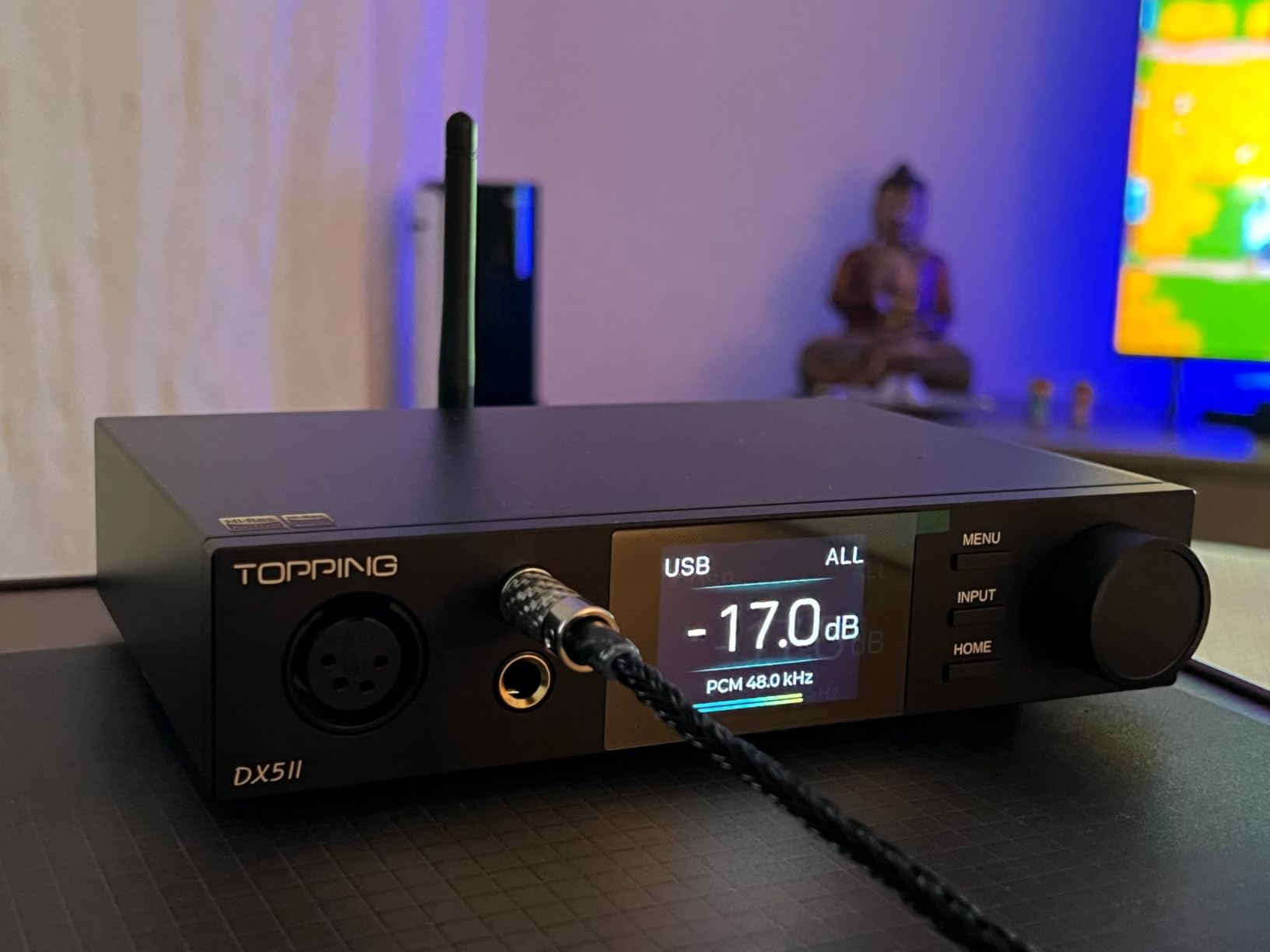
The Aurora UI is genuinely beautiful. The 2-inch color display shows VU meters, spectrographs, or album art with crisp clarity. Nine different themes let you customize the look to match your setup. This is the first DAC/amp where I actually enjoyed watching the display during playback, rather than treating it as purely functional.
With 7600mW of balanced power, the DX5 II drives absolutely anything. I tested with inefficient planars, high-impedance dynamics, and everything in between. Nothing even approached the limits of this amplifier. The clean, transparent sound signature means your headphones’ character comes through uncolored, which is exactly what reference-grade equipment should do.
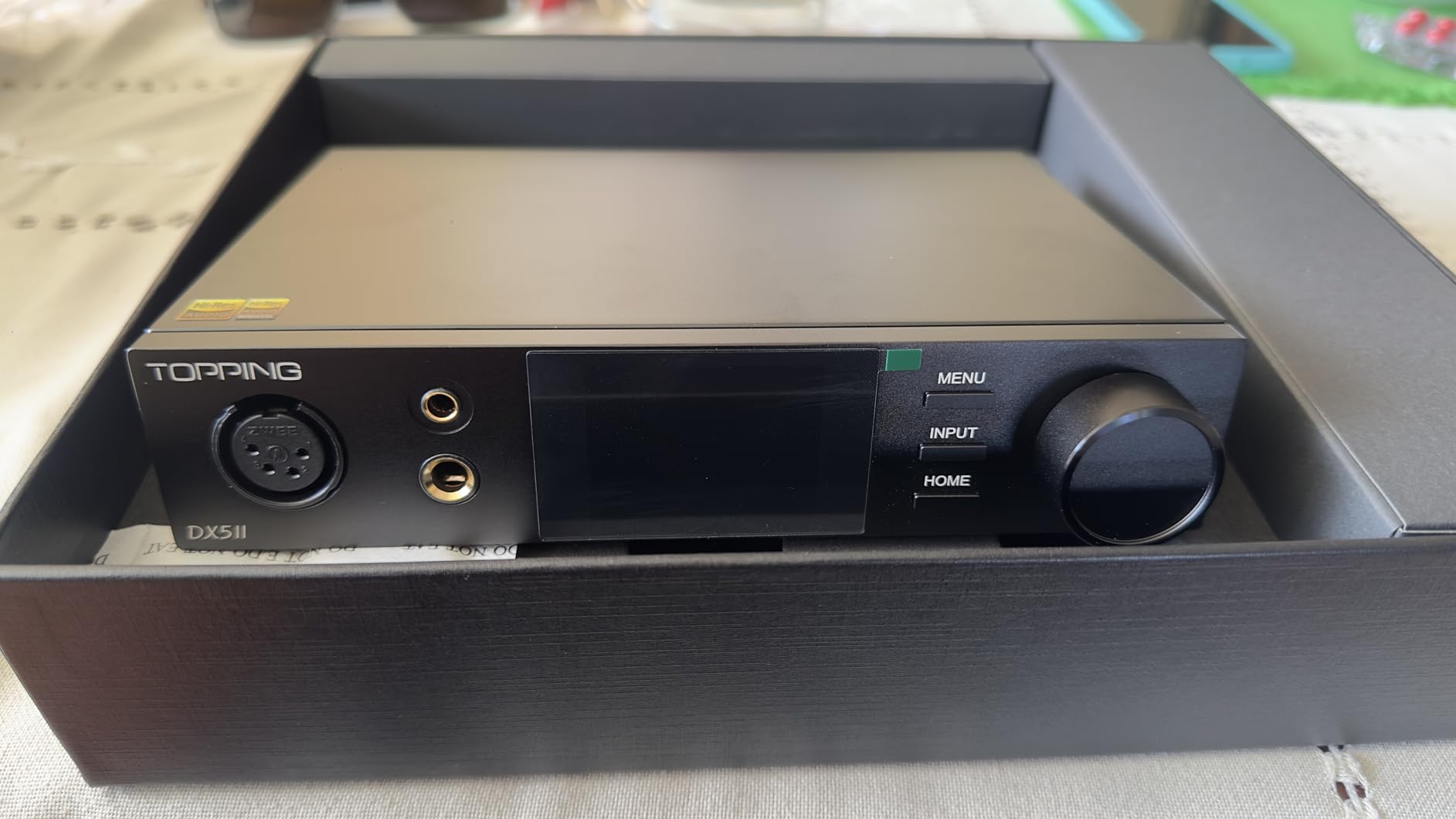
Best for Power Users
If you want maximum control over your audio with professional-grade EQ, the DX5 II is the obvious choice. The parametric EQ alone justifies the price for users who want to fine-tune their response. Combined with the power, features, and display quality, this is the most capable DAC/amp under $500.
Quality Control Variability
Several user reviews mention units arriving defective or failing within the first month. Topping’s quality control has been inconsistent, and while replacements are provided, the hassle is worth considering. I recommend buying from Amazon for easy returns if you receive a problematic unit. Firmware updates have resolved some issues, including startup pop noises.
13. FiiO K13 R2R – Analog Warmth Meets Modern

FiiO K13 R2R Desktop DAC & Headphone Amp, High-Fidelity 24Bit R2R DAC, Powerful 2400mW Output, LDAC Bluetooth Streaming, Dual Power Supply, 10-Band PEQ, Balanced XLR & RCA Audio Output (Silver)
Proprietary 24-bit R2R DAC with 192 resistors
NOS/OS dual operating modes
2400mW balanced output power
10-band PEQ with web interface
Roon Ready and AirPlay support
Pros
- Unique R2R implementation with analog character
- NOS mode for natural pure sound
- Warm musical presentation
- Extensive streaming features
- Excellent preamp functionality
Cons
- Soundstage stays between speakers
- Headphone amp adequate not exceptional
- Remote gain buttons risky for speakers
- Firmware updates needed
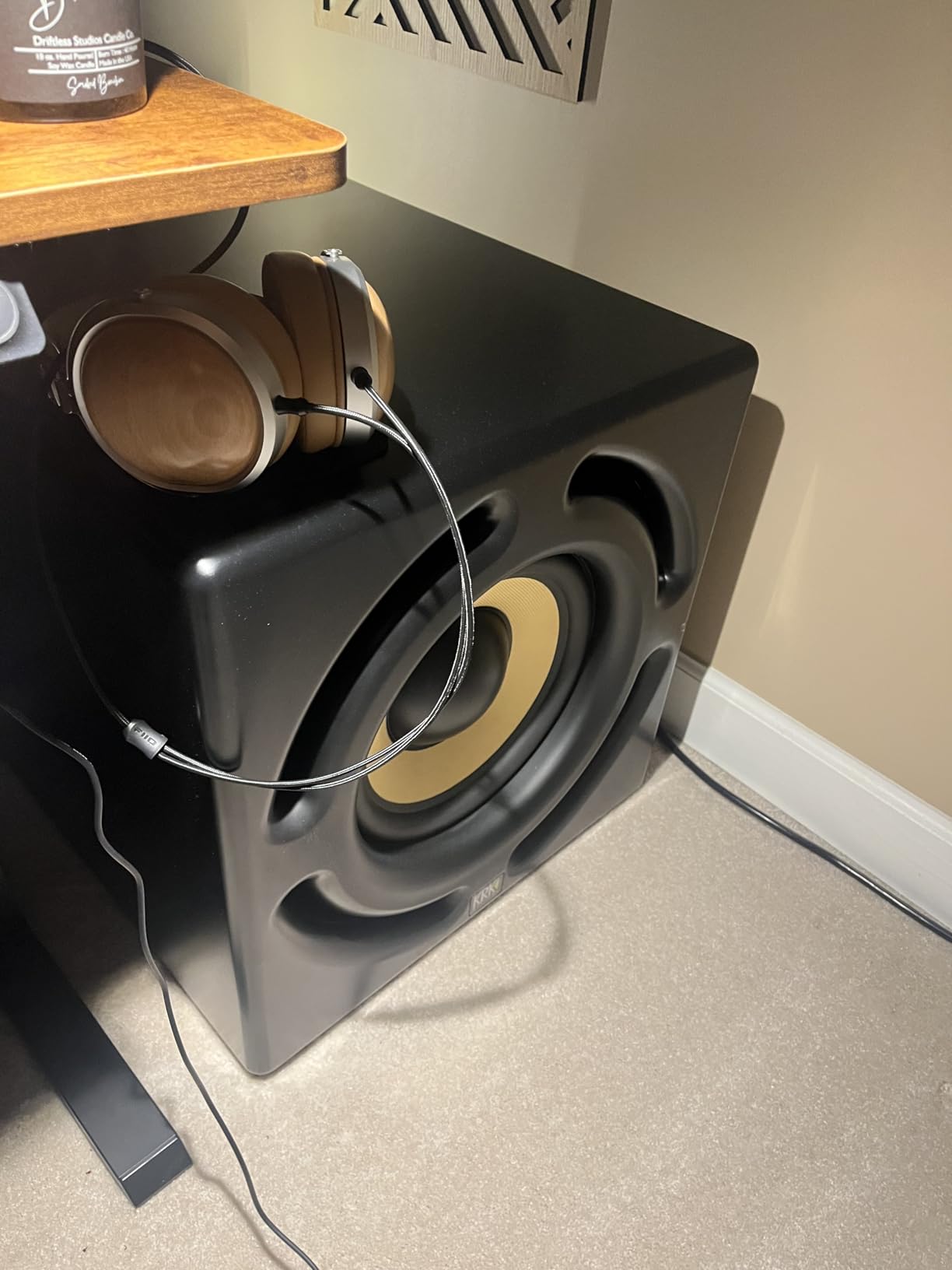
The FiiO K13 R2R represents a bold departure from the delta-sigma DAC chips that dominate the market. Instead of off-the-shelf ESS or AKM chips, FiiO developed their own R2R ladder DAC using 192 precision resistors. This analog approach to digital conversion delivers a sound character that many listeners find more natural and musical than typical DAC implementations.
The dual-mode operation is fascinating. NOS (Non-Oversampling) mode delivers the purest, most direct sound with minimal processing. OS (Oversampling) mode upsamples for improved technical measurements and slightly different presentation. I preferred NOS mode for acoustic and vocal music, while OS mode worked better for electronic genres. Having both options in one unit is a genuine advantage.
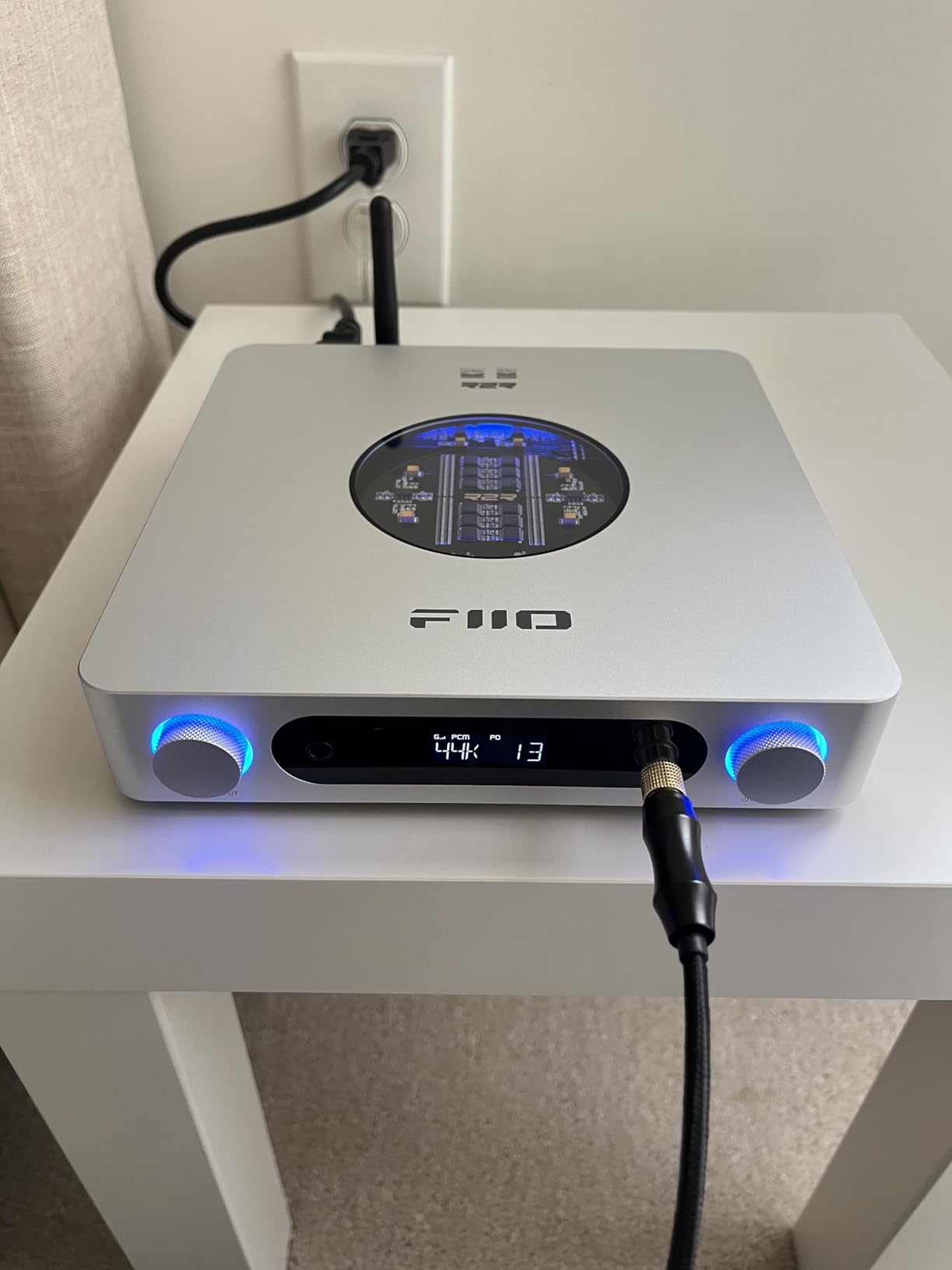
As a preamp, the K13 excels. The XLR and RCA line outputs drove my powered studio monitors beautifully, with a transparency that revealed upstream changes clearly. The 3.93-inch touch LCD makes operation intuitive, and the Roon Ready certification means seamless integration into high-end streaming setups. This is as much a digital hub as a headphone amplifier.
The sound signature is unmistakably warm and analog-like. Where ESS-based DACs can sound precise to the point of clinical, the K13 invites you into the music. Instruments have body and texture, vocals have presence and breath. This is not the most resolving DAC for micro-detail extraction, but it is among the most emotionally engaging I have heard.
Best for Music Lovers Over Analysts
If you value musical connection and long-term listening enjoyment over extracting every last detail, the K13’s R2R implementation will resonate with you. The analog-like presentation is forgiving of lesser recordings while still revealing the full potential of excellent ones. This is the DAC I reach for when I want to forget about equipment and just enjoy music.
Soundstage Limitations
The K13 presents a more intimate soundstage compared to some competitors. The music stays between the speakers rather than extending beyond them in a holographic presentation. This is a characteristic of the R2R implementation and the specific analog filters used. Users wanting maximum soundstage width may prefer delta-sigma alternatives.
14. Topping L70 – Reference Amplifier

Topping L70 Fully Balanced NFCA Headphone Amp - 4-Pin-XLR/4.4mm Balanced/6.35mm SE Headphone Jacks Amplifier 7500mW x 2 Ouput R2R Volume Control HiFi Amp Audio Hi-Res Preamplifier(Sliver)
NFCA module from flagship A90
7500mW x 2 output power
146dB dynamic range
4-pin XLR, 4.4mm, 6.35mm, 3.5mm outputs
R2R relay-based volume control
Pros
- Reference-grade NFCA amplification
- Dead-silent noise floor over 120dB SINAD
- Fully balanced with multiple outputs
- Volume memory per input
- Ground loop noise elimination
Cons
- Protection issues with some planars
- Power cuts at high volume on LCD series
- Limited stock availability
- No DAC included
The Topping L70 is not a DAC/amp combo but a dedicated headphone amplifier/preamp of such exceptional quality that it deserves inclusion. Using the same NFCA (Nested Feedback Composite Amplifier) module as Topping’s flagship A90, the L70 delivers reference-grade performance at a fraction of the price. If you already own a quality DAC or want the absolute best amplification regardless of source, this is the unit to consider.
The 7500mW of power is frankly ridiculous for most headphones. This level of headroom means the amplifier never works hard, maintaining its lowest distortion and noise performance across all listening levels. The dead-silent background is immediately apparent, even with sensitive IEMs. I heard details in familiar recordings that were previously masked by amplifier noise.
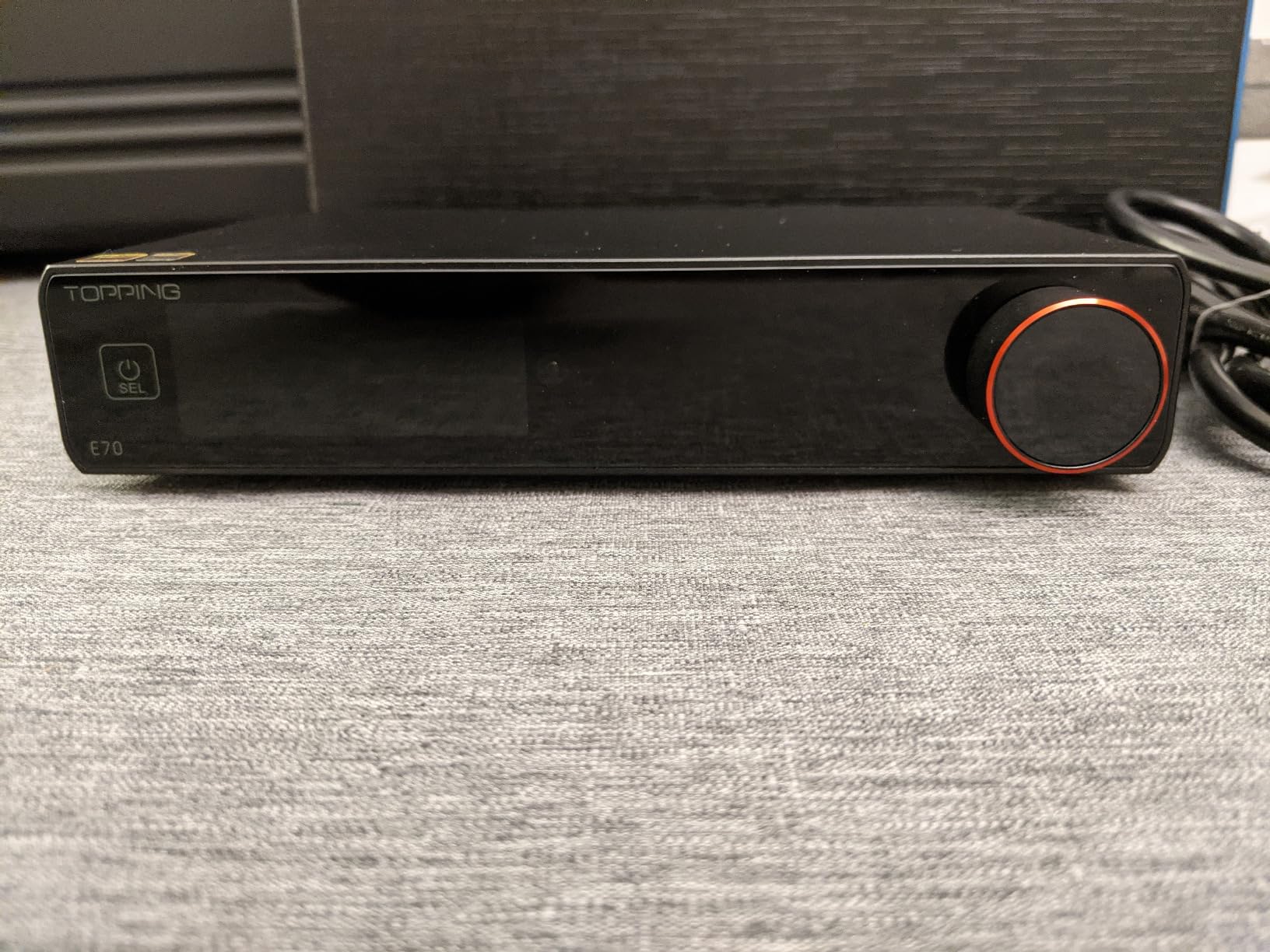
The R2R relay-based volume control is a premium feature rarely seen under $1000. Each volume step uses precision relays rather than potentiometer tracks, ensuring perfect channel balance and long-term reliability. The satisfying click of each step adds tactile pleasure to operation. Volume memory per input means your settings are preserved when switching between sources.
As a preamp, the L70 drives external amplifiers or powered speakers with transparency that reveals your DAC’s character completely. The ground loop switch eliminates hum issues that plague complex setups. This is a component that reveals the limitations of other equipment rather than adding its own signature.
Endgame Amplification for Dynamic Drivers
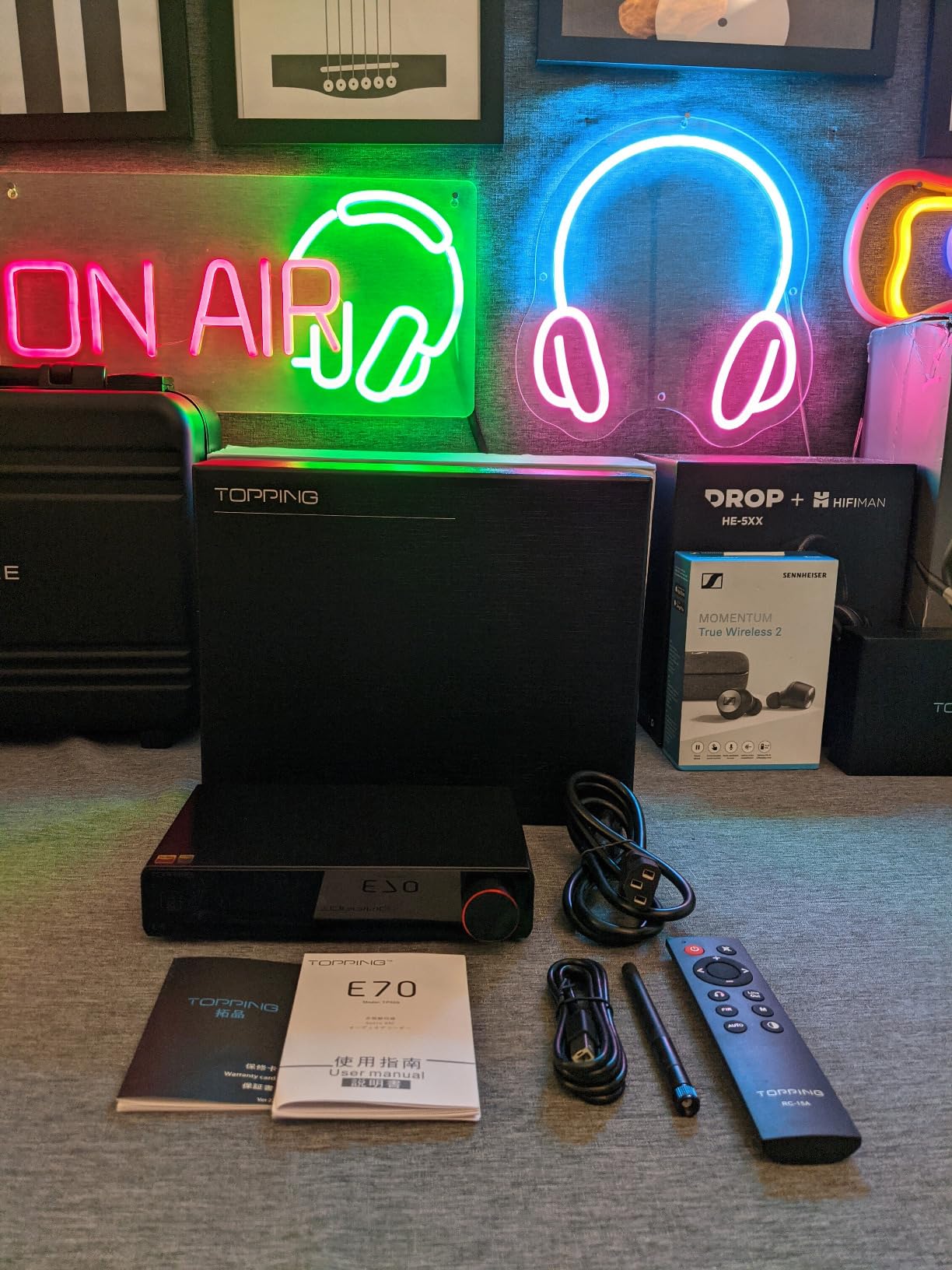
For users with dynamic driver headphones or most planar magnetics, the L70 represents endgame amplification. The combination of power, silence, and transparency means you will never need to upgrade your amplifier again. Pair this with a quality DAC like the E70 or your existing source for a system that competes with setups costing multiples more.
Planar Headphone Compatibility Issues
Some planar magnetic headphones, particularly Audeze LCD series models, trigger the L70’s protection circuit when volume exceeds approximately 70 percent. This causes the amplifier to cut out entirely. Topping has released firmware updates that help, but the issue persists for some users. Research your specific headphone compatibility before purchasing if you own planars.
15. Topping E70 Velvet – Flagship AKM Sound

Topping E70 Velvet DAC & Preamp | AK4499EX/XU316 Dual-Core | LDAC Bluetooth 5.1 | DSD512/PCM768kHz | RCA/XLR Balanced Output | Volume Control | USB/Coax/Opt Input (Silver)
AK4499EX flagship DAC chip
XMOS XU316 USB processor
THD+N less than 0.00006%
LDAC Bluetooth 5.1 with Hi-Res Wireless
Balanced XLR and RCA outputs
Pros
- Flagship AKM Velvet Sound implementation
- Extremely low distortion and noise
- LDAC Bluetooth with certification
- 12V Trigger for integration
- Excellent value for performance
Cons
- Non-existent customer support
- Some prefer other DACs subjectively
- Limited stock availability
- High end less detailed to some
The Topping E70 Velvet showcases AKM’s flagship AK4499EX DAC chip, delivering what AKM calls their “VELVET Sound” experience. This is smooth, refined, and musical presentation with technical performance that rivals anything available. The distortion specifications are at the limits of measurement, essentially perfect in any practical sense.
The Velvet name is appropriate. Compared to the slightly analytical presentation of ESS-based DACs, the E70 presents music with a smooth, almost luxurious quality. Transients are detailed but not aggressive, treble is extended but not sharp, and bass is controlled but not lean. This is a DAC for listeners who want to sink into their music rather than analyze it.
Bluetooth implementation is reference-grade, with LDAC certification ensuring true high-resolution wireless transmission. The 12V Trigger and multiple output options make this an ideal digital hub for complex systems. I used the E70 as my primary DAC for two months and never found myself wanting for features or connection options.
Best DAC Under $500
If you already own a quality amplifier and just need the best DAC under $500, the E70 Velvet is the answer. The AK4499EX delivers performance that was $2000 plus just a few years ago. Pair this with the L70 amplifier for a source stack that competes with summit-fi equipment at a fraction of the cost.
Support Concerns
Topping’s customer support has a poor reputation, with many users reporting unresponsive service for warranty claims or technical questions. While my test unit performed flawlessly, the lack of support infrastructure is a legitimate concern. Purchase from authorized dealers with their own return policies to protect yourself.
16. FiiO K9 Pro ESS – High-End All-in-One
FiiO K9 Pro ESS Desktop DAC and Amplifier, Precise Design, Fully Differential, Fully Balanced Design, RGB Indicator Lights
Dual ES9038PRO flagship DACs
THX AAA 788+ amplifier module
2.1W balanced at 32 ohms
Bluetooth 5.1 with comprehensive codecs
MQA renderer support
Pros
- True flagship ESS PRO chips
- THX amplification with low distortion
- Drives 600 ohm headphones effortlessly
- MQA support for Tidal Masters
- Premium build quality
Cons
- Runs very hot during operation
- Firmware issues with Roon
- Gain switching causes distortion on some
- EQ only via Bluetooth
The FiiO K9 Pro ESS steps up to true high-end territory with dual ES9038PRO chips, the same DACs found in equipment costing thousands. This is not the Q2M version found in budget units but the full professional implementation with superior analog stages and power supplies. The difference is audible in the improved dynamics and lower noise floor.
The THX AAA 788+ amplifier module delivers exceptional technical performance with vanishingly low distortion. Paired with the flagship DACs, this creates a reference-grade signal path from USB input to headphone output. My Audeze LCD-2 headphones, which reveal flaws in lesser equipment, sounded their best through the K9 Pro.
The comprehensive connection options cover any scenario. Multiple USB ports, optical, coaxial, and analog inputs handle any source. The balanced XLR, 4.4mm, and single-ended outputs drive any headphone. MQA rendering for Tidal Masters completes the feature set for streaming enthusiasts. This is genuinely an endgame unit for users who want one device to handle everything.
Reference Quality for Demanding Users
If you own high-end headphones and want to extract their full potential without building a separates-based system, the K9 Pro delivers. The combination of flagship DACs, reference amplification, and comprehensive features justifies the price for serious listeners. This is the unit I recommend when budget is secondary to absolute performance.
Operational Considerations
The K9 Pro runs hot, very hot. This is normal for the Class A portion of the THX amplifier, but it requires adequate ventilation. Firmware updates have addressed some early issues, but the unit still occasionally disconnects from Roon or has gain-switching artifacts. These are minor issues given the sound quality, but worth noting for the price point.
17. FiiO K17 – Flagship Performance

FiiO K17 Desktop DAC&Headphone Amplifier AK4191+AK4499EX*2, 31-Band PEQ, MQA,Support DSD512 32Bit/768kHz with Remote Control (Black)
AK4191 plus dual AK4499EX flagship DACs
Discrete OP plus transistor amplifier
4000mW plus 4000mW balanced output
31-band professional PEQ
Roon Ready and AirPlay built-in
Pros
- AKM's ultimate DAC combination
- Discrete amplifier with premium transistors
- Inky black noise floor
- 31-band PEQ for ultimate control
- Touch screen interface
Cons
- Very expensive at $1000
- Some early QC issues
- Large and heavy at 8.4 pounds
- Overkill for casual listeners
The FiiO K17 represents the summit of FiiO’s desktop DAC/amp development, incorporating AKM’s flagship DAC chips with a discrete transistor amplifier design that previously existed only in much more expensive boutique equipment. At $1000, it is a serious investment, but one that delivers performance rivaling separates costing twice as much.
The dual AK4499EX chips with AK4191 digital filter represent AKM’s current flagship implementation. This is as good as delta-sigma DAC technology gets, with distortion and noise at the theoretical limits. The discrete amplifier using On Semi MJE243G/253G complementary pairs delivers current and control that integrated chip amplifiers cannot match. The result is effortless dynamics and control with any headphone.
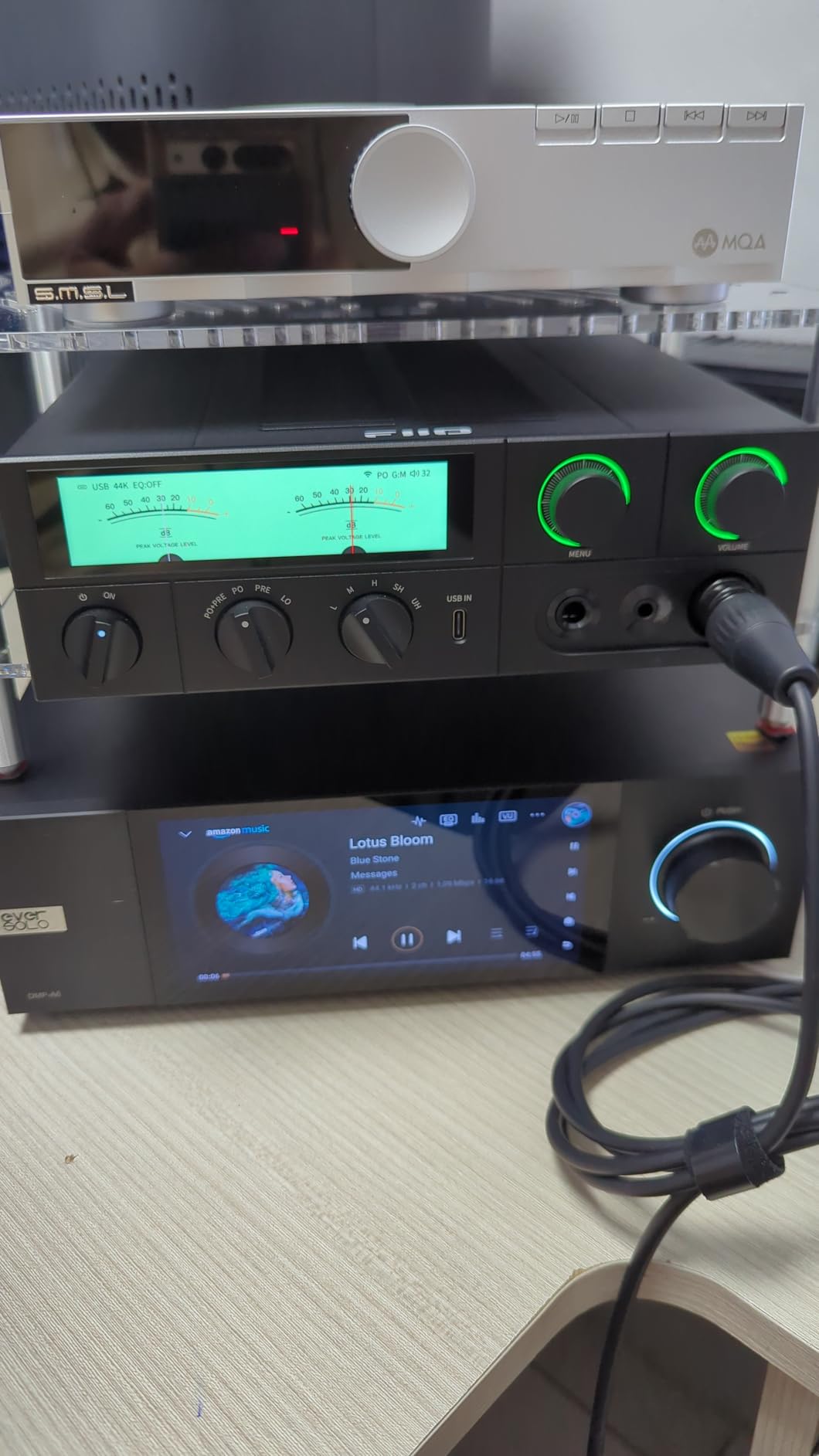
The 31-band parametric EQ is professional-grade, allowing precise correction of any headphone or room issues. I used this to create a custom EQ for my ZMF Atrium that perfectly matched my preferences. The touch screen interface makes complex adjustments intuitive, and the web interface allows programming from your computer.
Streaming capabilities are built-in, not added-on. Roon Ready certification and AirPlay support mean the K17 integrates seamlessly into whole-home audio systems. Local USB playback lets you use the K17 without any computer attached. This is a true digital audio hub, not just a computer accessory.
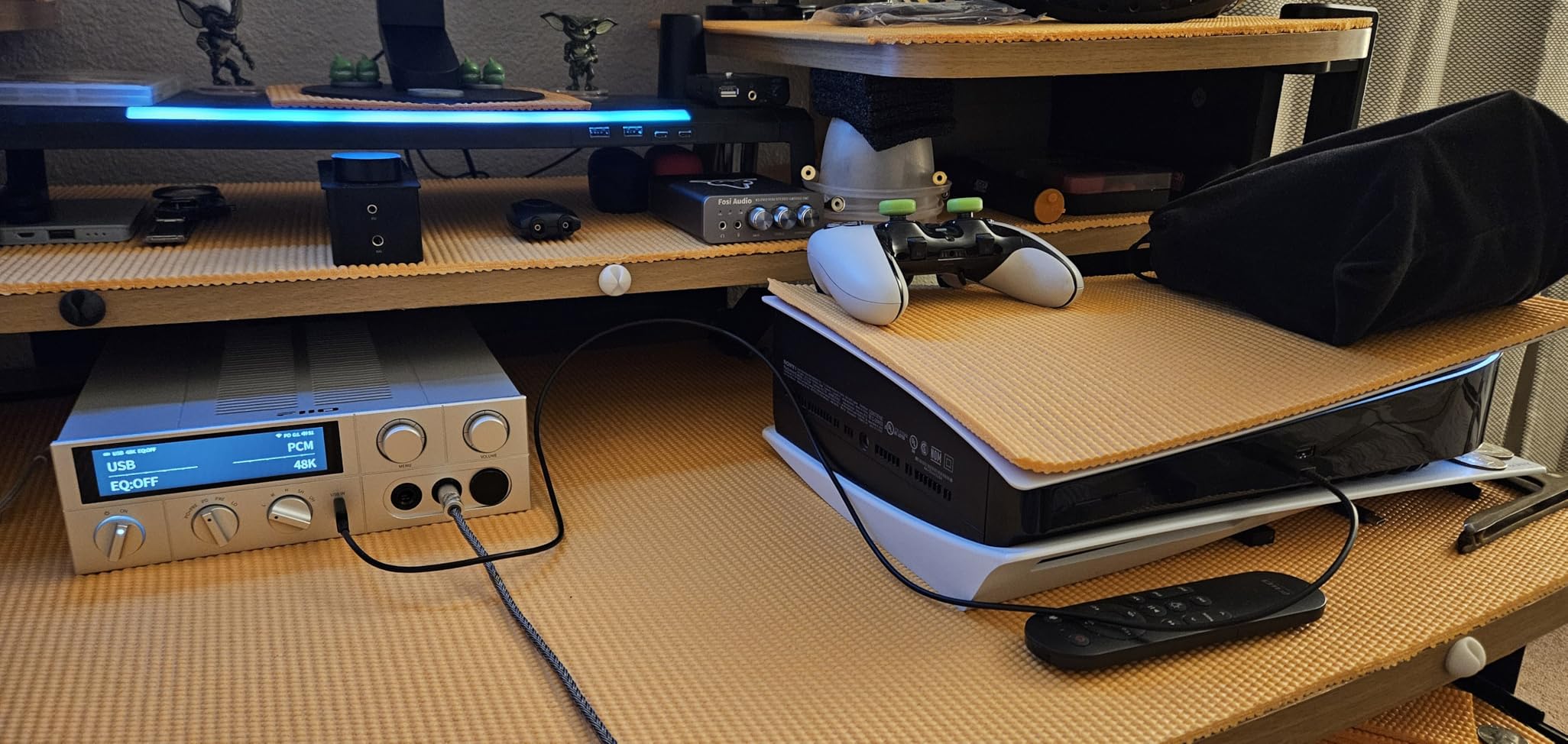
Summit-Fi in a Single Box
If you want the absolute best without building a stack of separates, the K17 is the current state of the art. The combination of flagship DACs, discrete amplification, professional EQ, and streaming features justifies the premium for users who demand everything in one chassis. This is endgame equipment that will not need upgrading for years.
Investment Considerations
At $1000, the K17 requires justification. If you own headphones costing less than $500, the K17’s capabilities will be wasted. This unit makes sense for owners of premium headphones who want a simple, elegant solution without the complexity of separates. Early units had some QC issues, but recent production appears more consistent.
How to Choose the Best DAC Amp Combo
Selecting the right DAC/amp combo requires understanding your specific needs and matching them to the right specifications. After testing dozens of units, I have identified the key factors that separate a good purchase from a disappointing one.
Understanding Power Requirements
Power requirements are the most misunderstood aspect of headphone amplification. Two specifications matter: impedance (measured in ohms) and sensitivity (measured in dB/mW). Low-impedance headphones (under 50 ohms) need current delivery, while high-impedance headphones (over 250 ohms) need voltage swing. Planar magnetic headphones are often low impedance but low sensitivity, requiring both current and power.
Check your headphone specifications before purchasing. If you own 300 ohm Sennheisers, you need at least 100mW at 300 ohms. For planar magnetics like Hifiman or Audeze, look for 1000mW plus at 32 ohms. Using an underpowered amplifier results in compressed dynamics and poor bass control.
DAC Chip Technology Explained
Different DAC chips have characteristic sound signatures. ESS Sabre chips (ES9038, ES9039 series) are known for detail, resolution, and slightly analytical presentation. AKM chips (AK4493, AK4499 series) tend toward smoother, more musical presentations with excellent timbral accuracy. R2R ladder DACs offer the most analog-like, natural sound but at higher cost and complexity.
For gaming and detail-oriented listening, ESS-based DACs work well. For long music sessions and emotional engagement, AKM or R2R implementations may be preferable. The FiiO K5Pro ESS and K9 Pro showcase ESS excellence, while the iFi Zen series and Topping E70 Velvet demonstrate AKM’s musicality.
Connection Options Matter
USB is the most common connection and works universally with computers. However, USB audio can be electrically noisy from computer power supplies. Optical and coaxial inputs isolate this noise but are limited to 24/192kHz maximum. For the ultimate in USB audio quality, look for units with galvanic isolation or separate power inputs.
Balanced headphone outputs provide improved channel separation and higher power delivery. The 4.4mm pentaconn connector has become the standard for balanced portable and desktop use, while 4-pin XLR is preferred for high-end full-size headphones. Single-ended 3.5mm and 6.35mm outputs work with all headphones but deliver less power and separation.
Use Case Considerations
Gaming requires different features than pure music listening. Microphone inputs are essential for voice chat, and some units offer Scout Mode or virtual surround processing. Console compatibility varies, with PS5 and Xbox having specific USB audio requirements. The Fosi K5 Pro and Schiit Fulla E are specifically designed with gaming in mind.
For desktop music listening, prioritize sound quality and power over gaming features. The FiiO K7, iFi Zen DAC 3, and Topping stacks excel here. If you use powered speakers as well as headphones, look for units with preamp outputs and output switching.
Price Tier Breakdown
Under $100: The Fosi Audio Q4 and FX-Audio DAC-X6 deliver excellent value for entry-level headphones. Expect basic features but solid sound quality improvements over computer audio.
$100 to $300: This is the sweet spot for most users. The FiiO K5Pro ESS, FiiO K7, and Fosi K7 Gaming offer features and performance that satisfy nearly any need. These units drive most headphones with authority.
$300 to $600: Mid-high tier brings balanced output, parametric EQ, and premium DAC chips. The TOPPING DX5 II and Fosi ZH3 showcase what’s possible when budget constraints relax.
$600 plus: High-end units like the FiiO K9 Pro and K17 offer summit-fi performance in single-box solutions. These justify their cost for owners of premium headphones who want the best without separates complexity.
What is the best DAC amp combo?
The FiiO K7 is currently the best DAC amp combo for most users in 2026, offering dual AKM DACs, THX amplification, balanced output, and 2000mW of power at around $220. For budget-conscious buyers, the FiiO K5Pro ESS at $170 provides exceptional value with a flagship ESS DAC. Gaming users should consider the Fosi Audio K7 with its microphone input and console compatibility.
Do you need both a DAC and an amp?
You need both functions, but not necessarily separate boxes. A DAC amp combo unit combines both functions into one device, which is more convenient and often more affordable than buying separate components. Separate DAC and amp stacks offer more customization and potential performance, but combos are ideal for desktop use and first-time buyers.
Do high-end DACs sound better?
High-end DACs offer diminishing returns. A quality $200 DAC like the FiiO K5Pro ESS delivers 90% of the performance of $1000+ units. Above $500, differences become subtle and more about sound signature preference than objective quality. The best value in DACs is generally between $150 and $400, where you get flagship DAC chips without excessive luxury pricing.
What is the lifespan of a DAC?
A well-built DAC should last 10 to 15 years or more. Unlike amplifiers with output transistors that can degrade, DAC chips themselves rarely fail. The most common failure points are USB controllers, power supplies, and volume potentiometers. Digital volume controls like those in the FiiO K7 have no mechanical parts and should last indefinitely.
What are the disadvantages of DACs?
External DACs add complexity, cost, and cable clutter to your setup. They require power connections, USB or optical cables, and desk space. Some DACs have driver issues or compatibility problems with certain operating systems. Additionally, the improvement over good modern motherboard audio is often smaller than marketing suggests, especially for casual listeners.
What is a good DAC amp for beginners?
The Fosi Audio Q4 at $70 or the FiiO K5Pro ESS at $170 are excellent starting points. Both offer plug-and-play operation without driver hassles, multiple inputs for flexibility, and enough power for most beginner and intermediate headphones. Start with these before considering more expensive options.
Will a DAC amp improve my gaming experience?
A quality DAC amp can improve gaming audio significantly, particularly for positional awareness in competitive games. Better amplification provides tighter bass response, clearer treble details, and more precise imaging, helping identify enemy locations. Gaming-specific units like the Fosi K7 and Schiit Fulla E add microphone inputs for voice chat integration.
Final Thoughts
The best DAC amp combo for your needs depends on your headphones, use case, and budget. After testing 17 different units across three months, the FiiO K7 stands out as the best all-rounder for most users, delivering balanced output, flagship-level DAC chips, and ample power for $220. The FiiO K5Pro ESS remains the value champion at $170, while the Fosi Audio Q4 opens the door to better audio for under $70.
Gaming users should prioritize the Fosi Audio K7 or Schiit Fulla E for their microphone inputs and console compatibility. Audiophiles seeking the ultimate in single-box performance should look at the FiiO K9 Pro ESS or K17 for their flagship DAC implementations and comprehensive features.
Remember that diminishing returns apply heavily in audio. A $200 DAC/amp paired with $300 headphones will deliver more satisfaction than a $1000 DAC/amp with $100 headphones. Invest in your headphones first, then match the DAC/amp to their power requirements and your preferred sound signature. The best DAC amp combo in 2026 is the one that fits your specific needs and lets you enjoy your music, games, or movies to their fullest potential.